



Intermarket Analysis for Futures Traders
Overview #
Every futures market exists inside a web of relationships. Rates move, equities react. The dollar strengthens, commodities feel it. Gold catches a bid while real yields drop. Intermarket analysis is the practice of reading these cross-asset relationships to answer one question before every trade: does the rest of the market agree with what I'm about to do? As John Murphy mapped out in his foundational work on the subject, bonds, currencies, commodities, and equities form an interconnected system — shifts in one market ripple through the others. [7]
This isn't macro forecasting. You're not predicting where the Fed goes next or modeling GDP growth. Intermarket analysis is decision support — a filter, not a signal generator. It tells you whether the weight of cross-asset evidence backs your trade or argues against it.
The framework works because capital flows leave footprints. Money moving into Treasury futures tells you something about risk appetite. A strengthening dollar puts pressure on commodity prices. A crude oil rally that isn't confirmed by energy spreads or inflation expectations might be running on fumes. These aren't predictions — they're context clues that sharpen your read on what's actually happening beneath the surface.
The Intermarket Framework #
Intermarket analysis for futures traders boils down to three core functions:
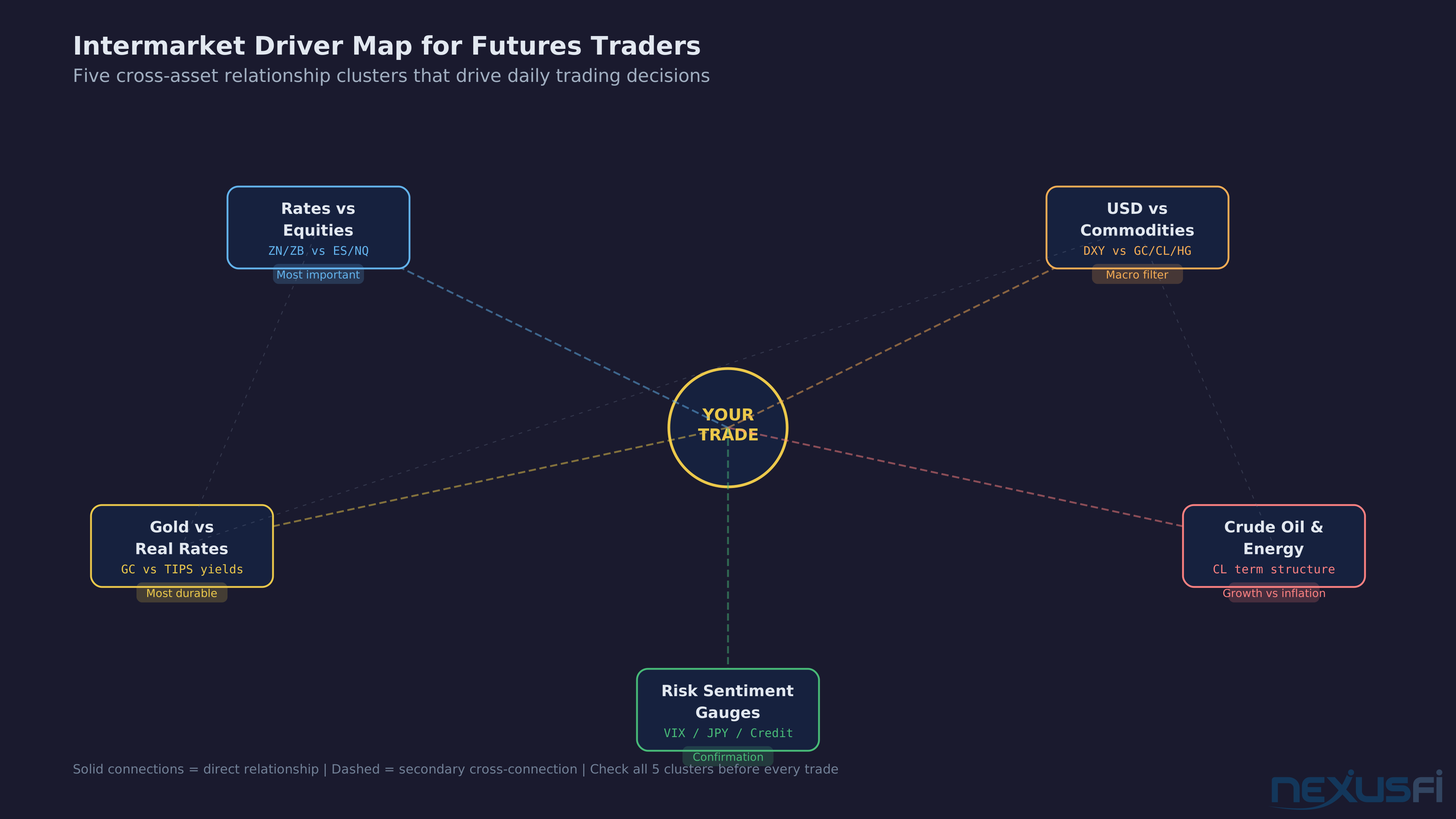
Confirmation. Before you commit to a directional trade, check whether related markets support the move. As @tigertrader explains in the Spoo-nalysis thread, "traders look at cross asset correlations on an inter-market and intra-market basis, to gain insights into capital flows so that they can better anticipate moves and define risk." [1]
Divergence detection. When related markets stop confirming each other, something is about to change. @tigertrader demonstrated this directly when he shorted equities and bought gold based on intermarket divergences — using cross-asset signals as the primary thesis driver rather than a secondary confirmation. [3]
Regime identification. Are you in a risk-on expansion, an inflation shock, a growth scare, or a flight-to-quality environment? The answer changes which relationships are reliable and which have temporarily broken.
These three functions don't generate trade signals on their own. They filter your existing signals — improving timing, sizing, and conviction on trades you'd already consider taking.
Core Intermarket Relationships #
Rates and Equity Index Futures #
This is the most important cross-market relationship for index futures traders. Treasury futures (ZN, ZB) and equity index futures (ES, NQ) are connected through rates, valuations, and risk appetite.
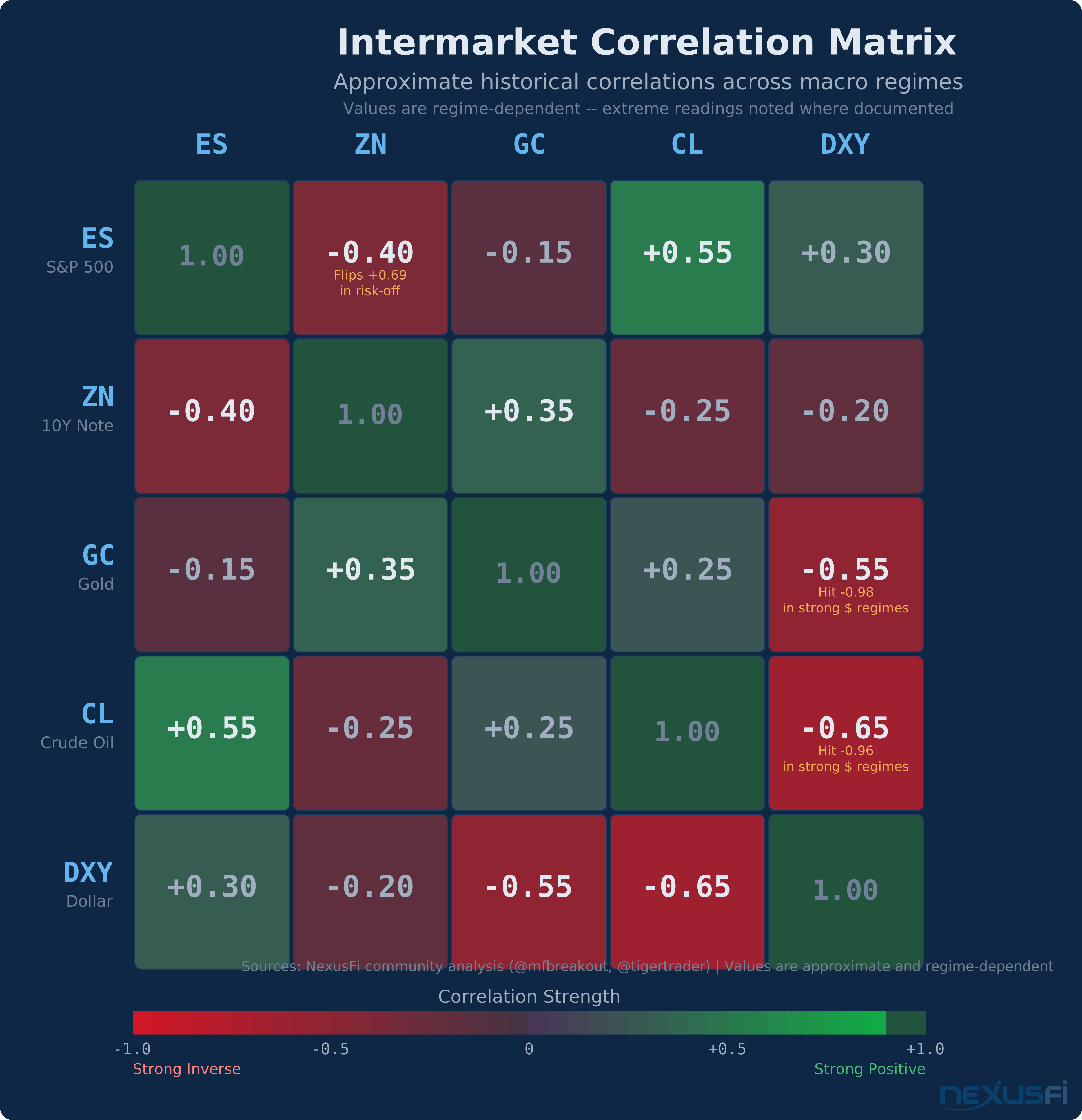
Rising yields pressure equity valuations, especially in duration-sensitive indexes like NQ. Falling yields make equities relatively more attractive. During risk-off episodes, money flows into Treasuries (pushing ZN/ZB higher and yields lower) while equities sell off.
[2] When the 10-year yield leads equity prices, it's one of the clearest intermarket signals in futures.
But the relationship flips. In 2022, both stocks and bonds sold off simultaneously under aggressive rate hikes. In disinflation environments, both can rally together. The stock-bond correlation depends on whether the dominant driver is growth expectations (positive correlation) or inflation expectations (negative correlation).
For a complete guide to Treasury futures mechanics, see Treasury Futures (ZB/ZN).
U.S. Dollar and Commodities #
A stronger dollar tends to pressure dollar-denominated commodities — crude oil, gold, copper, agricultural futures — because more dollars are needed to buy the same physical quantity. This inverse relationship is one of the most widely cited in macro trading.
[6] Those numbers are extreme and regime-specific, but they demonstrate how powerful the dollar's influence can be when it's the dominant macro driver.
The relationship breaks when supply-side factors dominate. A geopolitical crude oil supply shock can send CL higher regardless of what the dollar does. The dollar-commodity inverse is a macro filter, not a mechanical trading rule.
For more on crude oil's dynamics, see Crude Oil (CL) Futures. For gold-specific analysis, see Gold Futures (GC).
Gold, Real Rates, and the Dollar #
Gold is one of the cleanest intermarket instruments. It competes directly with the real return on bonds — when real yields rise, gold's zero-yield proposition becomes relatively less attractive, and vice versa.
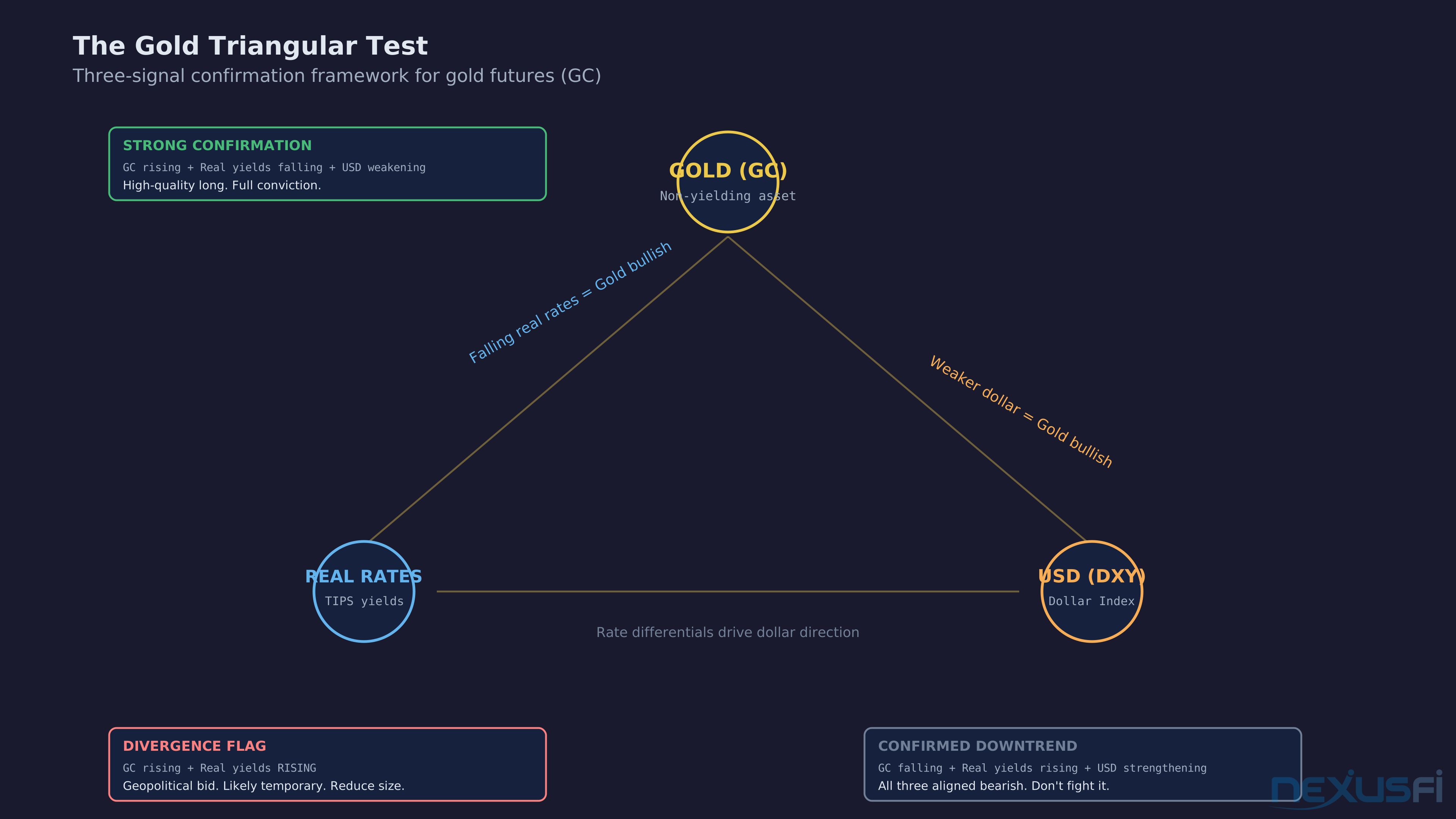
The relationship forms a triangular test:
- Gold rising + real yields falling + USD weakening = strong confirmation for gold longs
- Gold rising + real yields rising = divergence flag — something else is driving gold, likely geopolitical or monetary uncertainty
- Gold falling + real yields rising + USD strengthening = confirmed downtrend in gold
And his follow-up rule: "If gold fails to rally on a weaker dollar, then they're going to take it much lower." [3] That's intermarket logic at its core — reading the message when a market ignores what should move it.
This relationship has held through QE regimes, taper tantrums, pandemic response, and rate hike cycles. The mechanism (real yield competition) is structural.
Crude Oil and the Energy Complex #
Crude oil sits at the intersection of growth expectations, inflation dynamics, geopolitical risk, and physical supply/demand. Its intermarket relationships are powerful but messy.
When crude rallies on demand strength, it confirms risk-on behavior. When crude rallies on supply disruption, the signal is ambiguous — is it risk-on confirmation or an inflationary headwind? The answer depends on duration and magnitude of the supply shock.
The futures term structure often tells you more than outright price. Backwardation signals physical tightness and supports bullish positioning. Contango suggests oversupply or weak demand. Calendar spreads can diverge from outright price when the market's short-term view differs from longer-term expectations.
Risk Sentiment Gauges #
VIX and equity index vol. A rising VIX while equities hold or rally is a warning — options traders are paying for protection that equity buyers aren't pricing yet. That gap between implied and realized complacency tends to resolve violently.
Currency risk proxies. @MacroNinja breaks this down: "USDJPY down is bearish for the ES... AUDJPY up is bullish for ES due to risk on sentiment with a carry trade... ZB/ZN up is bearish for the ES." [4] No single correlation is the full picture — but stacking multiple currency signals creates a useful sentiment composite that's hard to get from any single market.
The Intermarket Scorecard #
The council review identified a critical gap in most intermarket content: subjective language like "stable yields" or "cooperative dollar" gives you nothing to execute on. Here's how to make it quantifiable.
Defining Your Signals #
For each core relationship, define a measurable condition:
For equity index trades (ES/NQ):
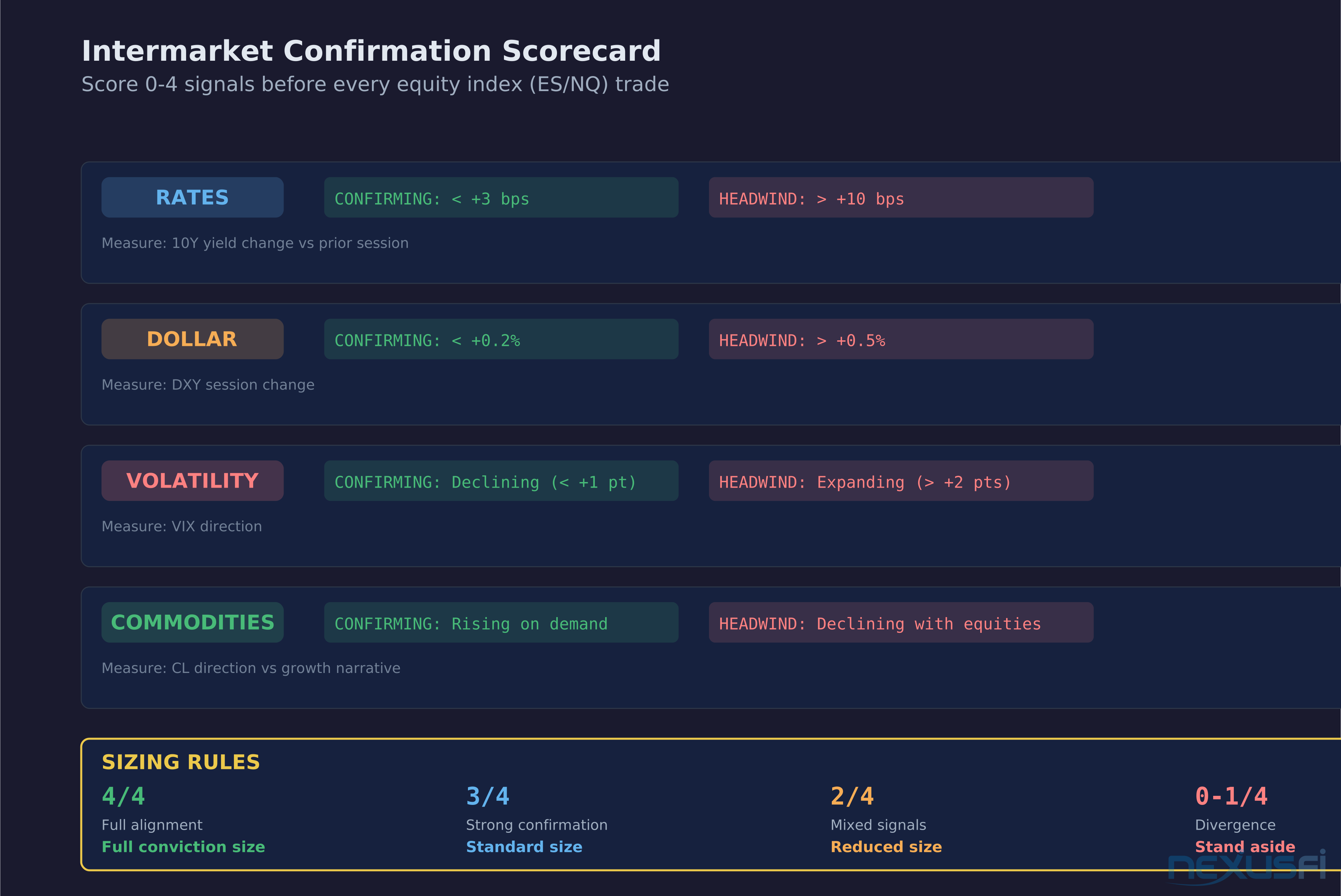
- Rates signal: 10Y yield change over prior session. Declining or flat (< +3 bps) = confirming. Rising sharply (> +10 bps) = headwind.
- Dollar signal: DXY session change. Declining or flat (< +0.2%) = confirming for risk-on. Rising (> +0.5%) = headwind.
- Vol signal: VIX direction. Declining or stable (< +1 point) = confirming. Expanding (> +2 points) = caution.
- Commodity signal: CL direction aligned with growth narrative (rising on demand = confirming). CL declining alongside equities = broader risk-off.
For gold trades (GC):
- Real rate signal: TIPS real yield change. Declining = confirming for gold longs. Rising = headwind.
- Dollar signal: DXY declining = confirming. DXY rising = headwind.
- Risk signal: VIX expanding while gold bids = safe-haven confirmation. VIX calm while gold bids = monetary/rate-driven, check yields.
For crude oil trades (CL):
- Term structure: Front-month spread. Backwardation deepening = confirming bullish. Contango widening = headwind.
- Breakeven signal: Inflation breakevens rising alongside crude = confirming. Breakevens flat while crude rallies = isolated move, lower quality.
- Dollar signal: DXY declining = tailwind for commodities. DXY rising sharply = headwind unless supply shock dominates.
Scoring and Position Sizing #
Count your confirming signals on a 0-4 scale:
| Confirmation Score | Interpretation | Sizing Action |
|---|---|---|
| 4/4 signals confirm | Full alignment — high confidence | Full conviction size |
| 3/4 signals confirm | Strong but not unanimous | Standard size |
| 2/4 signals confirm | Mixed — proceed with caution | Reduced size, demand better entry |
| 1/4 or 0/4 | Divergence dominant | Stand aside or take minimum probe only |
This transforms "the market confirms" from a feeling into a number. You still need judgment — but judgment is easier when you have a number to anchor it.
The 1/4 and 2/4 confirmation scores are where intermarket analysis saves you the most capital. Full alignment is obvious — anyone can ride a trend when everything agrees. The real value is when the scorecard tells you to stand aside or size down on a setup that "looks good" on a single chart but has the weight of cross-asset evidence working against it. The trades you don't take matter as much as the ones you do.
Conflict Resolution by Regime #
When signals conflict, the dominant macro regime determines which signal matters most:
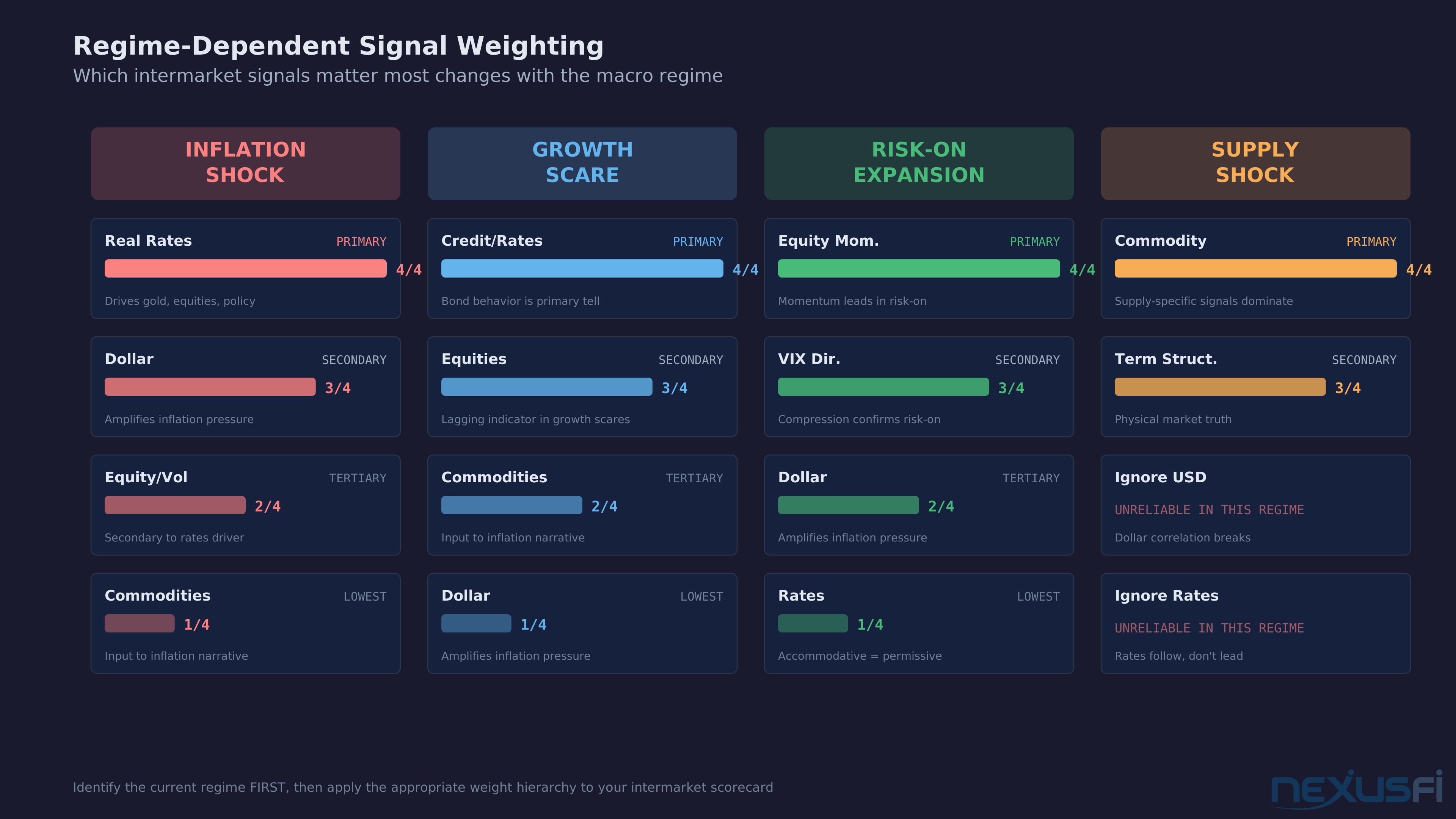
Inflation regime (rising CPI, hawkish Fed, real yields volatile):
- Weight hierarchy: real rates > dollar > equity/vol signals
- Rates lead. If real yields are driving gold and equities, the dollar and vol signals are secondary.
Growth scare (slowing data, credit widening, earnings misses):
- Weight hierarchy: credit/rates > equities > commodities > dollar
- Bond behavior is the primary tell. If ZN is bidding hard, equities face headwinds regardless of what crude or gold do.
Risk-on expansion (low vol, strong earnings, accommodative policy):
- Weight hierarchy: equity momentum > VIX direction > dollar > rates
- In risk-on, equity momentum often leads and rates follow. VIX compression confirms.
Supply shock (geopolitical disruption, weather, logistics breakdown):
- Weight hierarchy: commodity-specific signals > everything else
- Dollar-commodity correlations break during supply shocks. Trust the term structure and physical market signals.
Case Studies: The Framework in Action #
Case Study 1: COVID Crash — All Signals Align #
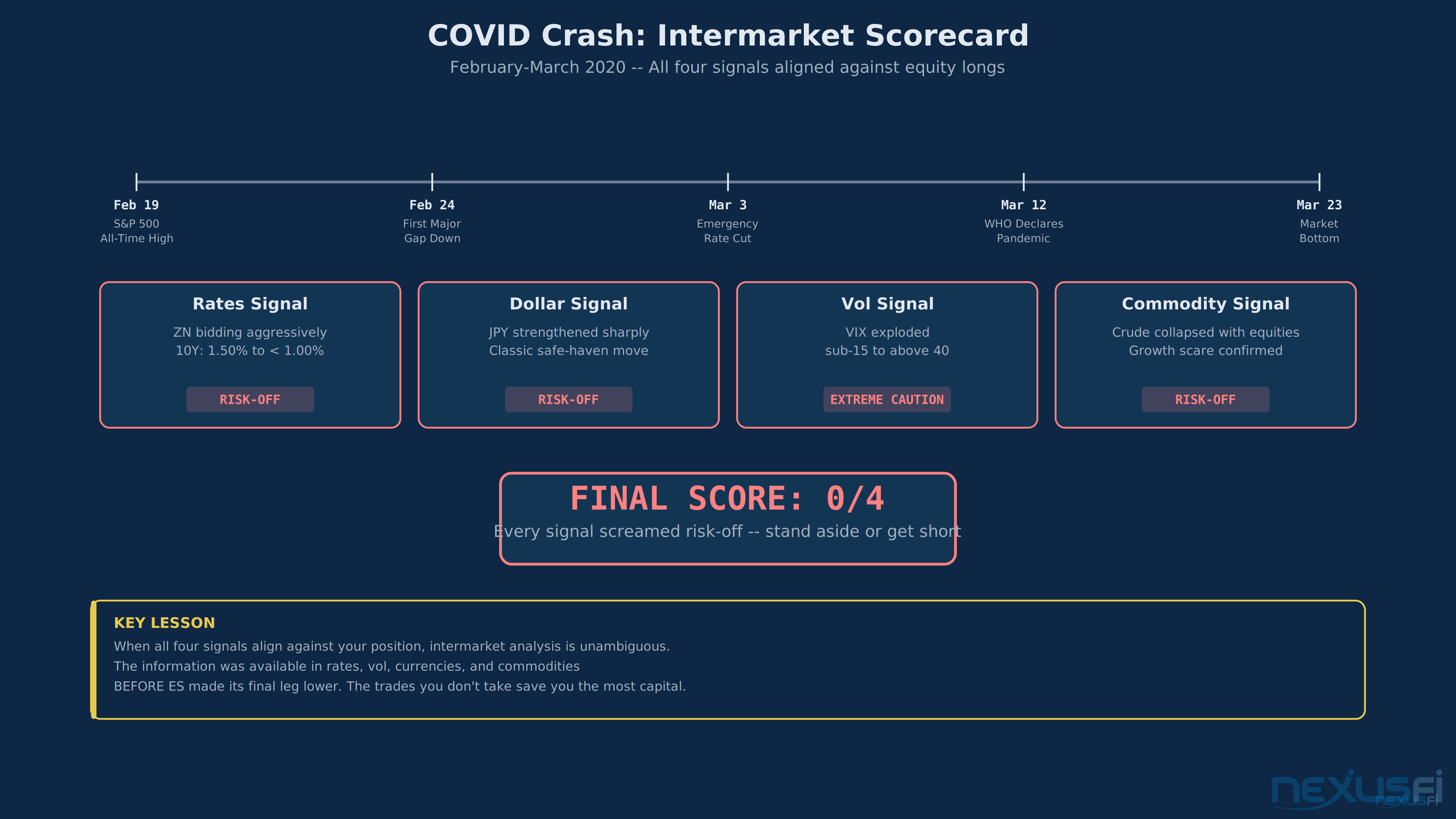
In late February 2020, the intermarket scorecard for equity longs turned uniformly negative:
- Rates: 10Y yields collapsed from 1.50% to below 1.00% in days, with ZN bidding aggressively. Rate signal: risk-off.
- Dollar: DXY initially weakened as the market priced rate cuts, but JPY strengthened sharply — a classic safe-haven move. Currency signal: risk-off.
- Vol: VIX exploded from sub-15 to above 40 within two weeks. Vol signal: extreme caution.
- Commodities: Crude oil collapsed alongside equities, confirming growth scare (not supply shock).
Score: 0/4 for equity longs. Every signal screamed risk-off. Traders who checked intermarket context before buying the initial dip in ES had clear confirmation that this wasn't a garden-variety pullback. @tigertrader's analysis of the equity-yield correlation during this period showed the 10Y was leading equities lower, with valuation ratios suggesting further downside risk. [2]
The lesson: When all four signals align against your position, intermarket analysis isn't subtle. The information was there in rates, vol, currencies, and commodities before ES made its final leg lower.
Case Study 2: 2015 Fed Divergence Warning #
In mid-2015, @tigertrader identified an intermarket divergence that contradicted the prevailing technical picture. The dominant narrative was strong dollar, weak gold — and most traders were positioned so.
"The real divergence was that in the face of these comments by the respective central bank chairs, U.S. rates did not back up... the implied yield on the September fed funds futures contract rose one basis point and the 2-10 curve flattened." [3]
Translation: the market was pricing a Fed-ECB policy divergence that should have pushed yields higher and the dollar stronger. Instead, rates barely moved and the curve flattened — meaning the bond market was quietly disagreeing with the Fed's hawkish tone. That non-reaction was the signal.
The lesson: When the intermarket picture contradicts the dominant narrative, the intermarket picture is usually right. Rates not responding to a hawkish trigger is a divergence signal worth acting on — it tells you the smart money isn't buying the story.
When Intermarket Analysis Fails #
Relationships That Have Weakened Post-2020 #
The static equity-bond inverse. Since 2020, both stocks and bonds have sold off together (2022 inflation shock) and rallied together (disinflation periods). The stock-bond correlation itself is regime-dependent — you can't trade a fixed negative relationship anymore. You have to know which regime you're in first.
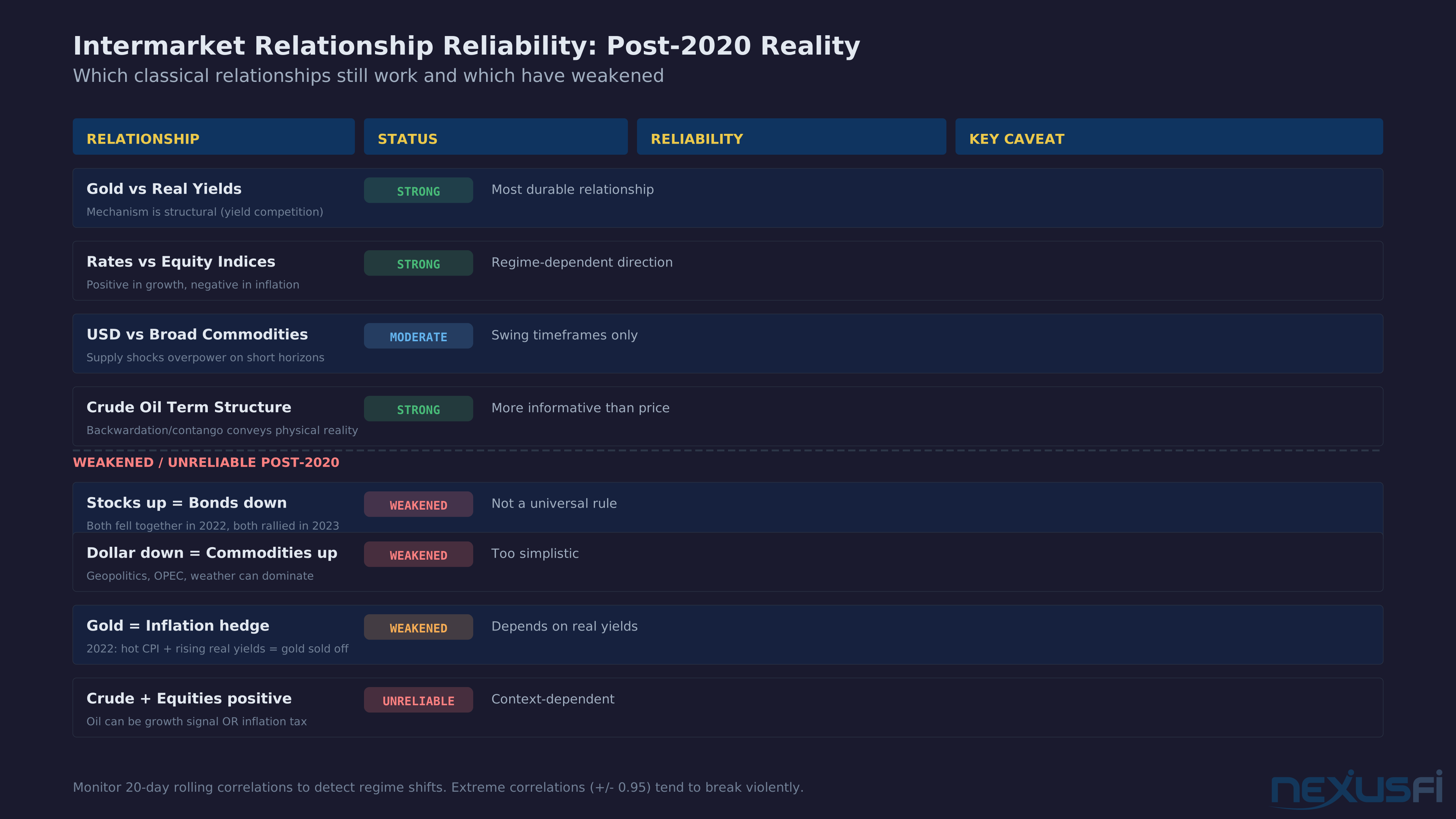
"Dollar down = commodities up" as a blanket rule. It holds at a macro level but fails on shorter horizons. Supply shocks, sanctions, and logistics disruptions can overpower the dollar effect.
Gold as a pure inflation hedge. Gold rallies during inflation only when inflation pushes real yields lower. When inflation arrives with rising real yields and a strong dollar (2022), gold sells off despite hot CPI prints.
Crude and equities as a simple positive pair. Crude can confirm growth strength or act as an inflationary tax on equity valuations. Context determines which mechanism dominates.
How to Detect Relationship Breakdown #
Don't wait for the regime to be obvious. Monitor these diagnostic signals:
- 20-day rolling correlation between your core pairs. When the 20-day correlation diverges sharply from the 60-day, the relationship may be shifting.
- Correlation approaching extremes (+/-0.95 or higher) tend to break violently when the regime shifts. The -0.98 USD-CRB reading @mfbreakout cited [6] is a warning sign, not a comfort signal.
- Non-response to catalysts. If a hot CPI doesn't move gold, or a weak NFP doesn't bid bonds, the relationship you're relying on may already be stale.
- When in doubt, reduce size first. You don't need to understand why a correlation broke before you respond. Cut exposure, then diagnose.
Extreme correlations (+/-0.95 or higher) are a warning sign, not a comfort signal. When two markets become nearly perfectly correlated, the relationship has become crowded — too many participants are relying on it. Regime shifts shatter these extreme readings violently because the unwind is one-directional. Watch for correlations approaching extremes as a signal to reduce your reliance on that relationship, not increase it.
A market that fails to respond to a trigger is more informative than any positive signal. Gold not rallying on a weak dollar, bonds not bidding after a dovish surprise, equities not selling on a hot CPI — these non-reactions tell you that the dominant relationship has shifted or that positioning is already so extreme that the trigger was priced in. Non-response is the earliest and most reliable warning that the intermarket map you're using needs redrawing.
Daily Intermarket Workflow #
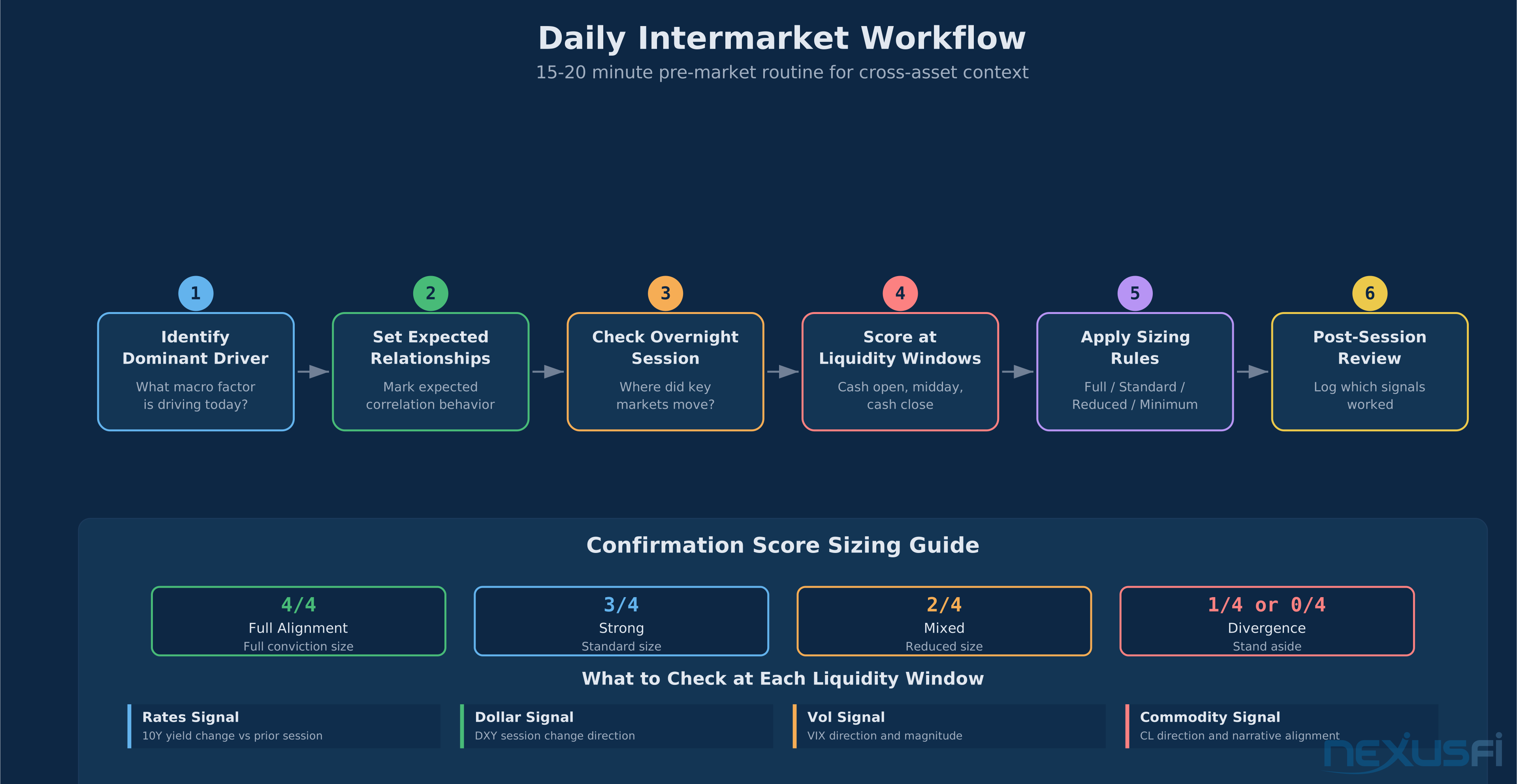
A concrete pre-market routine you can execute in 15-20 minutes:
Step 1: Identify the Dominant Driver. What is the market focused on today? Rates impulse (FOMC, CPI, NFP) → watch ZN vs ES. Dollar impulse (policy divergence) → watch DXY vs commodities. Supply shock (OPEC, geopolitics) → watch crude term structure, ignore dollar correlation.
Step 2: Set Expected Relationships. For a CPI day: hot CPI → expect ZN lower, dollar stronger, gold weaker, equities pressured. Mark your expectations before the data hits.
Step 3: Check the Overnight Session. Where did key markets move during globex? If bonds rallied but equities are flat, that's already a data point.
Step 4: Score at Key Liquidity Windows. At cash open, midday, and cash close, run your scorecard. Are cross-market relationships confirming or diverging? Score changed → adjust so.
Step 5: Apply Sizing Rules. Full confirmation = full size. Partial = standard. Divergence = reduced. Regime uncertain = minimum exposure.
Step 6: Post-Session Review. Score whether your expected relationships held. Log results. Over time, this log becomes your empirical record of which signals work in which regimes.
@rocksolid68 uses exactly this approach with an intraday intermarket correlation chart tracking bonds, gold, USD, and crude alongside ES: "These charts are some of my favorite tools for confirming my trades. They can tell you a lot about the market sentiment for the day." [5]
Practical Application: Integrating With Your Trading #
Intermarket analysis wraps around your entry methodology. It doesn't replace it.
If you trade volume profile setups, intermarket context helps you decide which levels to trust. A POC bounce on ES with a 3/4 confirmation score is a higher-quality trade than the same setup with 1/4 confirmation. If ZN is bidding hard (risk-off), that POC bounce is trading against macro flow.
If you trade breakouts, intermarket confirmation helps distinguish real breakouts from fakeouts. An ES break above value area high with rates confirming, VIX declining, and dollar cooperative is a continuation trade. The same breakout with VIX expanding and bonds bidding is a potential trap.
Conditional exit logic: "If I'm long ES and ZN reverses sharply higher (yields dropping), tighten my stop to the nearest LVN. If VIX spikes above its 20-day EMA while I'm in the trade, move stop to breakeven."
This ties intermarket context directly to order management — not as an afterthought, but as a core part of your execution framework that triggers concrete actions at specific levels.
For related execution frameworks, see Order Flow Analysis and VWAP Trading Strategies.
Knowledge Map
Prerequisites
Understand these firstGo Deeper
Build on this knowledgeReferences This Article
Articles that build on this topicCitations
- — Spoo-nalysis ES e-mini futures S&P 500 (2014) 👍 17“traders look at cross asset correlations on an inter-market and intra-market basis, to gain insights into capital flows so that they can better anticipate moves and define risk.”
- — Spoo-nalysis ES e-mini futures S&P 500 (2020) 👍 18“demonstrates the highly positive correlation between equities and the 10Y yield, with the 10Y leading and equities lagging.”
- — Spoo-nalysis ES e-mini futures S&P 500 (2015) 👍 26“my primary reason for shorting equities and buying gold yesterday was due to two divergences; however they were not technical ones.”
- — Correlations and Inverse correlation ES (2015) 👍 11“USDJPY down is bearish for the ES... AUDJPY up is bullish for ES due to risk on sentiment with a carry trade... ZB/ZN up is bearish for the ES.”
- — How I Trade For a Living (2016) 👍 24“These charts are some of my favorite tools for confirming my trades. They can tell you a lot about the market sentiment for the day.”
- — The CL Crude-analysis Thread (2015) 👍 1“USD vs CRB Commodities Index -0.98, USD vs WTI Oil -0.96, USD vs. Gold -0.55, USD vs SP500 +0.69”
- John J. Murphy — Intermarket Analysis: Profiting from Global Market Relationships (2004)
- Federal Reserve Bank of St. Louis — 10-Year Treasury Inflation-Indexed Security, Constant Maturity (DFII10) (2024)