



Futures Contract Rolls: Reading Market Structure Through the Expiration Window
Overview #
Every futures contract has a death date. And in the days leading up to that date, the market undergoes a structural transformation that is visible, measurable, and tradeable — if you know what to look for.
The roll is not a single event. It's a process: a gradual migration of liquidity, open interest, and order flow from one contract month to the next. Understanding this process through a market structure lens — how volume shifts, how the DOM thins, how calendar spread activity accelerates — separates traders who get ambushed by roll week behavior from those who anticipate it.
This article examines futures contract rolls from the inside out: the mechanics of expiration, the observable signals in the order book, the costs embedded in rolling a position, and the practical decisions active traders face every quarter.
Why Futures Contracts Expire #
Futures contracts are legally binding agreements to buy or sell an underlying asset at a specified price on a specified date. That date is the expiration. Unlike stocks, which you can hold indefinitely, futures have a built-in clock.
The expiration structure serves an economic purpose: it anchors futures prices to the real economy. A December crude oil contract must converge to the actual spot price of crude by delivery. An E-mini S&P 500 contract must converge to the actual index value at settlement. Without expiration and convergence, arbitrage would be impossible and the futures market would disconnect from the underlying it's supposed to represent.
For physically settled contracts — crude oil, natural gas, agricultural commodities, metals — expiration triggers actual delivery of the underlying commodity to a specific delivery point. For cash-settled contracts — equity index futures, Eurodollar futures, VIX futures — expiration triggers a cash payment based on the final settlement value.
The practical implication: you cannot simply hold a futures position indefinitely. You must either close it, take delivery (if physically settled), or roll it to the next contract month.
The Anatomy of a Roll Window #
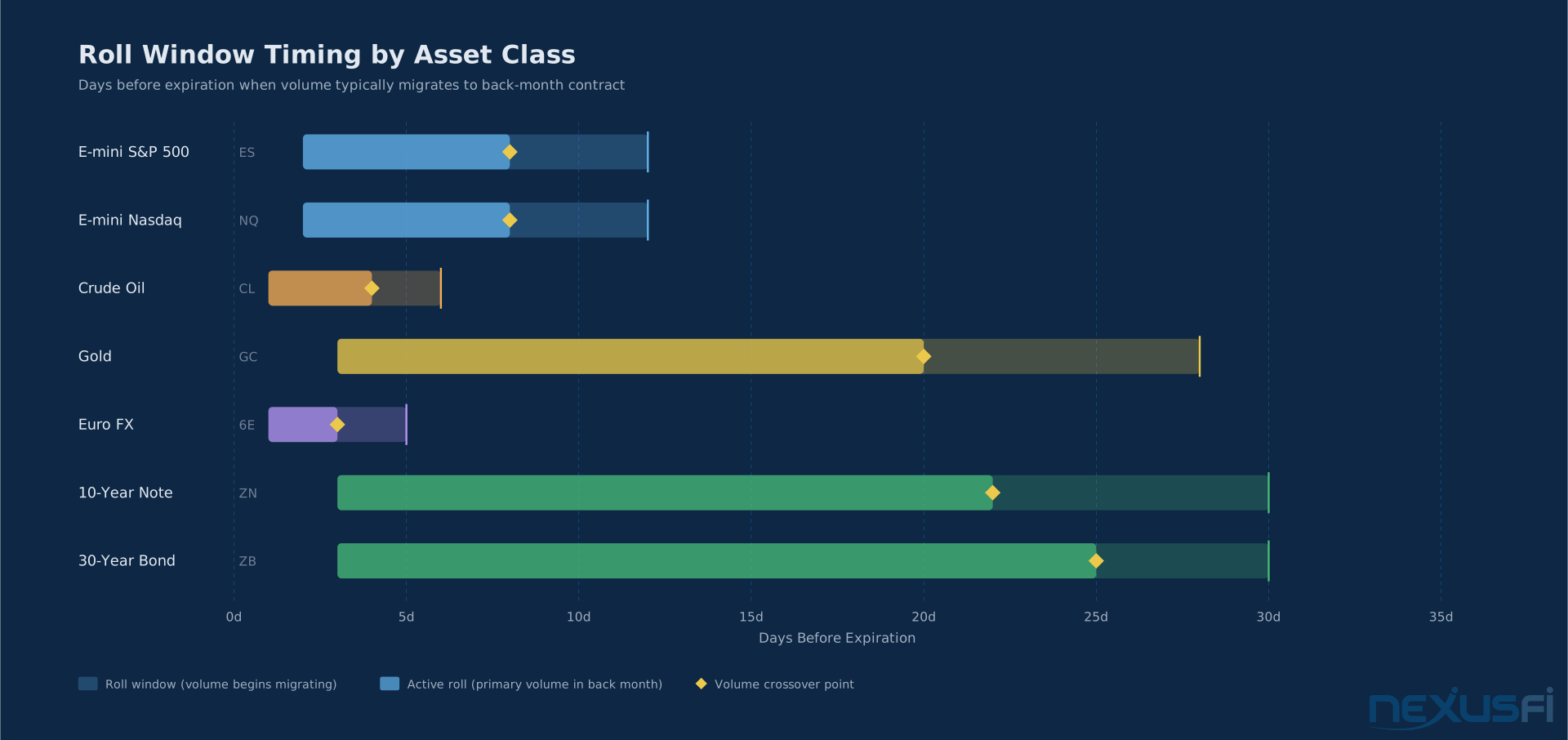
The roll does not happen on a single day. It unfolds over a window — typically one to two weeks — during which the market transitions from one contract to the next. Within this window, several observable structural shifts occur simultaneously.
Open Interest Migration #
Open interest (OI) is the total number of outstanding contracts held by market participants. At any given moment, OI across all active contract months reflects the aggregate positioning of the entire market.
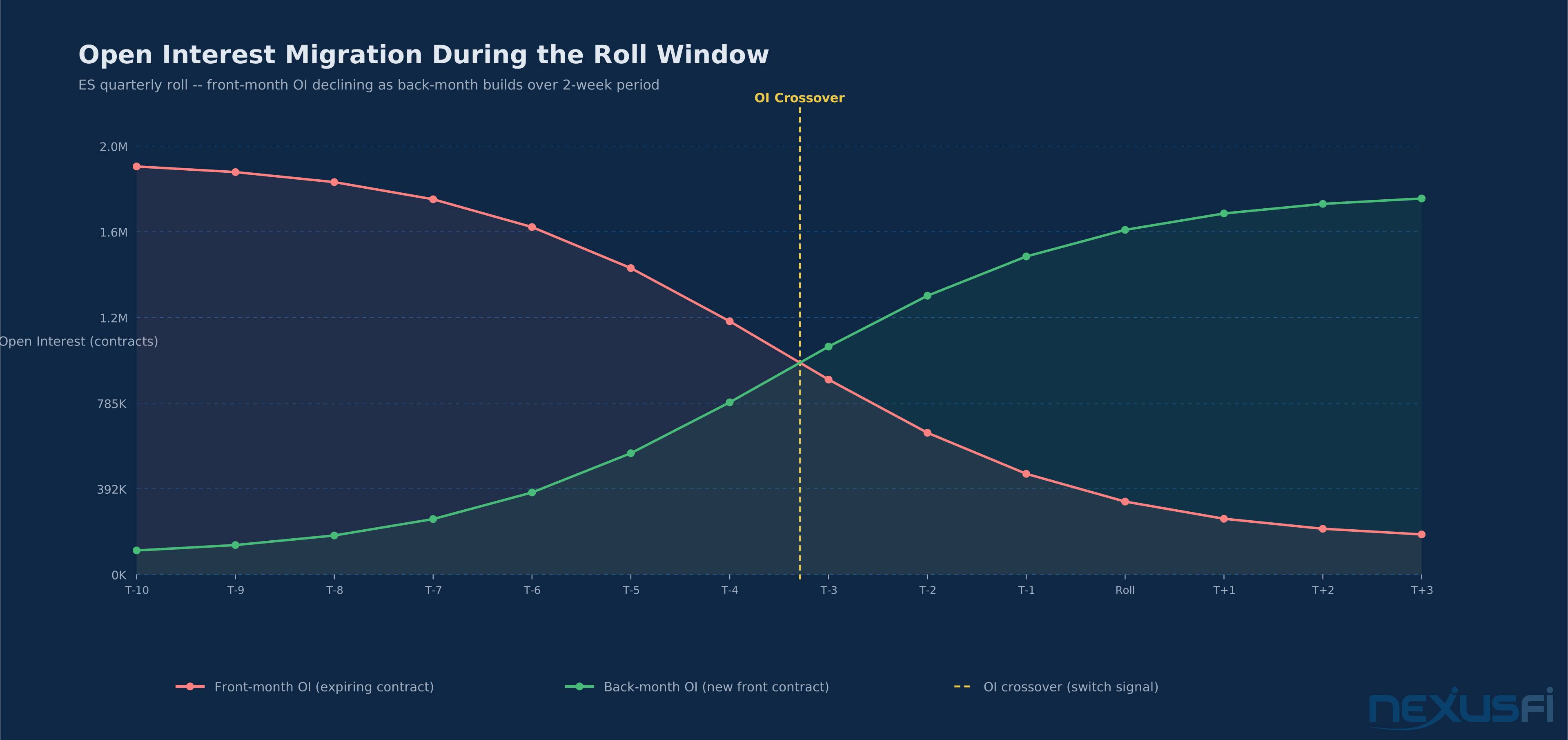
During a normal period, open interest is concentrated in the front-month contract — the nearest expiring contract. As expiration approaches, OI begins to migrate. Traders who want to maintain their positions roll from the front month to the next active month. Each roll consists of two transactions: closing the front-month position and opening the back-month position. The result is a steady decline in front-month OI and a corresponding rise in back-month OI.
This OI migration is often more gradual than volume migration. Large institutional traders — who are often carrying enormous positions — may roll over several days or even weeks to minimize market impact.
Volume Crossover: The Market's Signal to Roll #
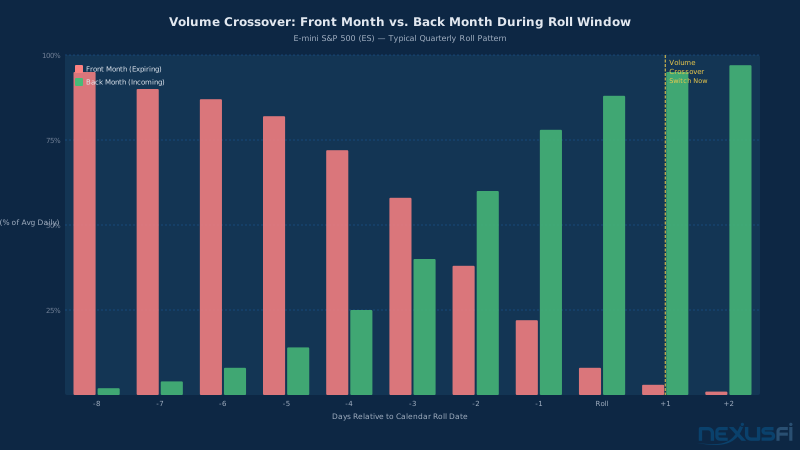
Volume crossover is the moment when trading volume in the back-month contract exceeds volume in the front-month contract. For most active traders, the volume crossover is the clearest signal that the roll has occurred.
@max-td explained the standard CME equity index roll pattern in one of the forum's most-cited posts: "Volume shifts to the new contract at market open (09:30 EST) on Rollover day" and "New day trading or swing trading positions opened on rollover day should use the new contract month irrespective of when you plan to close it." [1]
But the crossover timing varies much by instrument and exchange. @Lancer provided a detailed empirical breakdown from observing actual roll behavior across popular markets: ES and NQ volume typically shifts on the Sunday after the calendar roll date, while RTY and YM shift on the day after. CL shifts on the calendar roll date or the day after, and NG shifts a day earlier than the calendar date. GC and SI shift one to two days after. [2]
The practical rule: start monitoring both contracts for volume crossover two days before the expected roll date, and switch to the new front month once the back month definitively leads in volume.
Liquidity Thinning in the Expiring Contract #
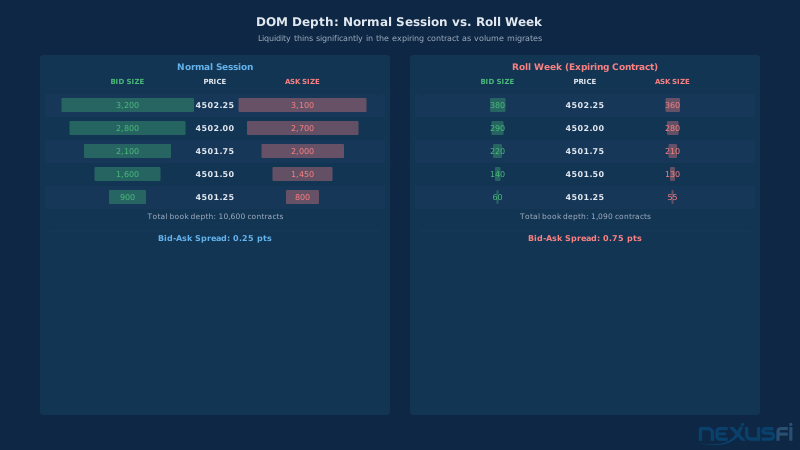
As volume migrates, liquidity in the expiring front-month contract deteriorates. This shows up clearly in the DOM (Depth of Market). What was previously a deep, liquid order book with multiple layers of bids and offers at each price begins to thin. Size at each level shrinks. The bid-ask spread widens.
This liquidity thinning has direct consequences for execution quality. During normal market hours at peak liquidity, an ES trader might see 2,000-5,000 contracts stacked at each of the top few price levels. During roll week in the expiring contract, those same levels might show 200-500 contracts. Market impact for the same trade size increases substantially.
The problem is most acute for commodity contracts with physical delivery constraints.
First Notice Day vs. Last Trading Day #
Two critical dates define the boundary of the roll window, and confusing them is a common mistake with serious consequences.
First Notice Day #
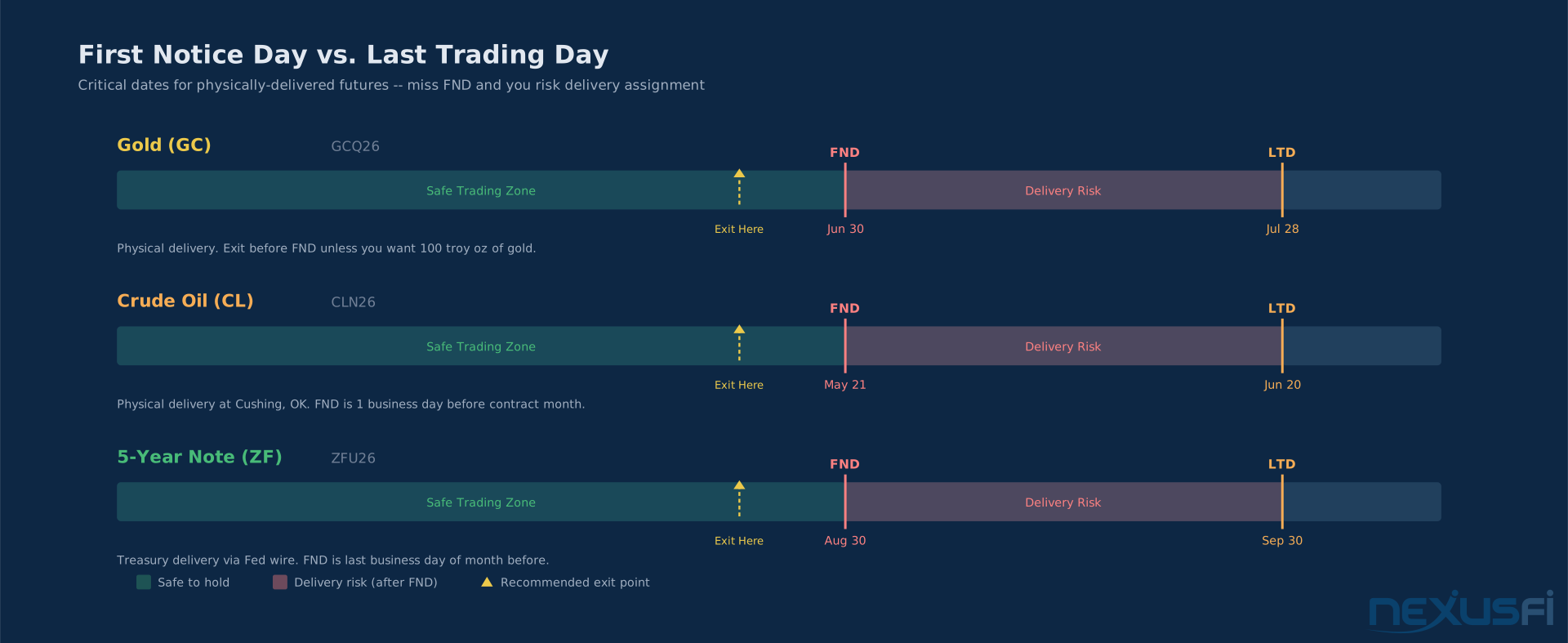
First notice day (FND) is the first day a holder of a long futures position can be required to take delivery of the underlying commodity. This date applies primarily to physically settled contracts. For financial futures, there is no delivery, so FND is less relevant.
For contracts like gold (GC), silver (SI), and interest rate futures (ZB, ZN, ZF), the first notice day typically arrives before the last trading day — sometimes by weeks.
Holding a long position in a physically settled contract past First Notice Day can trigger a delivery obligation — meaning you may be required to accept physical delivery of the commodity (e.g., 100 troy ounces of gold per GC contract, 1,000 barrels of crude oil per CL contract). Most retail brokers will forcibly liquidate positions before FND to prevent this, but relying on your broker as a safety net is not a risk management plan. Know your contract's FND and roll before it arrives.
For commodities, trading volume shifts to the next contract well before first notice day.
Last Trading Day #
The last trading day is the final day you can trade a contract. After this date, positions are automatically settled — either through physical delivery or cash settlement. Missing the last trading day with an open position has consequences ranging from an unintended settlement price to, in extreme cases, an obligation to accept or make physical delivery of a commodity.
For most financial futures, you can trade right up to last trading day — just be aware that liquidity will be minimal and the DOM will be nearly empty by that point. For physical commodities with meaningful delivery risk, roll several business days before the last trading day.
Roll Mechanics by Asset Class #
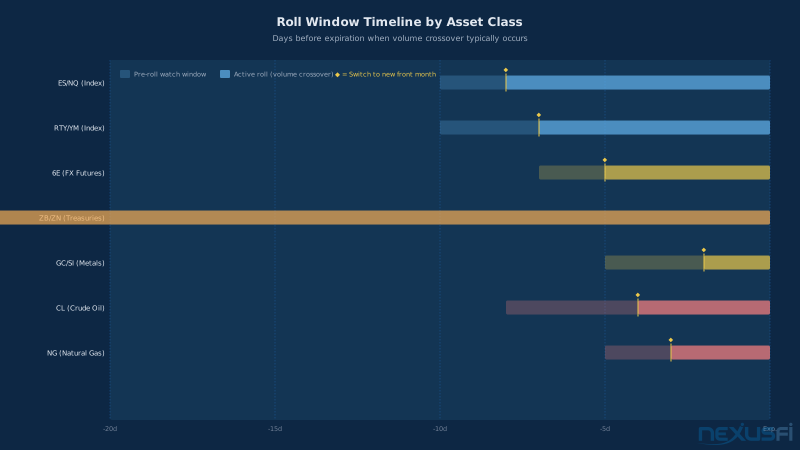
Roll timing and behavior differ much across asset classes. Understanding these differences prevents costly mistakes.
| Asset Class | Key Contracts | Roll Timing | Key Risk | FND vs LTD |
|---|---|---|---|---|
| Equity Index | ES, NQ, RTY, YM | Volume shifts Sun after roll Thursday (8 biz days before expiry) | Low — cash-settled, tight spreads | LTD only (no FND) |
| Crude Oil | CL | Volume shifts on or day after calendar roll date | High — physical delivery at Cushing, squeeze risk | LTD binding (FND after LTD) |
| Natural Gas | NG | Volume shifts 1-2 days before calendar roll date | High — volatile near expiry, storage/weather | LTD binding |
| Metals | GC, SI, HG | Volume shifts 1-2 days after calendar roll date | Medium — FND delivery obligation for longs | FND binding (weeks before LTD) |
| Agricultural | ZC, ZS, ZW | Variable, 1-10 days before FND | High — different crop/fundamentals per contract month | FND binding |
| Interest Rates | ZB, ZN, ZF, ZT | Volume shifts on FND (~1 month before expiry) | Low-medium — FND regime, orderly roll | FND binding |
| FX | 6E, 6J, 6B, 6A | Volume shifts ~5 biz days before expiry | Low — session template errors if using wrong times | LTD binding |
CME Equity Index Futures (ES, NQ, RTY, YM) #
Equity index futures follow the most standardized roll schedule. Contracts expire quarterly: March (H), June (M), September (U), and December (Z). Expiration falls on the third Friday of the contract month.
The roll date is 8 business days before expiration — typically the second Thursday of the expiration month. This "quarterly IMM (International Monetary Market) date" aligns with the broader derivatives market, as options on futures and OTC derivatives also reference this date.
Volume on ES and NQ typically migrates to the new contract on the Sunday after the Thursday roll date, meaning Monday morning opens with the new front month dominant. The standard roll window is Thursday-Friday, with Sunday electronic trading showing the new contract in the lead by session open.
The equity index roll carries relatively low risk for traders who simply track volume crossover and switch promptly. The contracts are cash-settled, there's no delivery risk, and the spread between contracts is tight and predictable (based on fair value calculations involving interest rates and dividends).
Crude Oil and Energy Futures (CL, NG) #
Crude oil has a different roll structure driven by physical delivery constraints. The contract expires three business days before the 25th calendar day of the month preceding the delivery month — meaning the November contract expires in mid-to-late October. First notice day for crude comes after the last trading day, so the last trading day is the binding constraint.
The Cushing, Oklahoma delivery point creates unique risks. @Fat Tails documented one of the most dramatic examples: the September 2008 crude oil squeeze where the front month "rose by 16%" in a single session while the spot market and back month showed far more modest moves — the result of delivery constraints trapping short positions at a physically constrained pipeline depot. [3]
The practical guidance for CL: roll at least three business days before the last trading day. Watch the bid-ask spread on the front month — significant widening signals that the roll is in progress and execution quality is deteriorating.
Natural gas (NG) rolls even earlier, with the volume shift often occurring two days before the calendar roll date. NG is notoriously volatile around expiration due to storage utilization, weather forecasts, and seasonal demand spikes.
Metals (GC, SI, HG) #
Gold, silver, and copper operate on a first-notice-day regime. For GC and SI, volume typically crossover one to two days after the calendar roll date. Since these are financially sophisticated contracts traded primarily by hedge funds, banks, and CTAs — rather than commercial delivery participants — the roll tends to be orderly.
The key risk for metal futures is holding a long position into first notice day. If you're long GC on first notice day, you may receive a delivery notice obligating you to take physical delivery of 100 troy ounces of gold per contract at a CME-designated vault. Most retail traders and systematic funds have zero interest in this.
Agricultural Futures (ZC, ZS, ZW) #
Agricultural futures present the most complex roll dynamic because each contract month represents a different crop — with different supply, demand, and weather conditions. Rolling from December corn to March corn is not simply a mechanical exercise; it's an implicit bet on a different set of fundamentals.
For agricultural futures, volume crossover timing is less predictable and more spread out — typically occurring 1-10 days before first notice day, with wide variation by crop and market conditions.
Interest Rate Futures (ZB, ZN, ZF, ZT) #
Treasury futures follow the first-notice-day regime and roll about one month before expiration. @Fat Tails explained the ZF (5-year Treasury Note) roll: volume shifts to the new contract on first notice day, which is typically the last business day of the month preceding the contract month.
The roll for interest rate futures is especially well-suited to calendar spread execution — more on this below.
FX Futures (6E, 6J, 6B, 6A) #
Currency futures expire on the second business day before the third Wednesday of the contract month. Volume typically crossover 5 business days before expiration — roughly on the Monday preceding the expiration week.
@Fat Tails noted an important session template consideration for FX futures: the contractual trading times are specific, and using incorrect session templates (like "24/7") causes indicator and strategy calculation errors during rollover. The correct session template is essential for accurate technical analysis. [6]
Roll Costs: Contango, Backwardation, and the Roll Yield #
The price at which you execute a roll is not neutral. Rolling a futures position has a cost — or a benefit — determined by the shape of the futures curve and the relationship between front-month and back-month prices.
The Futures Curve #
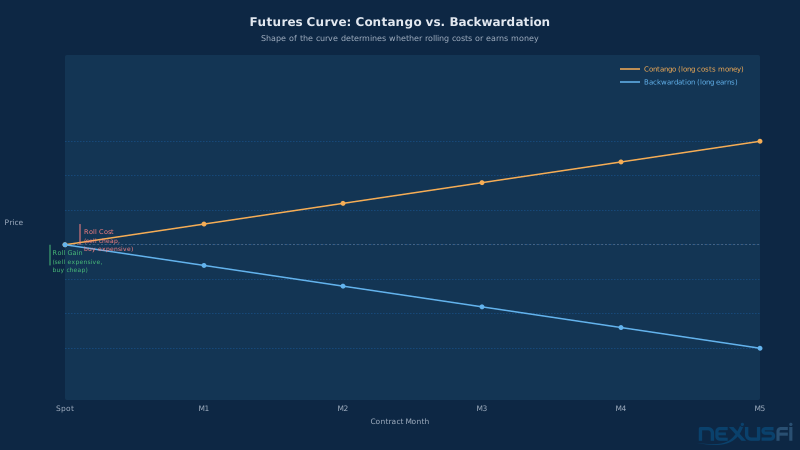
At any given moment, a futures market has contracts trading at multiple expiration dates. Plotting these prices against their expiration dates creates the futures curve. The shape of this curve determines whether rolling a position costs money or earns money.
Contango: Rolling Long Costs Money #
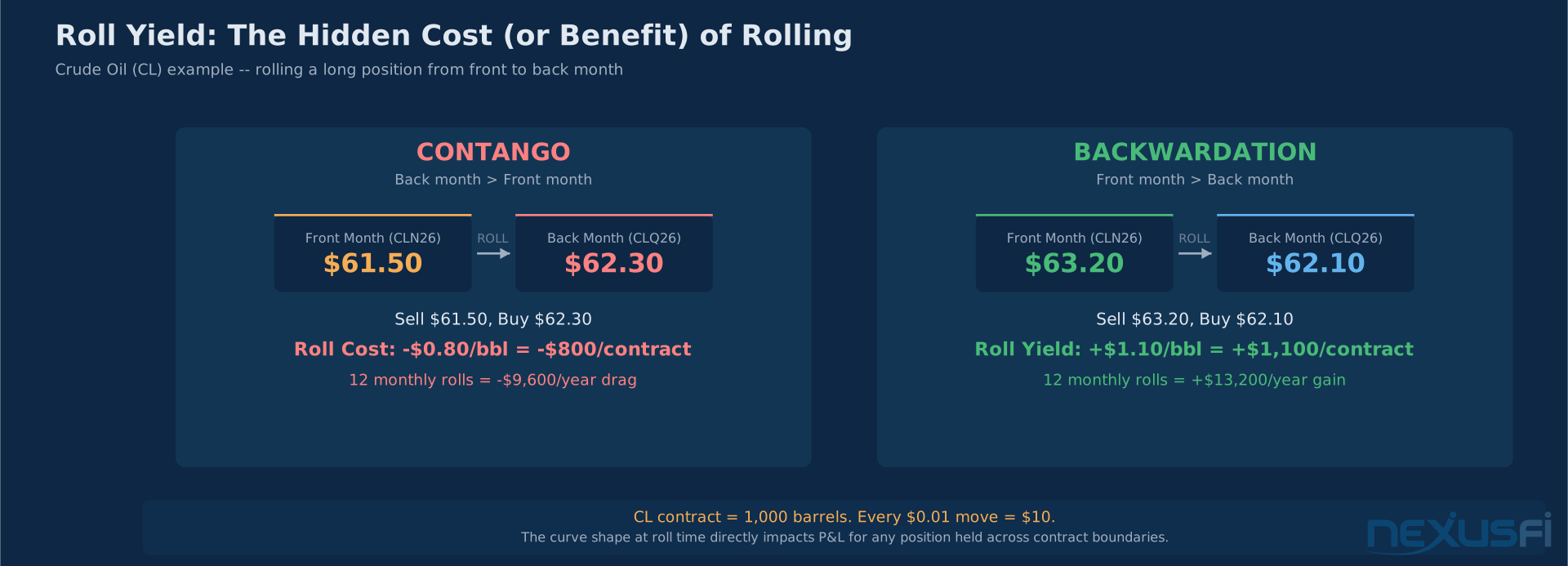
When the futures curve slopes upward — back-month contracts trading at higher prices than the front month — the market is in contango. For a long futures position in contango, every roll from front month to back month means selling the cheaper near contract and buying the more expensive deferred contract.
The loss incurred on this roll is the negative roll yield. For commodity markets with high storage costs (crude oil, natural gas, grain), extended contango periods create significant headwinds for long holders who roll repeatedly.
This explains why VIX-based ETFs have historically underperformed spot VIX over time. [7]
Backwardation: Rolling Long Earns Money #
When the futures curve slopes downward — front-month contracts trading at higher prices than deferred months — the market is in backwardation. For a long holder in backwardation, rolling from front to back means selling the expensive near contract and buying the cheaper deferred contract.
This generates a positive roll yield. Backwardation often occurs in markets with convenience yield (oil during supply disruptions), physical scarcity premiums, or when dividend yields exceed interest rates (as with equity index futures when dividends outpace short-term rates).
Roll yield is not a rounding error — in some markets, it's the dominant return driver. [7]
Equity Index Futures: The Fair Value Basis #
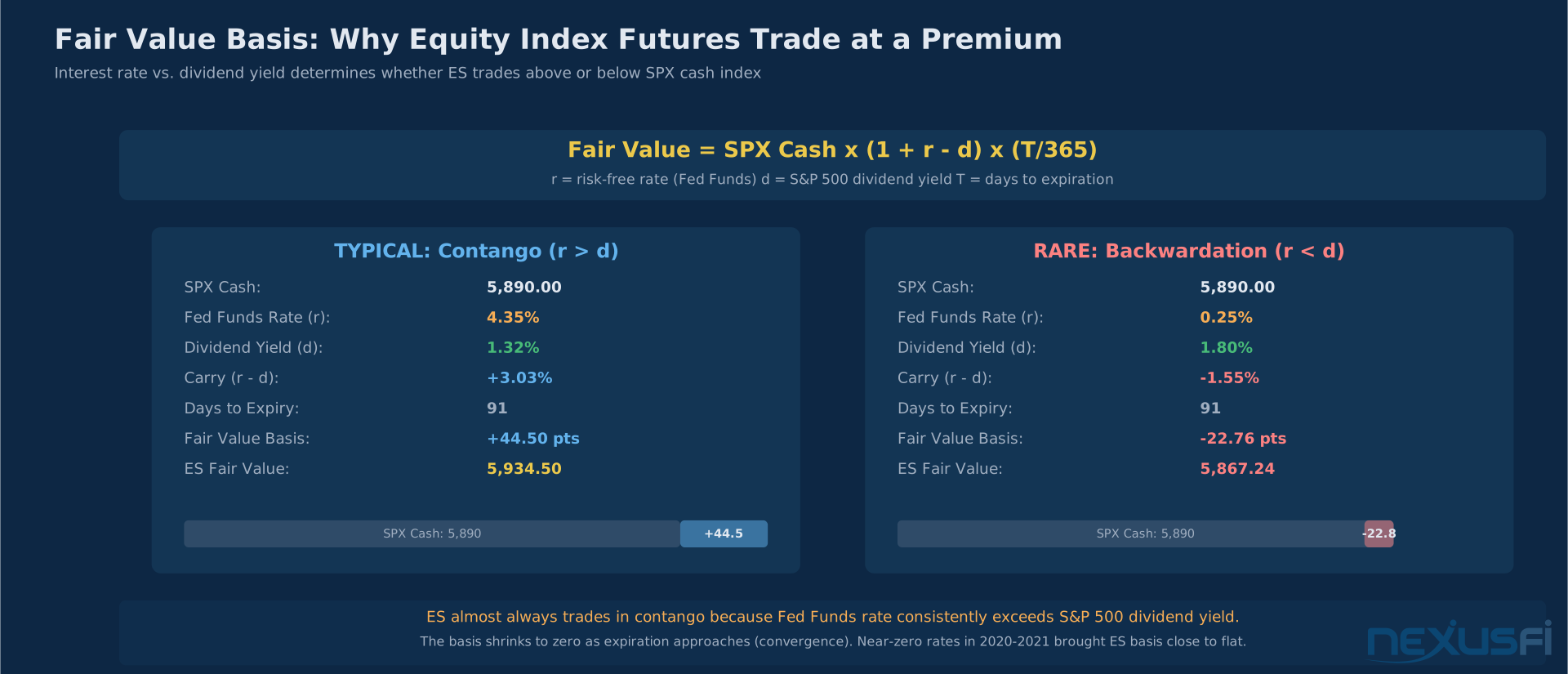
For equity index futures like ES, the fair value relationship between front-month and back-month contracts depends on two factors: the interest rate foregone by posting margin instead of investing in cash, and the dividends paid on the underlying stocks between now and expiration.
When dividend yields exceed short-term interest rates (as they did post-2008 ZIRP), ES trades in backwardation — each consecutive contract trades at a lower price than the front month. When short-term rates exceed dividend yields, ES trades in contango.
The difference in dividend treatment between ES and FDAX explains their structurally different basis behavior. [8]
Calendar Spread Mechanics During the Roll #
One of the most important but least discussed aspects of the roll from a market structure perspective is the role of calendar spreads — simultaneously holding offsetting positions in two different expiration months.
Why Professionals Roll via Calendar Spreads #
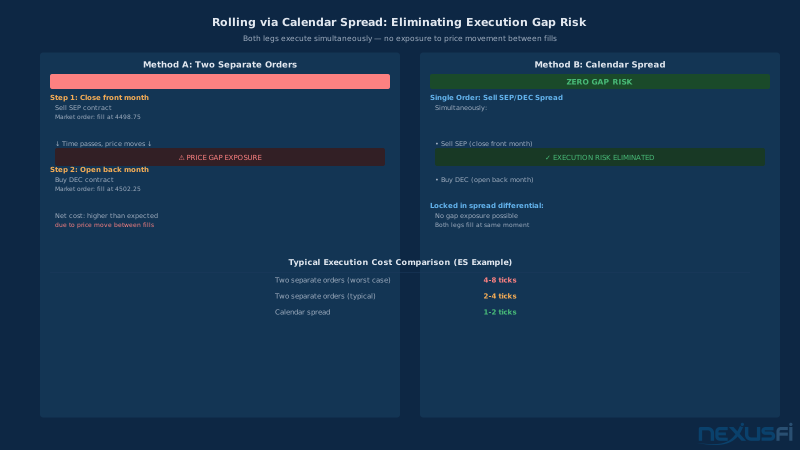
Rolling a position via two separate orders (close front month, open back month) exposes you to execution risk — the market can move between your two fills. Rolling via a calendar spread executes both legs simultaneously at a fixed spread relationship, eliminating the gap risk.
Calendar Spread Liquidity During Roll Windows #
Calendar spreads on the CME are listed as dedicated products and trade on the exchange's spread pricing engine. During roll windows, spread volume surges dramatically as institutional traders roll massive positions via spread transactions.
Outside the roll window, ES calendar spreads are nearly inactive. During the roll window, they briefly become active as institutional players execute roll trades. [10]
The spread transaction creates a temporary but observable effect in the DOM: large orders appear simultaneously in both the front and back month order books, contributing to what can look like unusual volume bursts at specific price levels.
DOM Behavior During Roll Windows #
The Depth of Market (DOM) tells a different story during roll week than it does during normal trading. Understanding these differences helps active traders avoid misinterpreting roll-driven order flow as directional activity.
What the DOM Shows During Roll Windows #
Thinning at the top of book: As liquidity providers withdraw offers in the expiring contract, the DOM compresses. The bid-ask spread widens — often from 1-2 ticks to 3-5 ticks — and size at each level shrinks. Market orders that would execute instantly during normal conditions may now move price by several ticks.
Artificially symmetric volume: Roll transactions are directionally neutral — the buyer of the front month and seller of the back month are rolling a long position; the seller of the front month and buyer of the back month are rolling a short. This creates volume bursts that do not represent new directional conviction. During roll week, heavy volume in the expiring contract is not a signal; it's noise from position transfers.
Cross-contract reference points: Experienced DOM traders monitor both the front and back month simultaneously during roll windows. Price levels that become relevant in the new front month may correspond to settlement prices, large prints, or support/resistance from the expiring contract — but adjusted by the spread differential.
The Jigsaw Trading Observation on Roll Volume Interpretation #
During roll windows, the standard assumption that order flow reflects directional conviction breaks down. Sellers in the front month may be bulls rolling their long positions, not bears initiating new shorts. Buyers may be shorts covering to move their position to the next contract. Treat all volume and order flow signals in the expiring contract with skepticism during the roll window — the normal DOM reading playbook does not apply.
This is the central market structure insight: during roll windows, the standard assumption that order flow reflects directional conviction breaks down. Sellers in the front month may be bulls rolling their long positions, not bears initiating new shorts.
Roll Week Price Action: Patterns and Expectations #
Roll windows have characteristic price action that experienced traders recognize, even if they can't predict specific directional moves.
Range Expansion and Reduced Follow-Through #
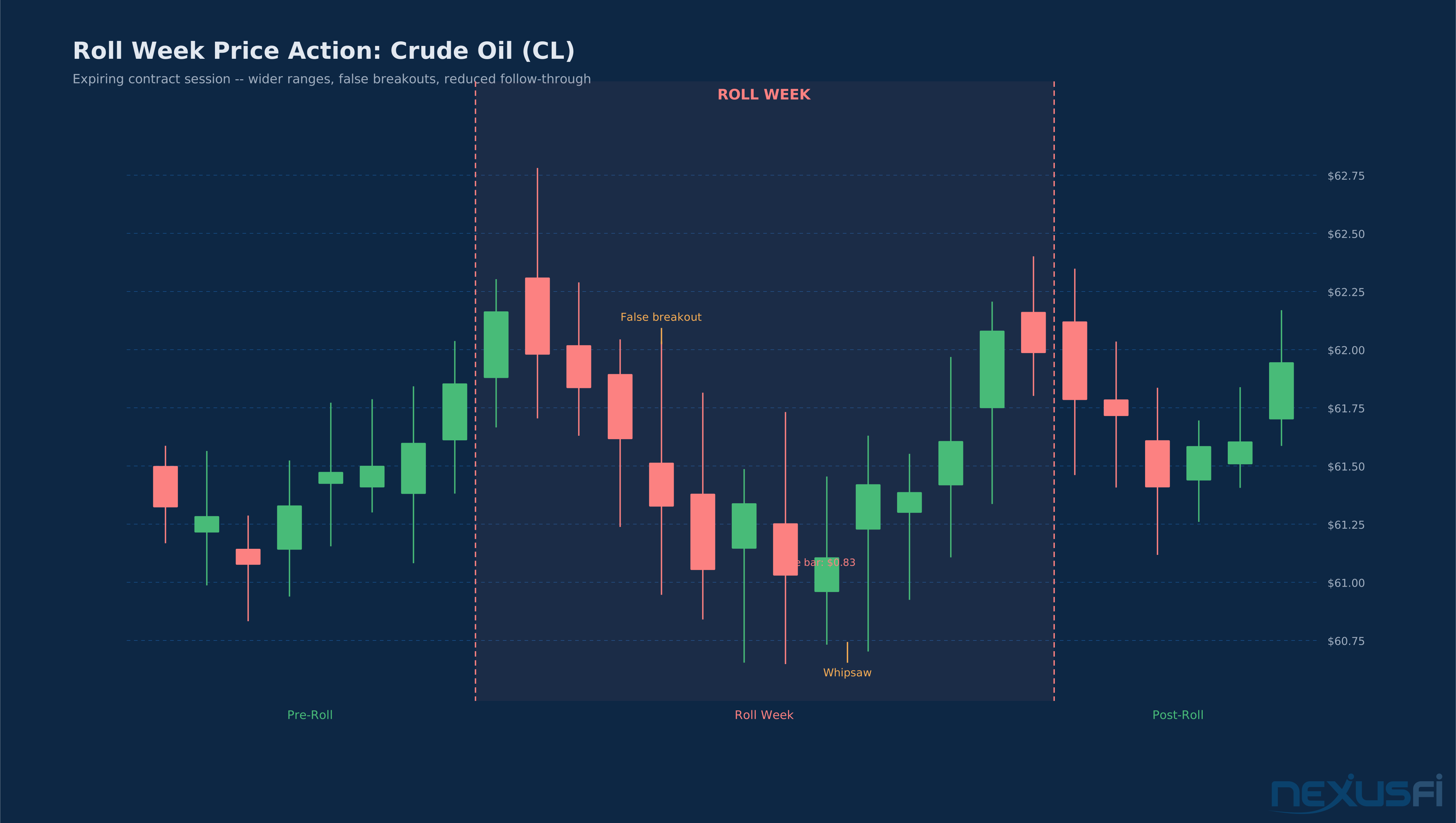
Commodity contracts — especially CL during roll week — often exhibit wider daily ranges with poor follow-through.
The mechanism is straightforward: when large roll transactions dominate volume, genuine directional trades are swimming against a tide of neutral positioning activity. Price can move aggressively in one direction only to snap back as the next roll batch executes in the opposite direction.
Spread Narrowing and Widening as a Timing Signal #
@TradeFlightPlan also identified a useful practical signal: monitoring whether the spread between front and back month is narrowing or widening during roll week. A narrowing spread suggests the front month is being bid up relative to the back month (unusual), while a widening spread suggests the standard roll process is proceeding normally. Abnormal spread behavior can signal institutional positioning ahead of expiration that may resolve violently.
Equity Index Futures: Often Orderly, But Not Always #
For ES and NQ, roll week is typically orderly because both contracts are cash-settled and the spread relationship is determined by a transparent fair-value formula. The DOM migration is visible and predictable. However, during periods of extraordinary market stress — circuit breakers, Fed announcements coinciding with roll week — the simultaneous roll activity amplifies moves.
Practical Roll Decisions for Active Traders #
Track volume, not calendar dates. The calendar roll date tells you when to start watching — the volume crossover tells you when to act. Switch to the new front month when back-month volume definitively exceeds front-month volume. This single rule prevents 90% of roll-related execution problems.
Rule 1: Track Volume, Not Dates #
The calendar roll date is a signal to start watching, not a rule to follow mechanically. Switch to the new front month when trading volume in the back month definitively exceeds volume in the front month. For most instruments, this crossover is clearly visible on a volume chart.
Rule 2: Roll Before Liquidity Disappears #
Don't wait for the last moment. For financial futures, rolling 1-2 days before volume crossover costs nothing — the spread difference is minimal and you avoid execution degradation. For physically settled commodities, roll 3-5 business days before the last trading day.
Rule 3: Use Calendar Spreads for Large Positions #
If rolling more than 10-20 contracts, executing via the exchange-listed calendar spread eliminates gap risk and typically provides better execution economics than two separate outright transactions.
Rule 4: Adjust Your Volume Interpretation #
During roll windows, high volume in the front month does not mean strong directional conviction. Treat volume signals with skepticism and weight price action at the composite price levels more heavily than order flow signals in either individual contract.
Rule 5: Don't Trade the Expiring Contract Late #
If you're still in the old front month two days past the volume crossover, you're in illiquid territory. Spread widens, stops get hit easily, and recovery from adverse fills is slow. Exit or roll immediately.
Continuous Contracts and Data Continuity #
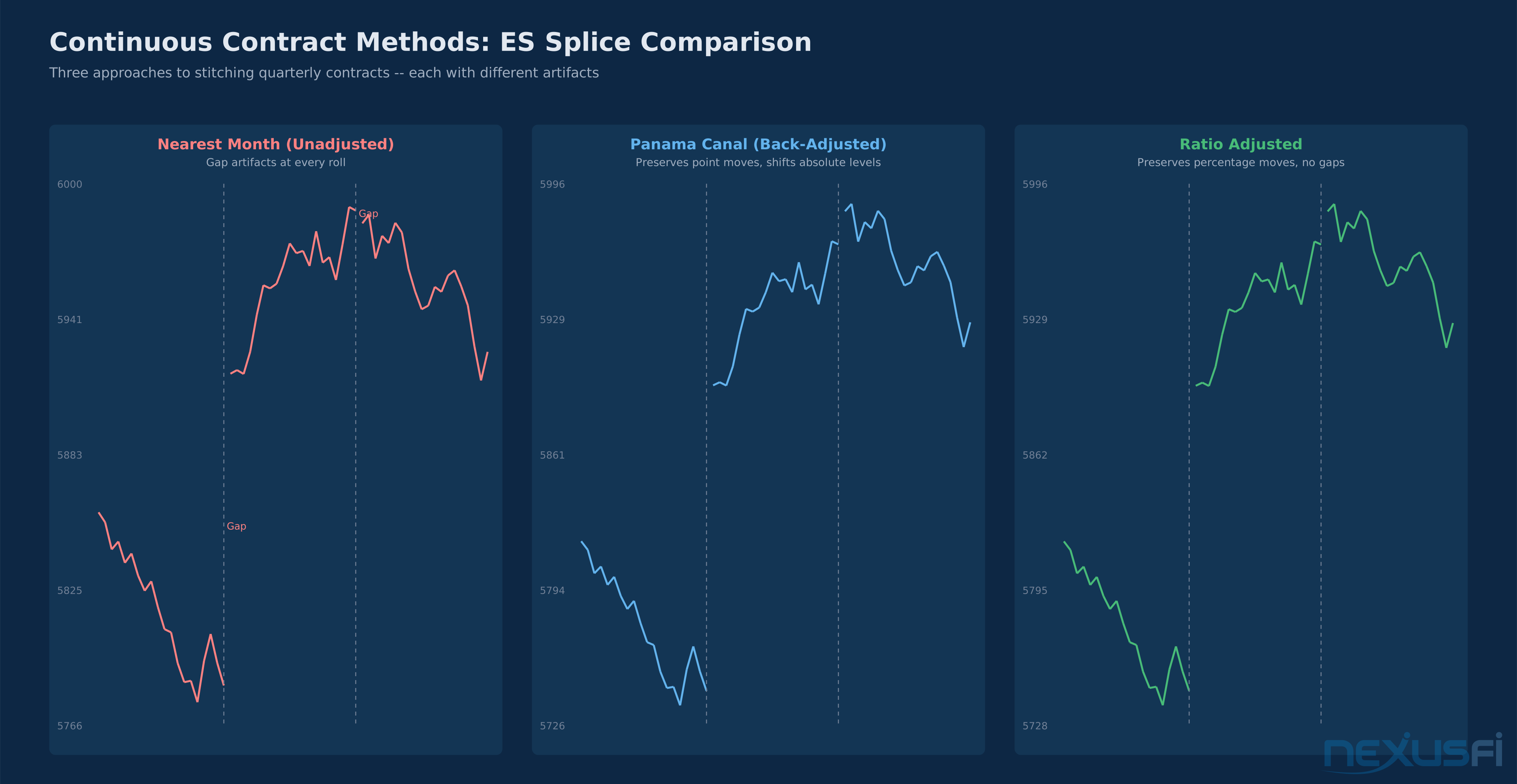
Backtesting and charting systems must handle the roll transition programmatically. How they do this creates the data artifact known as the "roll gap" — the price discontinuity between the expiring and new contract at the moment of the roll.
Different continuous contract construction methods handle this gap differently:
Back-adjustment (Panama method): Adds or subtracts a constant offset to all historical prices in the old contract to eliminate the gap. Result: a continuous price series with no gap, but absolute price levels are distorted. This is the most common method and the best choice for technical analysis on price levels.
Ratio adjustment: Multiplies historical prices by the ratio between old and new contract prices. Result: percentage relationships are preserved, but absolute levels are distorted. Better for percentage-based strategies (momentum, mean reversion) but can produce negative historical prices for commodities that have declined substantially.
Nearest-month splicing (no adjustment): Simply concatenates contracts end to end without any price adjustment. Result: large gaps appear at each roll date. Unusable for most technical analysis but accurate for fundamental research into absolute price history.
@Fat Tails specifically called out the backtesting risk of using illiquid contract months for continuous series construction: "NT7 uses this contract for backadjusting contracts, which results in a false offset. Should not take offsets from illiquid contracts." Using a sparsely traded contract month as the splice point creates false price discontinuities that corrupt the backadjusted series. [8]
Roll as a Market Structure Lens #
The roll is the clearest moment in the futures market where the structure of the market — the plumbing, the institutional behavior, the mechanical constraints of expiration — becomes directly visible in price and order flow.
Most of the time, the DOM reflects genuine directional conviction: aggressive buyers lifting offers, sellers hitting bids, scalpers providing liquidity at the top of book. During the roll window, a significant fraction of what looks like directional activity is actually mechanical position transfer. The market is not sending the signals you think it's sending.
This doesn't mean you can't trade roll windows. It means you need to read the instrument differently. Volume crossover timing, calendar spread dynamics, front-month DOM thinning, and roll yield economics are all legible if you know the vocabulary.
The traders who consistently work through roll weeks without surprises are those who learned, often from hard experience, that the market temporarily changes personality during expiration windows — and that the structural changes in the order book, not the price action itself, are the signal worth reading.
Key Concepts at a Glance #
| Concept | Definition |
|---|---|
| Roll window | Period when liquidity migrates from expiring to next contract |
| Volume crossover | Point when back-month volume exceeds front-month volume |
| First notice day | First day a long can be required to take physical delivery |
| Last trading day | Final day the expiring contract can be traded |
| Contango | Back-month prices > front-month prices (rolling long costs money) |
| Backwardation | Back-month prices < front-month prices (rolling long earns money) |
| Roll yield | Profit or loss from the price difference between contracts at roll time |
| Calendar spread | Simultaneous position in two contract months; preferred roll mechanism |
| Fair value basis | Theoretical front-to-back price relationship based on interest rates and dividends |
Knowledge Map
Go Deeper
Build on this knowledgeReferences This Article
Articles that build on this topicCitations
- — Rollover Days - some Quick Facts about (2009) 👍 22“Volume shifts to the new contract at market open (09:30 EST) on Rollover day. New day trading or swing trading positions opened on rollover day should use the new contract month irrespective of when you plan to close it.”
- — Historical Rollover Dates (2022) 👍 2“ES, NQ: Volume shift on Sunday after calendar roll date, so roll EOD on Friday PM. RTY, YM: Volume shift on day after calendar roll date, so roll EOD on Thursday PM. CL: Volume shift on calendar roll date or the day after, so roll EOD on day before roll date or EOD on roll date.”
- — Rollover Days - some Quick Facts about (2010) 👍 12“It can be dangerous to roll later than rollover day, as delivery constraints can lead to a high volatility in the old contract. However, for index futures and in particular for equity index futures, you can roll later than rollover day.”
- — Changing rollover dates for CL (2012) 👍 4“The first notice date for the June gold contract GC 06-12 is on May 31, while the last trade date is on June 27. This means that you have to roll your gold future prior to May 31, that is latest on May 30.”
- — Rollover dates for GC, SI, ZC and ZS (2013) 👍 13“For commodity futures this is not the case [as for index futures], but most participants roll according to volume or open interest crossover. If you roll a contract to a new delivery month, this may be a different crop with entirely different conditions for supply and demand.”
- — Rollover date vs Expiration date (2014) 👍 6“For FOREX futures you should not use a session template such as 24/7. The session template should either reflect the contractual trading times of the instrument or the opening hours of the underlying market.”
- — Spoo-nalysis ES e-mini futures S&P 500 (2014) 👍 21“One of the most overlooked and misunderstood aspects of trading futures is the shape of the futures curve. If the market is in contango when you roll, you effectively lose money, and if the market is in backwardation, you effectively make money. This profit or loss you incur rolling your position is called the roll yield.”
- — Futures Contract Specifications - How long is the life of a contract? (2010) 👍 3“ES shows a nice backwardation, as the basis of the contract is negative. This is due to dividend expectations being higher than interest rates. NT7 uses this contract for backadjusting contracts, which results in a false offset. Should not take offsets from illiquid contracts.”
- — Treasury futures rollover (2013) 👍 2“The easiest way to roll your short position in ZF is to sell a Sep13/Dec13 calendar spread. Rolling via the spread should be cheaper than buying back the old contract and selling the new one separately. Also there is no execution risk involved, as the market cannot move against you when you sell the calendar spread.”
- — Trading calendar spreads? (2016) 👍 5“There's a lot of ES traders here but ES spreads only trade right before expiration and then purely as a way to roll expirations.”
- — DTs Pre Market Prep (2015) 👍 4“If you see a lot of buying in the September contract, it could mean that SHORT positions are being moved to the December contract. On most days on the ES, you can consider almost all trading to be short term speculation. On a rollover day, you cannot make the same assumption.”
- — Trading Futures with Context (2012) 👍 3“Often times, it seems CL rollover involves wide, choppy ranges with a lack of follow-through as position holders are closing positions in the front month contracts and establishing new longer-term positions in the back month contract.”
- — E-mini S&P 500 Futures Contract Specifications
- — Crude Oil Futures Contract Specifications
- — Oil makes biggest single-day price jump ever (2008)