



Contango and Backwardation: The Futures Term Structure Every Commodity Trader Needs to Understand
Overview #
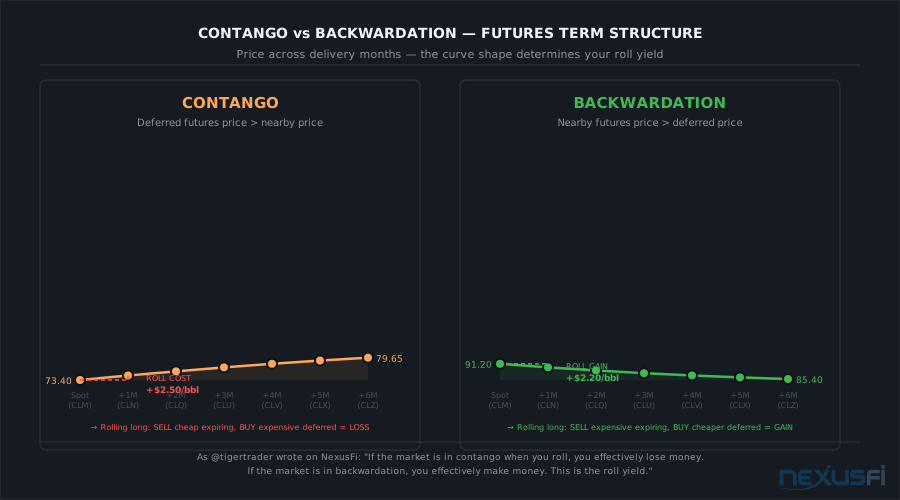
Most retail futures traders spend 100% of their time analyzing price direction. They watch charts, read order flow, study volume, and debate indicator settings. What a smaller number of traders understand is that there's a second dimension to futures P&L that operates independently of whether price goes up or down: the shape of the forward curve.
Contango and backwardation are the two regimes that describe this curve shape. In contango, deferred futures contracts trade at a premium to nearby contracts — the market prices future delivery higher than current delivery. In backwardation, it's the opposite — nearby contracts trade at a premium to deferred, reflecting strong demand for immediate supply. These aren't exotic concepts that only affect commodity funds. They affect every futures trader who holds a position through a roll date, which means they affect anyone trading crude oil, natural gas, gold, grains, or any physically-deliverable commodity.
The mechanism is roll yield. Every time you roll a futures position forward — selling the expiring contract and buying the next one — you either gain or lose money based on the price difference between those two contracts. In persistent contango, you're systematically selling cheap and buying expensive. In persistent backwardation, you're systematically selling expensive and buying cheap. Over months of rolling, these gains and losses accumulate into a separate, parallel P&L stream that can dwarf the directional P&L from price movement alone.
As @tigertrader explained in a widely-cited post that the NexusFi community has referenced for over a decade: "One of the most overlooked and misunderstood aspects of trading futures is the shape of the futures curve. If the market is in contango when you roll, you effectively lose money. If the market is in backwardation, you effectively make money. This profit or loss you incur rolling your position is called the roll yield."
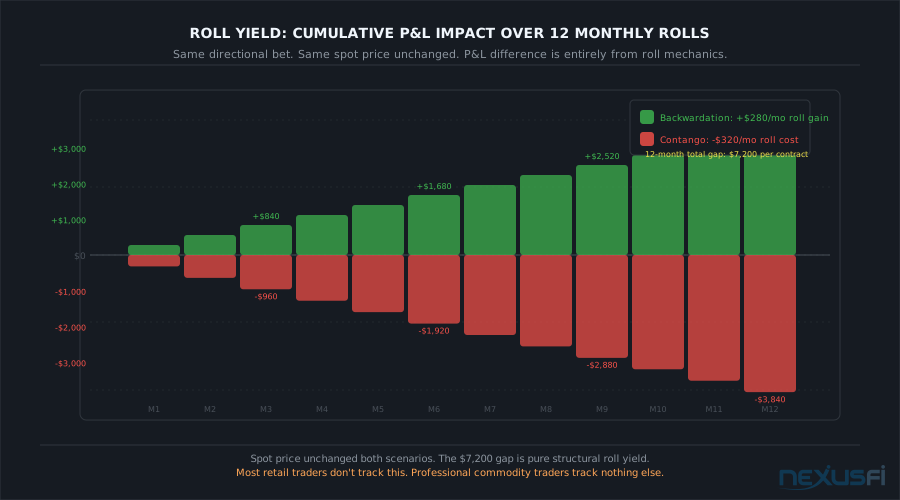
This article covers the mechanics of both regimes, their causes in the real market, how they play out differently in crude oil, natural gas, and gold, and the practical strategies — especially calendar spreads — that let you trade the curve shape rather than just the flat price.
The Futures Curve: Mapping Price Across Time #
A futures curve is the plot of futures prices across delivery months on the same commodity. On any given day, you can look up the current contract price, the next month's contract price, the month after that, and so on. Plot those prices on a y-axis against the delivery date on the x-axis and you have the futures curve.
The shape of that curve carries real information. When the curve slopes upward — each successive delivery month priced higher than the previous — the market is in contango. When it slopes downward — each successive month priced lower — the market is in backwardation. Most real-world curves aren't perfectly smooth. They have humps, inversions, and seasonal kinks. But the dominant direction of the slope is the regime.
The theoretical foundation comes from the cost-of-carry model. In a normal market where storage is available and financing is required, the fair value of a futures contract includes the spot price plus the cost of carrying the physical commodity to delivery: storage, insurance, financing, and convenience yield or dividend offset. For crude oil, carrying costs are significant — storing a million barrels costs real money. For gold, financing and vault storage matter. For corn, physical storage dominates. For equity futures like ES, the calculation inverts because dividend yield often exceeds the financing cost, creating structural backwardation.
As @josh explained: "Generally speaking, if you are storing oil and selling futures on it, you are going to demand a premium for that cost to carry, hence, the further out you go on the crude oil futures curve, the higher the price. This is called contango, and is normal."
Backwardation requires an explanation because it contradicts cost-of-carry logic. Something in the market creates a premium for immediate supply that overwhelms carrying cost arithmetic. That explanation typically involves: tight current supply relative to demand (OPEC cuts, weather crop losses, mine shutdowns), high convenience yield for immediate consumption (industrial users who can't interrupt production need the commodity now), or speculative dynamics pushing the back of the curve down.
Contango: When Deferred Futures Cost More #
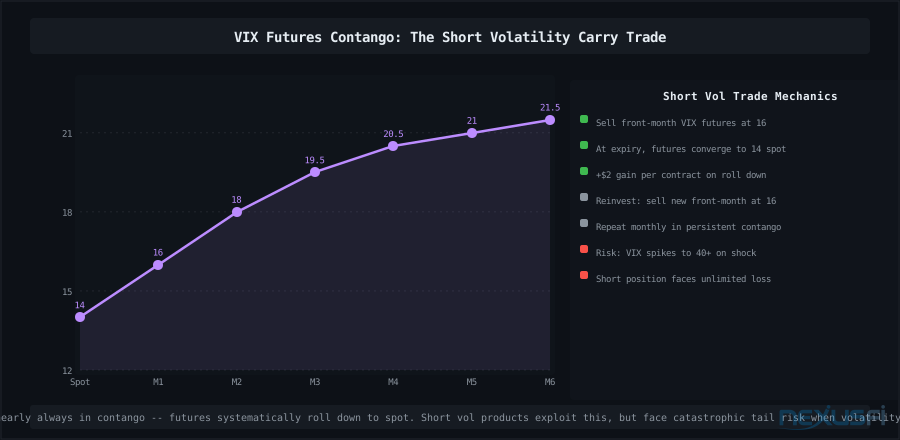
In contango, every roll forward costs money. You sell the expiring front-month contract at a lower price and buy the next-month contract at a higher price. The net difference — typically in dollars per barrel, cents per MMBtu, or dollars per troy ounce — is your roll cost for that cycle. Multiply by contracts held and by roll frequency, and cumulative roll cost becomes a significant P&L factor.
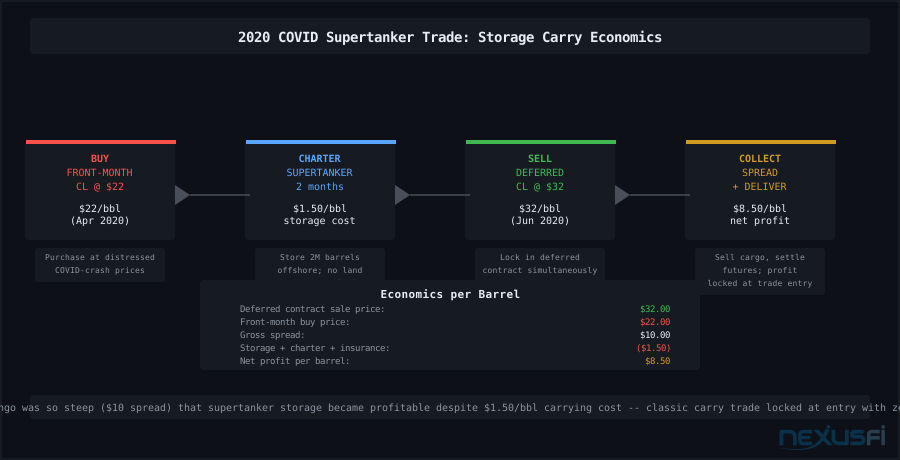
The carry trade that contango enables is one of the oldest strategies in commodity markets. In 2008 and 2009, when crude oil was in steep contango, physical commodity trading firms rented supertankers, loaded them with crude at spot prices, and simultaneously sold deferred futures contracts at a premium sufficient to cover storage costs and still profit. As @tigertrader documented on NexusFi: "Physical commodity trading firms took advantage of the positive curve and would hold crude in their tankers at their cost and sell deferred futures contracts at a big enough premium to more than offset storage costs and interest rates. Billions of dollars were made doing this crude oil contango trade."
For retail traders, the contango carry trade requires infrastructure most don't have. But understanding what contango signals is valuable: well-supplied market, nearby barrels not scarce, long positions face systematic roll headwinds. The longer you hold, the more roll costs accumulate.
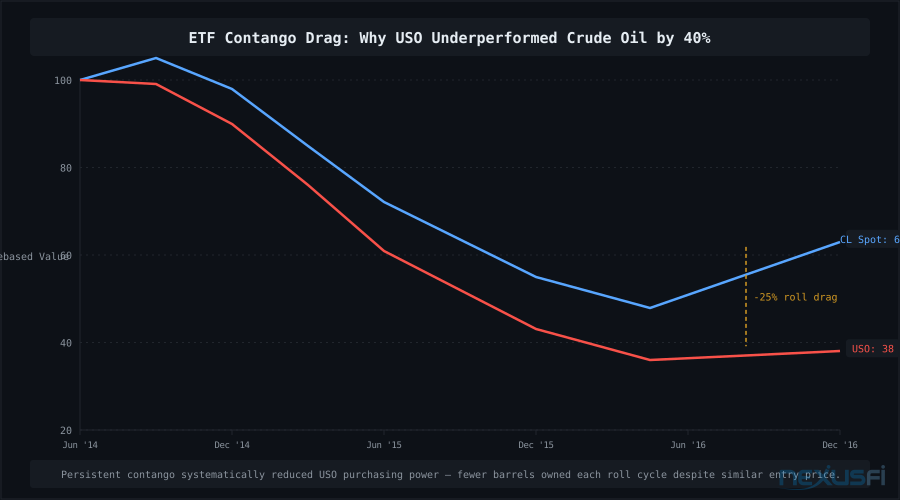
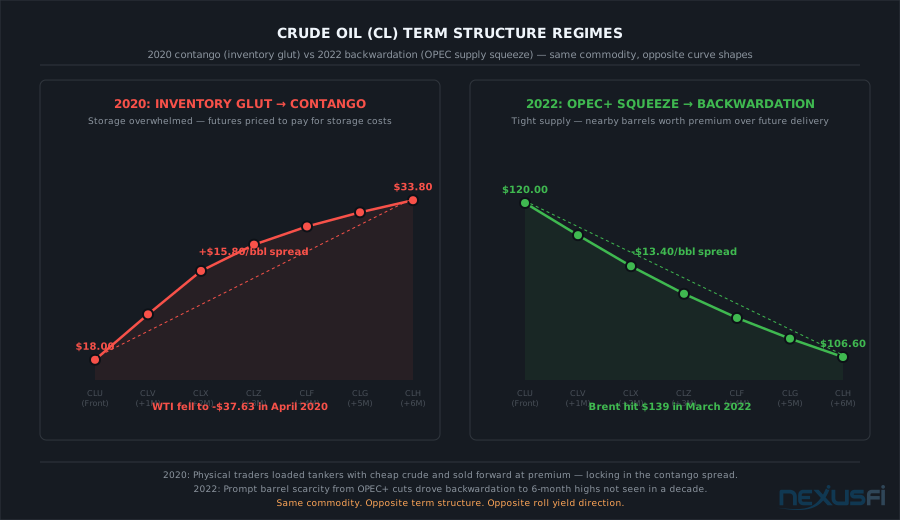
Contango also creates the most dramatic distortion in commodity ETFs and ETNs. Products like USO mechanically roll long positions in front-month crude oil futures, systematically selling cheap contracts and buying expensive ones during contango. During 2020's COVID contango — when WTI briefly went negative and then stabilized in steep contango — long-only ETF holders experienced catastrophic underperformance relative to eventual spot price recovery because continuous rolling destroyed value on every monthly cycle.
Backwardation: When Nearby Futures Command a Premium #
Backwardation inverts the roll yield: you sell the expensive expiring front-month contract and buy the cheaper next-month contract, generating positive return on the roll itself. If the structure persists, this positive roll yield compounds through every cycle, creating a structural tailwind for long positions independent of outright price movement.
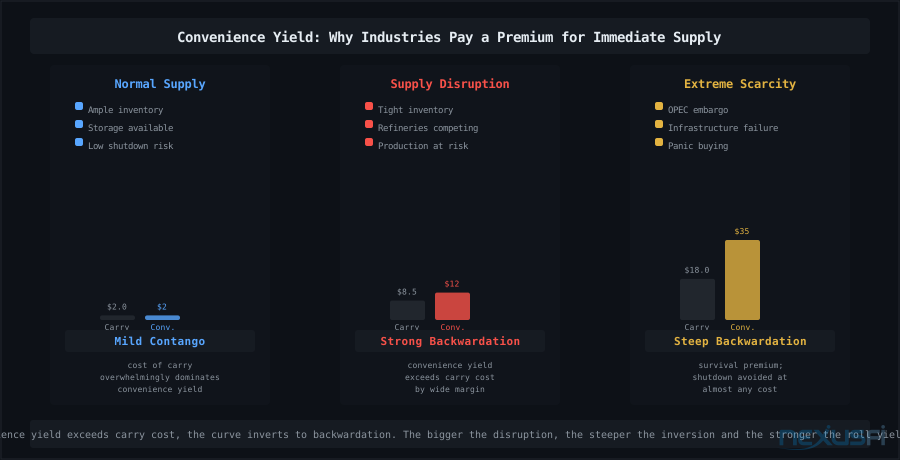
The economic explanation for backwardation is a market paying a convenience yield — a premium for having the commodity available now rather than in 90 days. Industries with high shutdown costs cannot afford supply disruptions. If nearby crude is tight, refiners will pay a premium for guaranteed immediate delivery. That willingness-to-pay for immediacy drives nearby prices above deferred prices.
The 2022 crude oil backwardation was extreme by historical standards. Following Russia's invasion of Ukraine and resulting sanctions on Russian crude, combined with OPEC+ production discipline, front-month WTI traded at premiums of $6-10 per barrel over three-month deferred contracts for extended periods. Traders holding long front-month positions captured positive roll yield on every monthly cycle — accounts gaining not just from the $139 peak price but from structural roll gains every time positions rolled forward.
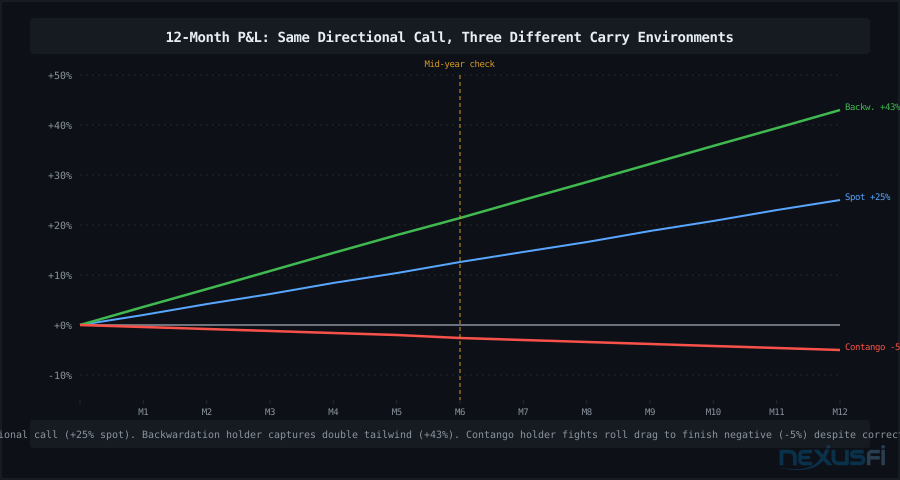
Backwardation creates a dual advantage for long holders: price appreciation AND positive roll yield. Contango creates a dual disadvantage: needing price appreciation to overcome the roll cost headwind. Identifying the regime before entering changes your risk/reward calculation substantially.
Crude Oil (CL): The Classic Contango and Backwardation Market #
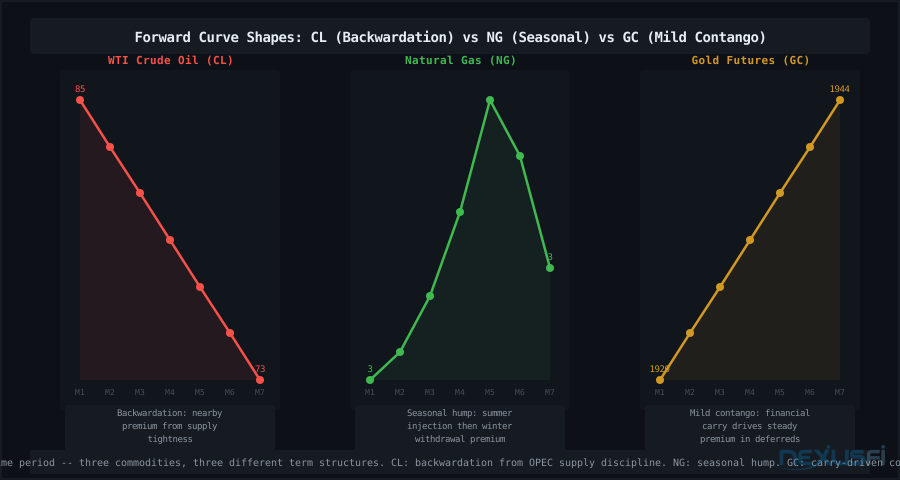
Crude oil (CL) is the defining commodity futures market for contango and backwardation analysis. The market is large enough to be globally representative, liquid enough to trade efficiently across the curve, and responsive enough to supply/demand fundamentals that the term structure signals carry real market intelligence.
The primary drivers of CL term structure: OPEC+ production decisions, US inventory levels (reported weekly by the EIA), refinery utilization rates, geopolitical risk affecting supply, and macroeconomic demand expectations. When inventories are high relative to seasonal averages and demand is weak, contango deepens — the market needs to pay storage premium to motivate holding physical oil. When inventories are tight or drawing rapidly, backwardation develops as refiners compete for immediately available barrels.
Practical monitoring for CL traders is straightforward: every Wednesday, the EIA releases the Weekly Petroleum Status Report, including US crude oil inventory levels. A sustained series of inventory draws versus the five-year average is one of the most reliable leading indicators of a transition from contango toward backwardation. When the EIA report shows a significant draw versus analyst expectations, front-month often reacts more aggressively than deferred months — this differential response is term structure shifting.
The front-month vs. M+3 spread is the most commonly tracked measure. If CL front-month is $85.00 and three-month deferred is $80.00, that's $5.00 of backwardation — meaningful roll yield for long holders. Most professional oil traders track this spread daily alongside the flat price.
The CL calendar spread market is highly liquid and frequently offers cleaner expression of inventory cycle views than outright directional bets. If you believe a sustained inventory draw will tighten the near-term balance over 60 days without necessarily driving flat prices higher, buying front-month and selling a deferred month captures the inventory tightness thesis with reduced exposure to broad macro price movement.
Natural Gas (NG): Seasonal Curve Extremes #
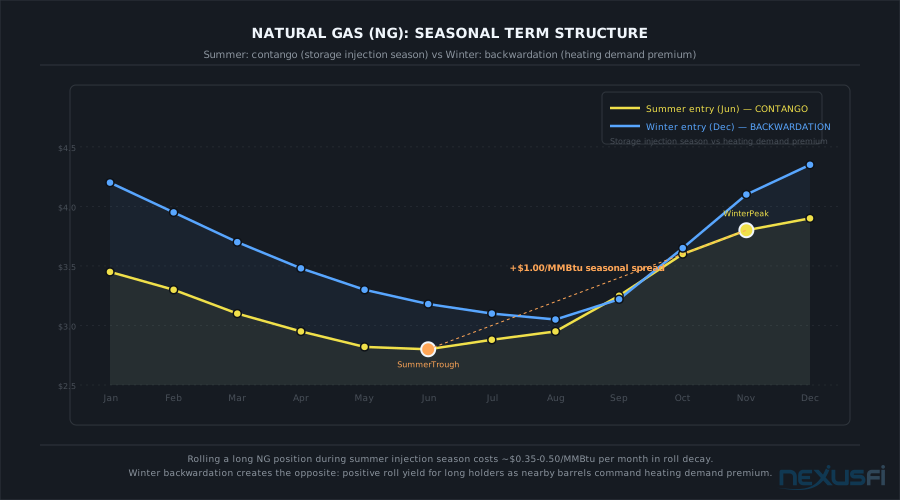
Natural gas (NG) exhibits the most pronounced seasonal term structure of any actively-traded commodity futures market. Demand is dominated by heating (winter) and cooling (summer air conditioning), creating predictable demand spikes that the storage system must buffer. EIA reports weekly gas storage levels every Thursday, and these numbers move the entire curve dramatically.
During injection season (roughly April through October), gas flows from production into underground storage to build inventory for winter. The forward curve typically shows summer months at a discount to winter months — markets pricing the cost of storing summer production for winter delivery. This is structural contango. A long position in summer NG futures rolled forward into November and December months fights this contango headwind monthly — selling cheaper summer contracts, buying more expensive winter ones.
During withdrawal season (roughly November through March), the curve inverts. Cold weather drives immediate consumption demand. Utilities bidding for spot gas cannot afford supply interruptions. The premium for nearby delivery over deferred creates backwardation — selling expensive winter gas and buying cheaper spring gas when rolling generates positive roll yield. This roll gain partially offsets the price risk of holding NG in winter.
The seasonal spread trade — buying winter months and selling summer months in natural gas — is one of the most systematically traded spreads in energy markets precisely because this pattern repeats with high reliability. The specific magnitude varies year to year based on storage levels, winter temperature expectations, and LNG export volumes competing for domestic supply. But the directional pattern — summer contango, winter backwardation — persists across decades of data.
For retail NG traders, the key warning is leverage management. Natural gas can move 10-20% in a single session on weather forecast changes or a surprising storage report. The roll yield advantage of being long in backwardation can be completely overwhelmed by the volatility of the outright price if position is sized for equity-like returns. Size conservatively — the roll yield thesis works over weeks and months, not in any single session.
Gold (GC): Financial Carry and Mild Contango #
Gold futures (GC) term structure operates on at the core different mechanics than energy commodities. Physical gold storage is expensive relative to the asset's value, but the dominant driver of the forward curve is financial carry: the interest rate cost of financing a long gold position versus the lease rate on physically held gold. When interest rates are high, the cost of financing gold pushes deferred futures prices above nearby — contango. When interest rates fall or lease rates spike, the curve flattens or briefly inverts.
Gold is typically in mild contango across most market environments. The spread between front-month and 6-month deferred ranges from $5-30 per troy ounce depending on interest rates. For long-only gold futures traders, this means steady but modest roll costs — significant over years but not the dominant P&L driver the way crude oil contango can be.
Gold term structure matters most when lease rates spike. Gold lease rates represent the cost of borrowing physical gold from central banks or institutional holders for forward delivery. When lease rates rise sharply — as they did during the 2008 financial crisis and briefly in 2020 — gold can flip briefly into backwardation as borrowed physical gold becomes scarce. These episodes are typically short-lived but create significant basis dislocations for traders with delivery-related positions.
Gold's term structure also carries information about real interest rate expectations. When real rates (nominal minus inflation expectations) are rising, gold contango typically deepens as the opportunity cost of holding gold increases. When real rates are falling or negative, gold contango flattens. Long-duration institutional gold holders use changes in curve slope as a leading indicator of real rate regime changes — a different use of term structure information than the roll yield focus relevant to shorter-term traders.
Calendar Spreads: Trading the Curve Shape #
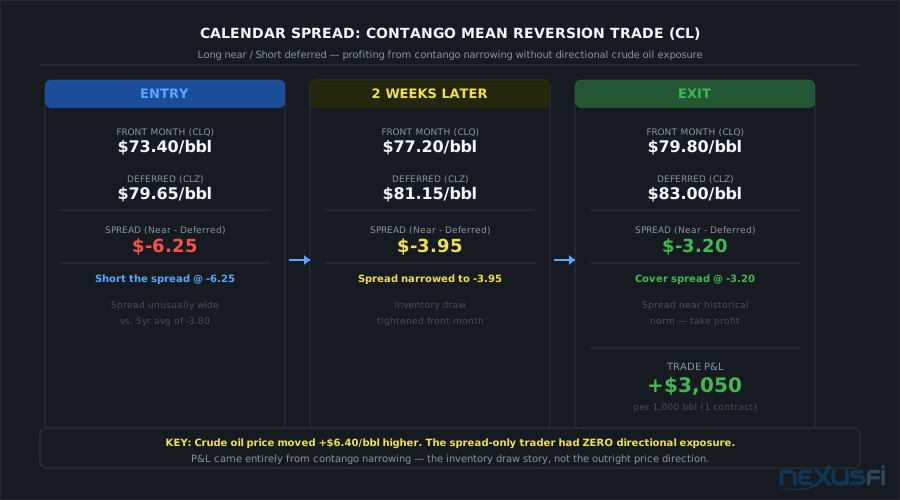
Calendar spreads are the most practical strategy for retail traders who want to trade term structure dynamics without taking outright directional positions in volatile commodity markets. A calendar spread simultaneously buys one delivery month and sells another on the same commodity, creating a position that profits or loses based on changes in the price difference between those months — independent of whether the commodity rises or falls in absolute price.
The classic mean-reversion calendar spread works when a curve has moved to an extreme relative to historical range. If crude contango has widened to $6.25/barrel (front vs. M+3) when the five-year average is $3.80, the spread is statistically wide. Buying front-month and selling deferred establishes a position that profits as the spread narrows toward its historical average — regardless of whether oil goes to $60 or $100.
Executing calendar spreads on CME futures markets: the CME recognizes spread legs as a unit for margin purposes, typically requiring much less margin than two separate outright positions. A single crude oil outright futures contract requires $6,000-8,000 in margin. A crude oil calendar spread (front minus next month) may require $1,500-2,000 — less than the outright requirement while still providing meaningful exposure to the curve shape thesis.
Three practical calendar spread frameworks:
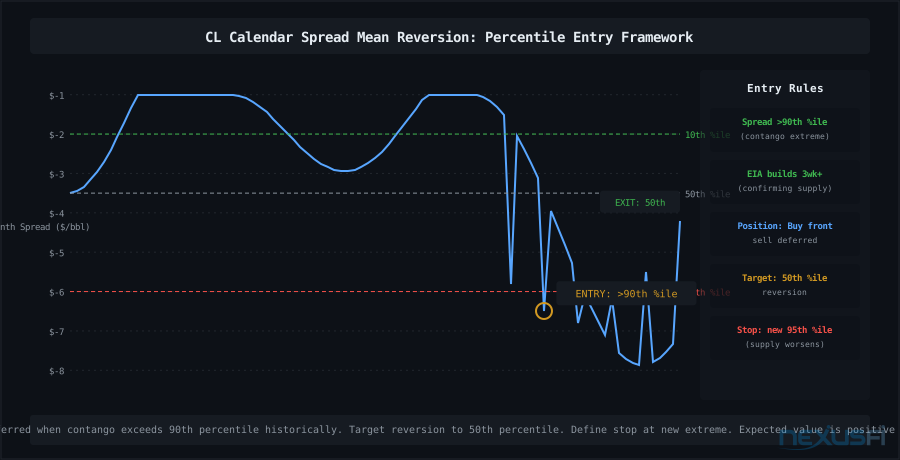
Mean Reversion Spreads: Identify when a calendar spread is at an extreme relative to recent range (use a percentile ranking over the past 90-252 trading days). When contango is in the 90th+ percentile of historical depth, establish long front/short deferred and target reversion toward the 50th percentile. Risk is defined by the historical maximum contango level. Exit on spread normalization or if a new factor justifies a new extreme.
Seasonal Pattern Spreads: Natural gas summer/winter spreads, grain old crop/new crop spreads, and crude oil winter/spring spreads have statistically significant seasonal patterns. Trading the seasonal entry at historical average timing generates positive expected value over large samples. Risk is weather, geopolitical shock, or supply disruption breaking the seasonal relationship — which happens periodically, requiring defined stop losses.
Event-Driven Spreads: Around weekly EIA storage reports, OPEC+ announcement dates, or USDA crop reports, spreads often react more sharply and more cleanly than outright prices. If you have a view on an inventory outcome, a calendar spread expresses that view with lower absolute volatility than an outright directional position.
Regime Detection and Practical Strategy Frameworks #
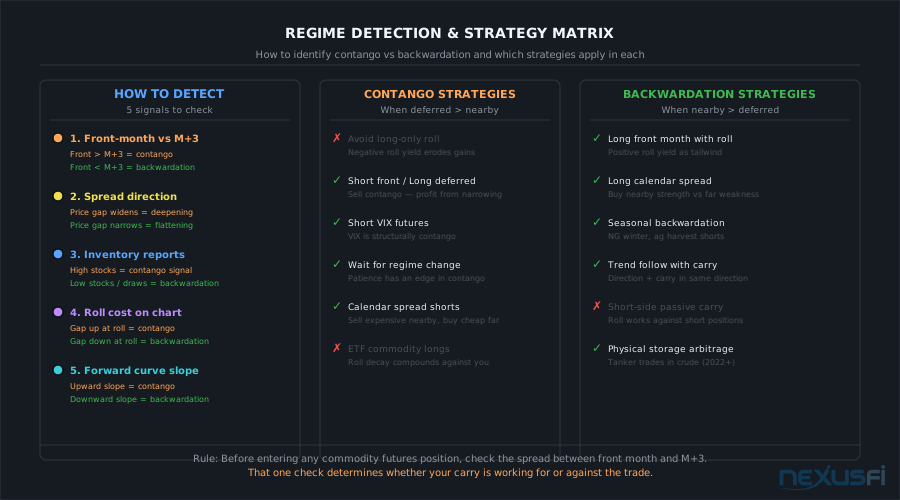
Identifying the current term structure regime takes less than a minute if you know where to look. Five practical signals in order of reliability:
1. Front-month vs. M+3 spread: Pull up front-month and three-month deferred contract prices simultaneously. If deferred > nearby, you're in contango. If nearby > deferred, you're in backwardation. The magnitude tells you how extreme relative to historical norms. This is the single fastest regime check.
2. Weekly inventory reports: For energy commodities, EIA inventory data is the most reliable leading indicator of curve shape transitions. A sustained series of inventory draws versus the five-year average almost always precedes backwardation development. A sustained series of builds corresponds with contango.
3. Roll cost observation: If you hold an active futures position through a roll date, the price gap between your expiring contract and the replacement is your direct observation of term structure. Selling low and buying high = contango. Selling high and buying low = backwardation. Your own roll experience is the most direct data point.
4. Forward curve slope visualization: The CME's website displays the current forward curve for major contracts. A quick visual check of the slope direction — upward = contango, downward = backwardation — takes seconds and provides regime context before any position.
5. Spread structure analysis: @SMCJB has noted that for crude oil specifically, the relationship between the 2nd month and 14th month spread (a 12-month calendar spread) provides a cleaner signal of supply balance than the front-month spread alone, which can be distorted by front-month delivery pressure. A widening 2nd-to-14th month spread in backwardation indicates strengthening tight-supply conditions.
Strategy application by regime:
In persistent contango: Avoid mechanical long-only rolling strategies. The roll headwind compounds against you. Consider calendar spread shorts (sell nearby, buy deferred) to profit from contango persistence, or wait for a regime-change trigger before establishing long outright positions. If you must hold outright longs, do it in more deferred liquid contracts where the roll cost is already priced in.
In persistent backwardation: Long positions benefit from both directional price movement and positive roll yield — the double-tailwind setup. Size conservatively and expect mean reversion. Calendar spread longs (buy nearby, sell deferred) profit from backwardation deepening. Watch for the regime flip: when the trigger resolves, backwardation can collapse rapidly, often faster than directional price adjustment.
Common Mistakes That Destroy Commodity P&L #
Treating all commodity longs the same: A long crude oil position in contango and a long crude oil position in backwardation are structurally different trades. The contango position needs the price to move far enough to overcome the roll cost. The backwardated position gets a free carry boost even if price is flat. Most retail traders don't make this distinction and enter with the same sizing and return expectations regardless of curve shape.
Commodity ETF confusion: Retail investors who buy commodity ETFs often don't understand that they're holding rolling futures positions subject to full contango drag. The fund may track "crude oil price" in its marketing but deliver substantially lower returns than crude oil spot price in persistent contango. The discrepancy isn't fraud — it's the documented roll cost mechanism. Read the fund prospectus before assuming an ETF tracks spot price accurately.
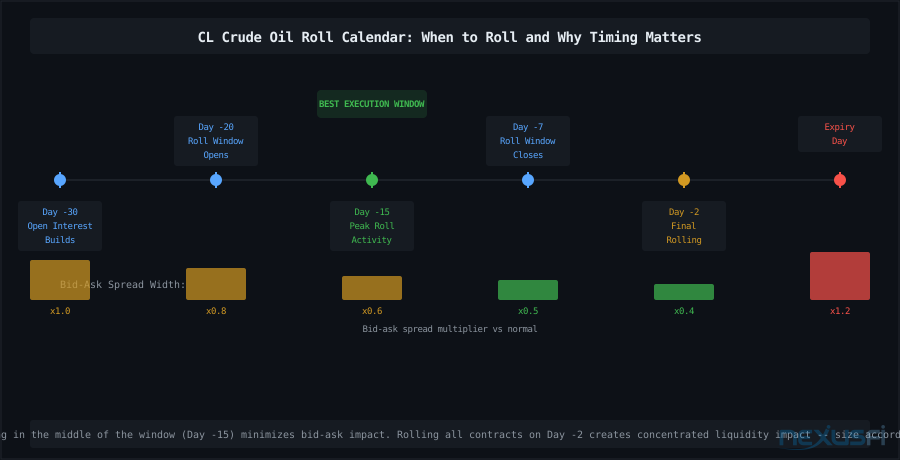
Ignoring the roll calendar: Futures contracts expire on known dates. The roll period involves wider bid/ask spreads, reduced liquidity, and occasionally distorted prices as large holders execute simultaneous roll trades. Entering or exiting outright positions during roll periods can result in worse execution than the flat price suggests. Know your instrument's roll calendar and plan so.
No exit plan for spread trades: Calendar spreads require explicit profit targets and stop losses. A "widening contango for macro reasons" thesis can remain valid while the specific spread moves against you on a short-term inventory or weather data point. Without a defined exit, what should be a disciplined spread trade becomes an open-ended holding as the trader rationalizes adverse moves as "still valid thesis." Define max loss and profit target before entry.
Assuming regime stability: Crude oil can transition from contango to backwardation in two weeks if inventory data surprises sharply. Natural gas can move from mild contango to steep backwardation in 48 hours if a cold weather system is stronger than forecast. Do not hold calendar spread positions sized for slow, gradual regime changes if you're trading commodities that experience regime transitions at a single news event's speed.
Single-contract roll for systematic positions: If you're holding multiple contracts and need to roll, rolling all contracts on the same day at market creates concentrated liquidity impact. Even for retail traders with small positions, rolling in the middle of the roll period typically results in better execution as the market's liquidity is more evenly distributed.
The traders who consistently outperform in commodity futures markets are not necessarily better at predicting price direction than their counterparts. They're better at understanding the structural environment their positions operate in — and term structure is the most consistently mispriced dimension in retail commodity futures analysis. Adding a 60-second curve check to your pre-trade routine costs nothing. The roll yield consequences of ignoring it accumulate for as long as you hold positions in contango markets.
Knowledge Map
Go Deeper
Build on this knowledgeReferences This Article
Articles that build on this topicCitations
- — Spoo-nalysis ES e-mini futures S&P 500 (2014) 👍 21“One of the most overlooked and misunderstood aspects of trading futures is the shape of the futures curve. If the market is in contango when you roll, you effectively lose money. If the market is in backwardation, you effectively make money.”
- — Reminiscences of a Bean Trader (2014) 👍 15“Physical commodity trading firms took advantage of the positive curve and would hold crude in their tankers at their cost and sell deferred futures contracts at a big enough premium. Billions of dollars were made doing this crude oil contango trade.”
- — Why Back Adjustments on Prior Contracts? (2021) 👍 6“Generally speaking, if you are storing oil and selling futures on it, you are going to demand a premium for that cost to carry, hence, the further out you go on the crude oil futures curve, the higher the price. This is called contango, and is normal.”
- — continuous contract in NT7 merge policy rollover (2011) 👍 31“On your chart, data will gap up if the market is in contango, data will gap down if the market is in backwardation. This type of dataseries cannot be used for backtesting.”
- — commodity spreads (2015) 👍 6“While I am not sure that backwardation/contango are reliable indicators of market direction, I do believe that there are effective trading strategies that take advantage of the roll yield.”
- — Do you look at backwardation/contango when daytrading CL? (2011) 👍 3“The backwardation as shown reflects tight market conditions. The normal state of affairs would be an upward sloping curve for CL. I do not see a direct relationship between the structure of the forward curve and intraday prices.”
- — How to play a long term bullish view on oil? (2016) 👍 2“Under/Over performance is all about roll yield which is all a function of backwardation/contango. You buy $10,000 worth of USO and through two months of contango rolling you own fewer barrels -- the roll cost reducing your purchasing power each cycle.”
- — The CL Crude-analysis Thread (2015) 👍 4“I am trying to show the relationship between backwardation/contango and outright price levels. The 2nd month vs 14th month spread gives a cleaner signal of supply balance than the front-month spread alone.”
- — Changing rollover dates for CL (2015) 👍 2“Roll yields accounted for essentially all of the futures-only returns in an investment indexed to the petroleum-complex-heavy Goldman Sachs Commodity Index from 1985 through 1997.”
- — Spoo-nalysis ES e-mini futures S&P 500 (2014) 👍 3“What you are seeing is a narrowing of the backwardation in the term structure -- a key signal that tight nearby supply conditions are shifting.”
- — The CL Crude-analysis Thread (2020) 👍 2“ETFs investing in markets that are continually in contango generally underperform futures. ETFs investing in markets that are continually in backwardation generally outperform futures.”