



Trader Tax Status (TTS): The IRS Qualification Test Every Active Futures Trader Needs to Pass
If you're trading ES, NQ, CL, or GC consistently — hundreds of trades, most trading days, treating the screens as your job — you may qualify for Trader Tax Status. Most active futures traders have heard the term. Far fewer understand what it actually is, how to qualify, and critically, why it's completely separate from the Section 475(f) mark-to-market election that most people conflate with it.
TTS isn't a magic tax category you sign up for. The IRS decides whether you qualify based on how you actually traded. You either meet the facts-and-circumstances test or you don't. And the consequences of that determination — in both directions — are significant enough that every serious futures trader needs to understand the mechanics.
Overview #
Trader Tax Status is the IRS designation that treats your trading activity as a trade or business under Section 162 of the Internal Revenue Code. For active futures traders, qualifying changes several things: you can deduct trading-related business expenses on Schedule C, margin interest becomes fully deductible as a business expense, and you can potentially access the Section 475(f) mark-to-market election — which is where the real tax advantages live.
The distinction between TTS and MTM is the single most misunderstood concept in trader taxation. TTS is the business characterization. MTM is a separate accounting method election. You can have TTS without electing MTM. You cannot validly elect MTM without qualifying for TTS. Confusing these two will cost you money and potentially trigger audit penalties.
For futures traders specifically, TTS interacts with a layer that equity traders don't deal with: Section 1256 contracts. Your ES, NQ, CL, and GC positions already receive the 60/40 long-term/short-term split and are technically exempt from wash sale rules under standard treatment. TTS and MTM change the calculus further, and whether that's a net benefit depends on your specific tax situation.
This isn't an article that tells you to go get TTS because it saves taxes. It's an article that explains what qualifies, what it actually changes, and what you need to document if you're going to claim it. Talk to a CPA who specializes in trader taxation before making any elections.
Key Concepts #
Trader Tax Status (TTS): An IRS determination that your trading constitutes a "trade or business" under Section 162. Not an election — a facts-based qualification that the IRS evaluates based on your actual trading activity.
Section 162 (Trade or Business Expenses): The IRS code provision that allows businesses to deduct ordinary and necessary expenses. TTS qualification lets you apply this to trading-related costs.
Section 475(f) Mark-to-Market Election: A voluntary accounting method election, available only to traders who qualify for TTS, that converts capital gains and losses to ordinary income and losses. All positions are treated as sold at year-end market value. MTM eliminates the $3,000 annual capital loss limitation and removes wash sale rules from your trading activity.
Section 1256 Contracts: The category covering most regulated futures contracts — ES, NQ, YM, CL, GC, GE, ZB, ZN, and others. Section 1256 already provides favorable 60/40 treatment (60% long-term capital gains rates, 40% short-term) regardless of actual holding period. Most futures are exempt from wash sale rules under Section 1256 in any case.
Facts-and-Circumstances Test: The IRS methodology for determining TTS qualification. There's no single bright-line number. The IRS examines a combination of frequency, regularity, continuity, volume, holding periods, and time commitment. Case law has established practical guideposts, but every determination is made on the specific facts of your trading.
Green's Golden Rules: Practitioner standards established by tax attorney Robert Green, derived from decades of trader tax court cases. These aren't IRS regulations — they're widely-used benchmarks that practitioners use to assess TTS qualification risk: trading on 75%+ of available market days, significant volume throughout the year, continuous activity, and a time commitment consistent with running a business.
Contemporaneous Documentation: Records created at the time of the event, not reconstructed later. In any IRS challenge to TTS, contemporaneous records are far more credible than after-the-fact reconstruction. This is the most common reason TTS claims fail on audit.
The Qualification Test: How the IRS Thinks About TTS #
The legal standard comes from Commissioner v. Groetzinger (1987), a Supreme Court case that defined what constitutes a "trade or business" for tax purposes. The court held that you need to be engaged in the activity "with continuity and regularity" and that your "primary purpose for engaging in the activity must be for income or profit." Occasional, sporadic trading doesn't cut it.
For futures traders, the relevant question is whether you're seeking profit from short-term price movements (trader) or from long-term appreciation (investor). That intent matters, and the IRS evaluates it through the pattern of your actual trading activity.
The Five Factors the IRS Examines #
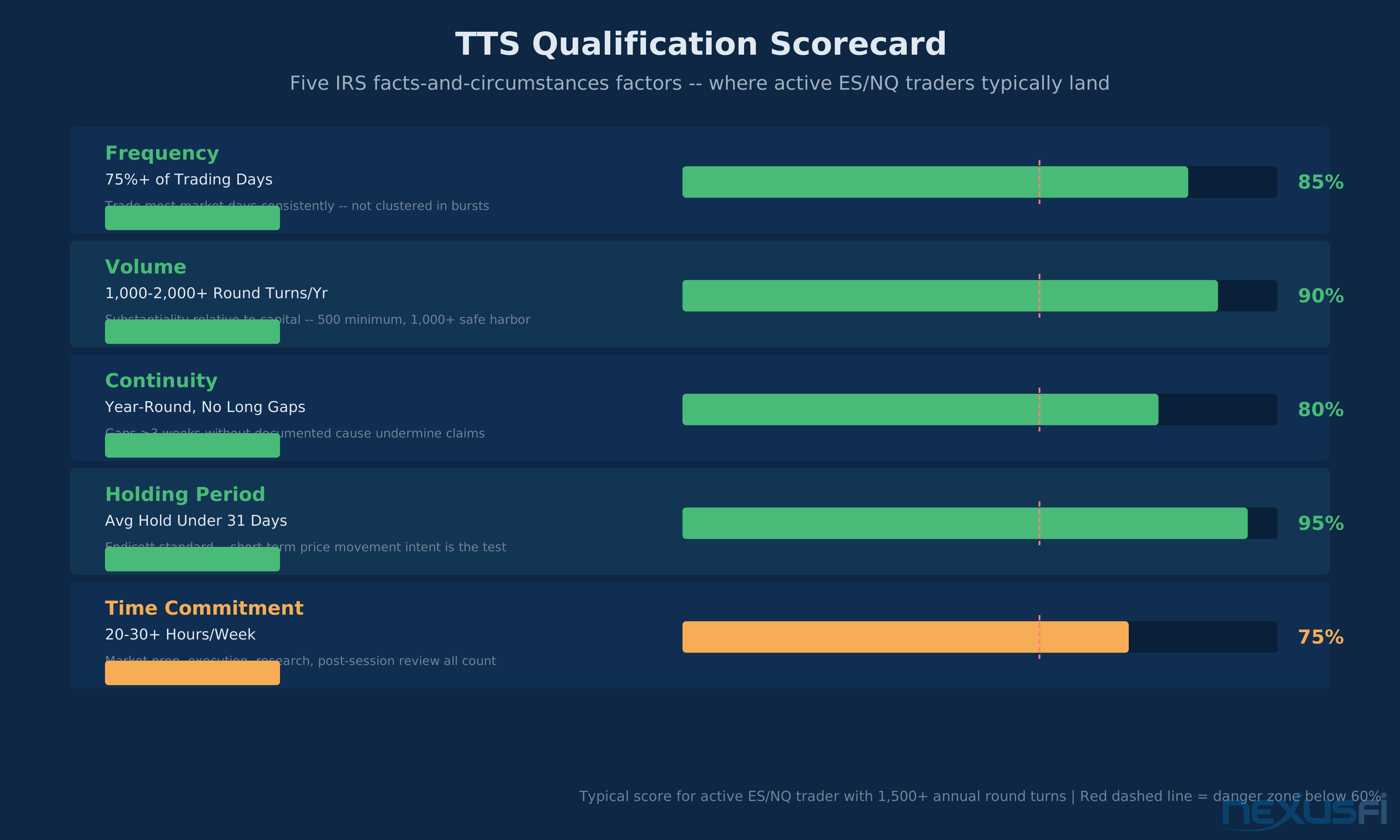
1. Frequency: How often do you trade? The practitioner benchmark is 75% of available trading days — approximately 190 days for a full trading year. Trading on fewer days than that doesn't automatically disqualify you, but you need to compensate with stronger evidence on the other factors. For ES and NQ traders who have nearly 24/6 access, this bar is often met if you're actively working the markets.
2. Regularity: Is your trading spread consistently throughout the year, or concentrated in bursts? 1,000 trades executed in three months while the other nine months are dormant fails the regularity test even if the volume is significant. The IRS wants to see business-like consistency.
3. Continuity: Extended gaps in trading hurt TTS claims. Two to three weeks without trading, without documented cause, raises the question of whether this is actually a continuous business. Documented illness or emergency is defensible. Unexplained gaps are not.
4. Volume: There's no official trade count floor, but case law has shaped practical expectations. For futures traders, 500+ round turns annually is a starting point — 1,000 to 2,000+ provides a more defensible position. For context, an ES day trader running 10 round turns per active session would hit 1,900 over 190 trading days. That's the kind of activity profile that supports TTS.
5. Time Commitment: You need to devote significant time to your trading as a business — market preparation, analysis, execution, review. The standard practitioners reference is 20-30+ hours per week on trading-related activities. Logging this time is part of your documentation. Without time logs, you're relying on trade records alone to prove commitment.
The Court Cases That Shaped TTS Standards #
Endicott v. Commissioner (T.C. Memo 2011-137) is the most frequently cited case in TTS determinations. The tax court examined a trader whose primary activity was reacting to daily market movements and who maintained average holding periods well under 31 days. Endicott established the holding period as a key indicator of short-term profit intent — the distinguishing characteristic of trading versus investing. For futures day traders and swing traders holding positions one to five days, this standard is naturally met.
Paoli v. Commissioner (T.C. Memo 2009-272) is the cautionary tale. The trader executed 323 trades over 113 trading days — significant volume — but the court denied TTS because the activity lacked continuity and systematic business-like conduct. Paoli had a full-time job, which made the regularity of trading questionable. The case is a direct reminder that raw trade counts don't carry the argument by themselves.
Commissioner v. Groetzinger (1987) remains the foundational case that established continuity and regularity as the core requirements for any trade or business determination.
Meeting the Standard in Practice #
The 75% trading days guideline from Green's framework is a floor, not a guarantee. If you're trading 80% of available days, executing 1,500 round turns annually on ES and NQ, logging 25+ hours per week on market activities, and holding positions for an average of 4 hours — you've got a defensible TTS profile.
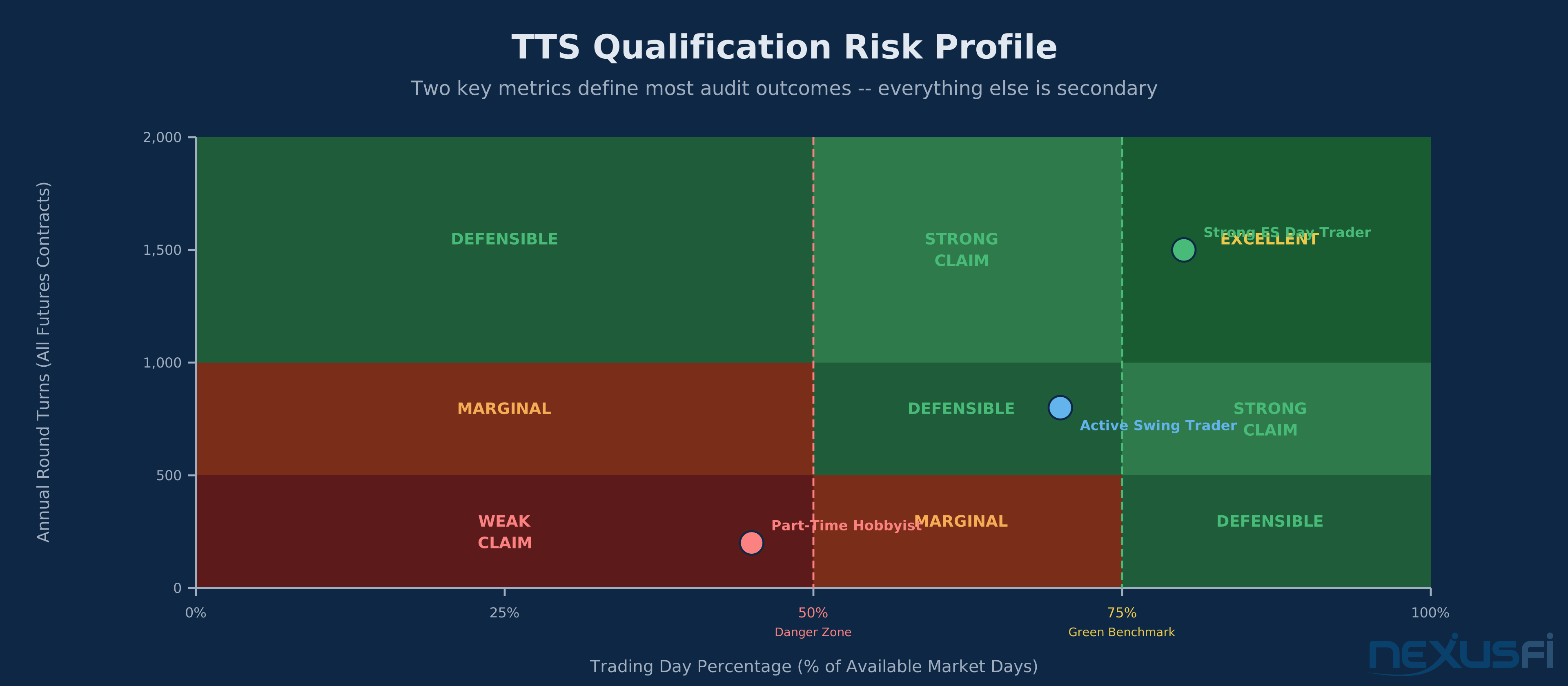
If you're trading 40% of days, executing 200 round turns concentrated in two quarters, with no time documentation — TTS is a risk position.
@SMCJB, one of the NexusFi forum's most knowledgeable contributors on trader tax issues, summarized the practical thresholds in the Tax Thread (276 replies, still one of the most referenced discussions on the forum): significant volume and frequent execution on 75%+ of trading days, continuous operation throughout the year, meaningful time commitment, and average holding periods under 31 days driven by daily market movements — directly citing the Endicott standard.
For ES/NQ futures traders specifically: the contracts trade nearly 24 hours a day, five days a week. Your ability to demonstrate continuous access and active participation during multiple sessions is a genuine advantage compared to equity traders constrained to 9:30-4:00.
Full-Time Employment: Harder, Not Impossible #
Having a W-2 job doesn't automatically kill TTS, but the bar goes up much. Paoli is the instructive case here. When you have 40 hours per week dedicated to an employer, the IRS scrutinizes hard whether your trading really constitutes a separate full-time business.
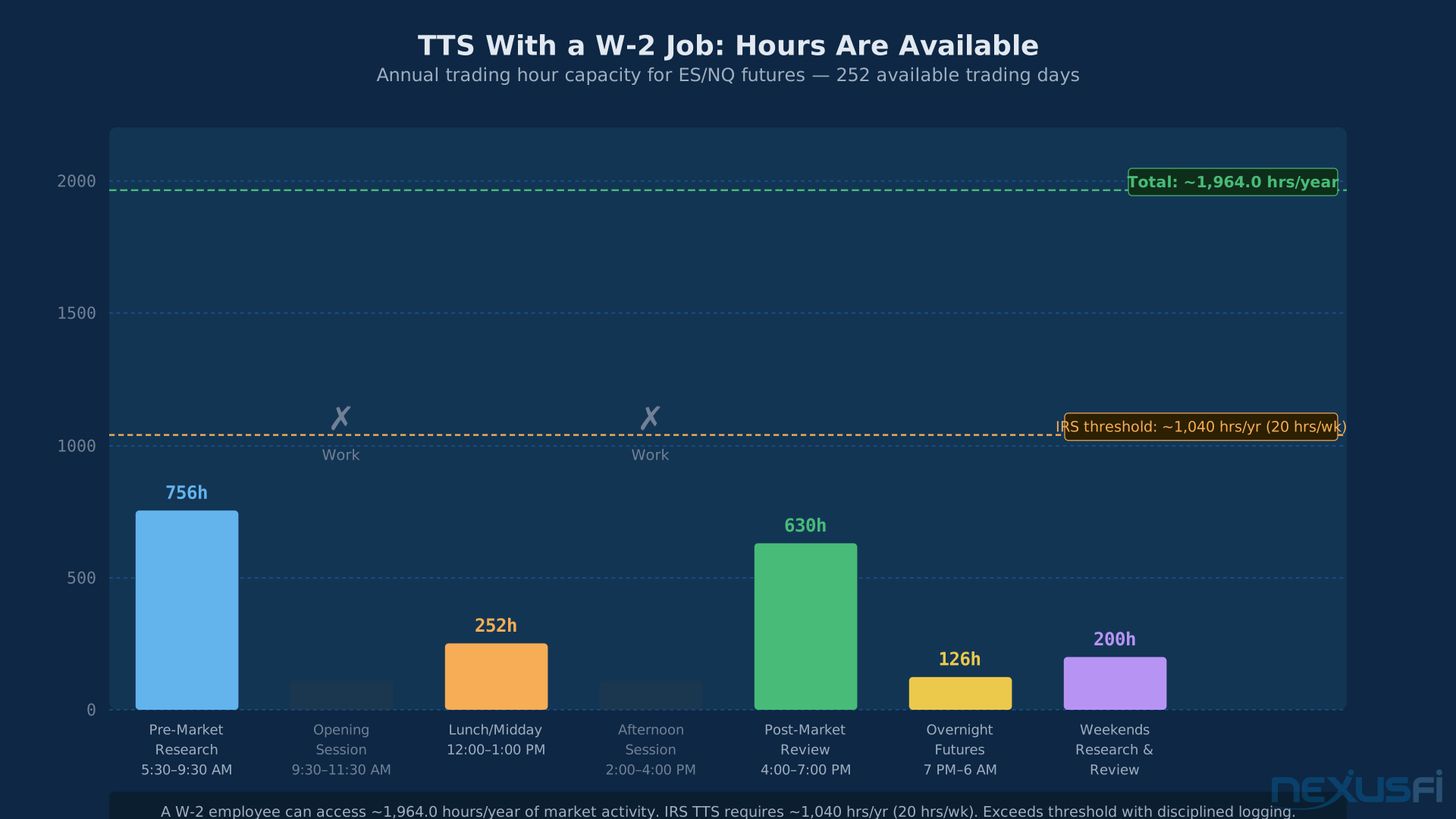
Futures help with this. Pre-market ES activity runs from 6:00 AM Eastern. The overnight session is always available. If you're logging real trading time before and after your workday, and your time commitment reaches 20+ hours per week between prep, execution, and review — document every hour of it. That documentation is the difference between a defensible claim and a rejected one.
TTS vs. Section 475(f) MTM: The Critical Distinction #
The single most common mistake in trader tax planning is treating TTS and MTM as the same thing. They're not. They're independent determinations that interact with each other, and each has consequences on its own.
TTS: The Business Characterization #
TTS determines that your trading activity constitutes a trade or business under Section 162. This is a factual determination made annually based on your actual trading.
What TTS changes on its own:
- Business expenses become fully deductible on Schedule C
- Margin interest is deductible as a business expense rather than investment interest
- Home office deduction becomes available (exclusive use requirement must be met)
- You can establish retirement accounts (Solo 401k, SEP-IRA) based on trading income
- Losses may qualify as ordinary business losses in some contexts
What TTS does NOT change on its own:
- How trading gains and losses are characterized (still capital without MTM)
- Whether wash sale rules apply to securities positions
- The $3,000 annual capital loss limitation
- Section 1256's 60/40 treatment for futures
MTM: The Accounting Method Election #
The Section 475(f) MTM election is a voluntary accounting method change. It's separate from TTS qualification — you must qualify for TTS to validly make this election. File it by April 15 of the year preceding the election year (or within 75 days of starting a new trading business).
What MTM changes:
- All positions are marked to market value at year-end — they're treated as sold and repurchased
- Capital gains and losses convert to ordinary income and losses
- The $3,000 annual capital loss cap is eliminated
- Wash sale rules no longer apply to your trading activity
- Losses in down years can offset W-2 wages, business income, or other ordinary income without limitation
The Four Scenarios #
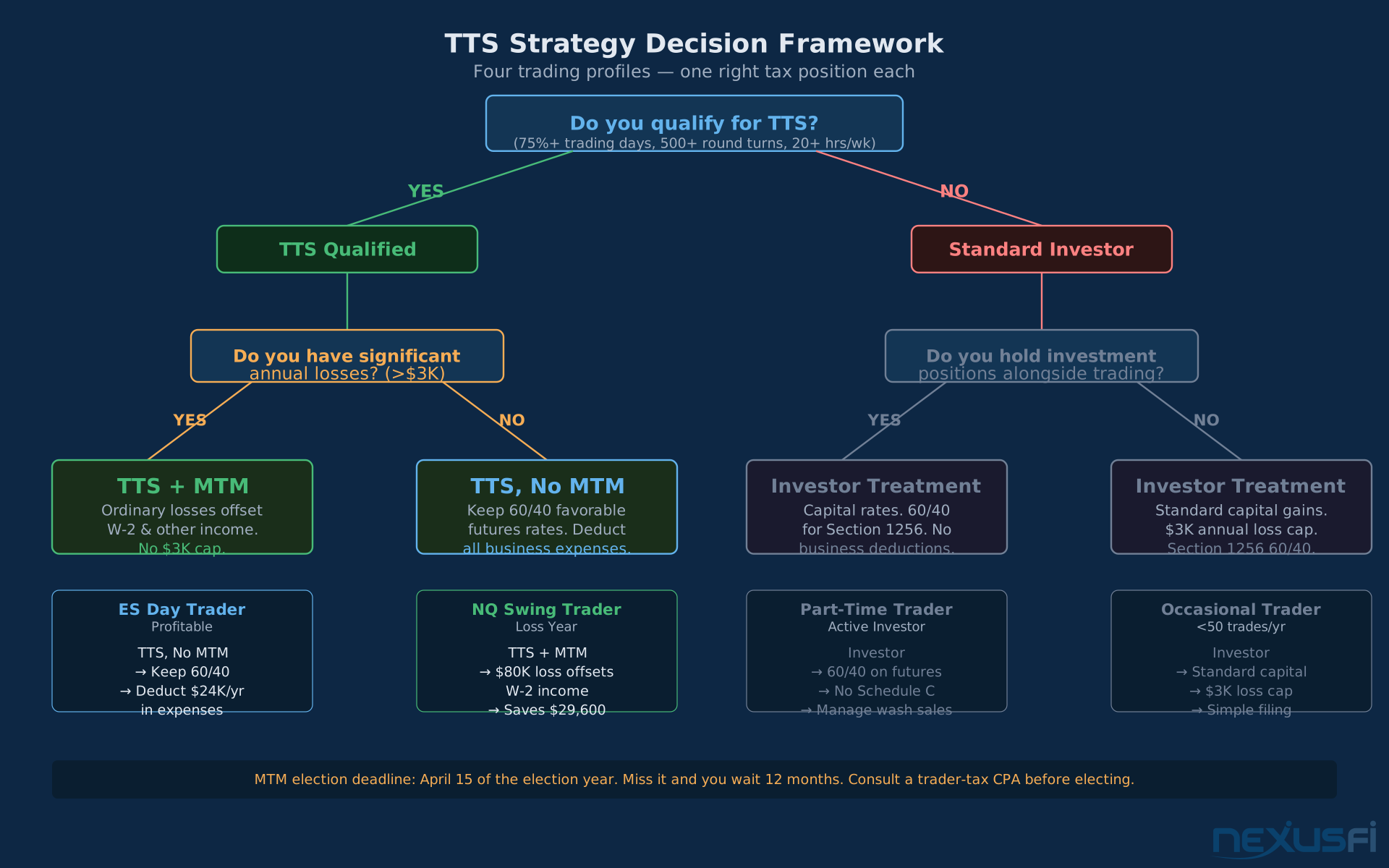
Here's where it gets concrete. Four possible combinations, and only two of them are rational:
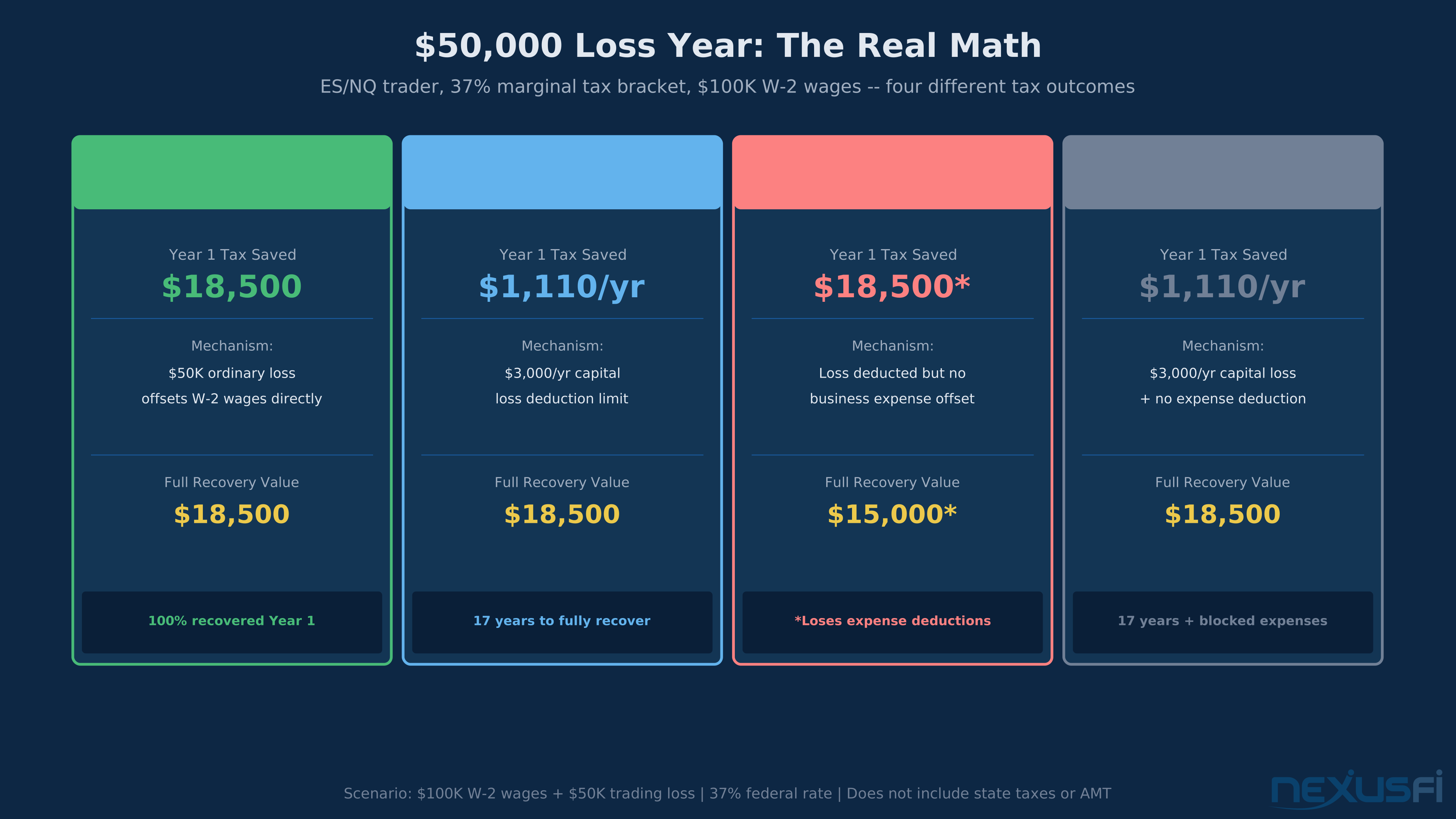
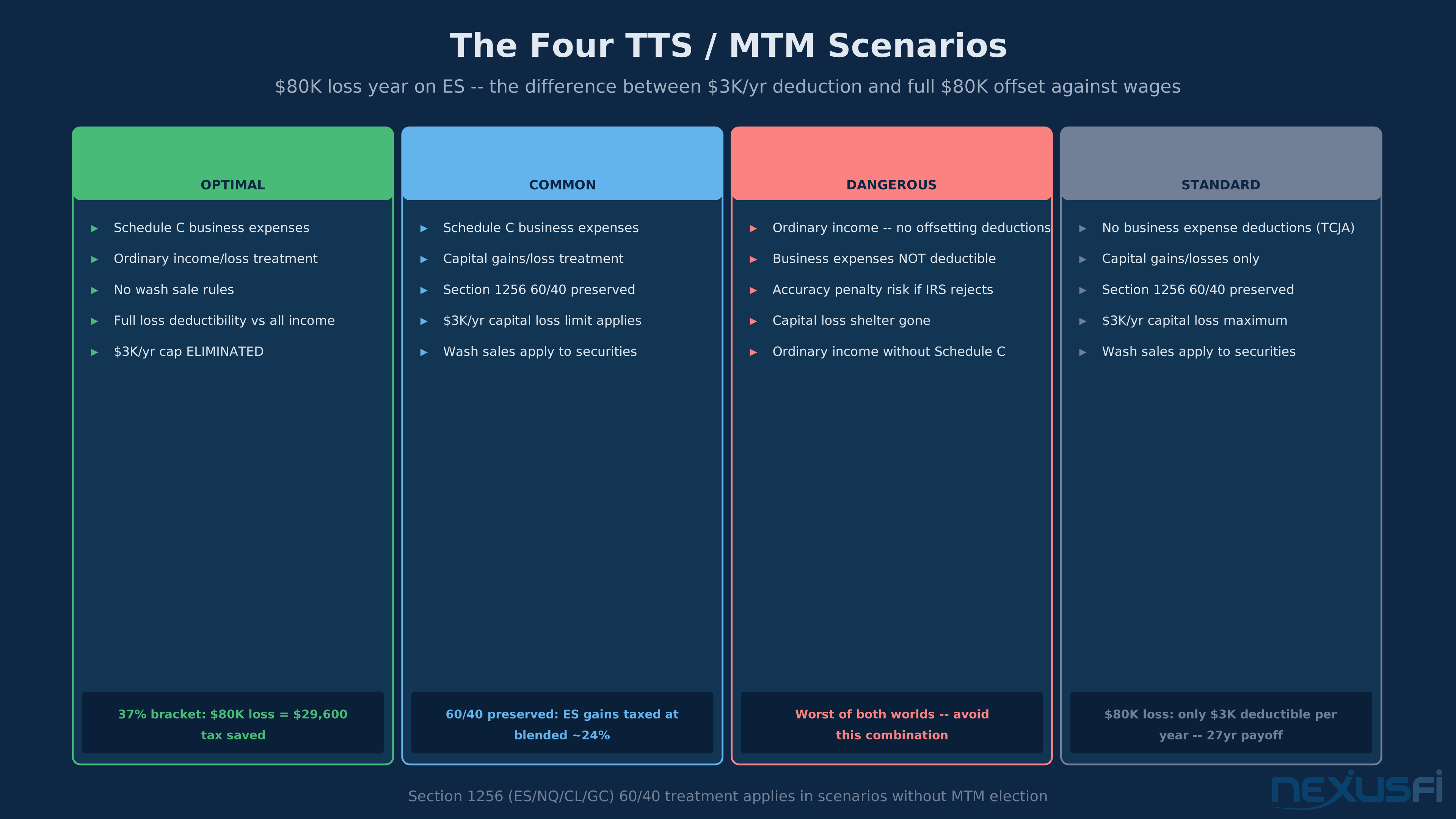
Scenario 1: TTS + MTM Elected — This is the optimal position for most active day traders. You're deducting all business expenses on Schedule C, and your trading gains and losses flow through as ordinary income and losses. Down year where you lose $80,000? That offsets $80,000 of ordinary income. No capital loss limit. No wash sale headaches.
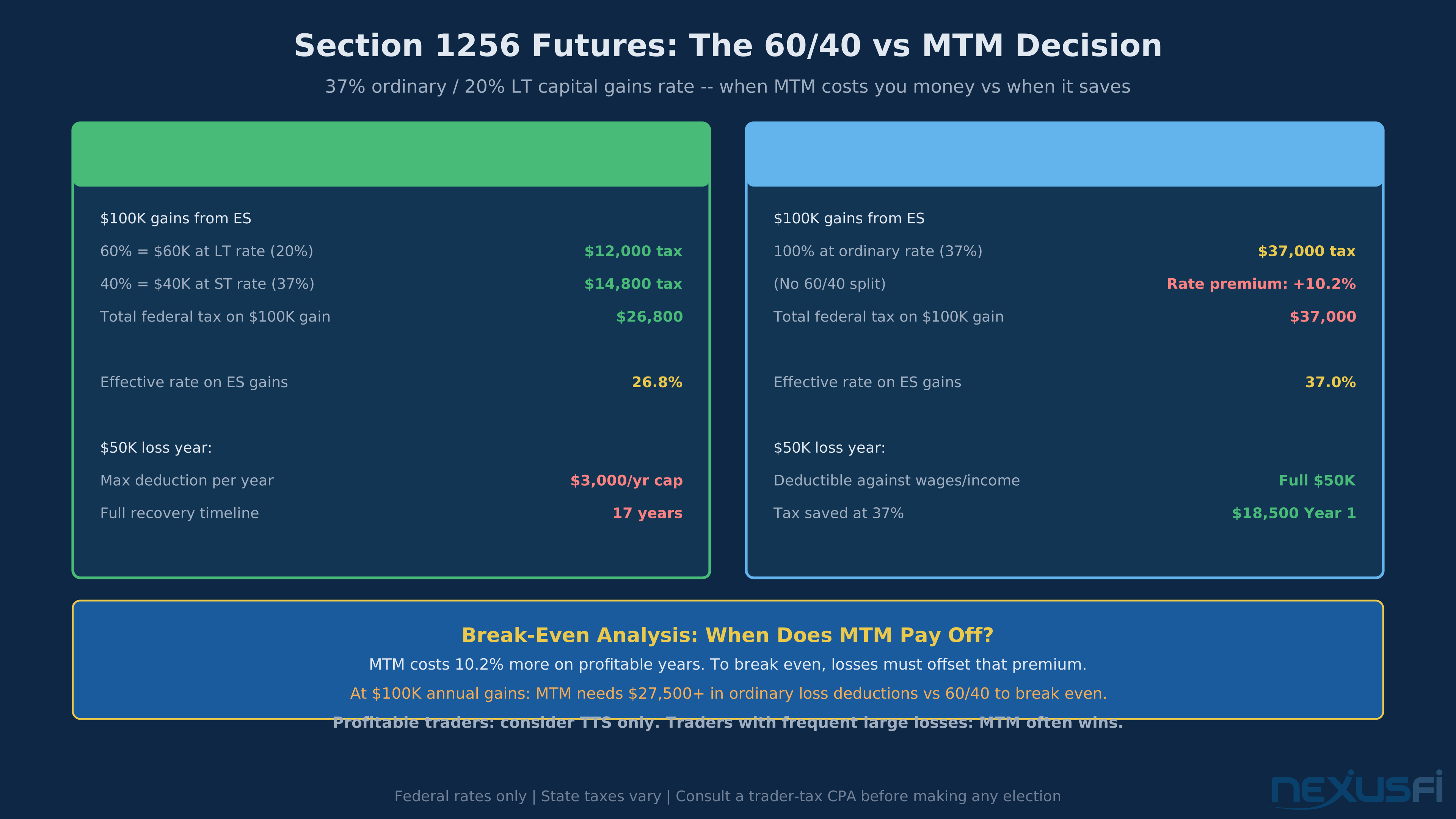
The trade-off: for futures traders with Section 1256 contracts, you're giving up the 60/40 long-term/short-term rate split. If you're primarily generating gains, those gains are now ordinary income rather than partially taxed at long-term capital gains rates. Whether that's a net negative depends on your bracket and your typical win/loss patterns.
Scenario 2: TTS Qualified, No MTM — You get business expense deductions. Trading gains and losses remain on Schedule D, subject to the $3,000 annual capital loss limitation. Section 1256's 60/40 treatment on futures stays intact. This is a common position for futures traders who expect to generate consistent gains — you keep the preferential 60/40 rates while deducting platform costs, data feeds, and other trading expenses as business expenses.
Scenario 3: MTM Elected Without TTS — Don't do this. If the IRS later determines you didn't qualify for TTS, the MTM election is invalid. Your gains have been reported as ordinary income, but you haven't been deducting business expenses (because you don't have TTS, Schedule C is unavailable for trading expenses). You've created ordinary income without the corresponding deductions. Add accuracy penalties and interest, and this is the worst tax position a trader can end up in.
Never elect MTM without confirmed TTS qualification. If the IRS later denies TTS, the MTM election is invalid — but gains have already been taxed at ordinary rates. You get the worst of both worlds: ordinary income rates without the Schedule C deductions. Accuracy penalties and interest compound quickly. This is the most expensive mistake in trader taxation.
Scenario 4: No TTS, No MTM — Standard investor treatment. Capital gains rates apply, $3,000 annual loss cap, wash sales apply to any securities positions, and trading expenses are not deductible (through 2025, under TCJA, miscellaneous itemized deductions are suspended). Section 1256 60/40 treatment still applies to regulated futures contracts. This is where most passive or occasional futures traders land.
The MTM Election Deadline Is Not Negotiable #
File the Section 475(f) election by April 15 of the year you want MTM to take effect. If you want it for 2025, that deadline was April 15, 2025. If you missed it, you're on capital gain treatment for 2025 regardless of how active your trading was.
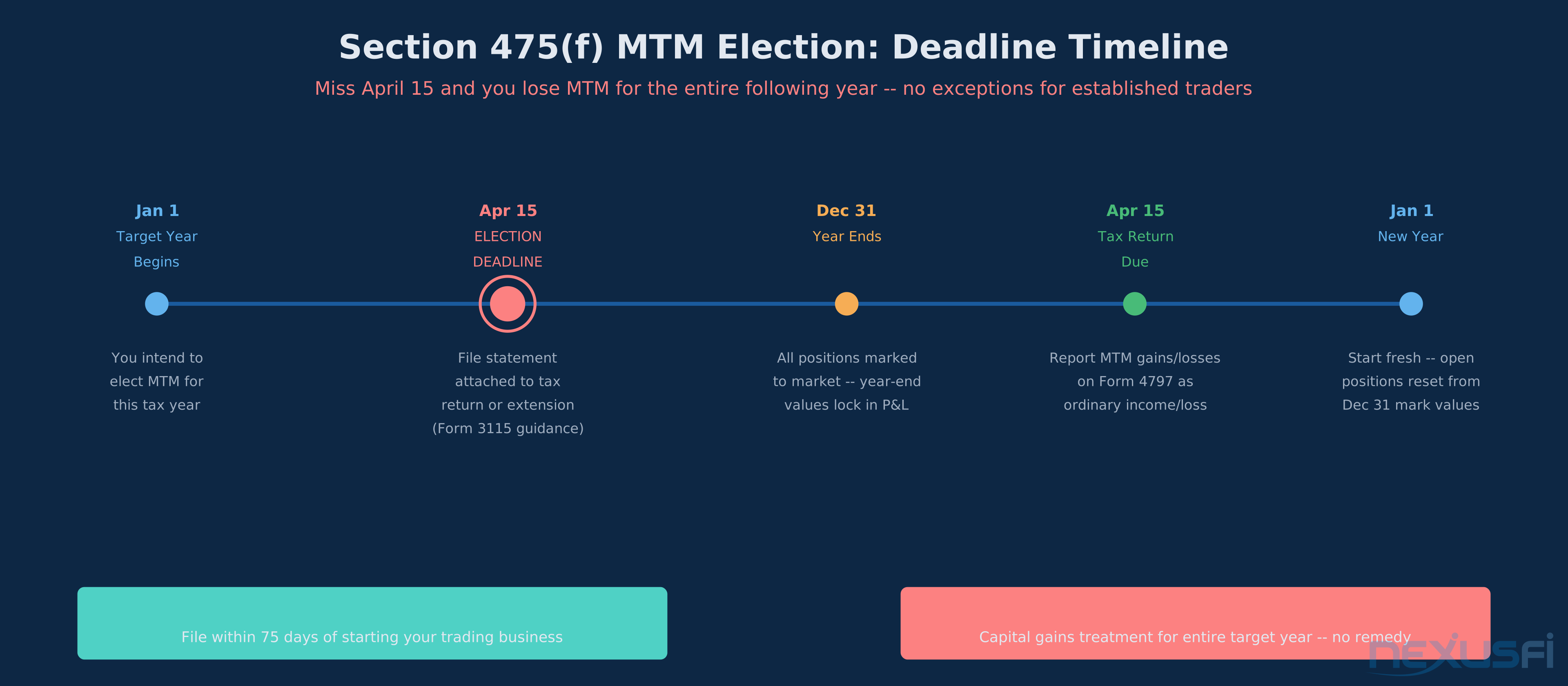
New traders have more flexibility — you can file within 75 days of starting your trading business. But the window closes quickly.
Benefits of TTS Qualification #
Business Expense Deductibility: The Core Win #
The most tangible benefit of TTS for most traders isn't the MTM election — it's being able to deduct the real costs of trading as business expenses rather than investment expenses (which are suspended under current law through 2025).
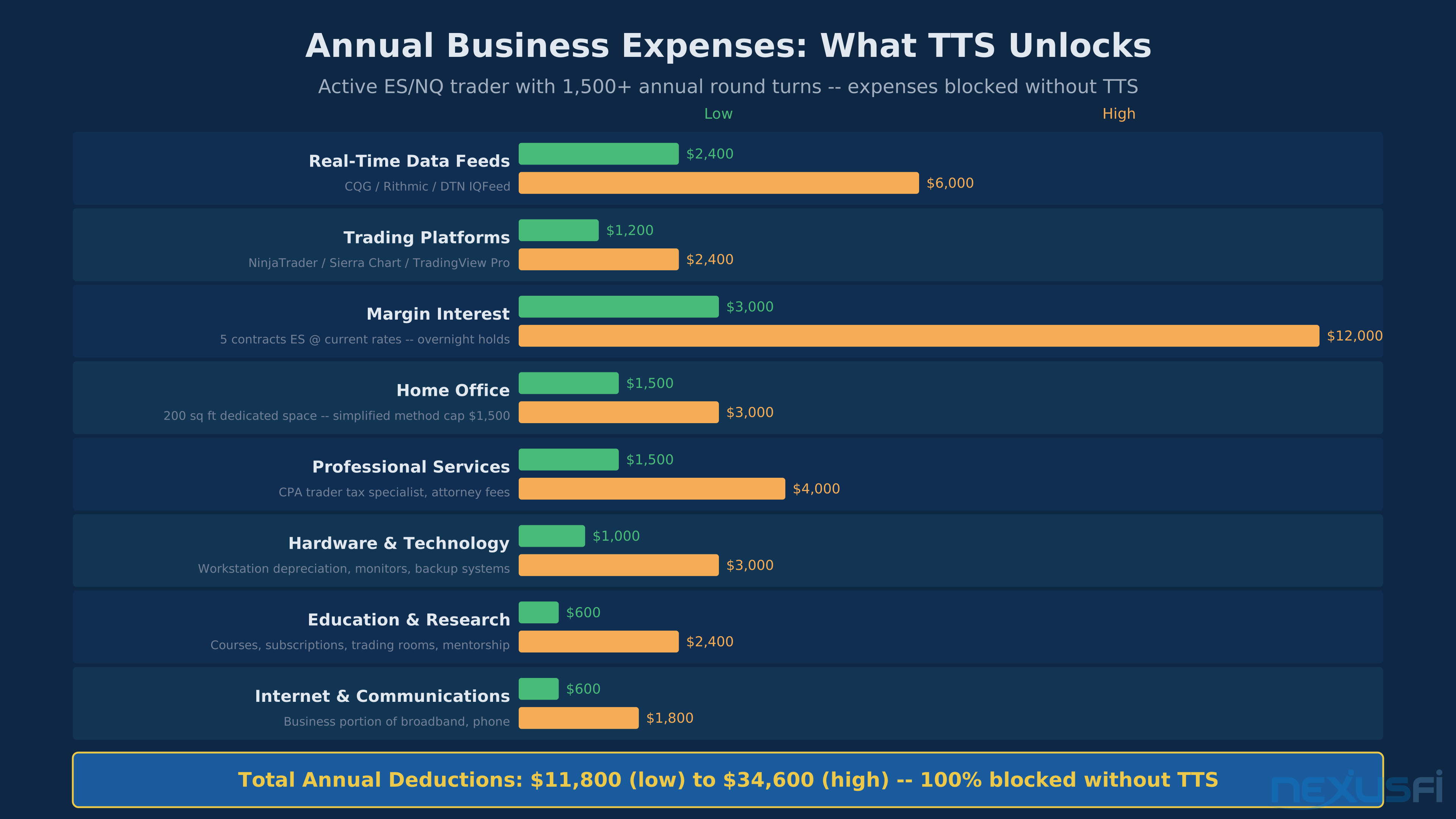
Data feeds: CQG continuous data runs $100-300/month. Rithmic is in a similar range. DTN IQFeed is around $80-150/month. These are real-time professional-grade feeds that active traders need. With TTS, they're fully deductible business expenses.
Trading platforms: NinjaTrader's licensing, Sierra Chart subscriptions, TradingView Pro+ — $50-200/month. Fully deductible with TTS.
Execution and market access: API fees, algorithmic trading software, DOM tools, order routing systems. All business expenses with TTS.
Professional services: CPA fees for trader tax work, legal fees for entity formation, trading coaches and mentorship programs. Deductible when they're ordinary and necessary business expenses.
Hardware: Computers, multiple monitors, UPS systems, backup internet connections. These are depreciated over their useful lives under normal rules, or potentially expensed under Section 179 (subject to limits). With TTS, they're business assets rather than personal property.
Home office: If you have a dedicated, exclusively-used trading space in your home — not a corner of a shared room, but a space used solely for trading — the home office deduction becomes available. Either the simplified method ($5/square foot, up to $1,500) or the actual expense method (proportional share of rent or mortgage interest, utilities, insurance).
Margin interest: This one is underestimated. Active futures traders using leverage carry meaningful margin interest charges. Without TTS, margin interest is investment interest — deductible only against investment income, subject to additional limitations. With TTS, it's a business expense, fully deductible.
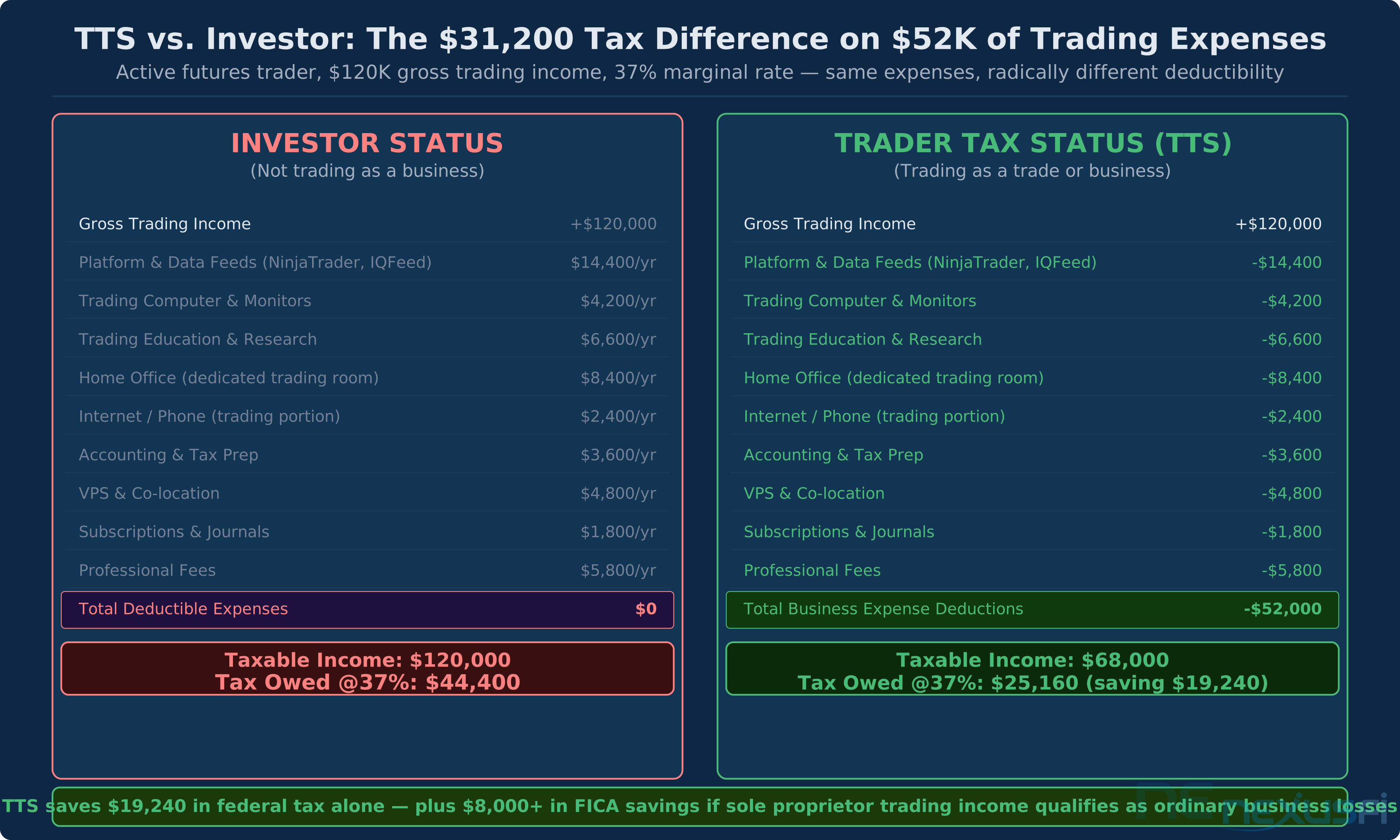
If your total trading expenses run $500-2,000 per month in data feeds, platforms, professional services, and equipment — that's $6,000-24,000 in annual deductions that either flow through Schedule C or get partially or fully blocked depending on your tax status.
Margin Interest in Practice #
For an ES trader running 5 contracts at current margins, interest on borrowed capital is a real line item. As @SMCJB noted in the Tax Thread context, trader status gives meaningful advantages including the deduction of trading expenses — and margin interest is one of the biggest for leveraged traders who carry positions overnight.
The 60/40 Trade-off with MTM for Futures Traders #
Here's the nuance that generic TTS articles miss. Section 1256 contracts — which is most of what futures traders actually trade (ES, NQ, YM, RTY, CL, GC, ZB, ZN) — already receive 60/40 treatment: 60% of gains taxed at long-term capital gains rates, 40% at short-term, regardless of actual holding period.
If you elect MTM, you convert that 60/40 treatment to 100% ordinary income. If your marginal ordinary income rate is 37% and your long-term capital gains rate is 20%, the difference matters for profitable years.
MTM makes more sense when you have significant losses — the ability to deduct those losses as ordinary income against W-2 wages or other income without the $3,000 cap is where MTM earns its value. For traders with a strong positive track record, TTS without MTM (keeping the 60/40 split while gaining business expense deductions) may be the better position.
The 60/40 trade-off is the critical calculation most generic TTS articles skip. For a profitable ES day trader at the 37% bracket, keeping TTS-without-MTM preserves a 23.8% blended effective rate on Section 1256 gains versus 37% ordinary income under MTM. On $200,000 in annual net profits, that is a $26,400 annual tax difference — wiped out by electing MTM without a compelling loss-offset rationale.
Your CPA should model both scenarios based on your actual P&L before you make this decision.
TTS without MTM is the optimal position for profitable futures traders: Schedule C expense deductions of $12,000-$33,000 per year while keeping Section 1256's favorable 60/40 rates. TTS with MTM is optimal when annual losses exceed $3,000 and need to offset other ordinary income. Model both scenarios with your CPA before filing — the decision is annual and P&L-specific.
Documentation Requirements #
The IRS does not take TTS claims on faith. Your qualification is proved by your records — contemporaneous records created at the time of the trading activity. If you're audited two years after the fact and try to reconstruct your trading patterns from broker statements alone, you're starting at a disadvantage.
Build your documentation system now, before you need it.
Trade Documentation #
Your broker statements and 1099-B forms are the baseline. They show what you traded and when. But they don't prove TTS by themselves. You need a layer on top that demonstrates the pattern of activity:
Trade execution logs: Every trade with timestamp, instrument, contracts, entry price, exit price, and holding period. Futures platforms export this data — use it. Sort your ES trades by holding time and calculate the distribution: what percentage were closed intraday, what percentage within 7 days, what percentage beyond 31 days.
Holding period analysis: Build a one-page summary for each year showing average and median holding period. The Endicott standard of under 31 days is what you're demonstrating. For a typical ES day trader, this is easy to prove — average holds measured in minutes to hours. For swing traders, calculate this explicitly.
Monthly activity summary: Trades per month, trading days per month, contracts executed per month. Month-by-month breakdown demonstrates the continuity and regularity the IRS is looking for.
Time Commitment Documentation #
This is where most traders fall short. Trade records prove you executed. Time logs prove you were operating a business.
Daily time log: A simple spreadsheet or journal entry noting when you started preparing for the trading day, when you were active at the screens, and when you finished post-session review. 20-30+ hours per week is the standard. Log it every day.
Trading calendar: Mark every day you traded on a calendar. Calculate your trading day percentage. 190 trading days out of 252 available = 75.4%. That number matters in an audit.
Research and analysis records: Screenshots of your pre-market analysis, notes on market structure, records of the research that drove your trading decisions. These demonstrate that trading is a business activity requiring sustained mental effort, not just button-clicking.
Expense Records #
Every deductible expense needs documentation:
Receipts and invoices: Keep every data feed invoice, platform subscription receipt, and professional service bill. Organize them by category and year.
Payment evidence: Bank statements or credit card statements showing you actually paid these expenses. Receipt alone isn't enough — you need to prove payment.
Business purpose documentation: For any expense that might be questioned — hardware, education, professional services — note the specific business purpose. "17-inch monitor purchased for additional chart monitoring, tracking ES and CL simultaneously during active sessions" is better than "bought a monitor."
Home office measurement: If you're claiming a home office, measure the space, photograph it, and keep evidence that it's exclusively used for trading. A room where you also store holiday decorations fails the exclusive use test.
The Audit-Ready Packet #
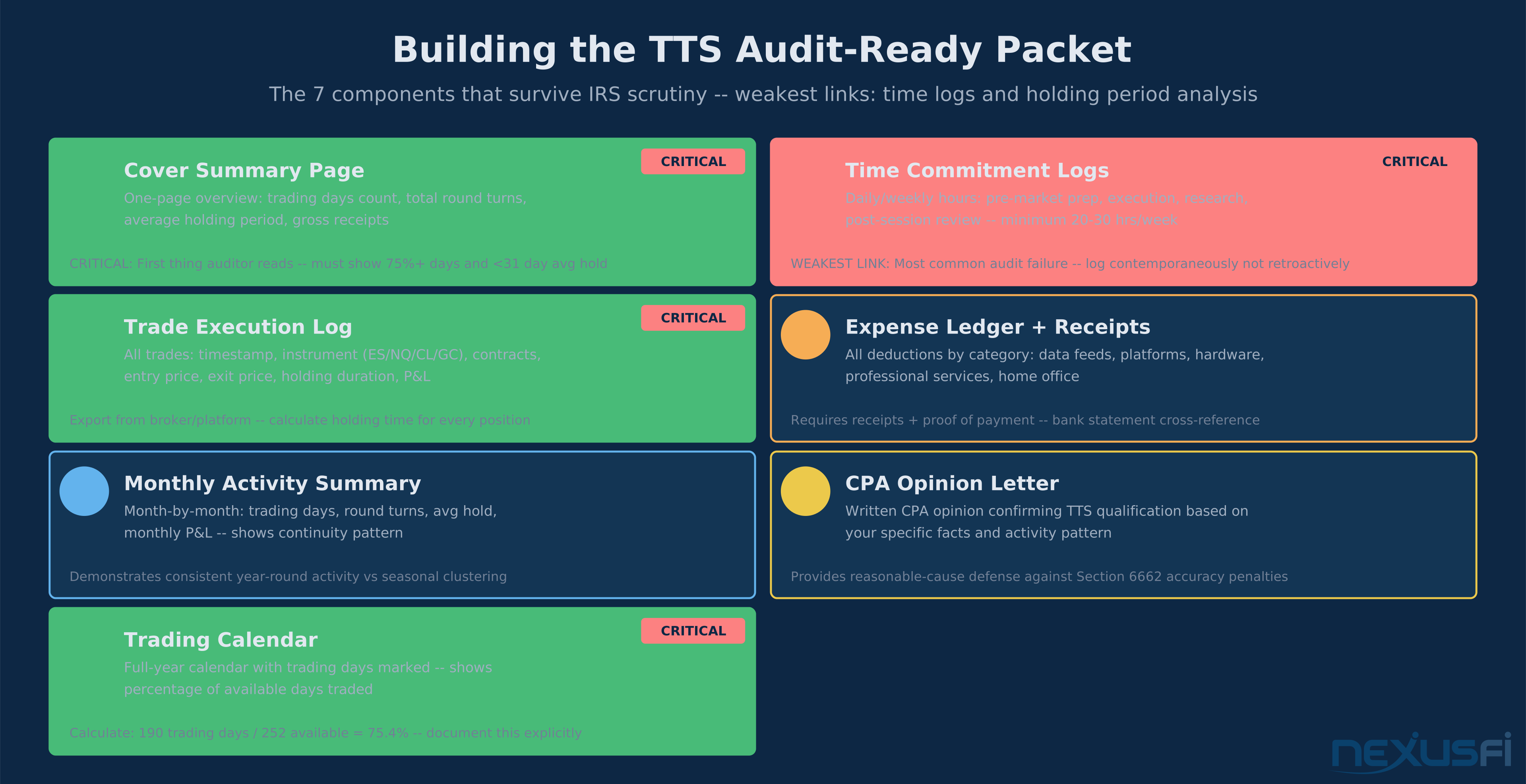
Organize everything into a packet that can be handed to a CPA or presented to the IRS without scrambling:
- Cover page: One-page summary — annual trading days count, total round turns, average holding period, gross trading receipts
- Trading metrics summary: Month-by-month breakdown of all key metrics
- Trade log export: Complete record, organized chronologically
- Trading calendar: Full-year view with trading days marked, gap explanations noted
- Time commitment logs: Weekly hour totals, sampling of daily records
- Expense ledger: All deductions categorized with receipt references
- Broker statements: Monthly statements plus year-end 1099s
- CPA opinion letter: If you use a trader-tax specialist, a written opinion confirming TTS qualification based on your specific facts provides reasonable-cause defense against accuracy penalties
That CPA opinion letter isn't cheap. Worth it for anyone running significant losses or claiming significant expenses. It's your first line of defense if the IRS questions your position.
Build the audit-ready packet at year-end, every year — before any IRS inquiry arrives. The IRS examination window is three years from the return's due date. Reconstructing two years of time logs and monthly trade summaries after receiving a letter is a credibility problem the IRS examiner will notice. Create the cover page and monthly metrics summary as standard part of your December routine.
Risks and Common Misconceptions #
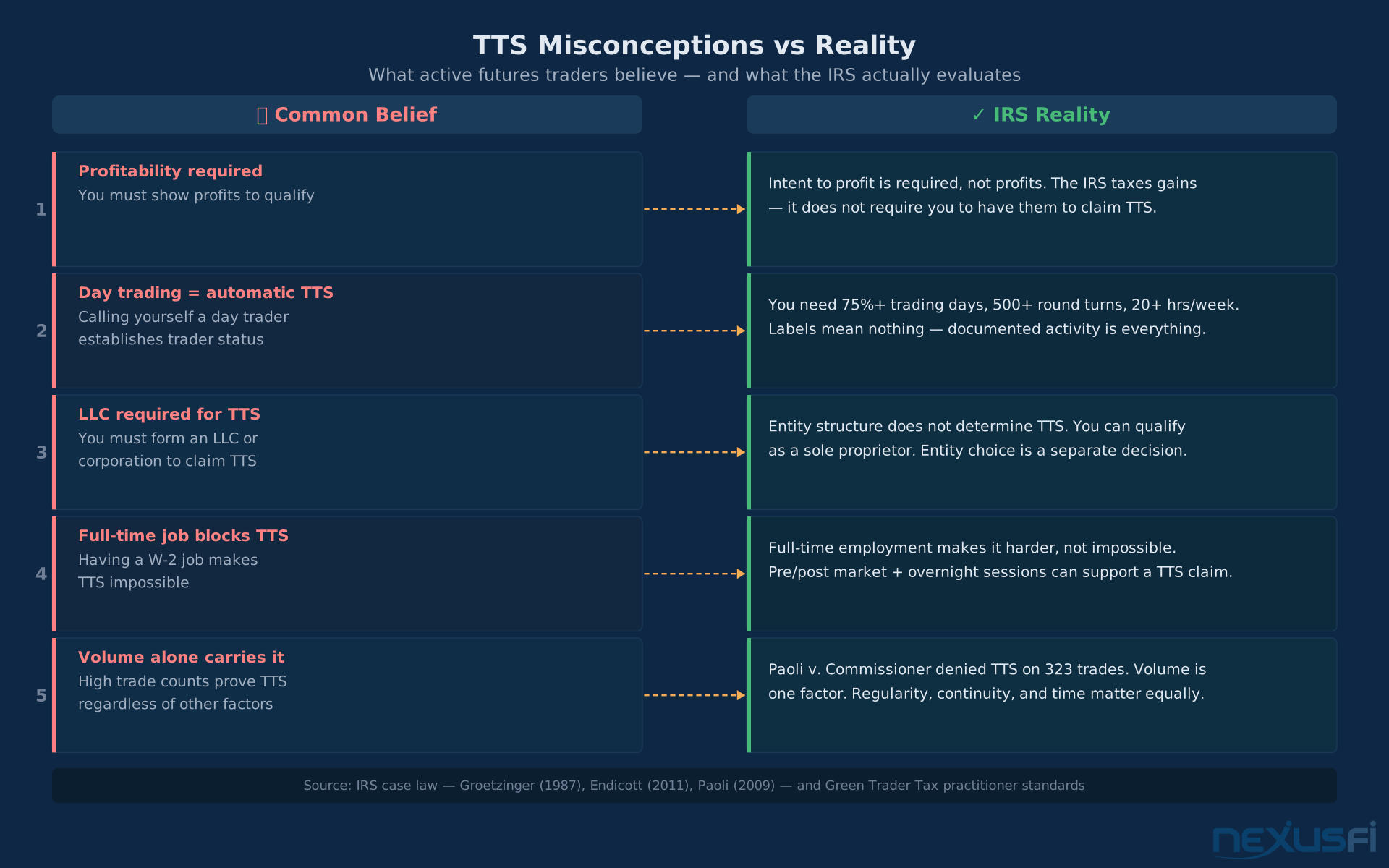
Misconception 1: Profitability Is Required #
The IRS requires intent to profit from short-term market movements, not actual profits. Losing money doesn't disqualify TTS.
That said, sustained losses over multiple years can raise a different flag — the hobby loss rules under Section 183. If you show losses in seven of ten years, the IRS may argue you're engaging in a hobby rather than a business. The defense is demonstrating that you're operating in a businesslike manner, making genuine efforts to improve, and that losses resulted from market conditions rather than lack of business purpose.
For futures traders, the defense typically includes documenting your strategy evolution, risk management improvements, and the market environment that produced losses. The key point: losses don't disqualify TTS, but chronic losses require you to demonstrate business intent more carefully.
Misconception 2: Day Trading Automatically Qualifies #
Calling yourself a day trader doesn't establish TTS. You need to actually meet the frequency, volume, continuity, and time commitment standards. A "day trader" who executes 50 trades per year on 30 trading days doesn't qualify.
Conversely, you don't need to day trade exclusively. Swing trading ES with 2-5 day average holds qualifies if the frequency and volume are sufficient. The Endicott standard is under 31 days average holding period — that covers a lot of swing trading territory.
Misconception 3: Full-Time Employment Kills TTS #
It makes qualification harder, not impossible. The IRS will question whether you have the time commitment required to operate a second business. But futures traders have a genuine advantage: the overnight and pre-market sessions accommodate trading before and after a standard workday.
If you're seriously trading with a full-time job — pre-market from 6:00-9:00 AM, lunch session, evening session, plus research and analysis — and logging 20+ hours per week on trading activities, that's a defensible position. Document it carefully. The time logs matter especially when employment complicates the picture.
The Paoli case denied TTS partly because the full-time employment made genuine trading continuity implausible given the trader's documented activity. Make sure your actual trading pattern supports the claim before you make it.
Misconception 4: You Need an LLC #
Entity structure doesn't determine TTS eligibility. You can qualify as a sole proprietor trading in your own name. Section 1256 treatment applies regardless of entity structure.
Where entity structure matters is liability protection and the potential for certain tax planning strategies at higher income levels. An LLC or S-Corp can make sense for other reasons — but "I need an LLC to claim TTS" isn't one of them. As the NexusFi forum discussion "Personal or LLC?" documented, futures traders should understand the Section 1256 interaction before creating entities, and that requires a CPA who actually knows futures tax treatment, not just a general business CPA.
Misconception 5: Volume Alone Carries the Argument #
Paoli directly rejected this. 323 trades over 113 trading days — denied TTS because activity lacked continuity and systematic business conduct. Volume is one factor in a multi-factor analysis. It doesn't override insufficient regularity or poor documentation.
IRS Challenge Consequences #
If the IRS successfully challenges your TTS claim:
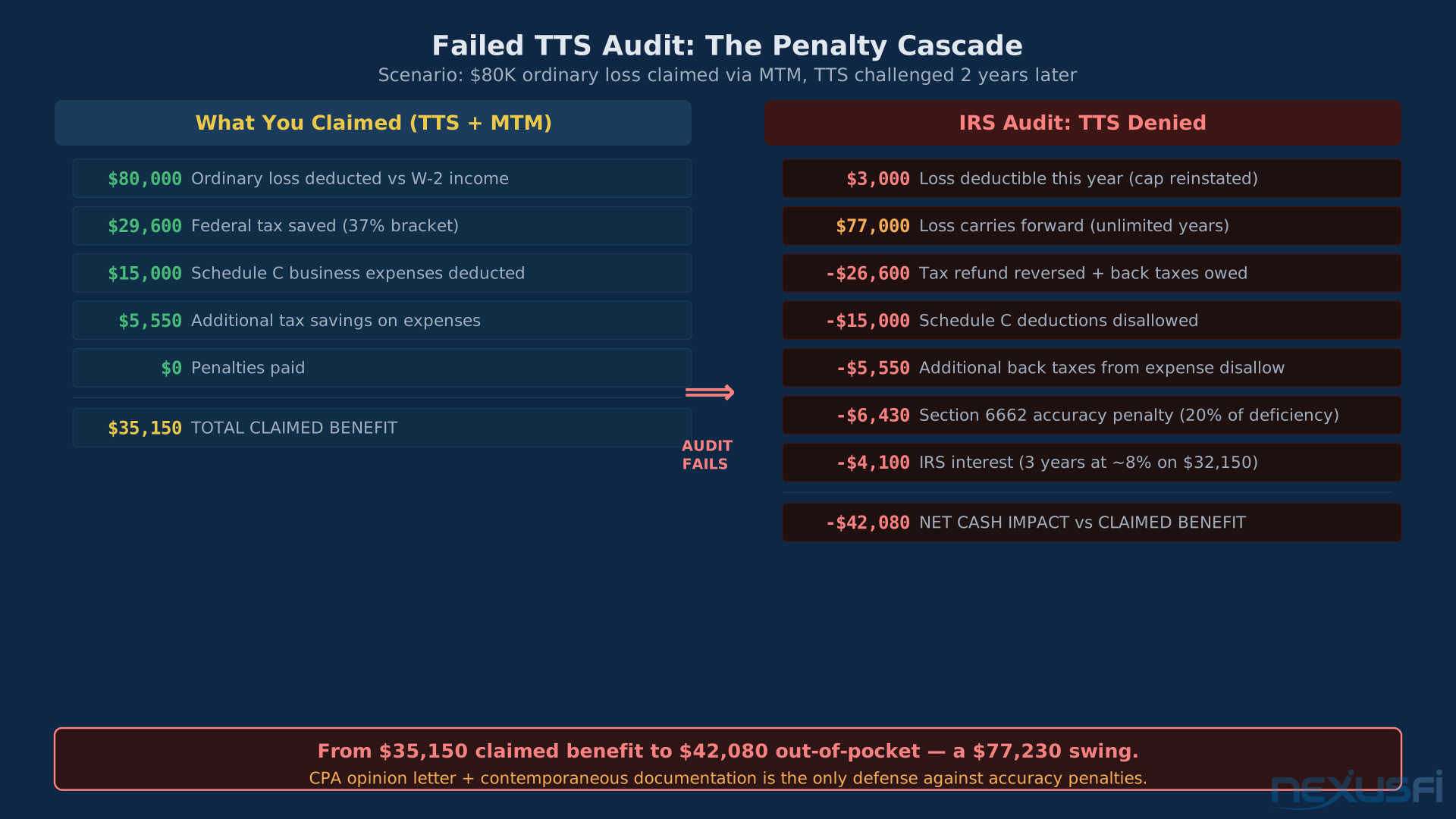
Expense disallowance: All Schedule C business expenses get disallowed. If you deducted $15,000 in platform costs, data feeds, and professional services, that's $15,000 added back to taxable income.
Loss reclassification: Ordinary losses claimed via MTM get reclassified as capital losses, subject to the $3,000 annual limitation. A $50,000 ordinary loss claimed in a year where you also had $80,000 in W-2 wages suddenly becomes $3,000 deductible per year — with $47,000 carrying forward indefinitely.
Accuracy penalties: Section 6662 imposes a 20% penalty on underpayment attributable to significant understatement. If you've been claiming TTS without qualification and the IRS catches it after two years, the penalty compounds quickly.
Interest: Interest runs from the original return's due date on any tax deficiency. On a $30,000 underpayment over three years at current IRS rates, the interest charge alone is material.
Defense against penalties: The reasonable cause exception protects against accuracy penalties if you relied on competent professional advice, maintained adequate documentation, and made a good-faith effort to comply. That CPA opinion letter is worth its weight here.
When TTS Makes Sense and When to Avoid It #
TTS without MTM is a strong position for futures traders who are consistently profitable and primarily trading Section 1256 contracts. You get the Schedule C expense deductions while keeping the favorable 60/40 capital gains treatment.
TTS with MTM makes most sense when:
- You have significant loss years and want to offset other income
- Your trading losses regularly exceed $3,000 per year
- You trade a mix of securities and futures and want wash sale elimination
- Your ordinary income tax rate doesn't much exceed your long-term capital gains rate
MTM without TTS is a trap. Don't try to make the election if you haven't honestly evaluated whether you meet the TTS standard.
The opportunity cost of getting this wrong in either direction is significant. A profitable futures trader paying full ordinary income rates on gains that should have received 60/40 treatment is leaving real money behind. A trader claiming TTS and MTM without qualification is creating audit exposure and potential penalties that swamp any tax savings.
This decision belongs with a CPA who specializes in trader taxation, not futures trading generally but specifically trader tax status, MTM elections, and Section 1256 treatment. Generic tax preparers routinely get this wrong.
What to Ask Your CPA #
When you sit down with a trader-tax specialist, bring your year-end broker statements, a summary of your trading day percentage, your average holding period calculation, and your total trading expenses. The questions to address:
-- Do I meet TTS qualification criteria based on my trading pattern? — Does TTS without MTM or TTS with MTM serve me better given my P&L? — What are my documentation gaps, and how do I close them? — If I want MTM for next year, what's my election deadline? — How does my entity structure interact with TTS and Section 1256 treatment?
The answers depend entirely on your specific situation. The framework above tells you what the questions are. A qualified CPA gives you the answers.
For related Academy coverage, see Section 1256 Contracts and the 60/40 Tax Rule for a deep dive on futures tax treatment, Section 475(f) Mark-to-Market Tax Election for the MTM election mechanics, and Trading Entity Structures for Futures Traders for how entity choice interacts with TTS.
Knowledge Map
Prerequisites
Understand these firstGo Deeper
Build on this knowledgeReferences This Article
Articles that build on this topicCitations
- — The Tax Thread (2015) 👍 2“I trade 250 days a year and execute thousands of trades so qualifying is not difficult for me. The rule is to differentiate between people who trade as a business versus people who invest rather than trade.”
- — Day Trading: Mark-to-Market 475(f) Election? (2018) 👍 2“Greenu2019s Golden Rules: Substantial volume at least four total trades per day, 15 per week, 60 per month. Frequent: trade execution on 75% of available trading days. Daily market movements: average holding period under 31 days (Endicott court).”
- — Personal or LLC? (2018) 👍 5“Most CPAs, even very bright and very good CPAs, are unaware of futures tax treatment, like the Section 1256 contracts 60/40 capital gains split. So work with your CPA and educate them.”
- — Day Trading: Mark-to-Market 475(f) Election? (2018) 👍 2“The big thing Mark-to-Market gives you is the ability to take losses as ordinary losses, which are not subject to the capital loss limitation. I do have trader status. I do not make the mark to market election.”
- — Trading is a Business (2025) 👍 8“All of this combined informs you whether or not you are truly profitable in your trading as a business.”
- — The Tax Thread (2015) 👍 2“The IRS denied Poppe his Section 475 election because he could not prove compliance with the two-step election process. The consequence was that instead of deducting his $1 million trading loss as an ordinary loss, Poppe was stuck with a $3,000 capital loss limitation and a capital loss carryover.”
- — The Tax Thread (2015) 👍 2“The IRS has been playing havoc with traders in exams, claiming traders did not properly comply with Section 475 rules. Noncompliance gives the agent license to drag misidentified trading losses into capital loss treatment subject to the $3,000 limitation. Both types of exam changes cause huge tax bills, penalties and interest.”
- Green Trader Tax — Trader Tax Status: How to Qualify (2026)
- IRS — Section 1256 Contracts Marked to Market (2024)
- US Tax Court — Endicott v. Commissioner, T.C. Memo 2011-137 (2011)