



Trading Entity Structures for Futures Traders: LLC, S-Corp, Sole Proprietorship, and Partnership
Overview #
Trading entity structures — sole proprietorships, LLCs, S-Corporations, and trading partnerships — affect how futures traders manage liability, taxes, and compliance. Choosing the wrong structure costs money; choosing the right one at the wrong time costs even more.
This article gives futures traders a practical framework for evaluating entity structures through the specific lens of futures trading. The mechanics differ meaningfully from equity trading, and generic tax advice frequently leads futures traders astray.
Key Principle The entity wrapper is secondary to the underlying tax elections. Trader Tax Status (TTS) qualification and the Section 475(f) mark-to-market election determine more of your tax outcome than your entity choice. Get those right first.
Two non-negotiable truths run through every entity discussion: entities do not create trading edge, and the right entity for you changes as your income grows. Most active futures traders begin as sole proprietors and eventually reach a single-member LLC. Far fewer — only those with consistently high and verifiable trading income — benefit from an S-Corp structure.
Active futures traders eventually confront a question that belongs to both the tax code and the courtroom: should you trade as an individual, or through a legal entity? The answer affects your liability exposure, your tax bill, and the compliance overhead you carry every year.
This article provides the practitioner's framework for evaluating entity structures — sole proprietorship, single-member LLC, S-corporation, and trading partnership — through the specific lens of futures trading. The mechanics differ meaningfully from equity trading or traditional businesses, and generic tax advice frequently leads futures traders astray.
One fundamental truth runs through every entity discussion: the entity wrapper is secondary to the underlying tax elections. Two decisions — Trader Tax Status qualification and the Section 475(f) mark-to-market election — determine more of your tax outcome than your entity choice. Getting those right first is the prerequisite for any entity strategy to work.
The Two Prerequisites That Override Entity Choice #
Trader Tax Status (TTS) #
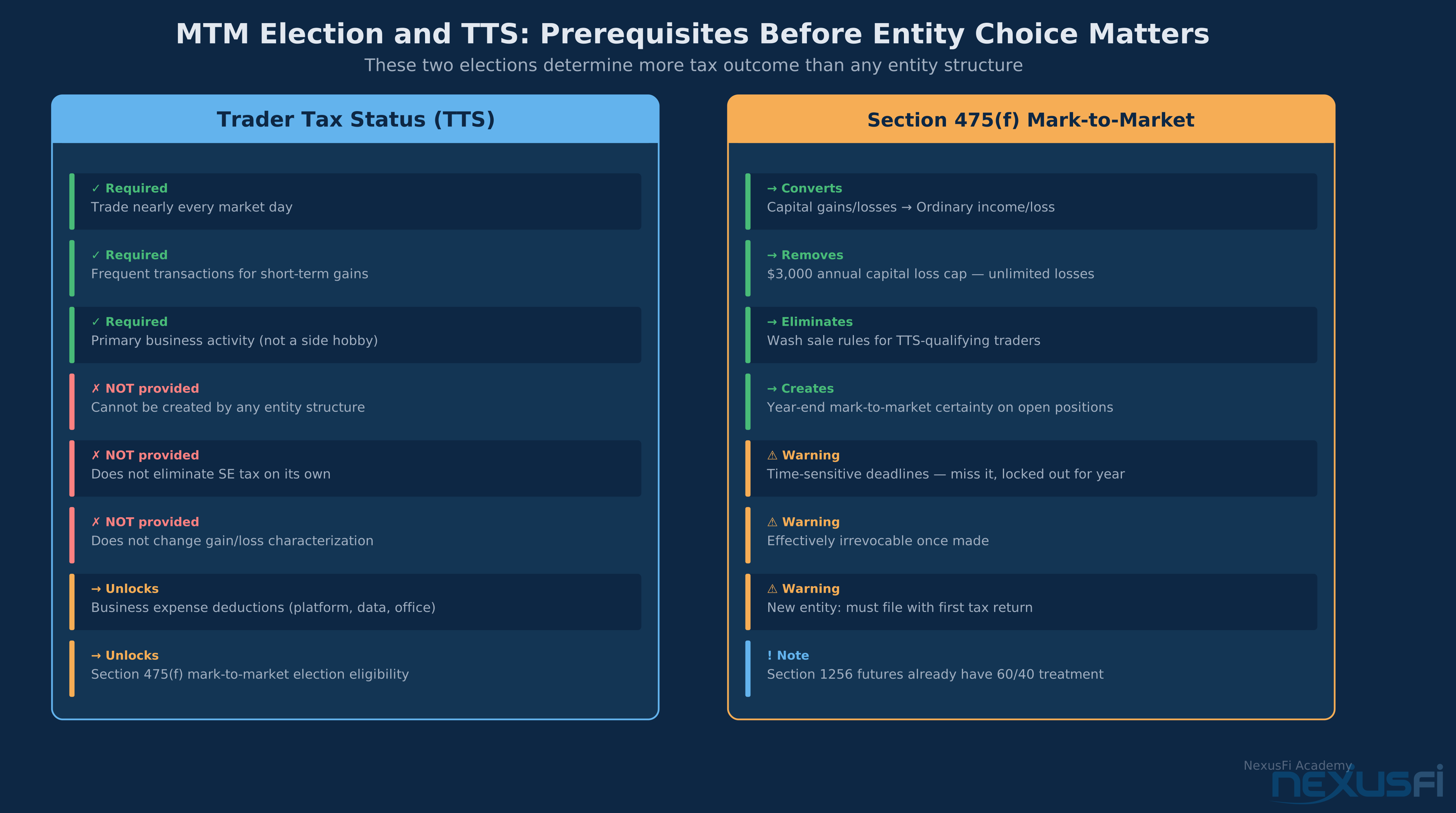
Trader Tax Status is a facts-and-circumstances determination the IRS makes based on how you trade — not what you trade through. To qualify, your trading must be:
- Significant and continuous: trading nearly every market day, with frequent transactions
- Profit-oriented via short-term price movements: not long-term investment accumulation
- Your primary business activity: TTS is harder to claim if you have significant other income streams that dominate your time
TTS unlocks two categories of benefits that are otherwise unavailable to investors:
- Business expense deductibility: data subscriptions, platform fees, home office deductions, education costs — all as ordinary business deductions rather than miscellaneous itemized deductions subject to AGI floors
- Eligibility for the Section 475(f) mark-to-market election
What TTS does NOT automatically provide: it does not eliminate self-employment tax on trading profits, and it does not change how gains and losses are characterized. That's where MTM comes in.
Critical point: No entity structure creates TTS. If your trading activity doesn't qualify on its own merits — frequency, intent, continuity — forming an LLC or S-Corp accomplishes nothing tax-wise.
The Section 475(f) Mark-to-Market Election #
For traders who qualify for TTS, the MTM election under Section 475(f) converts capital gains and losses into ordinary income and loss. For futures traders, this means:
- Unlimited loss deductibility: ordinary losses offset any income with no $3,000 capital loss cap
- Elimination of wash sale rules for qualifying traders (though futures contracts already have favorable treatment — more on this below)
- Year-end mark-to-market: all open positions are treated as if sold on December 31 at market value, removing timing games and creating certainty
The MTM election is time-sensitive, procedurally specific, and effectively irrevocable once made. For a new entity, it must be filed with the first tax return. For an existing trader, there are specific annual deadlines that vary based on entity type.
Wash sale rules and futures: Futures contracts already receive more favorable treatment than equities. Section 1256 contracts — which cover regulated futures — are subject to the 60/40 rule (60% long-term capital gains, 40% short-term) regardless of holding period. Wash sale rules generally apply to "stock or securities" and are less directly relevant to futures. An entity structure does not "solve" wash sale issues; instrument type and IRS interpretation govern this.
Entity Types: Mechanics and Tradeoffs #
Sole Proprietorship #
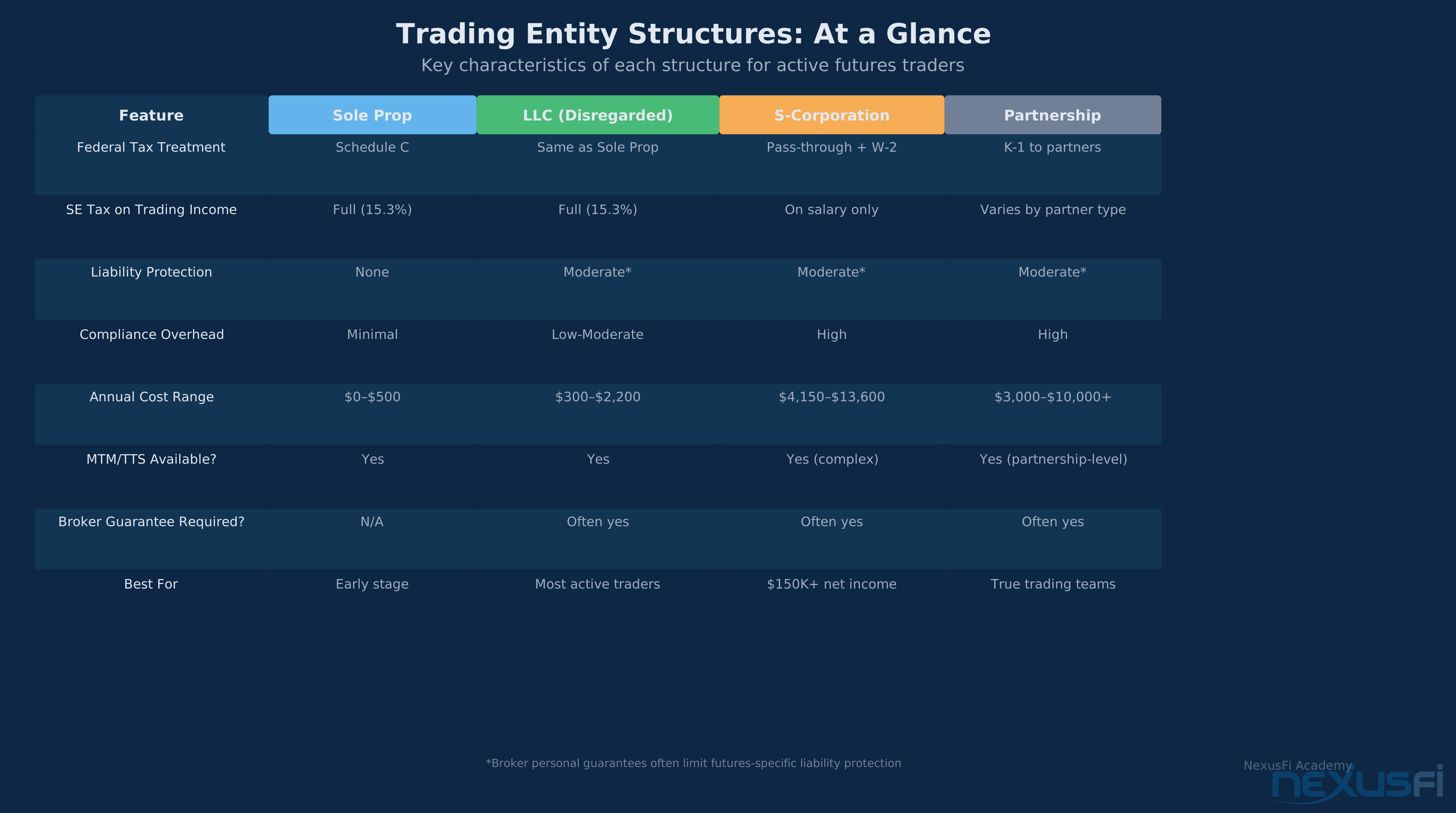
The default. If you trade without forming an entity, you are a sole proprietor. Your trading income and losses flow directly to your personal return — Schedule C for business income, Form 6781 for Section 1256 contracts.
Tax implications:
- All trading income is subject to self-employment tax (15.3% up to Social Security wage base, 2.9% above)
- If you qualify for TTS, the MTM election is available and made at the individual level
- Section 1256 60/40 treatment applies to futures contracts regardless of TTS status
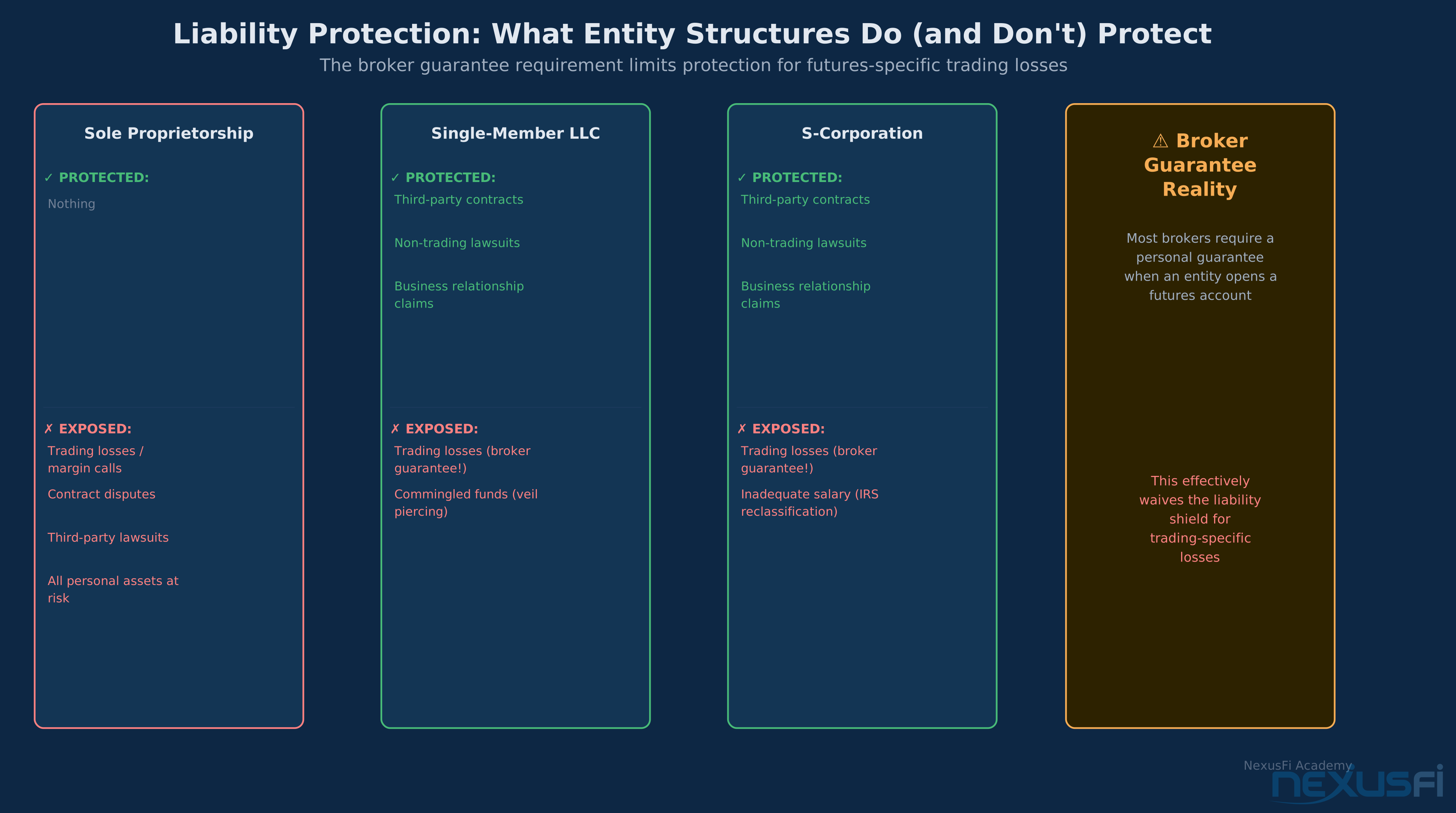
Liability: Zero protection. Your personal assets — home, bank accounts, retirement accounts outside certain protected categories — are available to creditors.
Compliance burden: Minimal. Your trading activity appears on your personal return with no separate entity filings.
When it makes sense: Early-stage traders establishing a track record, traders with lower profit levels where SE tax is less material, or traders who haven't yet qualified for TTS and have no meaningful third-party liability exposure.
The core weakness: As trading capital grows, the unlimited personal liability becomes untenable. And self-employment tax can consume a material percentage of trading profits.
Single-Member LLC (Disregarded Entity) #
The most common structure for active futures traders who want liability protection without tax complexity. A single-member LLC is, by default, a "disregarded entity" for federal tax purposes — meaning the IRS treats it identically to a sole proprietorship.
Tax implications:
- Federally invisible: income and losses still flow to your personal return exactly as with sole proprietorship
- MTM election and TTS apply identically to sole prop
- Section 1256 treatment unchanged
- Self-employment tax still applies to trading income
The most important misconception: Forming an LLC does not change your tax situation. If you're a sole prop paying SE tax on $200,000 of trading profits, forming an LLC (without an S-Corp election) changes nothing about that bill. This surprises many traders.
Liability: Meaningful liability protection, provided you observe entity formalities:
- Maintain separate bank and brokerage accounts in the LLC's name
- Execute an operating agreement
- Avoid commingling personal and business funds
- Contract in the entity's name for business-related agreements
If you treat the LLC as yourself — using its account for personal expenses, failing to keep separate books — courts may "pierce the corporate veil" and treat your personal assets as available.
A critical broker reality: Many brokers require a personal guarantee when an LLC opens a futures account.
@SMCJB, Elite member This doesn't eliminate the LLC's value entirely — protection from other business liabilities, contracts, and legal claims remains — but it's a material limitation traders should understand before expecting the LLC to function as a complete liability shield for futures-specific losses.
Compliance burden: Low-moderate. State formation fees ($200-$800 typical), annual registered agent fees, operating agreement, separate financial accounts. No separate federal tax return required for a single-member LLC.
State fees vary much:
- Wyoming, Nevada: minimal annual fees
- California: $800 minimum franchise tax regardless of income — material for lower-profit traders
- New York: filing fees plus potential publication requirements that can add $1,000-$2,000
When it makes sense: Most active futures traders who have meaningful capital to protect, any third-party relationships (consulting, managed accounts, service providers), or who simply want clean business/personal financial separation. The compliance overhead is modest relative to the protection gained.
S-Corporation #
The S-Corp is the primary tool for self-employment tax optimization. Instead of paying SE tax on 100% of net trading income (as a sole prop or disregarded LLC), an S-Corp allows you to split income into two buckets:
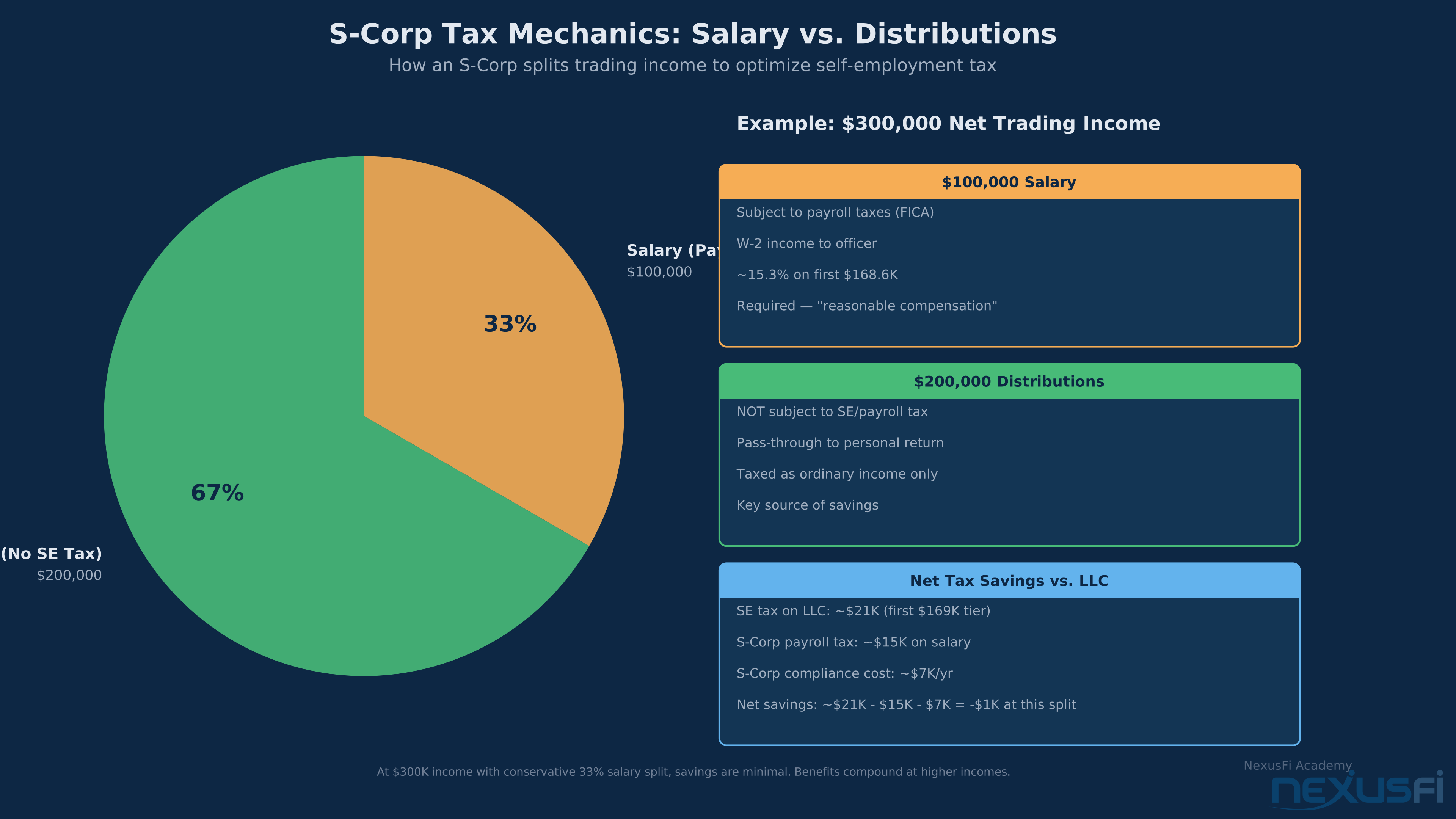
- Reasonable compensation salary: subject to payroll taxes (FICA — 15.3% up to Social Security wage base)
- Distributions: pass-through to your personal return, not subject to self-employment tax
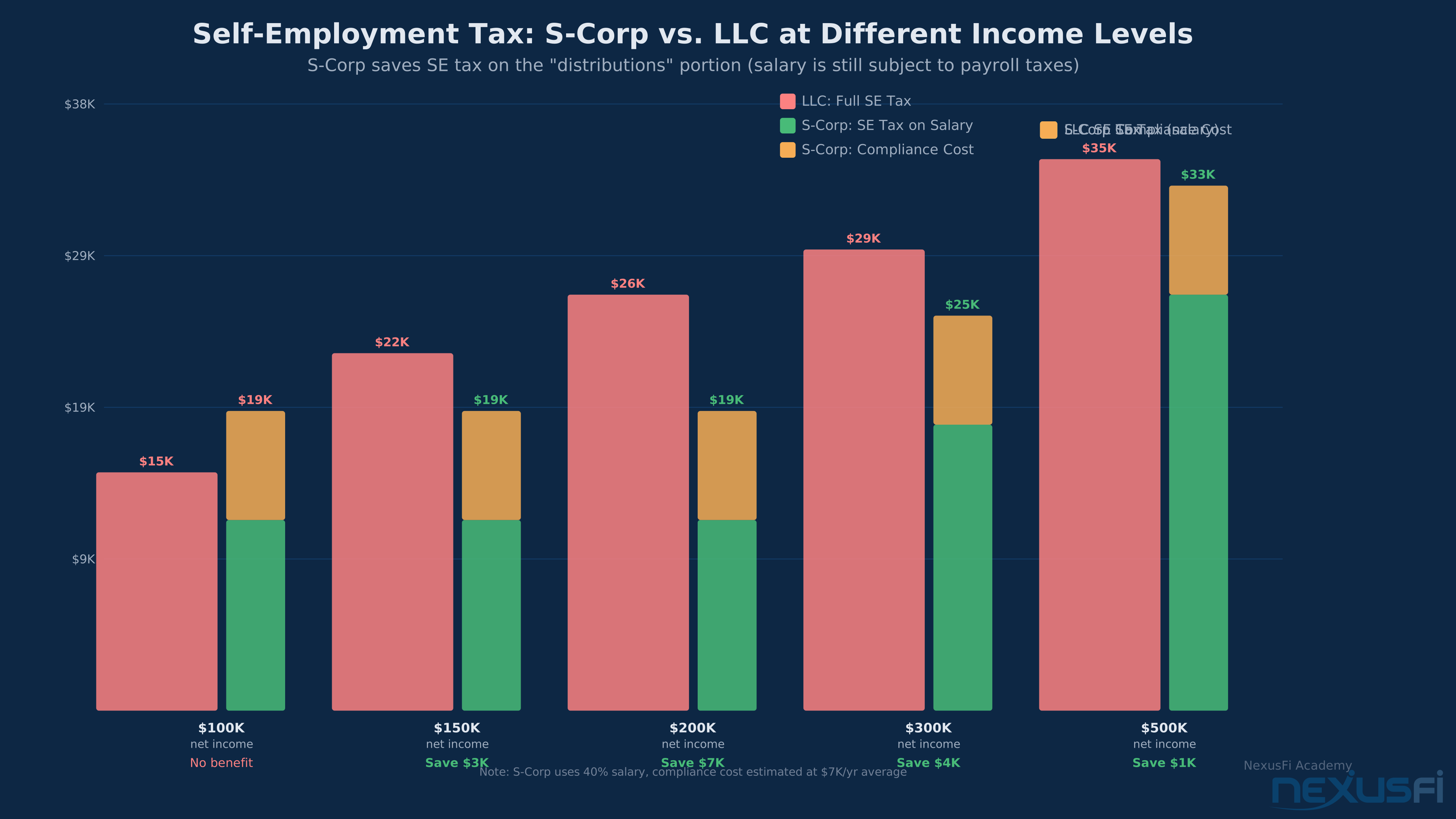
The tax savings come from the portion you can take as distributions rather than salary. If you earn $300,000 in trading income and pay yourself a $100,000 salary, you pay payroll taxes only on the $100,000 rather than the full $300,000.
The key complication for traders: The IRS expects S-Corp owners to pay themselves "reasonable compensation" for the services they provide to the corporation. For a traditional service business, this is straightforward — the owner provides identifiable labor. For a pure trader, the question becomes: what services are you providing to the entity? This creates friction and potential audit risk when the salary/distribution split is aggressive.
NexusFi Elite member @SMCJB runs an S-Corp structure and describes the approach: "I have a management LLC which I pay to manage my business. The LLC in turn pays for my medical, pension and gives me a salary. The salary I receive is then taxed at income rates AND incurs full self employed SS taxes. The combination of the medical & pension and the fact that the management fee is offset against the short term capital gains means this is still tax effective despite having to pay SS tax."
Elite member @iantg, writing from his experience with S-Corp structures since 2009 He continues: "The grey area in the tax code is that there is an expectation that if you are working as an employee of the company you should salary yourself a reasonable amount and pay double taxes. But there is no line in the sand in the tax code telling you specifically what this is."
MTM/TTS interaction: The MTM election and TTS qualification can be made through an S-Corp, but the mechanics are more complex and require a CPA who specifically understands trader tax. The wrong structure or election timing can jeopardize the ordinary loss treatment you're seeking.
Compliance requirements:
- Payroll setup and quarterly filings (Form 941)
- Annual W-2 and W-3
- Annual corporate tax return (Form 1120-S)
- Officer meeting minutes and corporate formalities
- Annual state filings and fees
Realistic annual costs:
- Payroll service: $1,000-$2,500/year
- Accounting and tax preparation: $3,000-$10,000/year (substantially more than for a disregarded LLC)
- State corporate maintenance fees
When it makes sense: Only when ALL of the following apply:
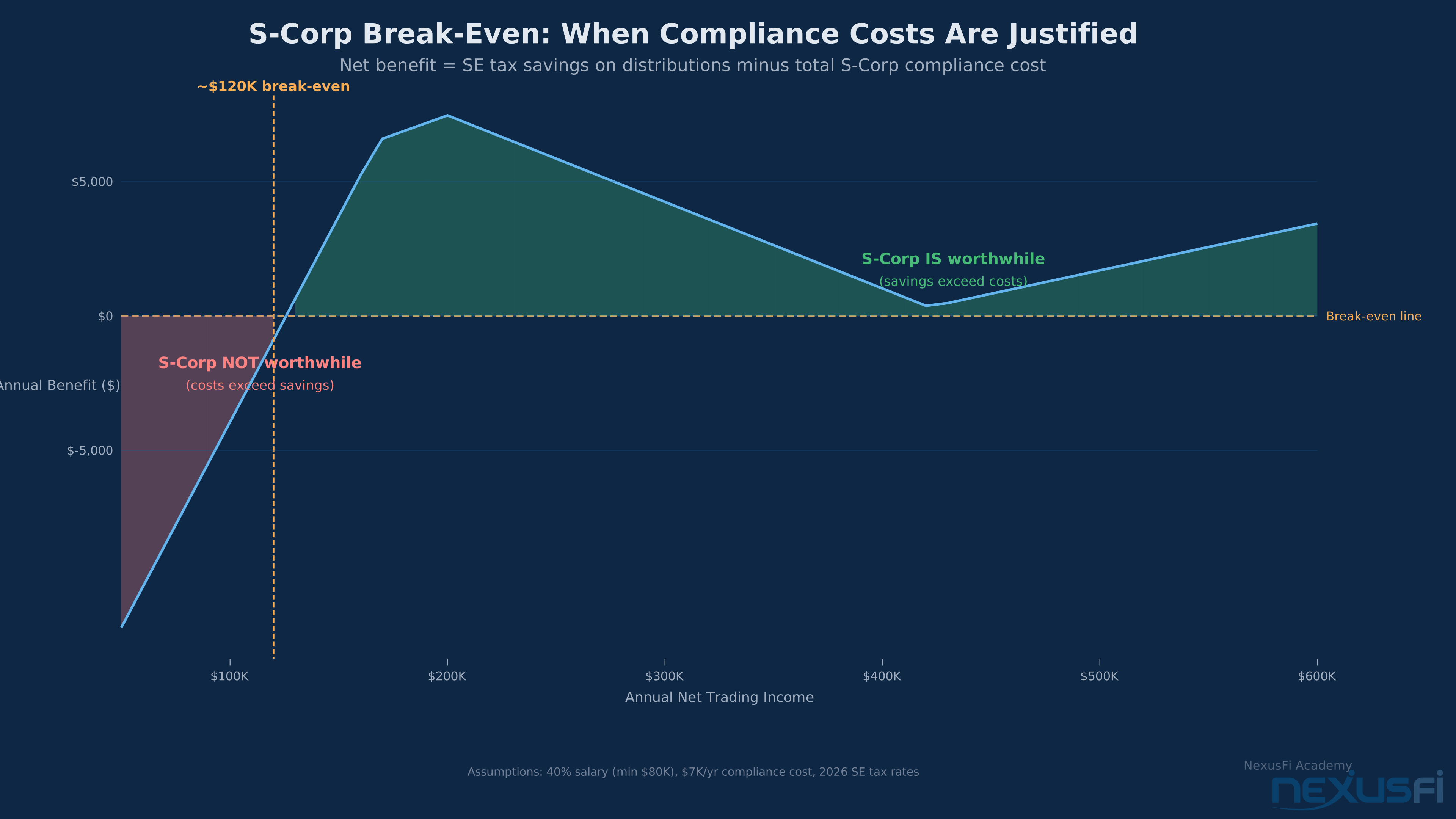
- Annual net trading income consistently exceeds $150,000-$250,000
- A CPA specializing in trader tax has confirmed the S-Corp structure won't jeopardize MTM/TTS treatment
- Projected SE tax savings demonstrably exceed total compliance costs by at least $5,000+
- You're prepared for the ongoing administrative requirements
For traders below these income levels, S-Corp compliance costs often consume more than the tax savings generate.
Trading Partnership #
A trading partnership — typically structured as a multi-member LLC taxed as a partnership — is appropriate when multiple traders genuinely pool capital or expertise under shared governance.
Tax implications:
- Income and losses pass through to partners via K-1 forms
- MTM election is made at the partnership level (not individually)
- TTS requirements must be satisfied at the appropriate level — typically the partnership itself
- SE tax treatment depends on partner status (general vs. limited)
Governance requirements: A detailed partnership agreement covering:
- Capital contributions and withdrawal rights
- Profit and loss allocation
- Decision-making authority
- Partner buy-out provisions
- What happens when partners disagree
Compliance burden: Highest of all structures. Partnership tax returns, K-1 preparation for each partner, partnership-level elections, and the complexity of multi-party governance.
When it makes sense: Genuine trading teams, fund structures, or situations where bringing in outside capital is planned. Solo traders should not use a partnership structure.
The practical risk: Partnership disputes and operational disagreements create both legal and tax complications. Partners who disagree about MTM elections, expense allocations, or profit-sharing can create intractable situations. The governance framework must be watertight before trading begins.
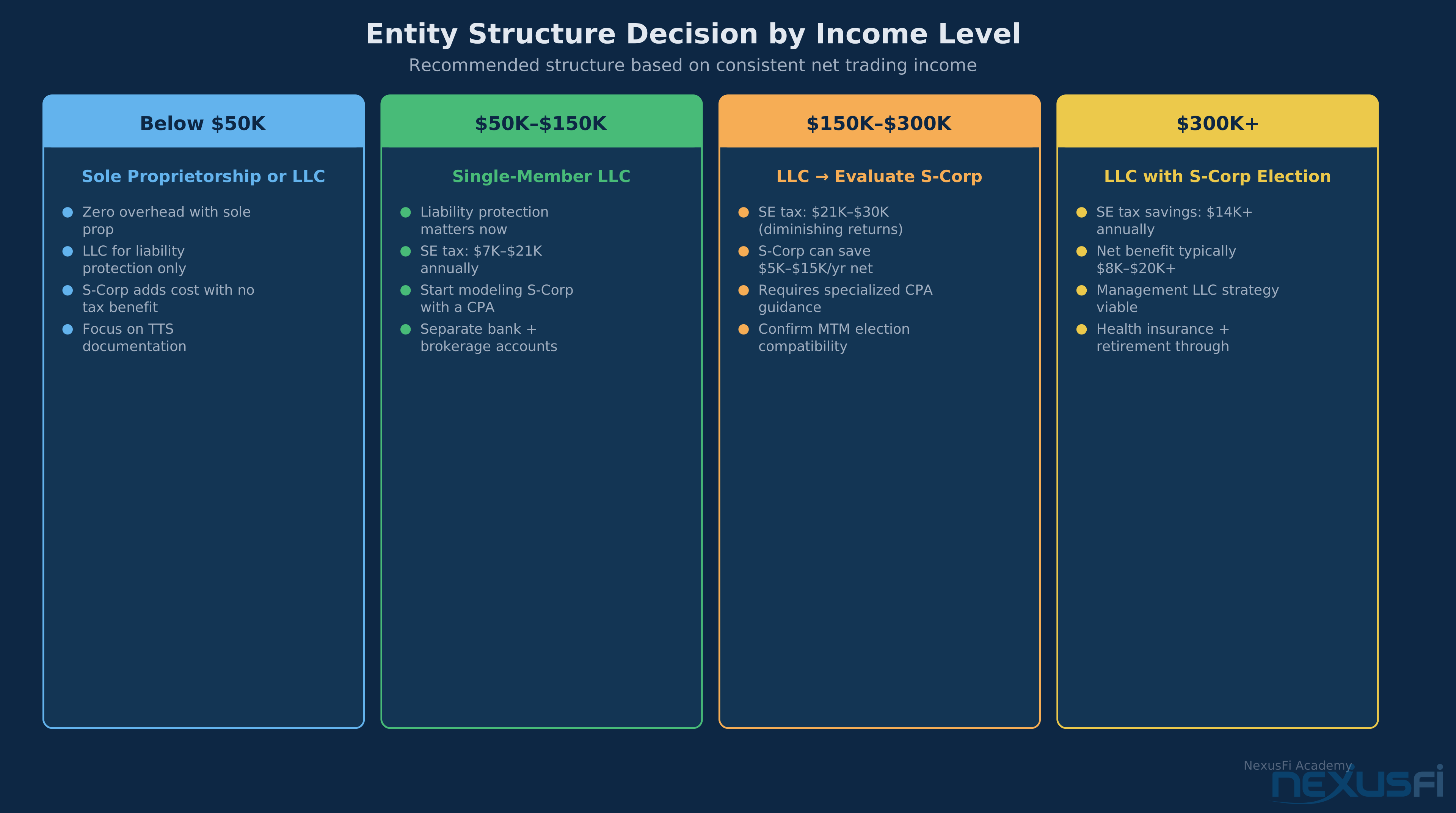
Decision Framework by Income Level #
The entity structure that makes sense depends primarily on your consistent, verifiable profitability — not your aspirational income or a single strong year.
Early Stage and Lower Income (Below $50,000 Net) #
Recommended: Sole proprietorship or single-member LLC
At this level, focus should be on establishing TTS-qualifying trading patterns, documentation, and track record. The compliance costs of any more complex structure will outweigh the benefits.
- Sole prop if liability exposure is minimal and you want zero overhead
- Single-member LLC if you have third-party relationships, meaningful capital to protect, or want clean business/personal separation
- S-Corp adds $3,000-$10,000+ in annual costs for no material tax benefit at this income level
Developing Trader ($50,000-$150,000 Net) #
Recommended: Single-member LLC (disregarded entity)
Liability protection becomes meaningful at this level. The LLC provides legal separation without changing your tax situation. Review with a CPA whether SE tax is a significant burden — if you're generating $100,000+ in profits, SE tax costs $14,000-$15,000 on the first tier alone.
Begin the S-Corp analysis with a CPA if income is approaching $150,000 and trending upward. But don't make the S-Corp election until the math demonstrably works.
Consistently Profitable ($150,000-$300,000 Net) #
Recommended: Single-member LLC; begin serious S-Corp evaluation
At this income range, S-Corp may begin to make economic sense. Run a specific projection: what would your salary be? What are total payroll and accounting costs? What would the SE tax savings be? If the net benefit exceeds $5,000 annually after all costs, the S-Corp becomes worth considering.
Still, confirm explicitly with a specialized CPA that the S-Corp election won't create complications with your MTM election or TTS qualification.
High Income ($300,000+ Net, Consistent) #
Recommended: LLC with S-Corp election (with proper CPA guidance)
SE tax savings become significant at this level. A $300,000 income with a $100,000 salary saves payroll taxes on $200,000 — roughly $14,500 in savings before the salary portion. Against $3,000-$8,000 in compliance costs, the economics are compelling.
The structure @SMCJB describes — a management LLC paid by a trading entity — adds another layer of sophistication that can offset capital gains with management fees while enabling health insurance and retirement plan deductions. This requires careful implementation and a CPA who has done this before.
When to Form an Entity #
The common mistake is waiting too long — forming an entity reactively after a problem, or trying to form one mid-year when it disrupts election timing.
Form early enough to matter, but only when the need is real:
- Form before you have meaningful capital at risk: Once you're trading position sizes that could generate significant losses or obligations to your broker, liability protection has value.
- Form before any third-party relationships: consulting arrangements, managed account discussions, service providers — any relationship where you're creating contractual obligations.
- Coordinate with MTM election timing: Entity formation mid-year can complicate or prevent the MTM election for that tax year. If you're considering both, plan them together with your CPA.
Key timing constraint: MTM elections have specific deadlines. For a new entity, the election must accompany the first tax return. For an existing trader converting to an entity, there are strict annual deadlines. Missing the window locks you out for the entire tax year.
@dannyinhouston, NexusFi Elite member This applies to entity formation as much as anything. The complexity of MTM/TTS elections and entity mechanics requires professional guidance from a CPA who specifically works with active traders — not a generalist, and not tax software.
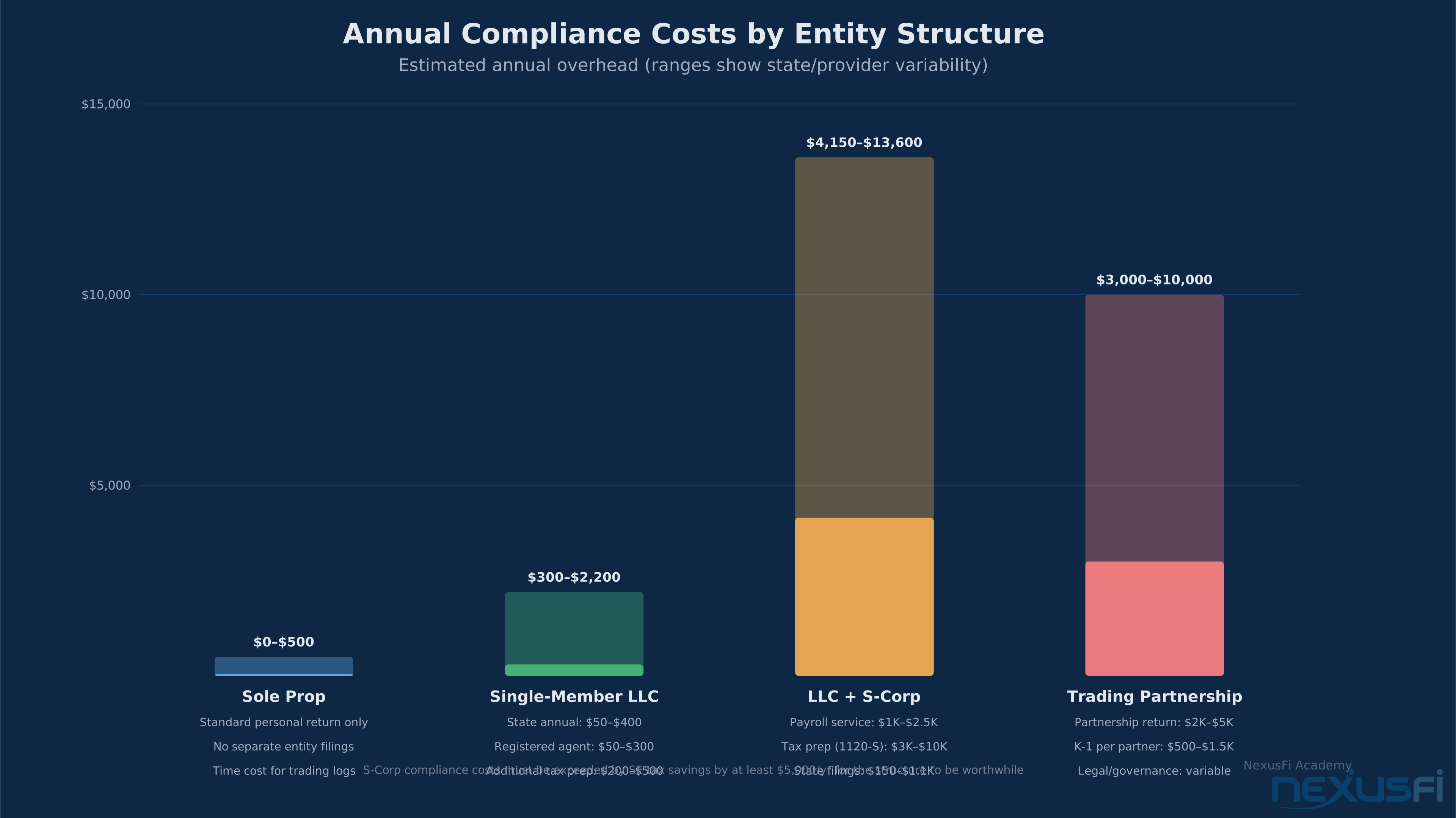
Compliance Costs and Ongoing Requirements #
Sole Proprietorship #
| Item | Annual Cost |
|---|---|
| Additional tax preparation | $0-$500 (marginal increase over standard personal return) |
| Trading log documentation | Time only |
| Total overhead | Minimal |
Single-Member LLC #
| Item | Annual Cost |
|---|---|
| State annual filing/report | $50-$400 depending on state |
| Registered agent | $50-$300 |
| Bookkeeping (separate from personal) | $0-$1,000 depending on approach |
| Additional tax preparation (disregarded) | $200-$500 marginal |
| Total overhead | $300-$2,200 |
S-Corporation #
| Item | Annual Cost |
|---|---|
| Payroll service (quarterly filings, W-2s) | $1,000-$2,500 |
| Tax preparation (Form 1120-S + personal) | $3,000-$10,000 |
| State corporate filings | $100-$800 |
| Registered agent | $50-$300 |
| Total overhead | $4,150-$13,600 |
Trading Partnership #
| Item | Annual Cost |
|---|---|
| Partnership return (Form 1065) | $2,000-$5,000 |
| K-1 preparation per partner | $500-$1,500 each |
| Legal (governance, disputes) | Variable |
| Total overhead | $3,000-$10,000+ |
Critical Pitfalls #
1. Assuming LLC Automatically Improves Taxes #
A single-member LLC is federally invisible. It does not change your tax bracket, your capital gains rates, your SE tax obligation, or your MTM eligibility. Thousands of traders have formed LLCs believing they were getting a tax benefit that doesn't exist. The LLC provides liability protection — that's its actual value.
2. Missing or Botching the MTM Election #
The MTM election is time-sensitive and procedurally strict. The most common failure modes:
- Missing the deadline for a new entity
- Failing to file Form 3115 correctly
- Assuming the election automatically applies to a new entity formed mid-year
- Not understanding that the election is effectively permanent once made
An incorrect or missed election can mean paying capital gains rates on unlimited losses with the $3,000 deduction cap for an entire year.
3. Commingling Funds #
The liability protection of an LLC or S-Corp assumes you actually operate it as a separate legal entity:
- Separate bank account in the entity's name
- Separate brokerage account in the entity's name (with its EIN, not your SSN)
- Business expenses paid from the entity's account
- No personal expenses flowing through the business account
Commingling — even inconsistently — gives creditors arguments to pierce the corporate veil and reach your personal assets. The entity's liability protection is only as strong as your operational discipline in maintaining the separation.
4. S-Corp Reasonable Compensation Risk #
The IRS can reclassify S-Corp distributions as wages if your salary is unreasonably low relative to the services you provide. For a $500,000 year with a $30,000 salary, the IRS may reclassify significant distributions as wages and assess back payroll taxes plus penalties.
What constitutes "reasonable compensation" for a pure trader is genuinely ambiguous.
The Practical Path Forward #
For most active futures traders, the entity structure path follows a predictable sequence:
Starting out: Trade as a sole proprietor while establishing your track record and TTS qualification. Keep thorough records — trading logs, time records, intent documentation. These records are the foundation of every entity benefit you might later claim.
Growing capital and relationships: Form a single-member LLC once you have meaningful capital to protect or any third-party relationships creating liability exposure. This provides legal separation without changing your tax situation. Ensure you open separate bank and brokerage accounts in the LLC's name.
Demonstrating consistent high income: Work with a CPA specializing in trader tax to model the S-Corp decision. Get a specific projection: what salary is appropriate for your situation? What are total compliance costs? Does the math work? If yes — and if the CPA confirms the S-Corp won't jeopardize MTM/TTS benefits — make the election.
If trading with partners: Build governance first. A detailed operating agreement covering every significant contingency is cheaper than the litigation that follows when partners disagree without documented rules.
The right structure for a futures trader isn't the most sophisticated structure — it's the one that provides meaningful protection and genuine tax benefits relative to its compliance cost. For many traders, that's a single-member LLC operated with discipline. For fewer traders at higher income levels, with specialized CPA guidance, the S-Corp adds real economic value. The key is knowing which situation you're actually in.
Knowledge Map
Prerequisites
Understand these firstReferences This Article
Articles that build on this topicCitations
- — Personal or LLC for futures trading? (2021) 👍 6“Many/most brokers will require you to post a personal guarantee if trading in a LLC hence negating the legal/bankruptcy protection the LLC provides you. I have a management LLC which I pay to manage my business. The LLC in turn pays for my medical, pension and gives me a salary.”
- — Should I set up an LLC for futures trading? (2018) 👍 4“Most FCM's will require individuals trading in an LLC to post personal guarantees for the trading account, making the bankruptcy protection an LLC provides considerably less valuable. There are benefits that you can obtain through an LLC or S-Corp that a business trader can not obtain otherwise.”
- — Trading entity and broker data costs (2021) 👍 3“Two problems with the LLC: 1/ Most brokers require a personal guarantee which nullifies a lot of the protection that LLCs give up. 2/ Trading in an entity makes you a professional in the eyes of the CME and others, and makes your data costs explode.”
- — Should I set up an LLC for futures trading? (2018) 👍 10“Even under the ridiculously nice tax treatment that has been given to S-Chapters recently, you still get double taxed in some ways. Maintaining an S-Chapter will cost you a few thousand dollars a year just to do the paper work / fillings, taxes, legal, etc. The grey area in the tax code is that there is an expectation that if you are working as an employee of the company you should salary yourself a reasonable amount and pay double taxes. But there is no line in the sand in the tax code telling you specifically what this is.”
- — Should I set up an LLC for futures trading? (2018) 👍 5“Like trading, do your homework, and don't trust answers in a chat for something so important. Between me and my wife we have six LLCs, and in Texas at least its very simple and costs are low. Each one cost maybe $250 in filing fees.”
- IRS Publication 550 (Investment Income and Expenses) — Irs.gov (2024)
- IRS Form 3115 - Application for Change in Accounting Method — Irs.gov (2024)
- CFTC Background Affiliate Registration Information — Cftc.gov (2023)