



Section 1256 Contracts and the 60/40 Tax Rule: What Every Futures Trader Needs to Know
The IRS gives futures traders something most investors would trade their left arm for — a guaranteed blended tax rate that's structurally lower than short-term capital gains, regardless of how long you hold. It doesn't matter if you scalped ES for 30 seconds or held a CL position for six months. The math is the same. That's Section 1256, and if you're trading futures without understanding it, you're probably overpaying your taxes.
This isn't a technicality buried in the fine print. It's one of the most significant regulatory advantages available to retail traders, and it applies to every listed futures contract on CME, CBOT, and NYMEX. Understanding it doesn't require a law degree — it requires knowing three things: what qualifies, how the 60/40 split works mechanically, and what happens when December 31 rolls around with open positions.
What's here covers the framework every futures trader needs. Two things deliberately stay out of scope: the deep mechanics of Form 6781 line-by-line (its own article) and the Section 475(f) trader tax status election (a separate, commonly confused regime). Both get linked — they're important, they're just not Section 1256.
Overview #
Section 1256 of the Internal Revenue Code grants futures traders a powerful structural tax advantage: the 60/40 split. Regardless of holding period, 60% of net gains are taxed at the lower long-term capital gains rate and 40% at the short-term rate — automatically, without election. This article breaks down what qualifies as a Section 1256 contract, how the 60/40 math works at every bracket, how mark-to-market accounting hits at year-end, the loss carryback provision most traders overlook, and the common mistakes that cost real money every filing season. Two topics are intentionally out of scope: the deep mechanics of Form 6781 line-by-line (covered in our record-keeping guide) and the Section 475(f) trader tax status election (a separate, commonly confused regime).
Key Specifications #
Relevant Code: Internal Revenue Code Section 1256 Tax Treatment: 60% long-term capital gains / 40% short-term capital gains Holding Period Impact: None — the split applies regardless of holding duration Year-End Treatment: Mark-to-market — open positions deemed sold at fair market value on December 31 Primary Reporting Form: Form 6781 (Gains and Losses from Section 1256 Contracts and Straddles) — see Futures Commissions and Fees for the full cost picture of futures trading Loss Carryback Privilege: Up to 3 years (unique to Section 1256 losses) Wash Sale Rules: Do NOT apply to Section 1256 contracts (see Wash Trading Rules in Futures)
What Is a Section 1256 Contract? #
Section 1256 of the Internal Revenue Code defines a specific category of financial contracts that receive special tax treatment. For retail futures traders, the definition is mostly straightforward.
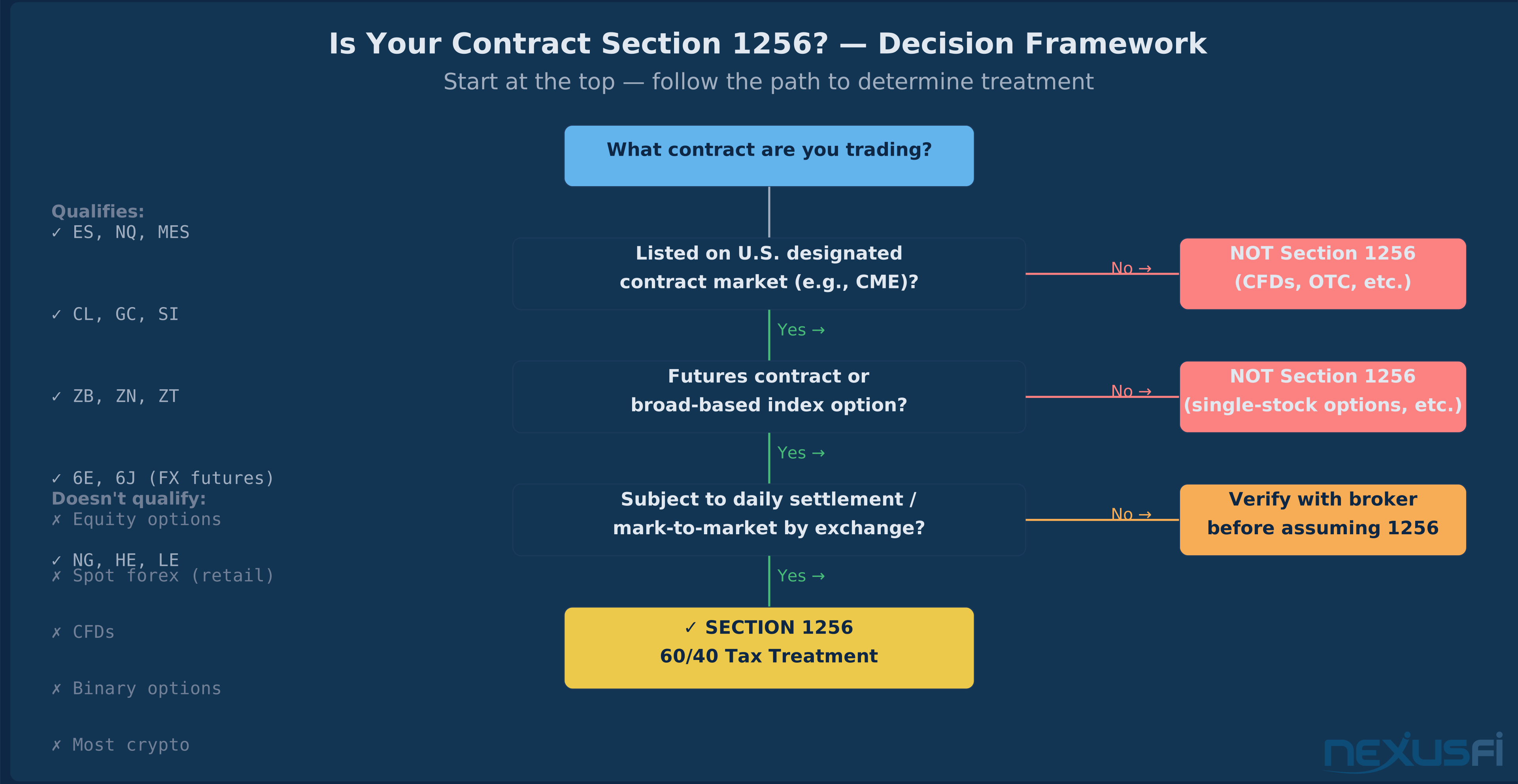
A Section 1256 contract must be one of the following:
- Regulated futures contract — any futures contract that is subject to the daily settlement requirements of a U.S. designated contract market (DCM) — see Futures Market Regulation: CFTC and NFA for the full regulatory framework and requires delivery of money or property, or is settled in cash
- Foreign currency contract — certain over-the-counter foreign currency contracts, with restrictions
- Non-equity option — options on a broad-based stock index, foreign currency options, or dealer equity options
- Dealer equity option — options granted or purchased by an options dealer in the normal course of business
For the overwhelming majority of NexusFi traders, the practical test is simple: if you're trading a listed futures contract on CME Group (CME, CBOT, NYMEX, COMEX), it almost certainly qualifies. This includes:
- ES (E-mini S&P 500) — yes, Section 1256
- NQ (E-mini Nasdaq-100) — yes, Section 1256
- MES (Micro E-mini S&P 500) — yes, Section 1256
- CL (Crude Oil) — yes, Section 1256
- GC (Gold) — yes, Section 1256
- ZB (30-Year Treasury Bond) — yes, Section 1256
- ZN (10-Year Treasury Note) — yes, Section 1256
- 6E (Euro FX Futures) — yes, Section 1256
- RTY (Russell 2000) — yes, Section 1256
- NG (Natural Gas) — yes, Section 1256
Some contracts that look like futures are NOT Section 1256. CFDs (contracts for difference) traded on retail forex platforms are not regulated futures contracts under U.S. law. Crypto futures on unregistered exchanges typically do not qualify. Single-stock futures have different treatment. When in doubt, verify with your broker whether the specific contract generates Section 1256 reporting on your 1099.
What doesn't qualify:
- Individual equity options (options on single stocks)
- Most spot forex contracts
- OTC derivatives not cleared on a U.S. exchange
- Standard stock or ETF positions
- CFDs on retail forex platforms
Your broker's tax statement is the fastest way to verify. If the contract is reported as a "Section 1256 gain/loss," you're in. If it shows up on the standard Form 8949 section, it's taxed as ordinary capital gains with holding period rules.
The 60/40 Rule: Mechanics and Math #
Here's the deal: no matter how long you hold a Section 1256 contract — one second or one year — your gains and losses are always taxed as 60% long-term capital gain and 40% short-term capital gain. The holding period is completely irrelevant.
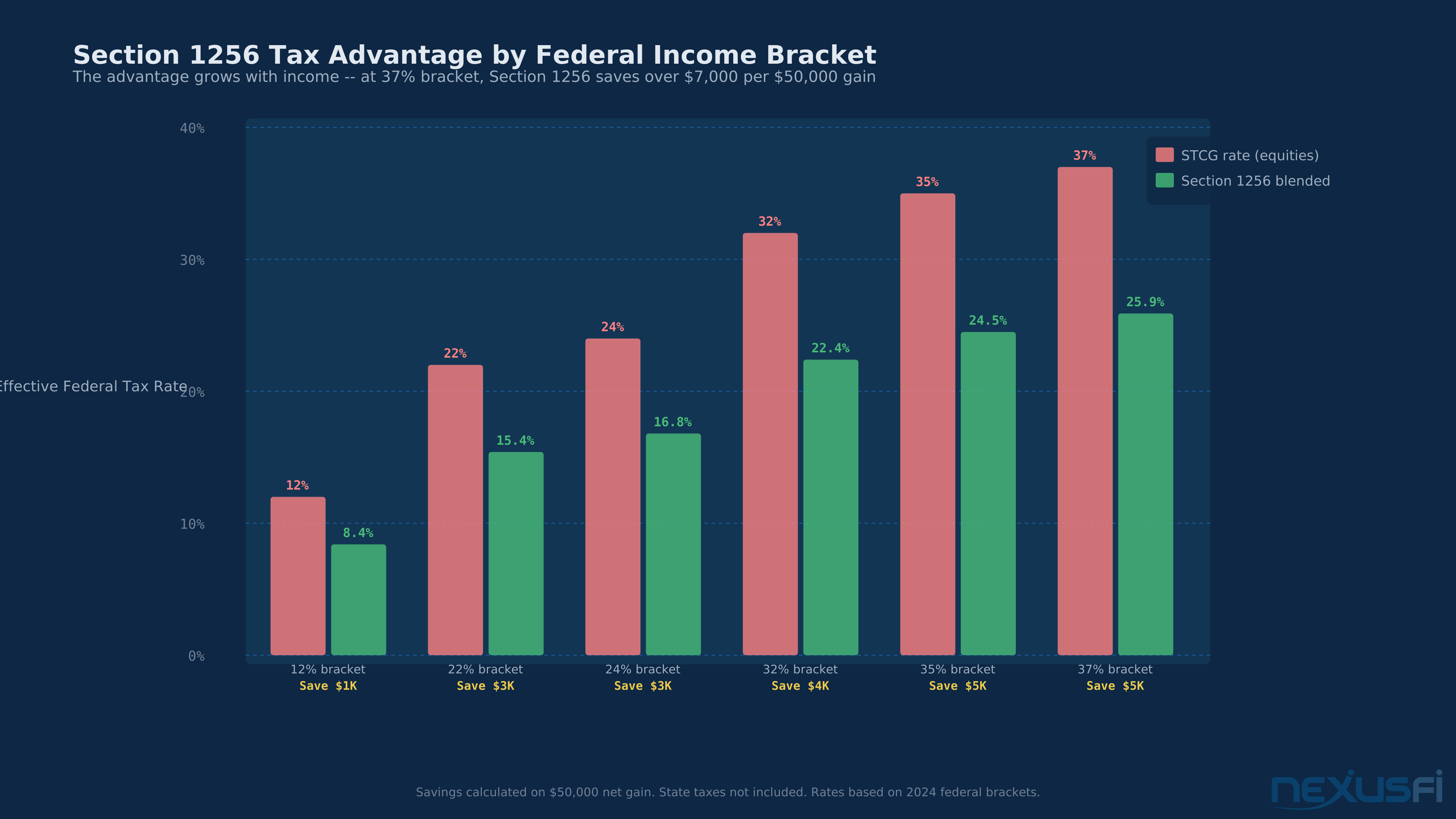
With equities or equity options, the IRS cares intensely about how long you held. Hold less than one year and your entire gain is taxed at your ordinary income rate (up to 37% federally). Hold more than one year and you access the lower long-term capital gains rates (0%, 15%, or 20% depending on your income bracket). Day traders in equities get hammered — every profitable trade is taxed at ordinary income rates.
With futures, every trade — scalps, swings, multi-month positions — splits 60/40. Always.
The Calculation #
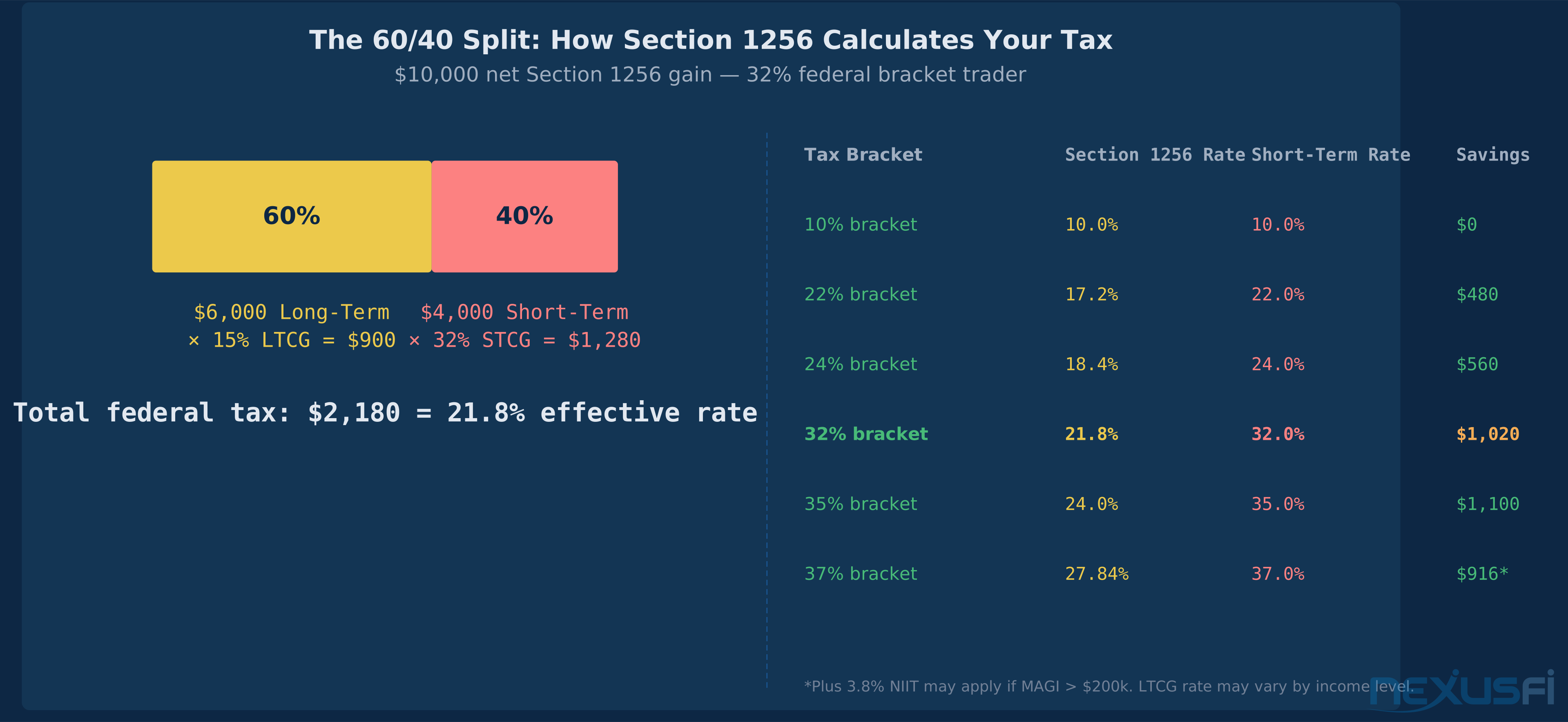
The math isn't complicated. Take your net Section 1256 gain or loss for the year (all contracts netted together). Apply the 60/40 split:
- 60% is treated as long-term capital gain/loss (lower tax rate)
- 40% is treated as short-term capital gain/loss (higher tax rate)
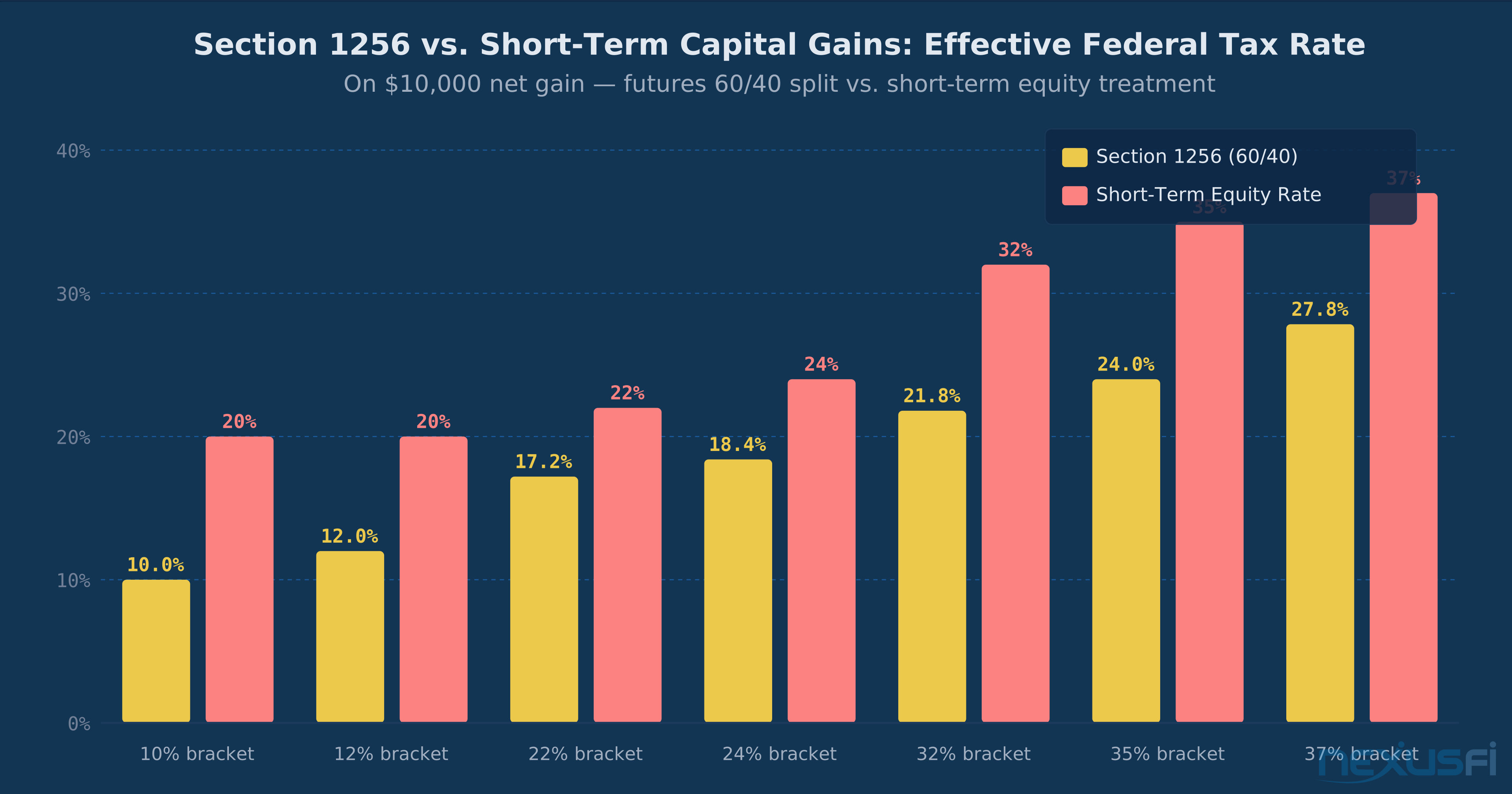
Example — $10,000 net gain, trader in 32% federal bracket:
| Section 1256 | Short-Term Equity | |
|---|---|---|
| Long-term portion | $6,000 × 15% = $900 | n/a |
| Short-term portion | $4,000 × 32% = $1,280 | $10,000 × 32% = $3,200 |
| Total federal tax | $2,180 | $3,200 |
| Effective rate | 21.8% | 32% |
At the highest federal bracket (37%), the Section 1256 blended rate works out to approximately 27.84% (60% × 20% LTCG + 40% × 37% STCG). Compare that to 37% for short-term equity gains. The difference is real money.
[1]
The 60/40 advantage is worth the most to active traders who would otherwise be taxed entirely at short-term rates. A day trader in ES keeps the 60/40 split no matter how many trades they make in a day. A day trader in equities pays ordinary income rates on every gain.
Day Trading vs. Swing Trading — Same Result #
This bears repeating because it trips up traders coming from equities: your holding period for a Section 1256 contract is irrelevant. You could hold for three seconds (scalp) or three months (position trade). The 60/40 split applies either way.
This is the opposite of equity trading, where the IRS specifically punishes short-term holding by taxing those gains at your full ordinary income rate. In futures, the IRS locked in the blended rate without a holding period condition. That was a deliberate legislative choice when Congress enacted Section 1256 in 1981 as part of the Economic Recovery Tax Act — they wanted to bring futures markets under a clear tax framework while acknowledging the unique characteristics of daily settlement.
@SMCJB, a long-time NexusFi Elite member with significant futures trading experience, explains it cleanly: "All futures are taxed as section 1256 contracts and hence are treated as 60% long term capital gains and 40% short term capital gains which for me is much more favorable than being taxed as income." [2]
Net Investment Income Tax #
One addition: if your modified adjusted gross income (MAGI) exceeds $200,000 (single) or $250,000 (married filing jointly), an additional 3.8% Net Investment Income Tax (NIIT) applies to your net investment income, which includes Section 1256 gains. This adds to both the long-term and short-term portions. Factor this in when estimating your total federal tax burden.
Mark-to-Market: The Year-End Reckoning #
This is where most futures traders get surprised — usually by a tax bill they didn't see coming.
Section 1256 contracts are subject to mark-to-market (MTM) accounting at year-end. On December 31 of every tax year, the IRS treats all open Section 1256 positions as if you closed them at the last settlement price of the year. These "deemed sales" create taxable gains or losses even if you didn't actually close the position.
You then "re-open" the position on January 1 with the December 31 settlement price as your new cost basis. When you actually close the position later, only the gain or loss from the January 1 carry-over price to your actual exit price is recognized in the new tax year.
The Concrete Example #
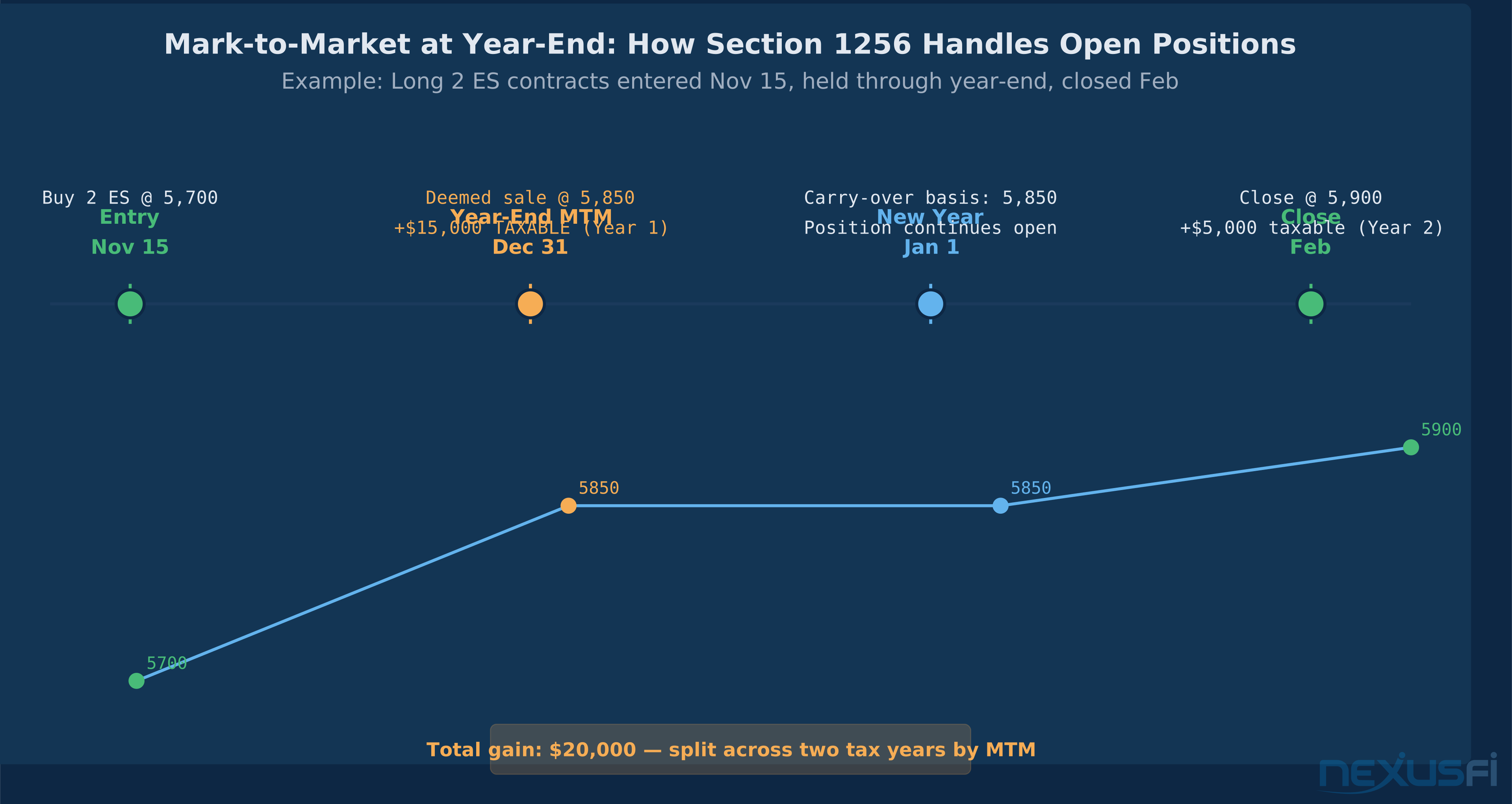
You're long 2 ES contracts on November 15 at 5,700. By December 31, ES settles at 5,850. You're sitting on 150 points × $50 per point × 2 contracts = $15,000 unrealized gain. You haven't closed anything. You're planning to hold through January.
Here's what the tax code sees on December 31:
- Deemed sale at 5,850: +$15,000 Section 1256 gain, recognized in the current tax year
- January 1 carry-over basis: 5,850 (the settlement price)
When you close in February at 5,900:
- Gain recognized in the new tax year: (5,900 - 5,850) × $50 × 2 = $5,000
Total gain taxed: $15,000 (year 1) + $5,000 (year 2) = $20,000 — which exactly equals your actual total gain of 200 points × $50 × 2. The MTM mechanism doesn't create phantom gains that are taxed twice; it just moves the recognition timing.
If you're profitable on open positions at year-end, you owe taxes on those gains even though you haven't closed them. Traders who run large unrealized gains into December 31 without setting aside estimated tax payments have been caught badly. Know your December 31 open position P&L before year-end.
The Positive Flip Side #
The MTM rule cuts both ways. If you're sitting on unrealized losses at December 31, those losses are also recognized — they reduce your taxable income for the current year without requiring you to close the position. In a year where you have realized gains from earlier in the year, those open unrealized losses can offset them, potentially reducing your tax bill.
This is different from the equity world, where you must actually sell to realize a loss for tax purposes. With futures, the year-end MTM does it automatically.
Form 6781: Your Annual Tax Document #
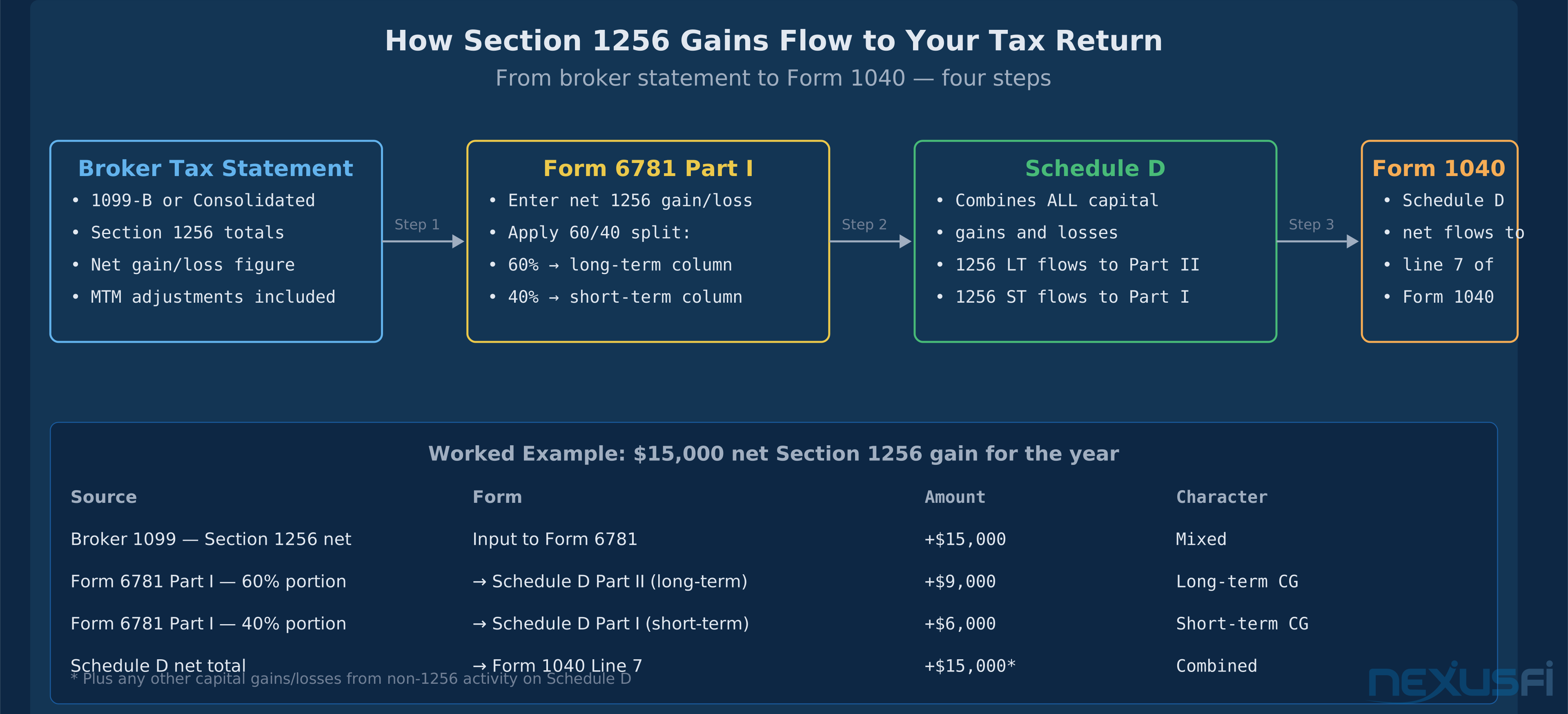
Form 6781, "Gains and Losses From Section 1256 Contracts and Straddles," is the reporting vehicle for all Section 1256 activity. Your brokerage provides the raw numbers; Form 6781 is where they get organized for the IRS.
The form has two main parts:
- Part I: Section 1256 Contracts Marked to Market — this is where your futures trading P&L goes
- Part II: Gains and Losses From Straddles — this covers offsetting positions (less common for retail traders)
Part I takes your net Section 1256 gain or loss for the year (the brokerage-provided total), applies the 60/40 split, and produces two numbers:
- The long-term capital gain/loss portion (60%)
- The short-term capital gain/loss portion (40%)
These two numbers flow to Schedule D (Capital Gains and Losses), which then rolls up into your Form 1040. The net Section 1256 gain or loss integrates with all your other capital gains activity.
Finding Your Numbers #
Your broker's year-end tax package includes a 1099-B or equivalent consolidated tax statement. Look for a section specifically labeled "Section 1256" or "Futures Contracts." This will show:
- Total proceeds from Section 1256 contracts
- Total cost basis
- Net gain or loss
This net figure goes directly into Part I of Form 6781. If your broker breaks it into individual contracts (ES, CL, GC, etc.), you aggregate them — Form 6781 works with the annual net total, not contract-by-contract detail.
Tax software (TurboTax, H&R Block, TaxAct) imports broker data directly via CSV or API. For futures traders, verify that the import correctly captures the Section 1256 activity and populates Form 6781 — not Form 8949. If your software stuffs futures gains into Form 8949 alongside equity trades, you'll get wrong treatment.
The Loss Carryback Provision #
Here's something unique to Section 1256: net losses can be carried back up to three prior tax years. This is the reverse of normal capital loss rules, where losses only carry forward.

If you have a net Section 1256 loss in 2025, you can elect to carry it back to apply against Section 1256 gains you had in 2022, 2023, or 2024 — and receive a refund for taxes already paid. You can also carry the loss forward in the normal manner.
The carryback election is made on Form 6781. If you have a significant loss year, consult a tax professional to evaluate whether the carryback or carry-forward makes more economic sense given your prior-year Section 1256 income.
The three-year carryback is often overlooked. If you have a loss year, don't just accept it as a forward carryover by default. Run the numbers for carryback — you may recover taxes paid in a profitable year.
Netting Gains and Losses Across All 1256 Contracts #
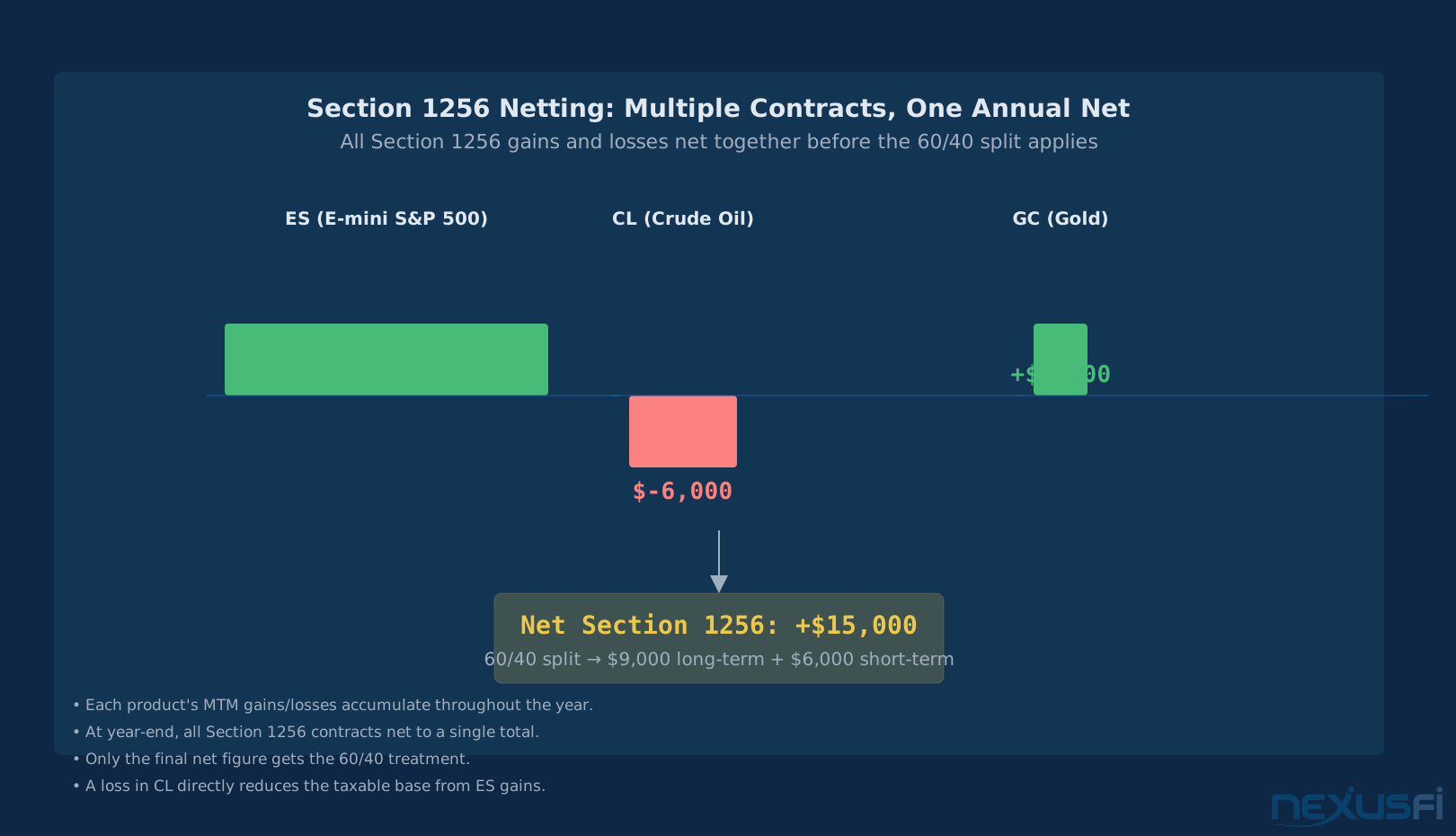
If you trade multiple futures products — ES and CL and GC — your gains and losses are netted together before the 60/40 split applies. You don't calculate Section 1256 treatment separately for each product.
Example:
- ES gains for the year: +$18,000
- CL losses for the year: -$6,000
- GC gains for the year: +$3,000
Net Section 1256 result: +$15,000. Apply 60/40: $9,000 long-term + $6,000 short-term.
This netting is automatic — your broker aggregates all Section 1256 activity across all listed futures contracts and reports a single net figure. The mechanism protects traders who are profitable in one product but losing in another; the losses reduce the taxable base before the advantaged 60/40 rate applies.
The netting also crosses tax years with the MTM mechanism. If you entered 2025 with a January 1 carry-over basis from a year-end MTM gain, that basis affects your 2025 recognition — the prior year's MTM gain was already taxed, and the new year only recognizes changes from the carry-over price.
Your Section 1256 tax calculation is always based on the annual net — all contracts combined, all recognized gains and losses (including MTM). Individual trade results don't matter in isolation. A year where you made $50,000 on ES and lost $50,000 on CL is a break-even year for Section 1256 purposes.
Estimated Quarterly Taxes #
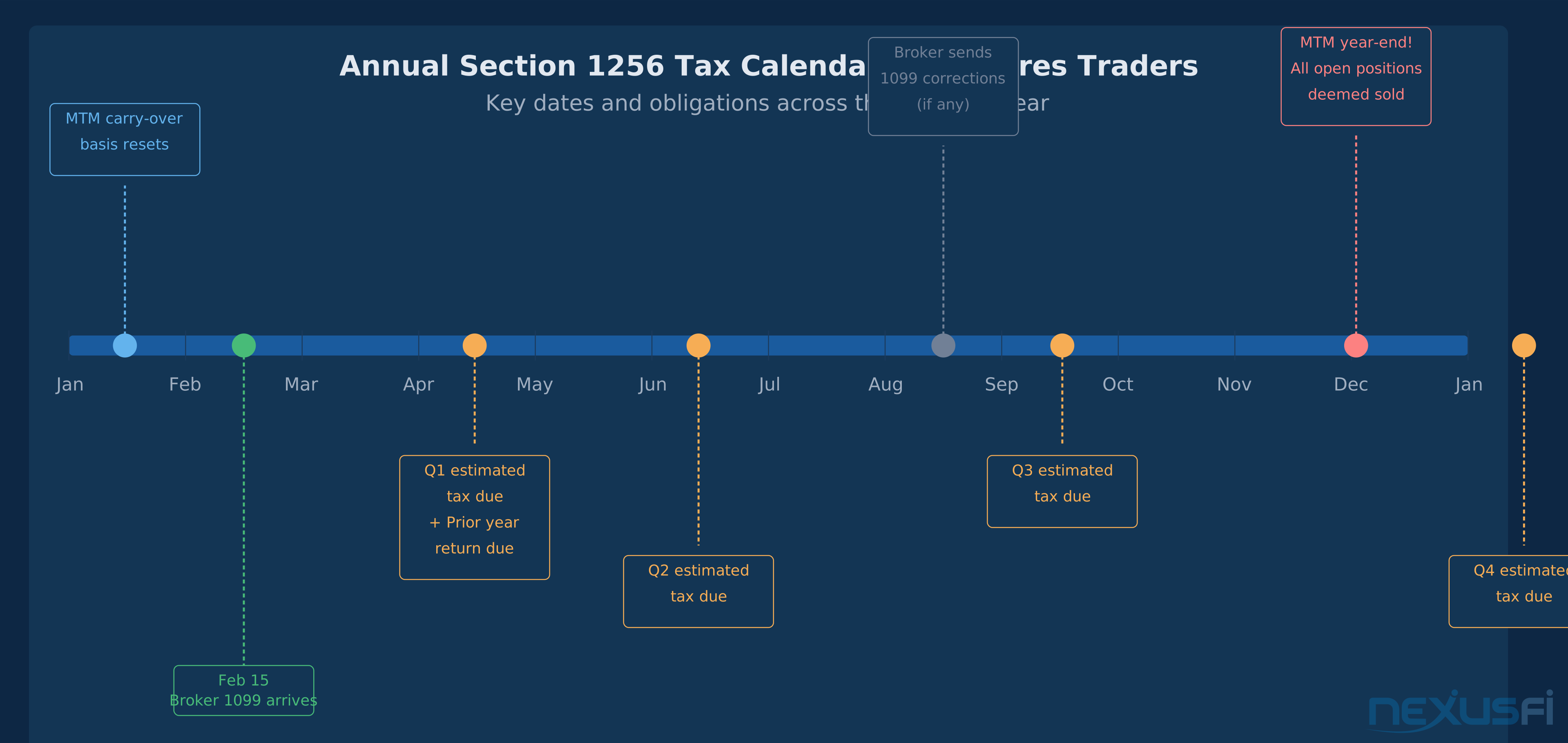
Futures trading income is not withheld at the source the way employment income is. If you're profitable, you're responsible for making quarterly estimated tax payments to the IRS.
The IRS requires estimated payments if you expect to owe $1,000 or more in taxes for the year (after credits and withholding). For active futures traders, this threshold is typically crossed early.
Quarterly payment schedule:
- Q1: Due April 15 (Jan 1 - Mar 31 income)
- Q2: Due June 15 (Apr 1 - May 31 income)
- Q3: Due September 15 (Jun 1 - Aug 31 income)
- Q4: Due January 15 of next year (Sep 1 - Dec 31 income)
Safe Harbor Rules #
You can avoid underpayment penalties by satisfying one of these safe harbor provisions:
- 110% of prior year's tax liability (100% if your AGI was $150,000 or below) — this is the simplest method; just calculate last year's tax bill, add 10%, and spread it across four quarterly payments
- 90% of current year's tax — more complex to estimate mid-year, especially with MTM variability at year-end
@DmanX documents this clearly in NexusFi's Tax Thread: "Paying 90% (of total current year's tax bill) in Q4 (due Jan 15). If you paid at least 90% of current year's tax bill on the Q4 estimated quarterly voucher, you can pay the remaining 10% by Apr 15... If your AGI is >150K, then it's 110% of prior year's tax liability, otherwise it's 100%." [3]
@booneyall, a public accountant active on NexusFi, notes: "Since section 1256 contracts aren't subject to self employment tax, the pressure to send them in is greatly reduced" — meaning futures trading income doesn't trigger self-employment (FICA) taxes the way business income does, which simplifies the estimated payment calculation. [4]
The practical approach for most traders: calculate 110% of last year's tax bill, divide by 4, and pay that amount in each quarter via the IRS EFTPS system. Adjust after year-end when your actual figures are known.
The MTM rule creates a specific estimated tax hazard. If your positions run to large unrealized gains into Q4, your year-end tax bill could be much larger than your quarterly payments implied. Don't rely solely on realized trading income when estimating Q4 payments — factor in your open position P&L at December 31.
The Self-Employment Tax Question #
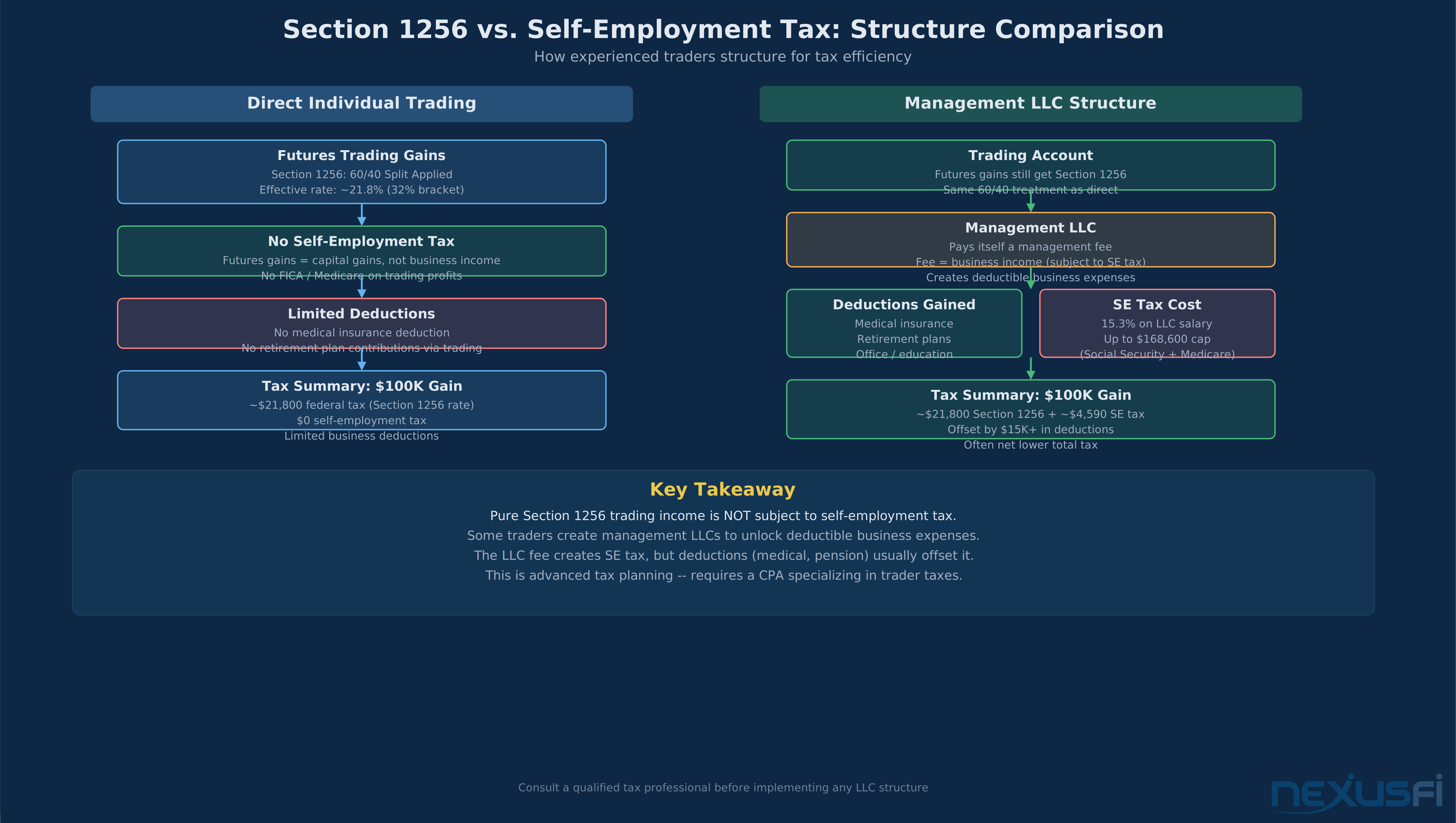
Pure trading of futures contracts in your individual name does not generate self-employment (SE) income — the gains are capital in character, not business income. You don't owe FICA (Social Security and Medicare) taxes on futures trading profits.
This is different from the situation of a commodity trading advisor (CTA) who earns management fees for managing other people's money — those fees are business income subject to SE tax.
[5]
This kind of structure — using an LLC to create deductible business expenses that offset the short-term portion of Section 1256 gains — is advanced tax planning. It requires working with a CPA who specializes in trader taxes. The Green Trader Tax guide (greentradertax.com) is the reference that NexusFi's most sophisticated traders consistently cite for this.
Record-Keeping Requirements #
The IRS expects you to be able to support every line on Form 6781 — see Futures Trading Record Keeping and Tax Reporting for the complete guide. Your broker's 1099 is the primary document, but good traders maintain their own records.
What to maintain:
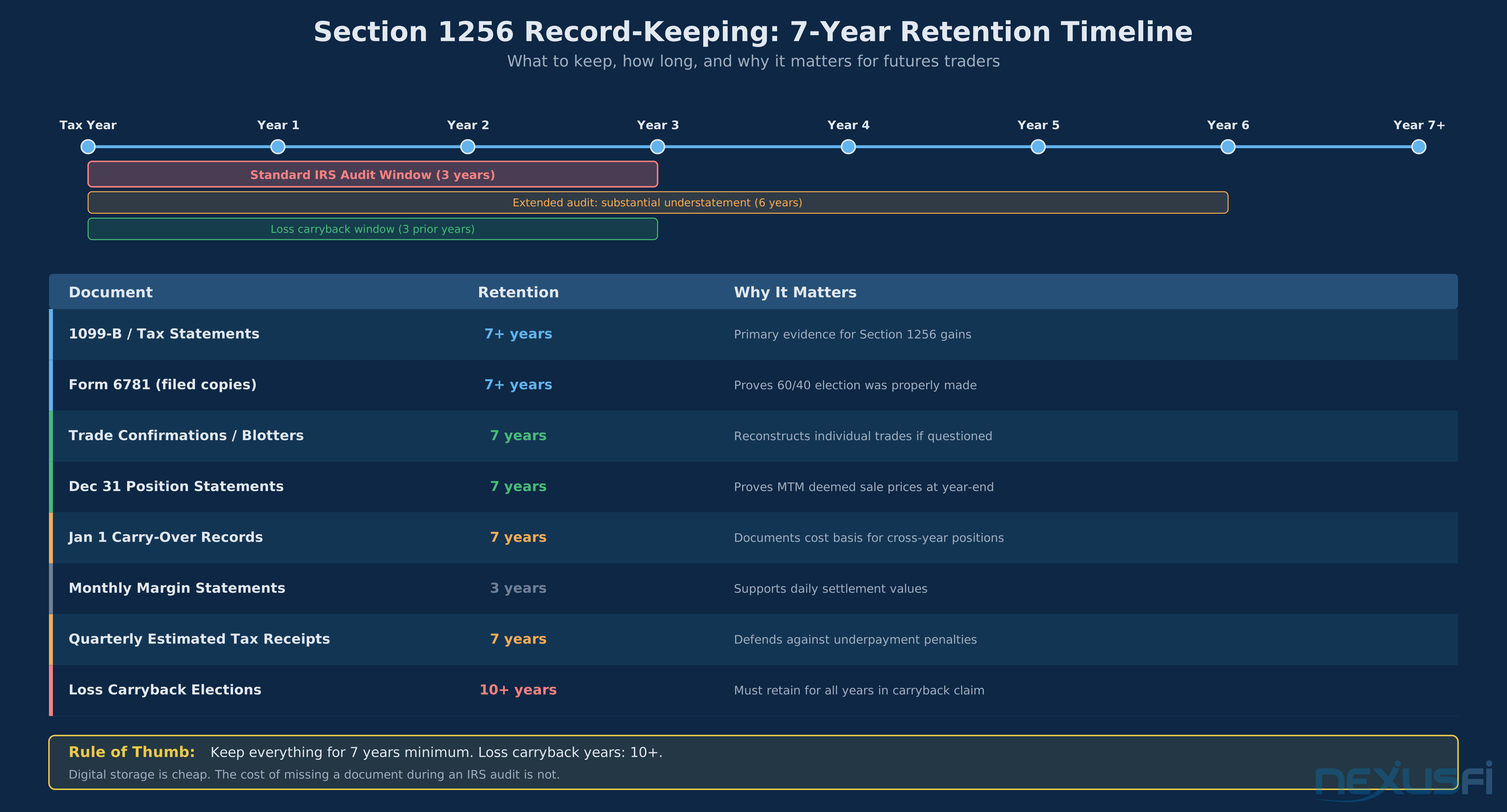
- Broker tax statements — retain the annual 1099-B or consolidated tax statement indefinitely (at minimum 7 years, which covers the IRS audit window)
- Trade confirmations or blotters — individual trade records showing entry date, exit date, price, quantity, and P&L for each contract
- Year-end position statements — the December 31 brokerage statement showing all open positions and their MTM settlement prices (this is the basis for the deemed-sale calculations)
- January 1 carry-over records — the opening position basis for any positions held across year-end
- Monthly margin statements — useful for reconstructing daily settlement values if ever questioned
The audit risk: The IRS has historically flagged futures traders whose reported Section 1256 net differs from broker-provided totals. Reconcile your own tracking against the broker's 1099 before filing. Discrepancies should be investigated and resolved.
Keep a running spreadsheet of your Section 1256 trading year — month-by-month realized gains/losses plus open position MTM estimates as December approaches. This lets you estimate your tax bill before year-end rather than discovering it in February when the 1099 arrives.
What Section 1256 Does NOT Cover #
A few things that traders often assume fall under Section 1256 but don't:
Wash Sale Rules — Don't Apply #
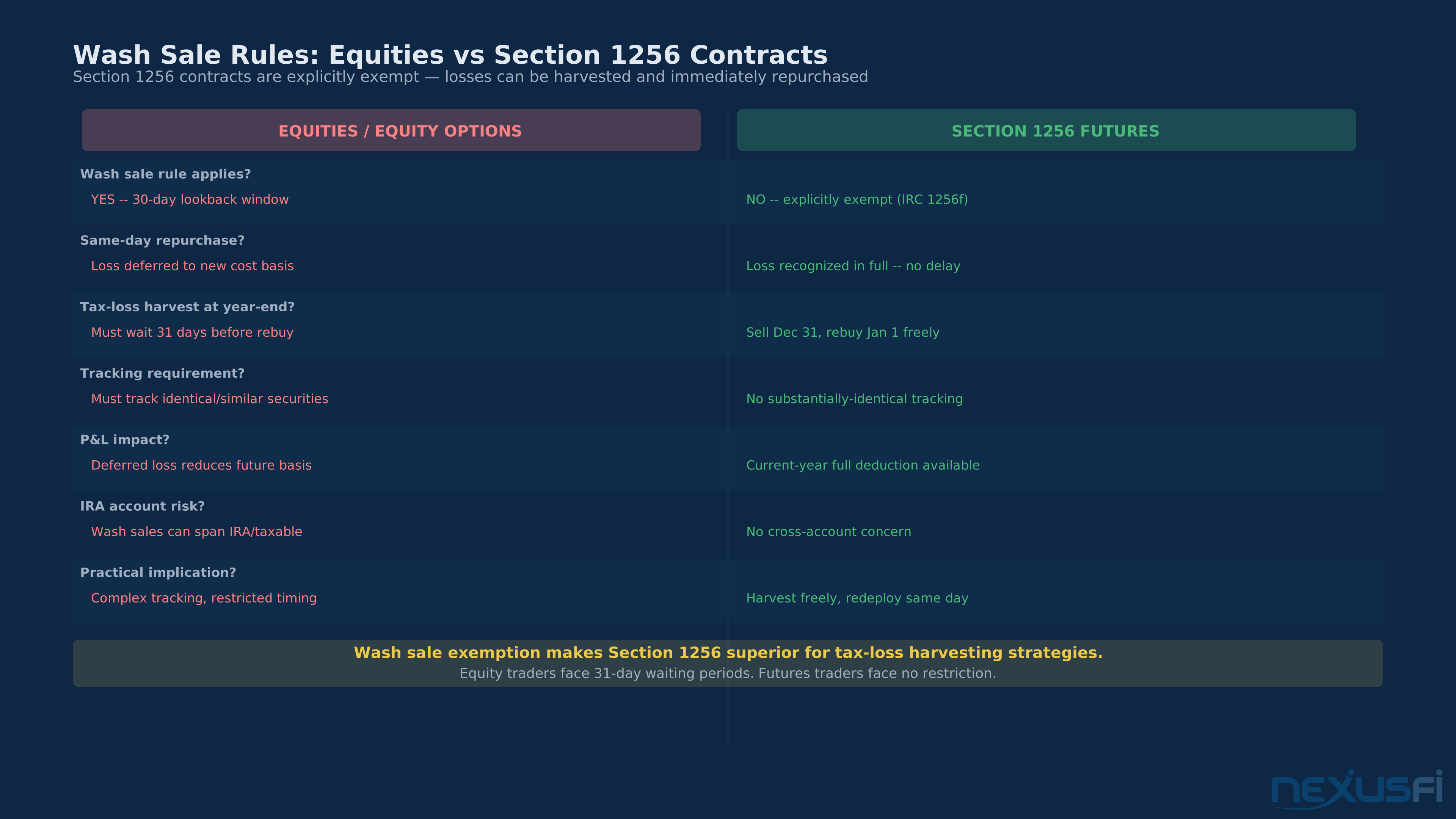
The wash sale rule (Section 1091) prevents taxpayers from claiming a loss when they buy the same security within 30 days before or after selling it at a loss. This rule explicitly does NOT apply to Section 1256 contracts. If you sell ES at a loss and immediately re-enter the same position, you can still recognize the loss.
This is a meaningful advantage: you can harvest a year-end loss in futures without the 30-day waiting period that would apply to an equity position.
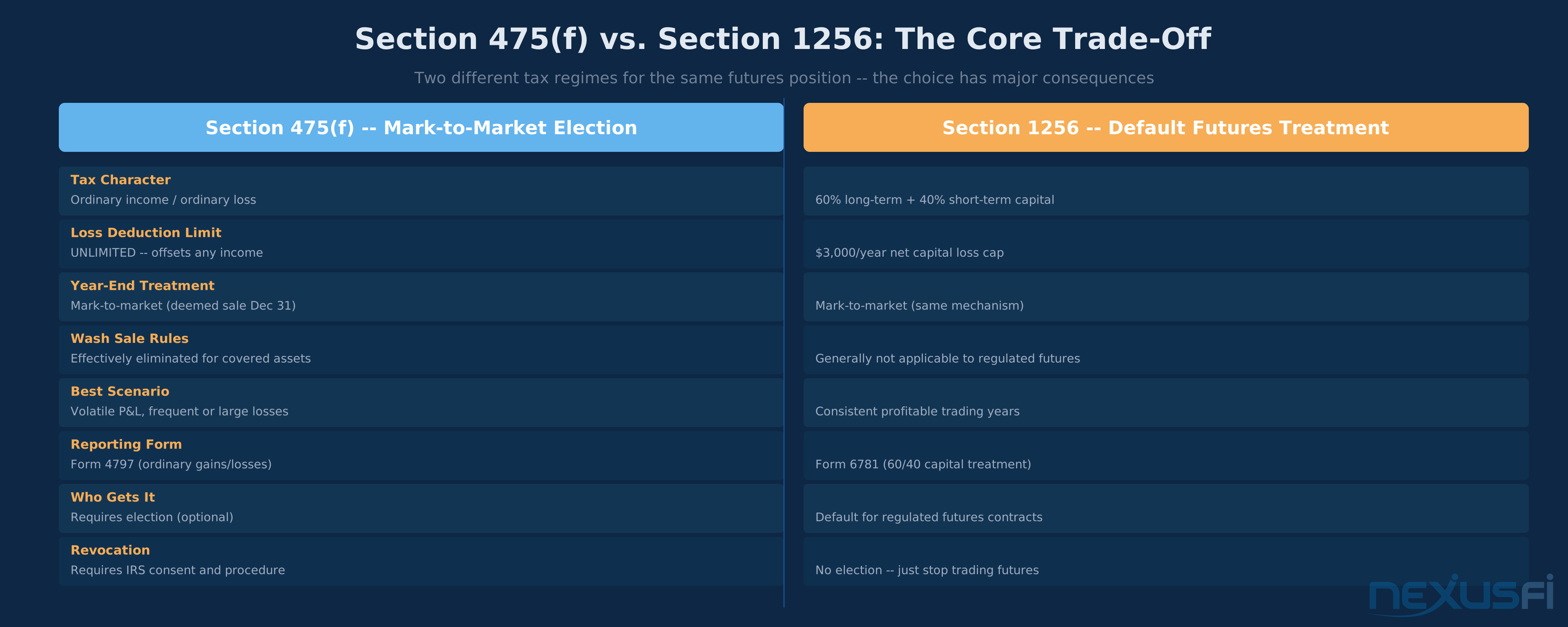
Section 475(f) — Trader Tax Status: A Different Regime #
Some active traders elect mark-to-market accounting under Section 475(f), which converts all trading gains and losses from capital to ordinary income/loss character. This is commonly called "trader tax status" or TTS.
Section 475(f) and Section 1256 are separate and can coexist — but the interaction is complex. Gains converted to ordinary income under 475(f) lose the 60/40 benefit. Most futures traders who qualify for 1256 treatment are better served staying with Section 1256 rather than electing 475(f) on their futures positions. Consult a CPA before making any 475(f) election.
Straddle Rules — Can Apply #
If you hold a Section 1256 contract as part of a straddle — where you also hold an offsetting non-1256 position in substantially the same asset — the straddle rules (Section 1092) can apply. These rules defer loss recognition and complicate the clean Section 1256 treatment. Straddles aren't a concern for most retail traders who trade futures outright, but become relevant if you're simultaneously holding equity options to offset futures positions.
State Tax Treatment #
Most states conform to the federal Section 1256 treatment, applying the same 60/40 split for state income tax purposes. A handful of states handle it differently:
- No-income-tax states (TX, FL, WA, NV, etc.): No state tax issue at all
- Conforming states (most others): Apply the 60/40 split at the state level
- Non-conforming situations: Some states treat all capital gains as ordinary income, eliminating the rate advantage at the state level
Verify your state's treatment with a local CPA or your state's Department of Revenue publication. The federal advantage remains regardless.
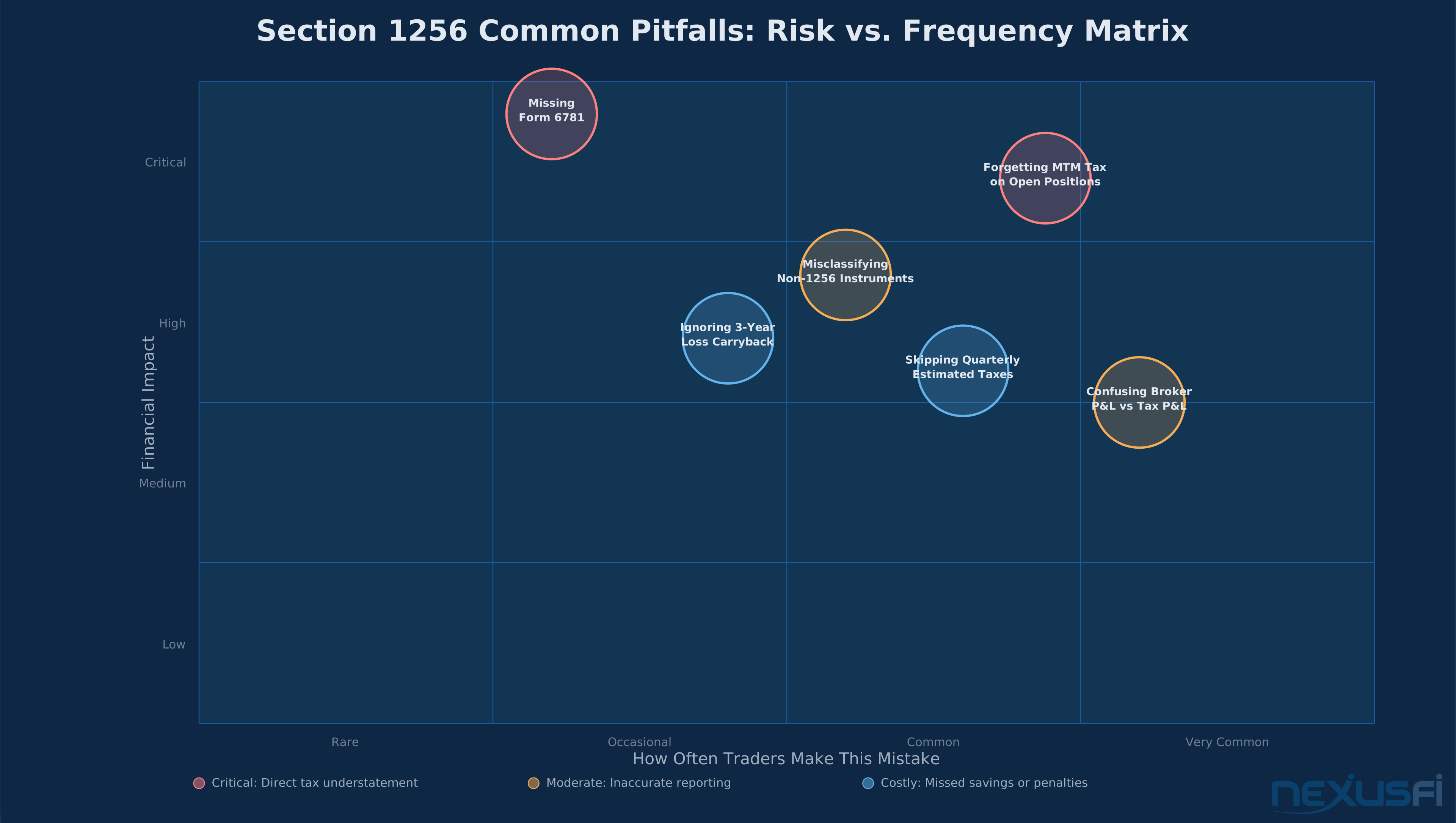
Common Pitfalls #
1. Forgetting the MTM tax liability on open positions
If you're running $50,000 in unrealized gains on December 31, those gains are taxable in the current year. Traders who don't factor this in can face a significant tax bill they didn't budget for. Review your open position P&L before year-end every year.
2. Misclassifying non-1256 instruments
CFDs, spot forex on retail platforms, and unregulated crypto futures are not Section 1256 contracts. If you trade multiple products and your tax software or CPA misclassifies a non-1256 gain as 1256, you'll understate your tax liability. Verify classification for every product in your portfolio.
3. Missing Form 6781
If you trade futures but don't file Form 6781, you forfeit the 1256 treatment entirely. All your futures gains would revert to standard capital gains rules — meaning short-term gains taxed at ordinary income rates if held less than one year. Filing 6781 is mandatory for claiming the 60/40 benefit.
4. Confusing broker P&L with tax P&L
Your trading platform's P&L report shows realized and unrealized gains based on your actual trades. Your tax P&L incorporates the MTM adjustment at year-end. These are different numbers, especially if you hold positions across December 31. Always use the broker's tax statement, not the trading platform's P&L report, as your tax basis.
5. Skipping estimated quarterly payments
Active profitable traders who don't make quarterly estimated payments face underpayment penalties and a large tax bill at filing. The IRS charges interest on underpayments — it's not catastrophic, but it's avoidable. @vmodus: "I am not a tax professional, but I can state with certainty that if you go above that $1,000 threshold, as evidenced by a 1099 or other earnings form, you are required to make quarterly payments." [6]
6. Ignoring the three-year loss carryback
A year with Section 1256 losses is frustrating. But if you had profitable years in the prior three years, you may be able to carry the loss back and recapture taxes already paid. This carryback election is optional — you can choose carry-forward instead — but it requires affirmative action on Form 6781. Traders who don't know about it default to carry-forward and may miss a refund opportunity.
Section 1256 gives futures traders a structural tax advantage — but only if you file correctly, make estimated payments, and account for MTM on year-end open positions. The advantage disappears if you misclassify instruments, miss Form 6781, or get surprised by December 31 unrealized gains. Know the mechanics before year-end, not after.
A Note on Legislative Risk #
The 60/40 rule has survived multiple Congressional attempts to eliminate it. DmanX documents one close call in NexusFi's community: "We lost it once for a brief second under Obama but a technical correction to a passed bill fixed it before the bill became effective... In 2003, the Senate narrowly approved a bill repealing Section 1256(a)(3)... The Senate on May 20 approved a 'technical corrections' bill that among other things removed the 60/40 repeal from the tax bill." [7]
More recently, the American Families Plan proposed in 2021 would have repealed the 60/40 treatment by taxing long-term capital gains at ordinary income rates for high earners. It didn't pass.
The 60/40 rule is not guaranteed to exist forever. The futures industry lobbied aggressively to preserve it in 2003. There will likely be future attempts to modify or eliminate it. Trade with the current rules — and watch legislative developments, especially during tax reform years.
Knowledge Map
Prerequisites
Understand these firstGo Deeper
Build on this knowledgeReferences This Article
Articles that build on this topicCitations
- — The Tax Thread (2015) 👍 1“Most Futures & Futures Option contracts are taxed as Section 1256 Contracts which means that they are taxed 60% at your long term capital gains rates and 40% at your short term capital gains rate no matter what the holding period.”
- — Selling Options on Futures? (2021) 👍 6“All futures are taxed as section 1256 contracts and hence are treated as 60% long term capital gains and 40% short term capital gains which for me is much more favorable than being taxed as income.”
- — Senate Bill to revoke Futures 60/40 tax treatment (2021) 👍 6“Paying 90% of total current year tax bill in Q4. If your AGI is >150K, then it is 110% of prior year tax liability.”
- — Senate Bill to revoke Futures 60/40 tax treatment (2021) 👍 5“Since section 1256 contracts are not subject to self employment tax, the pressure to send them in is greatly reduced.”
- — Senate Bill to revoke Futures 60/40 tax treatment (2021) 👍 4“I can state with certainty that if you go above that $1,000 threshold you are required to make quarterly payments.”
- — Senate Bill to revoke Futures 60/40 tax treatment (2021) 👍 2“The Senate on May 20 approved a technical corrections bill that removed the 60/40 repeal.”
- — Personal or LLC? (2018) 👍 5“Most CPAs, even very bright and very good CPAs, are unaware of futures tax treatment, like the Section 1256 contracts 60/40 capital gains split.”
- — Why futures instead of equities/ETFs/spot forex? (2012) 👍 2“Tax rate on broad based index futures = (60% x 15%) + (40% x 25%) = 19%. For those people in the higher brackets it is even more valuable.”
- IRS — Publication 550: Investment Income and Expenses (2024)
- GreenTraderTax — Green's 2024 Trader Tax Guide (2024)
- — Tax questions - Section 1256, 60/40 rule (2014) 👍 9“The 60/40 rule is one of the biggest tax advantages for futures traders. My CPA confirmed it applies to all regulated futures contracts, including ES and NQ.”
- — Futures taxes - what to know (2016) 👍 6“Don't forget the year-end mark-to-market! If you hold open ES positions on December 31, those paper gains/losses are taxable that year even if you never close them.”