



Futures Trading Record Keeping and Tax Reporting: The Complete Guide for U.S. Traders
Overview #
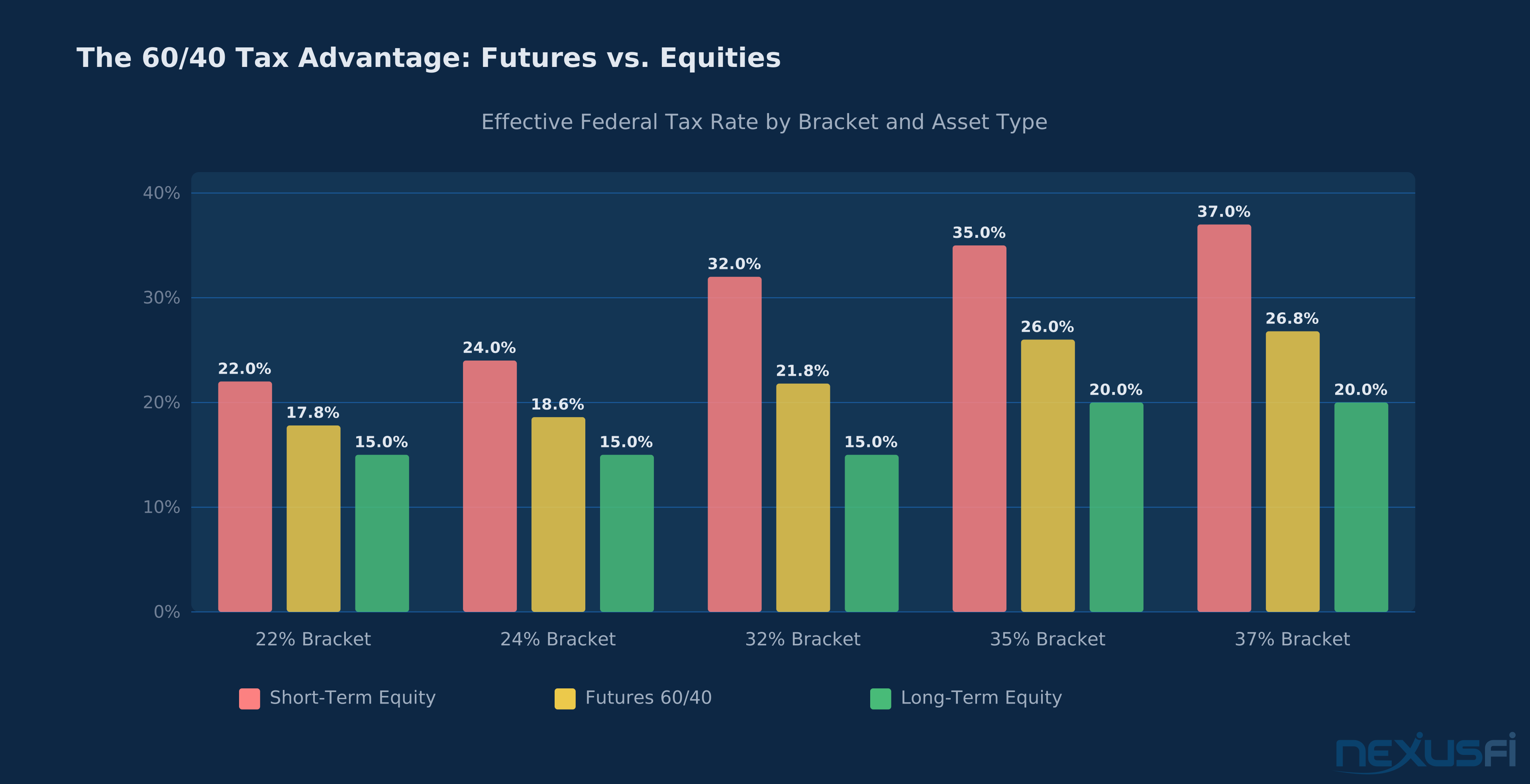
Every profitable futures trader eventually runs into the same problem: the trades went well, but the tax documentation is a mess. Futures trading has genuinely favorable tax treatment under U.S. law — the 60/40 split alone can cut your effective tax rate by a third compared to stock trading — but only if you can document everything correctly and file the right forms.
This guide covers what records you need to keep, what your broker provides versus what you must track yourself, how to work through IRS Form 6781, the quarterly estimated tax system, loss carryback elections, and the audit patterns that draw IRS attention. It is written for U.S. traders trading regulated futures contracts on domestic exchanges.
This article covers U.S. tax documentation and record keeping for regulated futures. For a deep dive into the 60/40 rule mechanics, tax rates by bracket, and Section 1256 contract definitions, see Section 1256 Tax Treatment for Futures Traders. For prop firm trader tax considerations, see Tax and Legal Considerations for Prop Firm Funded Traders.
The record keeping framework for futures is at the core different from equities. With stocks, you track individual buy and sell dates, calculate holding periods, apply wash sale rules, and report each position separately. With futures, the IRS treats your entire year of trading as a single economic event via the mark-to-market rules. The complexity lives not in tracking each trade but in understanding what your broker's year-end statement is actually telling you and how to translate that into the correct tax form entries.
What Makes Futures Tax Treatment Different #
The Mark-to-Market Requirement #
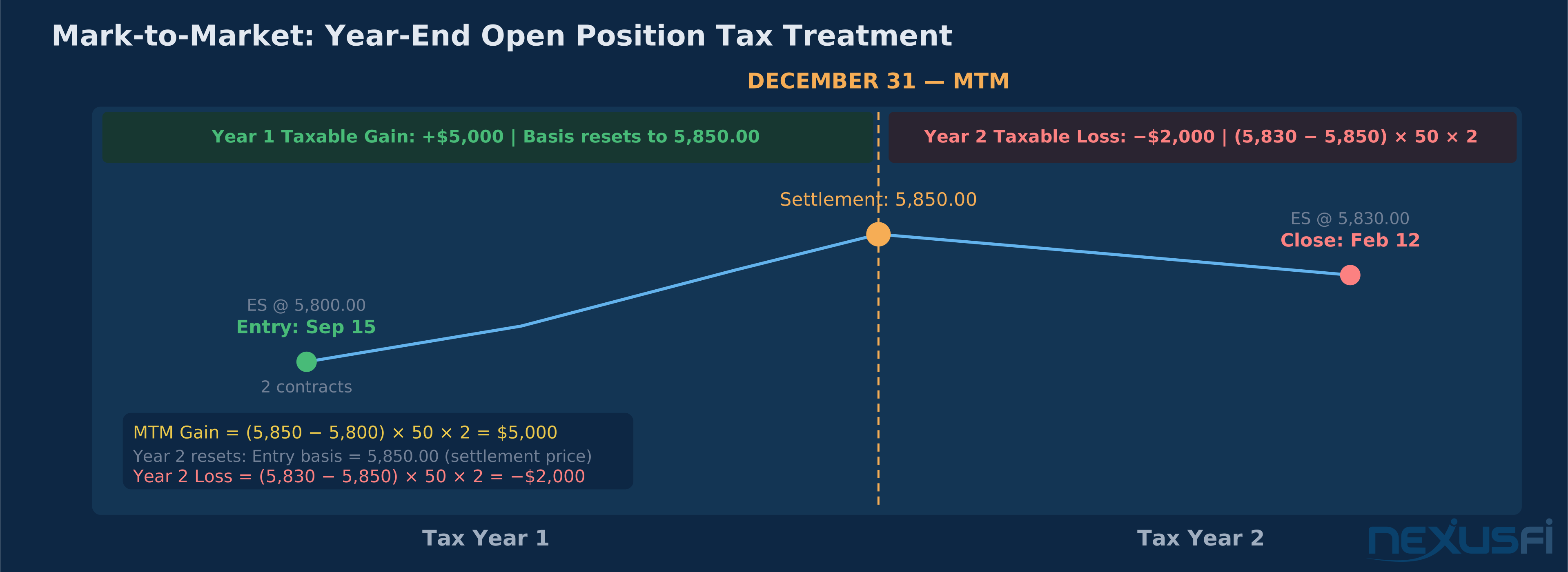
Under Section 1256 of the Internal Revenue Code, all regulated futures contracts are subject to mark-to-market (MTM) accounting. On December 31 of each tax year, the IRS treats every open futures position as if it had been sold at its fair market value — regardless of whether you actually closed the trade.
This has two major implications:
- You cannot defer futures gains into the next year. If you hold a profitable ES contract through December 31, you owe taxes on that profit for the current tax year, even if you don't close the position until March.
- Rollovers don't trigger separate tax events. When you roll from one contract month to the next — selling the March contract and buying the June contract — this is not a separate taxable event beyond what the MTM accounting already captures.
As experienced NexusFi trader
Wash Sale Rules Do Not Apply #
The wash sale rule — which disallows a loss deduction when you repurchase substantially identical securities within 30 days — does not apply to Section 1256 contracts. This is a significant advantage. A stock trader who takes a loss on IBM and immediately repurchases cannot claim that loss. A futures trader who takes a loss on the ES contract and immediately reenters can claim the full loss.
This exception exists precisely because mark-to-market accounting already forces year-end recognition. The wash sale rule was designed to prevent basis manipulation through artificial year-end closes and repurchases — a manipulation the MTM rules make unnecessary.
The 60/40 Split #
The total net gain or loss from your futures trading for the year is split:
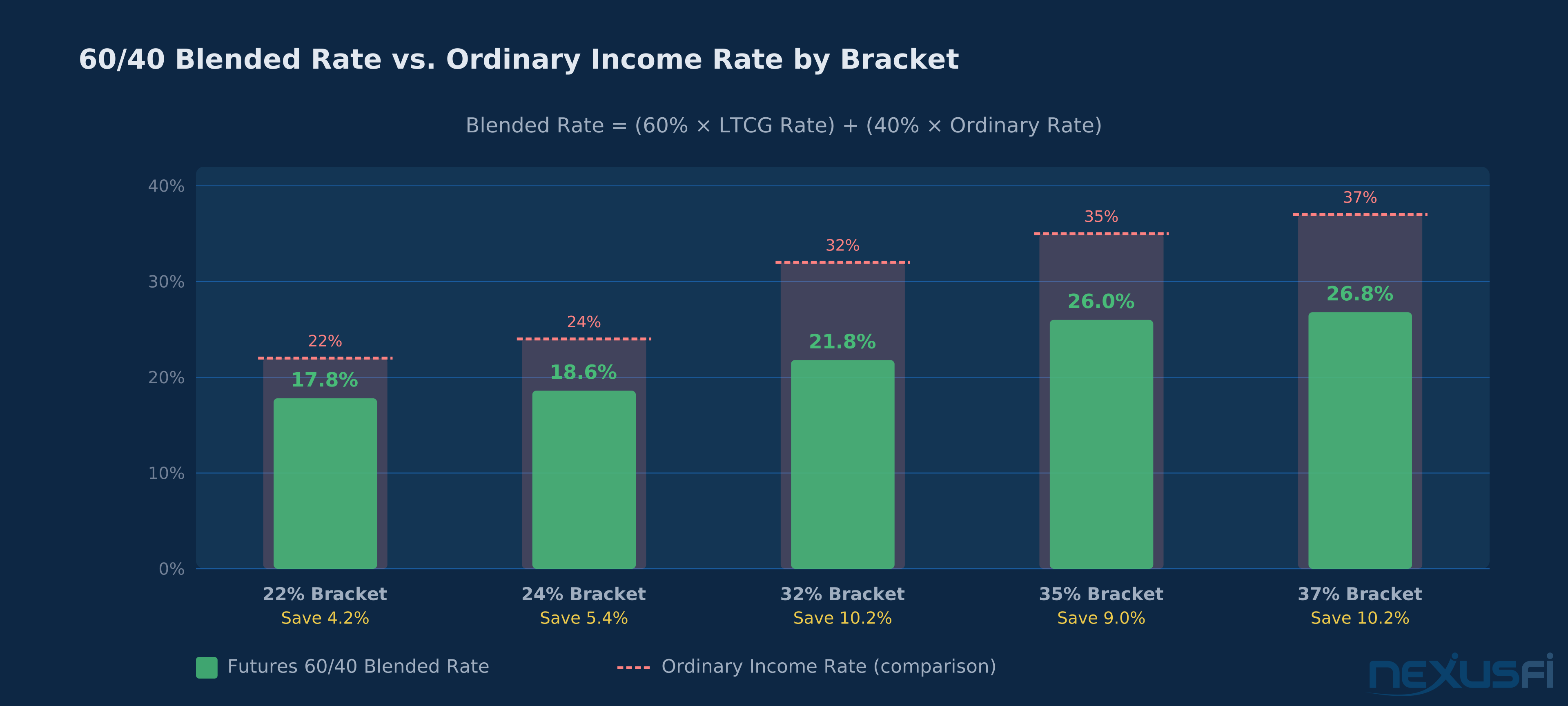
- 60% taxed as long-term capital gains (rates: 0%, 15%, or 20% depending on your income)
- 40% taxed as short-term capital gains (taxed at your ordinary income rate)
This split applies regardless of how long you held individual positions. A scalper who holds each trade for thirty seconds gets the same 60/40 treatment as a swing trader holding for three weeks. The holding period is irrelevant for Section 1256 contracts.
At the highest federal tax brackets, this produces an effective blended rate of approximately 27.84% — substantially better than the 37% ordinary income rate that would apply to short-term stock gains.
What Your Broker Provides #
The Consolidated 1099 Statement #
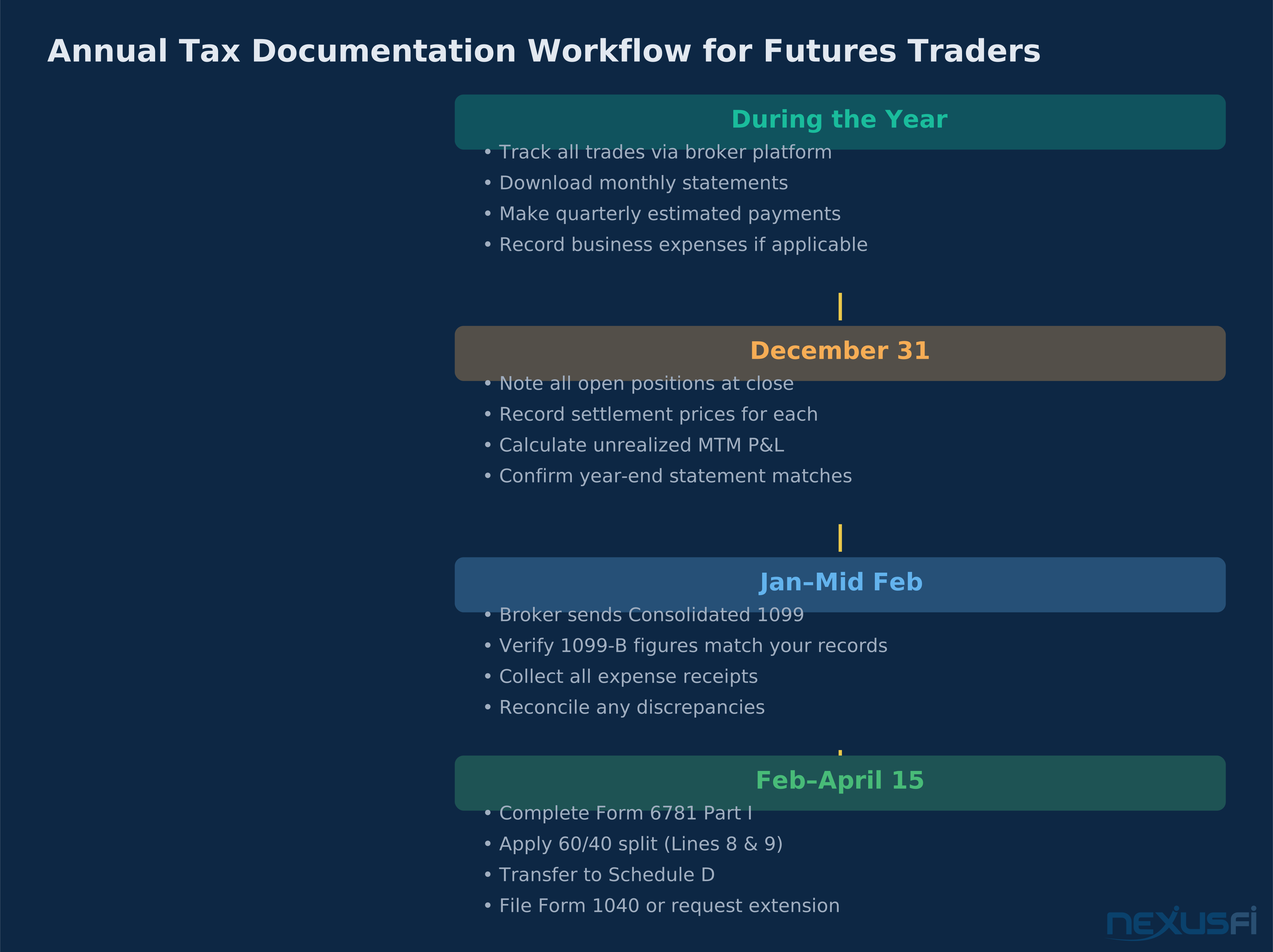
By mid-February each year, your futures broker is required to send you a Form 1099-B (or a Consolidated 1099 that includes 1099-B data). For futures, this document shows:
- Year-end mark-to-market gains and losses for any open positions at December 31
- Realized gains and losses for all contracts closed during the year
- Proceeds and cost basis for each contract (often aggregated rather than listed per-trade)
The critical column to locate is the net gain or loss for the year — this single number flows directly to Form 6781. Most futures brokers present this as a single net figure rather than listing thousands of individual trades.
What brokers typically show:
- Account identification number
- Total proceeds from closed positions
- Total cost basis for closed positions
- Mark-to-market year-end adjustment for open positions
- Net gain or (loss) for all Section 1256 contracts
Account Activity Statements #
In addition to the 1099-B, your broker provides monthly and annual account activity statements showing every trade in chronological order. These are your primary audit trail. They typically include:
- Trade date, time, and price for every entry and exit
- Contract symbol, expiration month, and quantity
- Commission and fee breakdown per trade
- Running account equity throughout the year
- Margin calls, deposits, and withdrawals
Never rely solely on your broker's 1099-B for audit purposes. The 1099-B shows the tax summary; the account activity statements show the underlying trades. If the IRS questions a figure on your return, you need the detailed trade-by-trade records that support it. Some brokers delete or archive old statements after a certain period — download and save them yourself.
What to Download and Retain #
At minimum, retain for at least seven years from the filing date:
- Annual 1099-B (or Consolidated 1099 covering all 1099 forms)
- Full-year account activity statement showing every trade
- Monthly statements for each calendar month
- Margin call notices and responses
- Account opening and closing documents if applicable
- Trade confirmation emails for any disputed positions
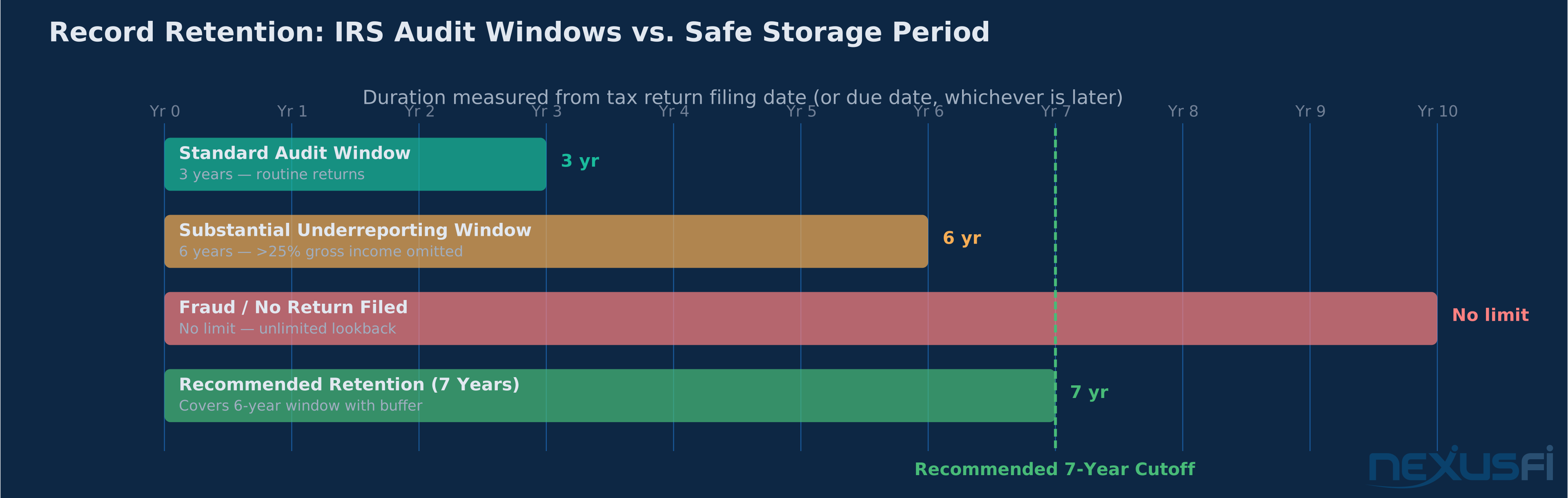
Seven years is the conservative standard. The IRS has a three-year window for routine audits, six years for significant underreporting (omitting more than 25% of gross income), and no time limit for fraud. Keeping seven years covers the six-year scenario with margin.
Records You Must Keep Yourself #
The broker handles the summary — the 1099-B net figure. But depending on your trading structure, you may need records the broker does not provide.
Trading Journal and Performance Log #
Many traders keep a daily trading journal separate from broker statements. The journal serves two purposes: improving your trading and providing evidence for trader tax status qualification (discussed below). A good trading journal includes:
- Daily P&L (realized and unrealized)
- Market conditions and setup notes
- Number of trades executed
- Instruments traded and position sizes
- Strategy observations
The IRS does not require a trading journal, but it can be invaluable if you're claiming trader tax status deductions or defending an unusual year-end position.
Open Position Log at December 31 #
Because mark-to-market forces recognition of year-end open positions, you need a point-in-time snapshot of your account at the close of December 31. Your year-end statement from the broker will contain this, but saving it separately avoids any ambiguity during audits. Document:
- Every open contract, quantity, and long/short direction
- Settlement price at December 31 close (available from the exchange)
- Your entry price for each position
- Calculated unrealized gain or loss at year-end
The mark-to-market gain or loss on open positions is taxable even though you haven't closed the trade. When you eventually close the position, your starting cost basis for that contract will be the December 31 settlement price — not your original entry price.
Year-End MTM Calculation Open Position Gain/(Loss) = (Dec 31 Settlement Price − Your Entry Price) × Contract Multiplier × Number of Contracts
Example: Long 2 ES contracts entered at 5,800.00, Dec 31 settlement at 5,850.00 = (5,850.00 − 5,800.00) × 50 × 2 = $5,000 taxable gain in current year Cost basis resets to 5,850.00 for next year's position
Estimated Tax Payment Records #
If you make quarterly estimated tax payments (discussed in detail below), retain:
- Form 1040-ES payment vouchers for each quarter
- Bank records or IRS payment confirmation showing amount and date paid
- IRS online account or EFTPS transaction history if paying electronically
These records matter if the IRS questions whether you met the safe harbor requirements.
Business Expense Records (If Applicable) #
If you qualify as a trader in securities for tax purposes (trader tax status), you can deduct trading-related business expenses as ordinary business expenses rather than itemized deductions. Records needed:
- Platform and data subscription fees (invoices)
- Educational materials and training costs (receipts)
- Home office expenses (square footage calculation, utility bills)
- Professional fees (CPA, tax attorney invoices)
- Technology and equipment purchased for trading
IRS Form 6781: Step by Step #
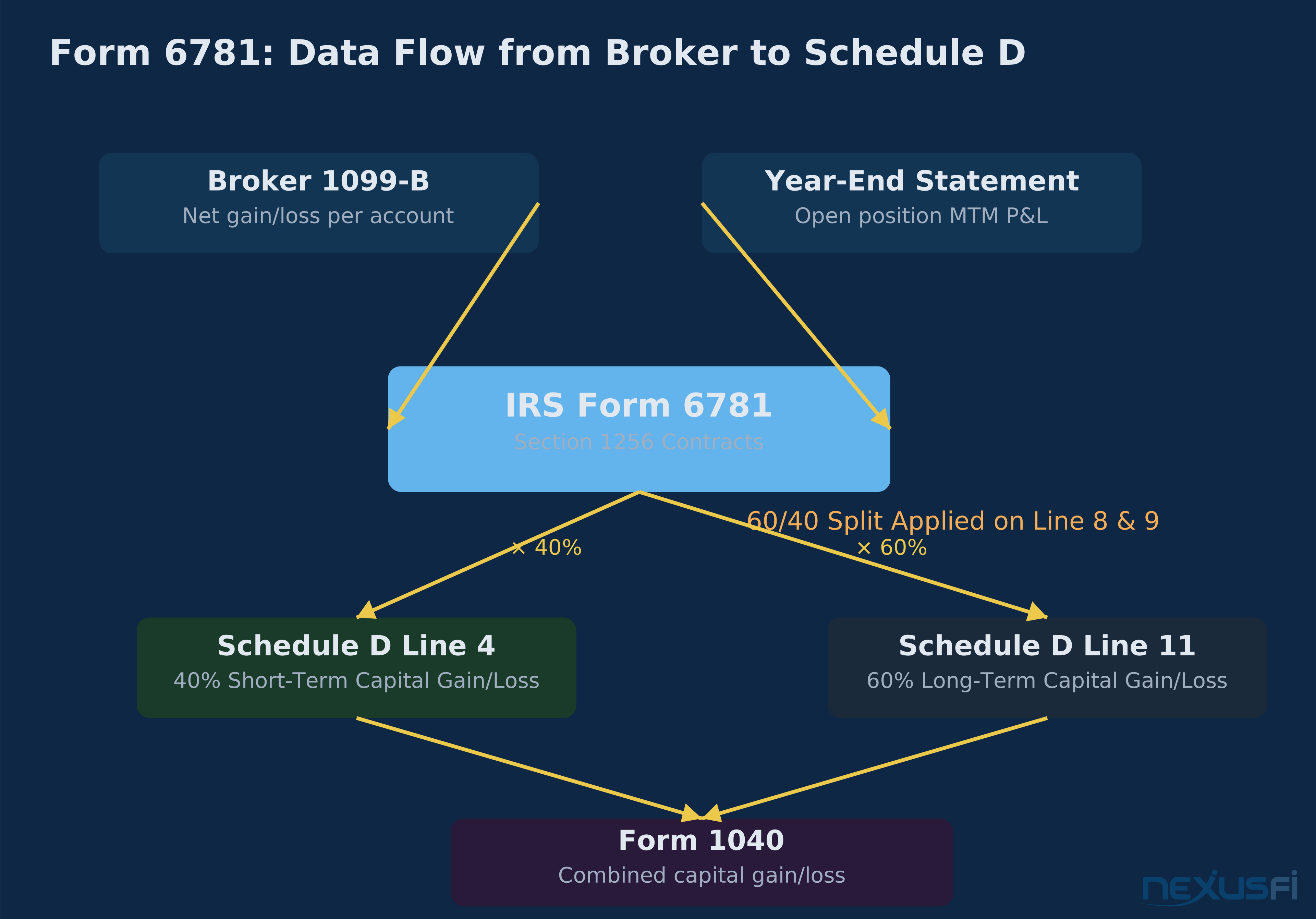
Form 6781 is the primary tax form for reporting Section 1256 contract gains and losses. It is filed with your annual tax return (Form 1040) and feeds results into Schedule D.
The Header Elections (Boxes A Through D) #
At the top of Form 6781 are four checkboxes for special elections. Most retail futures traders will not need any of these.
Box A — Mixed Straddle Election: For traders who enter straddle positions combining Section 1256 contracts with non-Section 1256 positions (like stock). Electing this applies uniform tax treatment across the entire straddle.
Box B — Straddle-by-Straddle Identification Election: Allows identification of specific straddle positions rather than using account-wide netting.
Box C — Mixed Straddle Account Election: An annual account-level election for a mixed straddle account maintained by a dealer.
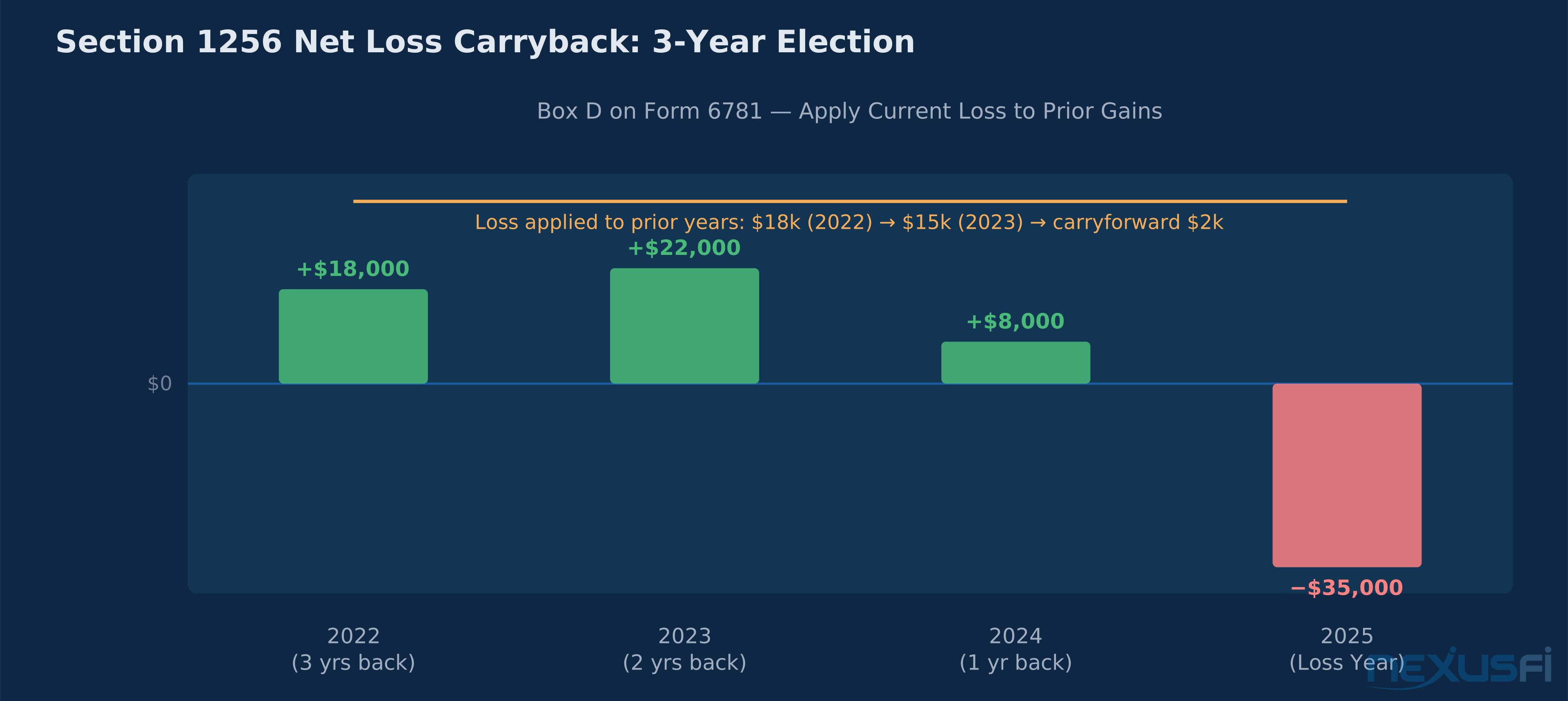
Box D — Net Section 1256 Contracts Loss Election: This is the one retail traders occasionally use. Checking Box D allows you to carry back a net loss from Section 1256 contracts to the three prior tax years. This can generate a refund of taxes previously paid. If you don't check Box D, losses carry forward only.
The loss carryback election (Box D) is specific to Section 1256 contracts — equities do not have this provision. If you had a significant losing year trading futures, consult a CPA to determine whether carrying the loss back to profitable prior years produces a better outcome than carrying it forward. The carryback applies to the prior three years in order: oldest first.
Part I: Section 1256 Contracts Marked to Market #
This is where the actual numbers go for routine futures trading.
Line 1 requires identifying the account(s) and entering gains and losses. If you traded through a single futures account, you will have one row. Multiple accounts require separate rows. Your broker's 1099-B provides the gain and loss figures for each account.
The columns are:
- (a) Identification of account: Typically your broker name plus account number (or "Form 1099-B" per IRS instructions)
- (b) Loss: Enter losses as positive numbers in this column
- (c) Gain: Enter gains in this column
Line 2: Sum of all Line 1 amounts — your net gain or loss across all accounts.
Line 3: Form 1099-B adjustments. This covers situations where the broker's reported figures require correction — for example, if a position was misclassified or if you have documentation supporting a different cost basis. Most traders will enter zero here.
Line 4: Adjusted total (Lines 2 + 3 combined).
Line 5: If you checked Box D (loss carryback election), enter the amount elected to carry back. Otherwise enter zero.
Line 7: Net Section 1256 gain or loss after all adjustments.
Line 8: Short-term capital gain or loss — multiply Line 7 by 40% (0.40). This flows to Schedule D Line 4 or Form 8949.
Line 9: Long-term capital gain or loss — multiply Line 7 by 60% (0.60). This flows to Schedule D Line 11 or Form 8949.
The most common error on Form 6781 is failing to include open position mark-to-market gains. Traders who closed all their positions before December 31 have a straightforward filing — their 1099-B net figure is the whole story. But traders who held open positions at year-end must include those unrealized gains or losses in Line 1. Your broker's year-end statement will include these, but verify this explicitly — do not assume the 1099-B figure already reflects open positions if you received a separate year-end adjustment statement.
Part II: Straddle Positions #
Part II covers straddle positions — offsetting positions designed to limit risk. Straddles have different rules than straight Section 1256 contracts and generally apply to institutional traders and sophisticated options strategies. Most retail futures traders will leave Part II blank.
If you trade futures options alongside futures in a coordinated hedging strategy, consult a tax professional before filing — straddle rules are complex and the IRS scrutinizes these positions.
The 3-Year Loss Carryback in Practice #
The loss carryback is one of the most valuable provisions available to futures traders that few use. Under Section 1256(d), if you have a net Section 1256 contracts loss for the year, you can elect to carry that loss back to any of the three preceding tax years and apply it against Section 1256 gains from those years.
How it works:
- Identify your net loss for the current year from Form 6781, Part I, Line 5
- Apply the loss to the oldest prior year first (3 years back)
- If unused loss remains after the oldest year, move to the next year
- Any remaining loss after three years carries forward normally
The mechanics generate a tax refund. If you paid taxes on futures gains in a prior year and then have a loss year, the carryback effectively unwinds part of that prior tax obligation. You file an amended return (Form 1040-X) for the carryback year or claim it on Form 1045 (Application for Tentative Refund) for a faster process.
The tradeoff: Losses carried back apply only to Section 1256 gains — they cannot offset ordinary income or equity gains in the prior years. If you had a profitable futures year three years ago, the carryback helps. If your prior years had no Section 1256 activity, the carryback does nothing for those years.
Quarterly Estimated Taxes #
Futures traders — especially full-time or much profitable part-time traders — often need to make quarterly estimated tax payments. Failing to pay enough throughout the year triggers an underpayment penalty equal to the federal short-term rate plus 3 percentage points, currently around 7-8% annualized.
The Three Safe Harbor Rules #
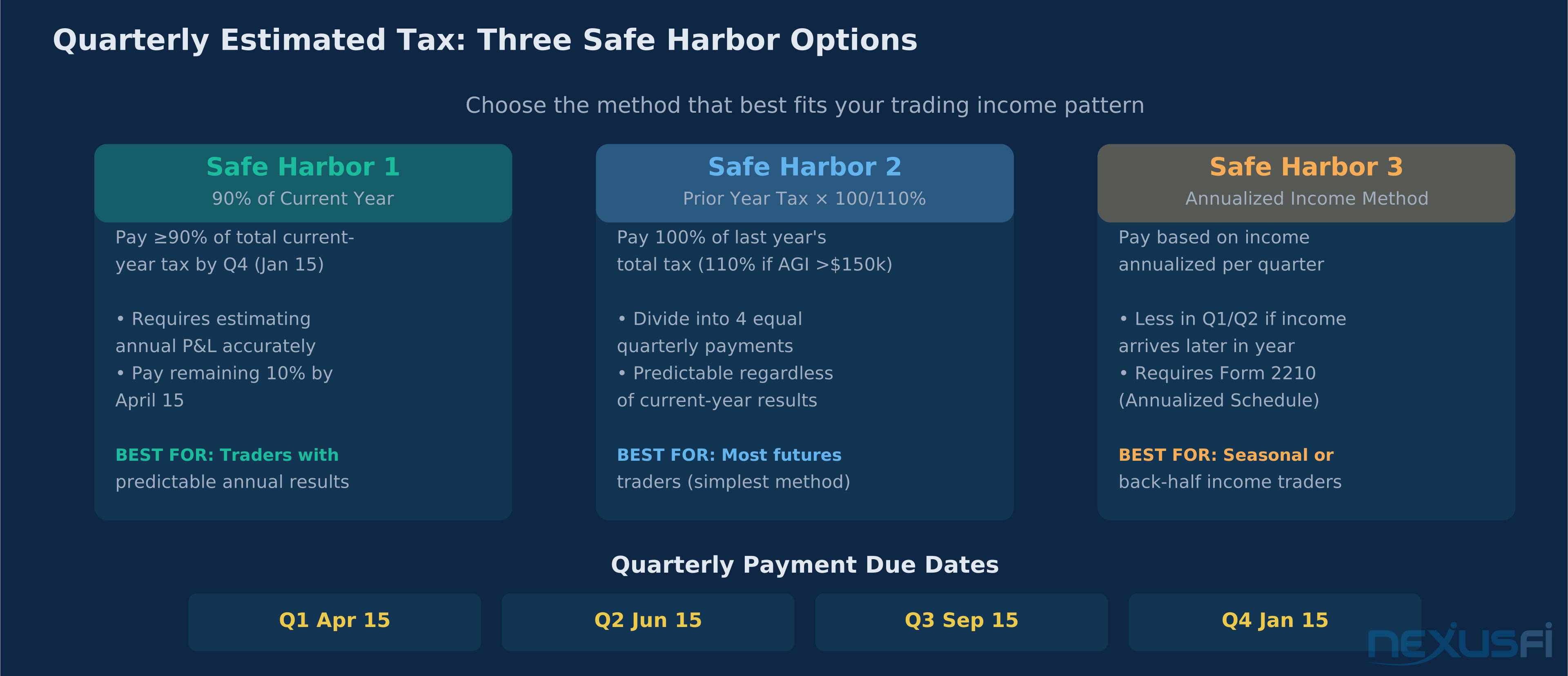
The IRS provides three ways to avoid the underpayment penalty:
Safe Harbor 1: 90% of Current Year Tax Pay at least 90% of your total current-year tax liability across your quarterly payments and final filing. This requires estimating your annual results well enough in advance to calculate the appropriate payments.
Safe Harbor 2: 100% of Prior Year Tax (110% if AGI over $150,000) Pay an amount equal to 100% of the prior year's total tax liability — or 110% if your AGI exceeds $150,000. This safe harbor is predictable: you know last year's tax bill, so you can divide it into four equal quarterly payments without guessing about current-year performance.
Safe Harbor 3: Quarterly Tax Cumulative Method Demonstrate that you paid adequate estimated taxes based on your income annualized through each quarter. This method allows paying less in Q1 and Q2 if income comes later in the year.
The Case Against Paying Quarterly Estimates #
There is a legitimate argument — used by some experienced traders — for deliberately not paying quarterly estimates and simply paying the underpayment penalty at year-end.
The penalty rate (roughly 7-8% annualized) is effectively the interest rate on a "loan" from the government. If your trading generates returns exceeding that rate on the withheld capital, it may be mathematically favorable to hold the cash, keep it deployed, and pay the penalty as a cost of capital.
This strategy is most viable when:
- Your Q3/Q4 results are uncertain or potentially negative (losses reduce the annual liability)
- The prior year safe harbor calculation is straightforward to apply
- Your effective trading return on capital exceeds the penalty rate
The "loan from the government" strategy works as long as you have the discipline to retain the tax liability as capital, not spend it. Traders who treat their gross profits as income and then face a large April tax bill — with no cash to pay it — are in a at the core different situation. If you use this approach, maintain a separate cash reserve equal to your estimated tax liability.
Quarterly Payment Due Dates #
| Quarter | Income Period | Due Date |
|---|---|---|
| Q1 | January 1 — March 31 | April 15 |
| Q2 | April 1 — May 31 | June 15 |
| Q3 | June 1 — August 31 | September 15 |
| Q4 | September 1 — December 31 | January 15 (following year) |
Payments are made via IRS Direct Pay, EFTPS (Electronic Federal Tax Payment System), or by mailing Form 1040-ES vouchers with a check. EFTPS is generally the most efficient for active traders who make multiple payments.
Trader Tax Status vs. Investor Status #
Most futures traders file as investors — they report Section 1256 gains and losses on Form 6781 and Schedule D, and that is the entirety of the tax treatment. The alternative — qualifying as a trader in securities for tax purposes — provides additional benefits but also additional complexity.
What Trader Tax Status Provides #
Traders who meet the IRS criteria for trading as a business (rather than investing) can:
- Deduct trading expenses as business expenses on Schedule C, rather than as miscellaneous itemized deductions subject to the 2% AGI floor
- Make the mark-to-market (MTM) election under Section 475(f) to convert futures gains from capital gains to ordinary income — eliminating the capital loss limitations on non-Section 1256 positions
Note: For pure futures traders, the Section 475(f) election is less relevant because Section 1256 already mandates mark-to-market treatment. The MTM election matters more for equity traders. But the business expense deduction can be valuable for futures traders who have significant platform, data, and professional fee costs.
The IRS Criteria for Trader Status #
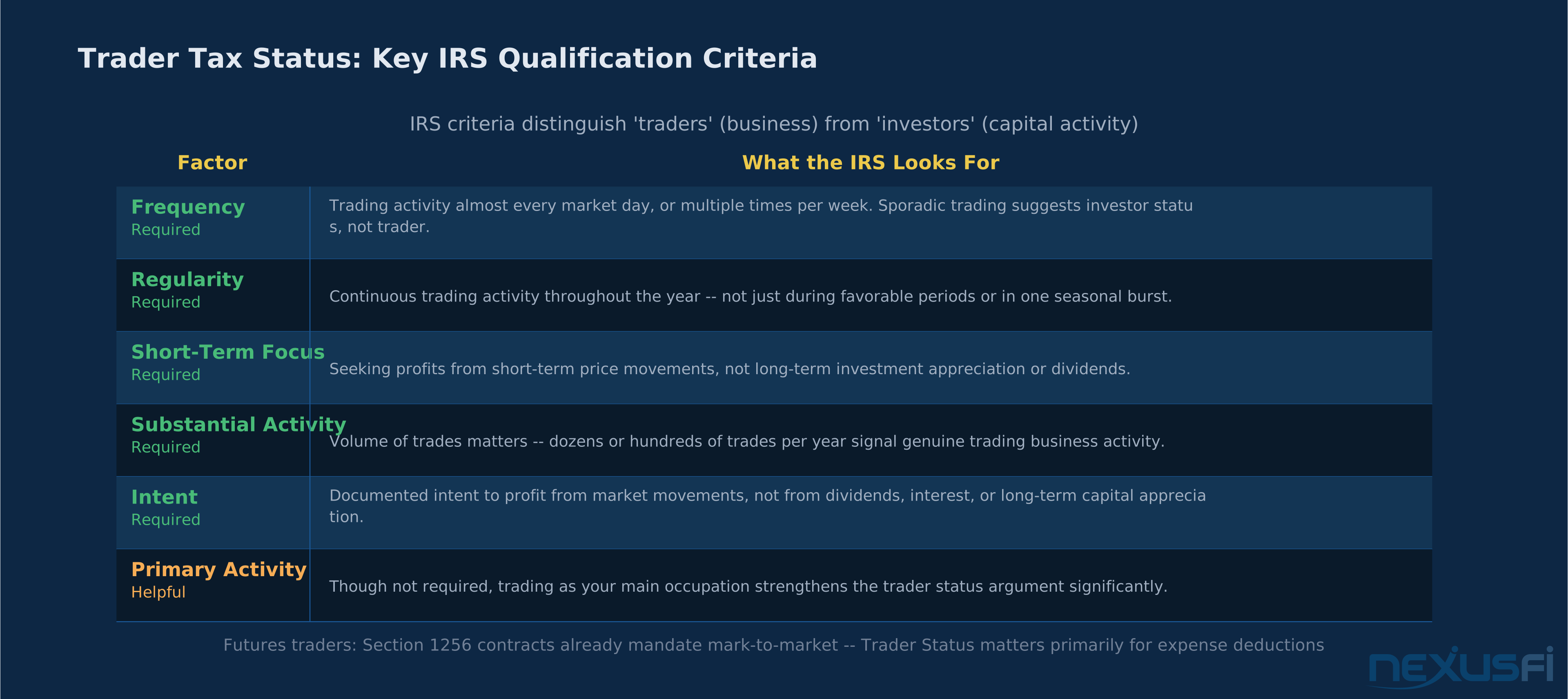
The IRS does not provide bright-line rules, but case law and IRS guidance point to several factors:
- Frequency and regularity: Trading almost daily or multiple times per week
- Continuity: Active throughout the year, not just during favorable conditions
- Significant activity: Seeking profits from short-term price movements, not long-term investment appreciation
- Primary occupation: Trading is the taxpayer's main income-generating activity, though this is not strictly required
Holding futures positions overnight or over several days does not automatically disqualify you from trader status, but it does weaken the case for "short-term price movement" trading that the IRS looks for. Day traders and active swing traders have stronger trader status arguments than long-term position traders.
The Green Trader Tax guide (referenced by NexusFi members) is the standard practitioner reference for trader tax status qualification. Consultation with a CPA who specializes in trader taxation is strongly recommended before making trader status elections.
Entity Structures: Trading in Your Own Name vs. LLC #
The majority of retail futures traders file as individuals with no separate business entity. This is the simplest structure and works well for most traders. Section 1256 treatment applies regardless of entity type.
Trading as an Individual #
- Simplest tax return: Form 1040 + Form 6781 + Schedule D
- No entity compliance costs: No state filing fees, no separate tax return, no registered agent
- Section 1256 applies normally: 60/40 treatment on Form 6781
- Self-employment tax: Section 1256 income is not subject to self-employment tax (FICA/Social Security/Medicare) — a meaningful advantage over business income
LLC Considerations #
Traders sometimes establish LLCs for liability protection. The tax treatment depends on how the LLC is structured:
Single-member LLC (default): Disregarded for tax purposes. The LLC's trading income flows directly to your personal Form 1040 as if you traded in your own name. No separate tax return required for the LLC.
Multi-member LLC: Treated as a partnership by default. Files Form 1065 (Partnership Return). Each member receives a K-1 showing their share of gains and losses.
LLC taxed as S-Corp: Requires payroll for active members and a separate corporate tax return. Can enable certain retirement contribution strategies but adds significant complexity.
Brokers often require personal guarantees on futures accounts held in LLCs, which can partially defeat the liability protection that motivated creating the entity in the first place. Consult with both a tax professional and a business attorney before establishing an LLC primarily for futures trading purposes.
The NexusFi community has extensive discussion on management LLC structures — where the LLC handles business expenses and the trader pays a management fee — as a mechanism for accessing retirement contributions and business deductions while keeping futures income at the capital gains rate.
Handling a Loss Year: The Three Paths #
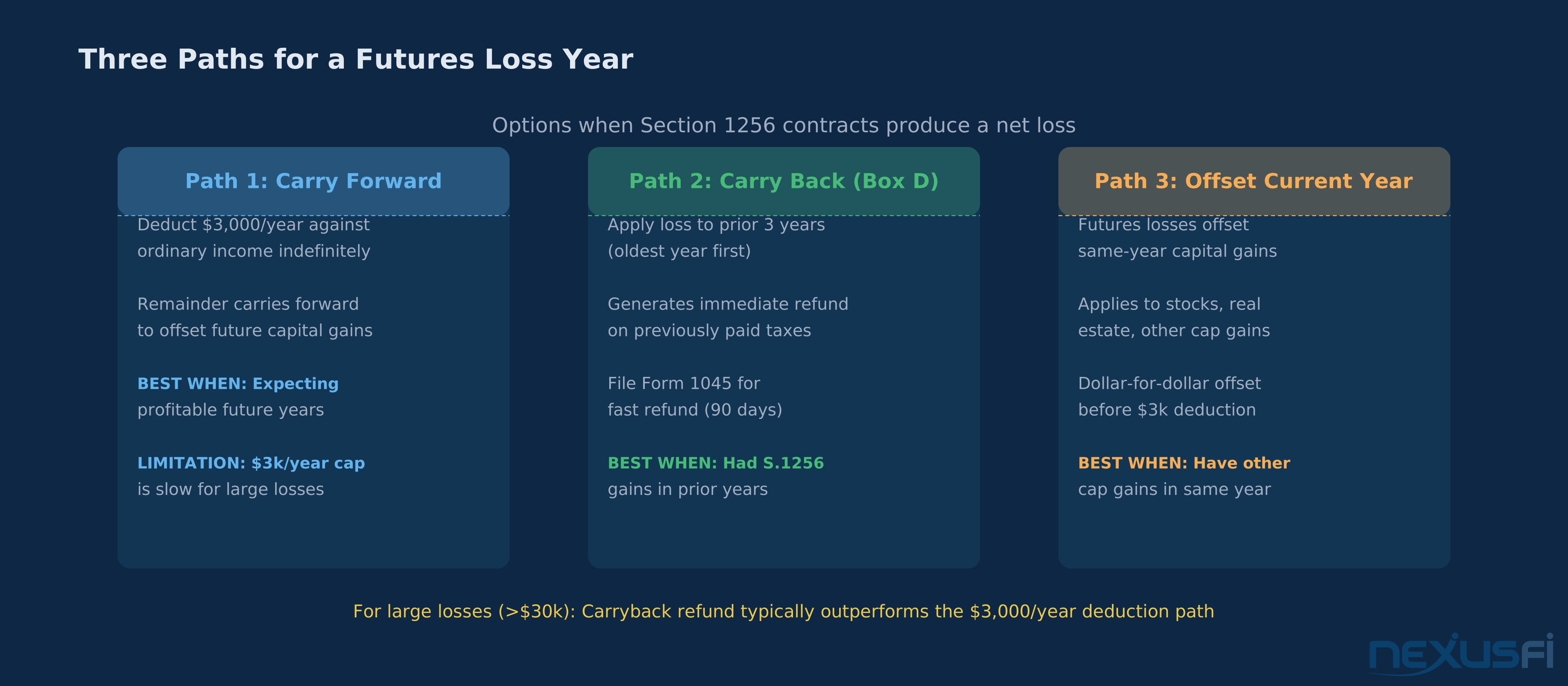
When your futures trading produces a net loss for the year, three paths are available:
Path 1: Carry the Loss Forward #
Futures losses are capital losses (60% long-term, 40% short-term). If you have no other capital gains to offset, the IRS allows deducting $3,000 of net capital losses per year against ordinary income. The remainder carries forward indefinitely to offset future capital gains.
A large loss — say, $50,000 — could take 16+ years to fully deploy against ordinary income at $3,000/year if you have no future capital gains to offset. This is why the carryback election is often preferable for large loss years.
Path 2: Carry the Loss Back (Box D on Form 6781) #
Check Box D on Form 6781 to elect the 3-year carryback. This can generate an immediate refund if you had Section 1256 gains in prior years. File Form 1045 for a fast refund (processed within 90 days) or Form 1040-X for a slower amended return.
Path 3: Use Losses Against Current-Year Capital Gains #
If you have other capital gains from stock, real estate, or other sources in the same year, your futures losses offset those gains dollar-for-dollar before the $3,000 ordinary income deduction and carryforward. Plan your year-end portfolio to take advantage of any loss harvesting opportunities across asset classes.
Common Errors and Audit Risk Factors #
Mismatched 1099-B and Form 6781 #
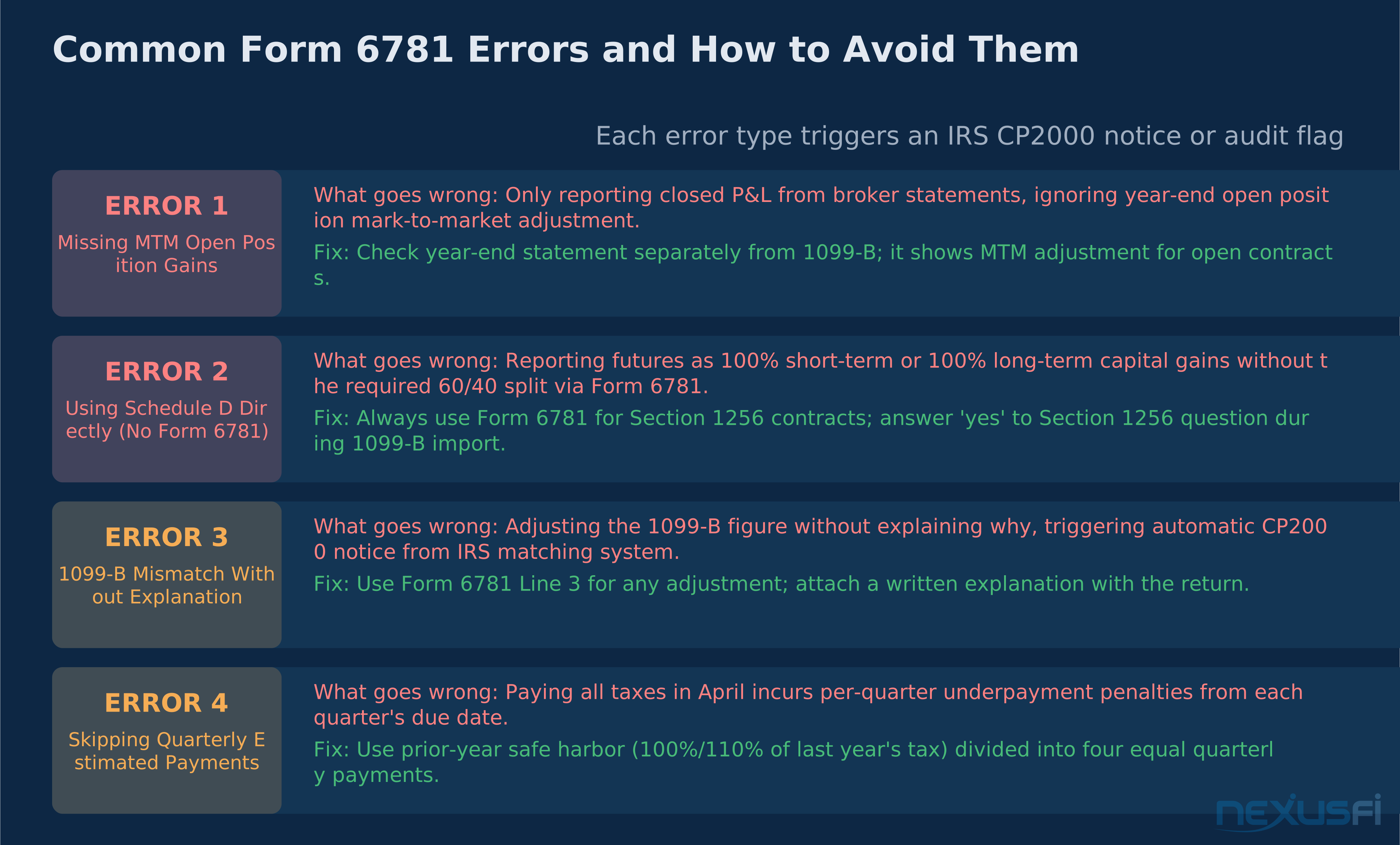
The IRS computer matching system compares your filed Form 6781 against the 1099-B your broker filed. Any discrepancy generates an IRS CP2000 notice — a proposed adjustment to your return. To prevent this:
- Reconcile your Form 6781 Line 1 entries directly against your broker's 1099-B before filing
- If you need to adjust the 1099-B amount for any reason, use Line 3 (Form 1099-B adjustments) and attach an explanation
- Never simply ignore a mismatched figure — explain every deviation from the 1099-B with documentation
Forgetting Open Position Mark-to-Market #
The most common substantive error. Traders who held futures positions through December 31 must include the year-end MTM gain or loss in their Line 1 entries, not just the closed position P&L. Your year-end account statement shows this, but it's easy to overlook if you rely only on the 1099-B summary.
Wrong Tax Form — Using Schedule D Directly #
Some traders with less common tax software see a "short-term capital gains" entry and attempt to report futures directly on Schedule D without first going through Form 6781. Form 6781 is mandatory for Section 1256 contracts — the 60/40 split must be calculated there and then flows to Schedule D. Reporting all futures gains as either 100% short-term or 100% long-term is incorrect.
Tax software will usually generate Form 6781 automatically when you indicate that your 1099-B contains Section 1256 contracts. Look for a question during 1099-B import asking whether the transactions are Section 1256 contracts and answer yes. Do not file with futures income reported exclusively on Schedule D without a Form 6781.
Late or Missing Quarterly Payments #
The IRS underpayment penalty is calculated per quarter, not annually. Paying the full year's tax in April does not retroactively satisfy quarters 1 through 3. If you make no quarterly payments and then pay everything in April, you owe the penalty calculated from each quarter's due date through April 15.
The safe harbor approach — paying 100% (or 110% for AGI over $150k) of prior year's tax across four equal quarterly payments — eliminates all underpayment penalty risk regardless of current-year results.
Record Retention Schedule #
| Document Type | Retention Period | Why |
|---|---|---|
| Form 1099-B | 7 years | Matches IRS 6-year audit window for significant underreporting |
| Account activity statements | 7 years | Backup for any 1099-B question |
| Annual / monthly statements | 7 years | Chronological trade audit trail |
| Filed tax returns | Forever | Needed for carryback calculations, future reference |
| Estimated tax payment records | 7 years | Prove safe harbor compliance |
| Business expense receipts (if applicable) | 7 years | Substantiate deductions |
| LLC/entity documents | Duration of entity + 7 years | Compliance and basis questions |
The IRS standard audit window is 3 years from the filing date. For significant underreporting (omitting more than 25% of gross income), it extends to 6 years. For fraud, there is no limit. The 7-year standard covers the 6-year scenario with buffer.
Storage: Cloud backup (encrypted) or external hard drive. The IRS accepts electronic records — paper originals are not required.
Practical Tools and Resources #
Tax Software #
TurboTax, H&R Block, and TaxAct all handle Form 6781 when you identify your 1099-B transactions as Section 1256 contracts during the import process. The forms are generated automatically once the classification is made. If you have simple trading (one account, no straddles, no loss carryback election), any major tax software can handle the filing.
For more complex situations — multiple accounts, loss carryback elections, trader tax status, LLC structures — consider filing with a CPA specializing in trader taxation. The expertise typically pays for itself through proper optimization of deductions and elections.
Green Trader Tax #
The most-cited practitioner resource in the NexusFi community is the Green Trader Tax Guide, published by Robert A. Green, CPA. Available at greentradertax.com. It covers Section 1256 treatment, trader tax status qualification, MTM elections, entity selection, and quarterly tax strategies. Frequently updated for current-year changes. The NexusFi community consistently recommends it as essential reading before discussing futures taxes with a general-practice CPA.
IRS Resources #
- Form 6781 and Instructions: irs.gov/Form6781 — current-year form and line-by-line instructions
- Publication 550 (Investment Income and Expenses): Section 1256 contract chapter
- IRS Online Account: View prior-year payments and account transcripts
Knowledge Map
Go Deeper
Build on this knowledgeReferences This Article
Articles that build on this topicCitations
- — The Tax Thread (2015) 👍 1“Most Futures & Futures Option contracts are taxed as Section 1256 Contracts which means that they are taxed 60% at your long term capital gains rates and 40% at your short term capital gains rate no matter what the holding period.”
- — The Tax Thread (2012) 👍 3“For losses, there is a $3000 maximum per year you can claim, and then carryover future losses into next year, and so forth. For gains, futures are taxed as 60/40, meaning 60% long term gains, and 40% short term gains.”
- — Personal or LLC? (2018) 👍 5“Most CPAs, even very bright and very good CPAs, are unaware of futures tax treatment, like the Section 1256 contracts 60/40 capital gains split. So work with your CPA and educate them.”
- — Senate Bill to revoke Futures 60/40 tax treatment (2021) 👍 5“Since section 1256 contracts aren't subject to self employment tax, the pressure to send them in is greatly reduced. The Green Trader Tax guide is good; I've been in public accounting for 12 years.”
- — Senate Bill to revoke Futures 60/40 tax treatment (2021) 👍 6“Paying 90% of total current year's tax bill in Q4 -- if you paid at least 90%, you can pay the remaining 10% by Apr 15. If your AGI is over $150K, then it's 110% of prior year's tax liability.”
- — Continuous Index-Futures vs ETFs for buy & hold (2023) 👍 3“All positions are marked to market at end of year. Does not matter if you rolled or not. The tax you owe is based on the change in total equity during the year -- including any open and closed positions.”
- — Selling Options on Futures? (2021) 👍 6“I have a management LLC which I pay to manage my business. The LLC in turn pays for my medical, pension and gives me a salary.”
- IRS.gov — Form 6781: Gains and Losses From Section 1256 Contracts and Straddles (2025)
- Investopedia — Form 6781: Gains and Losses From Section 1256 Contracts and Straddles (2024)
- Nasdaq / SmartAsset — Section 1256 Contracts: What They Are and How to Report (2025)