



Section 475(f) Mark-to-Market Tax Election: The Complete Guide for Active Futures Traders
Overview #
There are two kinds of futures traders when tax season arrives: those who understand Section 475(f) and those who are about to have a very unpleasant conversation with their accountant.
Section 475(f) of the Internal Revenue Code lets qualifying traders elect mark-to-market accounting for their trading activity. The result: all gains and losses are treated as ordinary income or ordinary loss rather than capital. No $3,000 annual cap on loss deductions. No carryforward limbo where $50,000 in trading losses gets absorbed over 16 years at $3,000 a bite. Losses offset income the year you take them, dollar for dollar.
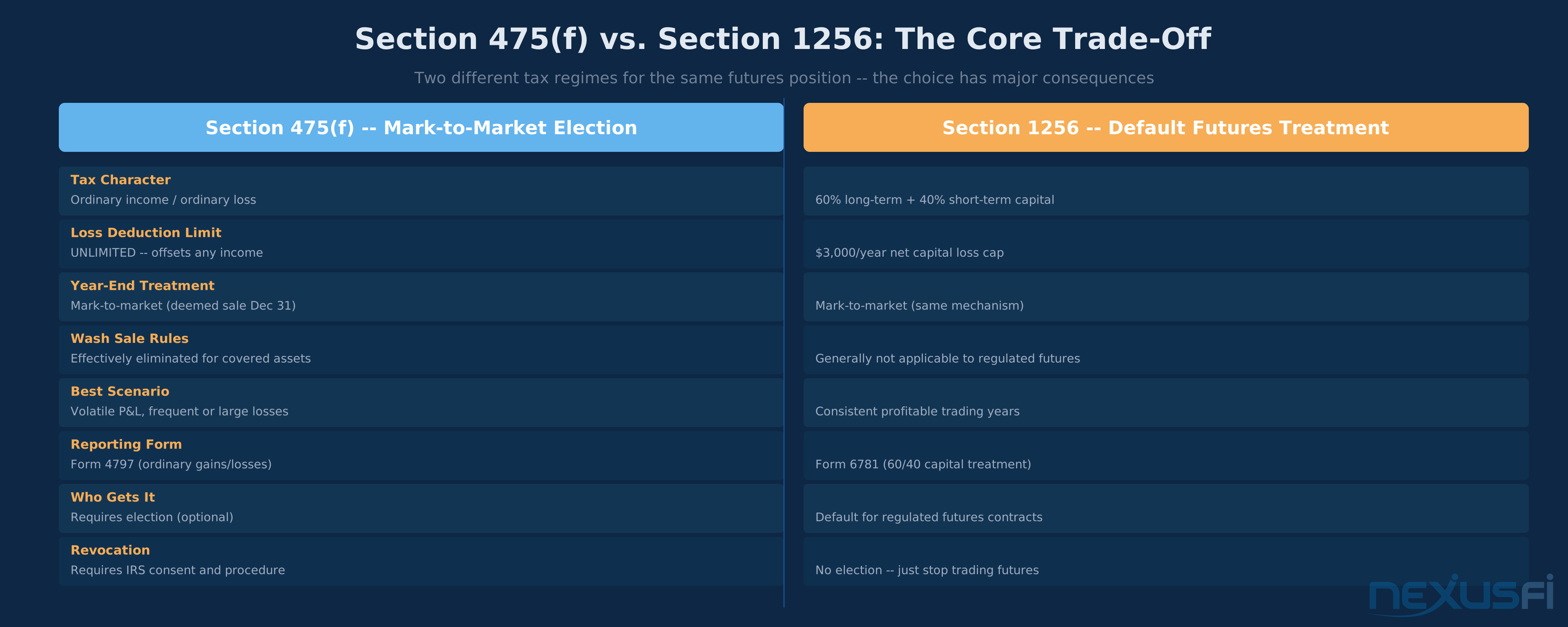
The election isn't for everyone. Profitable traders with consistent gains may do better keeping Section 1256's favorable 60/40 capital gains split. But for traders with volatile P&L, large drawdown years, or anyone who has ever stared at a $50,000 capital loss carryforward and wondered how long it will take to absorb — the 475(f) election is worth understanding deeply.
This guide covers everything: who qualifies, how the election works mechanically, the year-end mark-to-market calculation, the trade-offs versus Section 1256, the mixed-portfolio trap that ruins otherwise solid strategies, and the record-keeping that separates audit survivors from audit casualties.
One critical note before we begin: tax law is not one-size-fits-all. This article explains how Section 475(f) works and what the trade-offs are. It's not a substitute for a CPA who specializes in trader tax. The election has a hard filing deadline, real financial consequences, and nuances that depend on your specific situation. Get professional advice before electing.
Key Concepts #
Trader Tax Status (TTS) — The IRS classification that distinguishes a trader (in the business of trading for profit from short-term market movements) from an investor (holding assets for long-term appreciation). TTS is the prerequisite for the 475(f) election and for business expense deductions on Schedule C.
Section 475(f) Election — An optional mark-to-market accounting method for traders. When elected, all qualifying positions are treated as if sold at fair market value on the last business day of the tax year. Gains and losses are recognized as ordinary income/loss rather than capital.
Mark-to-Market (MTM) — Year-end valuation of open positions at exchange settlement prices, treating unrealized gains and losses as realized for tax purposes. Note: both Section 475(f) and Section 1256 use mark-to-market at year-end — the critical difference is the tax CHARACTER of the resulting gains/losses.
Section 1256 Contracts — The default tax treatment for regulated futures contracts. Gains and losses receive a 60/40 split: 60% treated as long-term capital gains/losses, 40% short-term. All positions are marked to market at year-end regardless of whether you've elected 475(f).
Ordinary Income/Loss — Income taxed at your full marginal rate (up to 37% in 2025). Ordinary losses can offset any ordinary income dollar-for-dollar with no annual cap.
Capital Loss Limitation — Without TTS, net trading losses are capital losses. Capital losses can only offset capital gains plus $3,000 of ordinary income per year. Excess capital losses carry forward to future years.
Form 4797 (Sales of Business Property) — The tax form where 475(f) mark-to-market results are reported. This is distinct from Schedule D (capital gains), which is where investment losses and non-475(f) trading gains are reported.
Schedule C (Profit or Loss from Business) — The self-employment income/loss form. With TTS, trading business expenses are deducted here, even if you don't elect 475(f).
Who Qualifies: Trader Tax Status #
The foundation of the 475(f) election is Trader Tax Status. Without it, you can't elect. The IRS doesn't hand out TTS based on account size or a trade count threshold. It's a facts-and-circumstances test drawn from decades of tax court cases.
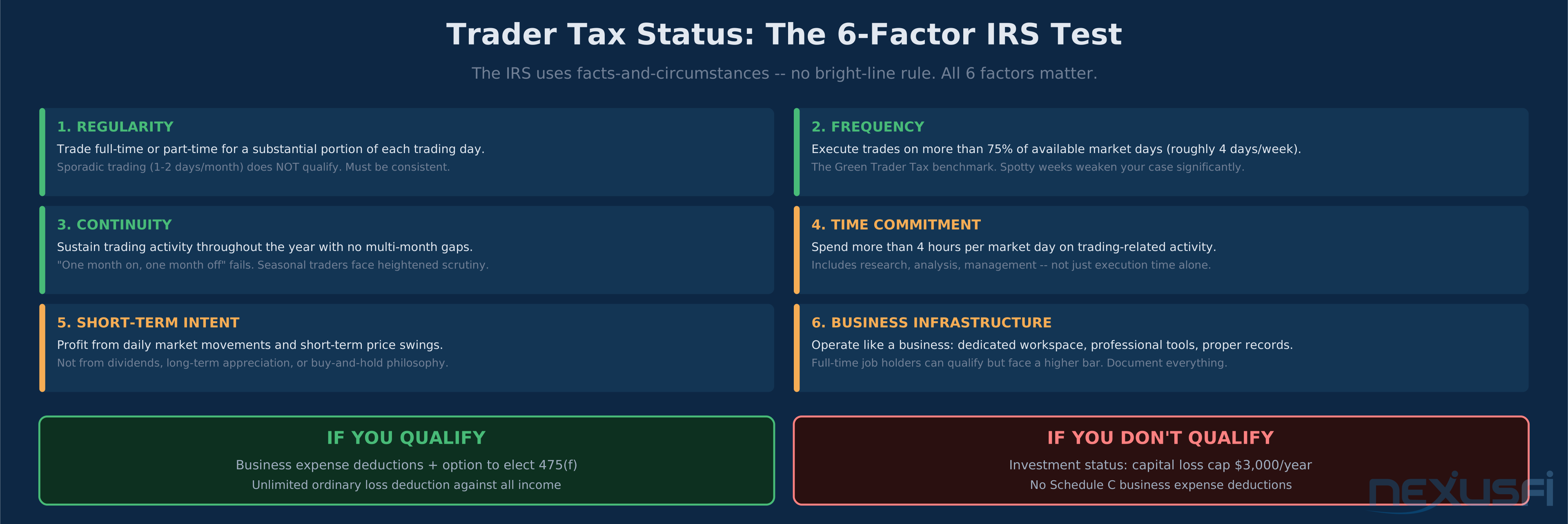
The leading authority is the IRS's own Revenue Procedure 99-17 and subsequent court cases. Green Trader Tax — the most widely cited practitioner resource in this area — summarizes the key factors from case law:
- Regular — Trading full-time or part-time for a significant portion of each market day. Not "I check my positions before work."
- Frequent — Executing trades on more than 75% of available trading days, roughly 4 days per week. As @SMCJB noted in NexusFi's Tax Thread: "I trade 250 days a year and execute thousands of trades so qualifying is not difficult for me."
- Continuous — No multi-month gaps during the year. Trading for three months and taking the rest of the year off doesn't qualify. Seasonal traders face heightened scrutiny.
- Time commitment — More than four hours per market day, including research, analysis, and position management — not just execution time.
- Short-term intent — Profiting from daily and short-term market movements, not from long-term appreciation, dividends, or buy-and-hold. This is the most important qualitative factor.
- Business infrastructure — Treating trading as a business: dedicated workspace, professional tools, proper recordkeeping. Having a full-time job doesn't automatically disqualify you, but it makes the case harder.
One case that every trader should know: Poppe v. Commissioner. William Poppe had a qualifying trading operation but couldn't prove compliance with the two-step election process. The IRS denied his 475(f) election. Instead of deducting over $1 million in trading losses as ordinary losses, he was stuck with $3,000 per year.
The "20-trade exercise" is a heuristic, not law. It gets cited frequently as a minimum trade count threshold, but the IRS has no such rule. What matters is demonstrating the above factors. Twenty trades a day makes the case easy. Twenty trades a year almost certainly doesn't qualify. But the number alone doesn't decide it.
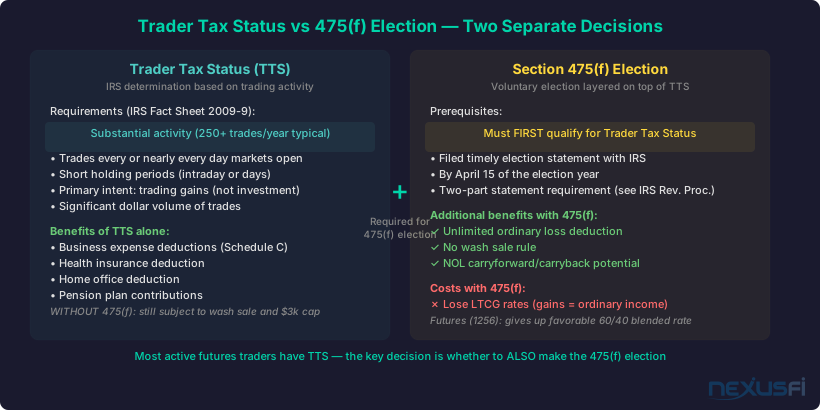
Qualifying for TTS is a threshold decision that opens two doors: business expense deductions (always available with TTS) and the 475(f) election (optional — you choose whether to step through it).
Making the Election: Timing and Mechanics #
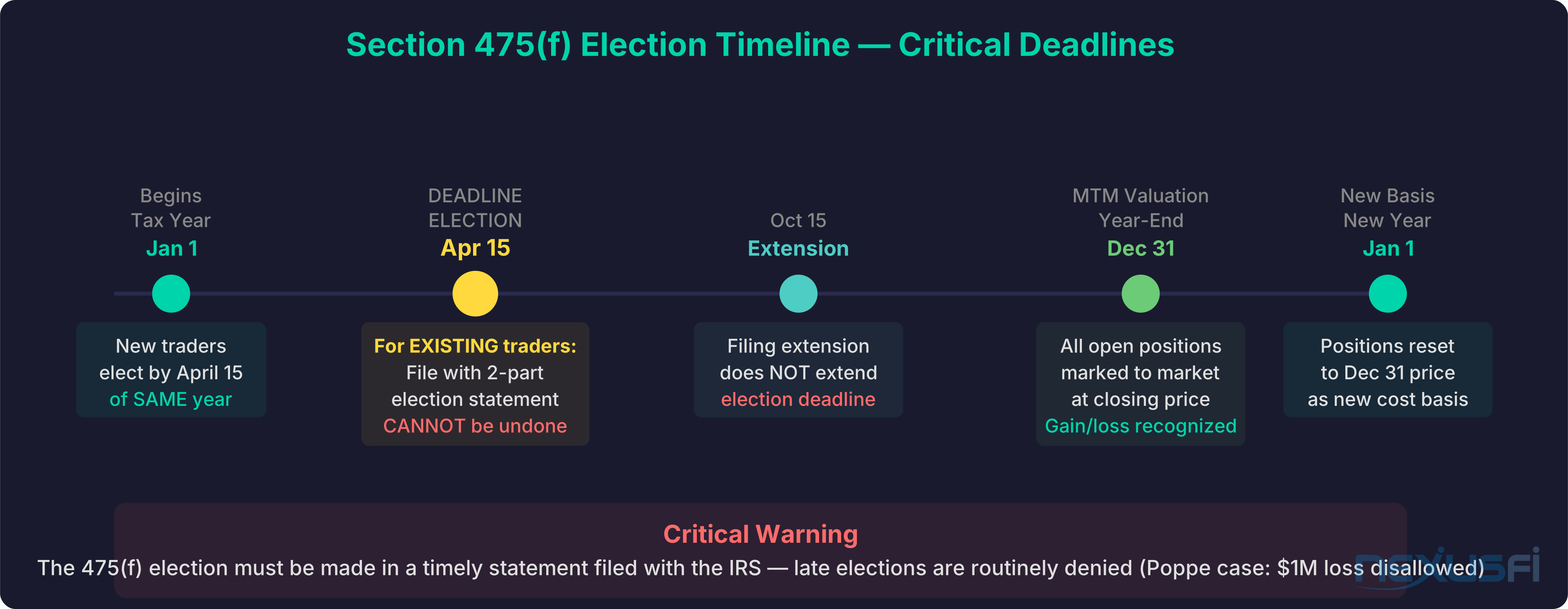
The 475(f) election is time-sensitive. Miss the deadline and you're locked out for that tax year — no exceptions, no retroactive filing.
The two-step election process:
Step 1: File a statement of election with your tax return (or with an internal record before the deadline if making a timely election for the current year). This statement identifies the positions covered and confirms your election under Section 475(f)(1) (securities) or 475(f)(2) (commodities).
Step 2: File the election formally, typically attached to your Form 1040 for the applicable tax year. In some cases, depending on current IRS procedures, this may involve Form 3115 (Change in Accounting Method).
Deadlines:
- For a calendar-year taxpayer making the election effective for Tax Year 2025, the election must generally be in place by the due date of the 2024 tax return — April 15, 2025 (without extensions, in most cases).
- For a new trader in their first year of trading: the election can be made by the due date of the return for that first year.
- Late election relief exists in limited circumstances but should not be assumed. Poppe lost over $1 million in ordinary loss deductions because he couldn't prove his election was timely.
The 475(f) deadline is absolute. No retroactive filing exists after it passes. Poppe lost over $1 million in deductions because his election documentation failed IRS scrutiny. Use a trader-tax CPA and retain proof of filing.
The procedural mechanics change as the IRS issues new Revenue Procedures. The 2020s have seen updates to how accounting method elections work. Don't file the election yourself using guidance from a 2018 article. Get a CPA who handles trader tax filings to confirm the current procedure before filing. This is exactly the kind of detail that determines whether the election is effective.
First-year traders: If you're starting your trading business, you can make the election for your first tax year of trading. The election applies to all qualifying positions going forward. No historical positions are revalued; the new accounting method starts immediately.
Long-term traders electing for the first time: The election changes your accounting method. Existing inventory (open positions) is marked to market as of the first day of the election year. This creates a deemed sale and can generate taxable income or loss in that transition year. Your CPA needs to model this out before you elect.
What Mark-to-Market Means at Year-End #
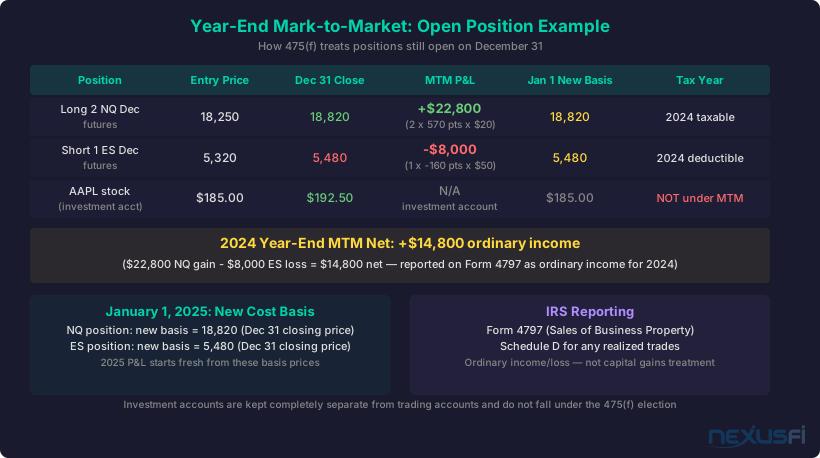
Under 475(f), December 31 (or the last business day of the tax year) is the magical line. Every qualifying position open at year-end is treated as if it were sold at fair market value on that date.
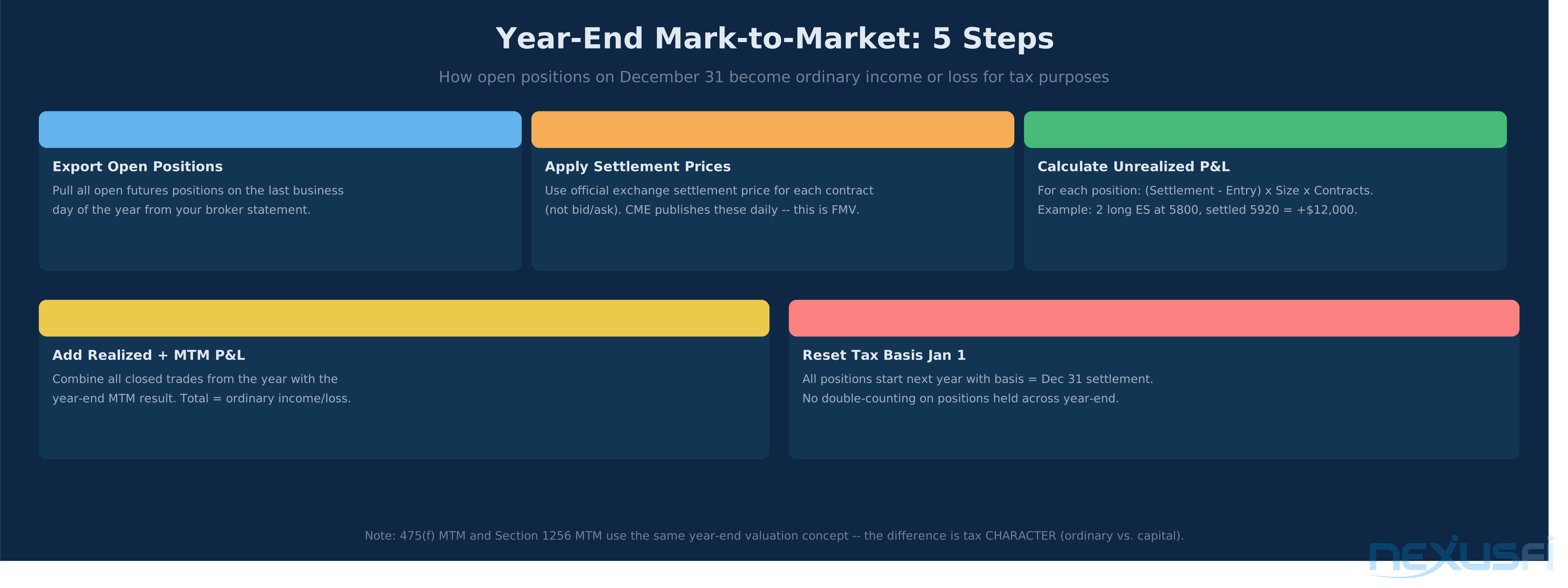
The year-end MTM calculation:
- Export all open futures positions from your broker on the last business day of the year
- Apply official exchange settlement prices — the price CME (or the relevant exchange) publishes as the official daily settlement, not the bid/ask mid
- For each position: compute (Settlement Price - Entry Price) x Contract Size x Number of Contracts
- Combine all year's realized P&L from closed trades plus the MTM P&L from open positions
- The total is your ordinary income or ordinary loss for the year, reported on Form 4797
- On January 1, all positions reset. Their new tax basis is the December 31 settlement price
Example: You hold 4 long ES contracts entered at an average price of 5,750.00. December 31 CME settlement is 5,920.00. The tick value on ES is $50 per point. Your MTM gain: (5920 - 5750) x $50 x 4 contracts = $34,000 ordinary income. Next year, your tax basis in those 4 contracts starts at 5,920.00.
Prepare for year-end MTM before December 31. Export your open positions list mid-December and reconcile against broker statements. Last-minute scrambles produce errors that your CPA then has to unwind — and CPA time at year-end is expensive.
The tax timing effect. Because 475(f) forces recognition of all P&L at year-end, your cash tax liability can arrive before you've closed the position. If those 4 ES contracts are still open in March and the market reverses to 5,650 before you exit, you've paid taxes on a $34,000 gain that subsequently became a $30,000 realized loss. The next year's tax return will reflect the loss from the 5,920 reset basis, but the cash tax for the gain came due earlier. This is the timing cost of the election — plan so.
One critical clarification. Section 1256 (the default for regulated futures) also marks positions to market at year-end. The mechanics are identical. The difference is purely the tax CHARACTER of the result: Section 1256 results flow to Form 6781 as 60% long-term / 40% short-term capital gains/losses. Section 475(f) results flow to Form 4797 as ordinary income/losses. Same mechanism, radically different tax treatment.
475(f) vs. Section 1256: The Core Trade-Off #
Most active futures traders already operate under Section 1256 without knowing it. Every regulated futures contract (ES, NQ, CL, GC, /6E, etc.) automatically qualifies for 1256 treatment. The 60/40 split is powerful in good years — 60% of gains taxed at long-term capital gains rates (0%, 15%, or 20% depending on income bracket), 40% at short-term rates.
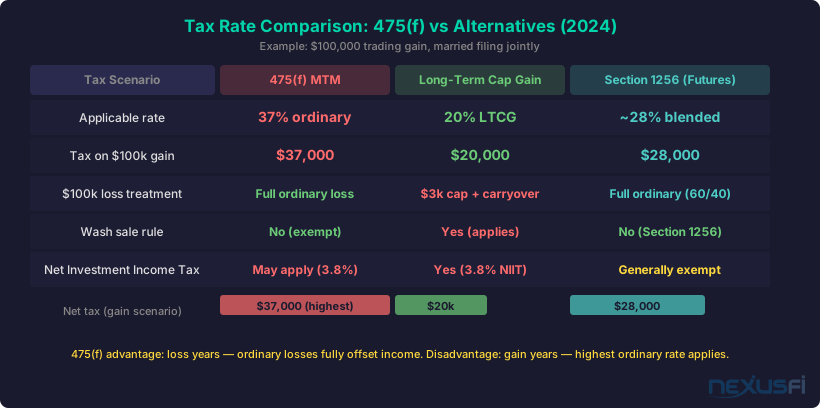
Section 475(f) converts everything to ordinary income. That means all gains taxed at your full marginal rate. At the 37% bracket, you're comparing a blended 1256 rate around 23.8% (60% at 20% LT + 40% at 37% ST) versus a flat 37% under 475(f). In a profitable year, 1256 wins by a significant margin.
But the calculation flips in loss years.
Capital losses under 1256 are limited to $3,000 of ordinary income offset per year (plus unlimited capital gain offset if you have other capital gains). A $100,000 trading loss without 475(f) and without offsetting capital gains means $97,000 carries forward. That carryforward is worth something, but only eventually, and only when you have capital gains to absorb it.
Ordinary losses under 475(f) offset anything: W-2 income, business income, rental income, interest income. The full $100,000 reduces your taxable income this year.
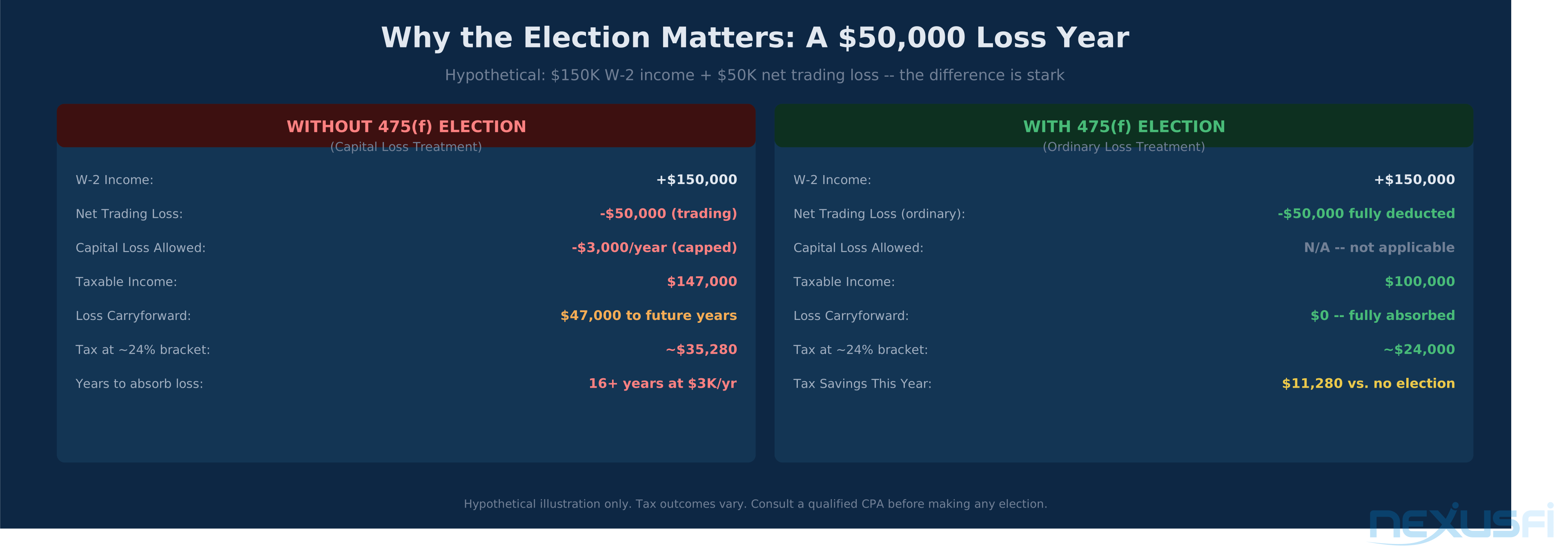
The decision framework:
- Expect consistent profits? Keep 1256. The 60/40 blended rate is worth much more than ordinary treatment in profitable years.
- Expect volatile P&L or structural loss years? Model both scenarios with your CPA. The 475(f) unlimited ordinary loss often wins over the long run for traders with drawdown-heavy histories.
- Have significant other income (W-2, business income)? The loss absorption benefit of 475(f) is magnified when you have more ordinary income to offset.
- Trade multiple instrument classes including non-1256 contracts? Section 1256 only covers regulated futures. For equity options, non-regulated futures, or stock positions, capital loss treatment applies by default — 475(f) can provide ordinary treatment for those instruments if you qualify.
The 475(f) loss benefit is asymmetric: in loss years, ordinary treatment saves thousands. In profitable years, you gave up 1256's 60/40 blended rate. The traders who benefit most have volatile P&L — not consistently profitable traders who would do better staying on 1256.
One important nuance: the elections for securities (475(f)(1)) and commodities (475(f)(2)) are separate. A trader who trades both can elect for one class without electing for the other. Futures traders primarily dealing in regulated futures may elect only 475(f)(2) for commodities, preserving standard capital treatment for any securities positions.
Wash Sale Rules Under 475(f) #
Here's one of the clearest operational benefits of the election: wash sale rules become irrelevant for assets covered by 475(f).
Wash sale rules (IRC Section 1091) disallow a loss deduction when you sell a security at a loss and rebuy substantially identical securities within 30 days before or after the sale. For equity traders, this is a constant complication — exiting a losing position to lock in the tax loss, then wanting to re-enter within 30 days.
Futures traders already have a partial reprieve here.
Regulated futures (1256 contracts) are already largely exempt from wash sale rules.
But if you also trade equity options, ETFs, or individual stocks, wash sale rules are actively in play for those positions — until 475(f).
Under mark-to-market accounting, gains and losses are recognized through year-end valuation, not through individual sale-and-reacquisition events. The wash sale rule structure doesn't attach because losses aren't created by "selling" in the traditional sense. The year-end snapshot determines your tax outcome, not your trade sequence.
This matters most for traders who use stock options or ETFs as hedges or supplemental strategies alongside their futures trading. Under 475(f), the 30-day rebuy restriction disappears for covered positions.
Important caveat: wash sale complications can resurface when you hold a mixed portfolio — assets inside the 475(f) election and assets outside it. Your CPA needs to confirm which instruments are fully inside the 475(f) framework versus still subject to capital rules.
Business Expense Deductions with Trader Tax Status #
Qualifying for TTS (whether or not you elect 475(f)) opens Schedule C. Every ordinary and necessary expense for your trading business is deductible above-the-line — meaning it reduces your adjusted gross income regardless of whether you itemize deductions.
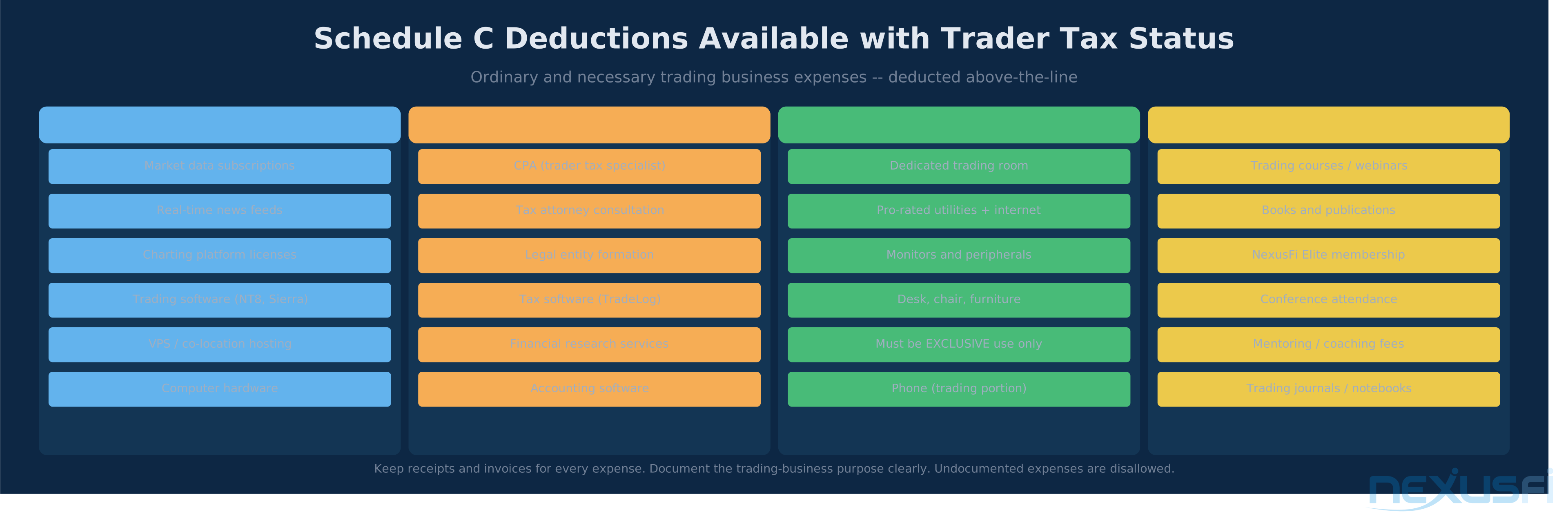
What's deductible:
Technology and data:
- Market data subscriptions (Bloomberg, Refinitiv, DTN IQFeed)
- Real-time news feeds
- Charting platform licenses (NinjaTrader, Sierra Chart, TradingView Pro)
- Trading-specific software and tools
- VPS, co-location, dedicated servers for execution
Professional services:
- CPA fees for preparing the trading business tax returns
- Tax attorney consultation
- Legal entity formation costs (if you incorporate a trading LLC)
- Tax software designed for traders (TradeLog, GreenTraderTax services)
- Research and analytical service subscriptions
Home office:
- Proportional utilities and internet (based on the percentage of home square footage used exclusively for trading)
- Computer equipment, monitors, peripherals
- Office furniture used in the trading space
- The home office deduction requires the space be used exclusively and regularly for trading — a corner of the living room doesn't qualify, but a dedicated room does
Education and research:
- Trading courses and webinars
- Books, journals, and publications
- Professional conferences and events
- Mentoring or coaching fees from experienced traders
Those deductions compound: at $15,000/year on data, software, and professional services, the annual tax saving is $3,600-$5,550 depending on bracket.
Critical implementation point: TTS and the 475(f) election are independent. You can have TTS and deduct business expenses without making the 475(f) election. Many traders qualify for TTS but keep the 1256 treatment precisely because they're profitable and the 60/40 split is more tax-efficient for them.
The Mixed-Portfolio Problem #
This is where the election destroys traders who don't plan carefully.
If you hold a mixed portfolio — active trading positions alongside long-term investments — electing 475(f) on a commingled account can force mark-to-market treatment on positions you intended to hold for years. Apple stock you planned to hold for a decade becomes subject to annual MTM taxation. Unrealized gains get taxed as you accumulate them, not when you ultimately sell. Long-term capital gains rates become irrelevant because everything is ordinary.
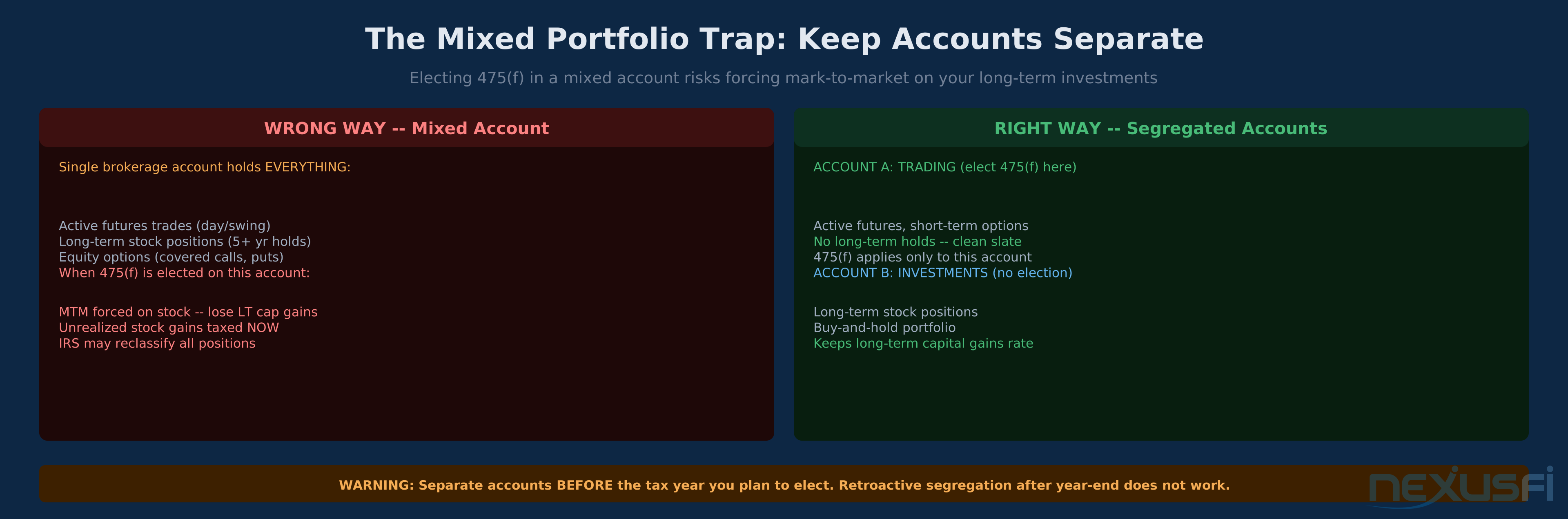
The risk is compounded by the fact that intent matters. If the IRS determines you can't clearly distinguish which positions are "trading" and which are "investment," they may reclassify the entire portfolio as trading — forcing 475(f) treatment on everything.
The only clean solution: segregate accounts before electing.
Maintain separate brokerage accounts for trading activity (where 475(f) applies) and investment activity (where it doesn't). This isn't just recommended — it's essential.
The separation needs to happen before the tax year you plan to elect. Trying to retroactively designate positions as "investment" after year-end doesn't work — the IRS looks at the facts at the time positions were established.
For traders who both actively trade futures and hold long-term equity positions, a common structure is:
- Account A (Trading): All active trading activity, elect 475(f) here
- Account B (Investment): Long-term stock positions, ETFs, retirement-oriented holds, no 475(f) election
Some traders go further and use separate legal entities (LLC or S-Corp for the trading business, individual account for investments) to create a clear structural boundary. Whether this makes sense depends on entity costs, state laws, and total tax picture — decisions that require a CPA with trader-specific experience.
Self-Employment Tax #
One of the most frequently misunderstood aspects of 475(f): does ordinary trading income trigger self-employment tax?
Self-employment tax (SE tax) is currently 15.3% on net self-employment income (12.4% Social Security + 2.9% Medicare, with Social Security capped above a threshold). For a trader with $200,000 in ordinary trading income, SE tax would add over $28,000 to their tax bill if it applied — a significant cost.
The good news: for most self-directed traders managing their own capital, trading income under 475(f) is generally not subject to self-employment tax. Trading one's own account for profit from price movements is generally treated as investment-type activity for SE tax purposes, even if it qualifies as a "trade or business" for TTS and 475(f) purposes. This is a well-established position supported by IRS guidance and tax court cases.
The nuance: if your trading operations look more like a dealer or market-maker (providing liquidity to others, acting as an intermediary), or if your entity structure inadvertently creates a service business, SE tax exposure can emerge. If you operate through a partnership where you receive guaranteed payments for services, those payments may trigger SE tax regardless of how the underlying trading income is characterized.
Ask your CPA explicitly about SE tax before electing. Don't assume. Get a written position on how your specific situation and entity structure affects SE tax treatment. This is especially important if you:
- Trade through an LLC or S-Corp
- Have partners or investors in your trading entity
- Receive management fees or other compensation for trading on behalf of others
Record-Keeping Requirements #
The IRS audit defense for a 475(f) election lives in your records. Poppe lost over $1 million in loss deductions because he couldn't document his election compliance. The lesson is expensive enough to pay close attention to.
What you need to maintain:
TTS qualification records:
- Trade journal: timestamped entries for every trading day — what you traded, why, and your process
- Time logs: hours spent on trading activity each day (research, analysis, management, execution)
- Strategy documentation: written trading plans, risk parameters, and methodology
- Evidence of professional infrastructure: screenshots of your tools, receipts for subscriptions
Election records:
- Copies of the filed election statement with your tax return
- Form 3115 if applicable, with confirmation of filing
- Internal records showing timely election (if applicable)
- Correspondence with your CPA or tax attorney confirming the election mechanics
Year-end MTM documentation:
- Broker statements for December 31 showing all open positions
- Exchange settlement prices for each open contract
- Your reconciliation of MTM P&L (the calculation, not just the broker's number)
- Contract specifications (size, multiplier) for each instrument
Expense documentation:
- Receipts and invoices for every Schedule C deduction
- Bank statements showing payments
- Written notes documenting the trading-business purpose of each expense
Position-level tax classification:
- For mixed-portfolio traders: a spreadsheet or system showing whether each position is "trading" (475(f)) or "investment" (capital)
- The classification must be established at entry, not retroactively
Real traders build systems for this. @SMCJB, who has maintained TTS for years, integrates recordkeeping into his regular workflow rather than scrambling at tax time. The burden isn't impossible — but it does require treating tax documentation as part of the trading operation, not an afterthought.
Form 4797 Reporting #
When 475(f) applies, trading gains and losses move from Schedule D (capital gains) to Form 4797, Part II (Ordinary Gains and Losses).
What to provide your CPA:
- Year-end position report: All open futures positions as of December 31, including:
- Instrument name and contract month
- Number of contracts (long/short)
- Entry date and entry price per contract
- December 31 settlement price
- Contract size/multiplier
- Realized P&L summary: All closed trades from the year:
- Entry date, exit date, instrument
- Entry price, exit price, quantity
- Realized gain or loss
- MTM reconciliation: Your calculation of unrealized P&L at year-end, reconciled to broker settlement prices
- Instrument classification: Which positions fall under 475(f) vs. which remain under 1256 or standard capital treatment
The mechanics on Form 4797:
- Line 1: The MTM ordinary income/loss flows here via the Section 475(f) election
- The net amount flows to Form 1040 as ordinary income or ordinary loss
- Capital loss limitations do not apply — the full amount adjusts taxable income
One critical reporting nuance: if you trade both regulated futures (1256) and non-1256 instruments, and you've elected 475(f), you need to track which gains/losses flow to Form 6781 (1256 treatment) versus Form 4797 (475(f) treatment). The elections don't automatically override each other. Your CPA needs both calculations.
Revocation Procedures #
Electing 475(f) is a multi-year commitment, not an annual toggle.
Revoking the election requires:
- A formal request to the IRS, typically filed with the return for the first year you want to revoke
- IRS consent — this is not automatic
- The revocation constitutes an accounting method change, which carries its own compliance requirements
The IRS may decline revocation requests if they determine the revocation lacks a legitimate business purpose or appears designed to game the timing of income and loss recognition. This is especially scrutinized if a trader wants to revoke after a loss year (when ordinary treatment was beneficial) to return to capital treatment before a profitable year.
Frequency of changes is limited. The IRS's position has historically been that you don't get to bounce in and out of 475(f) based on which treatment is more favorable each year. The election is for the long term.
Practical approach: Evaluate the election annually during Q4 — model out whether 475(f) or 1256 is more beneficial for the coming year given your expected trading pattern. Make the decision before the deadline. If you elect and later decide it was wrong, you may be able to revoke, but plan as though you're locked in for multiple years.
Planning Considerations: When to Elect and When to Stay Out #
The 475(f) election is not universally beneficial. Here's a framework:
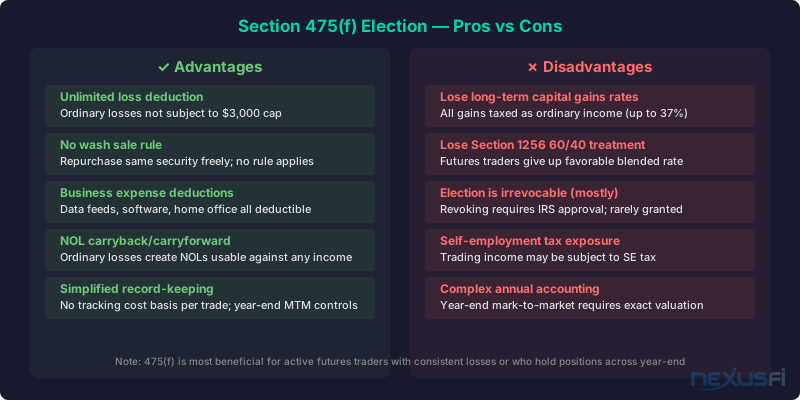
Situations where 475(f) is likely beneficial:
- You regularly generate large losses that exceed offsetting capital gains
- You have significant ordinary income (W-2, business income) that losses can offset
- Your trading P&L is highly volatile — big gains and big losses in alternating years
- You primarily trade non-regulated-futures instruments (equities, equity options) where 1256 doesn't apply and capital loss treatment is limiting
Situations where 475(f) may be harmful:
- You're consistently profitable and the 60/40 blended capital rate is lower than your ordinary rate
- You trade only regulated futures (which already benefit from 1256 MTM treatment) and have minimal loss years
- Your losses are small and the $3,000/year capital loss cap isn't limiting you much
- You're approaching retirement and want to preserve long-term capital gains treatment
Situations requiring careful modeling:
- Mixed income profile: profitable some years, loss years others
- Trading both regulated futures and other instruments
- Significant portfolio of long-term investments alongside active trading
The math usually favors 475(f) for traders with loss years exceeding $10,000 who have significant ordinary income to offset. For traders consistently generating $100,000+ annually from regulated futures alone, 1256's 60/40 treatment is likely superior.
IRS audit triggers specific to 475(f): large ordinary loss deductions against W-2 income, inconsistent year-over-year treatment, Schedule C expenses without trading-business documentation, home office deductions without exclusive-use evidence, and missing or late election statements. Every one of these is preventable with good recordkeeping.
475(f) converts gains to ordinary income — trading away 1256's favorable 60/40 rates in profitable years in exchange for unlimited loss absorption in down years. Model both scenarios against your actual trading history before committing.
Practical Checklist #
Before making the Section 475(f) election:
- [ ] Confirm TTS qualification with a trader-tax CPA before filing
- [ ] Separate trading and investment accounts before the election year starts
- [ ] Model 475(f) vs. 1256 using your actual P&L history
- [ ] File the election by the deadline and retain proof of filing
- [ ] Build year-end MTM reconciliation: position export, settlement prices, calculation worksheet
- [ ] Confirm SE tax treatment for your entity structure
- [ ] Maintain TTS documentation: trade logs, time records, strategy notes
The 475(f) election is powerful for the right trader. For those who have watched losses disappear into the capital loss limitation — it's worth examining seriously. Professional guidance and airtight documentation are non-negotiable.
Knowledge Map
Go Deeper
Build on this knowledgeReferences This Article
Articles that build on this topicCitations
- — Day Trading: Mark-to-Market 475(f) Election? (2018) 👍 2“Trader status by itself gives many advantages including deduction of trading expenses, home office expense, pension plans etc etc. The big thing Mark-to-Market gives you, is the ability to take losses as ordinary losses, which are not subject to the capital loss limitation. I do have trader status. I do not make the mark to market election.”
- — Day Trading: Mark-to-Market 475(f) Election? (2018) 👍 2“My trading accounts qualify for Trader Tax Status, my investment accounts do not. They are kept completely separate.”
- — The Tax Thread (2015) 👍 2“I've filed using trader tax status for 5 consecutive years. For me the big benefit is being able to fully deduct, servers, hosting, software and other business expenses. I trade 250 days a year and execute thousands of trades so qualifying is not difficult for me.”
- — The Tax Thread (2015) 👍 2“The IRS denied Poppe his Section 475 election because he could not prove compliance with the two-step election process. Traders should be more diligent in documenting their election. The consequence was that instead of deducting his $1 million trading loss as an ordinary loss Poppe was stuck with a $3,000 capital loss limitation and a capital loss carryover.”
- — The Tax Thread (2010) 👍 1“...it only applies for equities, not futures. That document says '...do not apply to losses from sales or trades of commodity futures contracts and foreign currencies.'”
- — The Tax Thread (2017) 👍 2“It is my pleasure to welcome Ryan Curran from Curran Unger LLP on Thursday, February 9th @ 4:30PM Eastern US. The topic for this webinar is 'Tax Topics for Traders', and bullet points include: Making the Mark to Market Election - Mechanics, Issues, and Implications; Trader Tax Status - Tax Benefits of Qualifying as a Professional Trader; How to Qualify for Trader Tax Status.”
- — Internal Revenue Code Section 475 -- Mark to Market Accounting Method for Dealers in Securities (2024)
- — Revenue Procedure 99-17 -- Safe Harbor for Trader Tax Status (1999)
- — IRS Publication 550 -- Investment Income and Expenses (Traders in Securities) (2024)
- — Form 4797 Instructions -- Sales of Business Property (2024)