



Classic Chart Patterns for Futures Trading: Head and Shoulders, Triangles, Flags, and the Pattern Recognition Framework That Works
Overview #
Category: strategies | Slug: classic-chart-patterns-futures
Every trading education talks about chart patterns. Head and shoulders, double tops, triangles, flags — they show up in books, in courses, in trading forums, in the arguments between traders who swear by them and traders who dismiss them as astrology. Both camps are partially right, and both are missing something important.
The traders who dismiss chart patterns are right that most of the teaching around them is garbage. "If price breaks the neckline, it's a confirmed head and shoulders" is not a trading system. It's a narrative framework that gets applied after the fact to explain moves that already happened. Used that way, patterns are worse than useless — they create false confidence and arbitrary entries.
The traders who use patterns are right that something systematic is happening in price action when these shapes appear. Head and shoulders patterns form because of real structural reasons. Triangles compress for real reasons. Flags resolve for real reasons. These aren't accidents or optical illusions in the data.
The synthesis: chart patterns are maps of auction behavior, not prophecies. When you know why a pattern forms — what it actually says about the competition between buyers and sellers at a specific moment in time — you can trade it with real edge. When you treat the pattern name as the signal, you'll lose consistently.
This article builds that foundation, pattern by pattern, with the specific mechanics that matter for futures markets.
Chart patterns are maps of auction behavior, not prophecies. The edge comes from understanding why a pattern forms — what it says about order flow competition between buyers and sellers — not from recognizing its name.
Why Chart Patterns Exist: The Auction Theory Foundation #
In futures markets, price moves because participants are repeatedly testing what the other side will accept. This is auction market theory at its core: buyers push up until sellers overwhelm them; sellers push down until buyers overwhelm them. Between those impulses are periods of balance — price discovery at a level where both sides are roughly willing to transact.
Chart patterns are the visible residue of this process. They look the way they look because of specific things happening in order flow:
Volatility compression creates geometrical shapes. When buyers and sellers are roughly balanced, price makes smaller and smaller swings — this is the mechanical origin of triangles and pennants. The converging lines aren't drawn by technical analysts; they emerge from the data because the range of accepted prices is literally getting smaller.
Regime transitions create reversal shapes. When a trend exhausts itself, it doesn't reverse in one bar. The buying or selling pressure gradually weakens — rallies come on less volume, push to lower highs, attract fewer willing buyers. This progressive weakening is what creates head and shoulders formations, double tops, and their inverse equivalents. The shape emerges because the transition between regimes takes time.
Trend continuation creates continuation patterns. When a strong trend pauses — because participants are booking profits, waiting for confirmation, or simply resting — price consolidates briefly before the underlying order flow reasserts itself. Flags and pennants are this pause made visible. The sharp impulse leg represents the initial order flow; the tight consolidation represents the pause; the continuation represents the order flow returning.
Understanding this matters practically: you're not looking for a shape. You're using the shape as evidence about what's happening in the order flow underneath. A "head and shoulders" that forms after three years of uptrend with diminishing volume at each high is saying something different from a "head and shoulders" that forms after a three-day rally in the middle of a ranging market. The shape is the same. The meaning is different.
The Reliability Question: What Research Actually Shows #
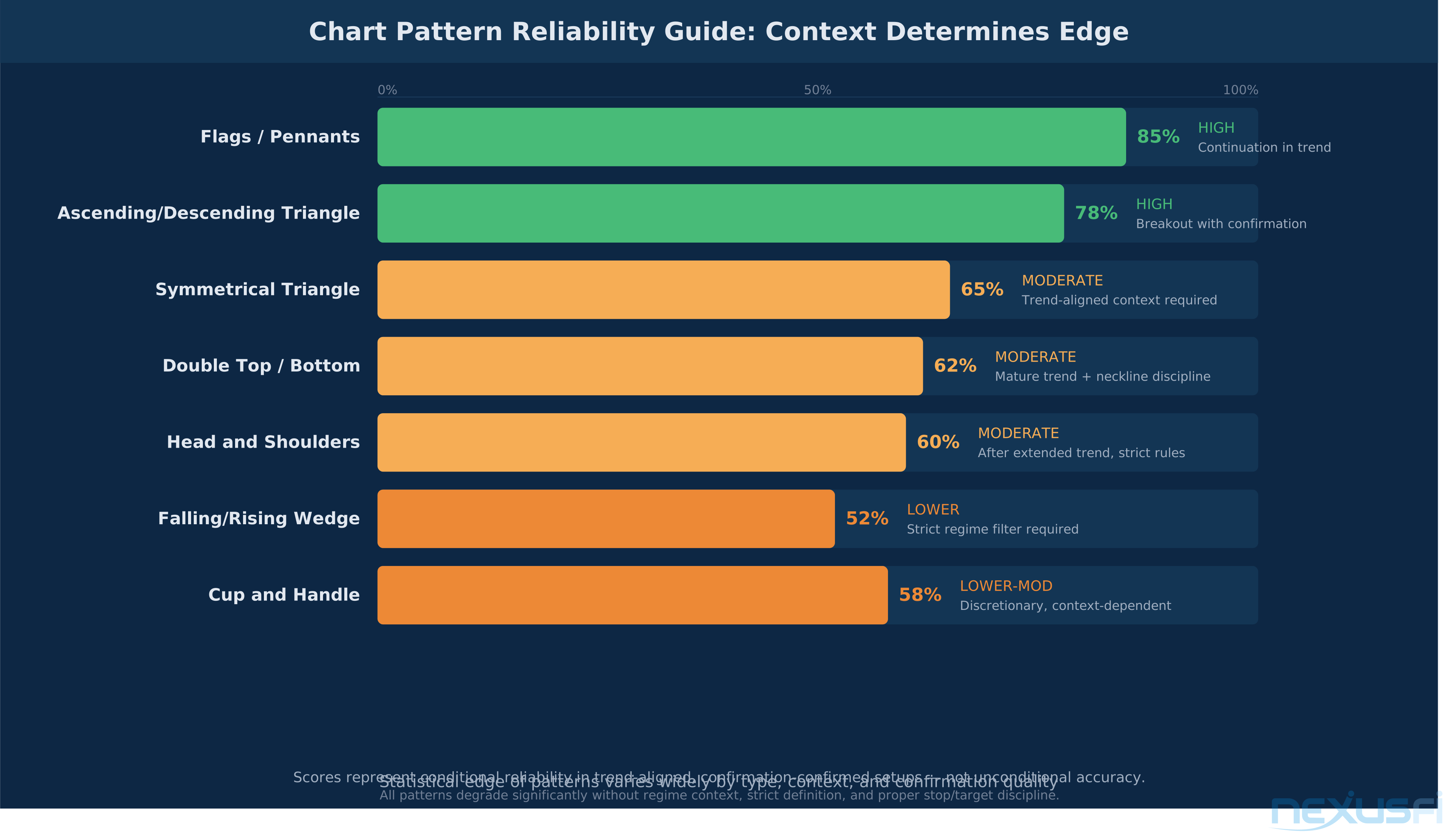
The academic literature on chart patterns produces a consistent finding: when tested rigorously, patterns show small positive edges that are highly dependent on context. This is not the same as saying patterns don't work. It's saying the edge is conditional and modest.
Several studies worth understanding:
The Brock, Lakonishok, and LeBaron (1992) study found technical trading rules including pattern-based ones generated small but statistically significant returns in equities before transaction costs, with performance deteriorating after.
David Aronson's "Evidence-Based Technical Analysis" (2007) put pattern trading through rigorous statistical testing and found that most visually defined patterns failed to show significance when testing was properly controlled for data snooping. But patterns defined with objective rules — specific geometric constraints, volume conditions, minimum sizes — showed better results.
The practical takeaway for futures traders: patterns defined loosely don't have edge; patterns defined precisely may. "That looks like a head and shoulders" is not a setup. "A pattern with three distinct peaks, the middle peak at least 5% higher than the shoulders, shoulder peaks within 2% of each other, confirmed by a close below the neckline on above-average volume, tested during an established uptrend" might be.
Where patterns show stronger and more consistent edge:
- Continuation patterns in trend context — flags and pennants following impulse legs in established trends have among the best statistical records. The trend provides the context; the pattern provides the entry timing.
- Triangle breakouts with volatility confirmation — triangles that break with expanding volatility and range expansion perform better than triangles that break quietly. The volatility expansion confirms actual order flow, not just price drifting through a level.
- Reversal patterns at mature trend extremes — head and shoulders and double tops work better after extended trends when momentum divergence is also present. A double top after six months of uptrend with flattening RSI on the second top is a different beast from a double top that forms in a three-week range.
- Patterns aligned with higher-timeframe context — a triangle breakout in the direction of the daily trend is more reliable than a counter-trend break. This is the most consistent finding across all studies.
Continuation patterns (flags, pennants, triangles) aligned with the higher-timeframe trend have the strongest statistical backing. Reversal patterns (head and shoulders, double tops) require more context, confirmation, and selectivity to trade profitably.
The Seven Major Patterns: How They Form and How to Trade Them #
1. Head and Shoulders (and Inverse) #
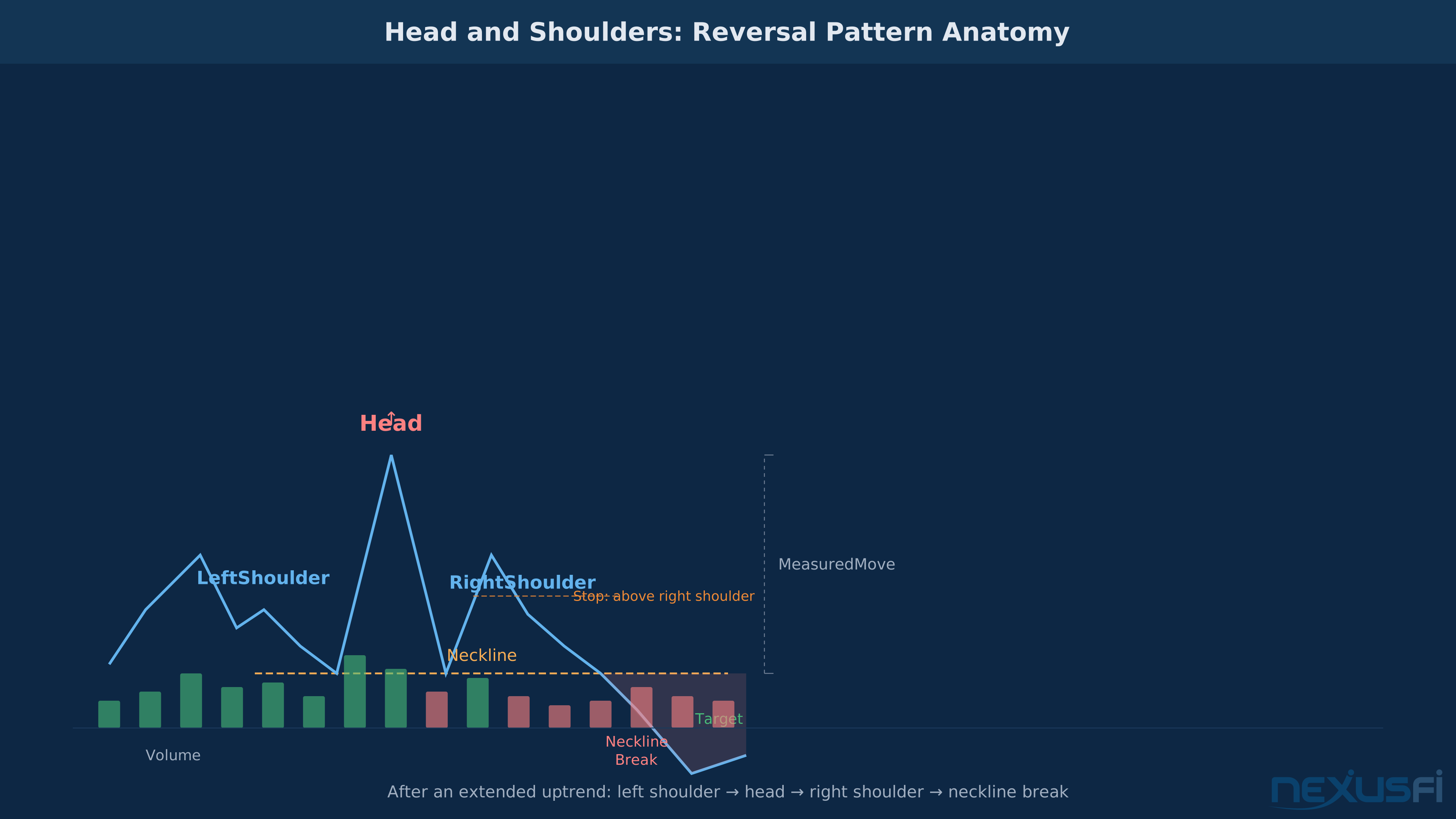
How it forms: A head and shoulders develops when an uptrend weakens. The left shoulder forms as a normal rally and pullback. The head forms as price pushes to new highs on momentum that's beginning to slow — volume may be high but participation isn't building. The right shoulder forms as a final rally attempt that fails to match the head's high, reflecting diminishing buying interest. The neckline connects the two pullback lows between the shoulders and the head.
What it's actually saying: The trend's buying pressure is degrading. Each successive high is harder to maintain. The eventual break below the neckline reflects sellers overpowering the last buyers defending the structure.
Futures-specific mechanics: In ES and NQ, head and shoulders formations are most meaningful on the daily and 4-hour charts. On 5-minute charts, they occur constantly and signal nothing beyond momentary order flow imbalances. The pattern's significance is proportional to the timeframe: a daily head and shoulders after a six-month trend is a serious signal; an hourly head and shoulders in a choppy session is noise.
Entry rules:
- Primary: Enter short on a close below the neckline — not an intrabar wick, a close
- Secondary (preferred by many professionals): Wait for a retest of the neckline from below, enter on rejection
- Trigger level: Neckline minus 1 ATR buffer (prevents stop runs)
Stop placement: Above the right shoulder. This is the structural invalidation — if price reclaims the right shoulder level, the pattern's premise (declining highs) is violated.
Target: Measured move = distance from head to neckline, projected down from breakout point. First target often the 50% of the measured move; full target at 100%.
Volume/OI confirmation: Look for open interest declining into the right shoulder (longs exiting positions as the trend fails), then OI expanding on the neckline break (new shorts entering). Volume at the neckline break should exceed the 20-session average.
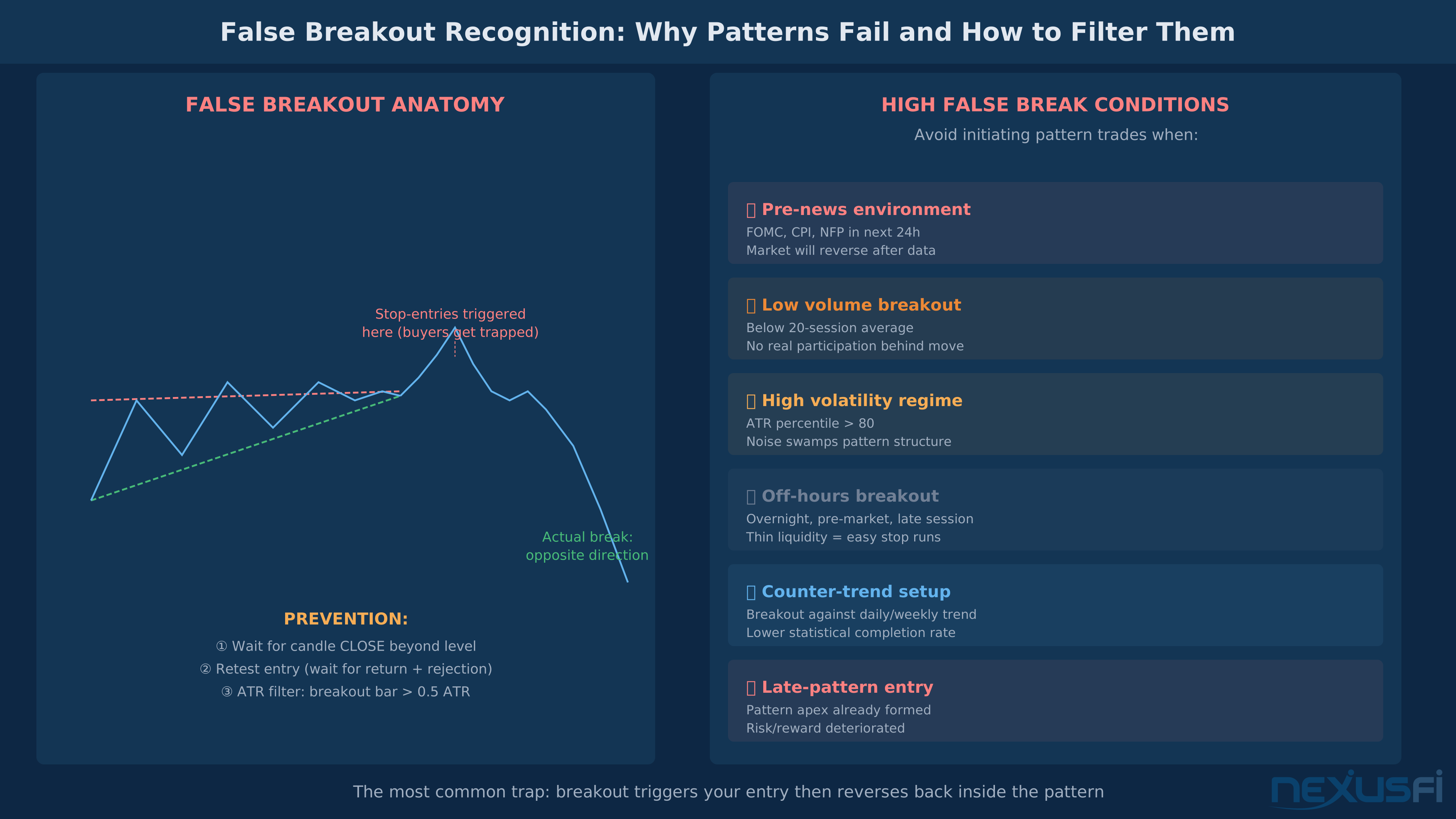
Where it fails: In choppy markets, at news events (FOMC, CPI), and when the right shoulder forms over an extended period allowing new buyers to establish positions above the neckline.
2. Double Top and Double Bottom #
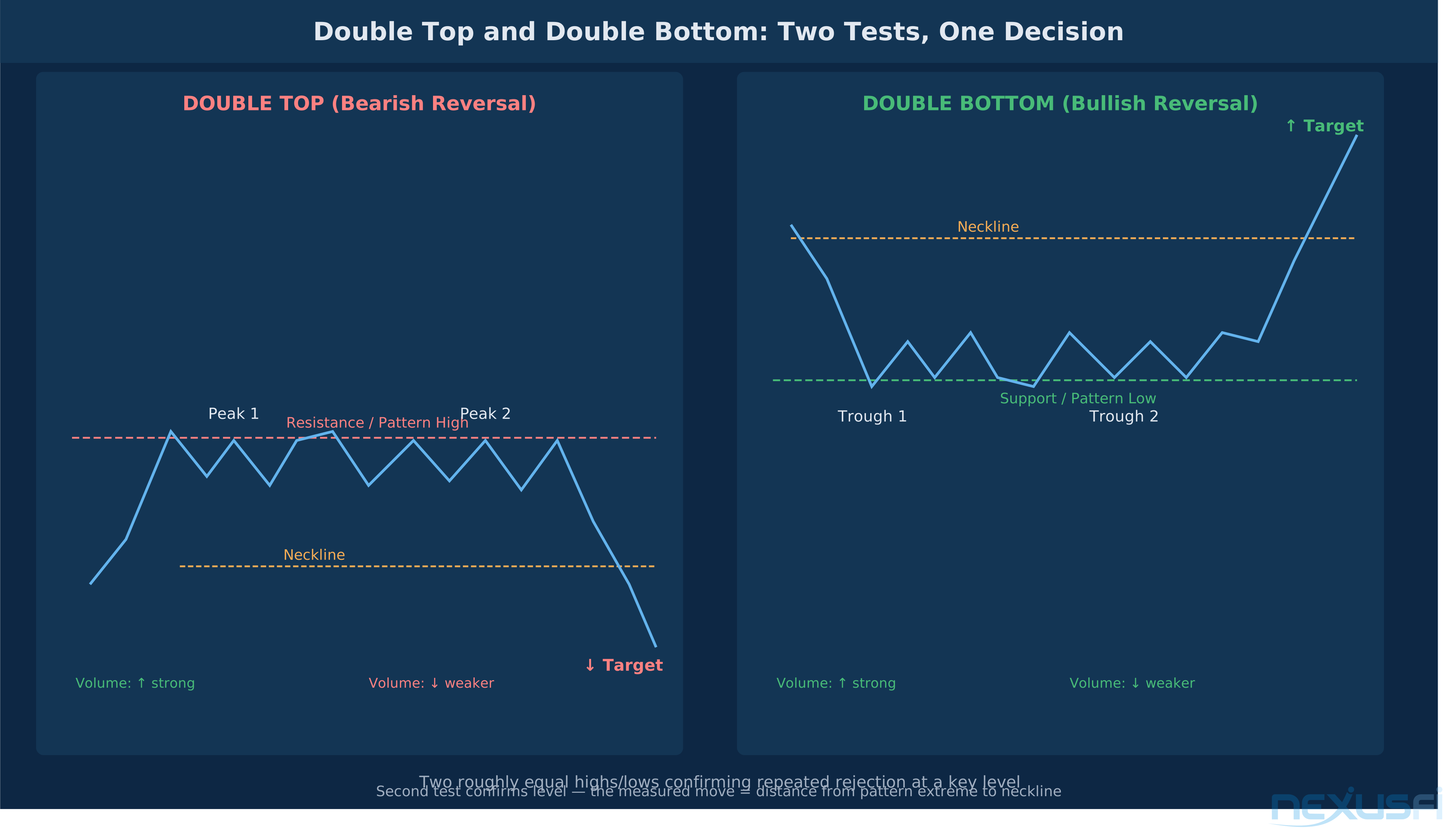
How it forms: A double top forms when price makes two roughly equal highs separated by a pullback, then fails to make new highs. The two-peak structure reflects repeated rejection at a supply zone — often a level where prior positions were established, earnings occurred, or technical significance creates a cluster of sell orders.
A double bottom is the mirror: two roughly equal lows with a rally between them, then a breakout above the middle peak (the "neckline").
What it's actually saying: At this price level, supply (for a double top) or demand (for a double bottom) consistently overpowers the initiative flow. The second test confirms the first wasn't random.
The equality question: The two peaks don't have to be exactly equal. In practice, many professionals look for the second peak to form within 1-3% of the first, on declining volume. A second peak that matches the first but with 60% of the volume is telling — the buying that drove the first peak isn't present to push through.
Entry rules:
- Double top: Enter short on close below the middle pullback low
- Double bottom: Enter long on close above the middle peak
- Aggressive entry: Fade the second test with tight stop above the first peak (higher risk, better price)
- Conservative entry: Retest of the broken level after the pattern completes
Stop placement:
- Double top: Above the pattern highs by 0.5-1 ATR
- Double bottom: Below the pattern lows by 0.5-1 ATR
Target: Measured move = distance from the peaks/troughs to the neckline, projected from breakout.
Futures-specific consideration: In liquid contracts like ES and NQ, double tops and double bottoms at major levels (prior highs, round numbers, settlement prices) attract institutional participation. The "decision point" nature of these levels means the breakout, when it comes, often comes quickly. Failed double tops (where price breaks through on a third test) are especially explosive.
3. Ascending, Descending, and Symmetrical Triangles #
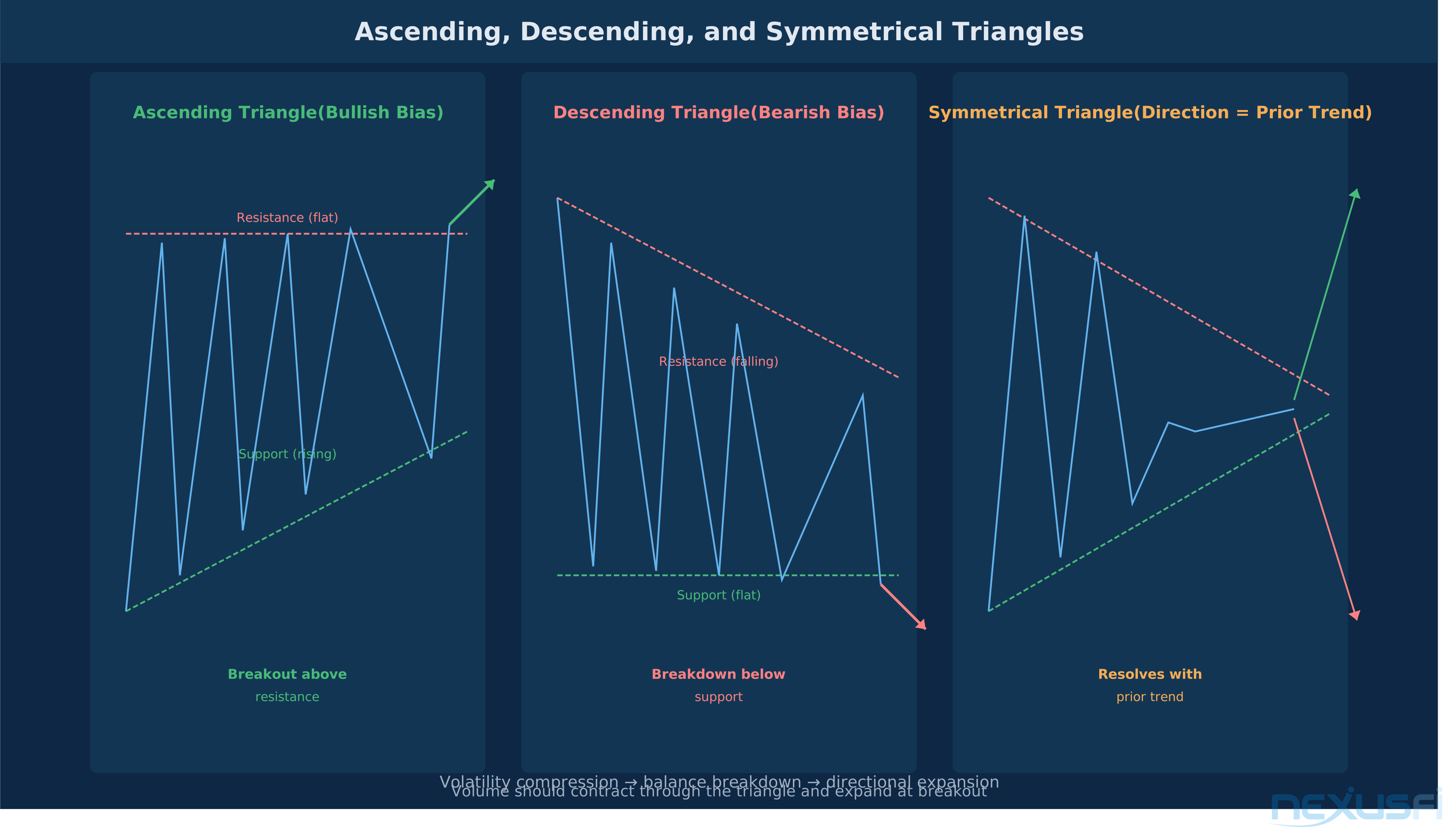
Triangles are the purest expression of the volatility compression thesis. Price makes a series of swings that get smaller and smaller, converging toward a point. When the compression ends, the subsequent expansion is often sharp.
Ascending Triangle
How it forms: A series of higher lows pressing against flat or near-flat resistance. The pattern represents persistent buying pressure — longs keep entering on pullbacks, while sellers at resistance are being slowly absorbed. When the sellers run out of ammunition, the breakout comes.
What it's actually saying: Demand is building at progressively higher price levels. Each higher low is a buyer saying "I'll pay more than last time." Eventually, the defense at resistance can't hold.
Entry rules: Break above resistance on expanding volume/volatility. Stop below the last swing low inside the pattern. Target: measured move from the widest part of the triangle projected from breakout.
Descending Triangle
How it forms: Lower highs pressing against flat or near-flat support. The mirror of the ascending triangle — selling pressure building at progressively lower levels while buyers defend support. When buyers can no longer absorb the selling, support fails.
Symmetrical Triangle
How it forms: Both sides are converging — lower highs AND higher lows. Neither side is dominating. This compression typically resolves in the direction of the prior trend, though the statistical edge for symmetrical triangles is lower than for ascending/descending.
The volume signature: Classic TA says volume declines through a triangle and expands on breakout. This is more observation than rule. The critical signal is volume expansion at the breakout — the directional participation coming in as price leaves the compression zone. An expanding range on the breakout candle without volume expansion should be viewed with skepticism.
Timeframe considerations for futures: On intraday futures charts (5-minute, 15-minute), triangles often form during low-liquidity periods (pre-market, early session, late-day) where the compression reflects thin participation rather than real balance. These patterns are less reliable. Triangles forming during active market hours (RTH open through midday) with normal participation carry more weight.
The false breakout problem: Triangles fail more than textbooks admit. Price breaks above the upper boundary, triggers stops, then reverses. This is especially common in:
- ES and NQ when FOMC minutes or economic releases are pending
- Early-morning breakout attempts before real volume arrives
- Small triangles forming near major resistance/support levels where stop clusters sit
The retest entry approach specifically guards against false breakouts: wait for the breakout, then wait for price to return and test the broken boundary. If it holds as support/resistance on the retest, that's confirmation worth entering on.
4. Flags and Pennants #
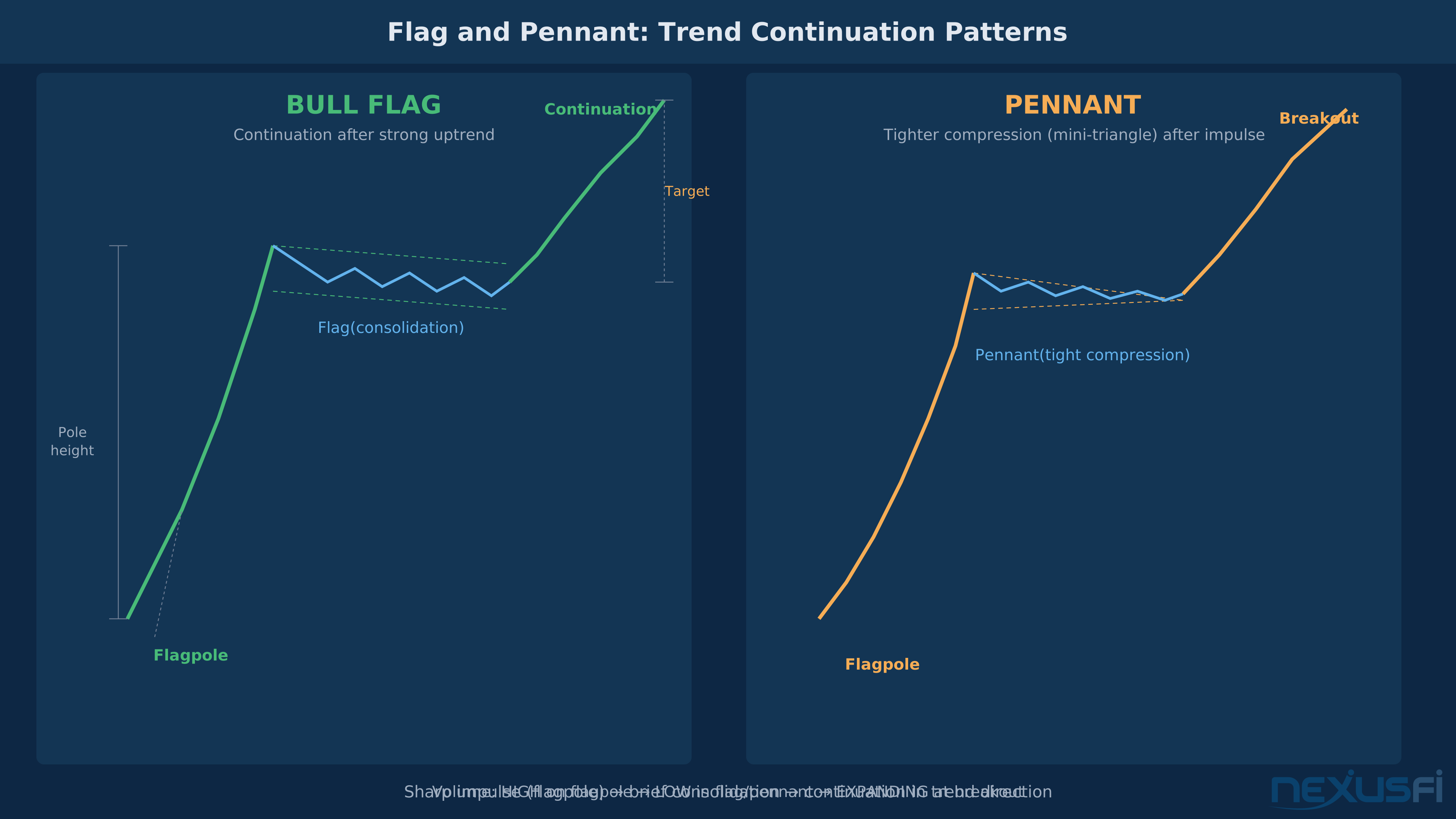
How they form: A sharp, nearly linear move (the flagpole) is followed by a brief, tight consolidation. The consolidation is the flag (parallel channel) or pennant (small symmetrical triangle). Price then continues in the direction of the flagpole.
Flags and pennants are considered among the most reliable continuation patterns, and this reputation is somewhat deserved — but the framing matters.
What they're actually saying: The initial impulse moved price sharply, creating an order flow imbalance. Participants are pausing — booking partial profits, waiting for confirmation, reassessing. The consolidation is relatively tight because the underlying order flow (the reason for the flagpole) hasn't been resolved. When that order flow reasserts itself, the move continues.
How this helps in futures specifically: Futures markets often move in response to information — economic data releases, geopolitical events, order flow from institutional programs. The initial reaction is frequently sharp and immediate. The flag/pennant represents market participants processing the implications. When they finish processing, the second leg follows.
Entry rules:
- Break above the upper channel/bound of the flag (for bull flags)
- Break below the lower bound (for bear flags)
- Entry on breakout bar close or on retest of broken boundary
Stop placement:
- Bull flag: Below the bottom of the flag channel, or below the middle of the flagpole
- Bear flag: Above the top of the flag channel
Target: Measured move = length of the flagpole, projected from the breakout point. This is one of the more reliable measured moves in pattern trading.
Volume/OI signature for futures:
- Flagpole should form on high volume/expanding OI (new positions being established)
- Flag consolidation should show declining volume (participants resting, not exiting)
- Breakout should show expanding volume and ideally expanding OI
Where flags fail: When the flagpole was driven by news that fully resolved the uncertainty (like an economic release that exactly matched expectations), the "second leg" thesis lacks fuel. Also when the consolidation becomes too long — flags lasting more than 30% of the flagpole's duration in time terms are increasingly turning into something else.
5. Rising and Falling Wedges #
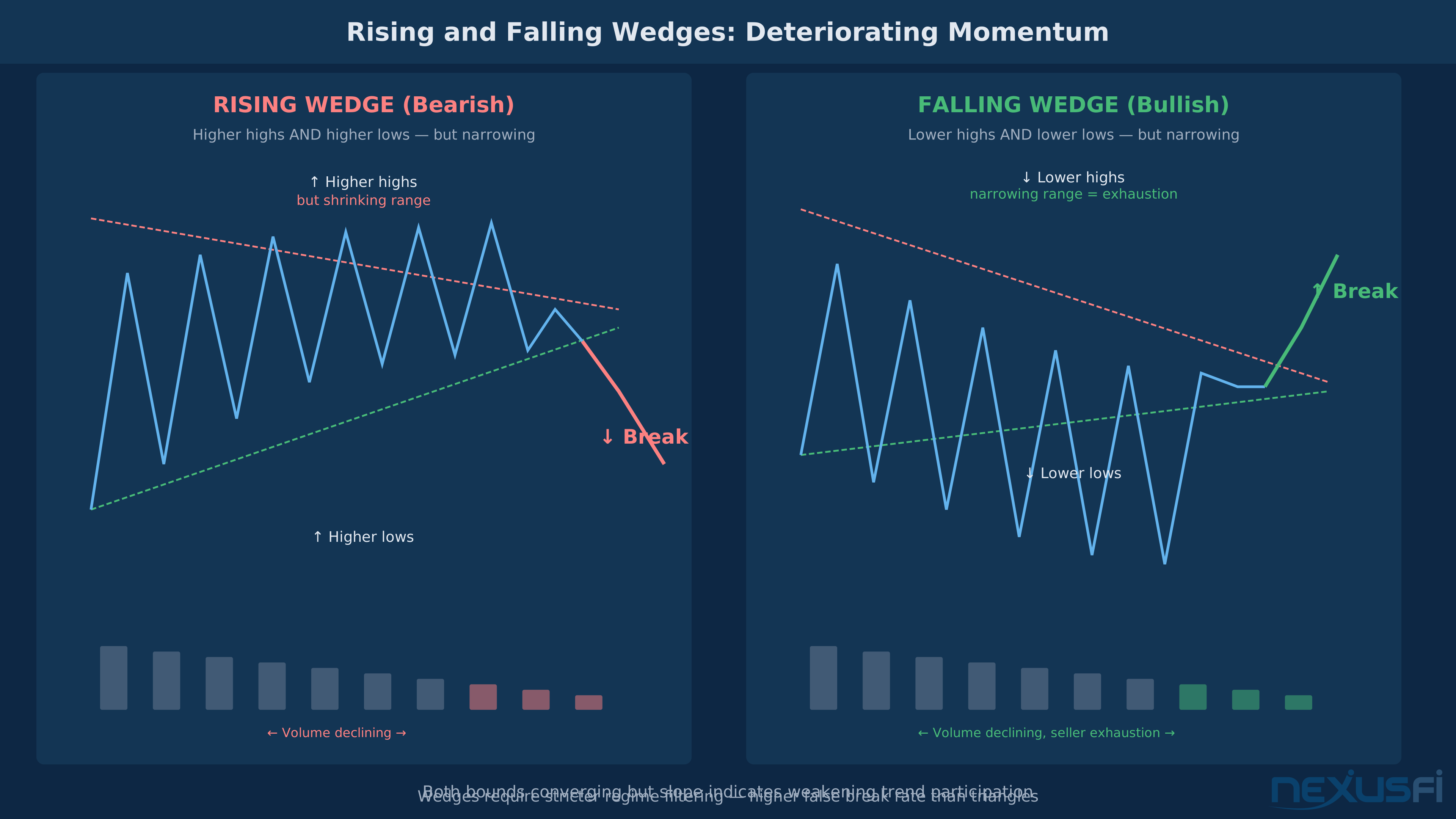
How they form: Both sides of the price range are converging, but unlike a symmetrical triangle, the angle itself tells a story. A rising wedge has price making higher highs AND higher lows, but both the highs and lows are advancing at a declining rate — the space between them is shrinking. A falling wedge is the mirror.
What they're actually saying: Rising wedges typically represent weakening momentum during an advance. Price is still making higher highs, but each high requires more effort and less follow-through. This is the chart pattern equivalent of a divergence.
The reliability question: Wedges are notoriously tricky. The standard teaching says rising wedges are bearish and falling wedges are bullish — and this is roughly true as a base rate, but the variability around that base rate is high. Professional futures traders treat wedges as lower-confidence setups compared to triangles and flags.
Where wedges are more reliable:
- As a component of a larger reversal structure (a rising wedge forming the right shoulder of a head and shoulders)
- When occurring after an extended trend (the wedge represents the terminal phase of momentum exhaustion)
- When accompanied by volume declining throughout the wedge (buyers/sellers are progressively less committed)
Entry rules:
- Break below the lower boundary of a rising wedge (bearish)
- Break above the upper boundary of a falling wedge (bullish)
- Retest entry is especially important for wedges given higher false break rates
Stop placement: Above the high of the wedge for bearish plays; below the low for bullish plays.
Target: Measured move from the widest part of the wedge, or back to the origin of the wedge.
6. Cup and Handle #
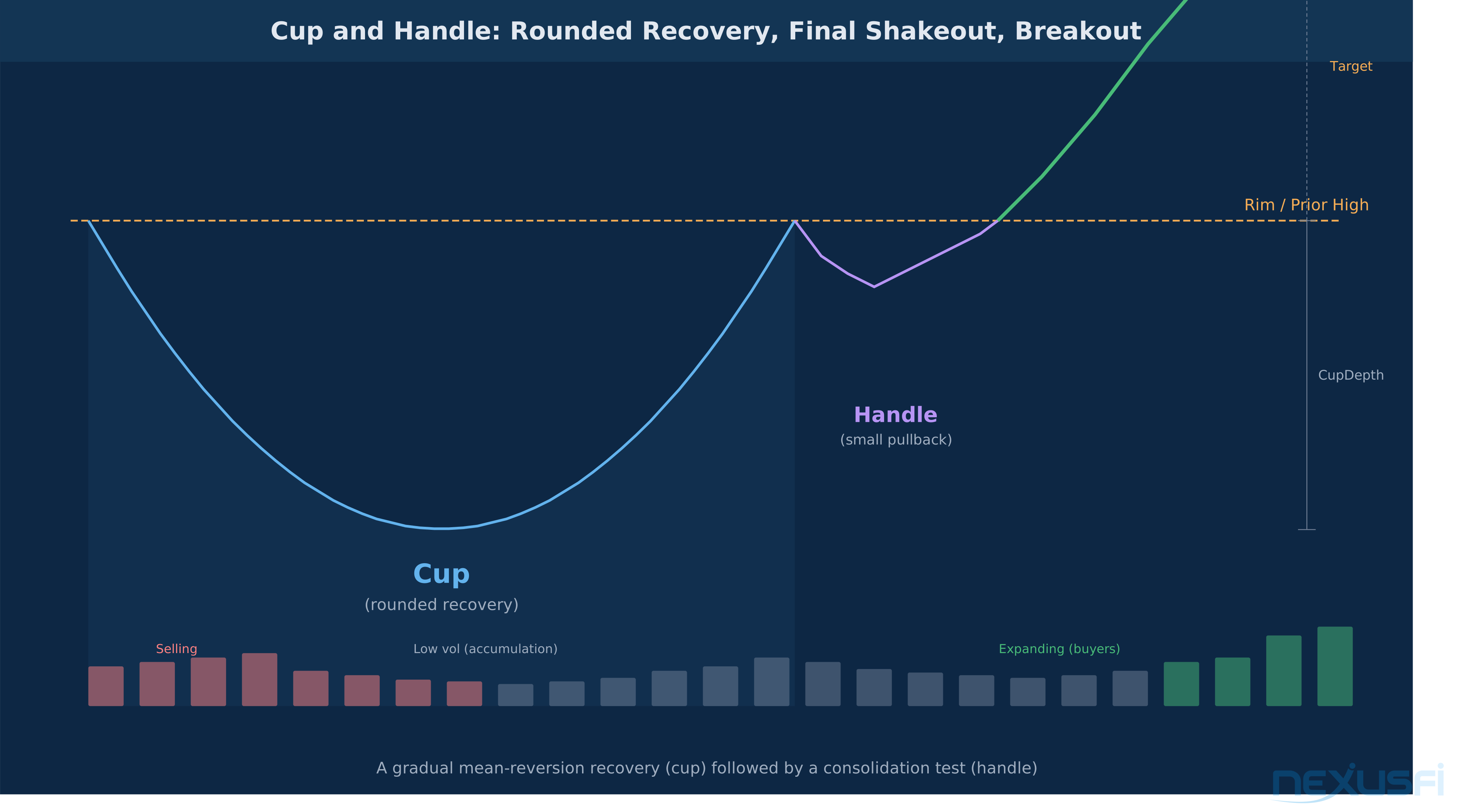
How it forms: A rounded bottom (the cup) followed by a short, shallow consolidation (the handle), then a breakout above the cup's rim. The cup represents a gradual recovery from a decline — price rounds up as selling pressure exhausts and buyers gradually reassert control. The handle represents a brief pullback/consolidation before the continuation.
What it's actually saying: The rounded recovery phase is the market absorbing overhead supply and establishing a new acceptance zone. The handle tests whether buyers are willing to step in just below the prior high. When they are, the breakout completes the pattern.
Futures considerations: Cup and handle patterns are more common in longer-duration charts (daily, weekly) and in instruments with strong fundamental backing (gold during inflationary regimes, energy contracts during supply cycles). On intraday charts, "cups" are often just noise.
The pattern works best when:
- The cup rim level represents a significant prior resistance/decision point
- The handle doesn't give back more than about 50% of the cup's advance
- The breakout comes on expanding volume
Entry rules:
- Break above the rim/resistance on the breakout
- Most professionals won't enter on the handle formation itself — they wait for the breakout
Where it fails: Cup and handle patterns fail frequently when the market environment has changed since the cup formed. A cup-and-handle setup in a stock that had a fundamental trigger during the cup (earnings, management change) may be predicting conditions that no longer exist. For futures, the equivalent is when the macro environment shifts during the formation.
The Entry/Exit Framework That Professionals Actually Use #
Across all these patterns, professional futures traders use a consistent framework that treats the pattern name as secondary to the mechanical setup:
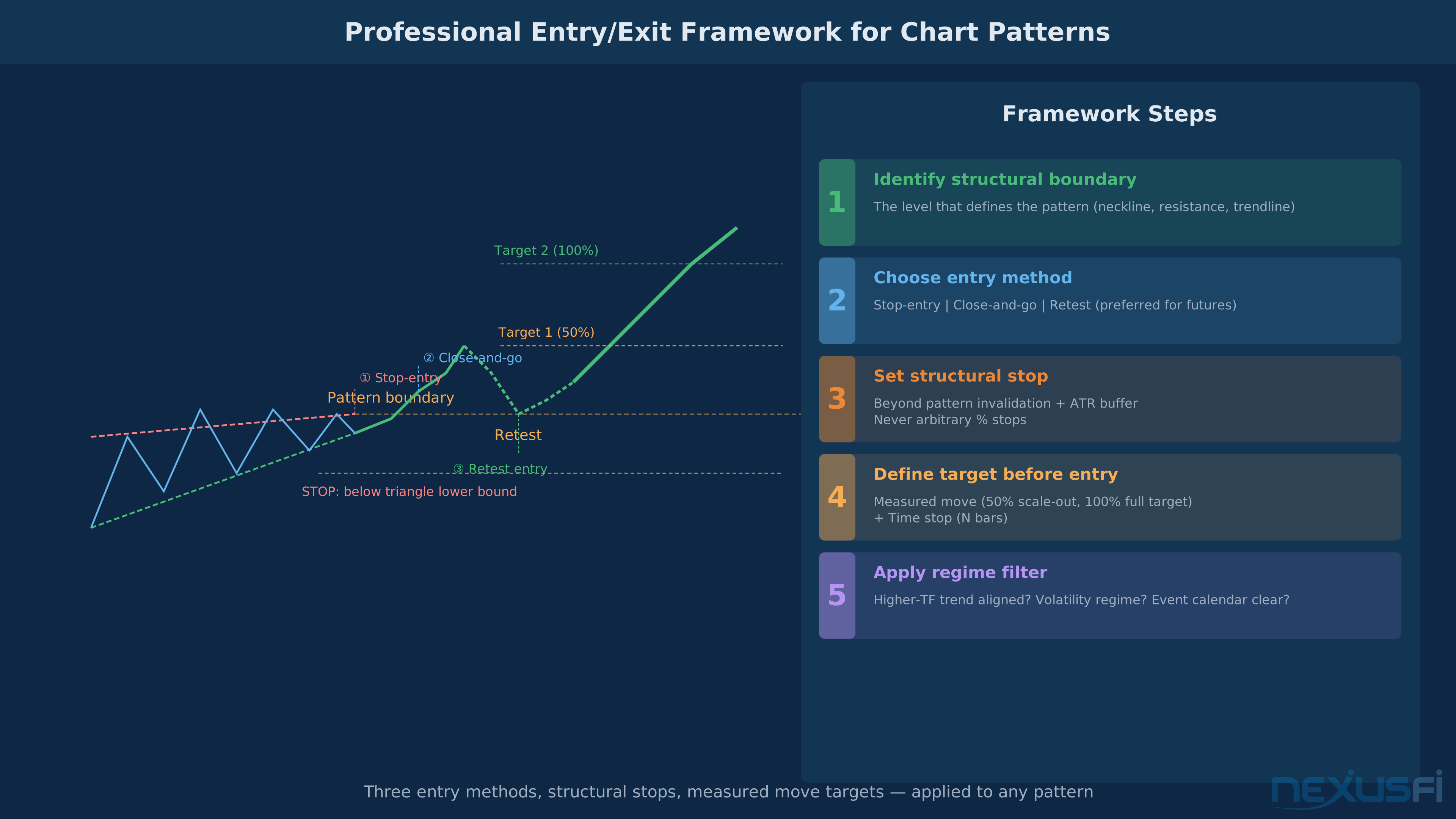
Step 1: Identify the structural boundary #
Every pattern has a level. Head and shoulders has a neckline. Triangles have a breakout bound. Flags have a channel boundary. Find the specific price level that defines the pattern's completion.
Step 2: Define your entry condition #
Three options, roughly in order of preference based on risk management:
- Retest entry — Break the level, wait for price to return and test it, enter on confirmed rejection. Lower frequency but higher quality.
- Close-and-go — Enter on the bar that closes beyond the level. Reduces whipsaw from intrabar moves.
- Stop-entry at level — Entry triggered immediately when price touches the level. Fastest execution, highest whipsaw risk.
For most patterns in liquid futures contracts, the retest entry is preferred. ES and NQ are liquid enough that you won't miss much waiting for confirmation.
Step 3: Place your stop based on structural invalidation #
The stop goes where the pattern premise is violated. For every pattern, ask: "What would have to happen for this pattern to no longer make sense?" Place your stop there, plus an ATR buffer for normal volatility.
Never place stops at round numbers or arbitrary distances. In futures, stop placement at common levels ensures you'll be taken out by the liquidity sweeps that happen constantly before real moves occur.
Step 4: Define your target before entry #
Before entering any pattern trade, know:
- Your primary target (often 50% of measured move, or a major liquidity level)
- Your full target (100% of measured move)
- Your time stop (how many bars you'll give the trade before exiting on time)
The time stop is underused and important. Patterns that don't resolve in their expected timeframe are often degenerating into something else. A triangle that was supposed to break out but instead drifts through the apex is warning you the setup has degraded.
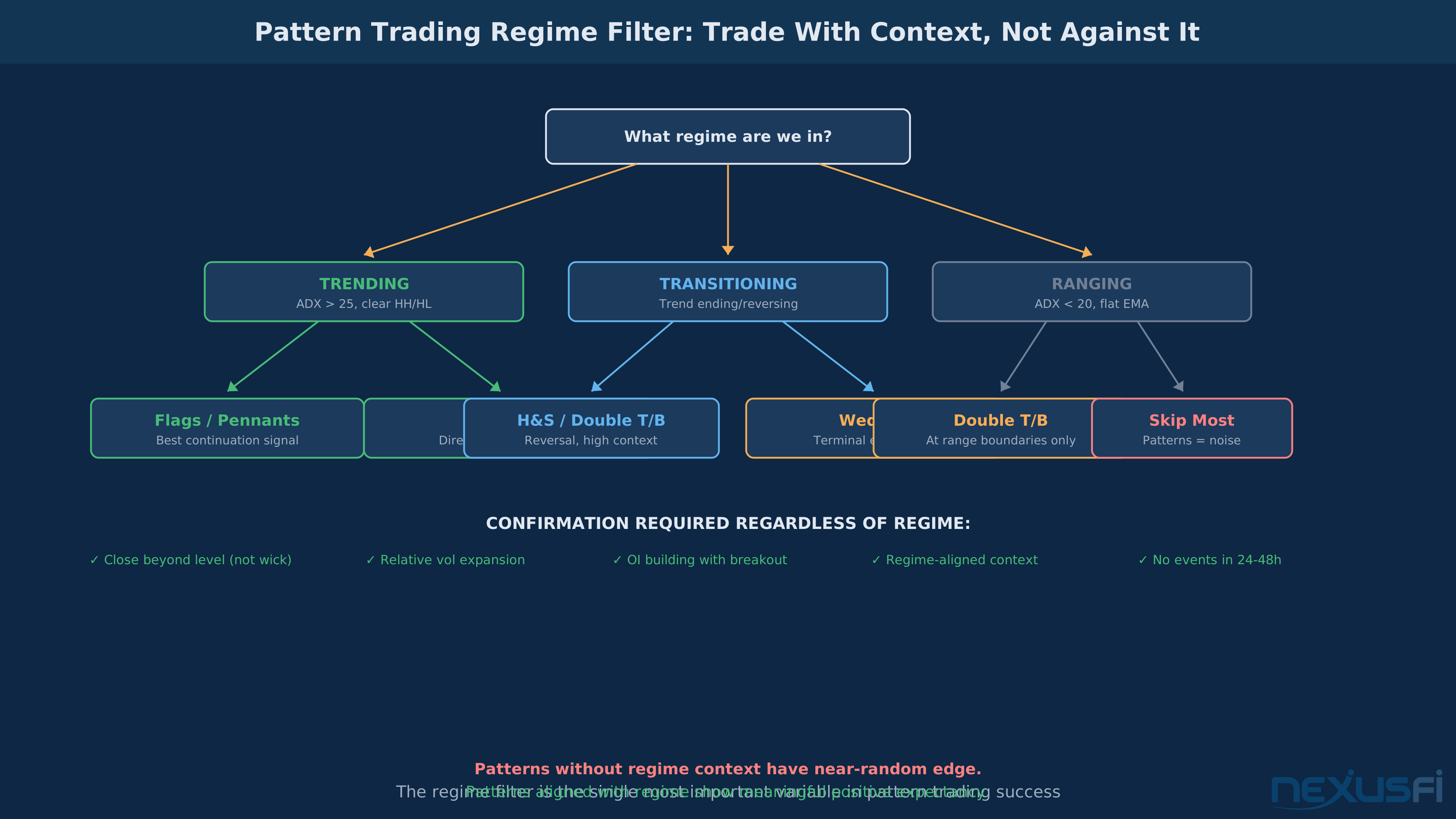
Step 5: Apply the regime filter #
This is the most important step that most pattern traders skip. Before entering any pattern trade, ask:
- What is the higher-timeframe trend? Is this pattern aligned with it?
- What is the current volatility regime? Are we in a trending or ranging environment?
- Is there a scheduled event (FOMC, CPI, NFP) in the next 24-48 hours that will create an artificial trigger?
Patterns aligned with higher-timeframe trends have meaningfully better completion rates than counter-trend patterns. A bull flag in an uptrend is a different trade from a bull flag in the middle of a bear market.
The entry framework: identify the structural boundary → define entry condition (retest preferred) → place stop at structural invalidation → define target before entry → apply regime filter. This sequence is the difference between pattern recognition and pattern trading.
Volume and Open Interest Confirmation in Futures #
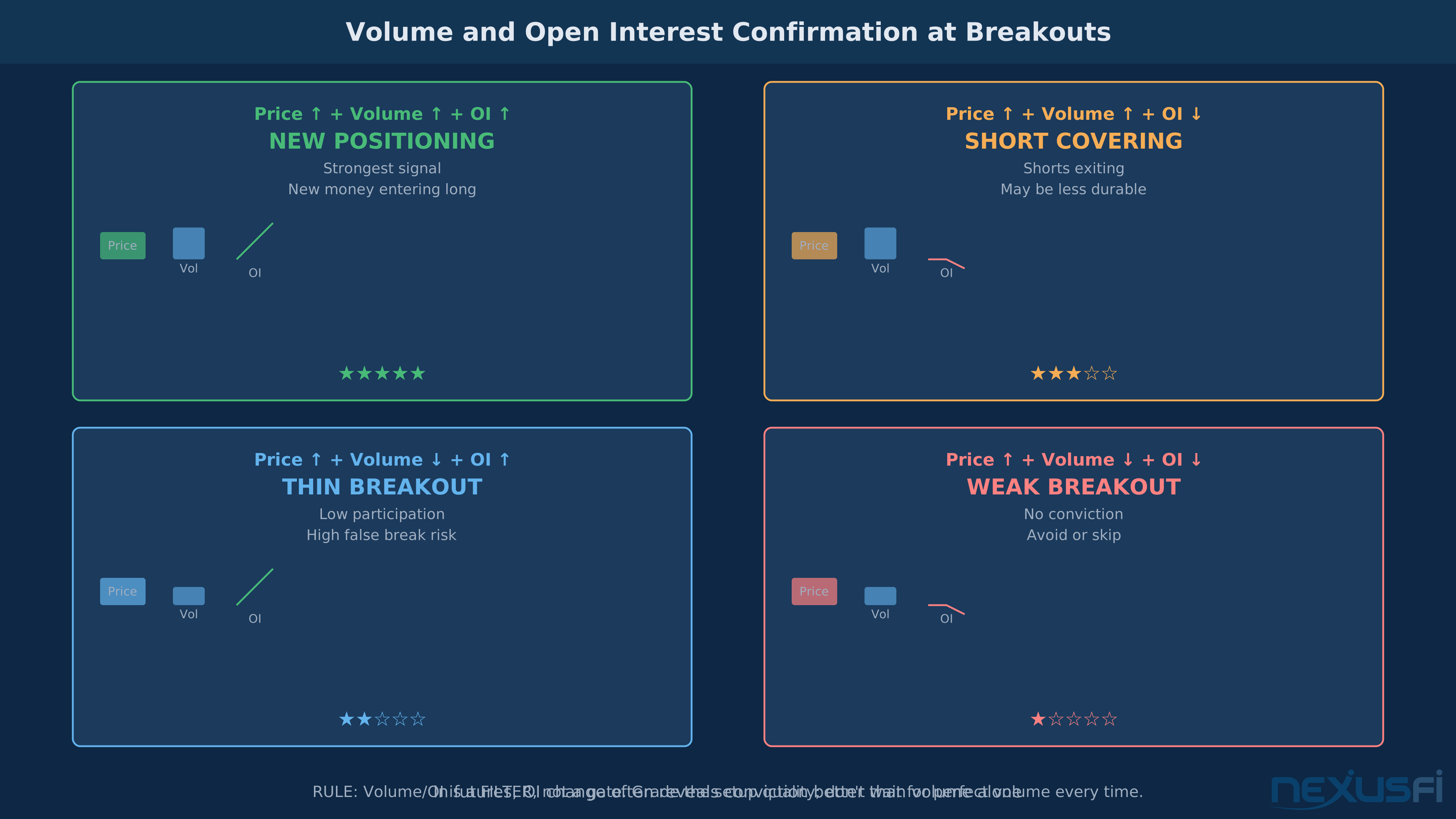
Traditional chart pattern education focuses on volume as the primary confirmation tool. In futures markets, open interest is often more informative.
Volume tells you how many contracts changed hands. High volume means lots of activity.
Open interest tells you how many contracts are currently outstanding — how many positions are being held. This is often more relevant for confirming pattern legitimacy.
Pattern breakout confirmation hierarchy (futures-specific) #
Strongest confirmation: Price breaks level + OI increases + volume above 20-period average
- This means new money is entering in the breakout direction, not just old positions being closed
Good confirmation: Price breaks level + volume expansion + ATR expansion
- Participation and volatility both increasing with the breakout
Moderate confirmation: Price breaks level + volume above average
- Standard textbook confirmation; adequate for most setups
Weak confirmation: Price breaks level + volume below average + OI declining
- Could be short covering (for upside breakouts) or long liquidation (for downside breaks)
- Less durable move likely; tighten stops or reduce size
The divergence signal #
When price approaches a pattern boundary for the third or fourth time with declining volume and OI, it's a warning. The pattern may fail or produce a weak breakout. Many professional futures traders use this as a filter — they'll only take the breakout trade if participation is maintaining or expanding into the level.
Regime Filtering: The Variable That Determines Everything #
More than any other factor, market regime determines whether a pattern-based approach will work. A trend-following trader using flags and pennants in a trending market will perform very differently from the same trader using the same patterns in a ranging, choppy market.
Identifying the regime before trading patterns:
Trending regime: ADX above 25; price making a series of higher highs and higher lows (uptrend) or lower highs and lower lows (downtrend); 20 EMA sloped in the trend direction; clear separation between EMA and price.
- Best patterns: Flags, pennants, triangles in the trend direction, cup and handle
- Avoid: Counter-trend reversal patterns, head and shoulders against the primary trend
Ranging/mean-reverting regime: ADX below 20; price oscillating between defined highs and lows; EMA flat; price regularly crossing above and below EMA.
- Best patterns: Double tops and bottoms at range boundaries
- Avoid: Continuation patterns — there's nothing to continue
Transitioning regime: This is the highest-risk environment. The trend is ending but hasn't fully reversed. Volume is declining, momentum is flattening, breadth is deteriorating. Classic reversal patterns (head and shoulders, wedges) form here. They have higher potential rewards but require strict confirmation and smaller position sizing.
The volatility dimension: Patterns forming during low-volatility compression periods (ATR percentile below 30) are setting up for eventual expansion. The direction of that expansion matters more than the specific pattern. Patterns forming during high-volatility regimes (ATR percentile above 70) are often less reliable because the market is already moving and the compression that produces clean patterns isn't present.
Common Pattern Trading Mistakes in Futures #
Mistake 1: Finding the pattern before finding the setup #
The mind is remarkably good at seeing patterns in noise. Traders who scan charts looking for patterns will find them everywhere, including where they don't exist or where the context is wrong. The discipline is: first identify the regime, the trend, and the opportunity; then look for the pattern structure that matches.
Mistake 2: Trading every pattern in a category equally #
Not all head and shoulders patterns are equal. A head and shoulders after a two-year bull market, with all three peaks confirmed, on declining volume, aligned with bearish higher-timeframe context is very different from a head and shoulders that formed in three days in the middle of a ranging session. Context determines quality.
Mistake 3: Using measured move targets as price predictions #
The measured move is an average-case estimate, not a guarantee. Price regularly stops well short of the measured move target, and occasionally goes through it. Treat measured moves as approximate objectives for scaling out, not as definitive endpoints.
Mistake 4: Ignoring the event calendar #
Pattern setups that complete the day before a major economic release (CPI, FOMC, NFP) are suspect. The upcoming event can invalidate the pattern entirely. Professional traders either reduce position size ahead of scheduled catalysts or avoid initiating pattern trades in the 24 hours before high-impact events.
Mistake 5: Treating the pattern as the trade thesis #
The pattern is evidence about order flow, not a trade thesis by itself. The complete thesis includes: the pattern structure, the regime context, the volume/OI confirmation, the structural invalidation level, and the reason this particular setup is high-probability given the current market environment. If you can only articulate "it looks like a head and shoulders," you don't have a trade thesis.
Integrating Patterns with Other Analytical Frameworks #
Chart patterns work best as one component in a broader analytical framework:
Volume profile integration: The most reliable pattern breakouts are through volume profile value areas, high-volume nodes, or point-of-control levels. These areas represent where the majority of recent trading occurred — breaking above or below them changes the market's structural assessment.
VWAP context: Breakouts from patterns that are also reclaiming or losing the VWAP have added significance. Institutional algorithms often use VWAP as a reference — price above VWAP supports longs; price below supports shorts.
Market internals: For ES and NQ patterns specifically, NYSE TICK, $ADD (advance-decline), and $VOLD (volume breadth) provide confirmation that the pattern breakout is supported by broader market participation, not just ES/NQ-specific flow.
Order flow confirmation: If you have footprint charts or delta data, watch the delta behavior at the breakout level. A triangle breaking to the upside with positive delta at the breakout bar confirms buyers are actually aggressive. A triangle breaking to the upside with negative delta (sellers still aggressive despite the upside break) warns of a potential false breakout.
Building a Pattern Trading Practice #
The difference between traders who make money from chart patterns and those who don't is usually systematic practice:
Define your patterns before you trade them. Write specific rules: what constitutes a "head" versus a "shoulder"? How symmetric do they need to be? What's the minimum and maximum size? What volume signature are you requiring? The rules need to be specific enough that you could explain them to someone else and they'd identify the same patterns you do.
Track your patterns by type and context. Which patterns work for you? Which timeframes? Which instruments? In which regimes? This data will tell you where your edge actually is.
Review false breaks systematically. Every pattern that breaks and fails is data. What was different about that setup? Was the regime wrong? Was the volume absent? Was there a scheduled event? False break analysis often produces more insight than winner analysis.
Practice the regime filter first. Before looking at chart patterns in any session, explicitly identify the regime. Write it down. Then look for patterns appropriate to that regime. This discipline alone will eliminate many losing setups.
Summary #
Classic chart patterns are neither the trading edge that retail education promises nor the "just astrology" that sophisticated traders sometimes dismiss. They're maps of auction behavior — visible evidence of specific dynamics in order flow, volatility, and positioning.
The patterns with the strongest systematic evidence are continuation patterns (flags, pennants) and breakout patterns (triangles) in trending regimes. Reversal patterns (head and shoulders, double tops and bottoms) show conditional edge that requires more context and confirmation. Wedges and cup-and-handle patterns are the most discretionary and context-dependent.
The framework that works: identify the structural boundary the pattern defines, confirm the breakout with volume expansion and ideally OI building, set stops at structural invalidation rather than arbitrary levels, and always trade in the direction of the higher-timeframe context.
What doesn't work: treating pattern names as signals, trading every formation regardless of regime, ignoring the event calendar, and relying on measured move targets as guarantees.
The traders who use chart patterns profitably rarely describe themselves as "pattern traders." They describe themselves as traders who read price action and structure, and they often say "I was watching this level" rather than "I was waiting for a head and shoulders." The pattern is the vehicle; the underlying auction behavior is the actual edge.
Citations
- — Spoo-nalysis ES e-mini futures S&P 500 - Head and Shoulders Analysis
- — Trading Futures with Context - Triangle Pattern on 15min NQ
- — Trading Futures with Context - Flag pattern session structure
- — Spoo-nalysis ES - Fibonacci and chart pattern analysis
- — The Elusive Price Action - Head and Shoulders discussion
- e-futures.com — Futures Trading Chart Patterns: Technical Analysis of Commodities