



MACD Divergence for CFD Trading: The Complete Strategy for Forex, Indices, and Commodity CFDs
Overview #
The MACD (Moving Average Convergence Divergence) indicator has been around since Gerald Appel developed it in the late 1970s — first introduced in his Systems and Forecasts newsletter and later expanded in Technical Analysis: Power Tools for Active Investors (FT Press, 2005) — but its divergence applications remain some of the most consistently profitable signals in CFD and forex markets. Where most traders treat MACD as a simple crossover tool, divergence setups are where the real edge lives.
This article breaks down how to use MACD divergence as a structured, rule-based strategy in CFD markets — the kind of markets offered by platforms like markets.com, where you're trading forex pairs, equity index CFDs, gold, oil, and cryptocurrency all from a single account. The leveraged nature of CFDs changes how you manage risk around divergence setups. We'll cover all of that.
What you'll learn:
- How MACD actually works (beyond the textbook explanation)
- The four types of MACD signals and which one actually matters
- Bullish and bearish regular divergence — exact entry criteria
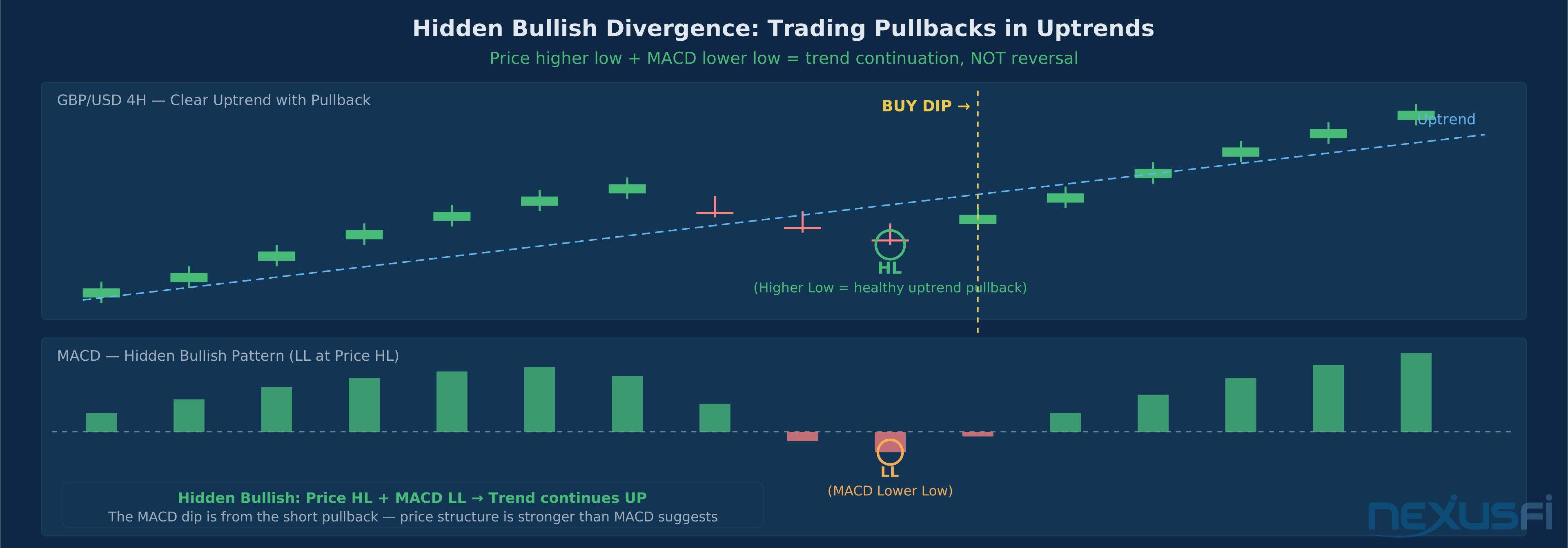
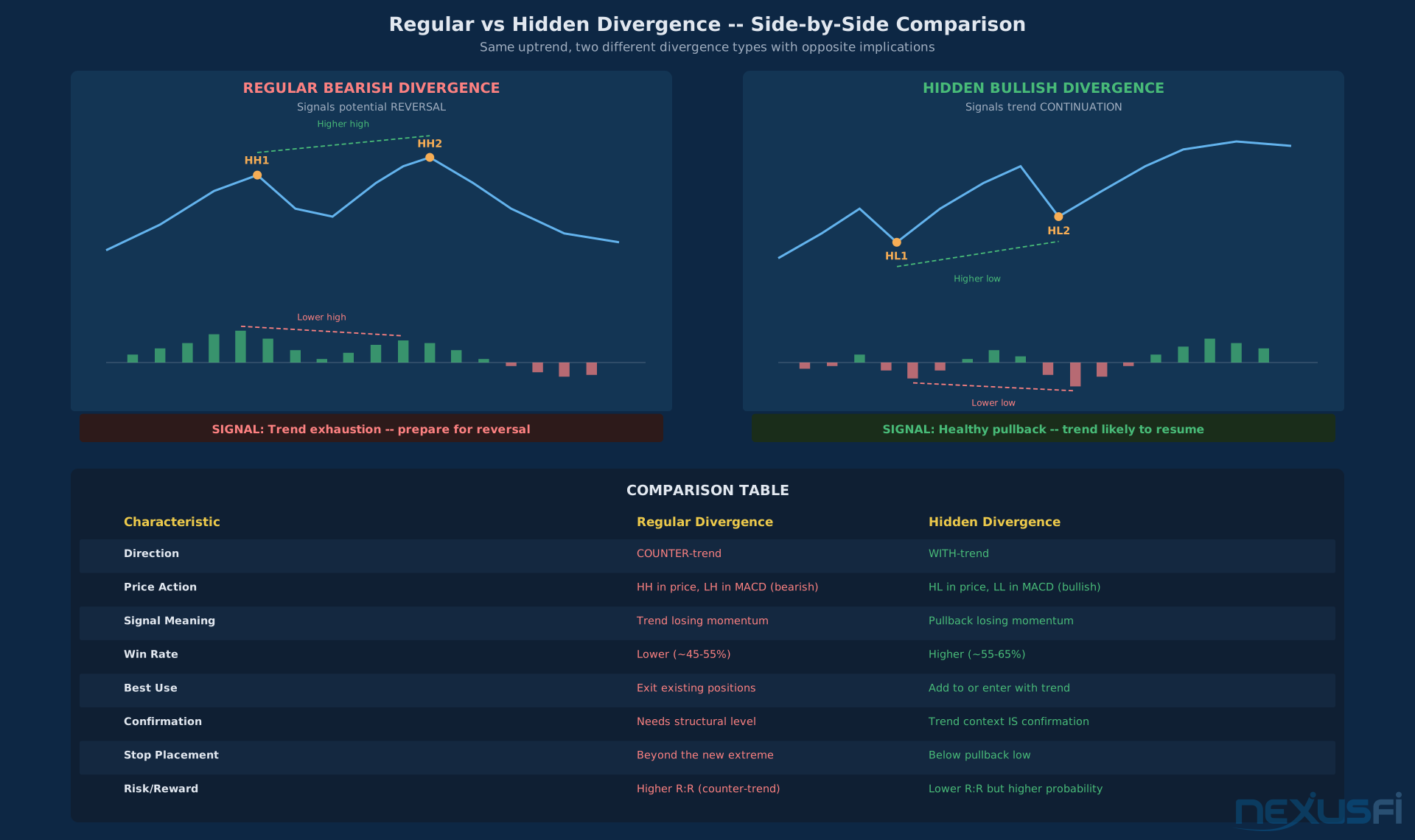
- Hidden divergence for trend continuation trades
- Stop placement rules for CFD markets
- Timeframe selection for different CFD asset classes
- Common mistakes that kill MACD divergence traders
How MACD Actually Works #
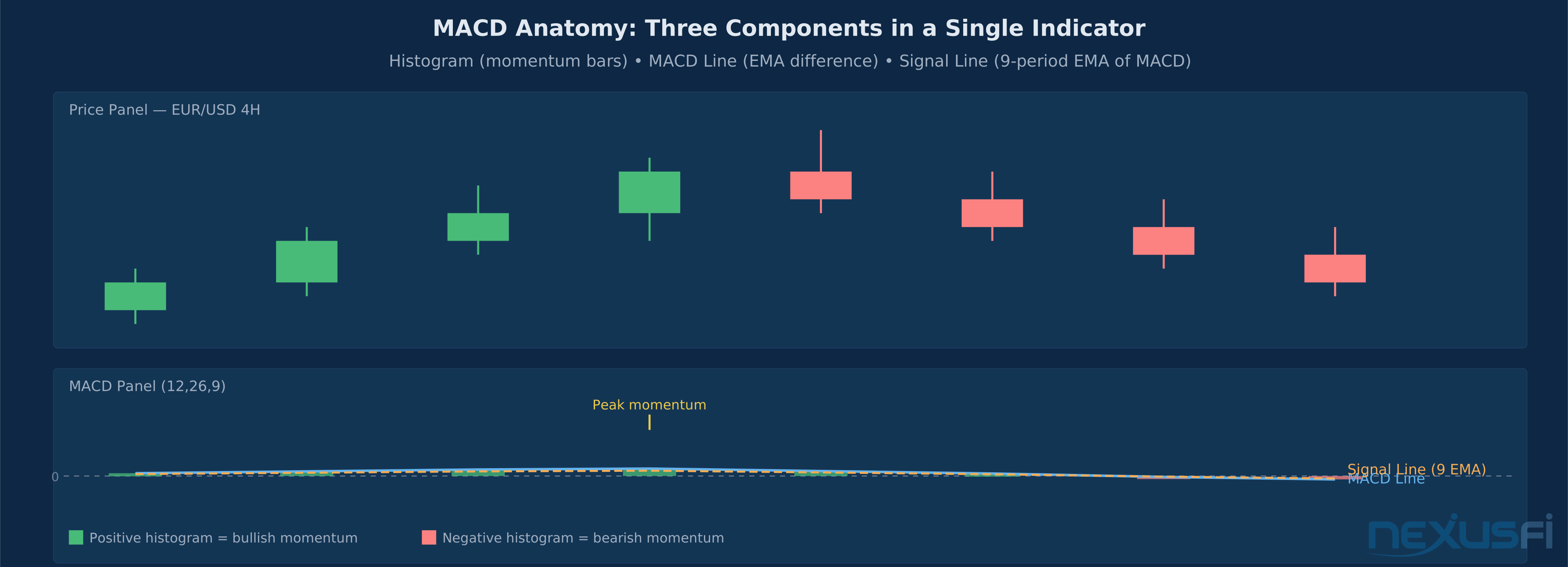
Most traders can tell you that MACD shows the relationship between two exponential moving averages. Fewer can tell you why that's useful.
MACD = EMA(12) − EMA(26)
When this value is positive, short-term momentum is stronger than the 26-period trend. When negative, short-term momentum is lagging. The signal line is a 9-period EMA of the MACD itself — a smoothed version of momentum. The histogram is simply MACD minus Signal Line.
The standard 12,26,9 settings were calibrated for daily stock charts in the 1970s. For intraday CFD trading on 4H or 1H charts, many experienced traders tighten these to 8,17,9 or even 5,13,8. For daily chart swing trading in markets like EUR/USD or Gold CFDs, the standard settings hold up well.
The histogram is what actually moves first. When you watch a price chart and MACD, the histogram changes direction before the lines cross. This is why histogram analysis — specifically looking for momentum exhaustion in the histogram — is the foundation of divergence trading.
What the histogram tells you:
- Expanding bars: Momentum is accelerating in the current direction
- Contracting bars: Momentum is slowing, energy is leaving the move
- Direction change: Momentum has fully reversed — this is when the crossover happens
Divergence is about catching the transition from expanding to contracting histogram bars at a key price structure level.
The Four MACD Signals (And Which One Has the Edge) #
There are four common ways traders use MACD:
1. Line Crossover — MACD crossing above/below the signal line. This is lagging and produces many false signals, especially in choppy conditions. Avoid using it as a primary trigger.
2. Zero-Line Cross — MACD crossing above or below zero. This is a trend-change signal that works better on higher timeframes. Reliable for identifying regime shifts but not entry precision.
3. Histogram Direction Change — MACD histogram flipping from positive to negative or vice versa. Better timing than line crossover, but still generates many false signals during consolidation.
4. Divergence — Price making new highs/lows while MACD fails to confirm. This is the highest-probability signal, especially when paired with structure (support/resistance, trend lines, prior swing points).
Forum member @Big Mike described the challenge well: anticipating divergence before it's confirmed requires watching the histogram bars as the price approaches a potential reversal zone and looking for contracting momentum before the actual divergence is visible.
Divergence doesn't mean "price is going to reverse immediately." It means momentum is deteriorating — the force driving the current trend is weakening. Combined with a structural reason for price to reverse (key level, prior support/resistance, trend channel), divergence signals generate the cleanest setups in CFD markets.
Regular Divergence: The Core Strategy #
Regular divergence signals potential trend reversals. There are two versions.
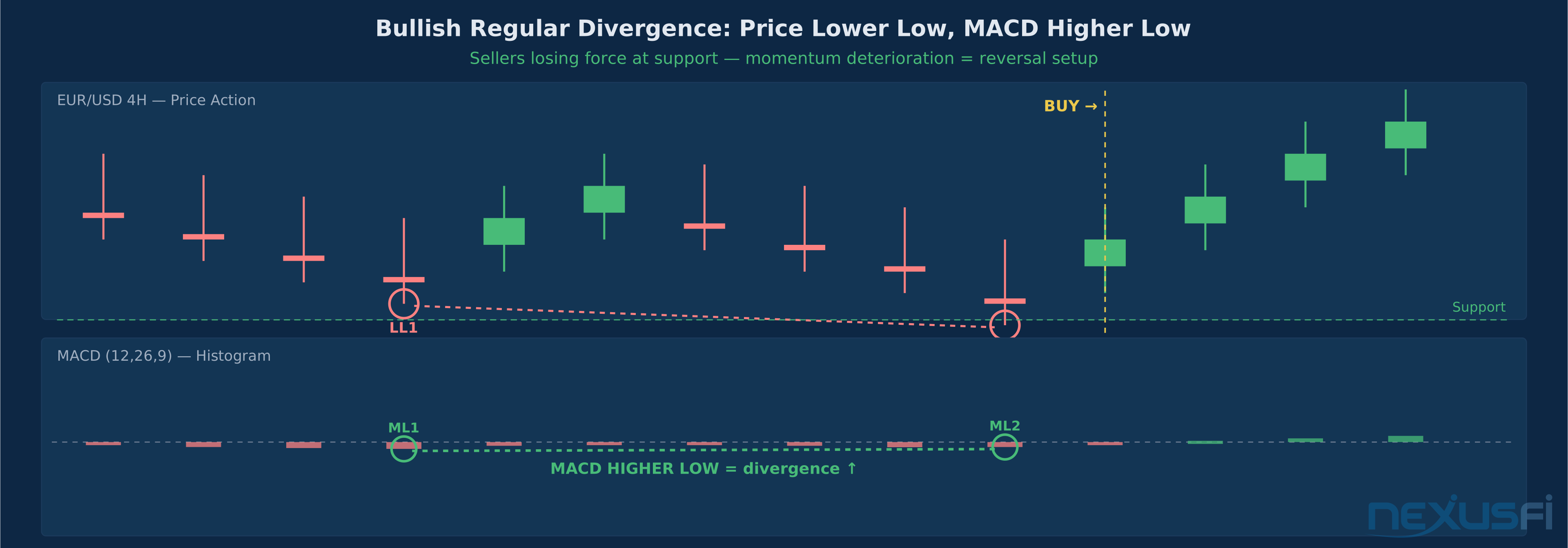
Bullish Regular Divergence #
Setup criteria:
- Price makes a lower low (LL) — two swing lows, with the second lower than the first
- MACD histogram makes a higher low (HL) — second trough is less negative than the first
- The divergence forms at or near a meaningful support level
- The second low is confirmed (price has bounced, not still falling)
What it means: Sellers are pushing price lower, but they're doing it with decreasing force. Each successive push down requires more effort for less result. When sellers exhaust themselves at support, buyers take over.
Entry rules:
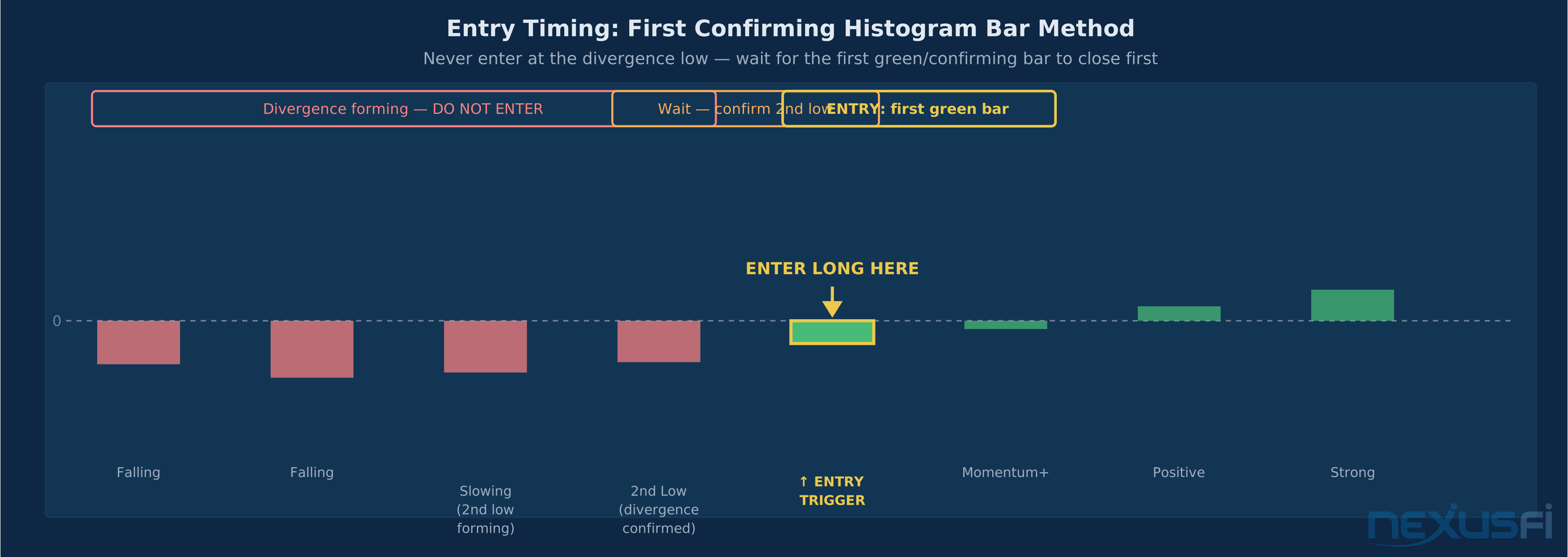
- Wait for the histogram to show at least one green bar (momentum turning) at the second low
- Enter on the open of the next candle after the green bar appears
- Alternative: Enter a buy limit at the second low after the histogram turns
- Some traders wait for the signal line cross for confirmation, accepting a worse entry price in exchange for higher confidence
Stop placement:
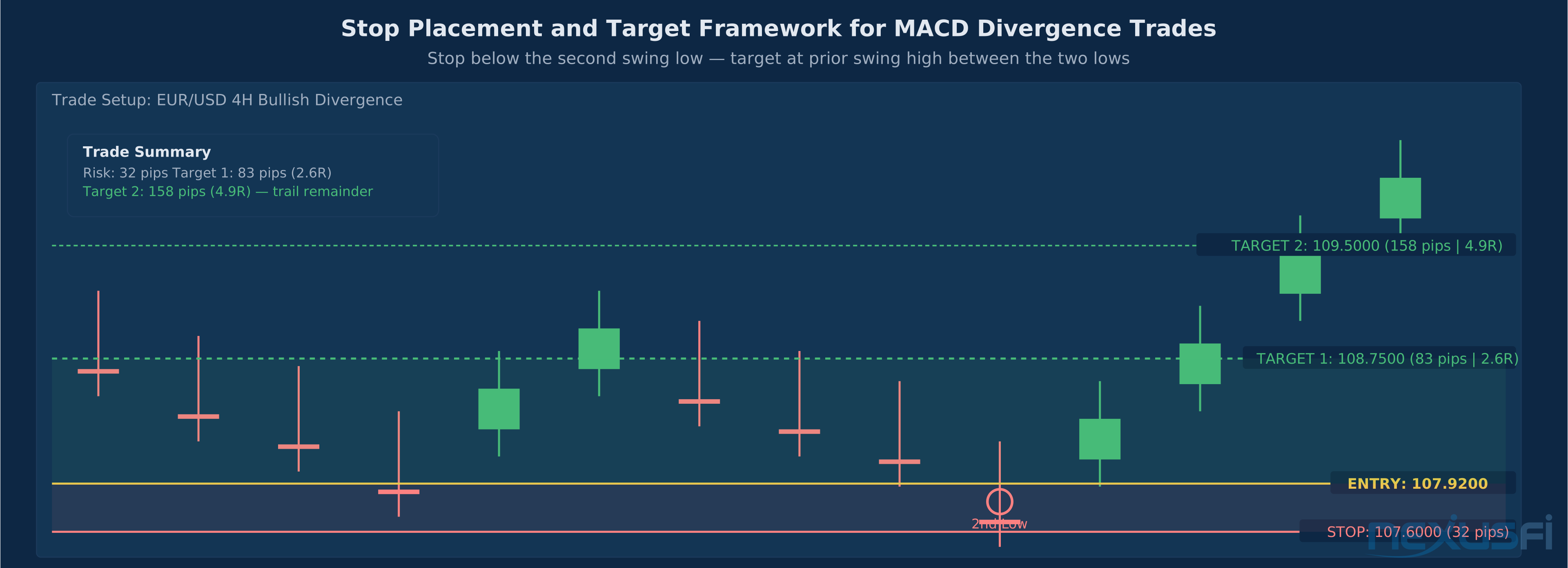
- Initial stop below the second swing low (the one forming the divergence)
- For CFDs with tight spreads (EUR/USD, major indices), a 10-15 pip stop below the low works
- For wider-spread CFDs (commodities), give the stop more room — below a clean structure level
Target:
- Primary target: The prior swing high between the two lows (the swing high that connects them)
- Extended target: The most recent significant resistance above
- Risk/reward minimum: 1.5:1 to take the trade; 2:1 preferred for swing setups
Forum member @alex5000 described a clean version of this approach: MACD divergence entry at market price when divergence is visible, stop above or below the major swing high/low by a small buffer, and taking profits at the nearest structural resistance or support.
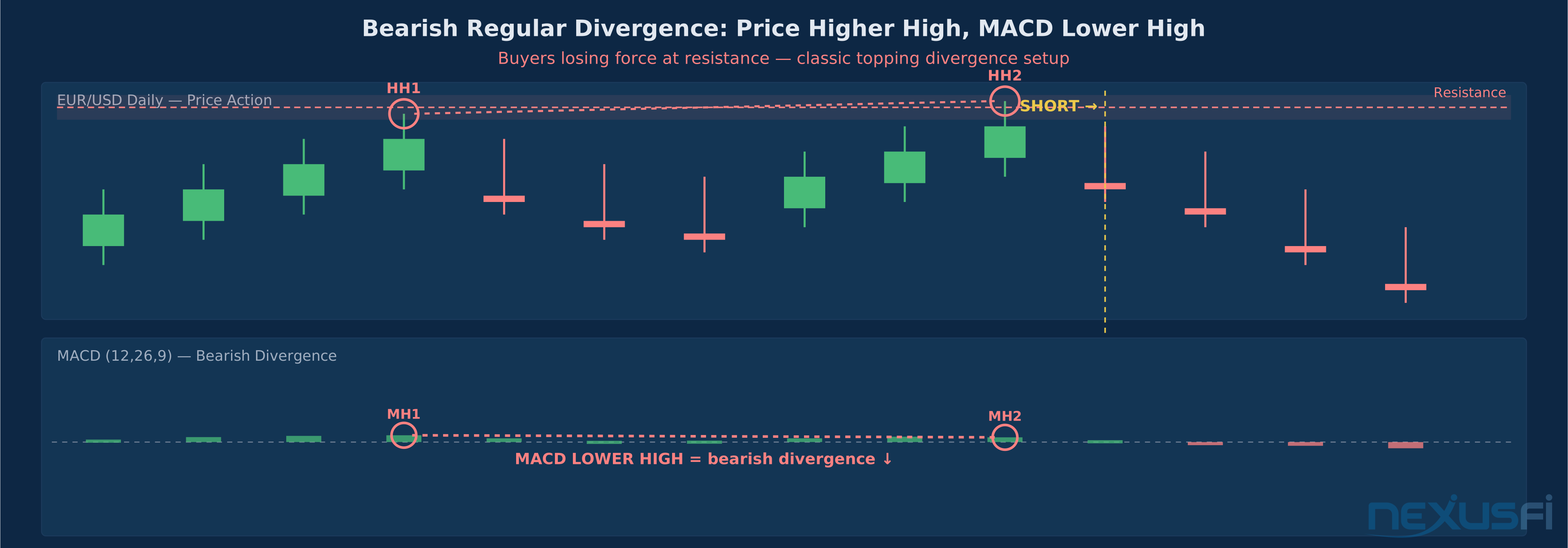
Bearish Regular Divergence #
Setup criteria:
- Price makes a higher high (HH) — two swing highs, second higher than first
- MACD histogram makes a lower high (LH) — second peak is less positive than the first
- The divergence forms at or near a meaningful resistance level
- The second high is confirmed (price has rolled over)
Entry rules:
- Wait for a red histogram bar (momentum turning negative) at the second high
- Enter short on the open of the next candle
- Stop above the second swing high
- Target the prior swing low between the two highs as primary, prior significant support as extended
Filtering low-probability bearish divergence:
- If the overall trend is strongly bullish, bearish divergence produces more failed signals. Use it for profit-taking on longs rather than new short entries in strong trends.
- Bearish divergence against a multi-week uptrend on the daily chart almost always needs higher-timeframe confirmation before taking a short.
The @monpere Filter: Combine MACD divergence with a price structure pattern (double top/double bottom). The convergence of price structure + momentum divergence creates the highest-probability setups. As @monpere describes it: double top or bottom accompanied with MACD divergence and stochastic potential divergence, entering at the close of the bar that turns the diverging MACD in the direction of the trade.
Forum member @monpere noted the combination of MACD divergence with a double top or double bottom as especially reliable — the price structure (double top/bottom) provides the structural reason for reversal, while the MACD divergence provides momentum confirmation that sellers/buyers are genuinely stepping in.
CFD-Specific Considerations #
CFDs have structural differences from futures contracts that affect how you manage MACD divergence setups.
Leverage and Position Sizing #
CFD platforms like markets.com typically offer leverage ratios that let you control large positions with small margin. For retail traders in the EU, ESMA's 2018 product intervention measures set tiered leverage caps: 30:1 for major forex pairs, 20:1 for non-major pairs and gold, 10:1 for other commodities and non-major equity indices, 5:1 for individual equities, and 2:1 for cryptocurrencies. Markets.com operates under these regulatory frameworks for EU clients and similar frameworks in other jurisdictions.
The implication: never size a MACD divergence trade based on the maximum available leverage. A divergence signal has statistical edge, not certainty. Typical position sizing for a structured divergence trade:
- Risk 1-2% of account per trade
- Set your stop first, then calculate position size to keep risk within this limit
- Example: $10,000 account, 1% risk = $100 max loss. Stop is 20 pips on EUR/USD. At standard lot sizing, that's ~$200 per 20 pips, so a 0.5 lot position.
Overnight Financing (Swap) #
CFDs incur overnight financing charges when held open past the daily rollover time (usually 5 PM EST). For swing trades held 3-7 days, these costs add up. Before entering a multi-day MACD divergence swing trade:
- Check the swap rate for the instrument (long and short swaps can differ much)
- Factor swap costs into your target calculation
- Gold (XAU/USD) and oil (WTI/Brent) CFDs often have higher swap costs than major forex pairs
CFD leverage amplifies both gains and losses. A 2% position size with 30:1 leverage means a 3.3% adverse move wipes out your entire risk allocation. Always calculate your lot size from your fixed risk amount — never from the maximum leverage available. @qwachu notes that CFD trading also lacks meaningful volume indicators, making MACD and price structure even more critical for entry timing.
Spread Costs #
CFD spreads widen during low-liquidity periods (Asian session for forex, overnight for equity indices). Enter MACD divergence trades:
- During London session for forex pairs
- During New York open for equity index CFDs (S&P 500, Nasdaq, Dow)
- During active commodity trading hours for gold and oil
Entering on the London open for a EUR/USD divergence setup that formed overnight on the 4H chart gives you the tightest spread and highest liquidity.
Timeframe Selection by Asset Class #
Different CFD markets have different rhythms that affect which timeframes produce the cleanest divergence signals.
Forex CFDs (EUR/USD, GBP/USD, USD/JPY) #
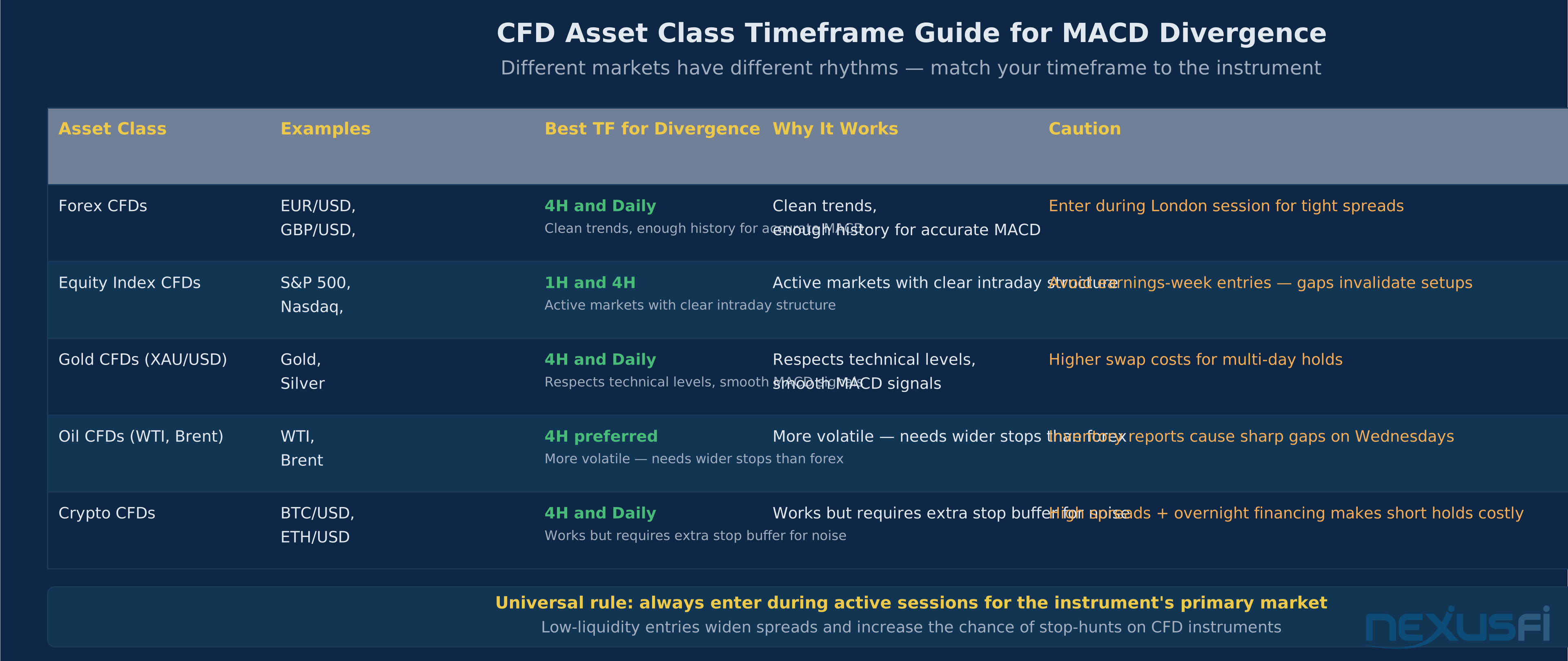
- Best timeframes for divergence: 4H and daily
- 4H divergence: Captures 1-3 day setups, swing trades, enough historical bars for clean MACD calculation
- Daily divergence: Multi-week swings, high signal-to-noise ratio but fewer setups
- 1H divergence: Works but requires more active management; gaps can cause issues
Equity Index CFDs (S&P 500, Nasdaq, DAX, FTSE) #
- Best timeframes: 1H and 4H
- 1H setups: Day-to-multi-day trades that can be managed during market hours
- 4H setups: Wider swings, better for accounts not watching charts all day
- Daily divergence on indices: Usually a bigger news-driven trigger than a momentum signal
Commodity CFDs (Gold, Silver, Oil) #
- Gold (XAU/USD): 4H and daily work exceptionally well; gold respects MACD divergence clearly
- Oil (WTI, Brent): 4H is best; oil is more volatile and can gap around inventory reports
- Silver: More volatile than gold; needs wider stops for same timeframes
Crypto CFDs (BTC/USD, ETH/USD) #
- Best timeframe: 4H and daily
- Caution: Crypto CFDs have higher spreads and significant overnight swap costs
- MACD divergence on crypto: Works but needs more price buffer on stops; false divergences more common during high-volatility regimes
The Complete Divergence Trade Checklist #
:::figure 20a33f5ee4caa7_trade_decision_flow.svg ::: Before entering any MACD divergence trade:
Trend context:
- [ ] What is the prevailing trend on the next higher timeframe?
- [ ] Is this regular divergence (counter-trend) or hidden divergence (with trend)?
- [ ] For counter-trend trades: is there a strong structural reason (key level, significant prior swing) to justify trading against the trend?
MACD conditions:
- [ ] Is the divergence clearly visible on the histogram (not just the lines)?
- [ ] Did the histogram actually contract and start turning before this signal?
- [ ] Are both swing points clearly formed (second high/low has reversed, not still moving)?
Price structure:
- [ ] Is the divergence forming at a meaningful level (prior support/resistance, round number, trend line)?
- [ ] Is there a clean stop placement level below/above a clear swing point?
Risk/Reward:
- [ ] Is the target at least 1.5x the stop distance?
- [ ] Is the target a reasonable price level (prior swing, clear resistance)?
- [ ] Have swap costs been factored into target for multi-day holds?
Timing:
- [ ] Is the market in an active session (avoiding low-liquidity entries)?
- [ ] Are there major news events in the next 24-48 hours that could invalidate the setup?
Common Mistakes That Kill MACD Divergence Traders #
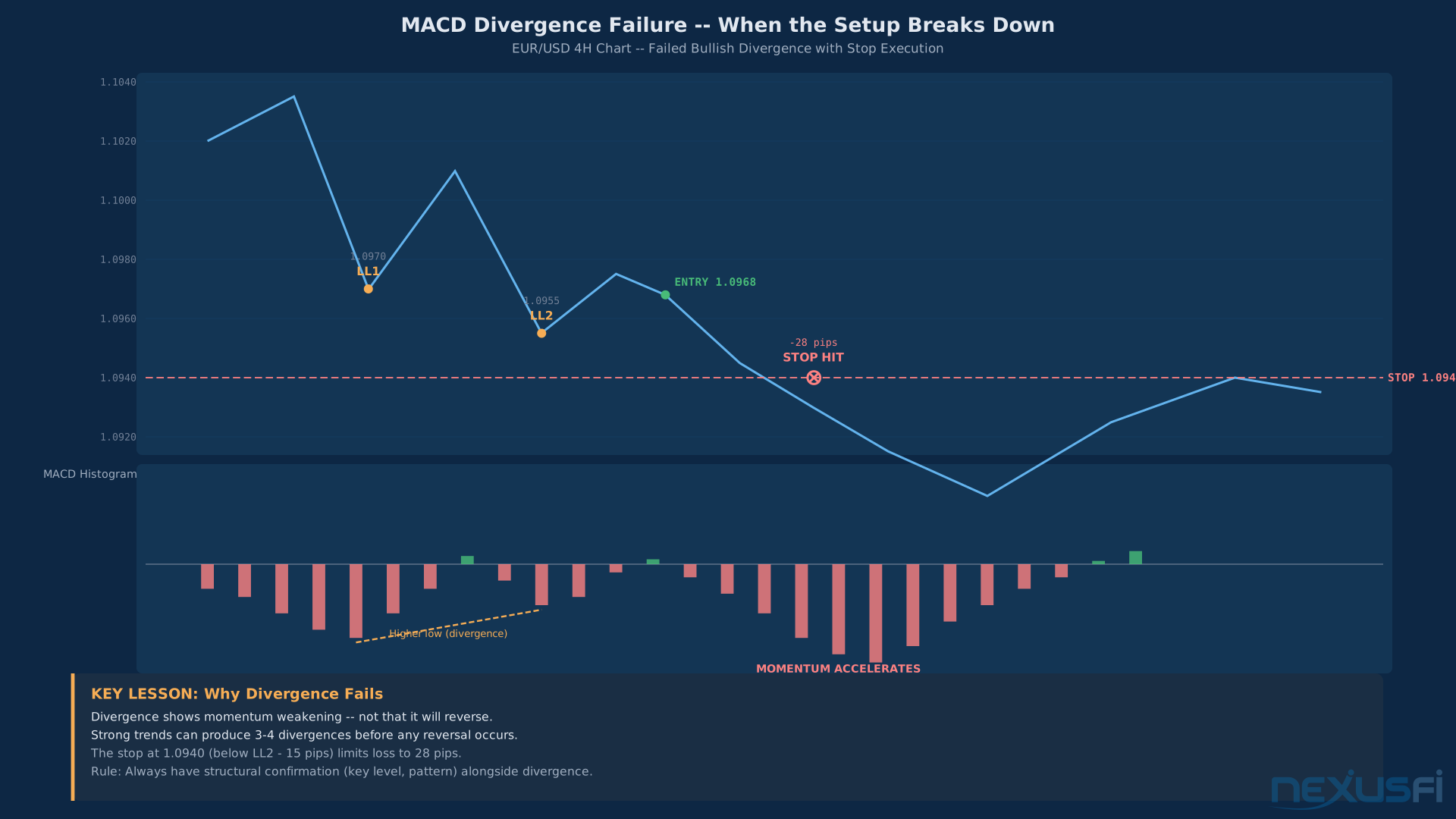
Entering before the second swing is confirmed. The most common mistake is seeing price approach a potential low, noticing the MACD is diverging, and entering before the second low is actually formed. Price can continue lower, creating a deeper divergence — and a loss on your "early" entry.
Rule: The second swing point must be confirmed. Price must have reversed at least 2-3 bars before you enter. You'll miss the first few bars of the move, but you'll avoid many false starts.
Forum member @Fat Tails made the sharpest observation about divergence failures: a triple MACD divergence on 6E (Euro FX) that formed during the lunch hour simply reflected reduced participation, not a genuine reversal setup. The divergence resolved with the trend resuming once volume returned. The lesson: always ask why momentum is slowing before assuming reversal.
Ignoring the overall trend. Bearish regular divergence in a strong uptrend fails far more often than it succeeds. MACD divergence against a powerful trend is a counter-trend trade — viable, but lower probability. Hidden divergence with the trend is higher probability. @Fat Tails put it well: MACD divergence works much better than RSI or stochastic divergences, but should be ignored if the raw MACD shows the trend is still too strong. The histogram (second derivative) may show weakening, but if the MACD line itself (first derivative) is still firmly above zero, you're fighting a strong trend.
Taking every divergence signal. MACD divergence occurs frequently on shorter timeframes. Not every divergence deserves a trade. You need a structural reason for the reversal — a key level, prior support/resistance, trend channel boundary. Divergence in the middle of nowhere is much lower probability.
Using divergence without a stop. Some traders treat divergence as so reliable that they skip stops or use mental stops. CFD markets can move sharply on news and economic data — especially forex pairs and equity index CFDs. Always use a hard stop.
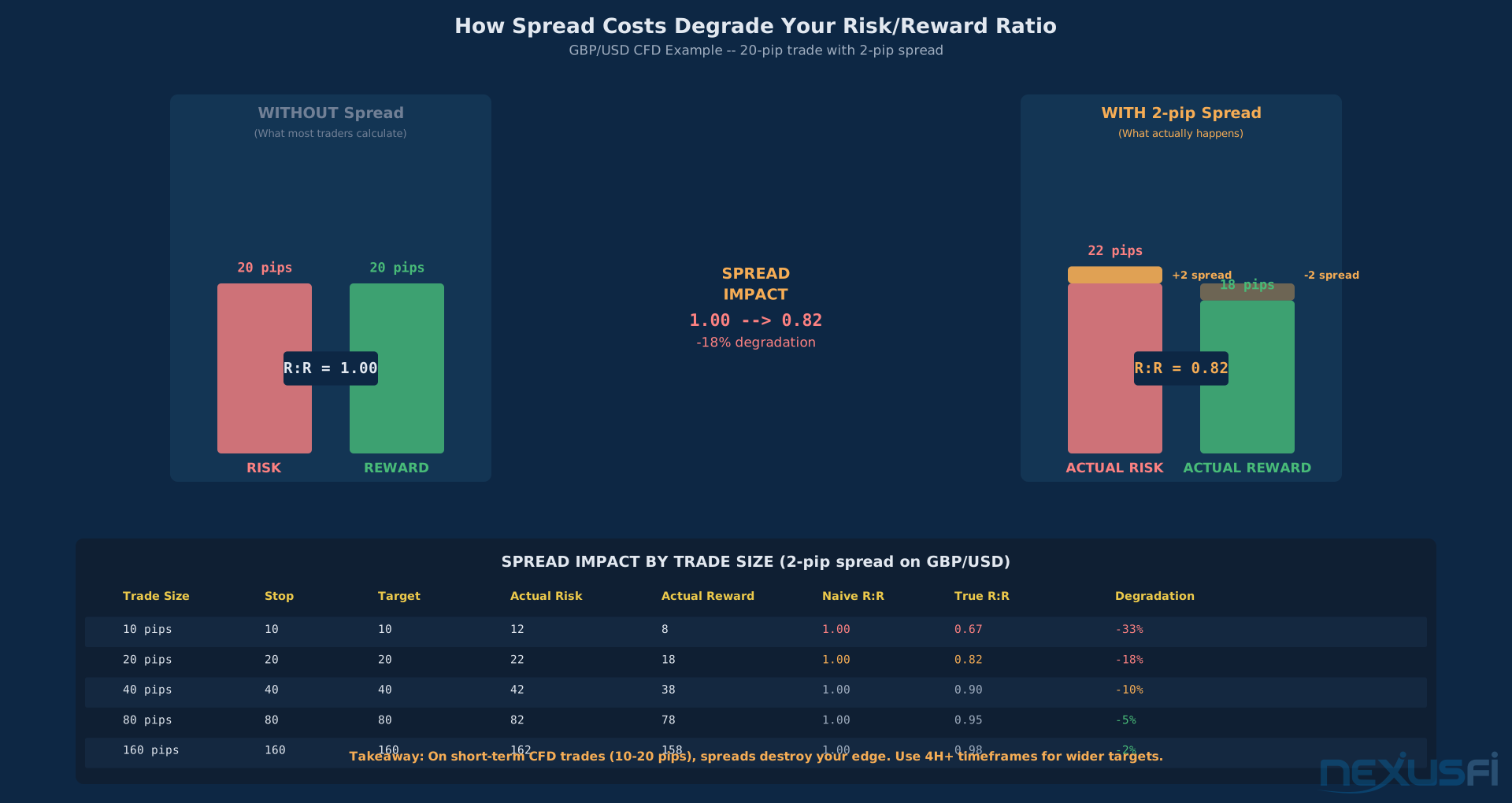
Forgetting the spread in target calculations. On a 20-pip trade in GBP/USD with a 2-pip spread, your actual risk is 22 pips (stop + spread) and actual reward is 18 pips (target — spread). These numbers change your risk/reward ratio much on short-term setups.
Forum member @rogerf described his MACD divergence methodology as requiring MACD to make its first turn into the new trend direction "on the correct color bar" — meaning he waits not just for divergence but for the first momentum bar confirming the reversal. This extra filter eliminates many false signals at the cost of slightly worse entries.
Putting It Together: A Complete EUR/USD Example #
Here's how a textbook bearish regular divergence plays out on EUR/USD using a 4H chart:
Market context: EUR/USD in a medium-term uptrend, approaching a major resistance zone at 1.1050 that has held twice in the past 6 months.
What forms: Price pushes to 1.1048, creates a swing high. MACD histogram peaks at +0.0045. Price pulls back to 1.1010, then pushes up again to 1.1062 — making a higher high.
The divergence: MACD histogram at the second high peaks at +0.0031 — a lower high despite price making a higher high. Clear bearish regular divergence.
Entry signal: Next 4H bar shows a red histogram bar. Entry short on open of following bar at approximately 1.1055.
Stop placement: Above the second swing high at 1.1065 + 5-pip buffer = 1.1070. Stop distance: 15 pips.
Targets:
- First target: Prior swing low at 1.0980 — 75 pip target, R:R = 5:1
- Partial profit: Take 50% of position off at 1.1020, trail remainder
- Extended target for remainder: Strong support at 1.0940
Swap consideration: If holding overnight, short EUR/USD typically has a negative swap (you pay). At -0.5 pip/day for illustration, holding 5 days costs ~2.5 pips — minor given the target size.
Result: This structure gives clear risk definition, a meaningful structural reason for the trade (major resistance), and a clean MACD divergence confirming momentum deterioration.
Markets.com Platform Tools for MACD Divergence #
Markets.com's trading platform includes MACD as a standard indicator available across all charting timeframes and asset classes. The platform's standard MACD displays the two lines (MACD and Signal) and the histogram, which is what you need for divergence analysis.
Key platform settings to configure:
- Histogram color: Many traders change histogram bars to show green/red for positive/negative values for clarity
- Timeframe access: 1H, 4H, Daily, Weekly all available for divergence analysis
- Alert tools: Set horizontal alerts at key resistance/support levels where you anticipate divergence setups forming
For multi-asset divergence monitoring, the platform's watchlist allows monitoring EUR/USD, Gold, S&P 500 CFD, and Nasdaq CFD simultaneously — letting you scan for divergence setups across the full CFD universe.
Internal Links #
- MACD Indicator Fundamentals — Deep dive on the indicator mechanics
- Support and Resistance Levels — Finding the structural anchors for divergence trades
- Risk Management for Leveraged Trading — Position sizing with CFD leverage
- Candlestick Patterns for Entry Confirmation — Using candle patterns to confirm divergence entries
- Multi-Timeframe Analysis — Building the top-down framework divergence trades require

Citations #
- @rogerf — MACD divergence with stochastic confirmation: "entry is ONLY taken when the MACD makes it's first turn into the new trend direction on the correct color bar" — https://nexusfi.com/showthread.php?t=3640&p=37701#post37701
- @monpere — MACD divergence with double top/bottom confirmation: "double top/double bottom, accompanied with MACD divergence, and Stochastics potential divergence. Enter at the close of the bar that turns the diverging MACD in the direction of the trade" — https://nexusfi.com/showthread.php?t=939&p=80734#post80734
- @Big Mike — On anticipating divergence: discusses placing pending orders at potential second lows before divergence is confirmed — https://nexusfi.com/showthread.php?t=12540&p=140711#post140711
- @alex5000 — Clean MACD divergence methodology: "MACD Divergence, Entry on price when we have divergence on MACD at market. Stoploss above/below major high/low +2" — https://nexusfi.com/showthread.php?t=4166&p=45805#post45805
- @Donnigan — Stochastic confirmation of reversal signals: "stochastic crossing the oversold point and then barely breaching above 20" as confirmation — https://nexusfi.com/showthread.php?t=44420&p=678673#post678673
- @qwachu — CFD trading limitations vs futures: "access to any meaningful volume indicator is a big disadvantage when trading CFDs" — https://nexusfi.com/showthread.php?t=56552&p=831766#post831766
- @Fat Tails — Triple divergence failure analysis: demonstrates how MACD divergence during low-liquidity periods (lunch hour) produces false signals that resolve with trend continuation — https://nexusfi.com/showthread.php?t=3506&p=81835#post81835
- @cjbooth — Standard vs. hidden divergence distinction: "Hidden Divergence - Price makes a double bottom or a higher low and the indicator makes a lower low — the signal eliminates a lot of false trades and keeps you on the right side of the market" — https://nexusfi.com/showthread.php?t=10920&p=123290#post123290
- @Fat Tails — MACD as both trendfilter and entry timing tool: "MACD divergences work much better than RSI or Stochastics divergences. But the divergence should be ignored if the trend is still too strong" — https://nexusfi.com/showthread.php?t=6169&p=70981#post70981
- Gerald Appel — Technical Analysis: Power Tools for Active Investors (FT Press, 2005). Foundational reference for MACD construction and advanced applications by the indicator's creator — https://books.google.com/books/about/Technical_Analysis.html?id=b1ApuQAACAAJ
- ESMA — Product intervention measures on CFDs (June 2018). Official EU regulatory framework establishing tiered leverage limits for retail CFD trading — https://www.esma.europa.eu/press-news/esma-news/esma-adopts-final-product-intervention-measures-cfds-and-binary-options
Knowledge Map
Go Deeper
Build on this knowledgeReferences This Article
Articles that build on this topicCitations
- — Post your favorite Divergence ind. here (2010) 👍 5“entry is ONLY taken when the MACD makes it's first turn into the new trend direction on the correct color bar”
- — Has anyone ever heard of Felton Trading? (2010) 👍 11“double top/double bottom, accompanied with MACD divergence, and Stochastics potential divergence. Enter at the close of the bar that turns the diverging MACD in the direction of the trade”
- — How to anticipate a divergence (2011) 👍 6“You mentioned placing a pending order, like a pending limit long -- the problem with that is if the bar closes down, the double bottom is invalid”
- — Alex5000 Trading Journal (2010) 👍 3“MACD Divergence, Entry on price when we have divergence on MACD at market. Stoploss above/below major high/low +2”
- — Finding an Edge and Cultivating Consistency (2018) 👍 3“stochastic crossing the oversold point and then barely breaching above 20”
- — Trading Process Journal from Poland (2021) 👍 6“access to any meaningful volume indicator is a big disadvantage when trading CFDs”
- — Using Stochastic in my methodology - with instructions (2011) 👍 37“Standard Divergence - Price makes a lower low and the indicator makes a higher low or price makes a higher high and the indicator makes a lower high. Hidden Divergence - Price makes a double bottom or a higher low and the indicator makes a lower low -- the signal eliminates a lot of false trades and keeps you on the right side of the market.”
- — Building Blocks of a Trading System (1) - Trend Filter (2010) 👍 13“The MACD has both a trendfilter, which is the raw momentum MACD, and an entry timing tool, which is the histogram. This is the reason why it is one of the most versatile indicators. MACD divergences work much better than RSI or Stochastics divergences.”
- — Technical Analysis: Power Tools for Active Investors (2005)
- — ESMA adopts final product intervention measures on CFDs and binary options (2018)