



Spike and Channel Price Action: The Two-Phase Trend Structure That Drives Every Major Move
Overview #
Price action trading rests on a deceptively simple observation: strong moves almost never happen in a single, uninterrupted thrust. They unfold in phases. Al Brooks codified those phases into one of the most practically useful frameworks in futures trading: spike and channel. Understanding this pattern means understanding the engine behind every sustained trend — what starts it, how it sustains, and what signals its eventual exhaustion.
A spike is urgency made visible: the moment when one side overwhelms the other with such conviction that price moves far and fast, leaving little time for countertrend participants to react. A channel is what follows — the same directional conviction, now expressed more orderly, as the market finds a new rhythm of advancing with pullbacks. The transition between the two is where most of the high-probability trading in a trending market lives.
This guide covers every phase in detail: what makes each phase look the way it does, how to trade each one, where to place stops, how to set targets using Brooks' measured move logic, and critically, how to recognize when a channel is aging and preparing to return to a trading range. It pairs with the Al Brooks Price Action Method, and with Two-Legged Pullback Trading, which covers H2/L2 entry mechanics in complete detail.
What Is a Spike? #
A spike is the initial strong, directional impulse that launches a trend. In its purest form, it is a sequence of five or more consecutive trend bars with minimal wicks, each close near the bar extreme, and each bar closing at or beyond the prior bar's close. Price moves in a single direction with no meaningful counter-effort.
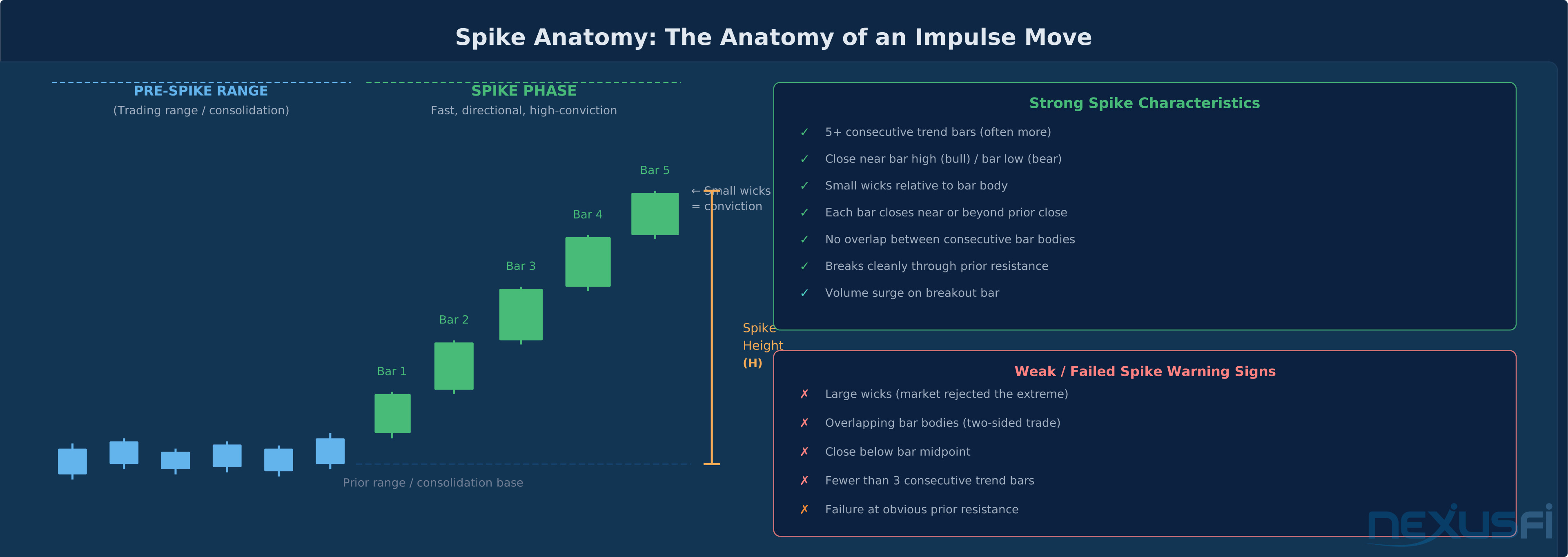
The psychology inside a spike is extreme imbalance. Something has changed — a breakout from consolidation, a failed auction, a trigger — and one side of the market has capitulated or is being aggressively absorbed. Federal Reserve research on order flow in Treasury and futures markets confirms this mechanism at the microstructural level: when volatility spikes, market makers pull their liquidity while directional participants surge in, creating a mismatch where one-sided demand far outpaces supply and amplifies the initial price move (Dobrev et al., FEDS Notes, 2025). The characteristic look of the spike: large bars, few pullbacks, and the sense that the market is moving faster than you can think.
Defining characteristics of a strong spike:
- 5 or more consecutive trend bars — strong spikes often run 7-12 bars
- Small wicks relative to bar bodies — large tails mean the countertrend side is fighting back
- Each close at or near the bar extreme — a close in the bottom half of a bull bar during a spike is a warning sign
- No overlap between consecutive bar bodies — when bodies start overlapping, transition is beginning
- Clean break through obvious levels — a true spike does not stall at prior resistance; it cuts through it
What a spike is not: A single large bar is not a spike, even if it is dramatic. A two or three-bar surge lacks the sequential momentum that defines a spike. The spike requires a sequence that builds, where bar after bar confirms the directional dominance.
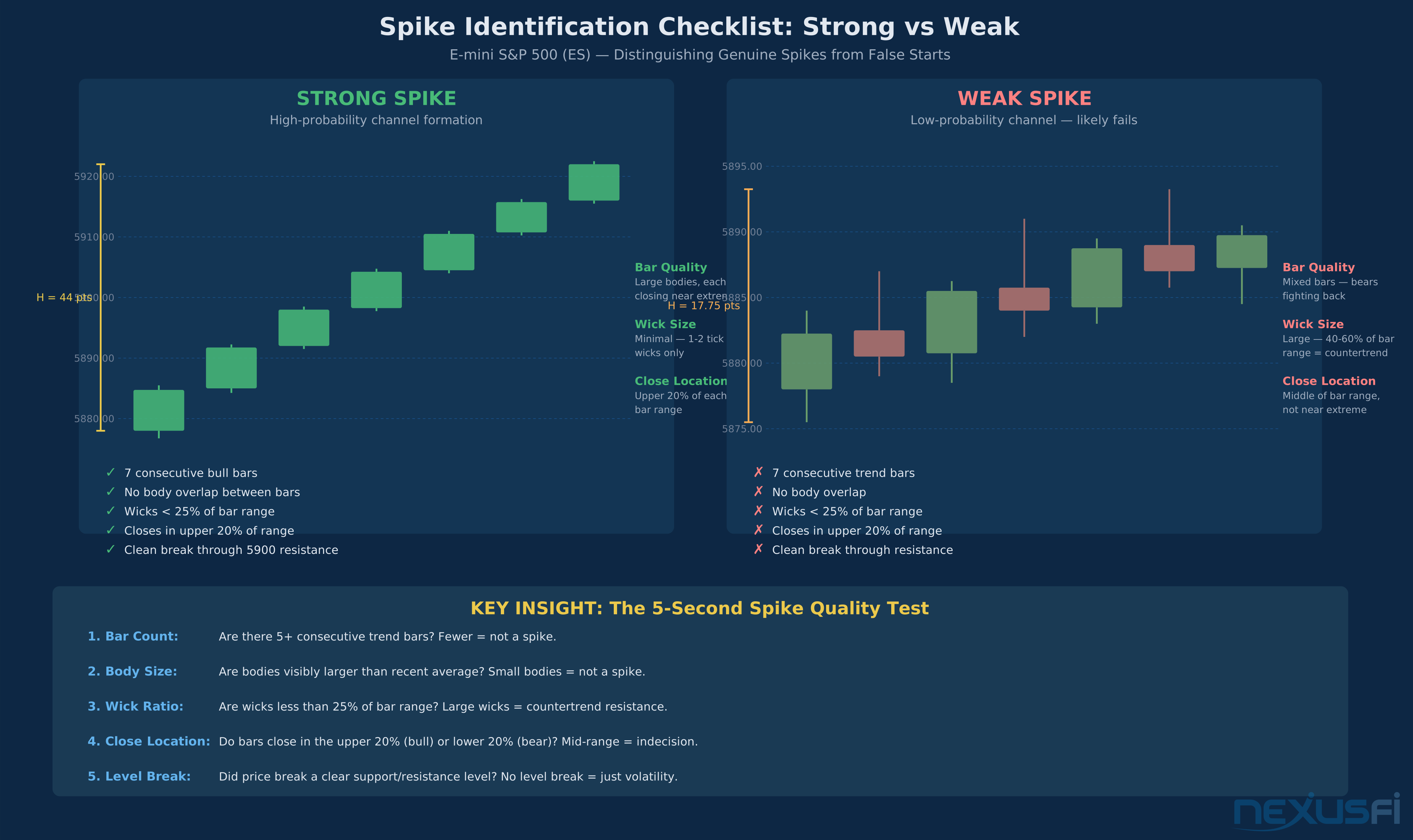
The practical implication: Spikes are usually not the best time to enter. By the time you recognize a spike as a spike, you are already several bars into it. The spike is better understood as context for the trade that comes next — the channel.
Spikes tend to form at specific moments: breakouts from prolonged trading ranges, failed breakouts in the opposite direction (trapped participant squeezes), major news catalysts, or rejections of significant levels. Understanding which of these is driving a spike helps assess its likely duration and whether it will produce a genuine channel.
What Is a Channel? #
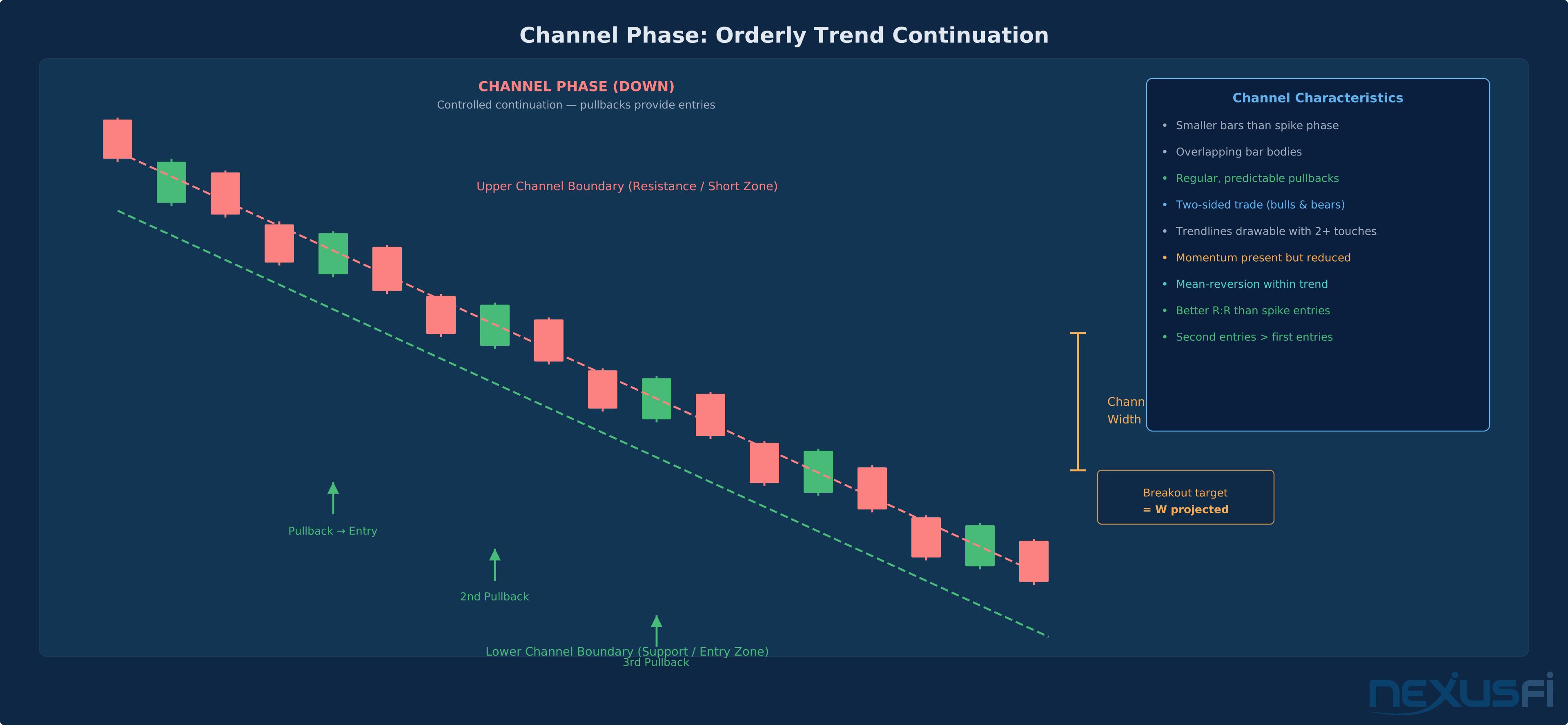
If the spike is urgency, the channel is discipline. The channel is the trend sustaining itself after the spike's initial momentum has dissipated. Both buyers and sellers are now active — buyers push higher on trend legs, sellers take profits on pullbacks — but the buyers' pressure is slightly stronger, producing a pattern of higher highs and higher lows contained within identifiable trendlines.
Defining characteristics of a strong channel:
- Two-sided trading — there are trend bars and counter-trend bars; the market is not a one-way street
- Regular, predictable pullbacks — you can draw a trendline that multiple pullbacks respect
- Smaller bar size than during the spike — the average body is visibly smaller
- Overlapping bar bodies — consecutive bars share price area, showing genuine two-sided activity
- Channel lines are drawable after two or three touches, defining the entry zone and resistance
The channel is where the highest-probability trading in a trending market occurs. The structure is predictable. The entry zones are defined. Stops have clear structural placement. Targets have measurable levels. The spike told you the direction; the channel tells you where to get in.
Tight vs. broad channels: Tight, steep channels indicate strong trend conviction — entries are difficult because pullbacks are shallow. Broad channels offer more pullback entries but require wider stops sized to channel width. In a tight channel, accept smaller pullbacks as valid. In a broad channel, wait for trendline touches and use structurally sized stops.
The Spike-to-Channel Transition #
The spike-to-channel transition is the single most important moment in the framework — the exact point where the market shifts from urgency to structure, and where trend continuation entries become available.
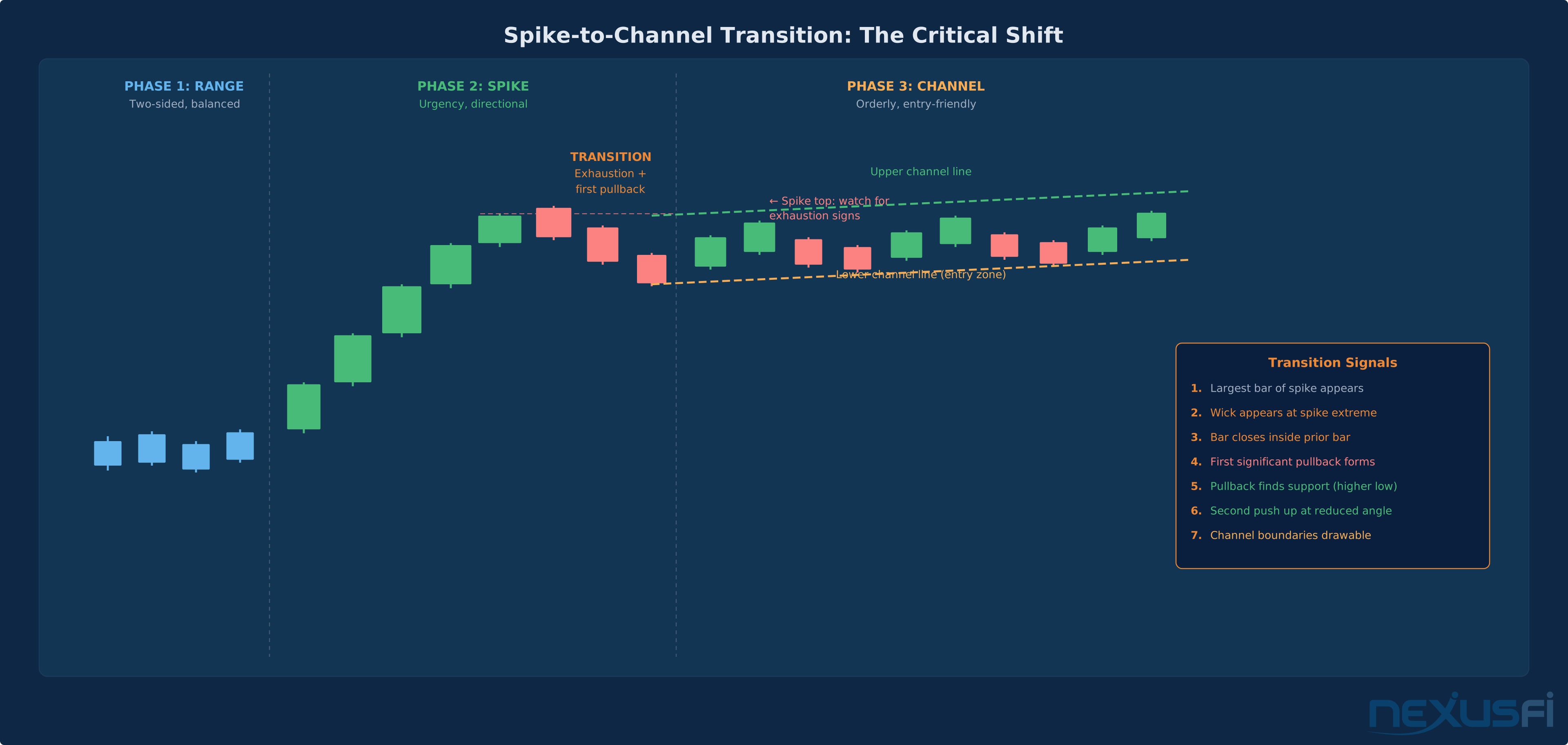
The transition unfolds over several bars:
1. The spike's largest bar appears. The climactic bar of the spike is often its final bar — a bar much larger than preceding bars signals the market burning through its last reserves of urgency.
2. Wicks appear at the extreme. In pure spikes, bars have minimal wicks. When wicks begin appearing at the bar tops (in a bull spike), the countertrend side is starting to assert itself.
3. The first meaningful pullback forms. After the spike's peak, a 2-3 bar counter-move appears. Its existence marks a fundamental change: the market has now traded in both directions from the same starting point.
4. The second push is at a reduced angle. When price resumes after the first pullback, the bars are smaller and the advance less steep. This reduced angle is the channel establishing itself.
5. The second pullback confirms the channel. Once you have two pullbacks from which you can draw a trendline, the channel is confirmed — you have a lower boundary (entry zone) and the spike extreme as the initial upper reference.
The start of the channel — the first pullback after the spike — often acts as a significant support level for days after the event. When the channel eventually breaks down, traders watch this level carefully for a potential retest. A successful test of the channel start in a bull channel is often itself a high-quality pullback entry.
Trading the Spike: What to Do #
The spike presents a fundamental dilemma: the direction is obvious, but the entry is terrible.
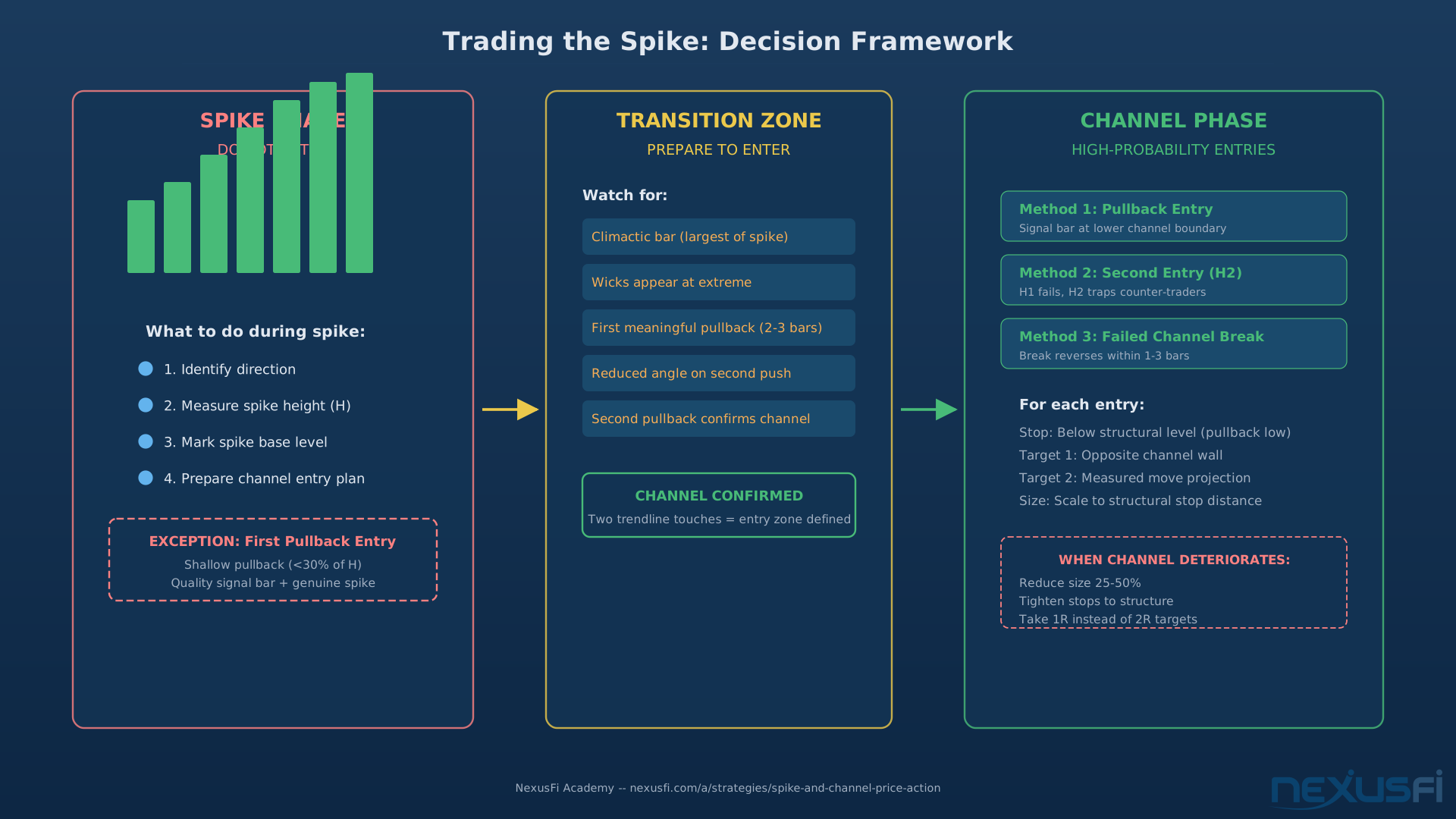
Most of the time: do not enter during the spike. Use the spike for three things:
- Direction identification — the spike tells you which way the market has decided to go
- Measurement — the height H of the spike is the primary reference for measured move projections
- Channel preparation — while the spike is running, think about where the first pullback will be and at what price level you want to start looking for H2 entries
The exception: The first pullback after the spike — the very first counter-move of 2-3 bars — can be a legitimate entry in a very strong spike, if the pullback is shallow (less than 30% of spike height), has a quality signal bar, and the spike itself was genuine. This "spike, first pullback" entry requires experience to execute well.
Trading the Channel: Three Entry Methods #
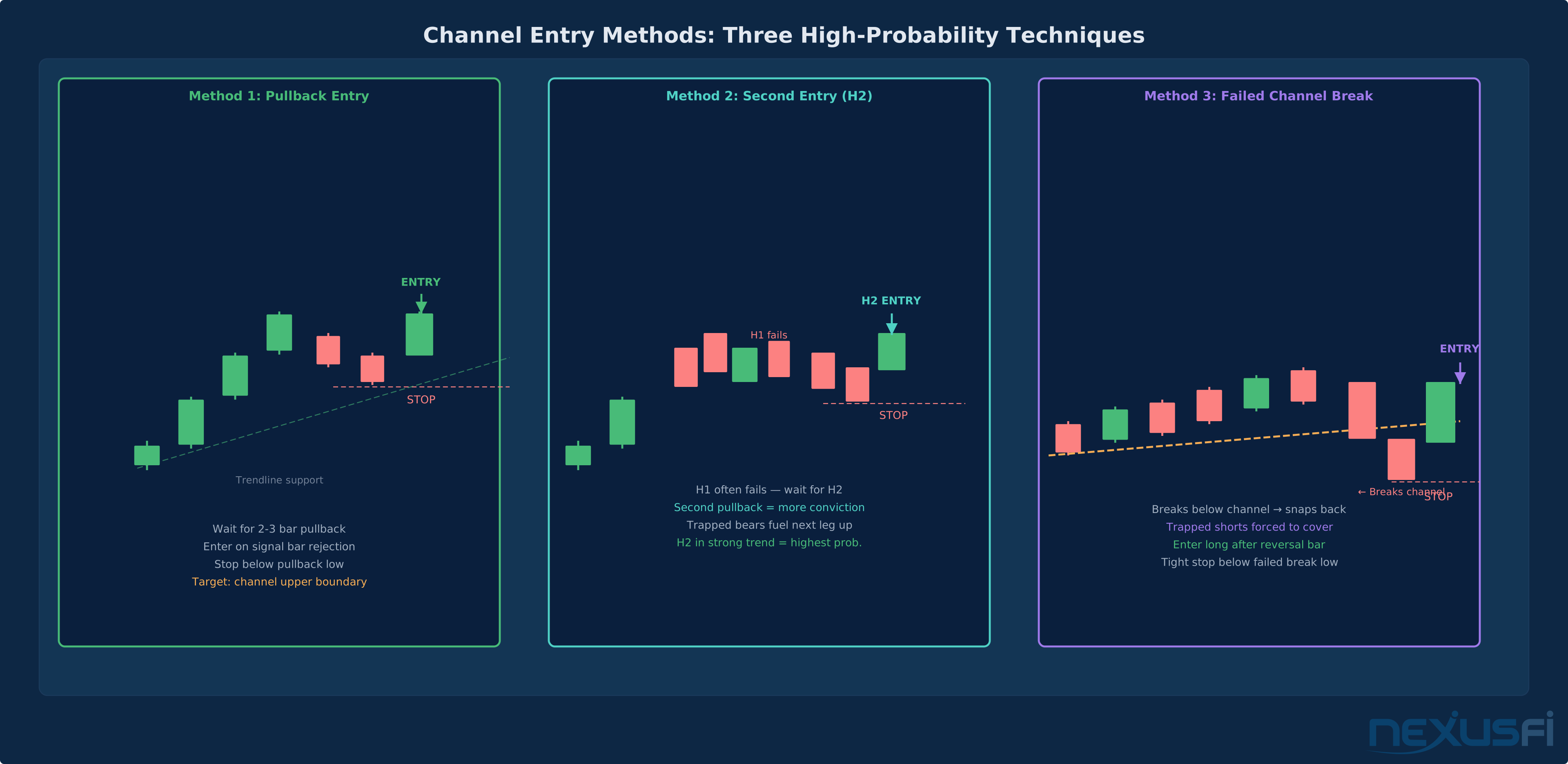
The channel is where consistent, structured trading happens. Three primary entry methods suit different channel characteristics and trader styles.
Method 1: Pullback Entry #
The pullback entry is the bread-and-butter of channel trading. It exploits the channel's fundamental characteristic — that pullbacks find support at the lower boundary and reverse.
Execution for a bull channel:
- Wait for channel confirmation (at least two trendline touches)
- Watch for a counter-trend move of 2-3+ bars pulling back toward the lower channel line
- Identify a signal bar: close in the upper half of its range, at or near trendline support
- Enter one tick above the signal bar's high
- Stop below the signal bar's low (or pullback low if wider)
- Target: the upper channel boundary, then the measured move projection
High-quality pullback entry markers: pullback reaches the channel's lower boundary; signal bar has bullish character; at least 2 counter-trend bars; prior channel trendline touches demonstrate respect.
Method 2: Second Entry (H2 / L2) #
The H2 (High 2) is one of Brooks' highest-confidence setups. The first pullback entry attempt (H1) often fails. The second attempt (H2) benefits from the trapped H1 traders adding support from below.
The H2 in a bull channel: H1 entry triggers but fails — price stops out H1 buyers. Price continues lower to a new pullback low (second leg). At that low, a new signal bar forms. Enter one tick above = the H2 entry. Stop below H2 signal bar's low.
H2 works because two sets of trapped participants are simultaneously being squeezed: the H1 traders who got stopped out and may re-enter, and the bears who entered on the H1 failure breakdown. Their combined buying pressure adds momentum to the H2 resumption. This setup pairs naturally with scaling in and out of positions — entering half-size on H1 and adding the remainder on H2 confirmation exploits the trapped-trader momentum without committing full size before structure confirms.
Method 3: Failed Channel Break #
When price breaks below the channel's lower trendline and then snaps back inside within 1-3 bars, it has created a failed break — trapping breakout traders and creating a high-probability reversal setup.
Execution: Channel line broken on a bear bar → next 1-3 bars close back above the channel line → enter long on the reversal bar's close or one tick above its high → stop below the failed break low → target 1-2R counter-trend scalp.
This is the most advanced method. The failed break low must clearly penetrate the channel line by a meaningful amount, not merely touch it. A genuine failed break attracts sufficient order flow to decisively reverse within a few bars.
Stop Placement: Structure Over Arbitrary Distances #
The single most common error in channel trading is using arbitrary tick-distance stops instead of structural stops. Brooks' approach is unambiguous: the stop goes where you are proven wrong about market structure, not at some predetermined distance from entry.
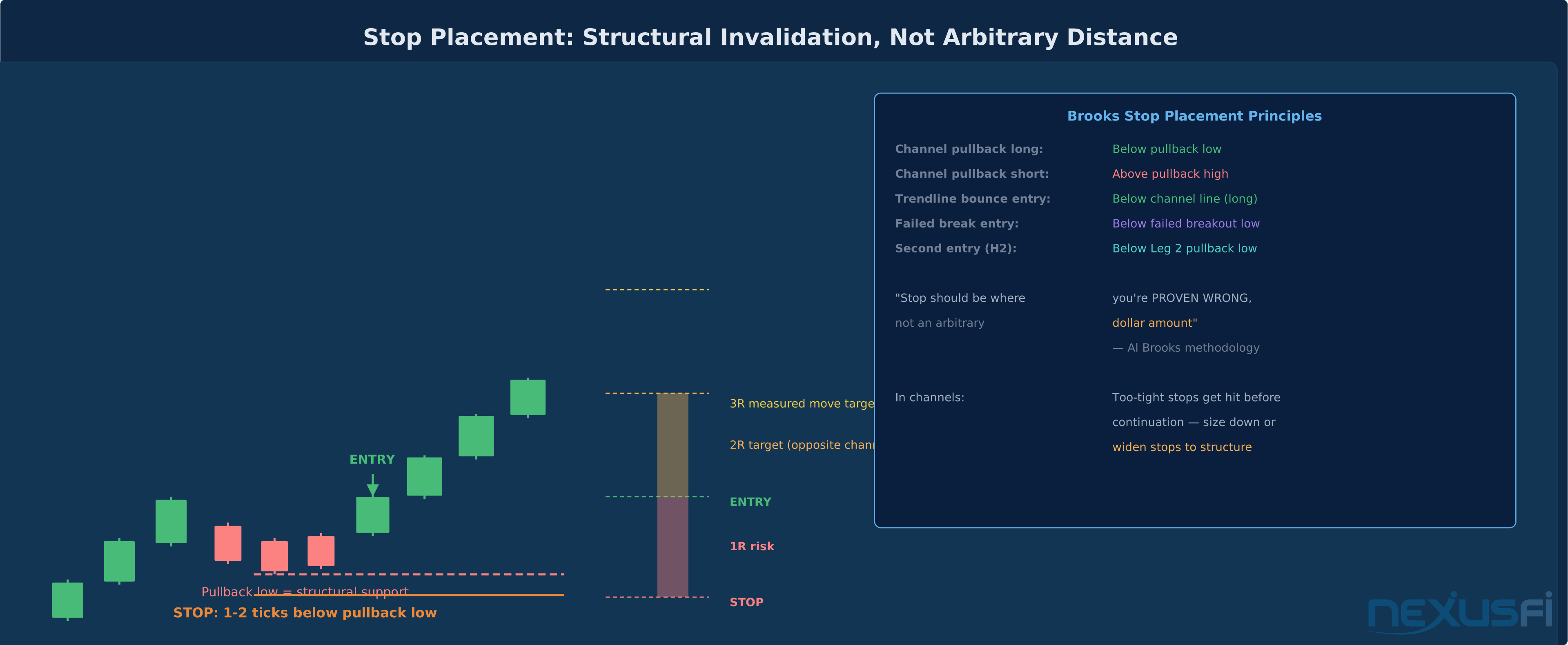
| Entry Method | Stop Location | Rationale |
|---|---|---|
| Pullback long | Below pullback low | Pullback low violation breaks channel structure |
| H2 long | Below Leg 2 pullback low | Second leg failure means both attempts failed |
| Trendline bounce | Below trendline touch bar | If trendline fails as support, thesis is invalid |
| Failed break long | Below failed break low | If failed break low is taken out, it was not a failed break |
The size adjustment principle: Structural stops sometimes imply uncomfortable amounts of risk per contract. The solution is not to tighten the stop; it is to reduce position size. Trading one contract with a structurally correct 15-tick stop is always better than two contracts with an arbitrary 8-tick stop and watching one get stopped out before the structural level. Channels are naturally noisy — bars routinely probe the boundaries and snap back. Adding 1-2 ticks of buffer beyond the structural level is appropriate in liquid futures.
Targets and Measured Moves #
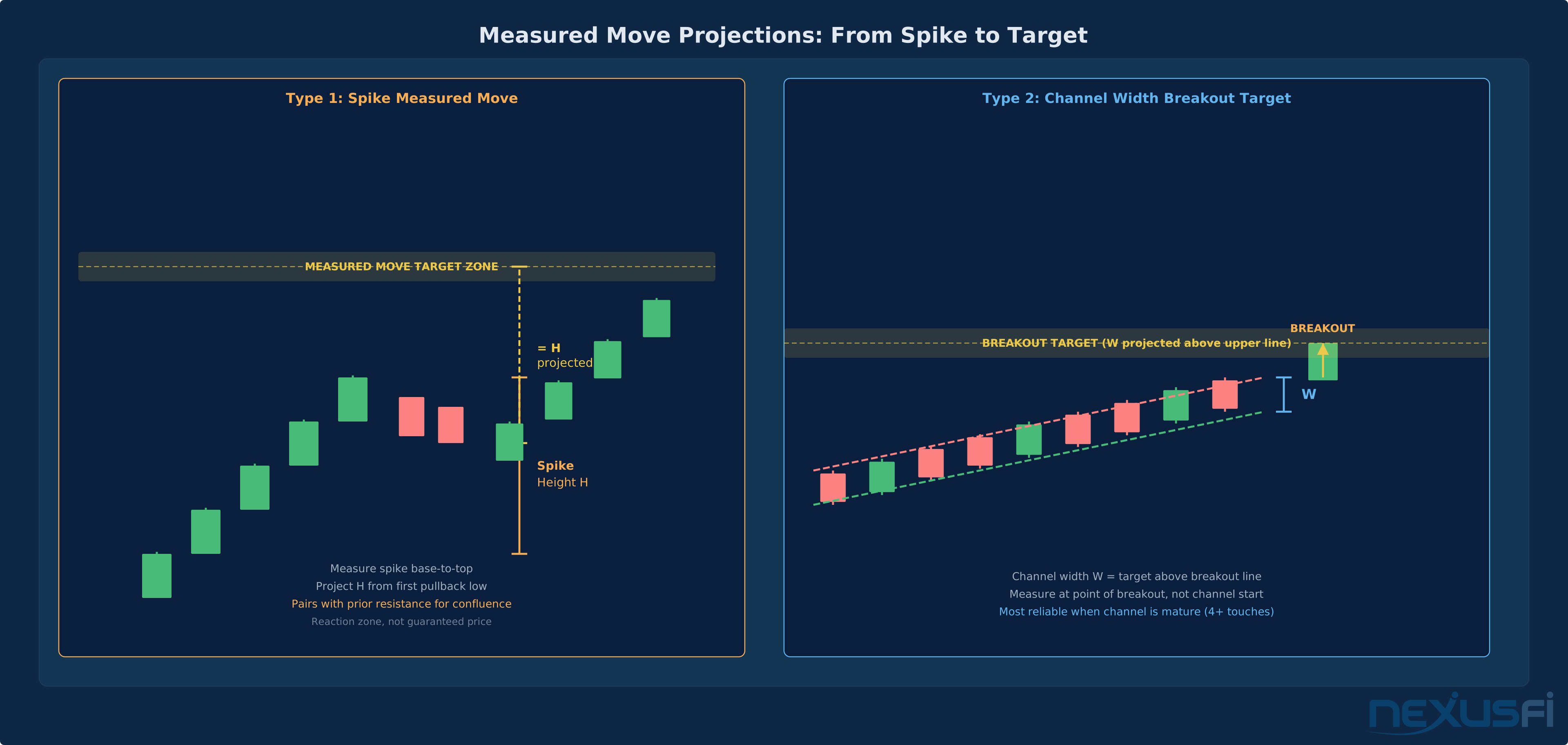
The measured move is the primary targeting methodology in spike-and-channel trading — a probability statement about where the market is likely to react, hesitate, or complete a leg.
Type 1: Spike Height Projection #
- Measure spike height: from base (last bar before spike began) to spike extreme = H
- Project H from the first meaningful pullback low after the spike
- The result = the measured move target zone
The spike height H represents the initial force behind the move. The channel sustains that force over a longer period, and the measured move says: the energy that drove the spike is likely to manifest again as the channel leg completes, producing a move of similar magnitude from the first consolidation point.
@Salao's observation highlights a key nuance: the measured move can be calculated from different reference points — spike height, channel leg height, or prior trading range height. When multiple calculations point to the same zone, that level carries greater significance.
Type 2: Channel Width Projection #
When the channel breaks out, project the channel width W in the direction of the breakout from the channel line. This is the first measured move target for the breakout move, and is most reliable when the channel has 4+ boundary touches.
Target hierarchy for a channel pullback entry:
- First target: opposite channel wall — the most conservative and reliable target
- Second target: measured move projection — scale out at first target; let remainder ride
- Third target: prior swing highs/lows, session extremes, round numbers — key reference levels that add confluence to measured move zones. Understanding support and resistance dynamics helps identify which of these levels will hold as genuine barriers versus being swept through
Brooks Market Cycle: The Bigger Framework #
Spike and channel exists within a four-phase cycle that describes how markets transition between states.
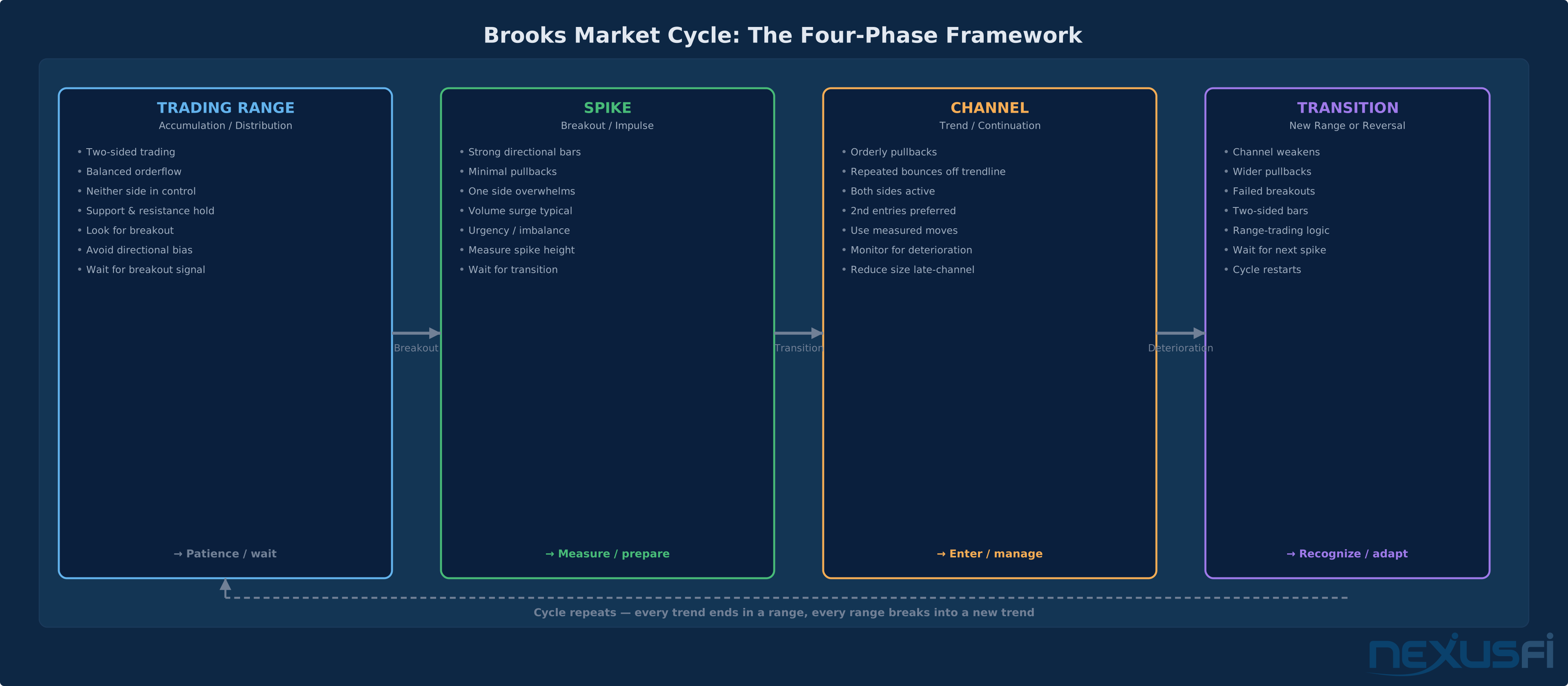
Phase 1 — Trading Range: Balance. Neither side has clear edge. Price bounces between identifiable support and resistance. Strategy: patience; fade extremes with tight stops; wait for the breakout.
Phase 2 — Spike: The breakout has conviction. Price moves fast and far. Strategy: measure H; prepare for channel entries; avoid chasing the spike itself.
Phase 3 — Channel: The trend is orderly. Pullbacks are structured and predictable. Strategy: enter H2 pullbacks; scale into trend using measured move framework; monitor channel health.
Phase 4 — Transition: The channel deteriorates. Pullbacks deepen. Eventually, a new trading range establishes. Strategy: reduce size; tighten stops; accept quick profits; prepare for range logic.
This illustrates a critical point: when the spike occurs within a trading range context rather than from a clean range breakout, measured move expectations change at the core. Read the broader context before projecting channel targets.
Channel Deterioration: Reading the Late-Stage Trend #
Every channel eventually ends. The market does not reverse abruptly from a strong channel — it degrades first through a recognizable sequence. Brooks dedicated an entire volume to this transition in Trading Price Action Trading Ranges (Wiley, 2012), mapping how the orderly two-sided trading within a channel gradually widens until the channel itself becomes indistinguishable from a new trading range.
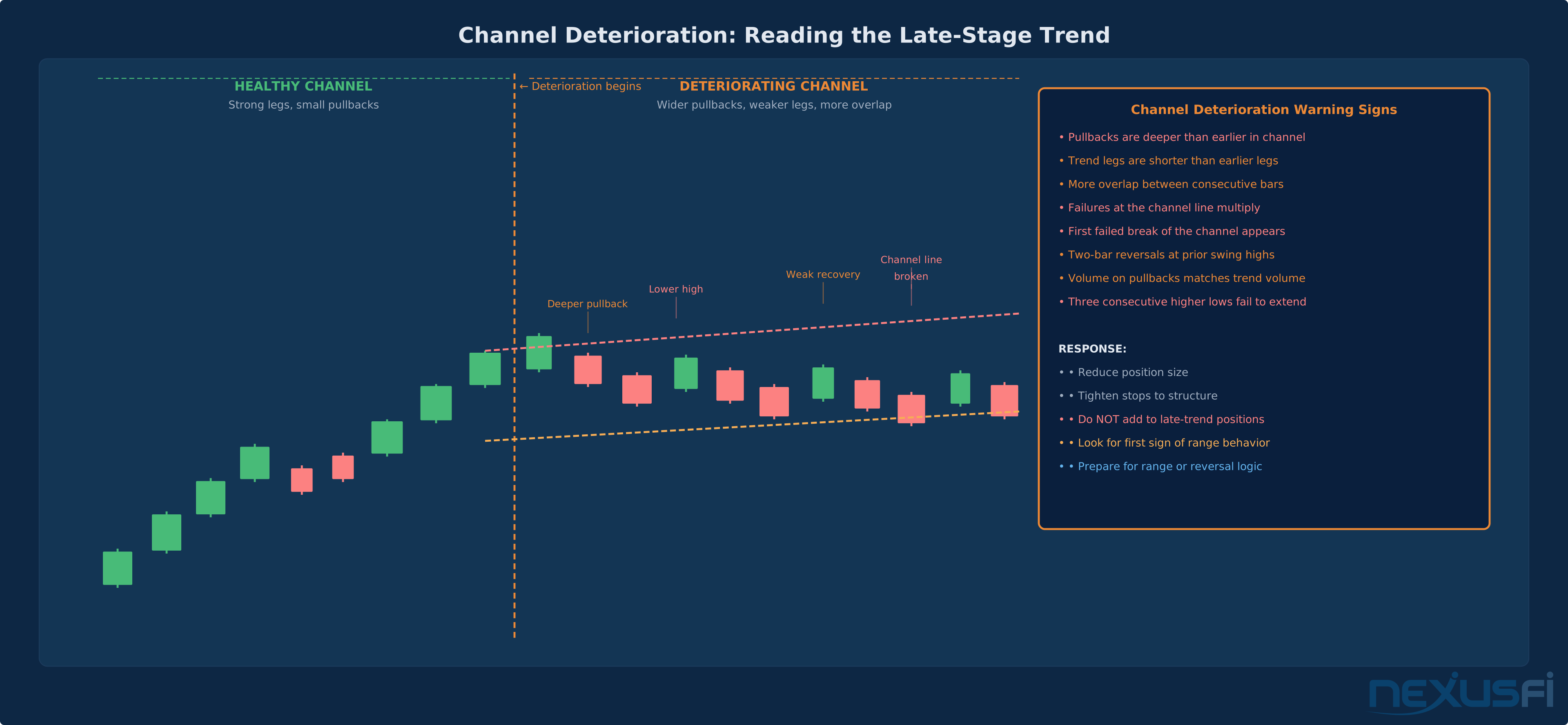
The deterioration warning sequence:
Stage 1 — Deepening pullbacks: Pullbacks that were shallow and quick start reaching further into the prior trend leg. This signals the countertrend side is strengthening.
Stage 2 — Weaker trend legs: New highs (in a bull channel) are made with less conviction. Bar sizes on trend legs shrink relative to pullback bars. When pullback bars are larger than trend bars, the internal balance has shifted.
Stage 3 — Increasing overlap: Consecutive bars in the trend direction start overlapping more. The market is finding acceptance at new prices rather than urgently moving through them.
Stage 4 — Channel line breaks: Price closes beyond the channel line. This does not immediately signal reversal — it signals the channel is weakening. A strong snap-back from the break can itself be a high-quality trade.
Stage 5 — Pattern failures: Pullback entries that previously worked reliably begin failing. H2 entries get stopped out. The Always-In Trading Concept becomes ambiguous.
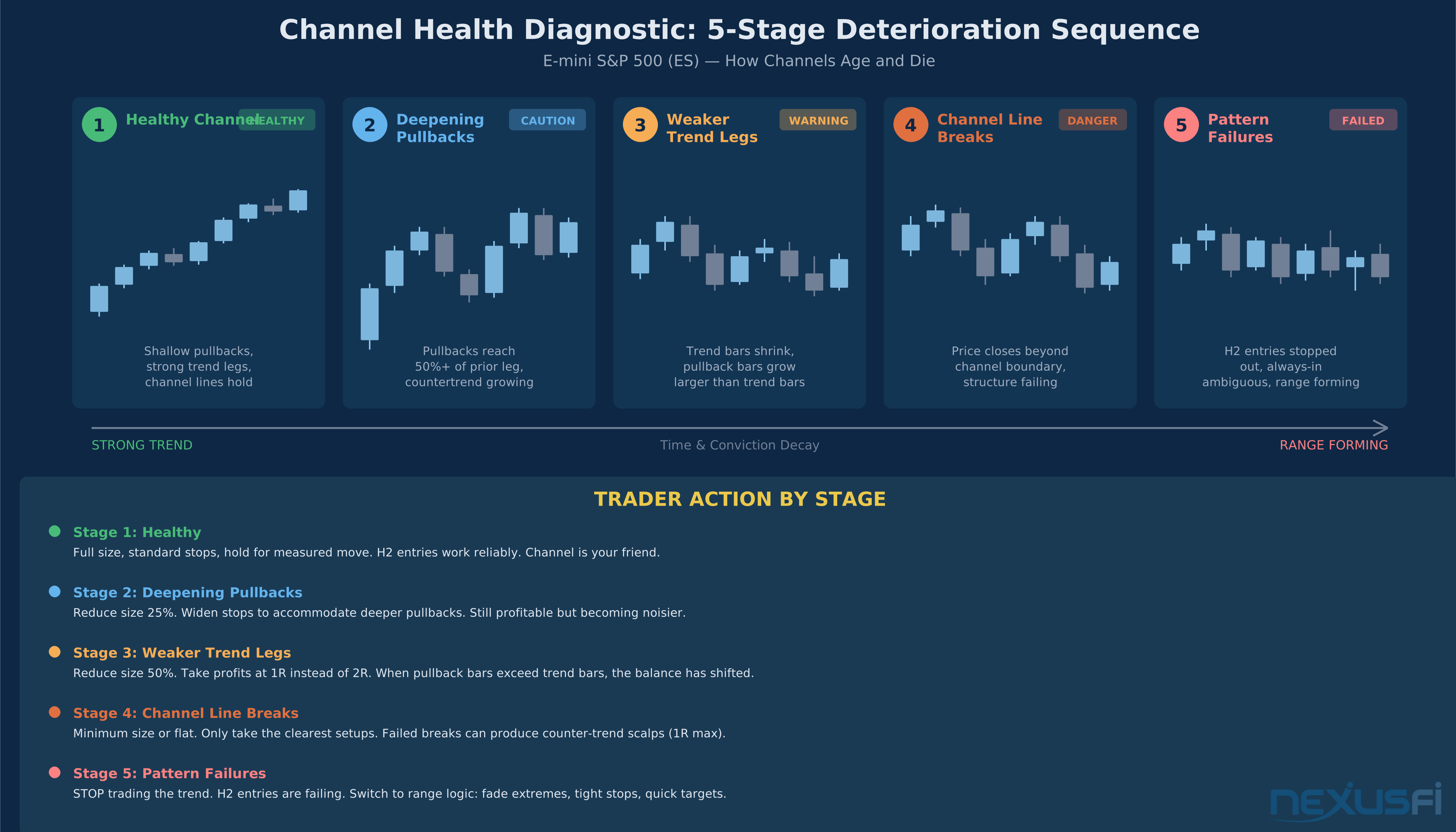
Response: Reduce position size by 25-50%. Tighten stops to structure. Move profit targets in (take 1R instead of 2R). Shift from "trend trading" to "testing whether there is still a trend." When in doubt, do not add new positions.
Practical Execution Workflow #
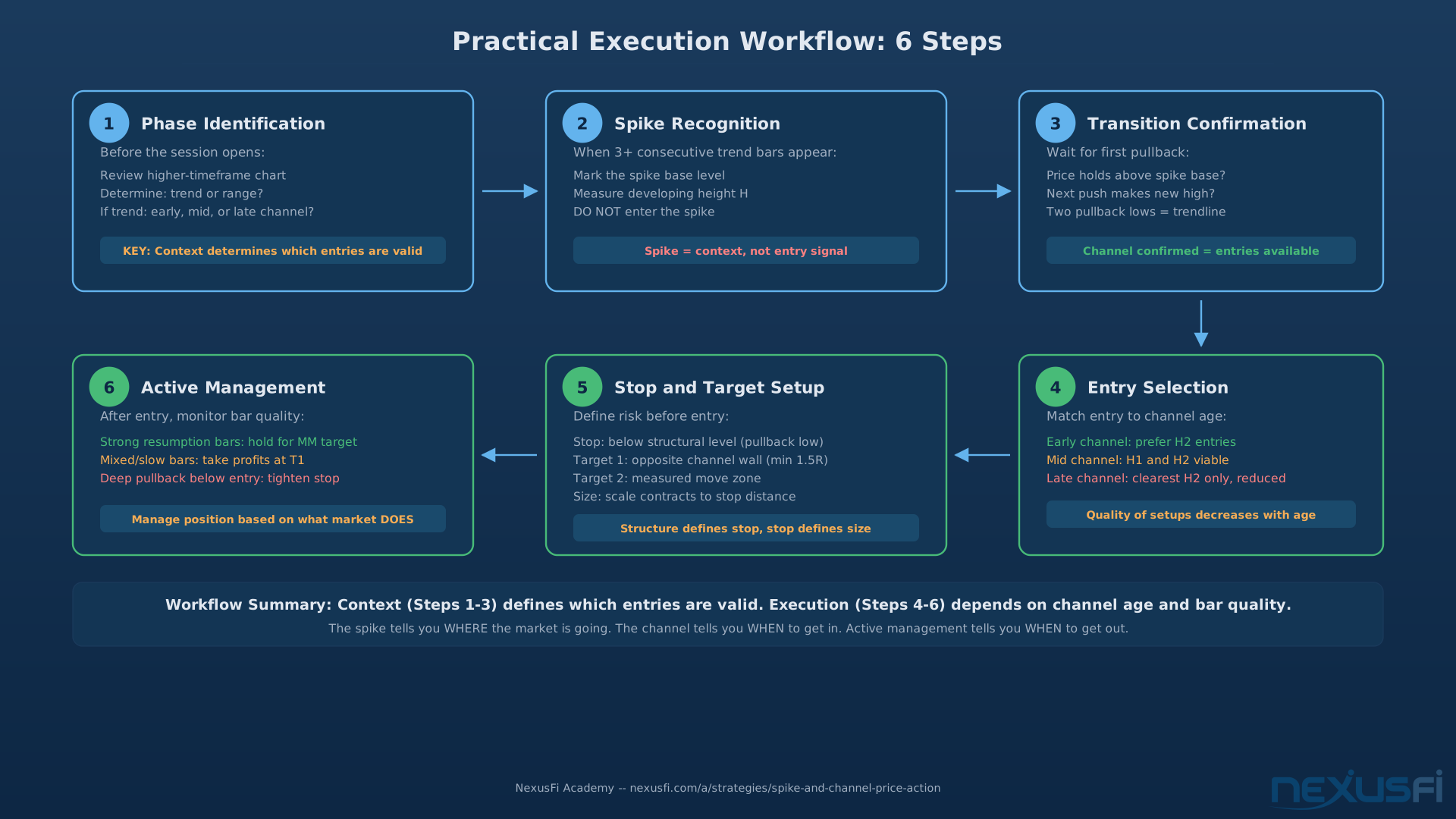
Step 1 — Phase identification (before the session): Review the higher-timeframe chart. Is the market in a trend or trading range? If in a trend, is it early-channel, mid-channel, or deteriorating?
Step 2 — Spike recognition: When you see 3+ consecutive trend bars with clean closes, mark the base of the spike. Measure the developing spike height H. Do not enter the spike.
Step 3 — Transition confirmation: Wait for the first pullback. Does price hold above the spike base? Does the next push make a new high? When you can draw a trendline through two pullback lows, channel is confirmed.
Step 4 — Entry selection: In early channel, prefer H2 entries. In mid-channel, H1 and H2 are both viable. In late-channel, only take the clearest H2 setups at reduced size.
Step 5 — Stop and target setup: Stop at the structural level (below pullback low). Identify the opposite channel wall as first target (needs at least 1.5R). Calculate measured move zone as second target.
Step 6 — Active management: After entry, monitor bar quality. Strong resumption bars → consider holding for measured move. Mixed, slow bars → take full profits at first target. Unusually deep pullback below entry before any target → deterioration signal, tighten stop immediately. The full trade management framework covers scaling, trailing, and position management from entry to exit.
Common Mistakes #
Entering the spike: The most common beginner error. The entry risk is terrible relative to the signal strength. The spike is for measurement and direction, not entries.
Counting legs in wrong context: H1/H2 counts only apply in a defined channel. Applying pullback logic in a trading range or deteriorating channel produces false setups. Always verify channel context first.
Arbitrary stops: Using a fixed number of ticks regardless of structure destroys expectancy. Structural stops are not optional — they are the foundation of the method's edge.
Holding through deterioration: The instinct to hold and wait for the trend to resume usually produces the worst drawdowns. When deterioration signals appear, reduce size and tighten stops.
Ignoring market cycle phase: A perfect H2 entry in a deteriorating channel or during a trading range performs systematically worse than the same setup in an intact mid-channel. Match the entry to the phase.
Quick Reference Decision Matrix #
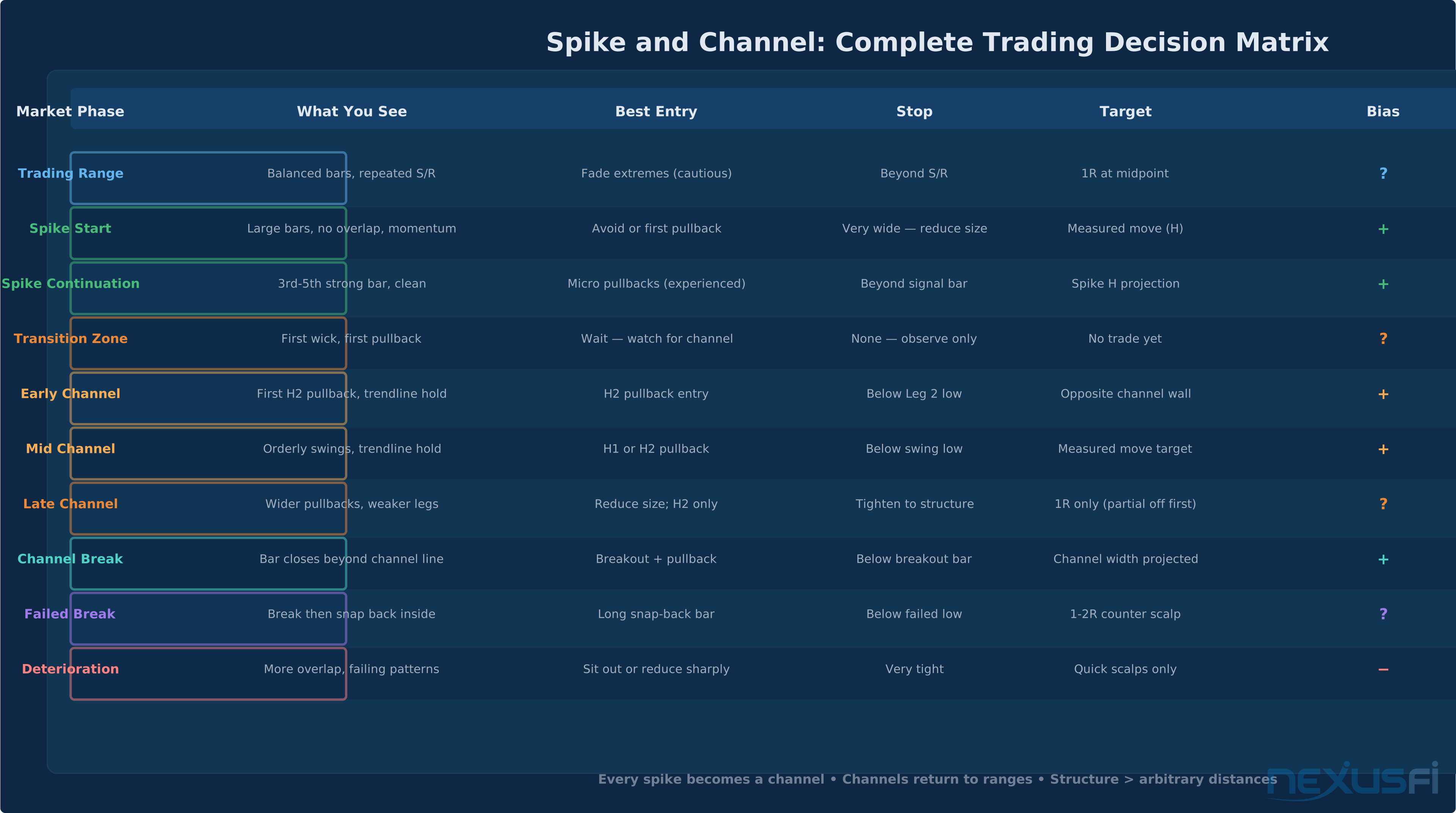
The spike-and-channel sequence is the organizing framework for understanding what the market is doing at any moment. The breakout trading strategies foundation, the two-legged pullback execution, the always-in concept — all of these become more coherent when placed inside the spike-and-channel cycle. It is the structural map that shows where you are in the market's path and, so, what to do next.
Knowledge Map
Prerequisites
Understand these firstGo Deeper
Build on this knowledgeReferences This Article
Articles that build on this topicCitations
- — Price Action Ripper's Journal (2014) 👍 8“The market has two native states: Trend or Trading Range. Trends consist of Breakout (spike) and channels phases. The market cycle to me is Breakout > Channel > Range > Breakout.”
- — Crossing the Abyss: An Adventure Guide by Snax (2022) 👍 5“March 15 & 16 were the beginning of the bull spike that has now transitioned into a channel as it eases off the momentum.”
- — Book Discussion: Reading Price Charts Bar by Bar by Al Brooks (2009) 👍 3“According to Brooks when price spikes and then channels you can typically expect that start of the channel to be tested sometime within a day or two.”
- — Crossing the Abyss: An Adventure Guide by Snax (2019) 👍 4“When a channel is steep, it is better not to enter a reversal trade on the breakout through the trend line and instead wait to see if there is a breakout pullback.”
- — The Elusive Price Action: How to Trade (2010) 👍 14“If price action is not moving beyond near term ATR, be sitting back observing until price breaks out or use a range strategy -- a channel with price bouncing between support and resistance.”
- — Salao's Journal--Skiff on the Gulf Stream (2019) 👍 4“The breakout found resistance at a measured move target (measured using the height of the channel). The measured move target should have been measured using the height of the trading range preceding the breakout.”
- — Trading Price Action Trends (Wiley Trading, 2011) (2011)
- — Crossing the Abyss: An Adventure Guide by Snax (2020) 👍 10“Recognizing tight trading ranges within the channel is critical -- they signal the transition between impulse legs and are where the next with-trend entry sets up.”
- — Measured Moves - DAX (2019) 👍 4“Measured move targets using the height of the channel work consistently across instruments -- the market seeks these levels because enough participants are watching the same reference.”
- — Order Flow Imbalances and Amplification of Price Movements: Evidence from U.S. Treasury Markets (FEDS Notes, 2025) (2025)
- — Trading Price Action Trading Ranges (Wiley Trading, 2012) (2012)