



Multi-Timeframe Analysis for Futures Trading: Building a Top-Down Framework That Actually Works
Overview #
Every futures trader hits the same wall eventually. The 15-minute chart looks great — price is pulling back into support, structure is intact, momentum is shifting. You enter. The trade immediately reverses, stops you out, and then resumes in your intended direction an hour later after you've walked away in disgust.
What happened? You had the right idea on the wrong timeframe, trading against a headwind you hadn't checked.
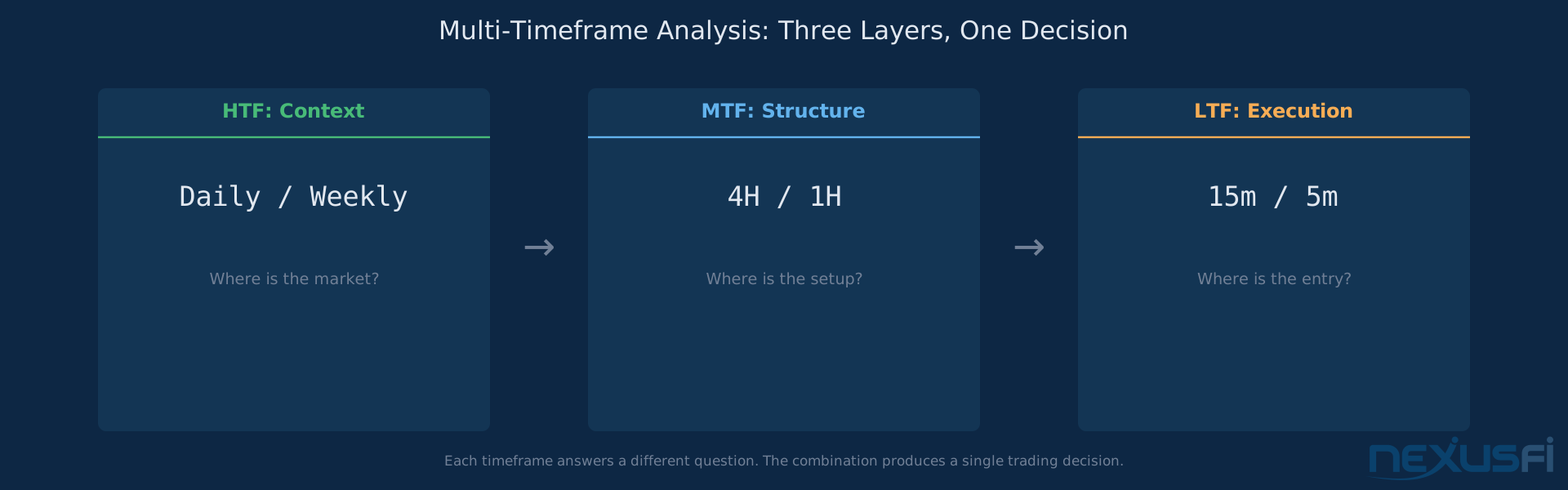
Multi-timeframe analysis (MTA) is the discipline that fixes this. It's not about having more charts or more data — it's about having a structured hierarchy of questions answered in sequence before you touch the order book. The daily chart tells you why you should trade a direction. The 4-hour tells you where structure supports that idea. The 15-minute tells you exactly when to pull the trigger. Skip any layer and you're trading blind on at least one dimension.
This isn't a forecasting tool. MTA doesn't predict where the market goes next. It defines the conditions under which a trade is worth taking, and it gives you clear criteria for when your thesis is wrong. The edge isn't in the charts — it's in the discipline of only trading when all three timeframes agree, and standing aside when they don't.
The framework translates directly across instruments. ES, NQ, CL, GC — the principles are the same. The specific timeframes shift slightly based on product volatility and session dynamics, but the top-down logic is universal.
MTA is a filter, not a forecasting system. Its primary value is in reducing the trades you take, not increasing them. A trader who only acts when daily, 4H, and 15-minute align will take fewer trades — and those trades will have structurally higher expected value than undifferentiated signal-following.
The Timeframe Hierarchy: Role-Based Selection #
The core mistake traders make with multiple timeframes is treating them as "more looks at the same thing." They're not. Each timeframe answers a at the core different question, and trying to answer all questions from one chart is like trying to see your neighborhood's street layout and your state's highway network on the same map at the same time. You get noise.
The professional MTA framework assigns each timeframe a specific role:
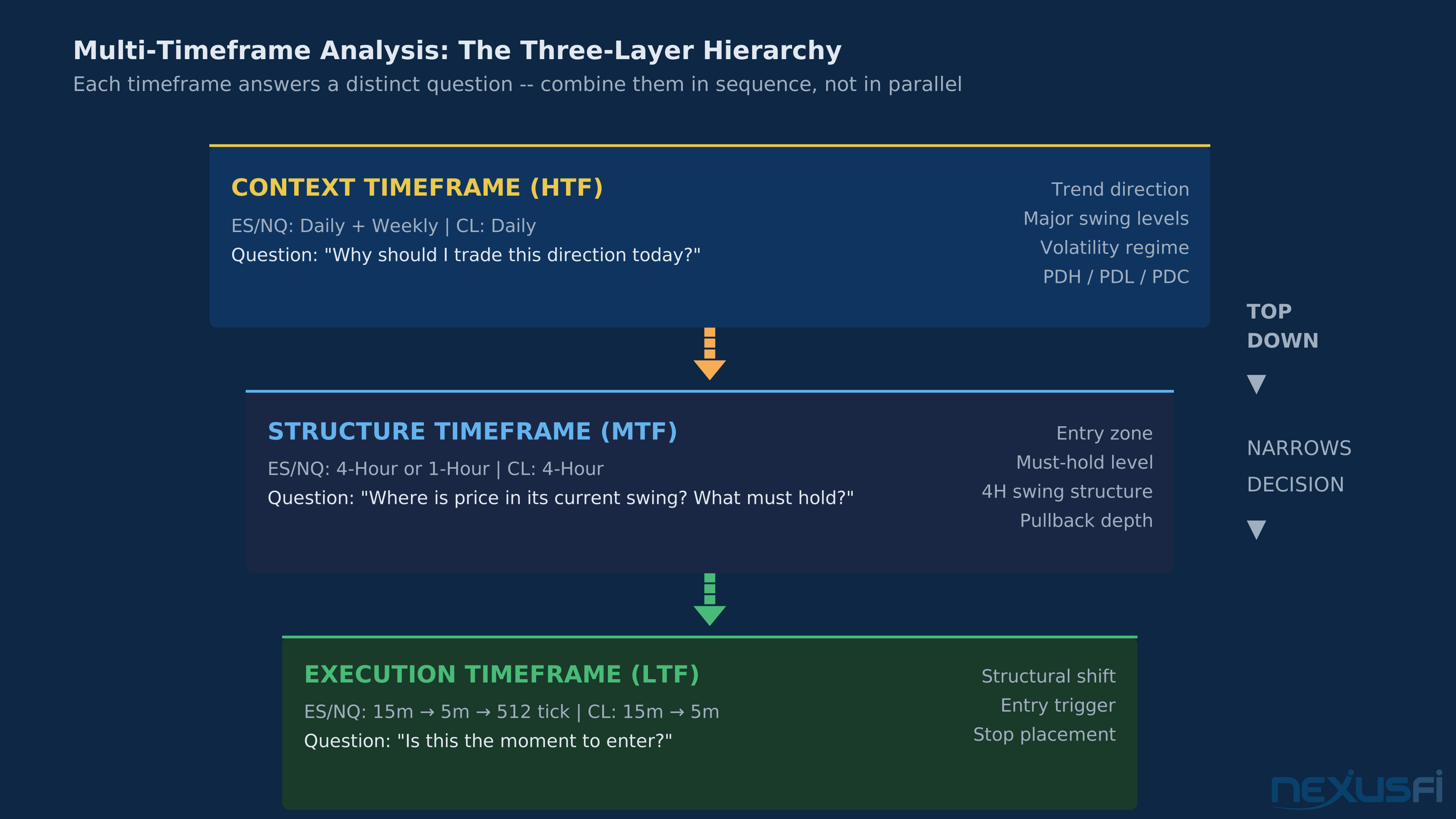
The Context Timeframe (HTF)
- ES/NQ: Daily and weekly
- CL: Daily
- Purpose: Establishes trend direction, major structural zones, and volatility regime
- Question it answers: "Why should I be positioned long or short at all today?"
- Key levels it provides: Prior week/month highs and lows, major swing points, long-term moving averages, key value areas
The Structure Timeframe (MTF)
- ES/NQ: 4-hour or 1-hour
- CL: 4-hour or 1-hour
- Purpose: Identifies the path of least resistance, pullback targets, and the "must-hold" level that validates the HTF bias
- Question it answers: "Where is the market in its current swing, and where does this move likely terminate?"
- Key levels it provides: Recent 4H swing highs/lows, 4H market structure shifts, intraday value zones
The Execution Timeframe (LTF)
- ES/NQ: 15-minute, 5-minute, or 512-1000 tick charts
- CL: 15-minute or 5-minute
- Purpose: Identifies the precise entry trigger, stop placement, and initial target
- Question it answers: "Is this the moment to enter, or do I wait?"
- Key levels it provides: LTF microstructure (higher lows for longs, lower highs for shorts), momentum shifts, order flow behavior
Keep at least a 4-6x spacing between adjacent timeframes. A 3-minute and 5-minute chart running simultaneously gives you near-duplicate information — the noise is almost identical. The edge in MTA comes from genuinely different information layers. Daily → 4H → 15m → 5m is a proper professional stack. 15m → 10m → 5m is just overhead with no structural benefit.
As @perryg, a long-time Elite Member with over 6,000 thanks received, put it bluntly: "The use of a HTF is used as a TREND DIRECTOR and nothing else." The context timeframe doesn't run the trade — it approves the trade. What it approves, the execution timeframe delivers.
Tick and Volume Charts in the Hierarchy
Time-based charts are the foundation, but professional ES and NQ traders frequently incorporate tick charts (512-tick, 1000-tick, 2000-tick) or volume charts (1000 volume, 2500 volume) at the execution layer. These have a practical advantage: they normalize for liquidity variation. During low-volume overnight sessions, a 5-minute chart might contain almost no information. A 1000-tick chart gives you equivalent candles regardless of session. During high-volume RTH, the same tick chart compresses into fast, data-rich bars that expose microstructure clearly.
Think of tick charts as the surgeon's scalpel at the execution layer. They don't replace the 15-minute context for LTF structure — they refine the trigger and provide real-time order-flow texture that time bars can obscure.
Product-Specific Timeframe Defaults
These aren't rules — they're community consensus starting points validated over thousands of sessions:
| Instrument | HTF | MTF | LTF | Execution Detail |
|---|---|---|---|---|
| ES (day trade) | Daily | 4H | 15m → 5m | 512-1000 tick optional |
| NQ (day trade) | Daily | 4H | 15m → 5m | 512-1000 tick optional |
| CL (day trade) | Daily | 1H | 15m → 5m | 3m optional for tight entries |
| ES (swing) | Weekly | Daily | 4H → 1H | 15m for precise entry |
| GC (day trade) | Daily | 4H | 15m | 5m for entry refinement |
CL needs slightly tighter timeframes than equity index futures — headline risk creates faster intraday regime shifts, so a 4H structural reference sometimes becomes stale during the session.
Top-Down Analysis: The Decision Funnel #
This is where most traders get MTA wrong. They run top-down analysis once in the morning, decide the market is bullish, and then take every long signal they see all day. That's not a framework — that's a bias with extra steps.
Top-down analysis is a funnel. Each level narrows the decision until you have a specific action or a clear instruction to stand aside.
The Daily Chart: Establishing Regime and Bias
Start with the daily before the market opens. You're answering one question: what is the highest-probability direction for price to travel today, given where we are in the broader swing structure?
What to mark on the daily:
- Prior day high/low/close (PDH/PDL/PDC) — these act as intraday reference levels throughout the session
- Last three significant swing points (higher highs/higher lows or lower lows/lower highs)
- Key value areas from the prior week's volume profile
- Whether price is near a major structural decision point (weekly high, prior month's range edge)
- Yesterday's close relative to the week's value area
Output from this analysis: a directional bias (long bias above PDH, short bias below PDL, or neutral/wait when price is inside a consolidation zone), plus the two or three key daily levels that will matter today. 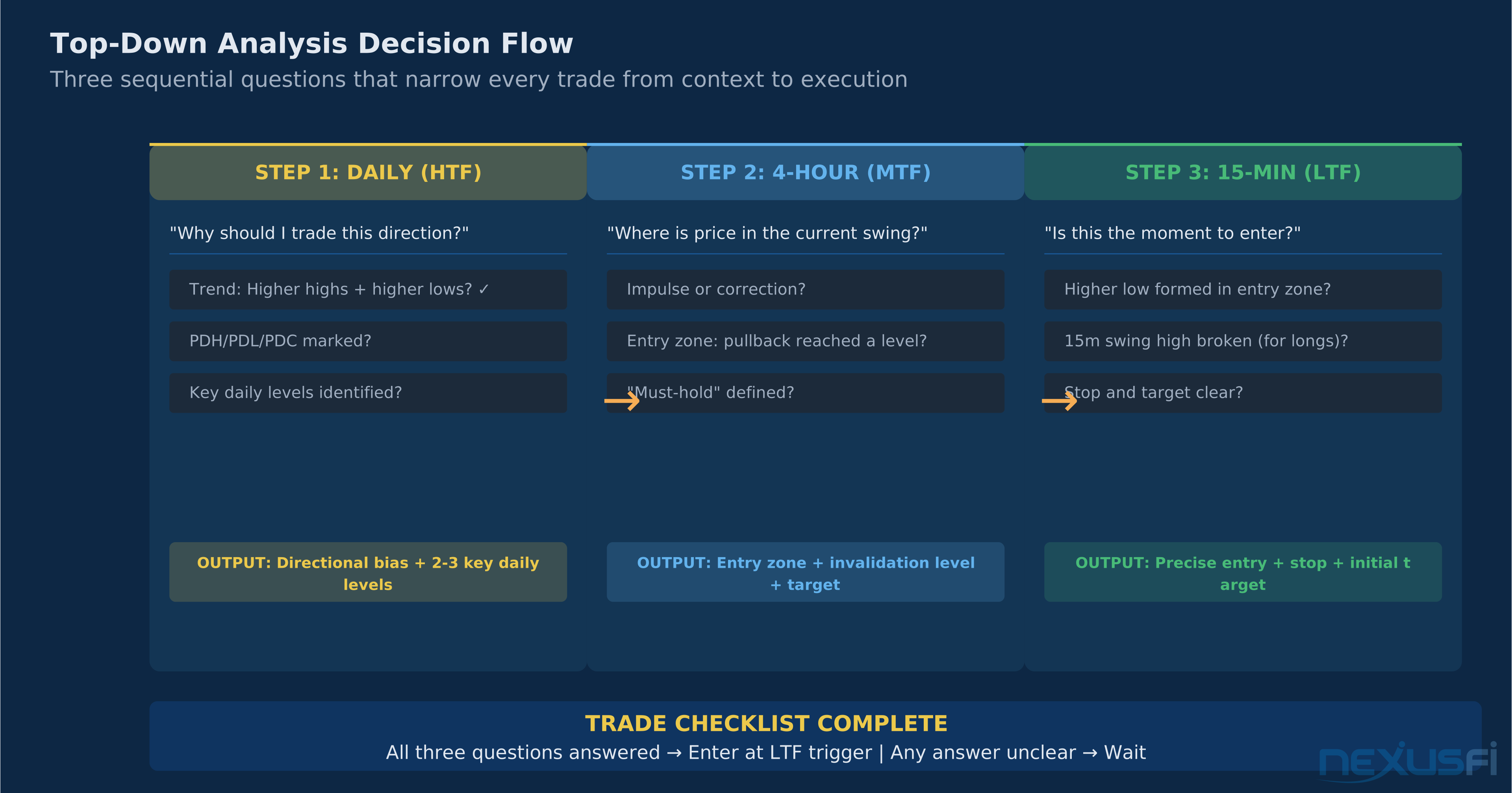
The 4-Hour Chart: Defining the Current Swing
With daily bias established, drop to the 4-hour. You're now mapping the current swing's anatomy:
- Has the daily pullback reached a meaningful 4H level? (21 EMA, prior 4H swing point, value area edge)
- Is the 4H structure intact — still making higher lows in an uptrend, lower highs in a downtrend?
- Where is the "must-hold" level? This is the price that, if lost, invalidates the bullish thesis and the trade doesn't happen today
Output from 4H: a specific entry zone (where the pullback has likely reached enough to justify the HTF continuation), a specific invalidation level (below which you don't take the trade), and a primary target (the next 4H swing high or major structural resistance).
A "must-hold" level is not a stop-loss — it's a thesis invalidator. If price violates the must-hold on a 15-minute closing basis, the HTF bias may still be intact, but the current swing setup is done. Stand aside and wait for the next valid setup. Traders who force entries after a must-hold violation are trading on hope, not structure.
The 15-Minute Chart: Finding the Entry Trigger
Only after the daily and 4H work is done should you look at the 15-minute for entries. At this point you know:
- Which direction you're trading (daily bias)
- Which zone you're trading from (4H pullback area)
- What price level proves you wrong (must-hold)
Now on the 15-minute, you're waiting for one thing: a structural shift. For longs in a pullback, that means the 15m stops making lower highs and begins making higher lows — the corrective move is over and the next leg higher is beginning. For shorts in a rally, the opposite: lower highs forming after the bounce.
The trigger isn't "price is in the zone" — it's "the 15m structure has shifted in the direction of the HTF bias, within the zone." That distinction eliminates most false entries.
Alignment and Confluence: The Three-Gate System #
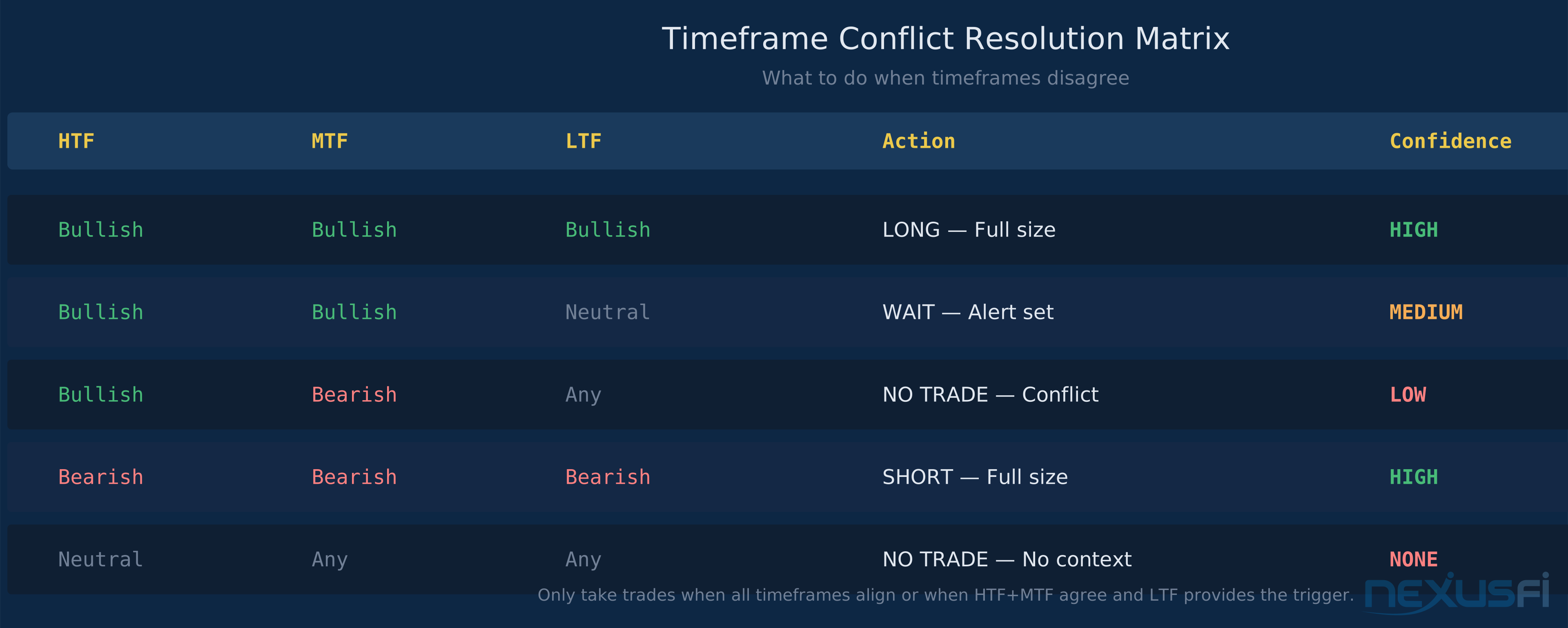
Alignment is what creates high-probability trades. Confluence is what confirms them. They're different things — alignment is structural (timeframes agree on direction and location), confluence is evidential (multiple independent factors corroborate the entry). 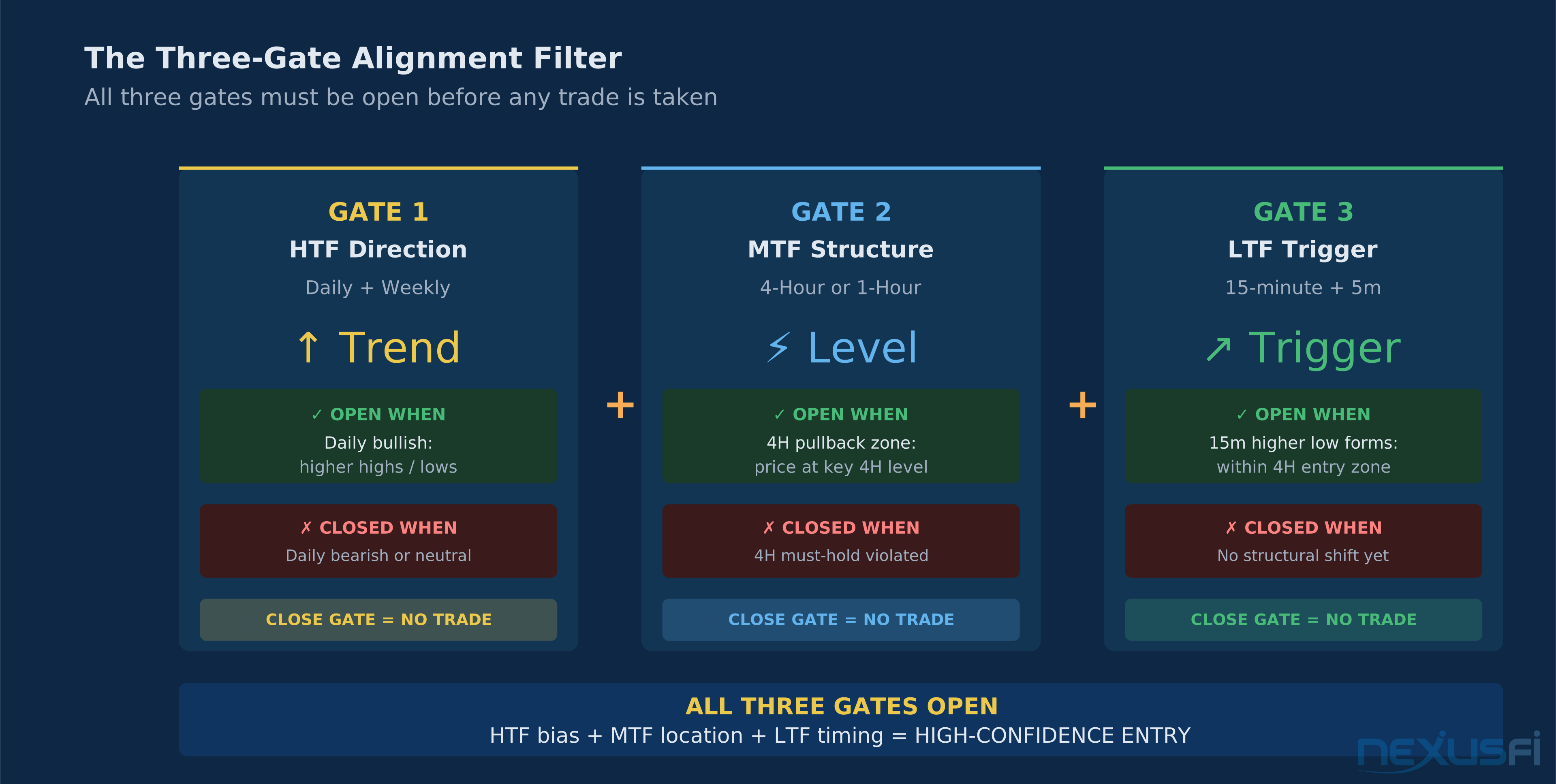
Three-Gate Alignment Filter
Before any trade, all three gates must be open:
- Gate 1 — HTF Direction: Daily bias agrees with the intended trade direction. If daily is bearish but you're trying to buy, gate 1 is closed. Period.
- Gate 2 — MTF Structure: The 4H pullback has reached a meaningful structural level. The entry zone is valid. The must-hold level has not been violated.
- Gate 3 — LTF Trigger: The 15-minute chart has formed a structural reversal signal at the 4H entry zone. The lower timeframe is no longer fighting the HTF bias.
All three open = trade. Any gate closed = no trade. The temptation to override a closed gate, especially Gate 1, is where discipline breaks down and accounts bleed. The framework only works if the rules apply unconditionally.
Structural Alignment Example (ES Long Setup)
HTF (Daily): ES is in a clear uptrend, making higher highs and higher lows over the last 10 sessions. Today's daily bias is bullish. Key levels: prior session high at 5,820.00, must-hold at 5,775.00 (prior week low).
MTF (4H): ES has pulled back into the 5,785-5,795 zone — a prior 4H breakout area and where the 21 EMA on the 4H chart rests. Must-hold on the 4H is 5,775.00. The 4H structure is still making higher lows.
LTF (15m): After the pullback to the 5,785 zone, the 15-minute has formed a higher low at 5,783.50 and then rallied through the prior 15m swing high at 5,791.00. Structure has shifted bullish on the execution timeframe.
Entry: 5,791.75 (on the break and hold above the 15m swing high). Stop: 5,776.00 (below the 4H must-hold). Target: 5,820.00 (prior daily high). Risk/reward: ~14 ticks risk, ~112 ticks target.
That's MTA working as designed. The trade is not a guess — every parameter derives from a specific structural reference on a specific timeframe. 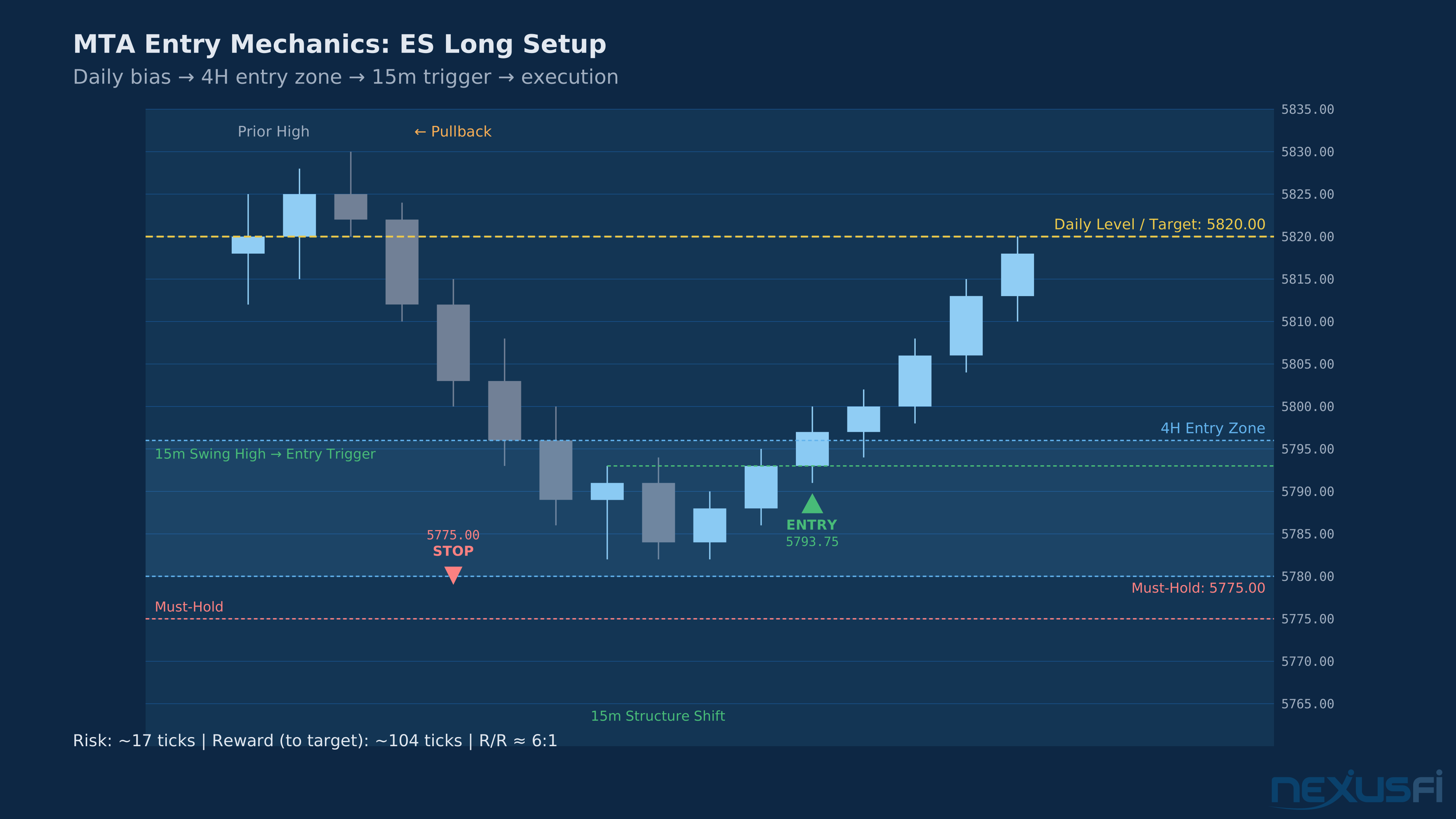
When Alignment Breaks Mid-Trade
What happens when you're already in a trade and the structure shifts? This is where clear rules prevent catastrophic losses.
If the LTF breaks down (15m makes a new low after your entry but 4H is still intact): take partial profits or tighten the stop — the LTF has signaled noise or a deeper pullback is possible.
If the MTF breaks down (4H violates the must-hold level): exit immediately. The trade premise is gone regardless of your P&L position. Don't wait "to see what happens."
If the HTF breaks down (daily makes a new swing low invalidating the uptrend): this isn't just exit — this is "switch sides and look for short setups." A daily trend break changes everything.
Entry Mechanics: The Complete Setup Template #
The research is useless if you can't execute. Here's the full template traders use to operationalize MTA entries.
Anatomy of an MTA Entry (Long Bias)
Pre-trade requirements:
- Daily bias: bullish (established at market open or in pre-market)
- 4H entry zone: defined (specific price range, not "around here")
- 4H must-hold: defined (specific price, below which the setup is off)
- 15m structural shift: confirmed (higher low formed at 4H zone + 15m swing high taken)
Order placement:
- Entry: limit order at the retest of the broken 15m swing high, OR market order on the break with immediate stop
- Stop: 1-2 ticks below the 4H must-hold level (not the LTF trigger low)
- Initial target: prior 4H swing high or next major daily resistance
- Runner target (optional): next weekly level or daily open if significant
Position sizing:
- Size from the stop, not from a fixed dollar amount
- With a 14-tick stop on ES (3.50 points = $175/contract), determine how many contracts keep you within your per-trade risk limit
- In prop firm accounts: also confirm the trade doesn't disproportionately risk daily drawdown limits
Entry timing detail: Once the 15m structure shift is confirmed, precision timing on the 5-minute or 512-tick chart can improve the entry. You're looking for: a controlled pullback to the breakout level (not a gap and go), order flow confirmation (absorption at the break level, aggressor volume supporting the direction), and then execution. This is refinement, not a new gate — the 4H and 15m work is what decides whether the trade exists at all.
Target Management Across Timeframes
The first target is always defined by the next meaningful MTF level. Hold beyond that level only if:
- HTF bias remains clearly intact
- MTF structure continues making higher highs (for longs)
- LTF hasn't formed a lower high indicating internal momentum exhaustion
For runners, trail the stop using 15m swing lows — move the stop to below each successive higher low as the trade develops. This keeps the runner alive through normal pullbacks while protecting against genuine structure breaks.
The trap most traders fall into is managing the trade on the same timeframe they entered. If you entered on the 15-minute, manage on the 15-minute using the 4H as the structural reference. Don't start managing with the 5-minute unless you're in a fast-moving trend day scenario. Managing on a lower timeframe than your entry gets you stopped out by noise.
Where MTA Breaks Down #
MTA is not a weather forecast — it's a decision framework. And like any framework, it fails in specific, recognizable conditions. Knowing when NOT to use it is as important as knowing how to use it.
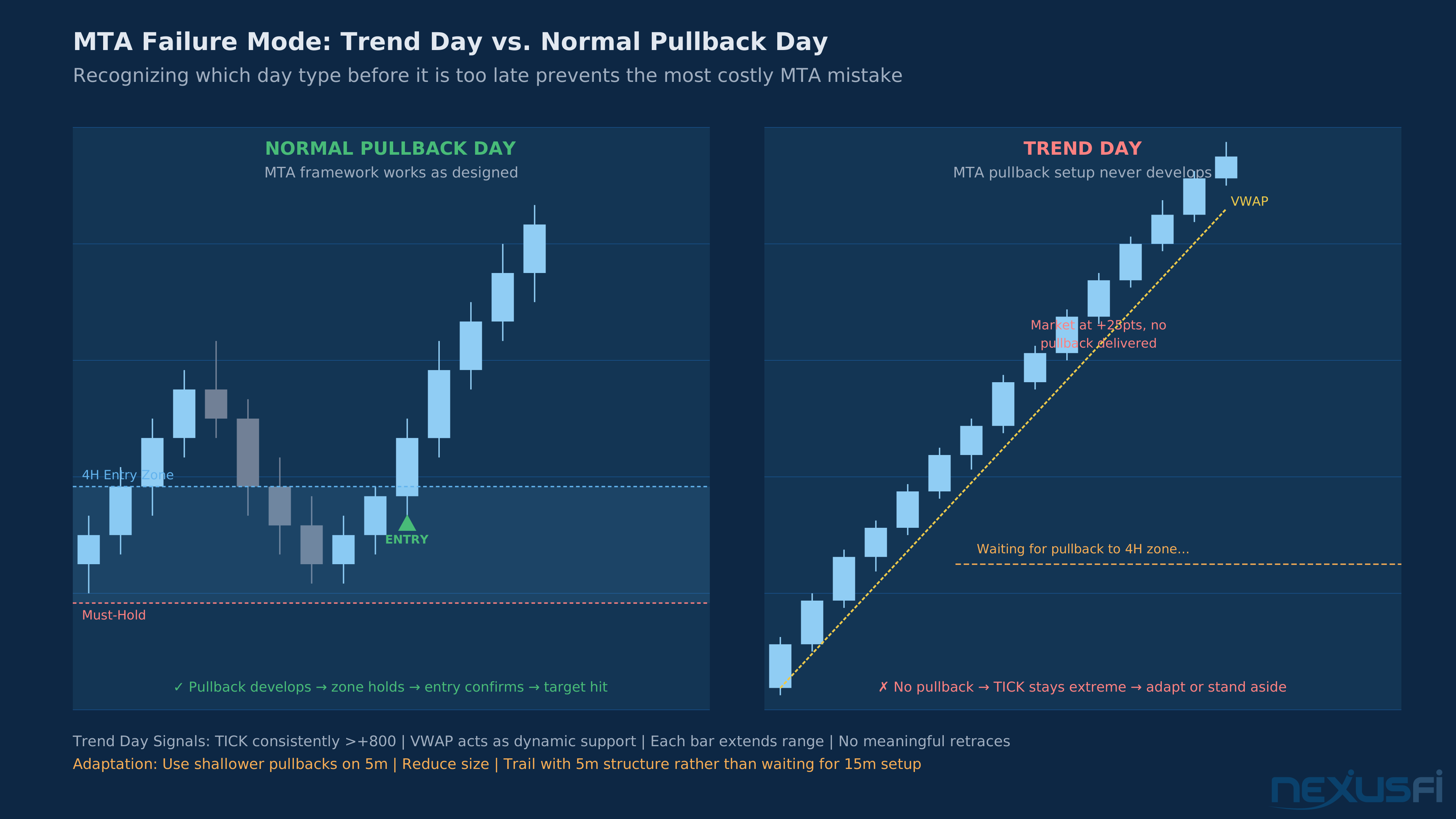
Trend Days: When Pullbacks Don't Come
On a genuine trend day — identifiable by extreme NYSE TICK readings consistently above +600 or below -600, directional opening that immediately extends, and VWAP acting as dynamic support with no meaningful mean reversion — the MTA pullback structure doesn't develop normally.
The 4H pullback you're waiting for becomes a 2-3 bar "pause" rather than a proper retracement. The 15m higher low forms at shallower depths than expected. Waiting for a "proper" MTA setup on a trend day means you're watching ES run 30-40 points while your setup criteria go unmet.
Adaptation: on confirmed trend days, accept shallower pullbacks and weaker 15m structure shifts. Use the tick chart for entries rather than waiting for 15m structure. Reduce position size to account for the less reliable entry confirmation.
News-Driven Gaps and Volatile Opens
When major economic releases (CPI, FOMC, NFP) gap price beyond key HTF levels, the pre-market MTA work becomes partially invalid. The levels still matter, but their role changes — they become balance anchors for the new range rather than predictive targets.
Protocol: wait 30-45 minutes post-release for price to establish a new session VWAP and begin forming a value area. Then rerun the top-down analysis using the post-news price action as the new HTF reference. Don't trade the immediate gap reaction with an MTA framework designed around pre-release structure.
Overnight Session Interference
Globex sessions can create overnight moves that gap through key daily levels. By the time RTH opens, the 4H "entry zone" you marked the prior evening may be 30-40 ES points away from current price.
This is actually a signal: if price has already reached your 4H entry zone in Globex and is now consolidating above it, your trade may have already happened overnight. Don't chase it. Reset — mark the overnight range as the new reference structure and look for the first RTH pullback to that range as the new entry opportunity.
HTF Level Failure: Sweep vs. Break
There's a critical distinction between a sweep of a level (price briefly trades through, then reclaims) and a genuine break (price trades through and cannot reclaim on a 15m or 4H closing basis). Sweeps are buy-the-dip opportunities. Genuine breaks are the signal to exit and reverse.
The tells:
- Sweep: fast, high-volume candle through the level followed by immediate reversal, volume climax pattern
- Break: sustained trade below the level, multiple 15m closes below, MTF structure begins showing lower lows
Treating a sweep like a break produces the most common MTA failure mode: stopping out at the exact point the trade should have been entered.
The 4H must-hold level is drawn precisely because it's the line between "normal pullback" and "thesis invalidation." But not every candle that touches it is a break. Closing basis matters. A 5-minute candle that pokes below the level and closes back above is noise. A 15-minute candle that closes below is a warning. A 4H candle that closes below is a signal to exit.
Integration with Other Tools #
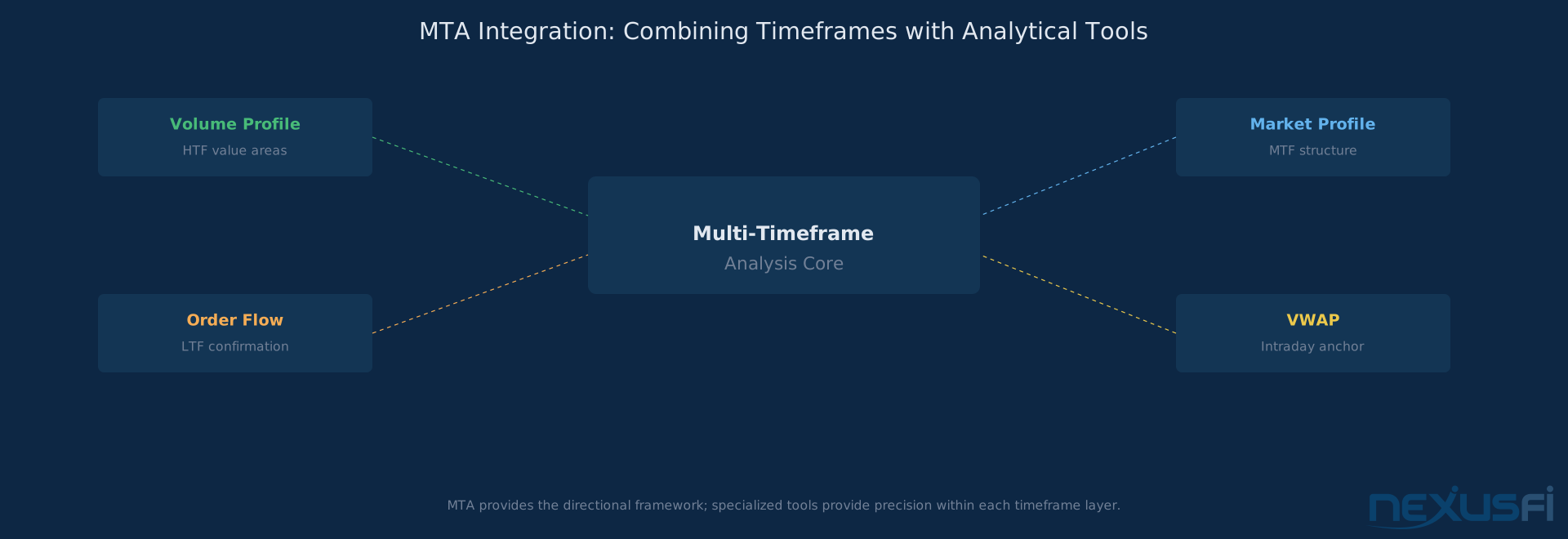
MTA provides the framework. These tools provide the evidence that confirms — or contradicts — what the framework says.
Volume Profile (POC/VAH/VAL)
VP and MTA are made for each other. The value area provides volume-based structural levels that align naturally with the 4H and daily timeframes. A 4H pullback into the prior session's value area is more reliable than a pullback to an arbitrary price swing — it has volume-based logic behind it.
Specific application:
- For longs: pullback to Daily or 4H Value Area Low (VAL) with 15m structure shift inside the VA = highest-confluence long setup
- For shorts: rally to prior session Value Area High (VAH) where price has previously rejected with 15m structure shift = highest-confluence short setup
- POC on the 4H or daily is a magnet in consolidation and a decision point at value area edges — price reaching POC in a pullback often stabilizes and reverses
VWAP as an Intraday Line in the Sand
For day trades, VWAP plays the role that the 21 EMA plays on the 4H — it's the intraday reference between bullish and bearish participation. Long setups are higher quality when price is trading above session VWAP and the pullback brings price to VWAP in alignment with a 4H support zone. Shorts are higher quality below VWAP.
When price consistently trades on one side of VWAP throughout the session, that's an early trend day signal. Adapt the MTA pullback criteria so.
Market Internals (NYSE TICK, Advance/Decline)
Internals provide MTA's blind spot: participation quality. The 15m chart might show a textbook higher low, but if the NYSE TICK is deteriorating and breadth is negative, the longs participating in that "higher low" are doing so against an increasingly hostile market environment. Survival rate of that setup drops much.
Use internals as a quality filter on LTF triggers:
- Positive TICK divergence (TICK making higher lows while ES makes equal lows) during a pullback = strong signal the selloff is exhausted
- Flat or deteriorating breadth during a 15m structural shift = reduced confidence, smaller size or skip
Order Flow as the Final Confirmation
If MTA provides the structural context and internals provide participation quality, order flow provides the microstructure confirmation at the execution layer. At the 4H entry zone, on the 5-minute or tick chart, look for:
- Absorption: large sell volume coming in at the offer, but price not declining — sellers are being absorbed by buyers
- Improving delta: each successive 5m bar showing less negative delta (selling pressure decreasing)
- Reclaim: price breaks below a minor level, then immediately reclaims it — a sweep, not a break
Entry without order flow confirmation is structurally valid but probabilistically weaker. Entry with order flow confirmation at a 4H zone with 15m structure shift and daily bias is the highest-confidence setup available in discretionary futures trading.
— Monthly/Daily/Weekly gives directional bias, 1H down to 512 tick for entries, with clear awareness of when you're fading that directional bias.
The Practical Workflow #
Theory doesn't trade. Here's how MTA translates into a repeatable pre-market and intraday routine.
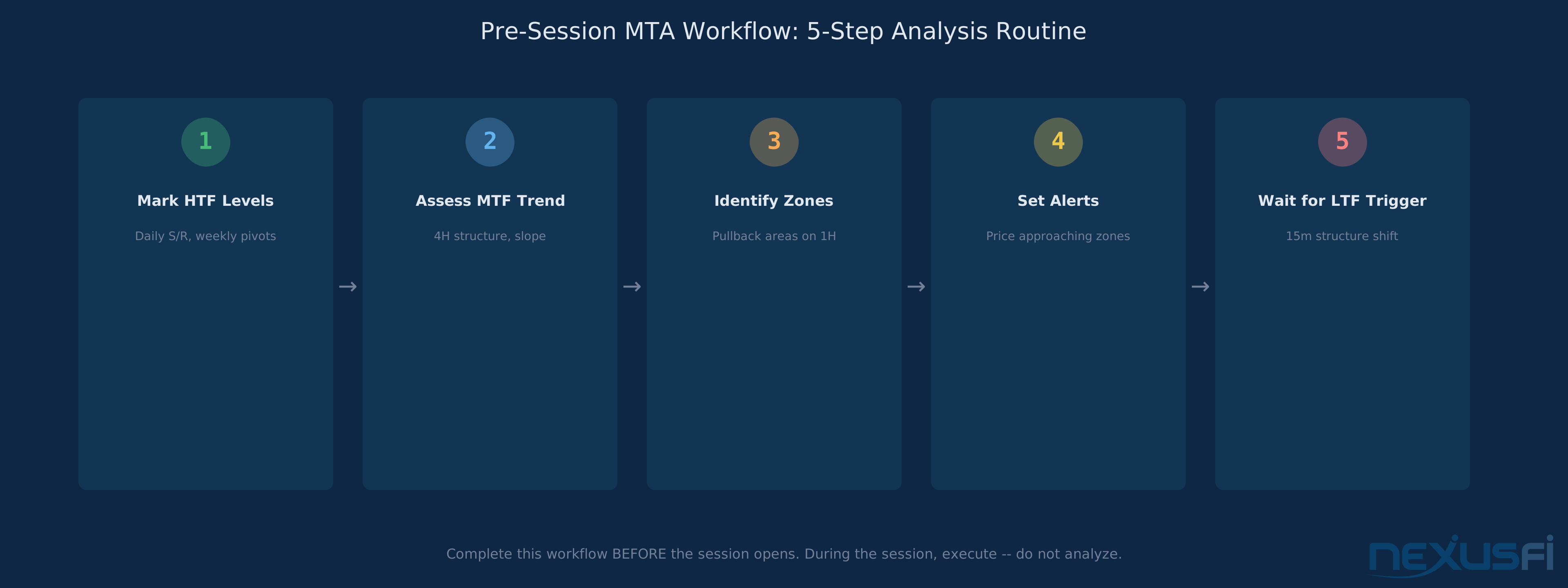
Pre-Market Preparation (20-30 minutes before RTH open)
Daily chart (5-10 minutes):
- Mark PDH/PDL/PDC
- Identify current swing structure (is daily making higher highs/lows or lower lows/highs?)
- Mark the two or three key daily levels that might matter today
- Note where yesterday's close sits relative to prior week's value area
- Establish directional bias: long above key level X, short below key level Y, neutral between
4H chart (5-10 minutes):
- Identify current 4H impulse vs. correction structure
- Mark the "must-hold" level for the directional bias
- Mark the target zone (next 4H swing high or low)
- Identify the entry zone (where the current pullback is likely to find support)
- Note any 4H gaps or unresolved prior value that might act as magnets
15m chart (pre-session setup):
- Don't try to predict what the 15m will look like at the open
- Simply note whether the overnight session has already done any structural work (formed a clear range, swept key levels, or is consolidating at a meaningful level)
- Identify the first area where the 15m will give a trigger signal if the 4H setup develops as planned
Session plan output: One page (or one section of your trading journal) with: direction, entry zone, must-hold, initial target, and the one event that invalidates today's thesis. Nothing more. Analysis paralysis is a real failure mode — more analysis beyond these five points rarely adds edge and often creates contradictory noise.
Write the plan as "If/then" statements: "If ES pulls back to 5,785-5,792 and forms a 15m higher low above 5,775, I look long targeting 5,820. If ES breaks below 5,775 on a 15m close, I have no long bias today." This forces clarity and removes in-session indecision. The plan exists to eliminate real-time emotional decision-making.
Intraday Monitoring
Once the session opens, your job shifts from analysis to observation. You already know your setup criteria — now you're watching for them to develop.
What to monitor:
- Is price respecting the levels you marked pre-market?
- Is the 4H structure holding (no violations of the must-hold)?
- Is the 15m developing the structural shift you need for entry?
- Are internals supporting the direction you're waiting for?
What NOT to do:
- Constantly redraw levels based on intraday noise
- Add new timeframes because you're bored
- Take trades outside the pre-planned zones "just to see"
The framework breaks down when traders use it as a starting point and then override it with in-session "analysis." The pre-market work exists precisely because in-session analysis is contaminated by recency bias and fear of missing moves.
The 30-Second Trade Test
@Big Mike, NexusFi's founder, described his own top-down framework: "Each morning I start with the weekly, and move down to the daily, down to the 500k, and then ultimately the 100k [his entry chart]. By the time I hit the 100k I know exactly what I am looking for, and I simply wait for it to materialize."
Before any entry, run this test: can you answer these three questions in under 30 seconds?
- What does the daily + 4H structure say about direction and location?
- Where is the invalidation level for this trade?
- What specific 15m event confirms the entry right now?
If you can't answer all three in 30 seconds, the setup isn't clear enough to trade. Wait.
Knowledge Map
Prerequisites
Understand these firstGo Deeper
Build on this knowledgeReferences This Article
Articles that build on this topicCitations
- — Perry's Trading Method -- Elite Members (2011) 👍 35“The use of a HTF is used as a TREND DIRECTOR and nothing else. If you Always trade in the direction of a higher time frame you should at least be able to profit a few ticks even if your entry on a lower time frame was too early or a little late.”
- — The PandaWarrior Chronicles (2012) 👍 13“If the lower time frames are in disagreement with the higher time frames, the move is 'weak' meaning the lower time frames are fighting head winds trying to go opposite of the higher time frames. If its with the HTF, then its strong.”
- — Short term TF trading (2012) 👍 9“Define S/R structure on a longer timeframe chart than the one you're mainly trading. Somewhere between a multiple of 5-10x that timeframe will do. Don't pay attention to anything you see on that chart (trends/patterns/etc) because it will be very irrelevant in your trading timeframe.”
- — Signals from multiple time frame charts (2012) 👍 3“Your entry chart should be one chart and one chart only. Any 'signal' should be on this chart, and no others. Timing the entry should be from this entry chart, no others.”
- — Trading Futures with Context (2014) 👍 16“For anyone trying to learn to hold longer on trend days, you must consider the higher time frames and the longer frame scenarios or charts like 5m or 15m will easily scare you out.”
- — What time frame do YOU use and WHY? (2019) 👍 7“Monthly / Daily / Weekly charts ultimately give me a directional bias for intraday trading. Timeframe confluence is the most important thing in my trading, period.”
- — Trailer Park Capitol (2021) 👍 2“Higher timeframe for analysis/targets/risk/reward/etc, lower for entries/exits. You must lean on higher timeframe levels/analysis and enter/exit on the lower or otherwise it is far too easy to get chopped up.”
- — What time period strategy works best for futures trading? (2017) 👍 1“LAWS OF MULTIPLE TIME FRAMES: 1. Every time frame has its own structure. 2. The higher time frames overrule the lower time frames. 3. Prices in the lower time frame structure tend to respect the energy points of the higher time frame structure.”
- — What time frame do YOU use and WHY? (2019) 👍 10“Analyzing multiple timeframes can be confusing because you will get conflicting signals, but ultimately all of the charts are saying the same thing once you get used to it.”