



Two-Legged Pullback Trading: Al Brooks' Most Reliable With-Trend Entry
Overview #
Al Brooks calls the two-legged pullback his most reliable with-trend entry — and after decades of price action analysis across ES, NQ, CL, and virtually every liquid futures market, the claim holds up. Not because the pattern is magic, but because it captures something real: the moment when the market's countertrend participants have exhausted themselves, setting the stage for the dominant trend to resume.
This is a complete, practitioner-level guide to the two-legged pullback. It covers how to count legs correctly, how to identify the H2 (High 2) and L2 (Low 2) setups that Brooks uses as shorthand, how measured move logic projects targets, and critically — how to distinguish high-probability setups from traps. By the end, you'll have a five-step pre-trade checklist and a clear understanding of when to trade this pattern and when to stay away.
The Al Brooks Price Action Method covers the full bar-by-bar framework. This article drills into the two-legged pullback — his most reliable with-trend entry — in complete execution detail.
What Is a Two-Legged Pullback? #
In any trending market, price does not move in a straight line. After a strong impulse leg in the direction of the trend, the market pauses and pulls back. That pullback can take many forms. A two-legged pullback is a specific structure: a counter-trend move that unfolds in two distinct pushes, with a brief pause or bounce in between.
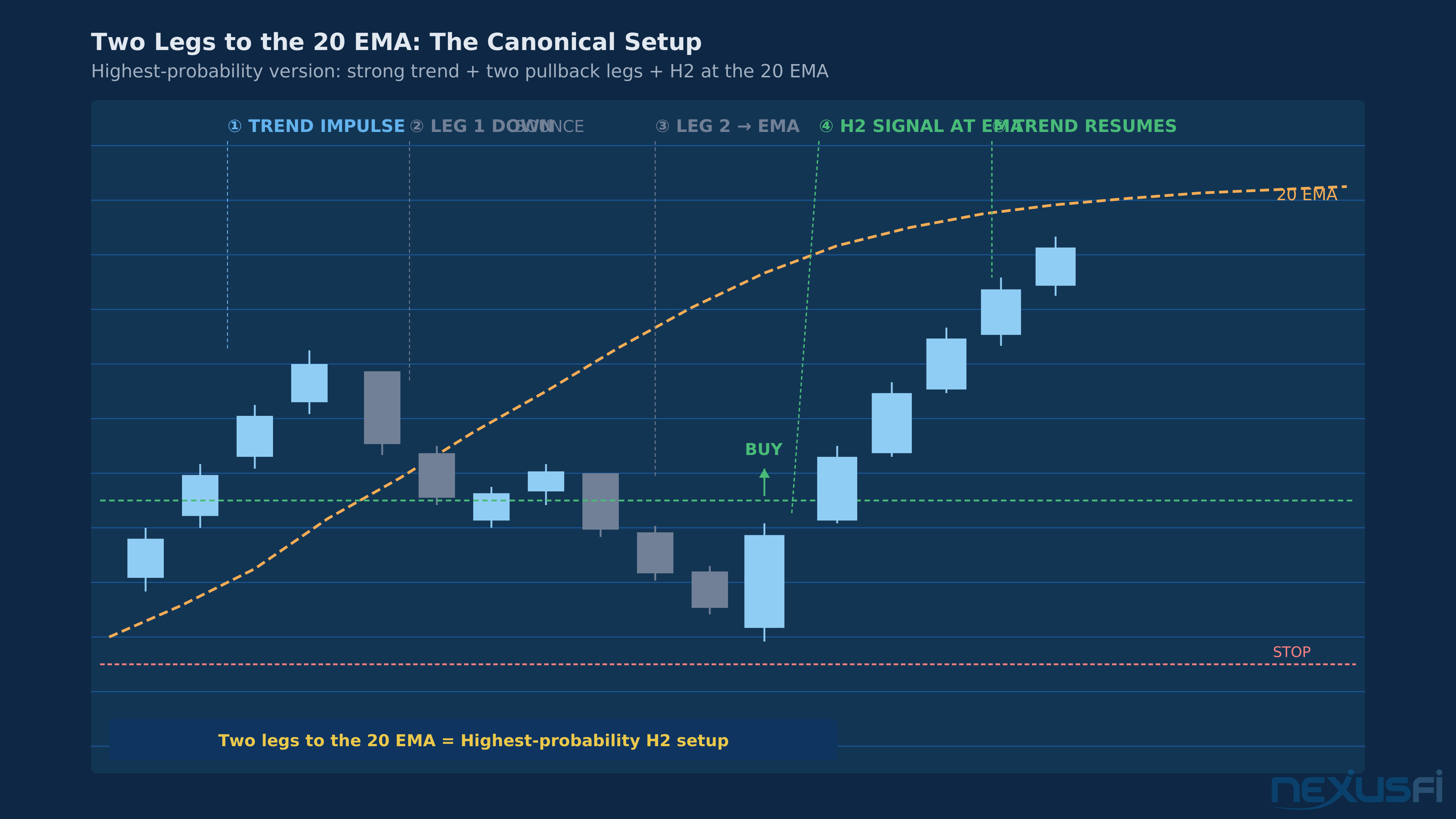
The simplest way to picture it: imagine an uptrend that makes a strong push higher. Price then declines in two waves — first down, then a small bounce, then down again — before reversing back up and resuming the trend. The two waves of the pullback are the two legs.
Why does this matter? Because the two-leg structure changes the psychology of who is positioned where. After one leg down, countertrend traders might be tentative — maybe this is just noise. After two legs, their conviction grows. They think the trend is reversing. Longs have been shaken out. Shorts have entered. And then the market reverses, leaving that entire cohort of countertrend traders trapped and forced to exit — which adds fuel to the resumption leg.
The two-legged pullback is, at its core, a trap-setting mechanism. The pattern works not because of pattern recognition, but because of what happens to market participants inside the pattern.
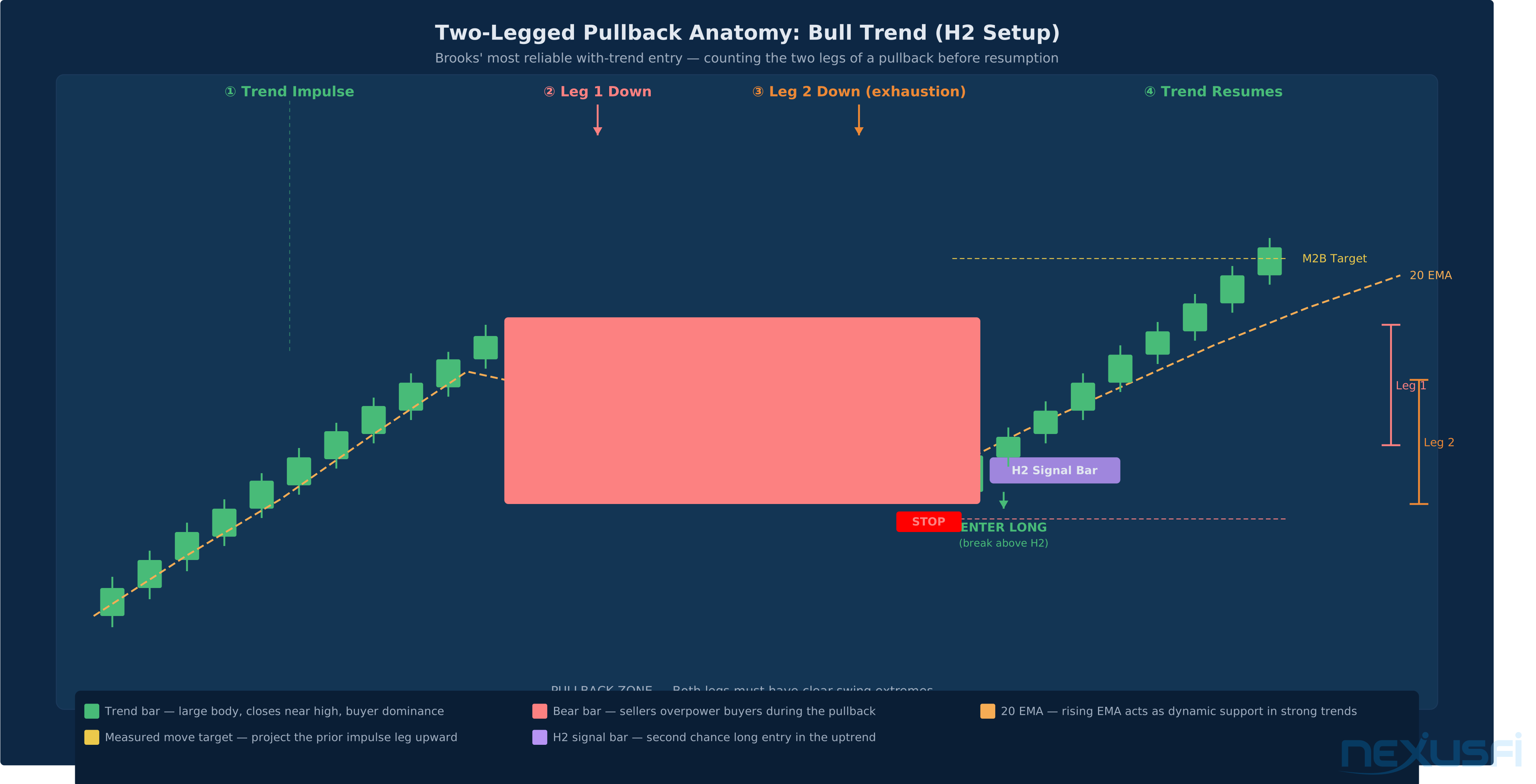
The anatomy is precise. Every high-quality two-legged pullback in an uptrend consists of:
- The impulse leg — a strong directional move that establishes the trend's current momentum
- Leg 1 down — the first counter-trend push, creating a swing low
- The bounce — a brief, often weak recovery that tests the bulls and draws in hopeful trend-resumption traders
- Leg 2 down — a second push against the trend, making a new pullback extreme, convincing countertrend traders their view is correct
- The H2 signal bar — a reversal bar at the Leg 2 extreme that signals trend resumption
- The resumption leg — the trend continues, trapping everyone positioned against it
The H2 and L2 Shorthand #
Al Brooks uses specific notation for the two-legged pullback entry signals:
H2 (High 2) — The signal bar for a with-trend long entry after a two-legged pullback in an uptrend. An H1 is a bar whose high exceeds the prior bar's high after a pullback begins. An H2 is the bar whose high exceeds the prior bar's high after the market has already had one H1 attempt that failed — meaning the pullback continued after the H1, producing the second leg. The H2 bar triggers the long entry when its high is exceeded by one tick.
L2 (Low 2) — The mirror image for short entries in a downtrend. After two legs up (two attempts to push higher that fail), the L2 bar's low being exceeded triggers the short entry.
The naming is mechanical, but the meaning is contextual. An H2 in a strong uptrend, at the 20 EMA, with a strong reversal bar, after shallow pullback legs, is a high-quality setup. An H2 in a choppy range, with big overlapping bars, is noise that looks like a pattern.
NexusFi member Nicolas11 describes the precise mechanics: "After H1, there is a small leg up (each bar has a high higher than the previous bar). Then a leg down. Then H2 is the next bar with a high higher than the previous bar." [10] That description is accurate — but requires context to be useful.
NexusFi member @GarryM, sharing Al Brooks' direct webinar notes, captured the essential principle: "H2s are the safest for beginners to buy." [1] The counts are not absolute. That's the most important clause in the entire framework.
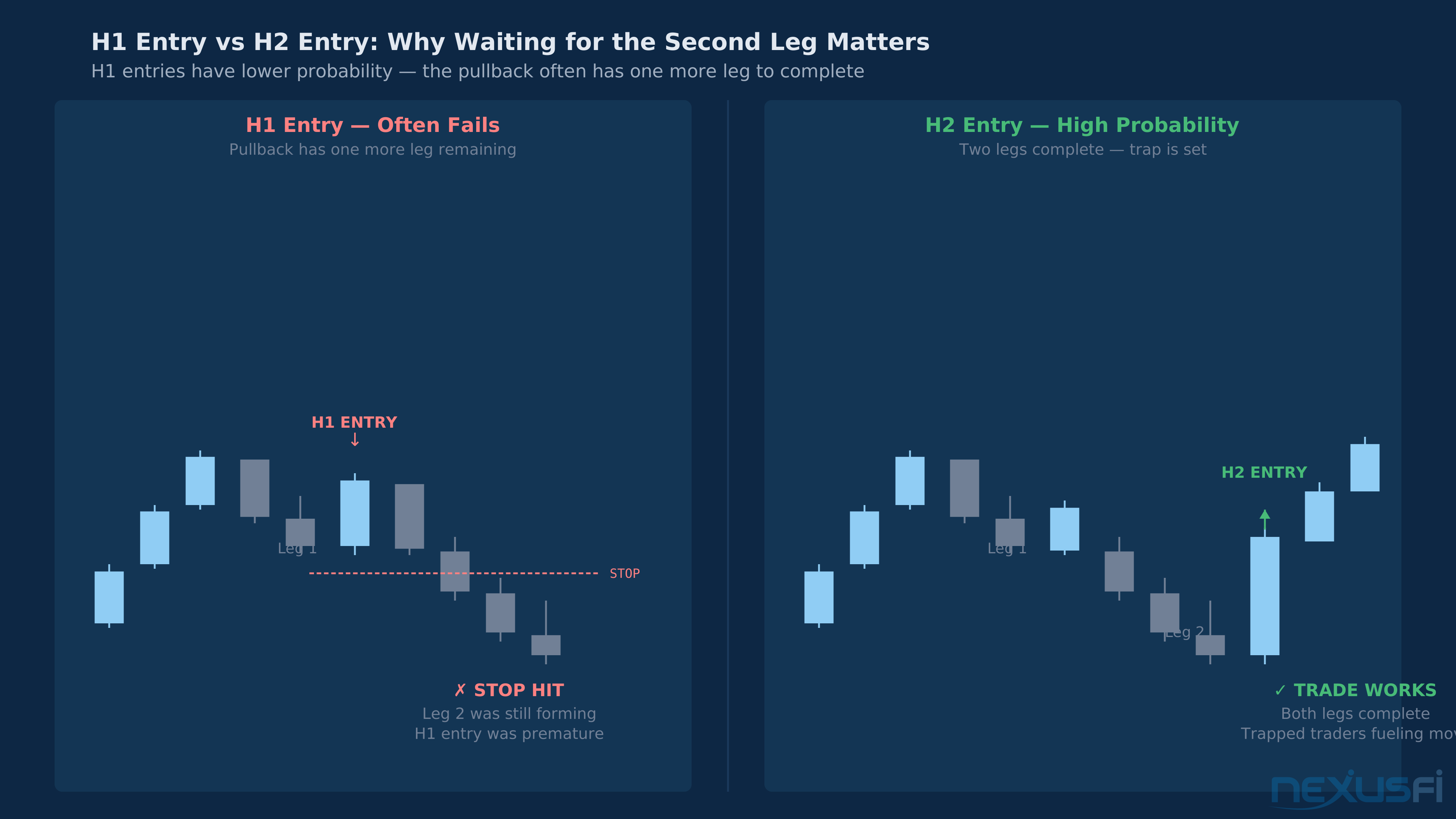
An H1 entry is where many traders lose money — the pullback "looks done" but often has one more leg to complete. Waiting for the H2 consistently produces better fills and fewer stop-outs.
Understanding Market Context: Why Trend Strength Is Everything #
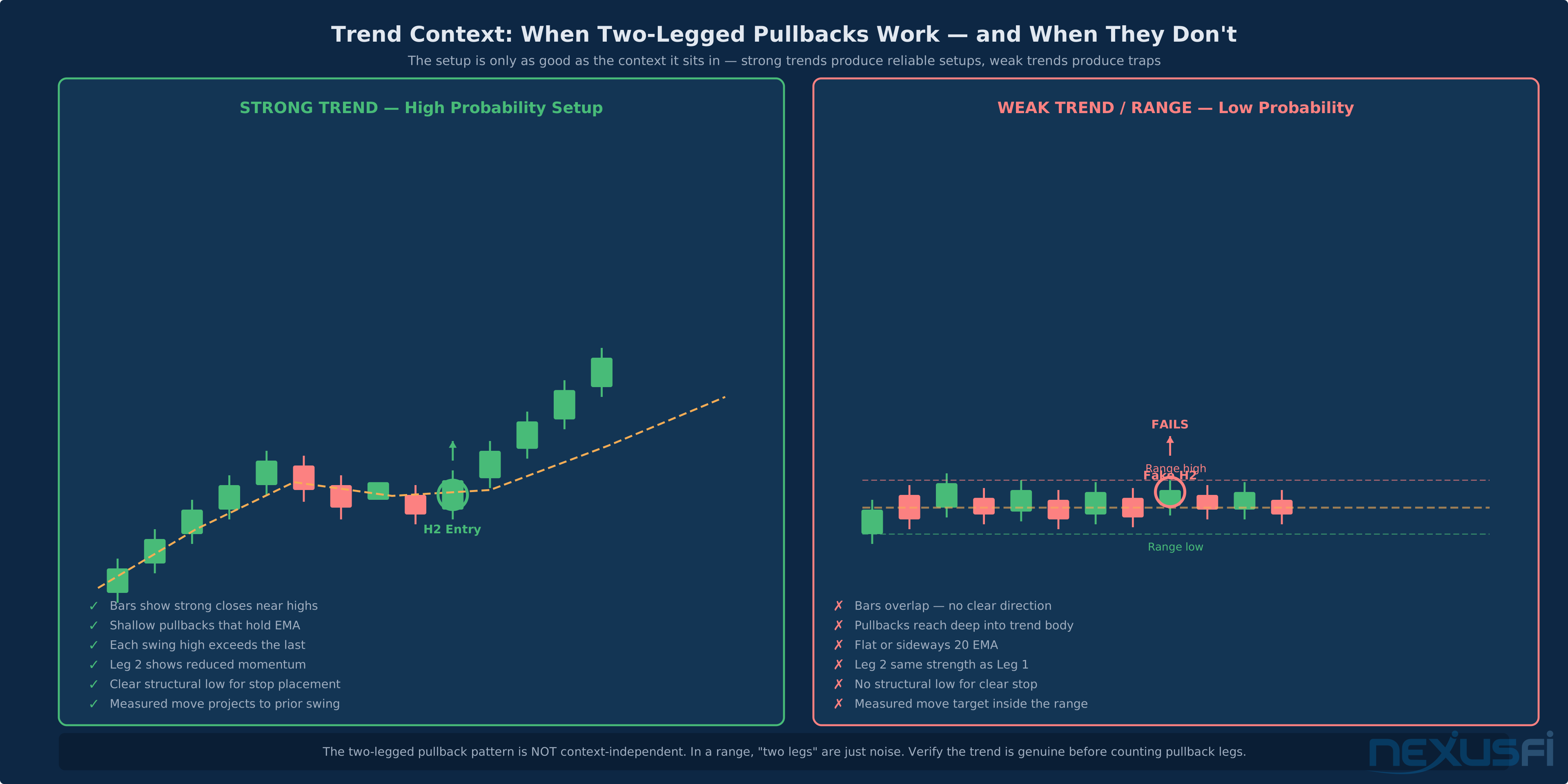
Before you count a single leg, answer one question: is this a genuine trend or a range? A two-legged pullback in a trend is a with-trend entry. The same pattern in a range is just noise. Understanding balance vs imbalance in market structure is the prerequisite skill.
Signs of a strong trend — H2 setups are reliable:
- Consecutive bars that close near their highs (bull) or lows (bear) with minimal overlap
- The 20-period EMA is clearly sloped with price consistently staying on one side
- Pullbacks are shallow — typically less than 50% of the prior impulse
- Each swing high exceeds the prior swing high, or each swing low is lower than the prior
- Previous pullbacks in this session have been rejected quickly and resulted in resumption
Signs of a weak trend or range — H2 setups are unreliable:
- Bars with large wicks, significant overlap, and alternating bull/bear closes
- The 20 EMA is flat, recently crossed, or the market keeps crossing through it
- Pullbacks are deep — retracing 60-80% or more of prior impulse legs
- No clear series of higher highs and higher lows
NexusFi member trs3042 captures this context requirement: "I see a 2 legged pullback to the EMA and trend line. When the market is trending, that is a must take trade. Bread and butter trade." [2] The must-take qualifier implies context is already confirmed strong. In a weak trend or range, there are no must-take two-legged pullbacks.
The two-legged pullback in a range is one of the most consistent money-losers in price action trading. The pattern looks identical to the trend version — but both sides of the range trap traders repeatedly. Confirm the trend before counting legs.
Anatomy of the Two-Legged Pullback: Counting Legs Correctly #
A leg is not any small move against the trend. A leg must have three properties:
- Directional momentum — a visible push against the trend with enough force to register as a swing, not just a pause or one-bar noise
- A clear swing extreme — a local high or low where price has stopped making progress in the countertrend direction for at least a few bars
- A pause or bounce between legs — enough separation that the market has demonstrated two distinct countertrend attempts
The most common mistake is counting every wiggle as a leg. If price barely makes a new low after a bounce, with tiny bars and no directional momentum, that's noise inside the first leg — not a second leg. Ask: "Would a professional trader point at these two structures and say 'the market tried to push lower twice before reversing'?"
In a strong trend, the second leg is often shorter and weaker than the first. The countertrend traders are losing conviction. Volume may decrease, bars may be smaller, and depth of the second leg may be less than the first. This diminishing momentum is one of the clearest signals that the pullback is exhausting.
NexusFi member Slipknot511 describes the mechanical structure: "Al uses bars rather than lines. When the high of the lowest bar at A is broken to the top, that is an H1. When the high of the lowest bar at C is broken upwards, that is an H2." [5] A is the first swing extreme, C is the second after the bounce. The skill is applying it only when context supports it.
Counting pitfalls to avoid:
- Counting single-bar momentum spikes as legs
- Counting inside bars as legs (no directional movement)
- Ignoring the context when counting (a "two-legged" pattern inside a range is not a pullback)
Measured Move Logic: M2B and M2S #
The M2B (Measured Move Buy) and M2S (Measured Move Sell) concepts project where the resumption leg might travel after the two-legged pullback entry triggers.
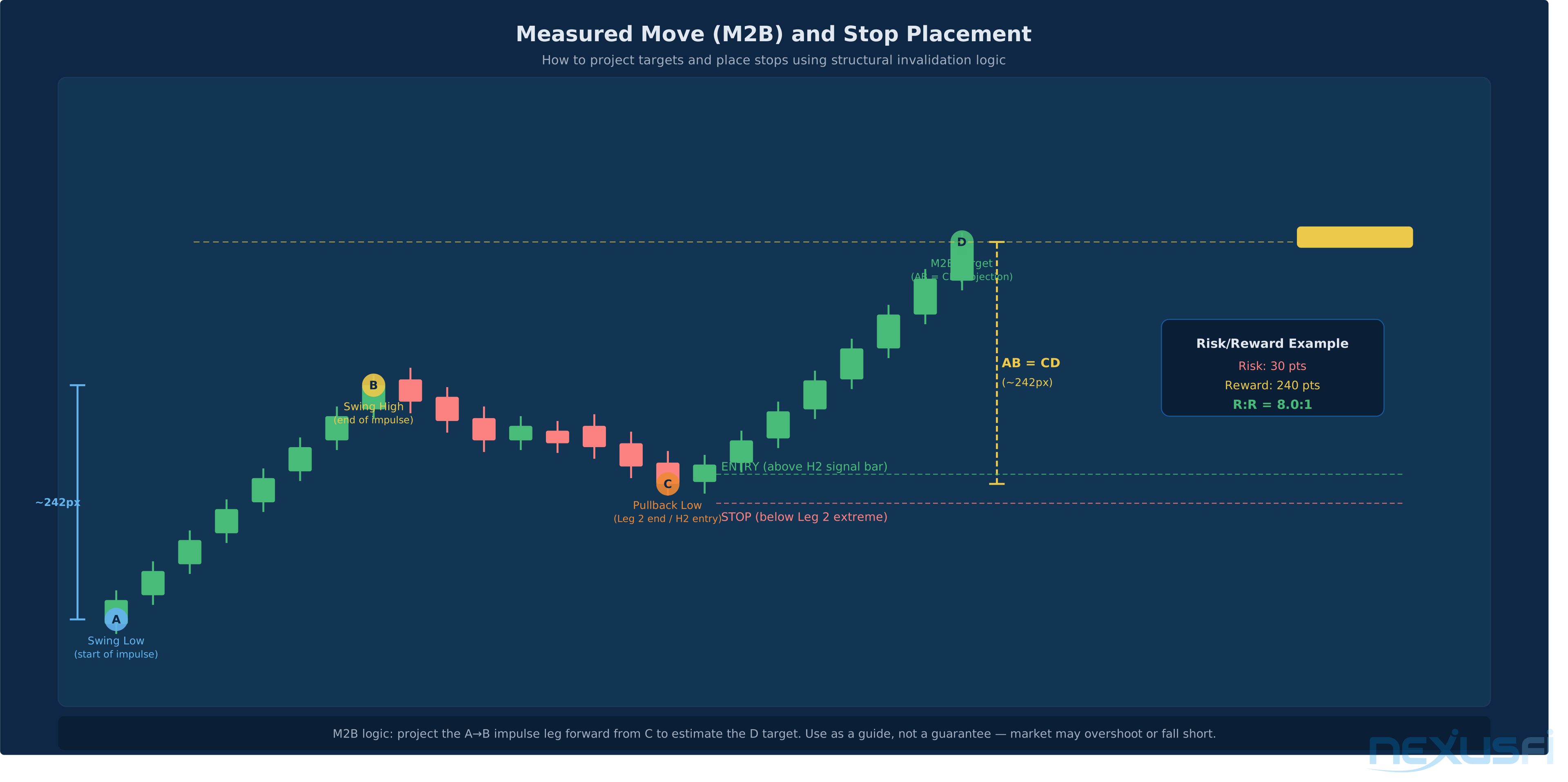
The logic: markets tend to travel in roughly symmetrical swings. If the initial impulse leg from point A to point B is 20 ES points, the resumption leg from the pullback low (point C) may target approximately 20 points. This is the AB=CD pattern — not a guarantee, but a probability framework grounded in market behavior: traders anchor to prior swings, breakout traders expect continuation of prior momentum, and the trapped countertrend traders provide mechanical fuel.
Practical application:
- Identify point A (start of prior impulse), B (end of impulse), and C (end of two-legged pullback)
- Calculate the AB distance (in ticks or points)
- Project D = C + AB (long) or C - AB (short)
- Check whether D aligns with a structural level — prior swing high, channel line, round number
- Calculate reward-to-risk: distance entry to D divided by distance entry to stop. Minimum: 2:1
NexusFi member shodson describes the setup programmatically: "Find a measured move (AB) — Longer time-frame trend must also be up — then look for a pullback (BC) where C is higher than A, and enter at the start of the next up-move (CD)." [8] AB establishes the measured distance, BC creates the two-legged entry, CD is the projected target.
When measured moves fail: The trend exhausts before the target, news interrupts momentum, or the trend was weaker than it appeared. The measured move is a guide. If the market produces reversal signals before the target, honor those signals.
Three Entry Techniques: From Aggressive to Conservative #
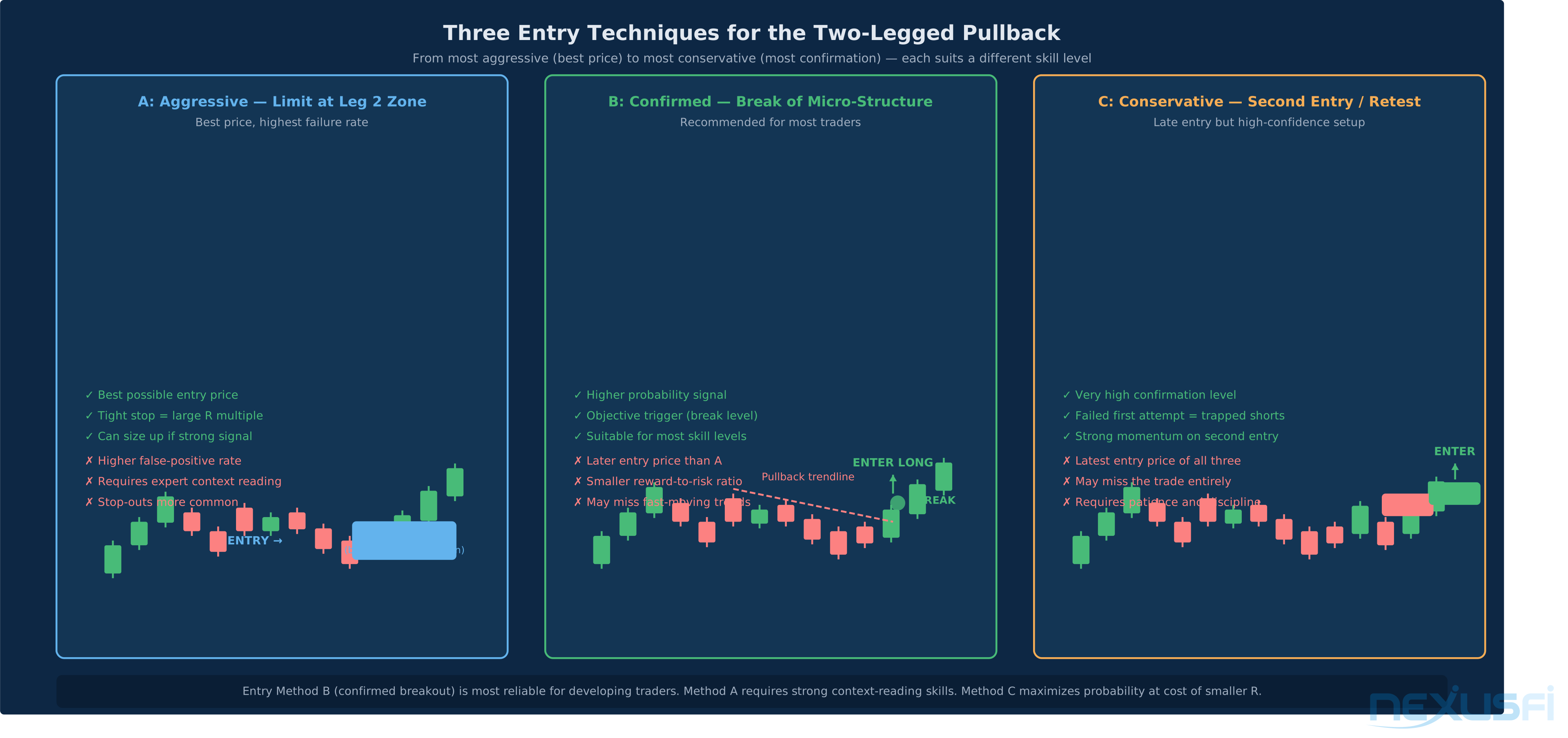
The two-legged pullback structure gives traders three distinct entry opportunities, each with different risk-reward tradeoffs:
Entry A: Aggressive Limit at the Leg 2 Zone #
The most aggressive approach enters before the reversal is confirmed — placing a limit order near the Leg 2 extreme, anticipating the pullback is about to exhaust. Works best when the trend is extremely strong and Leg 2 is pushing into a well-defined support zone (20 EMA, prior swing, measured retracement). Best price, tightest stop, largest reward-to-risk — but highest rate of being wrong. Suitable for experienced traders with extensive screen time. Developing traders should use Entry B.
Entry B: Confirmed Breakout — Break of Micro-Structure (Recommended) #
Entry triggers when price exceeds the high of the H2 signal bar (for longs) or falls below the L2 signal bar low (for shorts). Stop sits one tick beyond the signal bar extreme. Higher probability per trade, objective trigger, suitable for most skill levels. Sacrifices some price for confirmation, but filters most false setups. This is the default entry for this strategy.
Entry C: Second Entry — The Trap Confirmation #
The second entry applies when the first reversal attempt fails — price makes an H1 signal, briefly pushes up, then returns toward the pullback extreme before reversing more convincingly. When the second reversal succeeds, both H1 longs exiting AND bears forced to cover contribute to upside momentum.
NexusFi member tom1presto: "I thought I would highlight a concept I personally called 2BB (2nd bar breakout) — the second attempt at a breakout is often cleaner and more powerful than the first." [9] Very high confirmation, strongest momentum signal — but latest entry price of all three methods.
Context drives entry selection: Strong trend + clean pullback = Entry A or B. Mixed trend + ambiguous legs = Entry B only. Repeated false breakouts = Entry C. When in doubt, Entry B is the default.
Stop Placement: The Invalidation Principle #
Stop placement follows one rule: the stop goes where the trade thesis is structurally invalid.
For an H2 long entry, the stop is placed below the Leg 2 low — the point that, if breached and held, means the pullback was not a pullback but the start of a reversal. Practically: 1-2 ticks below the Leg 2 swing extreme for ES, 2-4 ticks for NQ, 2-3 ticks for CL.
The stop is NOT placed based on a fixed dollar amount, percentage of account value, or arbitrary point distances. It's placed where the trade idea is wrong. If price sustains movement beyond the Leg 2 extreme, the hypothesis that "two legs down preceded a trend resumption" has failed.
NexusFi member VinceVirgil: "Where does one get in proximity to the LOD, or HOD, or very near to support or resistance? Personally I want my first target to be at the S/R." [7] If the entry is near structural support, the stop below that support is in a meaningful location.
Once you've placed the stop, the stop distance defines your risk (1R). The measured move target defines your potential reward. Minimum acceptable reward-to-risk: 2:1 — you need 2R of potential reward before committing 1R of risk. If the measured move target doesn't provide this, either find a closer entry or look for a further structural target.
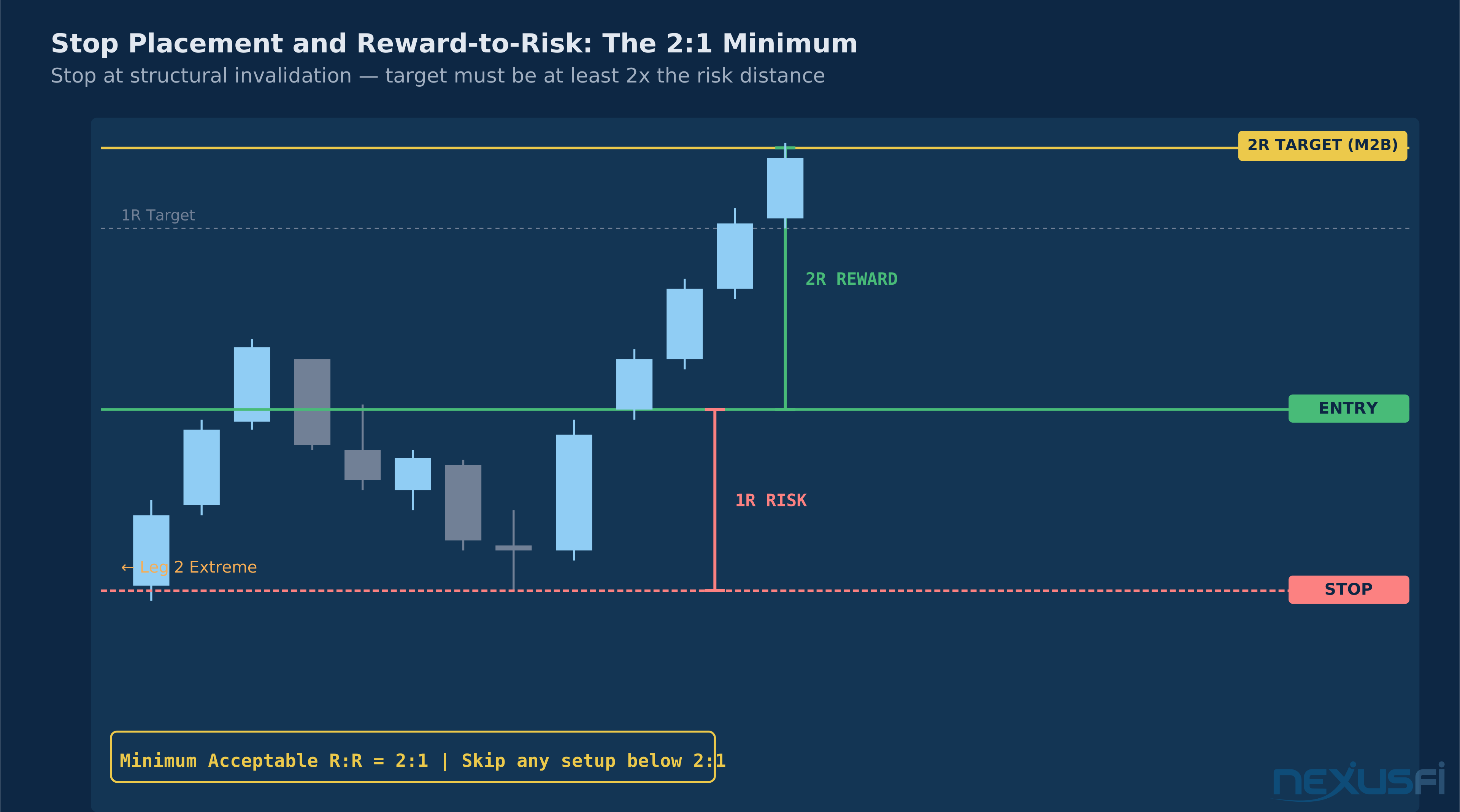
Every stop in a two-legged pullback sits at the structural invalidation point — below Leg 2 for longs, above Leg 2 for shorts. The moment a fixed-dollar stop replaces the structural stop, you've converted a high-probability setup into a coin flip.
Trapped Traders: The Engine Behind the Edge #
Understanding why the two-legged pullback works is as important as knowing how to execute it. The mechanism is the trapped trader dynamic — the edge comes from this, not from pattern recognition.
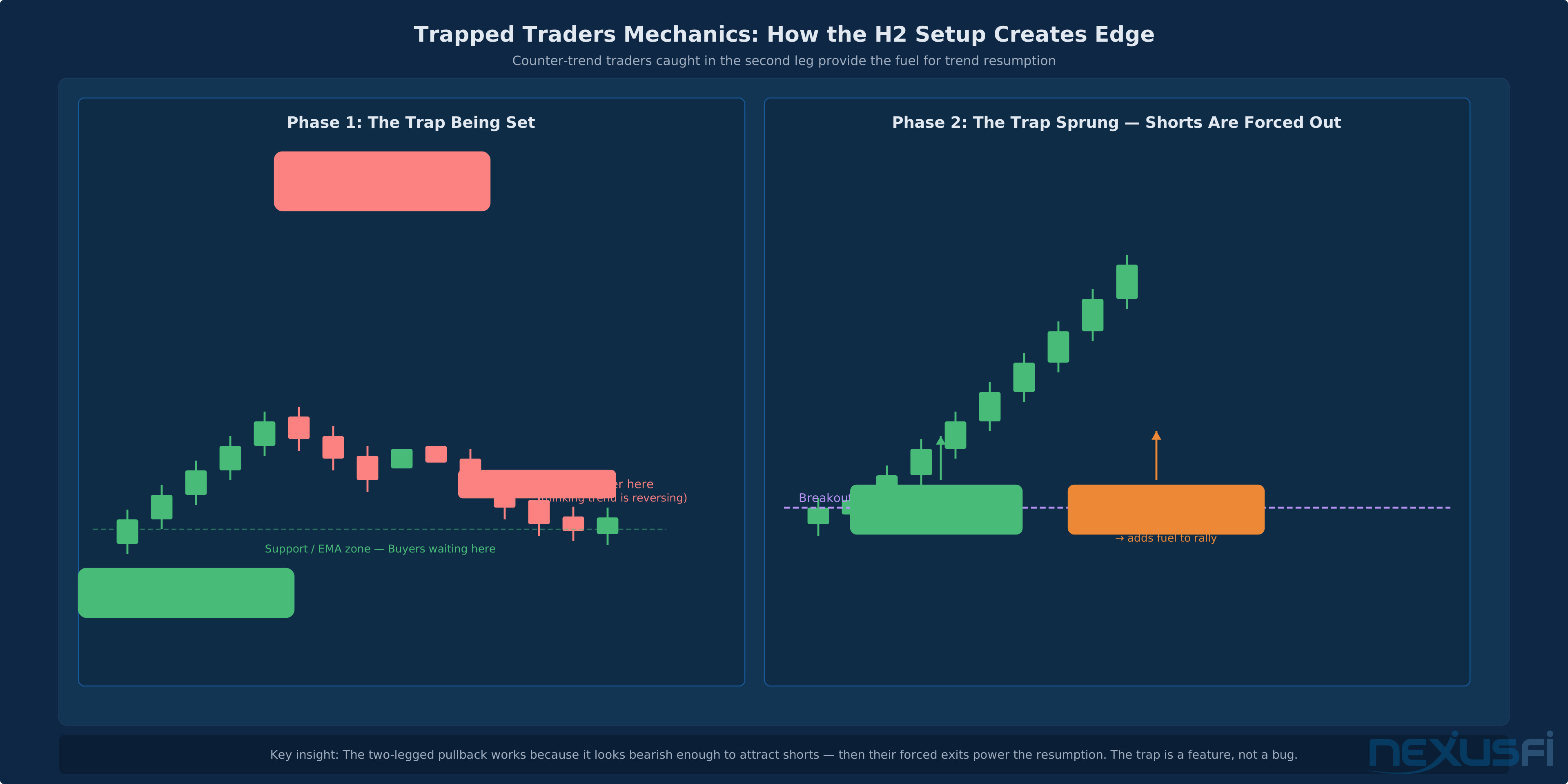
In a bull trend example: the ES has been in a strong uptrend. Price makes a decisive push higher. Then Leg 1 down begins — early countertrend bears enter, thinking the trend is reversing. After the Leg 1 low, price bounces briefly. The bears who shorted Leg 1 feel uncertain — some cover. Then Leg 2 down begins. The bears who hesitated now have "confirmation" — two legs down, this is clearly reversing. Additional shorts enter. The last weak-handed longs are flushed out.
At the Leg 2 extreme, a strong bull bar forms. Price begins recovering. The bears who entered on Leg 2 are immediately underwater. Their stops are above the pullback structure — as price recovers, those stops trigger. Bears are forced to buy to cover. The buy-to-cover orders from trapped shorts combine with new long entries from traders recognizing the H2 setup. Two separate order flows — both buying — produce an accelerated move in the trend direction.
The more convincing the selloff looks at the Leg 2 extreme — larger bear bars, momentum in the pullback direction — the more forceful the reversal will be when the trap springs. The scarier the pullback, the more shorts are trapped. This is why strong trends often resume more powerfully than they pulled back.
NexusFi member bobwest described this dynamic in a specific trade review: "It was a valid second entry long from a 2-legged pullback to trend." [3] The "second entry" phrase indicates the first reversal attempt had already failed briefly — the trapped shorts were fully committed before the true resumption.
Reading the Pullback in Real-Time #
Counting legs in real-time is different from counting them after the fact. Here is the practical workflow for live markets:
Step 1: Confirm the trend before any pullback begins. Identify the most recent strong trend leg. Were the bars strong with closes near extremes? Only strong trend legs produce reliable pullback entries. Check the trend following framework for regime identification.
Step 2: Watch the first leg develop — don't react. When price starts moving against the trend, track it without acting. Let it develop to a clear swing extreme — at least 2-3 bars where price stops making progress in the countertrend direction.
Step 3: Assess the bounce quality. After Leg 1, price bounces. In a strong trend, the bounce is brief (2-4 bars) and weak (small bodies). In a range, bounces are energetic and sustained. Weak bounce = trend pullback. Strong bounce = possible range.
Step 4: Watch Leg 2 for diminishing momentum. Is Leg 2 making a new pullback extreme? Does it have less momentum than Leg 1 (smaller bars, shorter duration)? Does it reach a meaningful structural level?
Step 5: Identify the exhaustion signal. Signs Leg 2 is ending: bars become smaller, a bar closes away from its extreme, or a strong reversal bar forms at a meaningful level.
Step 6: Enter on the H2 trigger only. Place a stop order one tick above the signal bar's high (long) or below its low (short). Never enter with a limit order unless deliberately using Entry A.
Common Failure Modes #
The two-legged pullback produces low-probability setups in specific conditions:
Failure Mode 1: Trading the pattern in a range
The most common mistake. When price oscillates between two levels, two-legged patterns appear repeatedly on both sides. Confirm the trend first, always.
Failure Mode 2: Entering on the first leg (H1 trade)
Brooks explicitly notes H1 entries have lower probability than H2 entries. The second leg exists to develop the trapped-trader dynamic. Skipping it means entering before the maximum countertrend conviction has built.
Failure Mode 3: Mechanical leg counting without context
Counting bars mechanically without asking "is this a genuine two-leg structure?" produces noise. If the bounce between legs is too brief, or legs are equal in size, this is range behavior.
Failure Mode 4: Forcing measured move targets
Markets don't have to complete measured move projections. In strong trends they may overshoot; in weakening trends they may fall short. Honor exit signals before the target.
Failure Mode 5: Ignoring volatility expansion
When volatility expands much around economic releases, structural levels that define legs become less reliable. In high-volatility conditions, skip the setup or reduce position size much.
NexusFi member algoth: "The first trade is a textbook example of a 2nd entry long on a two-legged pullback to the EMA/trend line on an up day." [4] The "on an up day" qualifier demonstrates that even textbook setups require context confirmation.
Integrating with the 20 EMA #
Al Brooks' primary structural reference for two-legged pullbacks is the 20-period EMA. In a strong uptrend, pullbacks that reach the 20 EMA and form an H2 at that level are among the highest-probability setups in price action trading.
The 20 EMA works for three reasons:
- Widely-watched level — when many participants monitor the same level, buyers cluster near the 20 EMA in an uptrend, creating a zone of demand that increases rejection probability.
- Dynamic trend line — the 20 EMA approximates the weighted average of the last 20 bars. In a genuine trend, it acts as a continuously adjusting support/resistance level that tracks the trend's pace.
- "Two legs to the EMA" is the canonical setup — the pullback reaching the 20 EMA on the second leg produces the highest concentration of favorable factors: trapped countertrend traders, buyers at a well-defined level, H2 signal at meaningful support.
NexusFi member evanbro: "Still focusing on the 2 legged moves is my number one priority. Also focusing on when to switch from range to trend." [6] That transition recognition — knowing when the 20 EMA acts as meaningful support versus when it's irrelevant noise in a range — distinguishes consistent execution from pattern-matching.
The Complete Pre-Trade Checklist #
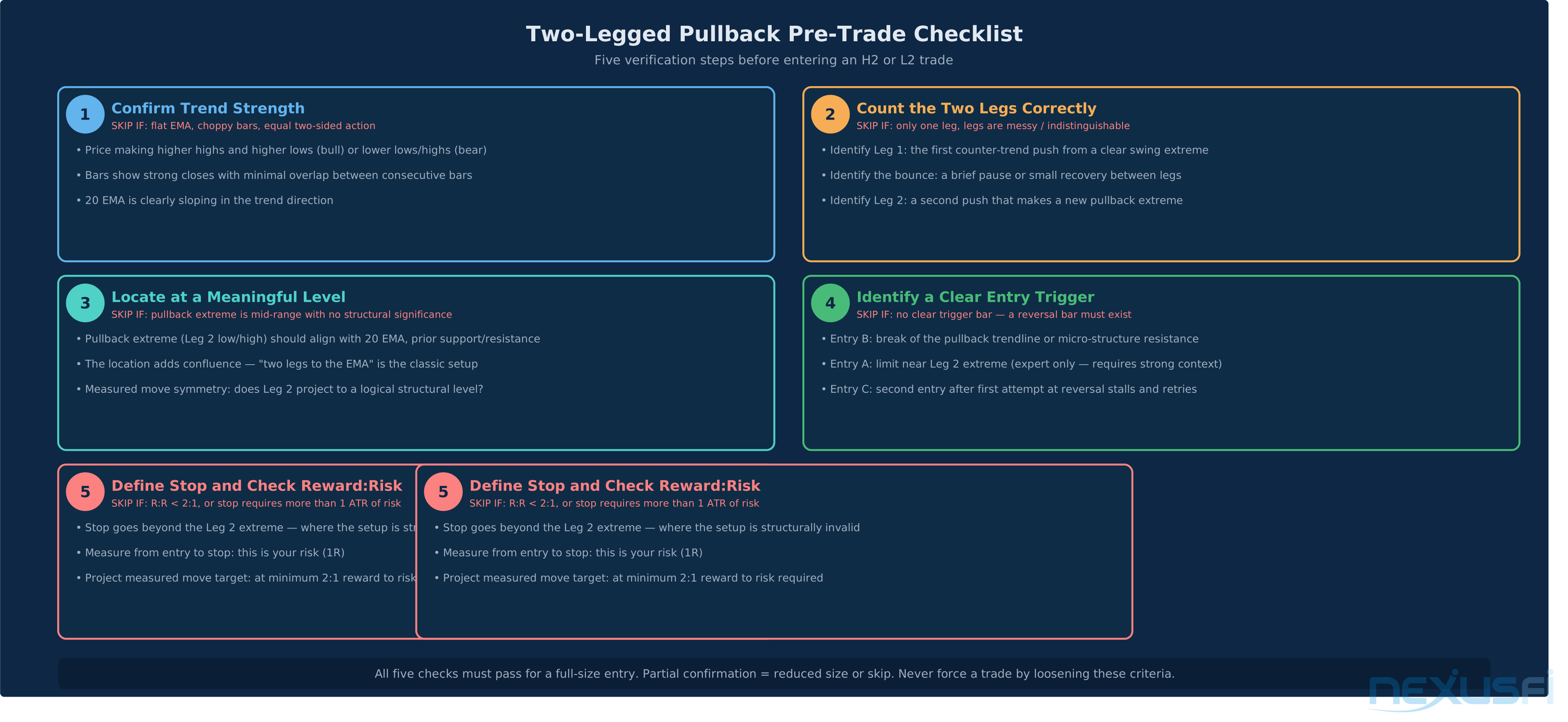
Before entering any two-legged pullback trade, run through these five steps:
Step 1: Confirm Trend Strength Verify higher highs and higher lows (bull) or lower lows and lower highs (bear). Bars should show strong closes with minimal overlap. The 20 EMA must be clearly sloped. Recent pullbacks should have been shallow and quickly rejected. Skip if: flat EMA, alternating direction bars, equal two-sided price action.
Step 2: Count Two Legs Correctly Identify Leg 1, the bounce, and Leg 2. Leg 2 should show diminishing momentum relative to Leg 1 — smaller bars, shorter duration, less conviction. Skip if: only one leg exists, legs lack clear swing extremes, or the "bounce" between legs is too significant.
Step 3: Locate at a Meaningful Level The Leg 2 extreme should align with the 20 EMA, a prior support/resistance level, a measured retracement area, or a prior breakout zone. Skip if: Leg 2 extreme has no structural context nearby.
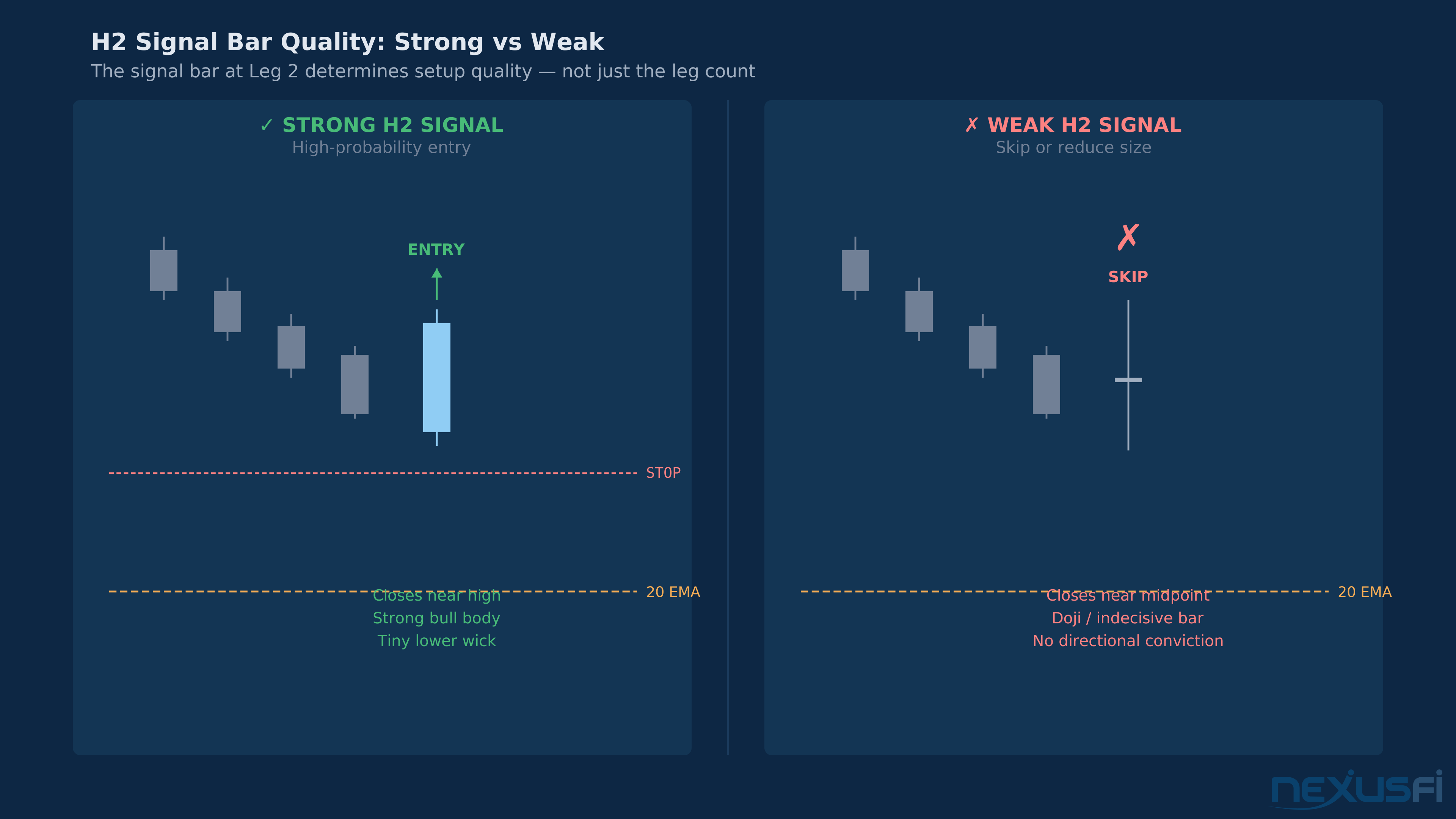
Step 4: Identify a Clear Entry Trigger The H2 signal bar should show reversal conviction at the Leg 2 support zone. Entry is a stop order one tick beyond the signal bar's extreme. Skip if: no clear signal bar exists or bars at the Leg 2 extreme are indecisive.
Step 5: Define Stop and Verify Reward:Risk Stop beyond the Leg 2 extreme. Measure risk. Project measured move target. Minimum: 2:1. Skip if: R:R is less than 2:1.
Application: All five steps pass = full-size entry. Four of five = half size. Three or fewer = skip. The checklist keeps you out of the look-alike setups that produce the majority of losses.
Knowledge Map
Prerequisites
Understand these firstGo Deeper
Build on this knowledgeReferences This Article
Articles that build on this topicCitations
- — Book Discussion: Reading Price Charts Bar by Bar by Al Brooks (2009) 👍 33“H2s are the safest for beginners to buy. One goal is to look for a 2-legged pullback in a down trend. Look to short L2 at the 20 EMA. The counts are not absolute. Don't lose sight of the goal, you are looking to enter with trend on 2-legged pullbacks.”
- — PATs - Price Action Trading - Elite Members Common Journal (2014) 👍 8“I see a 2 legged pullback to the EMA and trend line. When the market is trending, that is a must take trade. Bread and butter trade as Mack would say.”
- — Day Trading the ES PATS style - 1 point at a time (2014) 👍 5“It was a valid second entry long from a 2-legged pullback to trend. You could say that it was a little iffy because of potential resistance above, but it was with the trend and it worked out.”
- — Day Trading Using the Basis of Mack's PAT Teachings (2013) 👍 4“The first trade is a textbook example of a 2nd entry long on a two-legged pullback to the EMA/trend line on an up day. Patterns, like second entries, only work in the right context.”
- — Book Discussion: Reading Price Charts Bar by Bar by Al Brooks (2010) 👍 11“In a trend, when you see two small legs down and then the market resumes in the direction of the trend, you have better than even odds that the trend is resuming. Al uses bars rather than lines. When the high of the lowest bar at A is broken to the top, that is an H1. When the high of the lowest bar at C is broken upwards, that is an H2.”
- — Day Trading Using the Basis of Mack's PAT Teachings (2013) 👍 5“Still focusing on the 2 legged moves is my number one priority. Also focusing on when to switch from range to trend.”
- — CL Trades (2013) 👍 9“Where does one get in proximity to the LOD, or HOD, or very near to support or resistance? Personally I want my first target to be at the S/R.”
- — Find a pullback, programmatically (2019) 👍 10“Find a measured move (AB), let's say it's an up-move. Longer time-frame trend must also be up. Then look for a pullback (BC) where C is higher than A, and enter at the start of the next up-move (CD).”
- — Day Trading the ES PATS style - 1 point at a time (2014) 👍 14“I thought I would highlight a concept I personally called 2BB (2nd bar breakout). The second attempt at a breakout is often cleaner and more powerful than the first.”
- — Al Brooks definition: Final Flag (2013) 👍 11“H1 is the first bar within the down pullback, the high of which is above the previous bar. After H1, there is a small leg up. Then a leg down. Then H2 is the next bar with a high higher than the previous bar.”