



Funding and Withdrawing from Your Futures Account: Methods, Timelines, and What Brokers Don't Advertise
Moving money in and out of a futures account is the kind of operational detail most traders ignore until it bites them. Then it bites hard — a wire that takes 22 days to arrive, a withdrawal request stuck in a queue for a week while a position bleeds, or a $30 fee every time you want to add margin. Get this right once, and it becomes invisible. Get it wrong, and it becomes a recurring tax on your trading performance.
This article covers every method for funding and withdrawing from a US futures account, the mechanics behind each one, the timing realities, the international complications, and the risk management philosophy every serious trader should have about how much capital to keep at an FCM.
Overview #
Most traders treat broker funding as an afterthought. You open the account, wire the initial deposit, and forget about it until you need margin or want to pull profits. That's fine — until your broker's treasury department takes a week to process a withdrawal, or you discover that wire fees are eating your profits on frequent deposits, or an international wire gets caught in AML review and disappears for three weeks.
The mechanics of funding a futures account are simple in outline and complicated in practice. Wires are the standard; ACH is cheaper where available; checks are free with a delay. Withdrawals follow the same channels in reverse, with additional processing steps that can turn a "2-3 business day" promise into a week-long wait. And for international traders, the complications multiply much.
Understanding these mechanics before you need them is the difference between a smooth operational workflow and a stressful scramble when you need money fast.
The Three Funding Methods #
Wire Transfers — The Standard, With Costs #
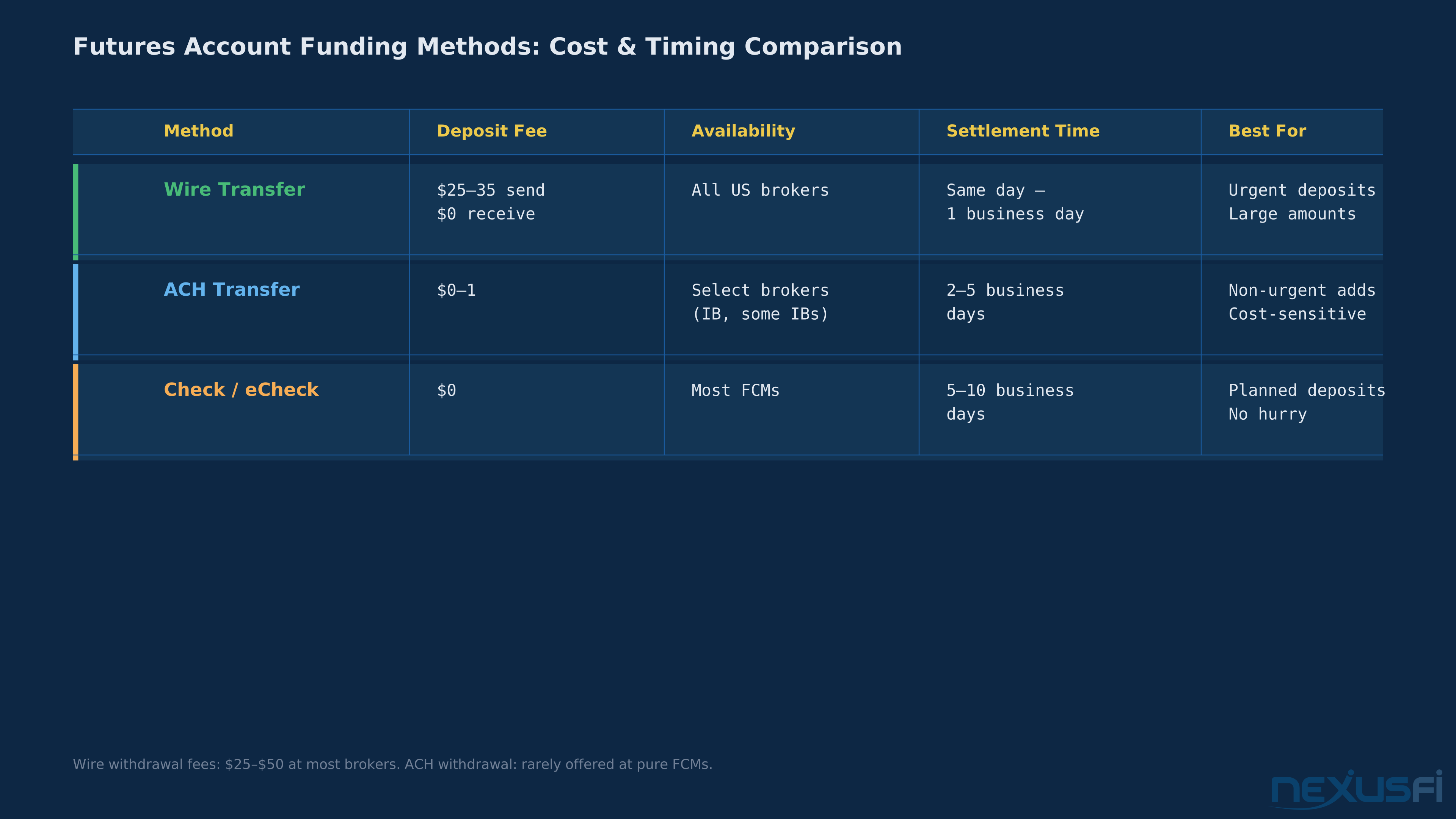
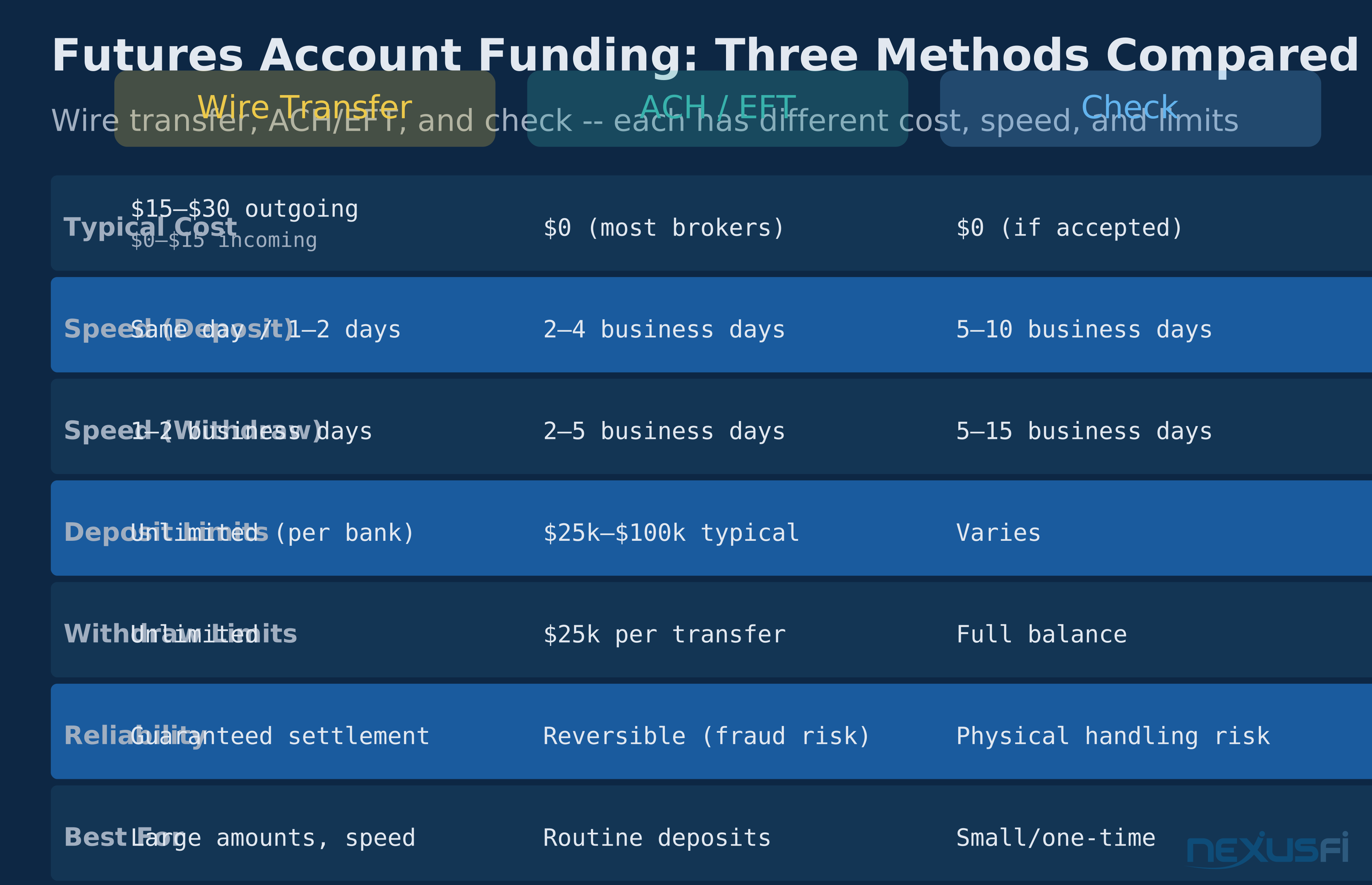
The wire transfer is the default funding method for US futures accounts. It's fast, traceable, and the only option most FCMs offer. The downside: it costs money on both ends.
Typical wire costs:
- Your sending bank: $25--$35 for domestic outgoing wires
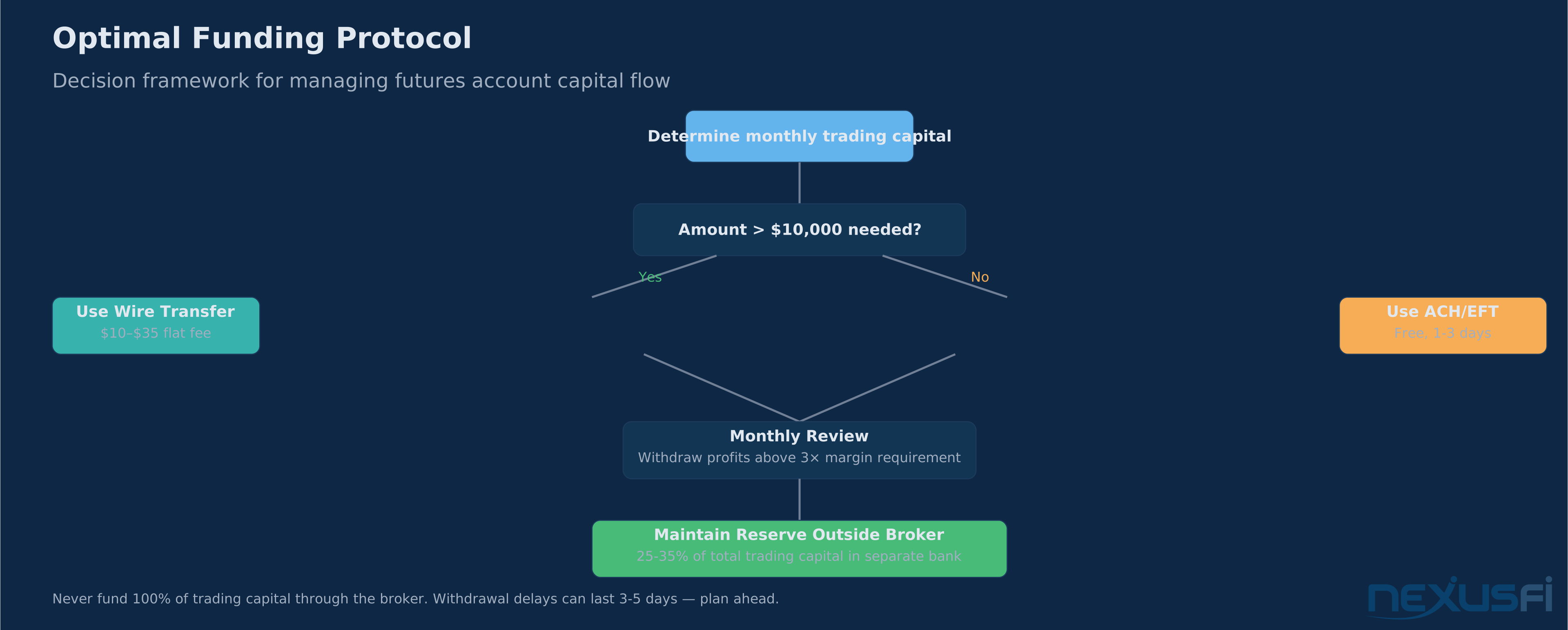
- Your broker/FCM: Often $0 incoming, but $25--$50 for outgoing withdrawals
- International wires add correspondent bank fees: typically $15--$30 additional, per hop
@Surly, who traded at Velocity Futures for several years, put it directly when he left:
@djkiwi laid out the full math on round-trip wire costs:
That's real money. If you're adding margin frequently because you keep a lean account, wire fees compound into a meaningful annual cost.
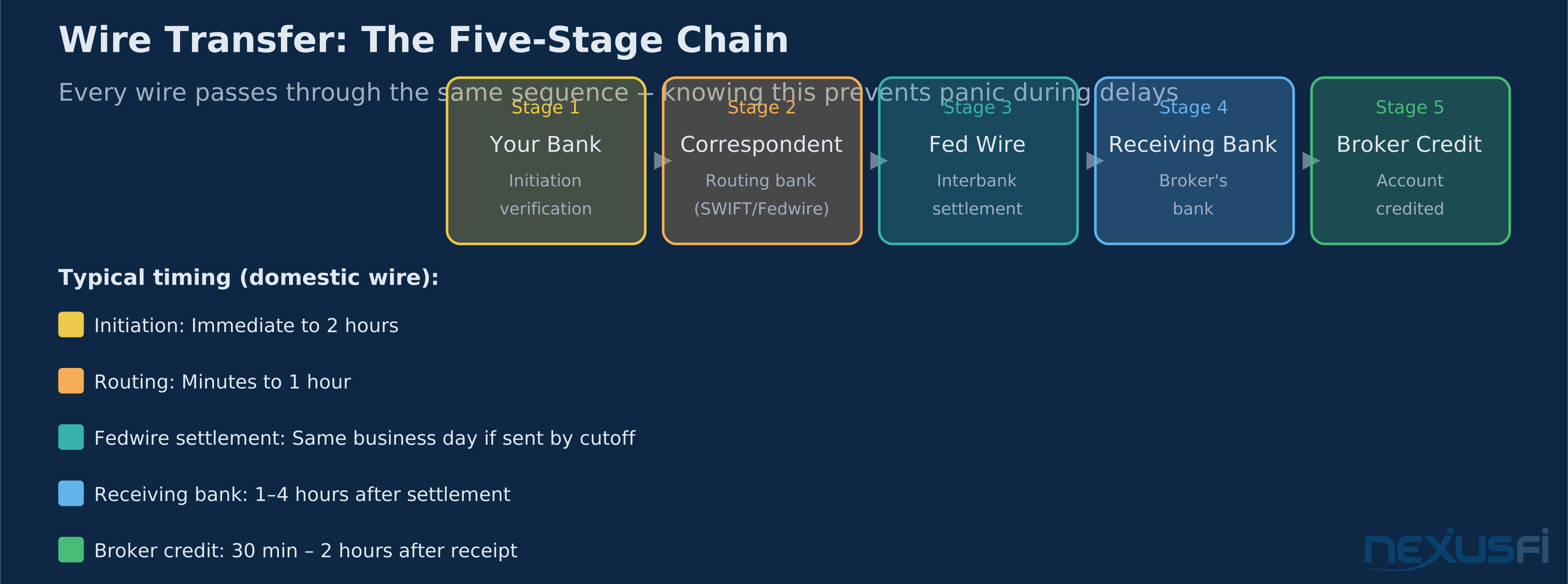
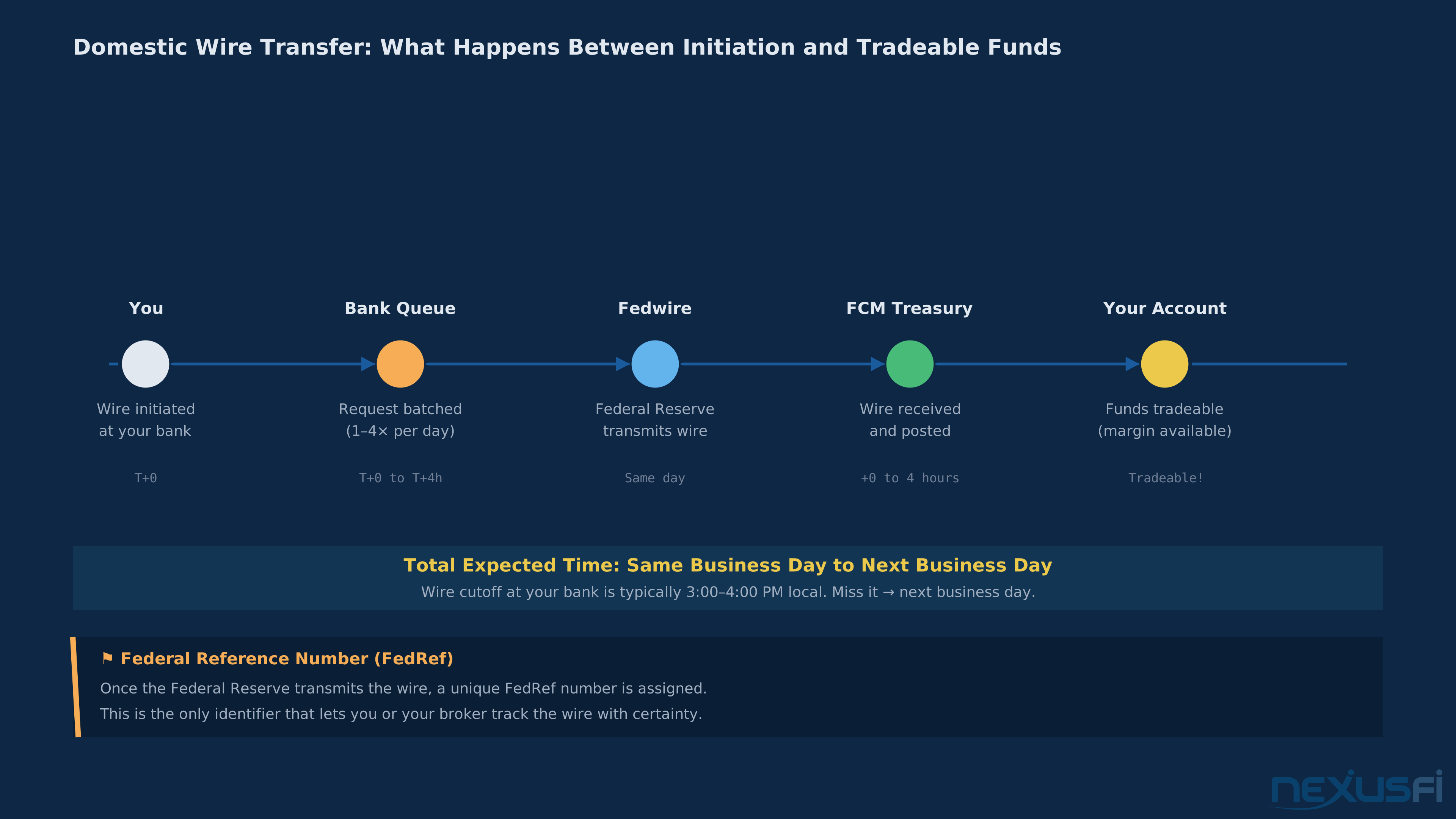
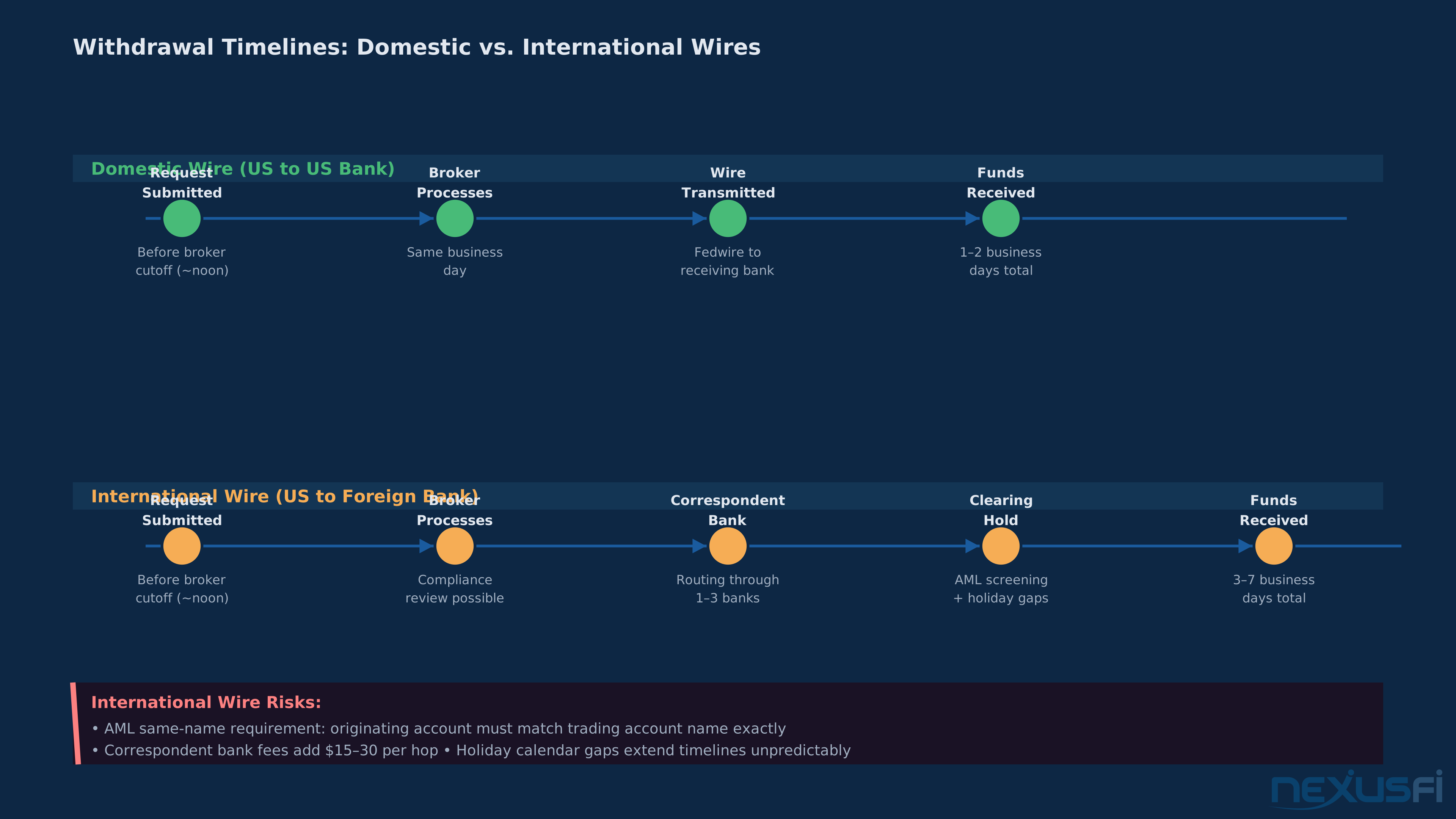
Wire timing: Domestic wires initiated before the bank's cutoff (typically 3:00--4:00 PM local time) usually settle the same business day. Wires initiated after cutoff go next business day. The FCM's treasury department then processes incoming wires — this adds anywhere from a few hours to one full business day. Total expected time from your bank to tradeable funds: same-day to next-business-day for domestic wires.
ACH Transfers — Cheaper, Slower #
ACH (Automated Clearing House) is the US bank network used for payroll, bill payment, and direct deposit. A handful of futures brokers support ACH deposits, typically introducing broker setups backed by larger clearers or brokers with banking relationships.
Notable exception: Interactive Brokers supports ACH deposits at a fraction of the cost of wires ($1 fee vs. $25--$35 for a wire). This matters enormously if you're actively managing account capital.
ACH timing is the downside: 2--5 business days to clear. The funds may appear credited to your account immediately (provisional credit) but won't be available for full margin use until the settlement window closes — typically 2 business days for standard ACH.
For most pure FCMs and smaller clearing firms, ACH simply isn't an option. The regulations require any funds access mechanism to provide full traceability and anti-money-laundering compliance that wire protocols deliver by design. Pure FCMs often find the banking infrastructure for ACH too costly to build.
Check Deposits — The Free Option With Friction #
Several brokers accept personal or cashier's checks with no deposit fee. The catch: checks take 5--10 business days to clear, and you can't trade on those funds until they clear. Use for non-urgent capital additions only.
If your broker charges for wires, ask about check deposits. They're often free with the only cost being the clearing delay. For planned deposits that aren't time-sensitive, a check is the cheapest method at most discount FCMs.
Wire Transfer Mechanics: What's Actually Happening #
When your bank tells you "the wire has been sent," that statement is less useful than it sounds.
Banks receive wire requests and batch-process them multiple times per day. Your bank's internal system assigns the request an internal confirmation number — which your bank rep will often give you as "proof the wire was sent." But that internal number just means your request is in the queue. The actual Fedwire transmission happens when the bank runs its next batch, which could be minutes or hours later.
@Stage5 Anthony, managing partner at Stage 5 Trading, explained this process in detail:
The federal reference number: Once your bank actually transmits the wire, the Federal Reserve assigns a unique identifier called the federal reference number (FedRef number). This is the only identifier that allows anyone — your bank, the receiving bank, or the FCM's treasury — to track the actual wire through the system.
If a wire seems stuck, request the FedRef number from your bank. With that number, your broker's treasury desk can find the wire in the Fedwire system and confirm whether it's received, pending, or actually lost. This is not optional knowledge — it's the tool that converts "the wire was sent" from an untraceable claim into a verifiable fact.
The federal reference number is your audit trail for every wire. Keep it with every wire transaction you initiate. If anything goes wrong, this is the document that lets you track your money with precision. Without it, you're dependent on promises.
The Annual Cost of Wire Fees #
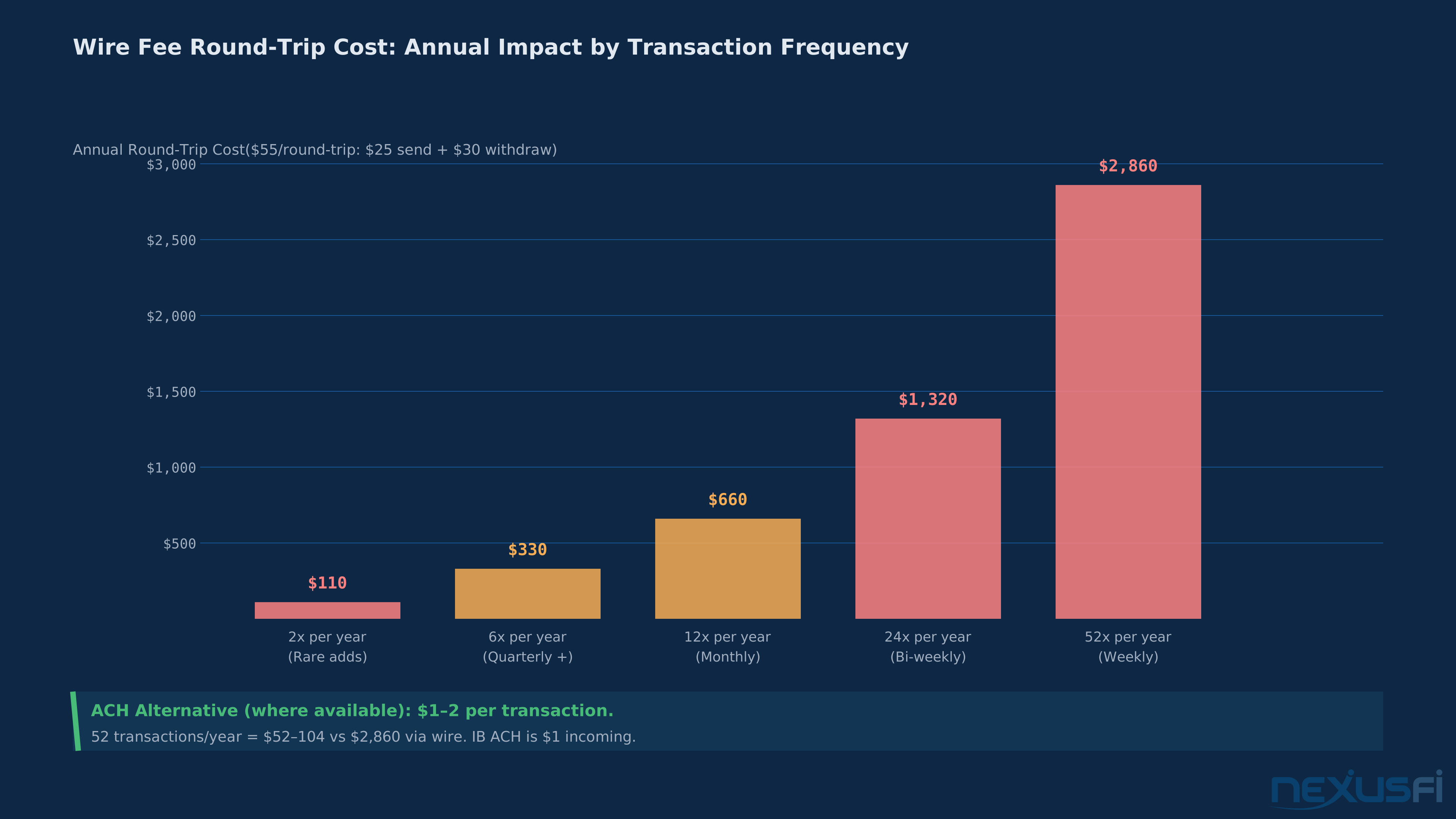
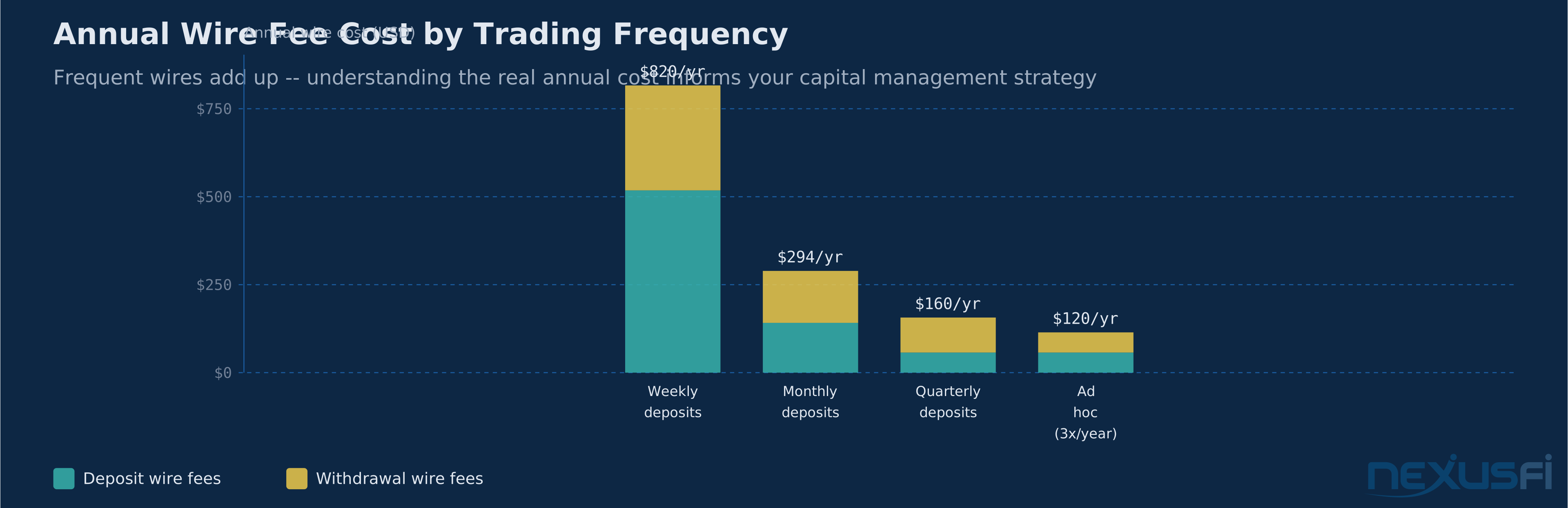
If you're actively managing capital between your bank and your futures account — adding margin before volatility events, withdrawing profits monthly, keeping a lean account — wire fees accumulate fast.
At $55 round-trip (the typical combined cost of $25 outgoing send plus $30 broker withdrawal fee), twelve round-trips per year costs $660. Weekly capital management would cost nearly $3,000 annually. This is a material drag on trading performance that most traders never account for.
The practical implication: choose your funding strategy based on your capital management style. Frequent movers should prioritize brokers with ACH support or low-fee withdrawal structures. Infrequent movers can tolerate wire-only setups without meaningful cost impact.
Withdrawals: The Side Nobody Warns You About #
Most traders focus on getting money in. The real friction is getting money out.
Withdrawal requests at US futures brokers typically require:
- A written or portal-based request (most brokers have online forms)
- A processing window (often same-business-day if submitted before noon)
- The FCM's treasury to initiate the wire
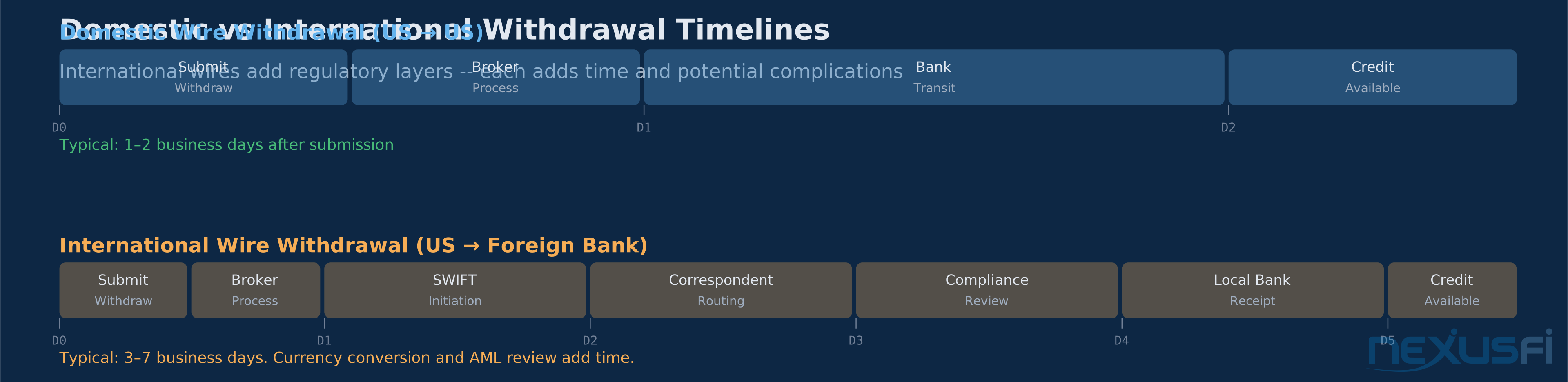
- Standard wire transit time to your bank (usually 1--2 days domestic)
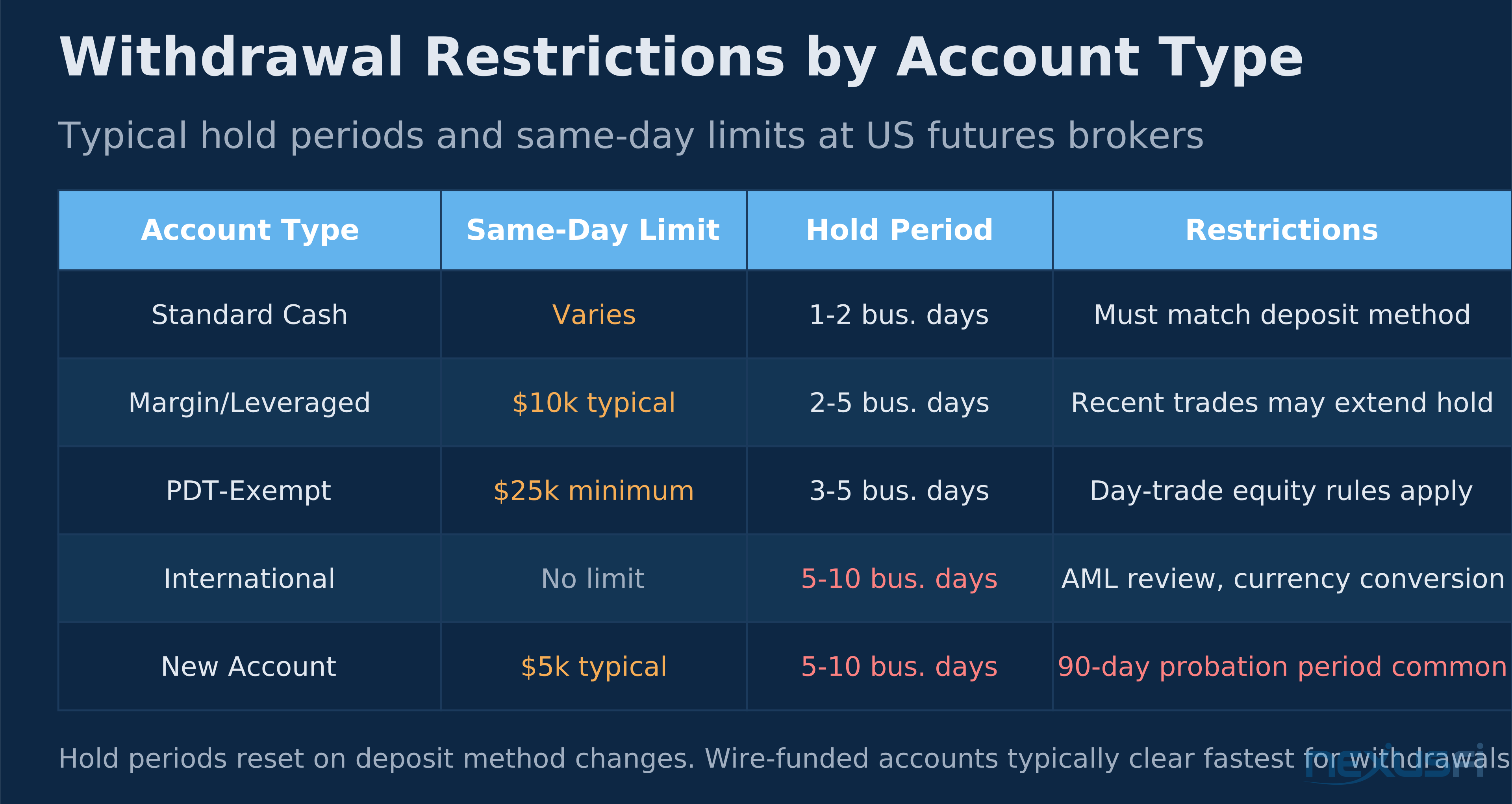
The total time from request to money-in-your-bank: 2--3 business days under normal conditions. Under abnormal conditions, it can be much longer.
@George documented his withdrawal experience with Mirus Futures, which took 22 calendar days:
This kind of delay is an outlier — but it's real. The factors that cause withdrawal delays:
- Year-end processing: FCMs get slammed with withdrawal requests in November--December as traders recognize P&L. Submit before Thanksgiving if you need December money.
- Large withdrawal amounts: FCMs may require additional compliance review for withdrawals above certain thresholds (varies by broker, often $50,000+).
- International wires: Correspondent bank routing adds 1--3 business days and can be held for compliance screening.
- Holiday periods: US bank holidays and international holiday overlaps create gaps where wires simply don't process.
- Account issues: Margin holds, open investigations, or disputes can freeze withdrawal capability entirely.
Never structure your trading capital assuming immediate access. If you need $50,000 out of your futures account by Friday, submit the request Monday. If your broker's withdrawal process takes "2--3 business days," test that claim once with a small withdrawal before you need it to work under pressure.
International Traders: Currency, AML, and the Wire Origin Problem #
If you're funding a US futures account from outside the United States, you face additional layers of complexity that most broker documentation understates.
The AML Same-Name Requirement #
US futures brokers are required to comply with Bank Secrecy Act and anti-money-laundering regulations. One practical implication: wire transfers must originate from a bank account in exactly the same name as the futures trading account. A wire from a joint account to a solo futures account will often be rejected. A wire from a business account to a personal futures account will be rejected. A wire from an intermediary service (like Wise/TransferWise) may be rejected depending on how the transaction appears to the receiving bank.
@steve2222 flagged this issue for an Australian trader trying to use a currency conversion service:
Verify this before initiating any international transfer. Contact your broker's compliance department specifically and ask: "Will you accept an incoming wire from [your specific bank/service]? The originating account name is [X]. My trading account name is [Y]." Get the answer in writing.
Currency Conversion in Multi-Currency Accounts #
Most US futures accounts are US dollar-denominated. You can fund with foreign currency — your broker's treasury will convert at their exchange rate, which typically includes a spread versus spot. Some brokers (Interactive Brokers being the notable example) allow you to maintain multi-currency balances and execute the conversion yourself at better rates.
@SMCJB, who trades European products from a US-denominated account, explained how multi-currency balances work in practice:
This means you can deposit euros to a multi-currency account and trade Euro Stoxx, keeping your P&L in EUR. Whether this is advantageous depends on your base currency and the FX hedge you want to maintain.
The Capital Allocation Question: How Much Belongs at the FCM? #
This is the risk management question most educational content doesn't address directly. How much of your trading capital should you keep in your futures account vs. in an FDIC-insured bank?
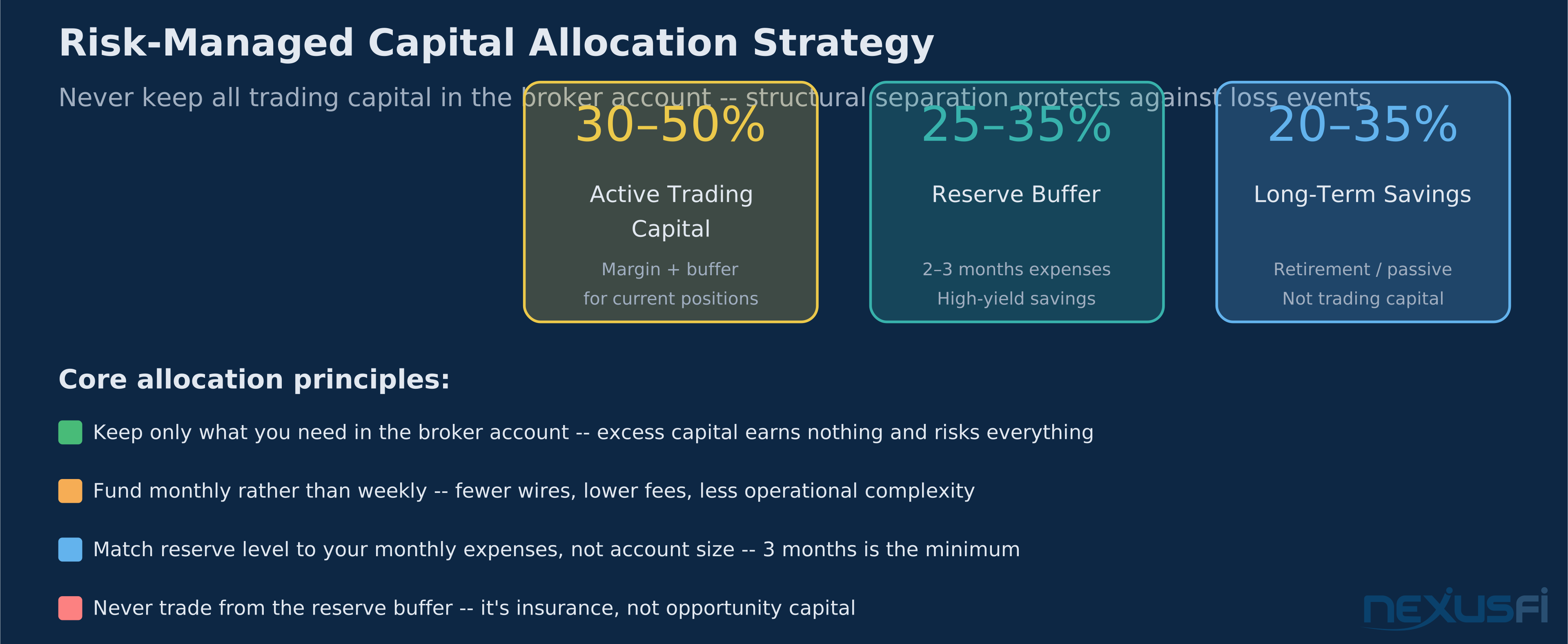
The honest answer from the NexusFi community after MF Global (2011) and PFG Best (2012): as little as possible.
@liquidcci wrote this directly in the aftermath of MF Global:
@Big Mike went further:
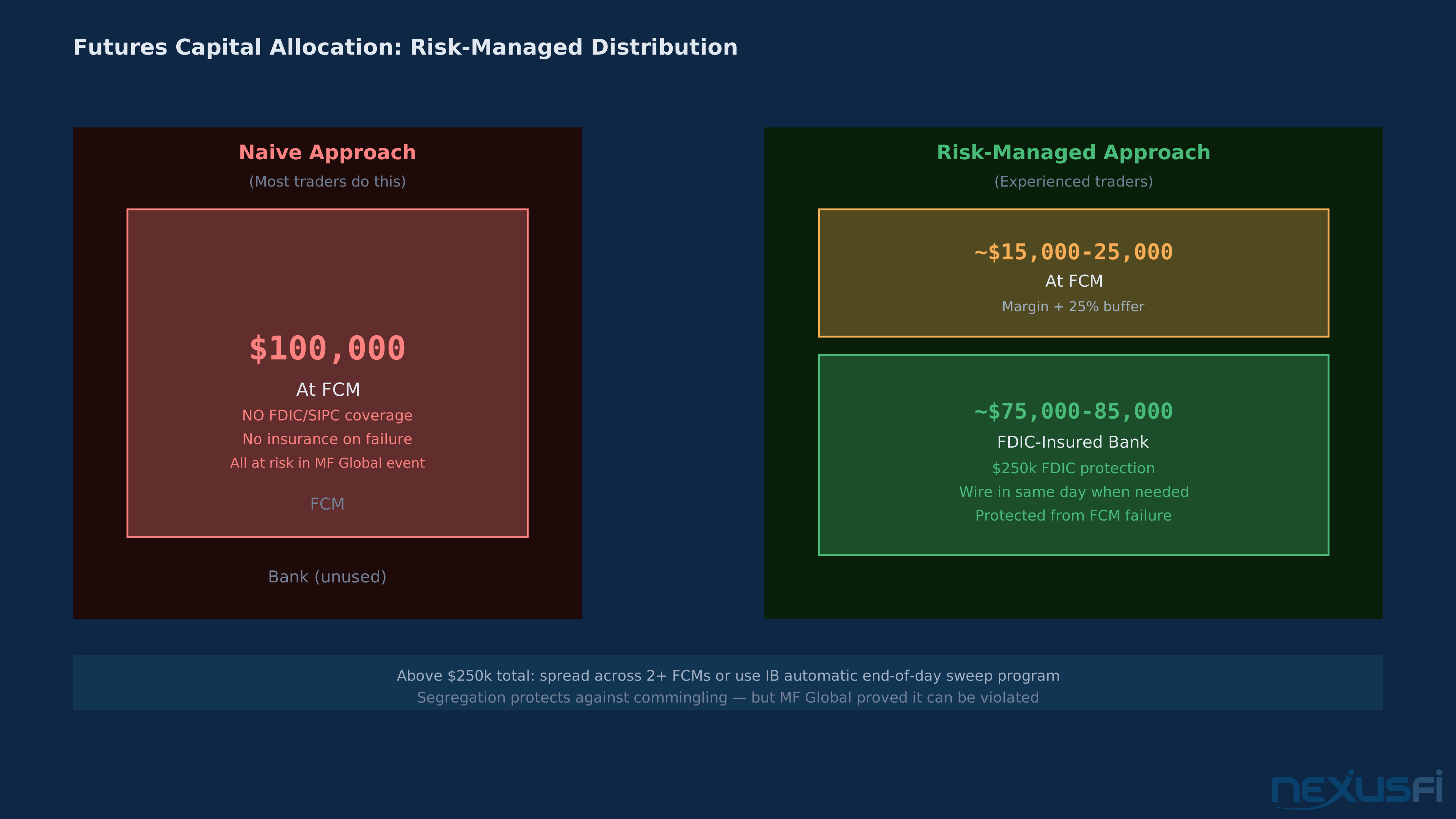
The FDIC/SIPC distinction matters here: FDIC insures bank deposits up to $250,000. SIPC protects securities accounts against broker failure, but SIPC does NOT cover futures accounts. Futures accounts are protected only by the segregated account requirement — which MF Global proved can be violated. There is no federal backstop for futures account losses due to FCM failure.
The practical framework:
- Keep enough in the futures account to cover your maximum intended position's initial margin plus a 20--30% buffer
- Keep everything else in FDIC-insured bank accounts
- If your required capital exceeds $250,000 at a single FCM, consider spreading across two FCMs or using a broker with an automatic sweep program (IB being the most accessible option)
- Test your withdrawal speed quarterly with a small test withdrawal so you understand your broker's actual timeline before you need money urgently
There is no insurance for futures account funds. Segregation rules protect you in theory, but FCM failures have proven they can be violated. The correct risk management approach is to keep only margin-plus-buffer at the FCM, maintain the remainder at an FDIC-insured bank, and run quarterly withdrawal tests to know your actual timeline.
Practical Protocol: Before You Ever Need It #
The traders who handle funding and withdrawals smoothly do so because they set everything up before they need it under pressure.
Deposit Setup #
Get your broker's wire instructions in writing: Your broker will have a standard wire instruction sheet with their bank's routing number, ABA/SWIFT number, and the reference number format they require (usually your account number). Save this. Verify it against your broker's portal — wire instruction fraud is real, and attackers target traders by sending "updated wire instructions" with their own banking details.
Initiate one test deposit before you need funds urgently: Wire your starting capital and then add a small additional deposit ($500--$1,000) purely to test the timing. Record how long it actually took. Every broker claims "same-day or next-business-day" — verify this is true for your specific bank-to-FCM combination.
Confirm your bank's outgoing wire cutoff: Most banks stop processing same-day wires at 3:00--4:00 PM. Know this number. Missing the cutoff by 10 minutes means your margin deposit goes next-day.
Set up ACH if your broker supports it: Even if you primarily wire, having ACH configured gives you a zero-fee option for non-urgent additions.
Withdrawal Setup #
Verify your broker's withdrawal request process: Is it a portal form? An email? A phone call? Know this before you need it urgently.
Know your broker's withdrawal cutoff time: Many FCMs process withdrawal requests submitted before noon as same-day outgoing wires. After noon typically means next-business-day.
Run a test withdrawal: Take out $500--$1,000 and time the process. Record when you submitted the request, when the broker confirmed it, and when the funds actually arrived in your bank. This is your actual SLA — not their marketing claim.
Many brokers allow you to set up a "standing withdrawal instruction" — a pre-authorized bank account that can receive withdrawals without additional verification. Set this up during account opening. It's one less friction point when you need money quickly.
When Things Go Wrong #
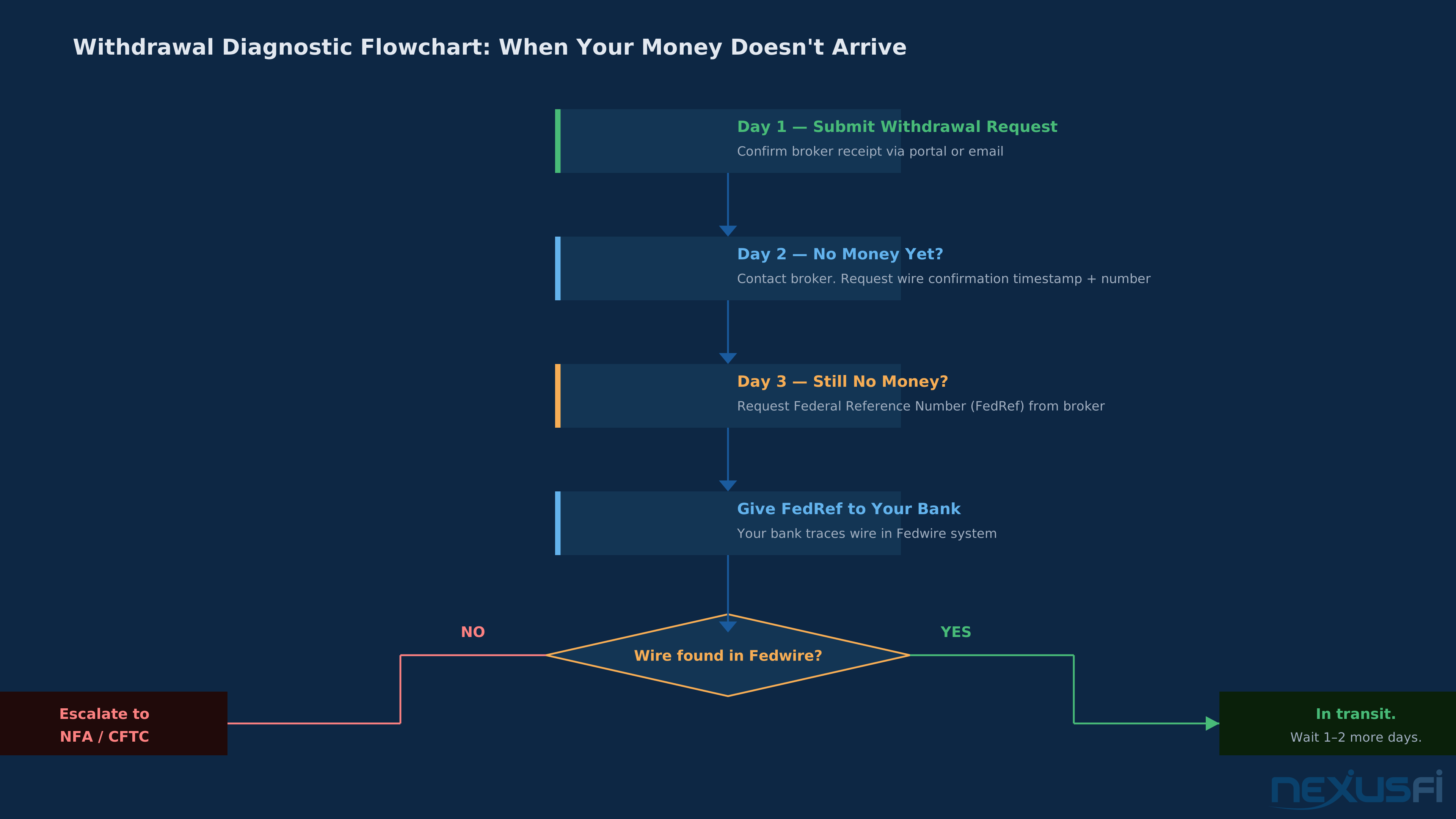
Wire delays happen. Here's the diagnostic flow:
Day 1: Submit withdrawal. Confirm receipt by your broker's system.
Day 2: No money. Contact broker. Ask for confirmation the wire was sent: they should be able to give you a timestamp and a wire confirmation number.
Day 3: Still no money. Request the federal reference number (FedRef number) from your broker. With this, your bank can locate the wire in the Fedwire system regardless of which correspondent banks were involved.
Day 4+: If your bank cannot locate the wire with the FedRef number, the wire may have been rejected or returned. Ask your broker whether they received a return notification. A returned wire typically shows up in your futures account within 2--3 days of the return.
If a wire is genuinely lost (no FedRef number from broker, no record at your bank): escalate to your broker's compliance department and your bank's wire transfer department simultaneously. Both have legal obligations to resolve wire disputes under UCC and Fedwire operating rules.
If a broker cannot or will not provide a FedRef number for a wire they claim to have sent, this is a serious red flag. Consider escalating to the NFA (for FCMs) or filing a complaint with the CFTC.
The moment a broker stops returning calls or emails about a missing wire, treat it as a potential FCM solvency issue — not a technical delay. Request your remaining account balance immediately and follow the Futures Broker Dispute Resolution escalation protocol.
Knowledge Map
Go Deeper
Build on this knowledgeReferences This Article
Articles that build on this topicCitations
- — Experience with Velocity Futures? (2012) 👍 3“I dislike the fact that the only way they will allow you to fund or refund your account is via a wire.”
- — Broker Wiring Fees (2012) 👍 2“My broker AMP charges $30 for a wire so paying $25 wiring money in and then $30 to get money out is $55 round trip!”
- — Stage 5 Trading Broker Review (2017) 👍 2“Banks receive wire requests from their customers and then put the request in a queue.”
- — Mirus Futures...To have or not to have?! (2010) 👍 3“It has been 22 days now since I made the request. I have not been provided with any type of information.”
- — Non-Bank providers for international wire transfers (2019) 👍 2“Due to anti money laundering rules they can be quite pedantic -- money must come from a bank account in the same name as your trading account.”
- — Funding trading account in EUR (2023) 👍 1“In most cases a futures account will be multiple currency.”
- — MF Global situation (2011) 👍 1“Why it's best to only keep minimum amount you need to trade with in futures account and keep rest in an FDIC insured bank account.”
- — Is Amp at risk of going under? (2020) 👍 7“There is NO INSURANCE for funds deposited at an FCM.”