



How to Choose a Futures Broker: The Decision Framework for Every Trader
Overview #
Your broker isn't just a middleman — it's the infrastructure your entire trading business runs on. Pick the wrong one and you'll discover the cost in slippage, downtime, or a customer service phone tree when you need a human being to fix a margin call at 3 AM.
This guide breaks down what counts when choosing a futures broker, cuts through the marketing noise around "lowest commissions," and gives you a framework for matching your broker choice to your specific trading style.
The Broker Ecosystem: Who Does What #
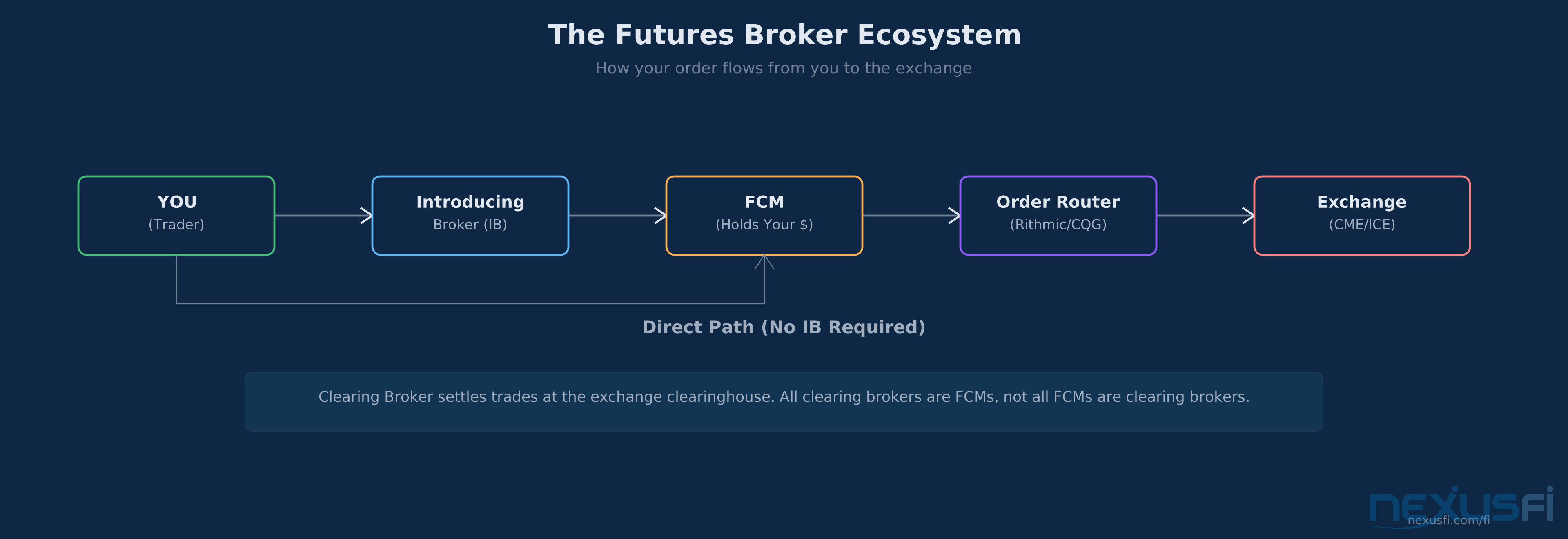
Before comparing brokers, you need to understand what you're comparing. The word "broker" gets thrown around loosely in futures, but there are distinct roles in the chain between you and the exchange.
Futures Commission Merchants (FCMs) #
The FCM is the firm that actually holds your money. They maintain the relationship with order-routing firms like Rithmic or CQG, which send your orders to the exchange and report back results. Every futures trader must have an FCM — without one, you're not trading.
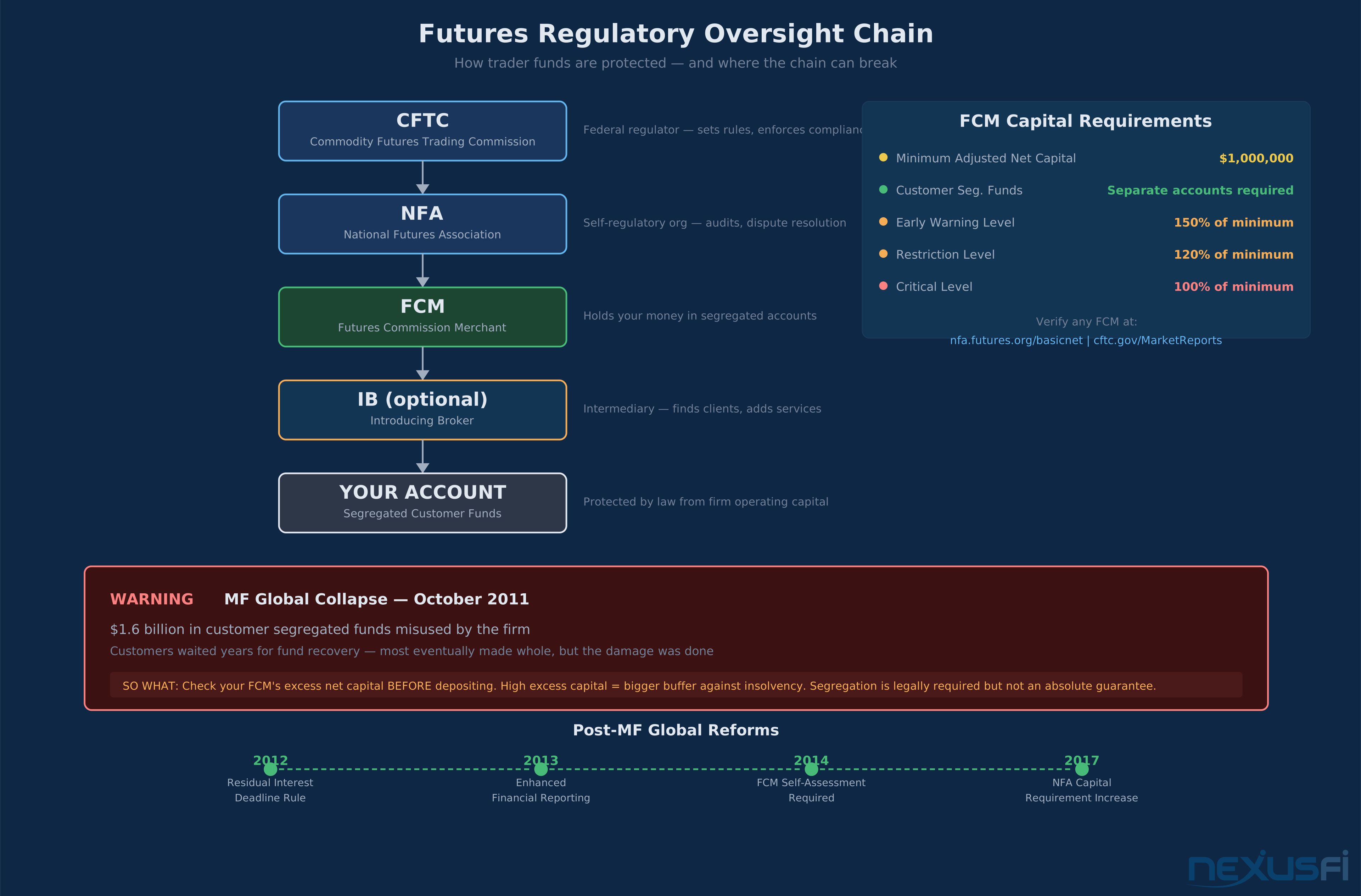
FCMs are registered with the CFTC and NFA, and they're required to keep customer funds in segregated accounts separate from their own operating capital. This is your primary layer of fund protection.
As @Big Mike documented in his sticky post on [CFTC Capital Requirements for FCMs] [1], you can check any FCM's financial health directly through the CFTC's public reports at cftc.gov/MarketReports/financialfcmdata. The report shows adjusted net capital, excess net capital, and total segregated customer funds — hard numbers, not marketing claims.
Introducing Brokers (IBs) #
An Introducing Broker is an intermediary between you and an FCM. They find customers, provide services, and receive compensation from the commission stream. NinjaTrader Brokerage, for example, operates as an IB (though NinjaTrader now owns its own FCM, NinjaTrader Clearing).
As @bobwest explained in a detailed breakdown on [NexusFi] [2]:
"Introducing brokers don't add anything essential to futures trading, speaking generically about the group. They find customers for FCMs, and receive compensation from the income stream generated by commissions for the trades the FCMs process. In order to differentiate themselves in the marketplace, some will build in additional services and products in order to attract trader interest."
The key insight: you don't need an IB. But some IBs add genuine value — proprietary platforms, specialized customer service, performance analysis tools, or educational resources. The question is whether that value justifies their fee structure for your situation.
Clearing Brokers #
A separate category that often creates confusion. All clearing brokers are FCMs, but not all FCMs are clearing brokers. Clearing brokers are responsible for settling trades at the exchange clearinghouse. If your FCM isn't itself a clearing broker, it uses one as an intermediary. For most retail traders, this distinction matters mainly in terms of the settlement chain — more intermediaries can mean slightly different fee structures.
Commission and Fee Structure: The Real Cost of Trading #
Commissions get the most attention, but they're often the smallest part of your total cost. The traders who fixate on saving $0.10 per contract frequently overlook platform fees, data costs, and margin-related charges that dwarf any commission savings.
Breaking Down the Fee Stack #
A single futures trade involves multiple cost layers:
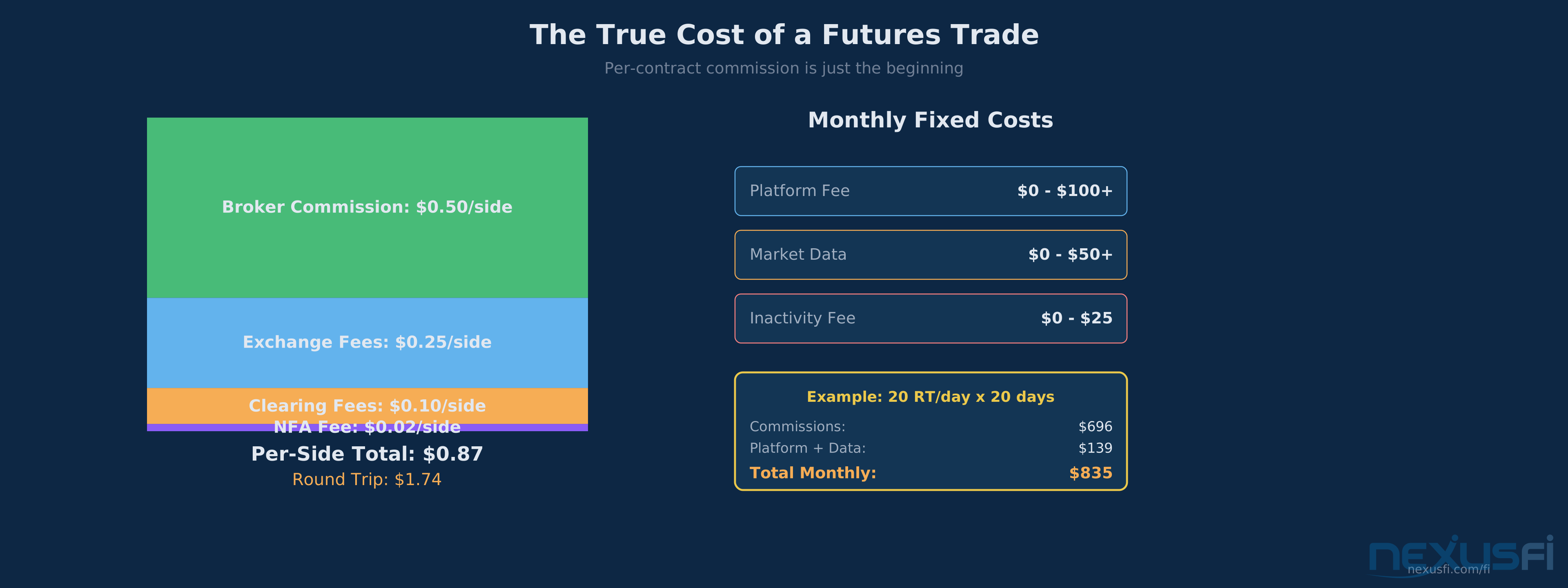
- Broker commission: The per-contract fee charged by your IB or FCM (typically $0.09--$2.50 per side)
- Exchange fees: Charged by CME, ICE, or whichever exchange you're trading on — passed through to you regardless of broker
- Clearing fees: The cost of clearing the trade through the FCM
- NFA fees: A small per-contract regulatory fee ($0.02 per side)
- Platform fees: Monthly software subscriptions ($0--$100+/month)
- Market data fees: Real-time Level 1 and Level 2 data ($0--$50+/month)
Example breakdown: A $0.50/side commission with $0.25 exchange fees, $0.10 clearing fees, and $0.02 NFA fees equals $0.87 per side total — $1.74 round trip. If you're also paying $99/month for platform access and $40/month for data, that's $139 in fixed costs before you place a single trade.
As @SMCJB noted on [NexusFi] [4]: "Broker commissions are a function of service, volume, and margin requirements. The cheapest brokers probably don't include software and data. When you calculate what it's costing you to trade, make sure you include software and data costs — could change the picture."
For a deeper breakdown of every line item, see the full guide on futures commissions and fees.
Volume-Based Pricing #
Most brokers offer tiered pricing that decreases as your monthly volume increases. A trader doing 500+ round trips per day can negotiate rates under $0.10 per contract. A retail trader doing 5 contracts per day won't get anywhere near that rate — and shouldn't expect to.
The Total Cost Calculation #
For any broker you're evaluating, calculate your monthly cost based on your actual trading frequency:
Monthly cost = (commission per RT × trades/month) + platform fee + data fee + any other monthly charges
Run this calculation for at least three brokers before deciding. The broker with the lowest per-contract commission isn't always the cheapest when you factor in the full stack.
Margin Requirements: Leverage Is a Feature and a Risk #
Margin is the deposit required to hold a futures position. There are two types, and brokers handle them very differently.
Intraday Margin #
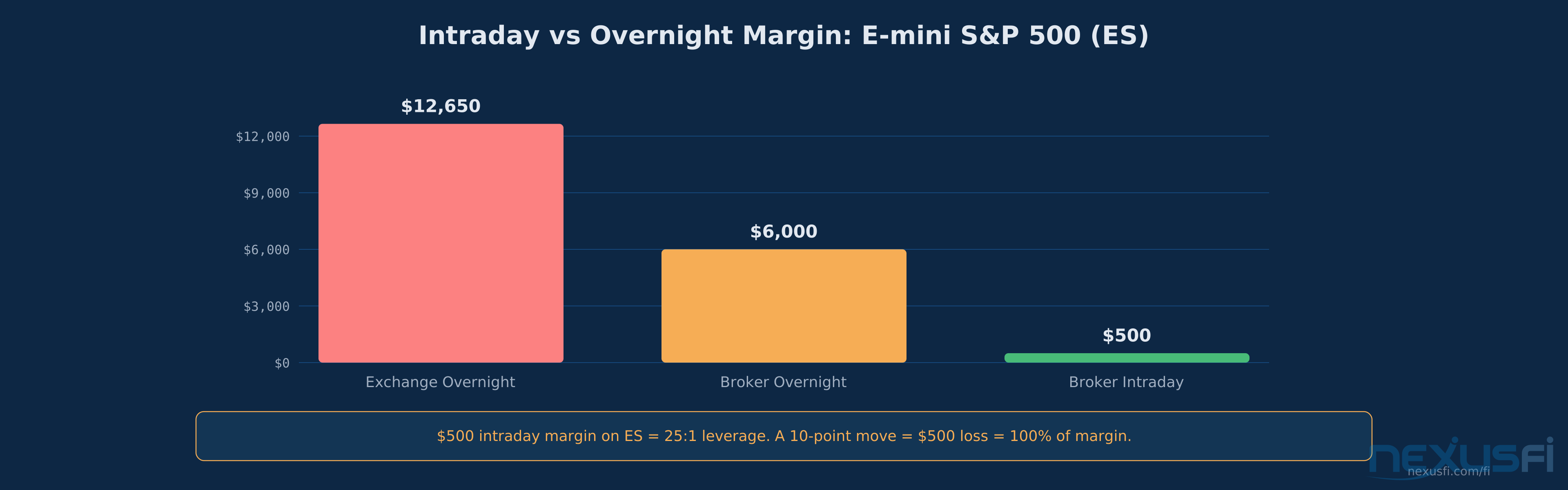
This is the margin required while actively trading during market hours. Brokers compete aggressively on intraday margins — some offer as low as $50 for Micro E-mini S&P 500 (MES) contracts and $500 for full-size E-mini S&P 500 (ES). The exchange-set margin for ES is over $12,000, so these intraday discounts represent massive leverage.
Lower intraday margin means you can trade larger relative to your account. That's appealing — and dangerous. A $500 intraday margin on ES means a 10-point adverse move ($500 loss) wipes out your entire margin deposit. Many accounts blow up not because the trader's analysis was wrong, but because their broker's low margin requirements encouraged position sizes their account couldn't sustain.
Overnight Margin #
If you hold positions past the session close, exchange-set overnight margins apply. These are much higher than intraday margins and are non-negotiable — your broker passes them through as-is. If your account can't meet overnight margin when the session closes, you'll face an auto-liquidation, often with additional fees.
Margin as a Decision Factor #
Don't choose a broker primarily for low margins. Choose a broker whose margin structure matches your risk management approach. If you're a scalper who's flat by the close every day, intraday margins matter more. If you swing trade or hold overnight, verify the overnight margin requirements and make sure your account has adequate buffer above the minimum.
Regulation and Fund Safety #
Every legitimate U.S. futures broker must be registered with the CFTC and a member of the NFA (National Futures Association). This isn't optional — it's a legal requirement for anyone handling customer funds for futures trading.
What Registration Means #
- CFTC registration: The firm is regulated by the federal agency overseeing derivatives markets
- NFA membership: The firm is subject to NFA rules, audits, and dispute resolution processes
- Segregated funds: Customer money must be held separately from the firm's operating capital
- Financial reporting: FCMs file regular capital adequacy reports with the CFTC
How to Verify #
- NFA BASIC search (nfa.futures.org/basicnet): Look up any firm or individual by name or NFA ID. Check registration status, disciplinary history, and current standing.
- CFTC financial reports (cftc.gov): Review your FCM's adjusted net capital, excess net capital, and total segregated customer funds. An FCM with excess net capital well above the minimum is in stronger financial health.
The MF Global Lesson #
In 2011, MF Global collapsed and improperly used over $1.6 billion in customer segregated funds. While most customers eventually recovered their funds, the process took years. Since then, regulatory oversight has tightened much, but the lesson stands: fund safety is directly tied to tail risk management at the institutional level: verify your FCM's financial health independently, don't take their word for it, and understand that segregated funds are a legal requirement but not an absolute guarantee.
Platform Access and Compatibility #
Your trading platform is your cockpit. The broker you choose determines which platforms you can access and how they're integrated.
Direct Platform Brokers #
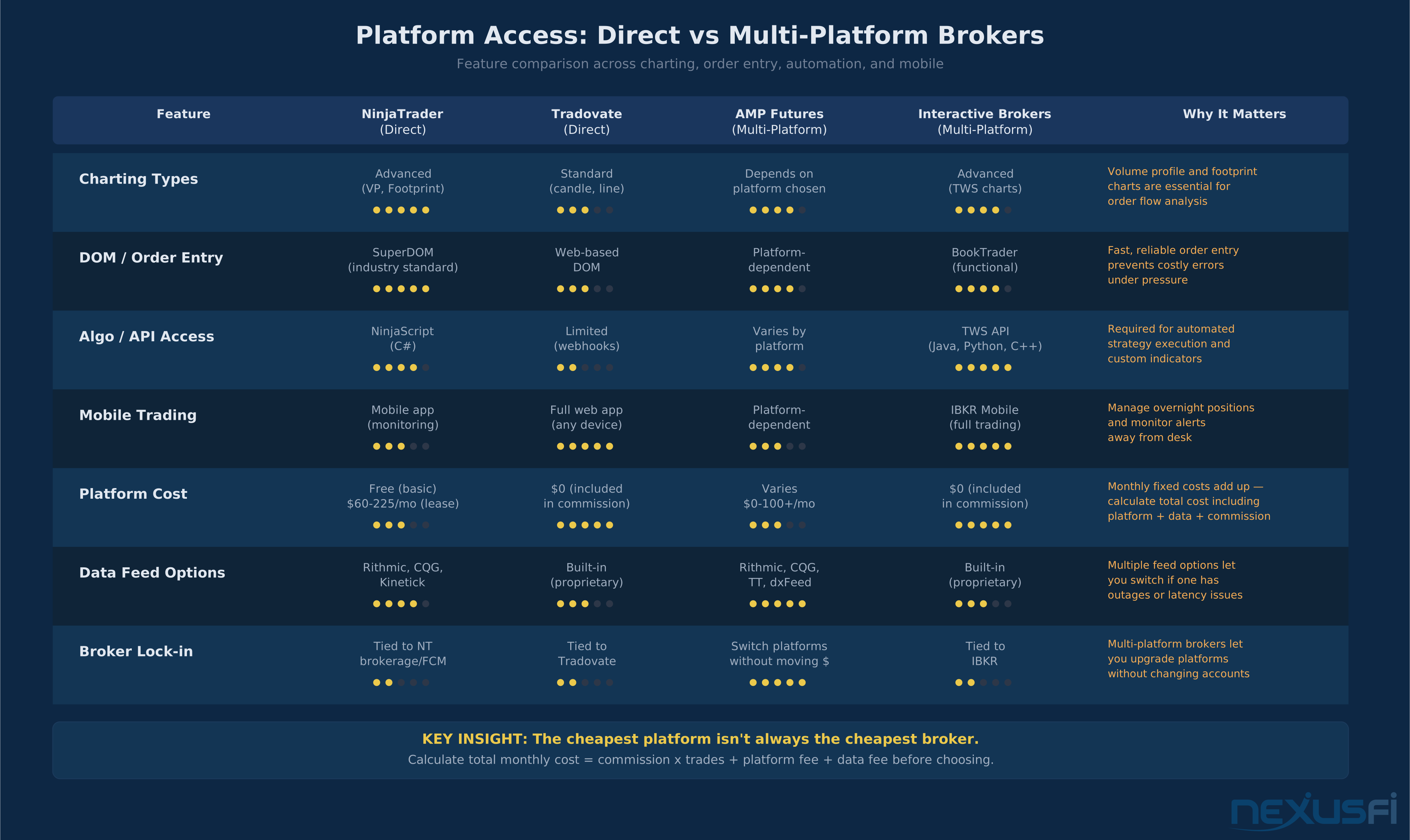
Some brokers are tightly integrated with a specific platform. NinjaTrader Brokerage gives you NinjaTrader. Tradovate is built around its own web-based platform. These offer deep integration but limit flexibility — if you outgrow the platform or want to switch, you may need to switch brokers too.
Multi-Platform IBs and FCMs #
Other brokers support multiple platforms through standard data feed connections like Rithmic, CQG, or Trading Technologies. AMP Futures, for example, supports dozens of third-party platforms. This gives you flexibility to change platforms without changing brokers, but the integration may not be as smooth. For a complete breakdown of what to look for, see the guide on futures trading platforms.
What to Evaluate #
- Charting: Does the platform offer the chart types and indicators your strategy requires? Volume profile, footprint charts, and market internals aren't available everywhere.
- Order entry: DOM (Depth of Market) trading, bracket orders, OCO orders, and advanced trade management features vary much across platforms.
- Automation: If you run algorithmic strategies, verify the platform supports your programming language and backtesting framework.
- Mobile access: Can you monitor and manage positions from your phone? Important for swing traders and anyone who holds positions during non-desk hours.
Execution Quality and Data Feeds #
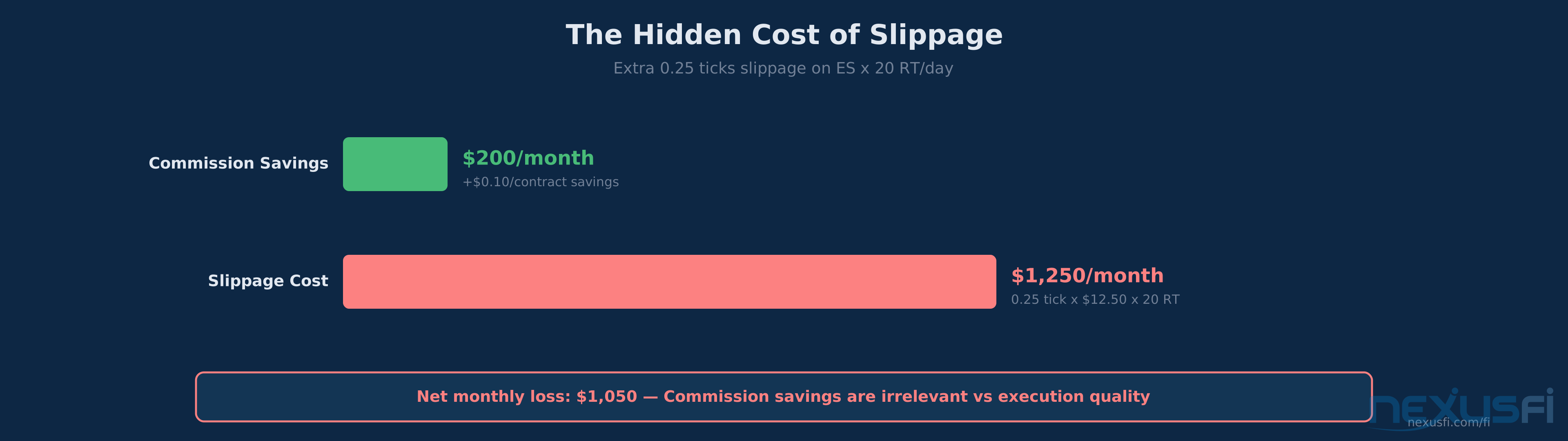
This is where the "cheap broker" conversation gets real. You can save $0.20 per contract on commissions and lose $2.00 per contract on fills if your broker's execution infrastructure is inferior.
What Affects Execution #
- Order routing: Direct routing to the exchange vs. routing through intermediaries. Fewer hops generally means faster fills.
- Data feed quality: Rithmic, CQG, and Trading Technologies are the primary institutional-grade feeds. Delayed or filtered data means you're trading on stale prices.
- Server proximity: Brokers with servers co-located near exchange matching engines offer lower latency. This matters most for scalpers and high-frequency strategies.
Slippage: The Hidden Cost #
Slippage is the difference between the price you expect and the price you actually get filled at. On a liquid contract like ES during regular trading hours, slippage on market orders is typically 1 tick or less. But during news events, pre-market hours, or on less liquid contracts, slippage can be significant — and inferior execution infrastructure makes it worse.
If you're trading 20 round trips per day on ES and averaging 0.25 ticks extra slippage versus a better-execution broker, that's 0.25 × $12.50 × 20 = $62.50 per day — $1,250 per month. Suddenly that $0.10 per-contract commission saving looks irrelevant.
Customer Support: When Cheap Gets Expensive #
@FuturesTrader71 made this point on [NexusFi] [3] when discussing the value of full-service brokers:
"As a trader, it can't be about the commission unless it is a crazy amount... Your specific needs are handled by a personal broker who will be assigned to you for the life of your account. Understand your own risk-reward framework before evaluating brokers — the right margin and commission structure depends entirely on your target R:R per trade. [Their] brokers are traders and have expertise in cost, risk management, proper setup. They can understand what you are dealing with and their aim is not to cut your margin requirements and watch you churn while creating volume on the way to being auto-liquidated."
He compared choosing the cheapest broker to "driving an extra 50 miles to save 3 cents per gallon on gas with no insurance and no seatbelt."
When Support Matters Most #
- Margin calls and auto-liquidations: You need a human who can intervene quickly, not a ticket system with a 24-hour response time.
- Account transfers: Moving positions between brokers or changing FCMs requires coordination.
- Platform issues: When your DOM freezes during a trade, you need someone who can help immediately.
- Regulatory questions: Tax reporting, wash sale rules, foreign account considerations.
How to Test Support Before Committing #
Open a demo account first. Call the support line. Email a technical question. See how fast they respond and whether the person on the other end actually understands futures trading. This costs you nothing and tells you everything.
The Decision Framework #
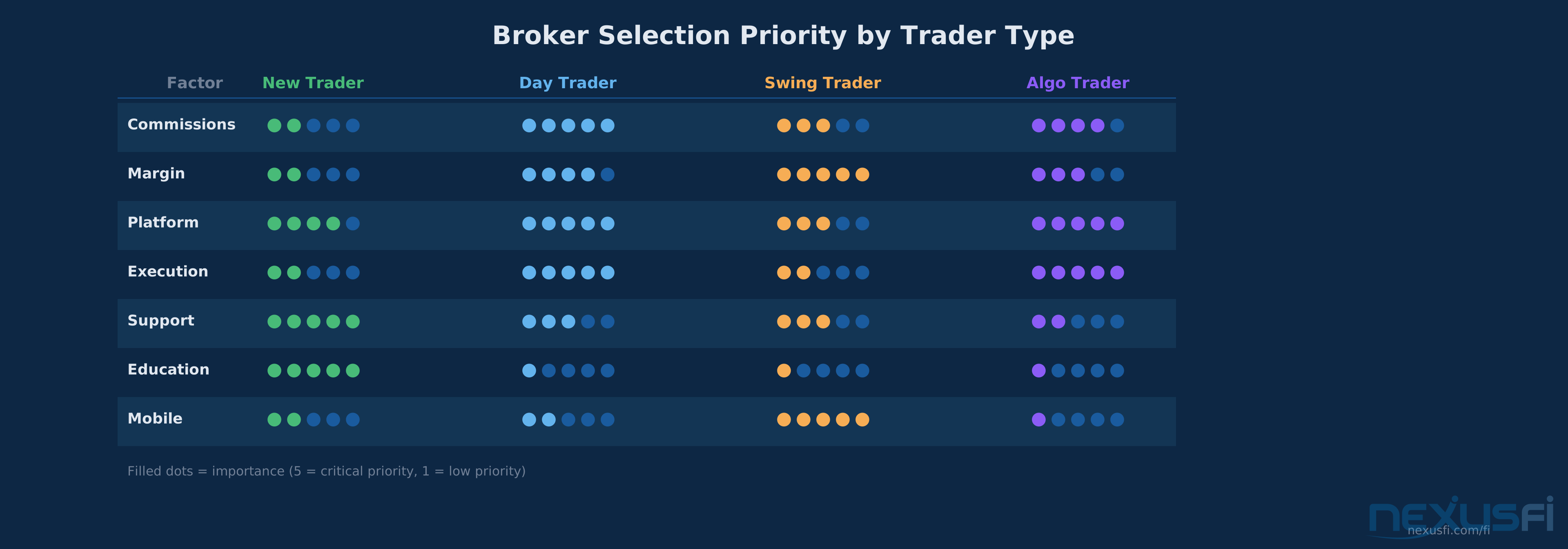
There's no universal "best broker." The right choice depends on your trading style, volume, account size, and priorities.
For New Traders (Under 6 Months Experience) #
Prioritize: Education resources, responsive support, platform quality, reasonable margins Deprioritize: Commission optimization (your volume doesn't justify it yet) Watch out for: Extremely low margins that encourage over-leveraging before you've developed risk management habits
For Active Day Traders (5+ Round Trips/Day) #
Prioritize: Execution quality, data feed reliability, per-contract commission rates, platform speed Deprioritize: Educational content (you already know the basics) Watch out for: Platform fees that negate commission savings at your volume level
For Swing Traders (Holding Days to Weeks) #
Prioritize: Overnight margin requirements, mobile access, account minimums, interest on excess funds Deprioritize: Microsecond execution latency (doesn't matter for your time frame) Watch out for: Brokers that cater exclusively to day traders and don't handle overnight positions well
For Algorithmic Traders #
Prioritize: API access, co-location options, order routing control, multi-account management Deprioritize: Visual charting features (your strategies run programmatically) Watch out for: API rate limits, throttling during high-volume periods, and fill quality on automated orders
The Evaluation Checklist #
Before committing real money to any broker:
- Verify regulation: Check NFA BASIC and CFTC financial reports
- Calculate total cost: Commission + exchange + clearing + NFA + platform + data for your actual monthly volume
- Test the platform: Use demo accounts — every serious broker offers one
- Call support: Time the response and evaluate competence
- Read the fine print: Auto-liquidation policies, inactivity fees, account closure terms
- Ask about portability: Can you transfer your account to a different FCM if needed?
- Check community feedback: Forums like NexusFi have years of real trader experiences with most major brokers
Your broker relationship is a long-term business decision. Spend the time upfront to get it right, and you'll save yourself friction, money, and headaches for years to come.
Knowledge Map
Prerequisites
Understand these firstGo Deeper
Build on this knowledgeReferences This Article
Articles that build on this topicCitations
- — CFTC Capital Requirements for FCM's (2020) 👍 11“CFTC Capital Requirements for FCMs - sticky post with links to check FCM financial health”
- — Brokers vs Direct (2023) 👍 7“Detailed explanation of IB vs FCM vs Clearing Broker structure and what each role provides”
- — Best Broker offers the lowest commissions on Micro Futures (2022) 👍 8“Value of full-service brokers vs cheapest commission - personal broker relationship, expertise, flexibility”
- — Cheapest futures brokers? (2019) 👍 5“Broker commissions as function of service, volume, margin requirements - include software and data in cost calculation”
- — Futures Broker Due Diligence Notes post PFG (2012) 👍 82“Comprehensive broker due diligence framework post-PFG collapse covering capital protection, segregated funds, and FCM evaluation methodology”
- — Cftc.gov (2026)
- — Nfa.futures.org (2026)