



Futures Broker Dispute Resolution: NFA Arbitration, CFTC Complaints, and What to Do When Your Broker Drops the Ball
Overview #
Something went wrong with your broker. Maybe a trade executed that you never authorized. Maybe the platform crashed during a volatile session and you ate the loss. Maybe your margin call came too late — or the liquidation came too early. Whatever happened, you're staring at a loss that shouldn't be yours, and you need to know what to do next.
Here's the reality: the futures industry has a structured dispute resolution system that's been handling exactly these situations for decades. NFA arbitration, CFTC reparations, mediation, regulatory complaints — each path serves a different purpose, costs different amounts, and produces different outcomes. Picking the wrong one wastes time and money. Picking the right one — with the right evidence — can get you made whole.
This guide walks through every dispute resolution track available to U.S. futures traders, what wins and loses in each forum, and the practical steps that separate successful claims from ones that go nowhere.
Key Concepts #
NFA Arbitration — A binding dispute resolution process administered by the National Futures Association for customer disputes against NFA member firms. This is the primary recovery forum for most retail futures broker disputes.
CFTC Reparations — An administrative process under the Commodity Futures Trading Commission for customers alleging violations of the Commodity Exchange Act. More formal than arbitration, often slower, but powerful when regulatory violations are central to the claim.
Regulatory Complaint — A formal complaint filed with the NFA or CFTC that triggers investigation. Creates a regulatory record and can generate evidence, but does NOT directly recover money. Don't confuse this with a damages claim.
Mediation — Voluntary, non-binding settlement process facilitated by a neutral party. Faster and cheaper than arbitration, but only works if both sides negotiate in good faith.
Segregated Funds — Customer money held separately from the broker's operating capital under CFTC rules. The status of your segregated funds becomes critical if your broker goes insolvent — it determines whether your money is recoverable at all.
FCM (Futures Commission Merchant) — The entity that actually holds your customer funds and clears your trades. Your introducing broker (IB) might be the face of the relationship, but the FCM's financial health determines your fund safety.
The Five Dispute Resolution Tracks #
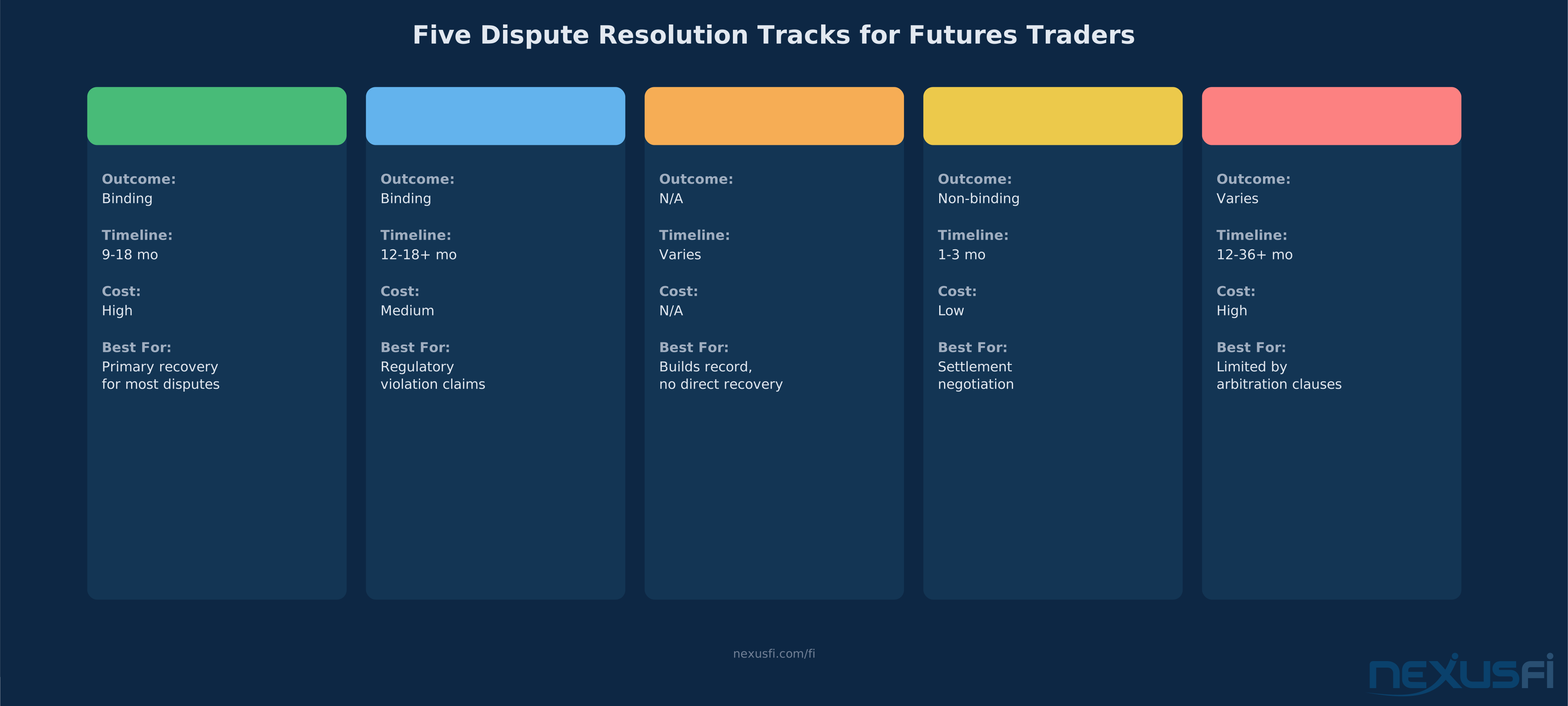
The U.S. futures industry gives you five distinct paths when things go wrong. Each serves a different purpose.
Track 1: NFA Arbitration — The Main Event #
If your dispute involves money and your broker is an NFA member (almost all regulated U.S. futures brokers are), NFA arbitration is where most cases end up. It's binding, specialized, and faster than court.
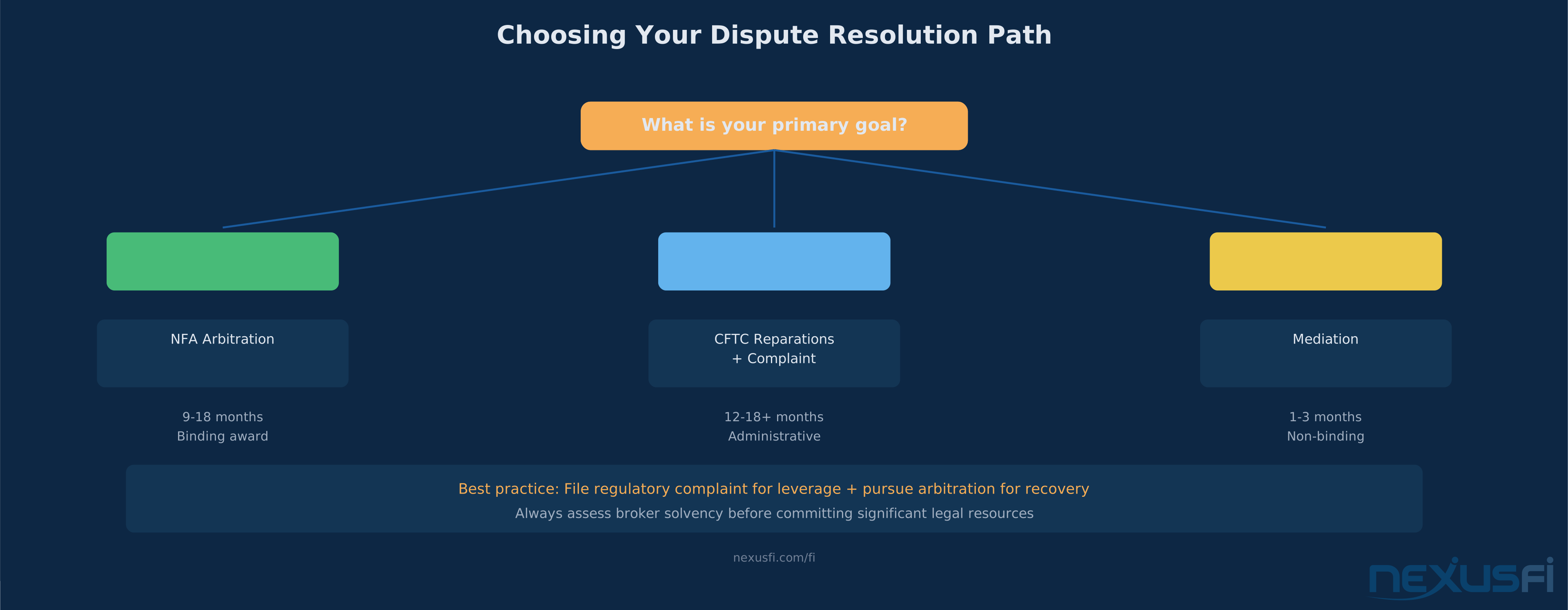
The process works like this: you file a claim with supporting documents, the broker responds, a panel gets assigned, both sides exchange evidence, a hearing happens, and the panel issues an award. The whole thing typically runs 9 to 18 months for contested cases. Simple disputes can resolve faster. Complex ones with multiple respondents, technical experts, and trade reconstruction can push past 18 months.
What makes arbitration work is that the arbitrators understand futures markets. You don't spend half the hearing explaining what a margin call is. The panel speaks the language, which means your evidence — not your explanation of basic mechanics — drives the outcome.
The binding nature cuts both ways. You get finality and enforceability, but appeal rights are extremely limited. If the panel rules against you, you're largely stuck with that decision. Go in with strong documentation or don't go in at all.
Track 2: CFTC Reparations — The Regulatory Path #
CFTC reparations is an administrative process for claims grounded in violations of the Commodity Exchange Act. Think of it as the regulatory cousin of arbitration — more formal, more procedurally technical, and often slower than customers expect.
Where it shines: cases built around specific statutory violations like fraud, misrepresentation, unauthorized trading that implicates regulatory rules, or improper handling of customer accounts under CEA standards.
Where it struggles: simple fee disputes or situations where the broker technically followed the rules but the outcome felt unfair. Reparations requires careful pleading — you need to tie your facts to specific rule violations, not just general dissatisfaction.
Timeline is often longer than NFA arbitration. Think many months to over a year depending on complexity and motion practice.
Track 3: Regulatory Complaints — Building the Record #
Filing a complaint with the NFA or CFTC triggers an investigation. As @Big Mike detailed in his [guide to filing broker complaints][1], the NFA complaint process asks for your details, the broker's NFA ID, and the specifics of what went wrong.
But here's what most traders get wrong: a regulatory complaint is NOT a damages claim. It doesn't get your money back directly. What it does is create a regulatory paper trail, potentially trigger enforcement action, and generate findings that can support your separate arbitration or reparations claim.
Think of it as building leverage and evidence. An enforcement action that finds your broker violated supervision rules makes your arbitration case much stronger. But you still need that separate damages claim to actually recover funds.
The CFTC complaint process runs in parallel. As the NexusFi community documented during the [Phillip Capital crisis][2], filing with both the NFA and CFTC creates the broadest regulatory pressure. @Big Mike noted that "using the NFA is truly a last resort, but it is there."
Track 4: Mediation — The Settlement Shortcut #
Mediation puts a neutral third party between you and your broker to help settlement. It's voluntary, non-binding, faster, and cheaper than arbitration. The catch: it only works if the other side wants to negotiate.
When mediation makes sense:
- Liability is unclear but both sides want to avoid the cost of full arbitration
- Your damages are computable but causation is hard to prove (common in system failure cases)
- The dispute amount doesn't justify full arbitration costs
- You want to preserve a business relationship with the broker
When it doesn't: the broker has no incentive to settle, your claim requires a binding decision to enforce, or the facts are so clear that you'd win outright in arbitration.
A practical workflow that works for many disputes: submit a detailed internal complaint first, preserve all evidence, attempt mediation, then proceed to arbitration if settlement fails. This costs less than going straight to arbitration and sometimes resolves the issue faster.
Track 5: Civil Litigation #
Court is technically an option but arbitration clauses in most futures account agreements constrain it much. Unless your situation involves issues outside the arbitration agreement's scope (like securities fraud in a dual-regulated account), court is usually not the primary path.
Common Dispute Types and What Actually Wins #
Unauthorized Trading #
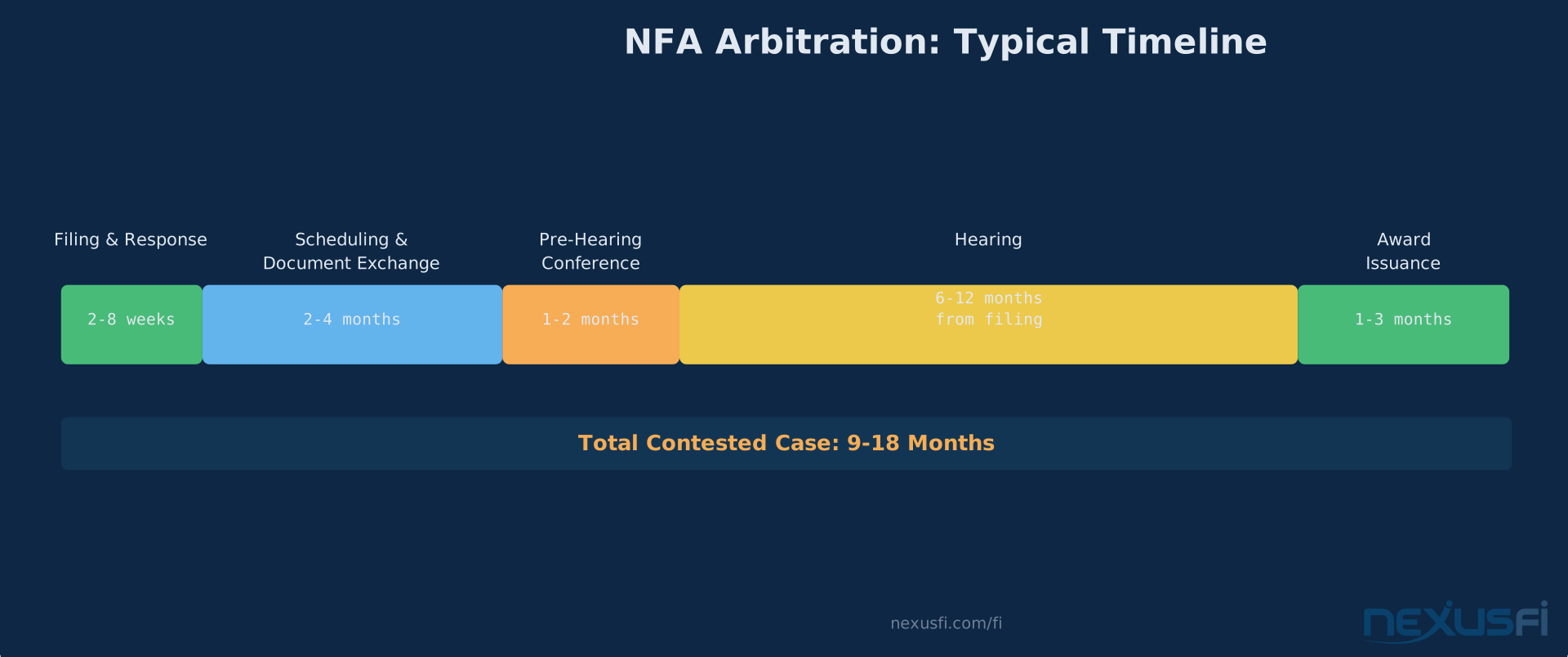
The strongest and most common customer claim in futures arbitration. The core question is simple: did you authorize the trade or didn't you?
What panels focus on:
- Signed account agreements and any limited power of attorney
- The exact scope of trading authorization (full discretion vs. specific instructions)
- Communications showing lack of consent — emails, recorded calls, platform messages
- Whether you objected promptly after discovering the unauthorized activity
- Login records and order ticket timestamps showing who placed the trade
Brokers frequently argue "implied authorization" — that your pattern of behavior suggests you consented to the trading approach even without explicit permission for each trade. The panel resolves this by examining the exact authorization scope in your documents.
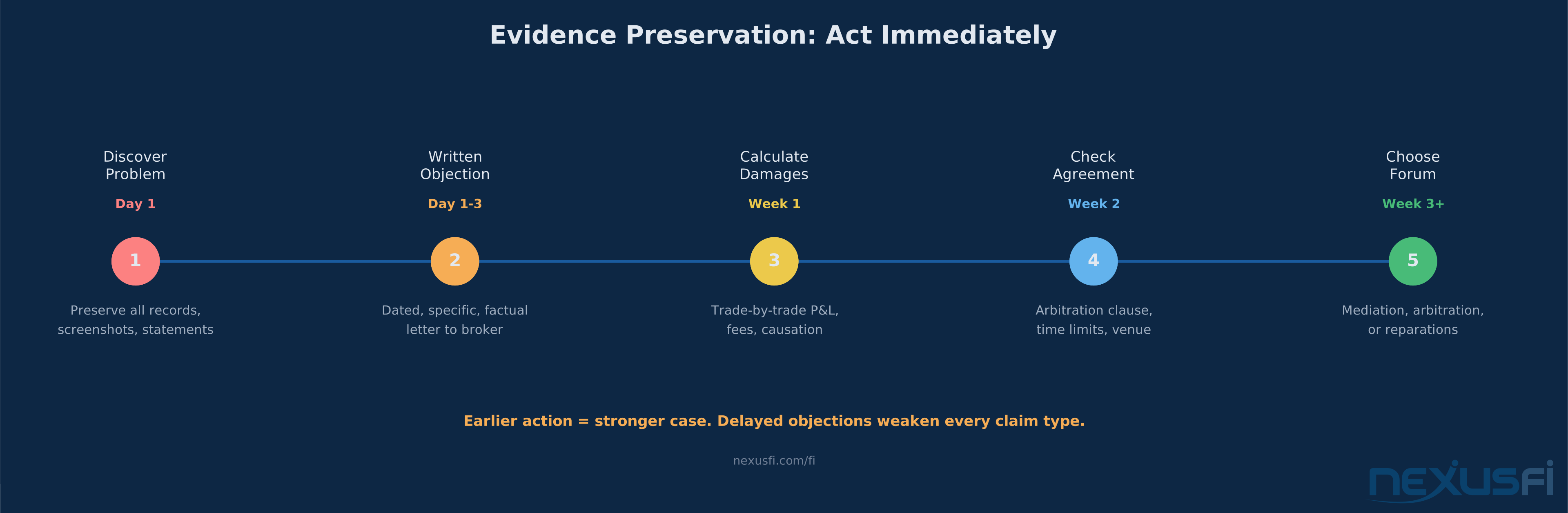
The single biggest factor in unauthorized trading cases: prompt objection. If you discover unauthorized trades and wait three months to complain, your case weakens dramatically. Object in writing immediately — dated, specific, and factual.
Excessive Commissions and Fee Disputes #
These cases depend on whether the broker charged you more than what was disclosed in your fee schedule. The evidence is mostly mathematical.
Key evidence:
- The commission schedule from your account agreement
- Trade-by-trade commission statements
- Any bundled fee structures and whether the broker applied them correctly
- Turnover rate and commission-to-equity ratio if churning is alleged
If proper disclosure exists in the agreement and the broker charged the disclosed rate, "excessive" becomes very hard to prove. The case usually turns on whether the broker applied incorrect fee codes, failed to honor volume discount tiers, or charged rates that deviate from the signed schedule.
System Failures and Platform Outages #
The hardest dispute type to win. Causation is everything.
You can't just show that the platform went down during a volatile session. You have to prove that the specific failure caused your specific loss — that your order was received, acknowledged, and then failed to execute due to the system issue, and that the order would have filled at a better price absent the failure.
Critical evidence:
- Platform outage logs with precise timestamps
- Your order status trail: submitted, acknowledged, pending, rejected, or simply disappeared
- Whether the broker had contingency procedures and followed them
- Whether you had alternative order entry methods (phone, backup platform)
- FIX/OMS logs if available
The broker's defense almost always includes: the account agreement disclaims liability for system failures, you had phone trading as a backup, and market conditions would have moved against you regardless. To overcome this, you need a tight timeline showing your order entered the system, the system failed at a specific moment, and the price moved against you during the exact failure window.
As discussed in the [trade dispute thread][3], when the issue crosses broker and software vendor responsibility, determining liability becomes even more complex. @artemiso noted that "if the issue lies with your FCM/IB, you should direct your dispute to the NFA."
Margin Call Disputes #
Margin disputes turn on procedure, not fairness. Arbitration panels don't care if you feel the margin call was unfair — they care whether the broker followed its own policies and the account agreement.
What matters:
- Were margin requirements communicated clearly and applied correctly?
- Did you receive adequate notice and time to respond?
- Was the liquidation timeline consistent with the broker's stated policies?
- Did the broker calculate margin offsets, P&L credits, and house credits correctly?
- Were any house margin changes (above exchange minimums) disclosed?
The account agreement almost always gives the broker broad discretion on margin calls and liquidation. Winning a margin dispute typically requires showing the broker deviated from its own procedures — liquidated before the stated deadline, used incorrect margin calculations, or failed to communicate changes to house margin requirements.
NFA Arbitration: Timeline, Costs, and What to Expect #
Typical Timeline #
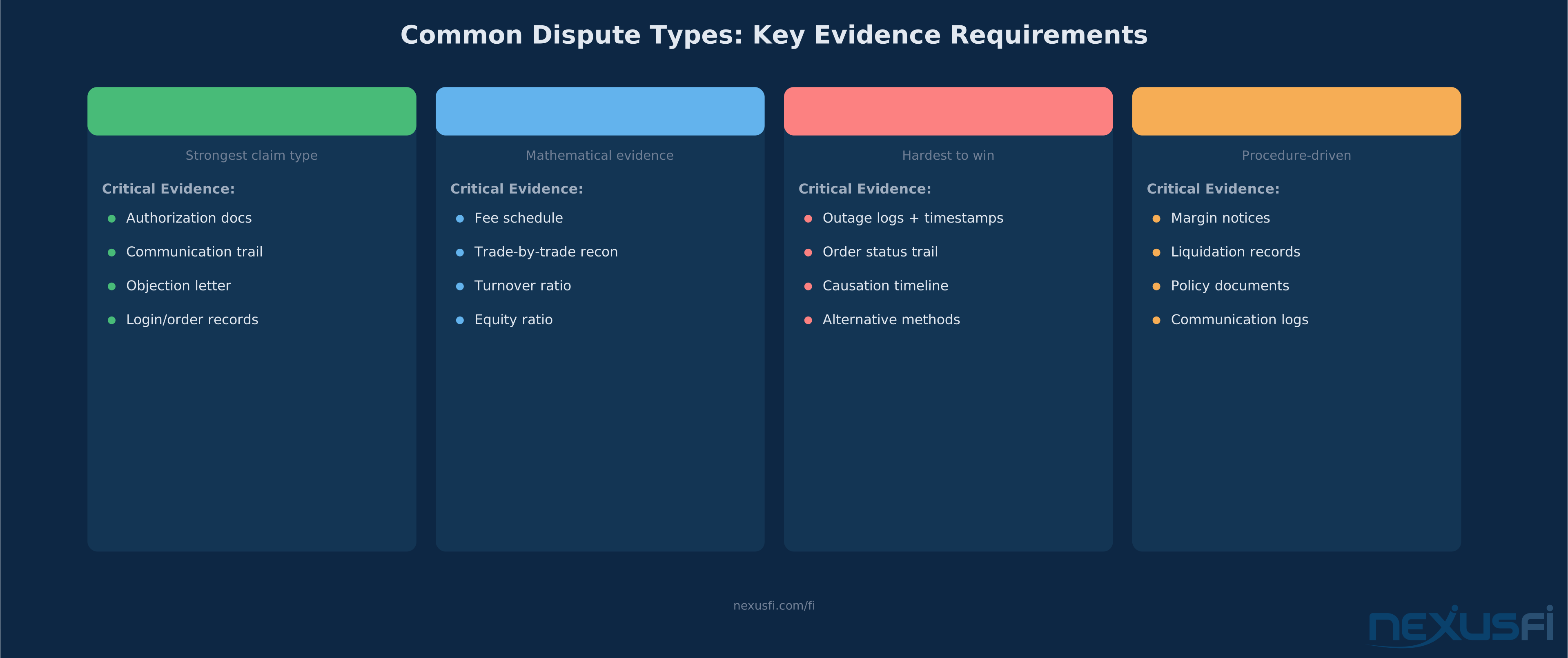
| Phase | Typical Duration |
|---|---|
| Filing to broker's response | 2-8 weeks |
| Initial scheduling and document exchange | 2-4 months |
| Pre-hearing conference | 1-2 months after scheduling |
| Hearing date from filing | 6-12 months |
| Award after hearing | 1-3 months |
| Total for contested cases | 9-18 months |
Complex cases — system failures with technical experts, multi-account disputes, large commission reconstructions, or multiple respondents — can exceed 18 months.
What speeds things up: narrow issues, clean documentary evidence, a pre-built damages model, and fewer respondents. What drags it out: credibility battles with conflicting evidence, margin model disagreements, and the need for technical expert testimony.
Cost Components #
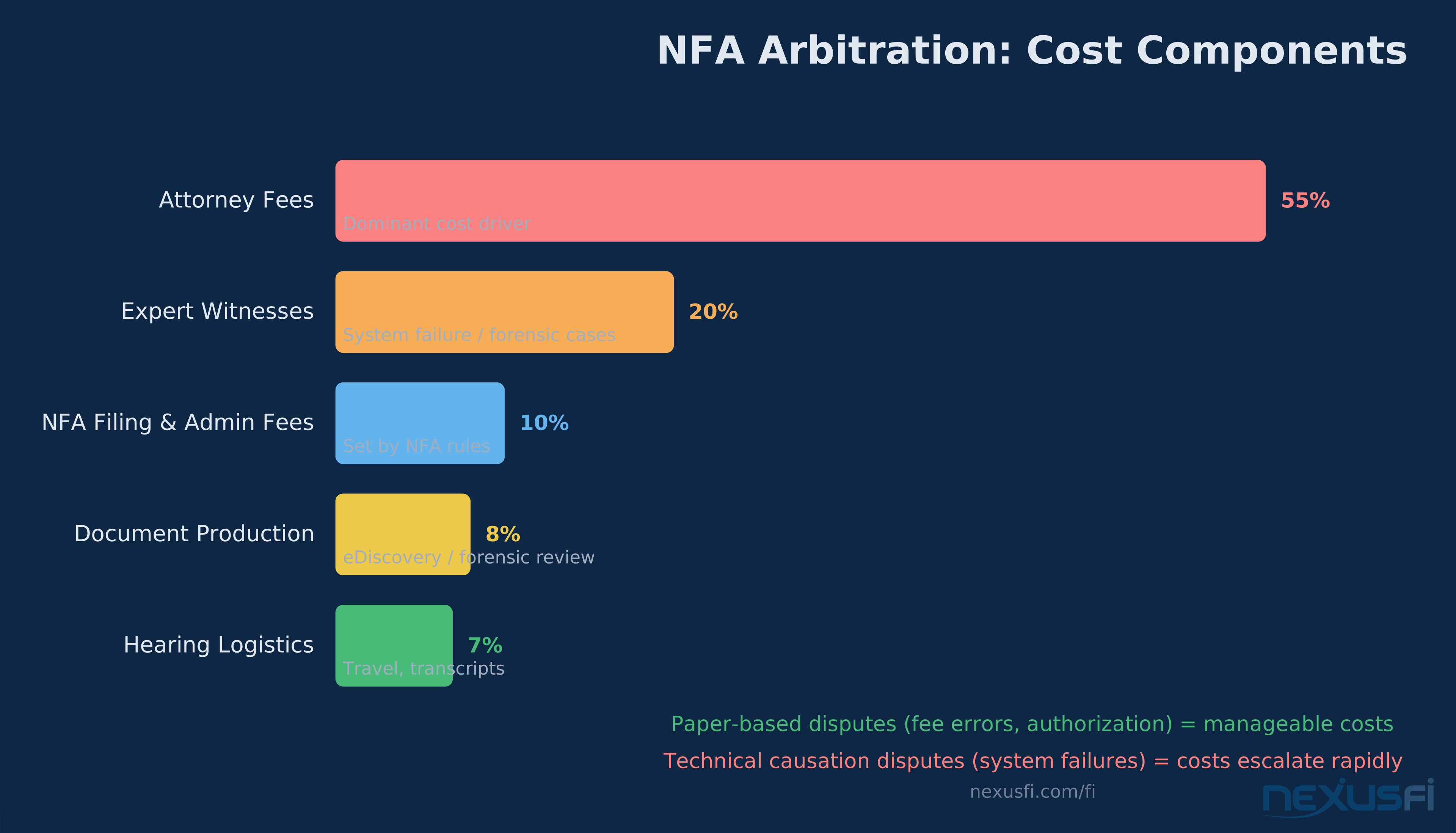
The dominant cost driver is attorney fees. Everything else — NFA filing fees, arbitrator fees, hearing logistics — is relatively minor compared to legal representation.
For system failure and execution cases, expert witnesses add significant cost. You may need a technical execution expert (to reconstruct the incident from audit trail data), a damages/loss causation expert (to model what would have happened absent the failure), or a forensic accounting expert (for commission recalculation disputes).
Practical budgeting: paper-based disputes (fee schedule errors, clear authorization issues) are manageable. Technical causation disputes requiring system reconstruction and expert testimony escalate costs rapidly.
The Evidence Preservation Checklist #
The moment you believe a dispute exists, lock down this evidence:
- Account statements — every statement from account opening through the disputed period
- Trade confirmations — individual trade-level records with timestamps
- Margin notices — every margin call, liquidation warning, and house margin change
- Communications — emails, chat logs, recorded calls (where permitted), platform messages
- Platform screenshots — error messages, order status screens, outage notices
- Fee schedules — the commission/fee schedule from your account agreement
- Account agreement — the full agreement including arbitration clause, margin policies, and system disclaimers
- Order audit trail — if you can request it from your broker, get it immediately
- Funding records — wire transfers, margin deposits, and money movement logs
Do this before you file anything. Evidence disappears. Brokers may overwrite logs. Platform data may have retention limits. The day you realize something went wrong is the day you start preserving records.
The Enforcement vs. Recovery Distinction #
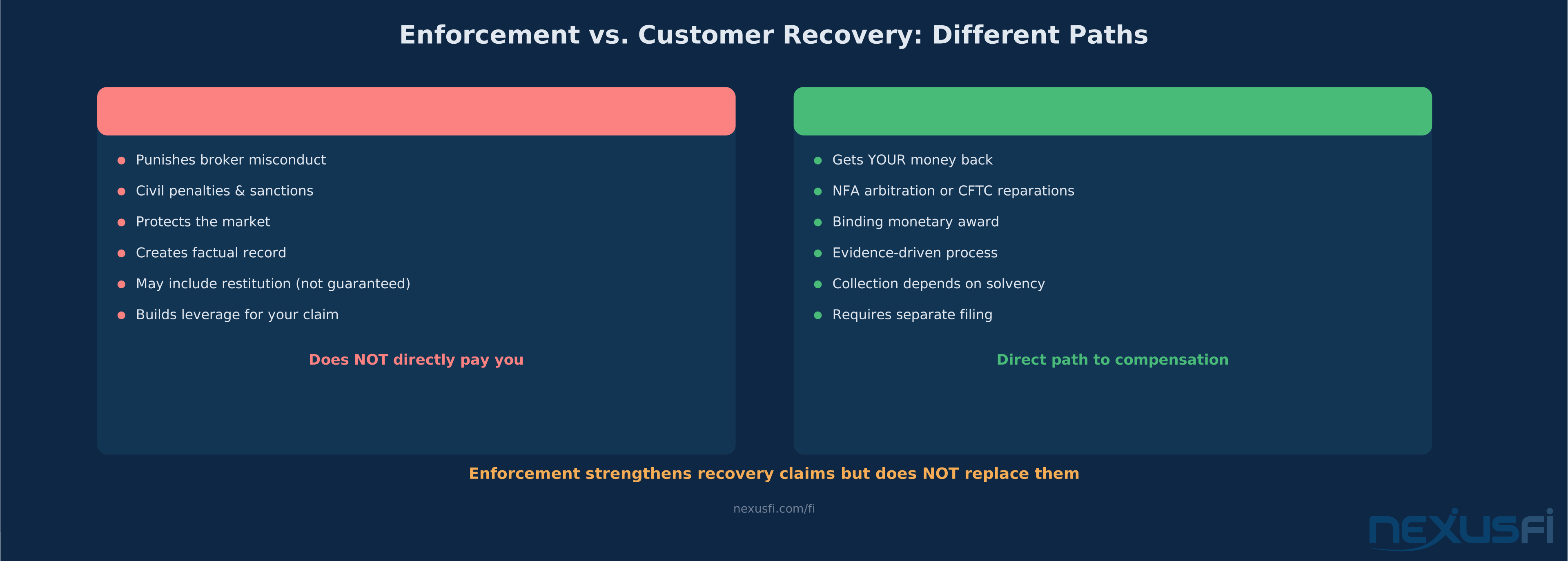
Most traders conflate regulatory enforcement with getting their money back. They're not the same thing.
Regulatory enforcement by the CFTC or NFA punishes broker misconduct — civil penalties, cease-and-desist orders, sanctions, suspension, or revocation of registration. It's designed to protect the market and deter future violations.
Customer recovery is about getting YOUR money back. That requires a separate private claim through arbitration or reparations.
A broker can be sanctioned by the NFA without you receiving a single dollar. Sometimes enforcement orders include restitution, but it's not guaranteed, amounts may be limited, and actual collection depends on whether the broker has assets to pay.
Where enforcement helps your private case: the findings validate that misconduct occurred. If the NFA finds your broker failed to supervise adequately, that finding strengthens your arbitration claim substantially. Enforcement creates leverage for settlement negotiations and provides evidence you can introduce at hearing.
As @FuturesTrader71 explained during the [Phillip Capital situation][2], understanding "how regulatory organizations work — the role of the NFA vs. CFTC" is fundamental to navigating broker disputes effectively.
What Happens If Your Broker Goes Under #
If your dispute occurs during or after broker insolvency, the game changes completely. The question shifts from "did the broker do wrong?" to "can you actually recover anything?"
Your recovery depends on:
- Segregation status — Were your funds properly segregated under CFTC rules? Properly segregated customer funds have priority in insolvency over the broker's general creditors.
- Broker solvency — Even with an arbitration award, collecting from an insolvent broker may be partial or impossible.
- Receivership process — If the firm enters receivership, you file claims with the trustee/receiver. Distribution is pro-rata and can take months or years.
Important: SIPC (Securities Investor Protection Corporation) generally does NOT cover futures accounts. Futures customer protection relies on CFTC segregation frameworks, not the securities-side SIPC insurance that covers stock brokerage failures.
If you suspect your broker is in financial distress, check their NFA registration page for any regulatory actions, review their financial filings, and consider whether moving your account to a more stable FCM makes sense — before things get worse.
Before You File: The Decision Framework #
Step 1: Confirm Your Forum #
Check your account agreement. The arbitration clause determines where you can file. Confirm the broker is an NFA member (search at nfa.futures.org/basicnet). Identify whether your dispute involves an FCM, IB, associated person, or combination.
Step 2: Map Evidence to Claim Type #
Don't file until you've matched your evidence to your theory:
- Unauthorized trading: authorization documents, communication trail, objection letter
- Excessive fees: commission schedule, trade-by-trade fee reconciliation
- System failure: outage timestamps, order trail, causation timeline
- Margin dispute: margin notices, liquidation records, policy documents
Step 3: Calculate Damages Precisely #
Trade-by-trade, not estimates. Net losses, commissions, fees, and any offsets. Specify your valuation methodology — gross vs. net, timestamps used, alternative execution assumptions for system failure cases. Panels respond to clean, verifiable math.
Step 4: Assess Recovery Feasibility #
Before investing in legal fees: is the broker solvent? Do they have assets? Are segregated funds intact? An arbitration win against a firm with no money is a pyrrhic victory. Check financial condition reports and regulatory status before committing resources.
Step 5: Choose Your Path #
- Strong documentation, clear liability, monetary recovery needed -> NFA arbitration
- Regulatory violations central to the claim -> CFTC reparations
- Evidence is messy, both sides want to avoid costs -> Mediation first, arbitration as backup
- Pattern of broker misconduct affecting multiple customers -> Regulatory complaint plus individual arbitration
Practical Takeaways #
Speed matters. Object in writing immediately when you discover a problem. Delayed objections weaken every claim type.
Evidence wins cases, sympathy doesn't. Arbitration panels are sophisticated and evidence-driven. A well-organized trade-level exhibit with timestamps and calculations is worth more than a compelling story about how much money you lost.
Enforcement is leverage, not compensation. File regulatory complaints to build the record, but pursue separate damages claims for actual recovery.
System failure cases are the hardest to win. If your claim involves a platform outage, invest in technical proof early — incident timestamps tied to specific orders and fill statuses. Vague allegations of "the system went down and I lost money" go nowhere.
Collection isn't guaranteed. Even a favorable arbitration award requires a solvent respondent. Assess the broker's financial condition before committing significant legal resources.
Don't go it alone on complex cases. Simple fee disputes might be manageable pro se. System failure cases, unauthorized trading with multiple respondents, or margin model disputes usually benefit from legal representation with futures-specific experience. The cost of an attorney may be worthwhile when the alternative is losing a case you should have won because you didn't present the evidence correctly.
The futures dispute resolution system works — but it works for traders who understand the process, preserve the right evidence, and choose the right forum. Get those three things right and you've given yourself the best possible shot at recovery.