



Futures Commissions and Fees: What You're Actually Paying to Trade
Overview #
Every futures trade has a price tag beyond the market price. That tag is built from layers — broker commission, exchange fees, clearing fees, regulatory assessments, data subscriptions, and platform costs — and most traders never see the full picture until it's eating their edge.
This article breaks down every component of futures trading costs, shows you exactly what you're paying on popular contracts like ES, NQ, and CL, and gives you a framework for evaluating whether your broker's "competitive rates" are actually competitive.
As @SMCJB [explained on NexusFi] [1], the cost to trade futures has three major components: exchange fees, NFA fees, and broker/FCM/software/data fees. That three-part split is the foundation. Everything else is detail — but detail that adds up fast.
The Fee Stack: Anatomy of a Futures Trade #
Every time you execute a futures contract, multiple entities take a cut. Here's the full stack, from bottom to top:
1. Exchange Transaction Fee — The exchange (CME, CBOT, NYMEX, COMEX) charges a per-contract fee for matching your order. This fee varies by product and is non-negotiable for non-members. For ES, the CME exchange fee for non-members trading outrights runs about $1.28 per side. For CL on NYMEX, it's in a similar range. These are pass-through costs — your broker can't discount them.
2. Clearing Fee — The clearing organization processes and guarantees your trade. Clearing fees are typically $0.05-$0.25 per side depending on the clearing firm. Some exchanges bundle this into the exchange fee line item. As @SMCJB [noted] [1], "in some cases the exchange splits this between what they call an exchange fee and a clearing fee — doesn't really matter though, still just the same thing."
3. NFA Regulatory Fee — The National Futures Association assesses a small per-contract fee. Currently $0.02 per side [11] for non-members. Tiny in absolute terms, but it appears on every single contract you trade. CME exchange members don't pay this on contracts where they hold membership.
4. Broker Commission — This is the negotiable layer. Broker commissions for active retail/professional traders range from roughly $0.25 to $5.00+ per side per contract. The variance is enormous because this is where brokers compete — and where the service model matters most.
5. Data Routing/Technology Fee — Some brokers pass through a per-trade technology or routing fee from their data infrastructure provider. CQG, for example, charges $0.10 per side on some configurations. Rithmic has its own fee structure. These get buried in the "all-in" number and are easy to miss.
The formula every futures trader should know:
Total Cost Per Side = Exchange Fee + Clearing Fee + NFA Fee + Broker Commission + Routing Fee
Round-Turn Cost = Total Cost Per Side × 2
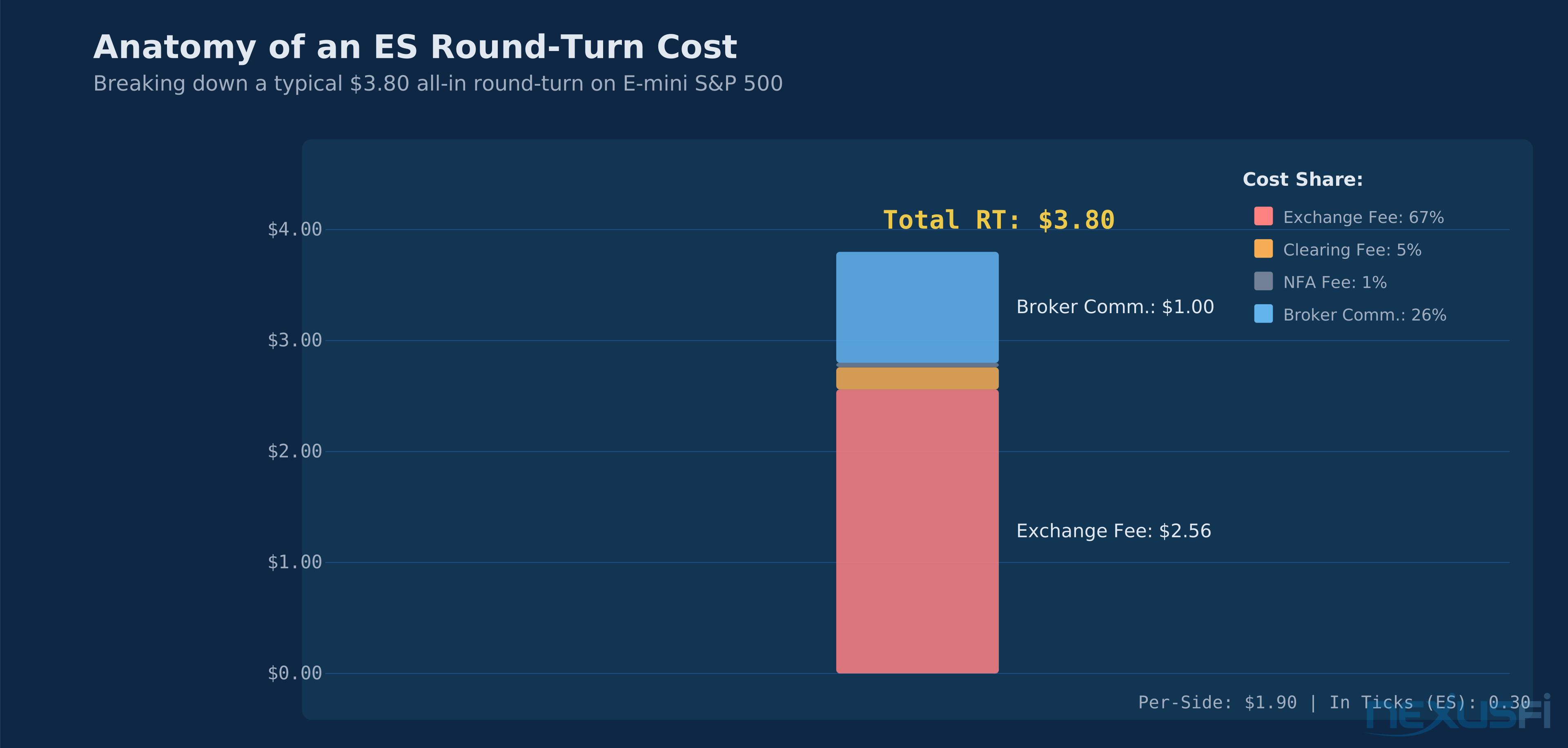
For a standard ES trade with a typical retail broker, the all-in round-turn lands somewhere in the $3.50-$5.00 range. As @bobwest [explained on NexusFi] [2], "the 'all in' round-turn cost is listed at $3.70 per trade. This is reasonably consistent with transaction costs in general in the industry. You can expect something in the $4 per trade range, plus or minus a small amount."
Per-Side vs. Round-Turn: The Convention Trap #
This is where traders get burned. Some brokers quote per-side. Others quote round-turn. A few quote one way and charge another.
Per-side means the cost for ONE leg of the trade — either the entry or the exit. Round-turn (RT) means both legs combined — the full open-to-close cost. RT is always 2× per-side.
The confusion gets worse when brokers advertise a low per-side commission but don't make clear that exchange and clearing fees are additional. A "$0.59 per side commission" sounds incredible until you realize the all-in per-side is $2.20 after exchange, clearing, NFA, and routing fees — making the round-turn $4.40.
@Big Mike [put it bluntly on NexusFi] [3]: "Be certain you also ask, in writing, if the price is round turn or per side. I've seen some sneaky brokers quote prices on a per side basis." He also warned to always get the "all-in" price in writing, because "I have personally experienced, as have others, brokers that quote you one price but then charge you another price."
The rule is simple: always compare all-in round-turn numbers. If a broker won't give you that figure clearly and in writing, that's a red flag.
Bundled vs. Pass-Through Pricing #
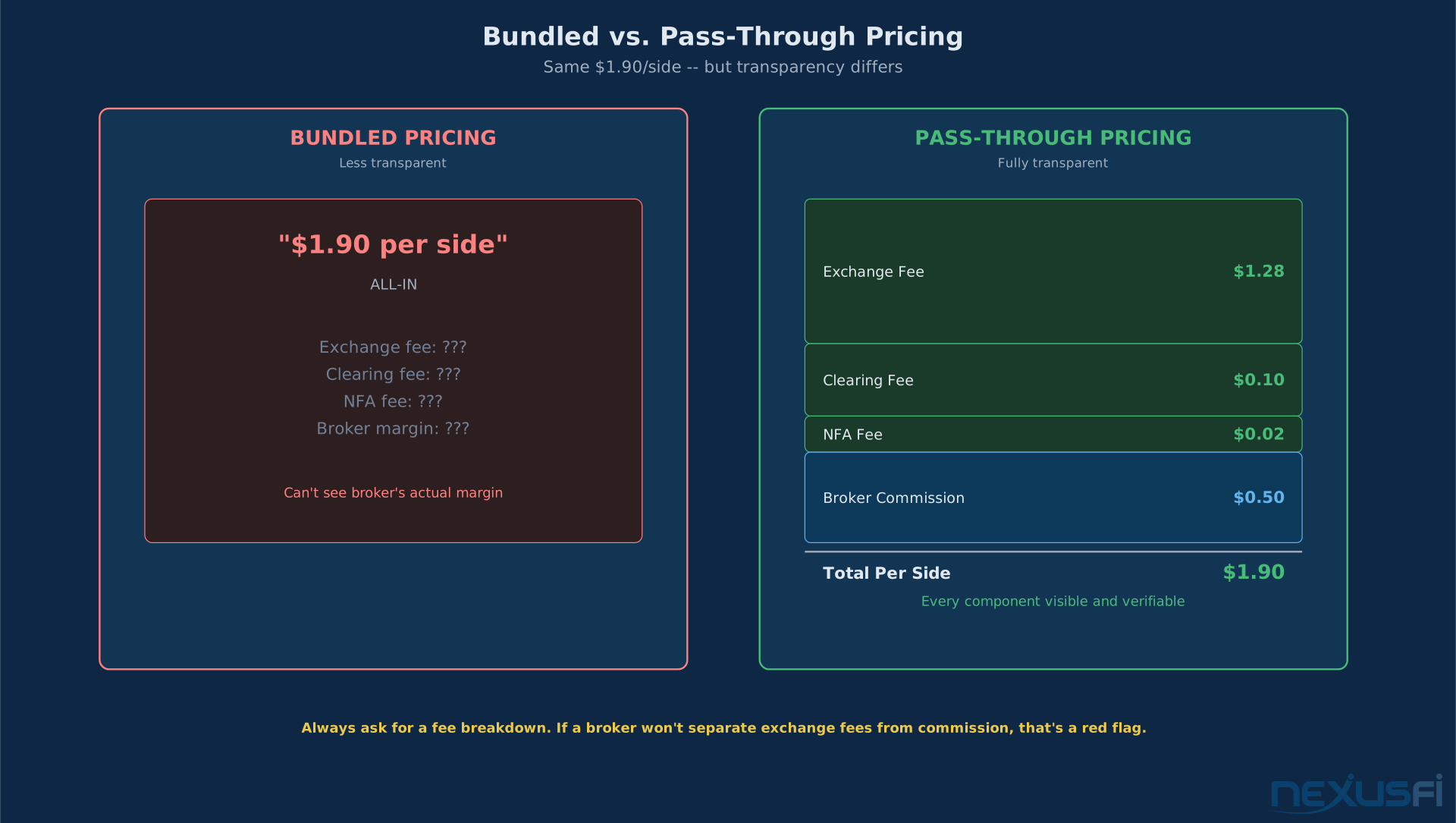
There's another layer to the convention problem. Some brokers use bundled pricing — a single number that wraps commission, exchange, clearing, and NFA into one rate. Others use pass-through pricing — they show you the exchange/clearing/NFA line items separately and add their commission on top.
Pass-through is more transparent. You can see exactly what the exchange charges and what the broker takes. Bundled pricing hides the broker's actual margin. A broker quoting "$1.89 per side all-in" sounds competitive, but you can't tell if they're charging $0.50 commission or $0.80 with a different exchange fee pass-through structure.
When evaluating any broker: ask to see a sample statement or fee schedule that separates exchange fees from commission. If they can't or won't provide that, you're trading blind on what their actual margin is.
Exchange and Clearing Fees: The Non-Negotiable Layer #
Exchange fees are set by the exchange and passed through identically regardless of broker. The only way to reduce them is through exchange membership.
Here are representative exchange fee ranges for the most actively traded contracts (non-member, per side):
| Contract | Exchange | Exchange Fee/Side | NFA Fee/Side | Combined/Side |
|---|---|---|---|---|
| ES (E-mini S&P) | CME | ~$1.28 | $0.02 | ~$1.30 |
| MES (Micro S&P) | CME | ~$0.30 | $0.02 | ~$0.32 |
| NQ (E-mini Nasdaq) | CME | ~$1.28 | $0.02 | ~$1.30 |
| MNQ (Micro Nasdaq) | CME | ~$0.30 | $0.02 | ~$0.32 |
| CL (Crude Oil) | NYMEX | ~$1.42 | $0.02 | ~$1.44 |
| MCL (Micro Crude) | NYMEX | ~$0.35 | $0.02 | ~$0.37 |
| GC (Gold) | COMEX | ~$1.50 | $0.02 | ~$1.52 |
| ZB (30yr Treasury) | CBOT | ~$1.27 | $0.02 | ~$1.29 |
| 6E (Euro FX) | CME | ~$1.60 | $0.02 | ~$1.62 |
Fee ranges are approximate as of early 2026 and reflect non-member, non-professional rates for outright trades. Exchange fees change periodically — always verify current rates at the CME Group Fee Schedule [10]. Your broker passes through these exact amounts; the only variable is what they add on top.
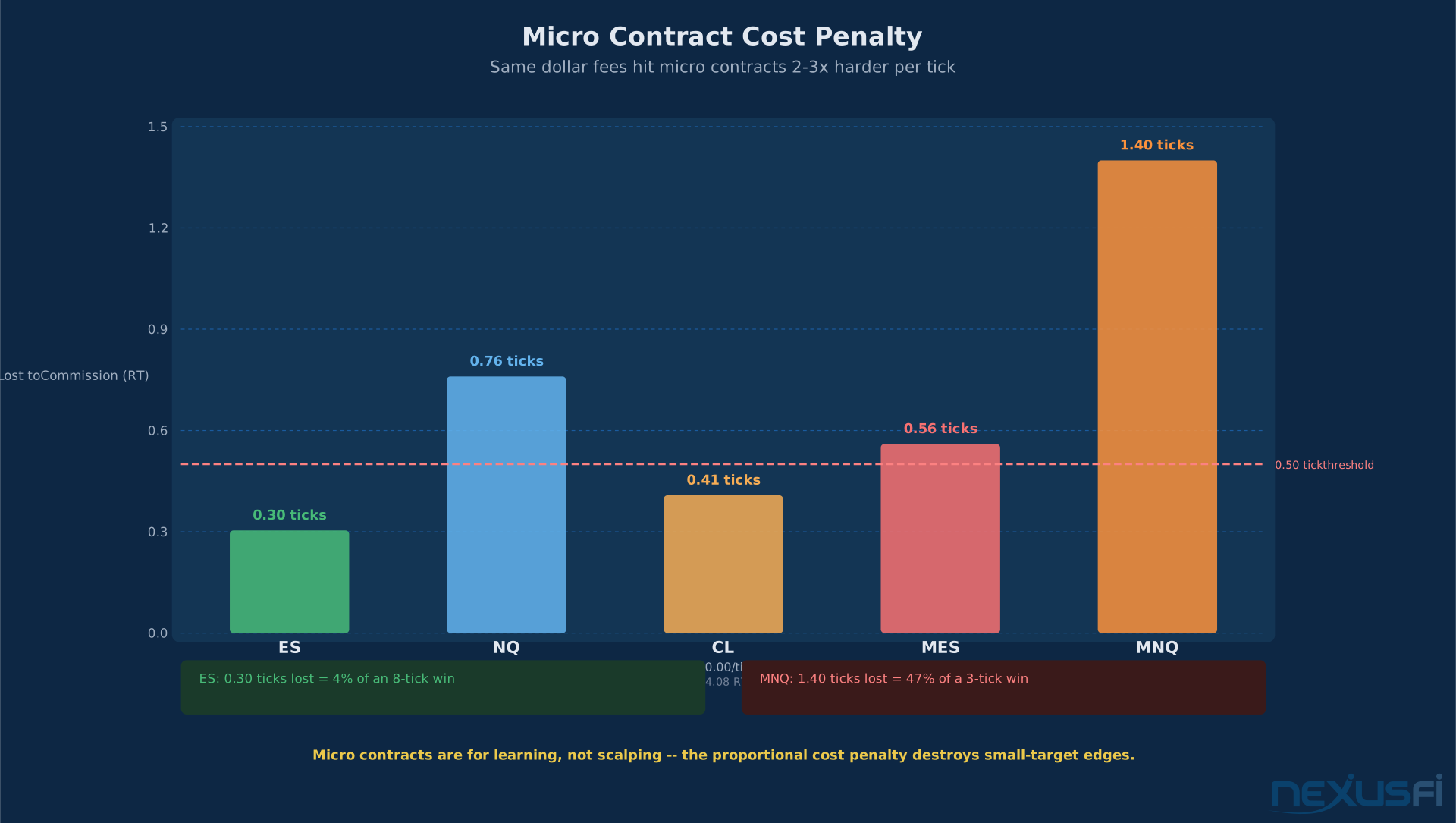
@FuturesTrader71 [highlighted this scaling on NexusFi] [4]: "The 6E has $1.60 per side in exchange fees and you must add $0.02 for NFA before FCM and broker costs. The M6E which is 1/10th the value is at $0.16 plus $0.02 for NFA." Exchange fees scale roughly with contract size — but FCM and broker costs don't, which means the broker's cut represents a larger proportion of total cost on micro contracts.
Exchange Membership: The Volume Trader's Discount #
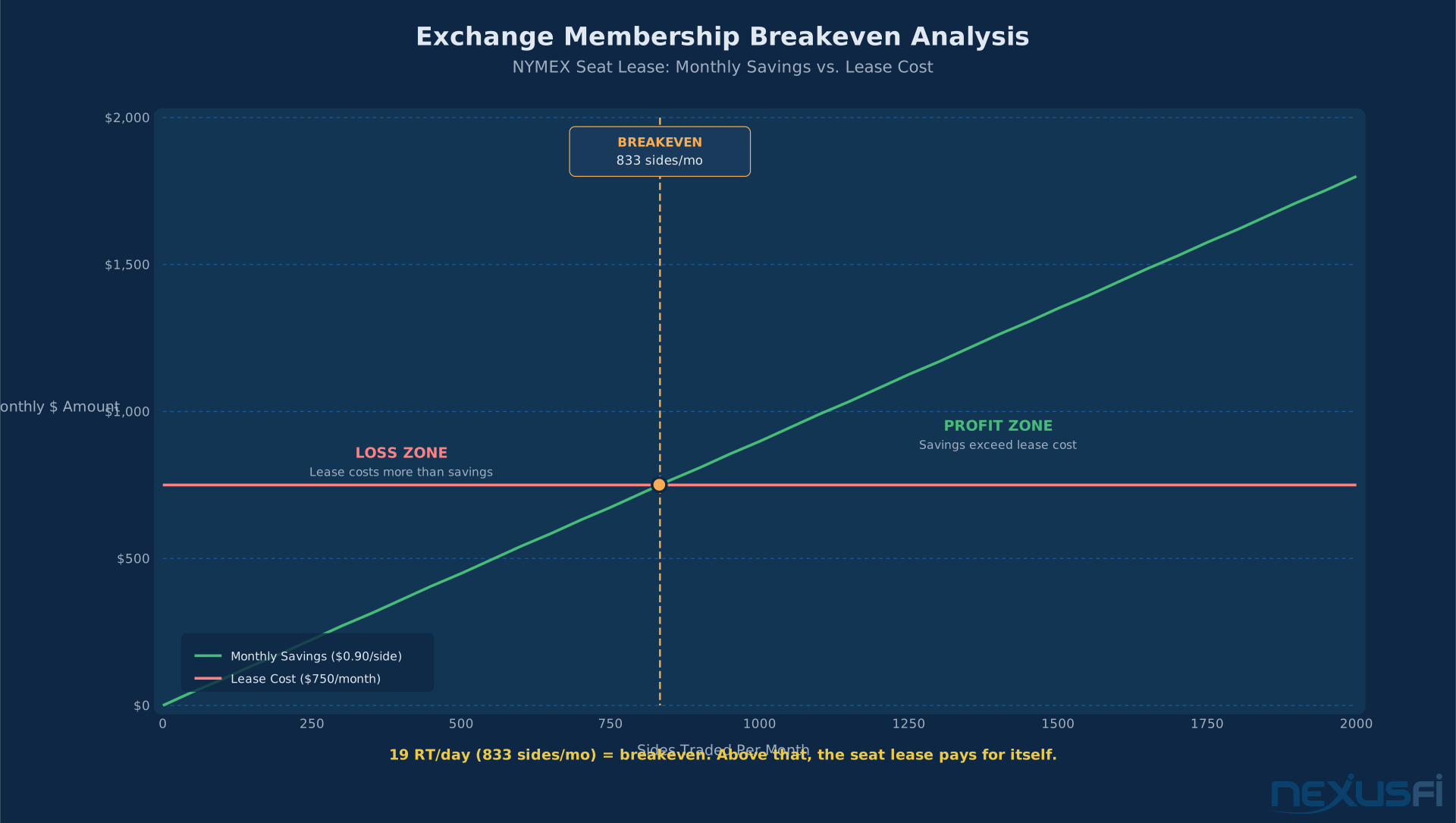
For traders doing serious volume, leasing an exchange seat can dramatically cut exchange fees. @SMCJB [broke down the math on NexusFi] [5]: "NYMEX seat leases are currently running at about $750/month. At a saving of $0.90 a side you only need to be trading 833 sides or 417 round turns/month which is about 19 round turns a day for a lease to be cost effective."
That's the breakeven analysis every high-volume trader should run: take your monthly volume, multiply by the per-side savings from member rates, and compare against the lease cost. Below that volume, the seat lease is a drag. Above it, it's one of the most reliable ways to cut costs.
Market Data Fees: The Recurring Cost Traders Underestimate #
Before you can trade, you need data — and real-time exchange data isn't free.
CME Group requires all subscribers to pay monthly data fees. The amount depends on your classification:
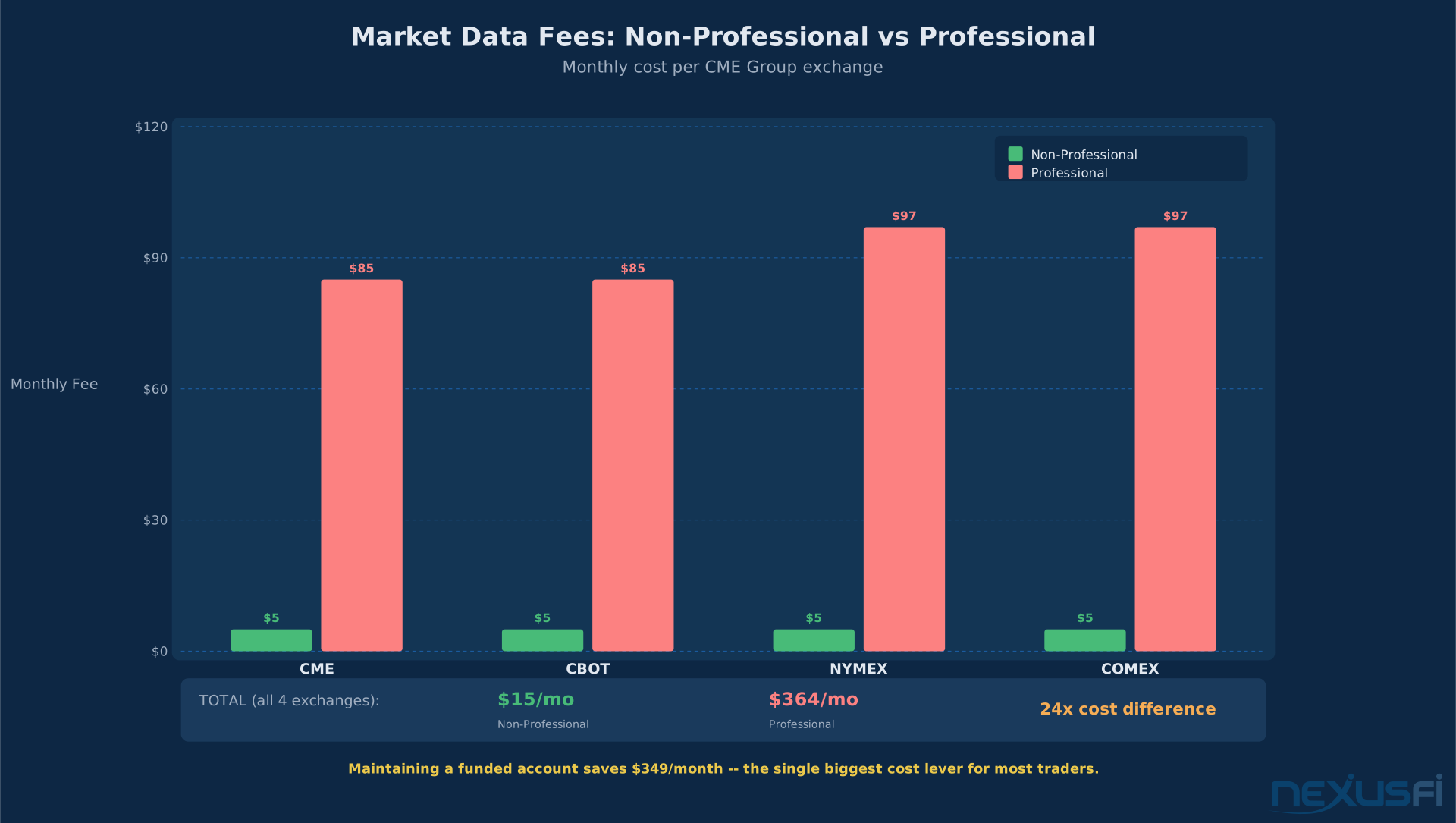
Non-Professional traders (most retail traders): Individual exchange feeds run roughly $5-$10/month per exchange, or $15-$30/month for the full CME Group bundle (CME, CBOT, NYMEX, COMEX).
Professional traders: $85-$110+ per exchange per month. The four-exchange total can hit $340-$440/month or more. There's no bundle discount at professional rates.
As @CannonTrading [outlined on NexusFi] [6], the non-professional designation requires that you have an active funded account, are not an exchange member, don't have a primary business involving trading, and aren't registered as a professional trader or investment adviser.
@Fat Tails [put it in perspective] [7]: without a funded account, the standard professional data fees across all four CME exchanges would run $364/month. "If you have a funded account and connect to the account once per month, you are allowed to receive data for a bargain price of $15 instead of $364 per month."
The professional vs. non-professional classification is a trap for traders who form entities, manage others' money, or register with the NFA. The moment you cross that line, your monthly data costs can jump 5-10x. Factor this into any decision about going professional.
Data Costs Beyond CME #
If you trade instruments on ICE, Eurex, or other exchanges, each has its own data fee schedule. A trader covering ES, CL, and European index futures could easily face $50-$150/month in data fees alone at non-professional rates — and much more at professional rates.
Data vendor fees (the middleman between the exchange and your platform) may be additional. Some brokers absorb these. Others pass them through as a separate line item.
Platform and Software Fees #
Trading platforms range from free to several hundred dollars per month:
- Free platforms: NinjaTrader (free tier), Tradovate (included), some broker-provided platforms
- Subscription platforms: Sierra Chart ($16-$36/month), TradingView Pro ($15-$60/month)
- Premium platforms: Bookmap ($39-$79/month), Jigsaw Daytradr ($379 lifetime), various DOM/footprint tools
- License-based: NinjaTrader Lifetime ($1,099 one-time), CQG various tiers
The "free" tier almost always comes with limitations — typically delayed data, limited chart history, or basic order types only. Advanced features like footprint charts, volume profile, and custom indicators usually require paid tiers or add-ons.
For automated traders, API access and connectivity fees add another layer. Some brokers charge separately for co-location or low-latency connections.
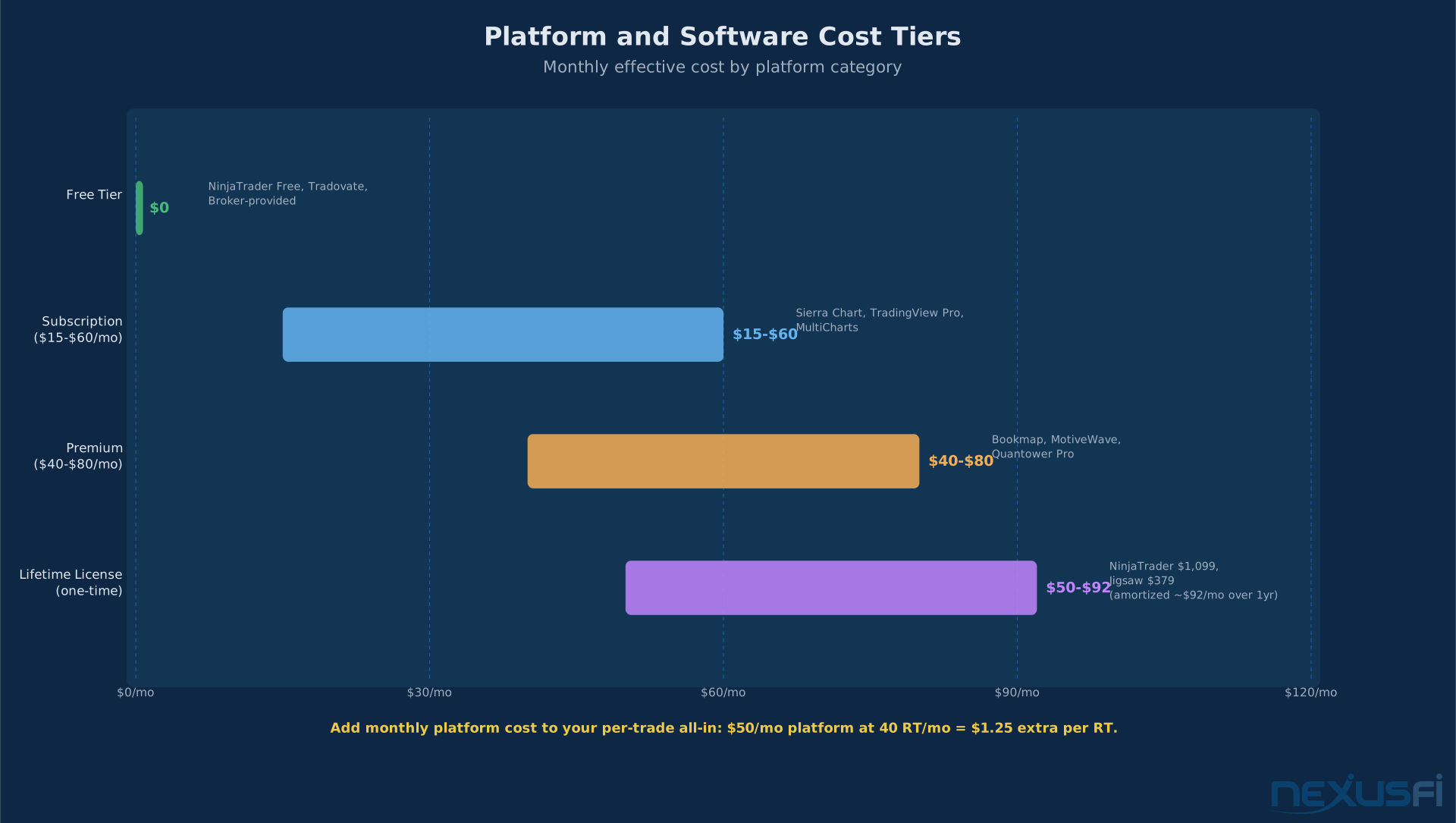
The honest accounting: Add your monthly platform cost, divide by your trade count, and add that per-trade figure to your all-in cost. A trader paying $50/month for platform and making 40 round-turns per month adds $1.25/RT to their effective cost.
Worked Examples: What You Actually Pay #
Let's run the numbers for three popular contracts at a representative retail all-in rate:
ES (E-mini S&P 500) — The Benchmark #
| Cost Component | Per Side | Round-Turn |
|---|---|---|
| Exchange fee | $1.28 | $2.56 |
| Clearing fee | $0.10 | $0.20 |
| NFA fee | $0.02 | $0.04 |
| Broker commission | $0.50 | $1.00 |
| Total | $1.90 | $3.80 |
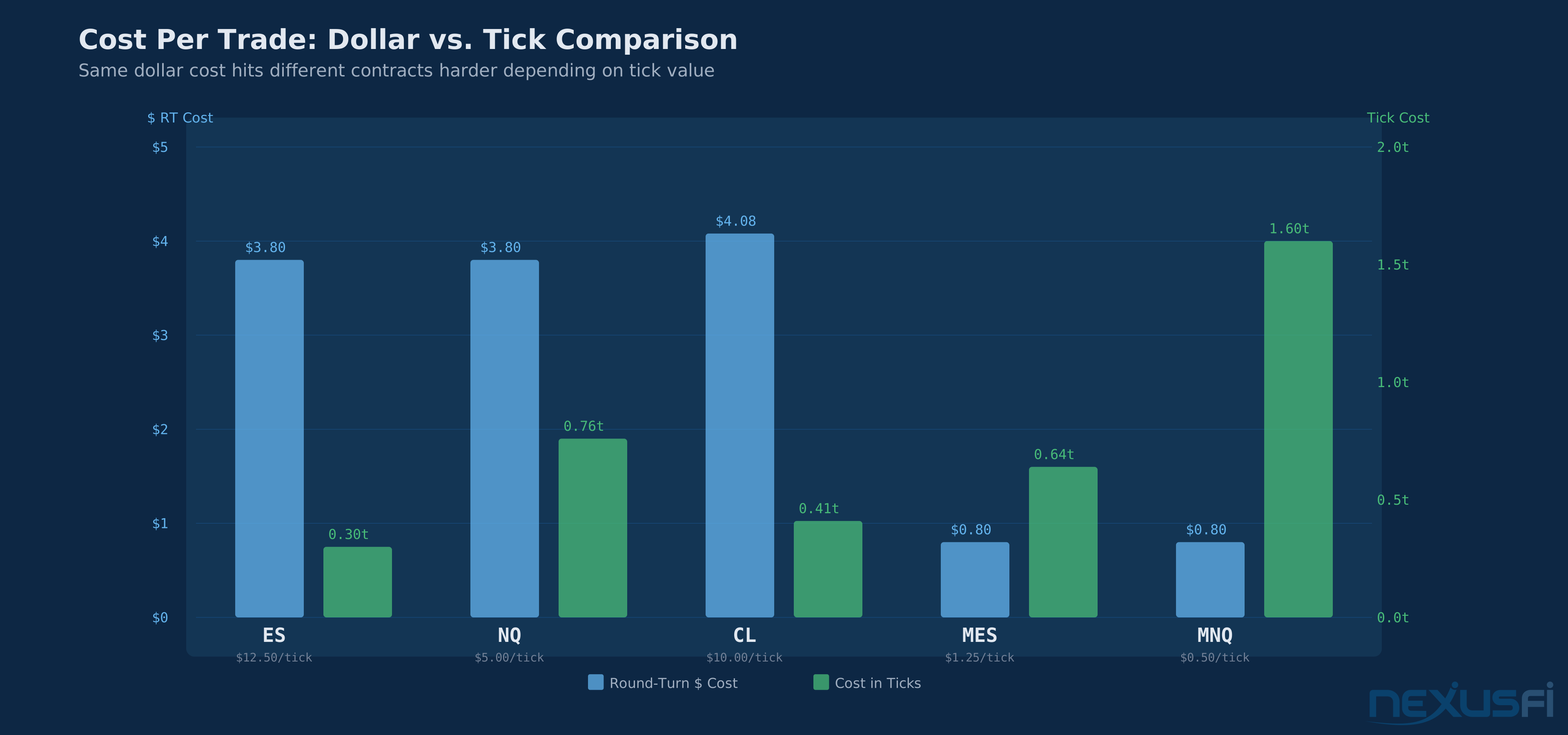
At $12.50 per tick (0.25 point), your round-turn cost equals 0.30 ticks. A trader averaging 10 round-turns per day pays $38/day or roughly $800/month in execution costs alone.
NQ (E-mini Nasdaq-100) — Higher Tick Value #
| Cost Component | Per Side | Round-Turn |
|---|---|---|
| Exchange fee | $1.28 | $2.56 |
| Clearing fee | $0.10 | $0.20 |
| NFA fee | $0.02 | $0.04 |
| Broker commission | $0.50 | $1.00 |
| Total | $1.90 | $3.80 |
Same fee structure as ES, but NQ's tick is worth $5.00 (0.25 point). Your round-turn cost is 0.76 ticks — more than double the tick-based cost of ES. NQ's higher volatility usually compensates, but the cost-per-tick ratio is worse.
CL (Crude Oil) — Energy Market #
| Cost Component | Per Side | Round-Turn |
|---|---|---|
| Exchange fee | $1.42 | $2.84 |
| Clearing fee | $0.10 | $0.20 |
| NFA fee | $0.02 | $0.04 |
| Broker commission | $0.50 | $1.00 |
| Total | $2.04 | $4.08 |
At $10.00 per tick (0.01 point), your round-turn costs 0.41 ticks. CL's wider average range makes this manageable for swing traders, but scalpers taking 3-5 tick targets feel the friction.
Micro Contracts — Lower Dollar Cost, Higher Proportional Cost #
Micro Contracts — Lower Dollar Cost, Higher Proportional Cost #
MES all-in round-turn: approximately $0.62-$1.00.
How to Evaluate Broker Costs #
Don't just compare commission rates. Run this checklist:
1. Get the all-in round-turn number in writing. Confirm it includes exchange, clearing, NFA, and all routing/technology fees. No surprises.
2. Convert to ticks for your primary contract. A $4.00 RT on ES is 0.32 ticks. The same $4.00 on NQ is 0.80 ticks. The dollar amount is identical but the proportional impact on your trading is very different.
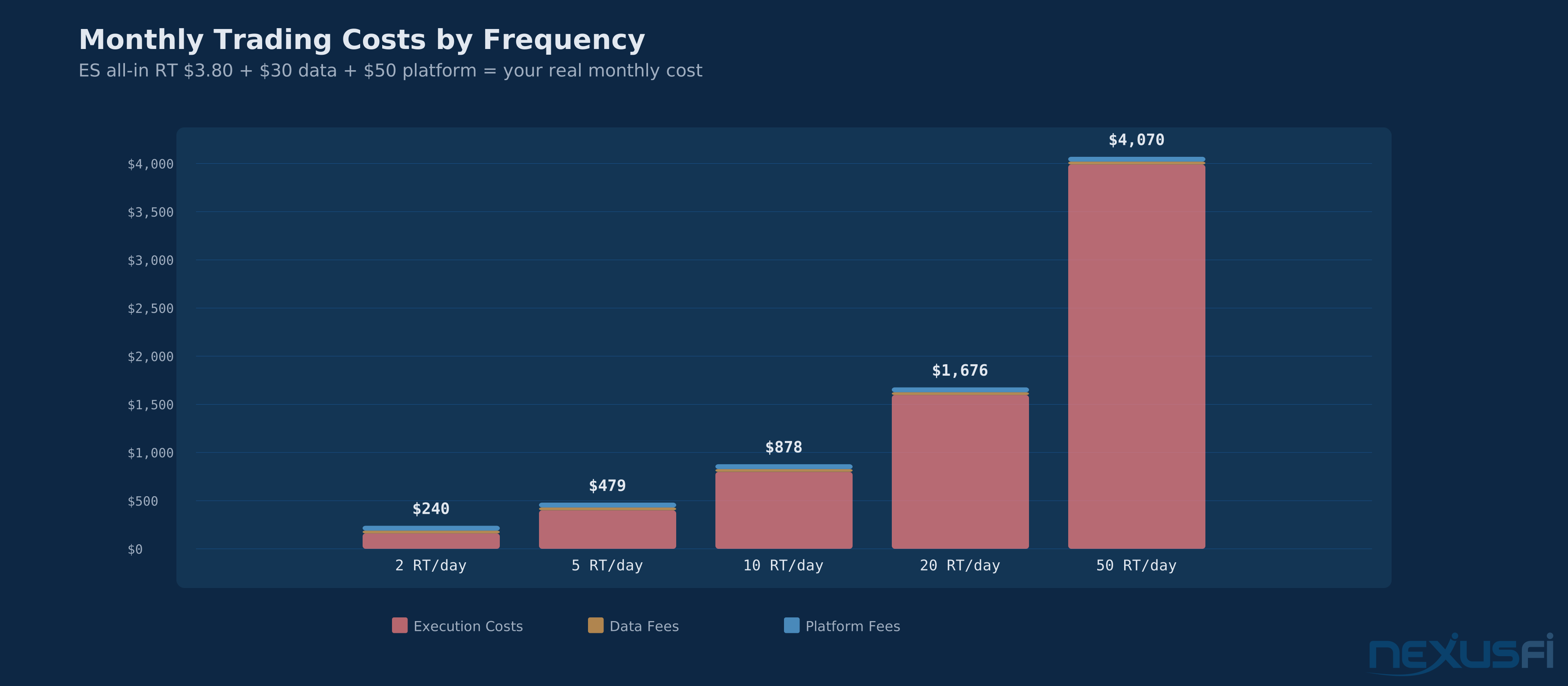
3. Calculate monthly total cost. Multiply your expected daily round-turns by 21 trading days by the all-in RT. Add monthly data fees and platform costs. This is your actual monthly cost of trading.
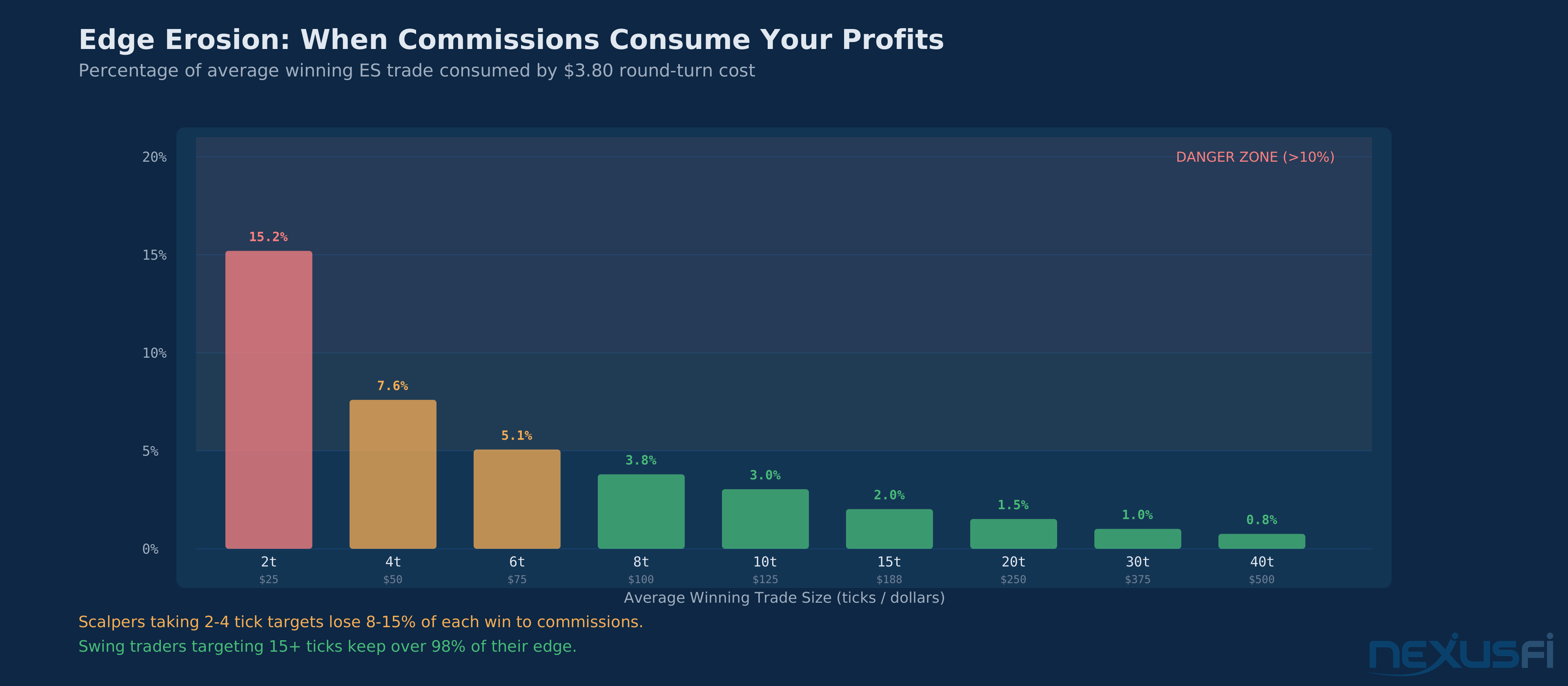
4. Run the edge erosion test. If your average winning trade is 8 ticks on ES and your round-turn cost is 0.32 ticks, commissions consume 4% of your average win. That's manageable. If commissions exceed 10% of your average gain per trade, something needs to change — either your strategy, your broker, or your contract selection.
5. Ask about volume tiers. Most brokers offer reduced rates at higher volumes. Find out the breakpoints and what rates are available.
6. Factor in the service model. As @FuturesTrader71 [explained on NexusFi] [8], "a 'cheap' broker is like driving an extra 50 miles to save 3 cents per gallon on gas with no insurance and no seatbelt." The broker who answers the phone when you have a position problem at 3 AM is worth a few cents per side.
@Big Mike [reinforced this point] [3]: "At the end of the day, if you are wanting the cheapest just keep in mind you get what you pay for. The only way the 'cheapest' brokers can survive is by extremely high turnover of customers."
Cost Impact on Trading Edge #
Here's the math that matters. If your trading strategy has a positive expectancy of $50 per trade on ES, and your all-in round-turn cost is $3.80, commissions consume 7.6% of your edge. That's normal for active retail traders.
But if your average gain drops to $20 per trade — common for scalpers taking 1-2 point targets — that same $3.80 consumes 19% of your edge. At that level, the difference between a $3.80 RT and a $5.00 RT broker is the difference between a profitable strategy and a losing one.
The breakeven math: take your strategy's expected value per trade before costs. Subtract the all-in round-turn. If the result is still positive, you have an edge after friction. If not, you need to either reduce costs, increase average trade size, or widen your targets.
High-frequency scalpers with small per-trade edges are the most cost-sensitive traders in the market. For them, every $0.10 per side matters. Swing traders holding for 10+ points care less about the commission line and more about the data quality and execution reliability.
Know which trader you are, and improve so.
Cost Profiles: Three Traders, Three Different Problems #
The same fee stack hits different traders in completely different ways.
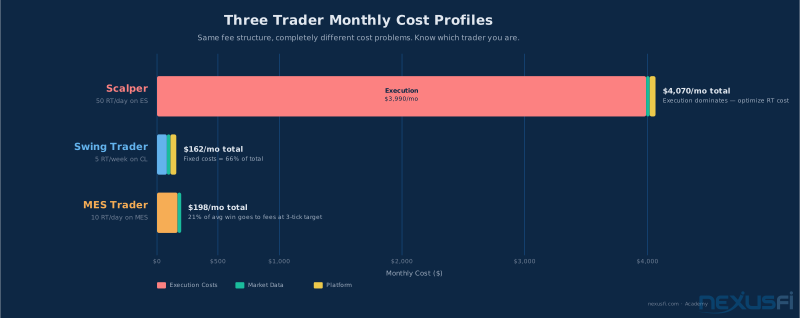
The Scalper (50+ RT/day on ES): Execution costs dominate everything. At $3.80 RT × 50 trades × 21 days = $3,990/month just in commissions. Data ($30) and platform ($50) are rounding errors. For this trader, shaving $0.20/side through volume tiers or an exchange seat lease saves $420/month. Routing quality and fill speed matter more than the commission line — a broker with $0.10 cheaper commission but slower fills costs more in slippage than it saves in fees.
The Swing Trader (5 RT/week on CL): Fixed monthly costs dominate. At $4.08 RT × 5 trades × 4 weeks = $82/month in execution costs. But add $30 data + $50 platform = $80/month in infrastructure. The infrastructure layer nearly equals the execution layer. This trader should focus on platform value and data quality, not obsess over commission differences.
The Small-Account MES Trader (10 RT/day): Proportional cost is the killer. At $0.80 RT × 10 trades × 21 days = $168/month. But MES's $1.25/tick means that $0.80 RT consumes 0.64 ticks per trade. A strategy averaging 3-tick winners loses 21% of each win to fees. This trader needs to either scale up to ES when capitalized, widen targets, or accept that commission drag is the cost of learning with small size.
What This Article Doesn't Cover #
Futures commissions and fees end at the execution layer. Adjacent topics that matter but deserve their own treatment:
- Margin Requirements — How much capital you need to hold positions, and how day-trading margins differ from overnight exchange margins
- Choosing a Futures Broker — The full decision framework beyond costs, including execution quality, platform options, and customer support
- Tax treatment (Section 1256) — The 60/40 long-term/short-term capital gains split unique to regulated futures contracts, which much affects your net after-tax returns
- Execution quality and order routing — How different routing paths and order types affect fill quality and effective cost beyond stated commissions
Understanding what you pay is step one. Making sure those costs don't consume your edge is the difference between traders who compound and traders who churn.
Knowledge Map
Prerequisites
Understand these firstReferences This Article
Articles that build on this topicCitations
- — Why does ES exchange fee vary by website? (2022) 👍 2“The cost to trade futures is made up of three major components. Exchange Fees NFA Fees Broker / FCM / Software / Data Fees In its simplest form Exchange Fees are the same for everybody.”
- — Costs associated with trading futures? (2020) 👍 7“No, this is incorrect, at least for ES”
- — Commission shopping w/brokerages (2014) 👍 10“For those that commission shop brokerages, see below. BTW, I would advise against commission shopping brokerages because it's akin to asking to be launched into space by the cheapest bidder.”
- — Trading the new CME E-Micro's (E micro) MES, MNQ, MYM, M2K and other micros (2019) 👍 8“For those of you concerned about cost/fees, I can't speak to that at the moment, but think of the 6E vs M6E contract.”
- — Profits And Commision? (2015) 👍 6“You don't specify what you are trading. I trade mostly NG & CL. On NYMEX the member day trade rate for these contracts are 55c/side while the non-member rates are $1.45/side.”
- — CME Fee changes 2014, significant impact (2014) 👍 6“CME Market Data Fee Changes Effective March 1, 2014 The CME Group has announced significant changes to its existing Market Data Policy and Fees.”
- — I am being charged $15 fee from the CME every month? (2015) 👍 4“Normally, you have to pay exchange fees to receive real-time data. The reason is that the exchanges are not set up as charitable trusts.”
- — Best Broker offers the lowest commissions on Micro Futures (2022) 👍 8“Hi Futures Operator, I will try to answer this with a question: How much more successful as a trader would many be as a result of trading for very low rates at Interactive Brokers or AMP or wherever?”
- — Gold Futures (GC) main discussion (2023) 👍 7“Use the same list that was quoted in the Crude thread, but just look for gold.”
- — Current CME Group non-member fee schedule for CME/CBOT/NYMEX/COMEX products (2026)
- — NFA assessment fee structure confirming $0.02 per-side fee on futures and options contracts (2026)