



Trading Futures in an IRA: Broker Mechanics, Margin Risk, and the Operational Reality Most Articles Skip
Overview #
Trading futures inside an IRA is possible. It's not common, not simple, and not for everyone — but it's legitimate and, for the right trader, it can be a powerful vehicle for building tax-advantaged wealth.
Here's what most articles about futures IRAs get wrong: they lead with the tax benefits and gloss over the mechanics. The result is traders opening these accounts without understanding that a margin call in an IRA is not like a margin call in a regular account. You can't wire funds fast enough. The FCM will liquidate your position before you can do anything about it.
This article starts with mechanics and risks. If those don't change your mind, we'll cover the tax structure, the right setup process, and how to evaluate whether a futures IRA belongs in your retirement strategy.
[1]
What IS a Futures IRA (and What It Is NOT) #
A futures IRA is a self-directed Individual Retirement Account (IRA) structured to hold and trade exchange-traded futures contracts. The key word is self-directed — a standard IRA held at a major custodian like Fidelity or Vanguard won't let you trade futures. You need an account with a specialized self-directed IRA custodian who has relationships with FCMs that support futures trading in retirement accounts.
What it IS:
- A tax-advantaged retirement account (Traditional or Roth) that can hold futures positions
- A vehicle for building retirement wealth through active trading instead of passive index investing
- A legitimate structure recognized by the IRS and operated through regulated entities
What it IS NOT:
- A way to use standard margin like a regular brokerage account (you cannot borrow in an IRA)
- A tax loophole that avoids the 60/40 Section 1256 treatment (that treatment doesn't apply the way most traders think)
- A substitute for trading discipline — if anything, the stakes are higher
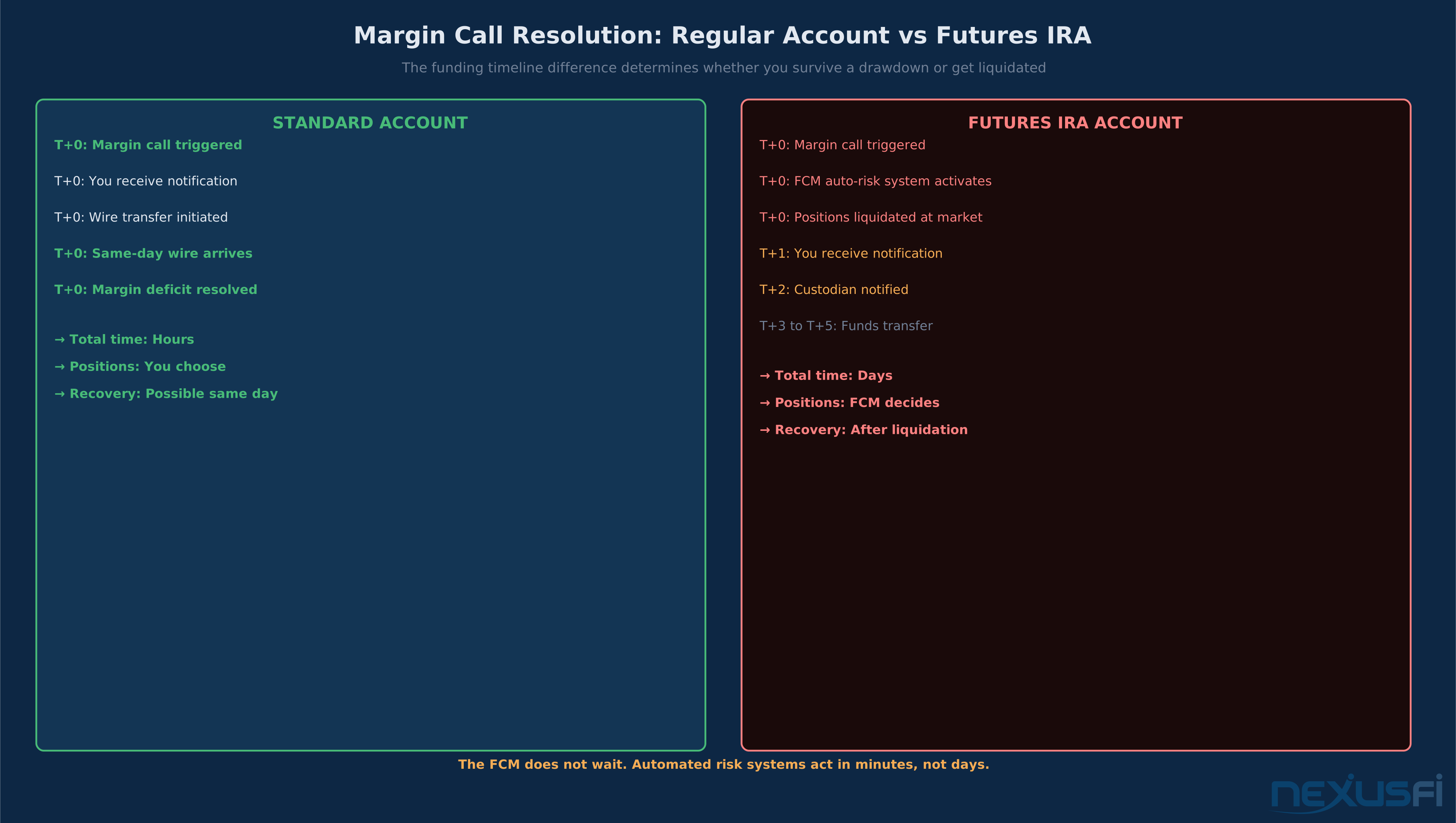
- A structure where you can fund a margin call by wiring money on short notice
[2]
That's the right posture — a deliberate, bounded allocation, not a retirement savings strategy.
The Custodian/FCM Structure #
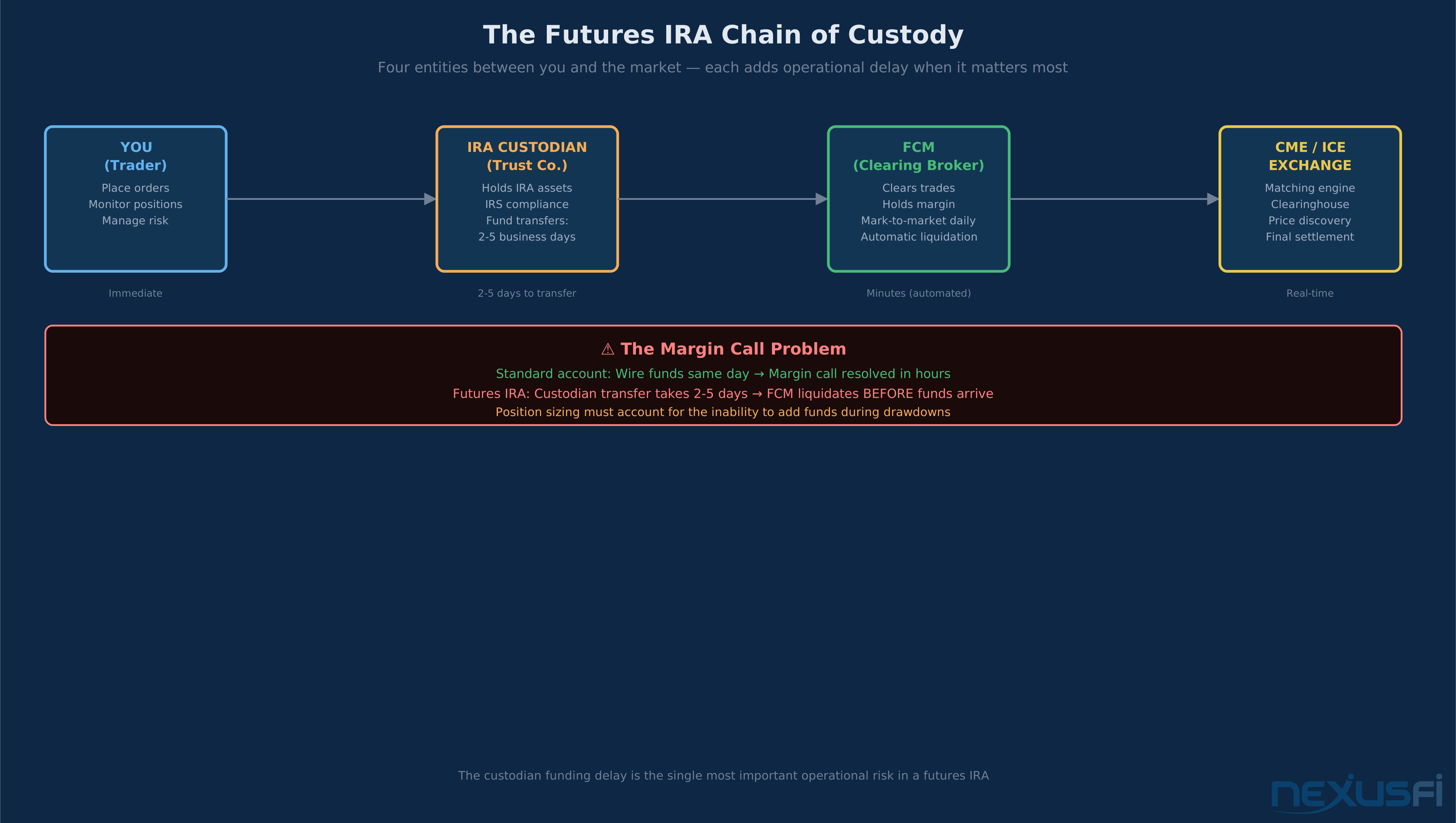
In a standard brokerage account, you have one entity doing everything: holding your funds, clearing trades, providing the platform, and setting margin policy. In a futures IRA, you have at minimum two entities in the chain, sometimes three.
The three-layer chain:
IRA Custodian — The first link in the chain. A self-directed IRA custodian is a regulated entity (usually trust company or bank) that maintains the IRA under IRS rules, holds the plan assets, and ensures the account maintains its tax-advantaged status. The custodian doesn't trade — they administer. They'll maintain your IRA document, file IRS Form 5498 annually, and coordinate between you and the FCM.
Custodians that support futures IRAs include Midland IRA, Pensco, Equity Trust, and others. Some futures brokers have custodian relationships built in; others require you to establish the custodian relationship separately before connecting to an FCM.
FCM (Futures Commission Merchant) — The clearing firm where your futures positions actually live. The FCM opens an account titled in the custodian's name "for the benefit of" (FBO) your IRA. Your futures trades clear through the FCM, which handles daily mark-to-market, margin calls, and position maintenance.
You, the Trader — You receive limited trading authority on the FCM's platform. You place orders. You manage positions. But the legal structure sits above you.
Why this matters operationally: Every cash movement routes through the custodian. Funding your IRA takes days, not hours. A wire from your bank account into your IRA, then a transfer from the custodian to the FCM for margin purposes, can take three to five business days end-to-end. This isn't a problem when you're setting up the account. It becomes a critical problem during a margin call.
As @harvester discovered firsthand when Interactive Brokers abruptly suspended futures trading in IRAs in 2015, the custodian relationship introduces dependencies that a normal brokerage account doesn't have. Midland IRA confirmed at the time that there were no government rule changes — IB made an internal policy decision that upended accounts with no warning.[3] The structure that enables futures IRA trading can also be changed by the entities in that chain at any time.
Practical implication: When comparing futures IRA providers, ask specifically: Who is the custodian? Who is the FCM? What happens operationally when there's a margin call? How do you fund the account and how fast does it clear?
IRS Rules That Matter for Futures IRAs #
The IRS framework for self-directed IRAs is permissive — the rules define what you can't do rather than what you can. For futures traders, three areas require explicit attention.
Instrument eligibility
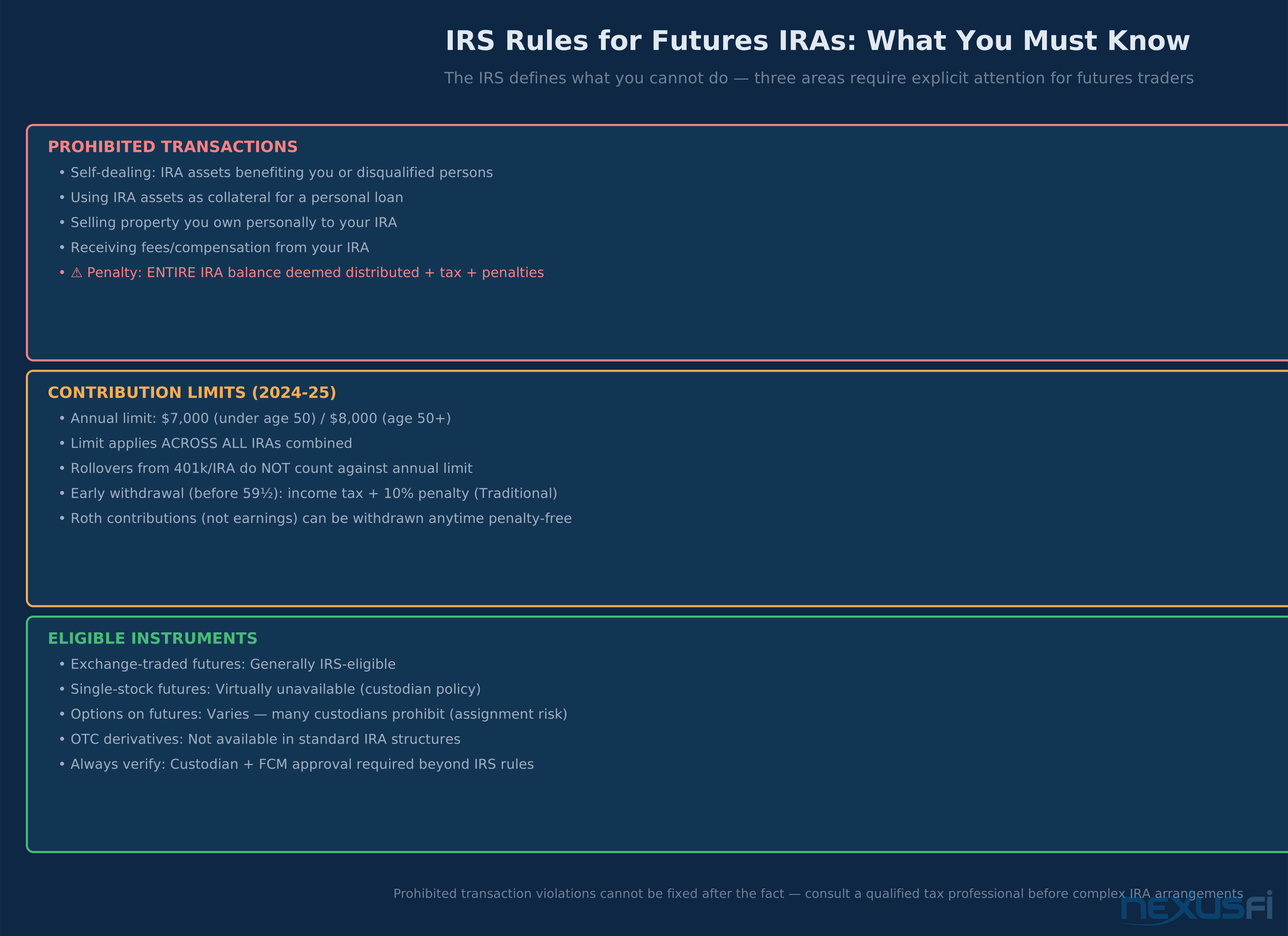
The IRS doesn't publish a list of approved futures contracts. Instead, IRS rules broadly permit "investments" in IRAs while prohibiting specific categories: collectibles (rare coins, art, certain precious metals, antiques), life insurance, and transactions involving disqualified persons.
Exchange-traded futures on broad market indices, interest rates, currencies, and commodities are generally IRS-eligible. Whether a specific contract is operationally eligible depends on your specific custodian and FCM — which is a different question. Some custodians have restricted lists; some FCMs won't clear certain contracts in IRA accounts.
Single-stock futures are almost universally restricted or unavailable in IRAs. Options on futures vary much: some custodians prohibit them entirely due to the risk of assignment creating a margin obligation that the IRA might not be able to cover.
Prohibited transaction rules
These are the "nuclear option" of IRA compliance errors. A prohibited transaction involving your IRA can result in the entire IRA balance being deemed distributed in the year the transaction occurred — meaning you'd owe income tax plus penalties on the entire amount, not just the problematic portion.
Prohibited transactions include:
- Self-dealing: using IRA assets for a transaction that benefits you or a disqualified person (certain family members, your employer, or a business you control)
- Using IRA assets as collateral for a personal loan
- Selling property you own personally to your IRA
- Receiving fees or compensation from your IRA
For futures traders, the practical risk is usually in the account setup and administration, not in the trades themselves. Using your IRA's custodian fees paid by an entity you control, or routing IRA funds through a business you own, are the types of arrangements that can create prohibited transaction exposure.
Contribution limits and withdrawal rules
IRA contribution limits in 2024-2025: $7,000 per year ($8,000 if age 50 or older). These limits apply across all your IRAs combined. If you've funded a futures IRA via rollover from a 401k or another IRA, those rollover amounts don't count against the annual contribution limit.
Early withdrawals (before age 59½) from a Traditional IRA incur income tax plus a 10% penalty on the amount withdrawn. Roth IRA contributions (the original amount contributed, not earnings) can be withdrawn at any time without penalty, but earnings cannot be withdrawn penalty-free before 59½ unless an exception applies.
The trading consequence: if your futures IRA takes a large loss, you cannot simply withdraw funds to offset other accounts. The money is locked inside the IRA structure until you reach distribution age. This constraint should directly inform your position sizing.
Margin and Liquidation Risk: The Constraint That Changes Everything #
This section deserves its own emphasis because it's the single most important operational difference between a futures IRA and a standard futures account.
How futures margin works inside an IRA:
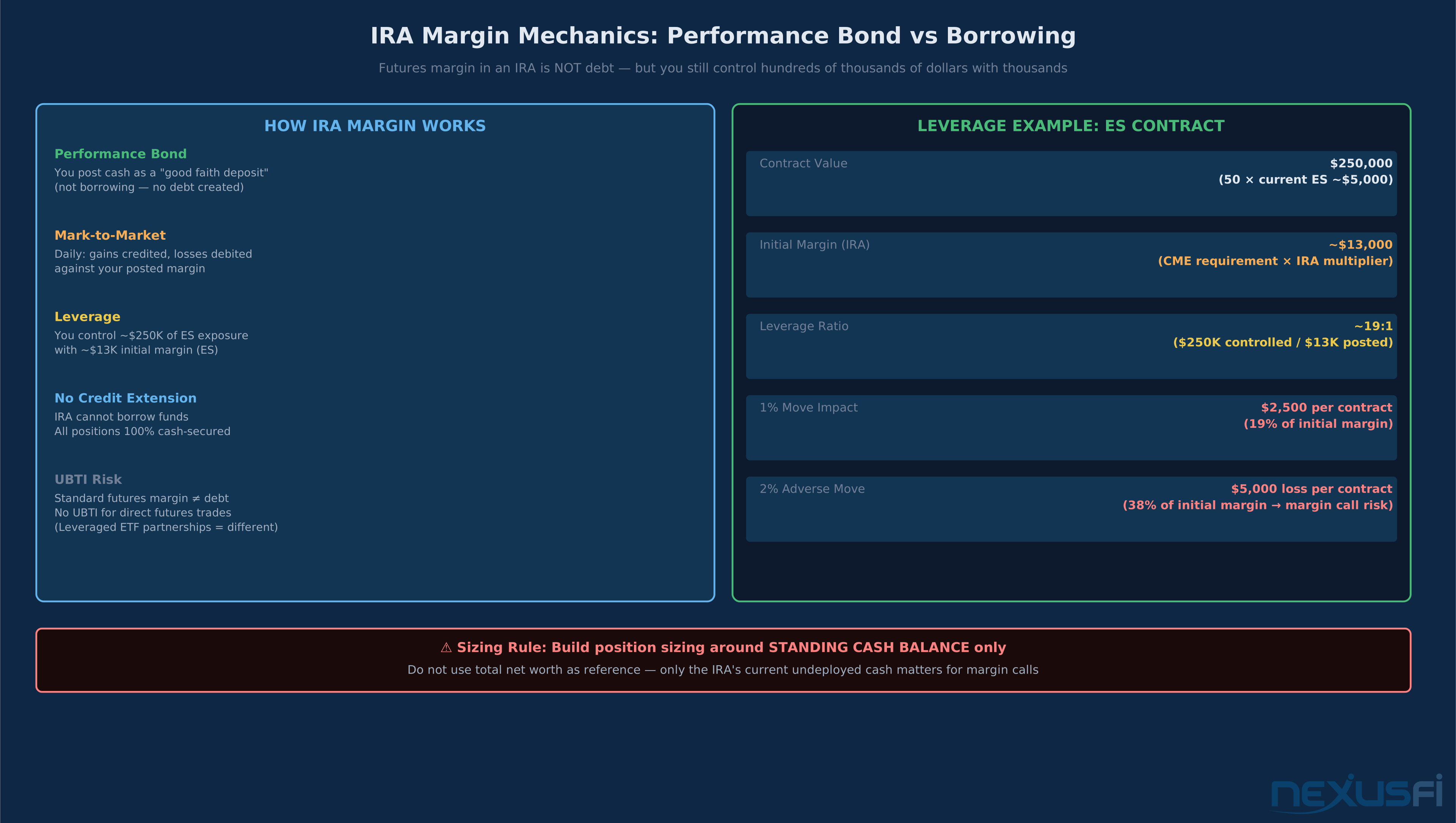
You cannot borrow in an IRA. Standard Reg T margin (a credit line from your broker) doesn't apply. But futures still use performance bond margin — you post a cash deposit against your position, and the exchange marks your position to market daily, crediting or debiting gains and losses against that deposit.
In an IRA, the total margin requirement must be covered 100% by cash in the account. You're not borrowing anything. But you're still using the inherent leverage of the futures contract itself — controlling 50 ES points (currently $250,000 of S&P 500 exposure) for an initial margin deposit of roughly $13,000.
The margin call problem:
In a standard futures account, a margin call is urgent but manageable. You can wire funds, liquidate other positions, or negotiate briefly with your broker. In an IRA, the operational chain (custodian → FCM) means the practical speed of adding funds is measured in days.
The FCM does not care that your funds are in an IRA. When your account falls below maintenance margin, the FCM's automated risk system begins reducing positions. This can happen intraday on a volatile day. By the time you call the FCM's customer service line, positions may already be partially or fully closed.
@harvester's experience with Interactive Brokers highlighted how quickly institutional decisions can affect IRA futures accounts: the policies governing these accounts can change abruptly, and the operational consequences land on the trader immediately.[3]
The sizing principle that follows:
Trade as if you will never be able to add funds during a drawdown. This isn't pessimism — it's the operational reality of the IRA structure. Sizing that accounts for this constraint means using smaller positions, wider expected drawdown buffers, and avoiding strategies that require rapid account top-ups to survive volatility spikes.
Forced liquidation behavior:
FCMs have automated risk systems that act on margin deficits without waiting for a human to make a call. In an IRA account, the liquidation algorithm may close positions at market prices during adverse conditions — potentially at the worst possible time in the move. There's no negotiation, no grace period, and no mechanism to pause the liquidation while you try to move funds.
Position sizing in a futures IRA must account for the inability to add funds during drawdowns. A position that would be manageable in a standard account — where you can wire additional capital the same day — may not be survivable in an IRA where funding takes three to five business days. Build your position sizing around your IRA's standing cash balance, not your total net worth.
IRA-Eligible Futures Instruments #
The specific universe of instruments available in your futures IRA depends on three things: (1) what the IRS permits, (2) what your custodian allows, and (3) what your FCM supports. These three circles don't always overlap completely.
Generally available across most futures IRA setups:
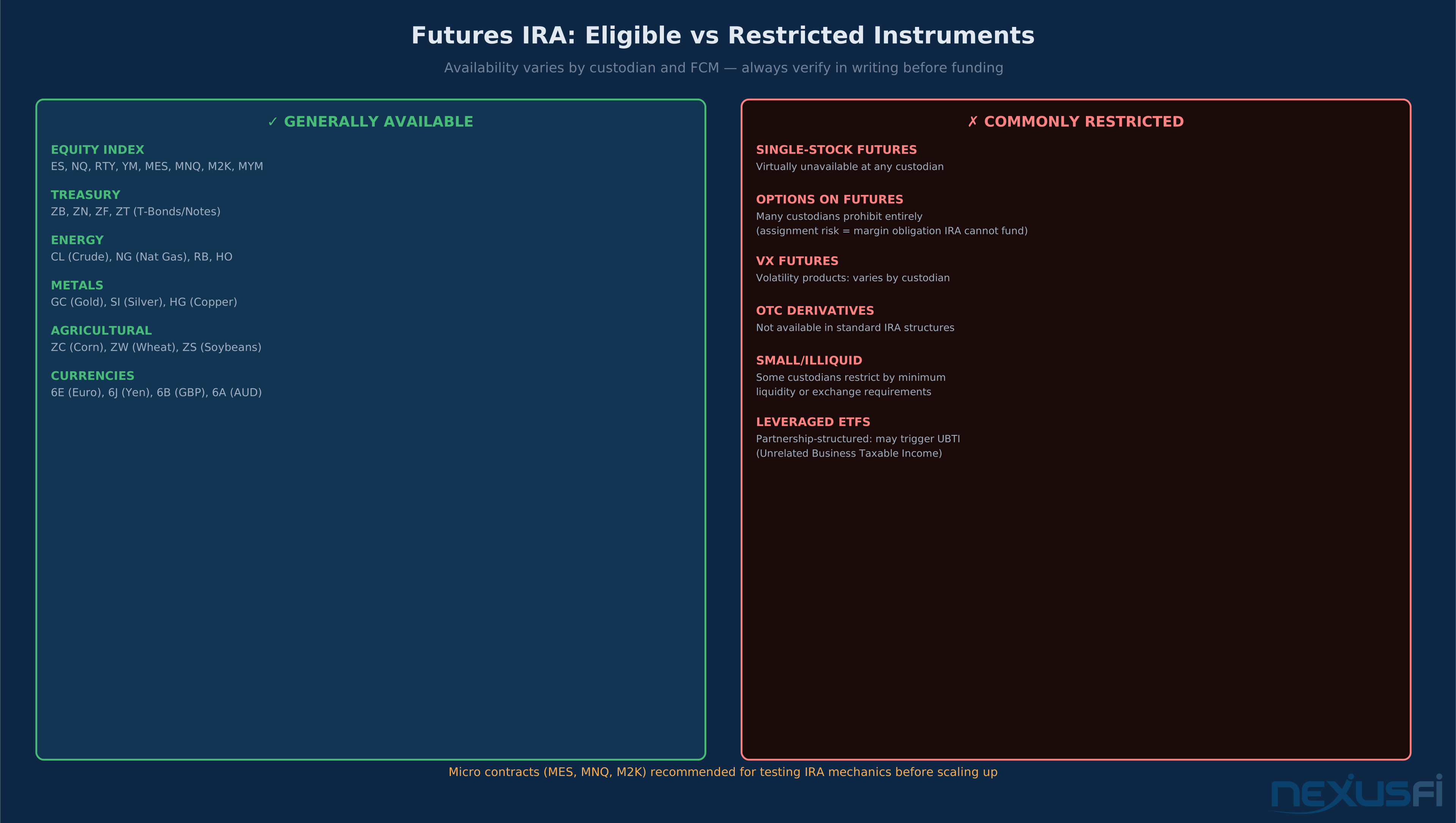
- Equity index futures: ES (E-mini S&P 500), NQ (E-mini Nasdaq), RTY (E-mini Russell), YM (E-mini Dow), and their micro equivalents (MES, MNQ, M2K, MYM)
- Treasury futures: ZB (30-year T-Bond), ZN (10-year T-Note), ZF (5-year T-Note), ZT (2-year T-Note)
- Energy futures: CL (Crude Oil), NG (Natural Gas), RB (RBOB Gasoline), HO (Heating Oil)
- Metal futures: GC (Gold), SI (Silver), HG (Copper)
- Agricultural futures: ZC (Corn), ZW (Wheat), ZS (Soybeans), LE (Live Cattle)
- Currency futures: 6E (Euro), 6J (Yen), 6B (British Pound), 6A (Australian Dollar)
Commonly restricted or unavailable:
- Single-stock futures: Effectively unavailable in IRA accounts at virtually all custodians
- Options on futures: Varies much by custodian. Many prohibit them entirely. Those that allow them typically restrict to conservative strategies with defined maximum risk (long calls, long puts) and prohibit short naked options that could create theoretically unlimited margin obligations
- Volatility products (VX futures): Available at some custodians but restricted at others
- OTC derivatives: Not available in standard futures IRA structures
- Certain small or illiquid contracts: Some custodians restrict by minimum liquidity or exchange listing requirements
Verification process:
Don't assume — ask specifically. Before opening an account, provide your custodian and FCM with the exact contract symbols you intend to trade and ask for written confirmation that those instruments are available in your IRA structure. What's available in a standard account is not automatically available in an IRA account at the same broker.
As @mu2pilot learned when exploring options on futures in an IRA: "You have to open up a self-directed IRA with a company that allows the trading of futures options. This company also must be set up with the broker of your choice because your IRA trustee is the one that holds the collateral for the futures trades."[4] The layered approval process — not just IRS rules but custodian-specific policies — governs what's actually tradeable.
Micro contracts (MES, MNQ, M2K) are the right starting point for testing a futures IRA. Lower notional value means smaller margin requirements, more manageable position sizing given the IRA's funding constraints, and better practice with the custodian/FCM operational workflow before you scale up.
Section 1256 Inside an IRA: Why the 60/40 Benefit Doesn't Help Here #
This is the most common misconception among futures traders considering an IRA. The reasoning usually goes: "Futures get 60% long-term capital gains treatment under Section 1256, and I trade actively, so putting futures in an IRA will save me a huge amount in taxes."
The logic is wrong. Here's why.
What Section 1256 actually does:
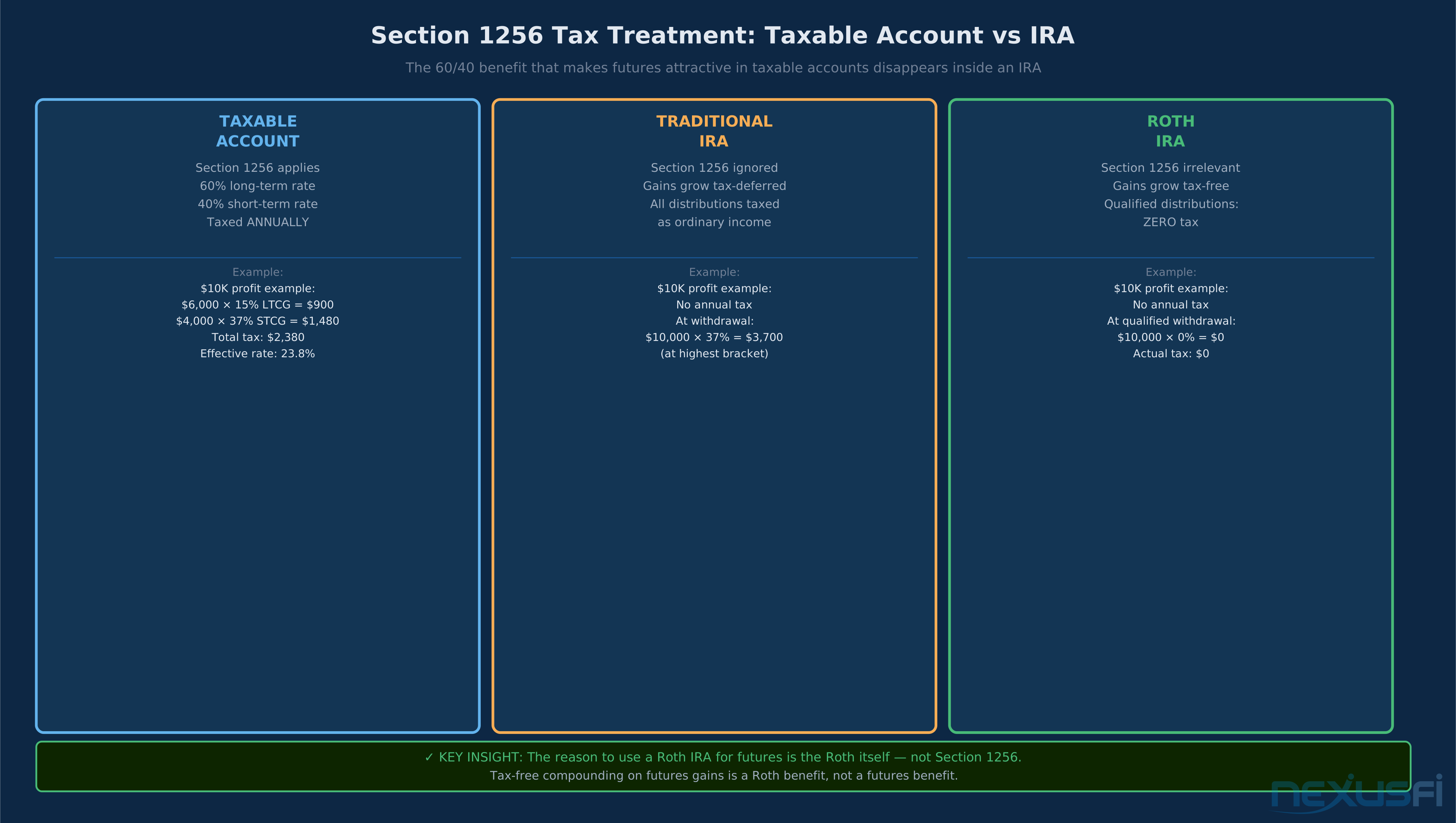
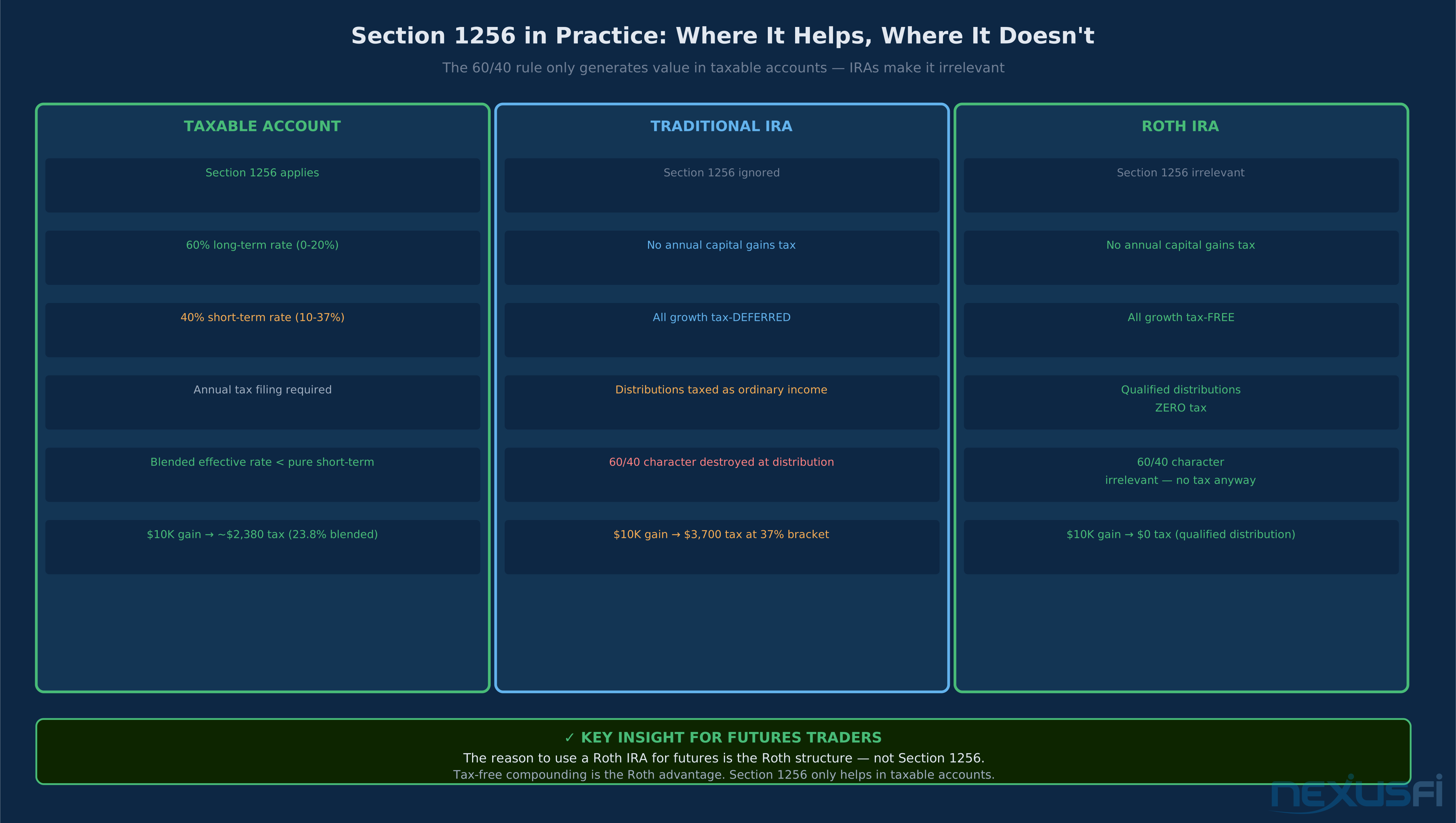
Section 1256 of the Internal Revenue Code applies to regulated futures contracts and provides that gains and losses are treated as 60% long-term capital gain/loss and 40% short-term capital gain/loss, regardless of how long the position was held. This is valuable in a taxable account because long-term capital gains rates (0%, 15%, or 20% depending on income) are lower than short-term rates (taxed as ordinary income at rates up to 37%).
Why it doesn't matter inside an IRA:
In a Traditional IRA, you don't pay capital gains taxes annually. Gains are tax-deferred until you take distributions, at which point they're taxed as ordinary income regardless of whether they originated from long-term or short-term positions. The 60/40 character distinction is irrelevant because the IRA doesn't recognize capital gains annually.
In a Roth IRA, qualified distributions are tax-free entirely. Again, whether the underlying gains came from Section 1256 contracts or regular stocks is irrelevant — qualified Roth distributions face zero tax regardless.
The actual value proposition:
The reason to use futures in an IRA isn't tax efficiency of the futures contracts themselves — it's that futures provide leveraged exposure to major asset classes with smaller capital requirements than equivalent equity positions, and that leverage operates inside a tax-advantaged wrapper.
@josh outlined the Roth IRA compounding math precisely: trading with a $10,000 Roth IRA, achieving 35% annualized returns over 18 years, and taking qualified distributions tax-free at age 60.[1] The tax advantage comes from the Roth structure (no annual taxes, no distribution taxes), not from Section 1256.
The reason to put futures in a Roth IRA is the Roth itself: growth tax-free, distributions tax-free. The Section 1256 60/40 treatment that makes futures attractive in taxable accounts is irrelevant inside any IRA wrapper. If your only reason for exploring a futures IRA is the 60/40 tax treatment, reconsider the premise.
Practical Steps: Opening and Trading #
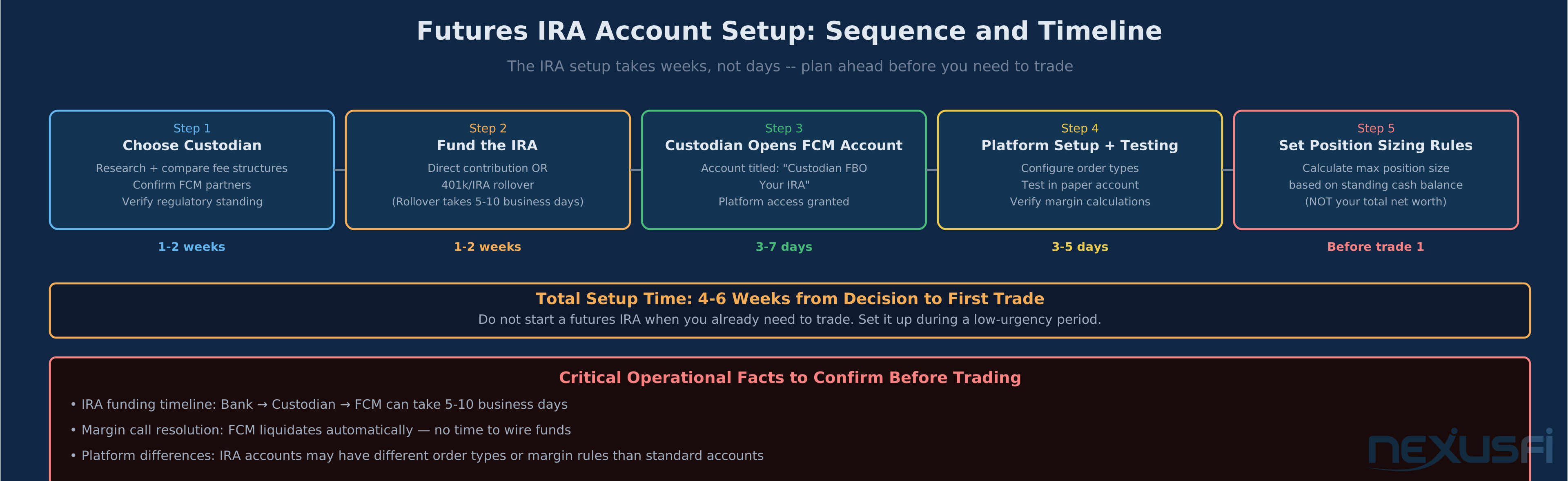
The sequence matters because it's different from opening a standard futures account.
Step 1: Choose the custodian first — Your custodian selection determines which FCMs you can work with and which instruments you can trade. Custodians with established futures IRA programs include Midland IRA, Equity Trust, New Direction Trust Company, and others. Evaluate on: which FCMs they support, fee structure, how they handle margin calls, and electronic funding speed. Ask in writing: "Who are your FCM partners for futures trading?" and "How do you handle margin calls operationally?"
Step 2: Establish and fund the IRA — Fund via direct annual contribution ($7,000 in 2024 if under 50), IRA rollover (same type), or 401k rollover from a previous employer (no taxable event for direct rollovers). Most futures IRA traders fund primarily through rollovers.
Step 3: Custodian opens the FCM account — Account titled in custodian's name "For Benefit Of" your IRA. The legal owner at the FCM is the custodian as IRA trustee, not you personally.
Step 4: Trading authority and platform access — You receive limited trading authority. Account administration (deposits, withdrawals) flows through both the custodian and the FCM.
Step 5: Risk management for IRA reality — Before placing your first trade, set position sizing rules based on the constraint that you cannot add funds quickly. Keep enough undeployed cash to absorb a 2x normal daily range adverse move on all open positions without hitting maintenance margin.
The custodian relationship is the operational heart of a futures IRA. A custodian with poor communication, slow fund transfers, or unclear margin-call procedures can turn a manageable situation into a forced liquidation. Spend more time evaluating the custodian than you'd expect.
Key Risks and Due Diligence Checklist #
Risk 1: Forced liquidation without recourse — The most dangerous aspect of a futures IRA. An FCM will liquidate positions to restore margin regardless of your intentions or your ability to eventually fund the account. The IRA structure adds days to the funding timeline; futures margin calls can be resolved in minutes by the FCM's automated systems.
Risk 2: Prohibited transaction exposure — This risk lives in the administrative layer. Common triggers: fees paid to entities you control, personal guarantee arrangements involving IRA assets, transactions with disqualified persons (lineal family members, employers, partnerships you control). If you run a trading advisory service, get a qualified ERISA attorney's opinion before using the same strategies in your personal IRA.
Risk 3: Custodian and FCM policy changes — As @harvester experienced when Interactive Brokers suspended futures in IRAs overnight in 2015, institutional policy decisions can eliminate your futures trading capability with no notice.[3] Always know the transfer process for moving to a different custodian/FCM before you need it urgently.
Risk 4: Platform differences — IRA accounts sometimes have different order handling rules, permission levels, or margin calculations than standard accounts. Confirm before going live that platform permissions, order types, and margin calculations work as expected.
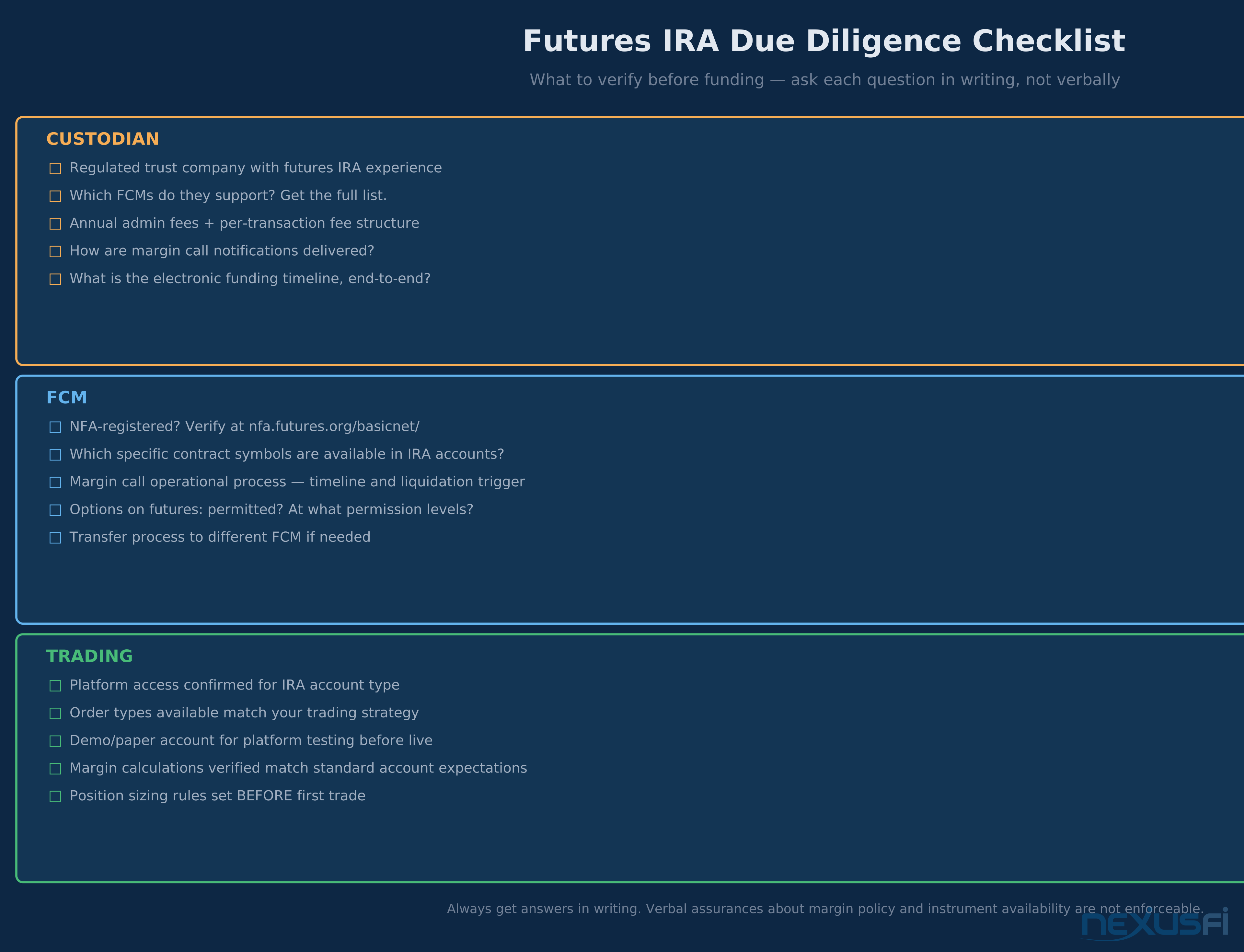
Due Diligence Checklist:
- Custodian is a regulated trust company with futures IRA experience
- FCM partners verified as NFA-registered
- Written confirmation of which futures contracts are available in your IRA structure
- Written documentation of margin call handling process and timeline
- Annual custodian fees and per-transaction fees understood
- Funding timeline from bank wire to tradeable cash confirmed
- Options on futures availability confirmed (permitted levels)
- Transfer process to different custodian/FCM documented
Who Should (and Shouldn't) Trade Futures in an IRA #
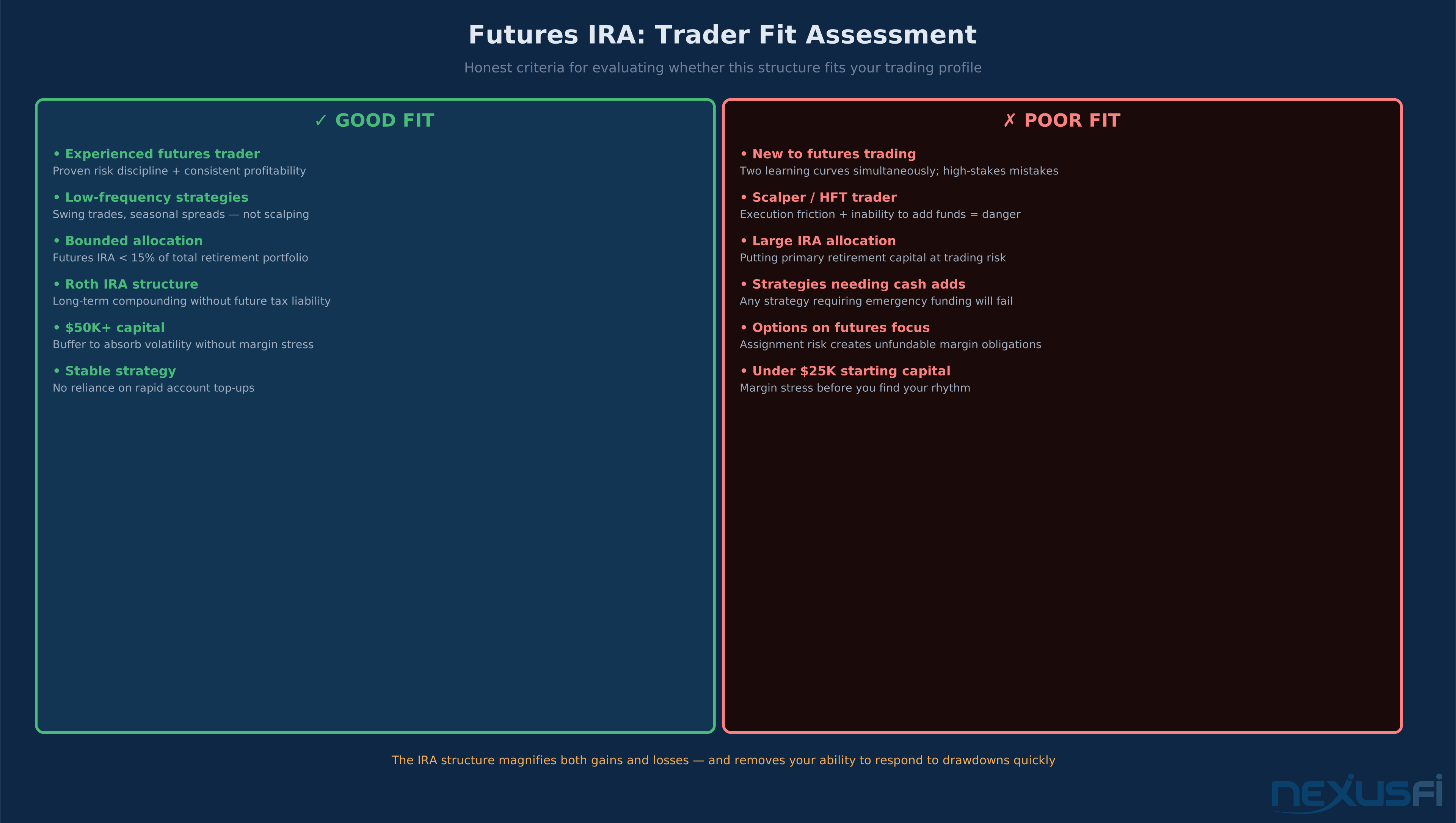
A good fit if: You're an experienced futures trader with proven risk management, consistent profitability, and disciplined position sizing. You use longer-term or lower-frequency strategies (swing trades, seasonal spreads) where operational friction doesn't create execution problems. Your futures IRA capital is a bounded, non-critical portion of your overall retirement picture. You have a Roth IRA structure and sufficient capital ($50,000+ minimum) to absorb volatility without constant margin stress.
A poor fit if: You're new to futures trading — two learning curves simultaneously, with higher stakes for mistakes. You're a scalper or high-frequency trader — the custodial setup adds friction and the inability to add funds rapidly creates dangerous margin exposure. Your futures IRA represents a significant portion of your retirement capital. Your strategy requires adding funds during drawdowns or rapid account top-ups. Your focus is options on futures, which many custodians restrict or prohibit.
Knowledge Map
Go Deeper
Build on this knowledgeReferences This Article
Articles that build on this topicCitations
- — Futures in a Roth and a path to retirement (2021) 👍 15
- — How did you get a capital? (2014) 👍 2
- — Interactive Brokers not allowing futures trading in IRAs (2015) 👍 7
- — Selling Options on Futures? (2014) 👍 2
- — Futures in a Roth and a path to retirement (2021) 👍 4
- — Custodians (2015) 👍 1“IB initial margin requirement for IRA accounts is 3x overnight initial margin”
- — Futures in a Roth and a path to retirement (2021) 👍 1“I trade futures using Ninjatrader funded with a Roth IRA. Intraday margin for ES is $500 per contract.”
- — Interactive Brokers not allowing futures trading in IRAs (2015) 👍 4“Effective April 15: Margin requirements for Futures in IRA accounts will increase to 3x current.”