



Relative Volume (RVOL) in Futures Trading
Overview #
Volume tells you what traded. Relative Volume tells you how much compared to what's normal. That distinction is the difference between a breakout you can trust and one that reverses the moment you buy it.
RVOL is one of the most practical tools in a futures trader's kit — not because it's complicated, but because it answers the single most important pre-trade question: is this market actually participating right now? A 50-point ES breakout on 0.8x RVOL is noise. A 10-point breakout on 1.8x RVOL is worth your full attention. Understanding that difference is what RVOL is for.
How RVOL Is Calculated #
The core formula is simple:
RVOL = Current Volume / Average Volume (comparable period)
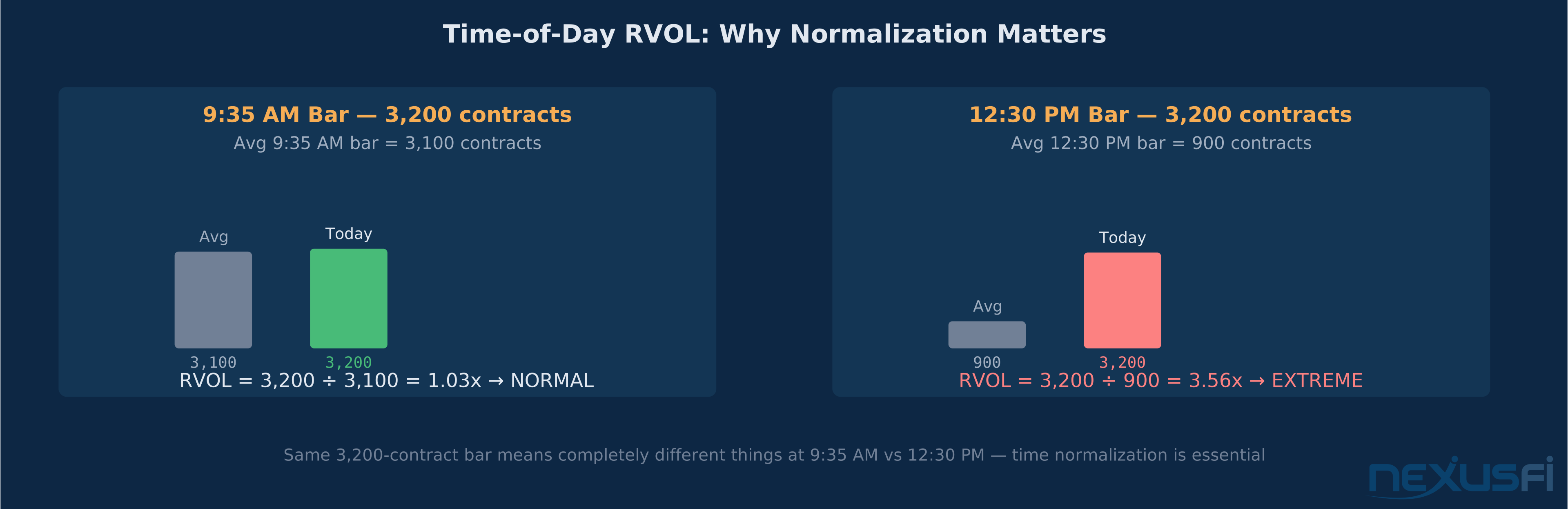
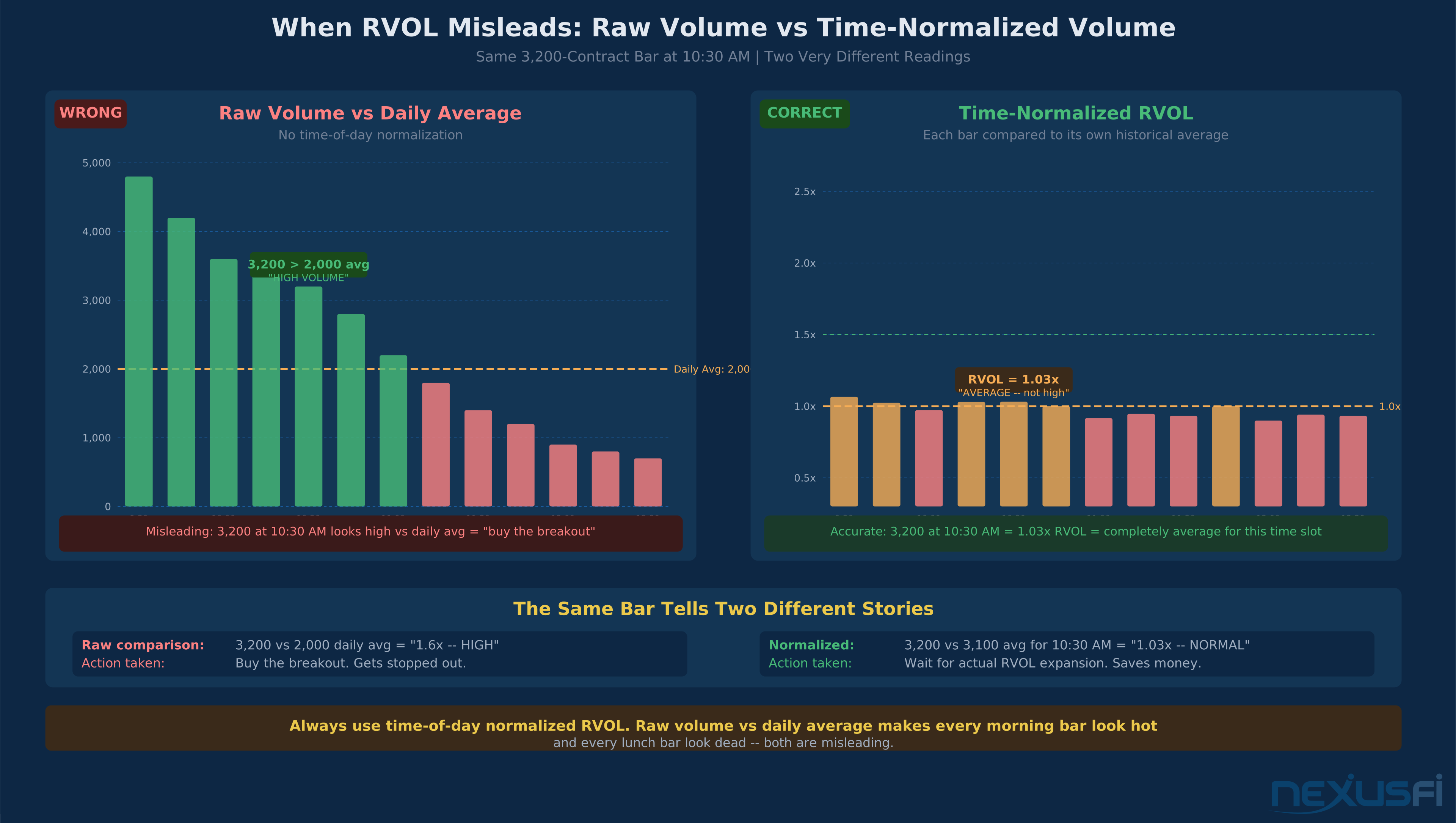
The word "comparable" does all the work. Futures volume is heavily time-of-day dependent. ES prints roughly 2-3x more contracts in the first hour of RTH trading than during the lunch lull. If you compare a 10:30 AM bar's volume against a flat daily average, you'll think every morning bar is "high volume" — which is meaningless. The comparison needs to be apples-to-apples. To put this in perspective, ES alone trades roughly 1.3-1.5 million contracts daily (CME Group Daily Bulletin), with the vast majority concentrated in the first and last hours of RTH. That disparity is why raw volume comparisons are meaningless without time normalization.
Time-of-day RVOL (the correct approach for day trading):
RVOL(t) = Volume(t) / AvgVolume(t)
Where AvgVolume(t) is the average volume for that same time bucket across the last 10-30 sessions. A 10:30 AM bar gets compared to the average 10:30 AM bar, not to the daily mean. This normalization is what makes RVOL actually useful.
Two common implementation choices:
- Cumulative RVOL: Compares total session volume so far today against the average total at this point in prior sessions. Stabilizes throughout the day and gives a clean "is today active?" read.
- Per-bar RVOL: Compares each individual bar to the average volume for that time bucket. More responsive, catches intrabar bursts, but noisier.
For day trading context-setting, cumulative RVOL is the better lens. For entry timing, per-bar RVOL gives cleaner signals. As @Inletcap put it in the Spoo-nalysis thread: "My RVOL reading is simply comparing today's cumulative volume (total volume up to the present time) to the past 14 days average cumulative volume at this time of day."
The Threshold Framework #
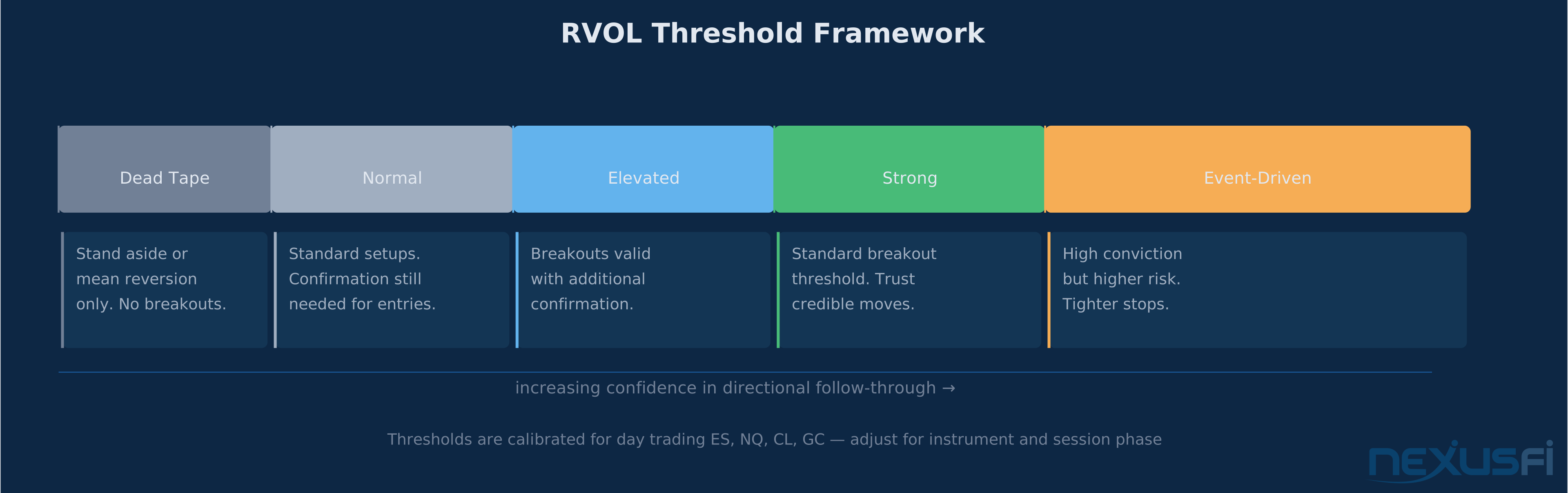
RVOL values translate to trading decisions through a straightforward framework. These aren't arbitrary numbers — they reflect real participation levels observed across ES, NQ, CL, and GC:
Below 1.0x (Sub-Average) The market is trading less than its historical norm for this time of day. Breakout trades in this environment get chopped up. Mean reversion works better. Trade smaller or stand aside.
1.0x to 1.2x (Normal) Average participation. Standard conditions — your setup still needs to be clean because the market won't carry weak entries.
1.2x to 1.3x (Mild Expansion) Meaningful, but not enough to stand alone. This is enough to confirm an established trend is alive and continuing. Not enough by itself to justify a fresh breakout entry.
1.5x (The Standard Threshold) This is where most serious traders draw the line for breakout confirmation. 1.5x means the market is seeing 50% more activity than average for this time of day — that's real participation, not noise. The 1.5x level is where moves become credible.
2.0x and Above (High-Conviction/Event-Driven) Something is happening — news, a stop cascade, a major level getting run, an inventory release hitting CL. These environments offer big opportunities but also violent reversals. Don't just see "2x RVOL = buy signal." High RVOL can precede exhaustion as easily as continuation.
One critical nuance: high RVOL doesn't indicate direction. It measures interest — which could mean breakout, liquidation, absorption, or reversal. Direction comes from price structure and acceptance behavior. RVOL tells you whether the market is engaged. Price action tells you which way.
Session-Based vs Intraday RVOL #
There are two useful scales, and experienced traders run both simultaneously.
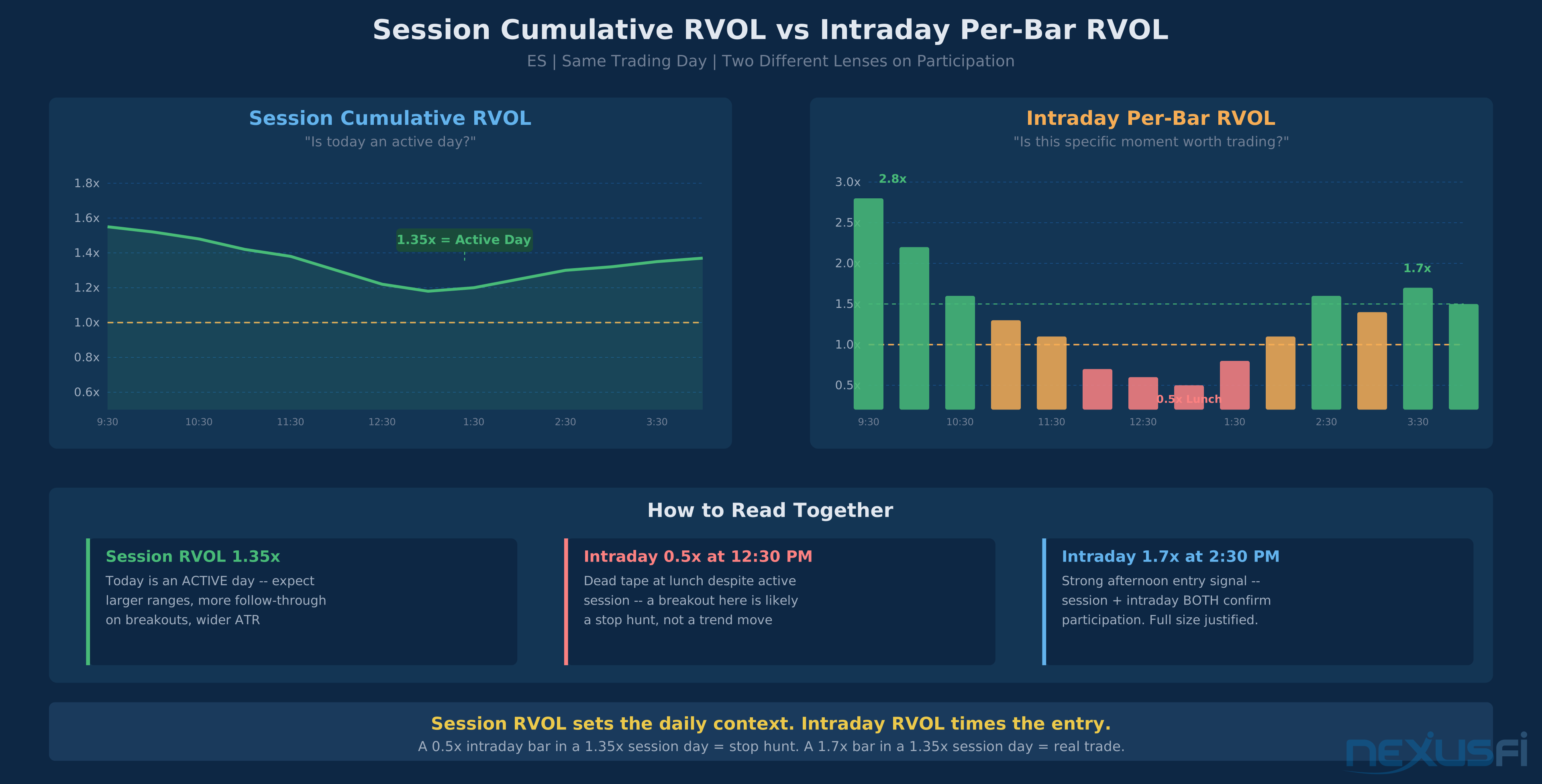
Session RVOL (macro filter): Compares total volume so far in today's session against the average at this point in prior sessions. Answers the question "is today an active day?" If session RVOL is running at 1.8x by mid-morning, you're in a real flow day — expect bigger ranges, more follow-through on breakouts, wider average true range. If session RVOL is 0.7x at the same time, treat the day as a dead tape and reduce your breakout exposure.
Intraday RVOL (entry timing): Time-normalized per-bar measurement. Answers "is this specific moment worth trading?" Require intraday RVOL ≥ 1.5x on the actual trigger bar for breakouts.
Run both together:
- Session RVOL → determines your trading style for the day
- Intraday RVOL → times the specific entry
A day where session RVOL is 0.6x but one specific bar prints 2x RVOL is probably just a stop hunt. Context matters at both levels.
Time-of-Day Patterns #
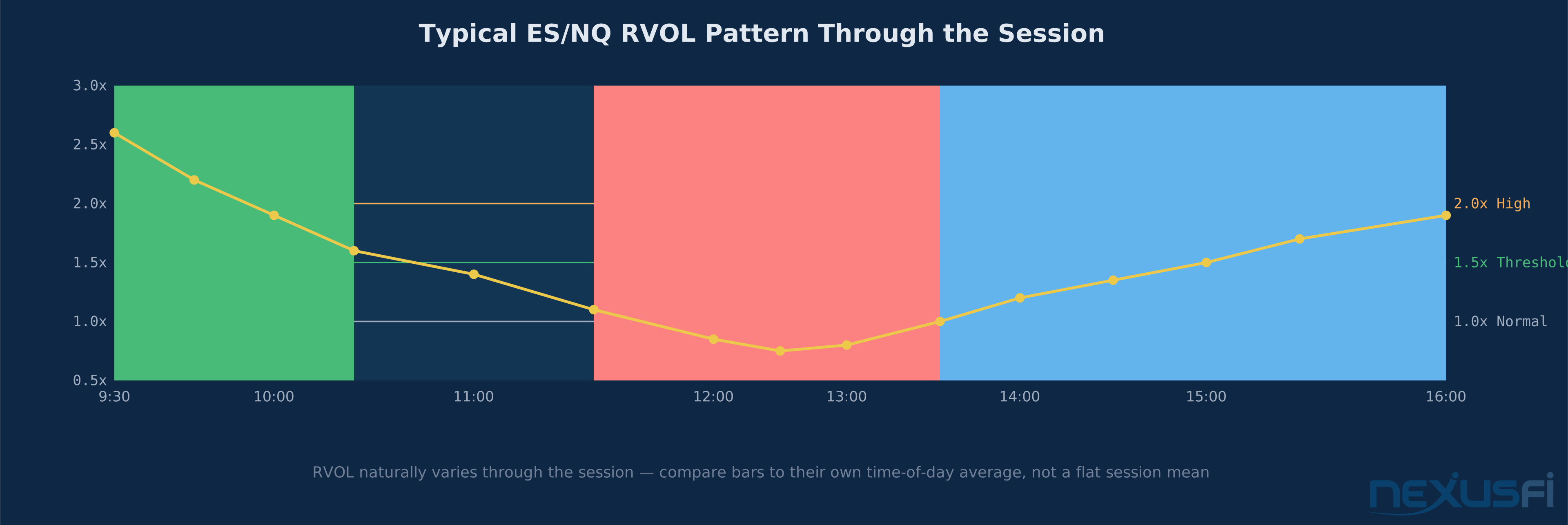
Every futures market has a natural RVOL rhythm through the session. Ignoring it leads to misread signals.
CME Group's equity index futures complex averaged a record 8.7 million contracts daily in Q1 2026 (CME Group Equity Insights, April 2026), and the vast majority of that volume clusters in specific intraday windows. Understanding where volume naturally concentrates — and where it doesn't — is the foundation of useful RVOL interpretation.
Opening Drive (9:30-10:30 ET for ES/NQ) #
This is the highest natural volume window in the equity index session. RVOL expansion here is expected and doesn't carry the same weight as expansion during a quiet period. Compare opening-hour bars to their historical opening-hour averages — don't be fooled by raw volume that's just the open being the open.
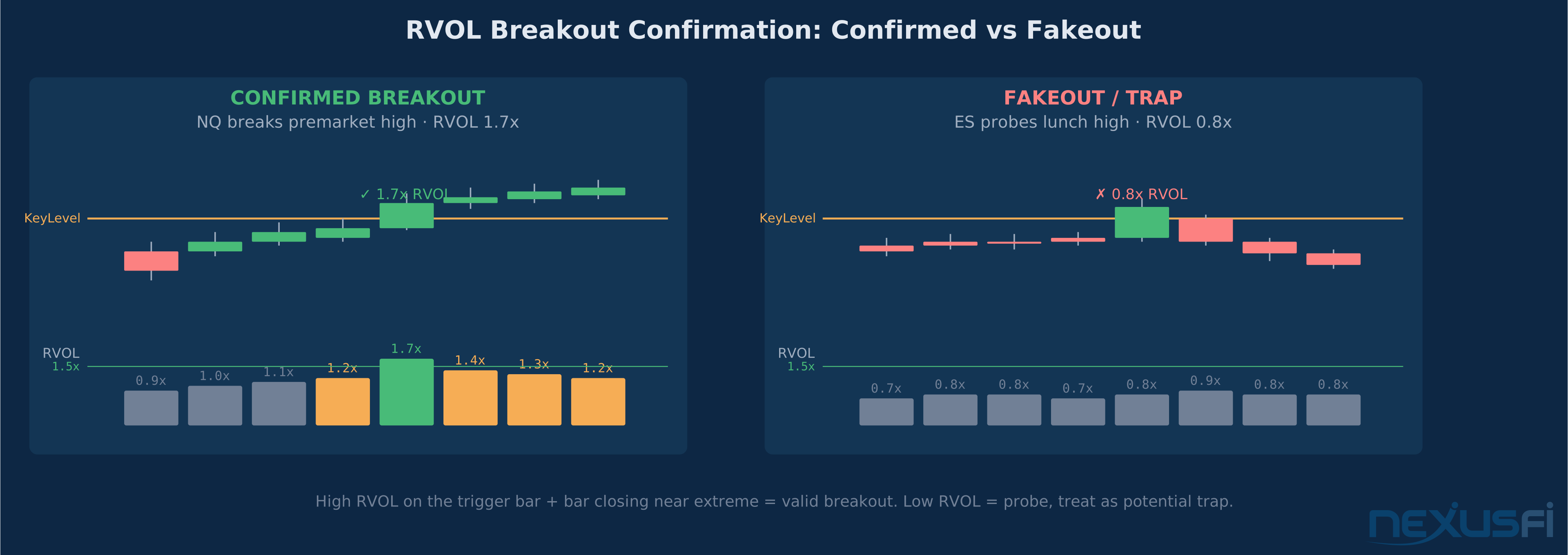
That said, the opening drive is where breakout setups are most reliable when RVOL confirms. A clean break of a key level in the first 30 minutes with 1.6x+ RVOL is a tradeable setup. The same break during lunch with 0.9x RVOL is a trap.
Lunch Lull (11:30 AM to 1:30 PM ET) #
Participation collapses. Market makers widen spreads. Stop hunts become more common. Breakouts during this window require a much higher evidence bar — at minimum 1.5x+ on the trigger bar, ideally 1.8x or a clear fundamental trigger. Many experienced traders stand aside entirely or reduce size by 50% during lunch.
@Fat Tails made the point clearly in the Relative Volume Indicator thread: the concept is only valuable when combined with market context. A volume spike in a low-liquidity window like lunch doesn't mean what the same spike would mean at the open.
The warning here isn't that RVOL is weak — it's that RVOL in isolation is weak. Context is everything.
Afternoon Session (1:30 PM to 4:00 PM ET) #
Volume typically rebuilds as institutional desks position into the close. Re-trend attempts become more reliable. If the morning established a directional move, afternoon RVOL expansion often signals acceptance of that move or a positioning push toward the day's final price discovery.
For CL and GC, time-of-day effects are less pronounced but still present. CL is sensitive to the NYMEX pit session structure and energy-specific news windows. GC can be driven by European close flows and US dollar moves at any hour.
Breakout Confirmation with RVOL #
This is RVOL's primary job: telling you whether a breakout through a key level has real participation behind it.
A proper breakout requires:
- Price breaks a meaningful level (prior high/low, value area edge, initial balance boundary, opening range boundary)
- Trigger bar RVOL ≥ 1.5x
- Trigger bar closes near the extreme — not a rejection wick
- Follow-through: the next bar holds beyond the level, RVOL doesn't immediately collapse
A "breakout" where price barely nudges through a level on 0.8x RVOL and closes mid-range is almost always a probe or a trap. Experienced traders use this as a fade signal, not a long entry.
Breakout example in NQ: NQ holds above VWAP through the morning. The premarket high is overhead at 19,820. At 9:48 ET, price breaks through on a 5-minute bar. Intraday RVOL for that bar is 1.7x. The next bar holds above 19,820. Delta is net positive. This is a clean breakout — the volume confirms genuine participation, not a probe.
Fakeout example in ES: During lunch, ES nudges above the prior day high. RVOL is 0.8x. The bar closes in the middle of its range. Two bars later, price is back below. This was a stop hunt. Low RVOL told you before the price reversed that this move had no substance.
@GruttePier described his RVOL decision framework in his trading journal: looking for above-average volume peaks at key levels in the direction of the anticipated move, then monitoring for continued expansion once in the trade. The logic is the same — volume on the impulse leg validates the setup.
Trend Continuation Entries #
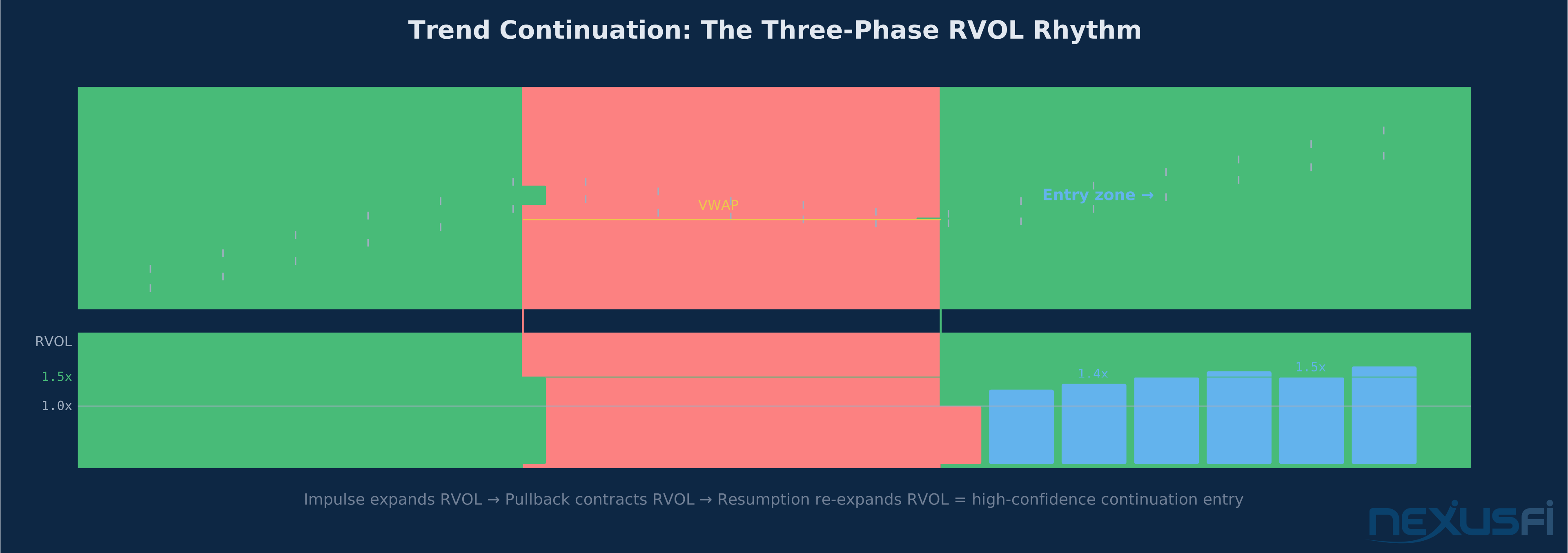
RVOL doesn't just confirm breakouts — it defines the rhythm of continuation entries within an established trend. Look for this three-phase pattern:
Phase 1 — Impulse: The initial trend leg shows strong RVOL expansion (≥1.5x). Price moves directionally and volume is clearly elevated. This is the trigger establishing the trend.
Phase 2 — Pullback: Volume contracts as price retraces. RVOL drops back toward 1.0-1.2x. This contraction on the pullback is healthy — it means profit-takers are exiting, not new sellers establishing positions against the trend.
Phase 3 — Resumption: Volume re-expands (≥1.3-1.5x) as price reasserts the trend direction. This is the entry signal. The RVOL expansion on the resumption bar confirms that the pullback was distribution-free and the directional flow is continuing.
CL continuation example: Crude oil breaks down on an EIA inventory release with 2x RVOL. The initial move is sharp. Price pulls back toward the breakdown level on lighter volume — RVOL drops to 1.0x. Price stalls and rejects the breakdown level again, with RVOL expanding back to 1.6x. That's the continuation short entry. Cleaner than chasing the initial break at 2x RVOL.
@GruttePier puts it concisely in his trading journal — he's looking for exactly this three-phase pattern: RVOL spikes of 2x or more in the anticipated direction, followed by pullbacks on low RVOL, as confirmation that the directional thesis remains intact.
The key distinguisher between a genuine pullback and a reversal is exactly this volume behavior. In a reversal, the "pullback" volume doesn't contract — it matches or exceeds the impulse volume. When volume stays heavy against your position, the trend is likely over.
@danielk captures the dynamic well: the direction RVOL is trending — expanding or contracting — carries as much information as the absolute level. Expanding RVOL during chop signals an imminent breakout from the range. Expanding RVOL during a trend continuation signals the move has fuel. Once RVOL starts contracting, the current thrust is likely exhausting.
RVOL as a Pre-Trade Filter #
Before looking at any specific setup, ask: does the current RVOL justify this trade at all?
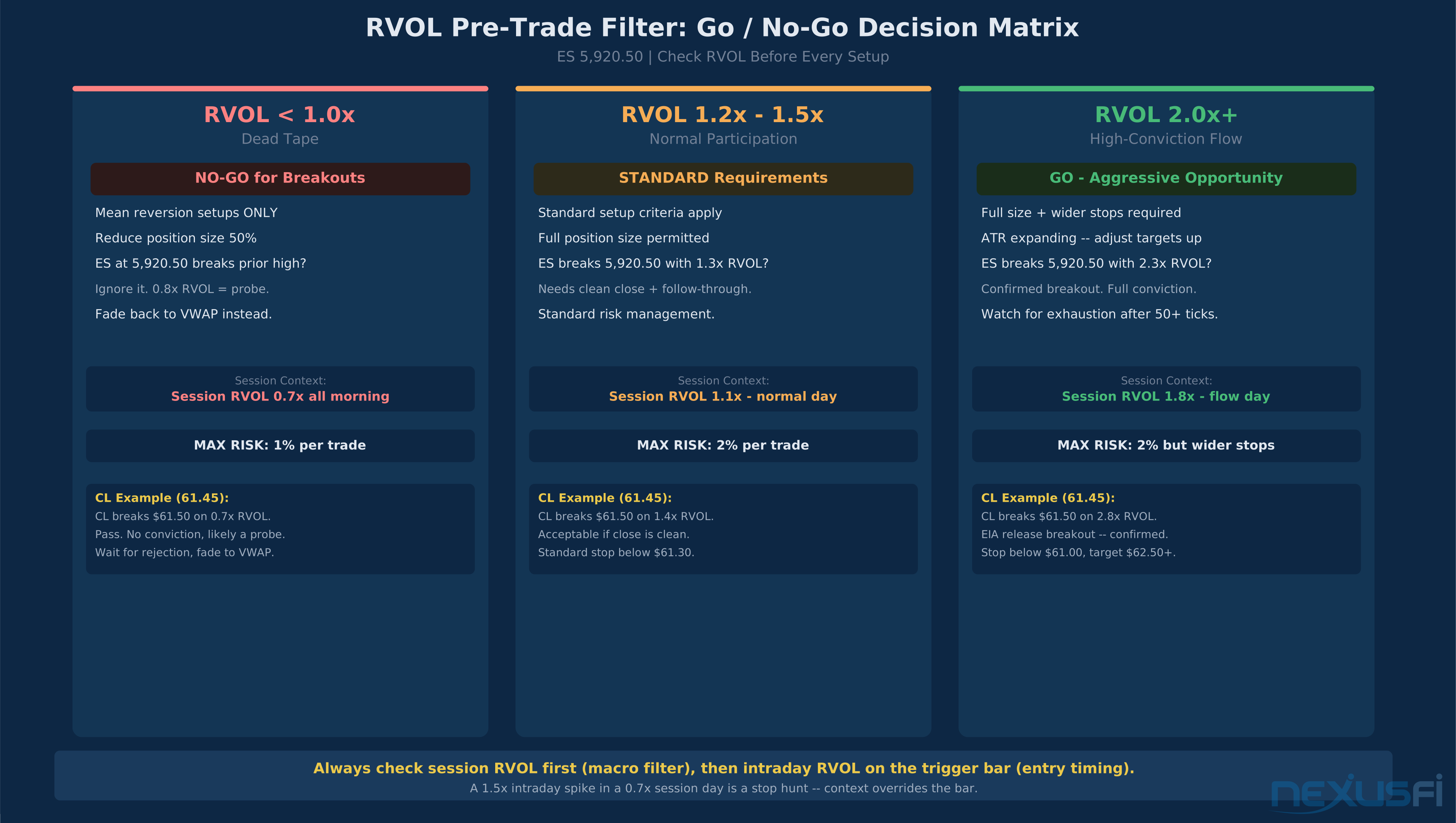
The go/no-go framework:
- RVOL < 1.0x: Dead tape. Mean reversion setups only, reduce size. Don't take breakout entries.
- RVOL 1.2-1.5x: Normal trading environment. Standard setup requirements apply.
- RVOL 2.0x+: Aggressive opportunity but tighter risk required. Wider stops (the range is expanding), faster targets, and watch for exhaustion signals.
This filter is most powerful combined with session-level RVOL. If session RVOL is running at 0.7x all morning and your intraday RVOL spikes to 1.5x for one bar, that single spike is probably a stop hunt in a dead session — not a trend day trigger. If session RVOL is already 1.8x and a specific bar hits 2.5x, you're in a real flow environment and the setup deserves full size.
@Inletcap demonstrated this filter live in his trading journal, showing how an RVOL reading of +14% above average combined with a few minutes of patience revealed the market's directional intent — exactly the kind of real-time application that separates RVOL theory from practice.
Practical rule: make the session RVOL check before the market opens (using pre-open volume relative to average pre-open volume) and again at 30-minute session marks. This gives you a live "market engagement meter" throughout the day.
RVOL Around News and Economic Events #
News events predictably drive RVOL spikes. Knowing what to expect prevents both chasing and under-trading.
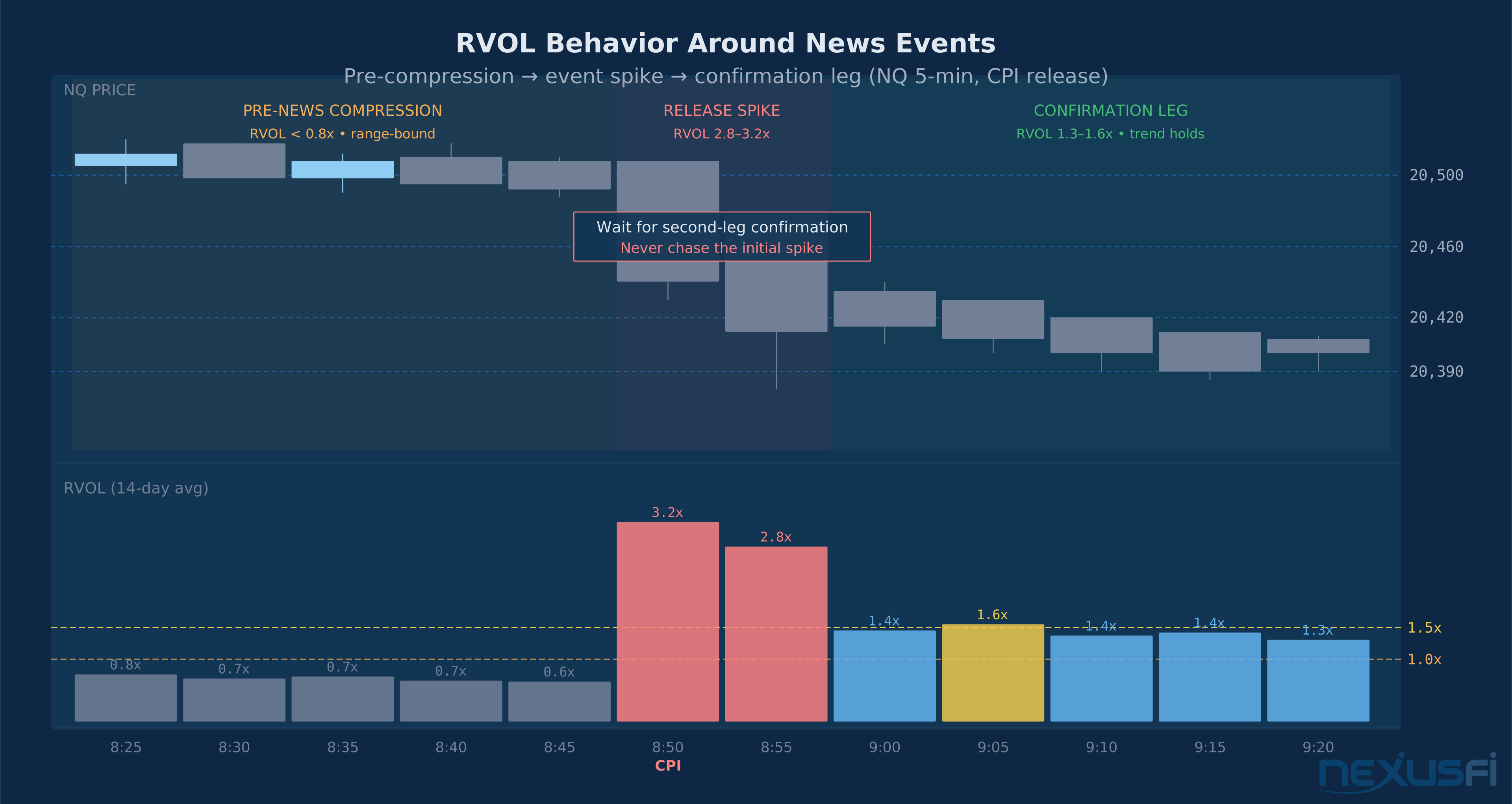
Pre-news: RVOL often compresses as participants wait for the data. This is positioning activity — mostly adjustments and hedges, not directional conviction. Don't overtrade the compression.
Release (first 1-5 minutes): Sharp RVOL spike, often to 2-5x+. Especially violent in NQ around CPI and FOMC, and in CL around EIA inventory releases. The first move is often the most unreliable — stops get run, liquidity vacuums occur. The tick data looks intense but the first bar is frequently not the right entry.
Post-release confirmation: Wait for the initial impulse → a brief consolidation of 1-3 bars → a second attempt in the same direction. If RVOL stays elevated on the second leg, the move has genuine directional acceptance. If RVOL fades immediately after the spike, the first move was likely a stop hunt and a reversal is probable.
GC around CPI example: Gold breaks above a key resistance level on the initial CPI print, RVOL spikes to 3x. Price immediately reverses and falls back below the level — RVOL fades to 0.8x within two bars. This is failed acceptance. The initial RVOL spike confirmed a big order, but the follow-through confirmed nothing. Waiting for the second leg confirmation would have kept you out of a losing long.
For CL specifically: inventory releases can produce 4-5x RVOL for a few minutes and then reverse violently. Never trust the first CL spike after EIA data without confirmation from the second attempt. The oil market has the most aggressive stop-hunt behavior of any major futures contract.
@sixsmith07 observes that at trend extremes, high RVOL clusters can signal absorption or exhaustion rather than continuation — the same volume pattern that looks like fuel at the beginning of a move marks the end when it appears after a sustained run.
Instrument-Specific Guide #
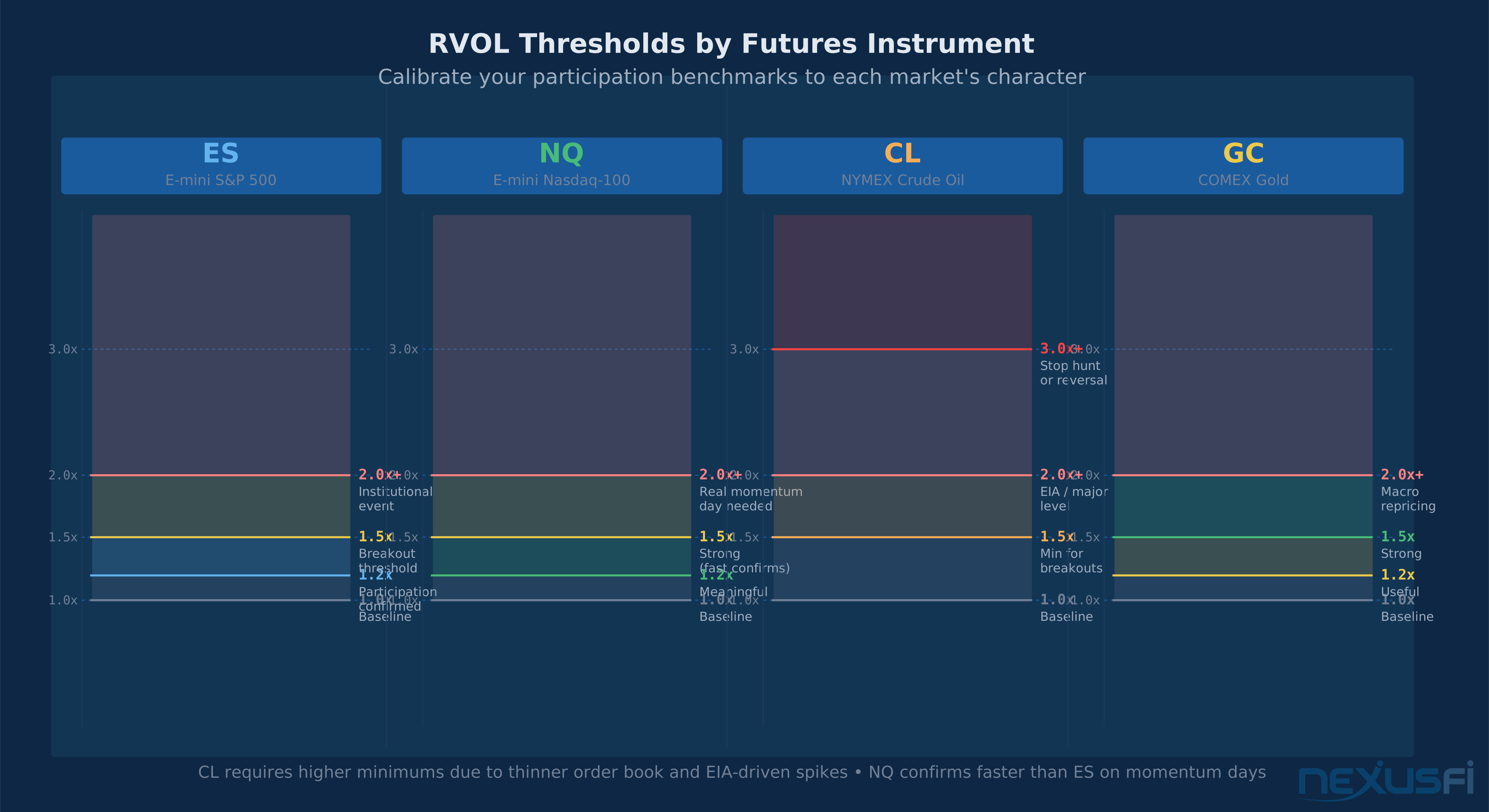
RVOL doesn't apply identically across all futures markets. Calibrate your thresholds per instrument.
ES (E-mini S&P 500) #
- 1.2x: Meaningful participation confirmation
- 1.5x: Standard breakout/continuation threshold
- 2.0x+: Event-driven or major institutional initiative
ES is the most liquid futures contract in the world. The sheer depth of the order book means moves can happen even at moderate RVOL. ES tends to be smoother than NQ — it generally requires clearer confirmation before committing to a trend entry. Best applications: opening range breakouts, VWAP reclaim/reject trades, prior day high/low breaks.
NQ (E-mini Nasdaq) #
- 1.2x: Meaningful
- 1.5x: Strong
- 2.0x+: Often needed for real momentum days
NQ moves faster than ES. It has higher beta to rates and growth data. On CPI and FOMC days, NQ can produce violent intraday ranges where RVOL of 2x+ is required to distinguish real momentum from noise. Pullback continuation setups are especially clean in NQ when the impulse printed strong RVOL — the pullback volume typically contracts sharply and the resumption bar is easy to identify.
CL (NYMEX Crude Oil) #
- 1.5x: Often the minimum for actionable breakouts — CL can be deceptive at lower RVOL
- 2.0x+: Common around EIA releases and major structural levels
- Watch for violent reversals after volume spikes — CL is the king of stop hunts
CL has a different RVOL character than equity index futures. The market is thinner, more sensitive to headlines, and capable of printing extreme RVOL on a single large order. Treat CL's first RVOL spike after news as suspect until the second leg confirms. The inventory release trade in CL is high-RVOL by definition — the question is always whether that RVOL represents a genuine directional move or a two-sided battle at the release level.
GC (COMEX Gold) #
- 1.2x: Useful
- 1.5x: Strong
- 2.0x+: Significant macro repricing or trigger event
Gold's RVOL is driven primarily by macro factors — yields, dollar, safe-haven flows, and Fed expectations. When GC breaks a major level with 2x+ RVOL in a strong macro context (rising inflation, falling dollar), the trend continuation is typically reliable. When RVOL spikes without macro backing — just a round number break or intraday noise — the move is less trustworthy. GC follow-through depends heavily on whether the bigger macro thesis supports the price action.
When RVOL Misleads #
RVOL is a powerful filter but fails in specific conditions — knowing when not to trust it is as important as knowing when to use it.
Using raw volume instead of normalized volume: Comparing current volume against a simple session average ignores that 9:35 AM bars are naturally heavier than 12:30 PM bars. This produces misleading reads — every morning bar looks like "high volume" and every lunchtime bar looks like "low volume" when neither is actually abnormal for that time.
Treating high RVOL as a directional signal: RVOL measures participation, not direction. A 2x RVOL bar can represent institutional buying, panic selling, absorption at a key level, or a two-sided stop hunt. You still need price structure, a meaningful level, and acceptance/rejection behavior to determine what that volume actually means.
Chasing after the spike: Waiting for a 2x RVOL bar to print and then entering is often entering too late. The spike has already happened. The better practice is identifying likely trigger levels in advance and having your entry logic ready so that when RVOL expands at that level, you're entering on the confirmation — not chasing after the fact.
High RVOL at trend extremes can signal exhaustion, not continuation. Multiple consecutive high-RVOL bars after a sustained directional move often indicate absorption by the opposing side — the same volume that would confirm a breakout at the start of a session marks the end of a move when it appears after a 50-tick run. Read volume in context, not in isolation.
Ignoring session phase: Breakouts during lunch with sub-1.2x RVOL are traps at far higher rates than morning breakouts with the same RVOL. Not accounting for where you are in the session cycle is one of the most common ways traders lose money with technically valid-looking setups.
Not adapting risk to RVOL environment: Higher RVOL means wider ranges, faster moves, and larger ATRs. If you take a trade in a 2x RVOL environment with the same stop size you'd use in a 1.0x environment, you'll be stopped out by normal volatility. Scale your stops to the current volatility regime — high RVOL sessions require wider stops and larger targets.
Applying uniform thresholds across instruments: CL requires a higher RVOL bar for breakouts than ES. NQ moves faster and confirms more quickly than GC. Using a single threshold across all instruments misses the character differences between markets.
Practical Takeaways #
RVOL becomes fully useful when you think of it as a participation filter and a rhythm tool, not a standalone signal:
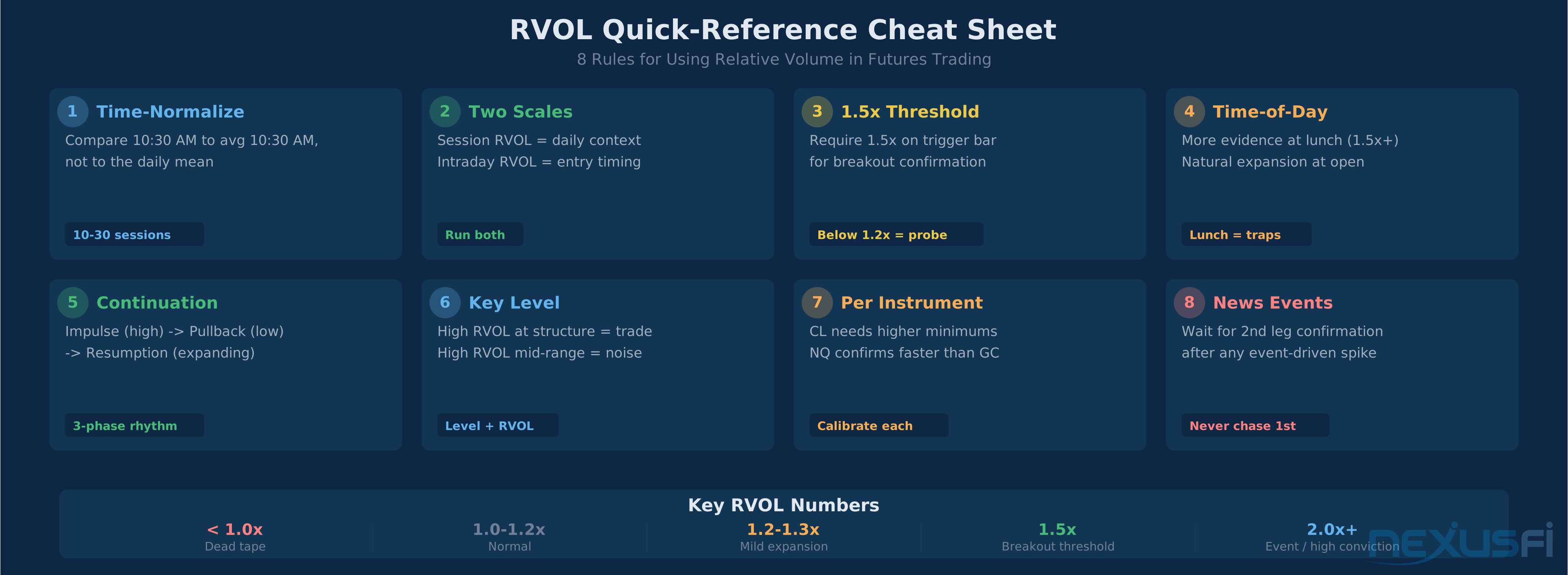
- Calculate RVOL correctly: time-of-day normalization against 10-30 prior sessions. Raw volume comparisons mislead.
- Run two scales: session RVOL for the day's trading environment, intraday RVOL for specific entries.
- The standard breakout threshold is 1.5x — require this on the trigger bar. Below 1.2x, treat breakouts as probes.
- Know the time-of-day rhythm: more evidence required during lunch (1.5x+ minimum), more natural expansion during the open.
- Learn the RVOL continuation rhythm: strong impulse → contracting pullback → expanding resumption. That pattern is the clearest continuation signal the market produces.
- Pair with a key level: high RVOL at a meaningful structural level is a trade. High RVOL in the middle of a range is noise.
- Calibrate per instrument: CL needs higher minimums than ES; NQ confirms faster than GC.
- News events change the rules: wait for the second leg confirmation after any event-driven RVOL spike.
For related reading on the volume analysis concepts that complement RVOL, see Delta Analysis and CVD, Volume Profile Trading, and Order Flow Analysis. RVOL tells you whether the market is engaged — those tools tell you what that engagement is doing directionally.
Knowledge Map
Go Deeper
Build on this knowledgeReferences This Article
Articles that build on this topicCitations
- — Spoo-nalysis ES e-mini futures S&P 500 (2016) 👍 7“My RVOL reading is simply comparing today's cumulative volume to the past 14 days average cumulative volume at this time of day.”
- — GruttePier's trading journal to getting profitable (2018) 👍 12“I see that price is above average volume on a move down, right at the touch of ORL: there is volume on a red bar, indicating strength to the down side.”
- — Relative Volume Indicator (2010) 👍 50“Relative volume is a comparatively weak concept, a relative volume indicator can be coded in a few minutes.”
- — Spoo-nalysis ES e-mini futures S&P 500 (2016) 👍 5“What's important is whether RVOL is INCREASING or DECREASING as it's gauging the pressure coming into our pipeline.”
- — Spoo-nalysis ES e-mini futures S&P 500 (2016) 👍 8“At the end of a trend you will often see a very long relative volume bar (exhaustion) or several high relative volume bars side by side which shows absorption.”
- — GruttePier's trading journal to getting profitable (2018) 👍 26“I rely strong on RVOL for timing my entries. I have noticed that RVOL makes large spikes (2 or more times the average vol) in the direction of price. So what I typically want to see is RVOL spike in my anticipated direction and then price pulling back on low RVOL.”
- — InletCap's Random Collections (2016) 👍 39“RVOL is now strong at +14% of average for this time of day -- waiting 4-5 more minutes offered the clue that the market has directional intent.”
- CME Group — Daily Exchange Volume and Open Interest (2026)
- CME Group — Equity Insights April 2026 - Record Quarterly ADV (2026)