



Open Interest Data for Futures Trading: Reading Market Commitment Through the Crowd's Position Count
Overview #
Open interest is the total number of outstanding futures contracts that have not been offset, delivered, or settled. Every contract in existence requires one buyer and one seller. Open interest counts the total number of these paired contracts that remain open at any given moment. It is not a sentiment indicator, a price predictor, or a measure of volume — it is a headcount of commitment.
Most futures traders know OI exists but treat it as background noise. That is a mistake. OI is one of the few data points that directly measures how many participants have skin in the game right now — and more importantly, how that count is changing. A market where OI is rising alongside price tells a at the core different story than a market where OI is falling while price rises. Same price chart, completely different underlying dynamics.
This article covers the complete OI framework for futures trading: the mechanics of how it changes, the four-scenario price-OI matrix, rollover interpretation, breakout confirmation, data sources, and the specific failure modes that make OI analysis dangerous when misapplied.
Understanding OI is essential before working with the Commitment of Traders (COT) Report, which disaggregates total OI by trader category — commercial hedgers, speculators, and small traders — to show WHO is holding those positions. The COT is built entirely on OI data, so misunderstanding OI means misusing COT.
How Open Interest Actually Changes #
OI has a precise and unintuitive mechanics that most traders never fully internalize. Only three scenarios exist, and each has a different effect on the OI count.
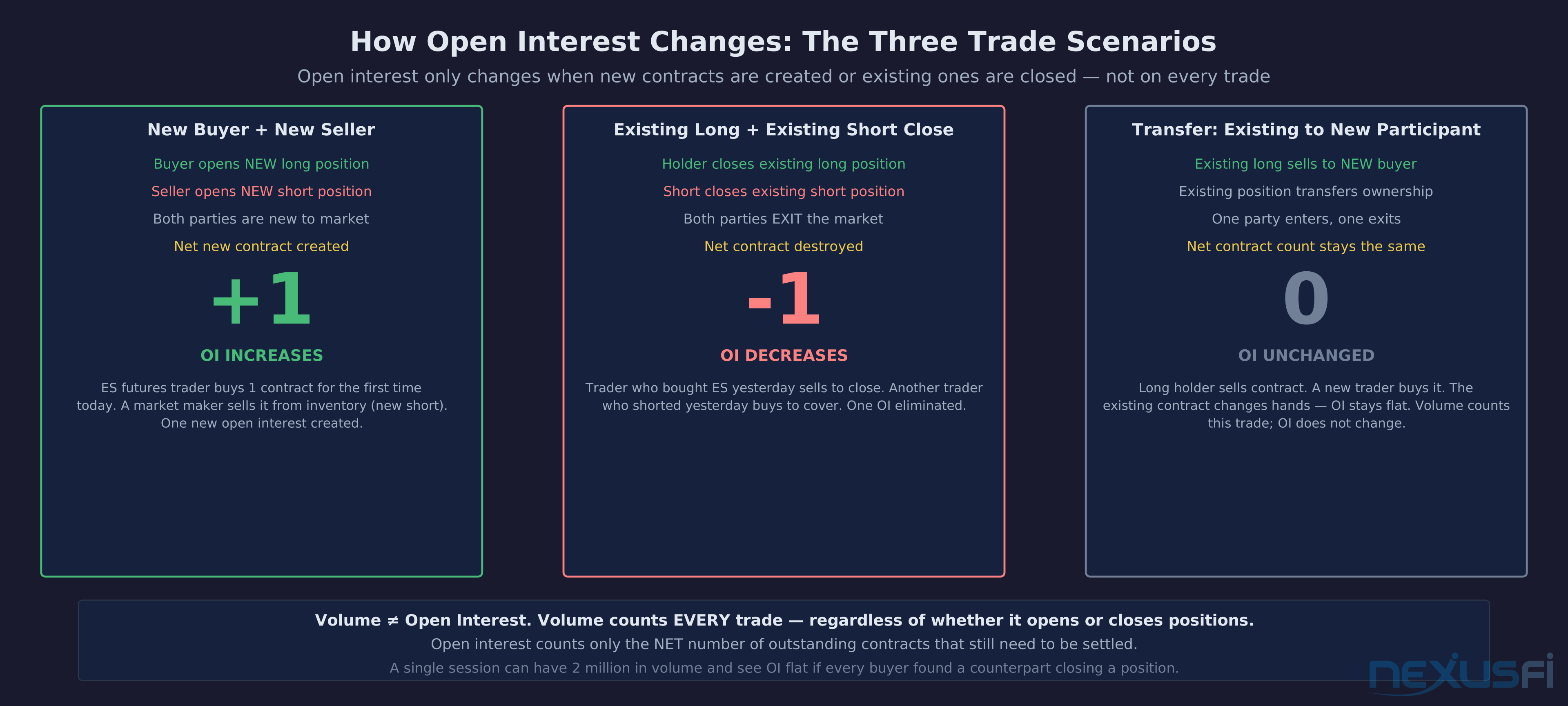
Scenario 1 — OI Increases: A new buyer enters a long position AND a new seller enters a short position. Both participants are new to the market — neither has held this contract before. The result: one new open contract, OI rises by 1. This is the only scenario where OI grows.
Scenario 2 — OI Decreases: An existing long holder closes the position AND an existing short holder closes the position. Both participants exit the market simultaneously. One contract is extinguished — OI falls by 1. This happens constantly as profitable positions are closed and losing positions are cut.
Scenario 3 — OI Unchanged: An existing long holder sells to a new buyer. The contract transfers hands — one party exits, one enters — but the total number of outstanding contracts is unchanged. OI stays flat. This is the scenario most traders confuse with OI-changing activity.
Volume counts every single transaction, regardless of whether it opens or closes positions. Open interest counts only the net outstanding contracts. It is entirely possible to have 1 million in daily volume with zero change in OI — if every buyer is closing a short while every seller is closing a long. Volume and OI measure completely different things.
The practical implication: when you see high volume on a move, you cannot know without OI whether that volume represents new commitment (rising OI) or liquidation (falling OI). The question is always "who is that volume doing?" — and OI is the only data point that answers it.
Open Interest vs Volume: The Critical Distinction #
Volume and OI are the two most frequently confused data points in futures analysis. They measure different things at different timescales and neither substitutes for the other.
Volume resets to zero at the start of each session. It accumulates throughout the day, counting every trade regardless of whether it opens or closes a position. Volume tells you how active the market was — not why.
Open Interest accumulates across sessions and across the lifetime of a contract. It tells you how many participants are committed to current positions that have not yet been resolved. OI changes slowly relative to volume because it only moves when net new contracts are created or net contracts are closed.
The clearest example of the distinction: during contract rollover period, volume in the front month collapses as traders stop opening new positions. At the same time, volume in the back month surges as traders establish positions there. OI in the front month plunges because longs and shorts close positions in the expiring contract. OI in the back month grows. Total market OI (sum of all months) may barely move — it is a structural shift, not a sentiment change.
Always monitor total market OI (sum across all contract months) rather than just front-month OI. Platform defaults often show only the front month, which creates artificial OI collapses at each rollover that mean nothing about sentiment. See Futures Contract Rollover and Expiration for the complete rollover mechanics.
For intraday analysis, the CME's "Total OI" figure — updated daily — is the cleanest single number. Some platforms (Sierra Chart, NinjaTrader with the right data feed) provide intraday OI updates, which are much more useful for catching real-time sentiment shifts.
NexusFi member Cashish, documenting Euro FX futures OI analysis (post 319767, 2013): "I post the TOTAL of all contract months when analyzing volume and open interest — this aids in seeing the continuation (or not) of the accumulation of contracts in OI during the expiration of one contract and the rollover into the next contract. A steady increase in OI can mean an agreement of direction and it can also mean a disagreement of direction, context is king."
The Four-Scenario Matrix: Reading OI + Price Together #
The standard interpretation of OI combines price direction with OI direction to classify market conditions. The four combinations describe genuinely different market states.
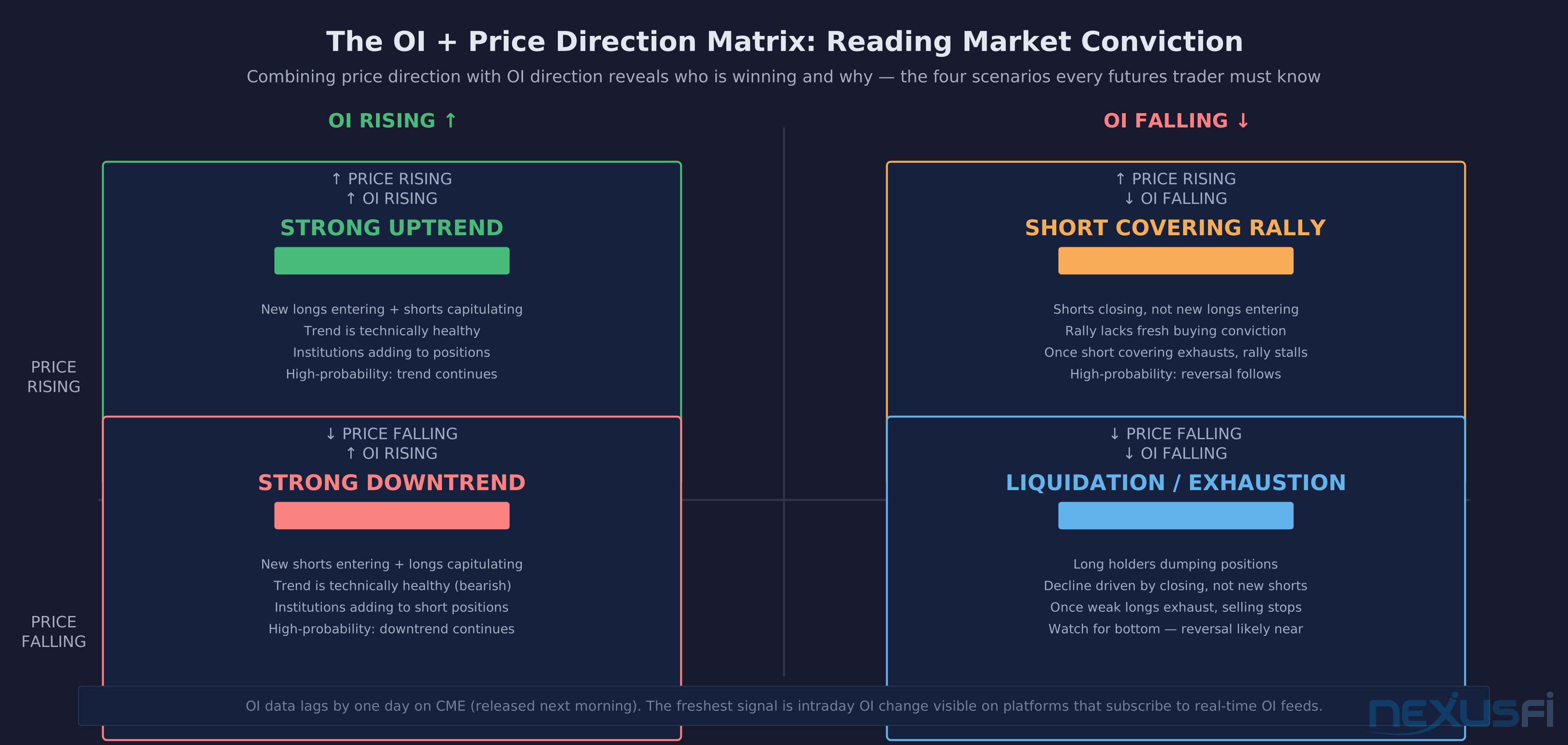
Rising Price + Rising OI: Strong Uptrend with Conviction
New money is entering on the long side. Shorts who are capitulating (covering positions) are replaced by new buyers. The uptrend is "healthy" in the sense that it has new participants buying it, not just existing longs riding momentum. This is the condition every breakout trader wants to see — price going up AND fresh commitment coming in. In ES futures, this pattern during the morning breakout often signals a trend day in the making.
Rising Price + Falling OI: Short Covering Rally
Price is rising, but OI is falling. This means short holders are closing positions (buying back what they sold short), not new longs entering. The rally is being powered by forced covering, not conviction. Once the shorts have all covered, the buying evaporates — and if no new longs are present, price stalls or reverses. This is the classic "weak rally" pattern.
Falling Price + Rising OI: Strong Downtrend with Conviction
New money is entering on the short side. Longs capitulating are replaced by new shorts. The downtrend has committed sellers. This is bearish with high conviction — the technical equivalent of the first scenario, mirrored. Fading this pattern without a clear trigger for reversal is low-probability.
Falling Price + Falling OI: Liquidation/Exhaustion
Price is falling, but OI is also falling — meaning longs are closing positions (selling to exit), not new shorts entering. The decline is driven by exits, not new commitment. Once the weak longs have cleared, selling exhaustion occurs and the market is positioned for a potential reversal.
The OI matrix is a probability framework, not a mechanical signal. Strong downtrend + rising OI can precede months of additional decline. Liquidation pattern can persist longer than expected as waves of long holders exit. Use OI for context and weighting, not for trade entry without confirmation.
NexusFi member HumbleTrader, studying ES OI during NFP week (post 600609, 2016): "OI is a decent thermometer of market confidence and could work well with other similar tools like VIX, relative volume, and average tick size. After all, if someone has the guts to hold an overnight position without worrying about P&L and sleep quality, that means something, right?"
OI and Breakout Confirmation #
The most immediately actionable use of OI data in futures trading is breakout validation. When price breaks through a significant resistance or support level, OI tells you whether real commitment backs the move or whether it is a fakeout.
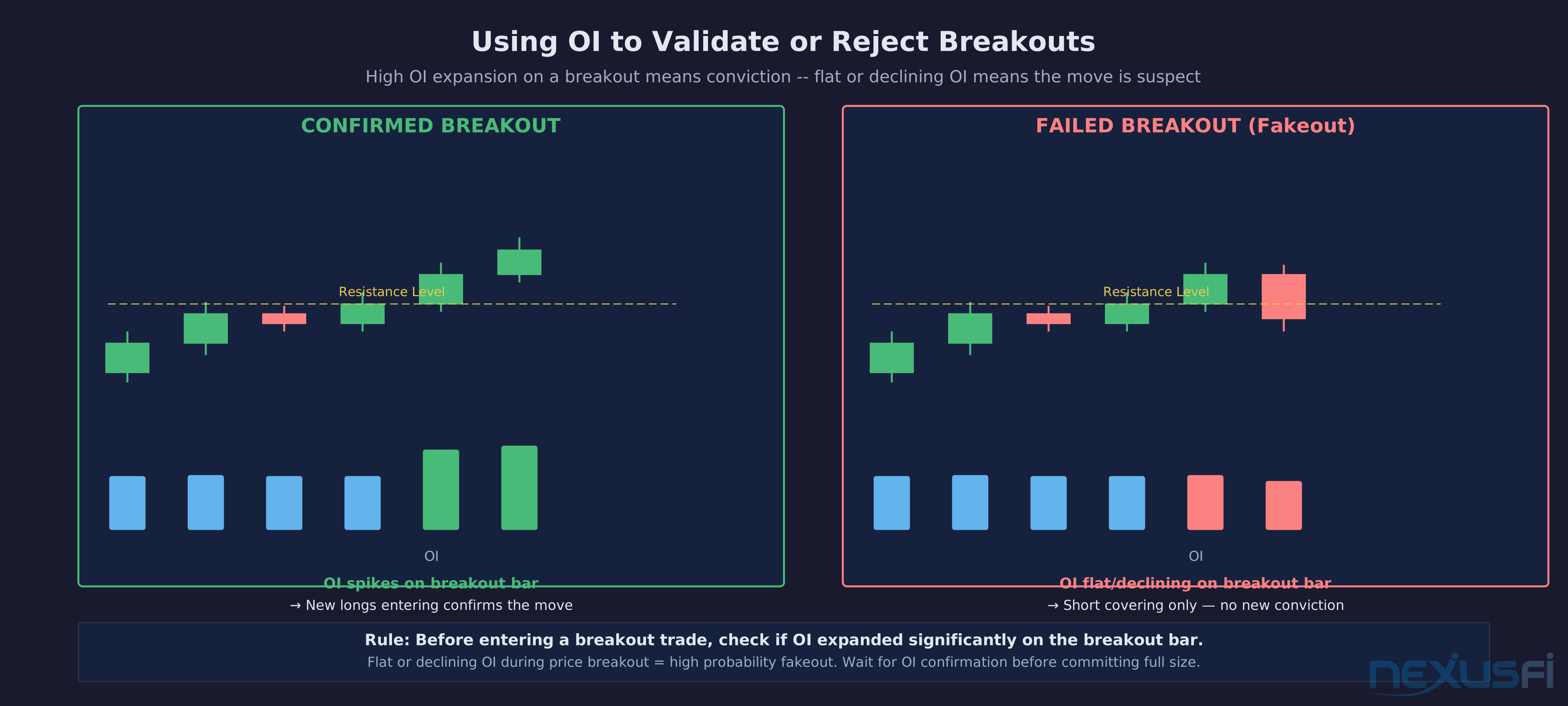
Confirmed breakout: Price breaks above resistance AND OI expands much on or immediately after the breakout bar. New buyers are entering — they are not just covering shorts. The expansion of OI says "participants believe in this level." In practice, a 3--5% jump in total OI on a breakout session is meaningful confirmation.
Fakeout pattern: Price breaks above resistance but OI is flat or actually falls. This means the breakout is powered entirely by short covering, with no new longs entering. Once the shorts have covered, no fresh demand exists to push price higher. The breakout fails and price reverses back through the level.
For practical implementation: check the CME daily bulletin the morning after a breakout session. If OI expanded by more than 2--3% of outstanding contracts on a significant price move, the move has backing. If OI was flat or declined, treat the breakout with suspicion until price and OI align.
NexusFi member PeakGrowth documented building an OI tracking model from CME data (post 523104, 2015): "The open interest can be a great leading indicator as well as a contrarian indicator. I wanted to start tracking the open interest — I built a model that grabs the front 3 months of data and plots the ratio." This is exactly the right approach — tracking multiple months to avoid rollover distortion.
Breakout rule: Never treat a price breakout as confirmed until OI expansion corroborates it. High volume + flat OI on a breakout = short covering only. High volume + rising OI = institutional commitment. The distinction determines whether you hold through the next session or take profits immediately.
OI at Contract Rollover and Expiration #
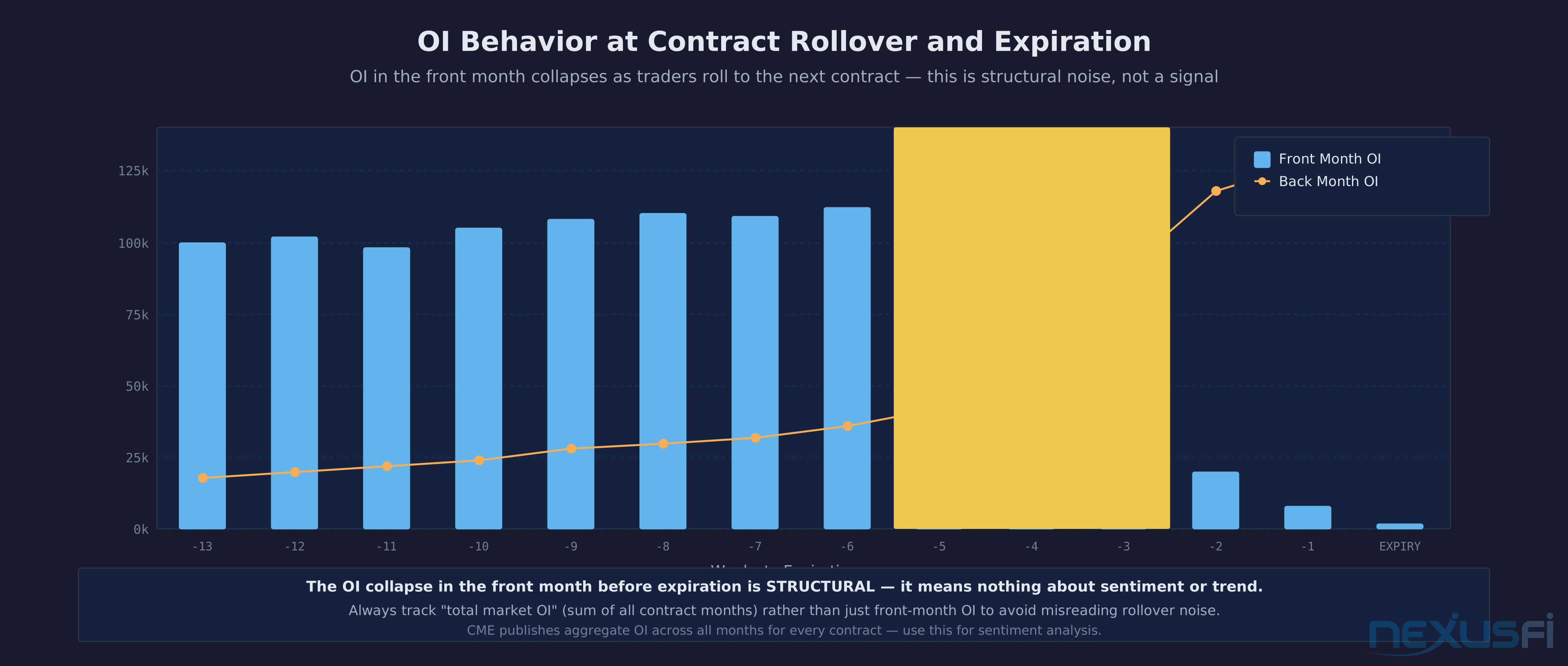
The most misinterpreted OI pattern is the pre-expiration collapse in the front month. In the final 2--3 weeks before delivery/expiration, front-month OI drops precipitously as traders roll their positions to the next contract. This is entirely structural — it carries no sentiment information whatsoever.
The rollover schedule for major futures contracts:
ES (S&P 500 Emini): Quarterly (March, June, September, December). Roll typically occurs 8--10 days before expiration. CL (Crude Oil): Monthly. Roll occurs 4--5 days before expiration. GC (Gold): Quarterly (most active). ZB (30-Year Treasury): Quarterly. NG (Natural Gas): Monthly, highly active roll.
Total OI (aggregated across all months) typically shows only a small net change during rollover because most contracts roll rather than close entirely. This is why tracking front-month OI alone during rollover creates false signals. The Futures Contract Rollover and Expiration article covers the mechanics of roll timing, spread pricing, and volume migration in detail.
OI Characteristics by Instrument #
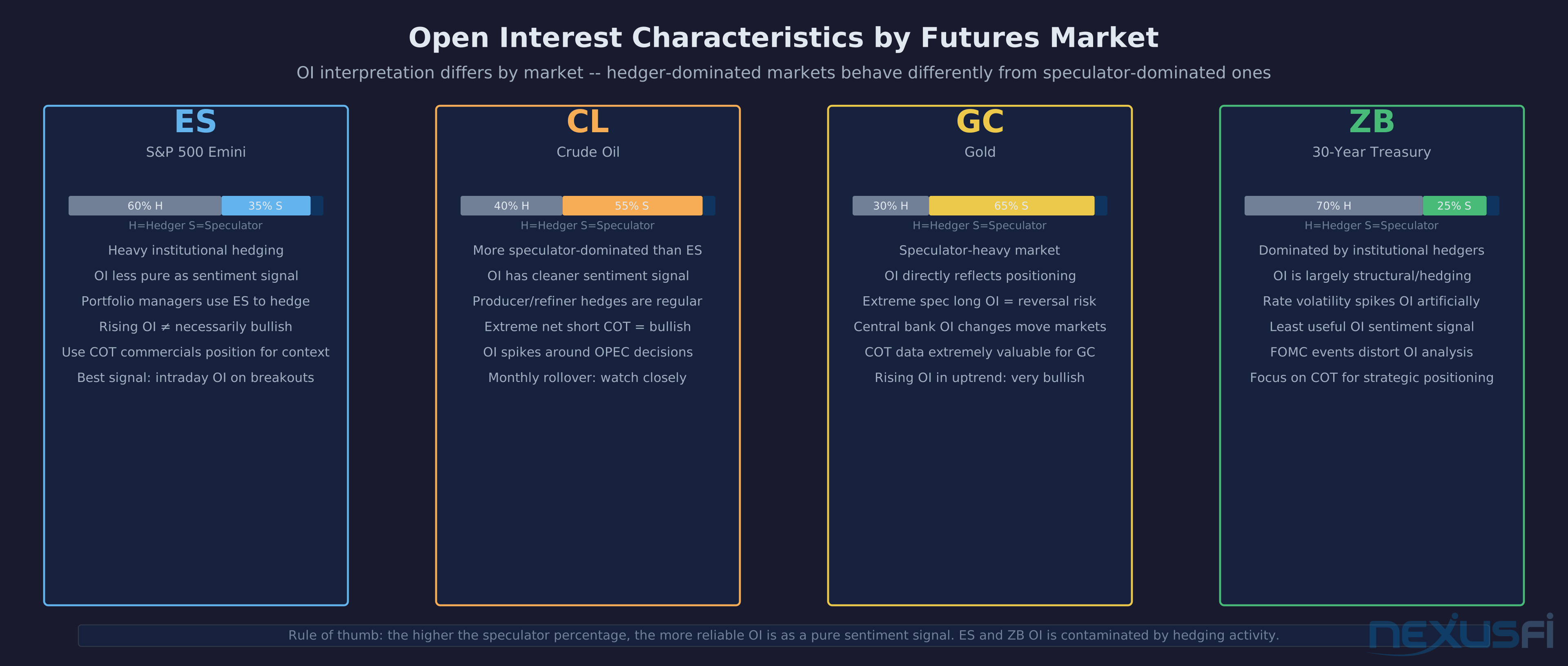
OI interpretation is not uniform across markets. The ratio of commercial hedgers to speculators in total OI at the core changes how reliable OI is as a sentiment signal.
ES and NQ Emini Futures: OI in ES and NQ is heavily influenced by institutional hedging. When S&P 500 portfolio managers need to hedge equity exposure quickly, they sell ES futures, driving OI higher. A rising OI in ES during a market decline often reflects institutional hedging, not speculative shorting.
CL Crude Oil: Crude oil OI is more directly sentiment-driven because CL has more speculators relative to commercial hedgers. Rising OI during a CL rally reflects genuine bullish positioning more reliably than in ES. The weekly COT report is especially useful here.
ZB and ZN Treasury Futures: OI in rates markets is dominated by hedgers. When rate volatility spikes, OI often rises as financial institutions add hedge positions, not as speculators express directional views.
GC Gold Futures: Gold OI has a cleaner sentiment interpretation than rates. Rising OI in a gold rally typically reflects speculative positioning. COT data for gold is especially valuable — when non-commercial (speculative) long OI reaches historic extremes, it has reliably preceded gold price corrections.
The COT Report: OI Disaggregated by Trader Category #
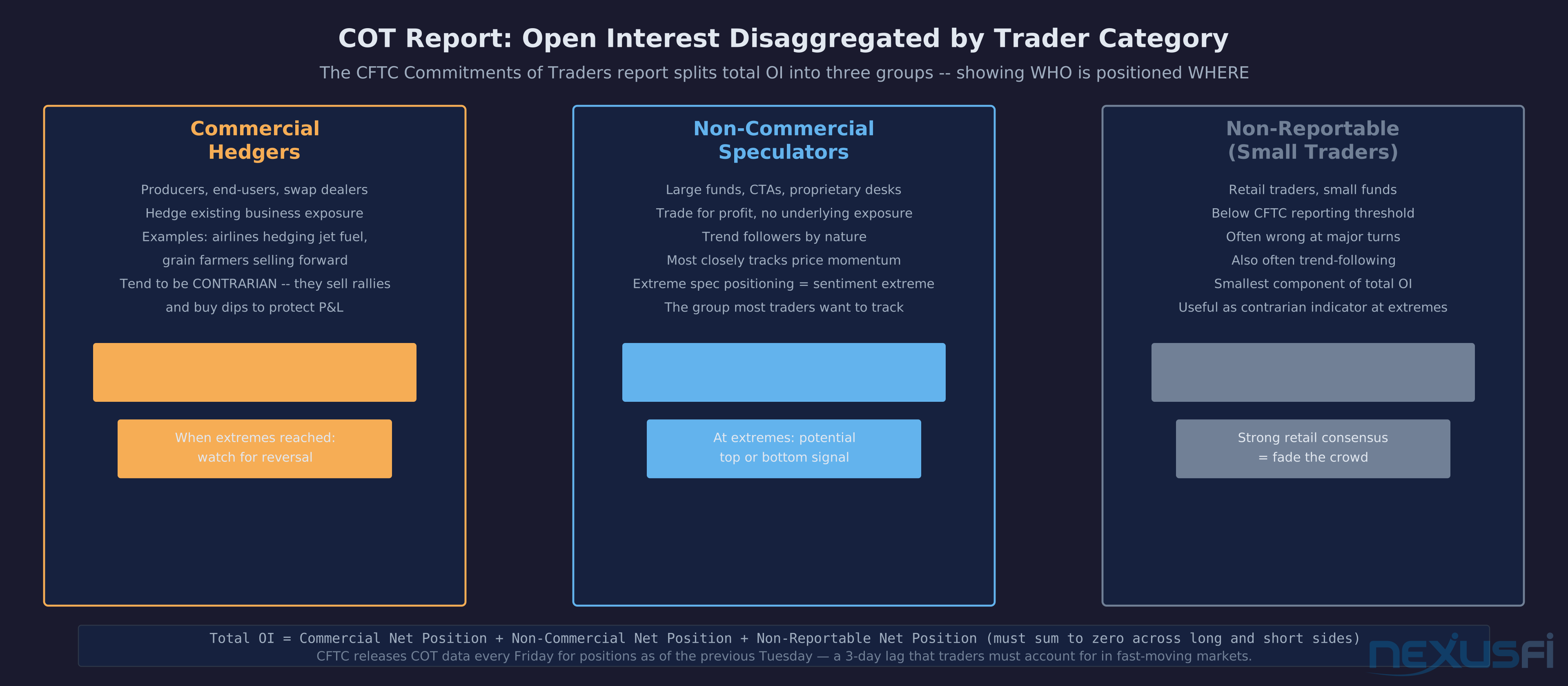
The Commitment of Traders Report takes total OI and breaks it down by who is holding the positions: commercial hedgers (producers, processors, swap dealers who have real business exposure), non-commercial speculators (large funds and CTAs trading for profit), and non-reportable small traders (retail and below-reporting-threshold accounts).
The practical value of COT data: when non-commercial (speculative) net long positions reach historic extremes relative to total OI, it signals positioning crowding. The crowd is often wrong at extremes. When commercial hedgers — who understand fundamental value better than any speculator — reach extreme net short positions while speculators are net long, the divergence predicts eventual reversal better than any price indicator alone.
COT data is released weekly (every Friday for data through the prior Tuesday), making it a strategic rather than tactical tool. Combine it with daily OI for the most complete picture.
Where to Access OI Data #
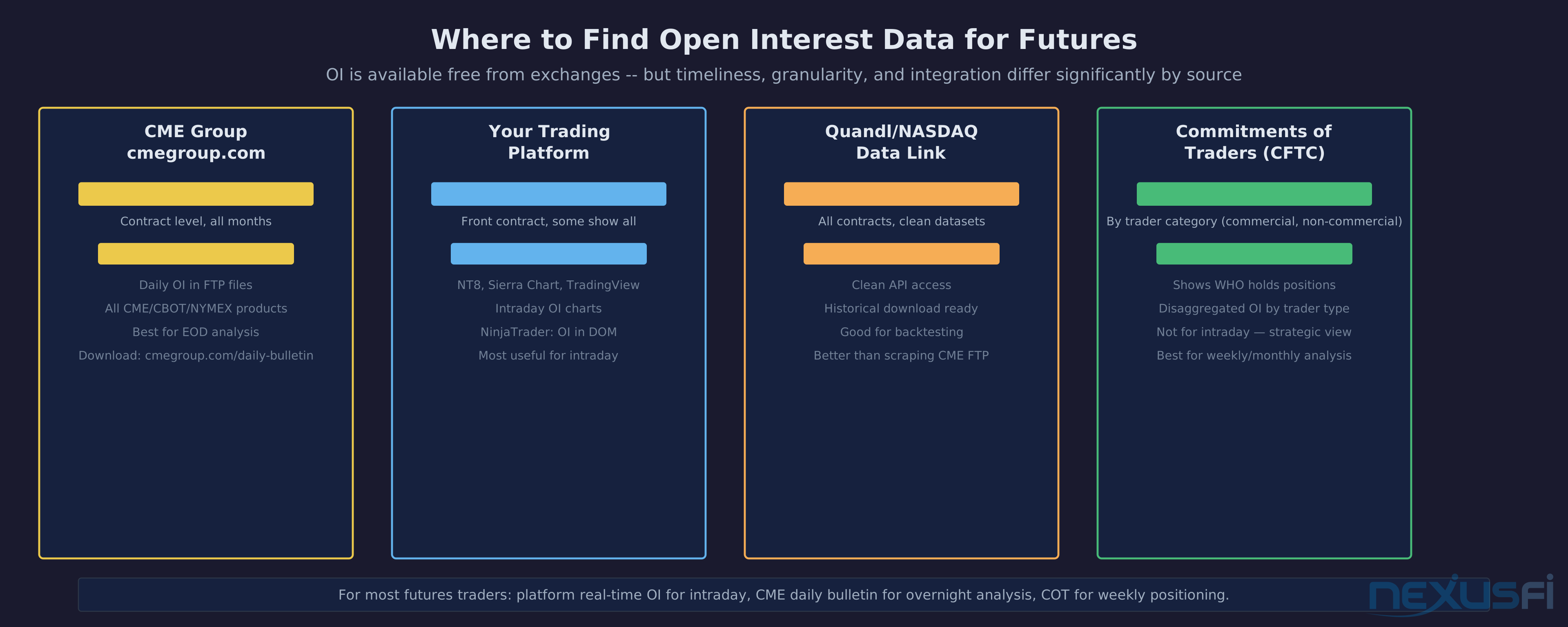
CME Group Daily Bulletin: The primary source, available free at cmegroup.com/daily-bulletin. Published each morning for the prior trading day. Contains OI for every contract in every month. The definitive source for end-of-day OI analysis.
CFTC Commitments of Traders (COT): Published every Friday for data through Tuesday. Available free at cftc.gov. Disaggregates OI by trader category. Essential for weekly and monthly timeframes.
Trading Platforms (Real-Time): NinjaTrader, Sierra Chart, and TradeStation provide intraday OI updates when connected to appropriate data feeds (CQG, Rithmic, or DTN IQFeed). Intraday OI is invaluable for confirming whether a breakout move is backed by real commitment. See Futures Data Feed Technologies for the technical infrastructure behind real-time OI delivery.
Quandl / NASDAQ Data Link: Clean API access to historical OI data across all CME products. Useful for backtesting research and building OI-based signals. Paid service but much easier to integrate than the CME FTP approach.
The CME also publishes position limit thresholds. When total speculative OI approaches these limits in a smaller market (lumber, lean hogs), it signals extreme positioning that has historically preceded reversals. Less relevant in ES or CL but valuable in less-liquid contracts.
When OI Analysis Fails #
OI is a secondary indicator. It confirms or questions — it does not lead. Several conditions make OI data unreliable or misleading.
Front-month OI around rollover: OI collapses in the expiring contract during rollover. Any sentiment analysis of front-month OI in the 2--3 weeks before expiration is compromised unless you aggregate across all months.
OI in thin markets: In markets with very few participants, large single trades can swing OI much. A single commercial hedger's 5,000-contract hedge can move OI by 5% in a thin market. This is not a sentiment signal — it is one entity managing risk.
The one-day lag problem: CME OI data is released with a one-day lag. By the time you see yesterday's OI, the market has already moved. For fast-moving situations (FOMC announcements, CPI days), OI confirmation is always historical by the time you see it.
Index rebalancing effects: When major indices rebalance (typically quarterly), institutional managers buy and sell futures to adjust exposure. This creates artificial OI changes that do not reflect speculative sentiment.
Short squeezes: A market being squeezed higher by forced short covering shows rising price and falling OI — the "weak rally" pattern. But in some cases, if a squeeze is violent enough to force rapid repositioning, the OI data cannot keep pace in real time. Context beyond the OI chart matters.
Practical Application for Futures Traders #
Daily routine: Every morning before the session, check the CME daily bulletin or your platform's OI display. Note whether OI from the prior session was: rising (conviction), falling (liquidation or covering), or flat (no new commitment). This gives you a baseline for interpreting the morning's price action.
Breakout trading protocol: When price breaks a significant level, do not add to the position or initiate full size until you can check OI. If the breakout happened in the morning session, by afternoon you may be able to see whether intraday OI expanded. If the breakout happens late in the session, check the CME bulletin the following morning before deciding whether to hold overnight.
Swing and position trading: For multi-day trades, weekly OI tracking provides important context. A sustained uptrend in which OI is consistently rising over multiple weeks is technically healthy — new participants are continuously entering. A trend that continues while OI stagnates or declines is living on momentum, not conviction.
COT as a positioning extreme detector: When non-commercial net long OI in any market reaches historic highs, examine the trade with more skepticism. Not all extreme readings precede reversals, but the base rate of trend continuation at extreme speculative positioning is much lower than at neutral positioning. Use this for probability adjustments, not mechanical signals.
Knowledge Map
Prerequisites
Understand these firstReferences This Article
Articles that build on this topicCitations
- — Trading the 6E Old School, With a Twist (2013) 👍 7“A steady increase in OI can mean an agreement of direction and it can also mean a disagreement of direction, context is king. I post the TOTAL of all contract months when analyzing volume and open interest -- this aids in seeing the continuation (or not) of the accumulation of contracts in OI during the expiration of one contract and the rollover into the next contract.”
- — Fitter, Better and Calmer Trading ES (2016) 👍 3“OI is a decent thermometer of market confidence and could work well with other similar tools like VIX, relative volume, and average tick size. If someone has the guts to hold an overnight position without worrying about P&L and sleep quality, that means something.”
- — Euro session ES B/O and Range Fading with Volume Profile and Jigsaw T&S (2015) 👍 3“The open interest can be a great leading indicator as well as a contrarian indicator. I built a model that grabs the front 3 months of data and plots the ratio -- an increase in the ratio could indicate that investors are more cautious, looking to hedge their portfolio or betting for a market drop.”
- CME Group — Understanding Open Interest (2024)
- CFTC — Commitments of Traders (2024)
- CME Group — Daily Bulletin -- Open Interest by Product (2024)