



Litecoin (LTC): The Silver to Bitcoin's Gold -- A Complete Trader's Guide
Overview #
Charlie Lee created Litecoin on October 7, 2011, describing it as "the silver to Bitcoin's gold." He was a Google engineer who'd been studying Bitcoin's codebase for months before forking it, tweaking four parameters, and launching the new chain in a few days. The goal was simple: same proof-of-work security model, four times faster blocks, four times the supply, and a different mining algorithm to prevent early ASIC monopolization.
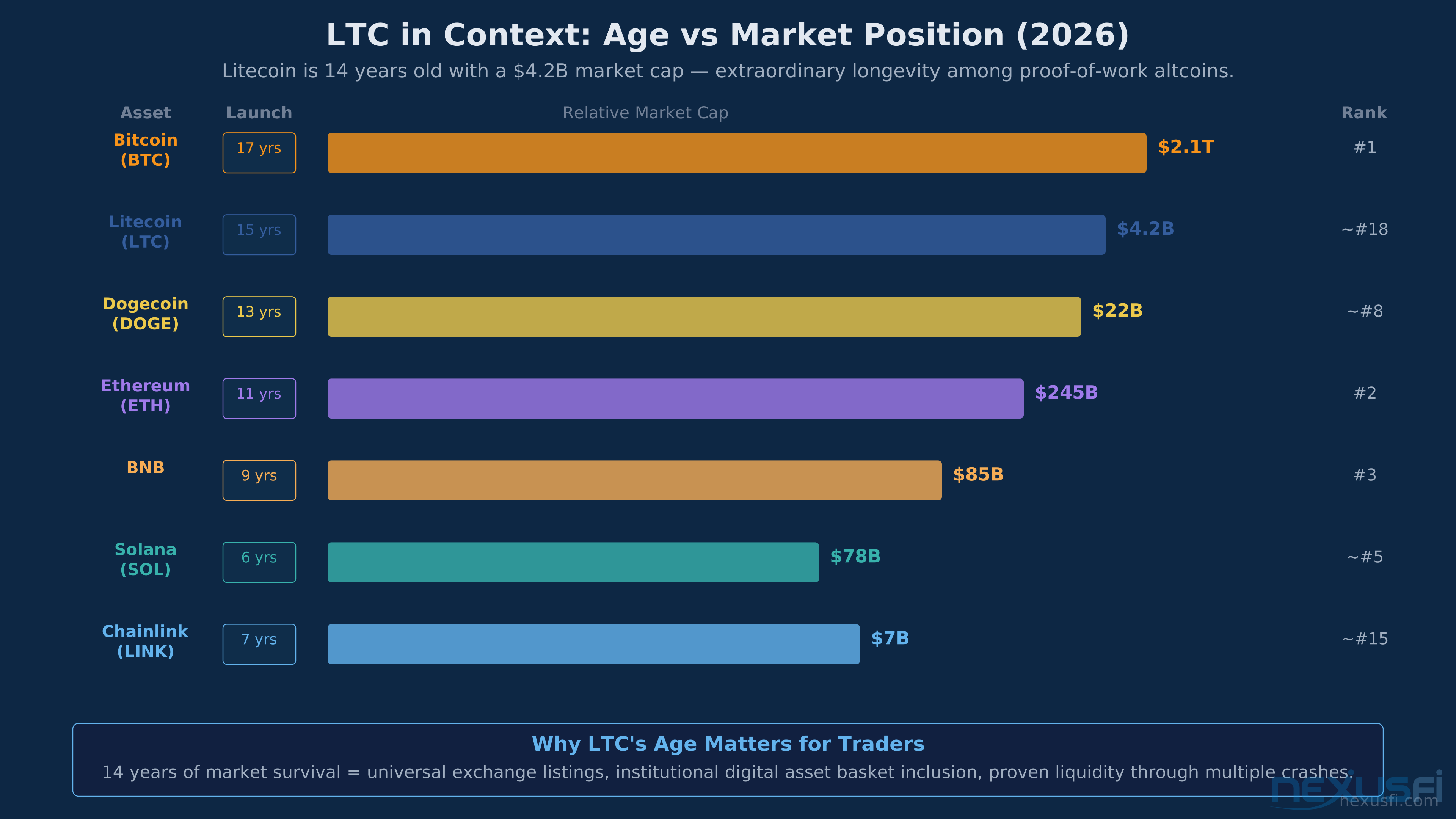
Fourteen years later, Litecoin is still here. It has survived every bear market, every wave of "dead coin" proclamations, and dozens of would-be competitors promising to do payments better. It trades on every major exchange, settled billions in daily volume, and completed three halvings — cutting its block reward from 50 LTC to 6.25 LTC with mechanical precision. The next halving arrives in July 2027.
For traders, Litecoin occupies a specific niche: it's the most credible old-school altcoin — older than Ethereum, older than everything except Bitcoin itself. It moves with Bitcoin at roughly 70-85% correlation during major trend phases, amplifies those moves by 1.5-2x, and occasionally decouples on its own catalysts (halvings, MWEB updates, payment adoption news). Understanding when LTC is in each mode is where the trading edge lives.
What Litecoin Is: Digital Silver in a Digital Gold World #
Litecoin is a peer-to-peer cryptocurrency built as a faster, lighter alternative to Bitcoin. Its core design choices — Scrypt mining algorithm, 2.5-minute block time, 84 million coin maximum supply — were deliberate signals to the Bitcoin community: this is the everyday payments coin, Bitcoin is the store of value.
The "digital silver" framing has aged well as a brand even if the payments use case has evolved. Litecoin's core technical properties haven't changed since launch. What has changed is the ecosystem around it — the addition of MWEB privacy features in 2022, the development of LitecoinVM (a layer-2 smart contract platform), and its continued role in merged mining with Dogecoin, which it enabled through a 2014 auxiliary proof-of-work implementation.
The Charlie Lee Factor
Lee remains involved in Litecoin's development through the Litecoin Foundation. He made a controversial decision in December 2017 at Litecoin's peak price: he sold and donated all his LTC holdings to remove what he described as a conflict of interest in discussing the coin publicly. The crypto community's reaction was split — some saw it as integrity, others as abandonment. The price had already peaked. But Lee's continued work on development has maintained a credibility floor that purely anonymous-team projects lack.
The Dogecoin Merged Mining Relationship
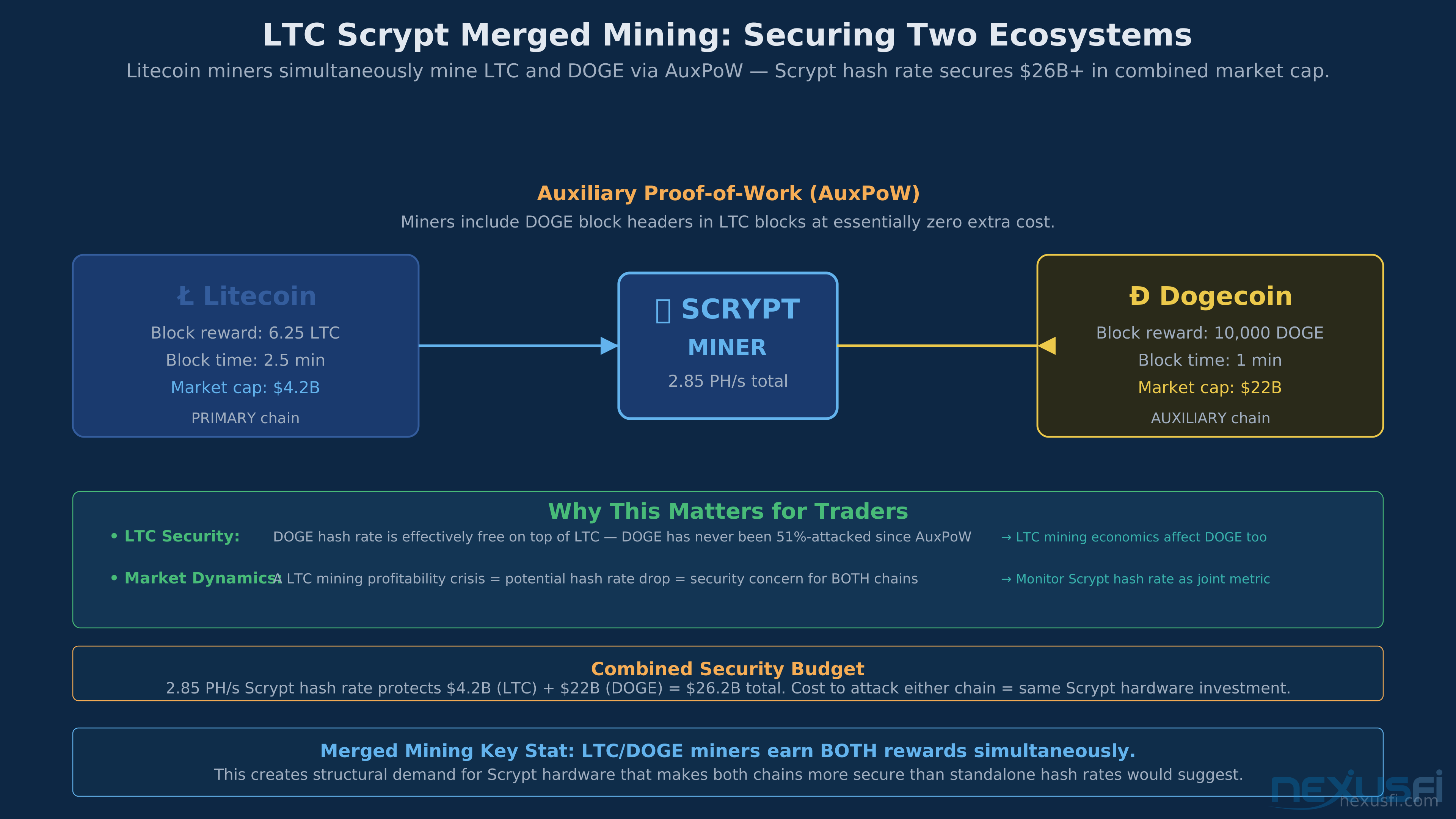
One of Litecoin's most underappreciated features is its merged mining relationship with Dogecoin. Through auxiliary proof-of-work (AuxPoW), Litecoin miners can simultaneously mine DOGE blocks at basically no additional cost. This means DOGE's network security is effectively subsidized by LTC's Scrypt mining ecosystem. When you trade Litecoin, you're implicitly connected to Dogecoin's hash rate. A significant shift in LTC mining economics affects both chains. For traders: Dogecoin's health and LTC's mining economics are more linked than most realize.
Technical Specifications: What Matters for Trading #
Most technical deep-dives on Litecoin present its specs as a list. That's fine for developers. Traders need specs translated into market implications.
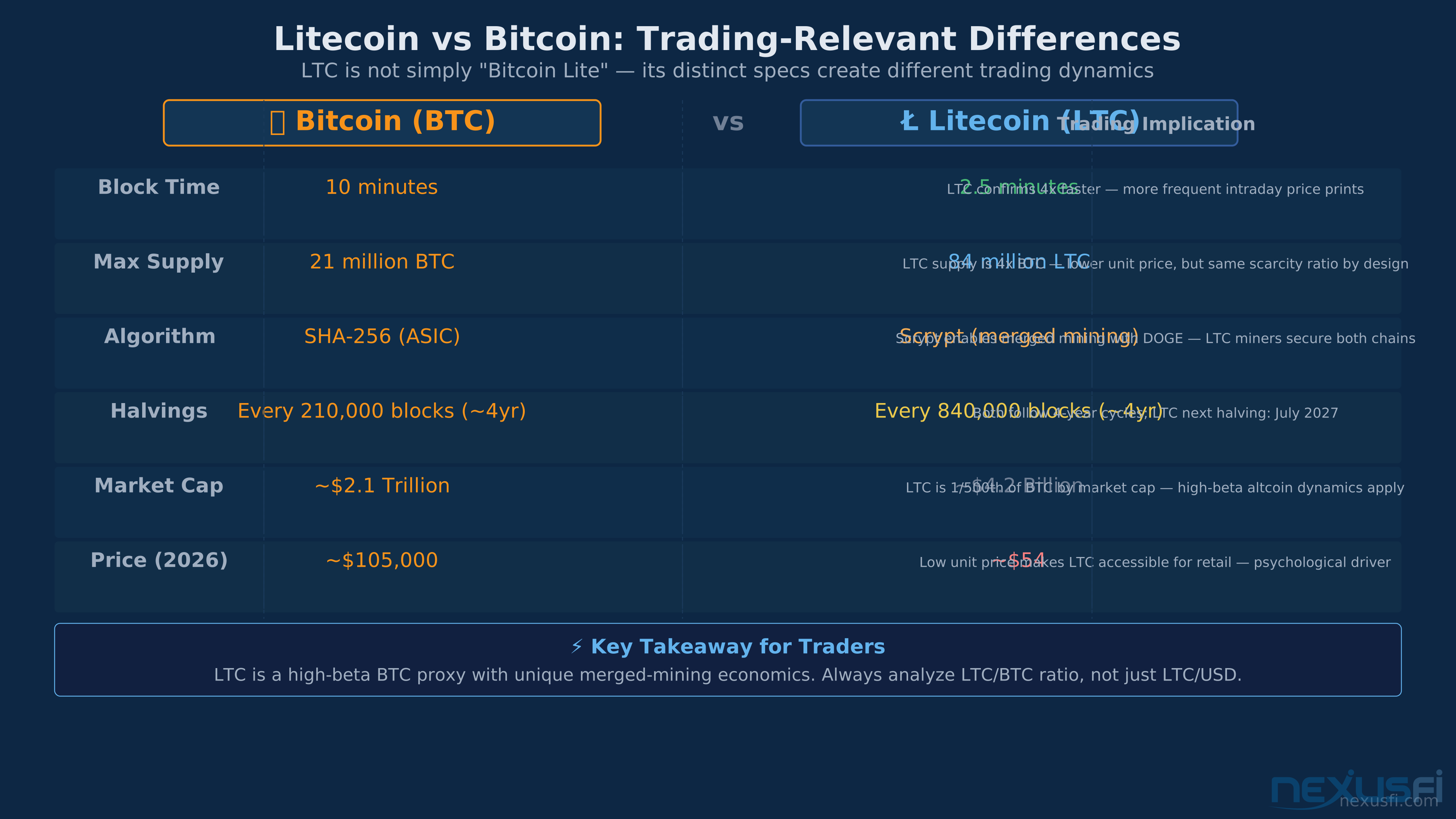
2.5-minute blocks (vs Bitcoin's 10 minutes): Four times as many blocks per day means four times as many on-chain data events. Transaction confirmation is faster for everyday payments. For traders, it means LTC's on-chain metrics update more frequently — an advantage for those who use on-chain analytics signals. The on-chain analysis toolkit reads differently on faster chains.
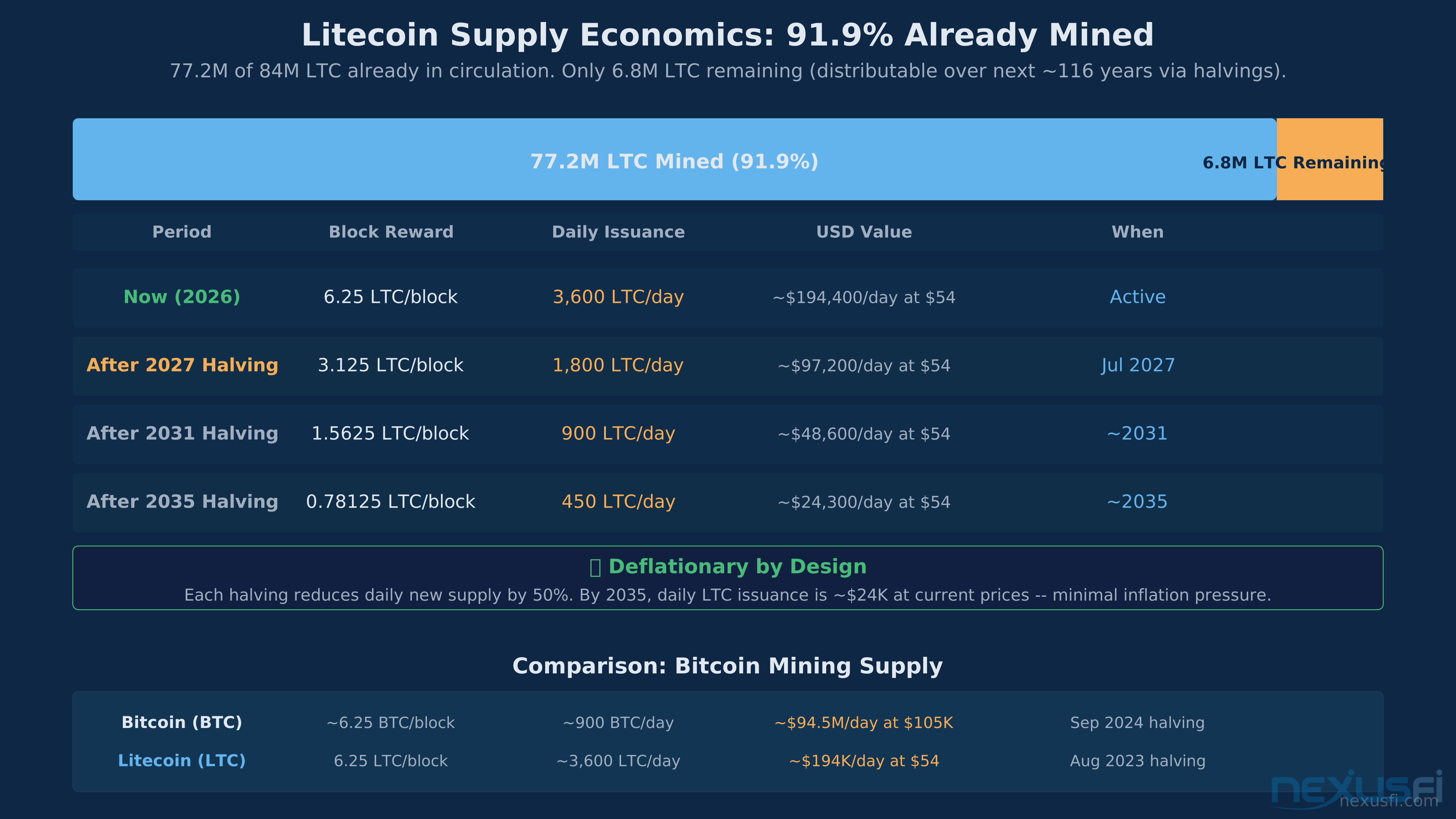
84 million maximum supply (vs Bitcoin's 21 million): The same 4:1 ratio as the block time. Current circulating supply is approximately 77.2 million LTC out of 84 million maximum — roughly 91.9% of the total supply has already been mined. This high emission completion reduces the future supply shock potential from new issuance. The remaining 6.8 million LTC will be distributed through block rewards over the next ~116 years.
Scrypt mining algorithm: Bitcoin uses SHA-256. Litecoin uses Scrypt, which is more memory-intensive and initially resisted the ASIC specialization that Bitcoin's algorithm attracted. The practical result today is a distinct miner base — Scrypt ASIC manufacturers are separate from SHA-256 manufacturers. Litecoin's mining economics can diverge from Bitcoin's when energy costs change asymmetrically between hardware types.
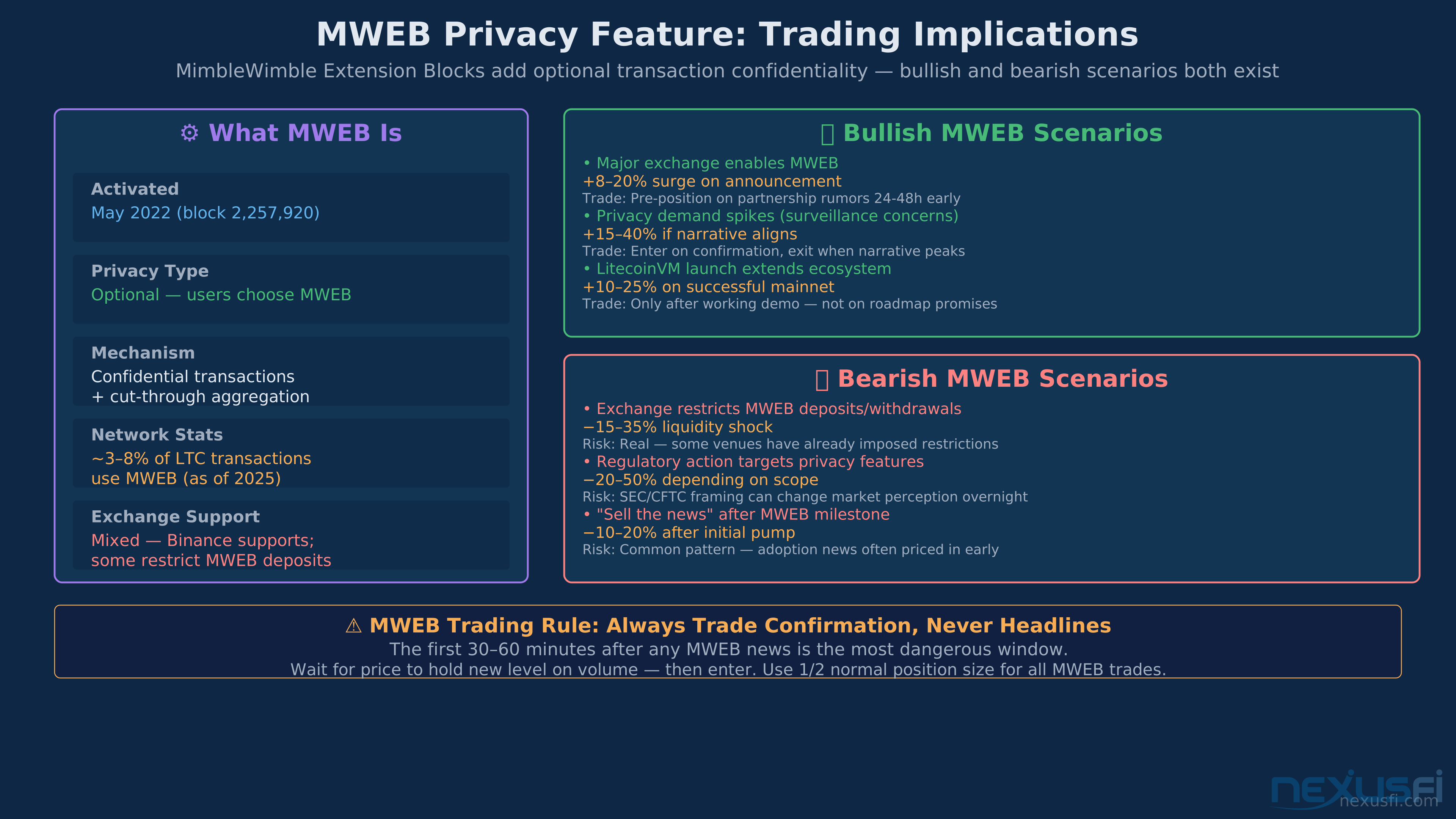
MWEB (MimbleWimble Extension Blocks): Activated in May 2022, MWEB adds optional privacy to LTC transactions through confidential transaction amounts and cut-through aggregation. Users must explicitly opt into MWEB — standard transactions remain visible on-chain. Roughly 3-8% of LTC transactions currently use MWEB. See the dedicated section below for trading implications.
NexusFi member @Fluid Fox tracked Bitcoin dominance dynamics in real-time during the 2021 cycle: "This is the Bitcoin dominance chart. When the alt-coins rally, it tanks, of course." (Becoming A Better Trader, Feb 2021) That same BTC dominance dynamic applies to LTC positioning today — it's the primary macro signal for LTC's relative performance window.
LTC Halving Cycles: History and the 2027 Setup #
Litecoin halvings follow the same mechanical principle as Bitcoin: block rewards drop 50% at a predetermined block height every 840,000 blocks, roughly every four years. The reward reduction is built into the protocol — no human decision, no possibility of delay. That predictability is both the strength and the limitation of the halving narrative.
Complete Halving History
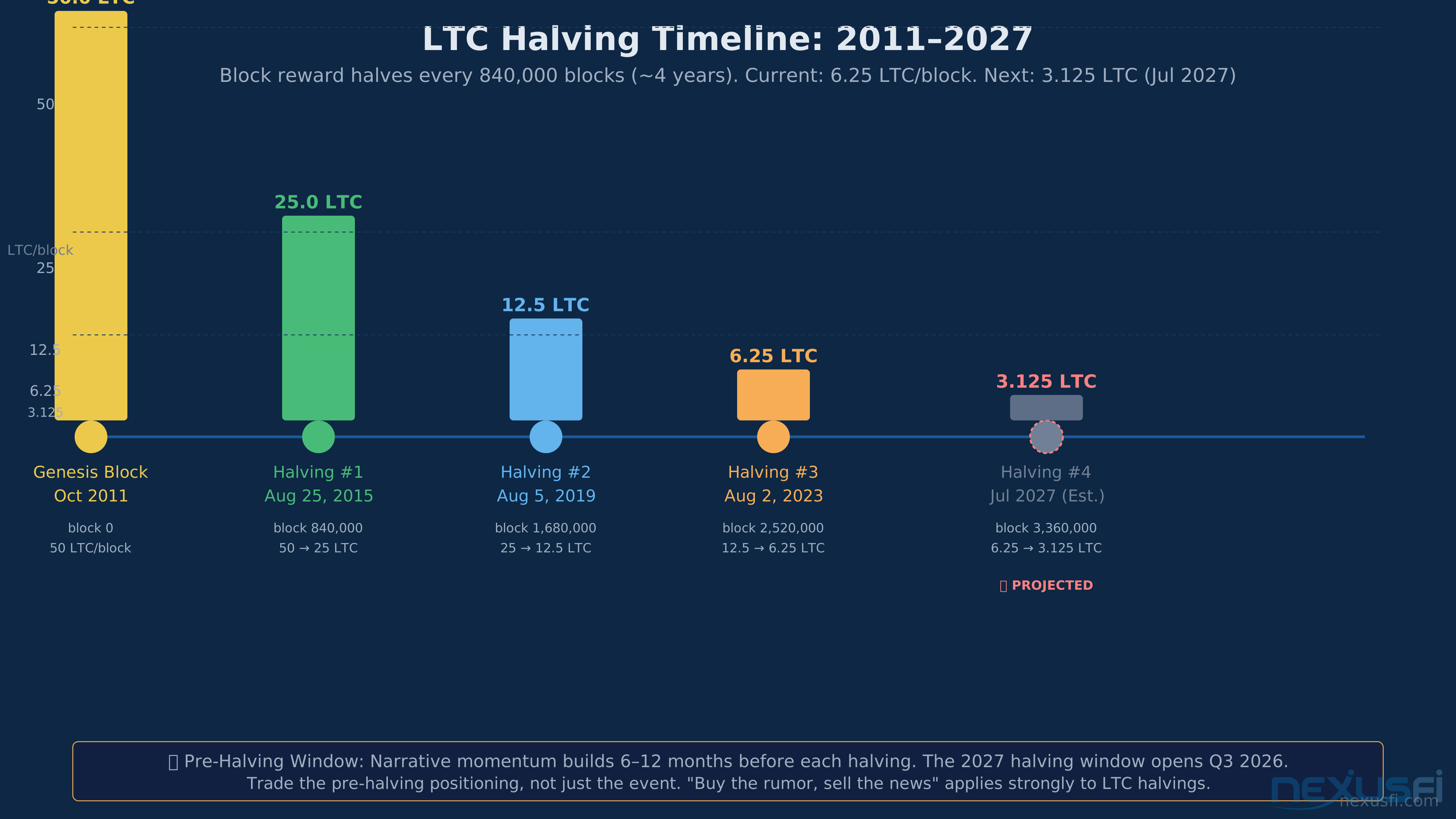
Genesis (October 2011): 50 LTC per block. Litecoin launched on block 0. The first 840,000 blocks took about four years to mine.
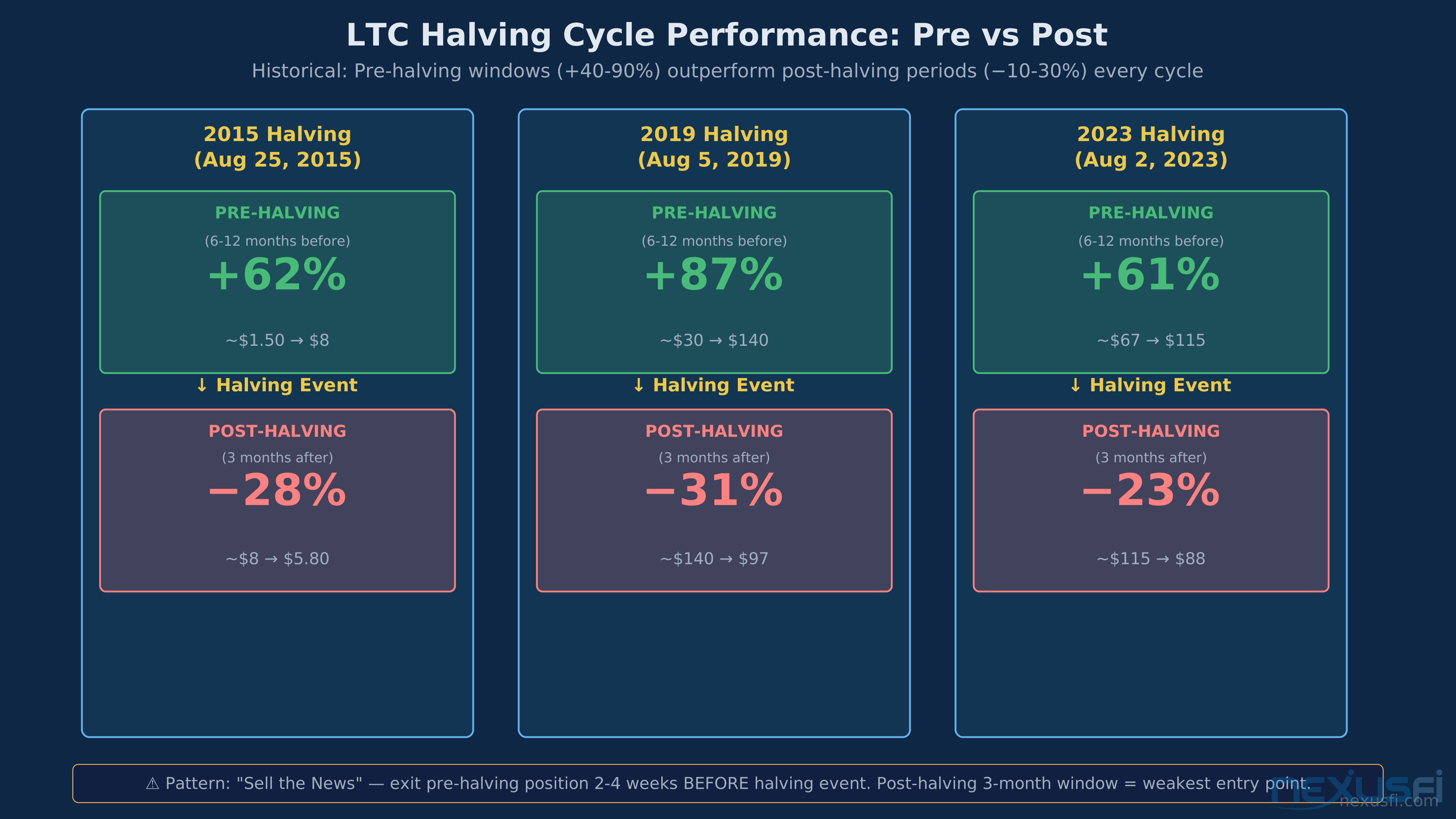
First Halving — August 25, 2015: Block 840,000. Reward dropped from 50 to 25 LTC. The event was notable for creating significant pre-halving speculation followed by a "sell the news" pattern that would repeat at subsequent halvings. LTC ran from approximately $1.50 to $8 in the months preceding, then corrected sharply after the halving confirmed.
Second Halving — August 5, 2019: Block 1,680,000. Reward dropped from 25 to 12.5 LTC. This halving occurred in a less favorable macro context — Bitcoin had already corrected sharply from its 2017 peak, and the broader crypto market was grinding through a prolonged bear. LTC ran from approximately $30 to $140 in the six months preceding the halving, then fell back below $50 within two months. Classic pre-halving speculation cycle.
Third Halving — August 2, 2023: Block 2,520,000. Reward dropped from 12.5 to 6.25 LTC. This halving coincided with broader crypto market recovery after the 2022 FTX collapse. LTC ran from approximately $70 to $114 in the months preceding, then corrected to $60-70 range afterward. The pre-halving window generated approximately 60% upside from trough to pre-halving peak.
The 2027 Halving: What to Watch
The fourth halving is projected for approximately July 27, 2027, at block 3,360,000. Block reward will drop from 6.25 to 3.125 LTC. With roughly 249,000 blocks remaining as of mid-2026, the pre-halving narrative window opens in earnest around Q3-Q4 2026 — approximately 6-12 months before the event.
As Fi observed in a NexusFi cryptocurrency thread analyzing the post-2024 Bitcoin halving environment: "Mining supply dropped to ~450 BTC/day after the 2024 halving — roughly 164,000 BTC annually. At current prices, that's roughly $17 billion in annual new supply the market must absorb vs demand." (Crypto Crossroads: Will BTC & ETH Crash or Rally?, Feb 2026) The same supply dynamics apply to LTC — after the 2027 halving, daily LTC supply issuance drops from approximately 3,600 to 1,800 LTC per day.
What the historical pattern suggests: Pre-halving speculation builds 6-12 months early. The optimal entry window based on three previous cycles has been 9-12 months before the halving event. The "sell the news" pattern has been consistent at all three previous halvings — the pre-halving peak tends to occur in the final weeks before the event, not after it. Post-halving, the 3-6 month period has historically been the weakest, before the reduced supply eventually tightens the market.
@Fluid Fox tracked this alt-season signal in real time: "It's possible that BTC rallying past that $55,000 level kicks off alt season." (Becoming A Better Trader, Mar 2021) The confirmed breakout above BTC resistance — not the anticipation — is what typically triggers capital rotation into LTC and other high-beta alts.
:::callout Halving cycles create predictable positioning windows, not guaranteed outcomes. The narrative matters more than the supply math in the short term — trade the speculation cycle, not just the issuance reduction. Post-halving months are typically the weakest performance window. :::
MWEB Privacy: What Traders Actually Need to Know #
MimbleWimble Extension Blocks (MWEB) launched on Litecoin in May 2022. The name sounds arcane, but the concept is straightforward: users who opt in get confidential transaction amounts, improved fungibility (making coins harder to trace by analytics firms), and more compact block data through transaction aggregation.
For traders, MWEB is a dual-edged trigger. It creates upside scenarios when adoption milestones hit and downside scenarios when exchanges restrict MWEB transactions for compliance reasons.
The Exchange Response Problem
Major exchanges have had divergent responses to MWEB. Binance supports MWEB deposits and withdrawals. Coinbase has been more cautious. Some smaller venues have imposed restrictions citing know-your-customer (KYC) compliance concerns about privacy-enhanced transactions. The pattern resembles what happened to privacy coins like Monero — regulatory pressure creates liquidity fragmentation across exchanges, which in turn creates pricing inefficiencies and volatility spikes when new exchange decisions are announced.
The practical trading implication: when a major exchange adds MWEB support, LTC spikes 8-20% in the hours after the announcement. When a major exchange restricts MWEB, LTC drops 10-25% on the headline. These are event-driven moves, not trend continuation signals. Trade post-announcement confirmation, not anticipation.
MWEB Adoption Is Slow by Design
Approximately 3-8% of LTC transactions use MWEB. This is not a failure — it's by design. MWEB requires explicit opt-in from both sender and receiver, and not all wallets support it yet. The Litecoin Foundation has framed MWEB as a long-term fungibility improvement rather than a short-term adoption metric. For traders: don't expect MWEB usage to suddenly jump to 50% of transactions as a trigger — the adoption curve is slow and steady, not exponential.
LitecoinVM: The Layer-2 Wildcard
The Litecoin development team has been working on LitecoinVM, a layer-2 smart contract platform designed to be Ethereum-compatible. If successful, this would extend LTC beyond payments into DeFi and programmable applications. As of 2026, LitecoinVM is still in active development — it represents speculative upside, not a current trading trigger. Do not price LitecoinVM into positions until there's a functional mainnet with real usage data.
What Drives LTC Price: Ranked by Impact #
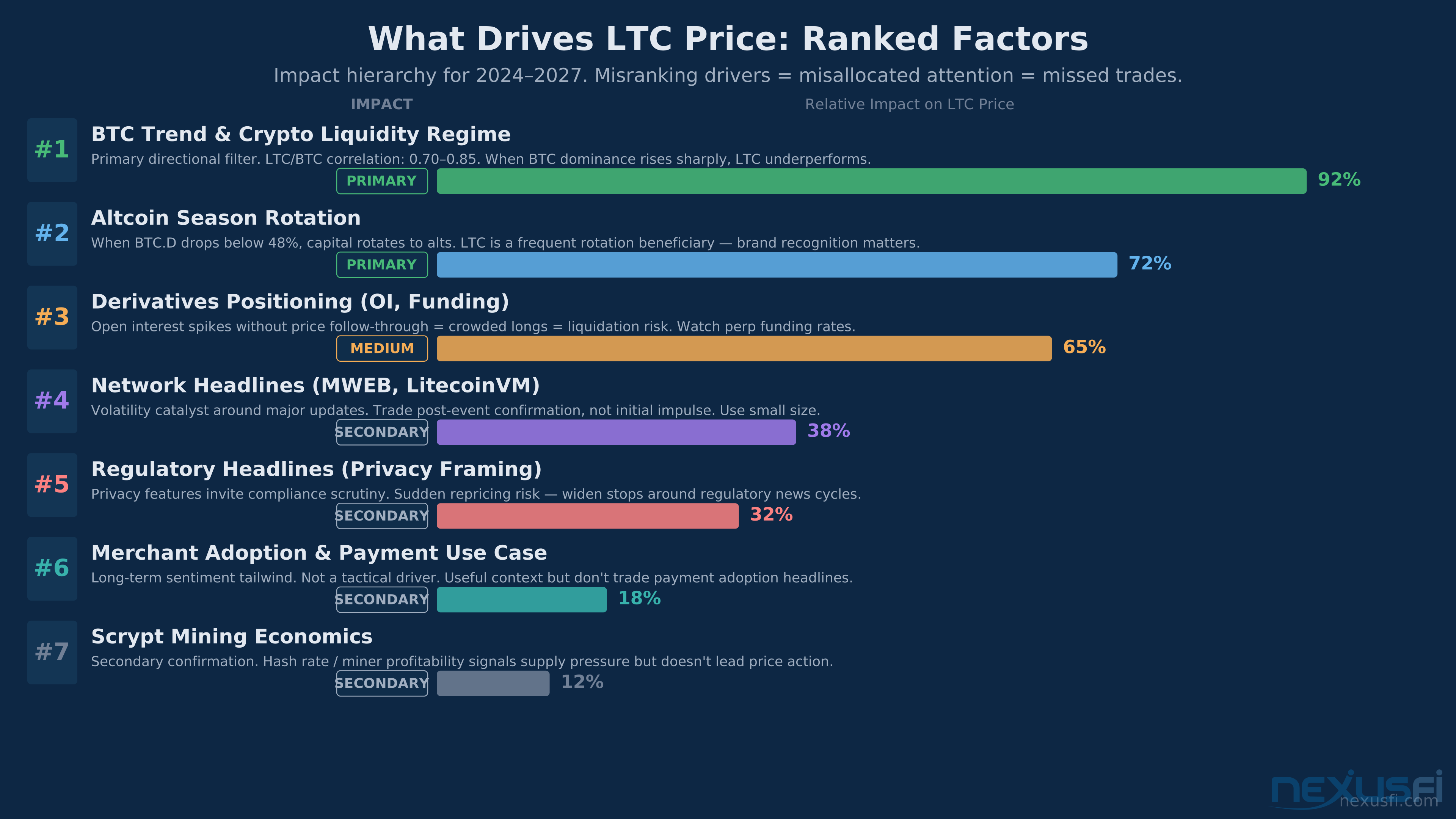
Most Litecoin analysis focuses on the wrong things. Here are the actual price drivers, ranked by their observed impact on LTC's price action:
1. Bitcoin's Trend (Dominant)
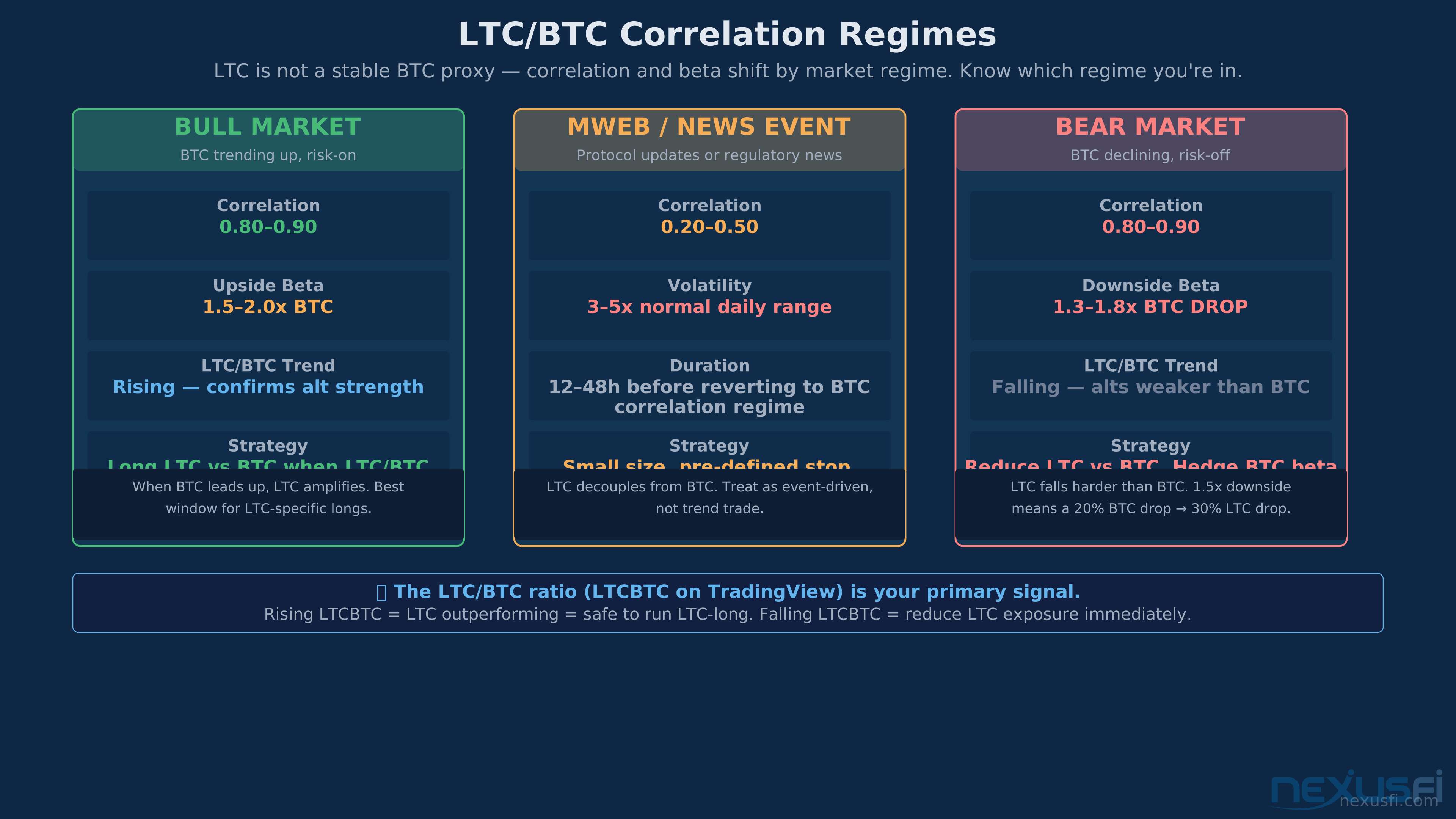
Nothing else comes close. LTC's correlation to BTC sits at 0.70-0.85 during most market phases. When BTC enters a bull cycle, LTC participates with amplified beta — typically 1.5-2x BTC's percentage moves. When BTC sells off, LTC sells off more. You can't have a bullish LTC thesis in a bearish BTC environment; the structural headwind is too strong.
The one exception is LTC-specific catalysts (halvings, MWEB news, major partnership announcements) which can temporarily decouple LTC from BTC for 24-48 hours. These decoupling events are real but short-lived.
2. Altcoin Season Dynamics
After BTC makes a major trending move, capital often rotates into altcoins. LTC consistently benefits from this rotation phase because of its brand recognition and liquidity. @Fluid Fox documented this pattern during the 2021 cycle: "Altcoin dominance is 60% (relative to BTC, which is 40% of the market)... Altcoins 'decouple' from BTC during alt season." (Becoming A Better Trader, May 2021)
The underlying rotation mechanics are consistent across cycles. @Fluid Fox noted the timing pattern: "these kind of rallies happen after BTC has made a significant parabolic move higher, but during a retracement. The theory is profits are taken at BTCs top and re-allocated to the smaller cap coins." (Becoming A Better Trader, Feb 2021) Watch for BTC to consolidate after a big move before initiating altcoin positions — the rotation typically lags BTC's peak by days or weeks.
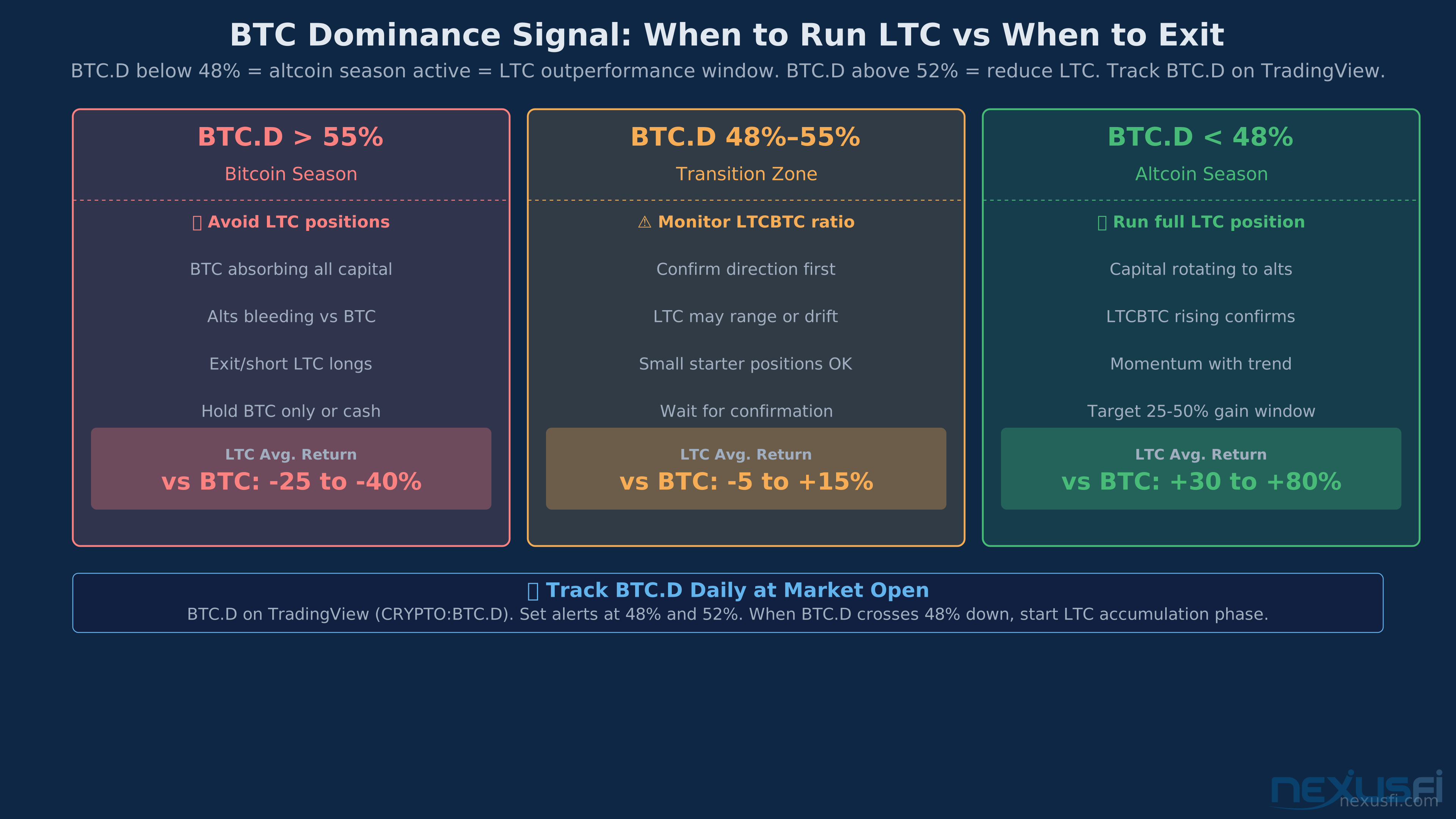
The practical signal: track BTC dominance (BTC.D on TradingView). When BTC.D drops below 48%, altcoin season is typically in effect and LTC becomes a high-probability rotation target. When BTC.D recovers above 50-52%, the altcoin window is closing — reduce LTC exposure so.
3. Derivatives Positioning and Open Interest
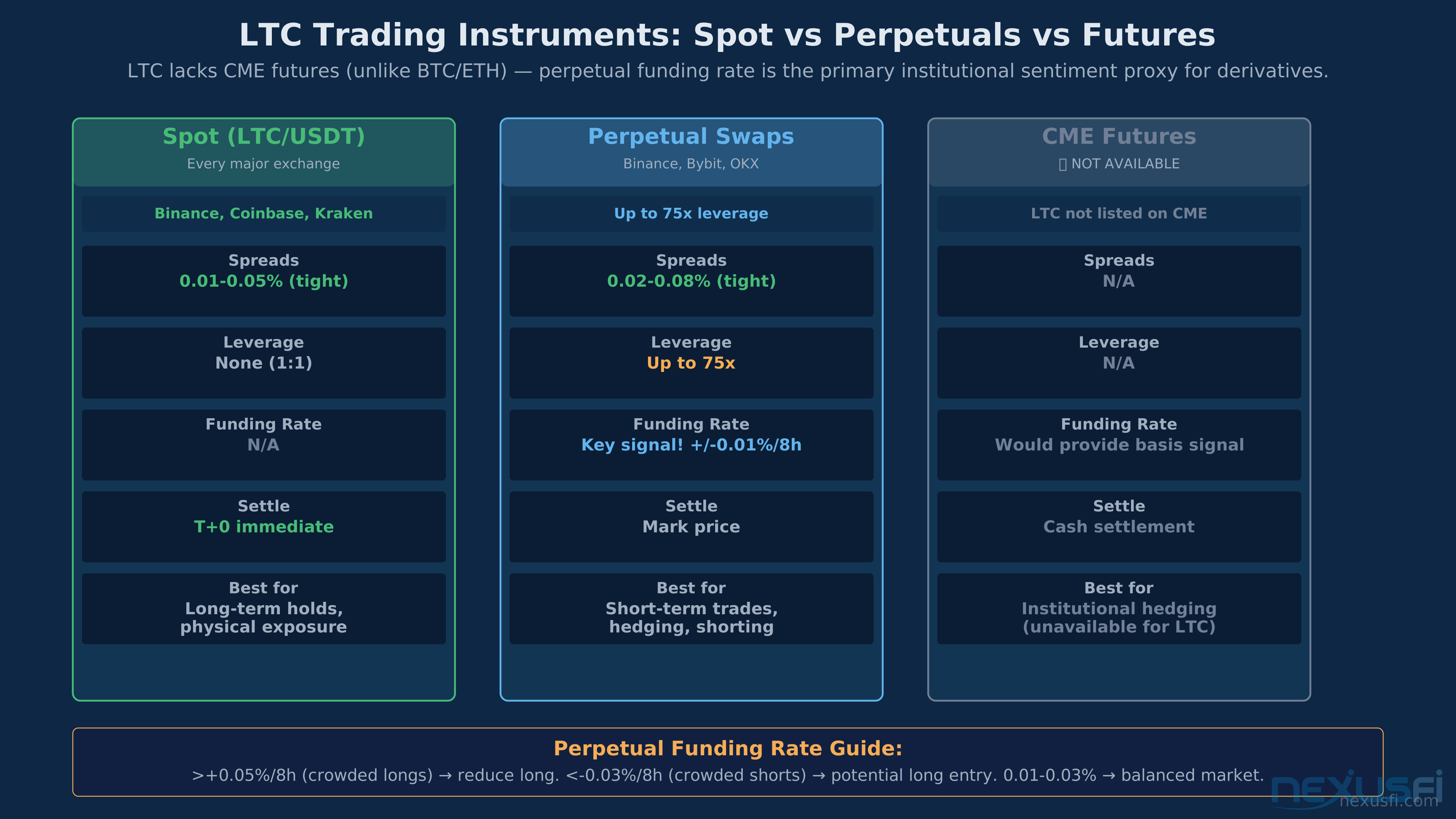
LTC perpetual swaps trade on Binance, Bybit, OKX, and Bitget. Monitoring open interest (OI) changes relative to price action provides a crowding signal. When OI spikes rapidly but price stalls or reverses, positioning is crowded — liquidation risk increases on both sides. When OI grows steadily alongside rising price, trend continuation is more likely.
Extended positive funding rates (above 0.05% per 8-hour period) signal overleveraged longs and precede corrections. This is not unique to LTC — it's a universal crypto derivatives pattern — but LTC's lower liquidity versus BTC and ETH means crowded positions get unwound more violently.
4. Halving Cycle Positioning
During the 6-12 months preceding a halving, the supply reduction narrative attracts systematic buyers. This creates a defined pre-halving accumulation phase distinct from normal BTC-correlated trading. The 2015, 2019, and 2023 halvings all produced 40-90% pre-halving runs from trough to pre-event peak. The 2027 halving positions as the next such window opening around Q3 2026.
5. MWEB and Network Development Headlines
Protocol milestones, exchange support additions, and regulatory headlines around MWEB are secondary drivers that create short-term volatility. The moves can be significant (±15-30%) but typically mean-revert within days unless BTC supports the new price level. Trade these as event-driven, not trend-following.
6. Merchant Adoption and Payment Use Case
Litecoin has genuine payment adoption — it's accepted by thousands of merchants globally, including through major payment processors. NOWPayments, BitPay, and CoinGate all support LTC. But merchant adoption is a slow-burn narrative that doesn't drive tactical price moves. It's useful long-term context, not a short-term trigger. Don't trade merchant adoption headlines expecting sustained moves.
How to Trade LTC: Markets, Instruments, and Execution #
Litecoin has deep liquidity and broad exchange support — one of the few altcoins where execution quality is rarely a concern for retail position sizes.
Spot Markets
LTC trades on every major exchange: Binance (LTC/USDT, LTC/BTC), Coinbase, Kraken, OKX, Bybit, Gemini, and dozens more. The LTC/USDT pair on Binance typically shows the deepest order book. Bid-ask spreads are tight — usually 0.01-0.05% on major pairs during normal market hours. This is tighter than almost all altcoins outside the top 10 by market cap.
For position sizing: LTC at ~$54 per coin means $10,000 positions require approximately 185 LTC. On Binance, orders of this size have minimal market impact. Beyond $500,000 equivalent, you'll want to ladder entries to avoid moving the order book.
Perpetual Futures
LTC perpetuals trade on Binance (up to 75x leverage), Bybit (up to 75x), OKX, and Bitget. These instruments allow short exposure without borrowing and are the most liquid LTC derivatives market. Key metrics to watch:
- Funding rate: Positive means longs pay shorts (bullish bias); above 0.05% per 8h signals crowding
- Open interest: Rising OI + rising price = healthy trend. Rising OI + flat/falling price = potential crowding
- Liquidation heatmap: Coinglass.com shows OI concentration by price level -- useful for identifying where stop cascades might occur
No CME Futures (As of 2026)
Unlike Bitcoin (CME micro and standard futures) and Ethereum (CME futures), Litecoin has no CME-listed futures products as of 2026. This has two implications: first, there's no institutional futures market creating a basis signal vs spot; second, institutional hedging demand doesn't flow through LTC the way it does BTC and ETH. LTC is at the core a retail-and-crypto-native-trader market, which increases sentiment sensitivity and reduces the smoothing effect of institutional participation.
If CME ever lists LTC futures, that would be a significant structural trigger — not just for the headline, but for sustained institutional participation that would compress volatility over time.
The LTC/BTC Pair
Trading LTC against Bitcoin (LTCBTC) rather than against USDT isolates LTC-specific performance from BTC's overall trend. When LTCBTC is rising, LTC is outperforming BTC — a signal that LTC-specific catalysts or altcoin rotation dynamics are at work. When LTCBTC is falling, LTC is losing ground to BTC regardless of whether LTC/USD is going up or down.
For relative value traders: the LTCBTC chart often signals altcoin season earlier than BTC dominance metrics. A breakout in LTCBTC while BTC/USD is consolidating is often a leading indicator of broader alt strength. Track it on TradingView alongside BTC.D.
LTC vs Bitcoin: The Relative Value Framework #
The most sophisticated LTC trading approach treats it as a relative value trade versus BTC rather than a directional bet in isolation. Here's the framework:
Entry conditions for LTC-long vs BTC-short hedge: BTC is stable or trending up + LTCBTC ratio is forming higher highs and higher lows + LTC futures open interest is rising with price + funding rate is below 0.05% per 8h. This configuration suggests LTC-specific accumulation is occurring without dangerous crowding.
Exit conditions: LTCBTC ratio breaks below recent support + LTC funding rate goes negative (longs capitulating) + BTC.D rises above 52% (altcoin season ending). Any one of these is a yellow flag; two or more is an exit signal.
Sizing the hedge: If you run LTC-long vs BTC-short, the hedge ratio should account for LTC's higher volatility. Using equal dollar amounts leaves you long more beta than you might intend. A 1:1.5 LTC-long/BTC-short ratio (e.g., $10,000 LTC long vs $15,000 BTC short) creates a roughly market-neutral position that profits specifically from LTC outperformance. Adjust based on your correlation assumptions.
Risk Factors: Where LTC Theses Break Down #
Litecoin has real risks that its longevity and brand can obscure. Here are the ones that have actually hurt traders:
The Narrative Problem: Neither Best at Anything
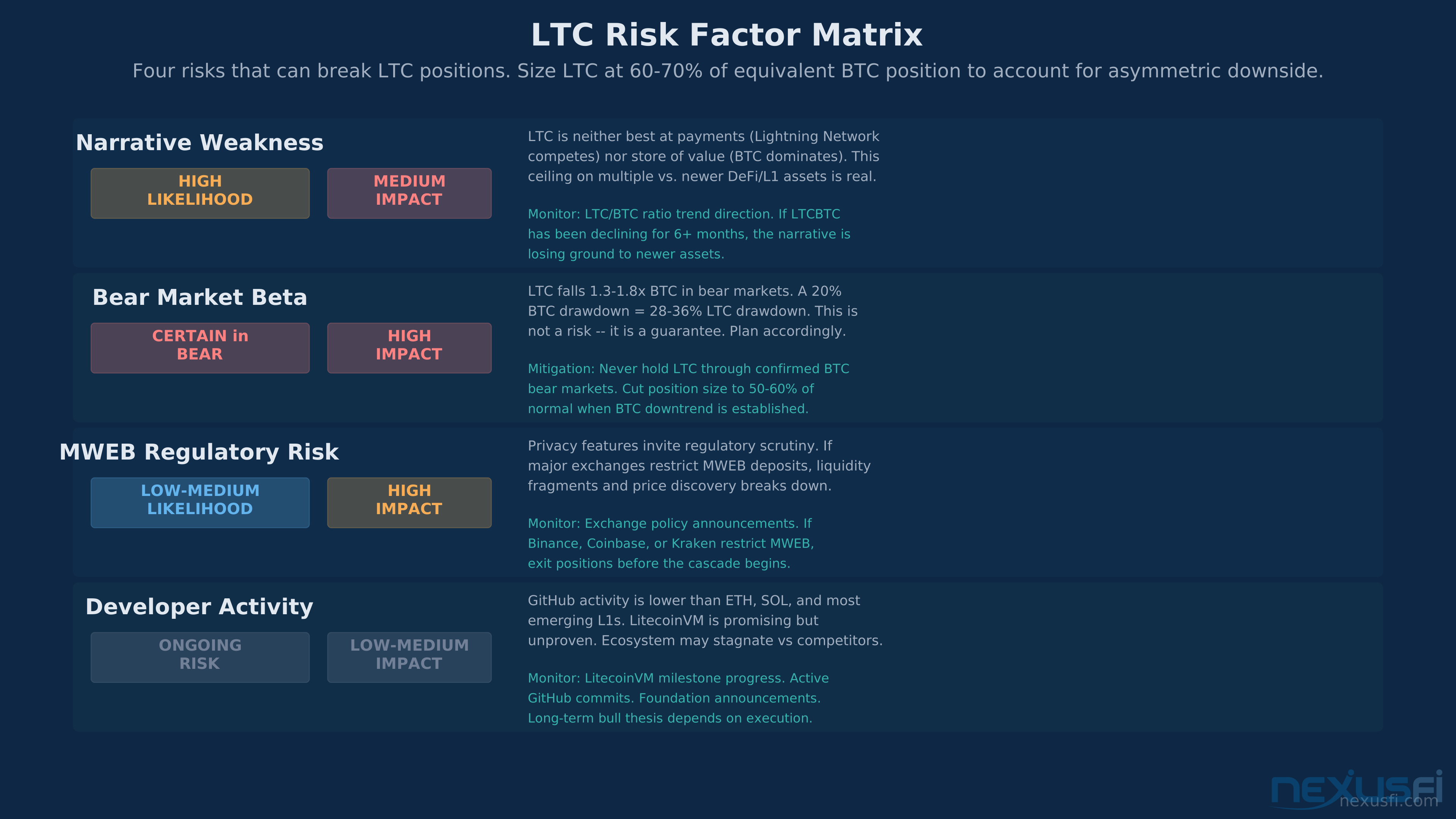
LTC's original thesis — faster payments than Bitcoin — has been challenged from multiple directions. Lightning Network improvements have made BTC faster for small payments. Dozens of new chains offer cheaper and faster transactions. LTC's MWEB privacy feature is less strong than Monero's by design (optional vs. mandatory). For smart contract use cases, Ethereum dominates. LTC is positioned as the original altcoin survivor, which is a real value — but it's not the best at any specific function. This narrative weakness is a ceiling on LTC's multiple relative to newer assets with stronger use case stories.
Declining Developer Activity
GitHub activity metrics consistently show Litecoin has lower developer activity than Ethereum, Solana, Cardano, and most of the emerging L1/L2 chains. The Litecoin Foundation team is active, but the broader developer ecosystem is small. LitecoinVM development is promising but unproven. For a long-term hold thesis, developer activity matters — it determines whether the chain stays technically competitive as the industry evolves.
Bear Market Downside Beta
In bear markets, LTC doesn't just track BTC lower — it amplifies BTC's downside with 1.3-1.8x beta. In the 2022 bear market, LTC fell from approximately $145 (November 2021 high) to approximately $48 by June 2022 — a 67% decline while BTC fell roughly 55% from its ATH. This asymmetric downside means holding LTC through a BTC-led bear market produces larger losses than the equivalent BTC position.
LTC's bear market downside is systematically worse than BTC's. A 20% BTC decline typically translates to 28-36% LTC decline. Size LTC positions conservatively and apply wider stops than you would for equivalent BTC positions. Never hold LTC through a confirmed BTC bear market without a specific trigger thesis.
Privacy Regulation Risk
MWEB has placed LTC on the radar of financial regulators increasingly concerned about privacy-enhancing cryptocurrency features. If major exchanges are forced to delist or restrict LTC due to MWEB regulatory pressure — similar to what happened to Monero on centralized exchanges — the liquidity fragmentation could cause sustained price underperformance versus the broader market. This tail risk is currently low-probability but high-impact if it materializes.
Supply Concentration
Like most proof-of-work cryptocurrencies, LTC has supply concentration in early wallets. The top 100 LTC addresses hold approximately 35-40% of the total supply. While this is less concentrated than DOGE, large holder movements can still cause significant price impact. Monitor on-chain exchange inflows for early warning of large holder selling — sudden spikes in LTC moving to exchange wallets precede sell pressure within 24-72 hours.
Three LTC Trading Setups That Work #
Setup 1: Pre-Halving Accumulation Window
Logic: The 6-12 months before each LTC halving have historically produced the best risk-adjusted returns as the supply reduction narrative builds.
Entry timing: 9-12 months before the expected halving date. For the 2027 halving (projected July 2027), this window opens approximately Q3-Q4 2026.
Entry conditions: BTC not in active downtrend + LTC down 30%+ from prior local high (post-halving selling complete) + LTCBTC at or near multi-month lows
Target: 40-80% above entry (based on historical pre-halving runs), or 4-6 weeks before the halving date — whichever comes first.
Stop: 15-20% below entry; widen to 25% if BTC is showing volatility
Notes: This is a multi-month hold, not a swing trade. It requires conviction to sit through noise. The pattern has occurred at all three previous halvings but is not guaranteed — macro conditions can overwhelm halving narratives.
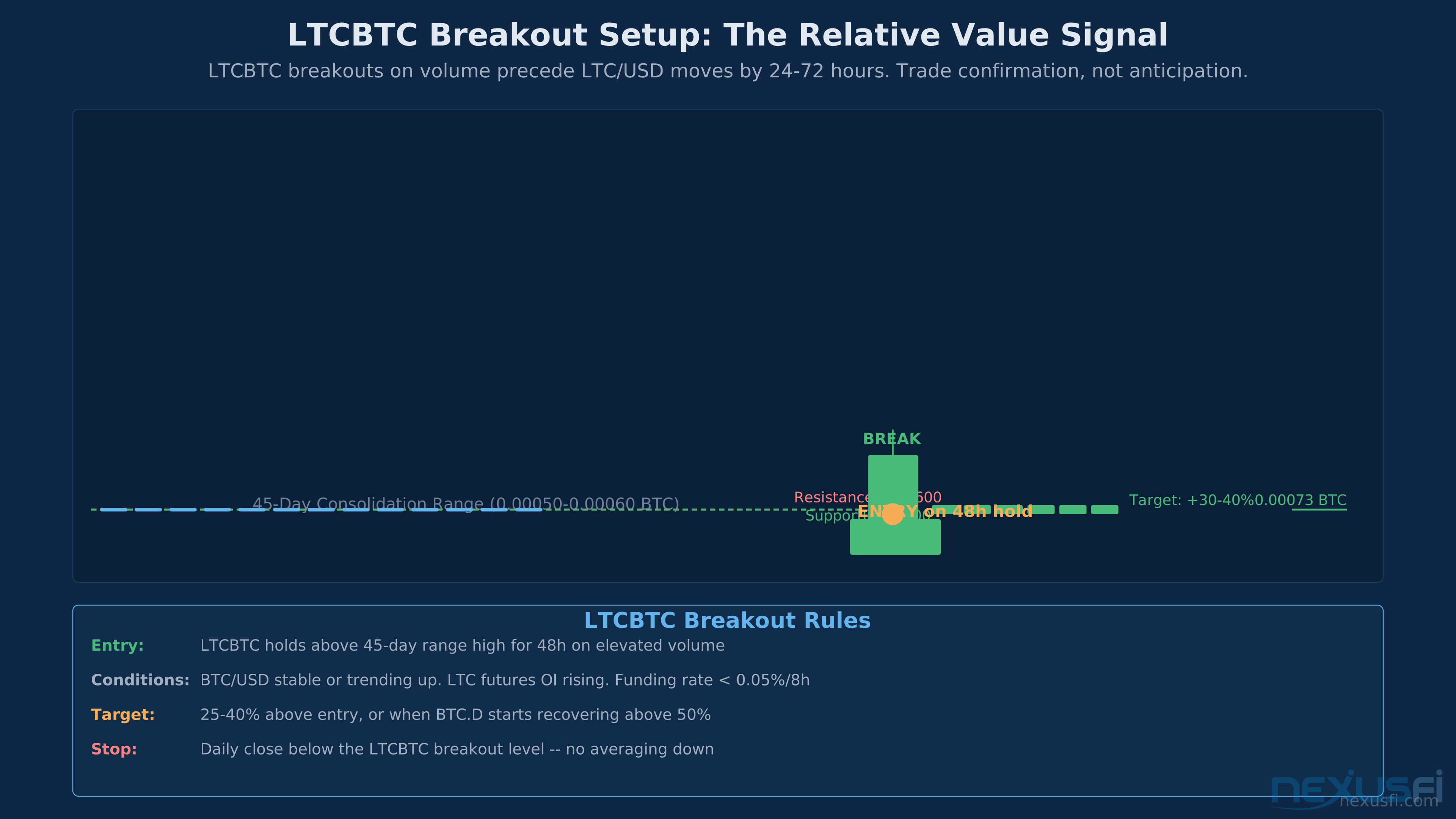
Setup 2: LTCBTC Breakout Signal
Logic: When LTC begins outperforming BTC on a sustained basis, it signals LTC-specific accumulation or broader altcoin rotation beginning. The LTCBTC ratio tends to lead absolute LTC/USD moves by 24-72 hours.
Entry conditions: LTCBTC breaks above 45-day range high on volume + BTC/USD is stable or trending + LTC futures OI rising without extreme funding rates
Confirmation: Hold for 48 hours post-breakout. If LTCBTC holds the breakout level with volume, enter.
Target: 25-40% gains from entry, timed to LTCBTC reversal signal or BTC.D recovery above 50%
Stop: Break below the LTCBTC breakout level on daily close
Notes: This setup works best during altcoin season but generates false signals in bearish BTC environments. Filter it with BTC.D below 50% for higher probability.
Setup 3: Post-Correction Recovery Entry
Logic: LTC's brand and liquidity create reliable demand after major corrections. Unlike newer altcoins that can stay depressed indefinitely, LTC tends to recover because institutional and retail exposure to "top 20 cryptos by market cap" strategies consistently includes it.
Entry conditions: LTC has fallen 40%+ from local high + BTC is stabilizing or recovering + LTCBTC bottoming (making higher lows on daily chart)
@Fluid Fox captured the correct mindset for this entry during a crypto selloff: "I'm willing to take a lot of heat to be part of the next alt-coin rally.. provided it happens, of course." (Becoming A Better Trader, Feb 2021) That psychological friction — buying aggressively into a bloodbath — makes this setup distinct from trend-following entries. The discomfort is the signal.
Confirmation: Two consecutive weekly closes above the 40-week moving average on LTC/USD
Target: 50-65% Fibonacci retracement of the decline — typically a 30-50% recovery from the bottom entry
Stop: Break below the correction low on volume
Notes: Don't rush this entry. Bottom-picking in crypto is the most common cause of unnecessary losses. Wait for the weekly pattern to confirm before committing capital. This is a medium-term trade (6-16 weeks).
The Bottom Line on Trading LTC #
Litecoin is the original altcoin — the first major fork of Bitcoin, the first to implement merged mining, the first to add MWEB privacy to a proof-of-work chain. That pioneering track record doesn't create trading edge by itself, but it creates the credibility floor that keeps LTC in major exchange listings, institutional "digital assets baskets," and retail attention cycles.
The historical repetition of these patterns was documented in real time by @Fluid Fox during the 2021 cycle, who compared the setup directly to 2017: "Monstrous new wick in the alt-coin dominance chart. Could it really be happening?" (Becoming A Better Trader, Mar 2021) The same structural signals — altcoin dominance expansion, BTC consolidation after a major move — appear at every meaningful alt rotation. LTC's brand recognition means it's consistently among the first beneficiaries.
The framework that works for LTC:
- BTC is the primary filter. No LTC bull thesis survives a BTC bear market. Check the macro first, every time.
- LTCBTC ratio is your tactical signal. Rising LTCBTC = LTC outperformance = favorable for LTC-specific positions. Falling LTCBTC = exit or hedge LTC exposure.
- Halvings create windows, not guarantees. Trade the 6-12 month pre-halving accumulation phase. Exit well before the actual halving event -- "sell the news" is reliable LTC pattern.
- MWEB is an event trigger, not a fundamental value driver. Trade MWEB news with small size, post-event confirmation only, and hard exits.
- Bear market sizing. LTC falls harder than BTC in risk-off environments. Size LTC positions at 60-70% of what you'd risk on an equivalent BTC trade.
LTC's trading framework in three signals: (1) BTC.D below 48% = altcoin season, LTC activates. (2) LTCBTC breaking higher = LTC-specific strength, run the relative value trade. (3) 6-12 months before the 2027 halving = pre-halving window opens — the best risk/adjusted LTC entry of the next four years. Outside these windows, LTC is just high-beta BTC with extra volatility.
The most common mistake is treating LTC's age and brand as a fundamental value anchor. They're not — they're reputation and liquidity assets, which have real value but don't prevent 50-70% corrections in bear markets. Trade LTC as the high-beta, halving-cycle-driven, altcoin-season-sensitive instrument it actually is, and the opportunities become clear. Trade it as a fundamental long-term hold without a specific thesis, and the drawdowns are brutal.
Knowledge Map
Go Deeper
Build on this knowledgeReferences This Article
Articles that build on this topicCitations
- — Becoming A Better Trader (2021) 👍 7“Alt-coin rallies happen after BTC has made a substantial parabolic move higher, but during a retracement. The theory is profits are taken at BTC's top and re-allocated to the smaller cap coins.”
- — Becoming A Better Trader (2021) 👍 9“I'm willing to take a lot of heat to be part of the next alt-coin rally.. provided it happens, of course. I bought some more alt-coins this morning and will continue buying them as long as the market is deeply red.”
- — Becoming A Better Trader (2021) 👍 4“This is the Bitcoin dominance chart. When the alt-coins rally, it tanks, of course. Going by the BTC dominance chart, it's easy to notice that currently there is less volatility in BTC's dominance.”
- — Becoming A Better Trader (2021) 👍 5“Monstrous new wick in the alt-coin dominance chart: Could it really be happening? BTC could be at the start or middle of this rally, and alt-season might be further away than I think.”
- — Becoming A Better Trader (2021) 👍 7“It's possible that BTC rallying past that $55,000 level kicks off alt season. Alt season is taking longer than I thought it would to arrive. But just look at these charts -- Very bullish IMO.”
- — Becoming A Better Trader (2021) 👍 3“Altcoin dominance is 60% (relative to BTC, which is 40% of the market) and climbing. Altcoins decouple from BTC during alt season. Alts are primed for an explosive move higher.”
- — Crypto Crossroads: Will BTC & ETH Crash 50% or Rally 50% First? (2026)“Mining supply dropped to ~450 BTC/day after the 2024 halving -- roughly 164,000 BTC annually. BlackRock's IBIT alone has absorbed more than that in the past year.”
- CoinPaper — Coinpaper.com
- LitecoinHalving.com — Litecoinhalving.com
- Coinglass — Coinglass.com