



Privacy Coins: What Traders Actually Need to Know About XMR, ZEC, and Anonymous Crypto
Overview #
Privacy coins are a category of cryptocurrency designed to hide transaction details that would otherwise be visible on a transparent public blockchain. Where Bitcoin lets anyone trace every payment from wallet to wallet, privacy coins cryptographically obscure the sender, the recipient, the amount, or some combination of all three.
For futures and derivatives traders, that distinction matters less as a philosophical position and more as a market structure problem. The same regulatory pressure that gives privacy coins their cultural cachet is also what makes them harder to trade, harder to collateralize, and prone to sudden liquidity shocks when enforcement agencies act. Understanding how these assets work — and why regulators treat them differently — is the foundation for trading them intelligently.
This guide covers the protocols you can actually trade or hedge, the regulatory and market realities that shape their price and liquidity, and the operational workflows that separate traders who manage privacy-coin exposure well from those who get caught flat-footed by a delisting announcement. It does not cover the underlying cryptographic math, generic privacy-tech stacks, or AML theory beyond its direct impact on trading.
What "Privacy" Actually Means #
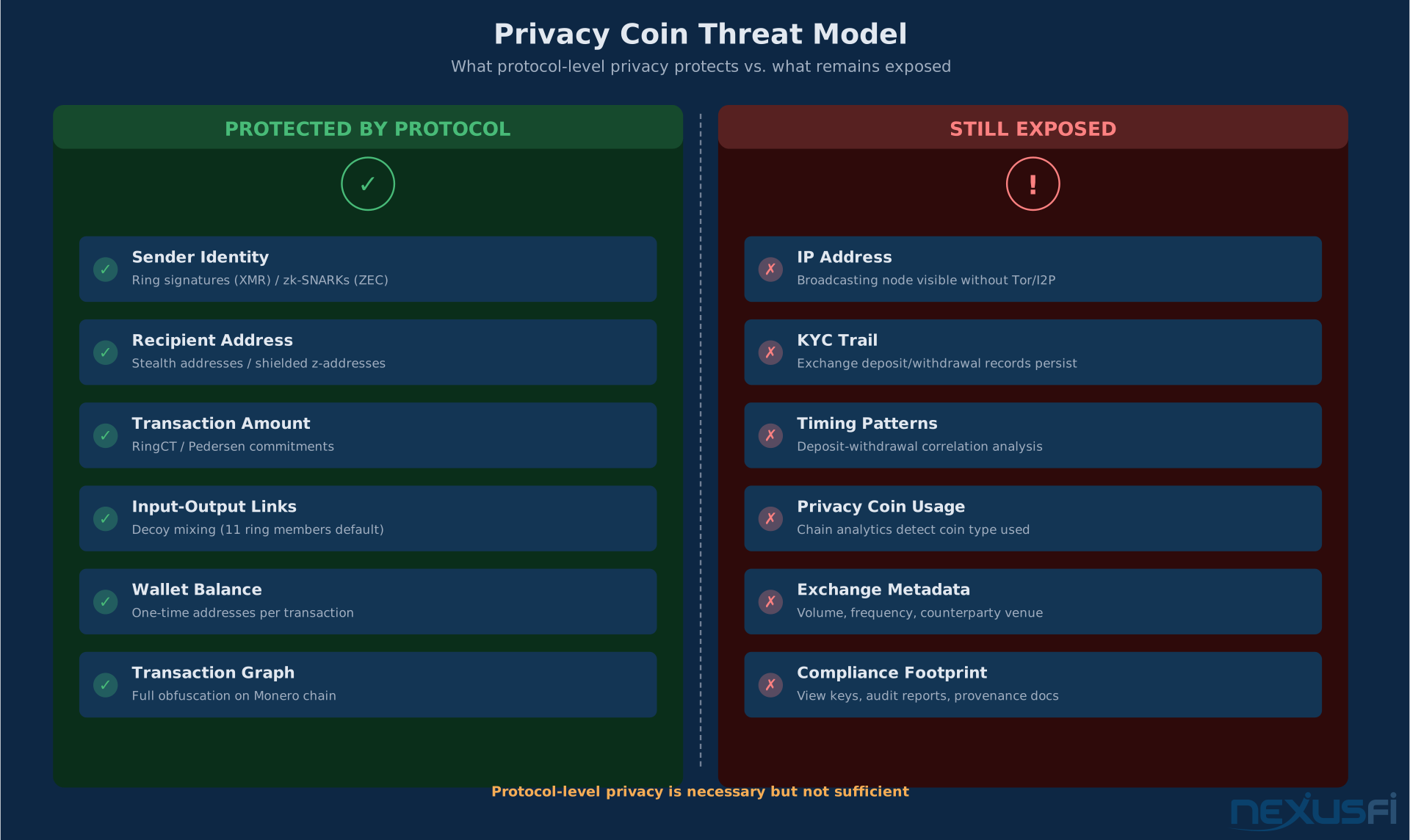
The word "privacy" in crypto gets used loosely. Let's be precise about what protocol-level privacy does and doesn't protect.
What privacy coins can hide: Sender-to-receiver links, transaction amounts in transit, wallet balances, and the connection between inputs and outputs.
What privacy coins cannot hide: Your IP address when broadcasting a transaction, the KYC trail you created when you deposited to an exchange, timing patterns that can correlate your on-chain activity with your off-chain trading, and the fact that you're using a privacy coin at all.
That last one matters. Chain analytics firms like Chainalysis and Elliptic can't read the transaction contents on Monero, but they know you withdrew Monero from an exchange. If you later deposit to another exchange — even if the on-chain path is opaque — the timing, amount, and origin create a linkage that smart analysts can exploit.
This is the operational reality that traders frequently miss: protocol-level privacy is necessary but not sufficient. The "privacy" you get from Monero or shielded Zcash is only as good as your endpoint hygiene. The exchange you withdrew from, the wallet software you used, the IP you broadcast from — all of these remain exposed. An on-chain cryptographic proof of privacy doesn't help you if your broker already has your KYC and your withdrawal timestamp.
The practical framing: think of privacy coins as reducing your on-chain linkability, not eliminating your compliance footprint. For derivatives traders, the compliance footprint is usually what exchanges care about most.
Pseudonymity vs. True Anonymity #
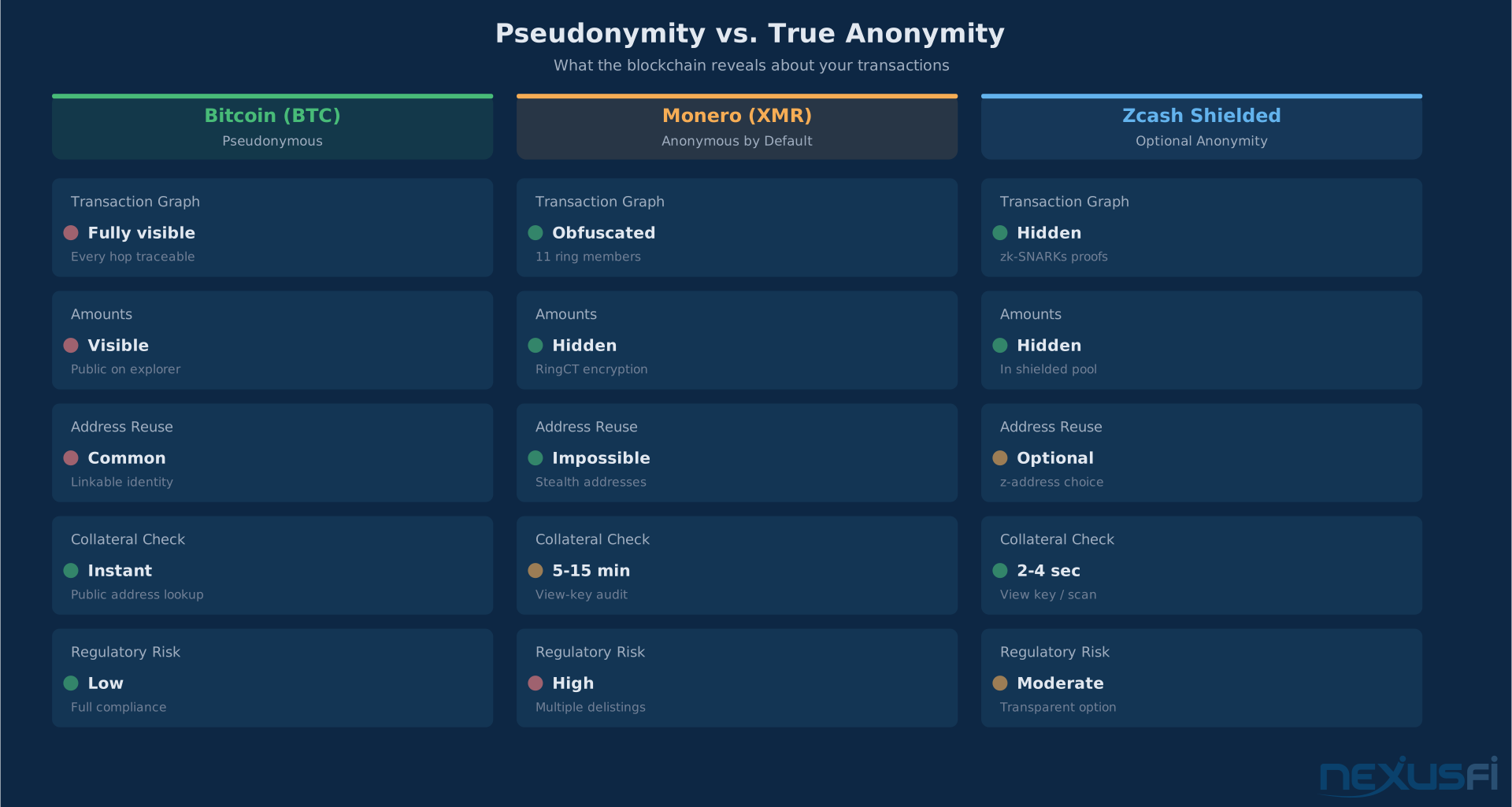
Bitcoin is pseudonymous, not anonymous. Every transaction is publicly visible, addresses are permanent identifiers, and connecting an address to an identity is a matter of finding the right KYC record or exchange deposit. Chainalysis has been doing this commercially since 2014. The transparency is absolute — the only question is whether the analyst has the connecting information.
Privacy coins aim for something at the core different: on-chain unlinkability. The goal isn't to hide who you are (KYC handles that at the exchange layer regardless), but to make the blockchain ledger itself cryptographically useless for tracing transaction flows.
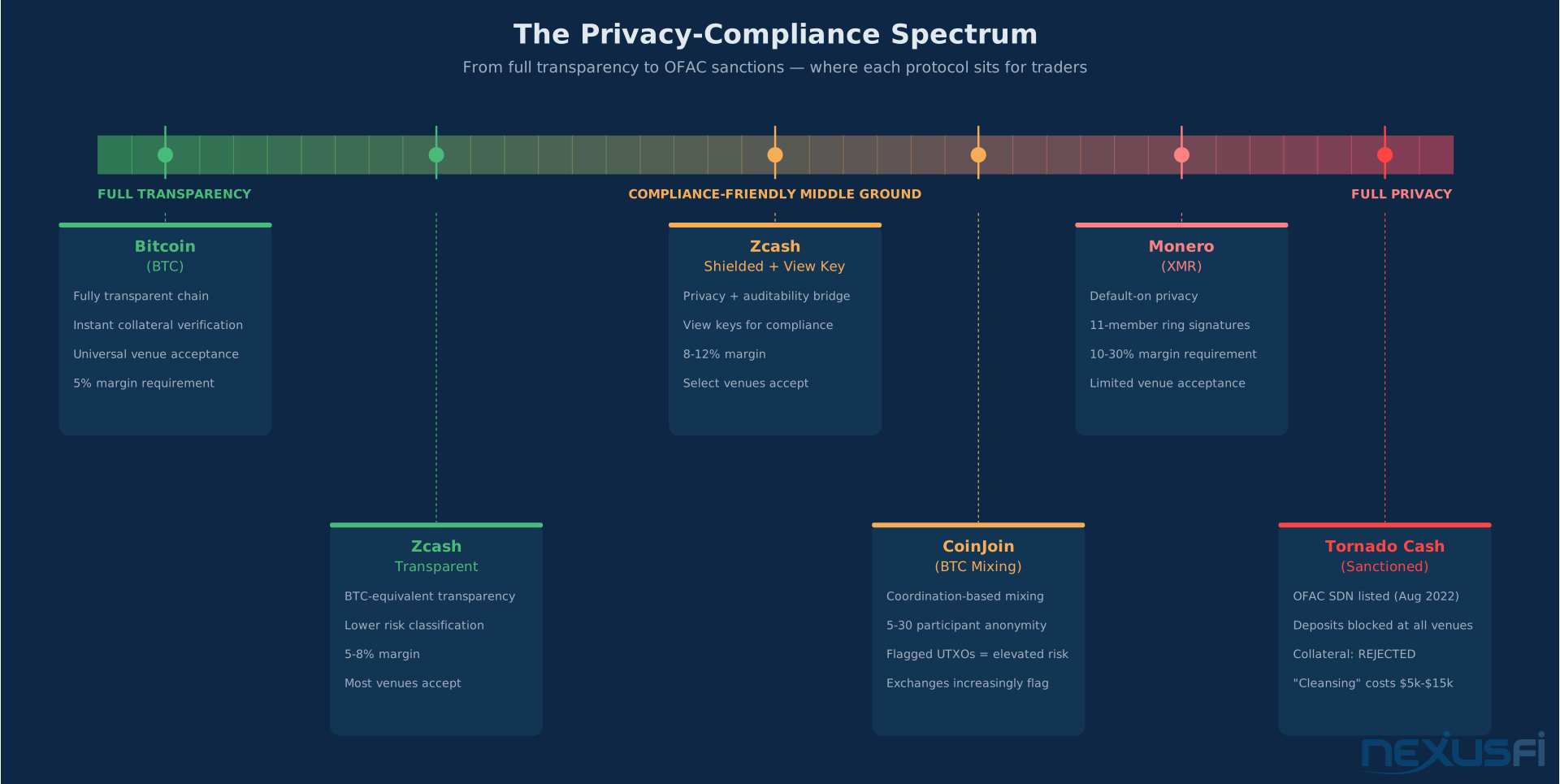
| Feature | Bitcoin | Monero (XMR) | Zcash (ZEC) — Shielded |
|---|---|---|---|
| Transaction graph | Fully visible | Obfuscated via ring signatures | Hidden via zk-SNARKs |
| Amounts | Visible | Hidden via RingCT | Hidden in shielded pool |
| Address reuse | Optional | One-time stealth addresses | Optional (z-addresses) |
| Collateral verification | Instant public address check | Requires view-key audit (5-15 min) | Scan via view key or Chainalysis (2-4 sec) |
| Regulatory risk score | Low | High | Moderate (transparent pools treated differently) |
The critical difference for futures traders: Bitcoin margin is instantly verifiable via a public address. Monero margin requires an audit process before exchanges will accept it as collateral — that latency introduces funding gap risk that doesn't exist with BTC.
Protocol Overview #
Monero (XMR): The Default-Privacy Approach #
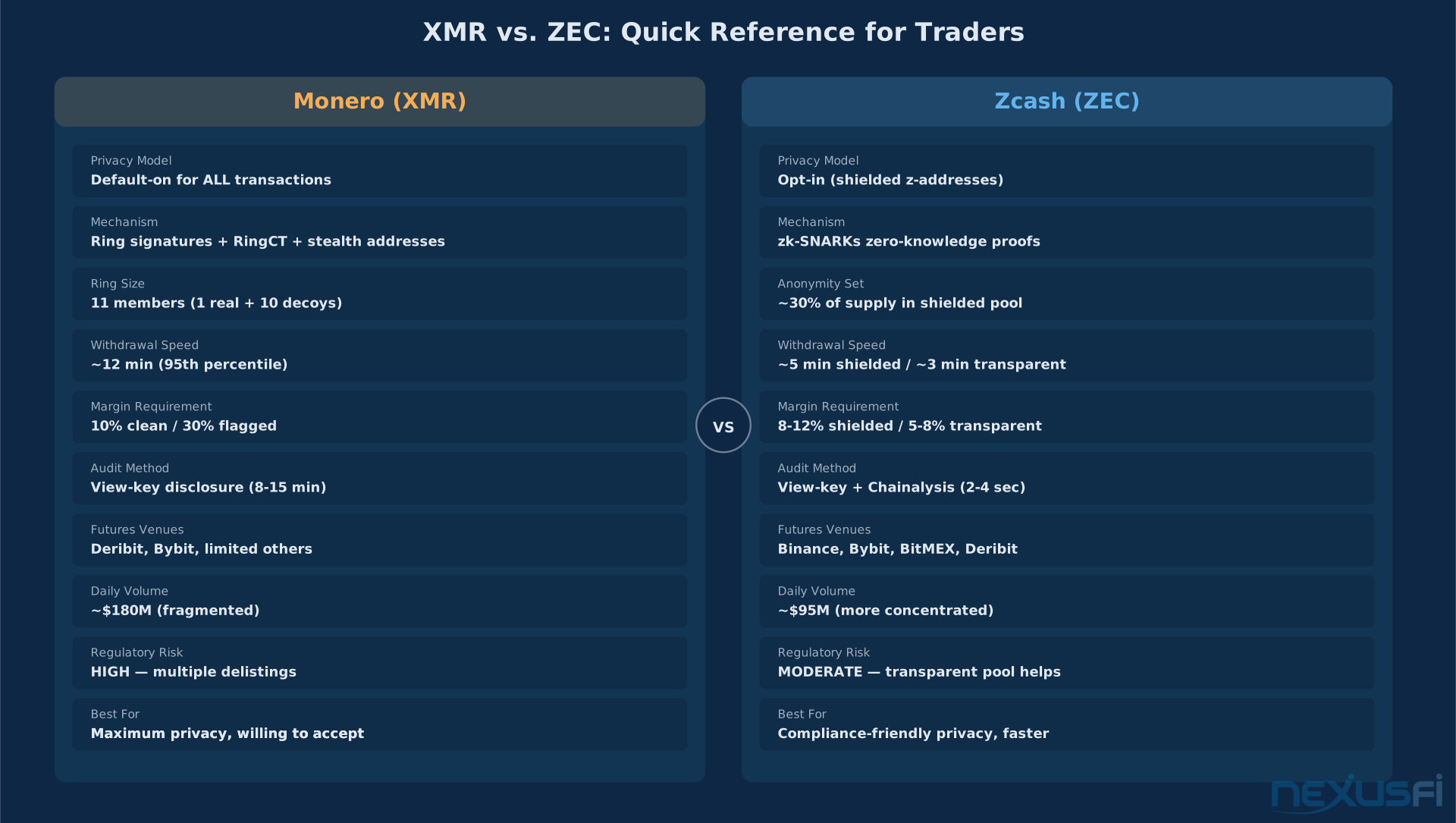
Monero is the benchmark for protocol-level privacy. Every transaction on Monero uses three core mechanisms: ring signatures, stealth addresses, and RingCT.
Ring signatures are the mechanism most traders hear about. When you spend XMR, your transaction includes a set of decoys drawn from other unspent outputs on the network. The default ring size is 11 — one real input mixed with 10 decoys. An observer can't determine which input is real, so tracing the source is probabilistically difficult, not mathematically impossible. Higher ring sizes are possible and increase privacy but raise transaction fees.
Stealth addresses mean recipients generate a one-time public key for each incoming payment. Your published Monero address isn't the address outputs are actually sent to — a cryptographic derivation creates a fresh address for every transaction. This prevents observers from linking multiple payments to the same recipient.
RingCT (Ring Confidential Transactions) hides the amounts. Transaction values are encrypted, and cryptographic proofs verify validity without revealing the actual numbers.
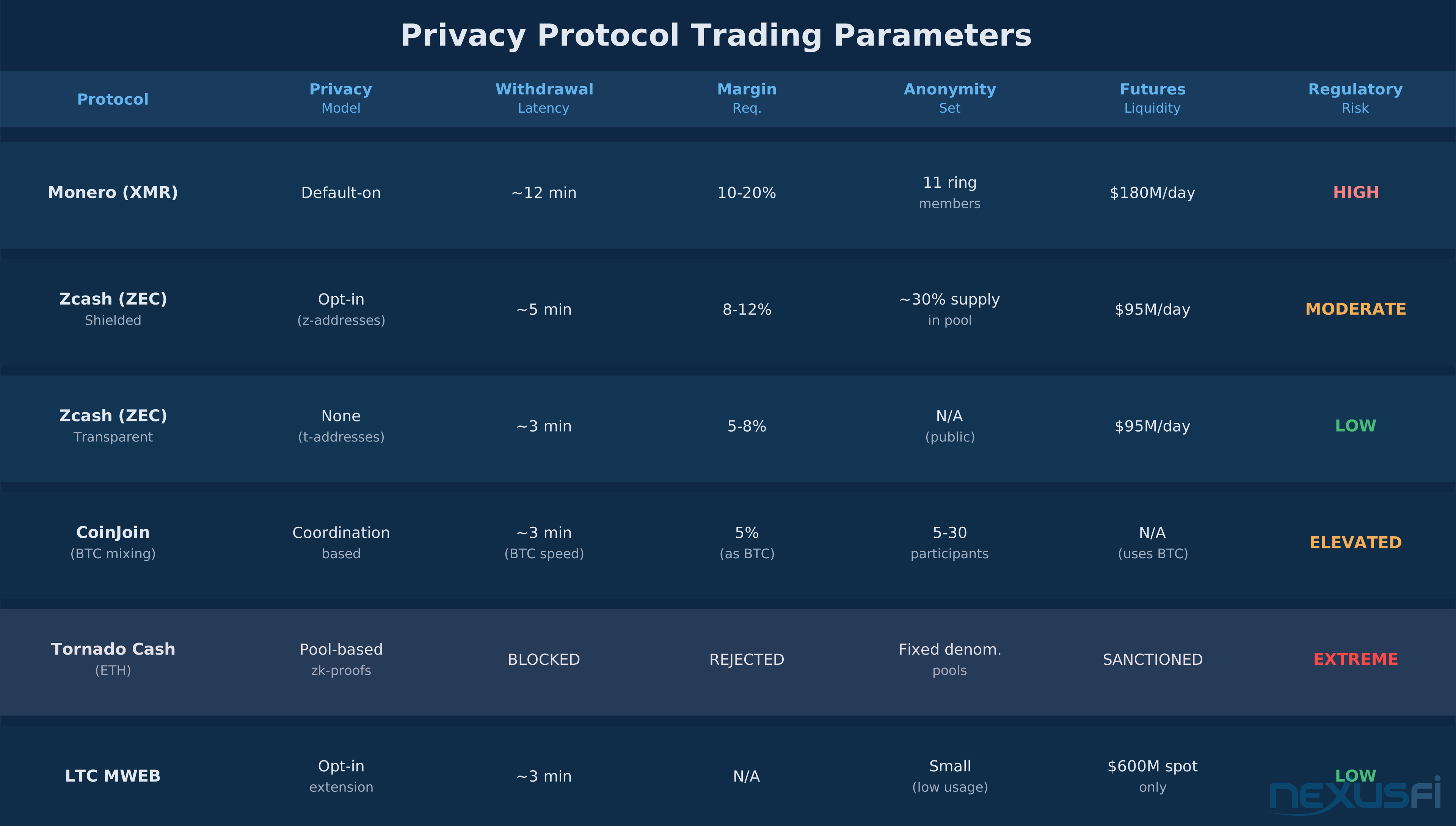
For traders: Monero confirmation times run about 2 minutes per block, and most exchanges require 10-20 confirmations for finality. Withdrawal latency from exchanges averages 12 minutes at the 95th percentile — versus 3 minutes for BTC. That's material if you need to fund margin quickly during a volatile session. Keep a reserve buffer of XMR on exchange equal to roughly 2x your average daily volume to avoid forced liquidation during funding gaps.
Zcash (ZEC): Optional Privacy with Compliance Tools #
Zcash takes a different approach. It supports two types of addresses: transparent (t-addresses, which work exactly like Bitcoin) and shielded (z-addresses, which use zk-SNARKs to cryptographically prove transaction validity without revealing contents).
The zk-SNARK proof is technically elegant — it allows the network to verify that a shielded transaction is valid (inputs equal outputs, no coins created from nothing) without knowing the amounts, the sender, or the receiver. The math is real and the privacy guarantee for shielded transactions is strong.
The problem: as of recent data, only about 30% of ZEC supply sits in shielded pools. If most of the market is using transparent addresses, the anonymity set — the pool of shielded transactions any given transaction is hiding within — is small. Small anonymity sets reduce privacy guarantees materially.
View keys are the compliance bridge Zcash built in. A view key allows a third party to verify incoming transactions to a shielded address without gaining spending authority. This lets institutions prove transaction history to auditors or exchanges without fully exposing the wallet. It's a meaningful compliance tool, but it means your privacy guarantee depends on who has your view key and how they protect it.
From a trading standpoint: Zcash's transparent pool is treated similarly to Bitcoin by exchanges (straightforward to verify, lower margin requirements). Shielded ZEC is more complicated — some venues accept it with additional verification steps, others treat it as higher risk. The Binance perpetual and Bybit ZEC-USDT markets are the primary liquid venues.
CoinJoin: Coordination-Based Mixing #
CoinJoin isn't a separate coin — it's a transaction construction technique where multiple users combine their inputs and outputs in a single transaction, making it harder to trace which input corresponds to which output. Implementations include JoinMarket and Wasabi Wallet for Bitcoin.
The limitations are real. Privacy quality depends on how many participants join each round (typical anonymity sets range from 5 to 30 participants), whether anyone in the round later uses transparent addresses, and how change outputs are handled. CoinJoin is weaker than Monero's ring signatures when adversaries can identify participants or observe timing.
For futures traders: CoinJoin doesn't have dedicated futures markets. Its main relevance is as a pre-collateralization cleaning mechanism for BTC. If you want to reduce the chain-analytics risk score on BTC before using it as futures margin, CoinJoin is one tool — but exchanges increasingly flag CoinJoin-mixed UTXOs as elevated risk, which can create the opposite problem.
Tornado Cash: Sanctioned Infrastructure #
Tornado Cash was an Ethereum-based privacy pool that allowed users to deposit ETH in fixed denominations (0.1, 1, 10, or 100 ETH) and withdraw to a fresh address using a zero-knowledge proof. The mixing was technically effective.
In August 2022, the US Treasury's OFAC added Tornado Cash to the Specially Designated Nationals (SDN) list. For US persons and entities, interacting with Tornado Cash contracts became prohibited. Major exchanges moved quickly — Binance, Kraken, and Coinbase blocked deposits from Tornado-associated addresses. The effect was immediate and severe: Tornado-mixed ETH became effectively unusable as futures collateral at regulated venues.
As of now, "cleansing" ETH that passed through Tornado Cash requires third-party audit services, and those can cost $5,000 to $15,000 depending on the volume and the service. The lesson isn't about Tornado Cash specifically — it's that sanction risk can make a privacy mechanism worthless as collateral overnight, with no warning and no recourse for existing positions.
If you hold ETH, ZEC, or XMR that has passed through any flagged mixer — Tornado Cash, certain CoinJoin batches, or similar — do not assume those coins are usable as futures margin at regulated venues. Run a Chainalysis Reactor or CipherTrace scan before depositing. Finding out mid-session that your collateral is rejected is a position-management catastrophe with no good resolution while markets are moving.
Mimblewimble / Litecoin MWEB #
Mimblewimble is a blockchain protocol design that achieves transaction confidentiality through Confidential Transactions and a "cut-through" property that removes spent outputs from the chain state. Litecoin added MWEB (Mimblewimble Extension Blocks) as an opt-in feature.
For traders: LTC-MWEB spot liquidity is around $600M, there are no futures contracts that accept MWEB coins directly, and most exchanges convert MWEB transactions to standard LTC after a "peel-off" process. The privacy properties don't transfer through that conversion. MWEB is worth understanding as a concept, but it's not a significant trading opportunity compared to XMR or ZEC.
Regulatory Environment #
The regulatory picture for privacy coins in 2026 is fragmented by jurisdiction and evolving fast. The common thread is that regulatory bodies are pushing for "traceability on request" — they want a compliance pathway that doesn't require exposing every transaction but allows authorities to trace when necessary. Privacy-by-default protocols like Monero make that demand technically difficult to satisfy.
United States: OFAC has demonstrated willingness to sanction mixer infrastructure directly (Tornado Cash, 2022). The CFTC is moving toward a unified digital asset framework through "Project Crypto," which signals that crypto regulation is coming from the commodity side as well as the securities side. For privacy coins specifically, the enforcement posture has been caution rather than explicit prohibition — but that caution manifests as delistings and collateral restrictions at regulated venues.
See the full thread at https://nexusfi.com/showthread.php?t=61326&p=909111#post909111
European Union: The Markets in Crypto-Assets (MiCA) regulation adopted in 2024 requires "traceability" for crypto assets used as collateral and mandates that assets be "transparent on request" for AML purposes. This creates structural friction for Monero and shielded Zcash, since their design explicitly resists traceability. EU-based derivatives venues like Deribit's EU operations and BitMEX EU have responded by requiring view-key disclosures or audit reports before accepting XMR or ZEC as margin. See the NFA's parallel streamlining of digital asset rules at https://nexusfi.com/showthread.php?t=61211&p=908291#post908291
Singapore (MAS): No explicit ban, but a risk-based KYC approach means institutions must perform enhanced due diligence on privacy-coin holders. Binance Singapore caps shielded ZEC at 20% of collateral exposure.
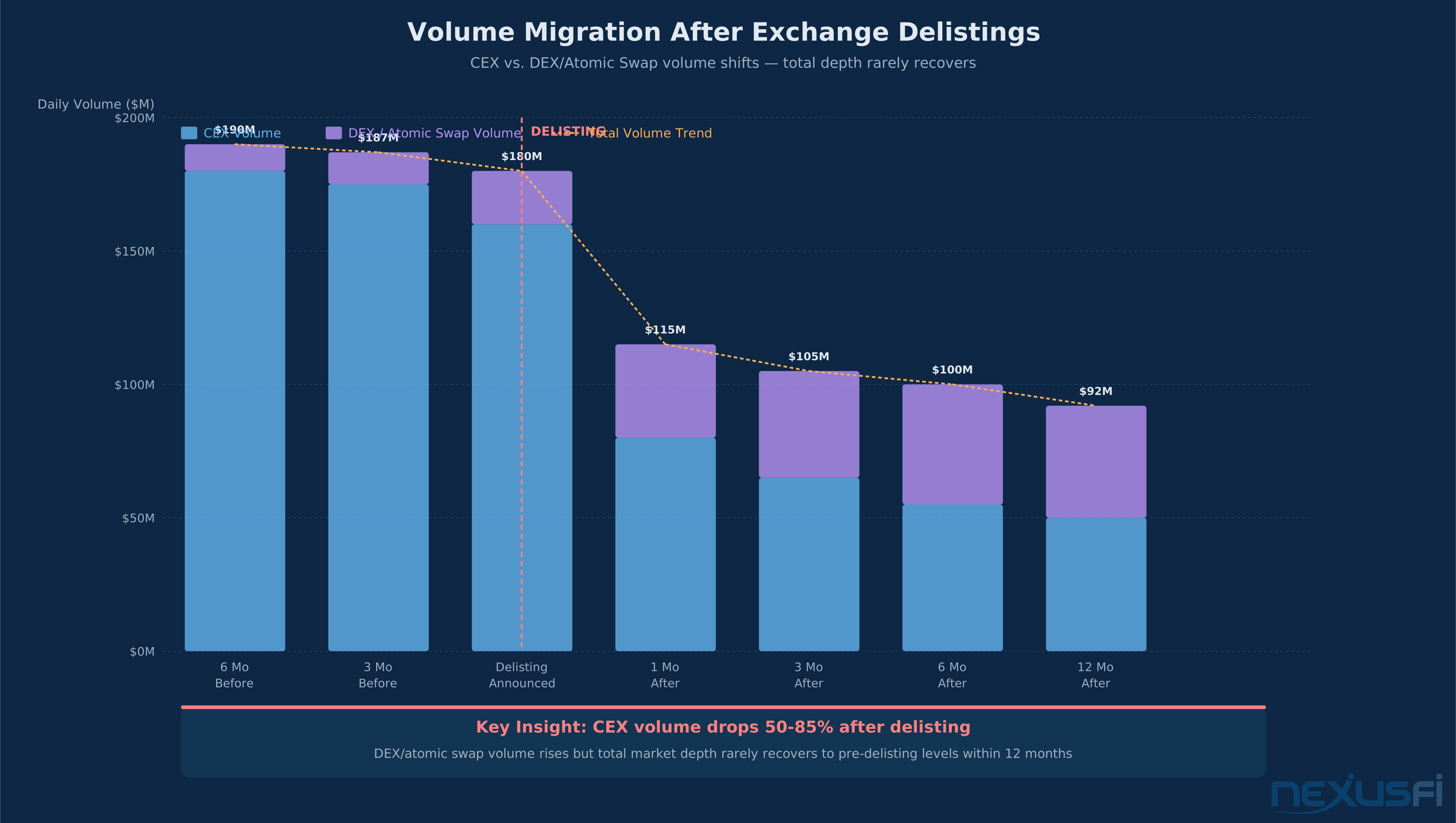
Enforcement pattern: Across jurisdictions, the consistent trend is exchange delistings triggered by regulatory pressure rather than direct prohibition. Binance removed XMR deposits in early 2024. Kraken delisted XMR in multiple markets. Each delisting reduces the number of compliant venues where the coin can be traded, fragments liquidity, and increases slippage for remaining participants.
Liquidity-Regulatory Nexus #
Regulatory actions and liquidity quality are directly coupled for privacy coins. This is the most important section for traders to internalize — it's where the abstract privacy debate becomes concrete P&L risk.
The feedback loop works like this:
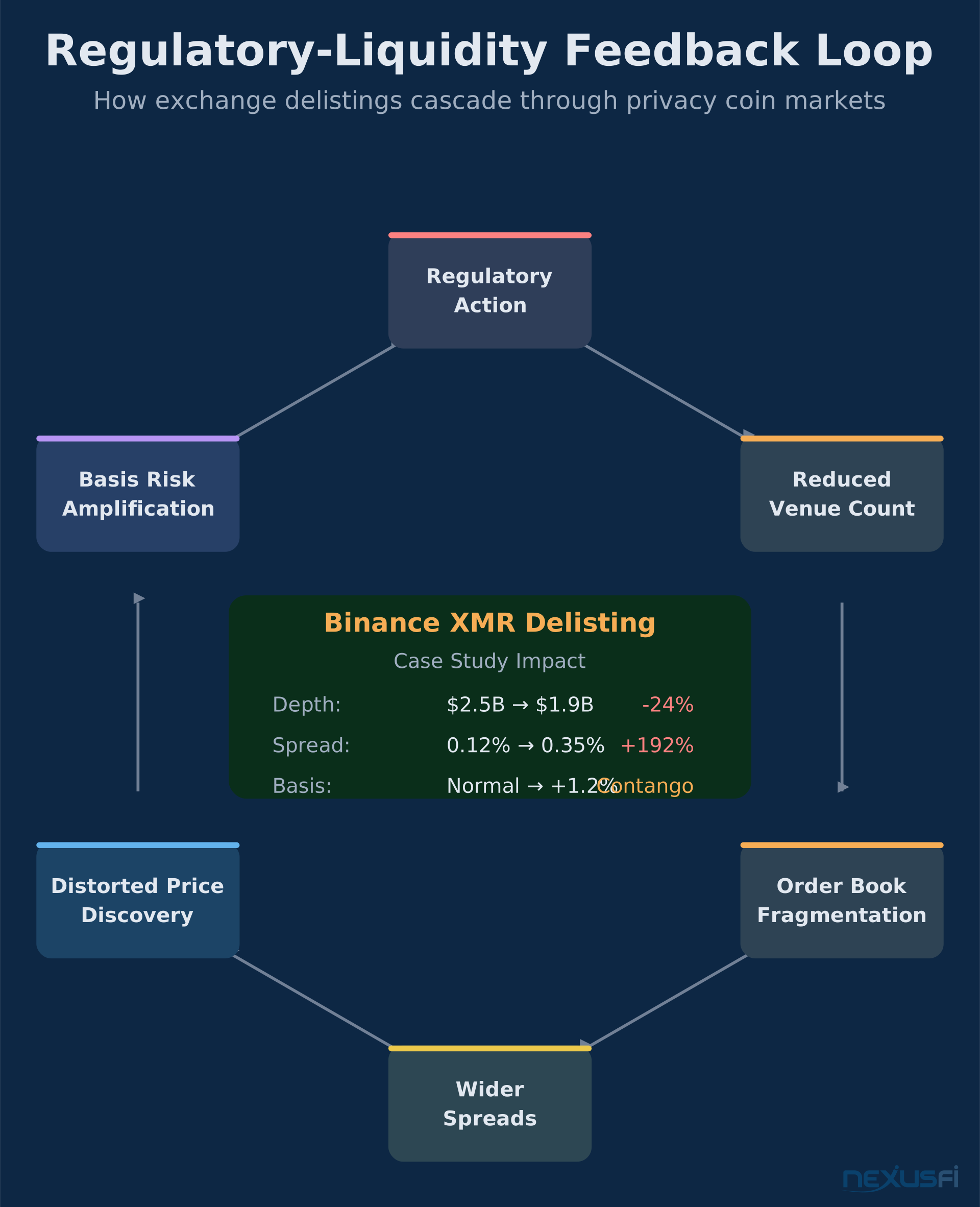
Regulatory action (delisting, sanctions, compliance requirement) → Reduced venue count → Order book fragmentation → Wider spreads → Distorted price discovery → Basis risk amplification between spot and derivatives.
The Binance XMR delisting provides a clean case study. Spot order book depth dropped from approximately $2.5 billion to $1.9 billion — a 24% loss — within weeks of the announcement. The XMR/USDT bid-ask spread widened from 0.12% to 0.35% in the same period. The futures-spot basis diverged by +1.2% (contango) as arbitrage became mechanically difficult — arbitrageurs couldn't deposit XMR to close the gap because the venue that ran the futures book wasn't accepting deposits from the delisted pool.
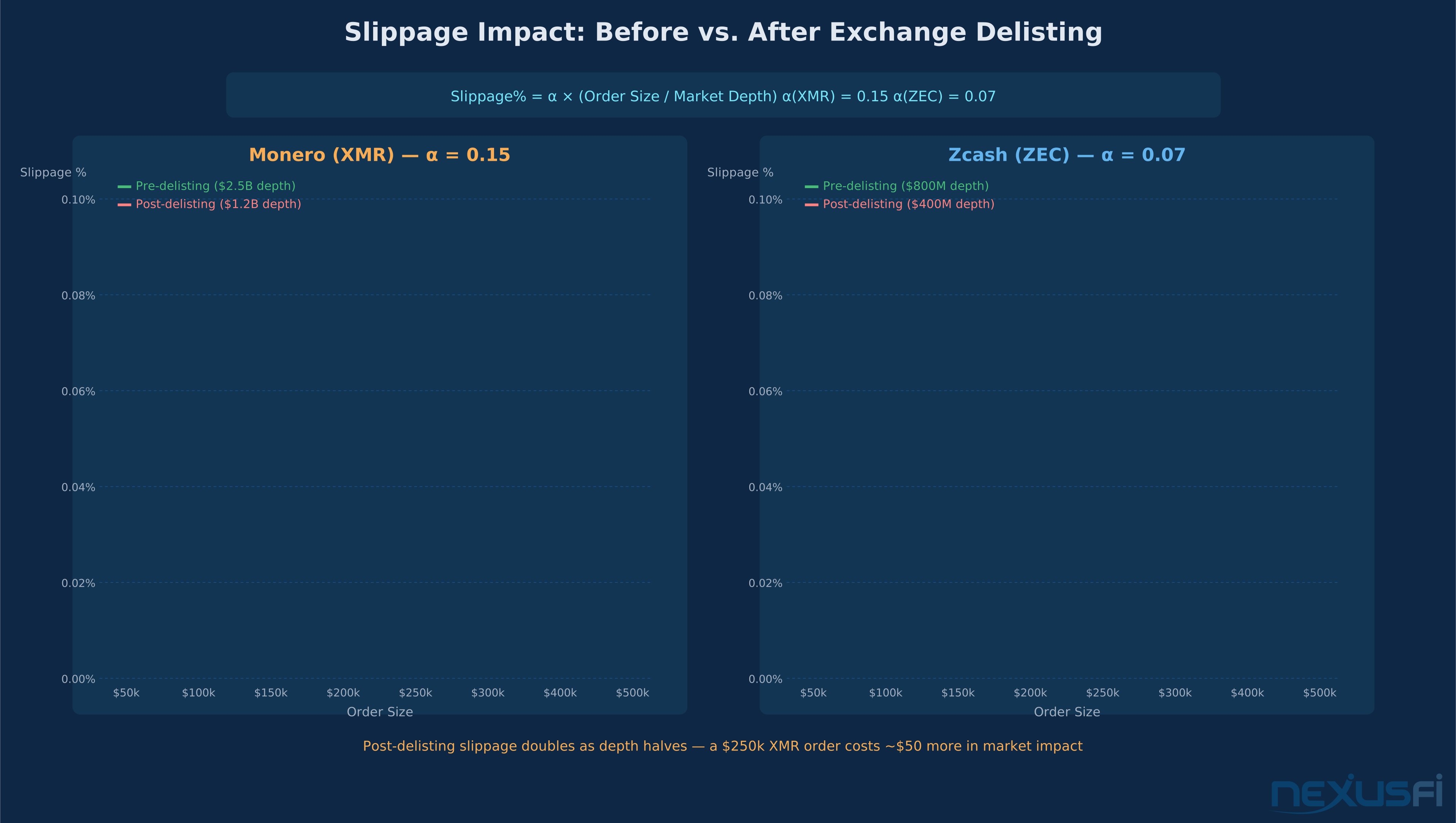
Slippage modeling: For thin privacy-coin markets, a simple linear slippage approximation works reasonably well:
Slippage% = α × (Order Size / Market Depth)
Where α is an empirical coefficient (approximately 0.15 for XMR, 0.07 for ZEC) and market depth is the 24-hour depth at best bid.
Concrete example: a $250k XMR position against $1.2B depth produces about 0.003% slippage — roughly $0.80/XMR. After a delisting that halves depth to $600M, slippage doubles. That's material for institutional hedgers, and it compounds if you're trying to exit quickly during a regulatory announcement.
Funding-rate volatility follows the same pattern. When OFAC made its Tornado Cash announcement, ETH privacy-pool-related funding on perpetuals spiked from 0.02% to 0.12% per 8-hour period almost immediately. On XMR perpetuals, regulatory announcements have produced similar spikes. If you're running leveraged positions in these markets, you need wider stop-loss buffers and lower leverage than you'd use for BTC or ETH — not as a theoretical precaution, but as a quantitative response to the observed volatility distribution.
Privacy vs. Compliance Tension #
The fundamental tension: exchanges and regulators need to be able to trace assets used as collateral and verify their provenance. Privacy coins are specifically designed to prevent that. Something has to give.
View keys and auditability (Zcash): View keys are Zcash's answer to this problem. You can share a view key with an auditor or exchange that lets them verify incoming transactions without gaining spending authority. This creates a compliance pathway — some venues will accept shielded ZEC collateral if you provide a view key for audit purposes. The catch: once you've given a view key, the privacy guarantee for that address is eliminated from the perspective of the key holder. Manage view keys like credentials — limit distribution, rotate after campaigns.
The fungibility problem: Bitcoin has a theoretical fungibility problem — coins that passed through a sanctioned address can be flagged and rejected, even if you received them innocently. Privacy coins were designed to solve this by making all coins indistinguishable. In practice, the design goal doesn't survive contact with regulated exchanges. "Tainted" XMR — coins that analytics firms have flagged based on deposit/withdrawal patterns — can still face deposit restrictions even if the on-chain trail is opaque. The exchange's risk engine doesn't need to prove on-chain linkage, just assert a policy-based risk classification.
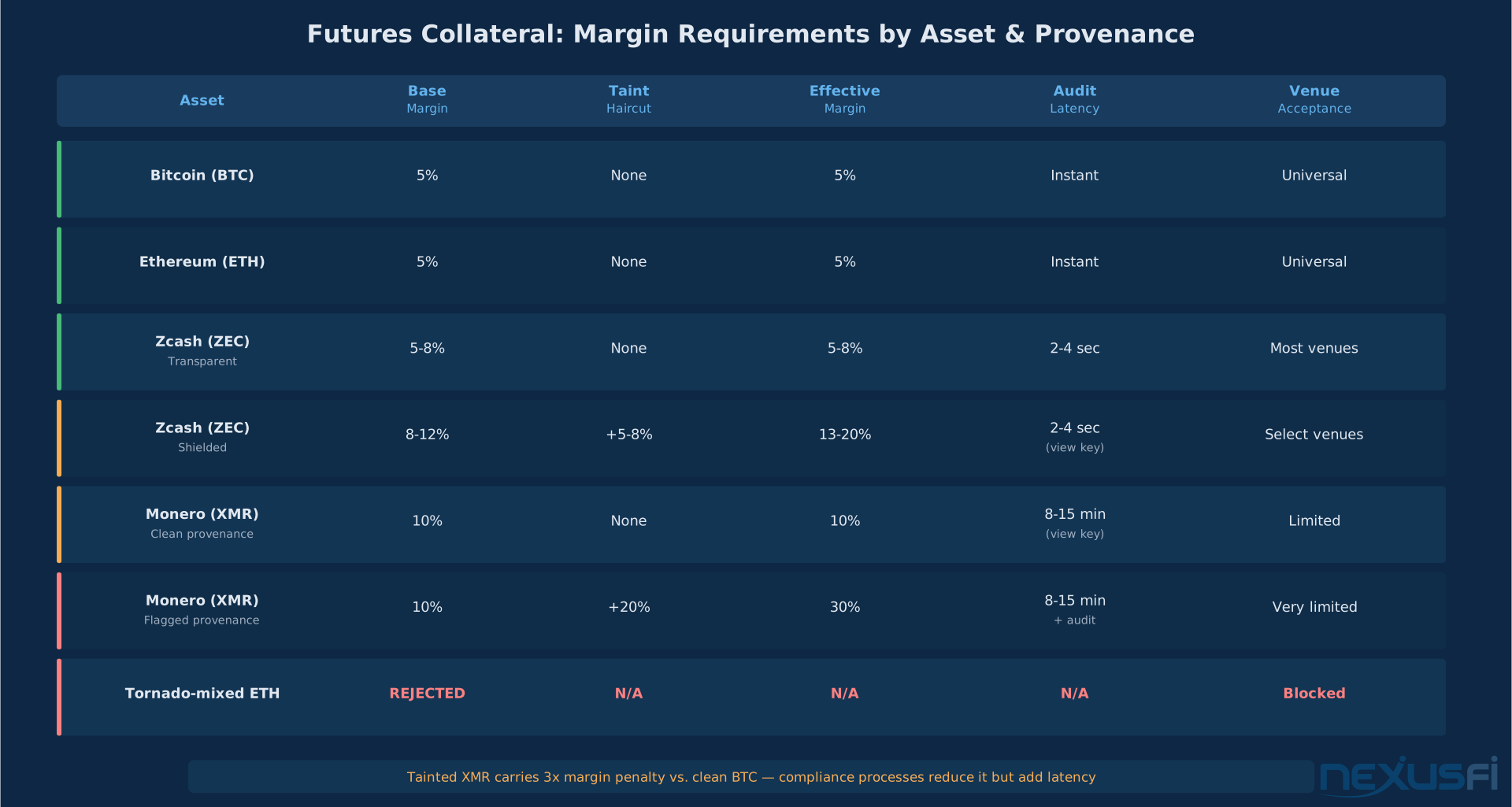
Collateral haircuts: The difference in margin treatment is significant. Clean XMR at CME requires roughly 10% margin versus 5% for BTC. XMR with a flagged provenance trail takes a 20% haircut on top of that — your effective margin requirement doubles. This directly reduces buying power and makes large positions more expensive to carry.
Dual-address strategy: The practical solution for traders who need both privacy and compliance is address segregation. Keep a "tax wallet" using transparent addresses for reporting purposes, and route trading capital through stealth addresses or shielded pools. Never consolidate these without an explicit compliance review. This isn't a trick to evade regulation — it's operational clarity that separates "this is my trading capital" from "this is my reporting address."
Trading-Specific Challenges #
Asymmetric Supply #
When a delisting hits or compliance restrictions tighten, not all circulating supply becomes equally usable. Exchanges may accept XMR from certain custody providers but not from others, or require pre-clearance for deposits above certain thresholds. The effective tradable float — coins that can actually move to and from compliant venues — may be 60% or less of the total circulating supply.
This creates basis risk in futures contracts. If futures settlement requires "eligible" XMR, and the spot pool accessible to arbitrageurs is reduced, the futures price can diverge from the theoretical fair value in ways that persist longer than in liquid markets. For physical-delivery contracts (some Zcash futures on venues like BitMEX), the settlement process requires a verified shielded note — the delivery chain has compliance gates that don't exist in cash-settled BTC futures.
Thin Order Book Dynamics #
Block trades over $500k in XMR or ZEC can move the market more than 0.5% in under a minute. That's not unusual for small-cap crypto, but it's structurally different from the depth available in BTC or ETH — and privacy-coin depth can collapse further during regulatory stress periods, not recover to prior levels even after the announcement passes.
Standard execution tactics: split large orders into VWAP slices across multiple venues (suggested split for XMR: 60% Deribit, 30% Kraken Futures, 10% Bybit). Set participation rate limits — don't take more than 15-20% of the visible depth with a single order. Use limit orders for anything over $100k. Unlike regulated futures where a central clearing house stands behind every trade, crypto exchange counterparty risk is real — and depth can collapse if the exchange has compliance or operational problems. [10]
Withdrawal Latency #
Monero withdrawals from exchanges average 12 minutes at the 95th percentile, versus 3 minutes for Bitcoin. Zcash shielded withdrawals average about 5 minutes. This isn't just an inconvenience — it's a structural constraint for traders who need to move collateral quickly between venues during fast-moving markets. Build it into your risk model: you cannot transfer XMR between venues faster than the withdrawal pipeline allows. If you're arbitraging between spot and futures, factor in the funding gap risk created by that latency.
Futures and Derivatives Implications #
The futures market implications of privacy coins flow directly from the regulatory and liquidity dynamics above. Here's how they manifest in practice:
Collateral eligibility: Not all venues accept privacy coins as margin. For those that do, the requirements are stricter than for BTC or ETH. CME XMR-USD futures (cash-settled) require an audit report before accepting XMR as collateral, with an 8-15 minute audit latency. Bybit and Binance ZEC-USDT perpetuals accept shielded ZEC at 8-12% margin, transparent ZEC treated as higher risk. Physical-delivery ZEC futures on BitMEX require delivery of a verified shielded note with view-key confirmation.
The FCM adoption question goes beyond policy — it's operational infrastructure.
That infrastructure buildout is still in early stages for XMR — which is why most CME-clearing FCMs accept BTC and ETH but treat XMR as a non-standard request requiring case-by-case compliance review. [9]
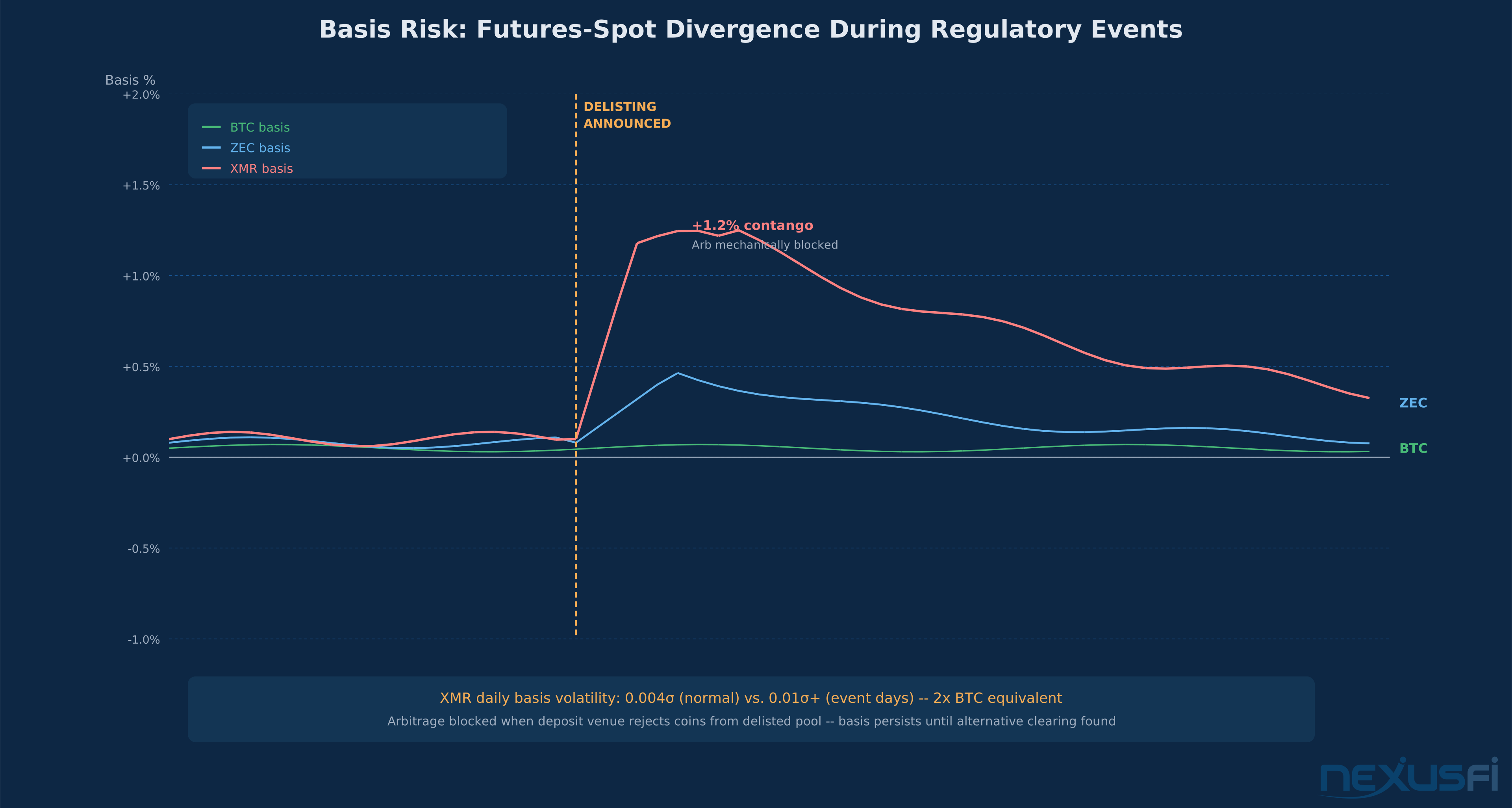
Basis risk: The "cleansing lag" — time required to verify collateral provenance before an exchange will accept it — creates a window where the spot price can move without the futures being able to track it through arbitrage. Empirical basis volatility for XMR runs about 0.004 daily sigma, roughly double the typical BTC basis. On announcement days, that can spike to 0.01 or higher.
Funding-rate regime: Privacy-coin perpetual funding rates are more volatile than comparable BTC or ETH pairs because the carry trade that keeps funding anchored to neutral requires the ability to deposit and withdraw spot freely. When regulatory actions restrict that, funding can gap sharply. The hedge: when XMR perpetual funding spikes following regulatory news, a ZEC perpetual short (which typically shows less funding volatility due to the transparent-pool optionality) plus a BTC long captures cross-asset carry while isolating the XMR-specific funding shock.
Event risk concentration: A single regulatory announcement can move privacy-coin prices 15-30% within hours. That's more concentrated event risk than most futures traders are used to modeling. Position sizing needs to account for this tail specifically — running maximum leverage in XMR positions going into known regulatory decision windows (FATF meetings, OFAC review periods, exchange policy announcement cycles) is how accounts get blown up.
Operational Playbook #
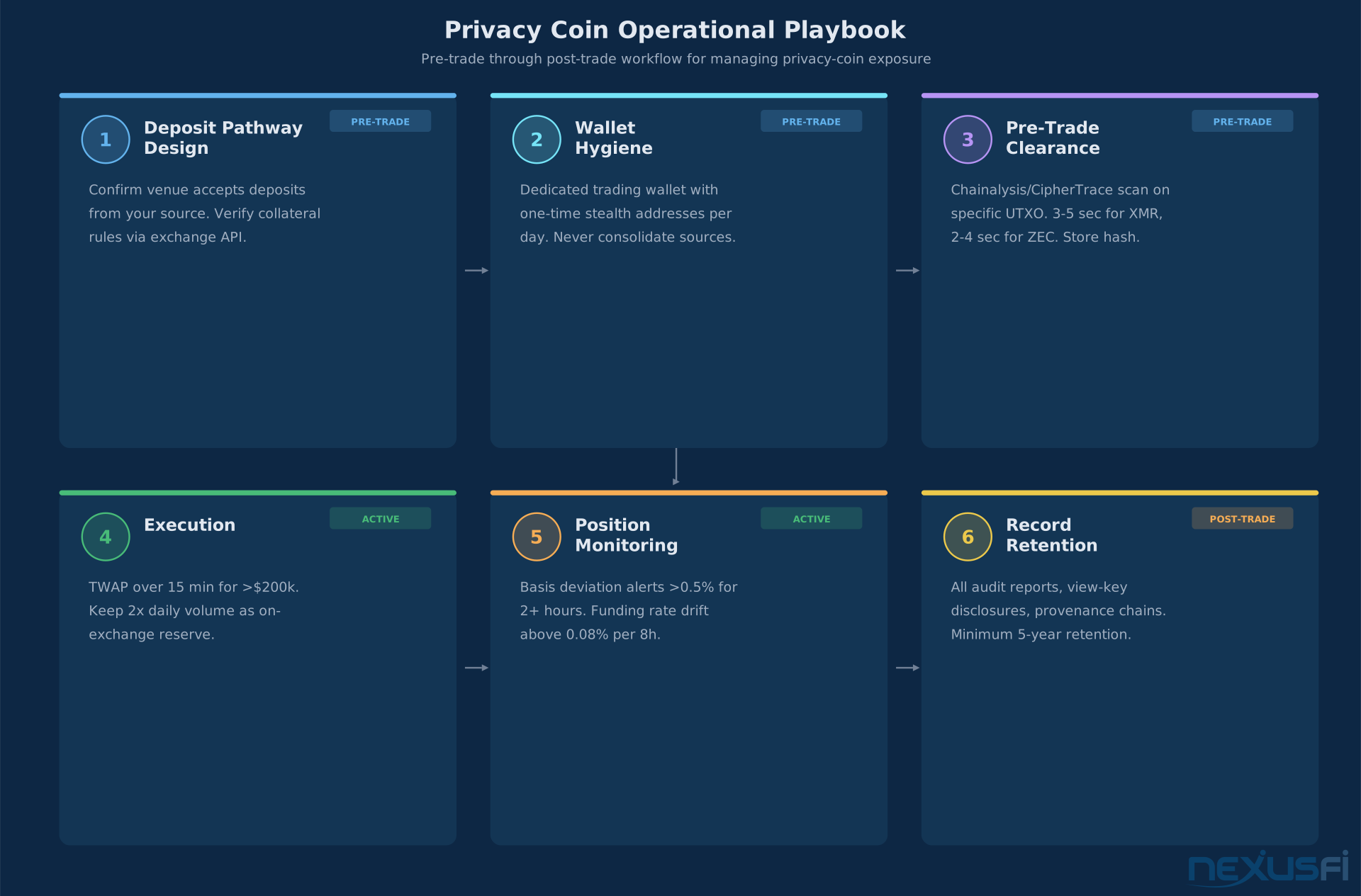
The difference between traders who manage privacy-coin exposure well and those who don't usually comes down to operational discipline, not protocol sophistication.
Step 1: Deposit pathway design. Before trading a privacy-coin pair on any venue, confirm that the venue accepts deposits from your source and that the compliance chain is clean. For XMR, use custodians with automated view-key audit APIs (Nexo supports this for XMR, Fireblocks for ZEC shielded). Don't assume any new venue will accept your existing wallet — verify the collateral rules via the exchange API (/v1/futures/collateral_rules on most venues) before moving capital.
Step 2: Wallet hygiene. Maintain a dedicated "trading wallet" with one-time stealth addresses per day. Never consolidate UTXOs from different sources without an explicit compliance review. For ZEC specifically: if privacy is your goal, route via shielded addresses. Routing through transparent pools partially undoes the privacy and can trigger higher risk classifications on deposit.
Step 3: Pre-trade clearance. For positions over $100k, run a Chainalysis Reactor or CipherTrace scan on the specific UTXO or shielded note before using it as margin. Scan latency is 3-5 seconds for XMR, 2-4 seconds for ZEC. Store the report hash for audit purposes. This isn't paranoia — it's the difference between having your deposit accepted and having it held in compliance review for 72 hours while your position moves against you.
Step 4: Execution. Orders over $200k should use TWAP execution over 15 minutes with cross-venue routing. Keep 2x your average daily volume as on-exchange reserve to absorb funding gaps without forced liquidation.
Step 5: Post-trade monitoring. Set alerts for basis deviation above 0.5% for more than 2 hours. Track funding-rate drift — spikes above 0.08% per 8-hour period on XMR perpetuals are a signal that regulatory noise is hitting the market and you should reduce exposure.
Step 6: Record retention. All audit reports, view-key disclosures, and provenance chains should be retained for a minimum of 5 years. This isn't optional for anyone operating under US or EU jurisdiction — it's the AML/KYC baseline. Use encrypted storage with hash-based integrity checks.
The core insight from the operational side: on-chain privacy doesn't reduce your compliance obligations, it just changes what form they take. You still need documentation. You still need clean source chains. You still need venue-specific compliance. The extra work is the cost of the privacy feature.
Key Takeaways #
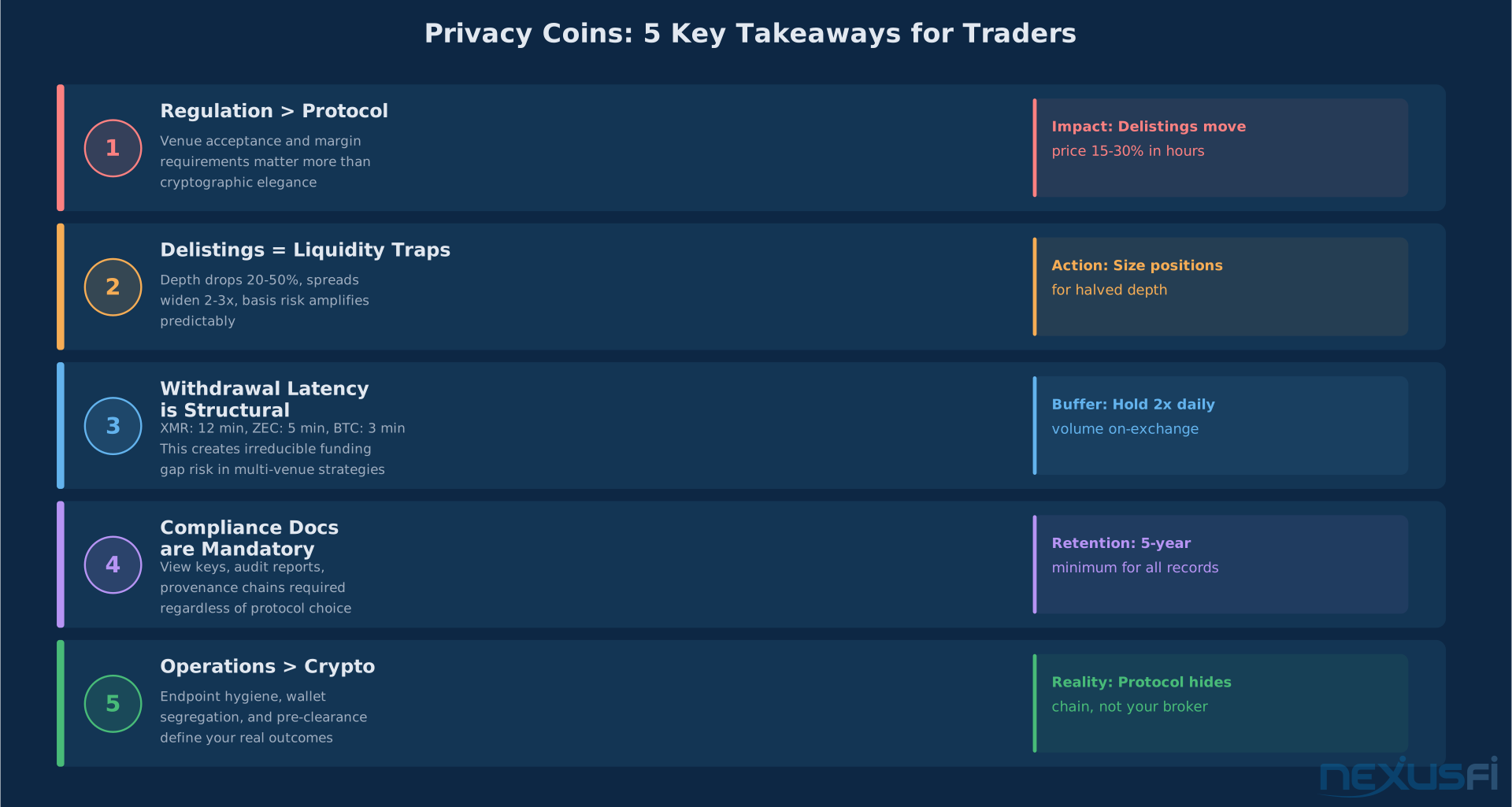
- Regulatory pressure dominates protocol design. Whether Monero's ring signatures or Zcash's zk-SNARKs are technically superior matters less for trading than whether your venue accepts deposits and at what margin requirement.
- Delistings create predictable liquidity traps. Depth falls 20-50%, spreads widen 2-3x, basis risk amplifies. Model this as an event risk scenario and size positions so.
- Withdrawal latency is a structural constraint. XMR's 12-minute exchange withdrawal time isn't a temporary bug — it's a feature of the protocol that creates irreducible funding gap risk in multi-venue strategies.
- Compliance documentation is mandatory, not optional. View-key disclosures, audit reports, and provenance chains are required regardless of the privacy protocol. The protocol hides the on-chain trail, not the compliance obligation.
- Operational workflows matter more than protocol choice. Endpoint hygiene, wallet segregation, and pre-clearance processes determine your real privacy and compliance outcomes — the cryptographic mechanisms are secondary.
The central paradox of privacy-coin trading: these assets are designed to protect user information, but trading them at scale requires you to share more documentation with more counterparties than you would trading BTC. View-key disclosures, provenance audit reports, pre-clearance records — your compliance footprint expands as you use privacy coins, not contracts. The coins protect on-chain linkability; your broker relationship, KYC record, and trade history remain as visible as ever.
Citations #
- @Fi, "CFTC Enforcement Shift: Back to Basics Under New Chairman Selig," NexusFi Traders Hideout (Jan 16, 2026) — https://nexusfi.com/showthread.php?t=61326&p=909111#post909111
- @Fi, "NFA Streamlines Digital Asset Rules: Repeals Virtual Currency Notice, Expands Rule 2-51," NexusFi Cryptocurrency (Nov 13, 2025) — https://nexusfi.com/showthread.php?t=61211&p=908291#post908291
- @Fi, "CFTC and SEC Launch Joint 'Project Crypto' — Unified Digital Asset Framework Coming," NexusFi Traders Hideout (Feb 9, 2026) — https://nexusfi.com/showthread.php?t=61398&p=909623#post909623
- @Fi, "ClearToken Gets FCA Nod to Launch Regulated Crypto Settlement Platform," NexusFi Traders Hideout (Nov 14, 2025) — https://nexusfi.com/showthread.php?t=61221&p=908313#post908313
- OAK Research, "Crypto privacy: a durable market trend or a short-lived narrative bubble?" — oakresearch.io/en/analyses/fundamentals/crypto-privacy-durable-market-trend-or-short-lived-narrative-bubble
- OAK Research, "On-chain Privacy: What Monero and Zcash Can Teach Ethereum" — oakresearch.io/en/analyses/investigations/on-chain-privacy-what-monero-zcash-teach-ethereum
- US Treasury OFAC, Tornado Cash SDN Listing (August 2022) — ofac.treasury.gov
- CryptoQuant, "Empirical price impact analysis for privacy-coin delistings" (2024) — cryptoquant.com
- @SMCJB, "CFTC Expands Digital Asset Margin Rules — Your Crypto Can Now Back Your Futures Positions," NexusFi Cryptocurrency (Feb 17, 2026) — https://nexusfi.com/showthread.php?t=61427&p=909780#post909780
Knowledge Map
Go Deeper
Build on this knowledgeReferences This Article
Articles that build on this topicCitations
- — CFTC Enforcement Shift: Back to Basics Under New Chairman Selig (2026)“The CFTC aligned with DOJ guidance, directing staff not to pursue regulatory violations in cases involving legitimate innovation -- but privacy coins sit in a gray zone that makes venues nervous.”
- — NFA Streamlines Digital Asset Rules: Repeals Virtual Currency Notice, Expands Rule 2-51 (2025)“The NFA willingness to streamline rules suggests regulatory acceptance of digital assets as legitimate trading instruments.”
- — CFTC and SEC Launch Joint Project Crypto -- Unified Digital Asset Framework Coming (2026)“Unified crypto asset taxonomy coming -- reduced duplicative compliance requirements and expanded eligible tokenized collateral for futures under the Regulation Crypto framework.”
- — ClearToken Gets FCA Nod to Launch Regulated Crypto Settlement Platform (2025)“FCA-regulated crypto settlement infrastructure marks the formal integration of digital assets into traditional financial frameworks.”
- — Crypto privacy: a durable market trend or a short-lived narrative bubble?
- — On-chain Privacy: What Monero and Zcash Can Teach Ethereum
- — Tornado Cash SDN Listing (August 2022)
- — Empirical price impact analysis for privacy-coin delistings (2024)
- — CFTC Expands Digital Asset Margin Rules -- Your Crypto Can Now Back Your Futures Positions (2026)“For FCMs to consider it collateral they will surely require you to actually send them the crypto, just like they require you to send them the money/cash. Which means they will have to have wallets and processes in place for this.”
- — Cryptocurrencies 101 -- what I've learned so far (2021) 👍 3“There is no centralized clearing in crypto -- you are taking the credit risk of the exchange. Some of these exchanges can and will trade against your orders. If the exchange has a problem (hack, theft), you are very much at risk.”