



On-Chain Analysis for Traders
Overview #
Every Bitcoin transaction is permanently recorded on a public ledger. That ledger — the blockchain — is an open book. If you know how to read it, you have access to information that no traditional market provides: exactly how many coins are sitting on exchanges right now, which wallets moved coins after holding for five years, whether miners are selling their rewards or accumulating, and whether the entire market is sitting on unrealized gains or losses.
On-chain analysis is the discipline of reading that data and converting it into trading signals. It is not about predicting Bitcoin's price tomorrow. It is about understanding whether the structural conditions favor accumulation or distribution, whether large holders are increasing or decreasing exchange balances, and whether the market is at a point in its cycle where risk-reward tilts toward buying or caution.
NexusFi member @rleplae ran a systematic test that put a number on this edge: a simple MACD/moving average strategy produced 140% over five years. Adding a single on-chain metric filter pushed that result to 450%.[2] The core insight — on-chain data captures information orthogonal to price action. When both align, conviction increases. When they diverge, it is a warning.
On-chain signals work on cycle-length timeframes (weeks to months), not intraday. Use them for position sizing and bias — not as entry triggers on a 5-minute chart.
What On-Chain Analysis Is #
Every blockchain is a timestamped ledger of every transaction ever made. Bitcoin's blockchain has recorded every transfer since January 3, 2009 — over 800 million transactions, visible to anyone with internet access. On-chain analysis extracts trading-relevant patterns from this data.
Supply-side data: Where coins are held and how long they have been dormant. Coins that have not moved in two years are almost certainly held by investors, not traders. When those coins start moving, it signals either exits or redistribution.
Demand-side data: Active addresses, transaction volume, new addresses created. When on-chain activity accelerates, it often precedes or confirms price momentum. When activity collapses while price holds up, the divergence is a warning.
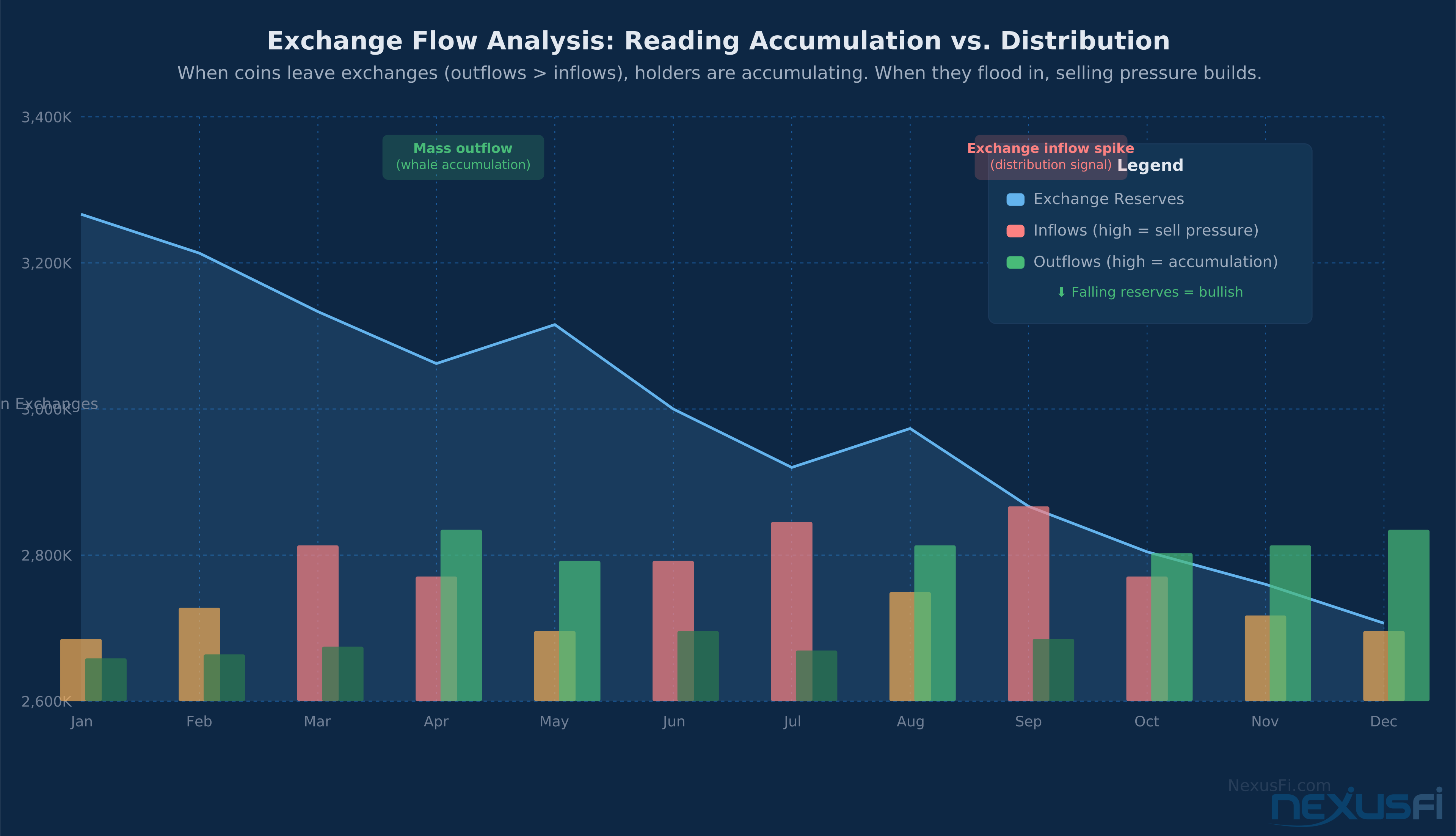
Exchange-specific data: Total Bitcoin held on exchanges versus private wallets. Exchanges aggregate coins for potential sale. When exchange balances fall, coins are moving to private custody — accumulation. When they surge, selling pressure is building.
Profitability data: Metrics like MVRV and SOPR tell you whether the market in aggregate is sitting on gains or losses, and whether coins being sold today are moving at a profit or loss. These cycle-position indicators are among the most practically useful for timing entry and exit zones.
On-chain data has no equivalent in traditional futures markets. You cannot see the actual inventory of S&P 500 participants. The blockchain's transparency is a structural information edge unique to crypto.
Core On-Chain Metrics #
Active Addresses
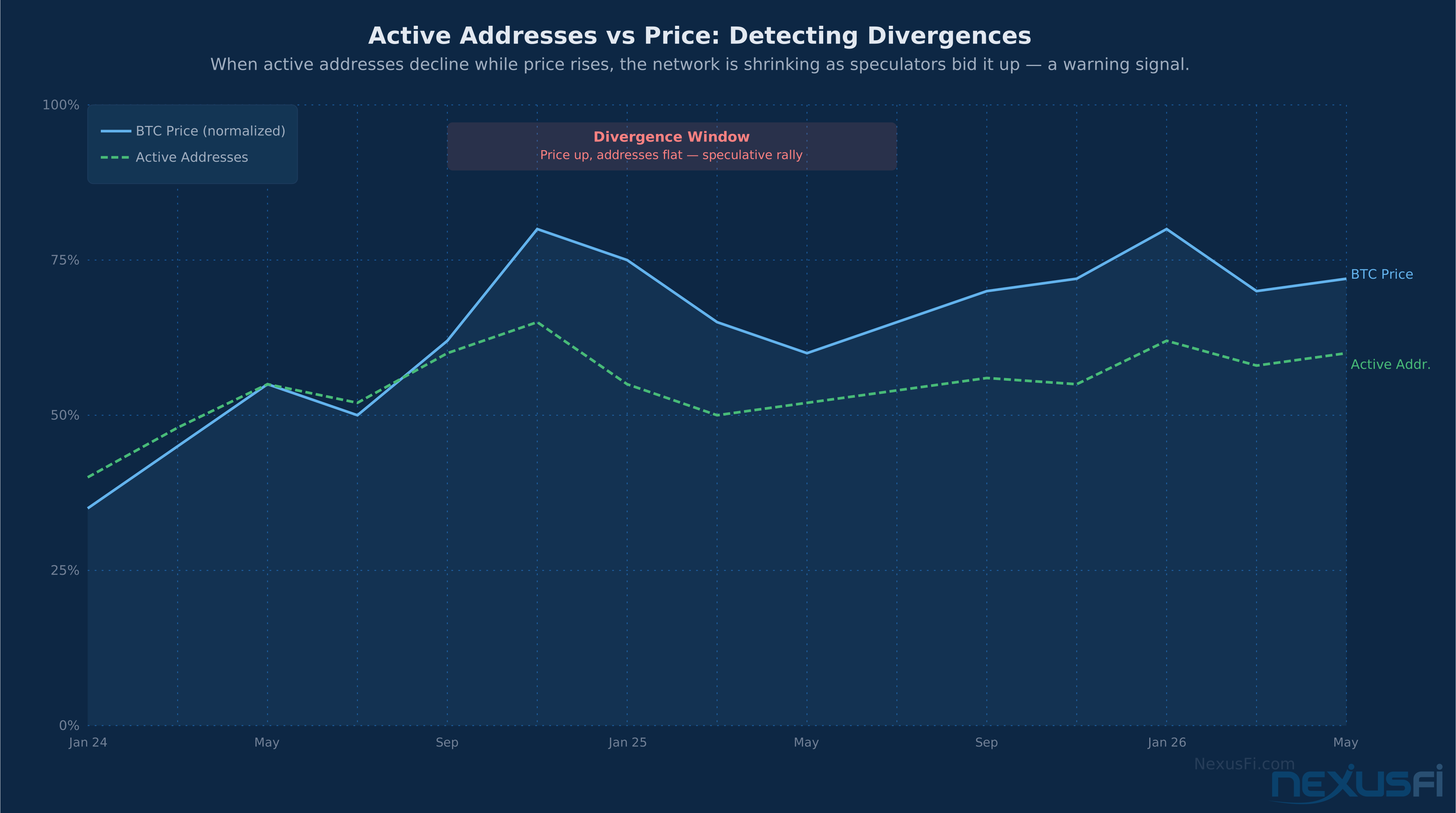
The count of unique addresses that sent or received a transaction in a given period (7-day moving average is most useful). A growing count signals genuine network expansion. A contracting count during a price rally is a divergence — price is climbing but actual usage is not supporting it. Active addresses peaked before Bitcoin's 2021 top and never recovered to the same level in the 2023-2024 cycle, a structural difference noted by many analysts.
Transaction Volume
Total value transferred on-chain in USD terms. This is not trading volume on exchanges — it is the actual economic throughput of the network. When a whale moves 10,000 BTC from cold storage to an exchange, it shows up here. High volume during a price decline can signal panic selling at scale. High volume during sideways price action often signals deliberate repositioning by large holders.
Network Value to Transactions (NVT) Ratio
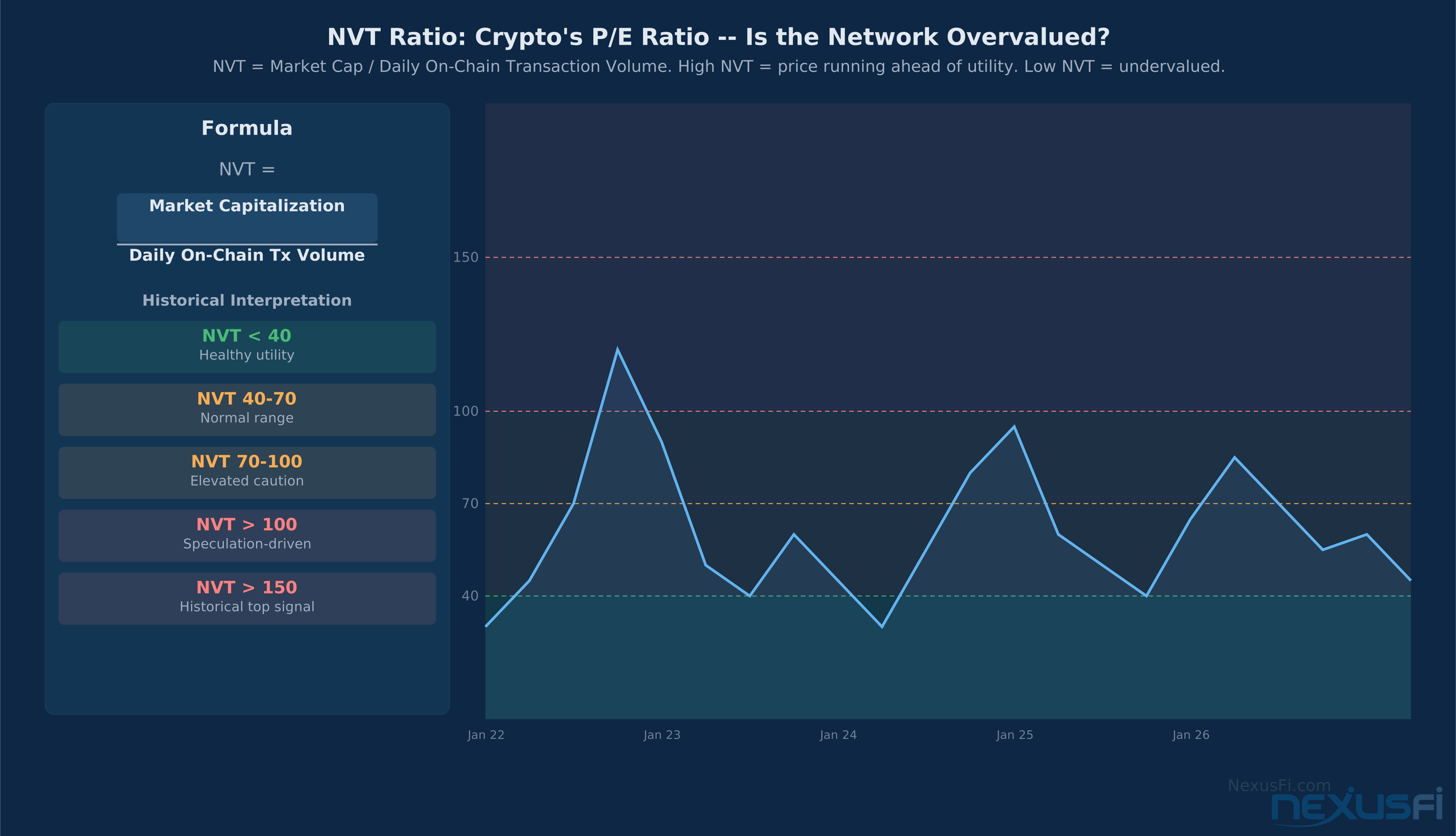
NVT = Market Cap divided by Daily On-Chain Transaction Volume. Think of it as crypto's price-to-earnings ratio. A high NVT means market value is high relative to actual economic activity on the network — historically associated with overvaluation. A low NVT suggests the network is doing significant work relative to its price.
The 90-day smoothed NVT (NVT Signal) eliminates noise and is more useful for cycle positioning than the raw daily figure. NVT above 100 has preceded every major Bitcoin correction. Below 40 is historically healthy territory.
Supply Distribution: Long-Term vs. Short-Term Holders
Long-Term Holders (LTH) have coins dormant for 155+ days. Short-Term Holders (STH) moved coins within the last 155 days. When LTH supply increases, it reduces available supply — structurally bullish. When LTH supply decreases sharply (old coins moving to exchanges), it often precedes distribution tops. This LTH-to-STH transition is one of the most reliable cycle indicators on-chain.
Bitcoin-Specific Metrics #
Hash Rate and Miner Capitulation
Bitcoin's hash rate is total computational power applied to mining. Rising hash rate signals confidence in mining economics. A declining hash rate (miner capitulation) means machines are shutting off — operators cannot cover costs at current prices. Miner capitulation events are historically associated with cycle lows. Once the weakest miners capitulate, the remaining miners face reduced competition and the cycle resets.
Puell Multiple
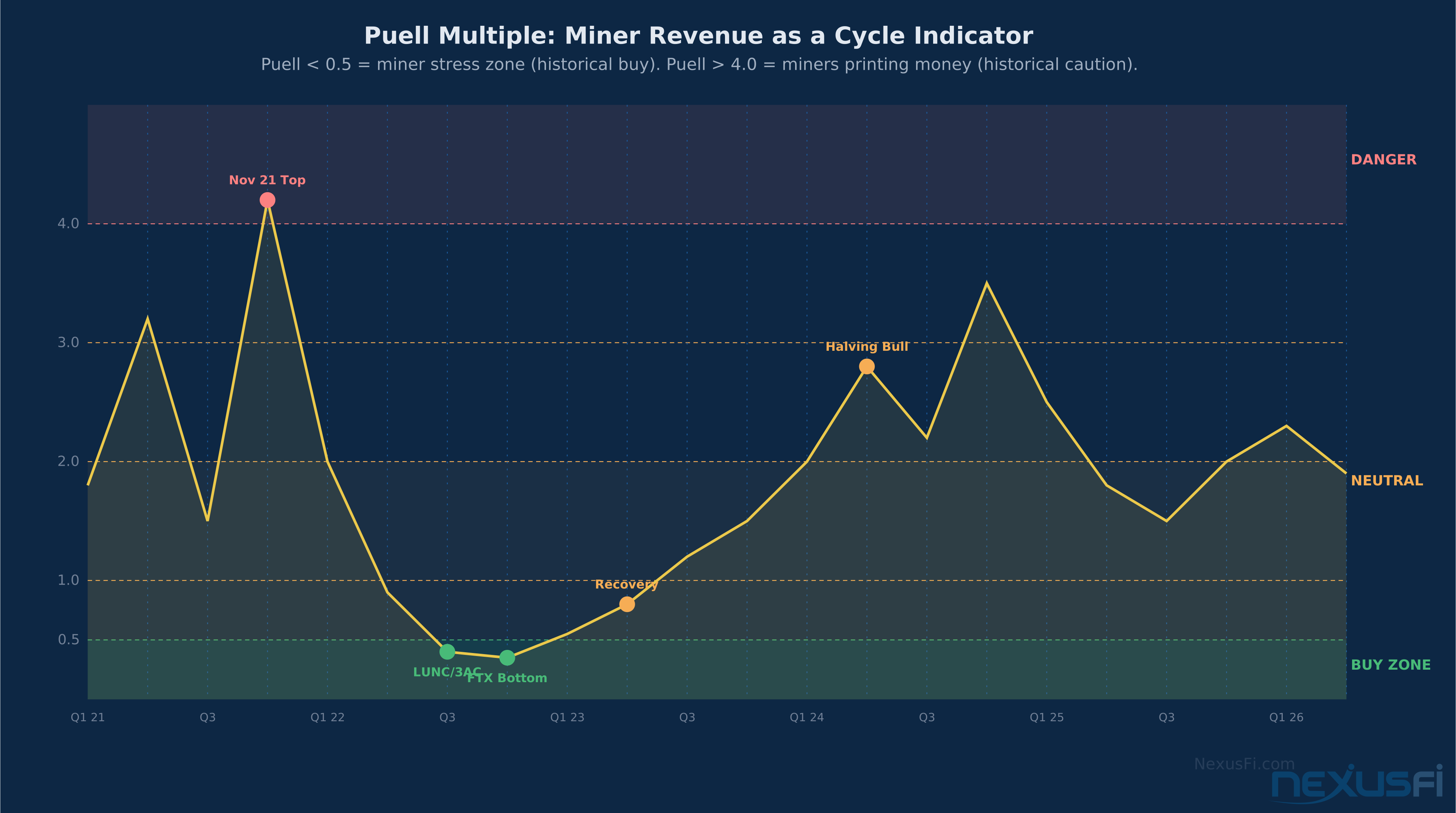
The Puell Multiple measures daily miner issuance in USD relative to the 365-day moving average. Formula: today's miner revenue divided by 365-day average miner revenue.
- Puell below 0.5: Miners generating far below average revenue. Historical buy zone -- miner stress and forced selling have largely occurred. The FTX collapse bottom in November 2022 saw Puell hit 0.35.
- Puell 0.5-2.0: Normal operating range. Miners profitable but not under extreme pressure in either direction.
- Puell above 4.0: Miners generating far above average. Historically correlates with market tops -- enormous incentive to sell at elevated revenue levels.
The Puell Multiple is a cycle positioning tool, not a short-term entry trigger. At Puell 0.4, Bitcoin can fall another 20% before bottoming. Use it to determine position sizing and bias over months-long horizons.
Coin Days Destroyed (CDD) and UTXO Age Bands
CDD measures the total "time multiplied by quantity" of coins that moved on a given day. If 100 BTC dormant for 30 days moves, that creates 3,000 coin days destroyed. CDD spikes when old coins move — either long-term holders distributing into strength, or exchange rebalancing. A CDD spike at cycle highs is a warning. A CDD spike at lows with no price reaction is a different story: panic sellers moving coins that were not actually held that long.
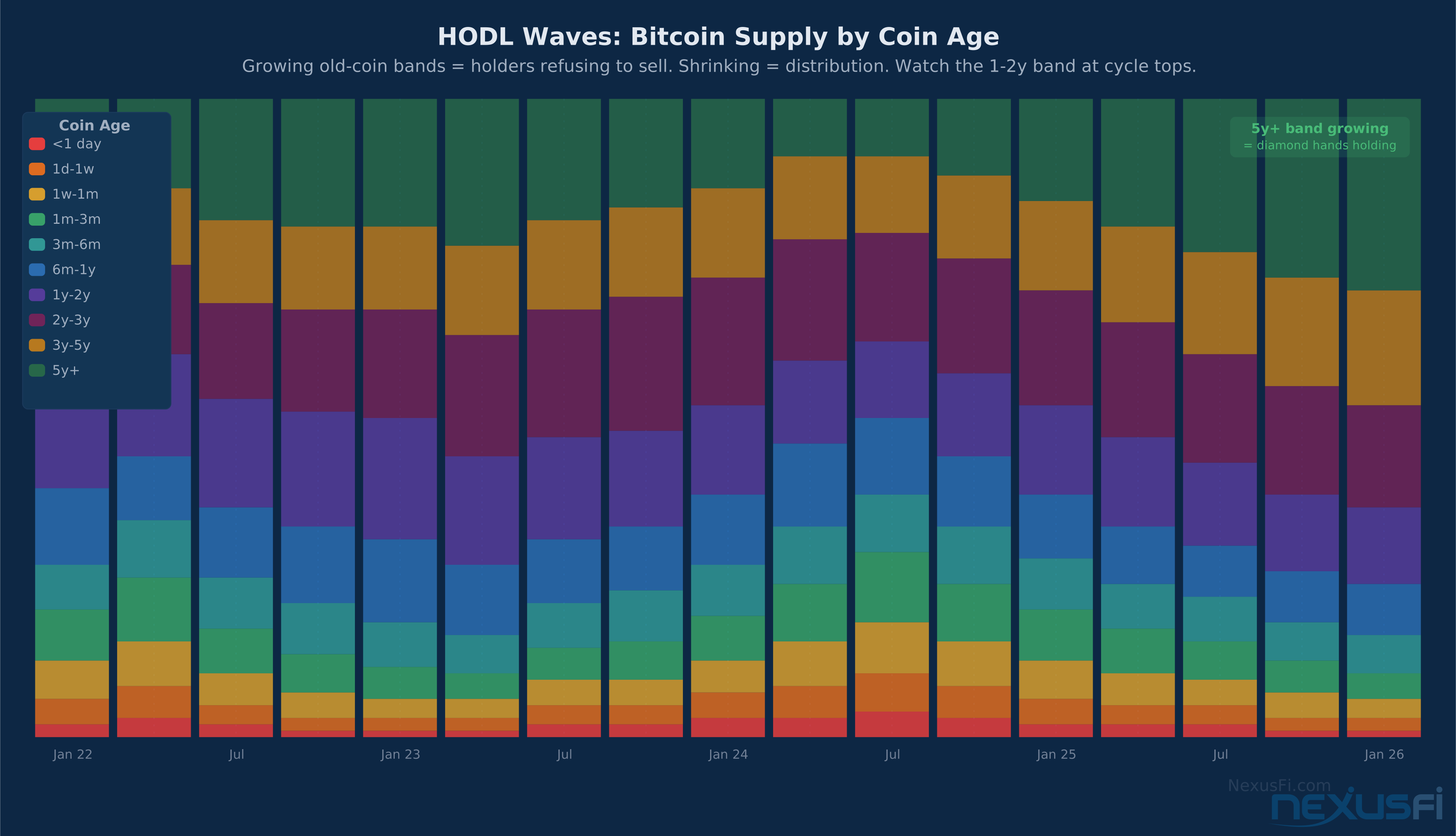
UTXO Age Bands — often called HODL Waves — show the percentage of supply by age category: under 1 week, 1-3 months, 3-6 months, 1-2 years, 2-5 years, and older. A healthy accumulation phase shows growing supply in the 1-5 year bands. A distribution phase shows supply migrating into shorter age bands as old coins flow to new buyers who will sell sooner. Watching these transitions over months gives a structural view of who is holding and for how long.[3]
Ethereum and Altcoin Metrics #
Gas Usage, Staking, and Burn Rate
Ethereum gas usage measures network demand directly. Sustained high gas signals genuine demand for block space — organic activity, not just price speculation. Gas collapses during bear markets when application activity dries up. For traders, sustained high gas during a price consolidation is structurally bullish; collapsing gas during a price rally is a divergence warning.
Post-Merge, approximately 28-32% of ETH supply is staked as of 2025, creating a measurable supply constraint. The EIP-1559 burn rate adds another layer: during peak demand, ETH becomes net deflationary (more burned than issued). Track the annualized burn rate on Ultrasound.money — when burn exceeds issuance by 2x or more, ETH supply is actively shrinking.
DeFi Total Value Locked
TVL measures assets deposited in decentralized finance protocols. Rising TVL signals confidence and capital commitment. Collapsing TVL signals withdrawal. Use TVL denominated in ETH, not USD — a price rally can inflate USD TVL without any new capital entering. ETH-denominated TVL gives a cleaner signal of actual protocol usage versus price appreciation. See Cryptocurrency Trading Fundamentals for context on how DeFi fits into the broader crypto market structure.
Exchange Flow Analysis #
Exchange flow data is the most directly actionable category of on-chain analysis. Exchanges are where coins go to be sold. Private wallets are where coins go to be held. Watching the flow between these two destinations tells you whether the market is net accumulating (moving coins to safety) or preparing to sell (staging coins on exchange).
Exchange Reserves
Total BTC held across all tracked exchanges. This peaked around 3.2-3.5 million BTC in mid-2020 and has been in structural decline since, falling below 2.4 million BTC by 2025. The decline reflects ETF custody takeup (BlackRock's IBIT holds coins through Coinbase Custody, off-exchange) and long-term holder accumulation.
The rate of change matters more than the level. A month where reserves decline 200,000 BTC is a meaningful signal. A month where they increase 50,000 BTC during a rally suggests some holders are staging coins for potential sale — worth watching.
Exchange Inflows and Outflows
Net exchange flow = inflows minus outflows. Positive net flow (more arriving than leaving) = selling pressure building. Negative net flow (more leaving) = accumulation.
The exchange inflow spike is among the most reliable short-term on-chain signals. When large quantities of Bitcoin move onto exchanges in a compressed window — especially from wallets dormant for years — it often precedes selling. In February 2025, as Bitcoin tested support near $80,000, on-chain data confirmed that spot ETF holders (average cost basis $84,000-$90,000) were not selling — the inflows came from shorter-term holders, not institutional buyers.[6]
Stablecoin Exchange Reserves
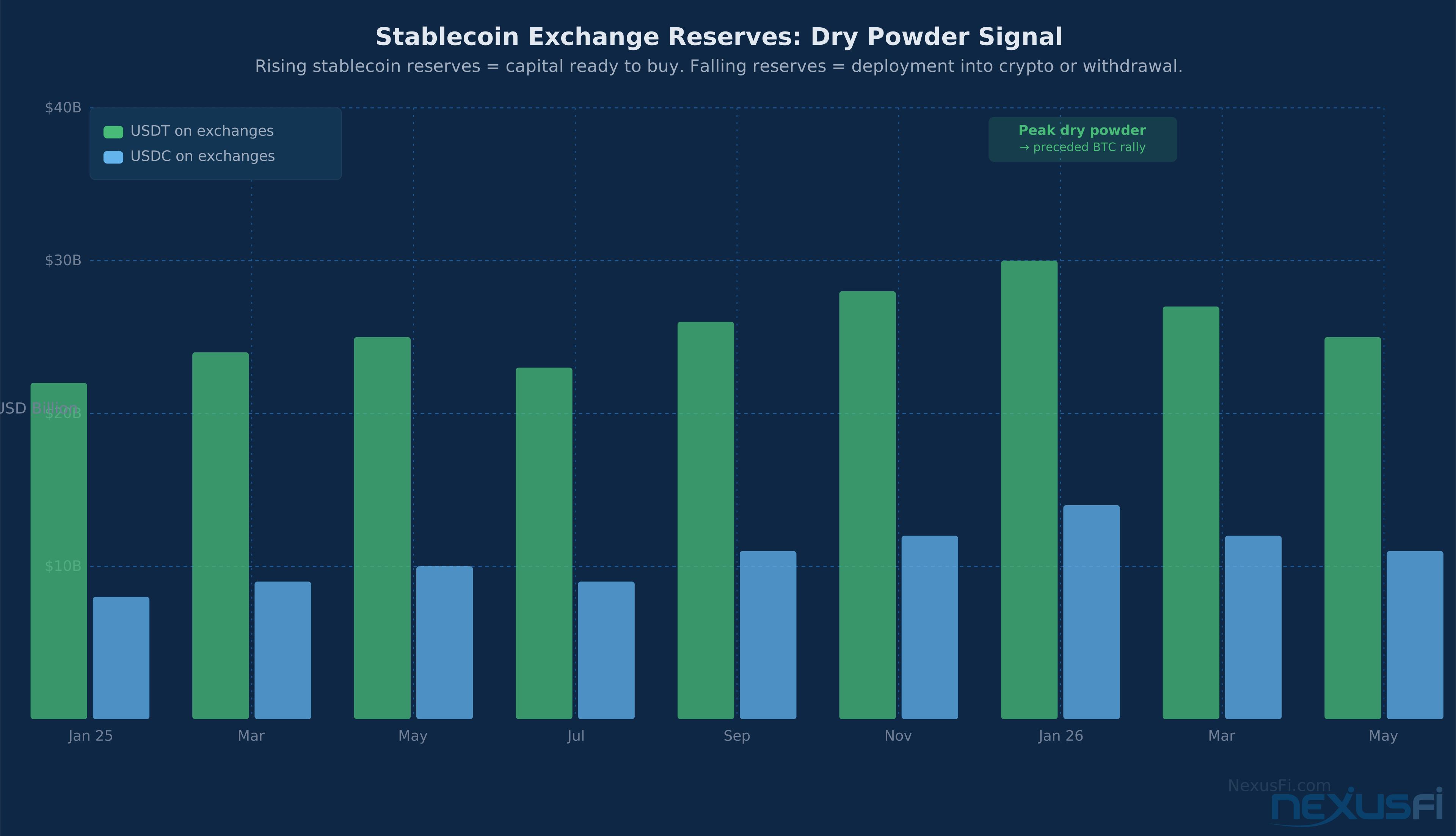
Stablecoin flows complement Bitcoin exchange flow analysis. When large quantities of USDT or USDC move onto exchanges, fresh capital is preparing to buy. When stablecoins leave exchanges, buying power is being withdrawn. Record combined USDT/USDC reserves on exchanges preceded the early 2026 Bitcoin rally — the dry powder was visible on-chain before the price move.
MVRV Ratio and SOPR #
MVRV Ratio
MVRV (Market Value to Realized Value) is one of the most powerful cycle indicators on-chain.
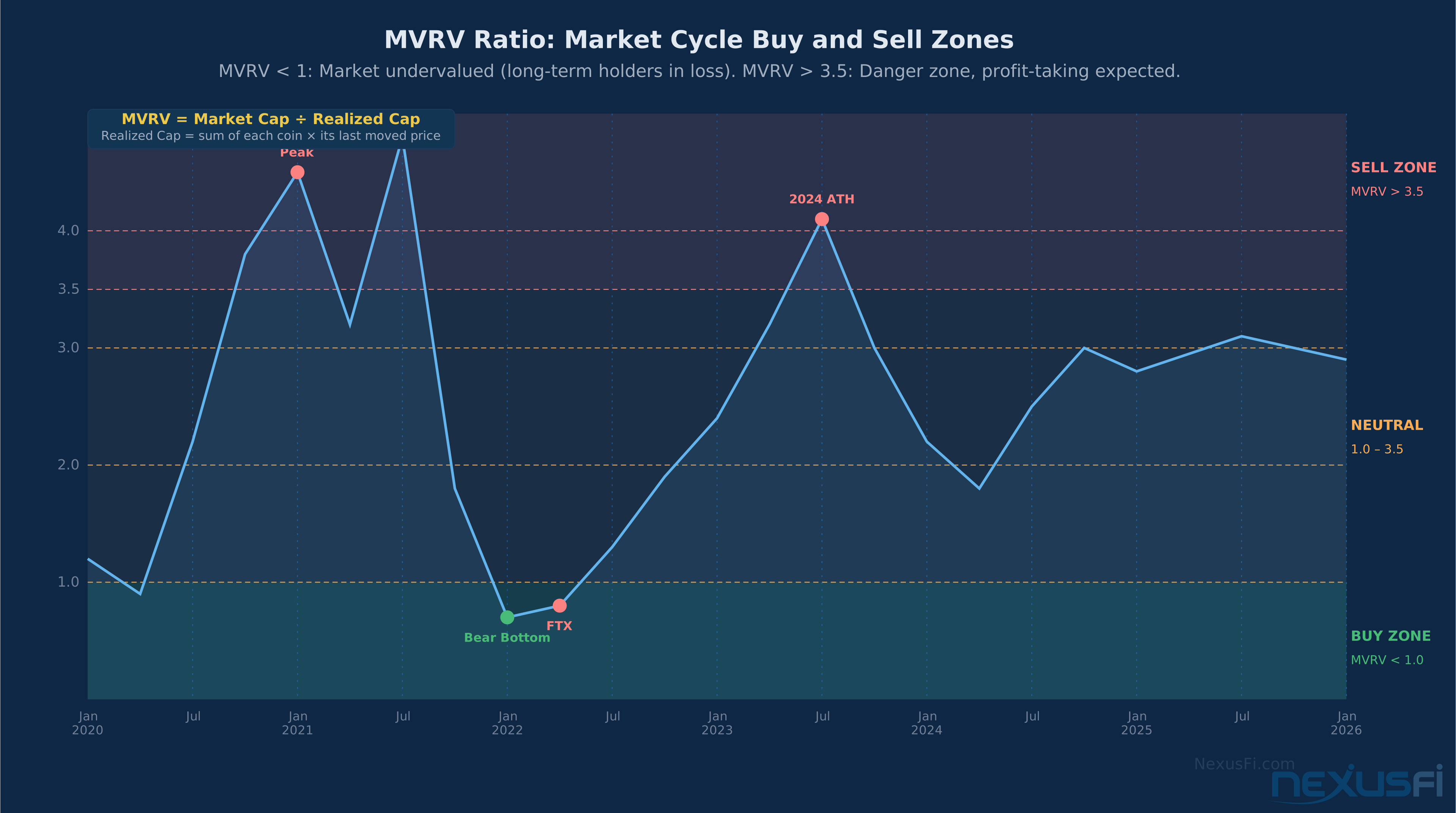
MVRV = Market Cap divided by Realized Cap
Market Cap is current price times circulating supply. Realized Cap calculates the value of each coin at the price it last moved. If a coin last moved when Bitcoin was at $20,000, it contributes $20,000 to the Realized Cap regardless of today's price.
- MVRV below 1.0: Average holder is at a loss. Every Bitcoin cycle bottom has occurred at or below MVRV 1.0. At this level, capitulation conditions exist -- and the market has historically offered its best long-term entries.
- MVRV 1.0-2.0: Accumulation and early bull phase. Risk-reward tilts toward buyers.
- MVRV 2.0-3.5: Bull market range. Uptrend intact but watch for deterioration above 3.5.
- MVRV above 3.5: Historical warning zone. The November 2021 top occurred at MVRV 4.5. The 2022 bear market bottom saw MVRV briefly reach 0.7 during the FTX collapse.
SOPR: Spent Output Profit Ratio
SOPR measures whether coins being sold today move at a profit or loss. SOPR = value at time of sale divided by value at last acquisition. SOPR equals 1 at cost. Above 1 = sellers realizing profits. Below 1 = sellers capitulating at losses.
Bull market behavior: SOPR consistently above 1. When SOPR dips toward 1.0 during a correction and bounces, it often marks local support — holders refuse to sell at breakeven, creating a price floor.
Bear market behavior: SOPR consistently below 1. When SOPR spikes toward 1.0 in a bear rally and fails, it is a resistance test — sellers who bought near the top use the rally to break even, creating overhead supply.
Whale Watching #
As @artemiso noted on NexusFi, there are individual wallets controlling enough Bitcoin to move markets independently.[7] The top 100 wallets hold roughly 14% of Bitcoin's supply. This concentration means whale behavior is structurally relevant — not noise.
Key movement patterns:
- Whale wallet to unknown wallet: OTC deal or cold storage. Usually neutral to bullish.
- Whale wallet to exchange hot wallet: Preparation to sell. Near-term bearish signal.
- Exchange wallet to new private wallet: Institutional withdrawal to custody. Bullish (new buyer not selling soon).
Nansen and Arkham Intelligence provide wallet labeling — databases of known exchange addresses, institutional wallets, and identified entities. Nansen's "Smart Money" feature tracks wallets with historically strong returns. When these addresses accumulate, it surfaces as a signal. Whale Alert provides real-time notifications for transactions above threshold sizes — useful as situational awareness, not as direct trade triggers. A $500M Bitcoin transfer to an exchange warrants attention over the next few hours, not an immediate sell.
Tools and Platforms #
Glassnode: Market leader for on-chain analytics. @SMCJB highlighted Glassnode's "The Week On-Chain" newsletter as an entry point for understanding chain metrics — free, published weekly, covering the most relevant current metrics.[1] The full platform requires subscription ($29/month Standard) for real-time data. The Standard tier covers MVRV, SOPR, exchange flows, HODL Waves, and most metrics in this article.
CryptoQuant: Strong competitor, especially for exchange flow and miner analytics. @rleplae tested CryptoQuant's 100+ on-chain parameters in systematic strategy research.[5] Their Quicktake feature provides color-coded signals aggregating multiple metrics — useful for traders who want on-chain confirmation without methodology dives.
Dune Analytics: Go-to for Ethereum and DeFi analysis. Unlike Glassnode and CryptoQuant (pre-built dashboards), Dune lets users write SQL-like queries against blockchain data. Community-built dashboards cover specific DEX volumes, protocol health, and DeFi flows. Entirely free for community dashboards.
TradingView community indicators: MVRV Z-Score, Puell Multiple, and SOPR are available as free community indicators that overlay directly on price charts. This is the lowest-friction entry point — no separate subscription required.
Start free: Glassnode free tier (weekly MVRV), CryptoQuant free (exchange flows, Bull/Bear indicator), TradingView community indicators (Puell, SOPR). These three give solid structural context with zero subscription cost.
Combining On-Chain With Technical Analysis #
On-chain analysis is not a replacement for technical analysis — it is a context layer. Technical analysis answers where price is likely to go in the next hour, day, or week. On-chain answers where we are in the cycle, and whether structural conditions are supportive or concerning.
Leading vs. Lagging Signals
Most technical indicators are lagging — they confirm what price has already done. Many on-chain metrics lead or coincide with price, because they measure actual participant behavior before or as price moves. Exchange inflows lead price selloffs (coins arrive before sell pressure hits). SOPR changes can lead price — when it starts declining from high levels, early distribution is showing before the chart confirms it.
Divergence Patterns
- Price making new highs + exchange reserves rising: Distribution divergence. Sellers are staging supply as price climbs. Has historically preceded tops by 2-6 weeks.
- Price making new lows + MVRV below 1.0: Capitulation signal. Long-term holders are underwater -- every Bitcoin market bottom has occurred here.
- Price falling + SOPR below 1.0 + flat exchange reserves: Ordinary bull market correction. STH selling at losses, but LTH not adding supply.
- Price rising + active addresses flat: Speculative rally without network adoption. Historical warning for unsustainable appreciation.
Multi-Signal Convergence
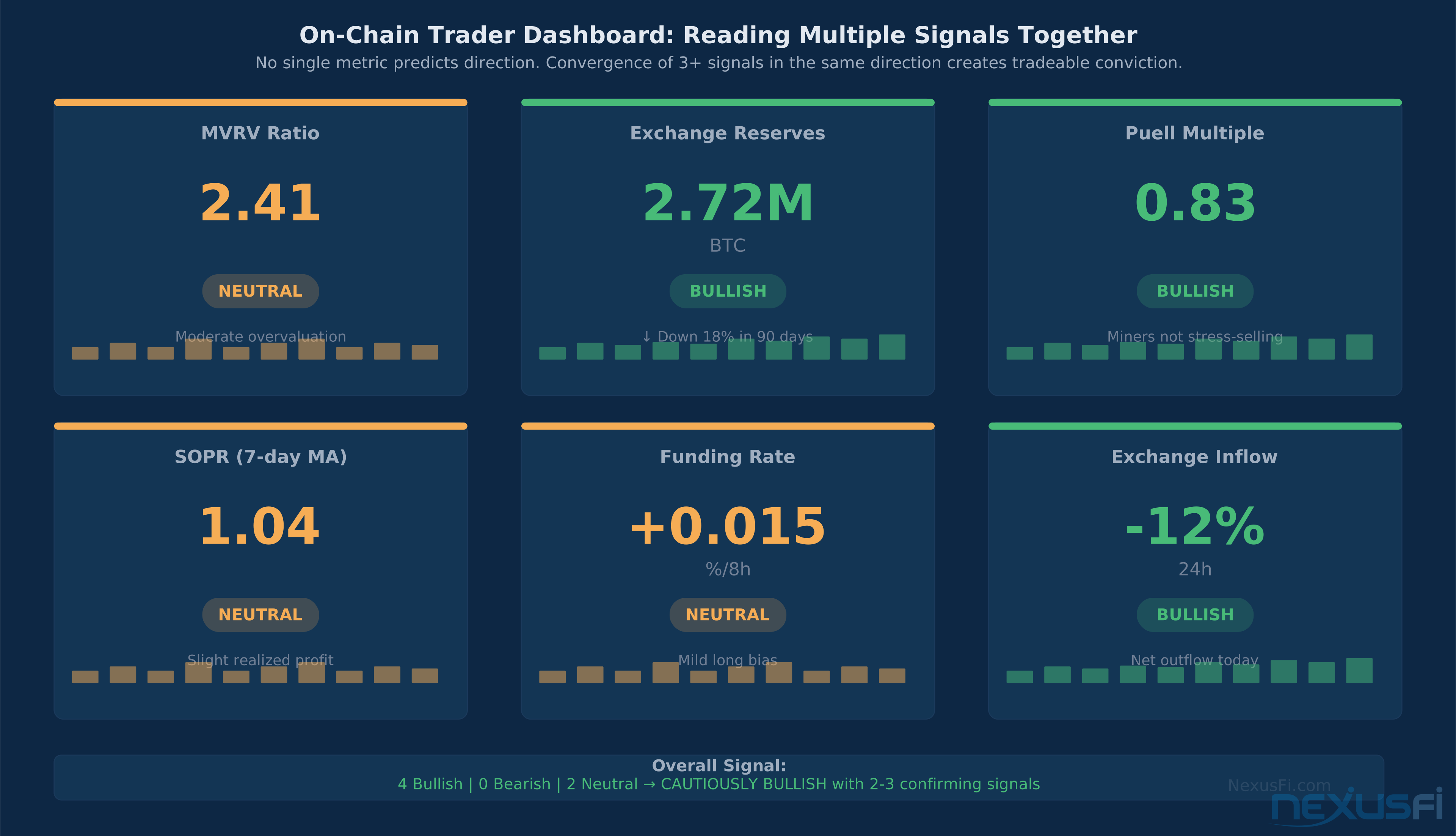
Build a simple on-chain checklist before major position decisions. Score each signal: +1 (bullish), 0 (neutral), -1 (bearish).
- MVRV: Accumulation, neutral, or danger zone?
- Exchange reserves: Trending down or up over 30-90 days?
- Puell Multiple: Below or above 1.0?
- SOPR: Above or below 1.0? Rising or falling?
- Active addresses: Expanding or contracting vs 90-day average?
A composite score of +3 or higher is a structurally favorable environment for long positions. Below -2 is structurally unfavorable. The same consolidation pattern at different on-chain readings tells completely different stories.
Practical Application #
Weekly Review Routine (15 minutes)
On-chain analysis does not require daily monitoring. A weekly review:
- MVRV: Moved between zones since last week? (2.5 to 3.0 warrants attention. 1.5 to 1.6 does not.)
- Exchange reserves: Net accumulation or distribution over the week? (CryptoQuant 7-day net flow chart)
- Any major whale alerts flagged? (Whale Alert for the largest moves)
- Puell Multiple: Approaching 0.5 (miner stress) or 2.0+ (elevated)?
Applying On-Chain to CME Futures Trading
For traders using CME Bitcoin futures — standard BTC or Micro Bitcoin (MBT at 0.1 BTC) — on-chain analysis applies directly as a position sizing and bias tool. When on-chain signals are structurally bullish, sizing on long setups can be more aggressive and stop management more generous. When signals are concerning (MVRV above 3.5, exchange reserves surging), short setups deserve more attention and long stops should be tighter. CME's regulated Bitcoin futures now trade 24/7 starting May 29, 2026.[8]
What On-Chain Cannot Do
Short-term noise: On-chain signals are most useful over weeks and months — not for intraday timing.
Exchange attribution errors: Not all tracking services correctly classify exchange wallets. OTC deals occasionally misread as exchange inflows.
Changing market structure: ETF custody (Coinbase Custody holding coins for BlackRock, Fidelity, etc.) means more Bitcoin is "effectively in custody" without appearing in traditional exchange wallet metrics. Standard exchange reserve figures undercount potential supply in ways they did not before 2024.
As on-chain analysis has become mainstream, some large players use multi-hop transactions to obscure intent. The information edge from raw on-chain data has compressed somewhat. Use it as a structural layer, not a surveillance tool — the macro signals (cycle position, accumulation vs distribution trends) remain reliable even as individual large moves become harder to interpret.
Knowledge Map
Go Deeper
Build on this knowledgeReferences This Article
Articles that build on this topicCitations
- — Building an alpha out of on-chain data? (2022) 👍 3“Glassnode have a "The Week On-Chain" newsletter that does an interesting dive into a lot of chain metrics. You can access these metrics real time for a fee.”
- — Building an alpha out of on-chain data? (2022) 👍 5“On the question can "on-chain" data improve a trading strategy? I have now the clear answer: Yes. On a very base and simple MACD / Moving averages trading bot, the result on 5yr was 140%, adding an on-chain metric filter, the result was boosted to above 450%.”
- — Building an alpha out of on-chain data? (2022) 👍 4“Stock to Flow is a metric used to assume bitcoin price based on its scarcity -- the scarcity is calculated by dividing currently circulating coins to newly supplied coins.”
- — Building an alpha out of on-chain data? (2022) 👍 2“Has anybody tried to create an alpha with on-chain data for a crypto currency, eg. bitcoin? For example using deep learning to find features that could provide a clue into future direction?”
- — Building an alpha out of on-chain data? (2022) 👍 2“Yes I looked into Glassnode and also CryptoQuant that has a similar offering of on-chain data -- roughly 100+ on-chain parameters to test out.”
- — Crypto Crossroads: Will BTC & ETH Crash 50% or Rally 50% First? (2025) 👍 2“The on-chain data backs you up. The ETF cost basis numbers tell the story. Spot Bitcoin ETFs hold an average entry around $84,000-$90,000 -- these buyers are not long-term holders liquidating, they are institutions who bought at the top and are not selling.”
- — Bitcoin Futures by the CME (2017) 👍 5“There are 1000 BTC wallets that have >$28M and can single-handedly crash the entire BTC market. How many institutions do you think can move ES by 2%? It's a different magnitude of whale risk.”
- — Interactive Brokers Launches Coinbase Derivatives Nano Bitcoin and Ether Futures (2026) 👍 1“CME Group grew their ADV in 2025 to a record 278,000 contracts (~$12 billion notional daily). Open interest climbed 82% YoY to nearly 300,000 contracts. The regulated crypto futures market is legitimate.”
- Glassnode — On-Chain Market Intelligence Platform (2025)
- CryptoQuant — On-Chain Analytics and Exchange Data (2025)
- Dune Analytics — Community Blockchain Data Dashboards (2025)