



Stablecoins: USDT, USDC, DAI, and How Traders Actually Use Them
Overview #
Every futures trader who touches crypto eventually runs into the same question: where do you park value between trades? The answer, almost universally, is stablecoins. But "stablecoin" is a bucket that contains wildly different risk profiles — from battle-tested dollar-backed tokens to algorithmic experiments that imploded and wiped out $40 billion in a week.
Stablecoins are cryptocurrency tokens designed to maintain a fixed value, usually $1.00 USD, by pegging to a reference asset. In practice they function as the cash layer of crypto markets — the settlement currency for trading, the collateral for margin, the risk-off vehicle when volatility spikes. If you're trading BTC or ETH futures, you're interacting with stablecoins constantly, whether you realize it or not.
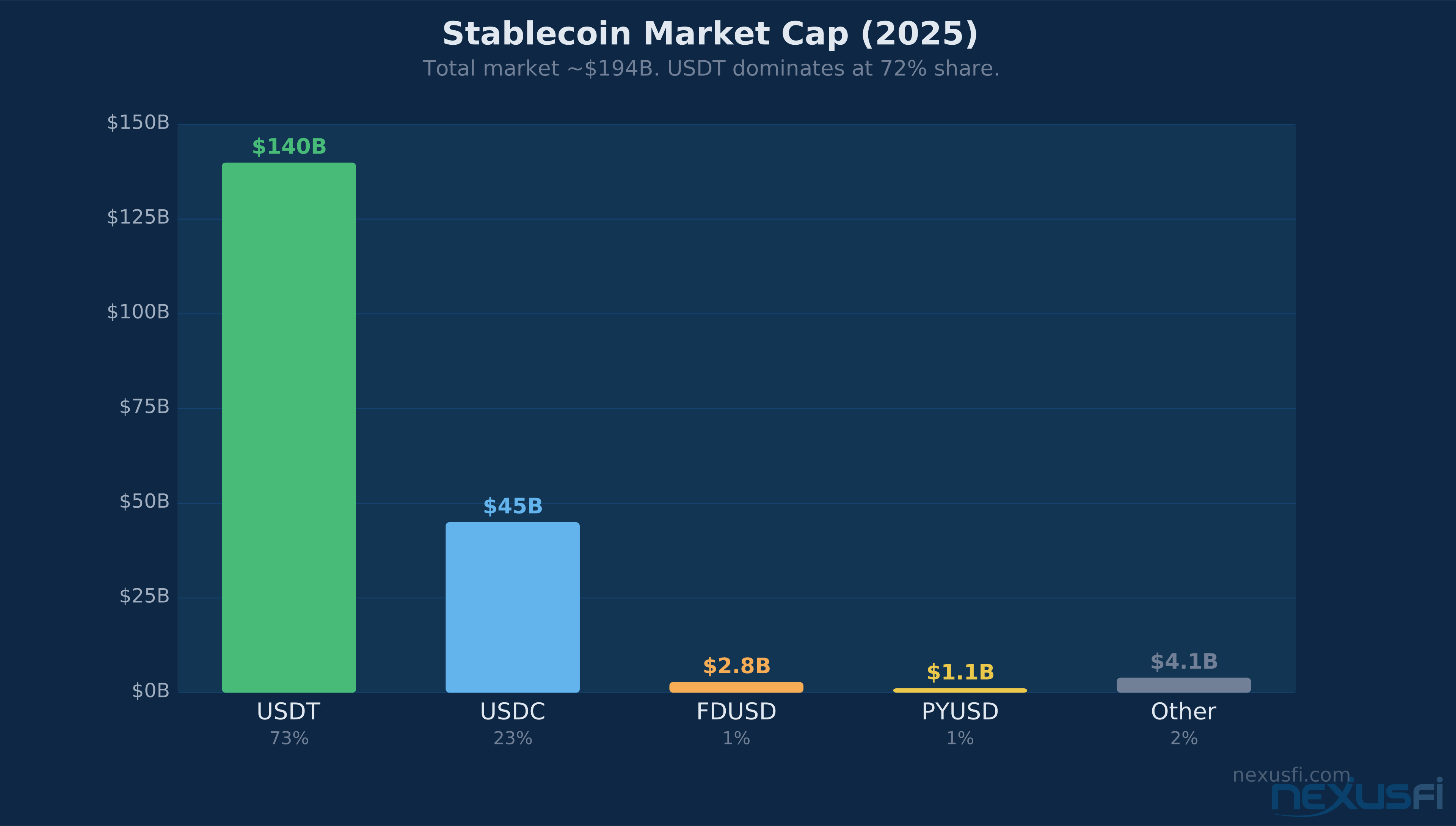
The total stablecoin market is around $194 billion as of 2025. USDT alone processes more daily volume than Bitcoin and Ethereum combined on most exchanges. For a futures trader, understanding stablecoins isn't optional; it's table stakes for operating in this market.
This guide covers the mechanics behind each major type, why they occasionally fail, how professional traders actually use them, and the regulatory shift that's bringing stablecoins into institutional-grade futures markets.
The Three Types of Stablecoins #
Not all stablecoins work the same way, and the differences matter for risk management. There are three fundamental designs:
Fiat-backed stablecoins hold real dollars (or dollar-equivalent assets like treasuries) in reserve accounts. For every USDT or USDC token in circulation, the issuer claims to hold $1 in assets. The peg holds as long as those reserves exist and as long as users can redeem tokens for fiat. USDT and USDC dominate this category.
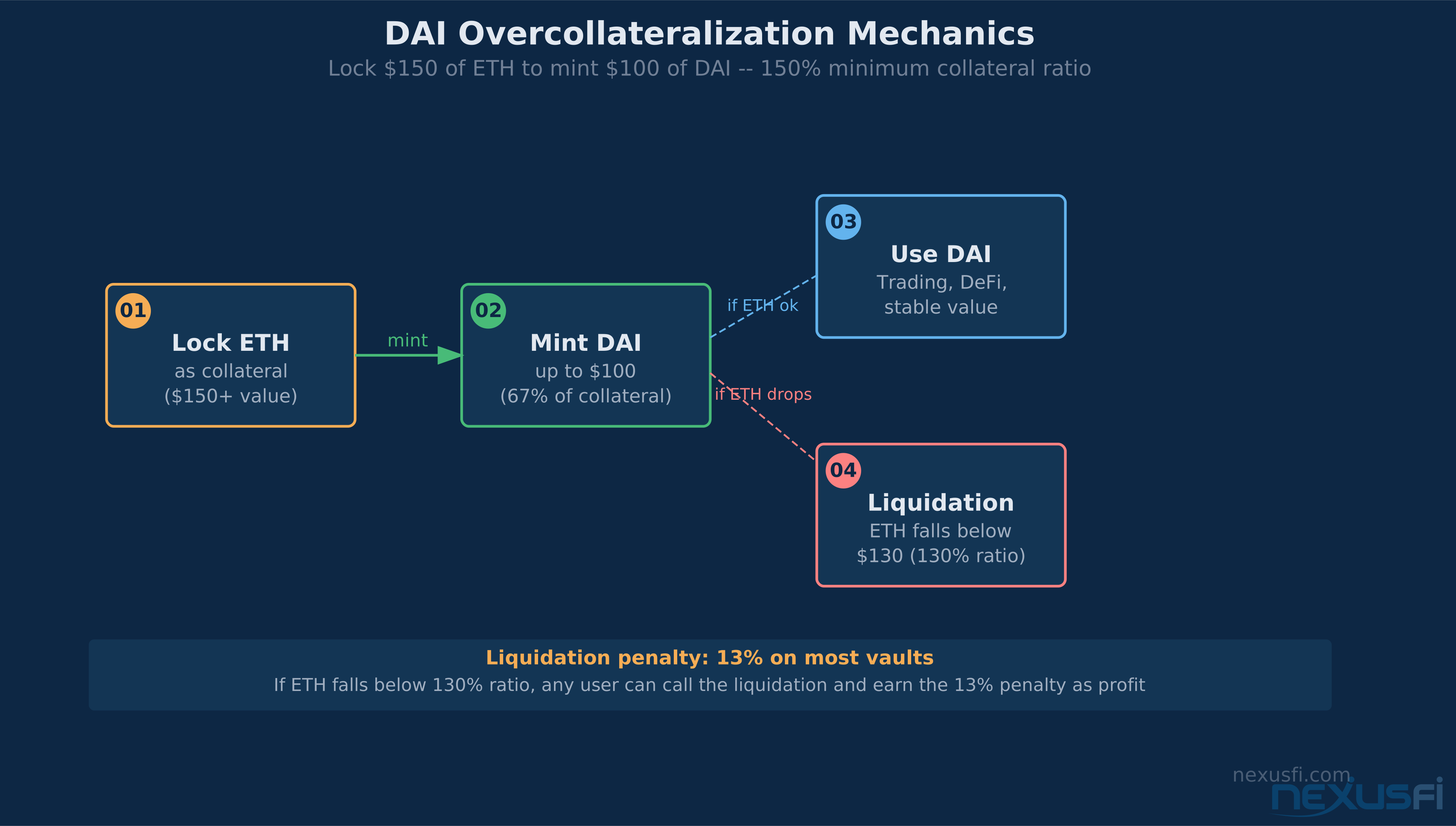
Crypto-collateralized stablecoins are backed by other cryptocurrencies, typically ETH or BTC, held in smart contracts. Because crypto is volatile, these systems require overcollateralization — you lock $150 of ETH to mint $100 of stablecoin. DAI, created by MakerDAO, is the primary example. The peg is enforced mechanically by automated liquidations when collateral values drop.
Algorithmic stablecoins attempt to maintain the peg through software mechanisms rather than reserves — typically by dynamically minting or burning a companion token. They're the highest-risk category. UST/Luna showed what happens when confidence in the mechanism breaks down.
The distinction that matters for trading: fiat-backed stablecoins carry counterparty risk (trust the issuer). Crypto-backed stablecoins carry smart contract risk and collateral volatility risk. Algorithmic stablecoins carry reflexivity risk — the peg can fail catastrophically once market confidence breaks.
USDT (Tether): The Market Liquidity King #
Tether's USDT has been the dominant stablecoin since 2014, holding roughly 72% of the stablecoin market at over $140 billion market cap. Every major crypto exchange quotes perpetual futures, spot pairs, and cross-margin positions in USDT. If you're active in crypto futures, you're using Tether.
The core value proposition is depth. USDT has deeper liquidity than any competitor on virtually every exchange. Bid-ask spreads on USDT pairs are tighter than USDC pairs on most venues. For high-frequency arbitrage or large position scaling, that liquidity difference is real money.
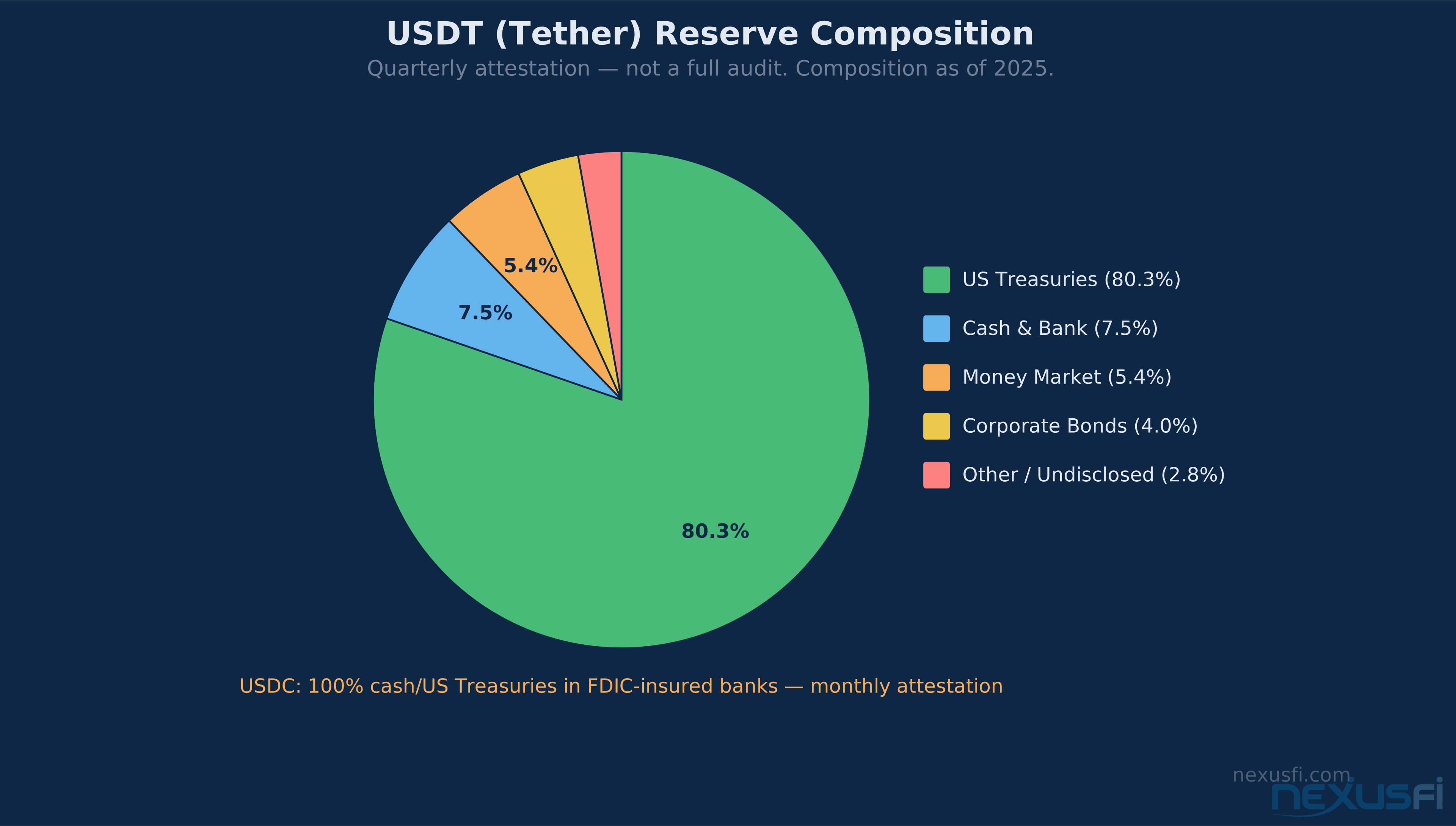
Tether publishes quarterly attestations (not full audits) showing reserve composition. As of 2025, roughly 80% is in US Treasuries, 7.5% in cash and bank deposits, 5.4% in money market funds, with the remainder in corporate bonds and other assets. That's materially better than the commercial paper-heavy composition that caused concern in 2021, but it's still not a full audit from a major accounting firm.
The 2021 NYAG settlement ($18.5 million) and the 2023 CFTC settlement ($41 million) resolved without admitting wrongdoing, but they established that oversight of USDT's reserves has been inconsistent. For institutional scale positions, that's a risk to weigh.
In practice, USDT has never failed to redeem at $1. Through the March 2020 COVID crash, the UST collapse in May 2022, and the FTX implosion in November 2022 — USDT maintained its peg. Brief depegs of a few cents occurred during peak panic, but redemptions processed and the peg recovered. As @SMCJB discussed in the Bitcoin Futures thread, the practical reality is that USDT's depth makes it the operational choice even when the theoretical risk is higher:
USDC (Circle): The Regulated Alternative #
USDC was launched in 2018 as a direct response to USDT's opacity. The design: 100% of reserves held in cash and US Treasuries at FDIC-insured banks, with monthly attestations from a major accounting firm and on-chain proof of reserves. Circle holds a money-transmitter license in most US states.
This shows up in where USDC is used. Institutional prime brokers, regulated US exchanges, and OTC desks default to USDC. The CFTC's 2025 digital asset pilot explicitly listed USDC as acceptable margin collateral at FCMs. For anyone operating within a regulated institutional framework, USDC's licensing and audit trail matter.
The tradeoff is liquidity breadth. USDC has $45 billion in market cap against USDT's $140 billion. On offshore exchanges, USDT pairs will generally offer tighter spreads. For traders who need maximum depth on perpetual futures, USDT wins. For traders who need regulated exchange-compliant margin, USDC is often the only option.
One important USDC risk materialized in March 2023: Circle held $3.3 billion of USDC reserves at Silicon Valley Bank when SVB was seized. USDC briefly depegged to $0.87 before Circle confirmed the funds were covered. The bank failure risk on fiat-backed stablecoins is real — you're trusting the banking system as well as the issuer.
The fix Circle implemented was to move settlement to a dedicated government money market fund structure that bypasses commercial banking risk. This makes USDC much more resilient to future bank failures.
DAI: Decentralized Overcollateralization #
DAI is the dominant crypto-collateralized stablecoin and the primary stablecoin for DeFi applications. You lock ETH (or other approved collateral) in a MakerDAO smart contract called a Vault, and the protocol mints DAI against that collateral at a minimum 150% collateralization ratio.
Here's what that means in practice: you want to mint 1,000 DAI. You need to lock at least $1,500 worth of ETH. If ETH drops and your collateral ratio falls below 130%, any market participant can liquidate your vault — they pay off your DAI debt and take your collateral plus a 13% liquidation penalty. The peg is maintained mechanically through this automated liquidation pressure.
For traders, DAI functions as an on-chain safe haven that doesn't require trusting a centralized issuer. When you hold DAI, there's no Circle or Tether — your $1 is backed by locked collateral in a smart contract, not a bank account. @alacrity covered the contract risk dimension clearly in the NexusFi trading platforms thread:
The risk profile shifts so. You're exposed to smart contract vulnerabilities in the MakerDAO protocol. You're exposed to collateral volatility — during a fast ETH crash, liquidations can cascade faster than the system can clear them. The March 2020 crash demonstrated this: ETH fell so fast that some vaults hit zero collateral before liquidation bots could act.
DAI has expanded its collateral types much. MakerDAO now accepts USDC, wrapped BTC, LP tokens, and real-world assets as collateral. This reduced the pure ETH-crash risk but introduced a complication: much of DAI's collateral is now USDC, meaning the "decentralized" stablecoin has significant centralized-stablecoin exposure underneath.
Algorithmic Stablecoins: The UST/Luna Case Study #
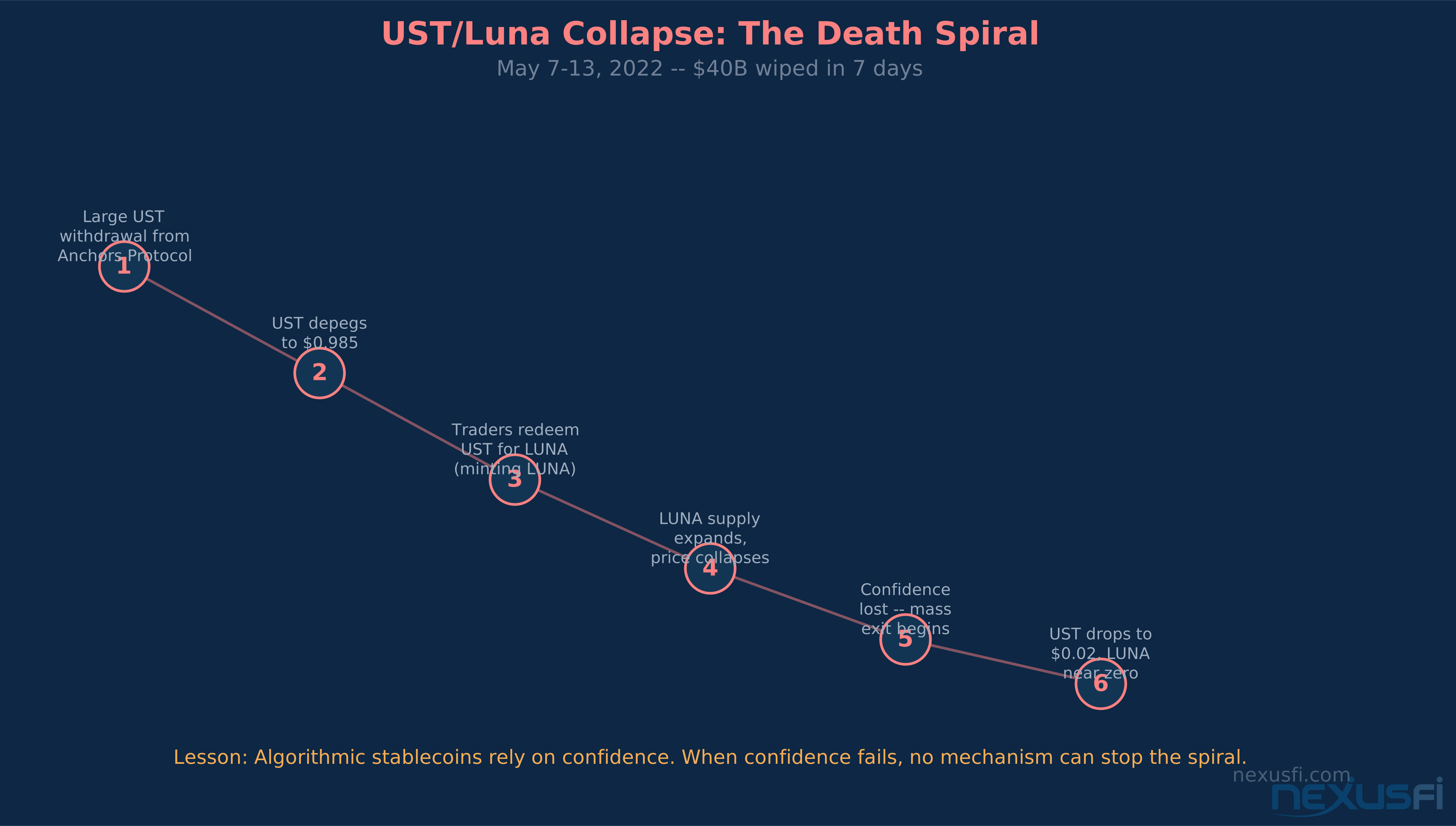
UST was the algorithmic stablecoin created by Terraform Labs. At its peak in April 2022, it was the third-largest stablecoin at $18.7 billion. By May 13, 2022, UST was worth $0.02. The collapse wiped out $40 billion in value in seven days.
UST maintained its peg through a mint/burn mechanism with LUNA. If UST traded below $1, you could always redeem $1 of UST for $1 worth of LUNA. If UST traded above $1, you could mint new UST by burning $1 of LUNA. This arbitrage mechanism theoretically kept the peg tight.
The problem is reflexivity. When UST starts to depeg downward, holders redeem UST for LUNA. But this mints new LUNA, increasing LUNA supply and depressing its price. Cheaper LUNA means less dollar value per redemption, which means UST stays depegged, which means more redemptions, which means more LUNA printed, which means more LUNA price decline. The spiral is self-reinforcing with no floor.
The trigger in May 2022 was a large withdrawal from Anchor Protocol — a DeFi yield product paying 19.5% APY on UST deposits, subsidized by Terraform. When $3 billion of UST was withdrawn from Anchor in quick succession, enough selling pressure pushed UST slightly below $0.985. That was enough to start the flywheel.
Within 72 hours, Terraform's Bitcoin reserve fund — supposed to defend the peg — was exhausted. The LUNA supply went from 345 million tokens to 6.5 trillion tokens in four days. As @SMCJB tracked in the CME Bitcoin Futures thread, this kind of reflexivity risk is at the core different from counterparty risk — once confidence breaks, the mechanism designed to restore the peg actively accelerates the collapse:
The lesson from UST applies to any algorithmic design: the peg mechanism works until it doesn't, and the failure mode is binary. There's no partial failure. The instrument either holds its peg or it collapses toward zero.
How Traders Actually Use Stablecoins #
Stablecoins aren't just risk-off parking spots. For active crypto traders, they're operational infrastructure with several specific applications.
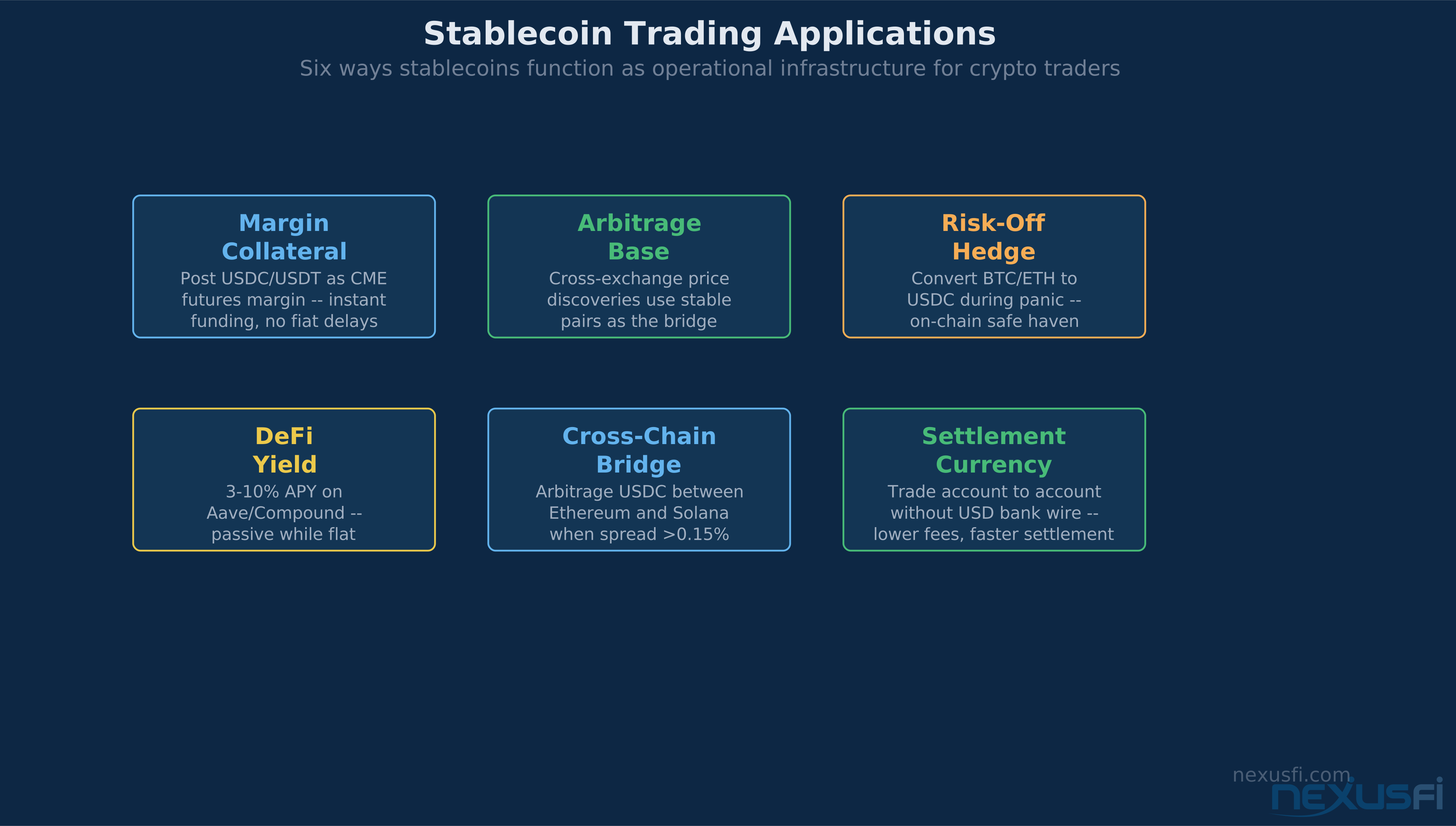
Margin collateral at regulated venues. The CFTC's 2025 digital asset pilot program allows FCMs to accept BTC, ETH, and USDC as margin collateral for futures contracts. This is significant for traders who want CME exposure without moving money through fiat wires. USDC posted as margin at a regulated US FCM carries a categorically different risk profile than USDT on an offshore exchange.
Cross-exchange arbitrage. When BTC perpetuals on Binance trade at a premium to CME futures, the arb involves buying CME and selling Binance perpetuals. The settlement leg happens in USDT on Binance and USD at CME. Stablecoins are the bridge that makes the position portable between venues without slow bank wires. The technical flow for crypto-CME basis trades was discussed extensively in the NexusFi cash-and-carry thread:
Cash-and-carry arbitrage. When crypto spot trades at a discount to futures, you buy spot and sell futures to capture the spread. Stablecoins held on-exchange accelerate the funding cycle for these strategies.
DeFi yield on idle capital. USDC and DAI on Aave or Compound typically yield 3-8% APY depending on market conditions. For a trader with idle capital between setups, that's meaningful return on cash that would otherwise sit at zero. The risk is smart contract exposure.
Risk-off hedging without fiat friction. When a macro event is coming — CPI print, FOMC, geopolitical shock — converting crypto exposure to USDC takes seconds on-chain. The same operation through a fiat bank wire takes 1-3 business days. For traders managing overnight or weekend risk, stablecoins provide a risk-off tool that actually works in crypto-native timeframes.
Cross-chain arbitrage. When USDC on Ethereum trades at a slight premium to USDC on Solana due to bridging friction, there's a spread to capture. These opportunities are usually sub-0.15% and compress quickly, but they exist for traders operating natively on-chain. As @Big Mike noted when surveying crypto platforms, the infrastructure for moving between chains has improved much since early DeFi days:
Choosing the Right Stablecoin: A Risk Framework #
There's no universally superior stablecoin — the right choice depends on your specific use case, venue, and risk tolerance.
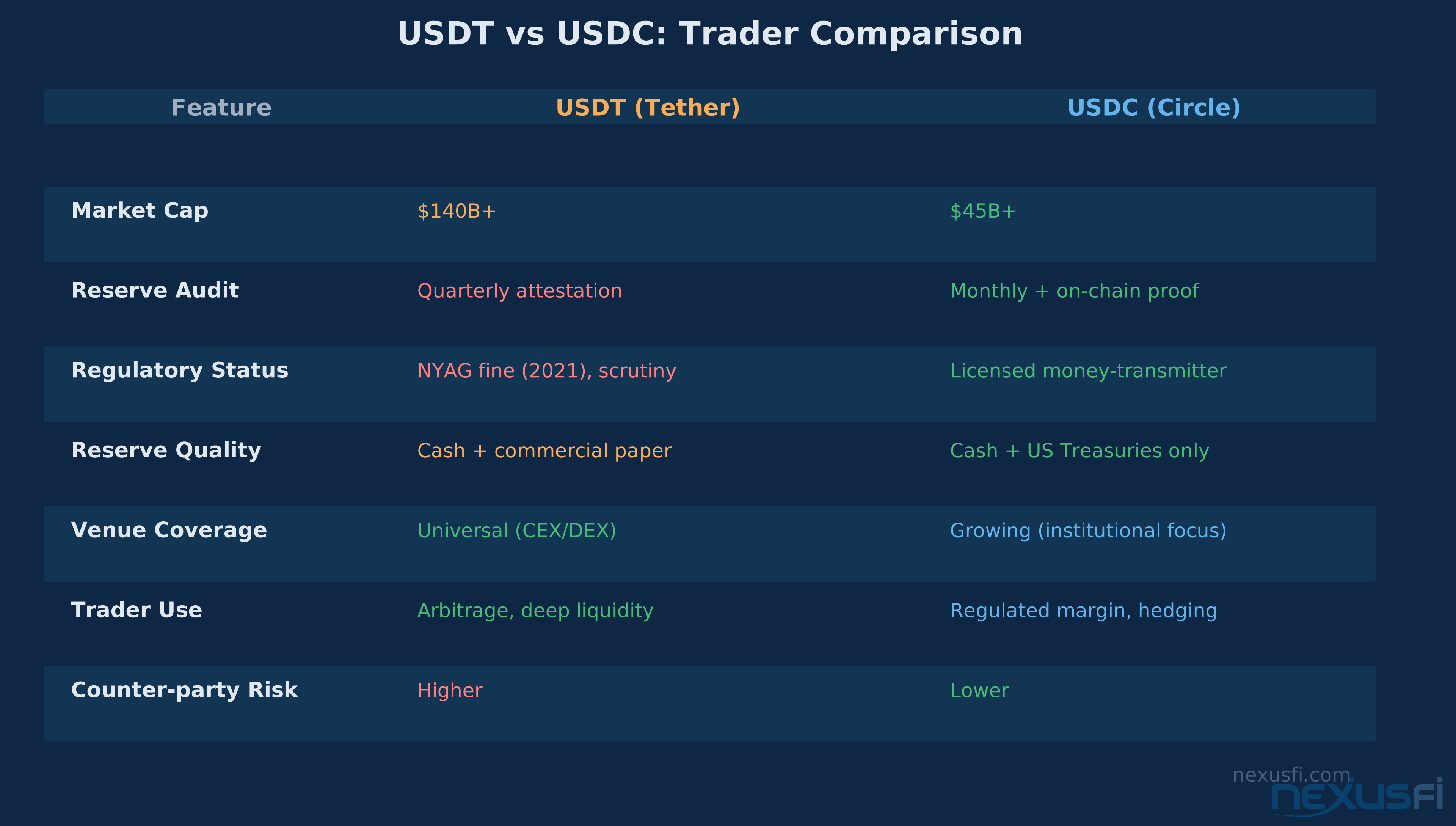
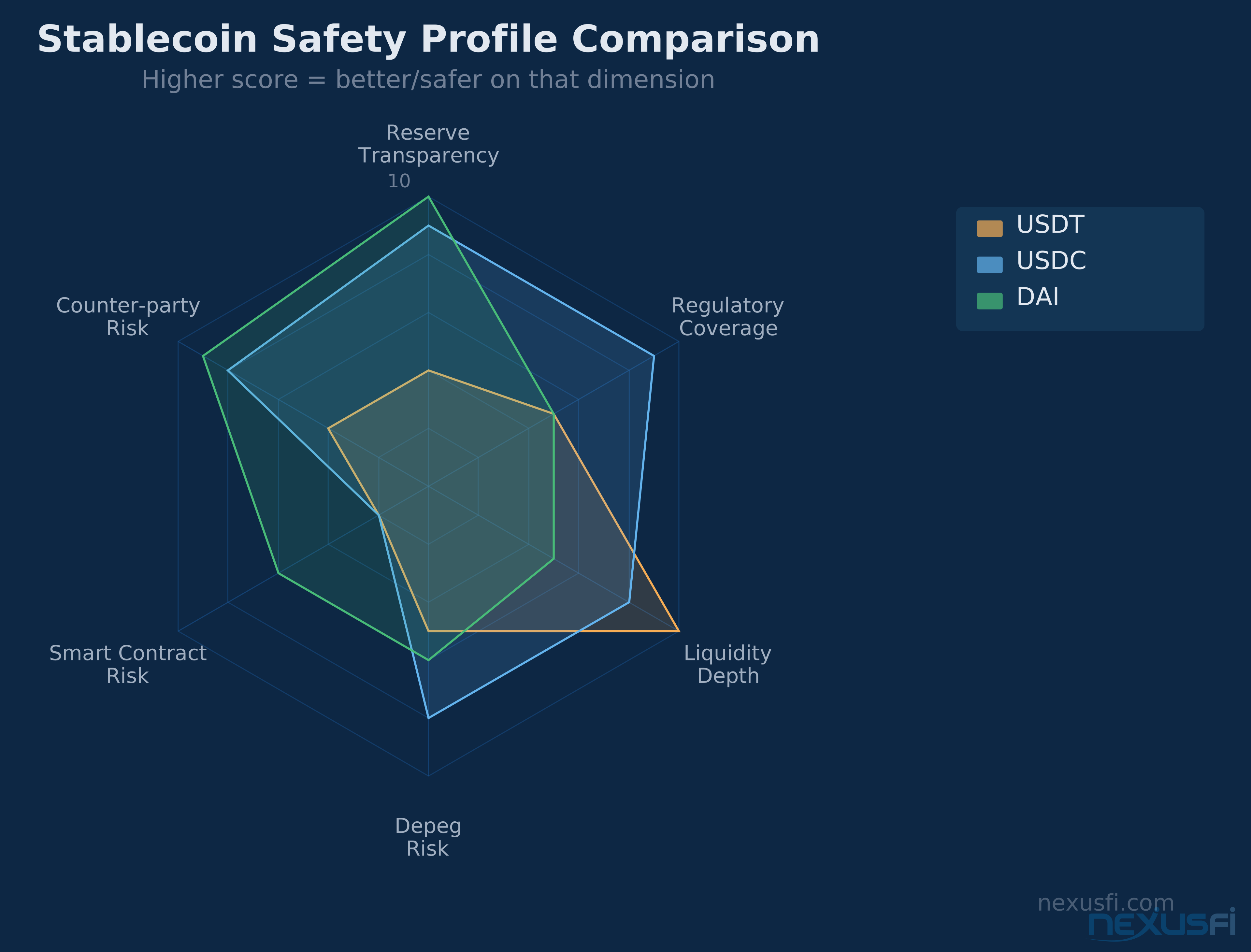
Reserve transparency. USDC leads on this dimension. Monthly attestations, on-chain proof of reserves, regulated money-transmitter structure. USDT has quarterly attestations that are not full audits. DAI has on-chain transparency — you can verify collateral ratios directly on the blockchain at any time.
Regulatory coverage. USDC is licensed in most US jurisdictions. USDT operates without a comparable US license and has faced regulatory actions. MiCA regulation in the EU (effective June 2024) requires all stablecoin issuers to hold a license and maintain audited reserves — USDC is positioned well for MiCA compliance.
Liquidity depth. USDT wins at scale. If you're doing $10-50 million in crypto volume, USDT pair depth on Binance, OKX, and Bybit is unmatched. USDC competes in institutional OTC and regulated exchange contexts. DAI volume is concentrated in DeFi.
Depeg risk. Historical track record favors USDC and USDT, both of which have maintained the peg through multiple crises. DAI has maintained its peg through significant ETH crashes. Algorithmic stablecoins have catastrophically failed when tested at scale.
Smart contract risk. Unique to on-chain stablecoins (DAI, algorithmic). USDT and USDC are token representations of off-chain reserves — the primary risk is the issuer's solvency, not code bugs.
Counterparty risk. USDT and USDC both expose you to their respective issuers' solvency. DAI exposes you to MakerDAO protocol governance and the collateral assets it accepts. The SVB episode showed that fiat-backed stablecoins also inherit banking system counterparty risk.
For most futures traders, the practical decision: use USDT for maximum liquidity on offshore venues; use USDC for regulated US exchange margin requirements; keep DAI for DeFi-specific applications where decentralization matters; avoid algorithmic designs entirely unless you're explicitly speculating on the token.
The Regulatory Shift: 2022-2026 #
The regulatory treatment of stablecoins has moved faster than most market participants anticipated. The trajectory is unmistakably toward integration into the regulated financial system.
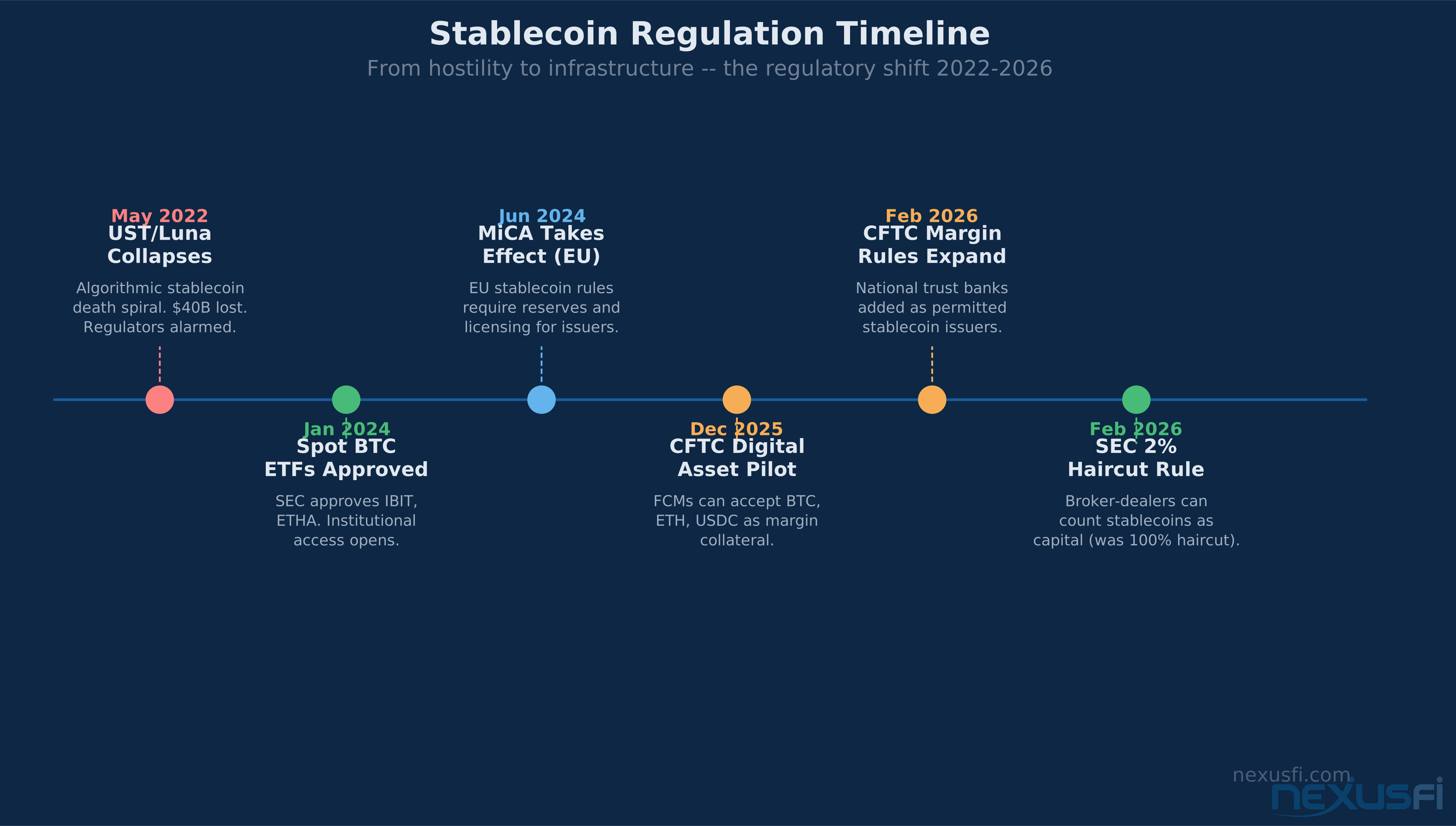
The pivot point was the UST collapse in May 2022. When a $40 billion stablecoin evaporated in a week, regulators concluded that stablecoins posed systemic risk requiring oversight. The question shifted from "should we regulate this?" to "how fast can we implement rules?"
The EU moved first. MiCA took effect in June 2024, establishing the first stablecoin regulatory framework in the world. Any stablecoin issuer serving EU customers must obtain a license, maintain audited reserves, and meet redemption guarantees. USDC's Circle obtained an e-money license in France. USDT was delisted from some EU exchanges that needed to demonstrate MiCA compliance.
The US followed through the CFTC. The December 2025 digital asset pilot program allowed FCMs to accept BTC, ETH, and USDC as margin collateral for futures positions. This was a structural shift: stablecoins moved from a trading tool to regulated margin infrastructure. The February 2026 expansion added national trust banks as permitted stablecoin issuers and changed SEC capital rules so broker-dealers could count stablecoins as capital — previously subject to a 100% haircut, treated as worthless for capital purposes.
For futures traders, this has direct operational implications. As more FCMs accept USDC as margin, the operational workflow for crypto futures improves — faster funding cycles, no bank wire delays, on-chain settlement. As regulatory clarity improves, institutional participation in crypto futures increases, which improves liquidity and reduces basis risk.
Practical Guide for Futures Traders #
Understanding the theory is one thing; knowing which stablecoin to use in which context is what counts for execution.
For offshore exchange operations (Binance, OKX, Bybit, Kraken perpetuals): Use USDT. The liquidity depth and pair coverage is materially better. Size so — don't keep more USDT at any one venue than you'd be comfortable losing if something catastrophic happened to the issuer.
For CME or regulated US exchange operations: USDC is the compliant choice. The CFTC margin rules specifically name USDC. If you're running a cash-and-carry or basis trade between CME and offshore venues, you'll end up holding both — USDC for the regulated leg, USDT for the offshore leg.
For DeFi yield on idle capital: DAI or USDC on Aave/Compound. The yield-risk-complexity tradeoff favors USDC on Aave if you understand the smart contract risk. Don't treat DeFi yields as equivalent to Treasury yields — the risk profile is meaningfully higher.
For risk-off hedging: USDC is cleaner — better reserve transparency, faster fiat redemption if you need to exit crypto entirely. Move to USDC during periods of market stress if you're concerned about stablecoin counterparty risk specifically.
On concentration limits: A standard risk management practice among professional crypto firms is to cap any single stablecoin exposure at 10-20% of total portfolio value. If you have $500k in crypto exposure and $200k in USDT waiting for deployment, that USDT concentration is itself a risk position.
On algorithmic stablecoins: Don't use them as operational capital. Any yield above 15% on an "algorithmic stablecoin" should be read as compensation for holding a lottery ticket with negative expected value. UST had $18.7 billion in market cap and a multi-year track record before it failed.
Monitoring depeg events: The fastest signal for a depeg in progress is the on-chain secondary market price on Curve Finance's 3pool — a liquidity pool containing USDT, USDC, and DAI. When any of the three coins moves off equal weighting, it indicates selling pressure on that coin. The 3pool imbalance was the first clear signal of USDC's SVB depeg before Circle's official statement.
For cross-exchange transfers: USDC over Ethereum (ERC-20) is slower and more expensive but reliable. USDC over Solana is fast and cheap but has experienced network outages. USDT over Tron (TRC-20) is cheap and widely supported. For large operational transfers, Ethereum-native USDC is the conservative choice.
Notable Depeg Events: What Happened and Why #
Every stablecoin has depegged at some point. Understanding the causes and mechanisms helps calibrate the risk in your own positions.
USDT, March 2023 (minor, to premium): USDT briefly traded at $1.0058 — a premium, not a discount. This happened because USDC was depegging to $0.87 during the SVB crisis and traders were fleeing to USDT. USDT can trade at a premium during USDC stress events.
USDC, March 2023 (significant): Circle's $3.3B exposure to SVB created a redemption panic. USDC fell to $0.87 before FDIC intervention confirmed depositor protection. The recovery was complete within 48 hours, but the depeg was real. Lesson: fiat-backed stablecoins inherit banking system risk.
DAI, March 2020 (systemic): ETH fell 35% in a single day during the COVID crash. DAI vaults became undercollateralized faster than the liquidation bot network could clear them. Some liquidations settled at zero. MakerDAO conducted an emergency governance vote to recapitalize through a dilutive MKR token auction. DAI maintained its peg throughout, but the system was genuinely at risk.
UST, May 2022 (catastrophic): $40B lost in seven days. No recovery. The death spiral described earlier. The tokens went to effectively zero.
The pattern across these events: fiat-backed stablecoins depeg when there's uncertainty about reserve quality and recover when that uncertainty is resolved. Crypto-backed stablecoins stress when collateral values crash faster than the liquidation mechanism can operate. Algorithmic stablecoins fail permanently when the confidence feedback loop breaks. These are different failure modes requiring different monitoring approaches.
Knowledge Map
Go Deeper
Build on this knowledgeReferences This Article
Articles that build on this topicCitations
- — Bitcoin Futures by the CME (2019) 👍 3“Margin on both is 37% of notional. So with Bitcoin at $9,400 a CME contract is $47,000 notional so $17,390 in margin. ICE would be the same. Neither are primarily retail focused so that may be why they offer it.”
- — Cryptocurrency Trading Platforms (2021) 👍 3“Yes, there is contract risk with every DeFi platform. 1. There could be a hack/exploit of the contract, and someone could steal your funds. 2. There could be an unanticipated bug...”
- — Bitcoin Futures by the CME (2020) 👍 1“Coinbase is the largest US based exchange. They require 100% margin on all positions, do not allow short selling, and unless you qualify for a pro account their fees make futures trading uneconomical.”
- — Exiting BTC with a Cash and Carry Premium Arbitrage (2021) 👍 3“To perform cash and carry with regulated futures you actually need 135% of the Bitcoin value. The cash implications of the margin requirement on the futures leg is definitely a factor.”
- — Recommended Crypto Platform/Exchange (2021) 👍 4“Just use Coinbase to get money in, then transfer it. Check Zerion for latest DeFi offerings if you are looking for bleeding edge.”
- — Webinar: Ethereum Futures from CME Group (2021) 👍 6“Rumor is HFs are short Bitcoin futures, with the speculation that they are short futures, versus long actual coins, collecting the yield, which is currently about 8%.”
- — The New Micro Contract - MICRO BITCOIN coming May 2021 (2021) 👍 4“Bitcoin $60k, CME Micro 0.1 Bitcoin = $6k Notional, with margin requirement of $2520 -- the micro contracts make crypto futures accessible at more manageable capital requirements.”