



Meme Coins: DOGE, SHIB, PEPE, and How to Trade Pure Speculation
Overview #
Meme coins are the most honest instruments in crypto. They don't pretend to be anything other than what they are: pure speculation dressed as a joke. No revenue model, no product roadmap worth believing, no technology thesis. Just community momentum, viral energy, and the hope that someone else will pay more than you did.
That honesty is actually useful. Unlike projects that wrap speculation in utility narratives, meme coins force you to trade them correctly from the start — as momentum plays, not investments. The traders who profit from meme coins do so because they understand this completely. The traders who get destroyed are the ones who convince themselves otherwise.
This article is about the mechanics. What actually drives meme coin prices. How to analyze them on-chain. When to enter, when to exit, and how to recognize a rug pull before your money is gone.
The Three Types of Meme Coins #
Not all meme coins are the same. They split into roughly three categories with very different risk profiles.
Cultural icons — DOGE, SHIB, PEPE. For foundational crypto concepts, see the Cryptocurrency Trading Fundamentals guide. These have survived multiple market cycles and have genuine community following. DOGE has been around since 2013. It has no intrinsic utility but it has cultural staying power, mainstream recognition, and enough liquidity that Coinbase and Binance both list it. Trading volume is real and deep. You can actually get out.
Ecosystem meme coins — BONK, WIF, BRETT, POPCAT. These launched on specific blockchains (Solana, Base) and rode the narrative of that ecosystem's growth cycle. BONK launched as a "community airdrop" on Solana in late 2022 when the chain was recovering from FTX collapse. WIF became the Solana meme coin cycle leader in 2023-2024. These have more liquidity risk — they're tied to their ecosystem's health.
Launch coins — everything else. Thousands launch daily on Pump.fun and similar platforms. Most reach $100k market cap and die within 48 hours. A small number survive to $1M. A tiny fraction ever get exchange-listed. Trading these requires different infrastructure (wallets, DEX knowledge, gas management) and dramatically higher risk tolerance.
The strategies differ by category. For cultural icons, you're trading narratives and sentiment cycles. For ecosystem coins, you're trading ecosystem beta with meme coin leverage. For launch coins, you're basically gambling with edge only if you have on-chain data infrastructure to identify momentum before it's public.
The Biggest Meme Coins: DOGE, SHIB, PEPE #
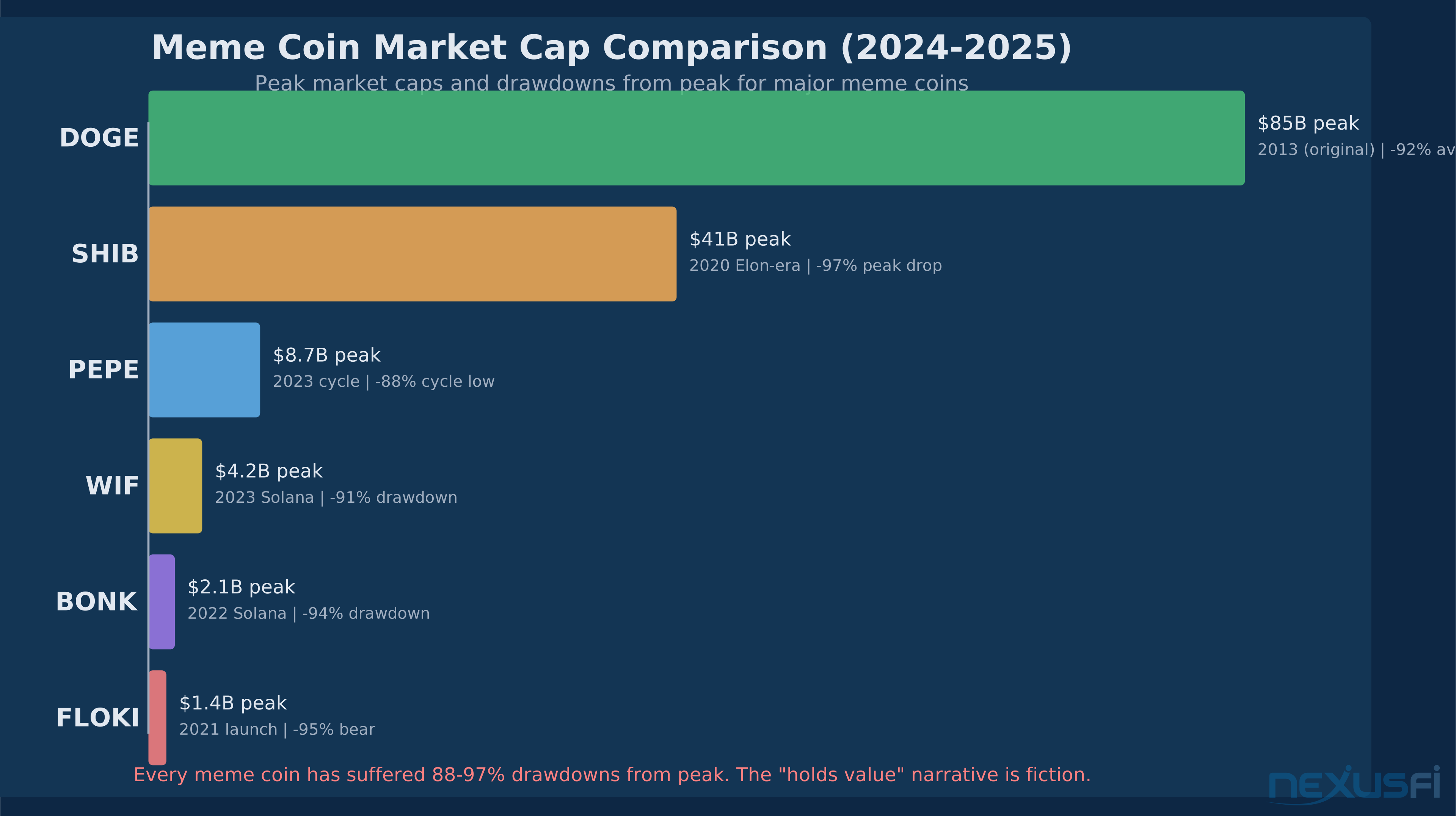
Peak market caps tell one story. Drawdowns tell the real one. DOGE hit $85B in May 2021 then lost 92% within a year. SHIB hit $41B in October 2021 then dropped 97%. Every meme coin has gone through brutal bear cycles — the question isn't if, it's when and whether you're still holding.
Dogecoin (DOGE) launched in December 2013 as a literal joke. Programmer Billy Markus and marketer Jackson Palmer created it in three hours by forking Litecoin and adding the Shiba Inu "doge" meme. They intended it as a parody of the speculative frenzy around early cryptocurrencies. The community embraced it genuinely anyway.
DOGE spent six years as a minor internet novelty with a market cap under $500M. Then Elon Musk started tweeting about it in 2020. By May 2021, DOGE hit $0.73 and an $85B market cap. It had gone up 15,000% in 16 months. Then it lost 92% over the next year as the cycle ended.
The Musk connection is real but unreliable. He has tweeted about DOGE dozens of times, each with diminishing returns. The first tweet in 2020 was worth 30%+ moves. By 2023, Musk tweets moved DOGE 5-10% and faded within hours. The market has partially priced in the trigger.
That's the right framework — the origin story is irrelevant to the trade.
Shiba Inu (SHIB) launched in August 2020 as "the Dogecoin killer." Anonymous developer "Ryoshi" created it as an Ethereum-based token, made half the supply available and sent the other half to Vitalik Buterin's wallet as a gimmick. Buterin donated most of it to charity and burned a portion — events that paradoxically gave SHIB legitimacy through Buterin's involvement.
SHIB hit $41B market cap in October 2021. It has survived partly by building actual ecosystem infrastructure — the ShibaSwap DEX, the Shibarium L2 chain, and various game projects. Whether this utility matters for price is debatable, but it has kept the community engaged through bear cycles.
PEPE launched in April 2023 using the Pepe the Frog meme. It hit $1.5B market cap within two weeks — record-breaking at the time. The 2023 launch caught the market at a specific moment: people were bored with existing meme coins and hungry for new speculative vehicles. PEPE's peak in 2024 reached $8.7B before a -88% drawdown.
PEPE demonstrated something important: even in bear markets, the right meme at the right moment can have explosive launches. The challenge is that those launches compress the entire cycle. PEPE's 2023 run from launch to peak took about three weeks. The window to profit was short.
Solana's meme coin ecosystem emerged during the 2023-2024 bull cycle. BONK (the "community coin of Solana"), WIF ("dogwifhat," a picture of a dog wearing a hat), and dozens of others achieved multi-billion dollar valuations. The Solana ecosystem matters here: lower transaction fees and faster throughput meant launch-to-listing cycles were compressed, retail participation was higher, and pump.fun created an industrial-scale meme coin launch machine.

What Drives Meme Coin Prices #
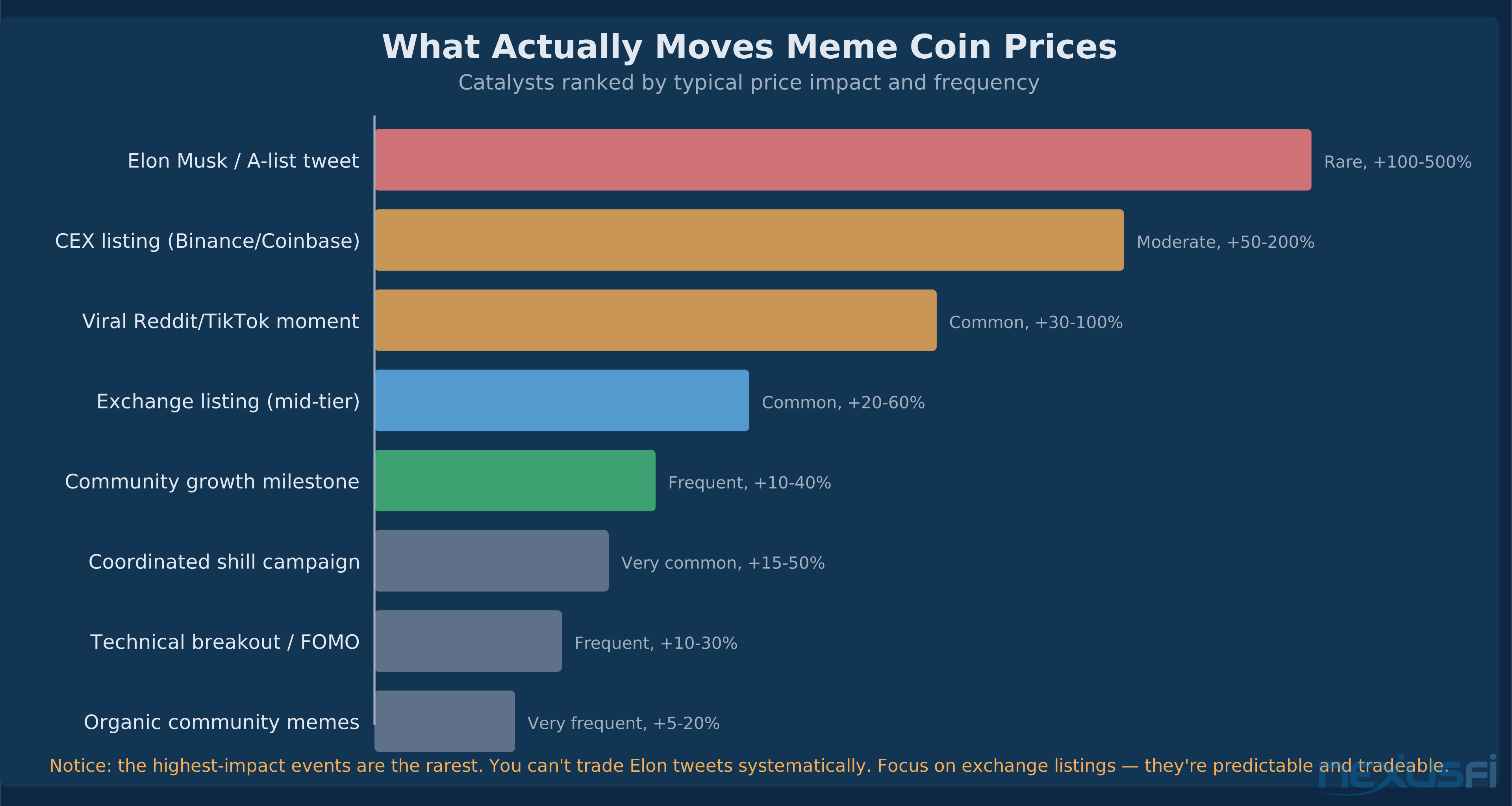
Meme coins are sentiment machines. The highest-impact trigger — an A-list celebrity tweet — is also the least tradeable. Exchange listings are the sweet spot: predictable timing (usually announced 1-7 days ahead), clear price target (30-100% is the historical range), and defined risk (sell the listing day, not after).
Meme coin prices are driven by six forces in roughly this order of impact:
1. A-list celebrity endorsement — An unprompted tweet from Elon Musk, a post from a major influencer with crypto-aligned audience, or a surprise celebrity mention. Impact: 50-500% in hours. Frequency: rare. Tradeable: almost never — by the time you see it, the move is half done.
2. Major exchange listings — Binance or Coinbase listing a meme coin. Historically: +50-200% around announcement, with a secondary pump on listing day. This is the most systematically tradeable trigger. Binance lists are typically announced 1-7 days ahead. The "buy the rumor, sell the news" pattern holds more reliably here than almost anywhere in crypto.
3. Viral social media moments — A Reddit post goes viral, TikTok discovers the coin, Twitter/X hashtag trends. These are partially predictable if you monitor social metrics. Impact varies widely. The key signal is velocity of social mentions, not absolute count.
4. Mid-tier exchange listings — Kraken, OKX, Bybit listing a meme coin. +20-60% is typical. Less explosive than Binance but more frequent and predictable.
5. Coordinated shill campaigns — Large wallet holders (whales) coordinate on Telegram to push social narratives. These look organic but aren't. Signs: sudden spike in lower-quality social content, coordinated talking points across different accounts, volume spike without news. These can work — but they're also often exit-liquidity generation for insiders.
6. Organic community momentum — The coin just keeps being funny and shareable. DOGE survives on this. Hard to manufacture, but valuable when present.
That tension is real. Political meme coins in 2025 expanded the audience but also burned retail badly when they collapsed 70-90% within weeks of launch.

On-Chain Analysis for Meme Coins #
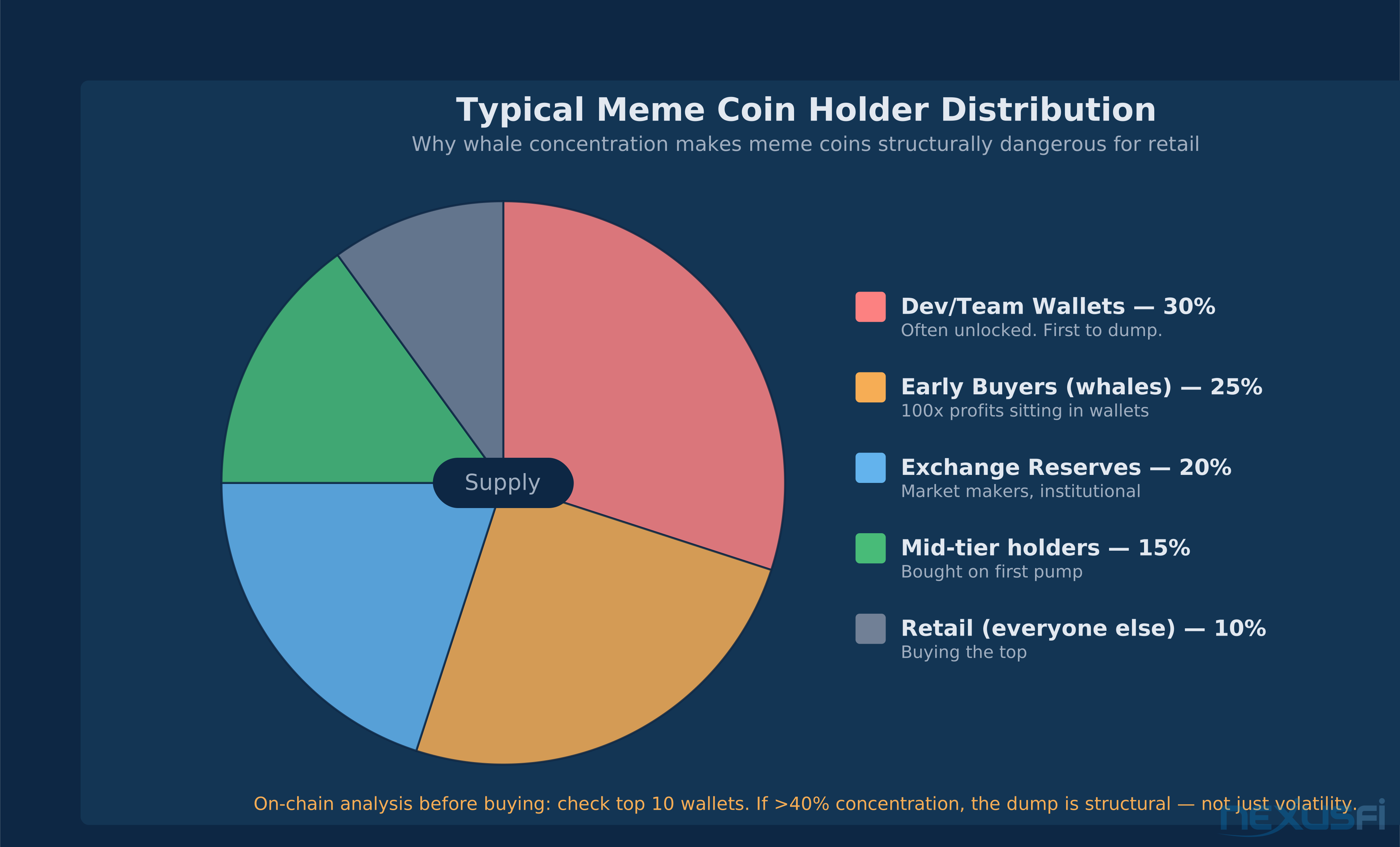
The math works against retail from day one. Dev wallets and early whales control 55% of most meme coins before a single retail buyer touches it. When those wallets unlock — or when sentiment shifts — there is no structural support. The 10% in retail hands are selling into a wall of supply that has 100x cost basis.
On-chain analysis is the closest thing to edge in meme coin trading. Blockchain data is public — you can see exactly what wallets are doing in real time.
Holder distribution analysis — Before buying any meme coin, check Etherscan (Ethereum tokens), Solscan (Solana), or BSCScan (BSC). Look at the top 50 holders. Key questions:
- What percentage do the top 10 wallets hold? Above 40% is dangerous. Above 60% means the top holders can crash the price by selling in coordination.
- Are any large wallets moving? An old whale wallet becoming active after months of dormancy is a major warning sign.
- How many unique holders does the token have? Under 500 is micro. Over 10,000 is when you start getting real market depth.
Liquidity pool analysis — Most new meme coins use DEX liquidity (Uniswap, Raydium). Stablecoins like USDT and USDC are the primary trading pairs on these platforms. Check:
- How much liquidity is in the pool? Under $100k means any sell of size will crater the price (slippage).
- Is the liquidity locked? Locked LP (via Unicrypt, Team.Finance) means the developer can't drain the pool. Unlocked means they can.
- How is the lock structured? Short locks (30 days) are nearly worthless. 6+ month locks with a reputable locker are meaningful.
Contract verification — Check whether the contract is verified on the block explorer. Unverified contracts can hide hidden mint functions (infinite new tokens), fee adjustment functions (change the buy/sell tax to 99%), or freeze functions (prevent selling). Always read the contract code or use a tool like Token Sniffer or RugDoc to scan for known vulnerabilities.
Wallet age and behavior — Fresh wallets (created the same day as the token launch) with large positions are a red flag. These are often developer or insider wallets that will dump once price pumps. Old wallets buying new meme coins can be a bullish signal — experienced traders with a track record are expressing genuine conviction.
Smart money tracking — Platforms like Nansen, Bubblemaps, and Arkham Intelligence let you track wallets with strong historical performance. If several "smart money" wallets accumulate a new meme coin, that's meaningfully different from unknown wallets buying in. This is edge — not guaranteed, but real.
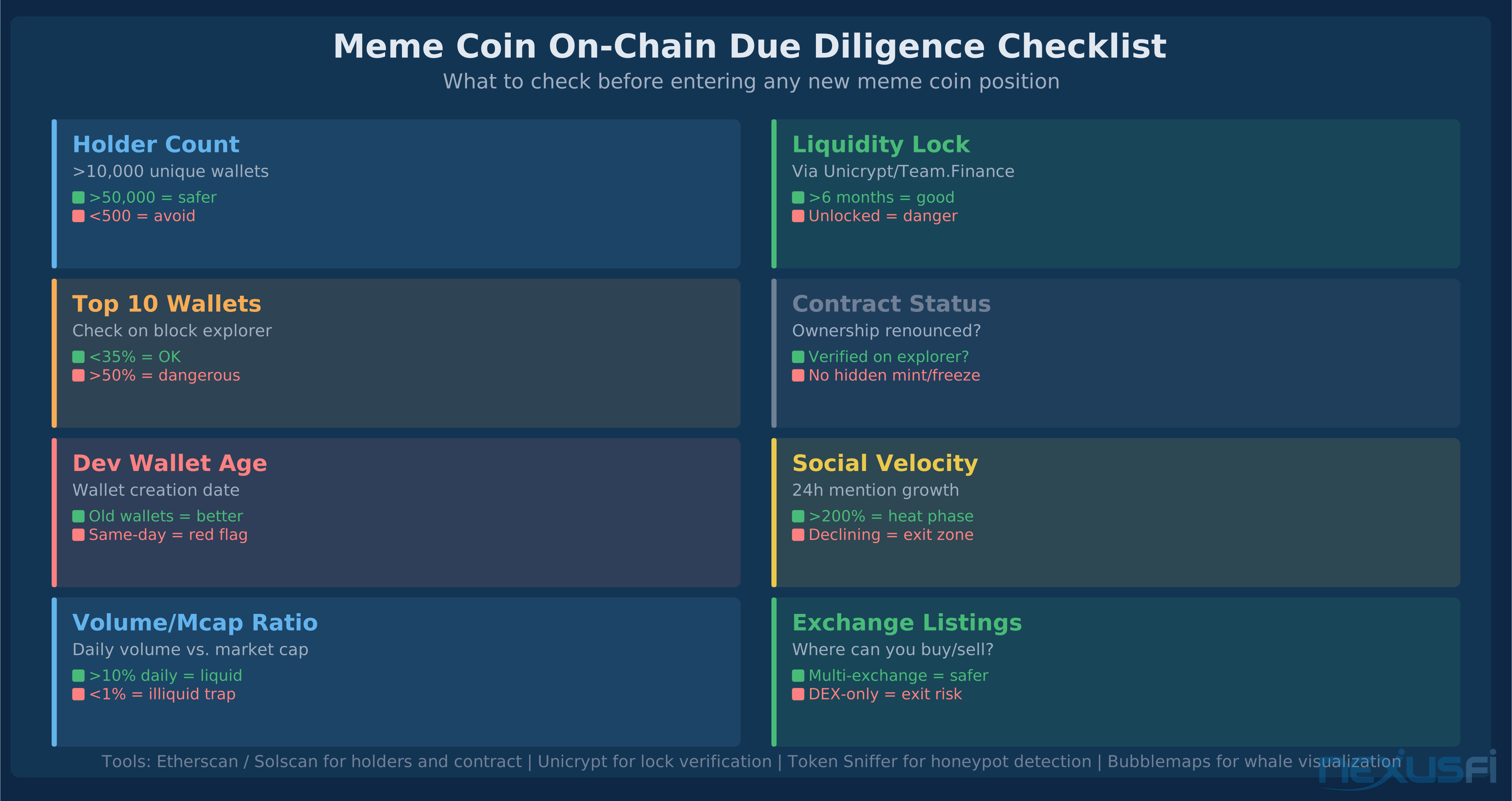
Six-factor due diligence checklist for any new meme coin position. None of these signals are binary — they compound. Three or more red flags means the probability of losing everything is high enough to skip the trade.


Identifying Rug Pulls and Scams #
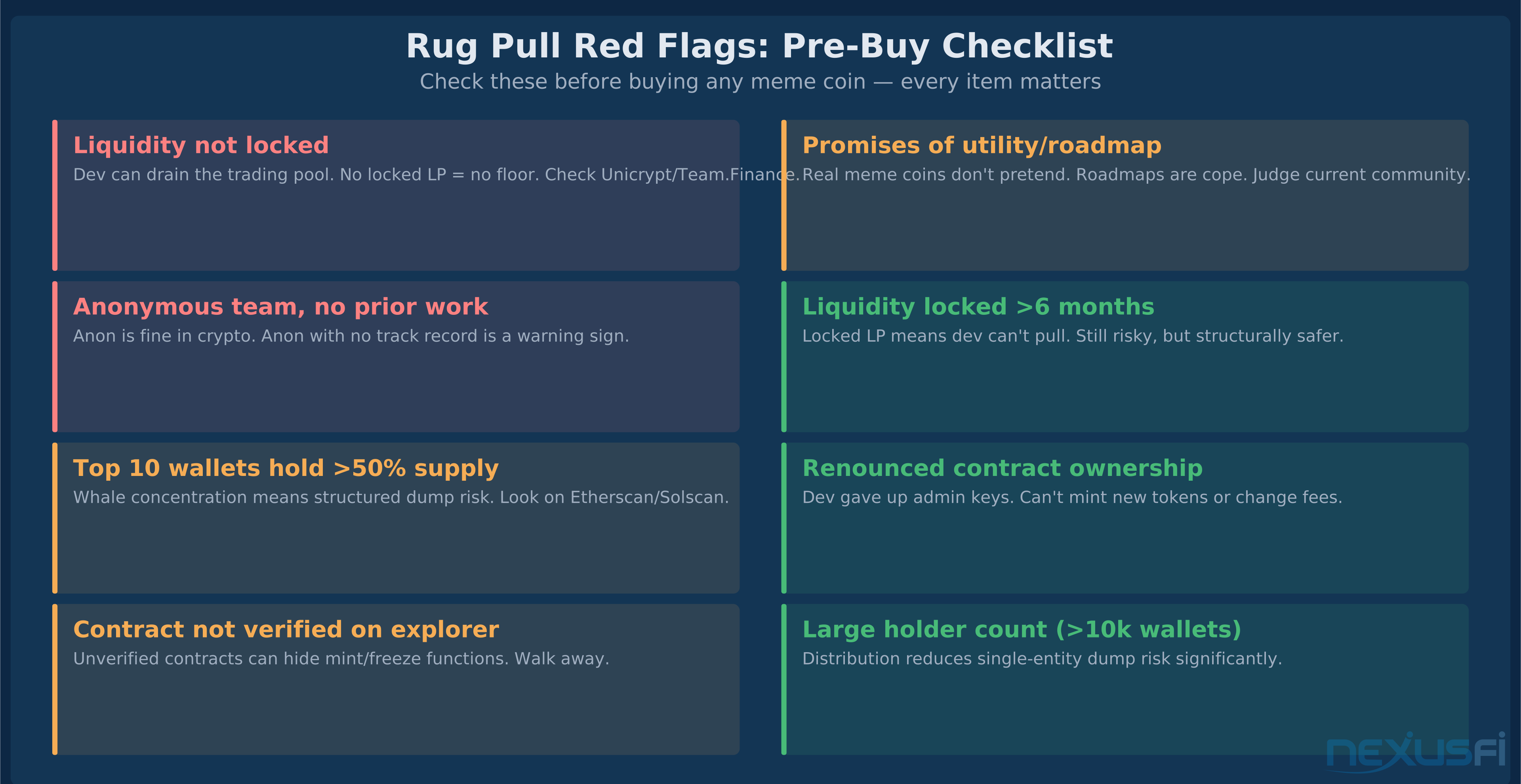
Run this checklist before every meme coin buy. Red flags aren't reasons to walk away on their own — some of the best trades have had red flags. But if you see two or more reds, the probability of a rug or structured dump is high enough to treat it as a lottery ticket: bet what you can afford to lose completely.
Rug pulls are not edge cases — they are the norm for new meme coins. Research suggests 95%+ of coins launched on Pump.fun are abandoned within 48 hours. Always verify locked liquidity and contract ownership before entering a position.
A rug pull is when a developer (or coordinated whale group) drains liquidity or sells tokens in a coordinated way, destroying the price and leaving other holders with worthless tokens. Rug pulls happen constantly in the meme coin space. Understanding the mechanics makes them identifiable in advance — not always, but often enough to avoid the worst ones.
Hard rug — Developer literally removes the liquidity pool or uses a contract exploit to drain funds. This happens in seconds. Price goes to near-zero instantly. Recovery rate: 0%. Prevention: locked liquidity, audited contract, no hidden functions.
Soft rug (slow dump) — Developer or insiders gradually sell their holdings over days or weeks. Price slowly grinds down with periodic small pumps that create exit liquidity. This is harder to detect but has warning signs: developer wallets becoming active after dormancy, steady volume with declining price, social media becoming more desperate/promotional.
Honeypot — Contract is coded so you can buy but cannot sell. Token appears to pump normally, but when you try to sell, the transaction fails. By the time you realize, insiders have already exited. Prevention: test with a small amount first, check Token Sniffer for honeypot detection.
Pump and dump — Coordinated buying by a group inflates price, generates social buzz, then coordinated selling at peak. This is technically illegal in traditional markets (market manipulation), but crypto enforcement is limited. The pattern is distinguishable: volume spike with coordinated social activity, rapid price increase without fundamental trigger, followed by sudden sharp reversal.
Exit liquidity generation — A subtler version. Insiders buy large positions early, then aggressively promote to retail. Retail buys in, providing exit liquidity for insiders who sell gradually. The meme coin continues to exist and trade, but insiders have already extracted most of the value.

The $TRUMP Case Study: Political Meme Coins #
The January 2025 launch of $TRUMP (and shortly after, $MELANIA) demonstrated both the appeal and danger of meme coins at scale.
The token reached $75 in the hours after launch, giving it a fully diluted valuation over $70B.
The mechanics were instructive. Only 20% of tokens were available at launch. The remaining 80% were locked with progressive unlock schedules controlled by the Trump organization. By May 2025, $TRUMP had lost over 85% from its peak as early insiders had sold progressively into retail buying.
The lesson: even when the celebrity endorsement is the literal President of the United States, the token structure determines outcomes. Insiders with 80% supply and defined unlock schedules = structural sell pressure that retail cannot overcome regardless of fundamental sentiment.
Meme Coins vs. Legitimate Projects #
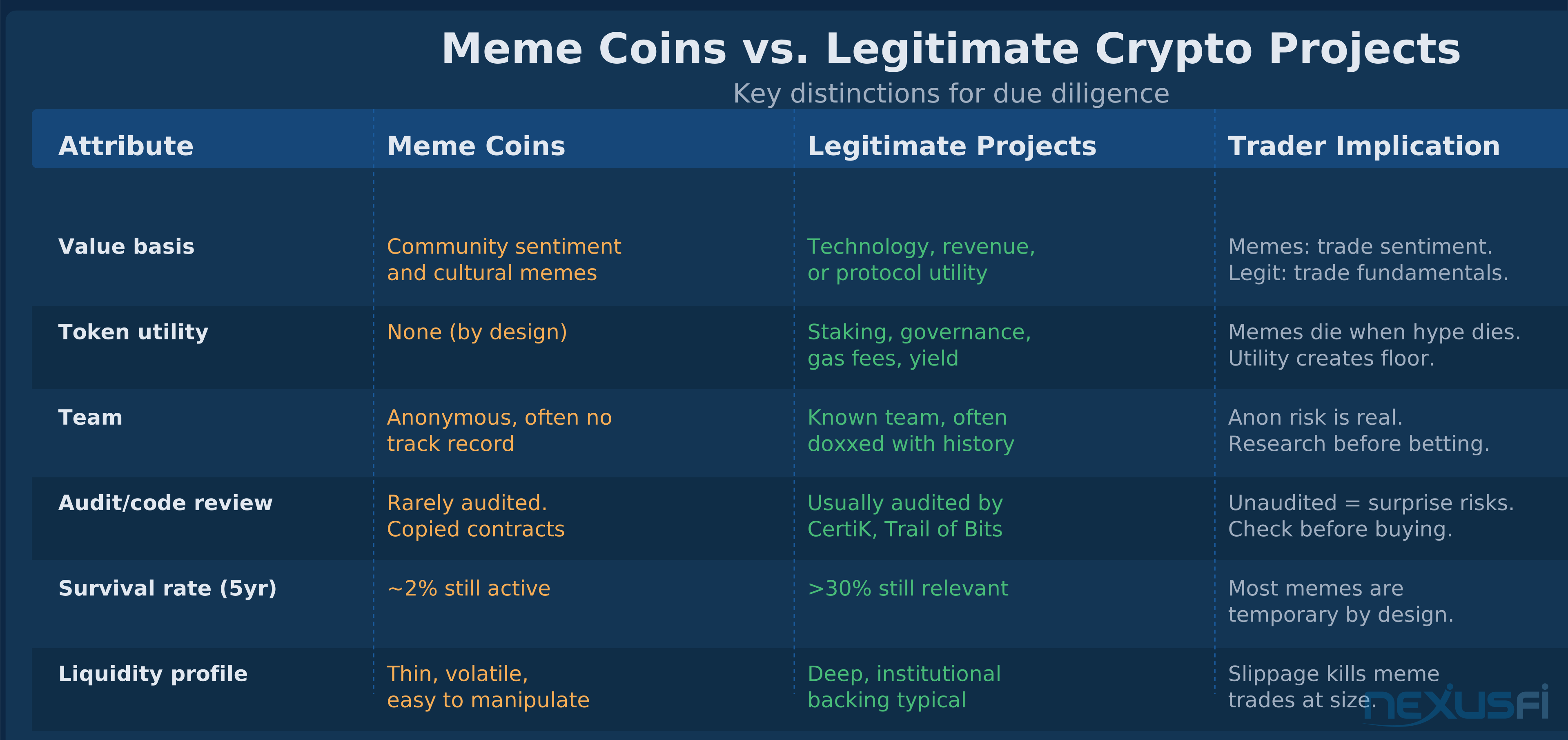
The table that separates trading strategy from investment thesis. Meme coins are trading instruments — buy the hype, sell before reality. Legitimate projects can be held for fundamentals. Applying investment logic to meme coins is the most expensive mistake retail traders make.
The single most expensive mistake in crypto is applying investment logic to meme coins. Investment logic says: buy something undervalued, hold while value is realized, sell at fair value. That works for assets with intrinsic value. Meme coins have no intrinsic value by definition.
The correct framework for meme coins is trader logic: identify a trigger, position in front of it, define your exit before entry, execute without emotion.
The five questions for distinguishing meme coins from legitimate projects:
- What utility does the token have? DOGE: none. ETH: gas for the largest smart contract platform. This determines whether price has a floor.
- Is the team known and accountable? Anonymous teams can build legitimate projects (Satoshi was anonymous). But anonymous with no track record and aggressive promotion = risk. Known teams with verifiable history carry different (lower) rug pull risk.
- Is there real revenue or protocol activity? Uniswap generates hundreds of millions in fees. SHIB generates no fees. Revenue creates economic gravity around a token price.
- Does the white paper describe real technology? Many meme coins have white papers. Most are gibberish designed to seem legitimate. The test: can you explain the technology in one sentence and have it be verifiably true?
- What's the unlock schedule? If insiders hold a large percentage with upcoming unlocks, structural sell pressure is coming regardless of market sentiment.
None of this means legitimate projects are better trades than meme coins. In specific market conditions, PEPE was a better 30-day trade than ETH. But the analytical framework differs completely.

Trading Strategy and Risk Management #
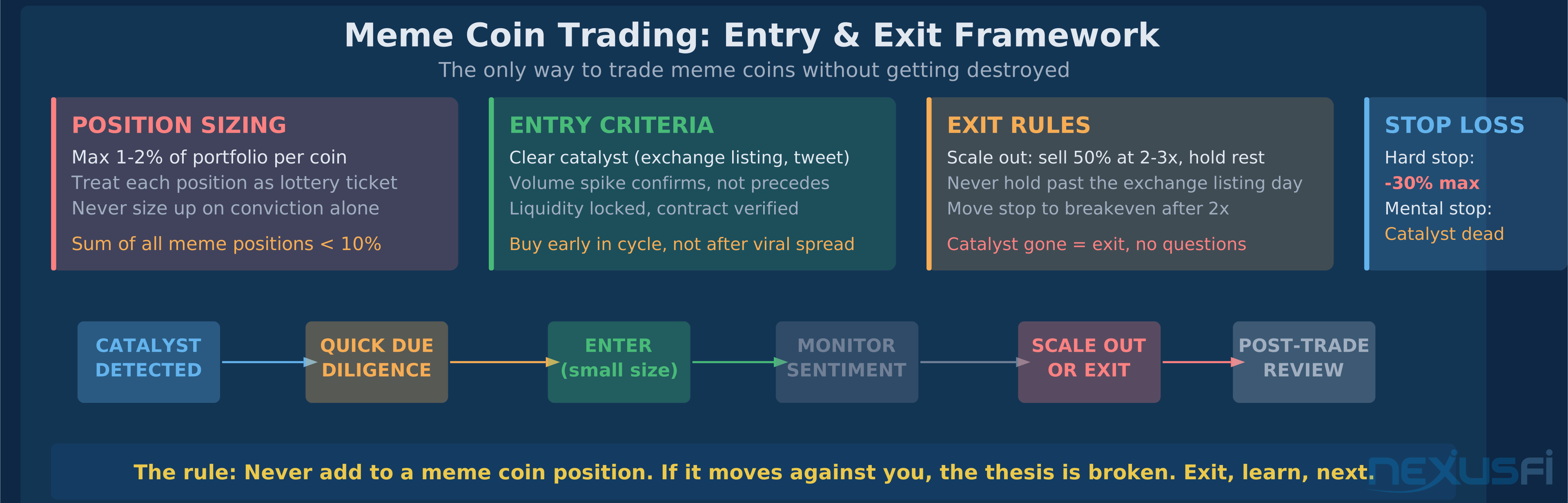
The meme coin trading framework in one diagram. Sizing is everything — if you can't afford to lose 100% of the position, don't take the trade. The exit rules are not suggestions: selling the listing day has historically outperformed holding by 300-500% on average. The meme coin graveyard is full of traders who 'held for the next pump.'
Position sizing is the entire ballgame. Meme coin trading has a negative expected value for most participants when you account for the full distribution of outcomes. You can still profit if you size correctly: small enough that multiple zeros don't break you, large enough that your winners matter.
Standard professional sizing for high-risk speculative positions: 1-2% of trading capital per position, with total meme coin exposure capped at 5-10% of portfolio. This is the sizing that lets you survive 10 rug pulls in a row and still come back.
Entry discipline: Only enter on a clear trigger with verifiable edge. "This coin looks good" is not a trigger. "Binance listing announced for Thursday" is a trigger. "Social velocity jumped 500% in the last hour" is a quantifiable signal. "Whale wallets accumulating over three days" is traceable edge.
The DOGE spike strategy is actually legitimate as a thesis, but execution is the problem. By the time you see the tweet, you've often already missed 80% of the move. Better version: buy DOGE before major Musk events (Tesla earnings, Twitter product announcements), hold small, accept you'll be wrong most times but right occasionally.
Exit strategy matters more than entry. Most meme coin losses happen not from bad entries but from bad exits — holding through the peak waiting for "more." Define your exit before entry:
- Scale out at targets: sell 30% at 2x, another 30% at 4x, let the last 40% ride with a trailing stop
- Sell the listing day: exchange listing pumps almost always fade within 24-48 hours of the actual listing
- Exit on trigger completion: if you entered on a Binance listing rumor, exit on the listing day — not two weeks later "hoping for continuation"
- Hard stop loss: -30% from entry. Non-negotiable. Meme coins that move against you have usually broken their thesis.
The asymmetry is real but requires survival. A 100x meme coin trade exists. Several traders have turned $1,000 into $100,000 or more trading DOGE, SHIB, PEPE, WIF. But for every story like that, there are hundreds of traders who held through 80-90% drawdowns, averaged down, and eventually took catastrophic losses. The survivors in meme coin trading are the ones who stayed small, stayed systematic, and never let one trade define their year.
Right. Meme coins are excess-funds territory, not retirement account territory.

The Solana Meme Coin Ecosystem #
The 2023-2024 meme coin cycle was dominated by Solana. Pump.fun, a token launch platform on Solana, allowed anyone to launch a meme coin in seconds with no coding knowledge and minimal capital. Thousands of coins launched daily. The cost of entry was so low that the barrier to experimentation basically disappeared.
The Solana advantage was structural: Ethereum gas fees made micro-trades economically impossible. A $100 buy on Ethereum during congestion might cost $30-50 in gas. On Solana, the same trade cost fractions of a cent. This enabled a different participant type — very early retail buyers who could profitably enter $50-$100 positions that would have been uneconomic on Ethereum.
BONK, WIF, POPCAT, and dozens of other Solana meme coins benefited from this ecosystem effect. When Solana's price rose through 2023-2024, it created a virtuous cycle: ecosystem growth → meme coin attention → more meme coin traders → higher SOL demand.
The risk: Solana ecosystem coins are correlated. When SOL fell in early 2025, Solana meme coins fell harder. Ecosystem beta cuts both ways.
Regulatory Outlook #
The regulatory treatment of meme coins is still developing. For institutional crypto trading data and CME futures, see Cryptocurrency Futures Data. The SEC's 2023-2024 enforcement wave focused primarily on projects with utility token characteristics — staking, yield, governance. Pure meme coins with no utility claim were largely untouched.
The $TRUMP situation created new complexity. When a sitting U.S. President's token experiences 85% drawdowns and retail investors lose money at scale, regulatory attention increases. Several Congressional members introduced bills in early 2025 specifically targeting presidential and political meme coins as a category.
The broader framework: the SEC views tokens as securities if they pass the Howey Test (investment of money in a common enterprise with expectation of profits from others' efforts). Most meme coins explicitly disclaim utility and profit expectation, which is a defense — but a weak one if marketing materials suggest otherwise.
Practically speaking: trading established meme coins on compliant exchanges (Coinbase, Kraken, Binance.US) is currently low regulatory risk for retail traders. Trading obscure meme coins on DEXs with no regulatory registration carries more risk as regulators sort out what counts as an exchange.
Risk Factors and Survival Rate #
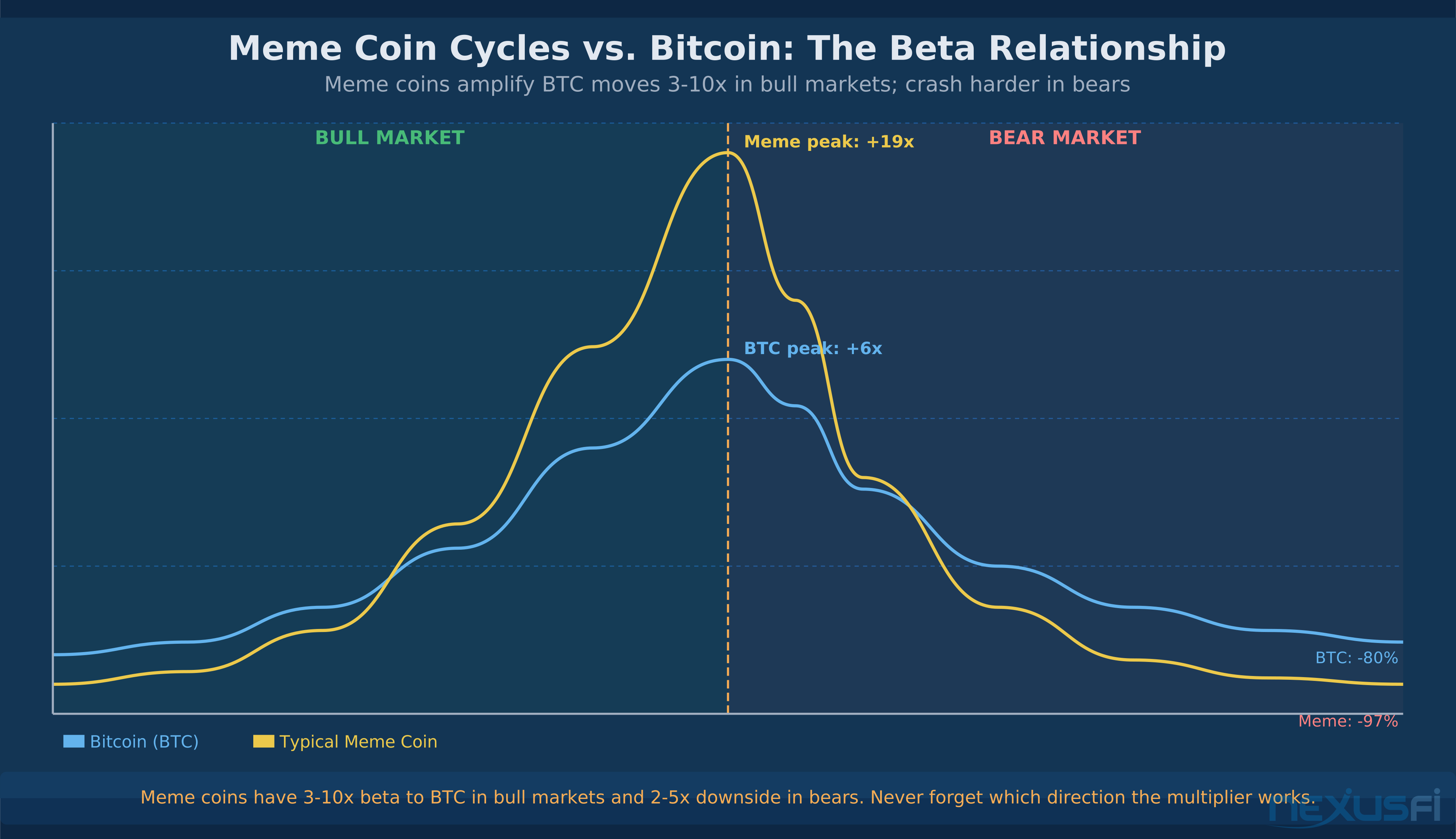
Meme coins carry 3-10x beta to Bitcoin in both directions. The 2020-2021 cycle: BTC +6x, average meme coin +19x. The bear that followed: BTC -80%, average meme coin -97%. The leverage cuts both ways — and the downside beta is consistently larger than the upside.
The base rate is brutal. Research on meme coin survival:
- 95%+ of coins launched on Pump.fun are abandoned within 48 hours
- Of coins that achieve $1M+ market cap, approximately 90% fall below $100k within 6 months
- Of coins that achieve $100M+ market cap, approximately 70% fall below $10M within 2 years
- Of coins that achieve $1B+ market cap (a very small group), roughly half maintain $100M+ for 3+ years
DOGE's survival is genuinely anomalous. It's one of fewer than five meme coins to survive 10+ years with meaningful trading volume. Its survival is partially explained by: first-mover advantage, celebrity association, genuine cultural penetration (Dogecoin tipping, charity campaigns), and exchange infrastructure that made it permanently available.
The structural factors that predict survival:
- Exchange depth (listed on multiple top-10 exchanges)
- Holder count above 50,000
- Active developer community (even if no utility)
- Community treasury or governance structure
- Integration into at least one real-world use case (even trivially)
None of these guarantee survival. They just reduce the probability of zero.

Overview #

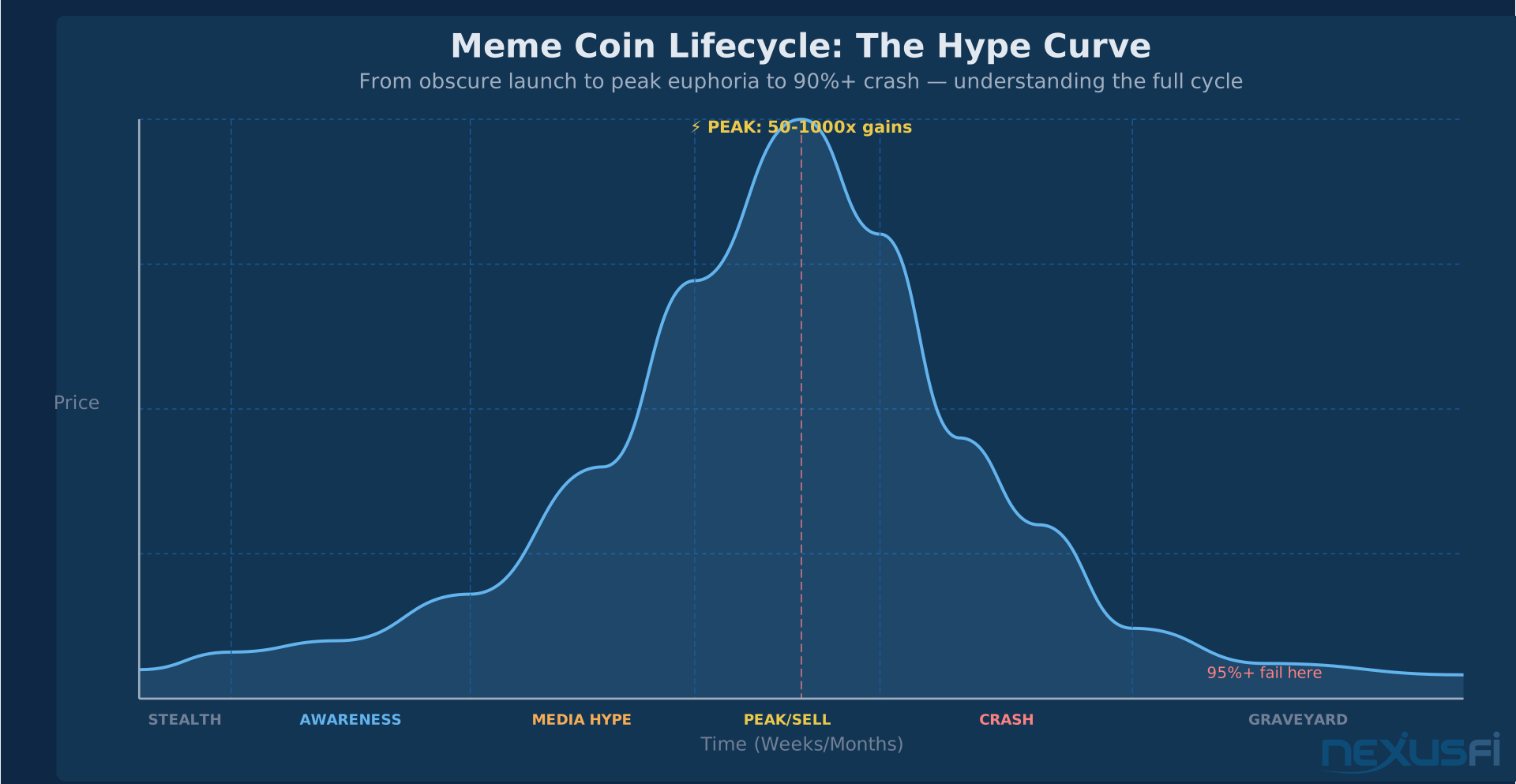
The meme coin lifecycle in six phases. Most retail traders enter during 'media hype' — after 80% of the move is already done. The peak is brief and brutal. By the time mainstream coverage is heavy, smart money is already out. Understanding which phase you're in is the single most important meme coin trading skill.
Meme coins are not an investment category. They're a trading category — pure speculation with community momentum as the underlying asset.
The traders who profit from them share common characteristics: they enter early in the cycle, they exit before the peak (or scale out systematically through it), they keep positions small enough to absorb zeros without portfolio damage, and they never confuse a profitable trade with a sound investment.
For futures traders exploring the crypto space, meme coins are best understood as high-beta momentum vehicles. They amplify broader crypto sentiment — going up faster in bull markets and down harder in bear markets than almost any other asset class. The liquidity profile for established meme coins (DOGE, SHIB) is now sufficient for meaningful position sizes. For newer coins, liquidity risk remains the dominant concern.
The honest framework: treat every meme coin position like a lottery ticket. Define your max loss before you buy. Have a plan for every outcome. And when the momentum fades — because it always fades — get out.
Knowledge Map
Prerequisites
Understand these firstGo Deeper
Build on this knowledgeReferences This Article
Articles that build on this topicCitations
- — Cryptocurrency Trading Platforms (2021) 👍 1“Yes, I knew [DOGE] was created as a joke before I purchased it. When Elon Musk started pumping it on Twitter it exploded in value. I have no problem making $$ with jokes.”
- — Cryptocurrencies 101 -- what I've learned so far (2021) 👍 28“With recent talk about cryptocurrencies, I wanted to push myself to create this thread and try to share some things that I've learned so far about cryptocurrencies.”
- — The New Micro Contract - MICRO BITCOIN coming May 2021 (2021) 👍 17“Micro Bitcoin futures coming May 3rd 2021. At 0.1 Bitcoin it's a $6k notional contract.”
- — DOGE Spike Strategy (2023)“Since Musk owns Twitter, every now and then he'll say something about DOGE or put a puppy logo on the site, when that happens the cost of DOGE spikes.”
- — DOGE Spike Strategy (2023) 👍 1“Musk recently said: "Don't bet the farm on DOGE". Deciding to invest with your criteria seems risky. Only use excess funds if that is your edge.”
- — Is Bitcoin Bull Cycle Nearing Its Conclusion? (2025)“With the release of the $TRUMP and the $MELANIA meme coins I think that speculation has been confirmed. Question is will it go too far and turn all of crypto into a massive rug pull damaging good and bad coins alike.”
- — $TRUMP Crypto coin: Facts, Legality, and Controversies (2025) 👍 1“The $TRUMP cryptocurrency, launched on January 17, 2025, is a Solana-based meme coin. Of 1 billion tokens, 80% retained by Trump-affiliated entities -- retail lost $2 billion while creators netted hundreds of millions.”
- Pump.fun — Pump.fun - Meme Coin Launch Platform on Solana (2024)
- Nansen — Nansen - On-Chain Analytics and Smart Money Tracking (2024)