



Shiba Inu (SHIB): The Meme Token That Built a Blockchain
Overview #
Shiba Inu (SHIB) started as a meme. It was explicitly marketed as the "Dogecoin killer" — launched anonymously in August 2020 by a developer known only as "Ryoshi," with 1 quadrillion tokens and no VC backing, no premine for founders, and the stated goal of proving that a community could build something from nothing. The joke worked. By October 2021, SHIB had delivered an 86,000,000% return from its launch price of $0.0000000001 to an all-time high of $0.000086.
But here's what makes SHIB interesting beyond the meme: the team kept building. ShibaSwap launched as a decentralized exchange in 2021. Shibarium — an Ethereum Layer 2 — went live in August 2023. A four-token ecosystem emerged: SHIB (speculation), BONE (Shibarium gas), LEASH (scarce store of value), and TREAT (liquidity incentives). The community instituted a daily token burn mechanism. By 2024, there was a genuine question of whether SHIB was transitioning from pure speculation to utility-backed asset.
That question remains open. SHIB's price still behaves like a meme coin — volatile, sentiment-driven, retail-dominated. Shibarium's transaction volume is real but mostly automated. ShibaSwap's TVL hasn't broken $100M. The deflationary mechanism is burning tokens at roughly 2-4 billion per day against a 589 trillion supply, which means reaching deflationary momentum takes decades at current rates.
This guide covers what a trader actually needs to know: the supply structure, the ecosystem mechanics, the five trigger types that move SHIB, how it trades relative to DOGE and other meme coins, and the practical setups that have historically worked.
SHIB is the second-largest meme coin by market cap (~$8-15B range), behind DOGE and ahead of PEPE. Its distinguishing trait is the combination of massive community engagement, a four-token ecosystem, and an Ethereum L2 — making it the only meme coin with a working blockchain infrastructure layer.
What SHIB Is: The Dogecoin Killer That Built a Blockchain #
Ryoshi launched SHIB on August 1, 2020 via a Uniswap pool. The entire 1 quadrillion supply was minted on Ethereum as an ERC-20 token. Half — 500 trillion tokens — was sent to Vitalik Buterin's Ethereum address. This wasn't because Vitalik agreed to hold it. It was a marketing stunt: sending half the supply to the most famous Ethereum wallet meant Ryoshi could say "50% of supply is with Vitalik" without actually giving it to him. The assumption was Vitalik would never touch it.
Vitalik did touch it. In May 2021, as SHIB was hitting its first viral surge, Vitalik burned 410 trillion SHIB to a dead address — destroying 41% of the entire SHIB supply — and donated the remaining 50 trillion (worth roughly $1.14 billion at the time) to India's COVID-19 relief fund. The burn was unplanned by the SHIB team. It was accidental in the best possible way: it instantly made SHIB deflationary in narrative, cut the circulating supply dramatically, and generated enormous media coverage during peak meme coin mania.
The accidental deflationary event became a foundational piece of SHIB lore. The community embraced it. The team built burn mechanics into subsequent products. Every SHIB ecosystem transaction on Shibarium has BONE burned as gas — the burn narrative became infrastructure.
The SHIB community's commitment to building real products sets it apart from most meme coins. The anonymous Ryoshi disappeared from the project in 2022, handing it to a leaderless community DAO structure. Rather than imploding, the community continued development. This is unusual. Most meme coins either implode when the founding team cashes out or stagnate at a single-use speculative token. SHIB built a DEX, an L2, and a governance structure. Whether that's enough to sustain value beyond speculation is the core investment question.
SHIB embodies this tension — it has utility infrastructure, but the price action is still driven overwhelmingly by sentiment and social media momentum.
Token Economics: 1 Quadrillion Supply, Vitalik's Burn, and the Deflation Story #
The numbers are staggering enough to be confusing. Here's a clean breakdown:
- Initial supply: 1,000,000,000,000,000 (1 quadrillion) SHIB
- Vitalik burn (May 2021): 410,241,996,771,871 SHIB destroyed
- Vitalik donation (May 2021): 50,427,761,003,520 SHIB donated to India COVID relief
- Current circulating supply: ~589,270,942,250,000 SHIB (589 trillion)
- Ongoing daily burn: approximately 2-4 billion SHIB per day
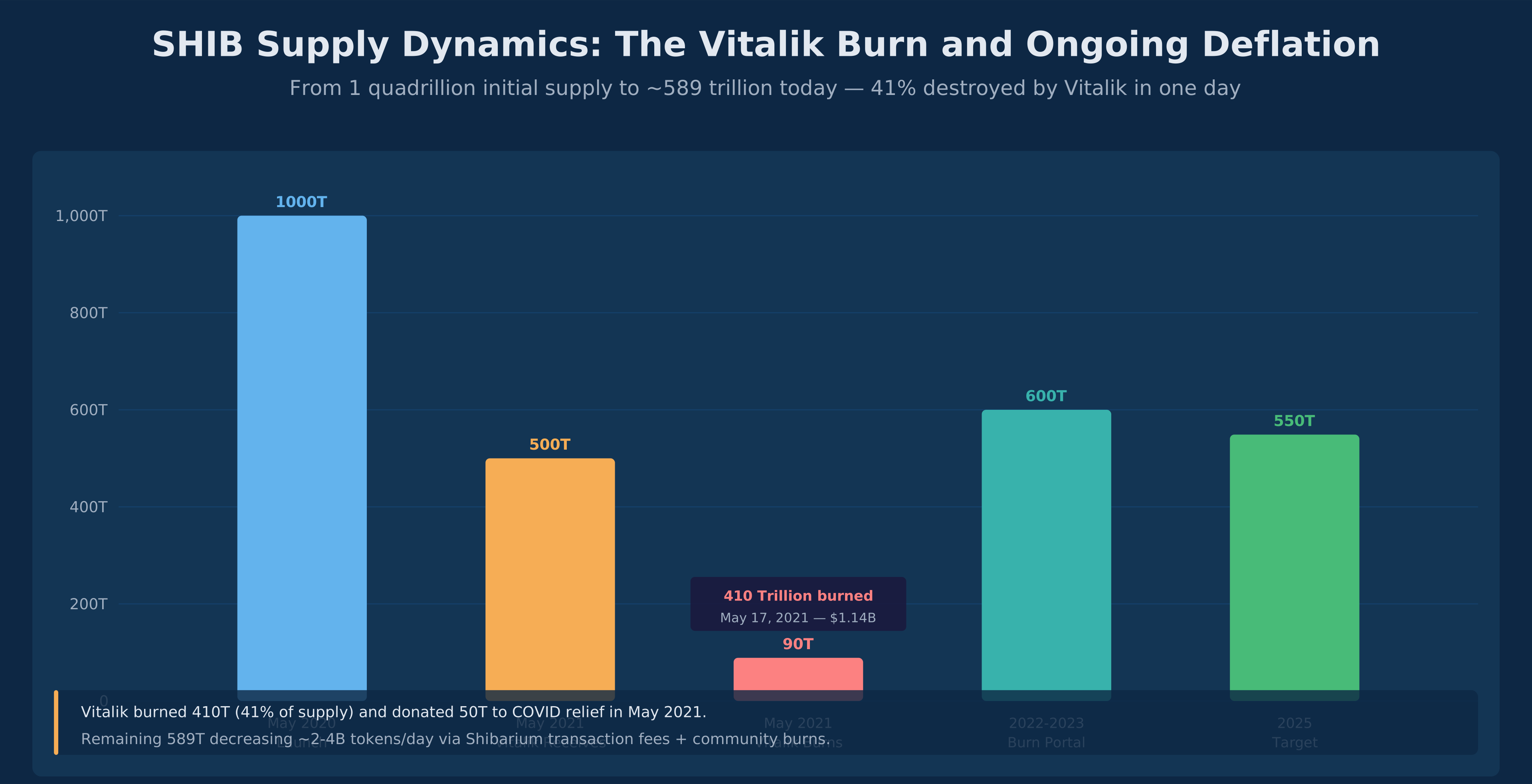
The daily burn rate sounds impressive until you run the math. At 3 billion tokens per day — the current average from Shibarium fees and community burn campaigns — it would take approximately 539 years to burn another 10% of the remaining supply. The deflation story is real but extremely slow-moving. It functions more as a psychological support mechanism than a near-term supply shock driver.
What the burn does do effectively is create a continuous narrative cycle. The SHIB burn counter (a public tracker showing cumulative burns) generates community activity every time it hits a milestone. Twitter campaigns coordinate burns. Visible supply destruction keeps a community engaged. As a trader, understand this cycle: it produces tradeable price patterns around burn milestones.
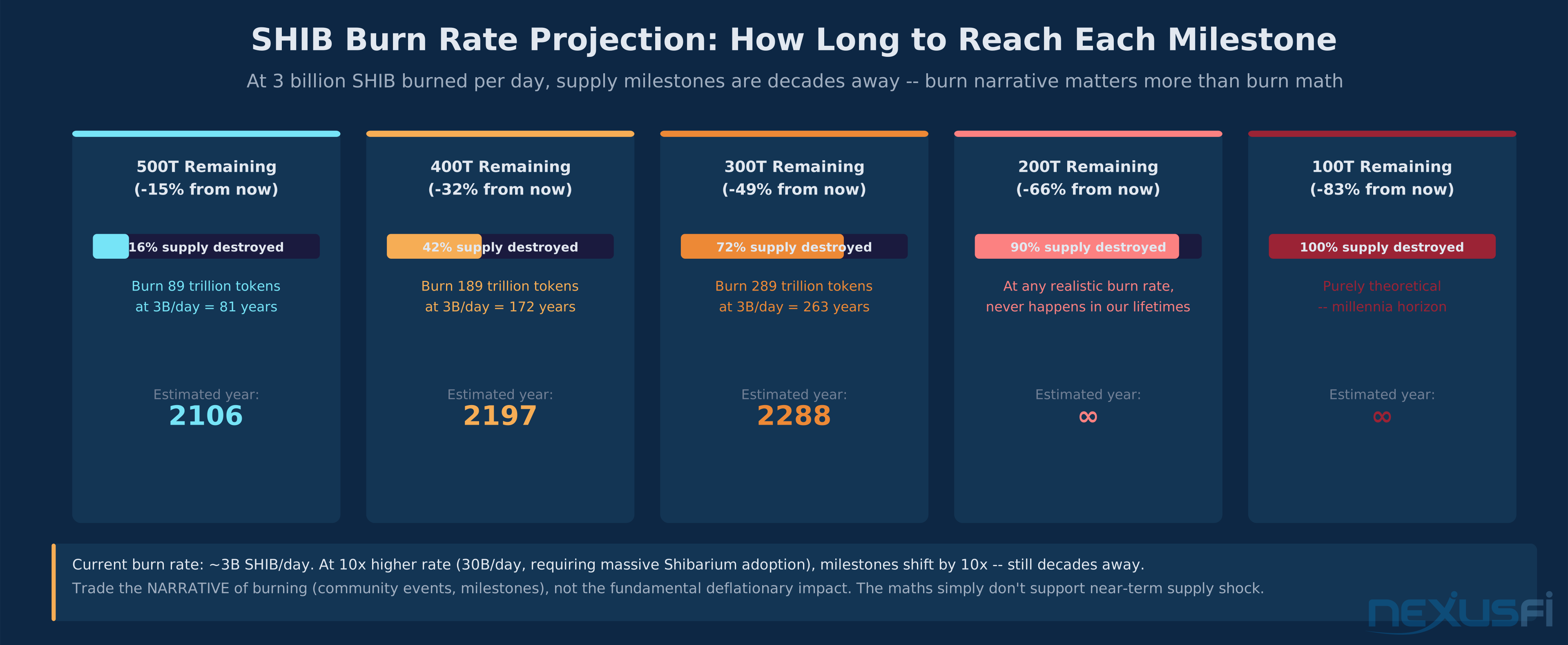
The math on SHIB burns: at 3B tokens/day burn rate, SHIB reaches 500T supply in approximately 2106. Meaningful supply-side price pressure from burns alone is a multi-decade thesis, not a near-term trigger. Trade the burn narrative cycle, not the burn fundamentals.
The supply structure has two other implications traders should internalize. First, SHIB's sub-zero price (it takes 10,000+ tokens to equal $1 at most recent prices) is a feature, not a bug — retail traders psychologically prefer owning "more" tokens, and SHIB's per-token price of $0.000010-$0.000086 lets people own millions of tokens for small dollar amounts. This drives retail participation. Second, the fractional price makes percentage moves feel more dramatic. A move from $0.000010 to $0.000014 is a 40% gain. Normal retail psychology amplifies this into "SHIB went up 40%!" — which attracts more buyers. The small-number psychology is a dynamic that drives self-reinforcing retail momentum.
The SHIB Ecosystem: ShibaSwap, Shibarium, BONE, LEASH, TREAT #
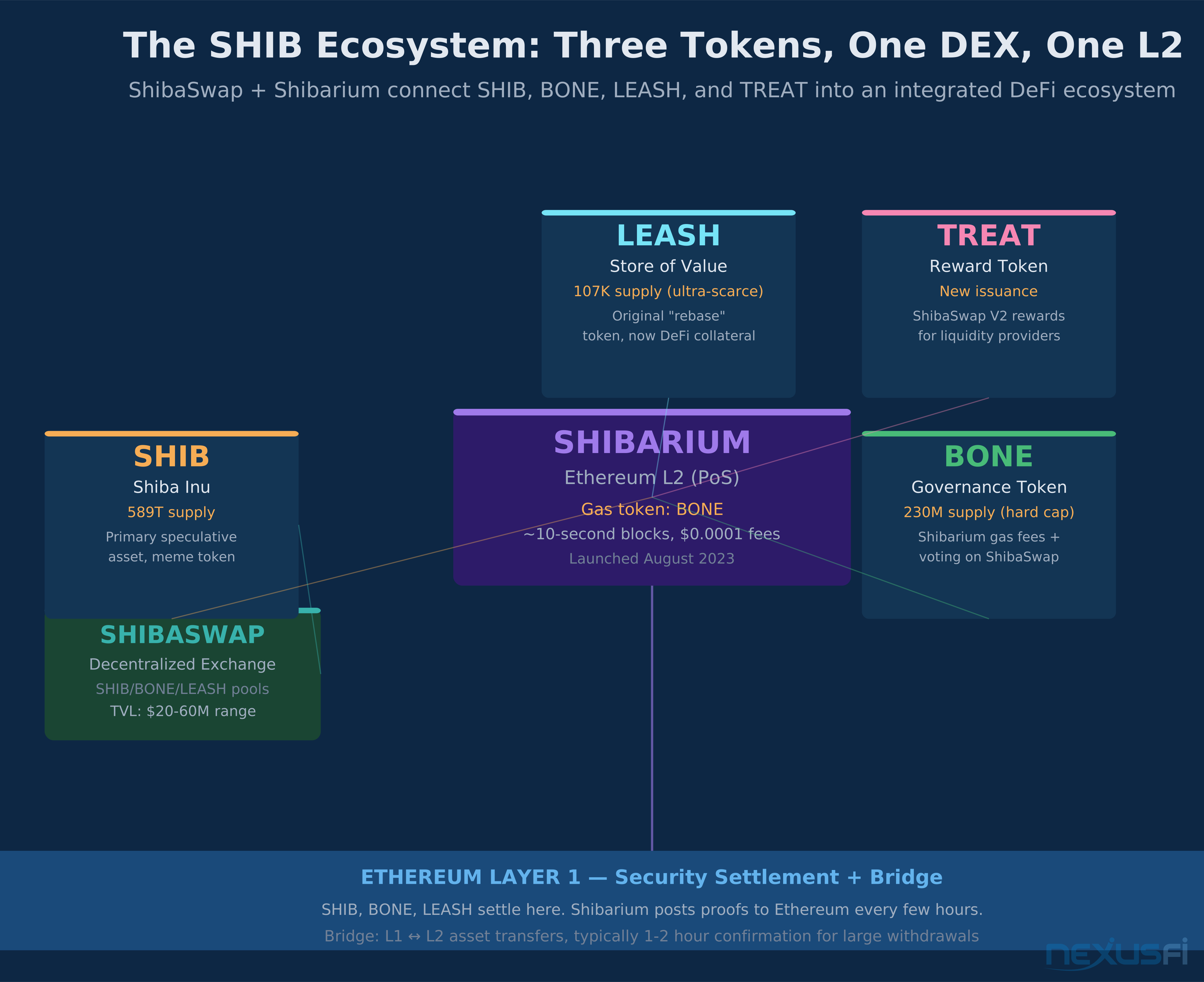
SHIB is the headline token, but it's the entry point to a four-token ecosystem with a DEX and an L2. Traders who only understand SHIB miss the full picture. Here's each component and what it means for trading.
The Four Tokens
SHIB is the primary speculative asset. 589 trillion supply, available on every major exchange, high retail volume ($500M-$1.5B daily), perpetual swap markets on Binance/Bybit/OKX. This is the token most retail traders actually trade. Price action is driven by meme sentiment, BTC correlation, and ecosystem news.
BONE is the governance and gas token for Shibarium. Hard cap of 230 million tokens — much scarcer than SHIB. Every Shibarium transaction requires BONE for gas fees. BONE holders vote on ShibaSwap protocol decisions. Because BONE is burned as Shibarium transaction fees and has a hard cap, its price is directly correlated with Shibarium adoption metrics. Low liquidity on most exchanges means BONE is more volatile than SHIB on a percentage basis. BONE's 30-day vol regularly exceeds 120% annualized.
LEASH started as an algorithmic rebase token that tracked DOGE price — but the rebase mechanism was abandoned. Now LEASH is simply an ultra-scarce SHIB ecosystem token with approximately 107,000 total supply. At $500+ per token in 2024 (compared to SHIB's $0.00001), LEASH is primarily held by ecosystem OGs and used for DeFi yield farming on ShibaSwap. The tiny supply means large percentage moves on small dollar flows. Not a typical retail trading vehicle, but worth knowing because LEASH price is sometimes a leading indicator for SHIB sentiment.
TREAT is the newest addition — launched as the incentive token for ShibaSwap V2. TREAT is distributed to liquidity providers and stakers on the upgraded exchange. Still in early distribution phase as of 2025, with limited secondary market liquidity. Most traders don't need to trade TREAT directly, but its issuance affects SHIB indirectly through liquidity incentives.
ShibaSwap: The DEX
ShibaSwap launched in July 2021, during peak SHIB mania. It was a functional Uniswap fork with SHIB, BONE, and LEASH trading pairs. The team called locking liquidity "Burying," staking "Digging," and the SHIB/WETH pool "Bones." The ecosystem branding was cute but the functionality was real.
ShibaSwap V2 expanded to Shibarium, adding lower-fee trading with BONE gas. TVL has ranged from $20M-$60M historically — modest compared to Uniswap's $5B+ but functional for ecosystem trades. The main use case for most traders is swapping between SHIB ecosystem tokens (SHIB, BONE, LEASH) at lower cost than going through centralized exchanges, and earning yield by providing liquidity to SHIB/ETH or BONE/ETH pairs.
ShibaSwap liquidity is thinner than Binance/Coinbase for SHIB. For large SHIB trades ($10,000+), use a CEX to avoid slippage. ShibaSwap is best for BONE and LEASH trades where CEX liquidity is worse.
Shibarium: Ethereum L2 Reality vs. Marketing #
Shibarium launched on August 28, 2023. The hype was enormous — the community had been waiting since 2022. Reality met marketing quickly: the first day saw 500,000+ transactions but also a bridge congestion bug that temporarily halted operations. The team fixed it. By 2024, Shibarium was processing 1-2 million transactions per day.
The headline numbers look impressive: 500+ million total transactions by end of 2024, 2 million+ unique wallet addresses, $0.0001 average transaction cost. But transaction quality matters as much as quantity. Independent analysis suggests approximately 73% of Shibarium transactions are bot activity — automated scripts, airdrop farmers, gas arbitrage bots, and spam. Organic DeFi activity accounts for roughly 15% of transactions. That's not a condemnation — it's normal for a new L2. Ethereum's early months had similar bot ratios.
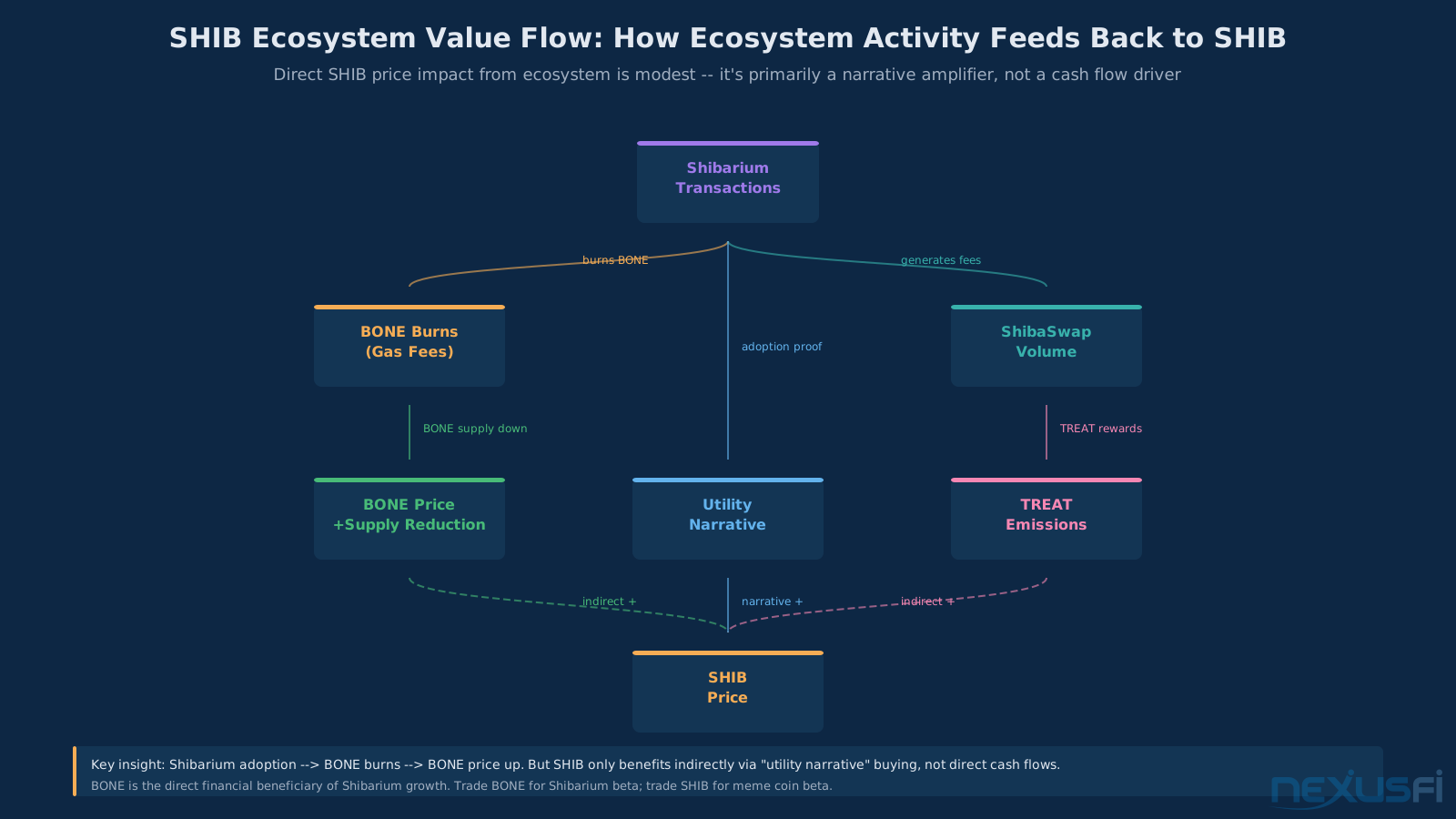
The Shibarium story for traders is about BONE demand. Every Shibarium transaction requires BONE as gas. If Shibarium achieves genuine DeFi adoption — real users, real protocols, real volume — BONE demand could increase substantially. BONE's 230M hard cap means that demand increase hits a fixed supply. The bet on Shibarium is structurally a bet on BONE, not SHIB.
SHIB benefits from Shibarium indirectly: ecosystem news drives retail sentiment, burn mechanics use transaction fees, and Shibarium success validates the "utility pivot" narrative that differentiates SHIB from pure speculation. But the direct financial link between Shibarium metrics and SHIB price is weaker than most community members believe.
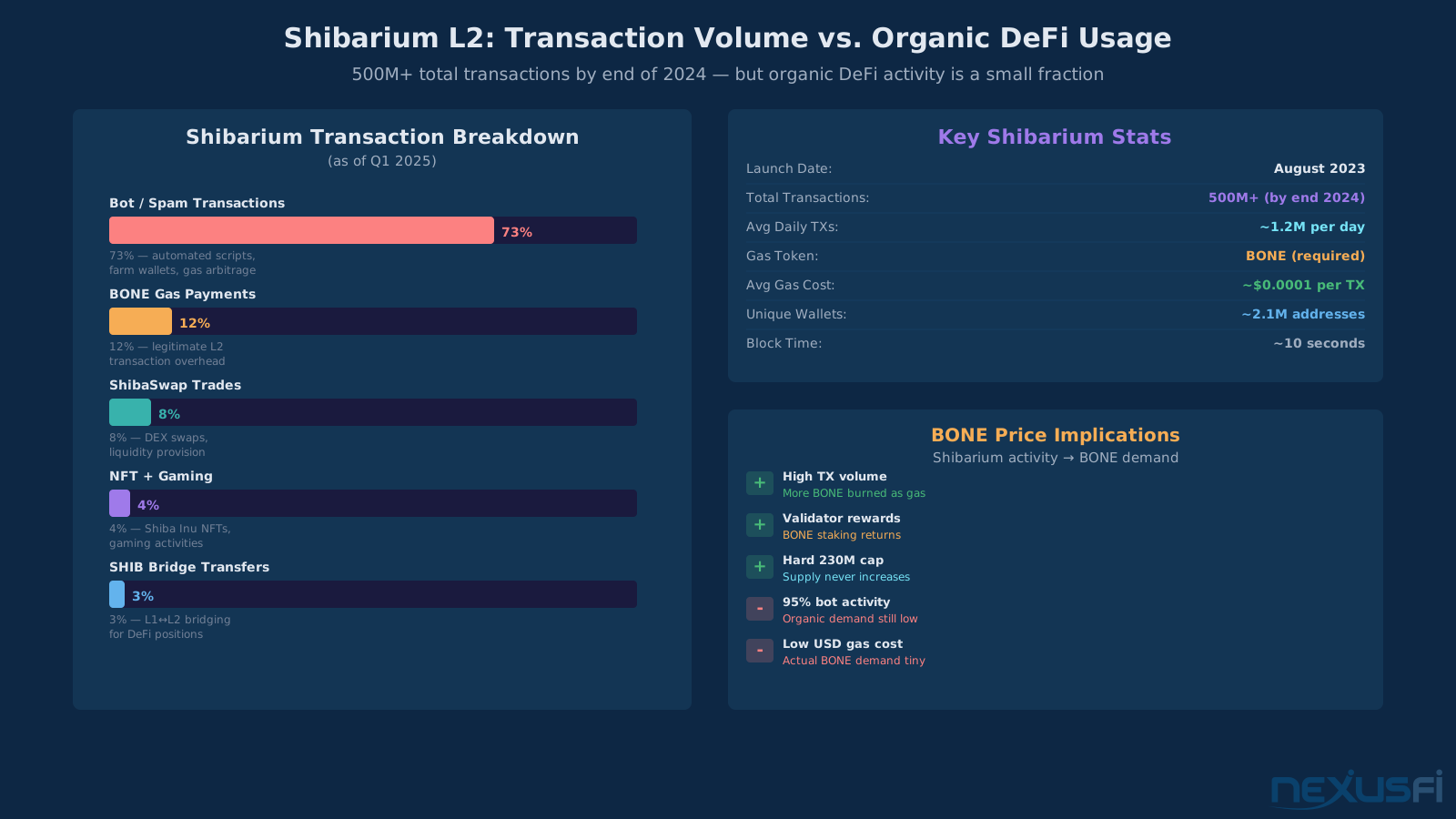
Monitor Shibarium block explorers for daily transaction trends. Periods of rising organic transaction counts (not just bot spikes) correlate with BONE outperformance versus SHIB. When Shibarium announces new protocol integrations, BONE typically moves before SHIB. That BONE-then-SHIB pattern has been consistent enough to be worth tracking.
Price History: Three Distinct Phases with Different Drivers #
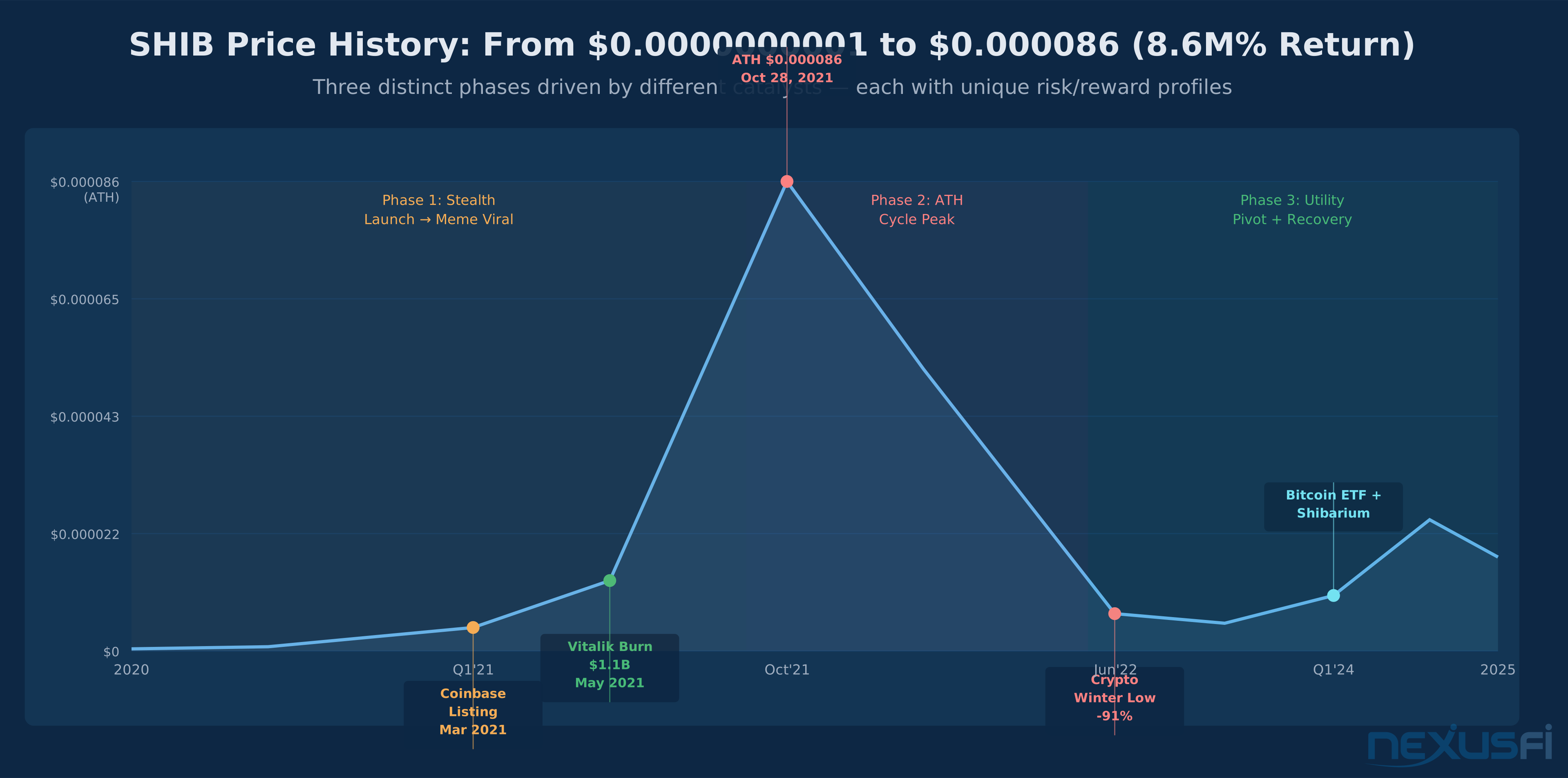
SHIB's price history divides neatly into three phases, each with different catalysts and different trading characteristics. Understanding the phase you're in changes how you should size positions and manage risk.
Phase 1: Stealth Viral Growth (August 2020 -- March 2021)
SHIB launched at approximately $0.0000000001. Nothing happened for months. The token had no listings beyond decentralized exchanges. The Ryoshi whitepaper (called a "woof paper") went viral in small crypto circles, but mainstream attention was absent.
The shift came when SHIB started appearing on DexTools, CoinGecko, and CoinMarketCap in early 2021, riding the meme coin mania wave that Dogecoin had started. March 2021 brought Coinbase listing rumors (later confirmed), which triggered the first significant price spike. By April 2021, SHIB had gained 3,000% from its early 2021 levels — still a fraction of its eventual ATH, but notable enough to generate media coverage.
Phase 1 teaching: the viral discovery phase of meme coins is often the best risk/reward entry. Low prices, explosive upside potential, but requires early research and accepting you're early to something unproven.
Phase 2: ATH Parabola (March 2021 -- January 2022)
The May 2021 Vitalik burn was the true trigger for SHIB's legendary run. When Vitalik burned 410 trillion tokens and donated $1 billion+ to charity, SHIB got its first legitimate front-page coverage. The narrative was irresistible: meme coin accidentally becomes deflationary through Ethereum co-founder's accidental intervention. CNBC, Bloomberg, Reuters all covered it.
The SHIB parabola from May to October 2021 was one of the most explosive in crypto history. From approximately $0.000007 in early May 2021 to $0.000086 on October 28, 2021 — a 12x move in five months on top of already massive prior gains. Daily volumes hit $20-35 billion. Coinbase listed SHIB (October 1, 2021). Robinhood followed. Each listing added new retail supply of buyers who'd never participated in crypto before.
Phase 2 teaching: parabolic meme coin tops are impossible to time precisely. The October 2021 ATH was followed by a -60% retracement in two weeks. Trailing stops with 20-25% buffer from highs are the only mechanical tool that works — pure judgment fails because every -10% dip during a parabola looks like a buying opportunity until it's the top. As @Fat Tails noted in a broader risk discussion: ATR-based stops must be placed further away in high-volatility conditions to avoid being whipsawed. SHIB's daily ATR is often 5-8% of price — sizing your stop at only 2-3% means near-certain whipsaw.
Phase 3: Utility Pivot + Recovery (2022 -- present)
The 2022 crypto winter hit SHIB hard. -91% from ATH by June 2022, touching $0.000006. Volume collapsed. Retail interest evaporated. The community that remained focused on building — ShibaSwap V2, Shibarium development, the burn portal.
The 2023 Shibarium launch started the recovery narrative. The 2024 Bitcoin ETF approval created macro tailwinds across crypto. SHIB recovered from $0.000006 to $0.000035 by end of 2024 — a 5x from the lows but still well below the 2021 ATH. Meme coin season in Q3-Q4 2024, driven partly by retail interest following the Solana meme coin mania, added additional momentum.
As @Fluid Fox tracked in real time: the Bitcoin dominance chart tells you which direction the alt-coin tide is moving. When BTC dominance falls, altcoins and meme coins rally as capital rotates from Bitcoin into higher-risk assets. SHIB benefits from this rotation more than most assets because of its retail brand recognition.
What Drives SHIB Price: Five Trigger Categories Ranked #
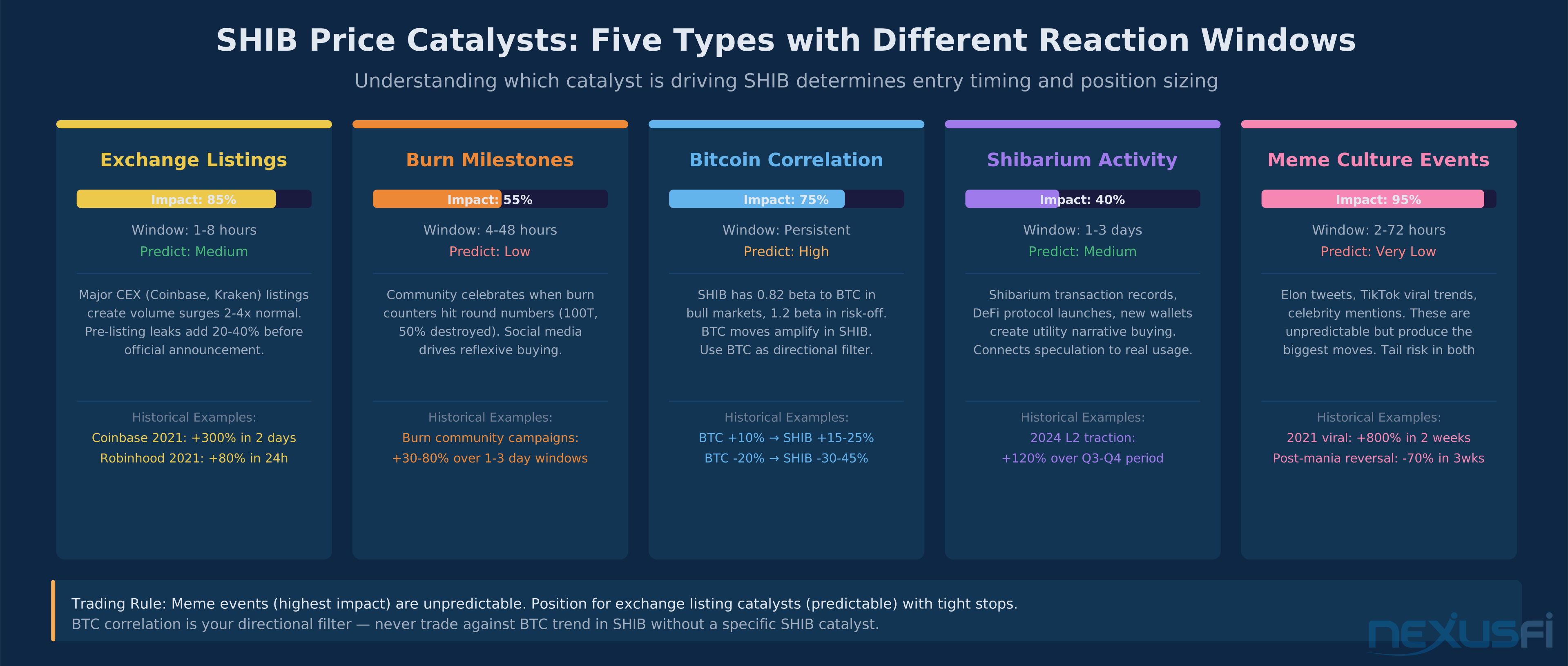
SHIB has more distinct trigger types than most assets. Understanding which type is driving a move changes how you should trade it — specifically the entry timing and how long the move is likely to last.
1. Bitcoin Correlation (Persistent -- Always Active)
SHIB has a 0.82 beta to BTC in bull market conditions and 1.2 beta in risk-off environments. This is the most reliable predictor of SHIB direction. When BTC is trending up, SHIB participates and usually outperforms. When BTC is declining, SHIB underperforms BTC's move by 20-50% on the downside.
The practical rule: never take a long SHIB position when BTC is in a clear downtrend unless you have a specific SHIB trigger (exchange listing, burn event). The BTC tailwind is required for SHIB longs to work. Without it, you're fighting two forces — the trigger reversal and the macro crypto headwind.
2. Exchange Listings (High Predictability -- 1-8 Hour Window)
When a major CEX announces SHIB listing, the price reaction is fast and significant. The Coinbase listing in October 2021 added +40% in 24 hours on top of an already elevated price. The pre-listing leak pattern is consistent: volume starts rising 4-6 hours before the official announcement, suggesting information leakage. The post-listing move often reverses 30-50% within 48 hours as the "buy the rumor, sell the news" cycle completes.
New exchange listings for SHIB are increasingly rare given its 500+ current listings. But listings of BONE or LEASH on mid-tier exchanges still follow the same pattern and can be traded similarly.
3. Meme Culture Events (Unpredictable -- 2-72 Hour Window)
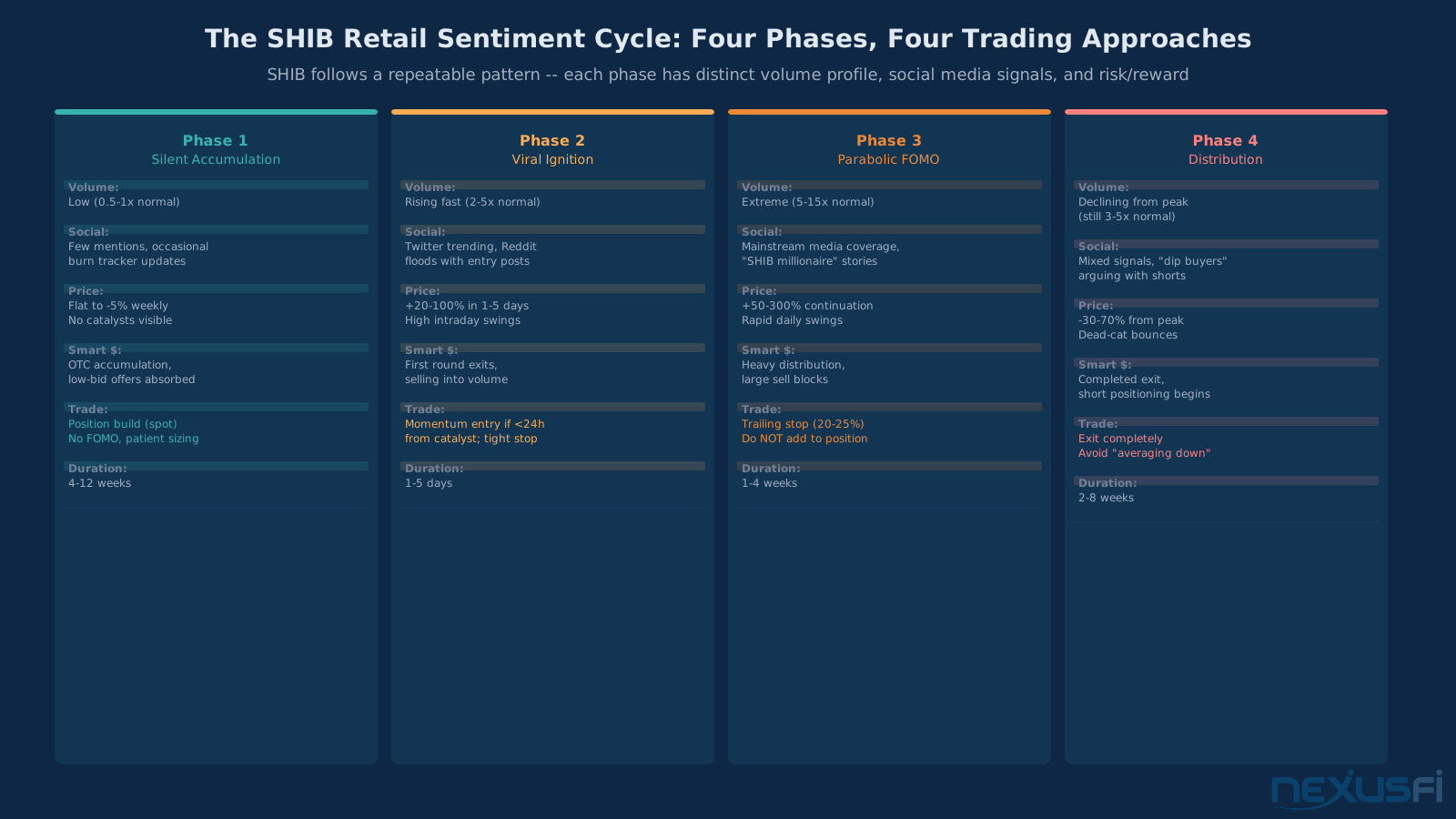
Elon Musk tweeted "Shiba" in October 2021. SHIB jumped 80% in two days. Celebrity mentions, viral TikTok trends, Reddit/X coordinated campaigns — these are the highest-impact and lowest-predictability catalysts. You can't trade them reliably by anticipation. You can trade them reactively by recognizing when a viral event is generating sustained volume rather than a 1-hour spike. If SHIB volume is 3x+ normal for more than 4 hours, the viral event has legs. Enter with tight stops. Exit with trailing stops. These moves reverse hard once the viral moment passes.
4. Burn Milestones (Medium Predictability -- 4-48 Hour Window)
The SHIB community organizes coordinated buy-and-burn campaigns, especially around round-number milestones on the burn tracker. These events are announced publicly via Twitter and SHIB community Discord, giving 24-48 hours of visibility before the event. The price reaction is typically 10-30% over 1-3 days, followed by a complete reversal once the campaign ends. Short-duration, reversible. Trade them with defined exits at the campaign end date.
5. Shibarium Activity (Low Correlation -- But BONE Leading Indicator)
Shibarium adoption news — new protocol launches, transaction record milestones, DeFi TVL growth — creates narrative buying in SHIB but moves BONE more directly. When Shibarium metrics are improving, BONE typically outperforms SHIB by 20-40% over the same period. For SHIB specifically, Shibarium news matters most when it's combined with Bitcoin tailwinds. Shibarium news alone, in a bearish BTC environment, rarely sustains a SHIB rally.
SHIB vs DOGE: The Meme Coin Divergence #
SHIB and DOGE are the two largest meme coins by market cap, but they've taken dramatically different paths since 2020. Understanding the differences matters for trading because they don't always move together.
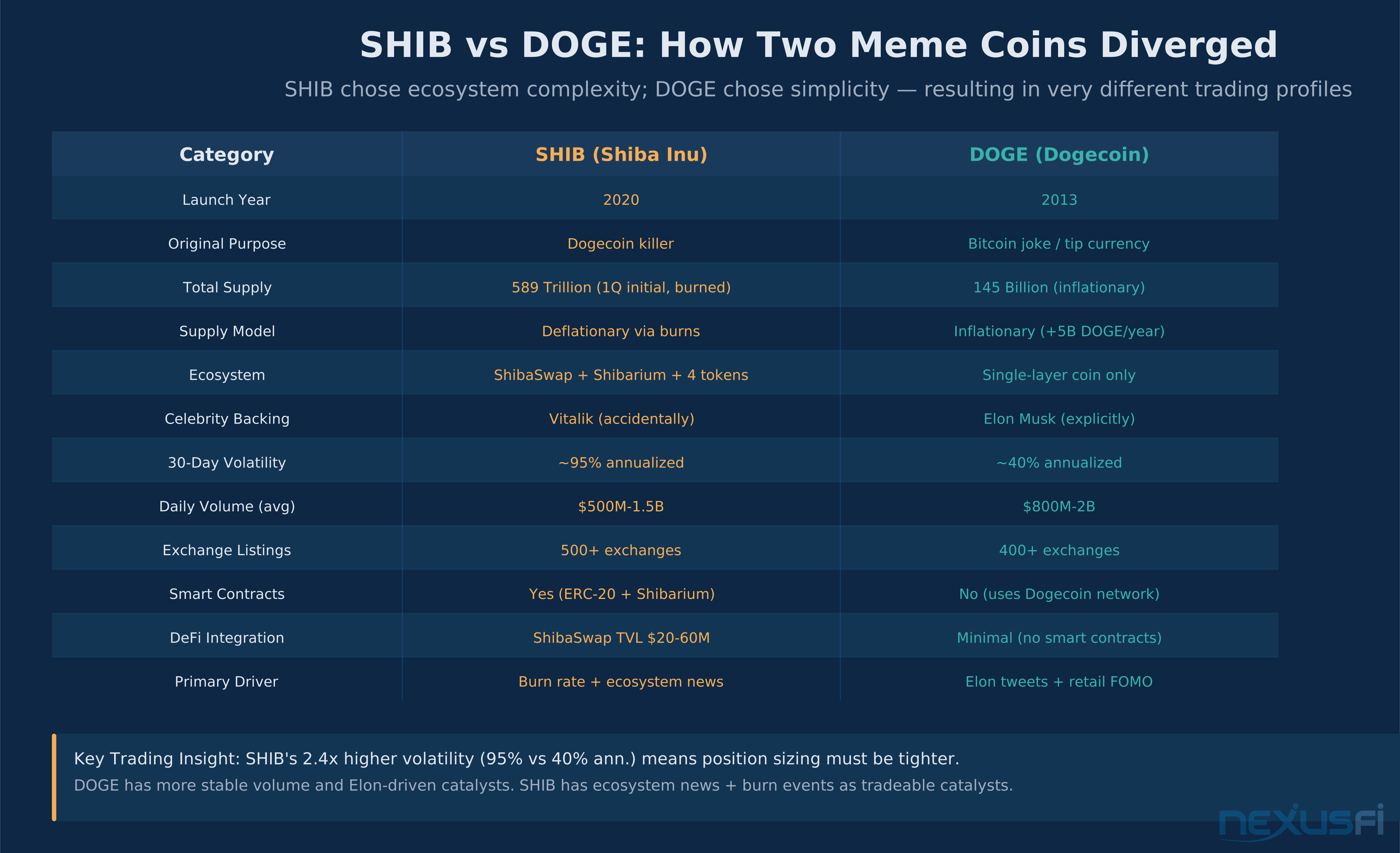
The core divergence: DOGE chose simplicity and a famous celebrity (Elon Musk) as its primary driver. SHIB chose ecosystem complexity and community governance. Neither path is objectively superior — they just produce different trading profiles.
DOGE has better volume stability because Elon Musk's Twitter/X activity provides reliable trigger events on a somewhat predictable cycle. When Musk tweets about DOGE, the pattern is well-documented: +20-60% in 24 hours, partial reversal within 48-72 hours, then price settles 10-30% above the pre-tweet level. Traders who follow Musk's Twitter closely have a genuine edge in DOGE.
SHIB has higher volatility (95% annualized vs DOGE's 40%) because it has more independent trigger types — no single celebrity to follow, but also no single source of trigger control. SHIB's ecosystem news can independently drive moves. The 4-token structure means BONE or LEASH can provide advance warning of SHIB moves through the leading indicator dynamic described above.
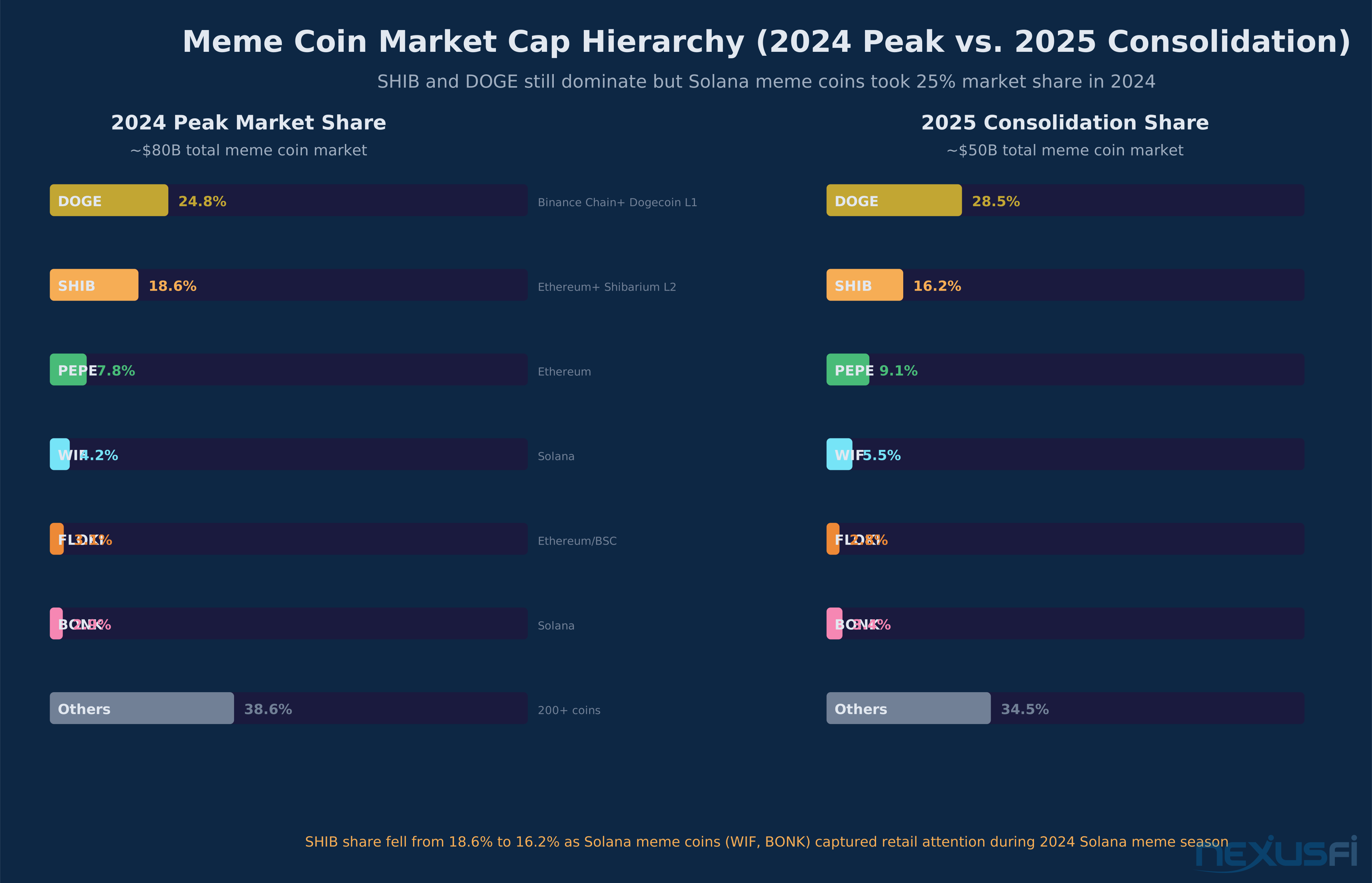
Correlation: SHIB and DOGE have approximately 0.65 correlation over 30-day periods. They diverge when SHIB-specific catalysts (burn milestones, Shibarium launches) occur, or when Musk events are DOGE-specific. During broad meme coin seasons, they move together closely (0.8+ correlation). The divergence windows are when relative value trades between them are possible.
How to Trade SHIB: Instruments, Venues, and Setups #
SHIB is one of the most liquid altcoins in the world. That means multiple instruments and venues are available, each with different characteristics.
Spot Trading
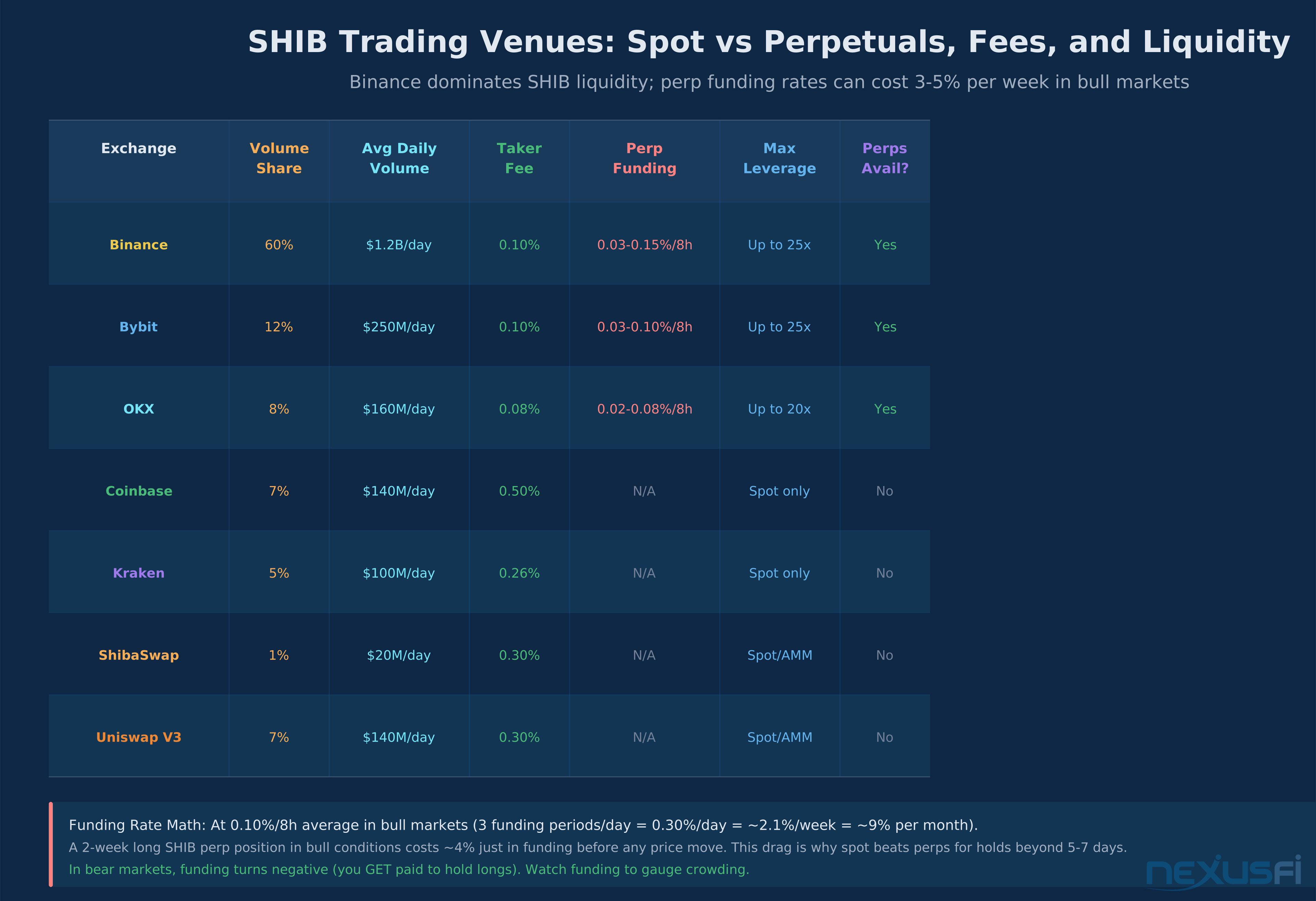
SHIB spot is available on 500+ exchanges. Binance has the highest liquidity with $500M-$1.5B daily SHIB volume. Coinbase, Kraken, OKX, Bybit are all liquid for retail trade sizes up to $1M+. Spread on SHIB/USDT at Binance is typically $0.0000001 or less — basically zero for most trade sizes. Spot SHIB is the simplest approach: buy, hold, sell. No funding costs, no liquidation risk, no time decay. For long-term SHIB positions (months+), spot is correct.
Perpetual Futures
SHIB perps are available on Binance, Bybit, OKX, Bitget, and most major crypto derivatives exchanges. Up to 25x leverage on SHIB. Funding rates fluctuate much — in bull markets, SHIB perps frequently trade at 0.1%+ per 8 hours (3.65% annualized cost for longs). In bear markets, funding turns negative, paying longs. Monitor funding before entering: high positive funding means the trade is crowded on the long side and mean-reversion risk is elevated.
For tactical trades (hours to days), perps with 3-5x leverage are appropriate. For anything longer than a week, the funding cost drag becomes significant. SHIB's high volatility means 95%+ annualized vol — a 3x leveraged position has 285%+ effective volatility. Position size so.
Position Sizing for High-Volatility Meme Coins
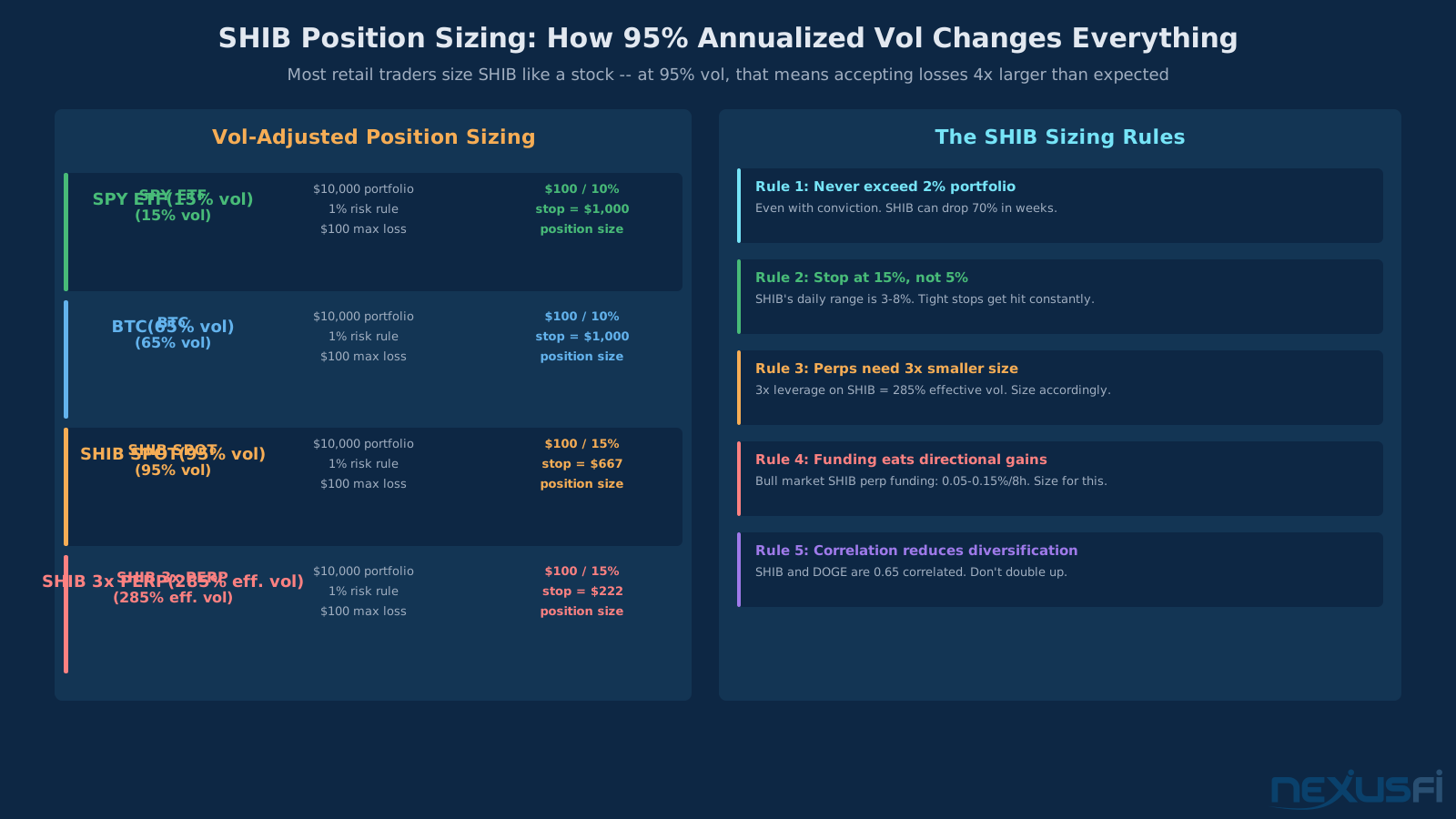
Position sizing for SHIB requires a different framework than standard equity trading. As @tigertrader explained: volatility-based position sizing means risking a fixed dollar amount (2% of equity) based on an ATR stop. For SHIB, with daily ATR averaging 5-8% of price, a 15% stop (2 ATR) is minimum viable. At 2% equity risk with a 15% stop, the max SHIB position is 13.3% of portfolio. At 3x leverage, that's 4.4% of portfolio.
@jamiej83 put it directly: position sizing has two elements — ticks risked and dollar amount risked. You need to know both. In SHIB, most retail traders know the dollar amount they want to spend but ignore the stop distance. That's how you end up with a position 5x too large for your actual risk tolerance.
SHIB's 95% annualized vol means a 3x leveraged position has 285% effective volatility. At that level, a single 10% adverse move in SHIB creates a 30% drawdown in your position. Size SHIB positions at 1/3 the notional you'd use for equivalent Bitcoin exposure.
Three Practical SHIB Trading Setups
Setup 1: BTC Breakout Follow-Through
SHIB's 0.82 BTC beta means BTC breakouts translate reliably into SHIB moves. When BTC breaks above a multi-week resistance level with volume, SHIB tends to follow within 4-12 hours. Entry: SHIB spot or 2-3x perp, 12-24 hours after BTC breakout confirmation. Target: 15-25% (SHIB typically amplifies BTC breakout moves by 1.5-2x). Stop: 8-10% below entry. Time limit: exit within 3-5 days regardless of price — BTC breakout follow-through trades in SHIB rarely sustain beyond this window without an independent SHIB trigger.
Setup 2: Pre-Exchange Listing Momentum
When a major exchange announces SHIB ecosystem token listings (BONE or LEASH specifically — SHIB itself has minimal new listing potential), there's typically a 24-72 hour pre-listing run. Monitor major exchange announcement channels. If listing announcement occurs for BONE or LEASH, SHIB frequently participates 50-75% as much via association. Entry: SHIB spot within 2 hours of BONE/LEASH listing announcement. Target: Exit the day before listing goes live (sell the news). Stop: -8% from entry.
Setup 3: Community Burn Campaign Fade
Community burn campaigns are announced publicly, run for 3-7 days, and create front-run buyers followed by exhaustion sellers. The fade setup: wait for the first 2-3 days of a campaign (SHIB is up 15-30%), then take a short position (via perps) with the thesis that the campaign-driven buying will exhaust within 24-48 hours of the campaign's announced end date. This is a mean-reversion trade. Only works if BTC is neutral-to-flat. If BTC is rallying, don't fade.
Risk Factors: Where SHIB Theses Break Down #
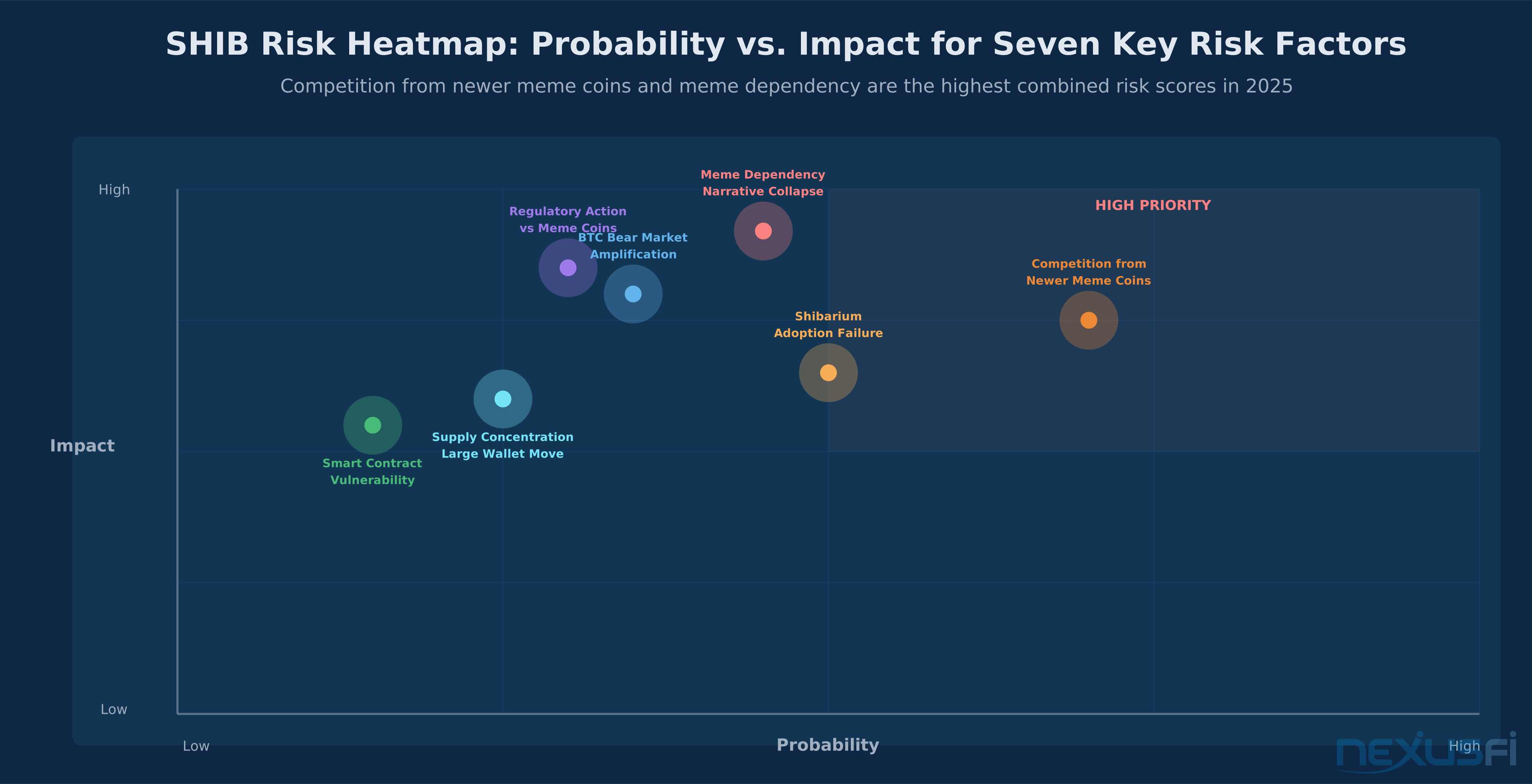
SHIB is a high-risk asset by any measure. Understanding specific risks helps manage them.
Supply Concentration Risk
Despite Vitalik's burn, SHIB supply remains concentrated. The top 10 SHIB wallets hold approximately 8-12% of circulating supply. Several community burn wallets and exchange cold wallets dominate the distribution. Any unexpected large wallet movement — especially a known community burn wallet receiving and then moving tokens — can trigger panic selling.
Meme Dependency Risk
SHIB's market cap is roughly $8-15 billion in normal market conditions. That's extraordinary for a token whose fundamental value is contested. A sustained meme coin bear market — driven by regulatory crackdown, crypto winter, or simple attention shifting — could reduce SHIB's market cap by 80-90% and keep it there for years. This has happened before (2022). The recovery requires a new viral moment that can't be manufactured.
Competition From Newer Meme Coins
PEPE launched in April 2023 and briefly exceeded SHIB's market cap. Dogwifhat (WIF), Bonk, and dozens of Solana-native meme coins captured the 2024 meme coin cycle narrative better than SHIB. Each new meme coin supercycle produces new winners that can permanently displace older meme coins' attention share. SHIB's community and ecosystem give it durability that pure meme coins lack, but attention is zero-sum and newer tokens are competing hard for it.
Shibarium Adoption Risk
SHIB's "utility pivot" thesis depends on Shibarium becoming a genuinely used DeFi ecosystem. Current TVL ($20-60M on ShibaSwap, minimal on other Shibarium protocols) is well below what would constitute ecosystem success. If Shibarium fails to attract quality DeFi protocols and genuine user activity, the utility narrative collapses and SHIB reverts to pure speculation — at which point, newer meme coins will outperform it structurally.
Regulatory Risk
The SEC's actions against crypto exchanges and tokens throughout 2023-2025 created uncertainty for all altcoins. SHIB has not been specifically targeted, but the anonymous founding team (Ryoshi disappeared), the token's structure (1 quadrillion supply designed to look cheap), and the community-driven governance make regulatory characterization unpredictable. Any clear regulatory action against meme tokens as unregistered securities would be severe for SHIB price.
The Bottom Line on Trading SHIB #
SHIB is not a scam. It's not a sophisticated blockchain protocol. It exists in an honest middle ground: a community-built project that started as a meme, accidentally became deflationary through Vitalik's intervention, and spent four years building genuine infrastructure that still mostly functions as a speculative vehicle.
The trading case for SHIB rests on three conditions: BTC in an uptrend, meme coin season (retail inflows into crypto), and a specific SHIB trigger (listing, burn milestone, Shibarium news). When all three align, SHIB can deliver 100-300% moves in weeks. When only BTC is bullish but meme coin season is absent, SHIB underperforms large caps. When BTC is bearish, SHIB can decline 40-60% in 30 days.
Position sizing discipline is the only real edge available in SHIB trading. Not information edge — everything that moves SHIB is announced publicly. Not analytical edge — the price is sentiment, not DCF. The edge is in sizing correctly for the volatility (95% annualized, not 15%), setting mechanical stops before every trade, and not letting "but the community is building" narratives override risk management.
For tactical traders: SHIB perps with 2-3x leverage, BTC breakout setups, 5-10 day hold periods, 8-10% stops. For long-term crypto portfolios: spot SHIB represents a high-risk speculative allocation (0.5-2% of portfolio). Anyone putting more than 5% of capital in SHIB needs to revisit their risk management framework.
Knowledge Map
Prerequisites
Understand these firstGo Deeper
Build on this knowledgeReferences This Article
Articles that build on this topicCitations
- — $TRUMP Crypto coin: Facts, Legality, and Controversies (2025) 👍 1“Meme coins, by their nature, typically derive their value primarily from community sentiment, social media trends, and speculative trading rather than intrinsic utility.”
- — My 2 cents... (2018) 👍 3“Dogecoin, a cryptocurrency created as a joke about a dog meme, has a market cap above $2 billion. Makes you just want to get in on anything.”
- — Becoming A Better Trader (2021) 👍 9“It's not beyond me that me posting about cryptocurrency might be annoying to some of you. Just ignore me! Alright so it was a bloodbath in crypto... Crypto is high risk, high reward.”
- — Becoming A Better Trader (2021) 👍 5“Cryptocurrencies, admittedly because there's a lot of profit potential. Crypto is high risk, high reward.”
- — Concerning risk per trade sizing (2012) 👍 4“All positions are still placed within the context of a volatility-based, position sizing algorithm, which is quite simply, 2% of equity risk, based on a 1.5 ATR stop. This allows me to have a realistic expectation of loss.”
- — Calculating Stop and Profit Target via ATR (2012) 👍 17“ATR such that there will be a wide stop when volatility is high, but a narrower stop when the market calms down. In high-volatility conditions, the ATR stop must be placed further away to avoid being whipsawed.”
- — Concerning risk per trade sizing (2012) 👍 18“Position sizing has 2 key elements: 1) number of ticks risked 2) dollar amount risked. You cannot DEFINE your risk without knowing your objectives.”
- — Becoming A Better Trader (2021) 👍 4“This is the Bitcoin dominance chart. When the alt-coins rally, it tanks, of course. Currently creating a pattern.”
- — Blog.shibatoken.com (2023)
- — Shibaswap.com (2024)
- — Shibariumscan.io (2024)