



Tokenomics: Understanding Crypto Supply and Demand
Overview #
Every trade you make in crypto is, at its core, a bet on supply and demand. Not supply and demand of the abstract "market forces" variety — the actual mechanics of how tokens enter and leave circulation, who owns what, when they can sell, and whether the project has real reasons for people to keep holding. That's tokenomics. Get it wrong and you'll hold through a dump that was entirely predictable if you'd read the vesting schedule. Get it right and you'll know when to size up, when to reduce, and exactly which supply events to treat like earnings reports.
This guide covers the full picture: supply mechanics, distribution structures, burn mechanisms, staking economics, unlock calendars, and the red flags that separate structurally sound tokens from ticking dilution bombs. Whether you're trading Bitcoin, a DeFi protocol, or evaluating a new Layer 2, the same framework applies.
The single most actionable piece of tokenomics analysis: Check the unlock calendar before entering any position in a token less than two years old. Scheduled supply events function like earnings releases — the market prices them in weeks early.
Supply Mechanics: The Foundation #
The supply model is the bedrock of any tokenomics analysis. Three fundamental archetypes exist, and every token falls somewhere on this spectrum.
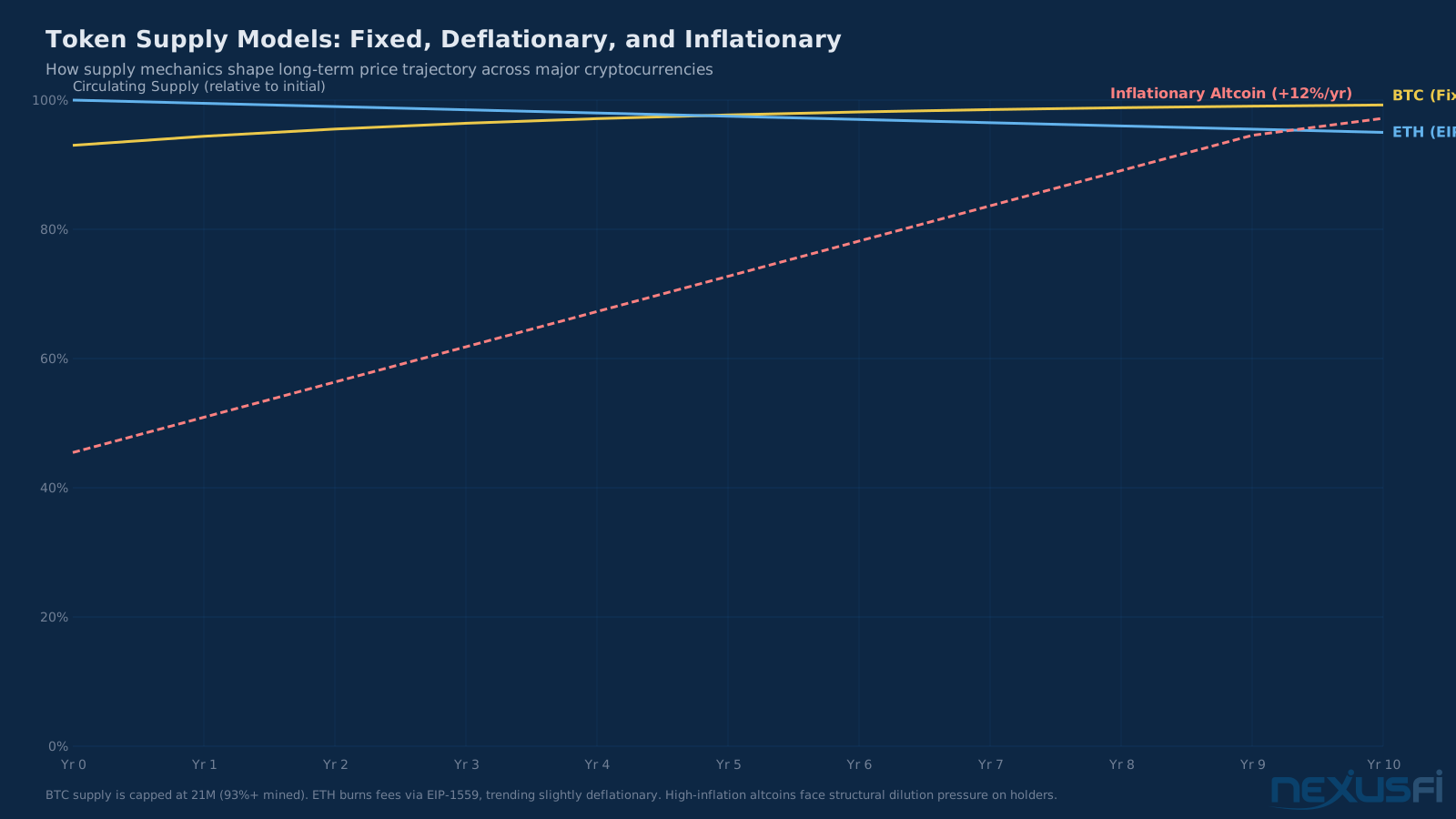
Fixed supply is the simplest and cleanest model. Bitcoin's 21 million hard cap is the gold standard. Of those 21 million, roughly 93% have already been mined — the remaining 7% will trickle out over the next century through block rewards that halve approximately every four years. There is no mechanism to create more. The scarcity is absolute and algorithmic. From a pure supply standpoint, no amount of demand growth will ever be diluted by new issuance.
As NexusFi member @BrianBacchus noted in a discussion on Bitcoin fundamentals: BTC is capped at 21 million. Once that many have been mined the supply is exhausted. However, it's designed to have increasing difficulty to mine each additional block.
[1]
The practical implication for traders: with a fixed cap, price is primarily a function of demand. Supply-side analysis becomes about exchange balances, miner selling behavior, and holder composition rather than new issuance risk.
Net-deflationary supply is what Ethereum has moved toward post-Merge and post-EIP-1559. The network still creates new ETH (roughly 0.5% annually) to reward validators, but the base fee from every transaction gets permanently burned. When network activity is high, burns exceed issuance and the total supply actually shrinks. When activity is low, supply grows slightly. It's usage-linked deflation. The "deflationary ETH" narrative is valid — but only when the data confirms it. Always check current burn rate vs. issuance rate rather than assuming the narrative holds. [7]
Inflationary supply covers most of the altcoin universe. Some inflation is rational — it funds network security through validator rewards or incentivizes liquidity provision in DeFi protocols. But uncapped, high-rate inflation that isn't offset by genuine demand growth is a structural headwind for price. An 18% annual inflation rate means early holders lose nearly a fifth of their purchasing power every year relative to new supply entering the market, unless demand grows at least as fast. It rarely does indefinitely.
Token Distribution: Who Got Them First #
Supply mechanics tell you how many tokens will exist over time. Distribution tells you who controls them and what their incentives are. This is where the real danger lives for traders entering after the initial allocation.
Every project creates an initial token distribution at launch. The typical categories include: the founding team and advisors, early investors (seed, private sale, Series A/B), the public (ICO, IDO, or exchange listing), ecosystem and treasury reserves, and liquidity provisions for exchanges. The percentages allocated to each group, and how long those recipients must wait before selling, determine the structural supply risk for everyone else.
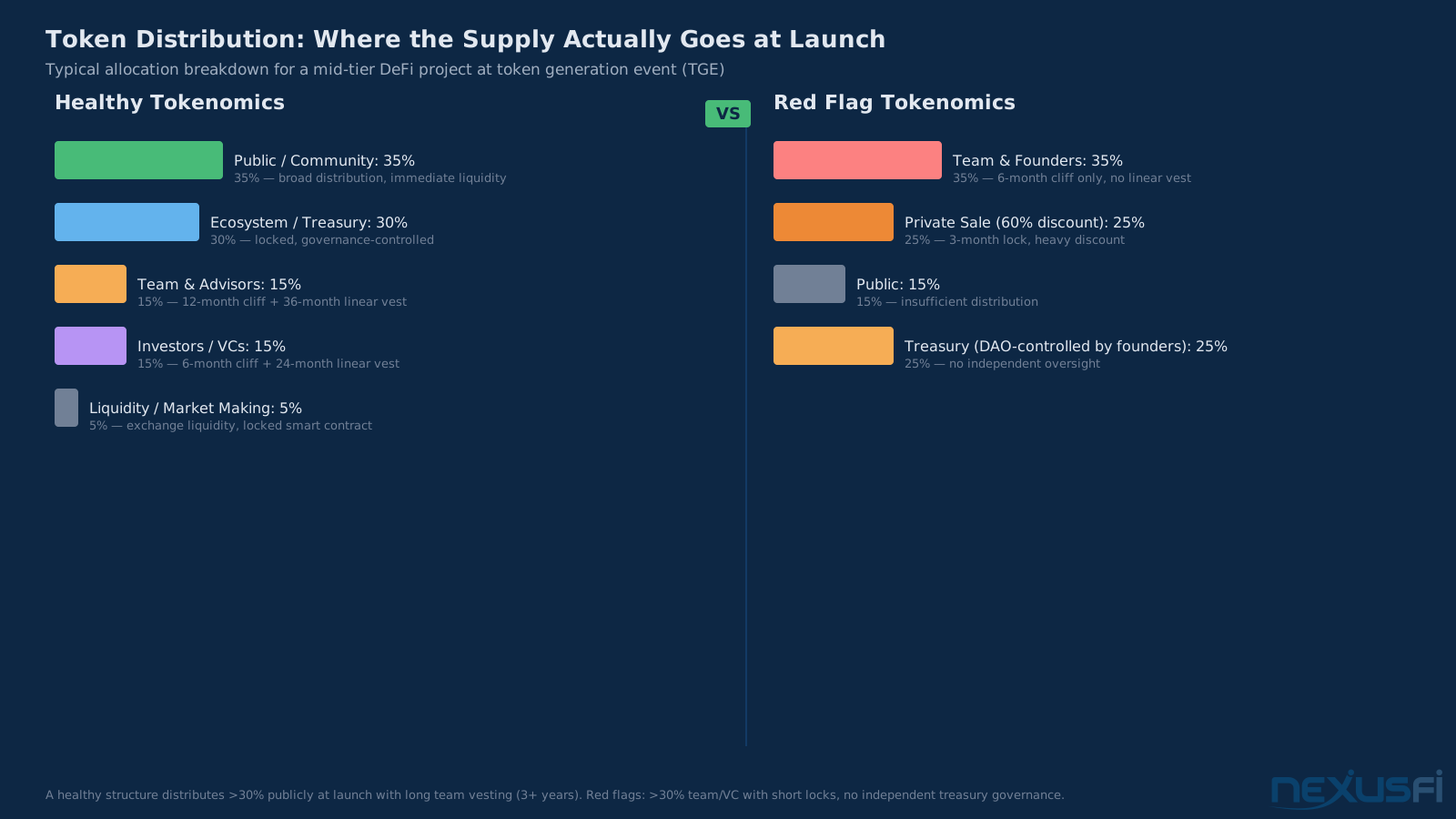
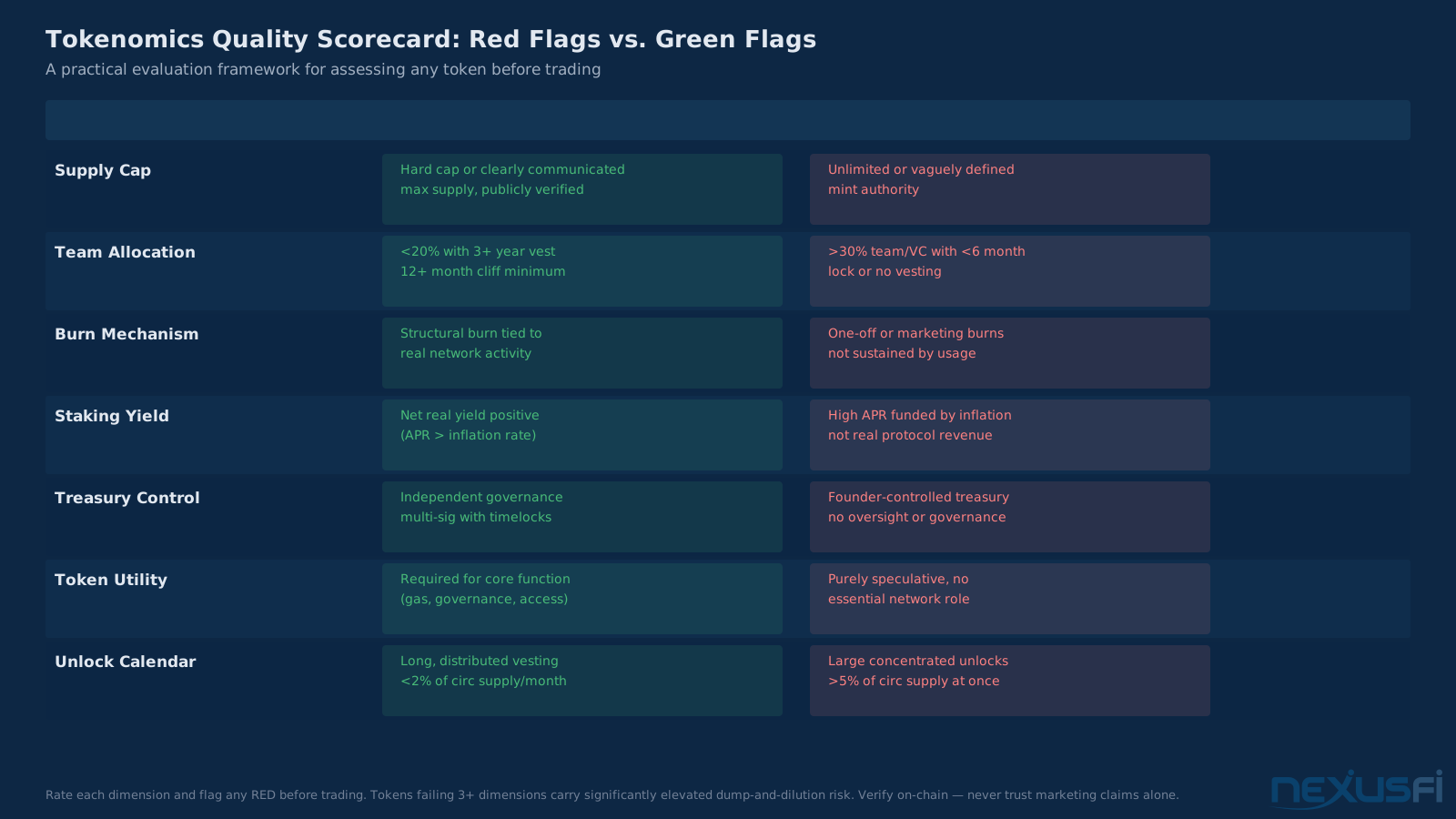
A healthy distribution puts 30-35% directly in the hands of the public and community at launch, limits team and insider allocations to 15-25% total, and requires extended vesting periods for anyone who received tokens at discounted prices.
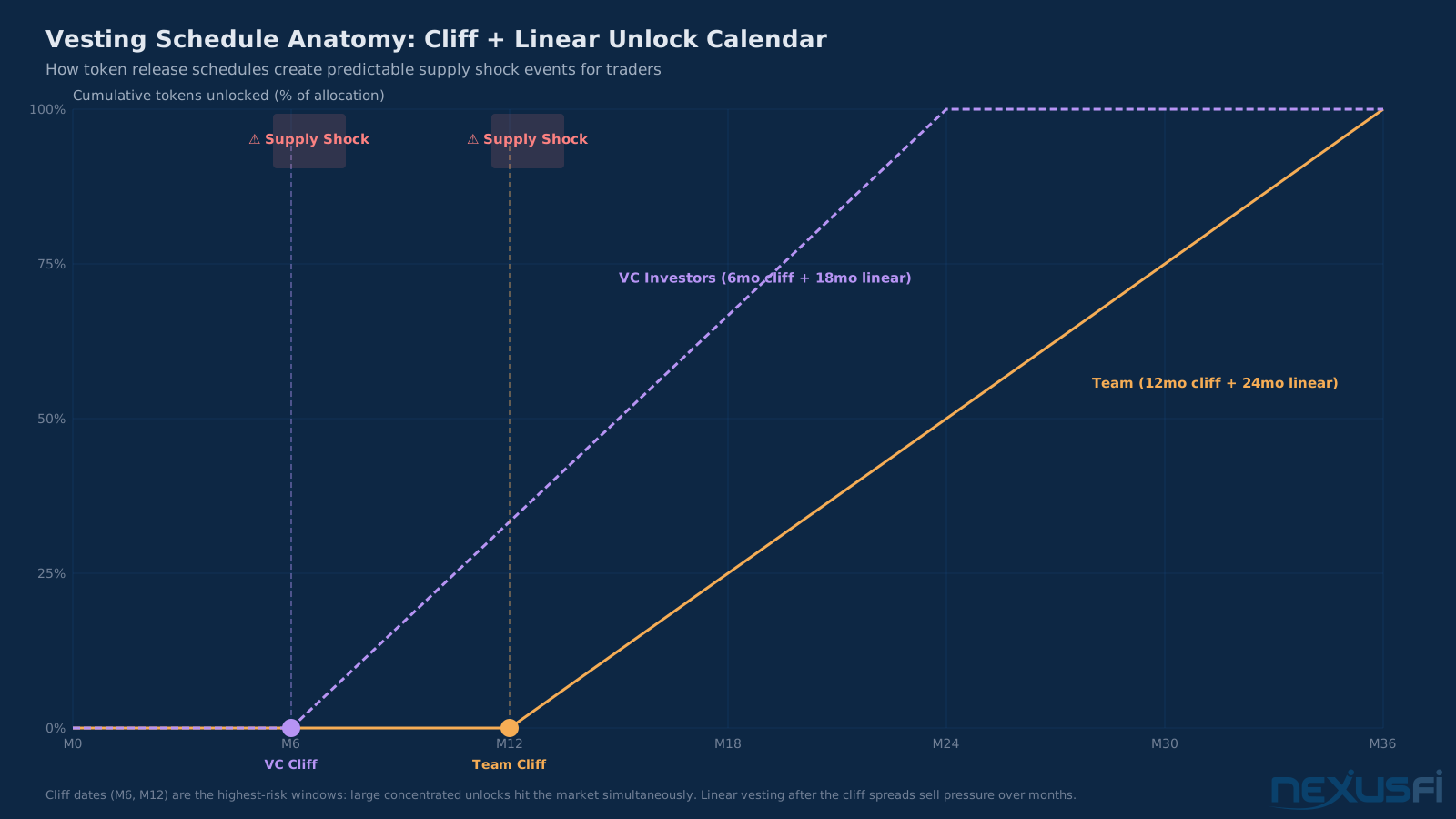
The vesting schedule is the unlock calendar. It defines exactly when each allocation bucket can access its tokens and sell. A "cliff" is the period during which no tokens can be moved at all — typically 6 to 12 months for teams and investors. After the cliff, tokens usually unlock linearly: equal portions released each month or quarter until fully vested.
Private sale investors often receive tokens at significant discounts — sometimes 50-70% below the public listing price. That creates an enormous paper profit on day one of eligibility. Even if they believe in the project long-term, some will sell immediately. The rational question before entering a position is: which cliffs are coming, how large are those tranches, and is there enough demand to absorb them?
The distribution failures are just as instructive as the successes. A project where the founding team controls 35% with only a six-month cliff is structurally fragile — six months from launch, you'll see exactly what their conviction level really was. Opaque treasury allocations with no independent governance are another red flag: when a DAO's treasury is actually controlled by the founders through a multisig they fully control, it's not decentralized at all.
On the community side, extremely large airdrops can also be problematic. When 10%+ of a token's total supply is airdropped to thousands of wallets, a significant fraction of recipients will immediately sell — they didn't buy in, so their cost basis is zero. The resulting sell pressure in the first hours and days after the airdrop can be significant.
The Vesting Schedule as a Trading Calendar
The vesting schedule is probably the most immediately actionable piece of tokenomics data for an active trader. It's a calendar of scheduled supply events, each of which creates predictable (though uncertain in magnitude) sell pressure.
The typical structure for institutional-style projects involves multiple tranches with different parameters. The founding team might have a 12-month cliff followed by 36 months of linear vesting. Early investors might have a 6-month cliff with 18 months of linear release. Public sale participants might receive their full allocation at TGE (token generation event), or have a shorter 3-month lock with immediate access to some percentage.
What this creates is a supply shock calendar. At month 6, the VC cliff expires — a large tranche of tokens that were bought at private sale prices becomes liquid for the first time. At month 12, the team cliff expires. These are the dates traders need to know.
How to quantify the risk: Calculate the percentage of current circulating supply that will unlock at each event. A 2% unlock into a high-demand, liquid market might get absorbed without notice. A 5-8% unlock into thin markets or a bearish sentiment environment can move price 10-15% in days. Cross-reference the unlock size against average daily trading volume. If the unlock represents more than three days of normal volume, the risk of significant price impact is high.
Never assume that a token without visible vesting concerns is safe. Some teams structure "advisor" allocations, ecosystem grants, or "strategic partner" tokens that effectively function as hidden insider supply with shorter lock-ups than the official vesting schedule implies.
Demand Drivers: What Makes Tokens Worth Holding #
Supply tells you the quantity. Demand tells you why anyone should want it. Without genuine demand drivers, even a deflationary supply schedule can't support a rising price — you're just slowly burning a diminishing asset nobody wants.
The demand drivers that actually matter for durable price support are functional, not narrative.
Gas and transaction fees are the strongest form of utility because they're non-optional. To use Ethereum, you need ETH. There's no substitute. As network usage grows, the structural demand for the native token grows with it. This is why ETH's transition to proof-of-stake combined with EIP-1559 was significant — it tied supply reduction directly to network usage. High activity burns more ETH. Low activity burns less. Demand and supply deflation are coupled.
Governance rights are a weaker demand driver unless the governance controls something valuable. Holding a governance token gives you votes on protocol decisions — but if the protocol has no revenue, no treasury, and no real decisions to make, the governance right is worth little. The important question is: "Does this governance token control anything that generates or distributes real economic value?" For a deeper exploration of how governance mechanics work, see Governance Tokens: DAO Voting, veTokenomics, and Trading Protocol Power.
Staking rewards create demand by offering yield to holders who lock their tokens. But the source of that yield matters enormously — a distinction the next section covers in detail.
Store of value is Bitcoin's primary demand driver.
[5] For newer tokens claiming "store of value" status without Bitcoin's track record, treat this as a narrative rather than a demand driver and weight it so.
Burn Mechanisms: When Destruction Creates Value #
Token burns permanently remove tokens from circulation, reducing total supply and — if demand holds constant or grows — supporting price. But not all burns are equal.
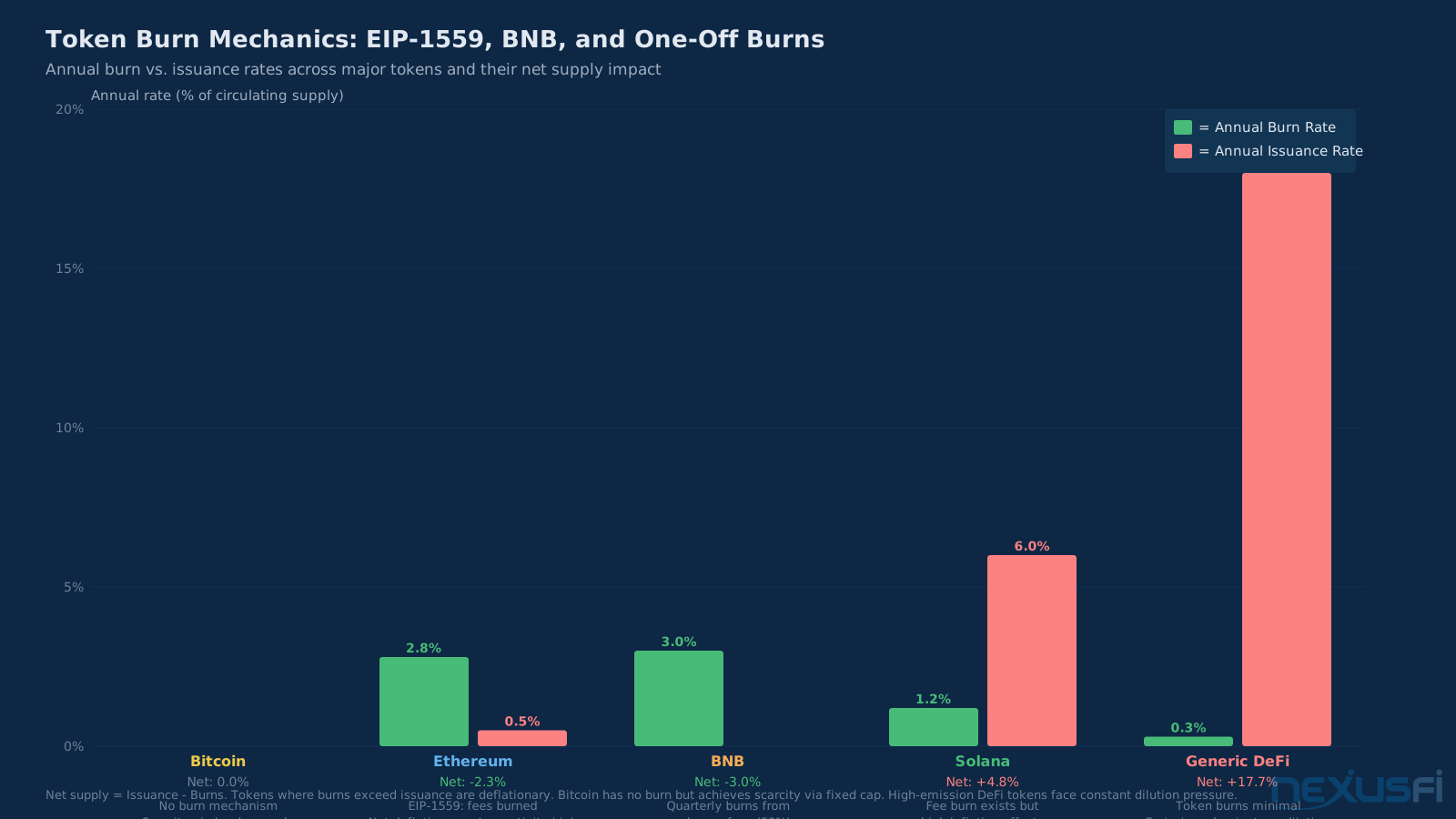
Structural burns tied to usage are the real thing. EIP-1559 burns Ethereum's base fee on every transaction. This isn't a one-time event or a marketing stunt — it's a protocol-level rule that runs automatically with every block. When the network is busy, large amounts of ETH burn. The mechanism is transparent, verifiable on-chain, and directly tied to genuine network activity. [7] This is how you judge whether deflation is structural or superficial.
BNB takes a different approach. Binance runs quarterly burns funded by 50% of exchange fee revenue, with the goal of eventually burning 100M of the original 200M supply. [8] The amounts are significant — hundreds of millions of dollars per event — and there's a published schedule. The risk with this model is dependency on centralized exchange revenue. If Binance's market share declines, burns slow.
One-off or marketing burns are the weakest category. When a project announces a "token burn" as a marketing event without any underlying mechanism that will sustain it, it's basically a one-time supply reduction. It might create a brief price spike, but it doesn't change the structural trajectory. Watch for whether the project subsequently burns in future periods. If it was a one-time announcement, assume it's dead.
The key calculation: Net supply change = New issuance - Burns. If a project mints 8% of supply annually through staking rewards but burns 2% through fee mechanisms, it's still inflating at a net 6% rate. A "burn mechanism" that doesn't offset meaningful inflation is noise.
Staking Economics: The Math Behind the Yield #
Staking is one of the most misunderstood mechanics in crypto markets. It looks like income — you lock tokens and receive more tokens. But whether that income is real or illusory depends entirely on where the yield comes from.
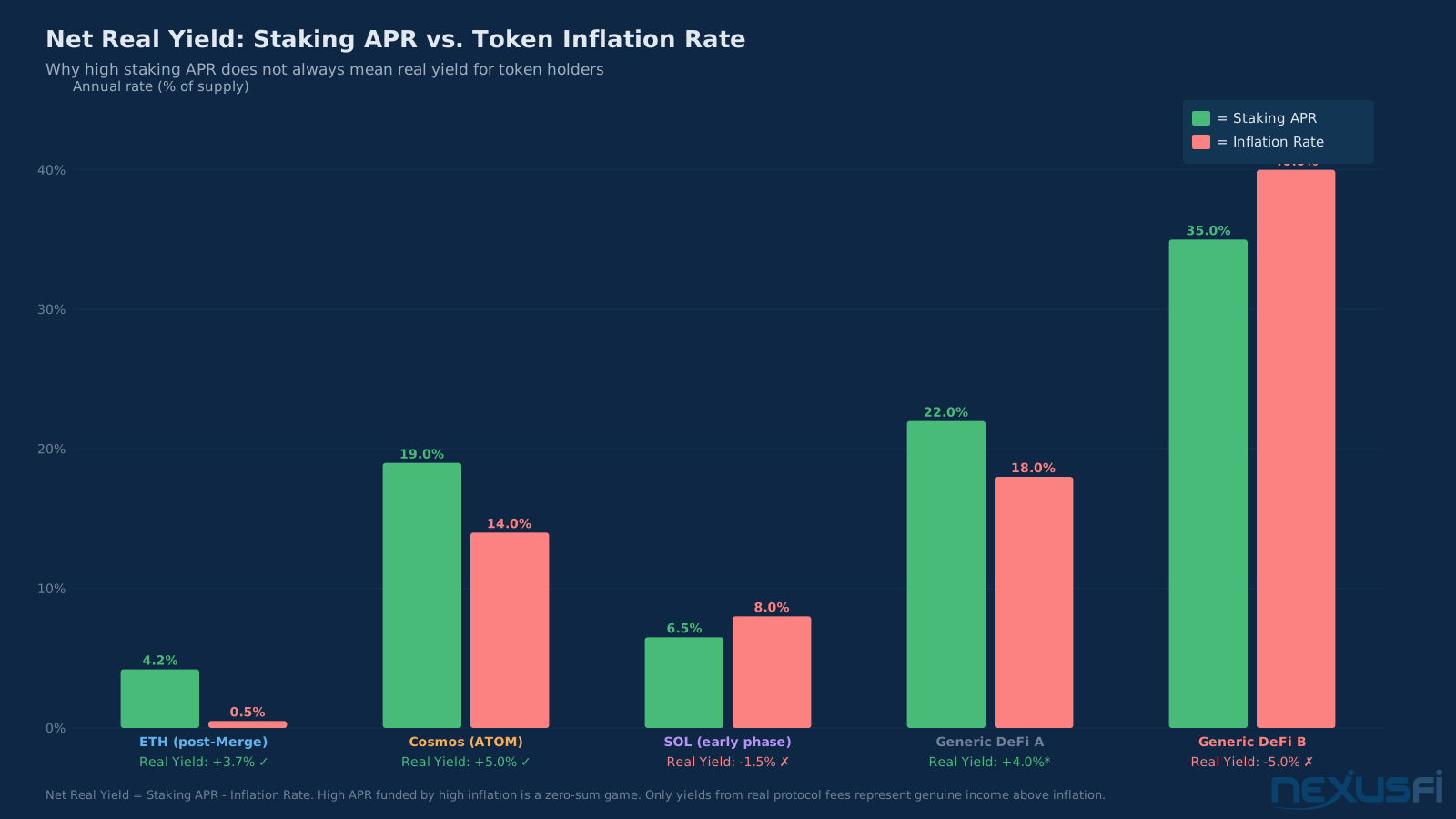
Protocol revenue-funded staking is the real version. If a DeFi protocol earns fees from borrowers, traders, or liquidity providers, and distributes those fees to token stakers, the stakers are earning a share of real economic activity. Their yield is analogous to a dividend — it represents a proportional claim on the business's output. If you earn 8% APR in staking rewards and the protocol inflation rate is 2%, your real yield is +6%. You're actually getting richer relative to non-stakers.
Inflation-funded staking is the illusion. When a protocol creates new tokens and distributes them as staking rewards — without generating any underlying fee revenue — the math is circular. Everyone who stakes receives more tokens, but everyone's tokens are also worth proportionally less because total supply increased. Non-stakers get diluted. Stakers break even before accounting for any demand changes. This is sustainable only if demand grows faster than new token issuance, which it eventually stops doing for almost every project.
The net real yield formula is simple: Staking APR - Token Inflation Rate = Real Yield. If a token offers 20% staking APR but has 22% annual inflation, the real yield is negative. Stakers are actually losing purchasing power relative to the total token supply, even though their nominal balance is growing.
The Liquid Staking Complication: Protocols like Lido allow users to stake ETH and receive stETH — a liquid, tradeable token representing the staked position plus accrued rewards. LSTs can be used in DeFi, sold, or used as collateral. This means staked tokens aren't locked away as completely as they appear. Factor LST liquidity into float analysis when assessing how much supply is truly out of circulation.
Unstaking queues also matter. Ethereum's exit queue can sometimes take weeks during periods of high demand. Cosmos-based chains typically have a 21-day unbonding period. When markets turn bearish, mass unstaking requests pile up. The queue clears gradually — but when it does, you get wave after wave of newly liquid tokens entering the market at the same time everyone is trying to sell. Track staking participation rates and unstaking queue sizes as leading indicators of potential supply surges.

Evaluating Tokenomics: The Complete Checklist #
With all the components understood, the practical question becomes: how do you evaluate a specific token before trading? Here's the systematic approach.
@rleplae, working on on-chain alpha strategies, noted a key insight: "The scarcity is calculated by dividing currently circulating supply by annual production — the same model for evaluating the value of limited-supply objects can be adopted to assess the value of Bitcoin." [6] That scarcity ratio framework applies to any token with a supply ceiling.
Step 1: Map the supply curve. Confirm the maximum supply (or confirm there isn't one). Calculate the current inflation rate. Determine the burn rate if applicable. Build a simple model: current supply + new issuance - burns = net supply one year from now. If supply grows 15% and demand stays flat, you'd expect roughly 15% headwind on price before any other factors. CoinGecko tracks circulating supply for most tokens. [9]
Step 2: Analyze distribution. Break down the allocation by category. Flag any single entity holding more than 20% without a long vesting schedule. Look specifically for the team and investor portions — these are the holders with the largest cost-basis advantage over retail and the strongest incentive to exit on the first signs of weakness.
Step 3: Read the vesting schedule. Pull the actual contract if possible, or find the published schedule. Map every cliff date on a calendar. Calculate what percentage of current circulating supply unlocks at each event. Mark the dates with the highest risk in red.
Step 4: Assess demand drivers. Be harsh. Ask: if no new buyers entered the market, why would current holders want to keep holding? If the answer is "they expect more buyers later," that's a Ponzi structure. If the answer is "the protocol generates $50M in annual fees and stakers receive a cut," that's a real demand driver. Distinguish between speculation and utility.
Step 5: Check the burn math. If the project has a burn mechanism, verify it's structural (not one-time), calculate the annual burn rate, and net it against inflation. Confirm the burn rate is verifiable on-chain, not just from marketing materials.
Step 6: Calculate net real yield for stakers. Look at current staking APR, look at the inflation rate, and subtract. If real yield is negative, inflation-funded staking is a trap that slowly dilutes non-stakers while giving stakers the illusion of income.
Step 7: Overlay market conditions. Strong tokenomics don't prevent losses in a bear market. Weak tokenomics accelerate them. When you're evaluating a token, also assess where you are in the market cycle, liquidity conditions, and whether institutional demand exists. Even a perfectly designed token can fall 70% in a broad crypto drawdown. The broader context is covered in Cryptocurrency Trading Fundamentals.
Unlock Calendars and Price Action #
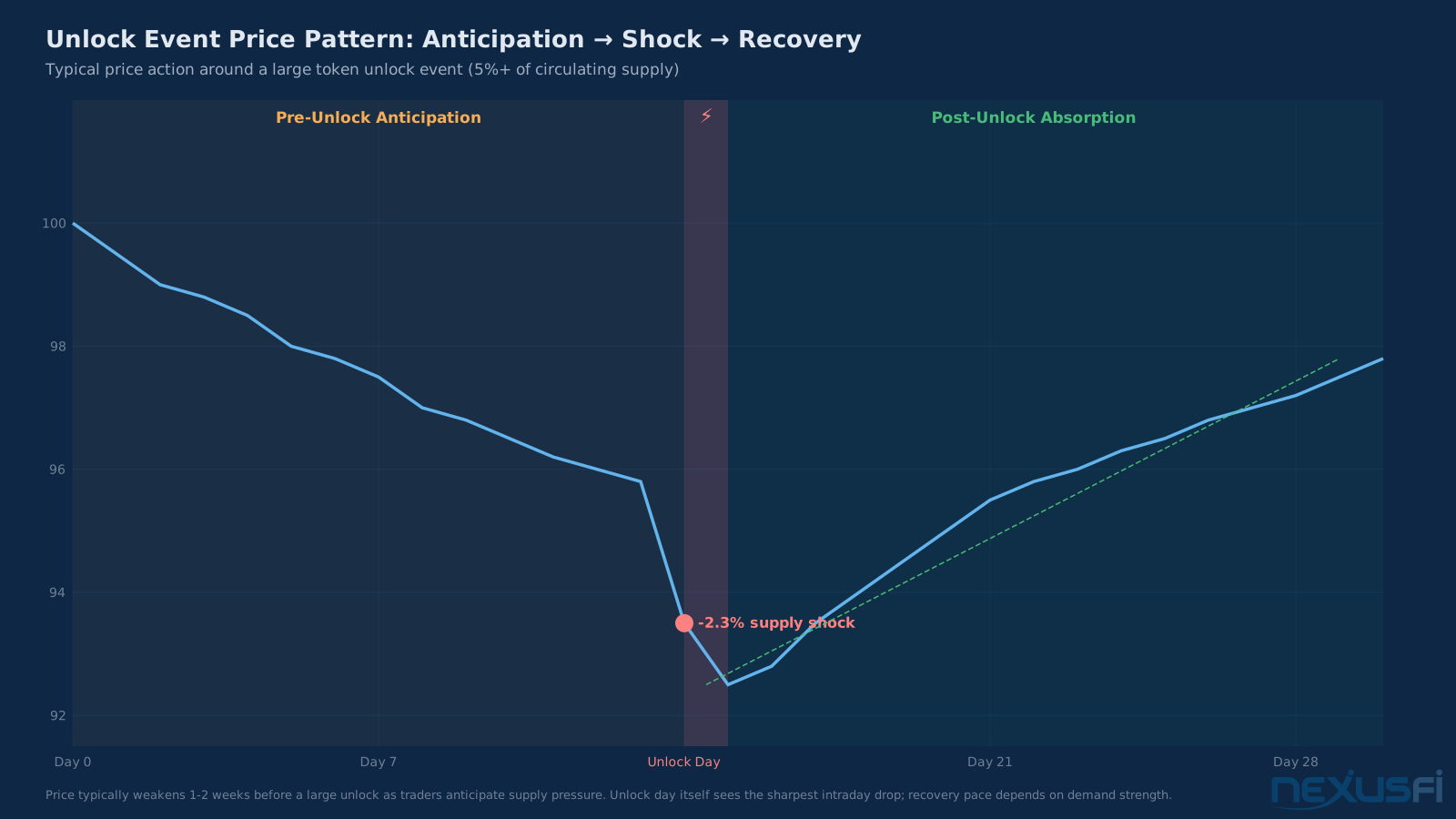
The most immediately tradeable piece of tokenomics analysis is the unlock calendar. Here's how these events typically play out.
Pre-unlock (1-2 weeks before): The market often knows the unlock is coming. Sophisticated holders start reducing exposure. Short sellers position ahead of expected supply pressure. Price typically weakens gradually — not dramatically, but the drift is visible in technical analysis if you know to look for it. For large unlocks (5%+ of circulating supply), the pre-event weakness can be 3-7%.
Unlock day: The supply hits the market. Holders who received tokens at significant discounts will sell some portion immediately, regardless of their long-term conviction — it's basic risk management. The intraday move can be sharp, especially if the unlock is large relative to average daily volume. An unlock representing 3-4 days of normal volume hitting the market in a single session will move price measurably.
Post-unlock (1-4 weeks after): This is where the quality of the project's underlying demand shows itself. If genuine buyers step in at the depressed price, you get a stabilization and reversal pattern. If the demand isn't there, the post-unlock period becomes a slow grind lower as the new supply gets absorbed at progressively lower prices.
For large cumulative unlocks (10%+ of supply over 6 months), the structural headwind is significant. Position sizing should account for the volatility expansion. Tighter stops, smaller positions, and consideration of whether to hold through unlocks at all.
The derivatives angle: Futures and perpetuals markets often price in expected supply events before the on-chain unlock occurs. Watch for unusual funding rates going negative ahead of major unlocks — that's short sellers paying to hold their position because they're positioned against the unlock. For the full crypto derivatives toolkit, see Crypto Derivatives Trading.
In a broader supply-demand discussion on NexusFi,
[2] That framing applies universally: structural scarcity matters, but supply mechanics alone can't prevent cyclical drawdowns.
Real-World Examples: BTC, ETH, and BNB #
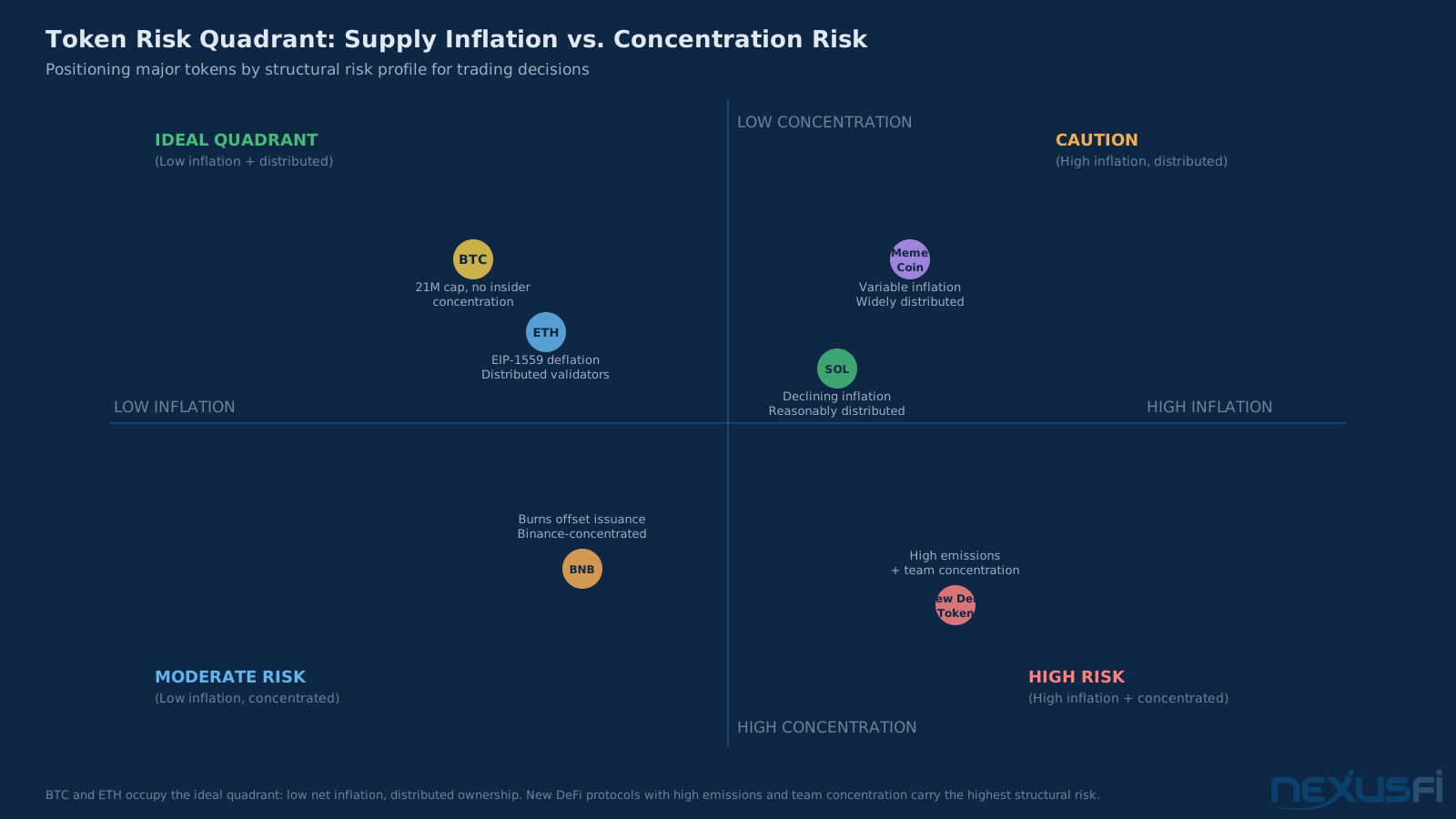
Bitcoin has the simplest tokenomics in crypto. Hard 21M cap, 93% already mined, ~4-year halving schedule. No staking, no burns, no governance token, no ecosystem fund. The demand analysis is: is Bitcoin useful as a store of value and medium of exchange? The supply analysis is: supply growth is minimal and declining.
[3] Against demand from ETFs, institutional adoption, and corporate treasuries, that supply profile is structurally bullish over medium timeframes.
For traders interested in Bitcoin's futures market mechanics, see Bitcoin Futures (BTC): The Complete Trading Guide.
Ethereum runs the more complex model. Post-Merge, the annual issuance is around 0.5% of total supply. EIP-1559 burns vary with network activity — during periods of high DeFi and NFT activity, burns have exceeded issuance and ETH has been net deflationary. The key metric to watch is the daily burn-to-issuance ratio, available in real-time on-chain. When activity picks up and burn > issuance, that's a structural tailwind for ETH specifically because higher usage = higher burns = lower supply.
BNB operates under a different model: centralized but transparent quarterly burns from exchange fee revenue, with a target of eventually burning 100M of the original 200M supply. The mechanism works, but it creates a dependency on Binance's market share. BNB's tokenomics are sound as long as Binance remains dominant. That's a different kind of risk than protocol-level mechanics.
What Good Tokenomics Can't Fix
One important caveat: strong tokenomics are a necessary condition for a durable asset, but not a sufficient one. A token with excellent supply mechanics can still lose 80% in a crypto bear market because it's correlated with the overall risk asset cycle. Sound tokenomics reduce specific structural risks (dilution, dump-and-exit), but they don't protect against macro drawdowns.
Conversely, terrible tokenomics can be temporarily masked by market euphoria. During bull markets, tokens with 20% annual inflation, team-heavy distributions, and no real utility still see enormous price gains because speculation and momentum override fundamentals. The unwinding happens later — usually fast and painful.
Use tokenomics as a filter, not a trading signal in isolation. It tells you which tokens have the structural foundation to recover from drawdowns and which ones are one unlock event away from capitulation. For reading the on-chain data that validates or contradicts a project's tokenomics claims, see On-Chain Analysis for Traders.
Knowledge Map
Go Deeper
Build on this knowledgeReferences This Article
Articles that build on this topicCitations
- — How much do you know about Bitcoin? (2021) 👍 5“BTC is capped at 21 million. Once that many have been mined the supply is exhausted. However, its designed to have increasing difficulty to mine each additional block.”
- — Crypto Crossroads: Will BTC & ETH Crash 50% or Rally 50% First? (2026) 👍 1“The inability to "print more Bitcoin" means that at some point it can become a scarcity asset.”
- — Crypto Crossroads: Will BTC & ETH Crash 50% or Rally 50% First? (2026)“Mining supply dropped to ~450 BTC/day after the 2024 halving -- roughly 164,000 BTC annually.”
- — Cryptocurrencies 101 -- what I've learned so far (2021) 👍 5“What I propose is to figure out what the max supply is and what the current circulating supply is, then you know what the inflation rate looks like.”
- — How much do you know about Bitcoin? (2021) 👍 4“My main takeaway: this is pure genius: Economical (Fixed supply 21M) -- no central bank printing press.”
- — Building an alpha out of on-chain data? (2022) 👍 3“The scarcity is calculated by dividing currently circulating supply by annual production -- the same model for evaluating the value of limited-supply objects can be adopted for Bitcoin.”
- Ethereum Foundation — EIP-1559: Fee Market Change for ETH 1.0 Chain (2024)
- Binance Research — BNB Quarterly Burn Reports (2025)
- CoinGecko — Cryptocurrency Circulating Supply Tracker (2025)