



Toncoin (TON): The Messenger-Native Blockchain Every Crypto Trader Needs to Understand
Overview #
TON started as a Telegram project, got killed by the SEC, came back from the dead as a community-run chain, and has quietly become one of the most interesting Layer-1 bets in the crypto market. If you have written it off because of its messy history, you are leaving edge on the table.
This is not a whitepaper summary. This is what TON actually is, why it trades the way it does, where the real risks are, and how to position if you want exposure — spot or futures.
The core thesis in one sentence: TON has 900 million Telegram users as a built-in distribution channel, and only 0.5% of them are currently using the wallet. That penetration gap is either the entire bull case or the proof that adoption is permanently limited. Working that out is the job of this article.
{{IMAGE:toncoin_ecosystem_diagram.svg}}
What Is The Open Network (TON)? #
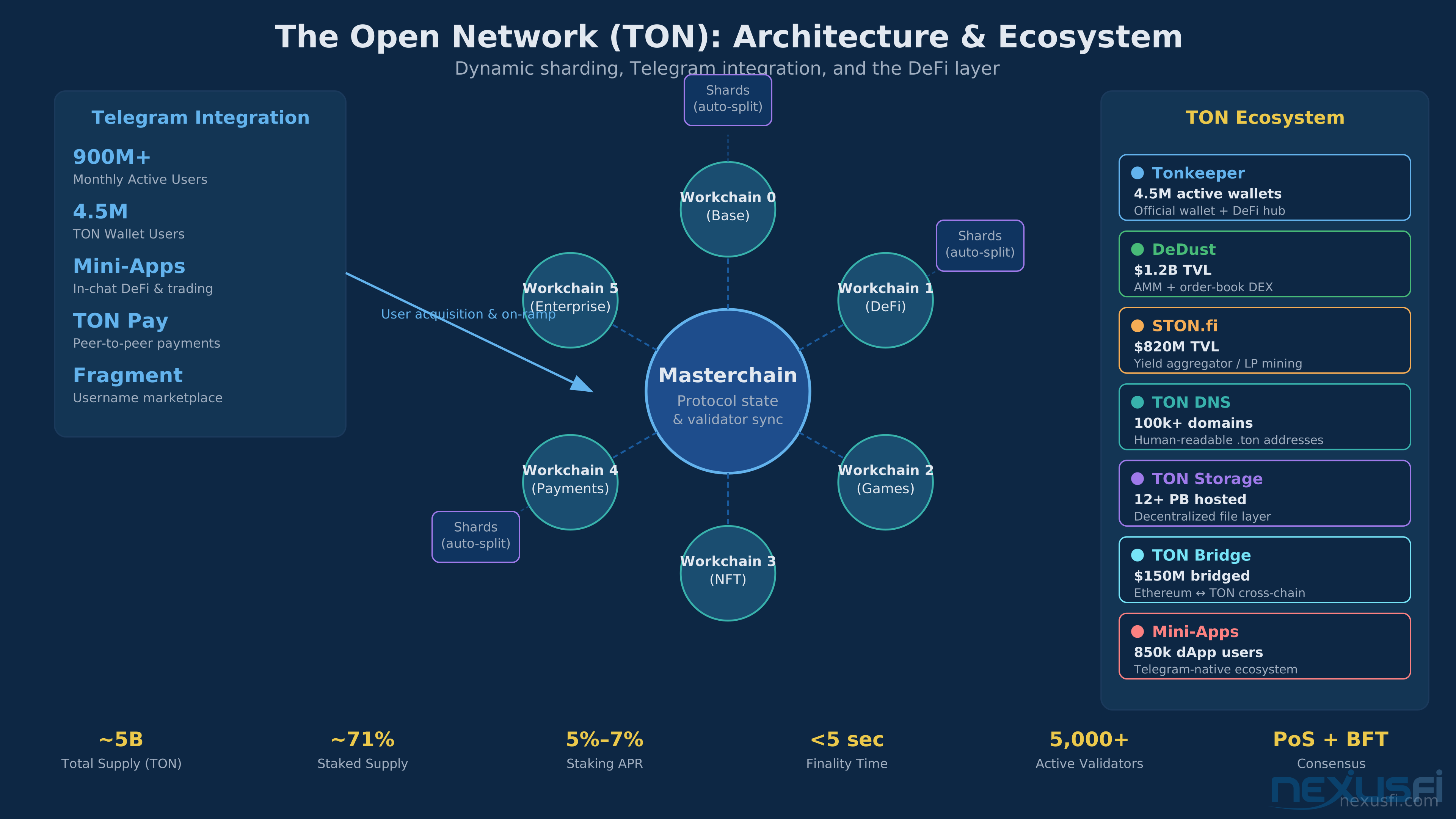
The Open Network is a Layer-1 blockchain built for throughput. Its architecture processes tens of thousands of transactions per second in real-world conditions through dynamic sharding — a technique that lets the network expand capacity automatically when demand spikes.
The original name tells the story: Telegram Open Network. The Telegram team raised $1.7 billion in a private ICO in 2018, built the chain, and then the SEC stepped in. In 2020, Telegram settled, returned investor funds, and walked away. The community took the open-source codebase, renamed it The Open Network, and kept building. The TON Foundation — a non-profit DAO — now governs protocol development independently of Telegram.
Telegram's involvement today is a partnership, not ownership. They do not run validators, do not hold a treasury, and do not control consensus. What they do provide is a 900 million user distribution channel and a financial incentive to see TON succeed as an in-app payment rail. That distinction matters for how you think about risk.
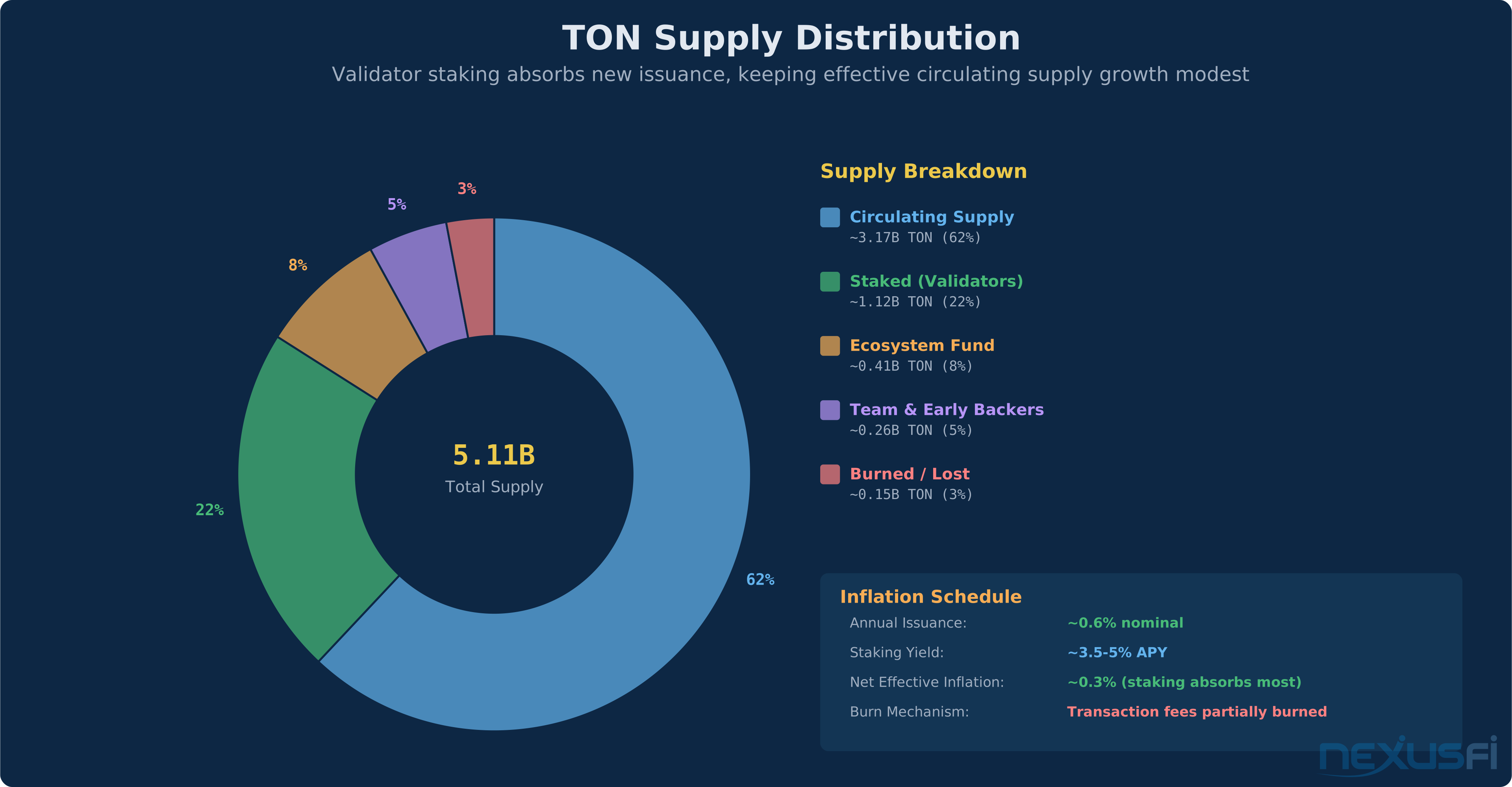
Token economics: approximately 5 billion TON total supply, with roughly 71% currently staked at 5-7% APR. Used for gas fees, staking, and governance. No hard cap on additional issuance, unlike Bitcoin or Avalanche — a meaningful difference in the supply dynamics compared to other Layer-1s. For a deeper comparison framework, see Cryptocurrency Trading Fundamentals on how to evaluate Layer-1 fundamentals as a trader.
Technical Architecture: Why It Matters for Trading #
Most Layer-1 architecture discussions are background noise for traders. TON's is not, because several design decisions create directly tradeable patterns.
Dynamic Sharding
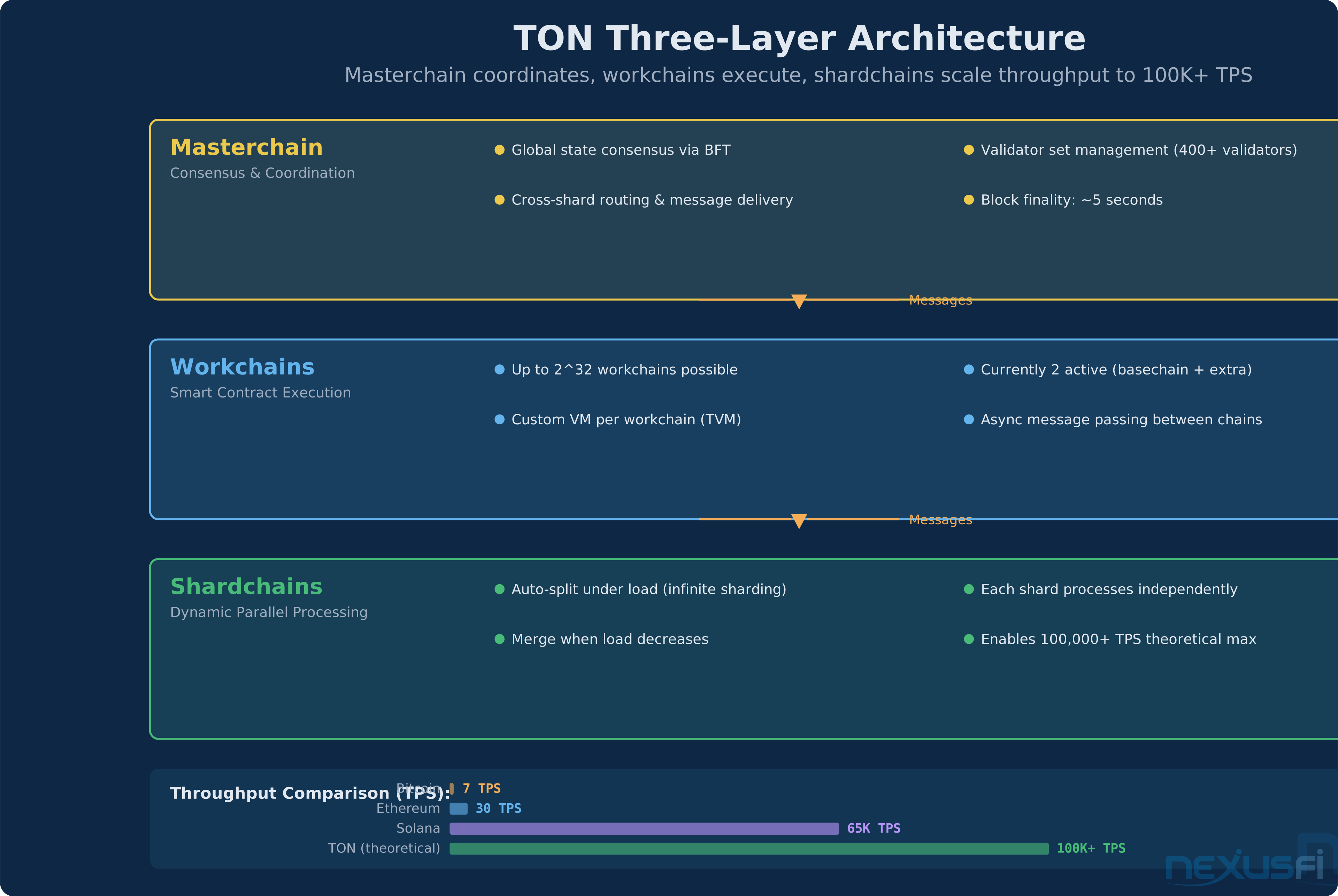
The network uses a three-tier structure: a masterchain coordinates protocol state and validator sync, workchains handle application-specific logic, and shardchains split and merge dynamically based on transaction volume. When network activity spikes — an NFT drop, a major mini-app launch, a token airdrop — shardchains split automatically to absorb demand.
For traders, this means congestion-driven fee spikes are rare. Unlike Ethereum, where gas wars during high-demand periods push fees to multiples of normal levels, TON absorbs volume surges without destabilizing on-chain costs. That translates to perpetual funding rates staying more predictable around ecosystem events.
PoS with BFT Finality
TON uses Proof-of-Stake combined with Byzantine Fault Tolerance. Validators produce a block roughly every 0.5 seconds, with finality reached in 1-5 seconds depending on network conditions. For futures pricing, sub-5 second finality means on-chain events translate to exchange price moves almost immediately — making real-time monitoring of Telegram channels more valuable than it might appear.
Approximately 5,000 validators participate in consensus, though concentration is a real issue covered in the risks section.
TON DNS, Storage, and Proxy
Three infrastructure layers complete the ecosystem. TON DNS assigns human-readable .ton addresses to smart contract addresses — over 100,000 domains registered. TON Storage is decentralized file hosting built into the protocol, with 12+ petabytes hosted across validators. TON Proxy lets Telegram mini-apps interact with the blockchain without users running full nodes, which is what makes in-Telegram trading feel like a normal app experience rather than crypto infrastructure.
Telegram Integration: The Real Moat #
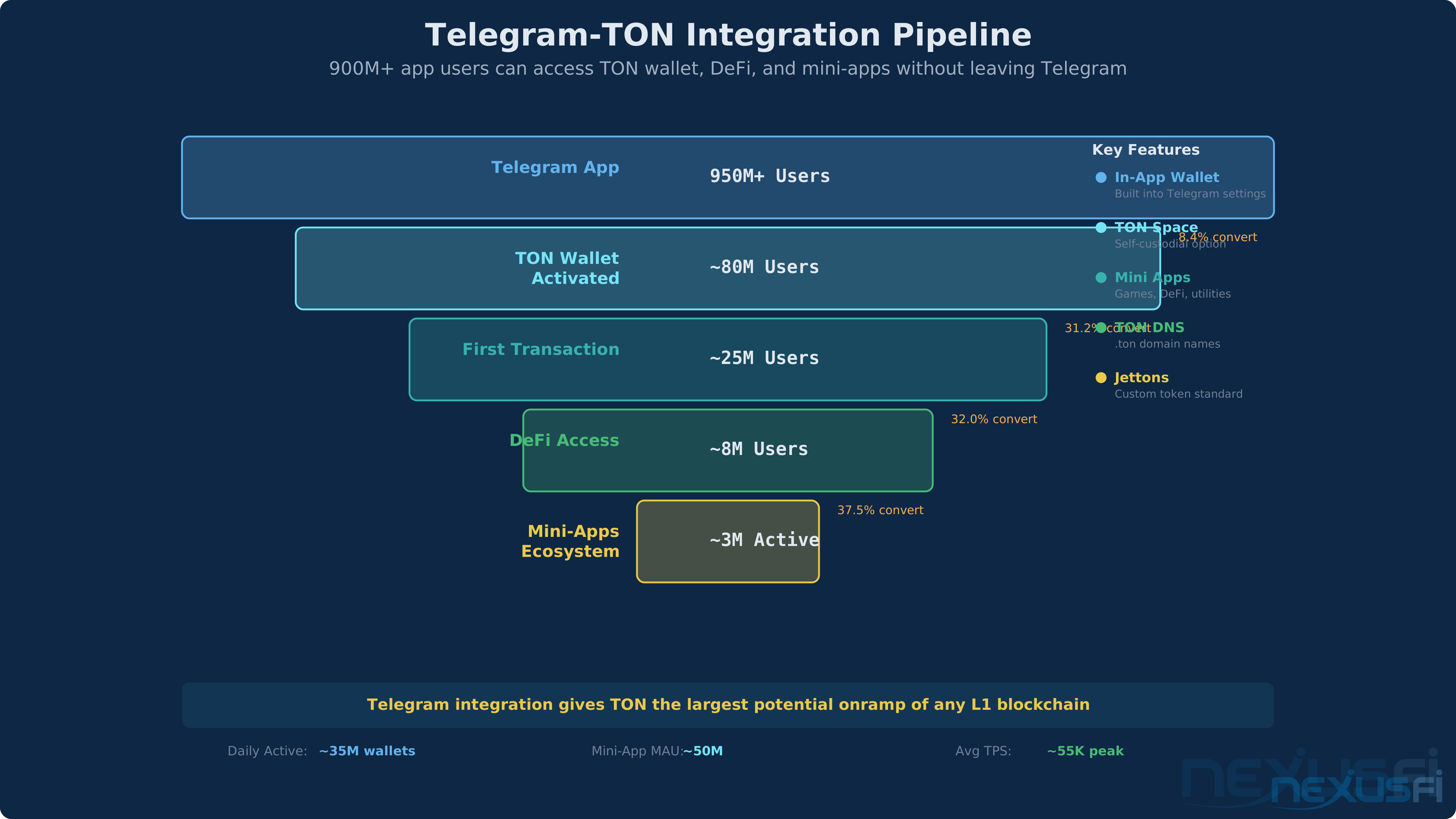
You hear "900 million Telegram users" constantly. The number is real. The important question is what percentage of those users will ever touch TON. Currently, roughly 4.5 million active wallets use Tonkeeper — the official Telegram-integrated wallet — which is below 0.5% penetration.
That low conversion is simultaneously the risk and the entire bull case. The infrastructure for crypto onboarding inside Telegram exists right now:
- Tonkeeper integrates directly into Telegram as the native wallet experience. New users can receive, send, and stake TON without leaving the app.
- Telegram Mini-Apps are lightweight applications that run inside Telegram chats. DeDust and other DeFi protocols have mini-app versions letting users swap tokens and stake from within conversations. In Q4 2024, this expanded to include market orders, with approximately $45 million in daily order flow -- about 2% of total spot volume.
- Fragment Marketplace is Telegram's username auction platform, running on TON. When high-value usernames sell, the transaction settles on-chain -- a small but real source of organic activity tied to Telegram's core product.
- TON Pay enables peer-to-peer payments in Telegram, creating baseline demand for the token from everyday usage.
The distribution leverage is genuine. The risk is that Telegram is also a single point of failure for the entire user acquisition pipeline. Platform dependency and platform distribution advantage are the same thing from different angles.
What Drives TON Price #
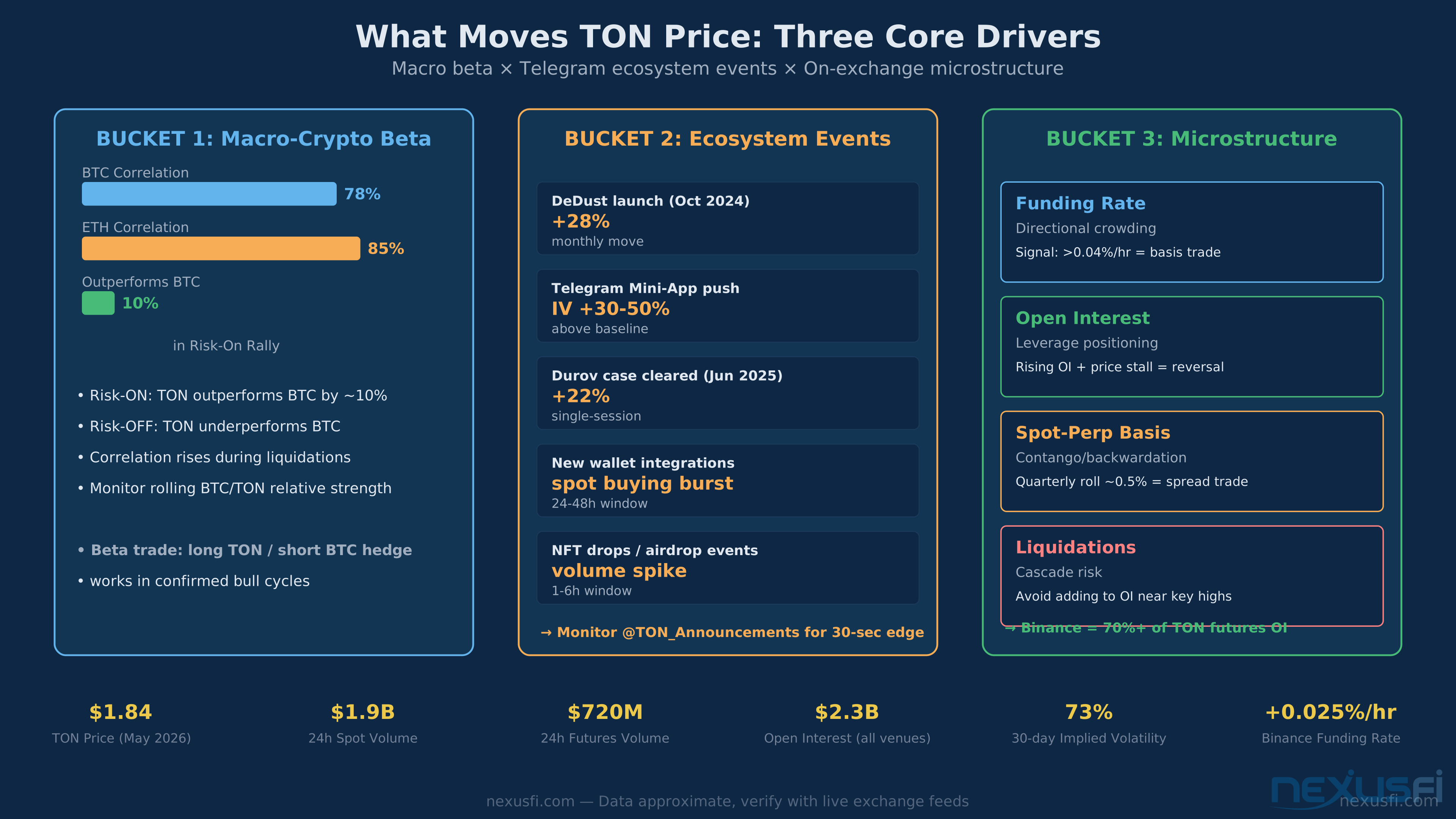
Price movement in TON comes from three distinct buckets. They operate independently but often compound in the same direction during major events.
{{IMAGE:toncoin_price_drivers.svg}}
Bucket 1: Macro-Crypto Beta
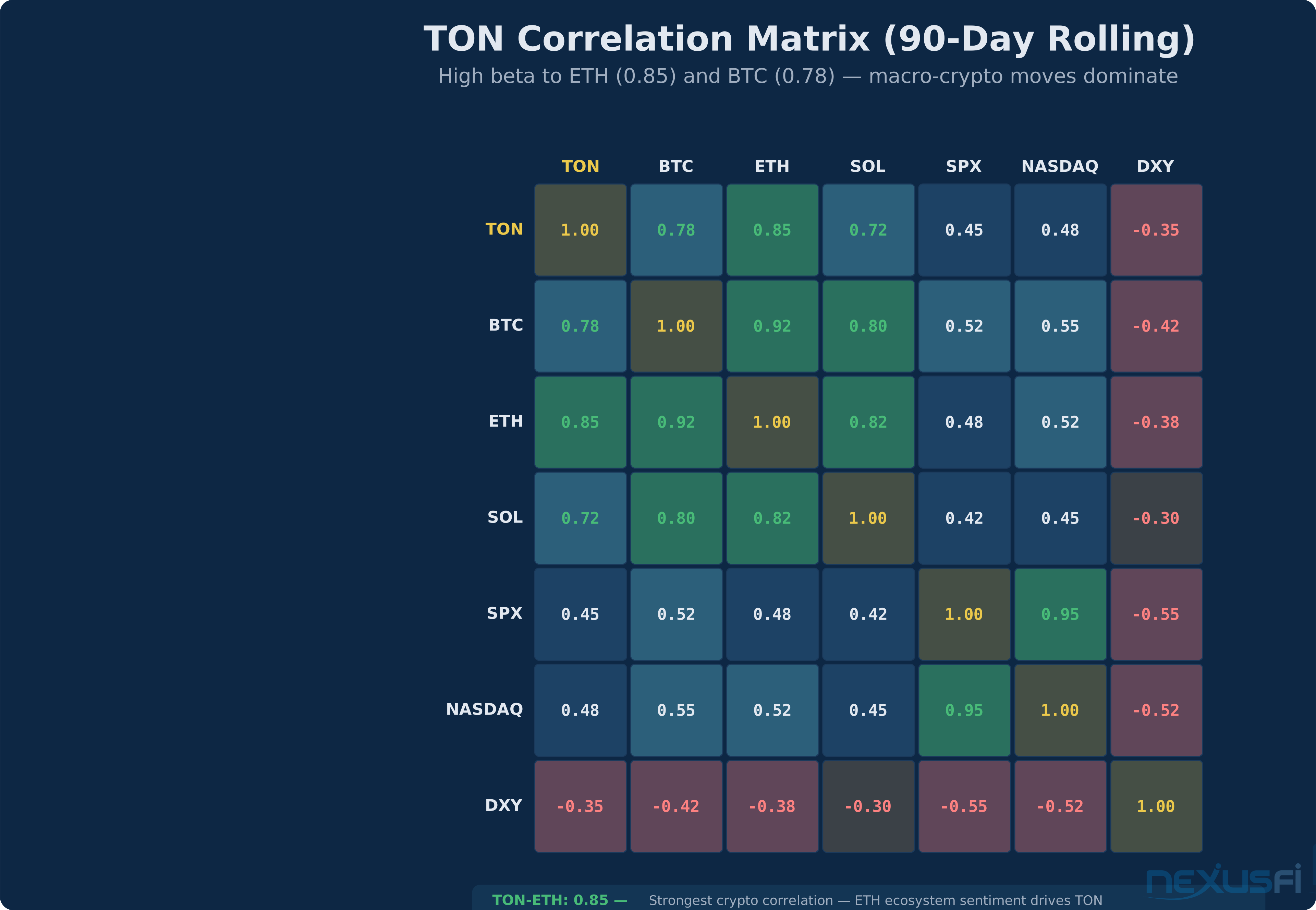
TON's correlation to BTC runs approximately 0.78 over a 6-month rolling window; to ETH, approximately 0.85. In confirmed bull markets, TON tends to outperform BTC by around 10 percentage points — a narrative premium driven by the messenger-native story.
In liquidation cascades and risk-off periods, the relationship inverts. TON underperforms BTC as traders flee to relative safety. That correlation is not static — it rises during broad market selloffs. The practical implication: TON is a levered alt-beta. If you are bullish on broad crypto but want a higher-beta expression, TON has historically delivered. If you want defensive crypto exposure, this is the wrong vehicle.
Bucket 2: Telegram Ecosystem Events
This is the bucket most traditional futures traders miss and where real edge lives if you monitor it correctly.
When DeDust launched in October 2024, TON posted a 28% gain for the month. When a Russian court cleared Telegram of charges from the original ICO in June 2025, TON jumped 22% in a single session. When Telegram-wide promotions push mini-app usage, implied volatility rises 30-50% above baseline within hours of the announcement.
The pattern is consistent: ecosystem announcements drive price moves within 24 hours. Mini-app launches, wallet integration upgrades, and major partnership announcements with Telegram are the primary catalysts. Negative legal headlines around Pavel Durov reverse the pattern equally fast.
(NexusFi, 2022, 3 thanks.) The same logic applies to TON — regulated institutional pathways drive price discovery frameworks, and Telegram's user base makes TON a natural candidate for regulated futures expansion as that infrastructure matures.
Bucket 3: On-Exchange Microstructure
The most directly tradeable driver for active futures traders.
Funding rates signal directional crowding. TON typically runs a modest long bias — around +0.025% per hour on Binance in current conditions. When hourly funding exceeds 0.04% and holds there for 48+ hours, a basis trade becomes attractive: short the perpetual, buy spot, collect the funding decay.
Open interest tells you conviction behind price moves. Rising OI with price expansion is trend confirmation. OI expanding while price stalls against resistance is a reversal signal — too much leverage in one direction with nowhere to go.
Quarterly futures roll creates predictable opportunity. Before expiry on Deribit's quarterly contracts, if the perpetual trades more than 0.3% above spot, selling the quarterly and buying spot captures the contango premium. This historically delivers 2-3% annualized excess return when executed systematically.
Liquidation cascades create entry points. TON's high beta means liquidations during broad market selloffs disproportionately impact it. That overcorrection creates value bids if your thesis is intact.
For a complete breakdown of how funding rates, perpetual mechanics, and quarterly rolls work across crypto, see Crypto Derivatives Trading: Futures, Perpetuals, and Options.
The TON Ecosystem: What Matters for Order Flow #
Community member @Lonhro, a professional crypto trader who exclusively trades cryptocurrencies for a living, laid out the exchange environment clearly when discussing altcoin trading: "If you want to trade altcoin futures or the actual real (SPOT) currencies, you will have to go through Binance Futures, who has the most volume and selection of Altcoin futures." (NexusFi, 2020, 1 thanks.) That still holds for TON.
@[@Lonhro — NexusFi Cryptocurrency Forum, 2020]
Here is how the TON ecosystem translates to tradeable catalysts:
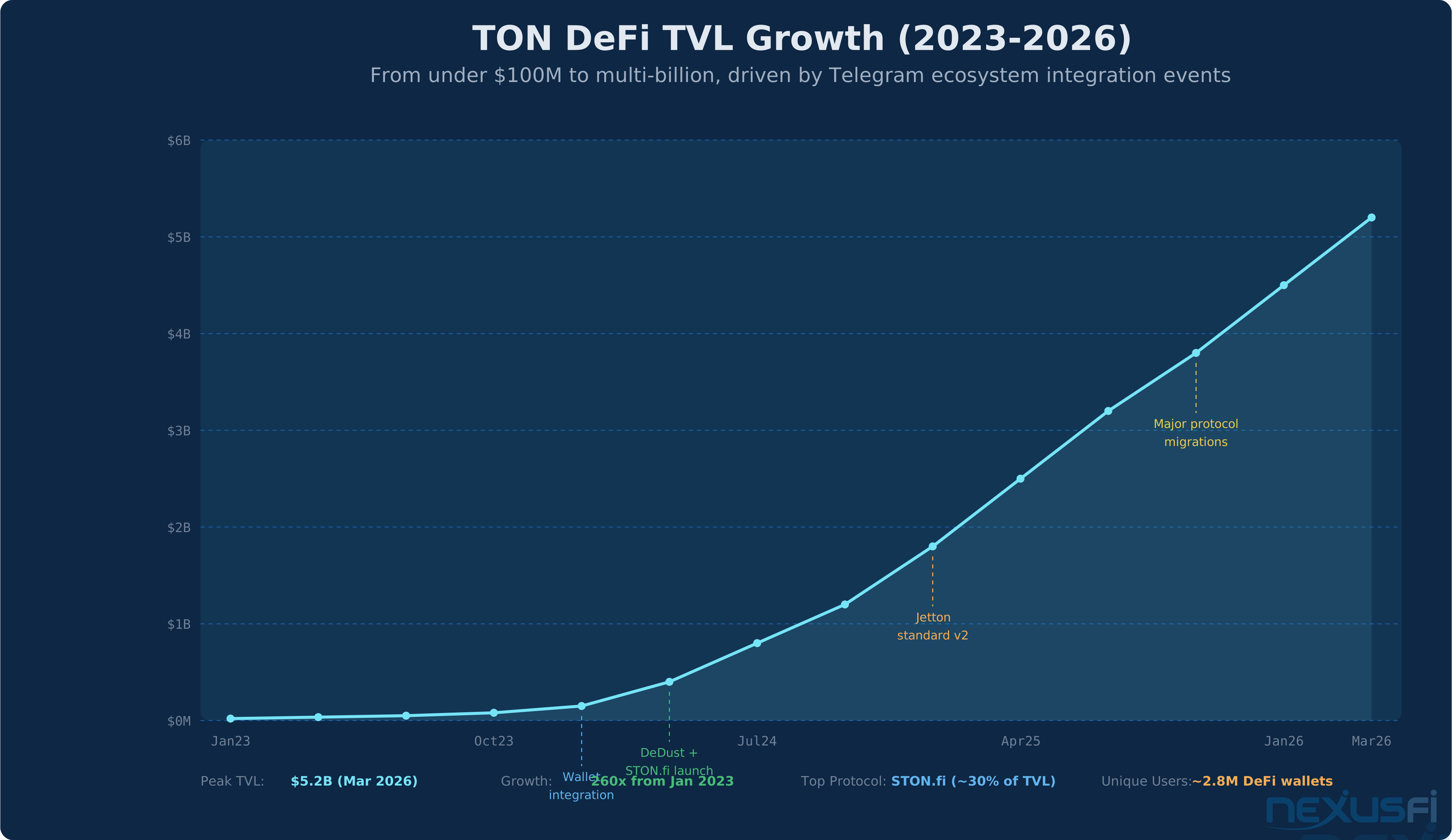
DeDust is the dominant DEX on TON — an AMM with an order-book hybrid design and approximately $1.2 billion in TVL. New token listings on DeDust drive spot volume, which futures markets often front-run by 1-2%. When a major token launches on DeDust, watch the TON-USDT perpetual for pre-announcement accumulation.
STON.fi functions as a yield aggregator and liquidity mining platform with roughly $820 million in TVL. When staking APRs spike above 7.5%, reward distribution is imminent, creating predictable sell pressure as stakers take profits — a setup for short entries when funding is positive and price is extended. This is related to the broader tokenomics principles of how staking reward cycles create supply-demand imbalances.
Tonkeeper drives wallet adoption. New-user onboarding spikes correlate with buying pressure as new users acquire TON for gas and staking.
Mini-apps generate event-driven volume. The 2024 Notcoin phenomenon — a game played inside Telegram that attracted millions of users before its token launch — demonstrated how quickly these events can move the underlying TON price. Each major mini-app launch creates a burst-order pattern on exchanges.
TON Bridge connects Ethereum and TON with approximately $150 million bridged. For traders, this enables triangular arbitrage: when TON on Binance is more than 0.5% cheaper than the implied price from ETH-USDT plus bridge fees, a long TON perpetual / short ETH perpetual spread captures the discrepancy.
Track on-chain activity through Tonscan and DeFiLlama's TON page. Rising TVL with flat price is often institutional accumulation; falling TVL with rising price is a warning signal. For how to read these metrics more broadly, see On-Chain Analysis for Traders.
How to Trade TON: Spot and Futures Mechanics #
{{IMAGE:toncoin_exchange_comparison.svg}}
Exchange Hierarchy
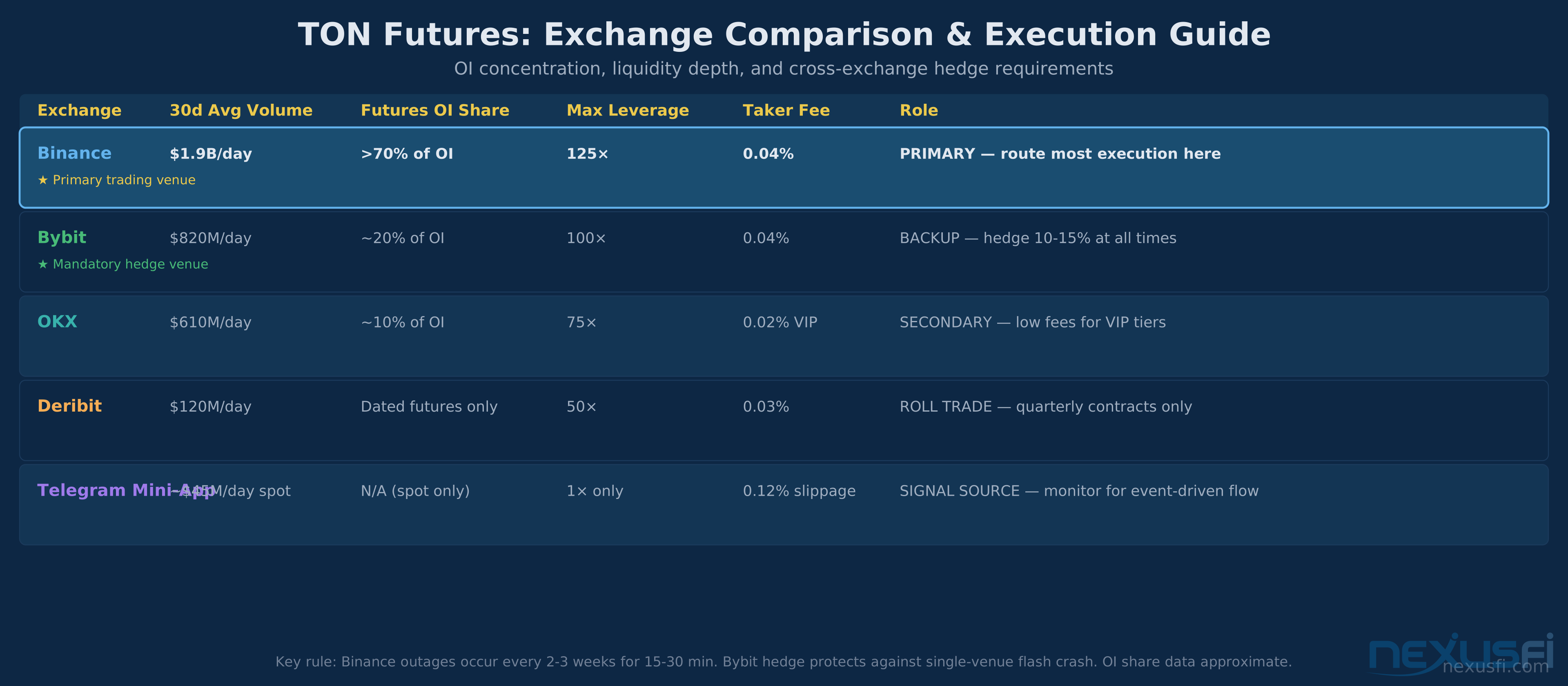
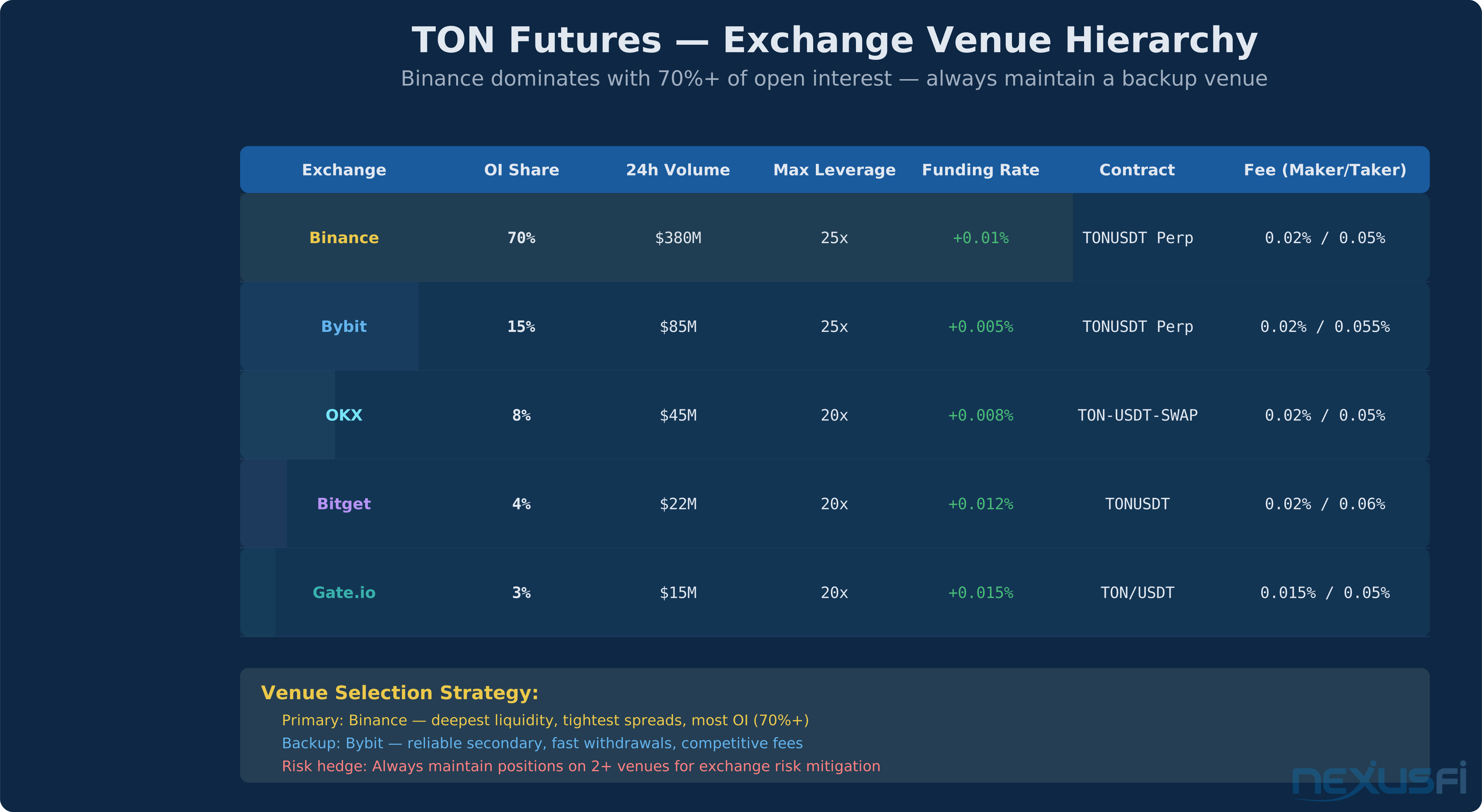
Binance is the primary venue, holding over 70% of daily TON futures open interest with the deepest order books. For anything beyond small size, Binance is where you execute.
Bybit is the recommended backup and mandatory hedge venue. When Binance goes through maintenance windows — roughly every 2-3 weeks for 15-30 minutes — having a standing hedge on Bybit prevents being caught without protection. The 10-15% secondary hedge is non-negotiable.
OKX offers competitive taker fees for VIP tiers (0.02% on TON-USDC perpetuals). Worth using for high-frequency strategies where fee compression matters.
All three trade TON/USDT linear perpetual contracts. Binance offers leverage up to 125x, though running anything above 10-15x in a coin with 73% annualized implied volatility is a reliable way to get liquidated during normal market noise.
The quarterly dated futures on Deribit (March, June, September, December cycles) add a roll-capture dimension unavailable in perpetuals only — see the playbook section below.
Practical Trading Playbooks
The Telegram-Pump Scalp: On a 5-minute chart, when price breaks the upper Bollinger Band and a high-engagement Telegram post appears (5,000+ likes) within 30 seconds, enter long. Exit at the BB middle; use a 0.8% trailing stop. The edge is the 30-second information lag between Telegram and aggregators. Event-driven, not trend-following.
The Staking-Reward Sell Swing: Monitor on-chain staking APR via Tonscan. When APR spikes above 7.5%, open a short 12 hours later when funding turns positive. Target 5% profit or close when funding flips negative. The logic: elevated APR signals reward distribution is approaching, and stakers sell into the market.
The Contango Roll: Track quarterly expiry dates. In the week before expiry, if the perpetual trades more than 0.3% above spot, sell the quarterly contract and buy spot (or roll to the next quarter). The contango premium decays to zero at expiry. Systematic execution generates approximately 2-3% annualized excess return.
The Regulatory Shock Defense: This is a risk protocol, not a trade setup. On any negative legal headline involving Durov, Telegram, or TON directly, immediately reduce exposure 50% and shift to USDT. Re-enter after 48 hours if funding normalizes. The reflex reaction is usually overdone, but being on the wrong side of the initial move costs more than missing the recovery bounce.
The Bridge Arbitrage: When TON on Binance is 0.5%+ cheaper than the implied price from ETH-USDT plus bridge fees, go long TON perpetual and short ETH perpetual simultaneously. Close both legs when the spread normalizes. Requires constant monitoring of bridge fees and a fast execution setup.
The regulated futures expansion is real. As the NexusFi Cryptocurrency forum observed when CME launched Cardano, Chainlink, and Stellar futures: "The altcoin futures signal that regulated crypto derivatives are moving well beyond just Bitcoin and Ether." (NexusFi, 2026.) TON is a logical next candidate given Telegram's user base scale — a CME listing would be a structural price trigger, not just a sentiment signal.
Risk Factors: What Can Actually Hurt You #
{{IMAGE:toncoin_risk_matrix.svg}}
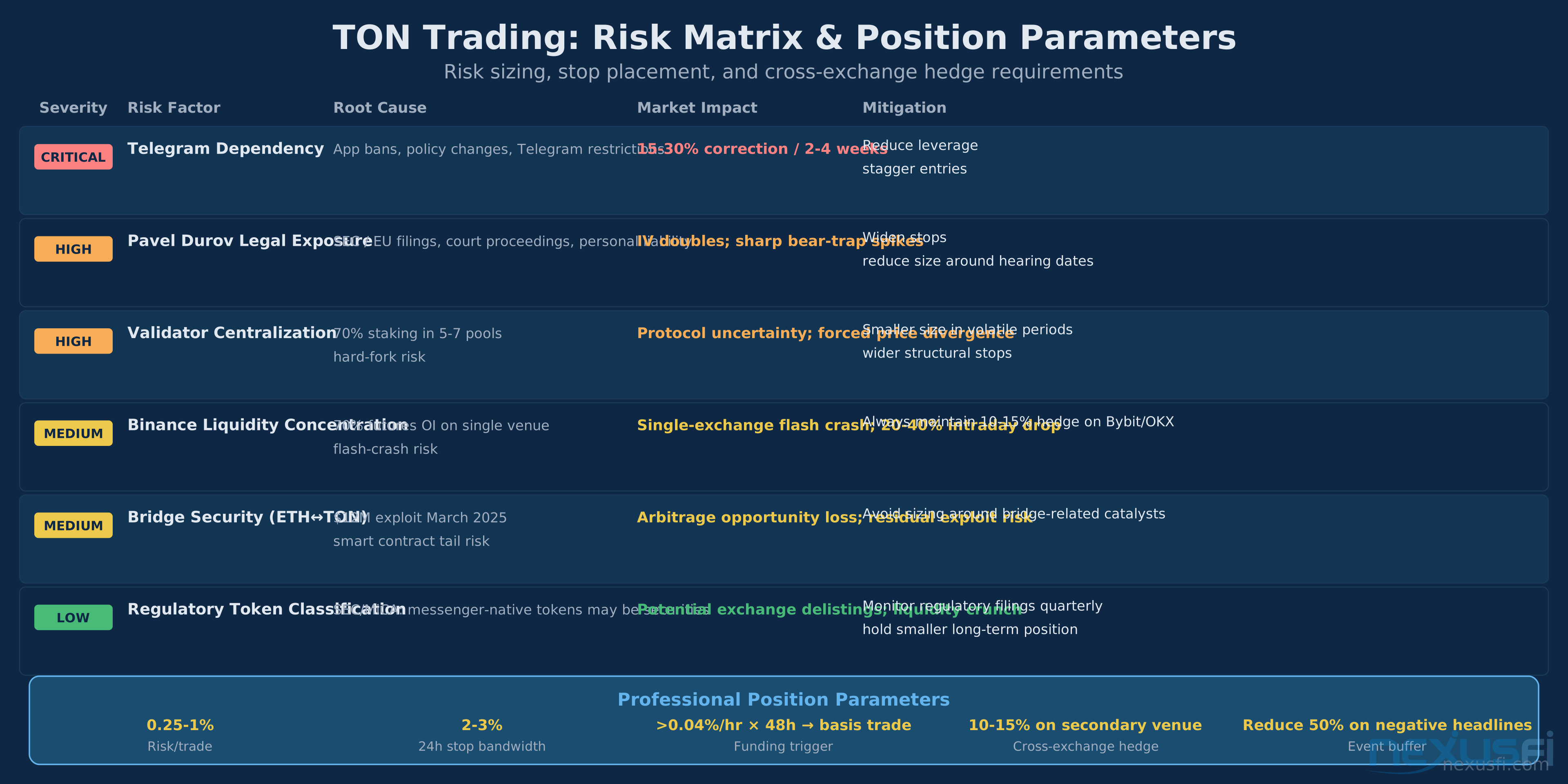
Telegram Dependency (Critical)
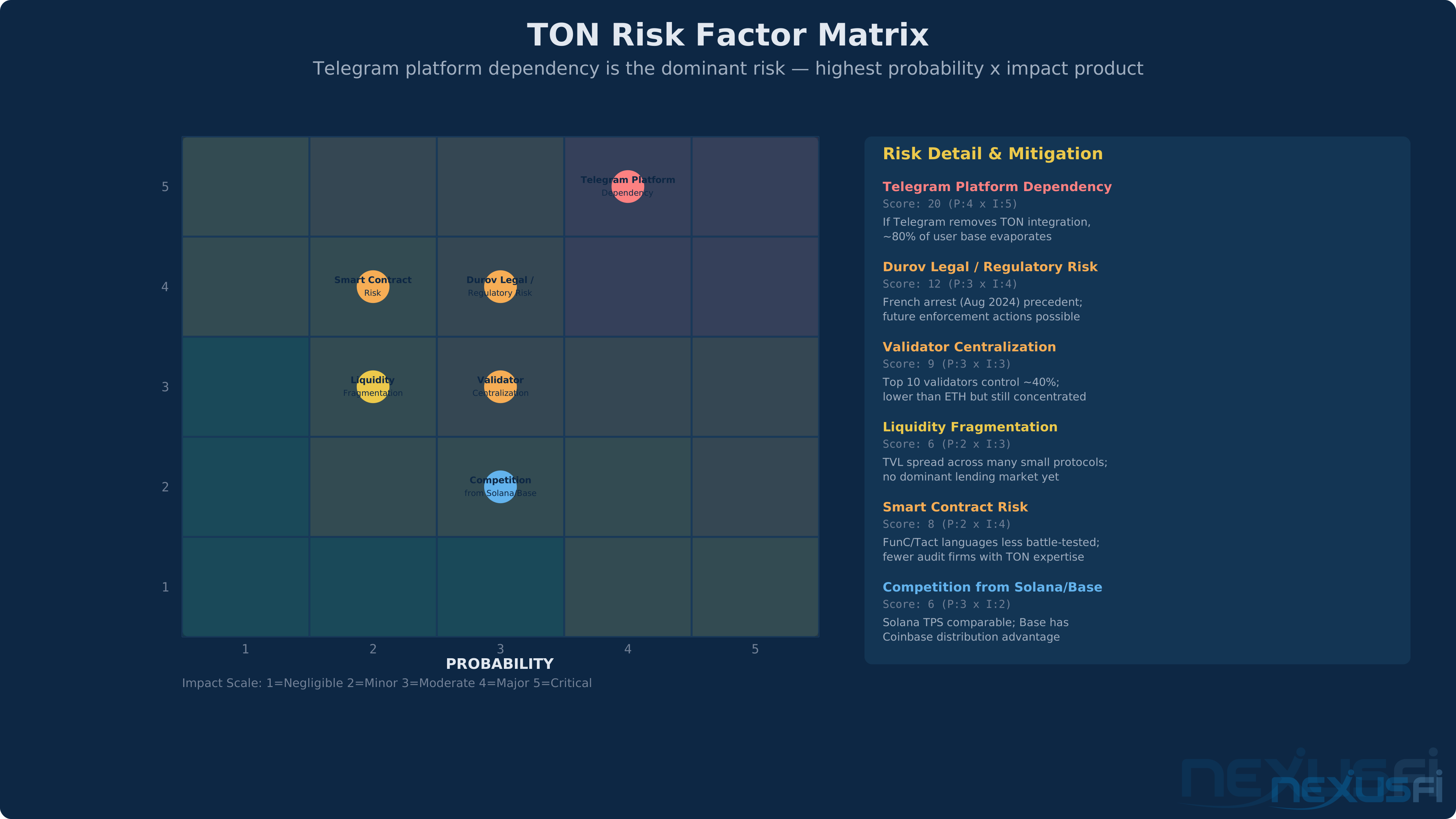
This is the dominant risk. The majority of TON's user acquisition and on-ramp infrastructure flows through Telegram. If a major jurisdiction bans Telegram — it has been banned in Iran, China, and Russia at various points — or if Telegram's app store position is threatened, the mini-app ecosystem collapses with it.
The practical market impact is a 15-30% correction over 2-4 weeks as the messenger-native narrative reprices. Futures open interest contracts as longs de-risk. Keep leverage conservative around any Telegram-related headline and watch EU and US regulatory developments affecting messaging platforms specifically.
Pavel Durov / Legal Exposure (High)
Durov is simultaneously TON's biggest marketing asset and its most concentrated tail risk. His public profile amplifies any legal proceedings in both directions. The June 2025 Russian court ruling clearing Telegram of original ICO charges created a 22% rally. An adverse EU decision has the potential to double implied volatility in a single session.
Treat any Durov-related headline as a volatility event, not a trend signal. Widen stops around major legal hearing dates. The first move is usually overdone in both directions — the recovery after panic selling and the collapse after headline pumps both tend to overshoot.
Validator Centralization (High)
Approximately 70% of staking power sits in 5-7 large validator pools concentrated in Singapore, Russia, and the EU. This creates hard-fork risk if large validators coordinate protocol changes, forced upgrade pressure, and potential manipulation of consensus timing.
For futures traders, the primary impact is uncertainty premium. When centralization concerns resurface in the press, TON reprices lower to account for governance risk. Use wider structural stops in these periods with smaller position sizes.
Liquidity Concentration (Medium)
70% of futures OI on Binance means a single-venue flash crash could produce a 20-40% intraday move without a fundamental trigger. Always maintain a 10-15% hedge on Bybit or OKX. Not about returns — about having a venue that works if Binance experiences an outage or regulatory action.
Bridge Security (Medium)
The TON-Ethereum bridge suffered a $12 million exploit in March 2025. The vulnerability was patched, but residual smart contract risk in any cross-chain bridge is real. Bridge congestion or security events affect triangular arbitrage opportunities and can cause temporary funding rate dislocations. Do not size heavily into bridge-dependent strategies near major upgrade announcements.
Regulatory Classification (Low -- Long Term)
Both the SEC and EU MiCA frameworks are evaluating whether tokens distributed through communication platforms constitute securities. A securities classification for TON would force exchange delistings and create a liquidity crunch. The probability is low in the near term but non-zero over a 2-3 year horizon — a reason to keep long-term position sizes smaller than the short-term trading opportunity might suggest.
Position Sizing and Risk Management #
Three independent expert perspectives across the council research converged on the same parameters. That convergence across different analytical frameworks makes these numbers worth taking seriously:
- Risk per trade: 0.25-1% of account equity. Tighten to 0.25% when IV is elevated above 80%; expand toward 1% in compressed volatility.
- Stop placement: 2-3% bandwidth. With average 24-hour realized volatility around 8%, stops tighter than 2% get hit by noise. Wider than 3% means outsized loss before you can assess thesis validity.
- Funding rate trigger: When hourly funding exceeds 0.04% for 48+ consecutive hours, shift from directional to basis-trade. The premium is large enough to capture systematically.
- Cross-exchange hedge: Always maintain 10-15% on a secondary venue. Non-negotiable.
- Leverage ceiling: No more than 10-15x in normal conditions. TON's 73% annualized IV at current levels makes high leverage a liquidation machine, not an alpha generator.
- Event calendar: Flag Telegram policy announcements, Durov legal hearings, major mini-app launches, and quarterly futures expiries. Adjust position size ahead of each. These events predictably move implied volatility.
Running leverage above 15x on TON is playing against the math. A 73% annualized IV means daily moves of roughly 4-5% are expected. At 20x leverage, normal daily volatility produces margin calls. Size for the volatility, not the conviction.
TON vs Other Layer-1s: The Positioning Question #
TON is not competing with Ethereum on smart contract sophistication. It is not competing with Solana on raw throughput for DeFi. Its actual competition is for the messenger-native crypto position — and there, it has no real competitors.
The embedded distribution advantage through Telegram is structural, not narrative. 900 million monthly active users is a real number. 4.5 million current wallet users is also real, which means penetration is below 0.5%. If that rate doubles to 1%, the addressable demand for TON doubles with it.
The technical architecture supports that growth thesis. Dynamic sharding absorbs user growth without fee spikes. Fast finality makes in-app payments feel like normal app transactions. TON DNS makes addresses human-readable for a non-technical user base. These are genuine advantages for the specific use case of messaging-native crypto onboarding.
Where it falls short: the DeFi ecosystem is smaller and less sophisticated than Ethereum or Solana. Bridge liquidity is limited. Smart contract tooling is less mature. The developer ecosystem is less active. If you are trading DeFi ecosystem growth specifically, there are better vehicles.
The Bottom Line on TON #
TON is a high-beta, event-driven alt with a structural thesis that depends on Telegram executing well and avoiding regulatory landmines. In bull markets, it outperforms BTC by roughly 10 percentage points. In selloffs, it falls harder. The 73% annualized IV is not a number you hand-wave away.
The edge for traders: ecosystem events are the alpha source. Monitoring Telegram channels gives you a 30-second lead on news flow. Funding dynamics — the staking reward cycle, contango roll, and basis trade — all have defined setups with historical precedent. Risk is asymmetric around regulatory headlines; the first move is usually overdone in both directions.
The risks that matter: Telegram is the single point of failure, not the protocol. Centralization of validators creates governance uncertainty. Liquidity concentration on Binance requires a cross-venue hedge at all times.
Trade it so. Size it smaller than your conviction suggests because the tail risks are fat. And never forget that the entire messenger-native thesis can reprice overnight if Telegram policy changes — that is the trade you are actually in when you own TON.
Knowledge Map
Prerequisites
Understand these firstCitations
- — 11 New CME Crypto Reference Rates = More Futures Soon? (2022) 👍 3“CME is launching 11 new crypto reference rates. CME crypto futures are financially settled vs the reference rates. Without more reference rates the CME cannot launch more crypto futures -- in the next year we will see CME announce several more crypto futures.”
- — Multicharts trading cryptocurrency (2020) 👍 1“If you want to trade altcoin futures or the actual real (SPOT) currencies, you will have to go through Binance Futures, who has the most volume and selection of Altcoin futures. You can also use the stablecoin Tether (USDT) to trade these products on Binance.”
- — Webull Expands Crypto Futures Lineup Through Coinbase Derivatives Partnership (2025)“For traders who have been limited to spot crypto or unregulated perpetual swaps, this offers a middle ground: the leverage and hedging capabilities of futures with the oversight of U.S. regulation.”
- — CME Group Launches Cardano, Chainlink, and Stellar Futures Today (2026)“CME facilitated nearly $3 trillion notional in crypto trading in 2025. The micro contracts make these accessible to retail-sized accounts. The altcoin futures signal that regulated crypto derivatives are moving well beyond just Bitcoin and Ether.”
- — TON Blockchain Technical Documentation
- — What Is The Open Network (TON)
- — A Deep Dive into the TON Ecosystem
- — What is TON -- Complete Guide
- — TON DeFi Ecosystem: DeDust, STON.fi and Ecosystem Growth