



Uniswap (UNI): The Decentralized Exchange Every Crypto Trader Needs to Understand
Overview #
Most futures traders treat Uniswap as something that lives in a different universe — a DeFi protocol for crypto natives, not serious traders. That's a mistake. Uniswap is the largest decentralized exchange (DEX) in existence, processing billions in daily volume across Ethereum and its scaling networks. If you trade ETH futures, if you're curious about DeFi yield, if you ever want to trade ERC-20 tokens without handing custody to an exchange, you need to understand how Uniswap actually works.
This isn't a "crypto is the future" pitch. This is mechanics. How Uniswap prices trades, why slippage happens, what concentrated liquidity means for your execution, and how to think about the total cost of a swap. The AMM model Uniswap pioneered is now copied by hundreds of protocols and used across dozens of chains — understanding it from first principles makes everything else easier.
SMCJB, one of NexusFi's most active futures traders, noted in a discussion on crypto positioning that he keeps strictly away from DeFi protocols and custodial crypto: "No DeFi rug pulls going to get me!" — and that's the right instinct if you don't understand the risks. But understanding what you're avoiding is different from being ignorant of it. (@SMCJB, https://nexusfi.com/showthread.php?t=61371&p=909493#post909493)
Uniswap operates without a central intermediary, without an order book, and without KYC. It's governed by code and by the UNI token holders who vote on protocol changes. Whether that appeals to you or not, it's the infrastructure underneath a significant portion of crypto's spot volume.
What Uniswap Is #
Uniswap launched in November 2018, created by Hayden Adams. The core insight was simple: instead of matching buyers with sellers via an order book, price crypto assets using a mathematical formula and a pool of two tokens.
Here's the mental model: instead of a limit order book where someone has to take the other side of your trade, you trade against a liquidity pool — a smart contract holding reserves of two tokens. When you buy ETH with USDC, you're adding USDC to the pool and removing ETH. The price moves automatically according to a formula. No counterparty needed.
This model — the automated market maker (AMM) — solved a real problem. Early DEXes tried to replicate order books on-chain and failed. Gas costs, block times, and front-running made on-chain order books unworkable. The AMM bypasses all of that. The math determines the price; no humans need to quote.
Uniswap currently runs on Ethereum mainnet, Arbitrum, Optimism, Base, Polygon, and several other chains. Ethereum mainnet has the deepest liquidity but the highest gas costs. Layer 2 networks (Arbitrum, Base) have much lower fees for the same AMM mechanics.
The AMM Mechanic: x * y = k #
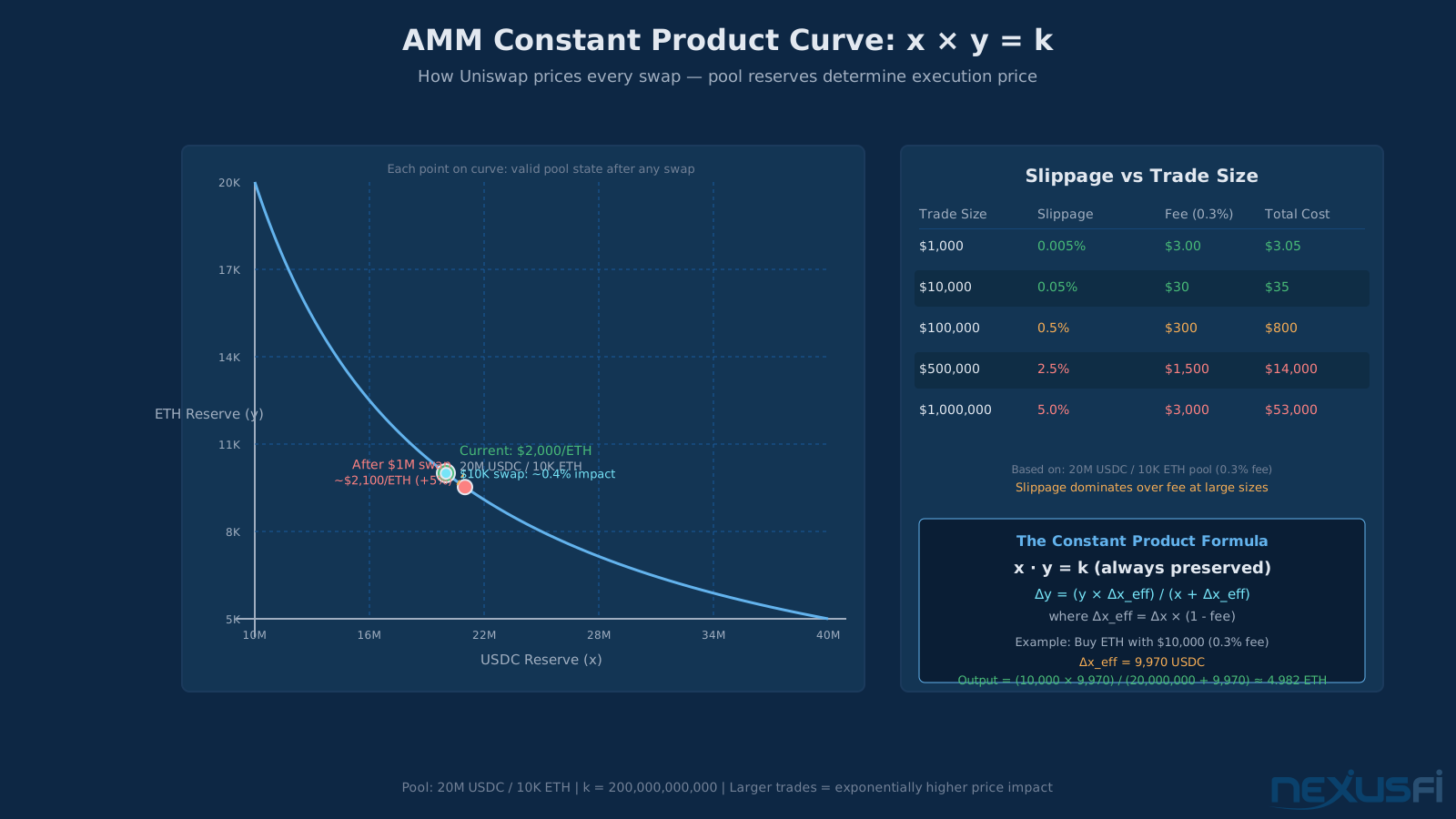
Uniswap's pricing model (for v1 and v2) is built on one equation:
x · y = k
Where x is the reserve of token A, y is the reserve of token B, and k is a constant. Every swap must preserve k.
Let's make this concrete. Suppose a USDC/ETH pool has:
- x = 20,000,000 USDC
- y = 10,000 ETH
- Implied price: 20,000,000 / 10,000 = $2,000 per ETH
- k = 20,000,000 × 10,000 = 200,000,000,000
You want to buy ETH with 10,000 USDC. There's a 0.3% swap fee. Here's how it calculates:
Effective input (after fee deduction): 10,000 × (1 - 0.003) = 9,970 USDC
Output ETH: Δy = (y × Δx_eff) / (x + Δx_eff) Δy = (10,000 × 9,970) / (20,000,000 + 9,970) Δy = 99,700,000 / 20,009,970 Δy ≈ 4.982 ETH
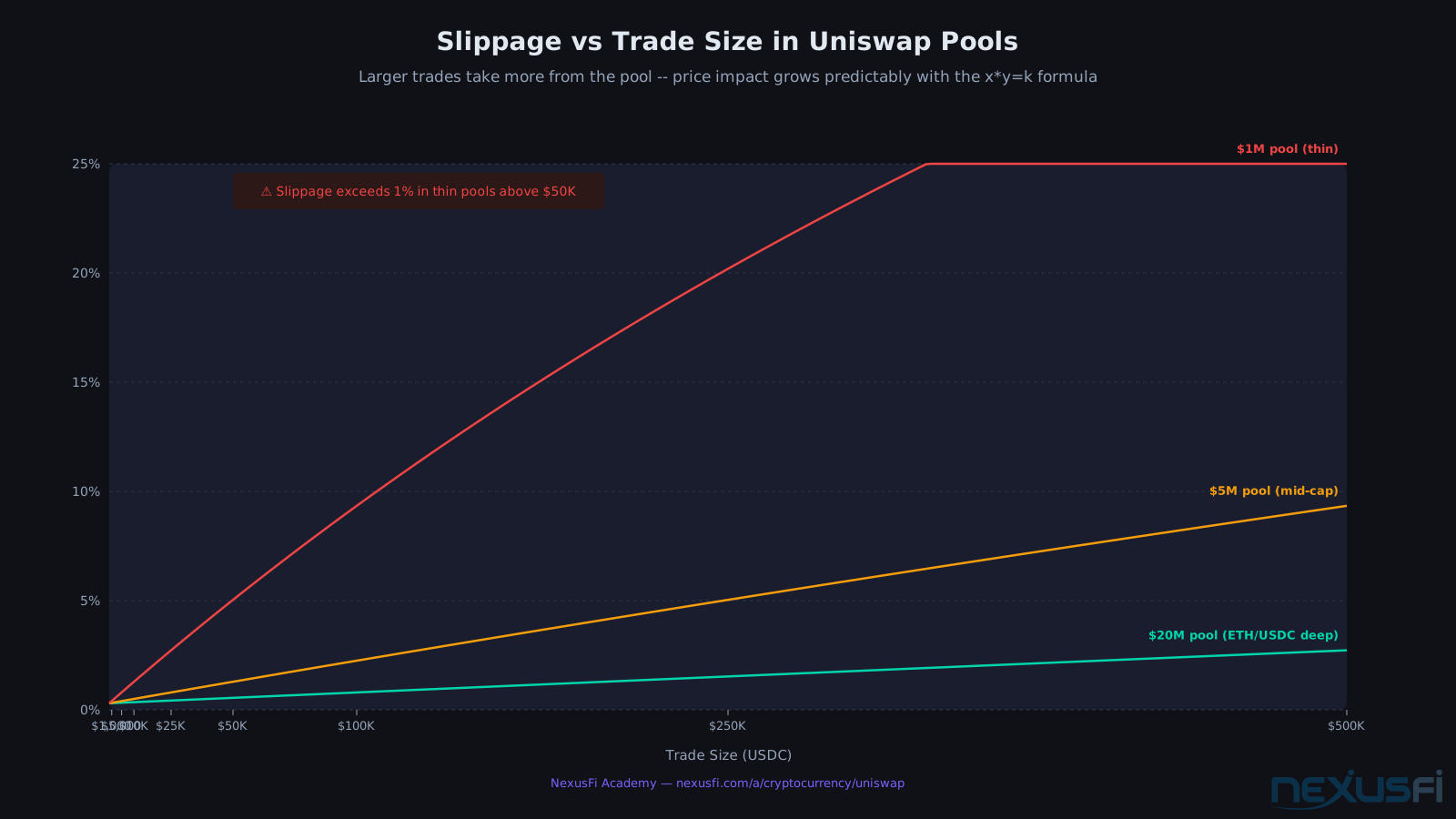
Without slippage at $2,000/ETH, you'd expect exactly 5 ETH for $10,000. You got 4.982 ETH — a slippage cost of 0.018 ETH ($36) on a $10,000 trade. That's about 0.36% in slippage, on top of the 0.3% fee.
Now do the same trade with 1,000,000 USDC:
Effective input: 997,000 USDC Δy = (10,000 × 997,000) / (20,000,000 + 997,000) = 9,970,000,000 / 20,997,000 ≈ 474.8 ETH
At $2,000/ETH you'd expect 500 ETH for $1M. You got 474.8 — that's a 5% slippage hit on a $1M trade in what is actually a pretty deep pool. This is the critical lesson: pool depth and trade size determine slippage in a completely predictable, mathematical way.
The formula has one guarantee: after your trade, x × y still equals k. The pool always maintains a price. It never goes to zero bids or dries up — it just gets more expensive to trade as you take more liquidity.
Key Insight: Slippage is Predictable The x*y=k formula means slippage is never a surprise — it's pure math. Before any large Uniswap swap, calculate expected price impact using the pool reserves. If impact exceeds 1%, either split the trade or find a deeper pool. The formula tells you exactly what you'll pay before you commit.
Liquidity Providers and Impermanent Loss #
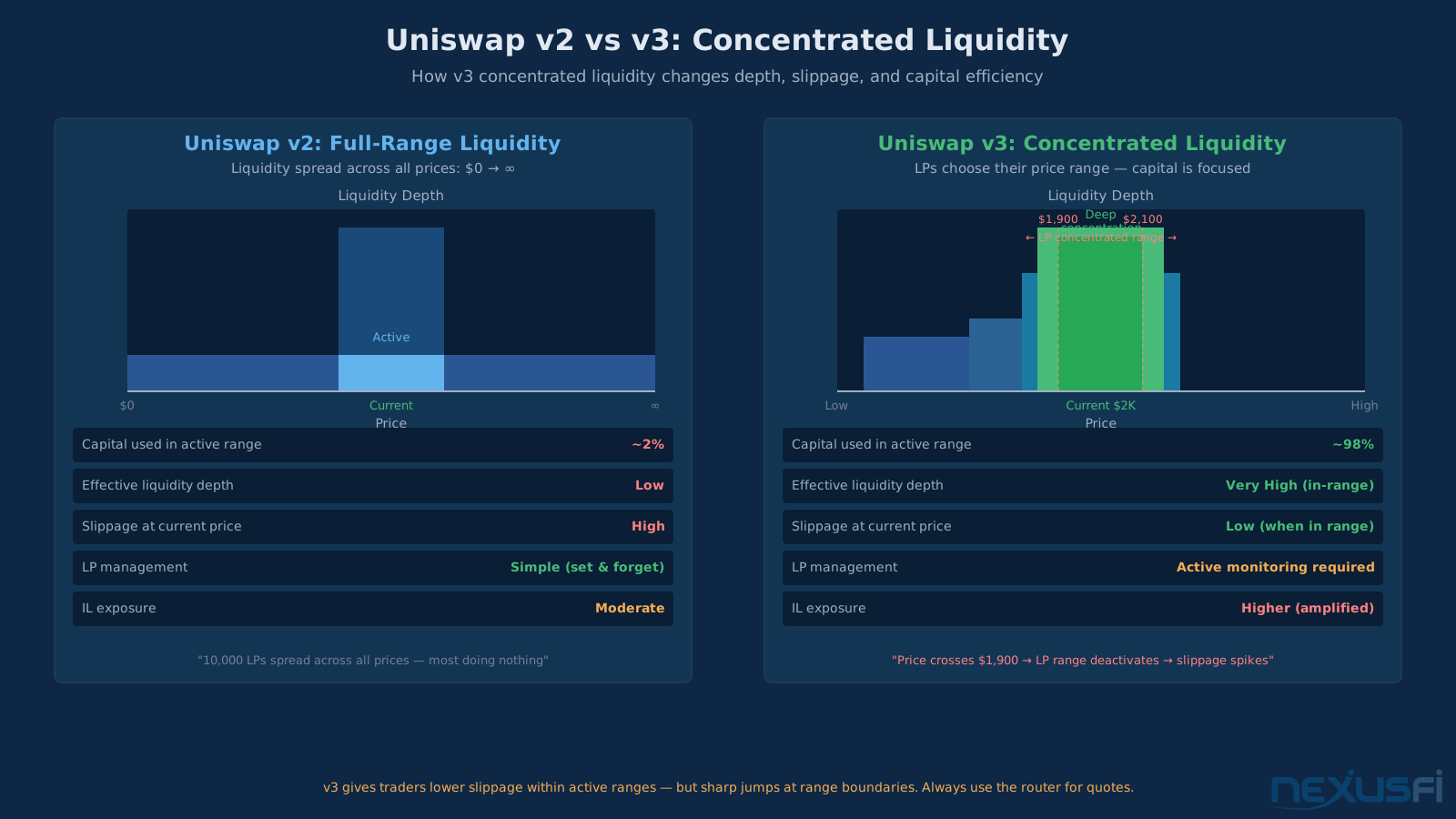
How does that pool get its reserves? From liquidity providers (LPs) — traders who deposit equal-value amounts of both tokens into the pool and earn swap fees in return.
If you deposit into a USDC/ETH pool at $2,000 ETH, you deposit $1,000 USDC and 0.5 ETH (equal value on both sides). Your share of the pool determines your share of every swap fee that runs through it. With a 0.3% fee tier and high volume, LP returns can be significant.
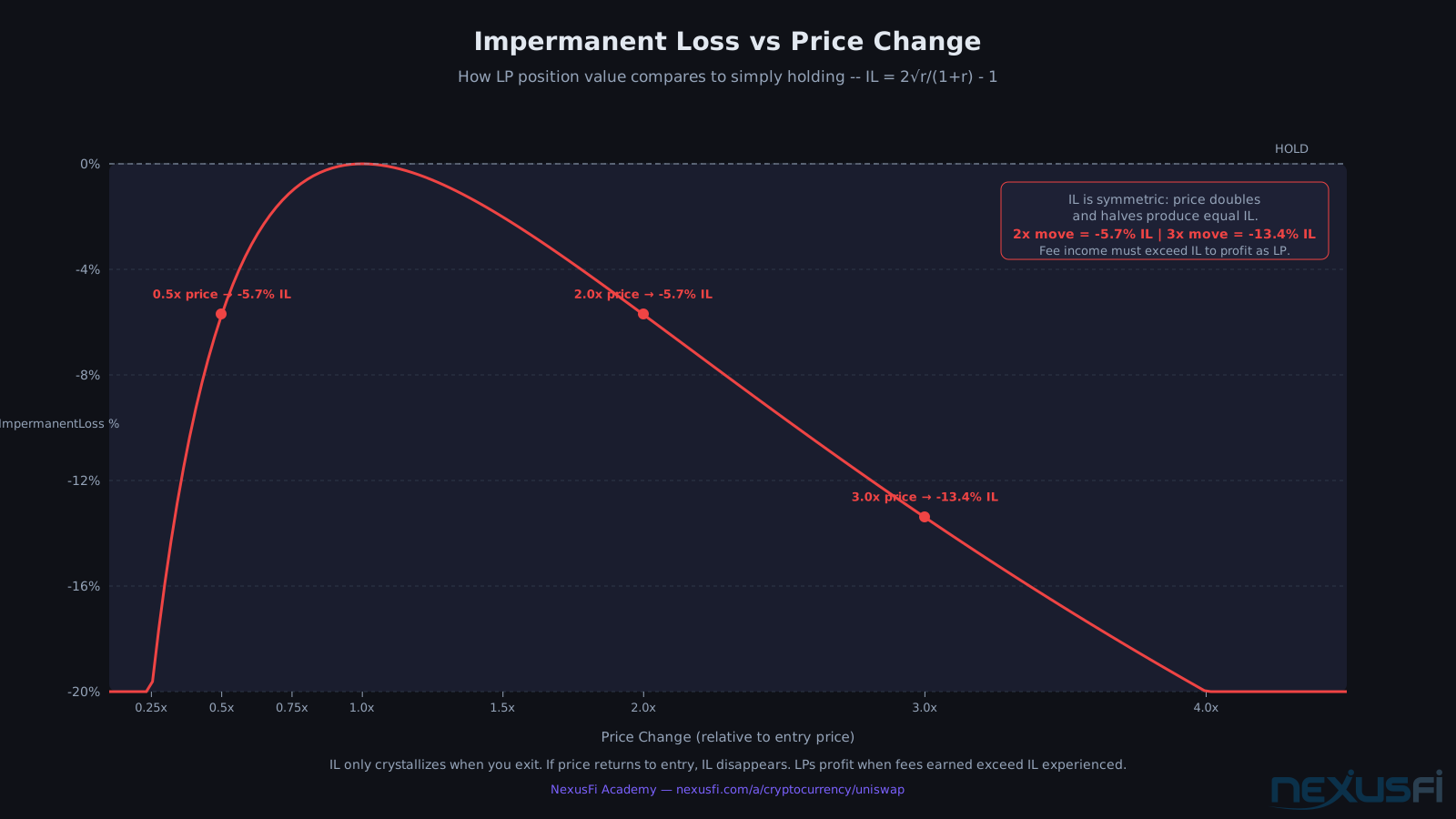
The catch: impermanent loss (IL). This is not a cost traders pay — it's a risk LPs take. When the price ratio between the two tokens changes after you've deposited, the AMM rebalances your position (by buying the appreciating token and selling the depreciating one) to keep x × y = k. The result: your LP position will be worth less than if you'd just held both tokens outright.
The formula: IL(r) = 2√r/(1+r) - 1, where r = new price / old price.
If ETH doubles from $2,000 to $4,000 (r = 2): IL ≈ 2×√2/(1+2) - 1 = 2×1.414/3 - 1 ≈ -5.7%
You're 5.7% worse off as an LP than if you'd just held. Fee income may offset that over time — but in high-volatility environments, IL can exceed fee earnings.
This matters for traders learning about DeFi: providing liquidity and trading are completely different risk profiles. Traders experience fees + slippage. LPs experience IL + fee income. Don't confuse the two.
Uniswap Version History: What Changed for Traders #
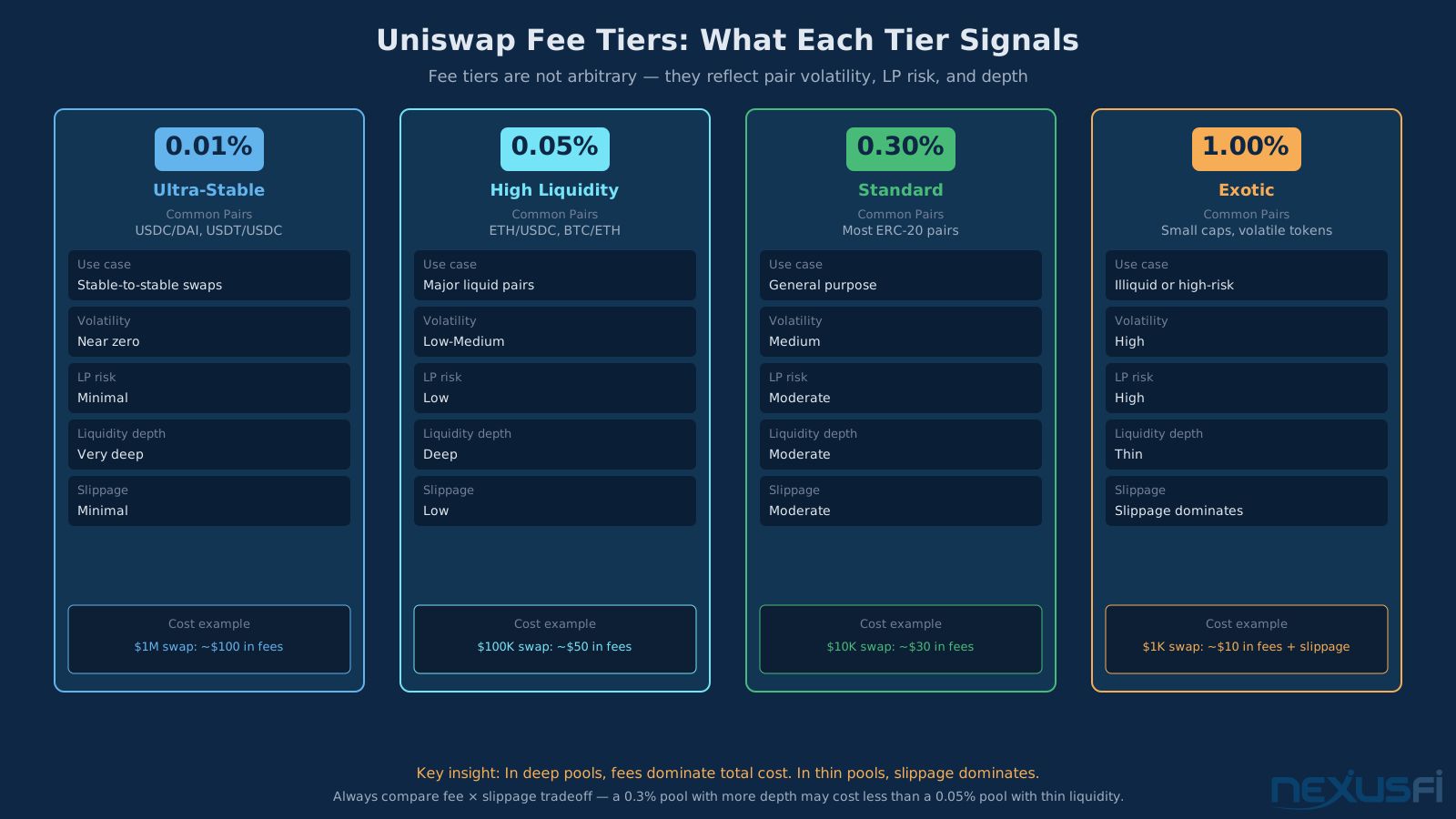
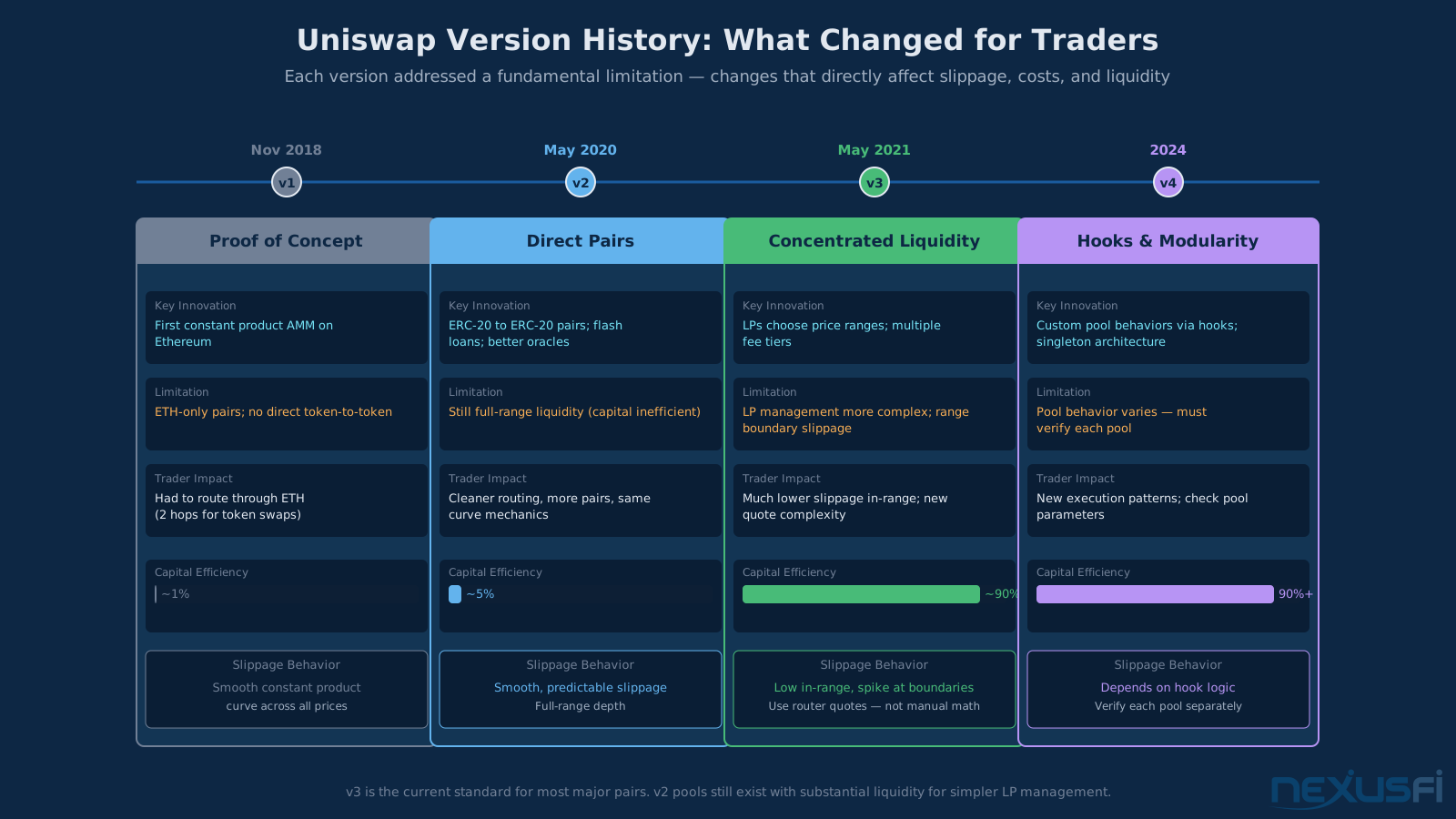
Uniswap has gone through four major versions, each with trader-relevant changes.
v1 (November 2018): The proof of concept. ERC-20 tokens could only be traded against ETH — no direct token-to-token pools. Liquidity was full-range (across all prices, infinitely). Capital-inefficient by modern standards.
v2 (May 2020): Direct ERC-20 to ERC-20 pools. Better routing, flash loans, and more reliable price oracles. Still used the same constant-product curve with full-range liquidity. The model that most simple AMM clones still use today. Many token pairs on Uniswap v2 still have significant liquidity because the simpler model makes LP management easier.
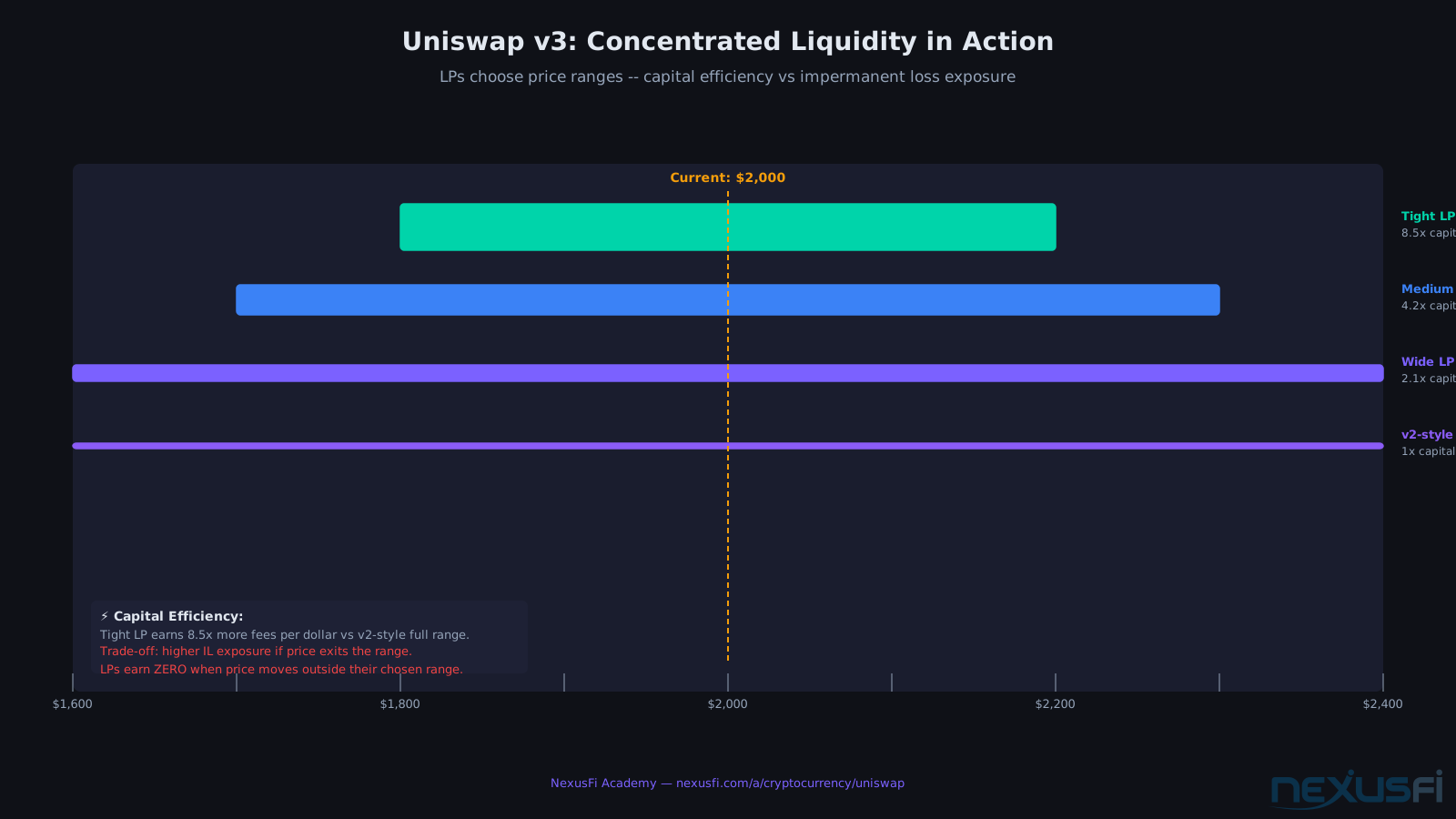
v3 (May 2021): The major innovation — concentrated liquidity. LPs no longer have to spread liquidity across all possible prices. Instead, they choose a price range and concentrate their capital there. This made the same amount of capital dramatically more effective. A v3 LP providing $10,000 in liquidity around the $1,900--$2,100 ETH range has the equivalent execution depth of a v2 LP with much larger capital.
For traders: v3 means dramatically lower slippage for trades within active liquidity ranges. But also: if a trade pushes price outside the active liquidity bands, slippage spikes sharply. This creates a different risk profile than v2's smooth, predictable curve.
v4 (launched 2024): Introduced hooks — custom code that pool creators can attach to execute logic before or after swaps, liquidity additions, or other actions. This enables custom AMM behaviors: dynamic fees, limit order-style execution, custom oracles, and more. Each pool in v4 can behave differently. For traders: always check pool parameters. Not all v4 pools behave like a standard constant-product AMM.
| Version | Key Feature | Trader Impact |
|---|---|---|
| v1 | First constant product | Limited to ETH pairs |
| v2 | Direct ERC-20 pairs | Smooth full-range liquidity |
| v3 | Concentrated liquidity | Lower slippage in-range; sharp jumps at boundaries |
| v4 | Hooks system | Pool behavior varies by creator |
Concentrated Liquidity in v3: Why It Changes Everything #
The core v3 innovation needs more explanation because it at the core changes how you think about slippage.
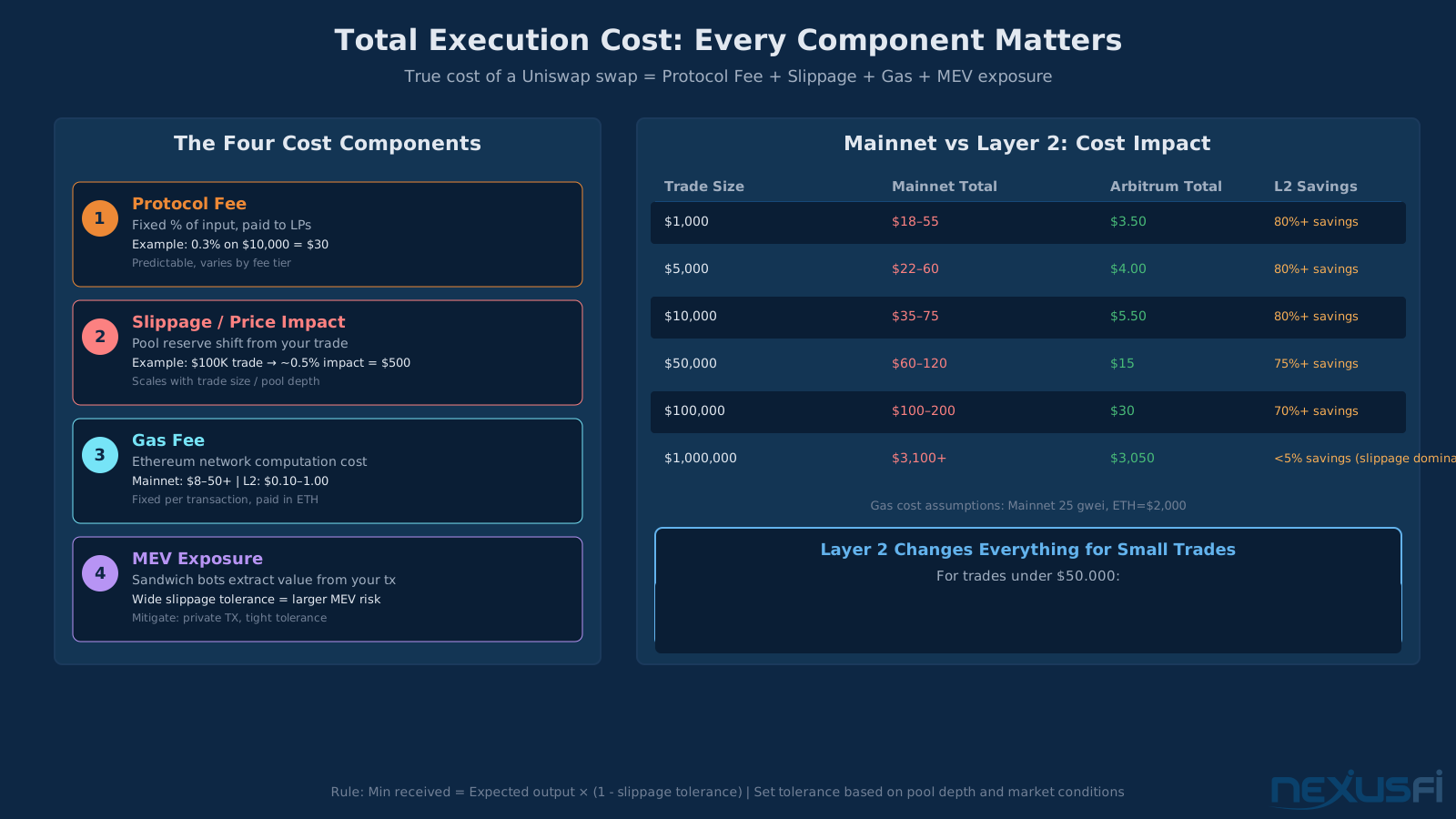
In v2, liquidity is spread across all prices from 0 to infinity. If ETH is trading at $2,000, most of that liquidity — sitting at prices like $1 or $100,000 — will never be used. It's economically inefficient.
In v3, an LP provides liquidity between, say, $1,900 and $2,100. As long as ETH trades in that range, their capital is fully deployed. They earn fees on 100% of their capital. When ETH moves below $1,900 or above $2,100, their position becomes 100% one asset (all USDC below the range, all ETH above the range) and they stop earning fees until price re-enters.
For traders, the mechanics are:
- Within an active range: liquidity is dense, slippage is low, similar to a deep order book
- At range boundaries: liquidity can drop sharply as LPs have different configured ranges
- Crossing a range boundary: slippage may step up suddenly as you enter a thinner liquidity zone
This is why v3 quotes must use tick-band-aware calculations, not the naive constant-product formula. The simple x×y=k math approximates within a single range but will misestimate execution cost if your trade crosses multiple range boundaries.
Practically: for any large v3 trade, use Uniswap's own router for quotes. Don't try to estimate slippage with back-of-envelope math.
Fee Tiers: What They Signal #
Uniswap v3 introduced multiple fee tiers: 0.01%, 0.05%, 0.3%, and 1%.
These aren't arbitrary — they're signals about the risk profile of the trading pair.
0.01%: Ultra-stable pairs (USDC/DAI, USDT/USDC). Price almost never moves; LPs take almost no directional risk. Fee is minimal because competition is fierce and LPs accept tiny margins.
0.05%: High-liquidity pairs (USDC/ETH on some networks, stETH/ETH). Moderate volatility, competitive LP market. Good starting point for major pairs.
0.3%: The standard. Most ERC-20 token pairs with reasonable liquidity. Balances LP compensation with trader cost. This is where most volume happens for mid-tier tokens.
1%: Exotic or highly volatile pairs. LPs demand higher fees to compensate for IL risk from volatile price moves. Often for smaller-cap tokens or pairs with thin liquidity.
Your total execution cost varies by tier:
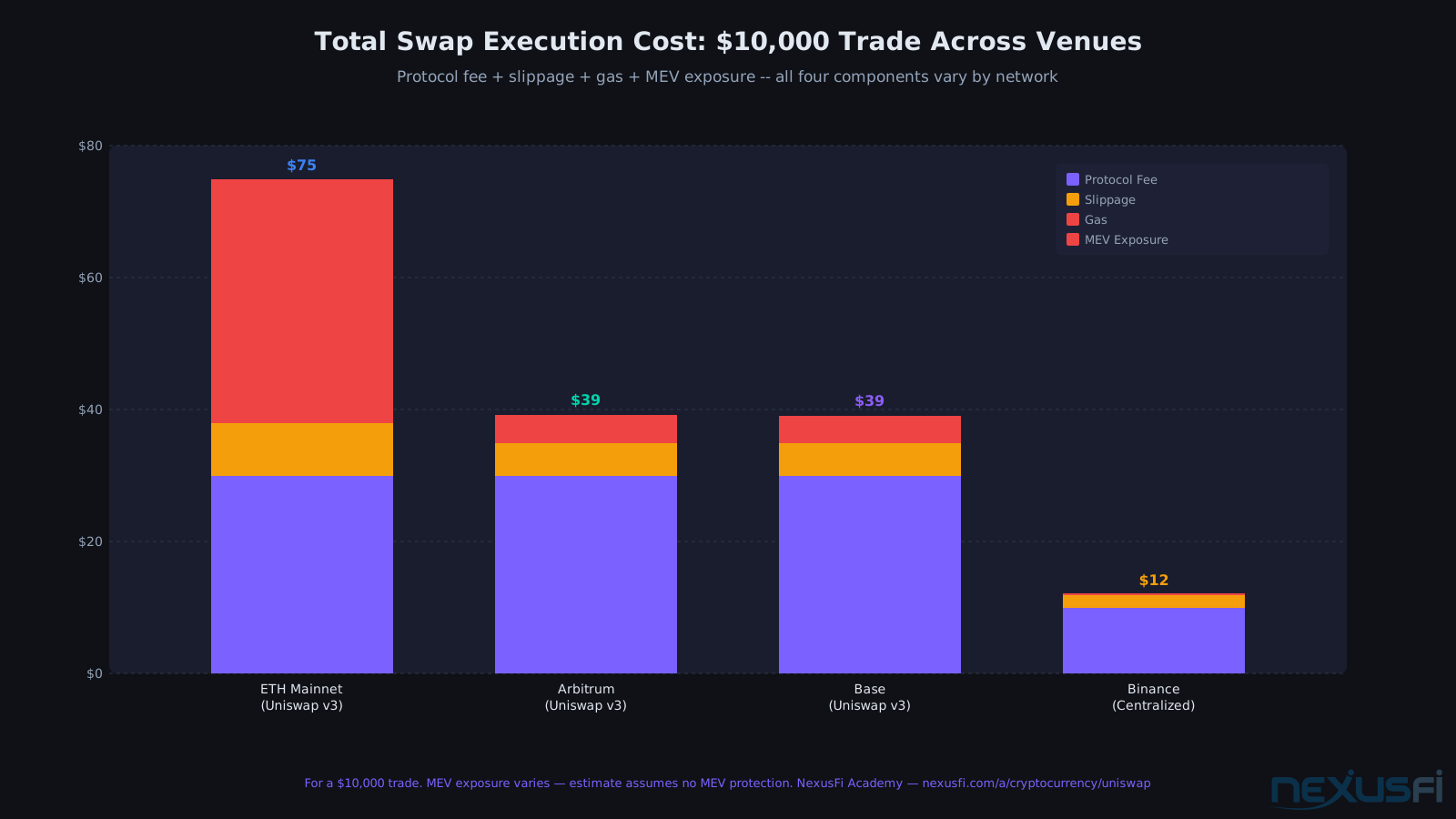
Total Cost = Protocol Fee + Slippage (Price Impact) + Gas + MEV Risk
In deep pools, fees dominate the cost. In thin pools, slippage dominates. This is why choosing the right pool matters: sometimes a 0.3% fee pool with deep liquidity costs less to trade than a 0.05% pool with thin liquidity, because the deeper pool has lower slippage.
UNI Token: Governance and Trading #
UNI is Uniswap's governance token. Holding UNI gives you voting rights on protocol parameters: fee tiers, treasury allocation, which chains to deploy on, and protocol-level fee switches.
The token launched in September 2020 with a retroactive airdrop — anyone who had used Uniswap before September 1, 2020 received 400 UNI (worth roughly $1,200 at launch, much more later). This airdrop became famous in DeFi circles as one of the most successful token distributions in history.
Supply mechanics: 1 billion UNI total. Initial distribution: 60% to community (primarily LP mining and treasury), 21.51% to team (4-year vesting), 17.8% to investors (4-year vesting), 0.069% to advisors. Vesting and unlock schedules matter when trading UNI — large unlocks can create supply overhangs.
For traders who want to track UNI as a trading instrument rather than a governance mechanism: what drives UNI price is primarily protocol revenue expectations, regulatory sentiment around DeFi, and Ethereum ecosystem health. When on-chain DEX volume surges, UNI typically benefits. When DeFi faces regulatory headwinds, UNI often leads the drawdown.
Virtuose1 summarized the crypto learning mindset well: "Do yourself a favor, be curious and take the time to learn what it is." (@Virtuose1, https://nexusfi.com/showthread.php?t=57131&p=843485#post843485) For UNI specifically: understand the protocol before taking a position in the token.
Uniswap vs Centralized Exchanges: The Real Tradeoffs #
Most futures traders operate on centralized exchanges (CEXes). Understanding where Uniswap fits — and where it doesn't — clarifies when it's actually useful.
Where Uniswap wins:
- Non-custodial: Your wallet, your keys. No exchange counterparty risk, no withdrawal freezes, no hacks of your funds held in custody
- Permissionless access: No KYC, no account approval, no jurisdiction restrictions
- Token selection: Newly launched ERC-20 tokens list on Uniswap immediately, often months before any CEX
- Transparent pricing: All pool reserves and trades are on-chain, verifiable in real-time
Where CEXes win:
- Predictable fills: Order book mechanics mean limit orders execute at exact prices when conditions are met
- Lower execution uncertainty: No MEV, no gas costs, no slippage jumps at range boundaries
- Better UX for large orders: Market making desks on CEXes often provide tighter spreads at scale than AMM pools for standard pairs
- No gas costs: Trading fees are the only cost; no gas estimates or failed transactions
SMCJB, discussing the ETH futures market on NexusFi, noted the margin mechanics of trading ETH on CME versus spot: "Can you trade the BTC:ETH, ie be long one and short the other, if so how do they margin that?" (@SMCJB, https://nexusfi.com/showthread.php?t=56551&p=833261#post833261). The answer for Uniswap: yes, you can provide a USDC/ETH position that's naturally long/short delta depending on price moves — but it's not the same as a clean spread trade. LP positions are more complex.
The practical decision framework: use Uniswap when you need permissionless access, when trading tokens not listed on CEXes, or when custody risk is critical. Use a CEX when you need predictable fills, larger size with tighter spreads, or leveraged positions.
Step-by-Step: How to Actually Trade on Uniswap #
This is the practical workflow you need before your first Uniswap trade.
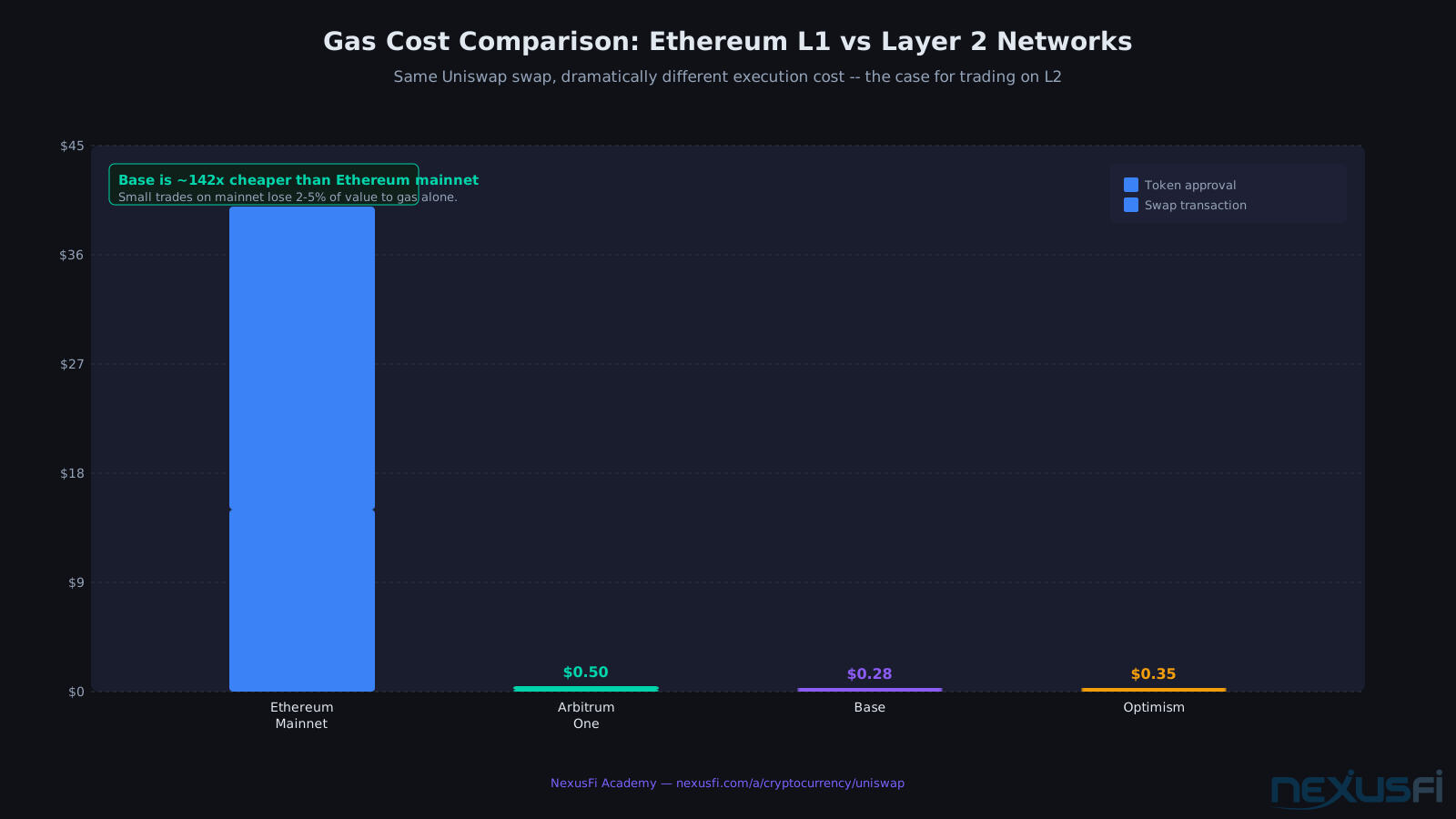
1. Choose your network Ethereum mainnet has the deepest liquidity but gas can run $10--$50+ per trade during congestion. Arbitrum and Base typically have $0.10--$1.00 gas costs with similar liquidity for major pairs. If you're trading anything over $5,000 in ETH or USDC, mainnet liquidity depth is worth the gas cost. For smaller amounts, L2 is almost always better.
2. Connect a wallet MetaMask, Coinbase Wallet, or Rabby are the standard options. The wallet must hold ETH (or the native gas token) for transaction fees, plus the token you're selling. Ensure you're on the correct network in your wallet settings before connecting.
3. Verify the token address This is non-negotiable. Token names can be impersonated. For any token other than ETH, USDC, USDT, WBTC, or other major assets: find the official contract address from the project's official website or CoinGecko, then enter it manually into Uniswap's search. Trading a fake token means your funds are gone.
4. Select the pool and fee tier Uniswap's interface shows the default pool. For major pairs (ETH/USDC), it picks the deepest pool automatically. For less liquid pairs, you may want to check whether 0.3% or 1% has better depth.
5. Enter your trade size and review the quote The interface shows:
- Estimated output
- Price impact (%)
- Fee breakdown
- Route (direct or multi-hop through intermediate tokens)
Price impact above 2-3% on a trade is a warning sign — you're trading a thin pool. Consider trading smaller size or finding a different route.
6. Set slippage tolerance Slippage tolerance defines the minimum output you'll accept. If output drops below this during execution, the transaction reverts (you lose the gas, but not your tokens).
Minimum received = Quoted output × (1 - slippage tolerance)
Example: Quote of 0.498 ETH with 0.5% tolerance = minimum 0.4955 ETH. If slippage is higher than that when your transaction executes, it fails.
Too tight (0.1%): High failure rate during volatile markets Too loose (5%+): Exposes you to MEV sandwich attacks Standard: 0.5% for liquid pairs, 1-2% for volatile tokens
7. Approve and swap If this is your first time trading a specific ERC-20 token, you'll need to approve the router contract to spend it. This approval is a separate transaction with its own gas cost. After approval, confirm the swap. The transaction goes into the mempool and executes in the next block.
8. Verify after execution Check your wallet balance. Check the transaction on Etherscan (or the equivalent block explorer for your chain). Confirm you received what you expected. If the transaction failed, the gas is lost but your original tokens return.
Common Pitfalls #
Wrong network: If your wallet is set to Ethereum mainnet and Uniswap is set to Arbitrum (or vice versa), the transaction will fail or execute against the wrong pool. Always match network settings.
Lookalike tokens: "USDC" and "USDC" can be two different contracts. Always verify via official contract address.
Slippage too low on volatile tokens: Setting 0.5% on a thinly-traded token during fast price movement means constant failed transactions. Increase tolerance or trade smaller size.
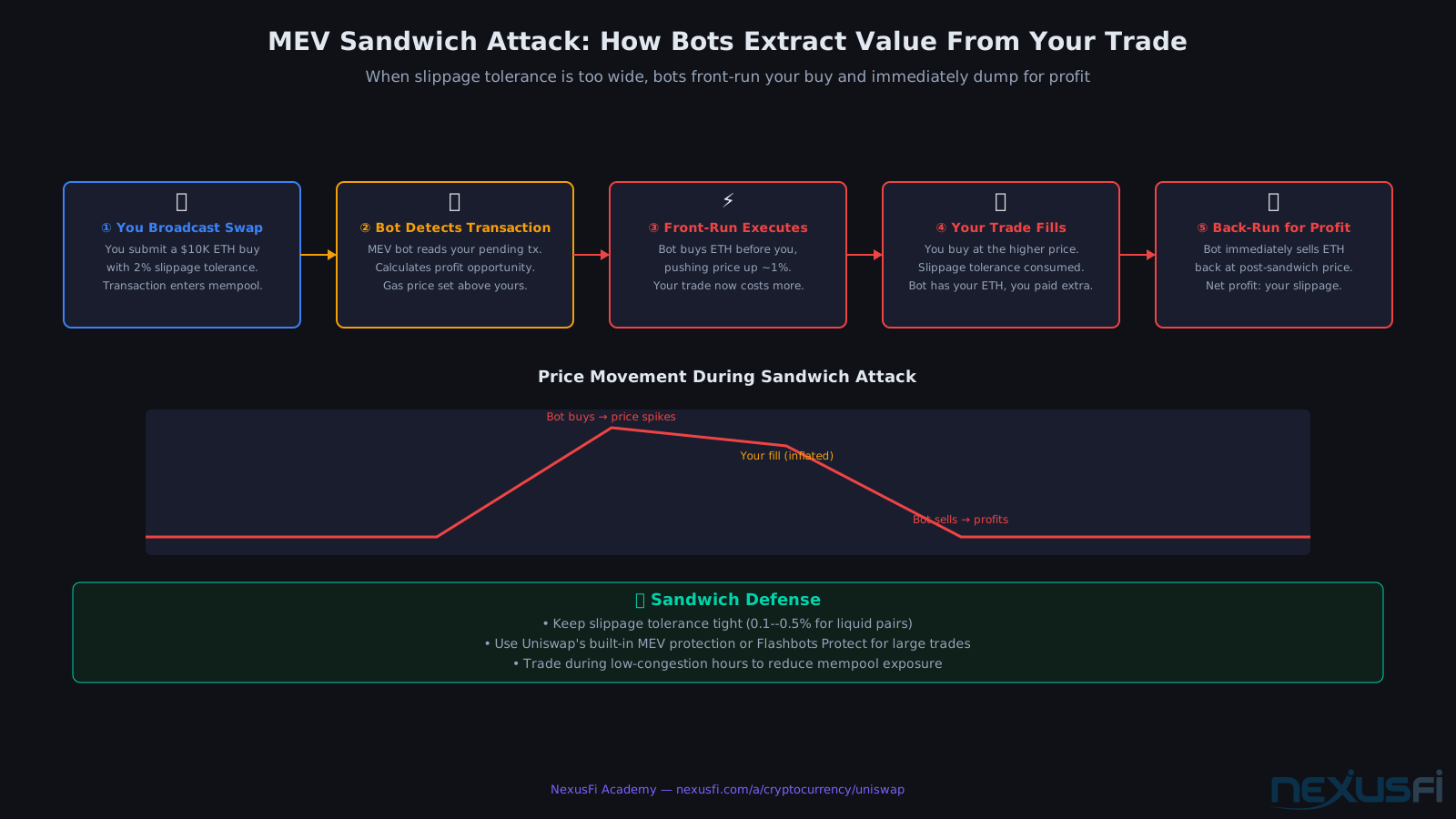
MEV sandwich attacks: Bots watch the public mempool. If your slippage tolerance is wide and your trade is large, bots can front-run your buy and back-run the sell, extracting value at your expense. Use Uniswap's built-in MEV protection settings or a private transaction bundler like Flashbots Protect.
Gas estimation failures: Uniswap estimates gas before execution. During network congestion, actual gas may exceed the estimate. Always hold extra ETH for gas beyond the estimated amount.
Risk Management Framework for Uniswap Trading #
BrianBacchus, discussing Bitcoin's supply mechanics, raised the core volatility issue: "BTC will continue to rise in value denominated in dollars due to this phenomenon, until it simply 'breaks.'" (@BrianBacchus, https://nexusfi.com/showthread.php?t=57131&p=842369#post842369) Crypto assets traded through any mechanism — centralized or decentralized — carry that volatility. Uniswap doesn't change the underlying asset risk; it just changes the execution venue.
Risk priorities for Uniswap traders:
1. Slippage and price impact (highest frequency)
- Verify price impact before every trade
- For anything above 1% impact: consider breaking into smaller trades or finding a deeper pool
- In v3: be aware that your trade may cross range boundaries mid-execution
2. MEV and sandwich attacks (medium frequency, high severity)
- Use reasonable slippage tolerance — not too wide
- For large trades: use private transaction submission
- Trade during low-congestion periods to minimize mempool exposure
3. Smart contract risk (low frequency, catastrophic severity)
- Uniswap core contracts are battle-tested, but v4 hooks introduce new contract risk for non-standard pools
- For any pool with unusual behaviors: verify the hook contract independently
- Stick to well-established pools for serious capital
4. Token-specific risk (variable)
- Honeypot tokens: smart contract won't let you sell once you've bought
- Transfer taxes: some tokens deduct a fee on every transfer, breaking slippage calculations
- Rebase tokens: supply adjusts dynamically, complicating LP math
- Always verify token contract behavior on a block explorer before trading
5. Approval risk
- Token approvals are often set to "infinite" by default. This means any bug in the router contract could drain your approved tokens
- Use limited approvals or revoke unused allowances via revoke.cash periodically
tigertrader's principle applies here: "You can fine tune your risk profile by adjusting your position for the varying levels of volatility in the market." (@tigertrader, https://nexusfi.com/showthread.php?t=7977&p=93377#post93377) For Uniswap trades, that means sizing based on pool depth, not just account equity. A $50,000 account doesn't mean you should do $50,000 of Uniswap swaps at once — pool depth and MEV exposure scale with trade size.
Gas Fees and Total Execution Cost #
Gas is the cost of computational work on Ethereum (or L2). Every Uniswap swap burns gas, paid in ETH (or the equivalent on L2s).
Gas components for a Uniswap trade:
- Token approval (first-time only): ~$2-20 on mainnet, $0.05-0.50 on L2
- Simple swap (single hop): ~$8-40 on mainnet, $0.10-1.00 on L2
- Multi-hop swap (through intermediate token): Higher gas due to additional computation
- Slippage failure (reverted transaction): You lose the gas even though the trade doesn't execute
The total execution cost model:
| Cost Component | Typical Range | Notes |
|---|---|---|
| Protocol fee | 0.01%--1.0% | Fixed per pool |
| Price impact | 0.01%--5%+ | Depends on pool depth and trade size |
| Gas (mainnet) | $8--$50+ | Varies with network congestion |
| Gas (Arbitrum/Base) | $0.10--$1.00 | Much lower |
| MEV exposure | 0%--2%+ | Avoidable with proper settings |
For a $1,000 trade on Ethereum mainnet with a 0.3% fee pool and 0.5% slippage: protocol fee = $3, slippage cost = $5, gas = $15 (typical). Total: $23 or 2.3% of trade. That's significant. The same trade on Arbitrum: protocol fee = $3, slippage = $5, gas = $0.20. Total: $8.20 or 0.82%.
This is why Layer 2 networks have gained so much traction — the economics of small-to-medium trades become dramatically more favorable.
Big Mike's framework for thinking about costs applies directly: "That range itself should only represent a very small fraction of your risk stake, the amount of capital you are prepared to lose in the business at any given time." (@Big Mike, https://nexusfi.com/showthread.php?t=1415&p=446588#post446588) For Uniswap, the same principle applies. Don't trade where total execution costs (fee + slippage + gas + MEV exposure) represent more than 1-2% unless the expected move much exceeds that threshold.
When to Use Uniswap vs Other Venues #
Use Uniswap when:
- Trading tokens not listed on any CEX (new launches, niche DeFi tokens)
- Custody risk is a primary concern and you want non-custodial execution
- Trading pairs with deep on-chain liquidity (major pairs on L2)
- You need permissionless access without geographic or KYC restrictions
- Using Uniswap as part of a DeFi strategy (LP positions, yield farming, arbitrage)
Use a CEX when:
- Trading ETH, BTC, or other major tokens with significant CEX liquidity
- Doing larger size where spread and market impact need active management
- Using leverage or futures
- Prioritizing execution speed and UX over custody control
- Transaction cost is a primary concern and gas costs would exceed spread savings
Check on-chain liquidity before deciding: Uniswap's analytics (info.uniswap.org) shows 24h volume, fee tier depth, and active liquidity range for every pool. If a pair you want to trade shows millions in daily volume in the fee tier you're targeting, on-chain execution may match or beat a CEX for that specific pair.
The UNI Token as a Tradeable Asset #
Separate from using Uniswap as an execution venue, some traders want to trade UNI itself.
UNI price correlates strongly with:
- Ethereum gas usage and network activity (more swaps = more fee revenue = bullish for UNI)
- DeFi sector momentum (ETH-correlated during risk-on; leads during DeFi-specific narratives)
- Protocol governance events (fee switch votes, treasury allocation proposals create volatility)
- Regulatory sentiment around DEXes specifically (SEC/CFTC statements about DeFi)
Supply overhang calendar: team and investor vesting unlocks have historically created selling pressure. Track the vesting schedule when sizing positions.
UNI has historically underperformed ETH during consolidation phases and outperformed during DeFi bull runs. It's a beta-to-Ethereum trade with additional DeFi-specific catalysts.
For futures traders: CME does not list UNI futures. Any UNI position is cash-only or perpetual futures on crypto-native exchanges.
Key Takeaways #
Uniswap is not a toy. It's the infrastructure underlying billions in daily crypto volume, built on a mathematical model that anyone can verify and understand.
The constant product formula (x*y=k) produces predictable slippage — bigger trades in thinner pools cost more, always, and the math tells you exactly how much before you trade.
Concentrated liquidity in v3 changed the economics: better depth within active price ranges, but sharper slippage jumps at boundaries. Use the router for quotes; don't approximate.
Total execution cost = fee + slippage + gas + MEV exposure. On L2s, gas becomes marginal. On mainnet, gas dominates small trades.
The non-custodial, permissionless model comes with real operational overhead: wallet management, gas estimation, slippage settings, MEV awareness. These are learnable skills, not insurmountable barriers.
For futures traders curious about DeFi exposure: Uniswap is the most legitimate on-ramp into that ecosystem, built by one of the few teams that has consistently prioritized security and transparency over token speculation.
Knowledge Map
Prerequisites
Understand these firstGo Deeper
Build on this knowledgeReferences This Article
Articles that build on this topicCitations
- — Crypto futures trading discussion (2026) 👍 5“No DeFi rug pulls going to get me!”
- — Cryptocurrency trading thread (2021) 👍 8“Do yourself a favor, be curious and take the time to learn what it is.”
- — Cryptocurrency trading thread (2021) 👍 6“BTC will continue to rise in value denominated in dollars due to this phenomenon, until it simply breaks.”
- — Risk management discussion (2010) 👍 42“You can fine tune your risk profile by adjusting your position for the varying levels of volatility in the market.”
- — Trading risk principles (2015) 👍 118“That range itself should only represent a very small fraction of your risk stake, the amount of capital you are prepared to lose in the business at any given time.”
- — ETH and BTC spread trading (2021) 👍 3“Can you trade the BTC:ETH, ie be long one and short the other, if so how do they margin that?”
- — Uniswap Protocol Documentation (2024)
- — Uniswap (UNI) Price & Market Data (2024)