



DeFi (Decentralized Finance): What Every Crypto Trader Needs to Understand
Overview #
DeFi is financial infrastructure that runs on code instead of companies. No broker, no exchange, no bank — just smart contracts executing predefined rules on a public blockchain that anyone can verify. For traders, that means 24/7 markets that never close, self-custody of assets, and access to financial products that didn't exist five years ago.
Here's what DeFi actually is from a trading desk perspective: programmable markets with on-chain settlement and composability. You can swap tokens, earn yield on deposits, borrow against collateral, trade perpetual futures, and chain multiple protocols together in a single transaction — all without opening an account or showing ID. Programmable markets with on-chain settlement and composability have their own mechanics, microstructure, and failure modes — treat them as tools, not ideology.
The crypto community sometimes treats DeFi as a belief system. Traders should treat it as a set of tools — some useful, some dangerous, most misunderstood.
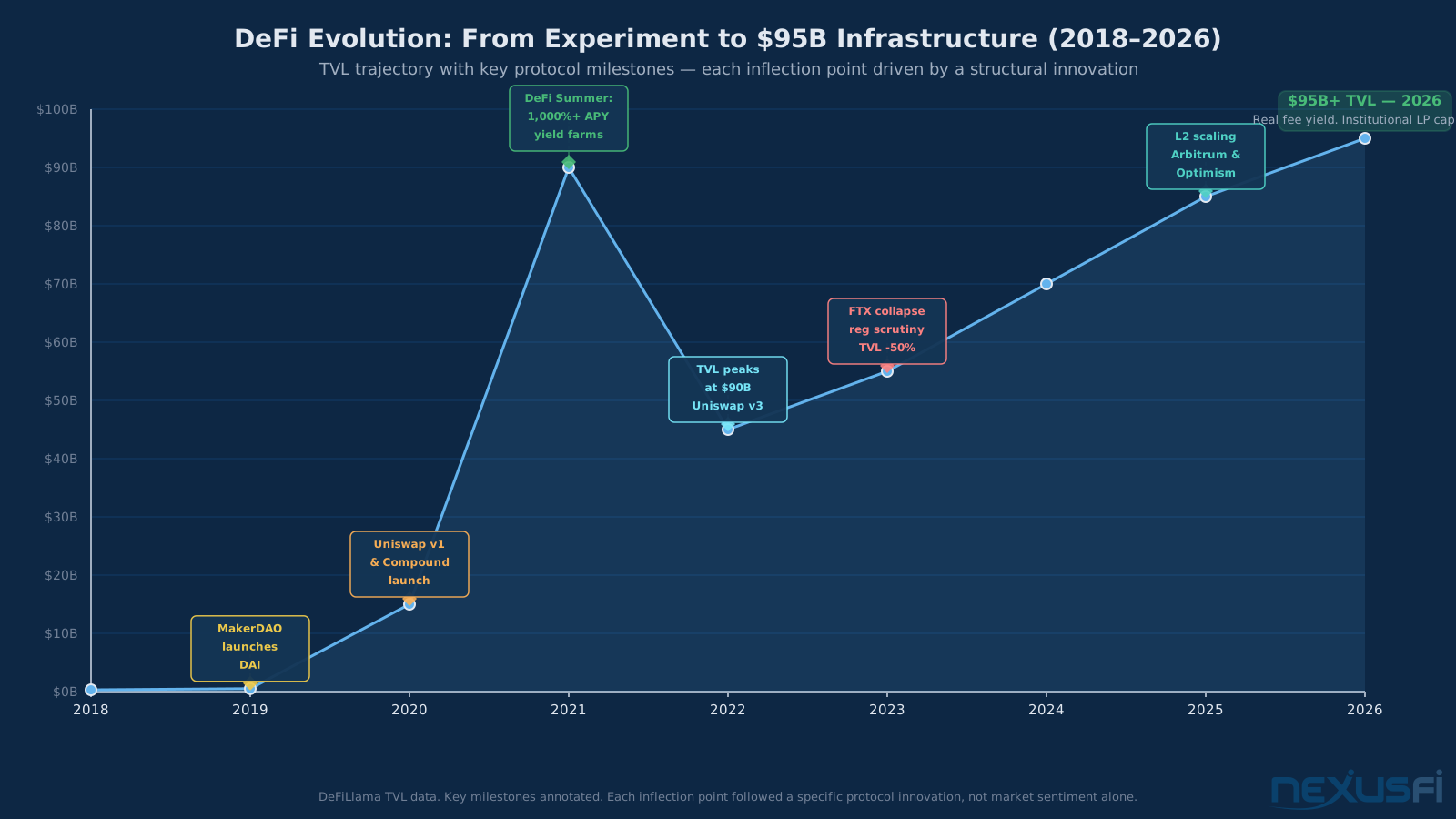
DeFi first launched meaningfully in 2018, exploded in the "DeFi Summer" of 2020 when yield farming returned 1,000%+ APYs (temporarily), and now settles into a more mature phase with $95B+ in total value locked across hundreds of protocols. Understanding it isn't optional for anyone serious about crypto markets.
For traders new to the asset class, Cryptocurrency Trading Fundamentals covers baseline mechanics before approaching DeFi-specific protocols. This guide covers the mechanics that matter: how prices actually get set on decentralized exchanges, why liquidity provision can destroy you, what "yield" actually consists of, how to assess protocol risk, and how to trade DeFi tokens without being a bag holder.
Key Concepts #
AMM (Automated Market Maker): A smart contract that sets prices using a mathematical formula instead of an order book. When you swap ETH for USDC on Uniswap, you're trading against a pool of tokens, not a human counterparty.
Liquidity Pool: Two (or more) assets locked in a smart contract. Traders swap against the pool. Liquidity providers (LPs) deposit both assets, earn a share of swap fees, and accept the risk of impermanent loss.
Impermanent Loss (IL): The loss LPs experience when the relative price of their two pool assets changes after deposit. It's called "impermanent" because it reverses if prices return to the entry ratio — but in practice, it often doesn't.
Yield Farming: Deploying capital into DeFi protocols to earn returns from multiple sources simultaneously — swap fees, lending interest, and token emission rewards.
Total Value Locked (TVL): The dollar value of assets deposited across a DeFi protocol or the DeFi ecosystem. Often cited as a growth metric. Often misleading.
Smart Contract: Self-executing code on a blockchain. There's no admin who can intervene when something goes wrong. The code runs until it doesn't.
MEV (Maximal Extractable Value): The profit block validators and sophisticated bots extract by reordering, inserting, or censoring transactions. Manifests for traders as sandwich attacks on large DEX trades.
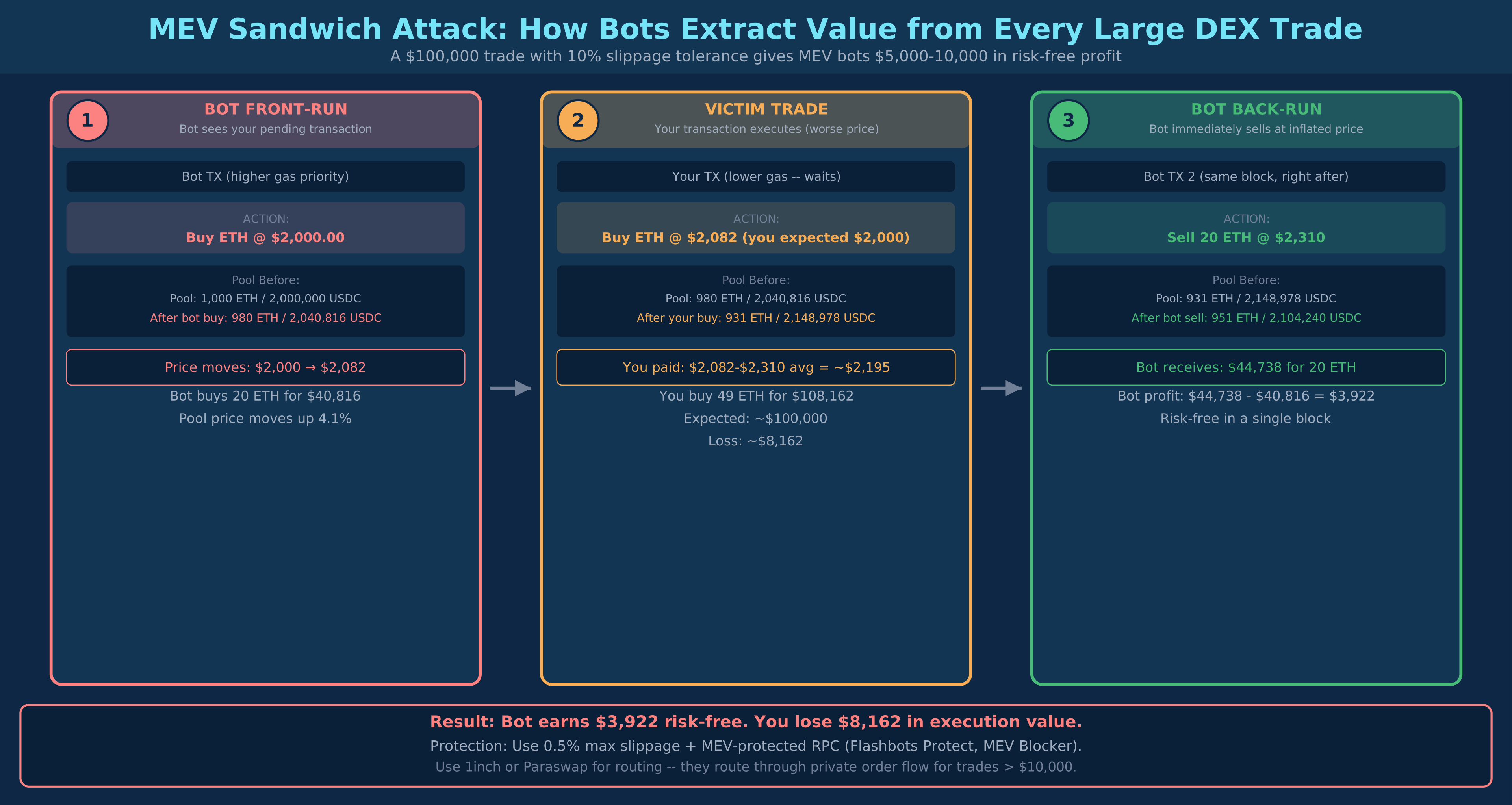
Sandwich Attack: A form of MEV where a bot front-runs your trade (buys before you) and back-runs it (sells after). You end up buying at a higher price and effectively subsidizing the bot's profit.
Slippage: The difference between the price you expect to get and the price you actually get due to pool mechanics and trade size. Not the same as spread on a CEX.
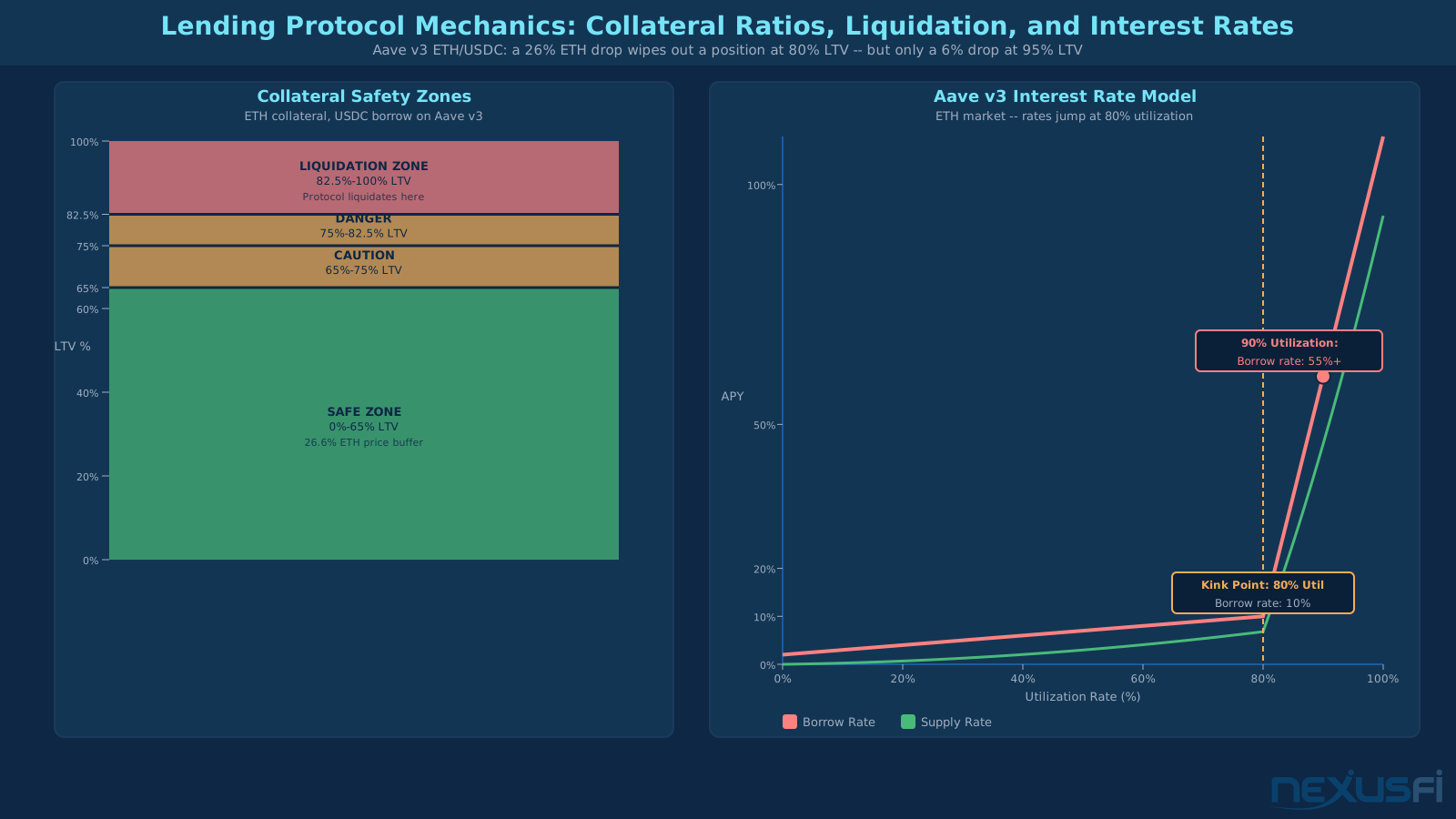
Utilization Rate: In lending protocols, the percentage of supplied assets that are currently borrowed. High utilization drives rates up. Low utilization means the protocol isn't being used.
Governance Token: A token that gives holders voting power over protocol decisions (fee changes, upgrades, treasury allocations). Some protocols share revenue with governance token stakers. Most don't.
For the mechanics underlying token issuance, distribution, and inflation schedules, see Tokenomics: Understanding Crypto Supply and Demand.
Concentrated Liquidity: Uniswap v3's innovation — LPs can specify a price range within which their capital is active. More fee efficiency, more management complexity, more catastrophic downside when price exits the range.
How AMMs Actually Work #
The core innovation of DeFi is that you don't need a market maker or order book to create a functional market. You need a formula and two pools of assets.
Uniswap's original model — still the dominant paradigm — uses what's called the constant-product formula: x · y = k. Here x and y are the token reserves in the pool, and k is a constant. That's it. That formula determines the price of every trade.
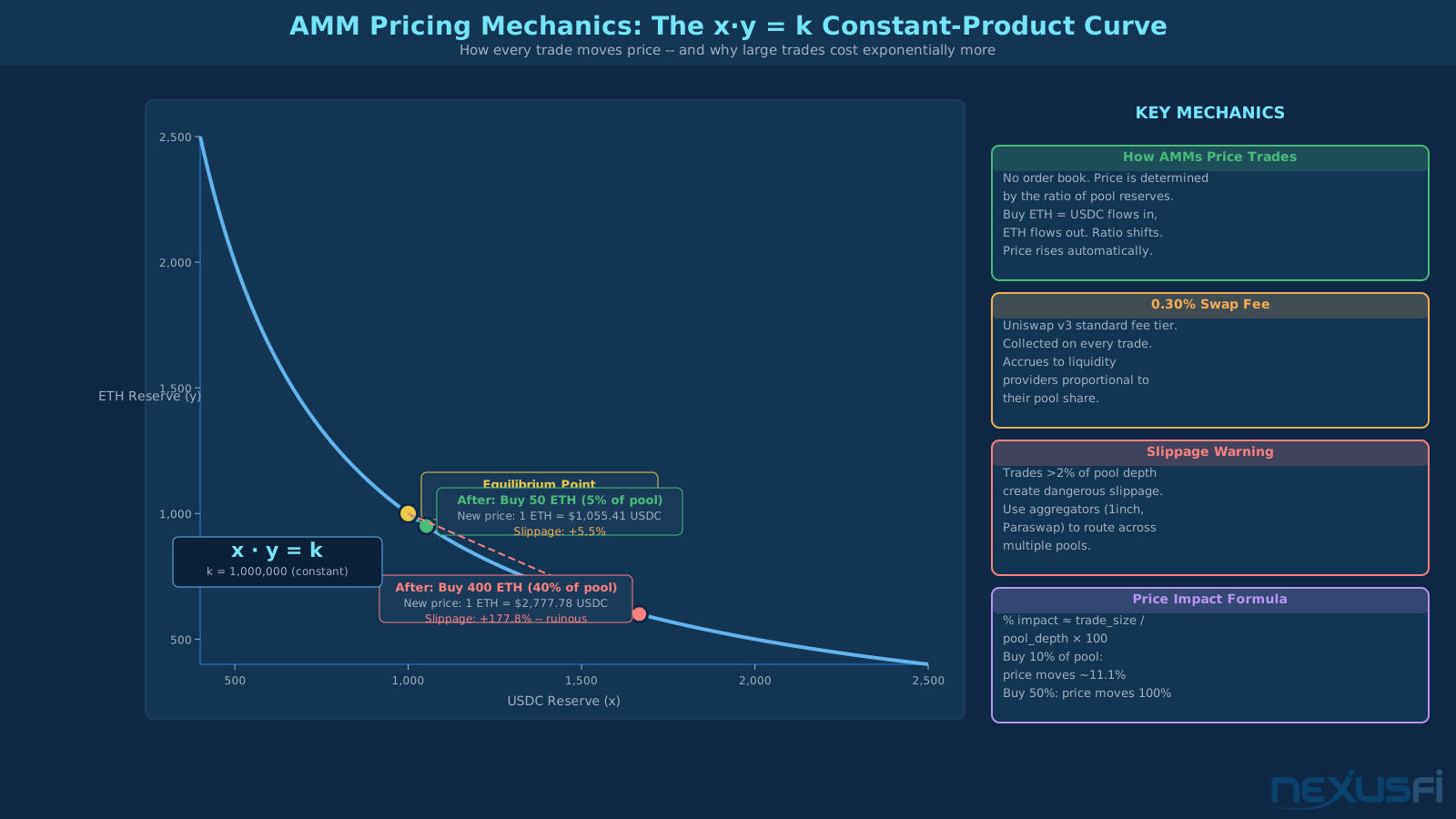
Say you have a pool with 1,000 ETH and 1,000,000 USDC. k = 1,000,000,000. 1 ETH = $1,000 USDC. Someone wants to buy 50 ETH. The USDC flowing in must maintain k. New USDC reserve: k / (1000 - 50) = 1,052,631. So the buyer had to put in 52,631 USDC to get 50 ETH. Cost per ETH: $1,052.63. Slippage: 5.3%.
Now watch what happens at scale. Same pool, someone buys 400 ETH. New USDC reserve: k / 600 = 1,666,667. They paid 666,667 USDC for 400 ETH. Average cost: $1,666.67 per ETH. They paid 66.7% more than the entry price.
This is why pool depth is everything in DeFi execution. Thin pools make large trades expensive to the point of absurdity. The rule of thumb: if your trade exceeds 1% of pool depth, you're starting to move price meaningfully. If it exceeds 5%, you need a routing aggregator to split across multiple pools.
As shown in the AMM curve diagram, the x·y=k hyperbola creates exponential price impact. Small trades near the equilibrium point barely move price. Large trades consume curve curvature rapidly and move price disproportionately.
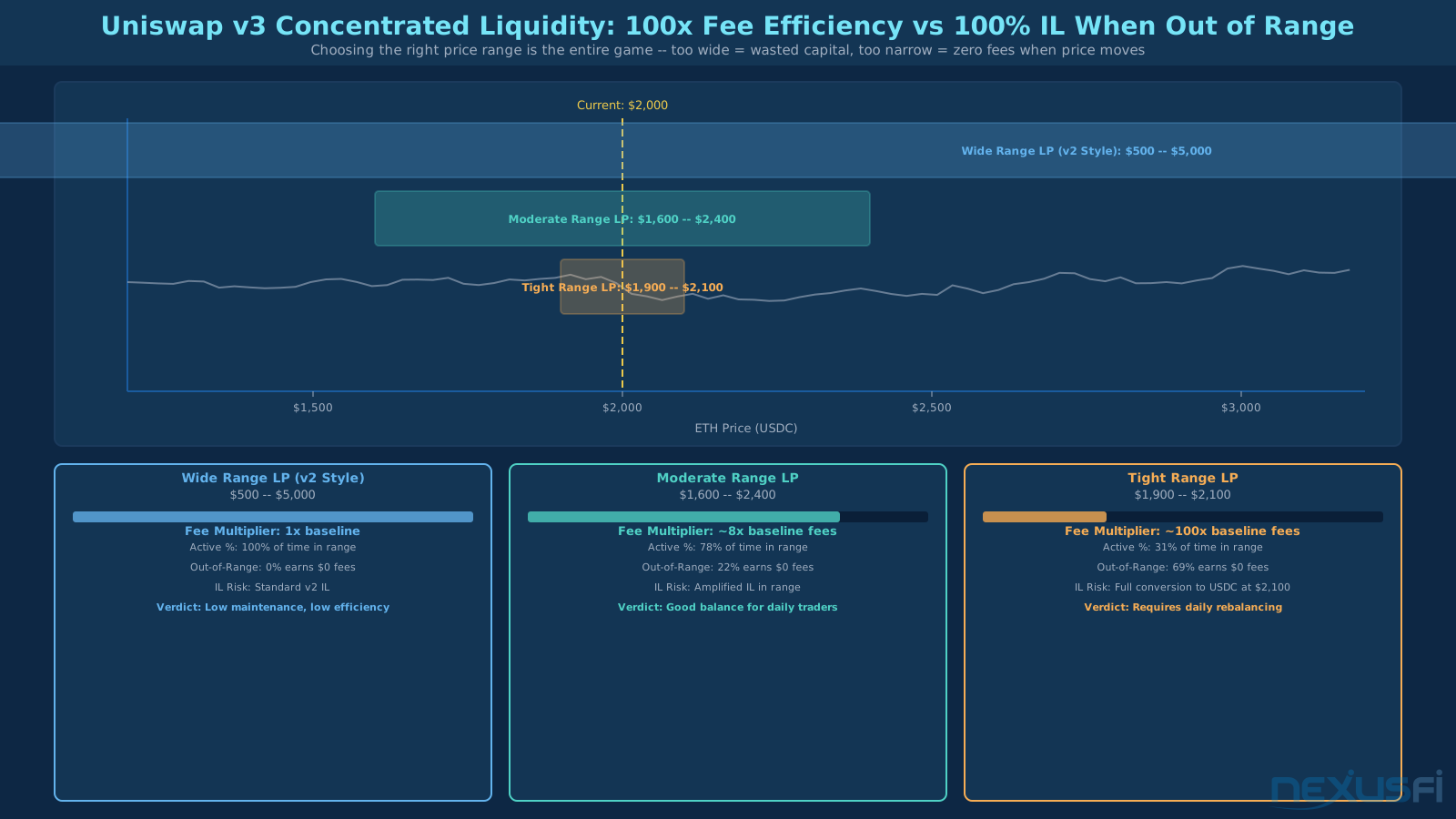
Uniswap v3 introduced concentrated liquidity in 2021, allowing LPs to deploy capital only within a specified price range — say, ETH between $1,800 and $2,200. When price is within that range, the LP's capital is fully active and generating fees. When price exits the range, the LP's position becomes one-sided (all in whichever token depreciated) and earns nothing. This increases fee efficiency by 10-100x for LPs with good range selection, but requires active management and adds risk for passive depositors.
Liquidity Provision: The Real Economics #
Providing liquidity looks simple on the surface. Deposit two tokens in equal value, earn swap fees as traders use the pool. Exit when you want.
The complexity lives in the math.
Fee structure: Most Uniswap pools charge 0.01% to 1% per swap, with 0.30% being the classic rate and 0.05% being common for stable pairs. On a high-volume pool doing $200M/day in volume, LPs share roughly $100,000-$600,000 in daily fees. That sounds like real money until you divide it by pool TVL.
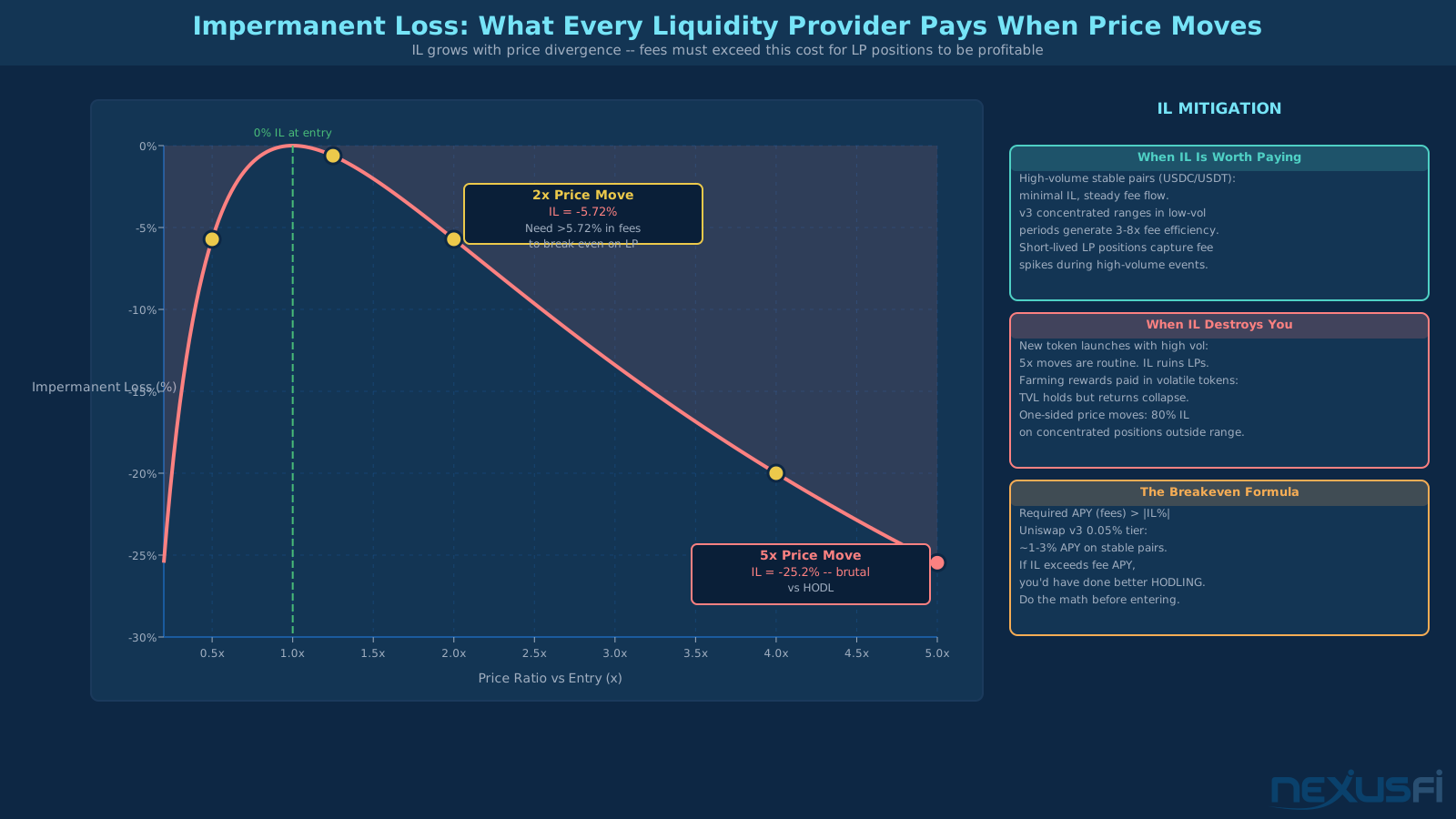
The IL problem: When one of your two pooled assets changes price relative to the other, the AMM rebalances your position automatically. If ETH doubles while you're LP'd in ETH/USDC, the pool sells ETH and buys USDC as price rises, so your withdrawal is worth less than if you'd just held both assets separately.
The math is precise. Impermanent loss = 2 * √r / (1 + r) - 1, where r is the price ratio at withdrawal versus entry. At 2x price move, IL is 5.7%. At 5x price move, IL is 25.2%. At 10x (think early DeFi altcoin launches), IL exceeds 35%.
The self-amending nature of DeFi contracts means these mechanics can change through governance — but the fundamental math of AMMs is built into the invariants, not governance. As @SMCJB analyzed in the Cryptocurrencies 101 thread, understanding the structural mechanics of crypto markets matters more than conviction about where prices will go.
The bottom line on LP economics: you need fee revenue to exceed IL drag for the position to be profitable relative to holding. For stable pairs (USDC/USDT) with minimal price divergence, that's achievable. For volatile pairs during trending markets, it usually isn't.
Yield Farming: Stop Treating APY as a Number #
High APY numbers in DeFi are marketing. The actual return depends on what's generating the yield.
There are three sources of DeFi yield, and they have completely different durability profiles:
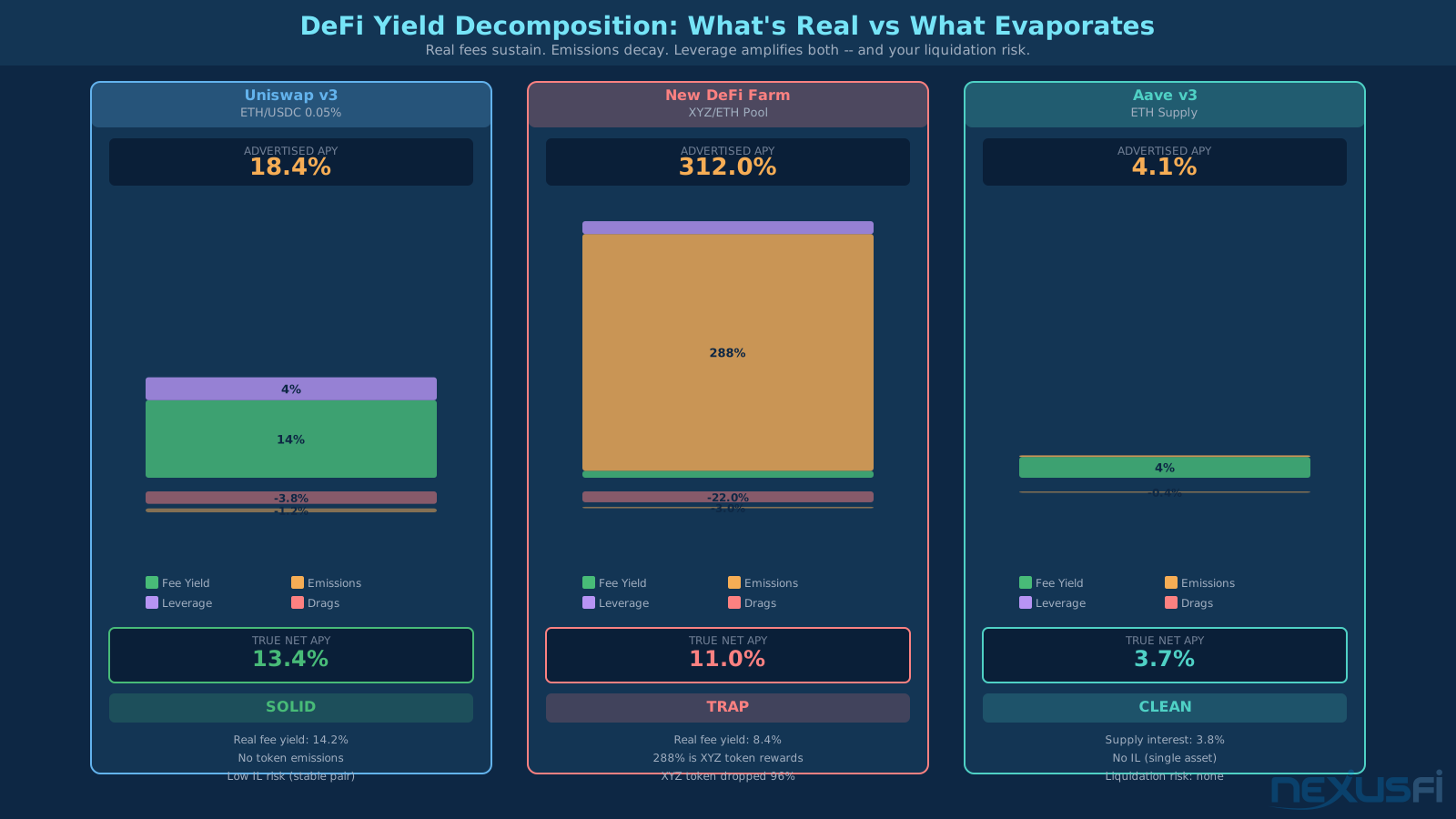
Swap fees (real yield): Generated every time someone trades through the pool. As long as the protocol has volume, fees continue. This is sustainable yield. Uniswap v3 ETH/USDC on the 0.05% tier generates roughly 3-8% APY in real fee yield depending on market conditions.
Lending interest (real yield): When you supply assets to Aave or Compound, borrowers pay interest. That interest is real demand — someone needs leverage or wants to short, and they're paying for it. Aave ETH supply rates run 1-4% under normal conditions, spiking to 10%+ when utilization is high and demand for borrowed ETH exceeds supply.
Token emissions (fake yield): This is where most traders get wrecked. A protocol launches, issues its governance token, and distributes tokens to LPs to attract liquidity. The APY shows 200%, 500%, 1000%. What that number represents is protocol token rewards priced at current market. When every yield farmer sells the moment they receive the tokens — which they do — the token price collapses, and so does the displayed APY.
This cycle has played out hundreds of times: Protocol launches → APY attracts TVL → TVL pumps governance token price → high price inflates APY further → governance token dumps when emissions exceed organic demand → APY collapses → TVL exits → token near zero. Approximately 90% of DeFi governance tokens lose 80-95% of peak value within 12 months of launch.
The approach that works: decompose yield into fees vs emissions before committing capital. If the real fee APY is 8% and emissions add 200%, treat the 8% as your floor and the emissions as lottery tickets. Size so.
The yield decomposition test: "If this protocol stopped issuing reward tokens tomorrow, what would the APY be?" That number is your actual return floor. Anything above it is emission exposure. If the protocol cannot answer this question clearly, that is a red flag.
As shown in the yield decomposition chart, that 312% APY farm showing massive advertised returns has only 8.4% in real swap fees. The rest is token rewards. When reward tokens drop 96% — which they almost certainly will — the real return is 11% before impermanent loss.
DEX vs CEX: Same Crypto, Different Execution Reality #
Most traders come from CEX backgrounds — Coinbase, Binance, Kraken, or the CME for futures. DEX trading has at the core different execution mechanics.
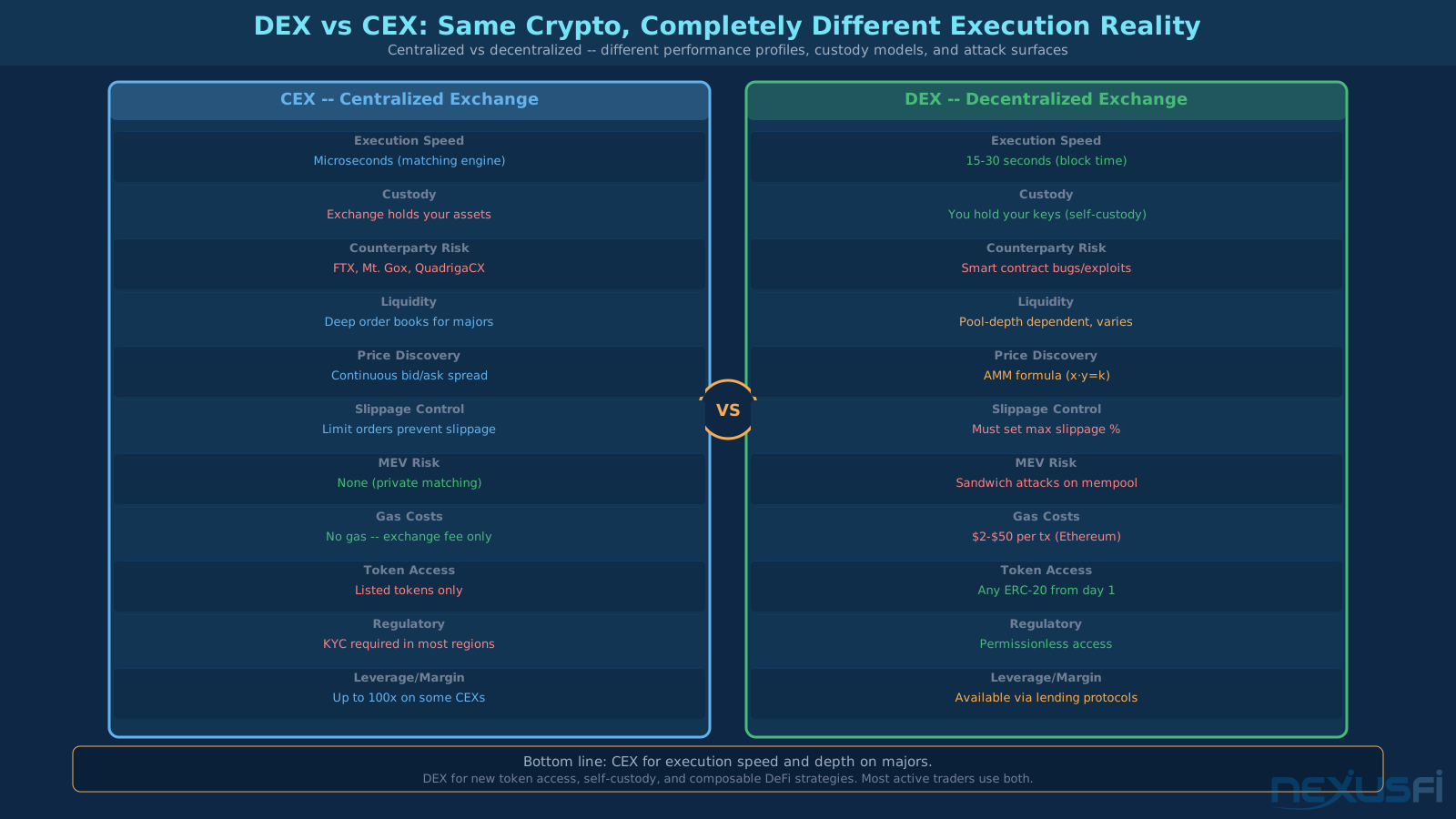
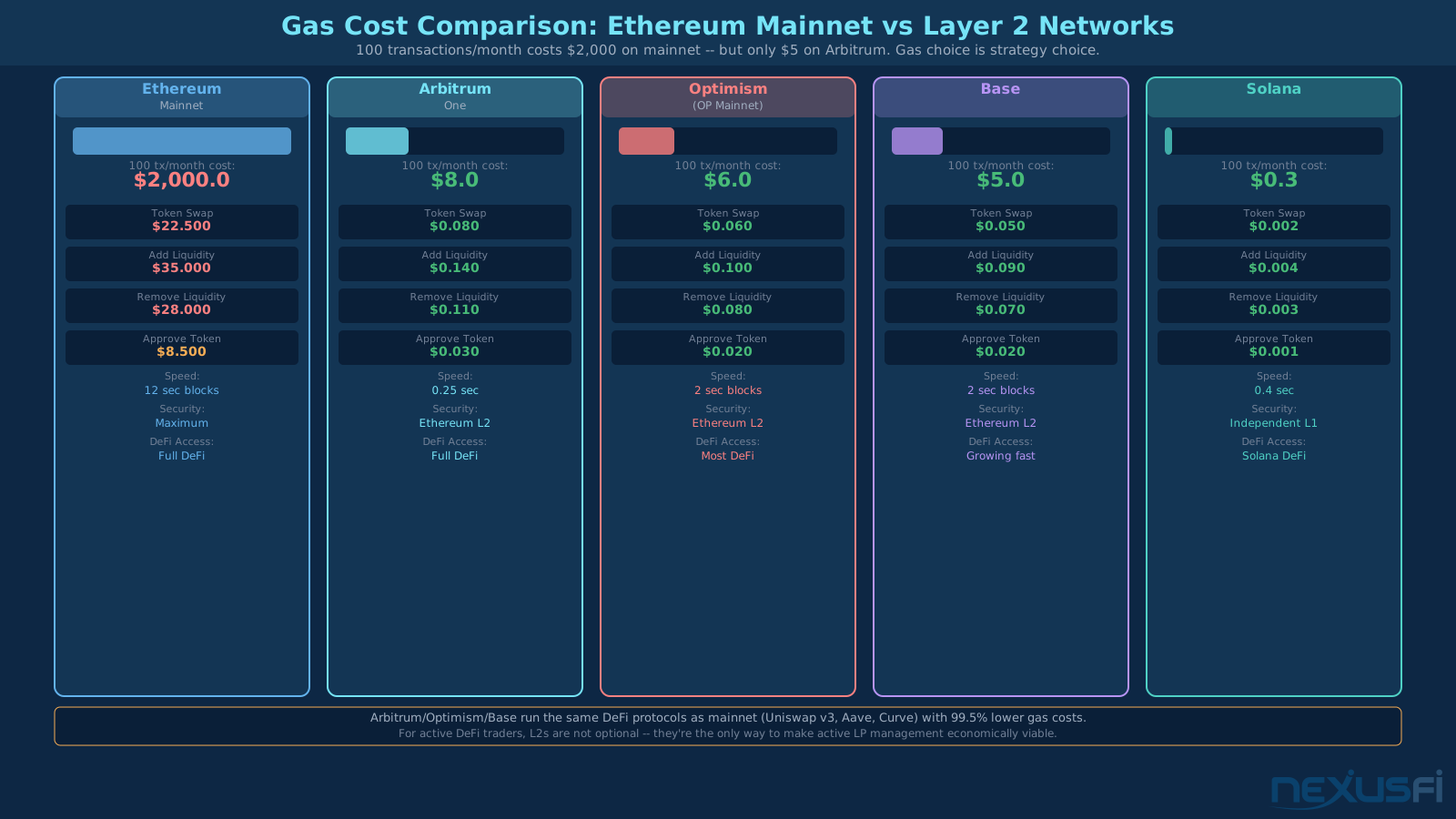
Speed: CEX matching engines operate in microseconds. DEX trades confirm in block time — 12 seconds on Ethereum mainnet, 2 seconds on Arbitrum, 0.4 seconds on Solana. You can't scalp on Ethereum DEXs.
Custody: CEX holds your assets. The catastrophic failure list is long: FTX ($8B shortfall, 2022), Mt. Gox (850,000 BTC, 2014), QuadrigaCX ($190M, 2019). DEX keeps assets in your wallet until trade execution — eliminates counterparty risk, introduces self-custody responsibility.
MEV exposure: On Ethereum and other public-mempool chains, your pending transaction is visible before it confirms. MEV bots run sandwich attacks — front-running your buy, then back-running it — with economic impact of 0.5-2% of trade size on large orders. Mitigation: use DEX aggregators (1inch, Paraswap) with built-in MEV protection, or Flashbots Protect for private submission.
Liquidity quality: Major pairs (ETH/USDC, BTC/USDC) on large DEXs handle institutional-scale trades. Long-tail tokens with $1-5M TVL pools do not. As @artemiso noted in Bitcoin Futures mechanics, thin markets mean small orders move price much — the same math applies to DeFi pools.
Token access: New tokens launch on DEXs before CEXs, often months before. Uniswap v3 adds any ERC-20 token permissionlessly. This is where early DeFi opportunity concentrates — and where most retail losses occur.
As @SMCJB noted in analyzing crypto derivatives mechanics, the leverage available in regulated markets is deliberately constrained compared to spot. The same dynamic applies to DEXs — permissionless access means you can access leverage or exotic tokens that regulated venues prohibit, which cuts both ways depending on your edge.
The right answer isn't DEX-only or CEX-only. Most sophisticated crypto traders maintain positions on both. CEX for execution depth on BTC and ETH, DEX for DeFi-native strategies and early token access.
The Four DeFi Protocol Layers #
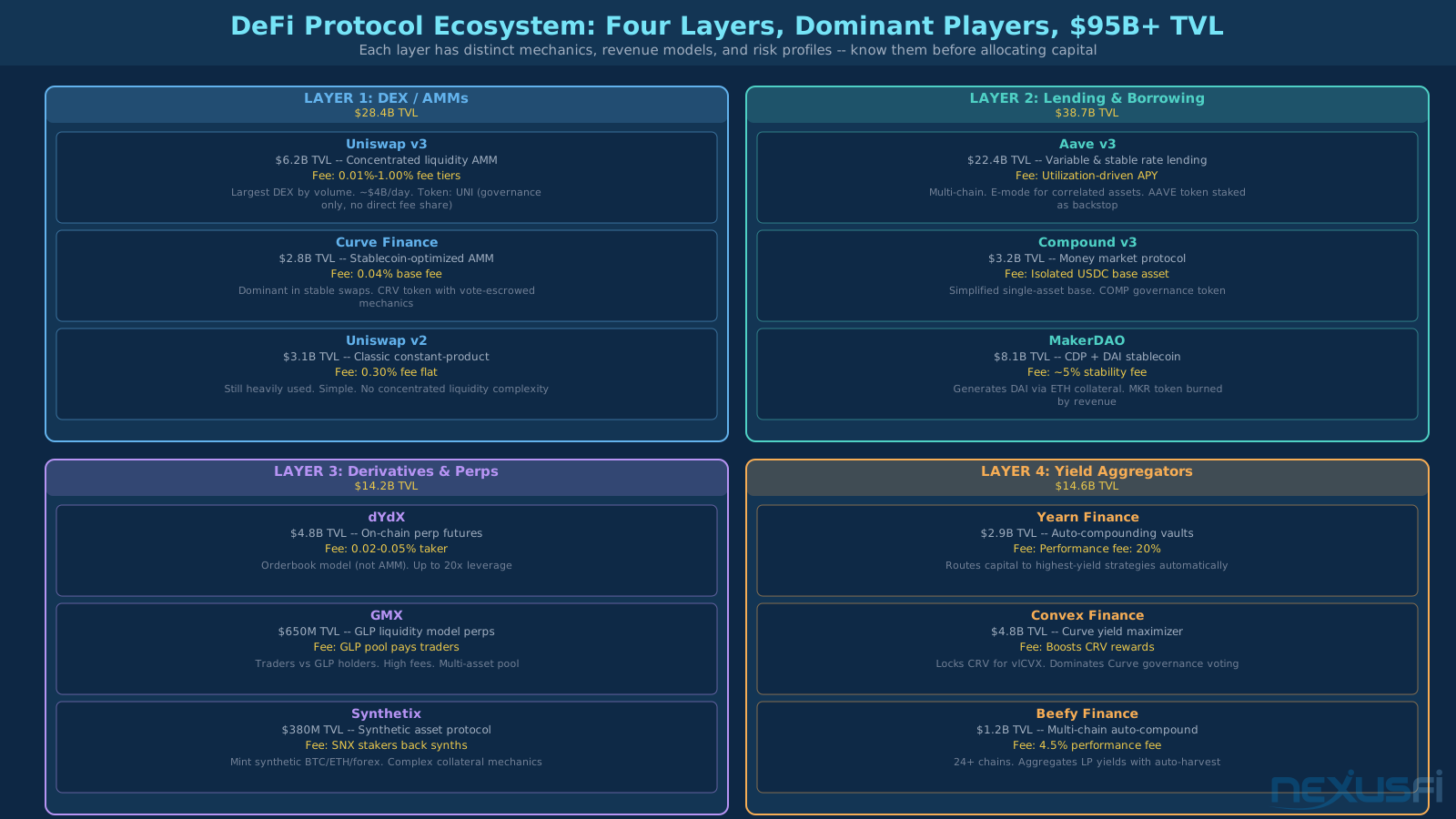
DeFi's $95B+ TVL distributes across four distinct protocol categories, each with different mechanics.
Layer 1: DEX/AMMs ($28B+ TVL)
Uniswap dominates with over $6B TVL and ~$4B in daily volume. As the highest-volume DEX across multiple chains, Uniswap's fee revenue is real and significant. UNI is a governance token only — it doesn't currently receive protocol fees directly, though governance has discussed fee switches. Uniswap v3's concentrated liquidity has become the industry standard for capital efficiency.
Curve Finance ($2.8B TVL) specializes in correlated asset pools — stablecoins, staked ETH variants, wrapped Bitcoin. Because the assets trade near-parity, slippage is minimal and the constant-product formula is replaced with a "stableswap invariant" that keeps prices stable across large trades. CRV token has veToken mechanics — lock CRV for voting rights that direct emissions to pools, creating the "Curve Wars" where protocols compete for voting influence.
Layer 2: Lending and Borrowing ($38B+ TVL)
Aave v3 ($22B+ TVL) is the dominant lending protocol. Supply ETH, earn 1-4% APY. Borrow against it at variable rates. The utilization rate — borrowed / supplied — determines interest rates. When utilization is low (20-30%), supply rates are minimal and borrow rates are low. When utilization hits 90%+, rates spike to incentivize repayment and attract new supply.
Aave v3's E-mode allows correlated assets at 95% LTV (vs 80% standard), improving capital efficiency for ETH/stETH positions. AAVE staked in the Safety Module acts as backstop insurance — holders can be slashed to cover protocol bad debt.
Compound originated the liquidity mining model in 2020 by distributing COMP to borrowers — creating the paradox where borrowing earned more in rewards than the interest cost.
Layer 3: Derivatives ($14B+ TVL)
dYdX uses an orderbook model (not AMM) for perpetual futures trading up to 20x leverage. It's the closest DeFi analog to a CEX derivatives desk. For a full comparison of crypto perpetuals versus CME-listed futures contracts — margin mechanics, settlement, funding rates — see Crypto Derivatives Trading: Futures, Perpetuals, and Options. GMX uses a different model: a multi-asset GLP pool of BTC, ETH, USDC, and other assets serves as the counterparty to all trades. GLP holders earn 70% of fees and absorb trading losses — they're the house.
Layer 4: Yield Aggregators ($15B+ TVL)
Yearn Finance vaults automatically route capital to the highest-yield strategy, rebalancing as rates change and auto-compounding rewards. Convex Finance wraps Curve positions to maximize CRV boosts — it accumulated enough voting power to effectively control Curve emissions.
Impermanent Loss: The LP Tax Nobody Talks About Correctly #
Impermanent loss isn't a risk. It's a guaranteed mathematical outcome any time you LP in a volatile pair with price movement. The question isn't whether you'll experience it — you will. The question is whether fees cover it.
The formula: IL% = 2√r/(1+r) - 1, where r is the current price ratio versus entry price ratio.
At 1.25x price move: 0.6% IL. Noise. At 2x price move: 5.7% IL. Meaningful. At 3x price move: 13.4% IL. Significant. At 5x price move: 25.2% IL. Damaging. At 10x price move: 36.5% IL. Devastating.
Impermanent loss is guaranteed in volatile pairs. The only question is whether fees cover the drag. For ETH/USDC in a trending market (2x+ move), they almost never do. LP in correlated or stable pairs where price divergence is structurally limited.
That 5x move on ETH happened multiple times in 2020 and 2021. Anyone LP'd in ETH/USDC during a 5x ETH rally would have seen their position appreciate much less than simply holding ETH and USDC separately. The pool sold ETH all the way up, leaving LPs holding more USDC and less ETH than if they'd just held.
Concentrated liquidity (Uniswap v3) amplifies both the fee efficiency and the IL severity. If you LP within a tight range (say, ETH $1,900-$2,100) and ETH moves to $2,500, your entire position converts to USDC at $2,100 exit point. You hold all USDC while ETH keeps rising. That's a different and worse outcome than v2 IL — you don't participate in the upside at all.
The practical framework: LP only when you believe price will stay range-bound, LP in stable or correlated pairs where IL is structurally minimal, and always calculate whether the fee APY in dollar terms exceeds the IL drag in dollar terms before entering.
DeFi Risk Framework: What Can Actually Kill Your Position #
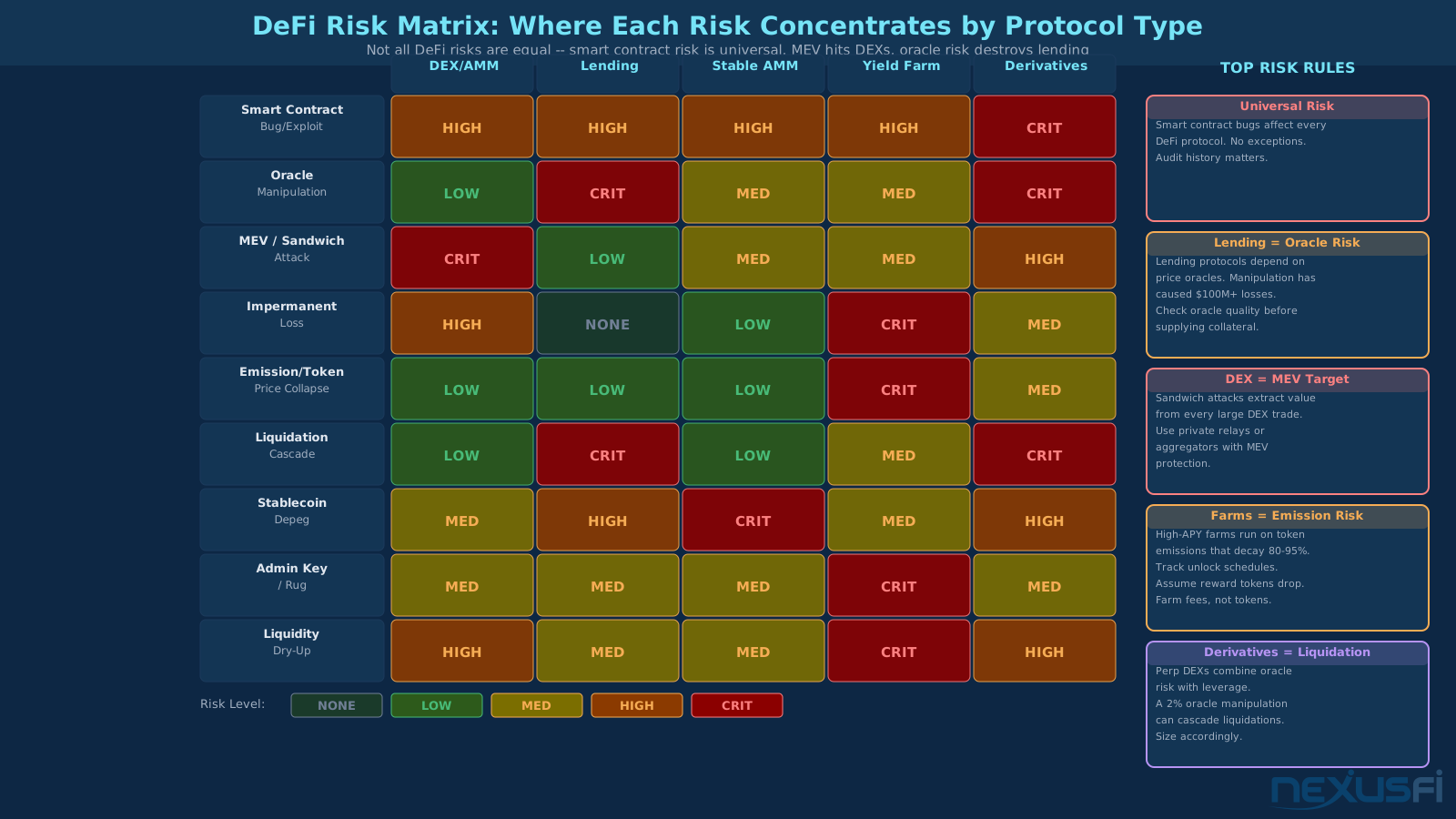
DeFi risk analysis requires thinking in distinct categories because the threats are mechanistically different from traditional market risk.
Smart contract risk: Programs have bugs. Over $3B in losses occurred from smart contract exploits in 2022 alone: Euler Finance ($197M flash loan), Wormhole Bridge ($320M signature flaw), BadgerDAO ($120M front-end injection).
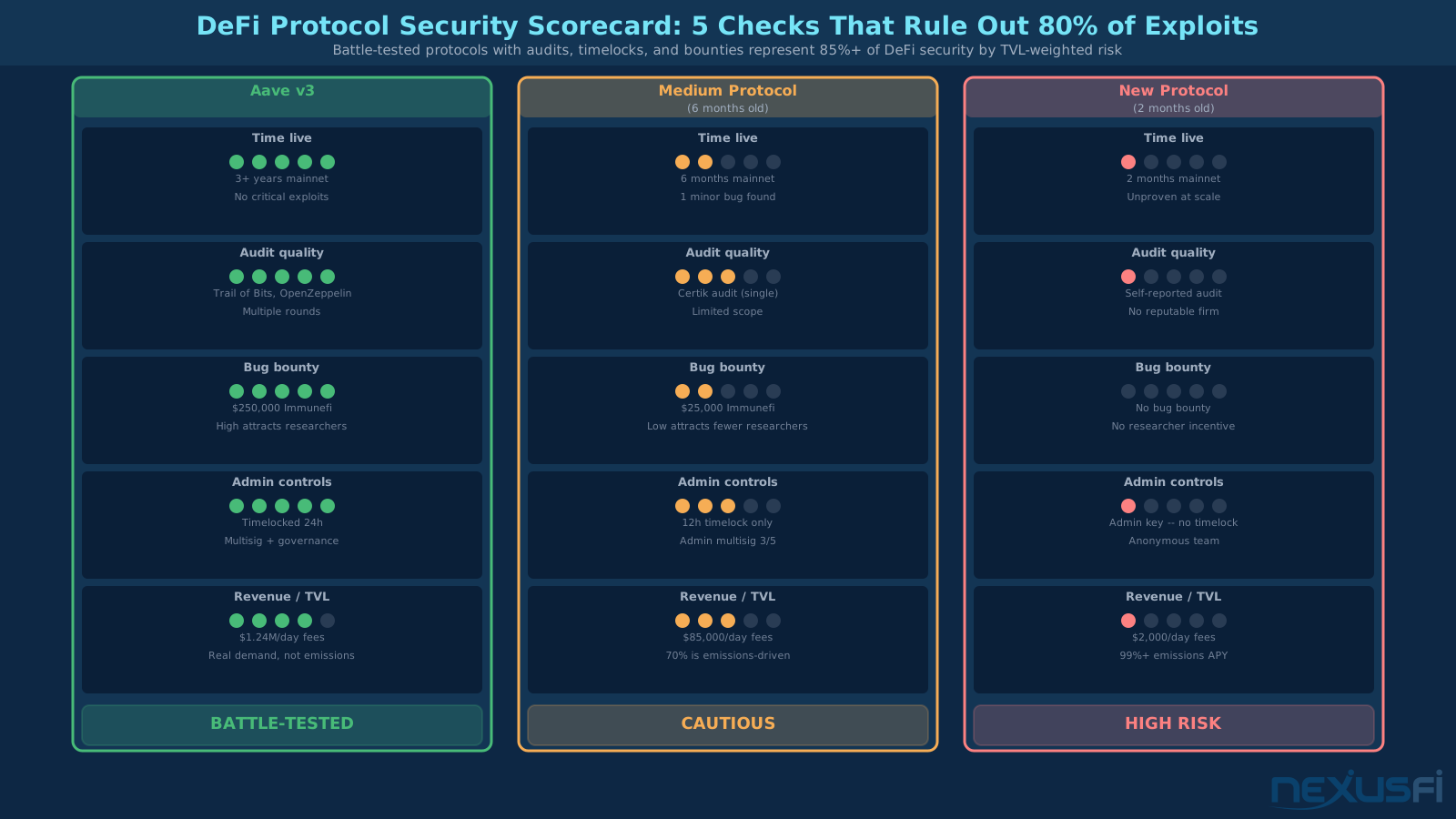
Mitigation: stick to protocols with 2+ years of mainnet operation, multiple security audits from respected firms (Trail of Bits, OpenZeppelin, Certik — though no audit is a guarantee), and significant TVL that represents real skin in the game from informed depositors.
First-principles risk accounting, not paranoia.
Oracle manipulation: Lending protocols need accurate price feeds to determine liquidation. If an attacker can manipulate the price feed via flash loan, they can drain lending markets. The $130M Mango Markets exploit (2022) worked exactly this way: MNGO token price oracle manipulated, massive borrowing against inflated collateral, funds withdrawn.
Check oracle quality before using any lending protocol. Prefer protocols that use Chainlink price feeds (manipulation-resistant time-weighted average prices) over single-DEX spot price oracles.
For a detailed explanation of how decentralized oracle networks resist price manipulation, see Chainlink (LINK): The Oracle Network Powering DeFi Infrastructure.
Liquidation cascades: In sharp downturns, leveraged positions get liquidated simultaneously. Liquidators sell collateral into spot, depressing values further and triggering more liquidations. The March 2020 ETH crash left Maker with $4M in bad debt when liquidation mechanisms couldn't clear positions fast enough. If borrowing against crypto collateral, maintain 60-65% utilization on Aave — not the 82.5% LTV limit.
MEV/sandwich attacks: Already covered, but worth emphasizing the dollar magnitude. On a $100,000 ETH/USDC swap at a time of moderate pool depth, sandwich attack losses can run $500-2,000. Use private relays or aggregators with MEV protection for any significant trade.
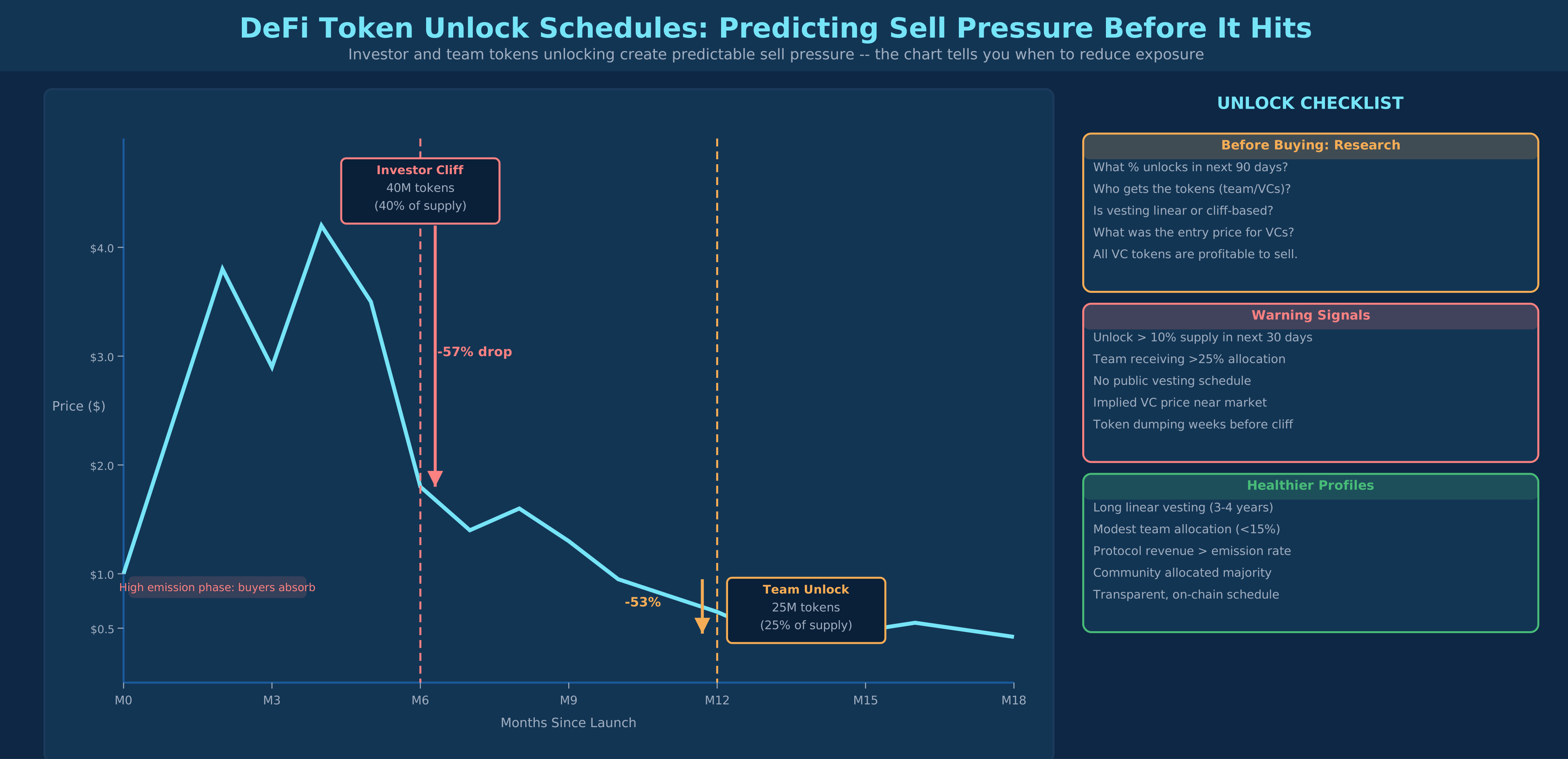
Emission collapse: Protocol reward tokens dump continuously because every farmer is rational to sell immediately. When you enter a farm based on 200%+ APY, the assumption is that the reward token holds value long enough — it almost never does. Track emission schedules and find the investor/team unlock cliff dates; they reliably coincide with price drops.
Stablecoin depeg risk: Curve pools full of stablecoins carry depeg risk from individual component coins. The USDC depeg in March 2023 (dropped to $0.87 briefly on Silicon Valley Bank news) caused Curve's 3pool to temporarily destabilize. Terra/UST's collapse to zero in May 2022 vaporized billions in Curve positions that were heavily exposed to UST.
In Curve pools, check the composition. A "stablecoin pool" that includes any algorithmic or partially-collateralized stablecoin carries more risk than the name implies.
As @SMCJB noted in Cryptocurrencies 101, Tether backing questions represent systemic risk for USDT-heavy positions. For peg mechanics and failure modes, see Stablecoins: USDT, USDC, DAI, and How Traders Use Them.
Protocol governance risk: Some protocols have admin keys, proxy contracts, or multisig wallets that could be used by insiders to drain funds. The DeFi community calls this "rug pull" risk when intentional. Check contracts are verified on Etherscan, whether admin actions have timelocks (48+ hours, giving users time to exit), and whether the team is doxxed.
TVL: DeFi's Most Misread Signal #
TVL gets cited constantly as the metric for DeFi health. Rising TVL means protocols are growing. Falling TVL means things are bad. That's the story.
Here's the reality: TVL is a lagging indicator that tells you where capital is parked, not whether that capital is working productively. And it can be gamed in multiple ways.
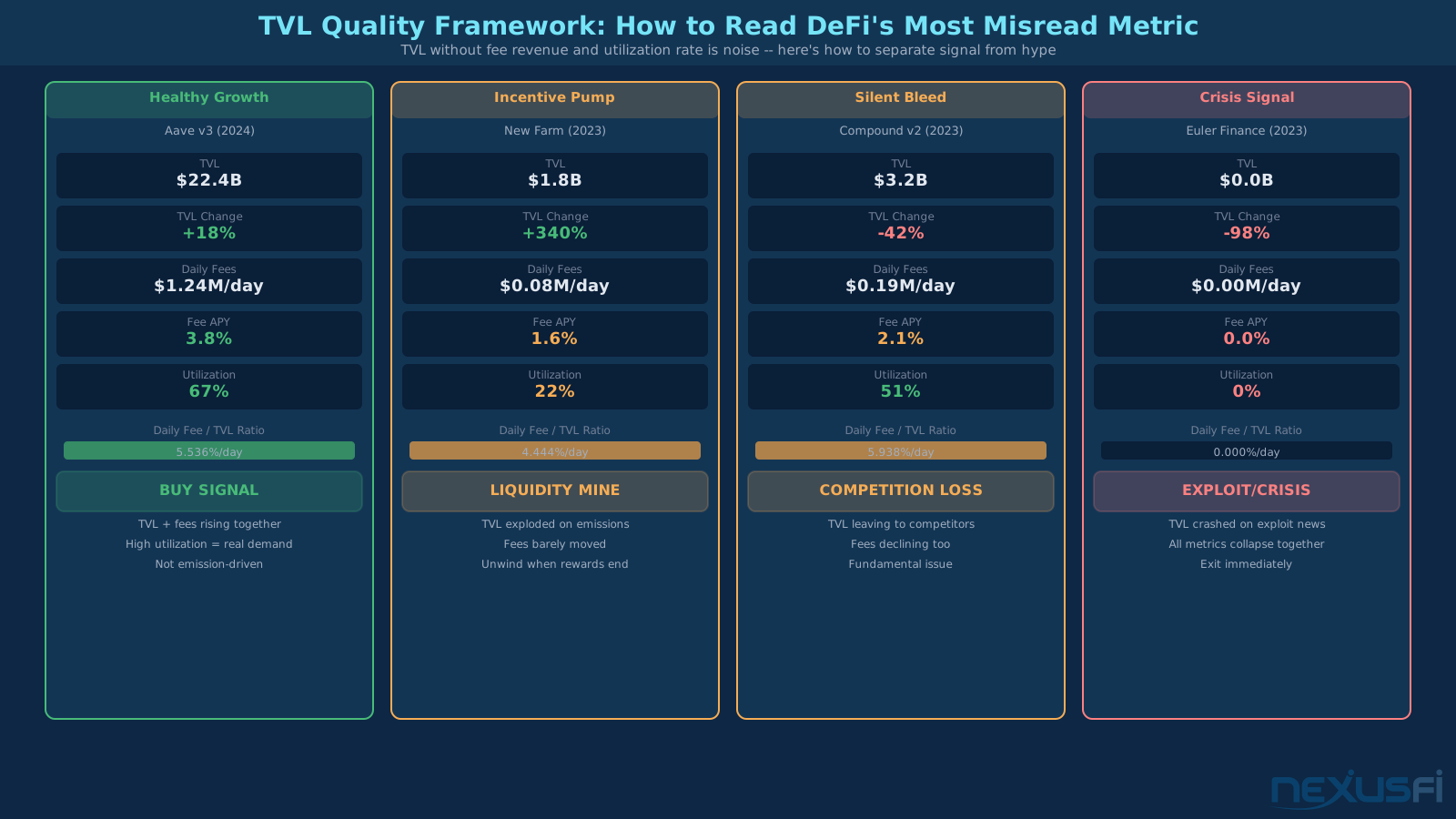
What TVL actually measures: The notional dollar value of assets locked in smart contracts — not revenue, not user activity, not whether capital is deployed productively. Locked governance tokens counted at face value inflate the number further.
How TVL gets distorted by emissions: A protocol offers 500% APY in governance tokens, TVL hits $2B in days, the protocol earns $100k/day in real fees. When emissions slow and the token dumps, $1.9B exits in a week. The TVL headline was a liquidity rental, not a signal of protocol value.
The better metrics:
Protocol Revenue (daily/annual fees): What the protocol actually charges users. This is real economic output. Uniswap v3 generates $500,000-2,000,000 per day in real fees distributed to LPs. Compare this to protocols with $100M TVL generating $5,000/day — the math doesn't support the valuation.
Fee/TVL ratio: Daily fees divided by TVL. A healthy lending protocol like Aave runs 0.005-0.010% daily fee yield on TVL. A farm with 0.001% or less is mostly dead capital waiting to leave.
Utilization rate (lending protocols only): Borrowed / Supplied. Aave's ETH market running 60-70% utilization means real demand. 15% utilization means capital is sitting idle earning nothing while the protocol's supply APY approaches zero.
TVL stability: Wild TVL swings signal mercenary capital chasing emissions. Protocols with TVL that grows steadily over 6-12 months without corresponding emissions spikes are demonstrating genuine product-market fit.
As @Fi analyzed in the context of crypto market structure, volume numbers tell a more honest story than TVL — a thread worth reviewing at https://nexusfi.com/showthread.php?t=61062&p=907375#post907375 for the broader context of how on-chain metrics interact with price.
DeFi Token Trading: A Framework That Actually Works #
Governance tokens (UNI, AAVE, CRV, COMP, etc.) are highly volatile assets whose price reflects a complex mix of revenue expectations, incentive mechanics, market sentiment, and vesting unlock pressure.
Most retail traders approach DeFi token trading by picking protocols they "believe in" and holding. That's not a trading strategy, that's conviction. Here's a framework that treats DeFi tokens like what they are: high-beta event-driven assets.
Revenue linkage analysis: Some DeFi tokens are directly tied to protocol revenue. AAVE stakers receive protocol revenue (partially). MKR gets burned by Maker's revenue, reducing supply. CRV's veToken mechanics create buy pressure from protocols competing for voting rights. These tokens have fundamental anchors.
Other tokens (UNI, COMP) are pure governance — no current mechanism to share protocol revenue with token holders. Their value is speculative premium on potential fee switch votes. These trade on narrative, not fundamentals.
Know which type you're holding before sizing.
Emissions and unlock schedule tracking: Every DeFi token has an emissions schedule — how many tokens are released per day and to whom. When team and investor tokens unlock, sell pressure increases. Check the token's documentation or tokonomics sites for unlock cliff dates. A protocol releasing 40% of supply to VCs over the next 6 months has structural headwinds.
Track real-time emissions rate versus buy pressure (daily volume and fee revenue). When emissions overwhelm organic buy pressure, price declines.
Governance trigger trading: Protocol upgrades, fee switch votes, and incentive reallocation proposals can be significant positive catalysts. Monitor Snapshot, Discord governance channels, and on-chain proposals. A Uniswap fee switch passing would transform UNI from pure governance to yield-bearing — a potential 2-5x revaluation trigger.
Incentive cycle timing: When a protocol announces an incentive campaign, TVL inflows drive governance token price up as participants farm it. When the program ends, both TVL and token price decline. Trading entry and exit of these cycles is a legitimate edge, but requires fast information processing and exit discipline.
Position sizing for DeFi tokens: DeFi tokens have the volatility profile of early-stage biotech stocks with additional smart contract and regulatory risk. If you wouldn't put 10% of your portfolio into a small-cap biotech ahead of a trial readout, don't put it into a new DeFi governance token. 1-3% position sizing for speculative DeFi plays, 5-8% maximum for established protocols like AAVE with real revenue.
As @tigertrader observed in position sizing discussions, size to your realistic stop, not your conviction. As @rleplae noted, the 2% rule applies equally to DeFi tokens — the asset class is different, the risk math is not.
Building a DeFi Trading Setup #
Before you start, the infrastructure matters. Using the wrong tools wastes money on gas, exposes you to avoidable MEV, and limits access to better execution.
Wallet: Hardware wallet (Ledger, Trezor) for meaningful capital. Rabby Wallet has become the preferred software wallet for active DeFi traders — it provides transaction simulation before you confirm and better multi-chain support than MetaMask.
Chain selection: Layer 2s (Arbitrum, Optimism, Base) offer Ethereum security with dramatically lower gas — $0.01-0.10 per transaction versus $5-50 on mainnet. Most major protocols have deployed on L2s. Solana has its own DeFi ecosystem with sub-cent gas and a CLOB-based DEX model. Know which chain you're on and its specific risk profile.
Aggregators: 1inch, Paraswap, and Odos aggregate liquidity across DEX pools for best execution. For any trade above $10,000, use an aggregator — slippage savings frequently exceed 0.5-1% versus a single pool, and most include MEV protection via private transaction routing.
Analytics tools: DeFiLlama (defillama.com) tracks TVL and protocol revenue across chains. Dune Analytics hosts user-built dashboards with real-time protocol data. Token Terminal aggregates protocol P/E ratios and fee revenue. For on-chain data interpretation — exchange inflows/outflows, wallet concentration, derivative positioning — see On-Chain Analysis for Traders. These are required reading before allocating capital to any DeFi protocol.
Gas management: Ethereum mainnet gas spikes during volatile markets — costs on a busy day can turn a 2% expected return into a loss. Set gas price limits in your wallet and batch transactions during low-activity windows (3-6 AM EST). On L2s, gas is low enough that this is rarely a constraint.
Practical Risk Checklist Before Any DeFi Position #
As @josh noted in a capital preservation thread, the scenarios that gut-punch traders — overleveraged positions into volatile events, missing stops during fast markets — are avoided by rule-based frameworks enforced before the trade, not during it. DeFi adds protocol-specific failure modes to that list, which is why this checklist matters.
Five questions before any DeFi position:
- Protocol tenure and audits: Live 12+ months with 2+ audits from respected firms? Bug bounty above $50k? Admin keys timelocked or multisig-controlled?
- Real yield floor: Strip out token emissions — what is the actual fee or lending APY? If it approaches zero without rewards, the position depends entirely on continued emissions.
- Oracle quality: Is the price feed Chainlink or another manipulation-resistant TWAP? Single-DEX spot price oracles have been exploited for $100M+ losses.
- Unlock calendar: Are team or investor token unlocks due within 90 days? These create predictable sell pressure regardless of protocol fundamentals.
- Portfolio correlation: DeFi governance tokens move 2-3x ETH on the way down. Size positions to reflect amplified beta, not diversification.
Pre-position DeFi checklist: Real fee yield above 3%, protocol live 12+ months with 2+ audits, oracle is Chainlink not single-DEX, no major token unlocks in 90 days, position not exceeding 5% of portfolio for speculative plays. All five or reduce size.
Where DeFi Is Going #
As @mscholder noted in Cryptocurrencies 101, blockchain technology may parallel the early internet's significance — the same maturation cycle: early chaos, massive speculation, infrastructure buildout, then consolidation around protocols with genuine utility.
The trajectory is toward institutional-grade infrastructure while maintaining composability. Uniswap v4's "hooks" system allows customizable logic to be attached to pools — enabling limit orders, dynamic fees, and custom AMM curves as native DEX features. This reduces the gap between DeFi and CEX functionality.
Cross-chain bridges remain the highest-risk component of DeFi infrastructure, having lost over $2B to exploits. New approaches using zero-knowledge proofs and light-client bridging offer better security guarantees than the multi-sig validator bridges that have been repeatedly drained.
Regulatory clarity — the EU's MiCA framework and evolving US SEC/CFTC positions — will determine whether institutional capital continues flowing into DeFi or retreats to regulated on-chain products. As @Fi noted in analyzing Bitcoin and crypto market structure, institutional exposure is expanding even ahead of full regulatory clarity: 76% of institutional investors surveyed planned to increase digital asset exposure in 2026.
The practical reality: DeFi isn't going away. It's growing up. The protocols that survive the next cycle will have real revenue, audited code, sustainable tokenomics, and genuine market fit. The ones that don't will be the next round of cautionary tales that make experienced traders more skeptical of the next round of 500% APY farms.
For serious crypto traders, DeFi is not optional knowledge. The MEV dynamics affect your CEX trades through correlated markets. The liquidity conditions in Curve pools affect stablecoin stability across the ecosystem. The tokenomics of governance tokens create predictable patterns that generate trading opportunities — if you understand the mechanics.
Understand the tools. Size appropriately. Decompose the yield. And never forget that the code is the rule.
Knowledge Map
Prerequisites
Understand these firstGo Deeper
Build on this knowledgeReferences This Article
Articles that build on this topicCitations
- — Recommended Crypto Platform/Exchange (2017) 👍 3“Decentralized exchanges are growing as well...volume is quite low - EtherDelta is a decentralized exchange where you can buy post-ICO ERC20 tokens and Pre Exchange listed cryptos. Difficult to use and sometimes price is far off from other exchanges.”
- — Cryptocurrency Trading Platforms (2021)“All trades are auditable transactions on the Ethereum blockchain. Ethereum transaction fees are high right now, but if you trade using limit orders, there is no transaction fee. The assets are in your wallet.”
- — Is Bitcoin done? take a look... (2025)“CME Bitcoin futures trade 23 hours but spot never stops. Weekend gaps on Sunday open create predictable setups -- spot moves 5-10% while futures are closed.”
- — Interactive Broker - Cryptos with low transaction fees (2021) 👍 1“The margin requirement is 42% of notional, meaning you get 138% leverage. ICE also have a futures contract BTM. Contract size is 1 coin and both are primarily used by more sophisticated participants.”
- — Michael Burry warns the Mother of All Crashes is coming (2021) 👍 3“The more volatile the product the less the leverage. Treating Bitcoin and interest rates the same way is suicidal. Leverage volatility interaction is the real risk.”
- — Tezos - the self-governing, smart contracts, DeFi capable coin (2021) 👍 3“Transactions and security of the most sensitive or financially weighted smart contracts via self-amending blockchain software which uses an on-chain process to propose, select, and activate protocol upgrades.”
- — Bitcoin Futures by the CME (2017) 👍 6“Bitcoin starting to grow as an asset class. The Futures contracts would serve as a hedge for institutional investing. Players will bring volatility to the Futures market and will feel very strongly about direction.”
- — Cryptocurrencies 101 -- what I've learned so far (2021) 👍 6“CME lowering Crypto margin rates effective Friday 7th May. Bitcoin Margin Rates dropping from 42% to 39%... Full size is dropping from $117,600 to $109,200. Ether Margin Rates dropping from 50% to 44%.”
- — Bitcoin Futures by the CME (2017) 👍 5“It is more probable in BTC because of the tight control over BTC supply and how illiquid it is. The last I checked, it took only $5M to move the price 4%. 1 person alone crashed the price of ETH to $0.10 in a single $30M trade.”
- — Cryptocurrencies 101 -- what I've learned so far (2021) 👍 2“The largest stable coin is USDT/Tether. There is a lot of negative publicity around Tether, with allegations that it is not fully backed. There is a school of thought that if tether were to implode it could bring the whole crypto industry down.”
- — Follow these two rules to preserve and grow capital (2018) 👍 24“Never add to a loser, EVER. Do not take more than 3 losing trades in a 15 minute period. Rule 1 prevents death by nuclear explosion. Rule 2 prevents death by a thousand cuts.”
- — Concerning risk per trade sizing (2012) 👍 4“My stops are ultimately based on where-I-do-not-want-to-be-in-the-position-anymore, placed within the context of a volatility-based position sizing algorithm: 2% of equity risk, based on a 1.5 ATR stop.”
- — How to adjust leverage (2017) 👍 3“While it is possible to trade highly leveraged, you will find reference to a rule of thumb where for any position you should not risk more than 2% of your account.”
- — Crypto Crossroads: Will BTC and ETH Crash 50% or Rally 50% First? (2026)“Grayscale latest survey shows 76% of institutional investors plan to expand digital asset exposure in 2026. We are looking at something like a 40-to-1 demand-supply imbalance from pension funds and corporate treasuries alone.”