



Governance Tokens: DAO Voting, veTokenomics, and Trading Protocol Power
Overview #
Governance tokens are the steering wheels of decentralized protocols. They give holders the right to vote on how a protocol operates — which parameters to change, where to route treasury funds, whether to turn on fee switches, and who controls what. That makes them at the core different from most crypto assets. You're not just betting on a product; you're acquiring a stake in the decision-making process of a financial protocol with real users and real revenue.
For traders, that creates a specific kind of opportunity — and a specific kind of risk. The same governance mechanism that could unlock value (activating fee sharing, improving risk parameters, optimizing emissions) can also be exploited (vote buying, flash governance, parameter attacks). Understanding how each of the major governance tokens actually works — UNI, AAVE, COMP, MKR, CRV — is the difference between intelligent positioning and uninformed speculation.
This guide covers what governance tokens are, how voting mechanisms and DAO structures actually operate, how value accrues (or fails to), what veTokenomics does to market structure, and how to trade around governance catalysts without getting caught flat-footed.
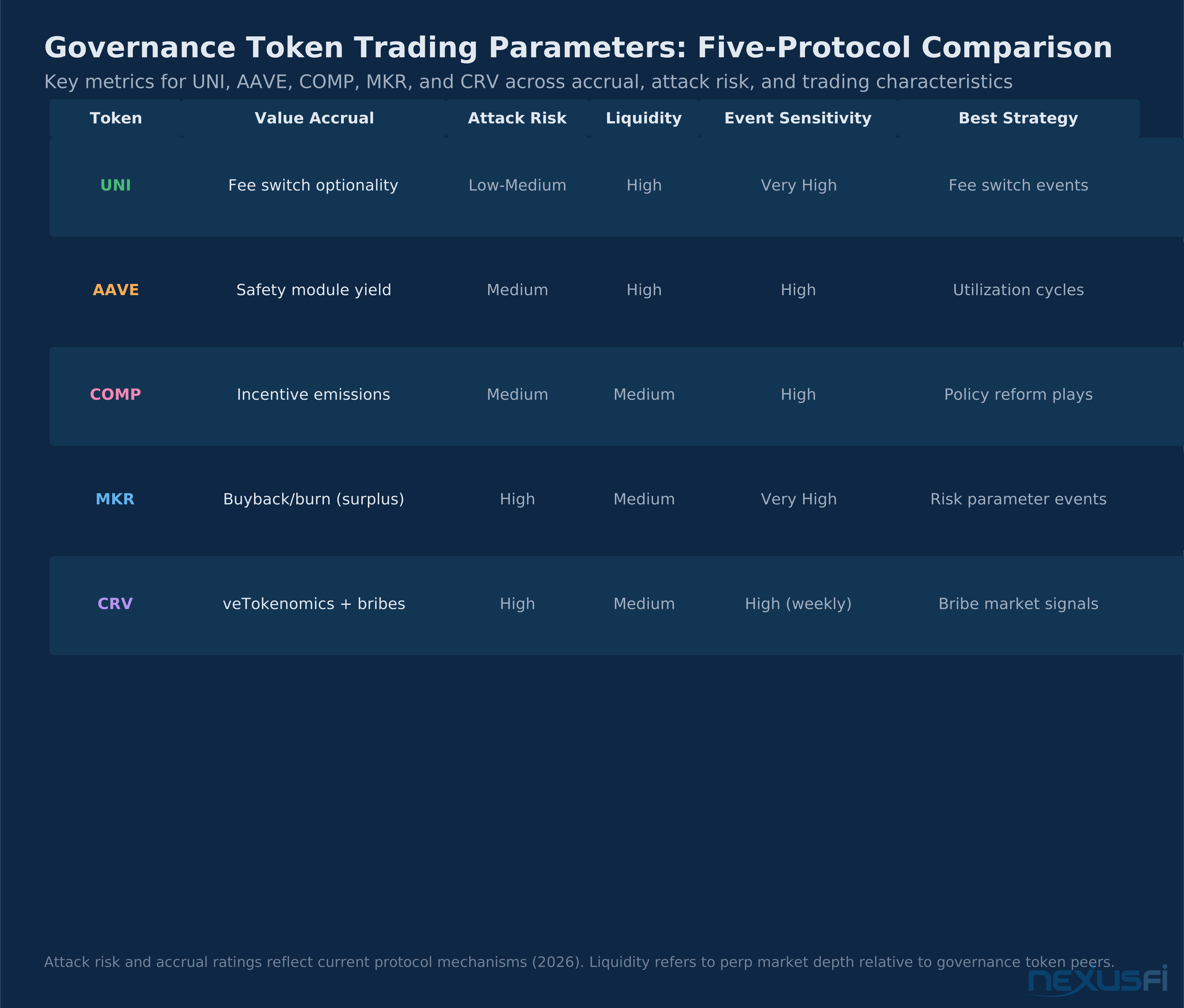
What Governance Tokens Are #
At the most basic level, a governance token is a cryptographic asset that confers voting rights in a decentralized protocol. When you hold UNI, AAVE, COMP, MKR, or CRV, you hold the right to participate in decisions about how that protocol operates.
But not all governance tokens are the same, and conflating them is a common analytical error. The useful distinction is between:
Governance optionality tokens — assets where the vote is the primary value, with economic rights contingent on future governance decisions. UNI is the clearest example: you hold influence over a massive exchange, but whether that influence translates into direct cash flow depends on governance activating the fee switch.
Economic governance tokens — assets where governance rights are bundled with direct economic claims. MKR is the clearest example: MKR holders govern risk parameters AND are exposed to the protocol's surplus/deficit mechanics, with the system buying and burning MKR when it generates surplus.
Emissions-routing tokens — assets where governance controls where incentives flow, making the vote itself economically valuable. CRV is the canonical example: if you control enough CRV votes, you can direct protocol emissions toward liquidity pools that benefit you, which is why bribe markets exist.
The classification determines how you analyze and trade it. Treating UNI like MKR, or CRV like AAVE, leads to systematically wrong position sizing and incorrect risk models.
How DAO Governance Actually Works #
Proposal Mechanics
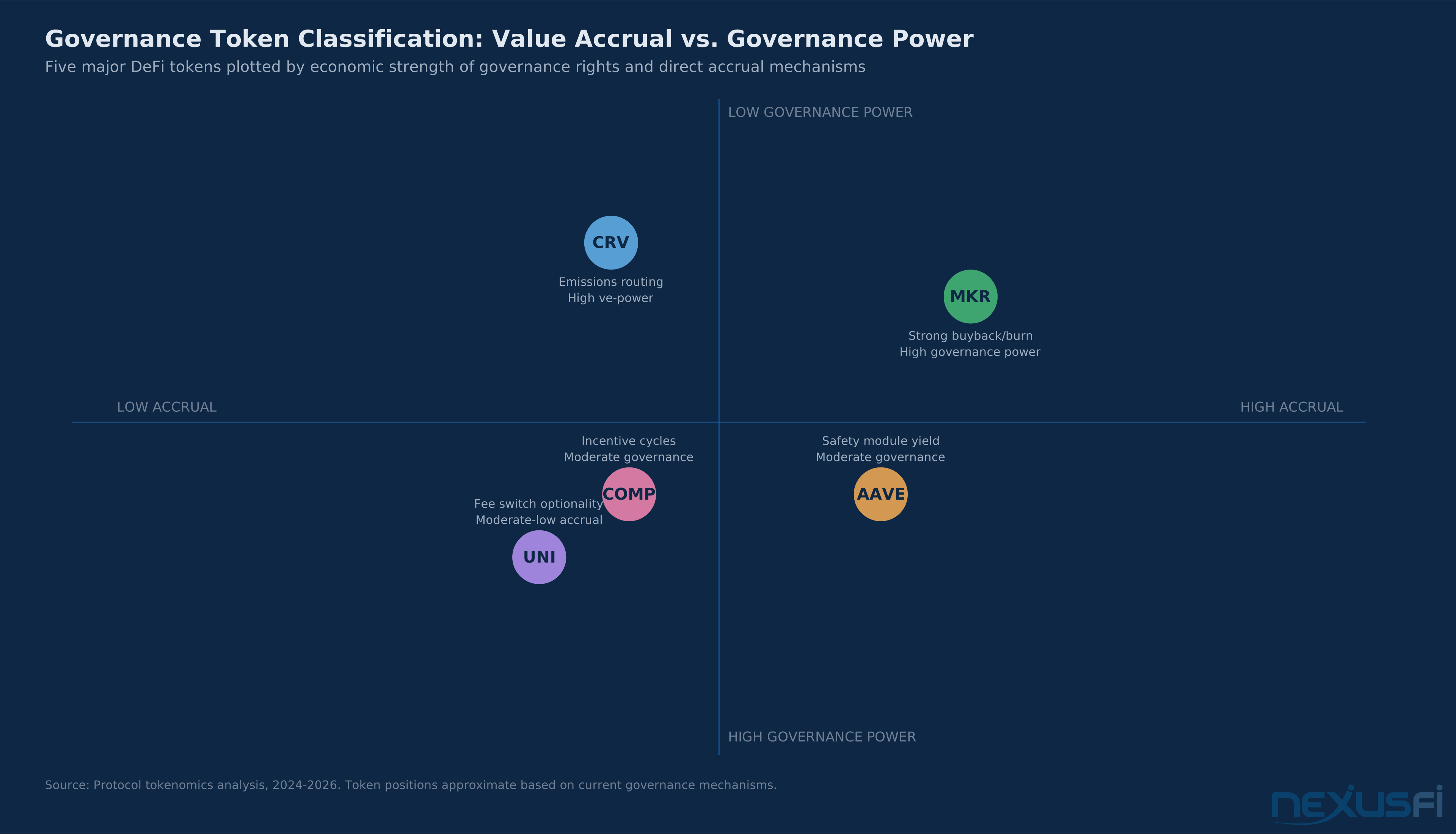
Most major DeFi protocols follow a similar governance flow: proposal creation, discussion period, on-chain vote, timelock, execution.
Proposal creation typically requires holding or delegating a minimum token balance — Uniswap requires 2.5M UNI (or delegation) to propose. This threshold exists to filter out spam proposals, but it also concentrates proposal power among large holders.
The discussion period is where real information is gathered. Forum debate on platforms like governance.uniswap.org or Snapshot reveals delegate alignment, identifies objections, and often surfaces the technical tradeoffs that move votes. Watching forum sentiment before a vote is often more informative than watching the token price.
On-chain voting is typically token-weighted: one token equals one vote. This is simple but whale-dominated. A counterbalancing mechanism is delegation — token holders can delegate their voting power to addresses that participate in governance on their behalf, allowing smaller holders to aggregate influence without directly participating.
Quorum requirements vary by protocol. Uniswap requires 40M votes for a proposal to be valid. If quorum isn't reached, the vote fails regardless of the yes/no split. This creates a specific risk: a proposal that would clearly pass can be blocked by voter apathy.
Timelocks introduce a delay (typically 2-7 days) between vote passage and on-chain execution. This window lets users exit positions before changes take effect, and gives security researchers time to identify vulnerabilities before execution. The value of this self-amendment mechanism — upgrading protocol rules without hard forks — was an early feature of on-chain governance systems like Tezos, and became standard practice in DeFi governance design. [10]
Real-World Examples
Uniswap fee switch discussions have been running since 2021. The core mechanic: Uniswap charges LPs a fee split between 100% to LPs. Activating the fee switch would redirect some fraction to UNI token holders. Each time this proposal approaches a vote, UNI rallies — and each time it fails or gets deferred, it gives some of that back. The "fee switch premium" in UNI's price has been a recurring phenomenon. [1]
MakerDAO's risk parameter governance is more granular. Every major collateral type has a debt ceiling, stability fee, liquidation ratio, and liquidation penalty, all governable by MKR holders. When collateral markets get volatile, governance can move fast — emergency governance can bypass the standard timelock in crisis conditions. Understanding these parameters is essential for anyone trading around Maker-related events.
Curve gauge weight votes happen weekly. CRV holders vote on which liquidity pools receive CRV emissions. Protocols that need liquidity must either attract CRV votes organically or pay for them via bribe markets. The bribe intensity — how much protocols are willing to pay per vote — is a leading indicator of future liquidity routing and, by extension, which pools will attract capital.
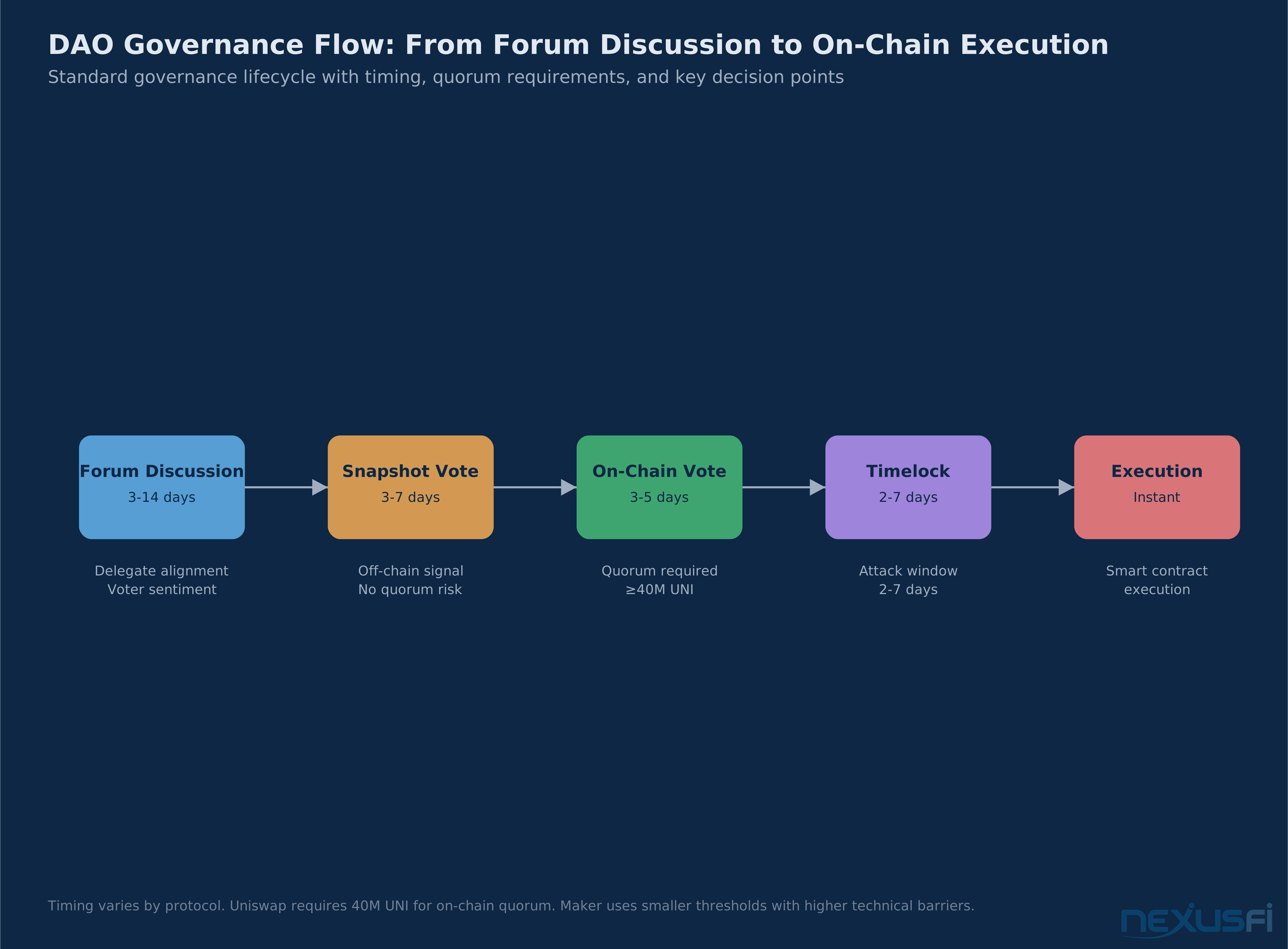
Major Governance Tokens #
UNI (Uniswap)
UNI represents governance rights over one of the largest DEX protocols by volume. Uniswap processed over $1.5 trillion in volume in 2024, making it one of the most significant DeFi venues globally.
Current value accrual: The fee switch has not been permanently activated for UNI holders as of 2026, though the protocol generates significant fees. This makes UNI primarily a governance optionality asset — you hold influence over a massive protocol, but direct economic rights remain contingent on governance decisions.
Trading dynamics: UNI price responds strongly to governance milestones — fee switch proposals, major pool deployments, Uniswap v4 feature activations, and cross-chain expansion decisions. The practical trade: enter on credible fee switch signals (delegate alignment, major VC governance support), reduce on binary vote resolution.
Key risk: Low governance participation can block proposals even with majority support. If quorum requirements aren't met, proposals fail, and UNI can give back the "governance premium" it accrued during the proposal period.
Market cap context: UNI regularly trades in the top 20 crypto assets by market cap. Liquidity for futures and spot is relatively deep compared to other governance tokens.
AAVE (Aave Protocol)
AAVE governs one of the largest DeFi lending protocols. The protocol allows users to borrow and lend a wide range of crypto assets, with governance controlling risk parameters, interest rate models, and protocol economics.
Value accrual: AAVE has stronger direct economic ties than UNI. The Safety Module — where AAVE can be staked to earn yield and acts as a backstop for shortfall events — creates a direct relationship between token holding and protocol utility. Fee distribution mechanisms have been more actively developed. AAVE stakers bear slashing risk in exchange for yield, which creates a natural "risk premium" component.
Trading dynamics: AAVE price correlates with DeFi lending demand. When utilization rates rise (borrowed assets approaching capacity), AAVE typically outperforms. Governance proposals that affect risk parameters — adding new collateral types, changing liquidation thresholds — can move the market if they materially affect safety margins.
Key risk: Governance-approved collateral that later proves toxic can trigger shortfall events. The AAVE community has governance-approved collateral that required emergency parameter changes during volatile periods. Monitoring proposed new collateral risk closely is essential for AAVE holders.
COMP (Compound)
COMP governs the Compound lending protocol. Historically, COMP's value was heavily tied to liquidity mining emissions — protocols were distributing COMP as incentives to borrowers and lenders, creating artificial demand that eventually led to the "yield farming summer" of 2020.
Value accrual: COMP is more incentive-cycle-sensitive than AAVE. As emissions schedules have been adjusted by governance, token demand has shifted so. The practical trading implication: when Compound governance is considering reducing emissions or changing incentive structures, sell-side pressure often builds from yield farmers exiting. When new emissions programs are announced, buyer demand spikes.
Trading dynamics: COMP often trades as a bet on DeFi lending activity in general, with less idiosyncratic governance premium than MKR or CRV. Correlation with ETH and broader DeFi risk is higher.
MKR (MakerDAO / Sky)
MKR is the oldest and arguably most economically sophisticated governance token. MKR holders govern MakerDAO — which manages DAI (a major stablecoin), a multi-billion dollar collateral portfolio, and real-world asset exposure.
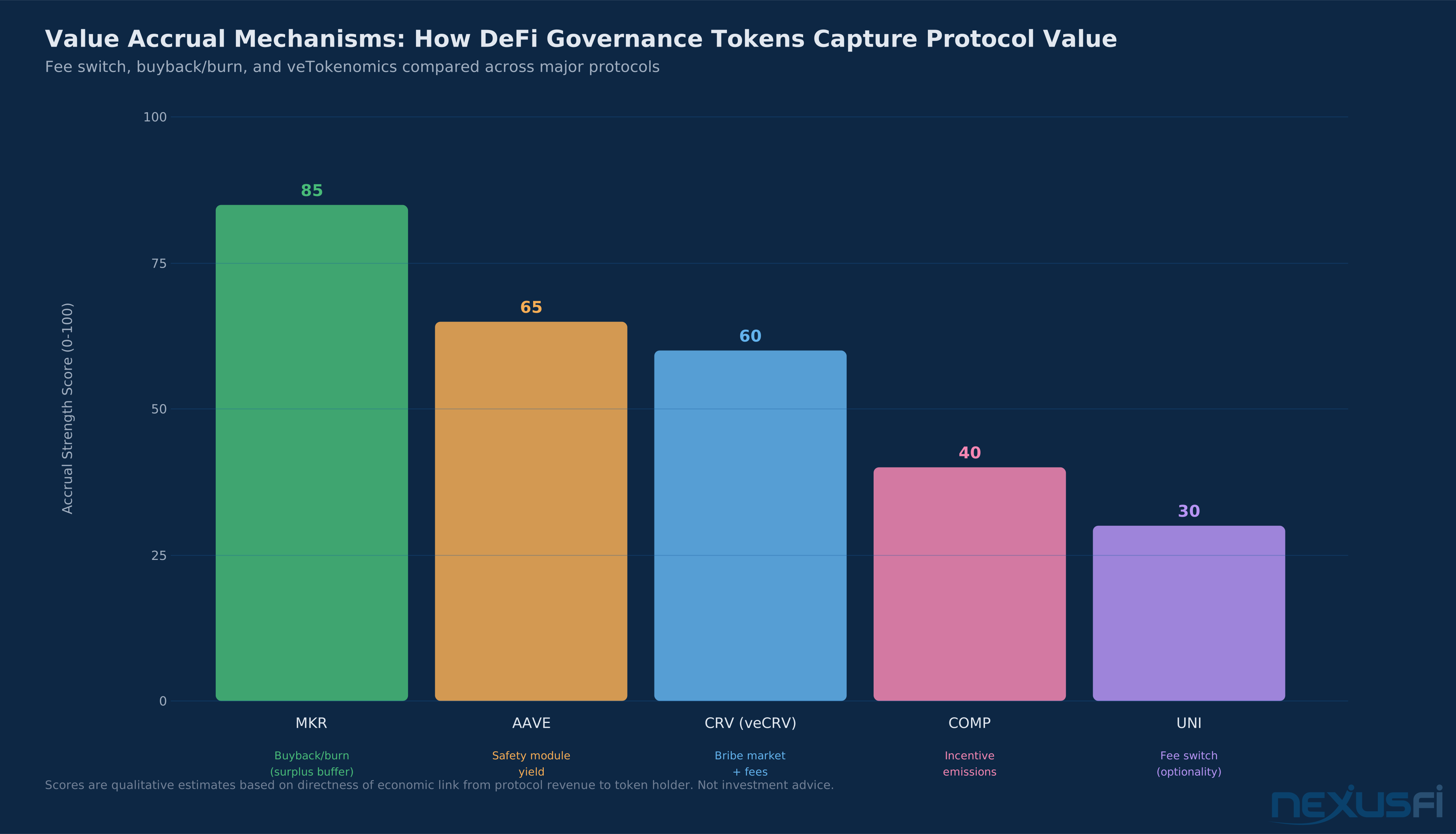
Value accrual: MKR has the strongest direct economic link of the major governance tokens. When the protocol generates surplus (fees exceed expenses), the Maker Governance can decide to deploy those funds to buy and burn MKR, reducing supply. When there's a deficit, new MKR can be minted and sold, diluting holders.
Trading dynamics: MKR trades like a credit instrument — specifically, like a claim on the creditworthiness of the Maker system's collateral portfolio. When collateral quality deteriorates (risky collateral types, high leverage), MKR prices that in as a risk premium. When DAI demand is strong and surplus accumulates, MKR benefits from buyback pressure.
This is different from most governance tokens: the link from protocol health to token price is more mechanistic and shorter in time.
Key risk: Governance parameter attacks. Because MKR governance controls risk parameters, a hostile majority could approve dangerous collateral, raise debt ceilings unsustainably, or redirect surplus in ways that benefit the attacker. The threat is real — it's been modeled in academic literature and attempted in practice. [2]
CRV (Curve Finance)
CRV is the emissions-routing token, and understanding it requires understanding veTokenomics.
Value accrual: CRV alone doesn't earn much. But locked CRV (veCRV) earns a share of trading fees AND controls gauge weights, which determines how CRV emissions are distributed across Curve pools. This makes veCRV holders the kingmakers of DeFi liquidity — protocols wanting deep liquidity for their stablecoins need veCRV votes.
The bribe market: Because gauge vote control is so valuable, protocols pay for CRV votes via platforms like Votium and Paladin. These "bribes" are effectively a yield paid to veCRV holders in exchange for directing emissions to the payer's pool. This creates an ecosystem where CRV price is partly supported by the demand for governance influence — not just trading volume.
Trading dynamics: CRV price tracks bribe market intensity. When new protocols launch and need liquidity (requiring votes), bribe demand rises. When old protocols reduce their liquidity programs, bribe demand falls. The forward indicators: bribe auction size relative to CRV's market cap, gauge vote concentration, and lock demand trends.
Key risk: Lock-up illiquidity. veCRV is not transferable — you're locking for up to 4 years. This creates a secondary market (Convex Finance's cvxCRV, for example) that partially circumvents the lock, but with its own dynamics and risks. [3]
veTokenomics: How Lock-Up Changes Market Structure #
The vote-escrow model (pioneered by Curve) has become influential enough that many protocols have adopted or debated it. Understanding it is essential for trading any ve-based token.
The Core Mechanics
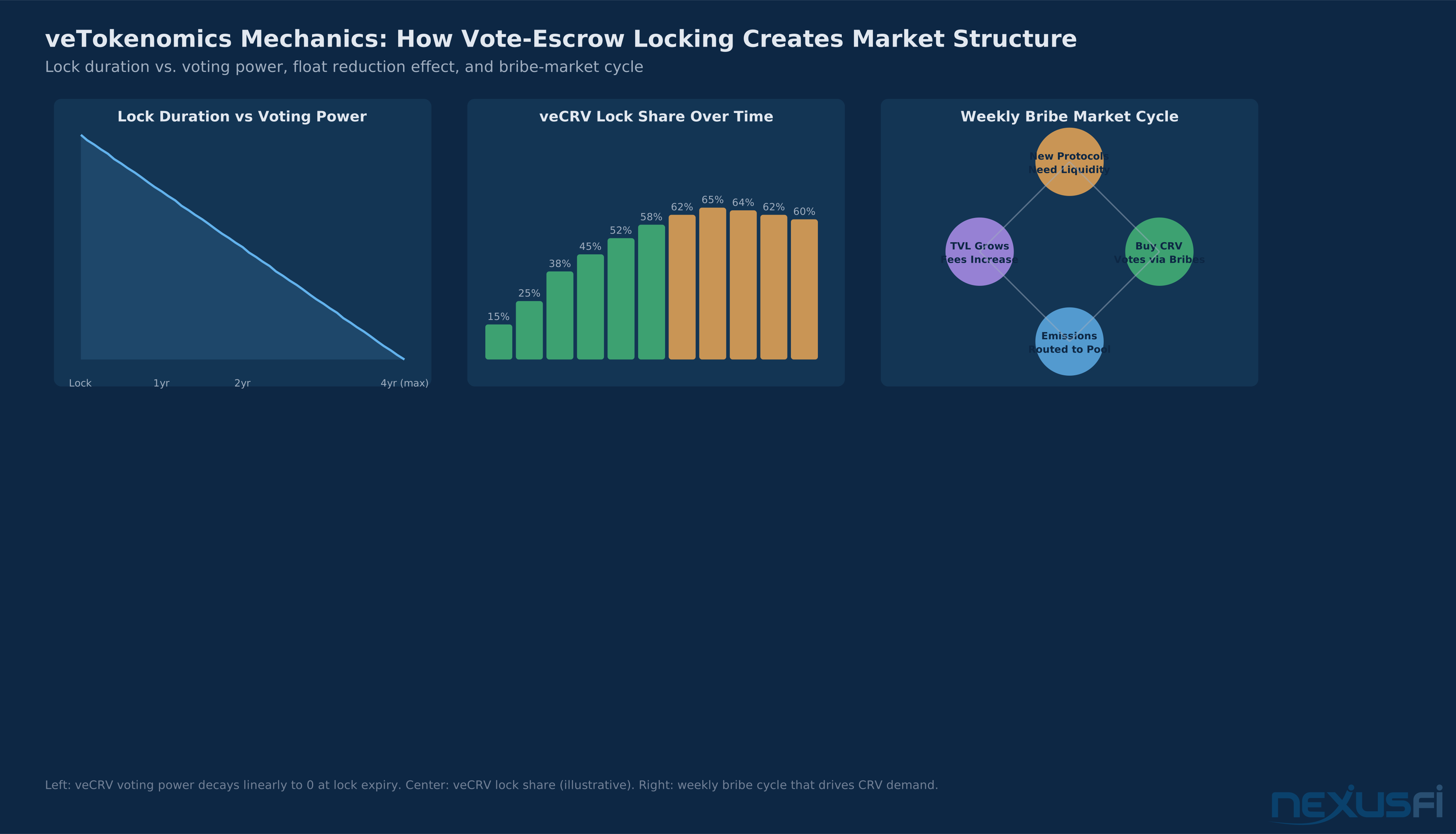
Users lock their governance tokens for a period (up to 4 years for CRV) in exchange for voting power proportional to both token amount and lock duration. A 1-year lock gives you less voting power than a 4-year lock for the same tokens. Voting power decays over time as the lock approaches expiration.
This creates several structural dynamics:
Supply reduction: Tokens in ve-locks are illiquid. As lock demand rises, the tradable float decreases, which can support price under stable demand.
Lock decay cycles: Because voting power decays, holders must relock to maintain influence. This creates recurring decision points — should I relock? At what duration? These cycles generate predictable demand events.
Gauge voting schedules: In Curve's system, gauge weights are voted on weekly. This creates a calendar-driven market structure where demand for veCRV builds ahead of vote windows.
What This Creates for Traders
Calendar catalysts: Weekly gauge votes in Curve create recurring mini-events. Protocols often accumulate CRV or cvxCRV before vote windows. Tracking bribe activity in the days before votes reveals which pools are competing for emissions.
Lock-supply analytics: On-chain data on ve-lock amounts, average lock duration, and lock expiry schedules is a form of flow intelligence. If a large fraction of locks are expiring in the next 30 days, there's potential sell pressure as holders decide whether to relock or exit.
Reflexive dynamics: If CRV price rises, the yield from locking becomes more attractive in dollar terms, incentivizing more locking, which further reduces float, which supports price. The flip works too: if CRV falls below the yield-required-to-justify-locking threshold, unlock pressure can cascade. Understanding this reflexive loop helps identify regime shifts.
Governance Attacks: Theory and Practice #
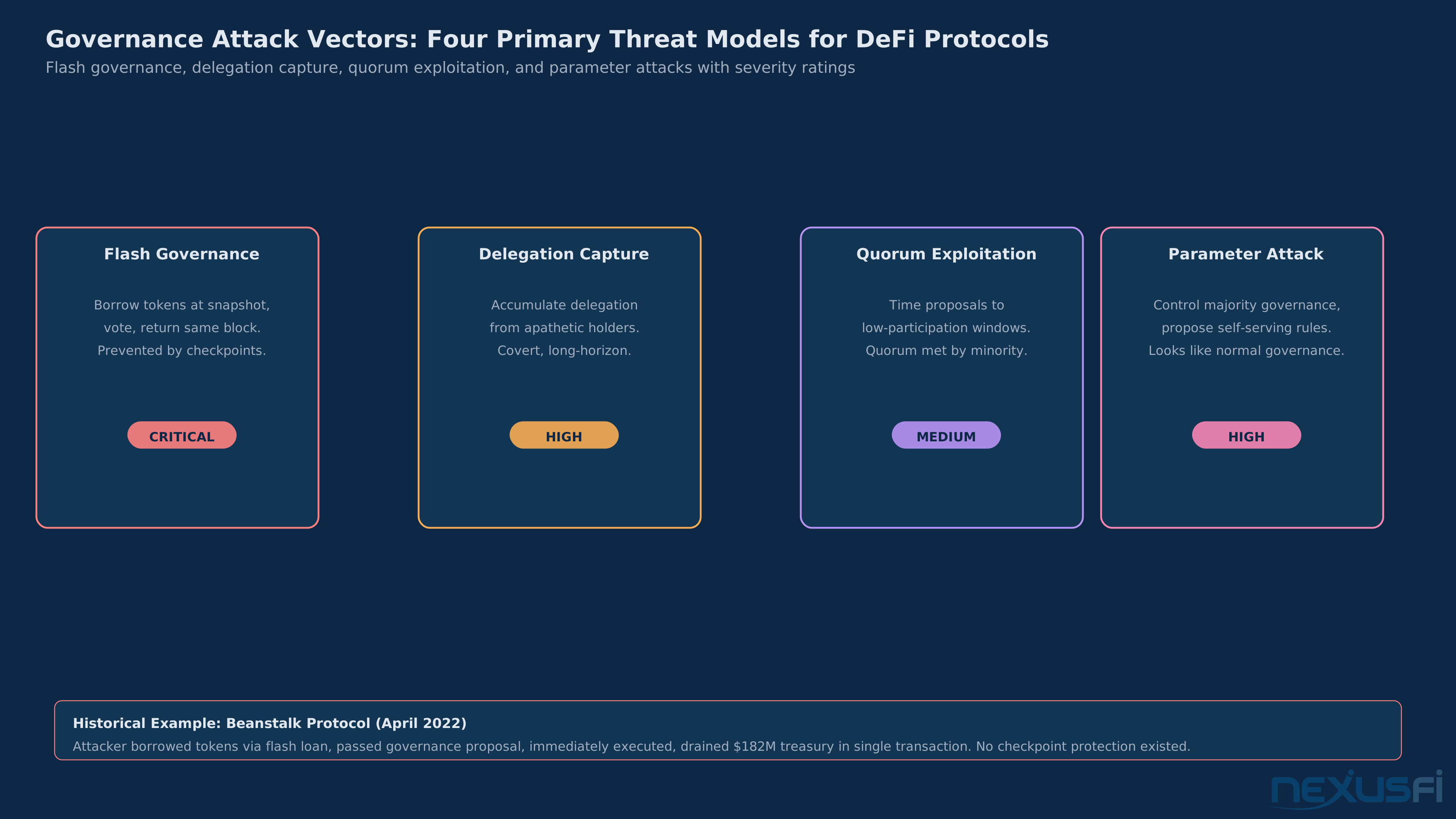
Governance attack risk is systematically underpriced by most retail traders. Here's how the main attack vectors actually work.
Flash Governance
The most dramatic class of attack. If governance doesn't require time-weighted token holdings (only a spot balance at vote time), an attacker can borrow massive token quantities, execute a governance action, and return the tokens in the same block — a flash loan governance attack.
Modern protocols have substantially mitigated this via checkpoints (voting power is measured at a block before the proposal, not at vote time), lock periods, and time-delays. But older protocols or those with simpler governance remain vulnerable. The Beanstalk protocol lost $182M in 2022 to exactly this attack vector — governance was passed, then immediately executed, draining the treasury. [4]
Delegation Capture
More subtle. If voter participation is low and governance is delegation-based, an attacker who acquires a significant delegation base controls the outcome without needing to buy tokens. This can happen through:
- Becoming a "trusted delegate" over time, then voting for self-interested proposals
- Offering yield or other incentives to token holders who delegate to them
- Corporate governance strategies where one entity controls multiple delegate accounts
Quorum Exploitation
If quorum is hard to reach, an attacker can submit favorable proposals and time them for low-participation periods (holidays, market turbulence when voters are distracted). The proposal reaches quorum with a rump coalition voting yes, while the majority of token holders don't bother to vote no.
Parameter Attacks
Don't require any attack on the voting mechanism itself. An attacker who controls governance majority can propose and pass parameter changes that benefit them:
- Add favorable-to-exploit collateral types
- Raise debt ceilings beyond safe levels
- Redirect treasury funds to attacker-controlled addresses
- Change fee structures in self-serving ways
The threat model: governance as a long-con. Gain legitimate majority control, establish credibility, then propose a parameter change that drains value. This is harder to execute than a flash attack but more insidious because it looks like legitimate governance. [5]
Trading Governance Tokens: Practical Strategies #
Event-Driven Positioning
The strongest trading edge in governance tokens comes from identifying governance catalysts and positioning around them with defined risk.
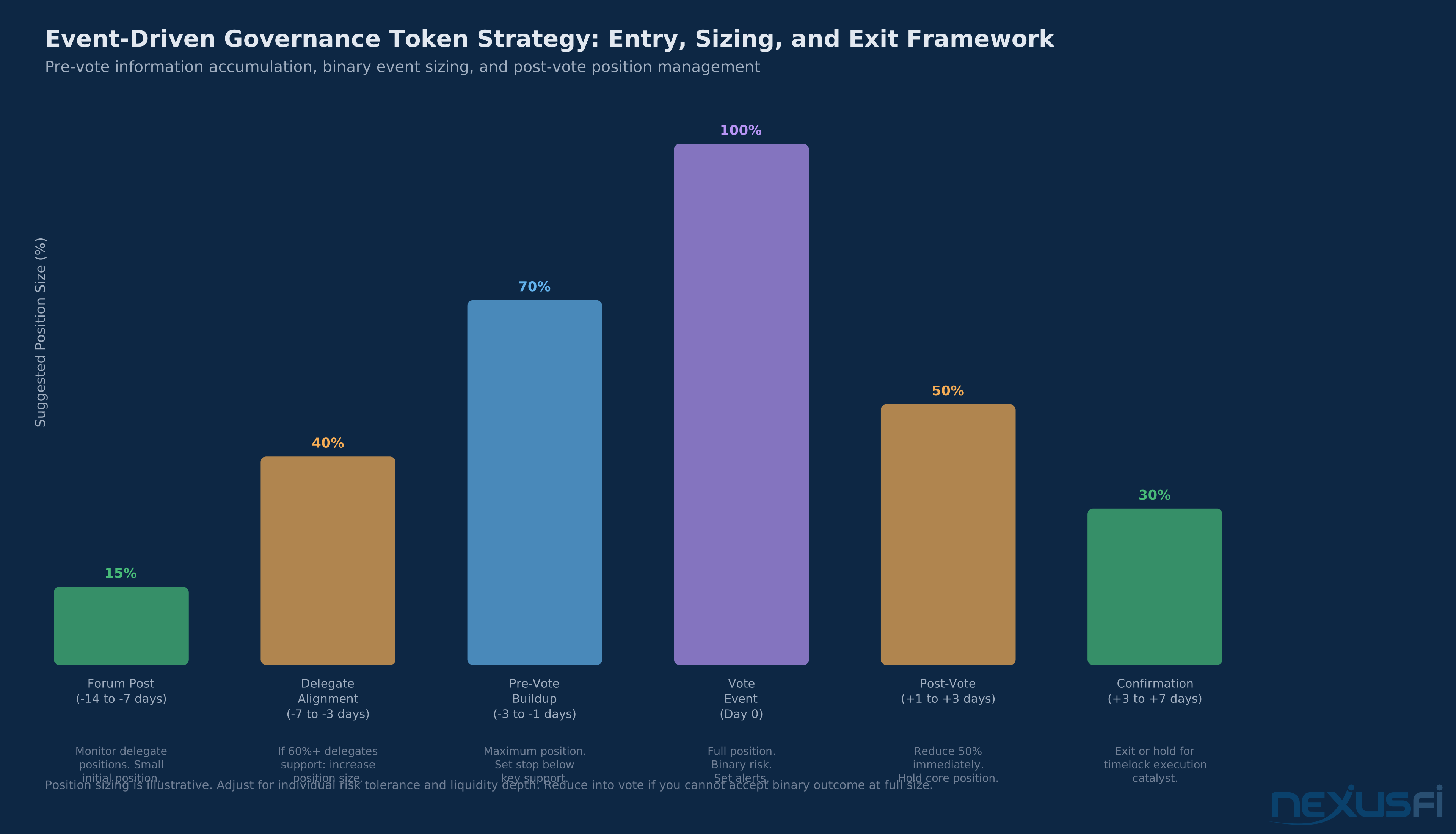
Step 1: Build a governance calendar. For each token in your coverage universe, track:
- Proposal announcement dates
- Snapshot vote dates
- Timelock periods and execution windows
- ve lock expiry schedules (for CRV and similar)
- Emissions schedule changes and epoch boundaries
Most protocols publish this on governance forums (governance.uniswap.org, forum.makerdao.com, etc.). On-chain data providers like Tally and Messari publish governance calendars.
Step 2: Assess delegate alignment. Before a governance vote, check how major delegates (typically listed on protocol governance dashboards) have stated their positions. A vote that has the support of delegates representing 60%+ of participating voting power is likely to pass. A fractured delegate map introduces uncertainty that markets often price as volatility premium.
Step 3: Size to event volatility, not trailing vol. Governance events create fat-tail price moves that historical volatility dramatically understates. The correct position size for a governance trigger play is based on your expected event-move size and tolerance for a wrong-way position at resolution, not on 30-day realized vol.
Step 4: Reduce into the binary. If you're running a directional position ahead of a governance vote, reduce size as you approach the vote date. The closer you are to the binary event, the more your edge depends on being right about an unknowable outcome. Maintaining full size into a snapshot is taking uncompensated event risk.
Relative Value Trades
Governance tokens in similar protocol categories often correlate — but diverge when governance quality or accrual mechanics differ.
Lending sector RV: AAVE vs. COMP. When AAVE governance has a stronger active safety module upgrade or better collateral management, AAVE often outperforms COMP on risk-adjusted basis. The trade: long AAVE, short COMP (via perps) when AAVE governance is actively improving and COMP governance is inactive or dilutive.
The fundamental question: for any RV pair, determine which token has stronger governance execution — proposals that pass and actually change protocol economics in positive ways. Governance optionality with no execution is worth less than governance rights that translate into improvements.
Protocol sector rotation: When DeFi lending demand is rising (utilization rates climbing), AAVE and COMP tend to outperform pure-governance plays like early UNI. When governance milestones are on the calendar, UNI-type plays often have better near-term beta. Rotate exposure based on which driver is live.
The Bribe-Market Strategy (CRV-focused)
For CRV specifically, bribe market activity is a forward indicator of vote demand.
The signal: When bribe-per-vote ratios on Votium or similar platforms rise faster than CRV's spot price, the implied yield from veCRV is increasing. More protocols are competing for CRV votes. This typically precedes a rise in lock demand (more locking → tighter float → price support).
Practical implementation: Monitor bribe data (Llama Airforce's bribe tracker is the most used tool). When bribes-per-vote in dollars exceeds a threshold relative to ve-yield, it signals rising governance demand. Enter long veCRV or CRV (accepting lock-up) or CRV spot with awareness that the bribe cycle has a limit — ROI gets competed away.
The exit signal: When bribe-per-vote starts declining even as CRV price holds, it suggests the new-protocol onboarding cycle has peaked. Protocols that needed liquidity have found it. Marginal bribe demand is falling. This often precedes rotation out of CRV.
As @SMCJB noted in the NexusFi thread on regulated crypto futures: regulated venues maintain much more rigorous product scrutiny and market structure than typical DeFi governance environments — which is why governance token risk premiums exist. [6]
DAOs: Decentralized Autonomous Organizations #
What They Are
A DAO is a protocol or organization where the rules of operation are encoded in smart contracts and governance is conducted by token holders. Uniswap DAO, MakerDAO, and Compound DAO are governance entities for their respective protocols. But DAOs have also expanded beyond DeFi — they're used for investment clubs, protocol treasuries, NFT collections, and increasingly, real-world asset management.
Treasury Management
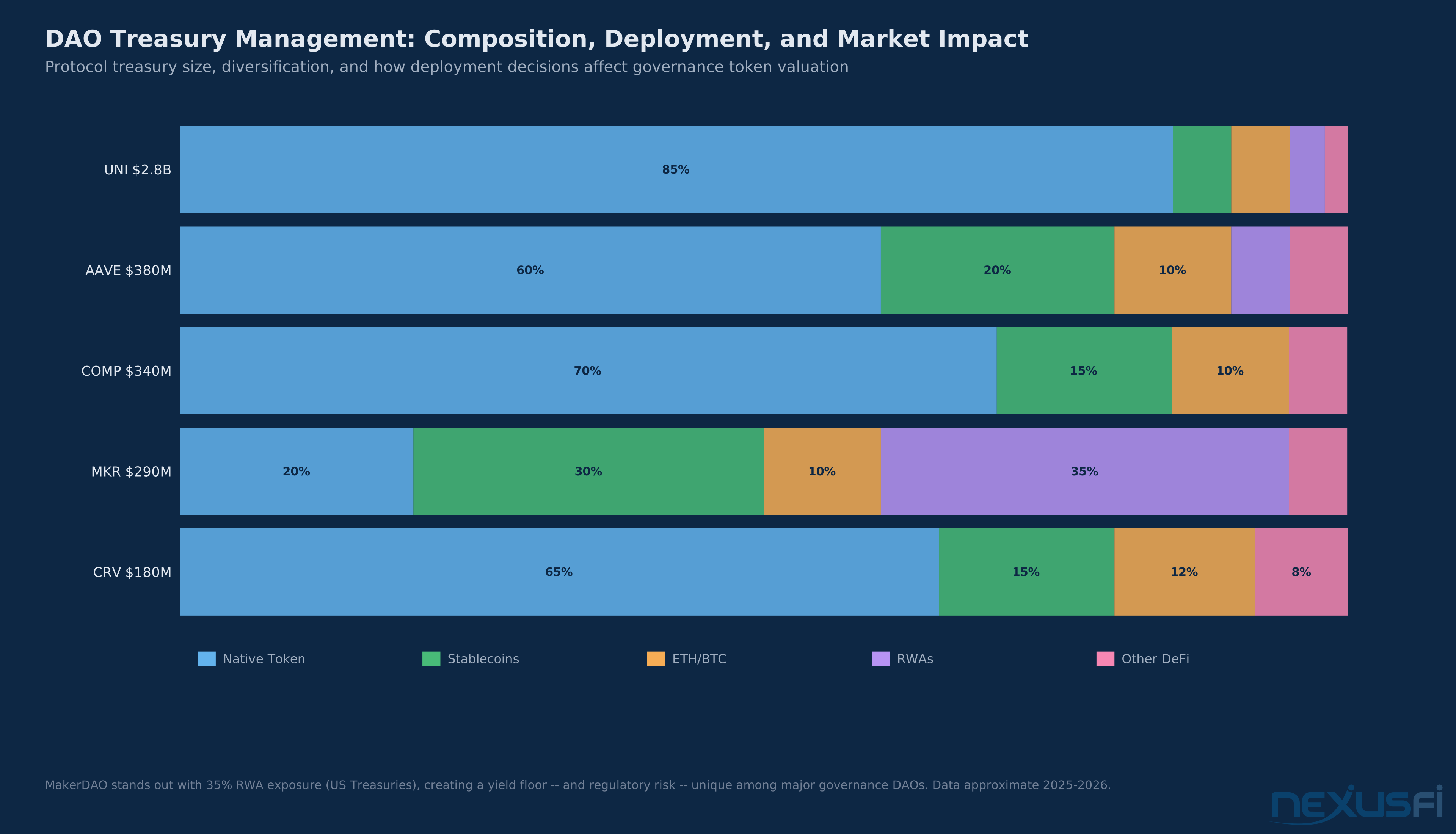
Protocol DAOs often control significant treasuries — Uniswap DAO controls a treasury worth billions in UNI tokens plus other assets. How that treasury is managed becomes a governance question: should it hold UNI only (concentrated risk) or diversify? Should it fund grants programs? Should it convert assets to stablecoins to fund development? Each of these proposals creates governance events that can affect token price.
A poorly managed treasury is a long-term negative for token value. A treasury that consistently deploys capital on protocol improvements and user acquisition is positive. Tracking treasury composition changes over time is a form of fundamental governance analysis.
Real-World Asset DAOs
The most significant governance development since 2023 is the movement of DAOs into real-world assets (RWAs). MakerDAO has been a leader here — governance approved allocating significant treasury to US Treasury bills and other traditional financial instruments, generating yield that flows back to the protocol.
This matters for traders because:
- RWA exposure creates a yield floor for some governance tokens (DAI's savings rate is funded partly by MakerDAO's Treasury bill holdings)
- Regulatory risk is amplified -- RWA-holding DAOs are more exposed to traditional financial regulation
- CFTC and SEC's joint "Project Crypto" framework, launched in 2026, explicitly included tokenized collateral regulation in its scope [7]
DAO Voting Participation
One of the persistent challenges is voter apathy. In most governance systems, a small fraction of token holders vote regularly. Compound has seen as little as 2-3% of circulating supply participate in major votes. Uniswap has similar challenges.
This creates systematic risks:
- Proposals can pass or fail on small margins
- Well-organized minority coalitions can dominate
- Hostile governance attacks require smaller amounts of token to achieve
From a trading perspective, low participation means individual votes matter more at the margin, increasing event risk around contentious proposals.
Value Accrual: What Actually Drives Long-Term Price #
Governance tokens have historically underperformed simpler crypto assets during bull runs and outperformed during bear markets where yield matters. Understanding the accrual dynamics explains why.
Fee Switches and Revenue Sharing
The most direct form of value accrual is routing protocol revenue to token holders. Fee switches are governance-controlled mechanisms that redirect a portion of protocol fees from liquidity providers to governance token holders.
MakerDAO has always had this — stability fees (interest rates on DAI loans) accrue to the protocol and can be used to buy/burn MKR. Uniswap and Compound have it available in their governance but have not permanently activated it for token holders. AAVE has increasingly sophisticated staking yield mechanisms.
The practical trading rule: when credible fee switch proposals emerge, the implied market cap re-rates toward a DCF-like model rather than a pure speculation model. This can create significant upside if the switch is activated, or significant downside if it's rejected.
Token Buybacks and Burns
MKR is the primary example. When the Maker system generates surplus above a buffer threshold, governance can deploy that surplus to buy and burn MKR on the open market. This is mechanically deflationary and ties token supply directly to protocol performance.
For traders: track the surplus buffer size relative to the governance-set threshold. When it's approaching the "excess surplus" level, buyback/burn pressure increases. This is publicly on-chain data.
veTokenomics Yield
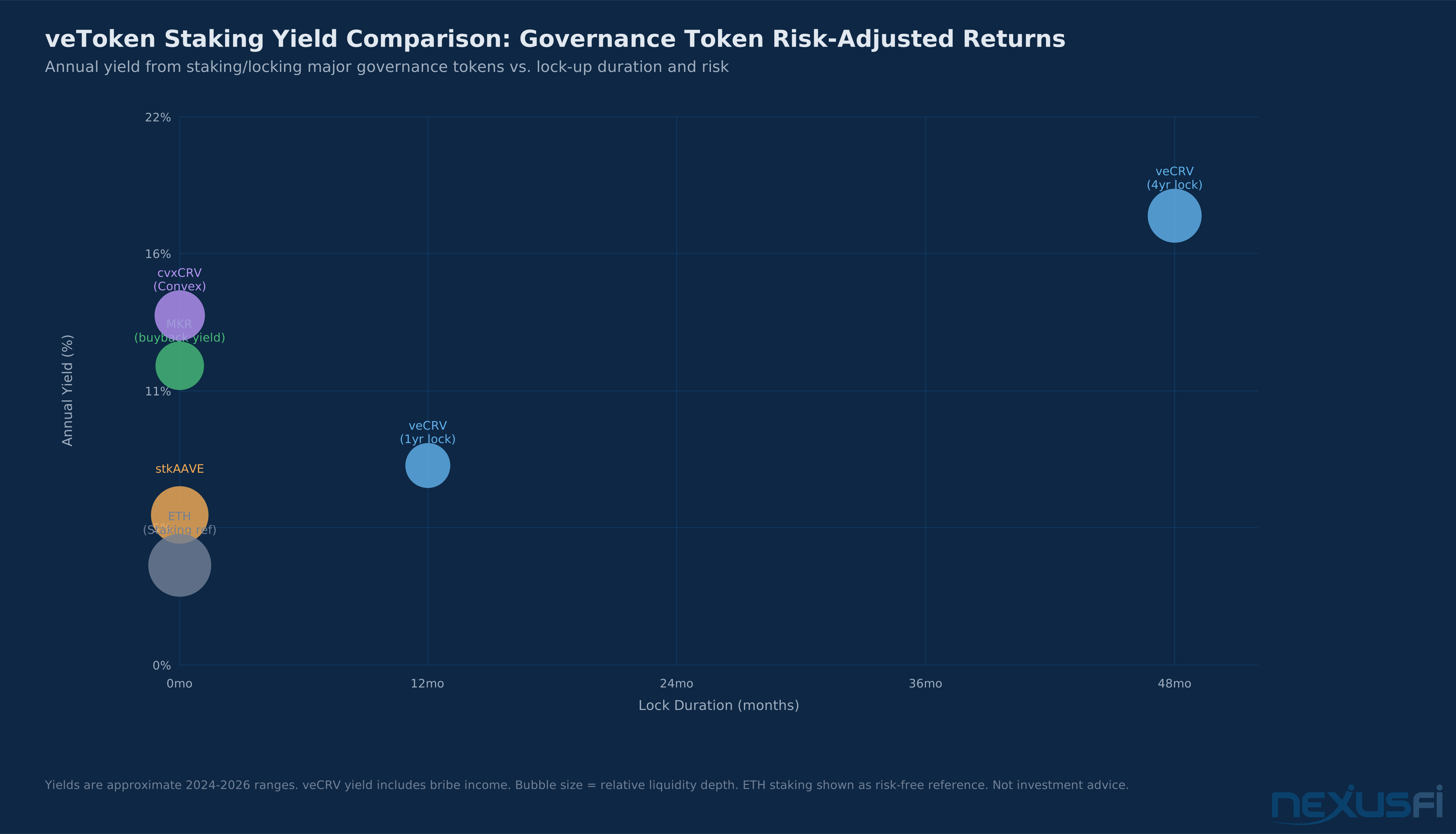
For CRV, AAVE (via Safety Module), and other ve-systems, the yield from staking/locking creates a direct economic return for token holders beyond pure governance optionality. The yield calculation is:
Annual yield = (Protocol fees allocated to stakers) / (Total staked market cap) * 100
When this yield is competitive with alternative DeFi opportunities, demand for the token is supported. When it falls below risk-adjusted alternatives, token holders migrate out.
Risk Management for Governance Token Positions #
Governance tokens break standard risk models. Volatility during governance events is at the core discontinuous — prices can gap 15-20% on a single vote result in either direction. Managing this requires a dedicated framework.
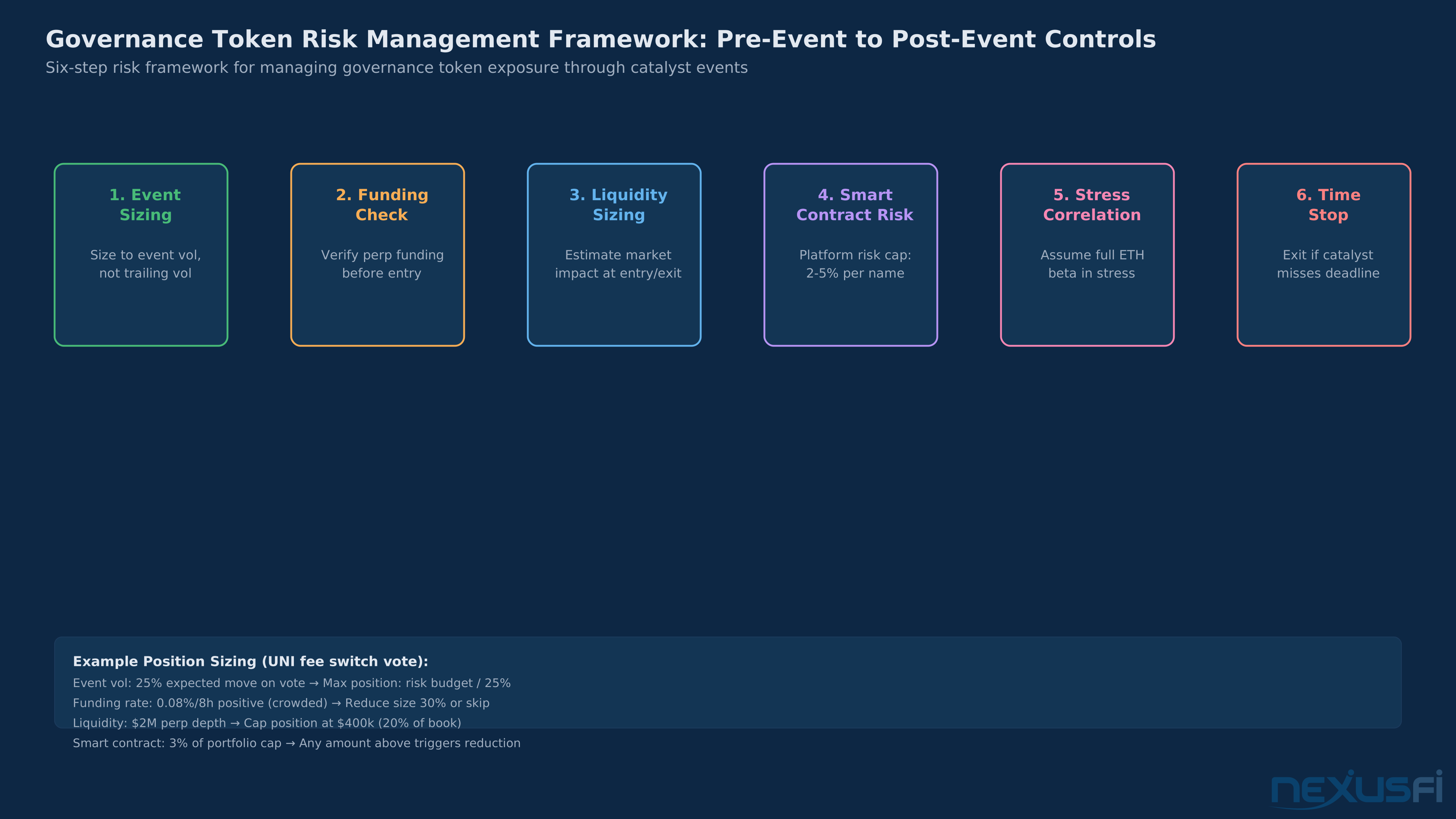
Pre-event sizing: Before any governance vote or trigger, size your position as if the outcome is binary with unknown probability. The maximum position size is what you can afford to have wrong by the full expected move size in the adverse direction.
Funding rate awareness: When perp funding rates are much positive before a governance event, you're paying to hold a position that may already reflect the favorable outcome in its price. The carry cost eats into your expected gain, and if the event disappoints, funding rate normalization amplifies the downside. Check funding before entering large positions ahead of governance catalysts.
Liquidity fragmentation: Order book depth in governance token perps is thin compared to BTC or ETH. A $5M position in UNI perps can move the market. Estimate your market impact before sizing.
Smart contract tail risk: Governance tokens are not isolated from platform risk. If the protocol has a smart contract exploit, the token price can gap toward zero regardless of governance quality. Position limits of 2-5% of portfolio in single governance tokens is a reasonable heuristic.
Correlation during stress: In broad market stress, governance tokens correlate closely with ETH. The idiosyncratic governance premium you're trading for disappears. When ETH drops 20%+ in 24 hours, assume full-beta to ETH until the dust settles.
Governance tokens don't trade like other crypto assets during major vote events. Binary outcomes create gap risk that trailing-stop logic can't handle. Treat each major governance vote like an earnings release: scale in as delegate alignment becomes clear, scale out immediately after the binary resolves, and never hold full size through the announcement regardless of conviction. The event premium is real — the post-event giveback is equally real.
Knowledge Map
Go Deeper
Build on this knowledgeReferences This Article
Articles that build on this topicCitations
- — Building an alpha out of on-chain data? (2022) 👍 2“Yes I looked into Glassnode and also CryptoQuant that has a similar offering of on-chain data -- roughly 100+ on-chain parameters to test out.”
- — Crypto Crossroads: Will BTC & ETH Crash 50% or Rally 50% First? (2025) 👍 2“The on-chain data backs you up. Spot Bitcoin ETFs hold an average entry around $84,000-$90,000 -- these buyers are not long-term holders liquidating, they are institutions who bought at the top and are not selling.”
- — Is there any realistic path to near-zero taker cost for a live crypto order-book strategy? (2026) 👍 1“Venues that advertise 0% fees often compensate with unstable or artificially widened spread conditions, which can be even worse than paying a normal explicit commission.”
- — Building an alpha out of on-chain data? (2022) 👍 5“On the question can on-chain data improve a trading strategy? I have now the clear answer: Yes. Adding an on-chain metric filter boosted backtest result from 140% to above 450%.”
- — Gemini Completes Full-Stack CFTC Licensing With DCO Approval (2026) 👍 1“Gemini Olympus received a Derivatives Clearing Organization (DCO) license from the CFTC, completing the exchange's full-stack regulated derivatives infrastructure.”
- — What if a broker declare bankruptcy!!! FTX first whose next? (2022) 👍 6“FTX International was not American, based in the Bahamas, and not allowed to have American customers. In the US, customer funds are required to be held in separate segregated accounts.”
- Uniswap Governance — Uniswap Governance Forum (2025)
- Aave Governance — Aave Governance Forum (2025)
- MakerDAO — MakerDAO Governance Portal (2025)
- — Tezos (XTZ) - the self-governing, smart contracts, DeFi capable coin (2021) 👍 3“On-Chain Governance: In Tezos, all stakeholders can participate in governing the protocol. The election cycle provides a formal and systematic procedure for stakeholders to reach agreement on proposed protocol amendments.”