



McClellan Oscillator and Summation Index: Reading Market Breadth Momentum for Futures Traders
Overview #
The McClellan Oscillator measures the momentum of market breadth — the balance between advancing and declining stocks on the NYSE. Developed in 1969 by Sherman and Marian McClellan, it was one of the first indicators to use exponential moving averages applied to advance/decline data. It does not tell you whether a specific stock is going up or down. It tells you whether the broad market is improving or deteriorating underneath whatever the index is doing on the surface.
For ES and NQ futures traders, that distinction matters constantly. Price can make new highs on narrowing participation, and price can make new lows while selling exhausts. The McClellan Oscillator quantifies that participation in a way that a price chart alone cannot.
There are two components: the McClellan Oscillator (fast, momentum-oriented) and the McClellan Summation Index (slow, trend-oriented). Both measure the same underlying data — NYSE advance/decline breadth — at different timescales.
The Formula #
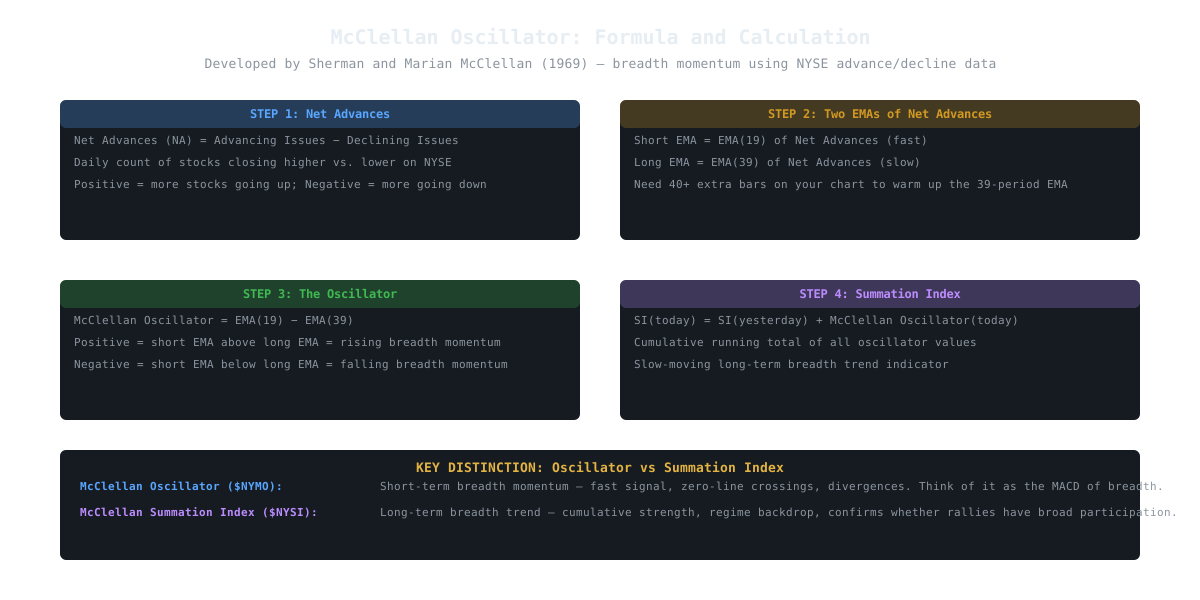
The calculation is simpler than it looks when described in words:
- Step 1 -- Net Advances: Count how many NYSE stocks closed higher than yesterday (Advancing Issues) and how many closed lower (Declining Issues). Net Advances = Advancing − Declining.
- Step 2 -- Two EMAs: Apply a 19-period EMA to the Net Advances series (short, fast). Apply a 39-period EMA to the same series (long, slow).
- Step 3 -- The Oscillator: McClellan Oscillator = EMA(19) − EMA(39). Positive when the short EMA is above the long EMA; negative when it's below.
- Step 4 -- The Summation Index: SI(today) = SI(yesterday) + McClellan Oscillator(today). A running cumulative total of all oscillator values.
The math is similar to MACD, except instead of price data, it uses net advancing issues. josh of NexusFi spent time benchmarking against official McClellan Financial Publications data and found his Sierra Chart data tracked reasonably well, but noted an important practical detail:
"You need 40 more bars on the chart when using McClellan due to its using a 39 and 19 period EMA, so if you want the right oscillator value on Jan 1, chart should start Nov 1 or so."
-- @josh, Breadth indicators for analysis (NexusFi)
That warm-up requirement means if you add the indicator to a chart that only shows six months of data, your early values will be wrong. Start your data feed earlier than you actually care about.
Reading the Oscillator #
The core interpretation is straightforward:
- Above zero: Short EMA of breadth is above the long EMA. Breadth momentum is positive -- more stocks going up than down on a smoothed basis.
- Below zero: Breadth momentum is negative. The 19-day measure of participation is below the 39-day measure.
- Rising (even if below zero): Breadth is improving, even if still net negative. Potential bottoming in progress.
- Falling (even if above zero): Breadth is weakening, even if the index hasn't cracked yet. Warning signal for rally durability.
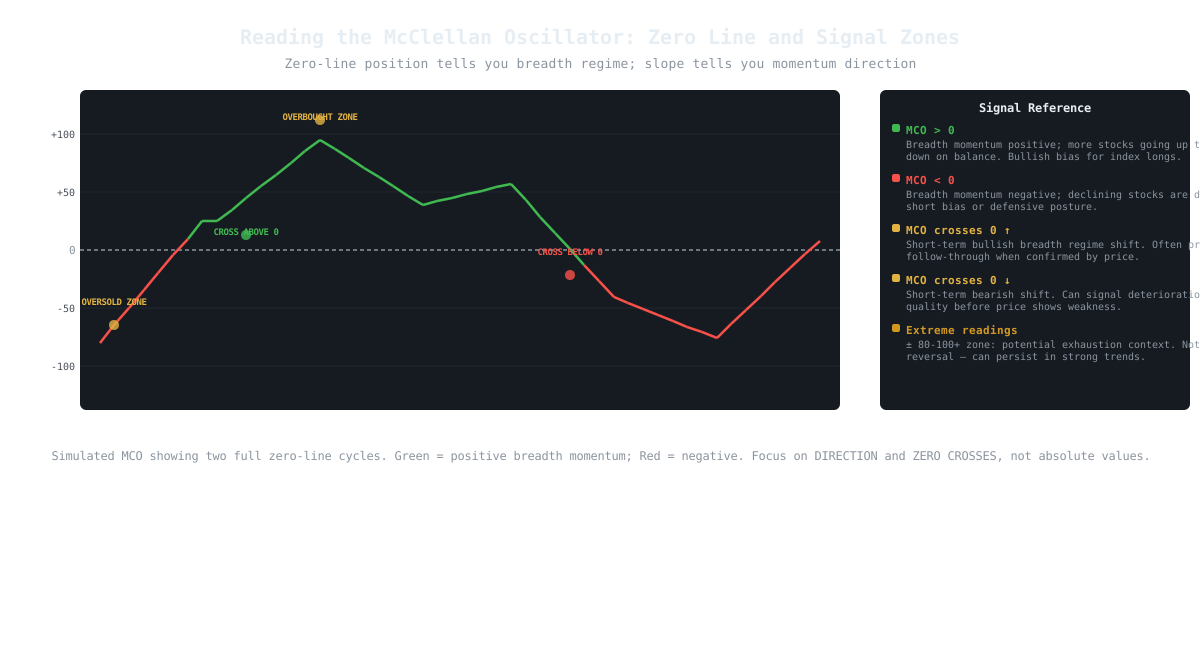
Zero-line crossings are the most commonly cited signals. When the oscillator crosses from negative to positive, breadth momentum has shifted from deteriorating to improving. When it crosses from positive to negative, the reverse. These crossings don't always precede price moves immediately — they're regime signals, not precise entry triggers.
Overbought and Oversold Levels #
There are no universally fixed overbought and oversold levels for the McClellan Oscillator, and this is where a lot of traders misapply it. Some sources cite ±100 as the standard zone, but the actual extremes that matter depend on the breadth universe you're measuring, the time period, and market conditions.
The professional approach is to treat overbought and oversold empirically rather than dogmatically:
- Look at your historical data and identify where the oscillator has rarely gone beyond. Those are your extremes -- the 90th-95th percentile readings for that instrument.
- In very strong bull markets, sustained positive readings above +50 can persist for weeks without reversal.
- In panics, deeply negative readings can continue falling well past what looked like "extreme" levels.
- Extreme readings are best used as context -- they tell you the market is stretched -- not as automatic reversal signals.
The more reliable use of extremes is in combination with divergences: when the market makes a new high but the oscillator reads at a lower positive extreme than the prior high, you have breadth narrowing in the same direction as an overbought reading. That combination carries more weight than either alone.
Divergences #
This is where the McClellan Oscillator is most valuable to futures traders. A divergence occurs when price and breadth disagree about what's happening.
Bearish Divergence
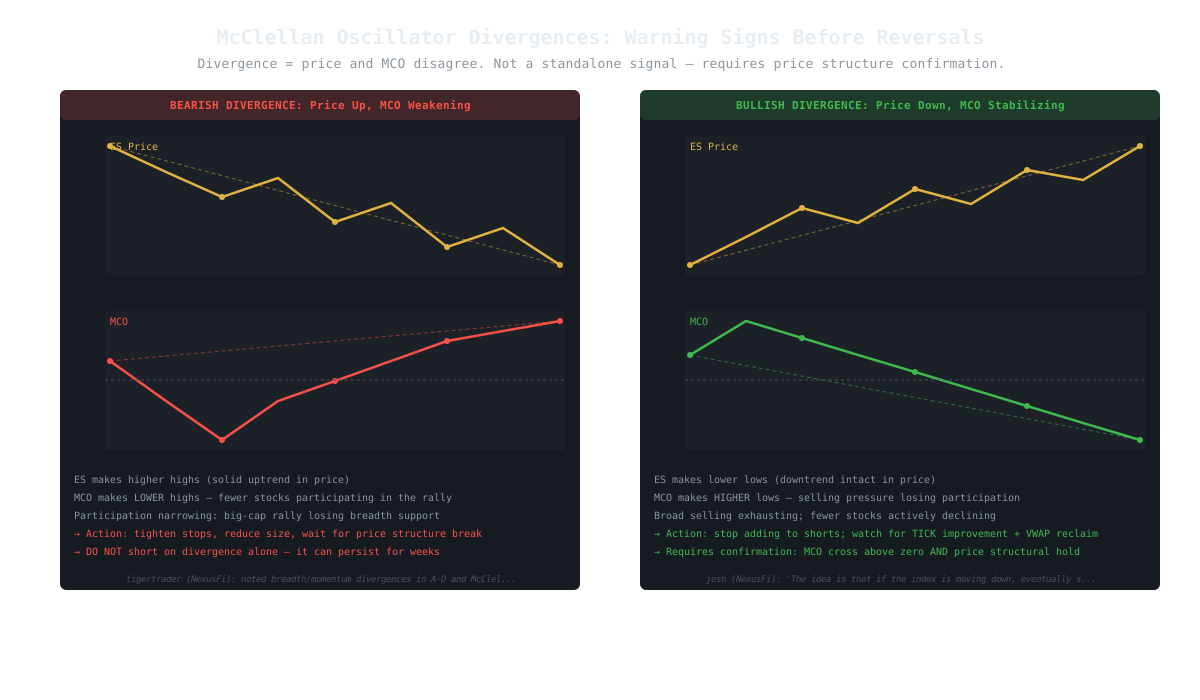
Price makes a higher high. The McClellan Oscillator makes a lower high. This tells you the latest leg of the rally involved fewer stocks than the prior leg. The big caps may still be pulling the index higher, but the participation underneath is narrowing. tigertrader of NexusFi has highlighted these breadth/momentum divergences as key warning signals before corrections in the S&P 500.
What to do: Tighten stops on long positions. Reduce size. Watch for a price structure break — a failed breakout at a known resistance level or a VWAP failure — before acting. Do not short on divergence alone. It can persist for months in strong uptrends. The divergence tells you the rally is fragile; price tells you when it actually breaks.
Bullish Divergence
Price makes a lower low. The McClellan Oscillator makes a higher low. This means the selling in the index is being driven by a narrowing group of stocks. The broad market is not confirming new lows. josh of NexusFi captured the underlying logic clearly:
"The idea behind advancers and decliners as a measure of breadth is that if the index is moving down, it can continue to do so with large caps doing most of the pulling. However, this cannot continue for an extended period of time, as eventually the small caps must contribute to indicate overall health."
-- @josh, Breadth indicators for analysis (NexusFi)
When the small caps stop contributing to the decline — when breadth holds up while price makes new lows — selling may be exhausting. Watch for TICK improvement, VWAP reclaim, and a McClellan cross above zero before leaning long.
The Summation Index #
The Summation Index (SI) is the cumulative running total of all oscillator values. When the oscillator is positive, the SI is rising. When it's negative, the SI is falling. This makes it a slower, smoother version of the same data — a breadth trend gauge rather than a breadth momentum signal.
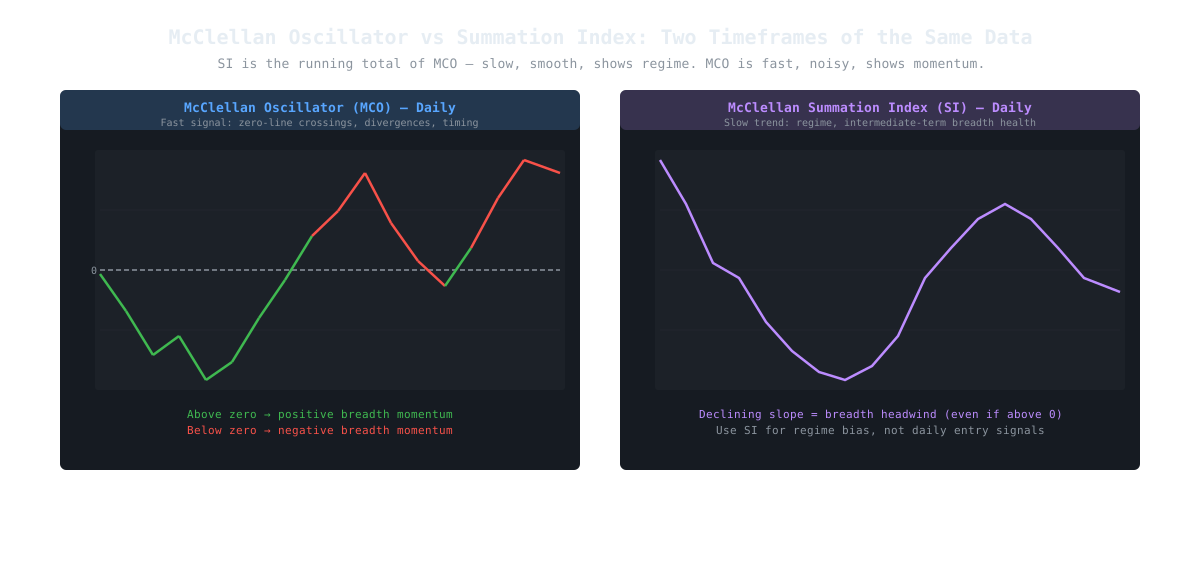
Where the oscillator gives you daily signals, the Summation Index gives you regime context:
- Rising SI: Breadth has been improving consistently. Market internals support the index's direction. Favor with-trend setups.
- Falling SI: Breadth has been deteriorating. Even if the index is holding up, the internal picture is weakening. Reduce exposure on counter-trend signals.
- SI above zero + rising: Strongest bullish breadth regime.
- SI below zero + falling: Strongest bearish breadth regime.
The Summation Index takes longer to reverse than the oscillator. If the SI has been falling for weeks and the oscillator suddenly turns positive, the SI may still be declining — that's useful information. It tells you the immediate breadth momentum is improving, but the intermediate-term trend hasn't confirmed the shift yet.
Day Trading Applications #
Here's the critical reality check: McClellan breadth data is a daily series. It updates once per day, at the close. Most data feeds do not provide reliable intraday breadth values. This means you can't use the oscillator for intraday scalp entries the way you'd use TICK or VOLD.
What you can do is use it as a pre-market framework — a daily bias filter that shapes your directional lean before the session opens:
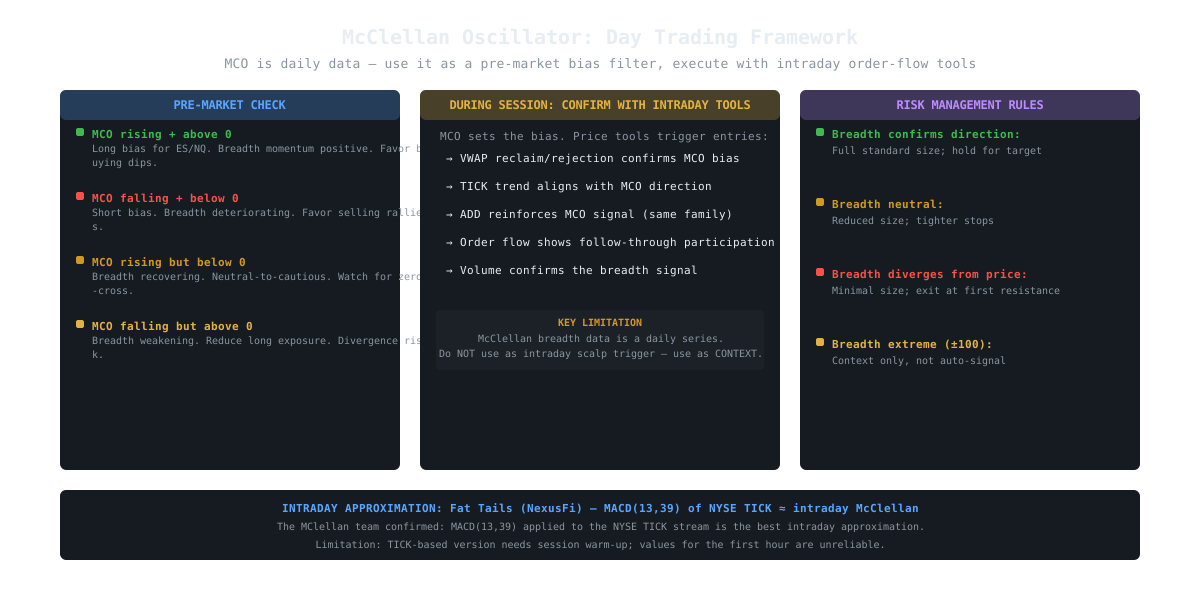
- MCO rising + above zero: Long bias. Favor buying pullbacks to VWAP, reclaim setups, and with-trend momentum on the open.
- MCO falling + below zero: Short bias. Favor selling rallies to VWAP, failed breakout setups.
- MCO rising but still below zero: Breadth recovering but not confirmed. Neutral; watch for zero-line cross before leaning long.
- MCO falling but still above zero: Rally losing internal support. Reduce long exposure; divergence risk elevated.
Your execution tools remain intraday: VWAP, TICK trend, ADD, order flow. The McClellan Oscillator sets the context in which those tools operate. A VWAP reclaim on a day when breadth is improving carries more weight than the same setup on a day when breadth is deteriorating.
Intraday Approximation
Fat Tails of NexusFi researched this question directly with the McClellan team's guidance and found a workable intraday proxy:
"On an intraday chart, the best approximation of the McClellan oscillator would be a MACD (13,39) of the NYSE Tick. This has been suggested by the McClellans themselves."
-- @Fat Tails, Breadth indicators for analysis (NexusFi)
The limitation: TICK data only starts accumulating with the opening bell. The EMA(39) needs time to warm up, so values from the first hour are unreliable. If you're going to use this intraday approximation, ignore the first 30-45 minutes and only reference it once the session has enough data to populate the EMAs meaningfully.
McClellan vs Other Breadth Indicators #
The three major market breadth indicators for NYSE-based futures trading are the Advance-Decline Line ($ADD), VOLD, and the McClellan Oscillator. They measure different aspects of the same breadth data:
- $ADD (NYSE Advance-Decline Line): Raw count of advances minus declines in real-time. Fast, noisy, shows immediate market participation across the day. The best intraday breadth tool. See NYSE Advance-Decline Line ($ADD).
- VOLD (Volume Advance-Decline): Volume-weighted version -- tells you whether the buying or selling carries dollar weight behind it. See VOLD: Reading the Dollar Weight Behind Market Breadth.
- McClellan Oscillator: EMA-smoothed momentum of the same advance/decline data. Slower, filters out noise, shows the multi-day trajectory of breadth.
- TICK: Instantaneous snapshot of uptick vs. downtick stocks. See NYSE TICK Index for Futures Traders.
The McClellan Oscillator is the most appropriate of these for daily bias-setting. It's too slow for intraday decisions but more reliable for setting your weekly and multi-day lean than the noisier daily $ADD readings.
Market Internals Integration #
For a complete picture, use the oscillator alongside the other market internals in a hierarchy:
- Summation Index → sets the multi-week regime backdrop
- McClellan Oscillator → sets the daily directional bias
- $ADD → confirms participation during the trading session
- VOLD → confirms whether the participation has dollar weight
- TICK → confirms at the bar level for entries and exits
When all five align in the same direction, you have a well-supported setup. When they diverge, reduce exposure and wait for clarity. See Market Internals: Reading the Broad Market to Trade Index Futures for the full integration framework.
Platform Access and Symbols #
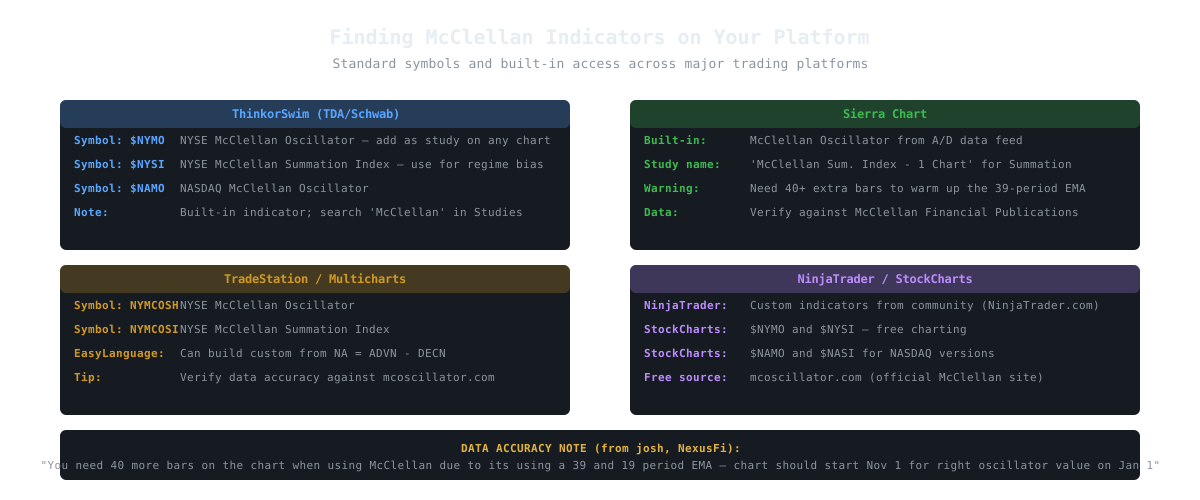
The indicators are available on most major platforms:
- ThinkorSwim: $NYMO (oscillator) and $NYSI (Summation Index) -- add as studies. $NAMO and $NASI for NASDAQ versions.
- Sierra Chart: Built-in McClellan indicators. Note josh's observation: verify data accuracy against official McClellan Financial Publications values, as intraday data providers can diverge.
- TradeStation: NYMCOSH (oscillator) and NYMCOSI (Summation Index).
- Free: StockCharts.com provides $NYMO and $NYSI with full historical data at no cost. McClellan Financial Publications at mcoscillator.com provides the official values.
Common Mistakes #
Most traders who fail with the McClellan Oscillator make one of these errors:
- Trading reversal signals at extremes: Buying because MCO is at -80 or selling because it's at +80. Extremes are context, not triggers. Markets can reach extreme breadth and stay there while trending strongly.
- Using divergence as a standalone short trigger: Bearish divergence tells you a rally is narrow. It doesn't tell you it's over. Price structure must confirm.
- Ignoring the warm-up period: Starting a chart at the beginning of the year and trusting January values. The EMA needs 40+ bars of data before it stabilizes.
- Applying it intraday: The oscillator is daily data. Don't draw intraday signals from it unless you're using the TICK-based MACD(13,39) approximation with appropriate warm-up time.
- Using it in isolation: It's a breadth indicator. It doesn't know about price levels, support, resistance, or order flow. Combine it with tools that do.
Backtestable Rules #
If you want to systematically incorporate the McClellan Oscillator, here's a starting framework that can be tested:
- Trend filter: Only take long setups when the Summation Index is rising (or SI > 0). Only take short setups when SI is falling (or SI < 0).
- Entry confirmation: For longs, require MCO to be above zero or crossing above zero on the entry day. For shorts, MCO below zero or crossing below zero.
- Divergence overlay: When price makes a new high but MCO makes a lower high (bearish divergence), cut long size by 50% and tighten stops.
- Regime shift: When MCO crosses zero in the opposite direction of your position, exit or much reduce exposure.
These rules won't be the complete answer — they need calibration to your specific instruments and timeframes — but they provide a systematic starting point that forces you to use the oscillator as designed: as a breadth regime and momentum filter, not a standalone entry trigger.
Breadth Thrusts #
A breadth thrust is one of the most powerful signals the McClellan Oscillator produces. It occurs when the oscillator moves sharply from deeply oversold territory (below -80 or -100) toward zero or above — typically within a few trading sessions. This rapid improvement in breadth momentum often precedes strong multi-day or multi-week rallies.
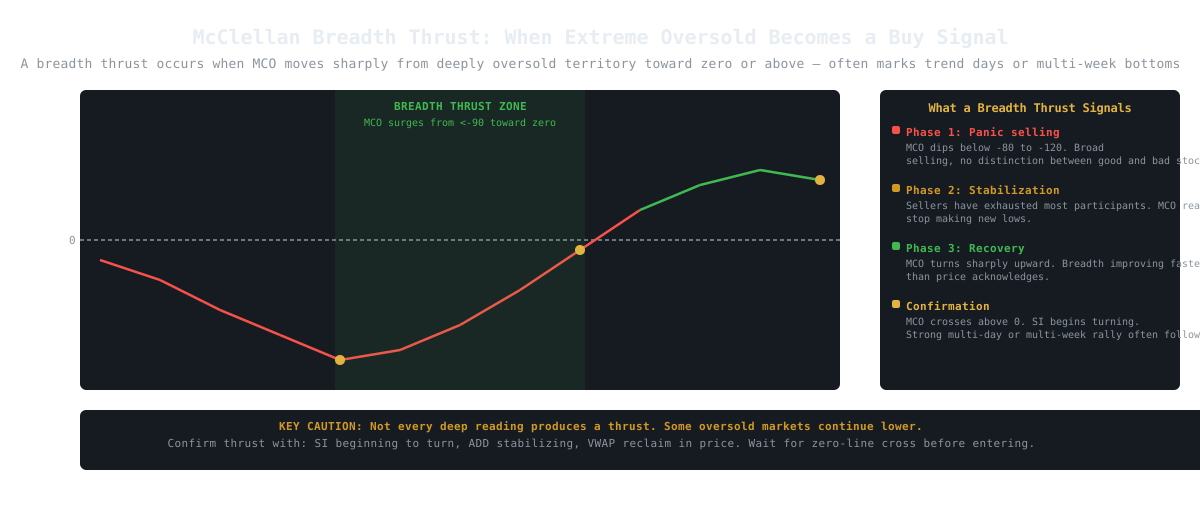
The distinction between a thrust and a dead-cat bounce in breadth is confirmation: a genuine thrust shows MCO moving from deeply negative to above zero within 5-10 trading sessions, combined with the Summation Index beginning to flatten or turn, and ADD stabilizing during the intraday session. The ADD's behavior during the thrust days is especially informative — if ADD is reaching +1000 or better during these sessions, the breadth is genuine. If it's barely positive, the thrust may be incomplete.
Common mistake: entering long positions as soon as MCO begins rising from a deep negative. That's the right direction but premature timing. Wait for the zero-line cross or at minimum a structural price hold at key support.
Summation Index Regimes #
The Summation Index creates four distinct breadth regimes based on its position (above or below zero) and its slope (rising or falling). Knowing which regime you're in shapes how much confidence to put behind directional trades:
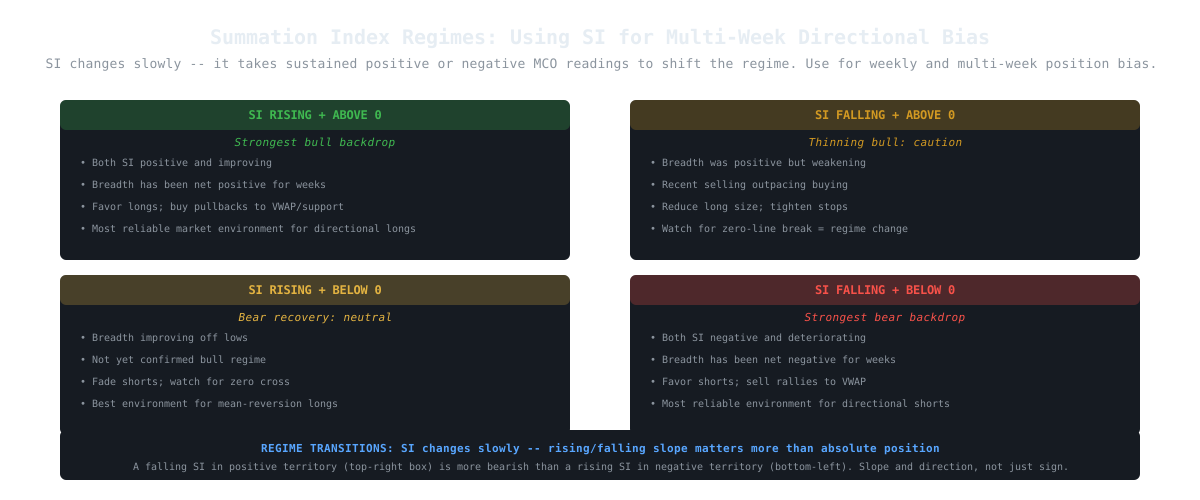
The regime table matters most for swing traders and for setting multi-day context on day trades. If you're trading ES with a 2-3 day holding period, knowing whether SI is in a bull or bear regime dramatically affects your size and stop placement. Day traders primarily use the daily MCO reading, but checking SI weekly adds a valuable overlay for understanding whether your short-term breadth signals are swimming with or against the intermediate-term tide.
Conclusion #
The McClellan Oscillator is one of the most durable breadth analysis tools in technical analysis for good reason: it converts the noisy daily advance/decline data into a smoothed momentum signal that reveals the health of market participation underneath price action. The oscillator shows you momentum; the Summation Index shows you trend. Divergences are the most actionable concept, but require confirmation. Extreme readings are context, not commands.
For futures traders working ES and NQ, the practical application is pre-market: check yesterday's MCO and the SI's direction before the session. Set your directional lean so. Execute with VWAP, TICK, and order flow. When breadth confirms your price-action setup, it's healthier than when breadth diverges from it.
The oscillator won't tell you where to buy or sell. It tells you whether the broad market is cooperating with the move you're considering. That's exactly what a breadth indicator should do.