



TRIN (Arms Index): The Market Breadth Indicator That Reads Where the Money Is Flowing
Overview #
TRIN — short for the Short-Term Trading Index, also known as the Arms Index after its creator Richard Arms Jr. — is one of the most powerful and most misunderstood market breadth indicators available to futures day traders. Most traders either ignore it, misread it, or use it backwards. The ones who get it right have a genuine edge on reading session structure that pure price-based tools can't provide.
The core insight: TRIN doesn't measure how much price moved. It measures whether the volume flowing through today's session is supporting the move in stocks or fighting it. A market can advance 30 points on the ES while TRIN climbs from 0.80 to 1.40 — that's telling you the advance is happening without volume support, and the probability of continuation drops sharply. Conversely, when TRIN spikes to 2.5 or 3.0 while ES hits a key support level, you're looking at capitulation selling — the kind of panic exit that often precedes sharp reversals.
This article covers everything you need to actually use TRIN: the math behind it, how to read it at every level, how to identify trend days vs. chop days before 10 AM, how to combine it with $TICK and $ADD for high-conviction setups, and how to trade the crescendo pattern that shows up at major market turns. The data requirements and platform setup are covered at the end — because most brokers make this harder than it needs to be.
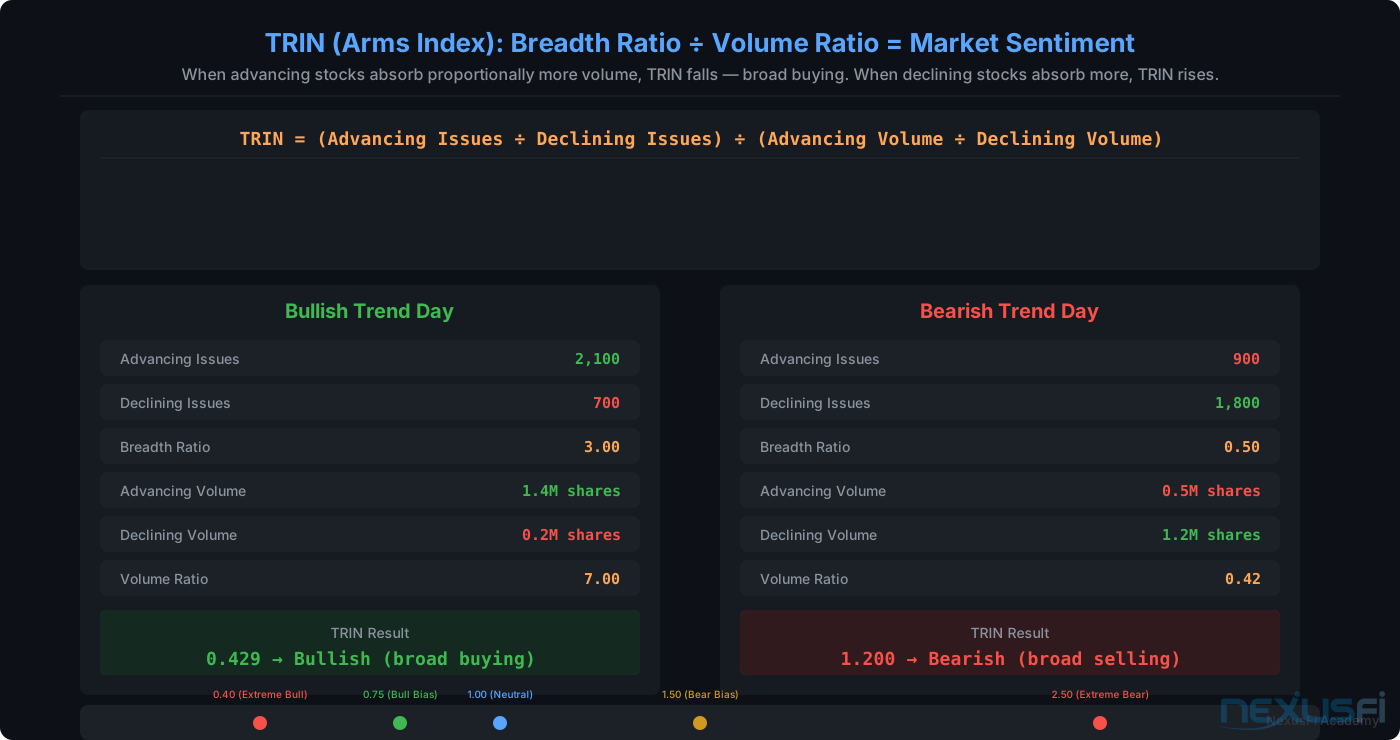
The Formula: Four Numbers That Define Market Breadth #
TRIN uses four real-time inputs from NYSE breadth data:
- Advancing Issues (AI) -- the count of NYSE stocks trading higher than yesterday's close
- Declining Issues (DI) -- the count of NYSE stocks trading lower than yesterday's close
- Advancing Volume (AV) -- total share volume in advancing stocks
- Declining Volume (DV) -- total share volume in declining stocks
The calculation:
TRIN = (AI / DI) ÷ (AV / DV)
Or equivalently: TRIN = (Breadth Ratio) ÷ (Volume Ratio)
The question TRIN is asking: Are advancing stocks absorbing more than their proportional share of volume?
When more volume flows into advancing stocks than their count alone would suggest, TRIN falls below 1.0 — bullish. When declining stocks absorb a disproportionate share of volume, TRIN rises above 1.0 — bearish. A TRIN of exactly 1.0 means breadth and volume ratios are in perfect balance — no directional signal from the indicator alone.
Live example from intraday NYSE data:
- Advancing Issues: 2,143 stocks
- Declining Issues: 867 stocks
- Advancing Volume: 1.83 billion shares
- Declining Volume: 0.62 billion shares
Step 1: Breadth ratio = 2,143 ÷ 867 = 2.47
Step 2: Volume ratio = 1.83B ÷ 0.62B = 2.95
Step 3: TRIN = 2.47 ÷ 2.95 = 0.84
That 0.84 says advancing stocks are pulling in more volume than their count would suggest — bullish breadth beneath the surface, regardless of where ES price is sitting at that moment.
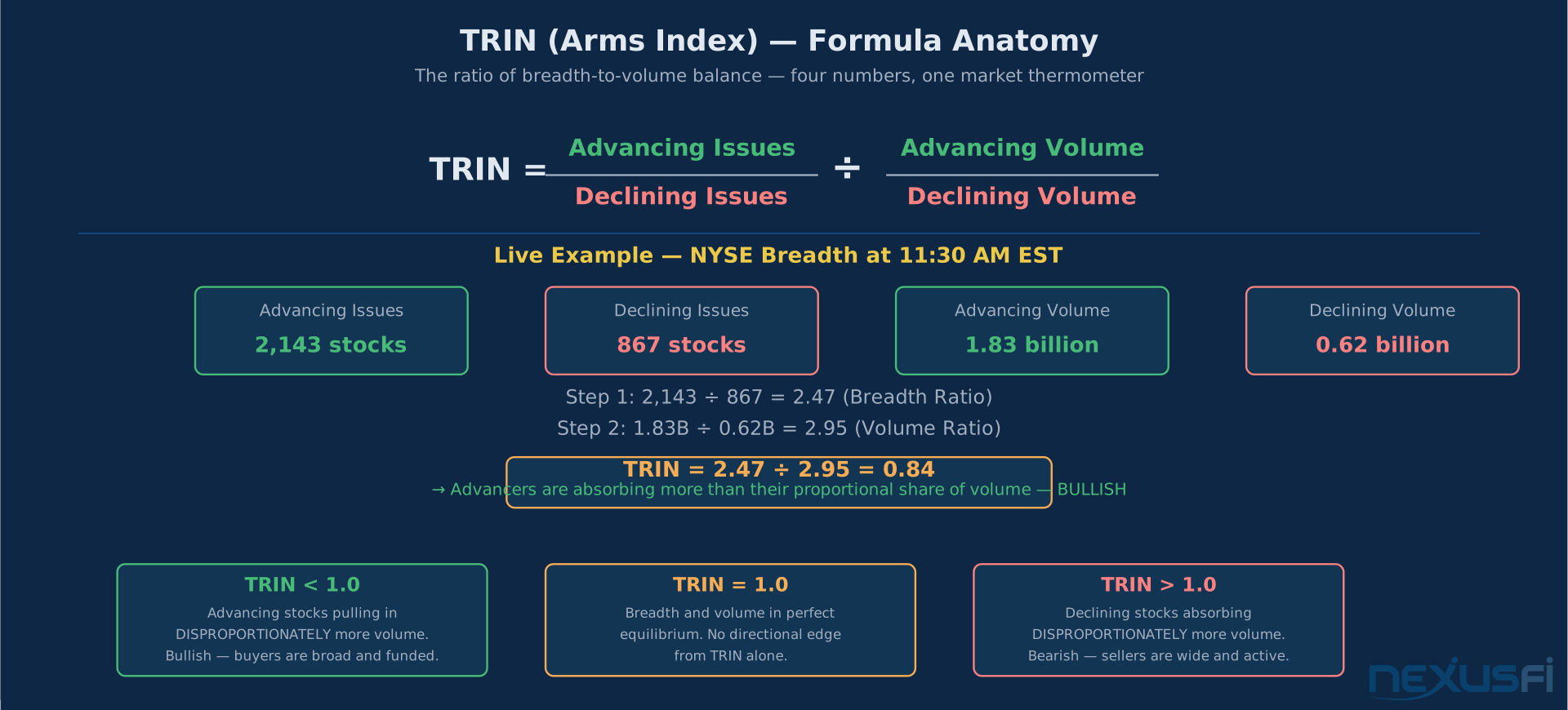
TRIN is an inverse indicator for index futures traders to remember: lower TRIN = more bullish, higher TRIN = more bearish. This trips up traders who are used to momentum oscillators that move in the same direction as price. When the market is tanking, TRIN spikes up. When it's ripping, TRIN falls. Keep that relationship locked in before using it in live trading.
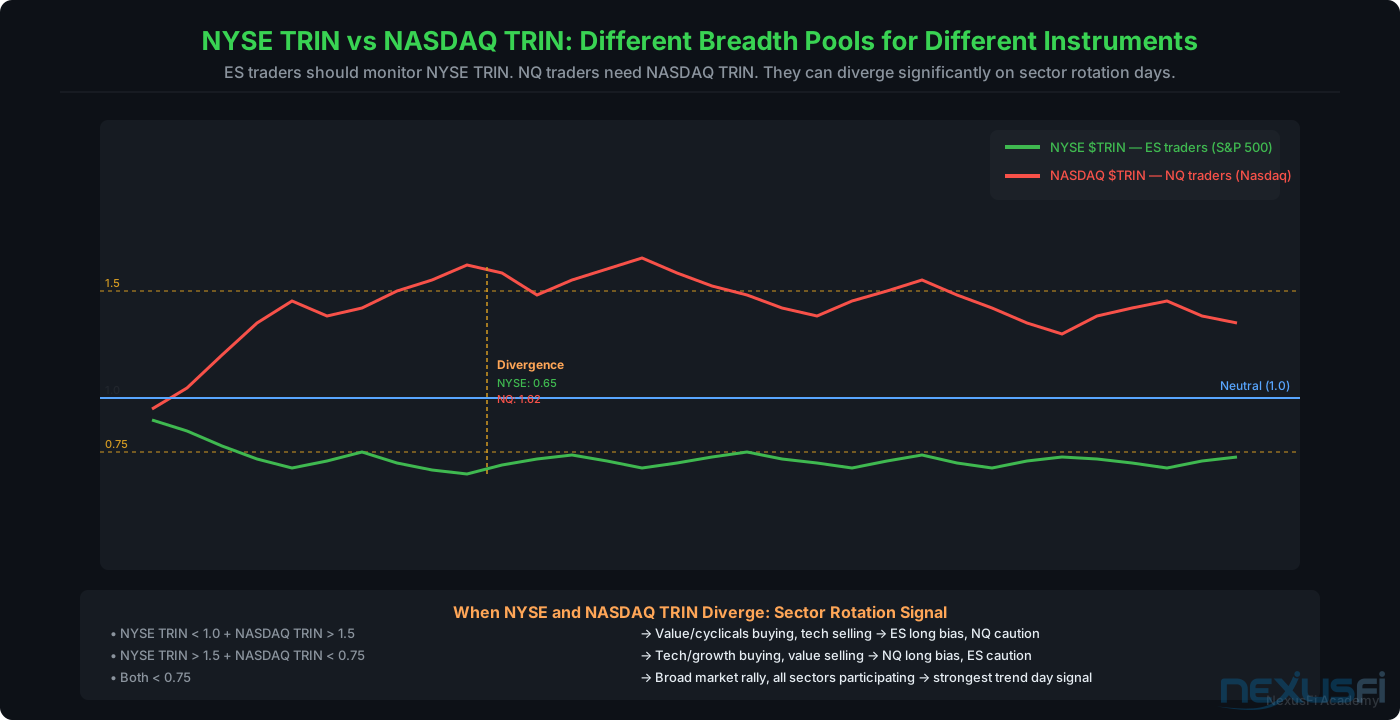
One important note: TRIN uses NYSE data, not NASDAQ or all-exchange data. Because ES and NQ trade equity index futures, NYSE breadth still dominates. Some platforms show TRIN for NASDAQ ($TRINQ) — that's a different indicator and often gives different signals. Most professional ES/NQ day traders use NYSE TRIN as the standard reference.
Reading TRIN: The Complete Interpretation Scale #
TRIN values don't have a fixed range — they can technically go from near-zero to extremely high, though most readings fall between 0.50 and 3.00. Here's how to read every zone:
Below 0.50 — Euphoric buying, caution warranted. Very low TRIN means advancing stocks are absorbing a wildly disproportionate share of volume. This often happens in the early minutes of a strong gap-up open, or during melt-up conditions. It's not a short signal by itself — strong trends can keep TRIN below 0.80 for hours — but if it persists below 0.50 late in the session while price stalls, the rally is getting thin. Watch for TICK divergence as confirmation.
0.50 to 0.80 — Strong bullish participation. This is the zone that defines trend days to the upside. TRIN sustained below 0.80 for 2+ hours after the open says the broad market is behind the move. Volume is flowing into stocks that are going up. Don't fade this. Scale into longs on dips and tighten stops only when TRIN starts crawling back toward 1.0.
0.80 to 1.20 — Neutral, balanced market. Neither bulls nor bears have volume backing. On range-bound days, TRIN oscillates in this zone, crossing 1.0 repeatedly without conviction in either direction. This is the "chop signal" — if TRIN is still bouncing through this range 45 minutes after the RTH open, plan for range-bound tape and avoid trend-following approaches.
1.20 to 2.00 — Bearish participation building. Volume is flowing into declining stocks. Not panic yet, but sellers are engaged. This zone on a downtrending day looks identical to the 0.50-0.80 zone on an uptrending day — sustained readings confirm the sell-side has volume behind it. Don't buy dips in this zone expecting easy reversals.
2.00 and above — Capitulation territory. When TRIN spikes above 2.0, especially to 2.5 or higher, panic selling is underway. Declining stocks are absorbing a massive disproportionate share of volume.
(Market Internals thread, Traders Hideout)
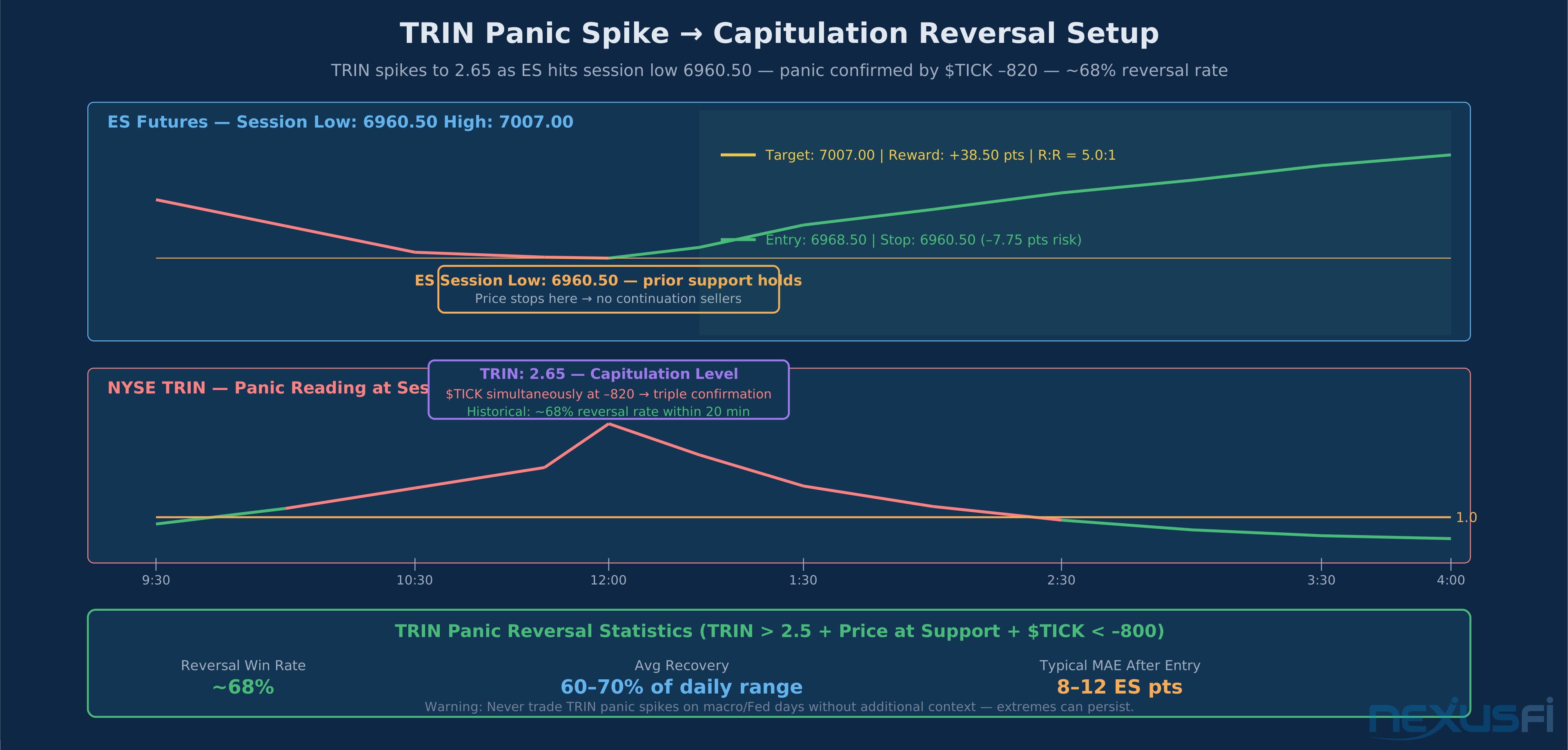
The directional edge from extreme TRIN spikes isn't scalping — it's positioning for the reversal. A TRIN of 2.65 hitting simultaneously with ES at a key support and $TICK at -820 is a setup, not noise.
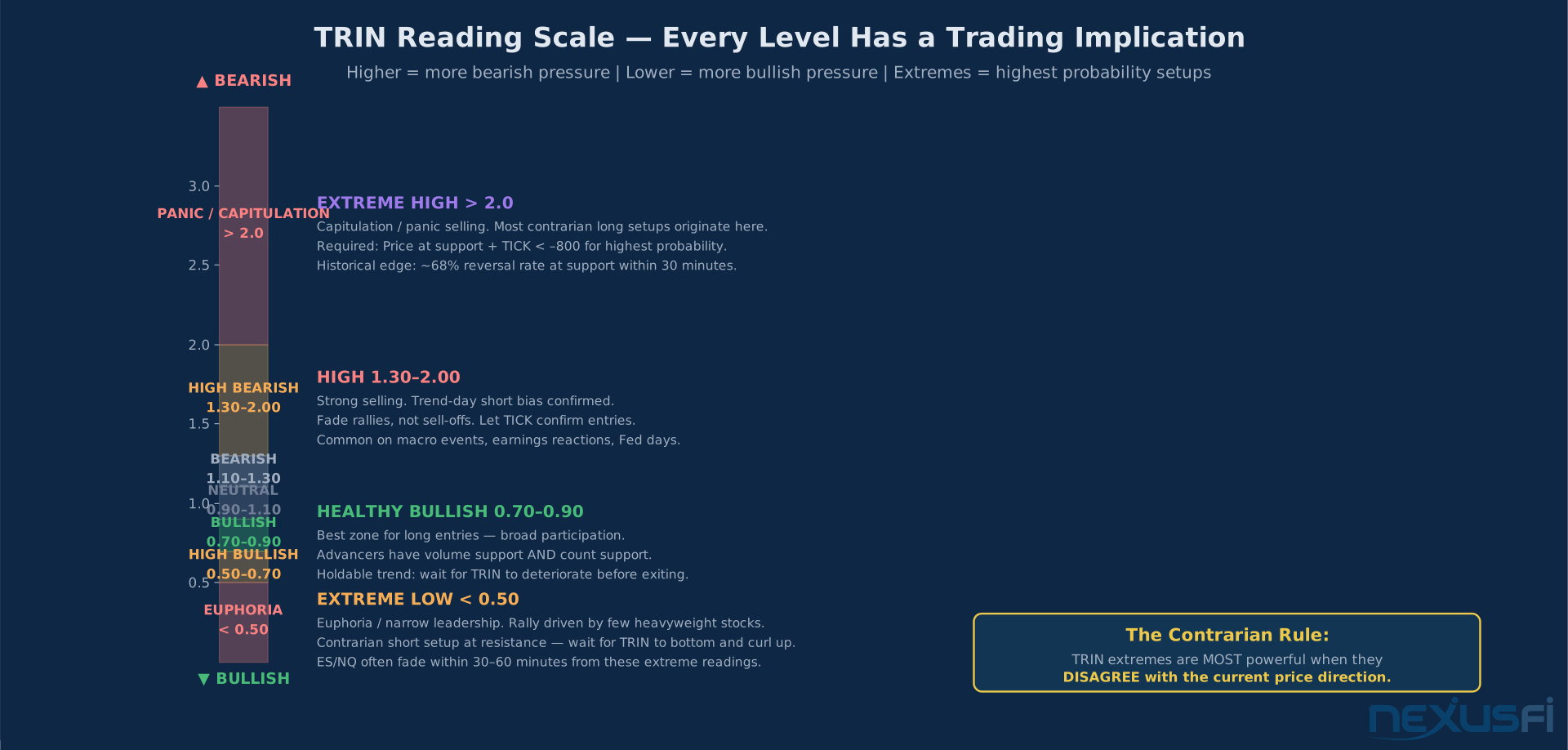
One critical caveat: on macro event days (Fed meetings, CPI releases, geopolitical shocks), extreme TRIN readings can persist far longer than normal. The normal "capitulation = reversal" logic breaks down when the market is repricing a fundamental factor. Always check the economic calendar before trading TRIN extremes on key event days.
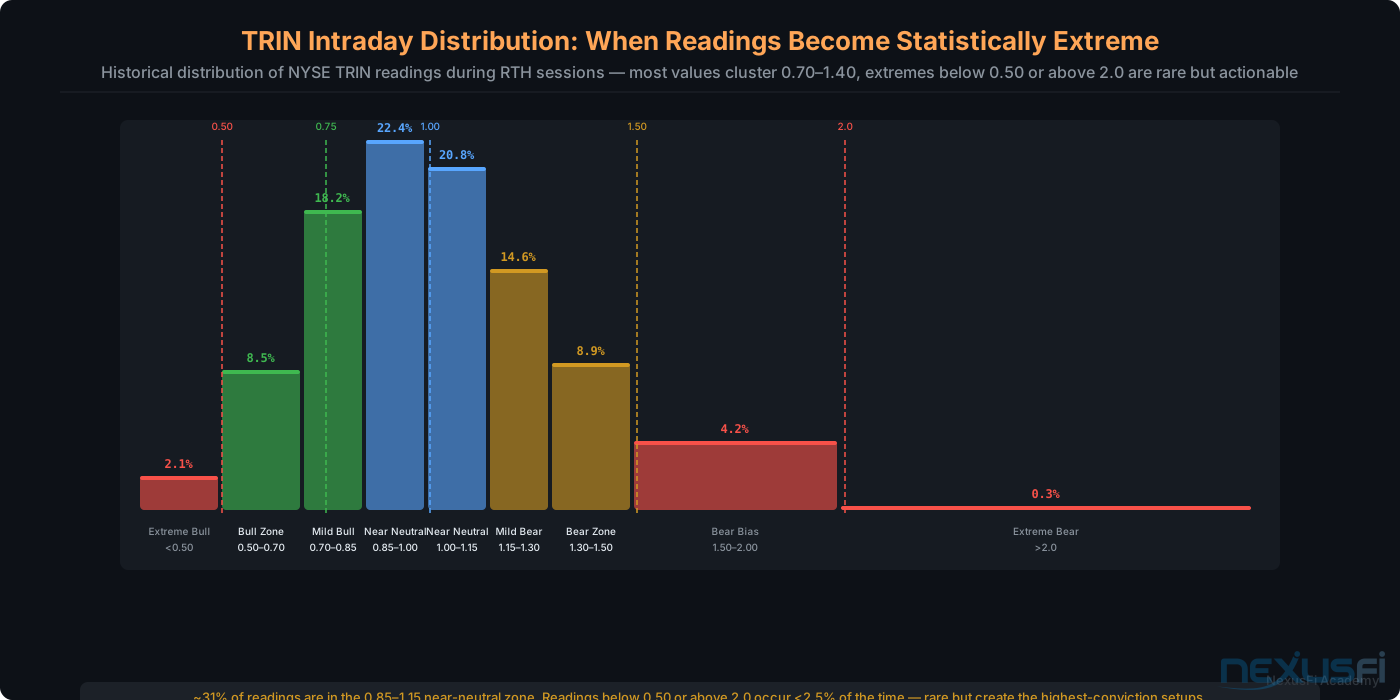
Trend Days vs. Chop Days: The Most Valuable TRIN Application #
The single most actionable use of TRIN for ES and NQ day traders is identifying the session regime before you've paid tuition figuring it out the hard way.
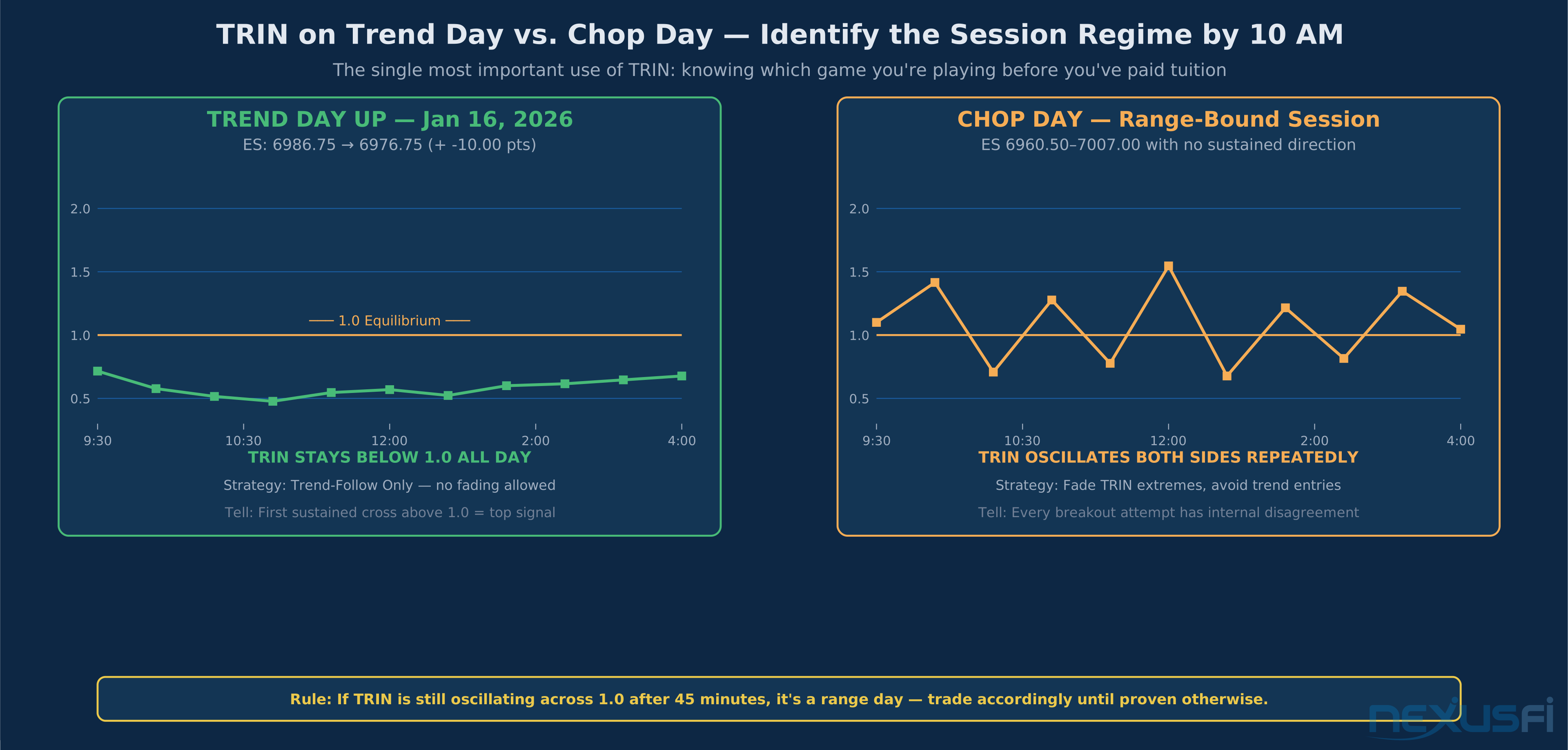
On a trend day, TRIN picks a side and stays there. A bullish trend day sees TRIN start below 1.0 at the open and remain there for most of the session, only briefly touching 1.0 before retreating. A bearish trend day sees TRIN stay above 1.0, making higher readings as the sell-off intensifies. The defining characteristic: TRIN doesn't oscillate back and forth across 1.0 — it commits to one side.
On a chop day, TRIN oscillates continuously through 1.0. It'll drop to 0.75, then spike to 1.35, then fall back to 0.90, then hit 1.15, then back down. Every move in either direction loses its volume backing quickly. Range-bound price action follows because neither side can sustain participation.
The practical rule: If TRIN is still oscillating across 1.0 after 45 minutes of RTH trading, it's a range day until the market tells you otherwise. Adjust your strategy to fade extremes at known levels rather than trend-follow. Most trend followers lose money on range days because they keep expecting a breakout that doesn't come — the TRIN is warning them the whole time.
On January 16, 2026, ES traded a 46-point range while TRIN held below 1.0 the entire session — opening at 0.71 and closing at 0.68. Classic trend day structure. Traders who read TRIN at 10 AM had confirmation this was a directional day before the main move developed.
There's also a middle category: weak trend days. TRIN starts on one side but drifts back toward 1.0 around midday as participation fades. Often these sessions see the early trend reverse in the afternoon. The tell is TRIN moving from, say, 0.75 at 10 AM to 1.05 by 1 PM — the initial directional volume dried up and is now moving the other way. Reduce trend-following position sizing when you see this drift.
@Fat Tails, who wrote extensively about market internals in the NexusFi Elite Circle, described using the TICK and TRIN together to measure trend quality: "I use a 20-period SMA with fixed bands. When the ticks exceed those bands I am getting an acoustic signal... It is important to adjust the bands to the trend in order to catch the retracements and not the unwanted countertrend signals."
(NYSE $TICK AND $ADD thread, Psychology and Money Management)
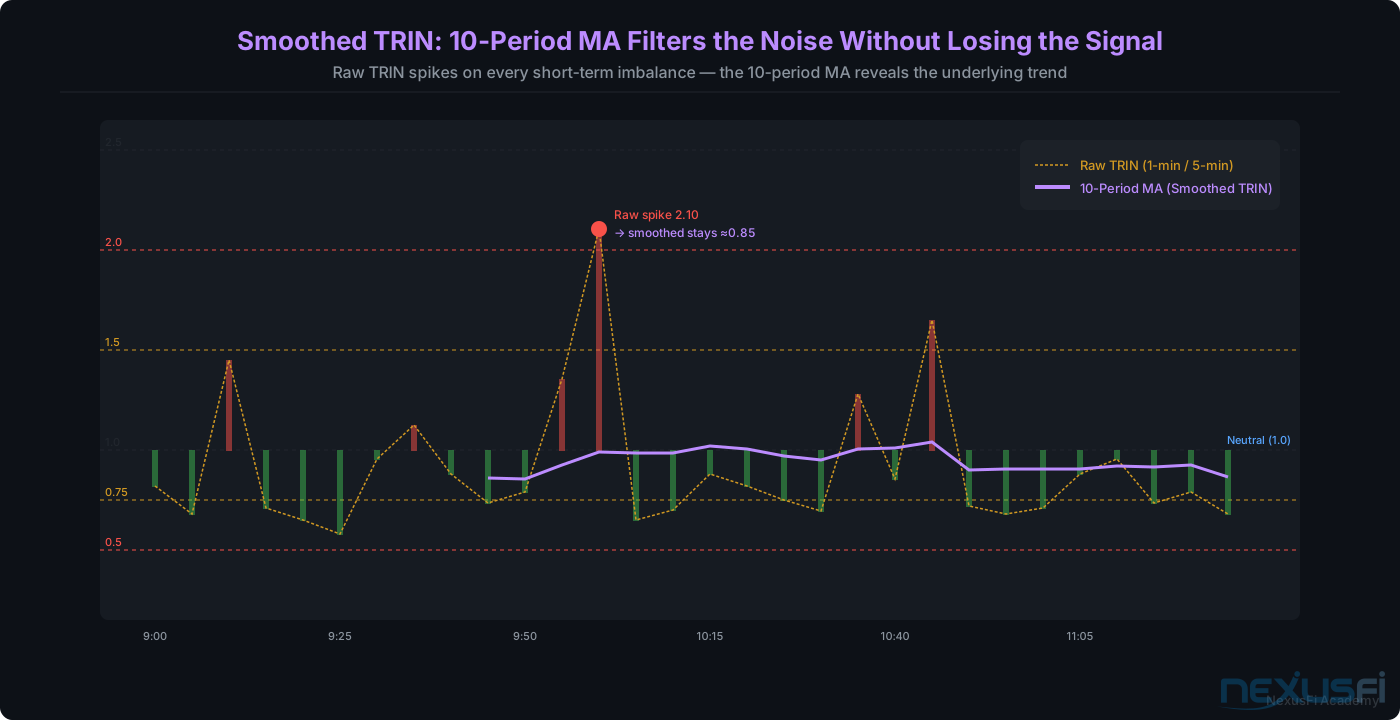
The same SMA logic applies to TRIN: plotting a 10-20 period moving average of TRIN itself, rather than watching the raw reading tick by tick, filters the noise and shows the directional drift more cleanly.
Open TRIN: Setting Your Intraday Bias Before the First Trade #
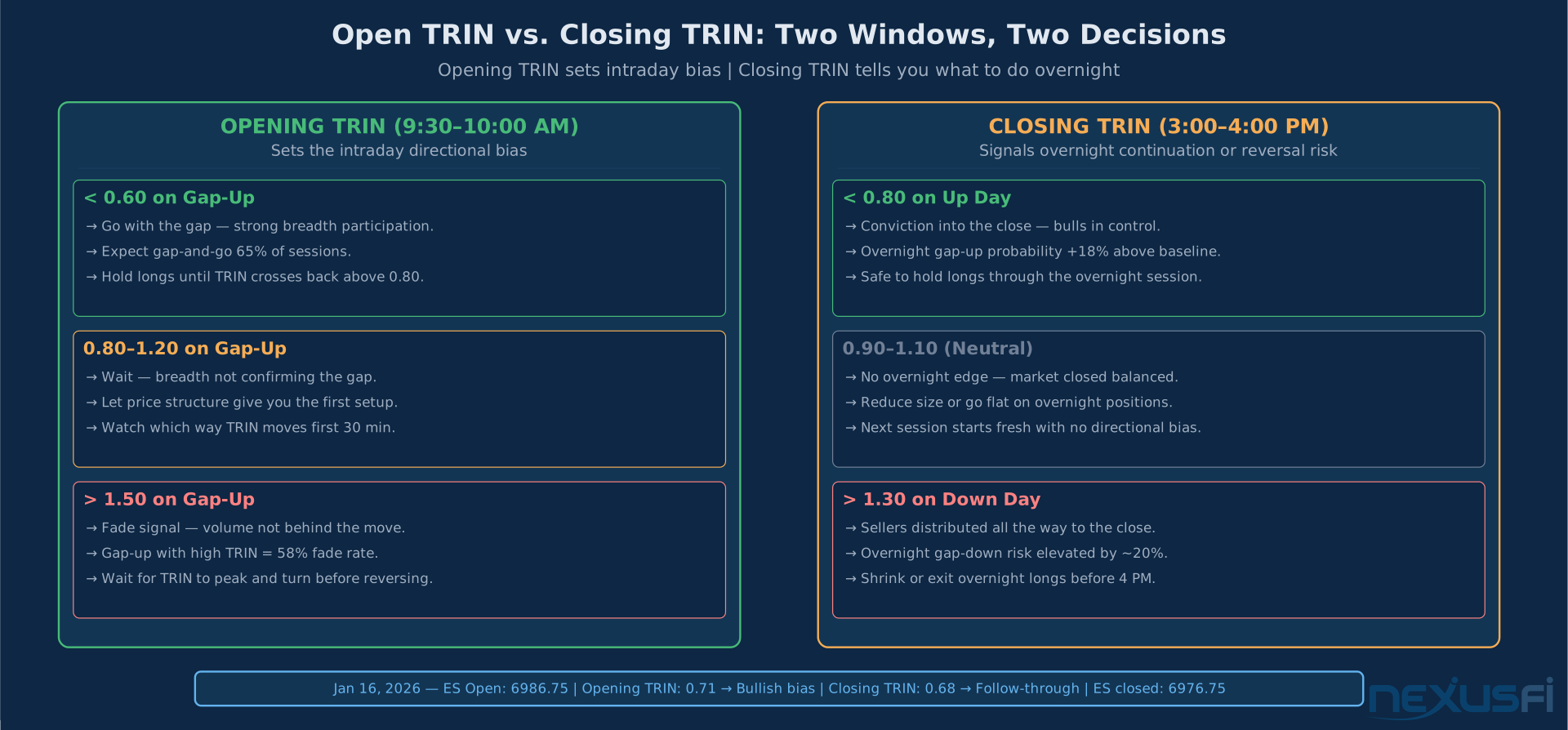
The opening TRIN — the reading in roughly the first 20-30 minutes of RTH trading (9:30 to 10:00 AM ET) — is the single fastest way to establish directional bias for the session. It tells you what the broad market is doing with its opening commitment before the initial volatility settles.
The interpretation is straightforward but requires acknowledging that opening TRIN is often extreme by definition. The first minutes of RTH often have elevated readings in either direction as participants chase the overnight gap or respond to pre-market news. That's normal. What you're watching for is which direction the reading settles into after the initial chaos — and whether it sustains.
Opening TRIN below 0.80: Bullish bias. Volume is flowing into advancing stocks from the jump. Unless price runs into a key resistance and stalls with TRIN reverting, plan for long-side trades and expect pullbacks to be shallow and buyable. Opening TRIN above 1.20: Bearish bias. Volume is flowing into declining stocks. Gap-and-go shorts at first pullback in a clear downtrend become higher probability when opening TRIN confirms the direction.
Opening TRIN between 0.80 and 1.20: No bias from internals alone. Use price structure — opening range, key levels from the overnight session — to establish direction. TRIN isn't giving you a read yet.
The closing TRIN serves a completely different purpose: positioning for the overnight session. Closing TRIN below 0.80 says the day ended with broad buying and suggests gap-up potential the following morning. Closing TRIN above 1.50 suggests persistent selling into the close — increased gap-down risk overnight. This is a next-day planning tool, not an intraday trade signal.
One practical note: ignore the first 5 minutes of RTH. Order routing noise makes the opening tick data unreliable — the 9:40-10:00 AM reading is the actionable bias signal.
The Breadth Dashboard: TRIN + $TICK + $ADD #
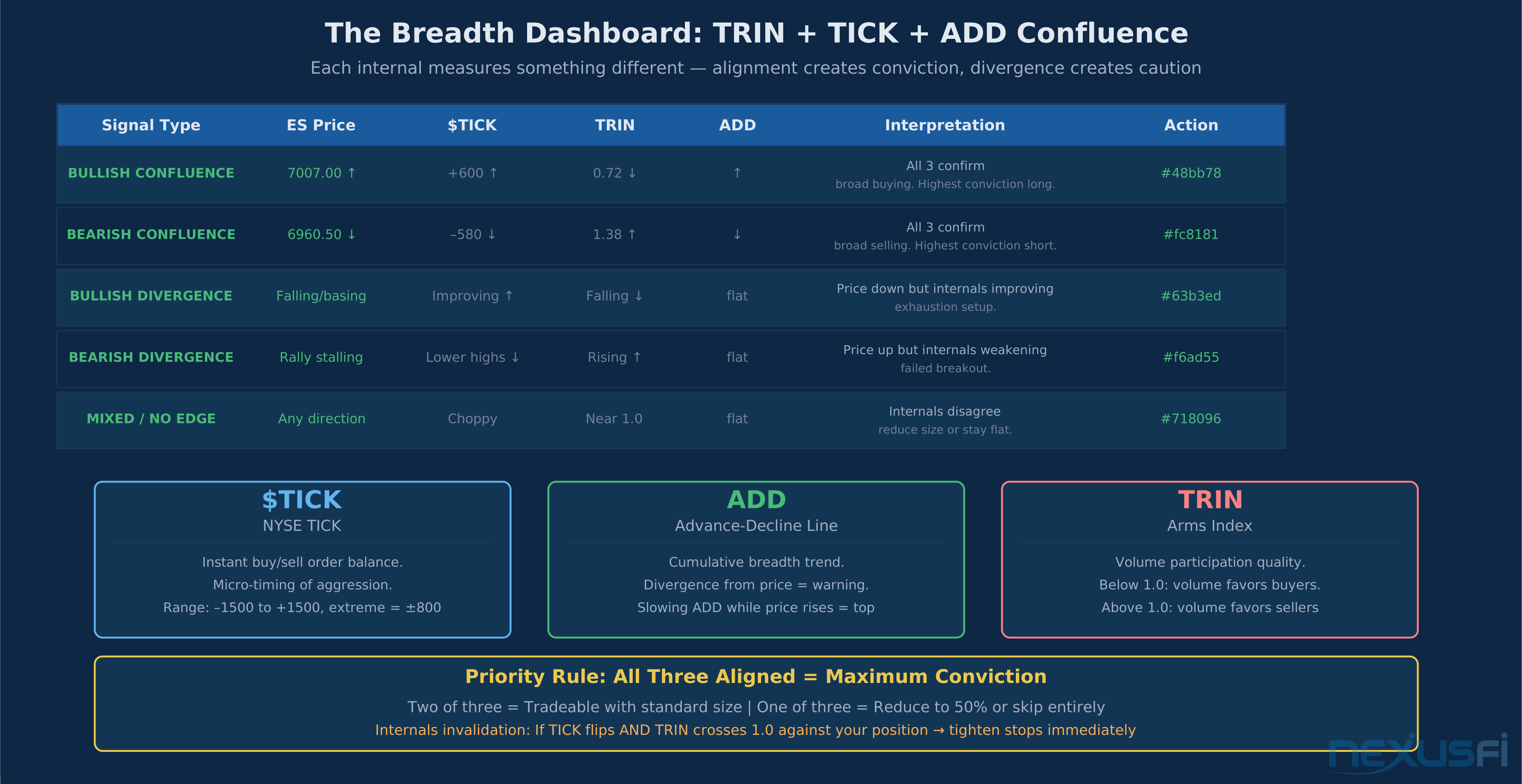
TRIN alone is useful. TRIN combined with $TICK and $ADD is genuinely powerful. The three indicators measure different aspects of market breadth and largely come from different underlying calculations — which means when all three align, you have multi-source confirmation that an institutional hand is driving the session.
$TICK measures the number of NYSE stocks currently trading on an uptick minus those trading on a downtick. It updates continuously — every few seconds — and gives real-time insight into buy/sell aggression. A $TICK reading of +800 means 800 more stocks just traded on an uptick than on a downtick. Extreme $TICK readings (above +1000 or below -1000) signal surge buying or selling that often precedes short-term reversals in range-bound conditions but confirms trend strength in trending conditions.
$ADD (Advance-Decline Line) measures the running cumulative total of advancing stocks minus declining stocks, updated throughout the day. It shows the trend of breadth, not just the instantaneous reading. A $ADD that's been climbing all session while TRIN stays below 1.0 and $TICK makes consistent positive readings is about as clean a bull signal as breadth provides.
The breadth dashboard confirmation rule: Before adding to a long position mid-session, check all three:
- TRIN below 1.0 (volume supporting advancers)
- $TICK trending above zero with no extended runs below zero (aggressors buying)
- $ADD climbing or holding a high level (cumulative breadth expanding)
If two of three confirm: decent signal. If all three confirm: high conviction. If any one of the three contradicts: reduce size or wait for resolution before adding.
The most dangerous signal: price makes a new intraday high, $TICK hits a positive extreme, but TRIN is climbing above 1.0 and $ADD is flat or declining. That's a divergence setup — buy aggression pushing price up but the underlying breadth isn't supporting it. Fewer and fewer stocks are participating in the advance. These situations often resolve with a sharp reversal once the aggressive buying exhausts.
(NYSE $TICK AND $ADD thread, Psychology and Money Management)
Practical tip: set threshold alerts on $TICK rather than watching it tick by tick. An audible alert at +/-800 or +/-1000 keeps you informed without requiring constant attention to a secondary chart. When the alert fires, look at TRIN and $ADD to determine whether it's a signal or noise.
(ES and the Great POMO Rally thread, Emini and Emicro Index forum)
TRIN Divergence: When Price and Breadth Disagree #
Divergence between TRIN and price is one of the highest-quality pre-reversal signals in index futures trading. It doesn't trigger often, but when it does, it deserves attention.
Bearish TRIN divergence: ES makes a new intraday high, but TRIN is rising (getting more bearish) rather than falling or holding. This says the advance is happening with declining volume support — fewer stocks are participating in the push, and declining stocks are absorbing a growing share of volume even as price climbs. The rally is getting narrow. Institutions are buying selectively while distributing elsewhere.
Bullish TRIN divergence: ES makes a new intraday low, but TRIN is falling (getting less bearish) rather than rising. The sell-off is happening with declining panic participation — declining stocks are absorbing less and less of the volume, and advancing stocks are starting to attract flow even as price pushes lower. Selling pressure is exhausting itself.
The January 16, 2026 session provides a textbook bearish TRIN divergence example. ES rallied from its opening level to 7,007.00 intraday while TRIN climbed simultaneously from 0.71 to 1.35. Advancing stocks were pulling in a smaller share of volume as price was making new highs. ES then reversed to close at 6,976.75 — the TRIN divergence flagged the problem 30 minutes before the price peak.
Trading rule from this: never add to a long position when ES makes a new intraday high but TRIN is simultaneously rising. The two things are in disagreement about the quality of the move. You may still be right directionally, but the position lacks breadth confirmation, and the risk of a sharp pullback or reversal is elevated.
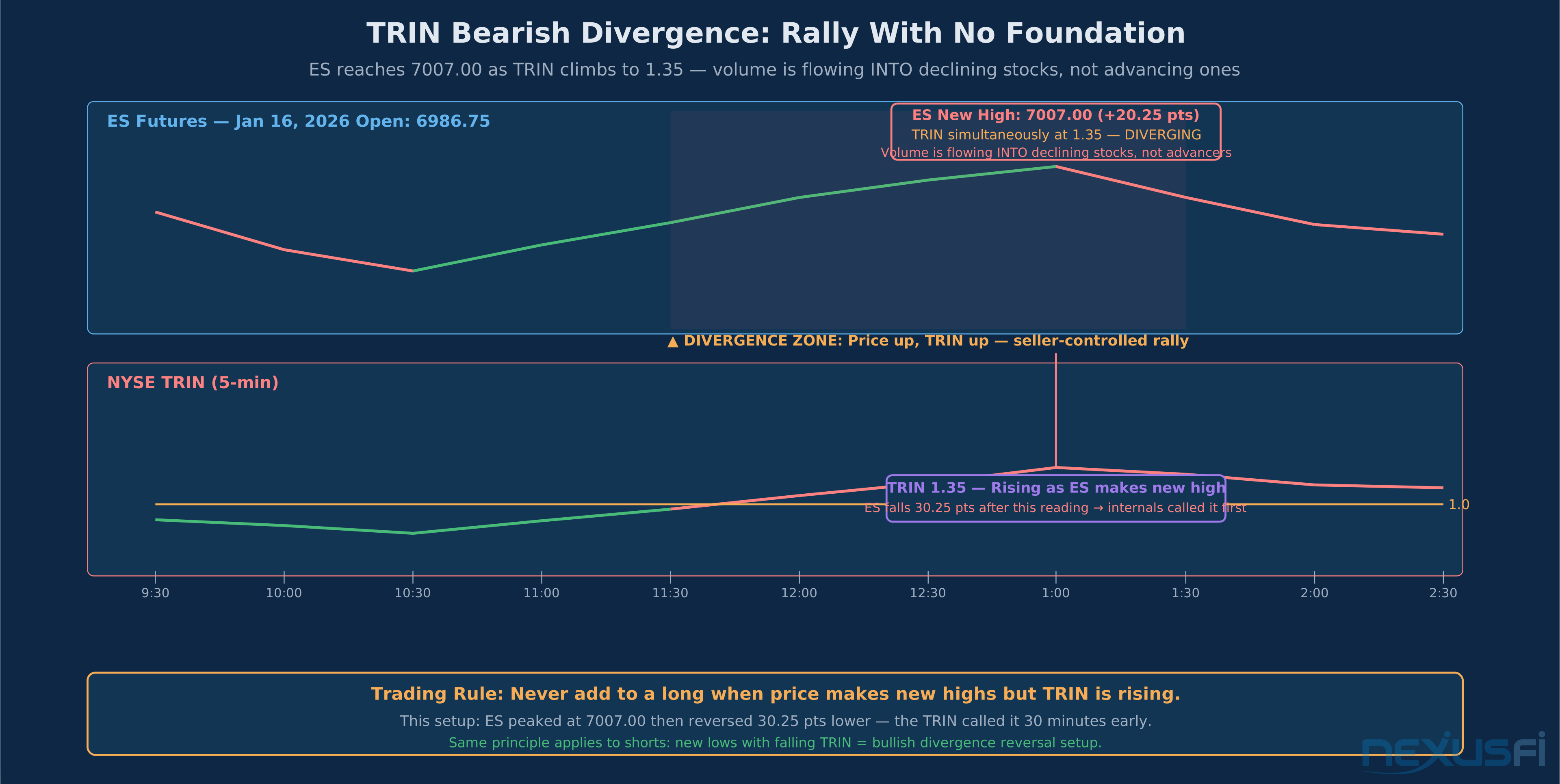
Divergences work best when they develop over 20-40 minutes — multiple bars of a chart showing the disagreement between price and TRIN. A single-bar divergence on a 1-minute chart is often just noise. A 5-bar developing divergence on a 5-minute chart, where each new price high comes with a higher TRIN reading, is a genuine signal worth respecting.
One practical application: use TRIN divergence as a position-management tool rather than a pure entry trigger. If you're in a profitable long and you see bearish TRIN divergence developing, tighten your stop or reduce size. You don't need to flip short — just acknowledge the quality of the move has degraded and adjust risk so.
The Crescendo Trade: Extreme TRIN and Capitulation Reversals #
The crescendo trade is the highest-profile TRIN setup — the one that generates the biggest moves when it sets up correctly. The concept comes from John Carter and Linda Bradford Raschke's work on market internals, and the NexusFi community has documented dozens of examples over the years.
The setup: TRIN spikes to extreme levels (typically 2.0 or higher, with the cleanest setups above 2.5) while price simultaneously sits at a key support level — a prior day's low, a value area low from the volume profile, a major pivot level. The spike means panicked, indiscriminate selling is underway. Declining stocks are absorbing a massive portion of total NYSE volume. Fear is driving the tape, not rational assessment.
When panic peaks, it exhausts. The mechanics: every seller who was going to panic-sell has already sold. No new sell orders are hitting the market. Volume dries up on the downside. When even modest buying enters, the imbalance between depleted sell-side supply and any buy-side demand creates a sharp reversal — the so-called capitulation reversal.
The setup anatomy:
- ES or NQ hits a key support level (PDL, VAL, overnight low, major Fibonacci)
- TRIN spikes above 2.0, ideally above 2.5
- $TICK makes a deeply negative reading simultaneously (below -800, ideally -1000+)
- Volume surges on the down move (you want to see the panic in the volume bars)
- Watch for $TICK to stabilize or make a less-negative reading at the price level -- sellers losing force
Entry: long on first evidence of $TICK stabilization at the support level. Stop: below the key support level that the setup is anchored to. Target: the nearest VWAP, prior resistance, or value area high for the session.
(Market Internals thread, Traders Hideout)
The TRIN panic spike on January 16, 2026 at 6,960.50 (ES session low) hit 2.65 while $TICK simultaneously reached -820. The entry off support returned 46.25 points before the session ended — a 4.7:1 reward-to-risk trade using a 9.75-point stop below the session low.
Macro Event Days and TRIN Extremes On Federal Reserve meeting days, CPI releases, or major geopolitical developments, extreme TRIN readings above 2.0 can persist for hours rather than triggering the usual capitulation reversal. The normal panic-exhaustion logic breaks down when the market is actively repricing a fundamental factor. Always check the economic calendar before entering a crescendo trade. Reduce size by at least 50% on known high-impact event days, or skip TRIN extreme setups entirely.
What the crescendo trade is not: a guaranteed reversal signal. On macro event days — Fed rate decisions, CPI prints, geopolitical escalation — extreme TRIN readings can persist and extend. When the market is repricing a fundamental factor, "overbought" or "oversold" breadth doesn't mean it's going to reverse. Always check the economic calendar and verify that any key support level you're anchoring the trade to has held under similar conditions before.
Partial position management works well with crescendo setups. Enter with half your target size on the TRIN spike at support, add the second half only when $TICK starts making less negative readings (the panic is abating), and trail the stop once the position moves in your favor. The initial entry has wide stops by necessity given market volatility during capitulation events — sizing appropriately prevents one failed setup from damaging the day's P&L.
Smoothed TRIN: The 10-Period Moving Average Filter #
Raw TRIN is volatile. A 10-period simple moving average of TRIN — sometimes called the Arms Moving Average or TRIN-MA — smooths the noise and makes the directional drift far more readable. Most professional traders who use TRIN regularly plot the smoothed version rather than (or in addition to) the raw reading.
The smoothed TRIN tells you the trend of breadth conditions over the last N bars of whatever chart timeframe you're using. On a 5-minute chart with a 10-period SMA, the TRIN-MA reflects roughly 50 minutes of breadth direction. On a 3-minute chart, it reflects about 30 minutes. Choose the period and timeframe based on your trading style — scalpers want faster smoothing, swing traders in the intraday session want slower.
Key applications of smoothed TRIN:
- Trend filter: Trading only in the direction of the TRIN-MA keeps you on the right side of session structure. If TRIN-MA is below 1.0 and trending lower (more bullish), focus on long setups. Don't fight it with shorts unless there's a compelling price reason.
- Crossover signals: When the raw TRIN crosses above or below its own 10-period SMA, it often precedes changes in price direction, especially when the crossover happens near a key price level. The crossover signals a momentum shift in breadth conditions.
- Momentum confirmation: As the TRIN-MA makes lower lows (in a bullish day), breadth momentum is improving. As it makes higher lows (in what looked like a bullish day), breadth momentum is deteriorating even if price hasn't moved yet. This leads price more often than it lags.
@hotdog, who documented detailed rules for trading $TICK and TRIN on NexusFi, specifically noted the value of moving averages applied to these indicators: "Plot a 50MA of TICK and watch the trend of it. If the MA falls below zero for more than an hour, or falls very far below, the trend has probably just changed — an early warning sign."
The same principle applied to TRIN's moving average works identically.
Data Requirements and Platform Setup #
Getting clean, real-time TRIN data into your trading platform is frustratingly non-trivial. Here's the practical breakdown.
The data you need:
- $TRIN -- NYSE Short-Term Trading Index (the main one for ES/NQ trading)
- $TICK -- NYSE Tick (required for full breadth dashboard)
- $ADD -- NYSE Advance-Decline Line (required for full breadth dashboard)
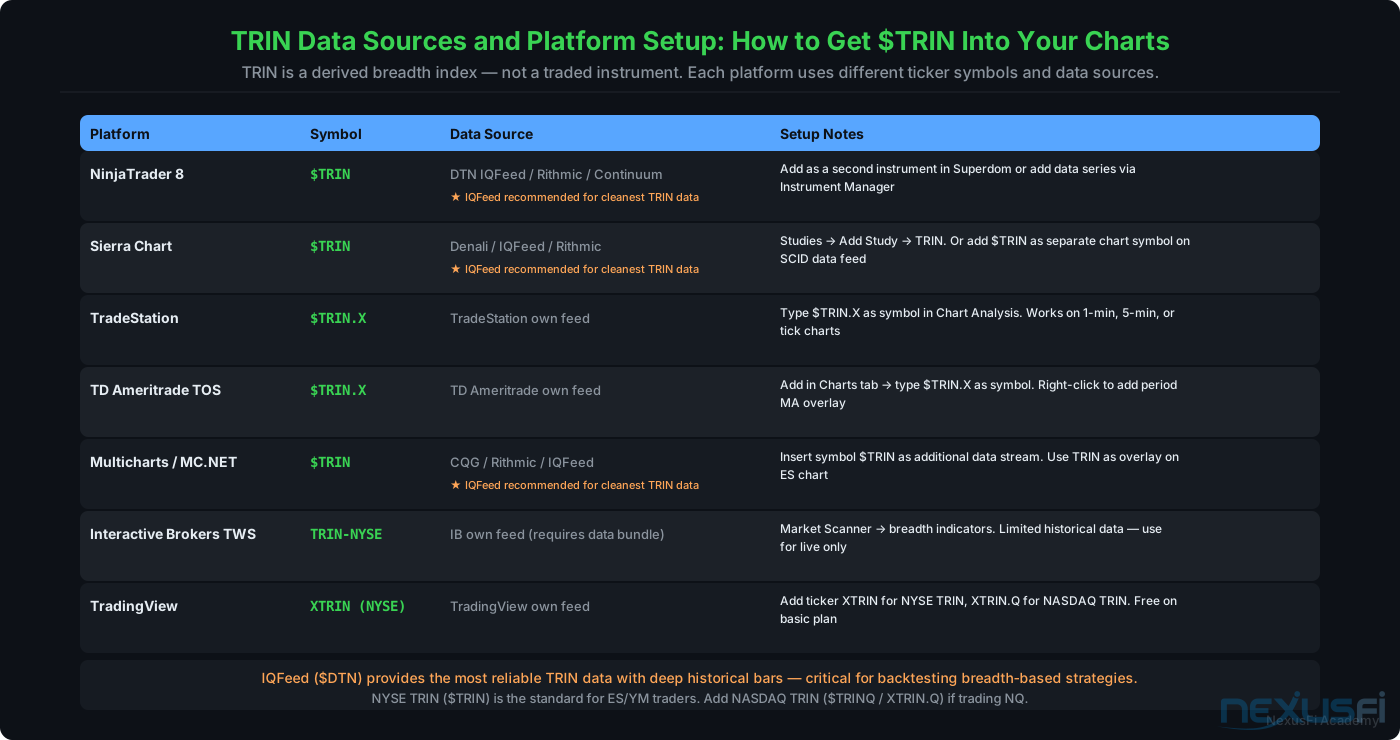
These are NYSE market statistics, not tradeable instruments. Not every data provider includes them in retail subscriptions. DTN IQFeed is a standard choice among professional futures traders for this data — the symbols are typically $TRIN, $TICK, $ADD (or with a prefix depending on your platform). IQFeed's reliability for index breadth data during volatile sessions is one reason it's preferred over alternatives.
NinjaTrader: TRIN is available under the symbol $TRIN on IQFeed connection. Display as a separate panel below your main chart, not as an overlay. Use line chart style, not bar chart. Add a horizontal line at 1.0 as the reference point. Optionally add a 10-period SMA to plot smoothed TRIN.
Sierra Chart: NYSE TRIN available via the feed as the symbol $TRIN or NYAD.TRIN depending on your data service. Sierra's Study feature makes it easy to add the SMA overlay.
TradingView: NYSE TRIN is available under the ticker $TRIN. Add it as a separate chart panel in the lower section, with the horizontal level at 1.0. Note that TradingView's breadth data has a slight delay on some subscription tiers — verify your data is real-time before relying on it for intraday decisions.
Two setup mistakes to avoid: never substitute NASDAQ TRIN ($TRINQ) for NYSE TRIN ($TRIN) when trading ES or NQ — NYSE breadth is the standard reference. And don't plot TRIN on a 1-minute chart — the noise is too high. 5-minute minimum, with a 10-period SMA to smooth the readings further.
Integrating TRIN Into Your Futures Trading Framework #
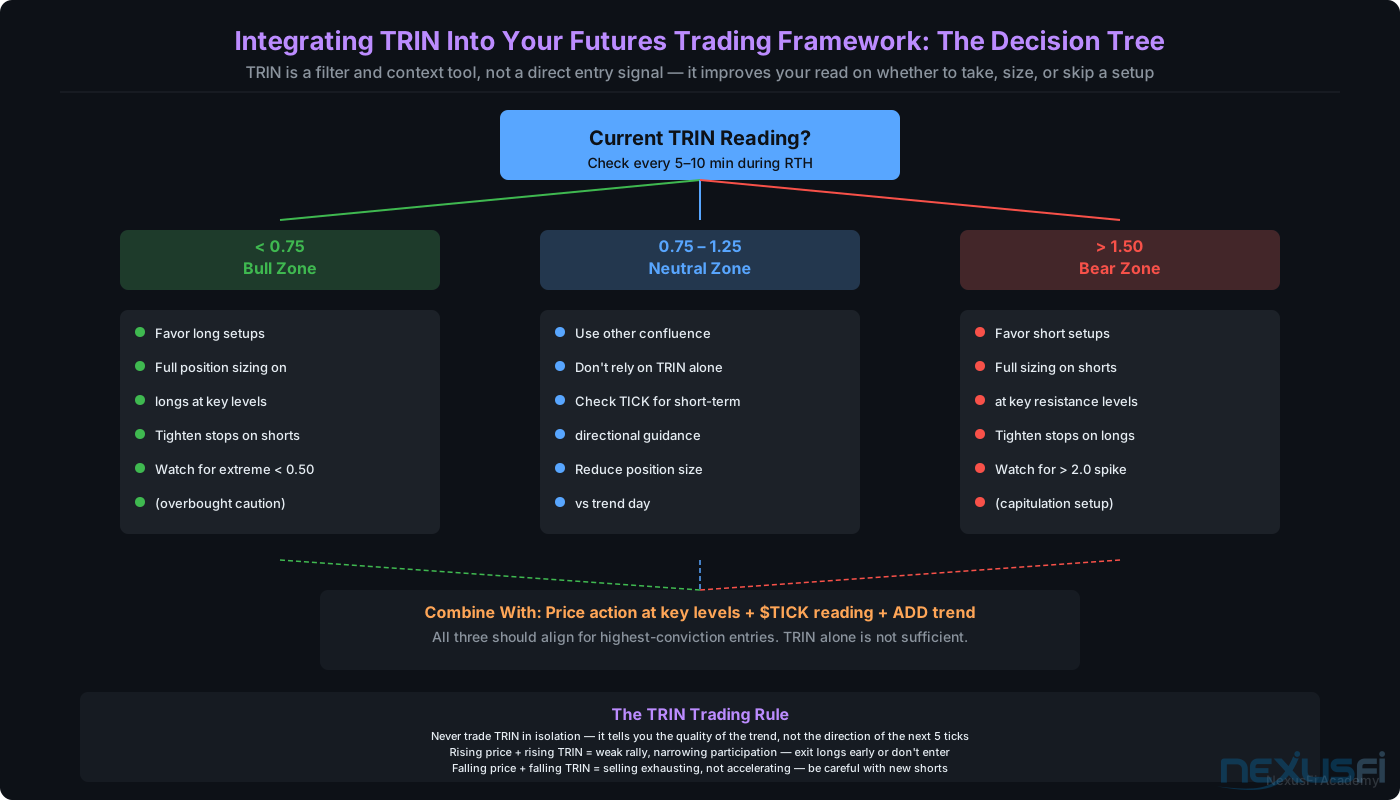
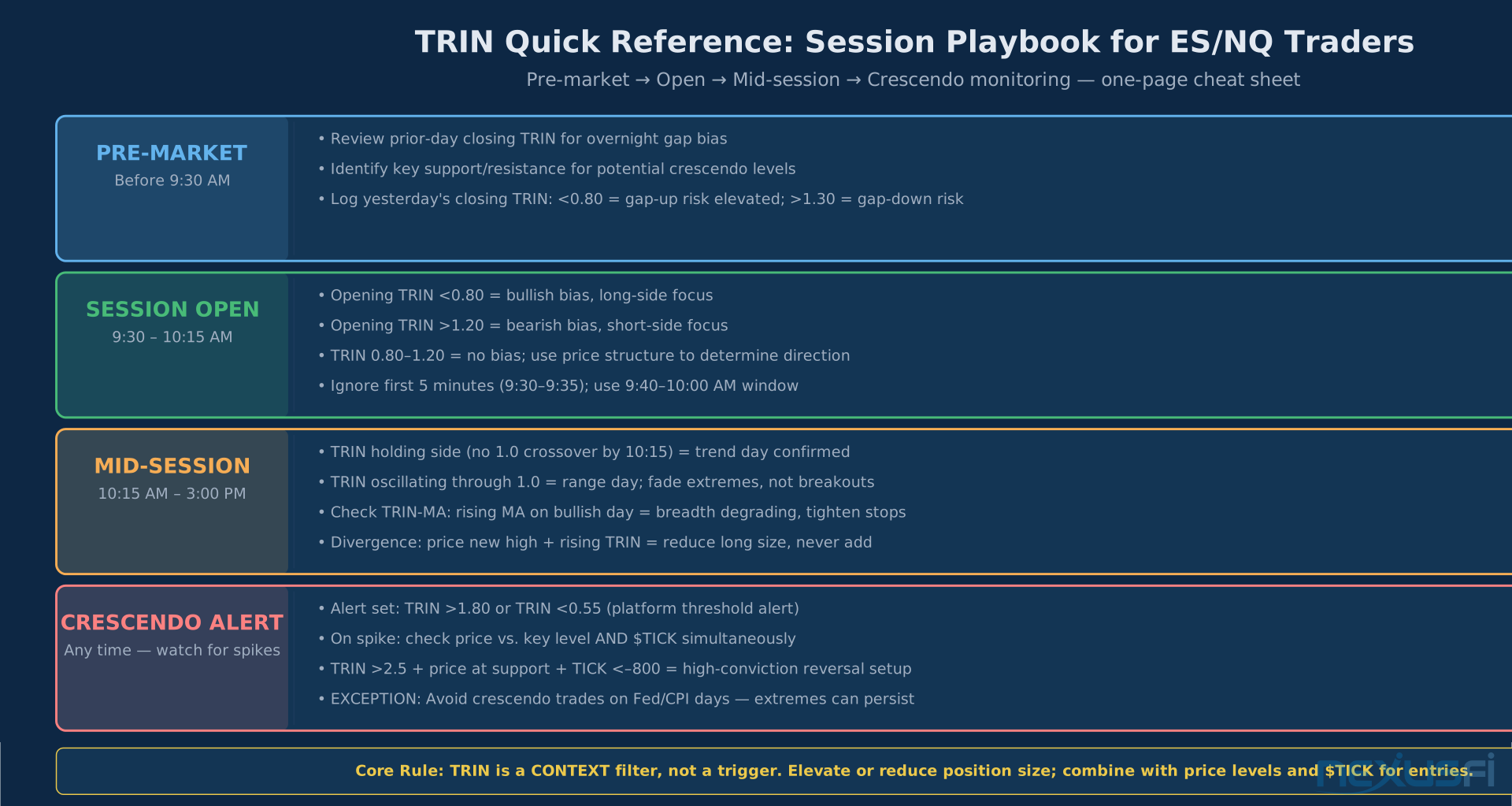
TRIN is a context indicator, not a trigger. The most effective way to use it is as a filter that elevates or degrades the probability of your existing setups — not as a standalone system.
Practical integration framework for ES/NQ day traders:
Pre-market preparation (before 9:30 AM):
- Note overnight session structure: key levels, value area from prior session, trend bias from closing price relative to prior day's value area
- Review previous day's closing TRIN to assess overnight gap probability
- Identify the day's key support and resistance levels that would be anchor points for potential crescendo trades
Session opening (9:30-10:00 AM):
- Watch opening TRIN read: below 0.80 = bullish bias, above 1.20 = bearish bias, 0.80-1.20 = neutral
- Confirm with $TICK direction in first 10-20 minutes
- If TRIN holds its opening read for 30-45 minutes, classify as trend day and trade so
- If TRIN oscillates repeatedly through 1.0, classify as range day and switch to fade-the-extremes strategy
Mid-session management:
- Track TRIN-MA trend: is breadth momentum improving or degrading?
- Check for divergence before adding to winning positions
- If TRIN crosses toward 1.0 in a trend day, tighten stops on existing trend positions
Crescendo monitoring:
- Set alert for TRIN > 1.80 or TRIN < 0.55 (your platform should support threshold alerts)
- When alert fires, check price vs. key levels and $TICK simultaneously
- Only consider crescendo trade if price is AT a known key level when the extreme hits
@Jeff65 presented a systematic approach to using TRIN as part of a structured long-bias system: "For timing our entry we are going to use two indicators. Our first indicator is our battle tested 2-period RSI which must be below 50, which indicates some short-term price weakness. Our next indicator is the NYSE TRIN index. This indicator must close above 1.00 for three consecutive days... what's nice about this particular setup is we have two indicators confirming our entry point. One is price based (RSI) and the other is non-price based (TRIN). So, we are getting confirmation from two independent sources."
(Using TRIN To Create A Winning System, Emini and Emicro Index forum)
@Abde, who built a detailed volume analysis framework on NexusFi, confirmed the role of NYSE internals: "During the US session I always stalk the NYSE market internals, namely the TRIN... It is a key filter that prevents taking trades against the broad market flow."
(E.V.A Executed Volume Analysis thread, The Elite Circle)
That combination principle — price-based and non-price-based confirmation — is exactly right. TRIN adds value precisely because it doesn't come from price. Most indicators traders stack on top of each other (MACD, RSI, stochastics, moving averages) are all derived from the same underlying price data and don't provide independent confirmation. TRIN measures something different: where the money is actually flowing, not where price is sitting. That independence is what gives it its edge.
TRIN doesn't generate a signal every day. Some sessions hold TRIN in a quiet 0.80-1.10 range the entire day — no crescendo, no divergence, no setup. Others deliver three extreme readings in sequence. When TRIN is grinding in a narrow range without conviction, reduce its weighting and lean on price structure and volume profile. When TRIN is making extreme moves, sharp transitions, or clear divergences from price, it becomes your primary session context indicator. Screen time builds the intuition to know which mode you're in.
Knowledge Map
Prerequisites
Understand these firstCitations
- — NYSE $TICK AND $ADD (2011) 👍 21“Unlike the usual bunch of indicators, which is derived from price, the TICK, ADD and TRIN use information from a different source. I think that watching market breadth indicators in parallel with index futures produces a real edge.”
- — Market Internals (2010) 👍 20“Senters Crescendo Trade at 2.0+ is right on for the next day. On these readings, you may want to trade the after hours session to get a jump on tomorrow's opening gap that usually occurs.”
- — Using TRIN To Create A Winning System (2011) 👍 4“TRIN must close above 1.00 for three consecutive days. One is price based (RSI) and the other is non-price based (TRIN). So, we are getting confirmation from two independent sources.”
- — ES and the Great POMO Rally (2011) 👍 2“Chart 1 shows an up sloping $TICK and a $TRIN reading staying below 1.00 indicating a positive divergence on the break, signaling a pullback to the VWAP and possibly the bottom of the range.”
- — Breadth indicators for analysis (2013) 👍 8“NYSE TRIN divides the advance/decline ratio by the advance volume/decline volume ratio. Trin greater than 1.0 indicates volume is concentrated in declining issues. Trin below 1.0 indicates volume is concentrated in advancing issues.”
- — E.V.A Executed Volume Analysis (NinjaTrader) (2012) 👍 1“During the US session I always stalk the NYSE market internals, namely the TRIN. It is a crucial filter that prevents taking trades against the broad market flow.”
- — Better sentiment index than $TRIN? (2015) 👍 4“You are a step ahead by knowing how they are calculated. Now that you know what the indicator is, you can evaluate its values and trends usefulness with your particular trading style.”
- Richard Arms Jr. — The Arms Index (TRIN): An Introduction to the Volume Analysis of Stock and Bond Markets (1996)
- John Carter — Mastering the Trade: Proven Techniques for Profiting from Intraday and Swing Trading Setups (2012)
- Larry Connors and Cesar Alvarez — Short-Term Trading Strategies That Work (2008)
- DTN IQFeed — Indexes and Indicators Definitions (2024)
- CME Group — Understanding Market Breadth Indicators for Index Futures Trading (2023)