



VOLD (Volume Advance-Decline): Reading the Dollar Weight Behind Market Breadth
Overview #
VOLD is the breadth indicator that fixes what ADD can't tell you. The NYSE Advance-Decline Line counts stocks — how many are advancing, how many are declining. But a penny stock advancing counts the same as Apple advancing. VOLD doesn't count stocks. It counts volume.
VOLD = total volume of advancing NYSE stocks minus total volume of declining NYSE stocks.
That difference is the dollar weight behind the breadth move. When VOLD is running strongly positive, it's not just that more stocks are going up — it's that more money, more shares, more institutional participation is on the buy side. When VOLD diverges from ADD or from price, you're seeing something important: the direction of stock movement and the volume behind that movement are telling different stories.
@wldman, an Elite Member who has used market internals as a core part of his approach for years, describes the three internals in terms of what each measures: "$VOLD is the difference between up volume and down volume. Generally the broadest internal measure. $ADD is number of advancing issues plus the number of declining issues. Often, the second to go. $TICK is the number of issues making an uptick minus the number making a downtick. The most sensitive and usually all over the place." Source — NexusFi Post #820770
That ordering matters. VOLD is the broadest. ADD comes second. TICK is the most noise-sensitive. Start with VOLD to understand what the money is doing — then let ADD and TICK add precision.
What VOLD Measures -- and Why It's Different from ADD #
The cleanest definition comes from @12VMan in a NexusFi thread dedicated to the subject: "ADD is the difference in the number of advancing vs. declining stocks; VOLD is the difference between the volume of advancing vs. declining stocks." Source — NexusFi Post #814024
Same universe of stocks. Different measurement. Here's why that matters:
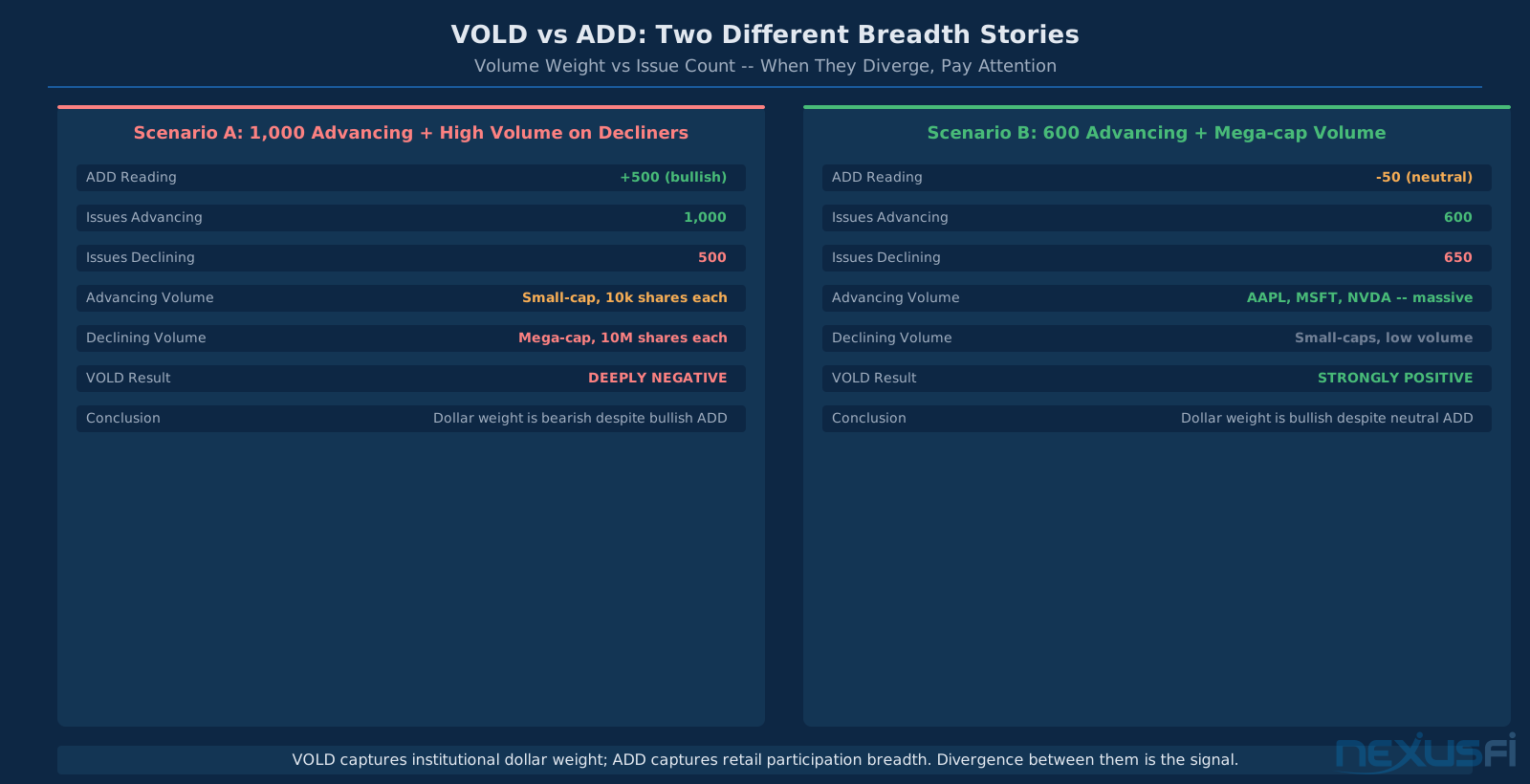
Scenario 1: 1,000 NYSE stocks are advancing, 500 declining. ADD = +500. But those 1,000 advancing stocks are all low-float small caps with 10,000-share daily volumes. The 500 declining stocks are mega-caps with 10 million shares trading. VOLD will be deeply negative — the declining issues are absorbing enormous volume despite their smaller count. The ADD reading is bullish; the VOLD reading is bearish.
Scenario 2: 600 stocks advancing, 650 declining. ADD = -50, almost neutral. But those 600 advancing stocks include every major tech name — AAPL, MSFT, NVDA, AMZN — with massive volume. VOLD is strongly positive. The dollar weight is bullish even though more issues are declining.
Neither scenario is common in its extreme, but the divergence between ADD and VOLD is common enough to matter daily. When ADD says one thing and VOLD says another, you need to understand why — and typically VOLD is telling you where the institutional money is positioned.
UVOL and DVOL: The Building Blocks #
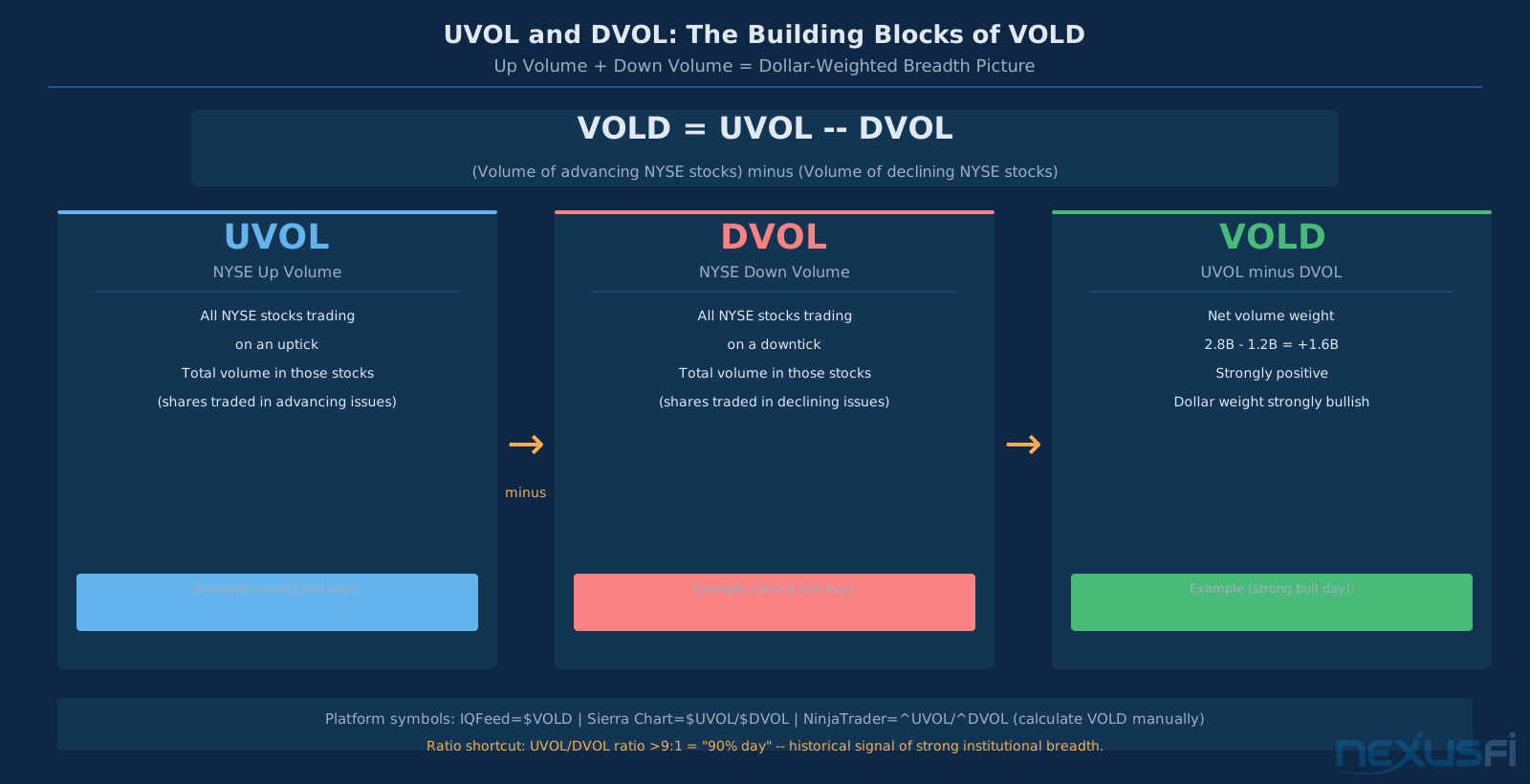
VOLD is calculated from two underlying data series:
- UVOL (Up Volume): the total share volume of stocks advancing on the NYSE
- DVOL (Down Volume): the total share volume of stocks declining on the NYSE
VOLD = UVOL - DVOL
Some platforms provide VOLD directly. Others provide only UVOL and DVOL, requiring you to create the calculation. In NinjaTrader 8,
Platform symbols vary:
- IQFeed: $VOLN or @VOLN (varies by subscription tier)
- Kinetick/NinjaTrader: ^UVOL and ^DVOL (VOLD must be constructed)
- Sierra Chart: $UVOL and $DVOL, or $VOLD on some feed packages
- TradeStation: $UVOL.NT and $DVOL.NT; VOLD = UVOL.NT - DVOL.NT
- TradingView: $UVOL and $DVOL available; calculate VOLD in Pine Script
The key check: look in the market metrics or breadth/index category of your feed's symbol browser, not the futures or equity sections.
UVOL and DVOL separately are useful beyond just computing VOLD. The UVOL/DVOL ratio (UVOL divided by DVOL) is an alternative breadth measure — a ratio above 9:1 is considered a "90% day" of unusual breadth strength. These historically cluster at major turning points and trend initiations.
The Sensitivity Hierarchy: VOLD -- ADD -- TICK #
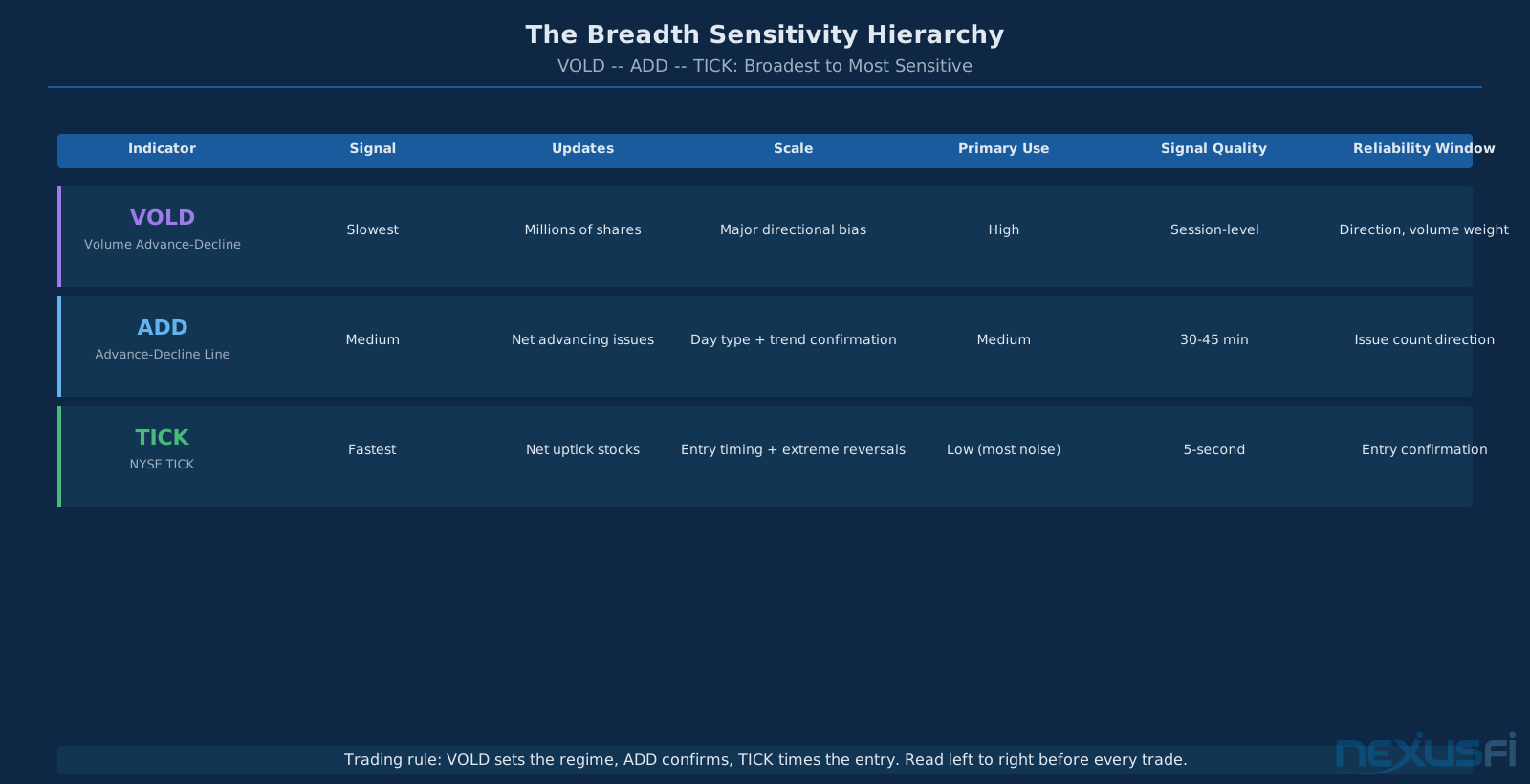
@wldman's ordering — VOLD, ADD, TICK from broadest to most sensitive — provides a practical reading framework. "Left to right in order of sensitivity $ADD $VOLD $TICK. That quick visual scan can give you a Do It!, Maybe? or a Nope! to whatever idea you are contemplating." Source — NexusFi Post #834485
In practice, these three indicators respond at different speeds to the same market event:
VOLD moves slowest — it reflects cumulative volume over the session, so early extremes are diluted as the session progresses. But that slow movement is a feature: it takes a lot to push VOLD much, which means large VOLD readings have more statistical weight.
ADD moves at medium speed — it updates as individual stocks cross from advancing to declining or vice versa. It's more responsive than VOLD but doesn't catch every micro-move.
TICK moves fastest — every 5 seconds, catching every individual trade flip. The most noise, the most responsiveness.
Practical application: start with VOLD to understand the day's dominant theme. Let ADD confirm direction. Use TICK for entry timing. If VOLD is strongly positive (+600 million or more by midday), ADD is consistently above zero, and TICK spikes to +800 — that's a three-layer confirmation for a long entry at VWAP. If VOLD and ADD both say one thing but TICK says another, ignore the TICK — it's noise.
Reading VOLD Numbers: Absolute Levels and Session Flow #
VOLD numbers are in millions of shares. Unlike TICK (typically -2000 to +2000 on normal days) or ADD (typically -2000 to +2000), VOLD can reach hundreds of millions. This makes specific thresholds more variable and data-provider dependent.
@richsan, who has traded with breadth indicators since NexusFi's early days, uses the UVOL/DVOL difference in a similar way: "I have two lines plotted at 150,000 and 300,000. Anything under 150,000 represents light volume and quite probably range bound movement. Once we get over 300,000 there is usually a significant trend." Source — NexusFi Post #6154 Note: these numbers represent thousands of shares and apply to an earlier market era — scale appropriately for current volume.
The more useful approach is reading VOLD as a session flow rather than fixed levels:
Early in the session (9:30-10:00 AM ET): VOLD opening direction matters. If VOLD opens positive and immediately trends more positive into the first 30 minutes, early trend confirmation. If VOLD opens positive but flattens within 15 minutes, the opening buying isn't being sustained — potential range day signal.
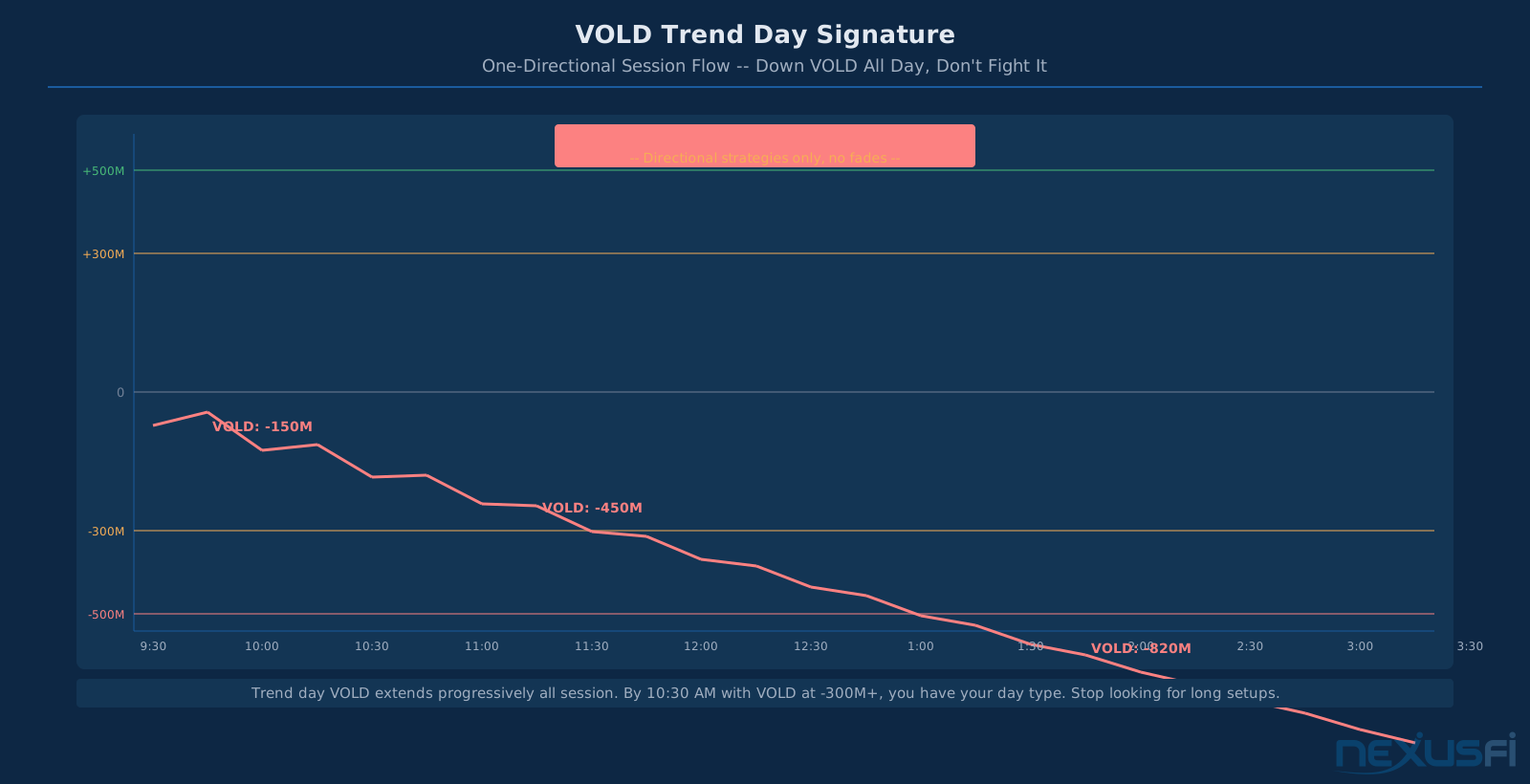
Mid-session: the cumulative VOLD value tells a different story than the raw moment-to-moment reading. A day where VOLD is oscillating between +100M and -100M is categorically different from a day where VOLD starts at -50M and progressively reaches -800M by 2:00 PM. The latter is a one-way selling session even if there are periods of ADD neutrality.
Late session (3:30-4:00 PM ET): end-of-day rebalancing creates VOLD noise. Heavy volume often accompanies the close regardless of direction. The trend established in mid-session VOLD matters more than the final reading.
VOLD for Day Classification #
The highest-value VOLD application is the same as ADD and TICK: classifying the day type before you trade it.
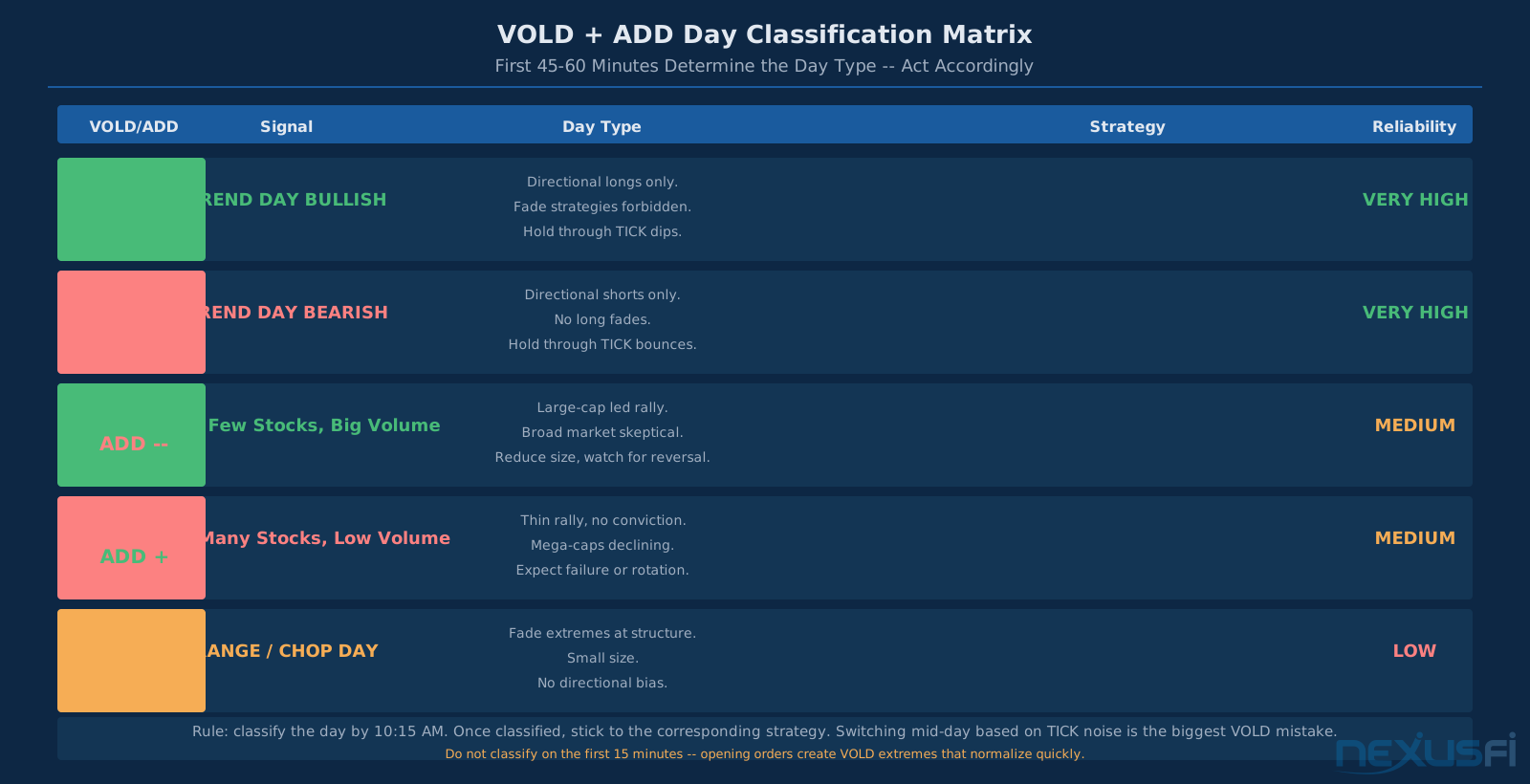
Trend day signature: VOLD establishes a direction in the first 45-60 minutes and never looks back. The reading progressively grows in one direction all session. If VOLD is at -200M by 10:30 AM and -600M by 1:00 PM, you're in a structured selling day. Don't fight it.
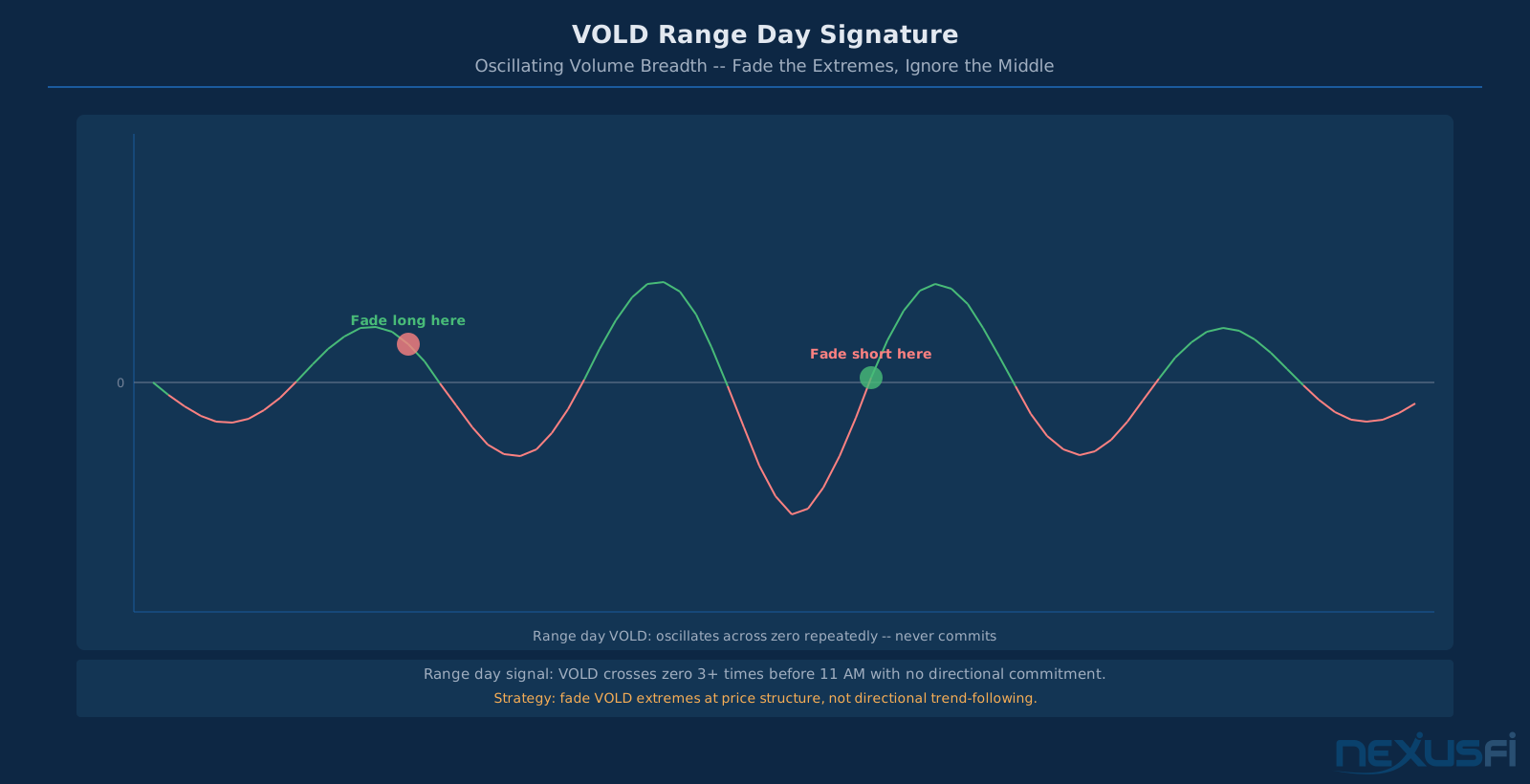
Range day signature: VOLD oscillates, crossing zero multiple times during the session. Early readings might be -150M, then revert to +100M, then back to -80M. The back-and-forth reflects genuine two-sided participation — neither buyers nor sellers establishing dominance. Range day strategies (mean reversion at extremes) work; directional strategies get chopped up.
Slow grind day: VOLD barely moves in either direction all session. Total cumulative VOLD stays within a narrow band (say, -50M to +100M). These days often produce the most frustrating trading — apparent setups that go nowhere because neither side has enough conviction to follow through.
Combined reading protocol with ADD: if VOLD and ADD both open in the same direction and both progressively extend in that direction without reverting to zero, you have a high-confidence trend day call by 10:30 AM. That's when to commit to directional strategies and stop looking for fades.
VOLD Divergence: When It Disagrees with Price #
The most actionable VOLD reading is divergence from price.
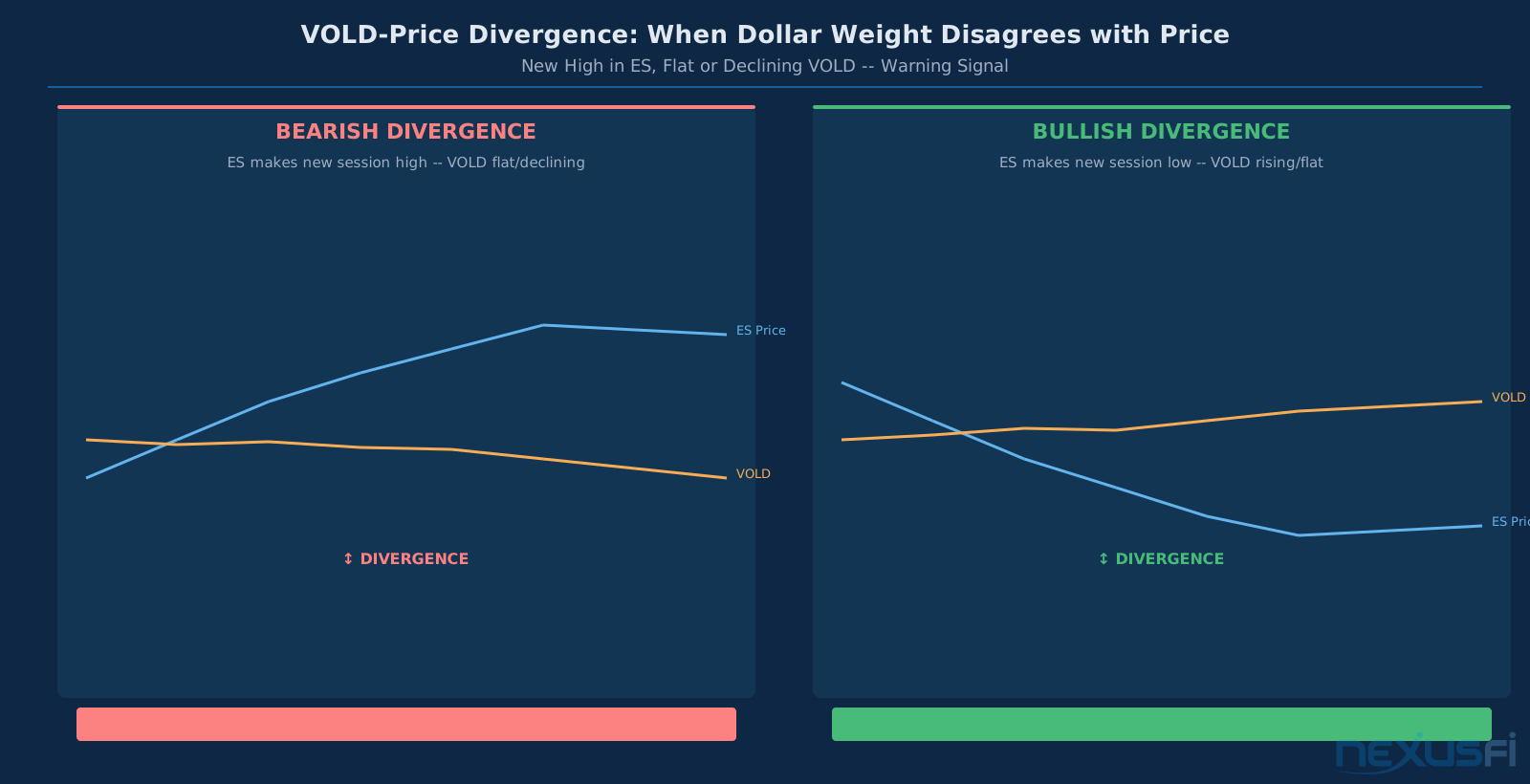
Bearish VOLD divergence: price in ES is making new session highs, but VOLD is flat or declining. The price advance is being driven by fewer and fewer stocks — eventually it runs out of fuel. Not an immediate short signal, but a warning to tighten stops on longs and prepare for a reversal.
Bullish VOLD divergence: price in ES is making new session lows, but VOLD has already turned positive or is rising while price falls. Institutional buying is coming into declining issues — a potential exhaustion bottom. Wait for price confirmation before entering, but the divergence sets up the trade.
The divergence setup requires patience. Divergences can develop over 30-90 minutes before resolving. The trigger is when VOLD turns in the opposite direction while price is still extending — not just flattening, but actually reversing. That reversal in VOLD, confirmed by a similar reversal in ADD, gives you the setup.
Setting Up VOLD on Your Platform #
The practical setup for ES/NQ futures day traders:
Chart configuration: VOLD on a 1-minute bar chart, separate panel from price. Don't overlay on price — VOLD's scale makes overlays unreadable. Run ADD in the same panel (dual-line) or directly adjacent. Keep TICK in a third panel.
Reference lines: add zero line as baseline. Consider horizontal lines at your local extremes — if you trade daily, you'll develop a feel for what constitutes "extreme positive" and "extreme negative" VOLD for your market environment. These are not fixed universal levels.
Smoothing: some traders run a short-period (5-13 bar) SMA on VOLD to smooth the noise. If raw VOLD oscillates too much for your style, the MA helps identify the session trend without signal-whipsawing. Don't over-smooth — a 30+ period MA on VOLD turns the indicator into a lagging trend line.
Cumulative VOLD: a third line showing the running sum of all VOLD readings since the open. Like the Cumulative TICK, it reveals persistent directional bias that the raw reading can mask. A day where raw VOLD oscillates but cumulative VOLD consistently declines is a bearish-breadth day regardless of the back-and-forth.
One practical note: not every data feed includes VOLD. Confirm with your data provider that $VOLD or ^VOLD is part of your subscription, not just UVOL and DVOL separately. If only UVOL/DVOL are available, calculate VOLD via indicator or use them independently — the ratio between them (UVOL/DVOL) is an effective substitute.
VOLD vs ADD: When They Disagree #
The ADD/VOLD relationship is the most subtle breadth reading available to day traders:
ADD > VOLD (many stocks advancing, but low volume on advancers): breadth is broad but thin. Many stocks are technically advancing, but without volume conviction. Common in weak rally attempts — the market looks "healthy" by issue count but institutional money isn't participating. Often precedes a reversal when selling volume picks up.
VOLD > ADD (fewer stocks advancing, but massive volume behind them): focused buying. A small number of high-volume stocks are leading. Typical in sector rotation days or when a few large-cap names are driving the index. ES can still go up, but the rally is narrower than ADD would suggest.
ADD and VOLD aligned: the most tradeable confirmation. Both above zero = institutional money is in the majority of advancing stocks in size. Both below zero = across-the-board selling with volume.
ADD and VOLD diverging sharply: be cautious. The market is sending mixed signals. Reduce size, wait for alignment.
Where VOLD Fails #
VOLD has the same failure modes as ADD and TICK, plus one unique to its volume-based nature:
ETF rebalancing and end-of-quarter: institutional rebalancing creates enormous volume that isn't directional in the usual sense. A fund selling $5 billion in equities to rebalance a target date fund inflates DVOL without representing true bearish conviction. VOLD readings on rebalancing days are less reliable.
Index constituent changes: when stocks are added to or removed from NYSE-listed indices, the rebalancing volume around announcement dates creates VOLD distortion.
Low-volume sessions: on holiday-adjacent Fridays or pre-earnings slow days, VOLD thresholds that work on normal days don't apply. The smaller the volume pool, the more any single large institutional order distorts the reading.
Pre-market and overnight gaps: VOLD is a RTH indicator — it measures NYSE trading hours. Don't try to trade the opening gap with VOLD; let the first 15-20 minutes establish a baseline before using VOLD for direction.
Building Your VOLD Workflow #
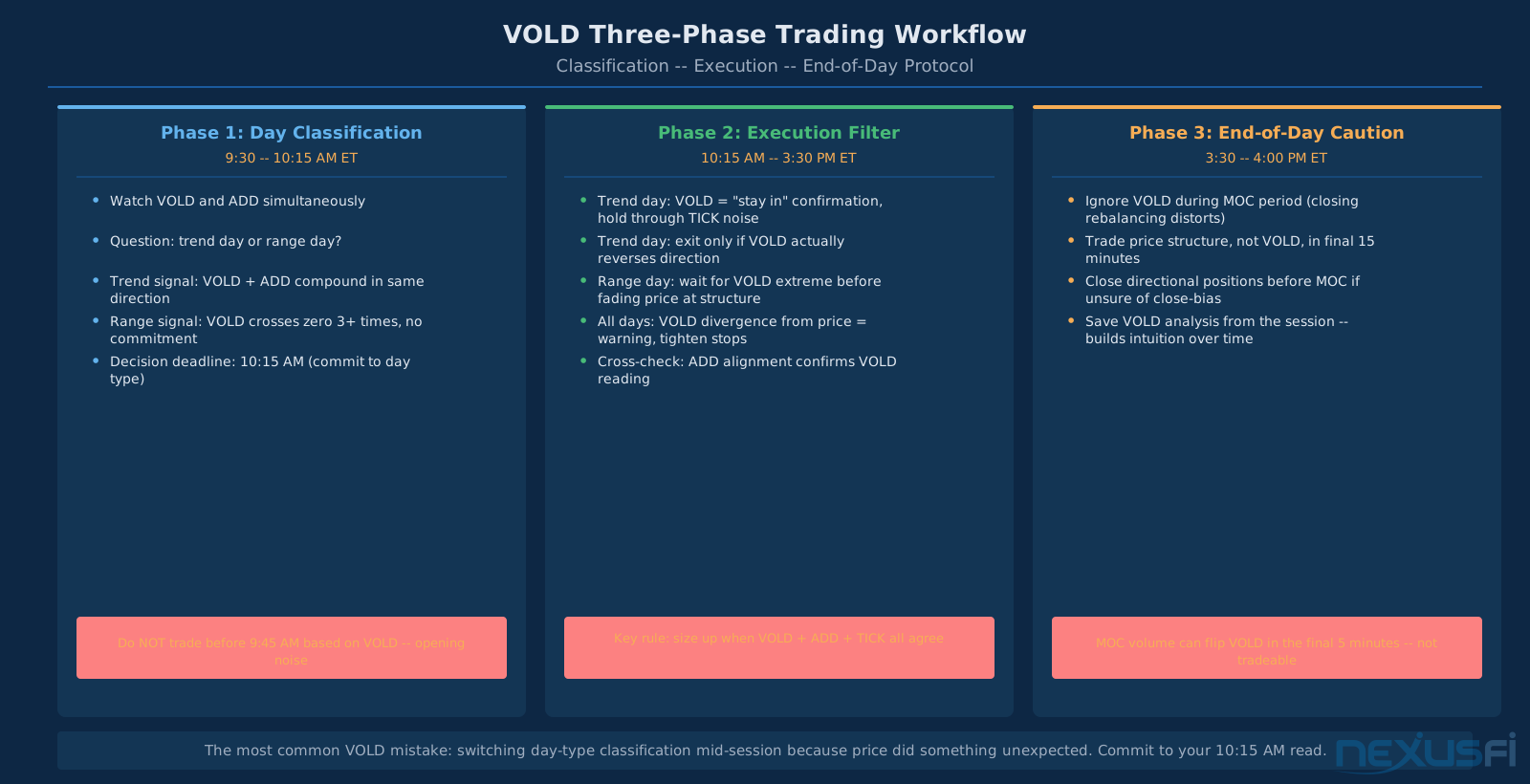
The most effective VOLD workflow runs in three phases:
Phase 1 (9:30-10:15 AM ET): Day Classification
Watch VOLD and ADD simultaneously. The question you're answering: is this a trend day or a range day?
Trend day signal: both open directional and compound in the same direction. By 10:00 AM, VOLD is extending, ADD is holding, and TICK MA is consistently on one side of zero. Commit to directional trading — VOLD confirmation on dips is your entry trigger.
Range day signal: VOLD oscillates, ADD oscillates, no sustained move above 300-400M or below -300M. Trade reversals at extremes only. VOLD extreme + price at structure = entry candidate.
Phase 2 (10:15 AM - 3:30 PM ET): Execution Filter
On trend days: VOLD is your "stay in" confirmation. If VOLD is running +600M and you're long, hold through TICK noise and small price pullbacks. Only consider exiting if VOLD actually reverses.
On range days: wait for VOLD extreme before fading. Don't fade TICK extremes on their own — wait for VOLD to confirm exhaustion at a price structure level.
For all session types: use VOLD divergence as a warning signal. If price extends but VOLD fails to follow, tighten your stops.
Phase 3 (3:30-4:00 PM ET): End-of-Day Caution
Ignore VOLD during the closing MOC (Market on Close) period. Rebalancing volume distorts the reading. If the trend has been running all day, VOLD will often show late-session distortion as closing orders hit. Trade price structure, not VOLD, in the final 15 minutes.
That last line deserves emphasis: VOLD alignment doesn't guarantee a successful trade. But VOLD misalignment should always make you cautious about size and conviction.
Knowledge Map
Go Deeper
Build on this knowledgeReferences This Article
Articles that build on this topicCitations
- — Tao te Trade: way of the WLD (2020) 👍 19“$VOLD is the difference between up volume and down volume. Generally the broadest internal measure. $ADD is number of advancing issues plus the number of declining issues. Often, the second to go. $TICK is the number of issues making an uptick minus the number making a downtick.”
- — Rrrracer's complete noob starting from scratch journal (2021) 👍 5“Left to right in order of sensitivity $ADD $VOLD $TICK. That quick visual scan can give you a Do It!, Maybe? or a Nope! to whatever idea you are contemplating.”
- — ^ADD and ^VOLD - way to create in NT 8? (2020)“ADD is the difference in the number of advancing vs. declining stocks; VOLD is the difference between the volume of advancing vs. declining stocks.”
- — Holy Grail (2009) 👍 2“I have two lines plotted at 150,000 and 300,000. Anything under 150,000 represents light volume and quite probably range bound movement. Once we get over 300,000 there is usually a significant trend.”
- — ^ADD and ^VOLD - way to create in NT 8? (2023) 👍 1“VOLD can be created from UVOL and DVOL and AD can be created from ADV and DECL.”
- — A Cowboy's Trading Journal (2016) 👍 4“Calculate the breadth (%) from up and down volume. Look for divergence at top and bottom to see if a move is supported by breadth.”
- CME Group — Market Breadth Indicators and Their Application to Index Futures (2023)