



NYSE TICK Index for Futures Traders: Reading Market Breadth Bar by Bar
Overview #
The NYSE TICK index is the market breadth indicator every ES and NQ futures day trader should have on their screen — and most don't know how to use correctly. Not as a buy/sell signal. Not as an oscillator with clean zones. As a participation thermometer that tells you whether the broad market is backing a move or quietly fading it.
Here's the core concept in one line: when TICK is running strongly positive and ES breaks to a new high, that's a different trade than when ES breaks to a new high and TICK barely budged. One has the market behind it. The other doesn't.
The TICK won't tell you where price is going. That's what price charts are for. What TICK tells you is whether the market is participating in the move — and that changes how you size, time your entry, and decide when to exit early versus hold for the full target.
What the NYSE TICK Measures #
TICK is simple. At any moment, the NYSE TICK measures the number of NYSE-listed stocks trading on an uptick (last trade above the previous trade) minus those trading on a downtick (last trade below). The result is a single number that gets updated roughly every 5 seconds.
+500 means 500 more NYSE stocks are ticking up than down right now. -800 means 800 more are ticking down. Zero is neutral — perfectly balanced, which is rare in practice.
The platform symbol is $TICK or ^TICK depending on your feed. In NinjaTrader with Kinetick data, it's ^TICK. Sierra Chart users: $TICK. TradeStation: $TICK.NT. Most major feeds carry it. If you can't find it, you're looking in the wrong symbol category — check market internals, not the futures list.
What TICK doesn't measure: it says nothing about the magnitude of those moves. A stock trading at $0.01 counts the same as a stock trading at $500. It's a count, not a dollar-weighted measure. That's why TICK works best alongside price structure — not as a replacement for it.
TICK in Numbers #
@tigertrader posted a definitive breakdown of TICK statistics in the NexusFi Psychology forum back in 2011 that every TICK trader should memorize. Source — NexusFi Post #93347 The numbers:
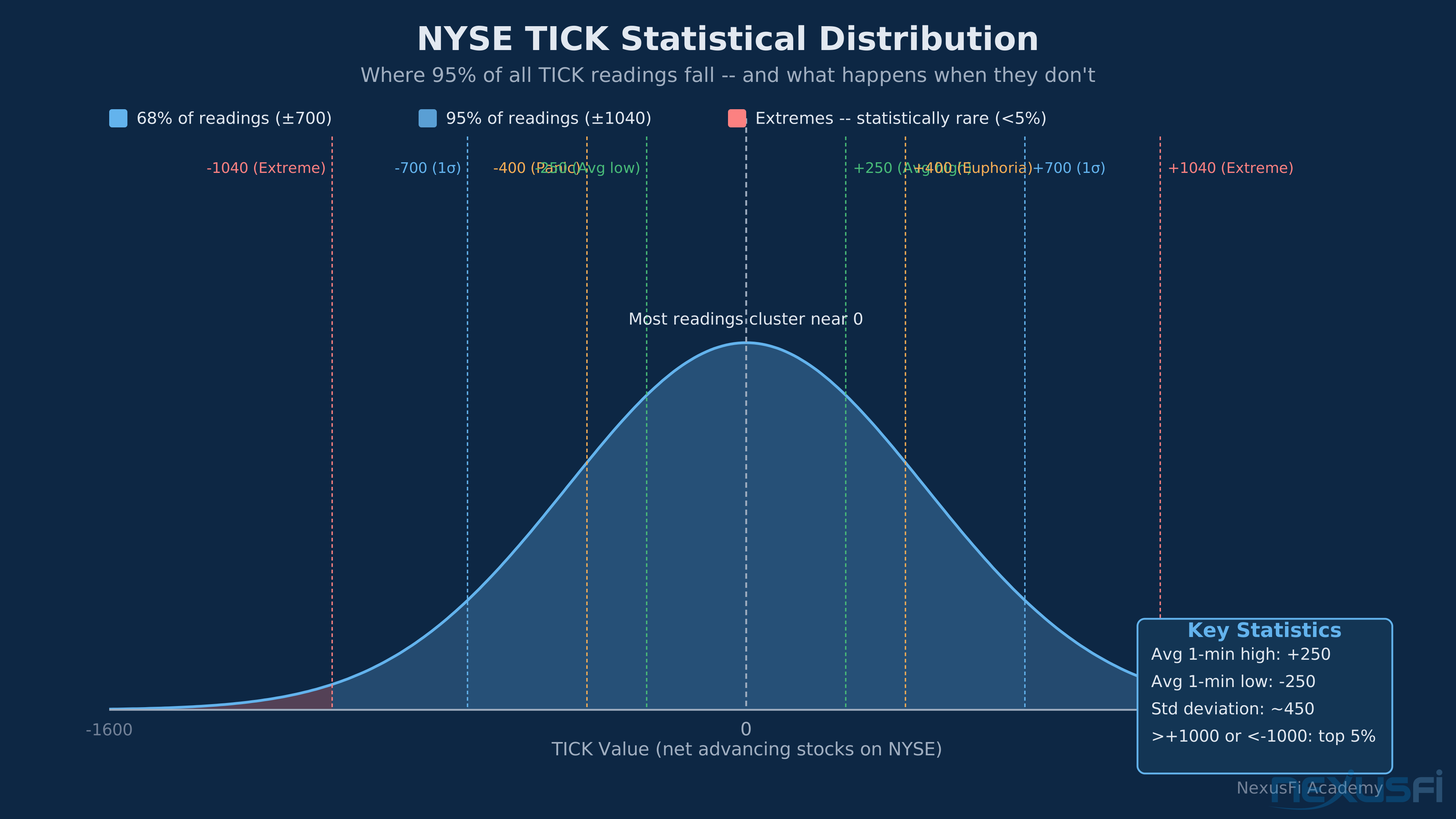
- Average one-minute high value: +250
- Average one-minute low value: -250
- Standard deviation: approximately 450
- Two-thirds of all TICK readings fall between +700 and -700
- 95% of all readings fall between +1040 and -1040
- Values exceeding +1000 or -1000 are statistically rare
Those last two numbers are the ones to internalize. When TICK prints +1200, you're in the 95th percentile of bullish breadth. When it prints -1200, same but bearish. These are extreme readings — they don't happen often, and when they do, something is happening that's worth paying attention to.
@sstheo, who's been trading with TICK for 15+ years, uses a simpler mental model: below -400 = panic, above +400 = euphoria. Source — NexusFi Post #839886 At those levels, emotional extremes are driving the buying or selling. Emotional extremes don't sustain — but they can persist longer than you expect if the underlying trend is strong.
One practical modification that smooths out the noise: a 13-period moving average of TICK on a 1-minute chart. tigertrader calls this "a few things that stand out" from watching the MA rather than the raw reading. The MA removes single-bar spikes and lets you see regime changes — when the market is persistently on one side of zero versus oscillating.
The distribution matters for another reason: you need to understand what's normal before extremes mean anything. On a random Tuesday with no trigger, TICK bouncing between +500 and -500 is unremarkable. Same readings on a day when TICK has been running -800 to -1200 all morning suddenly mean something different — a potential bounce or short covering.
Trend Days vs Range Days: The Most Important TICK Application #
This is where TICK earns its screen real estate. The single most valuable thing TICK does for ES and NQ traders is tell you — early, sometimes within the first 30-45 minutes — what kind of day you're in.
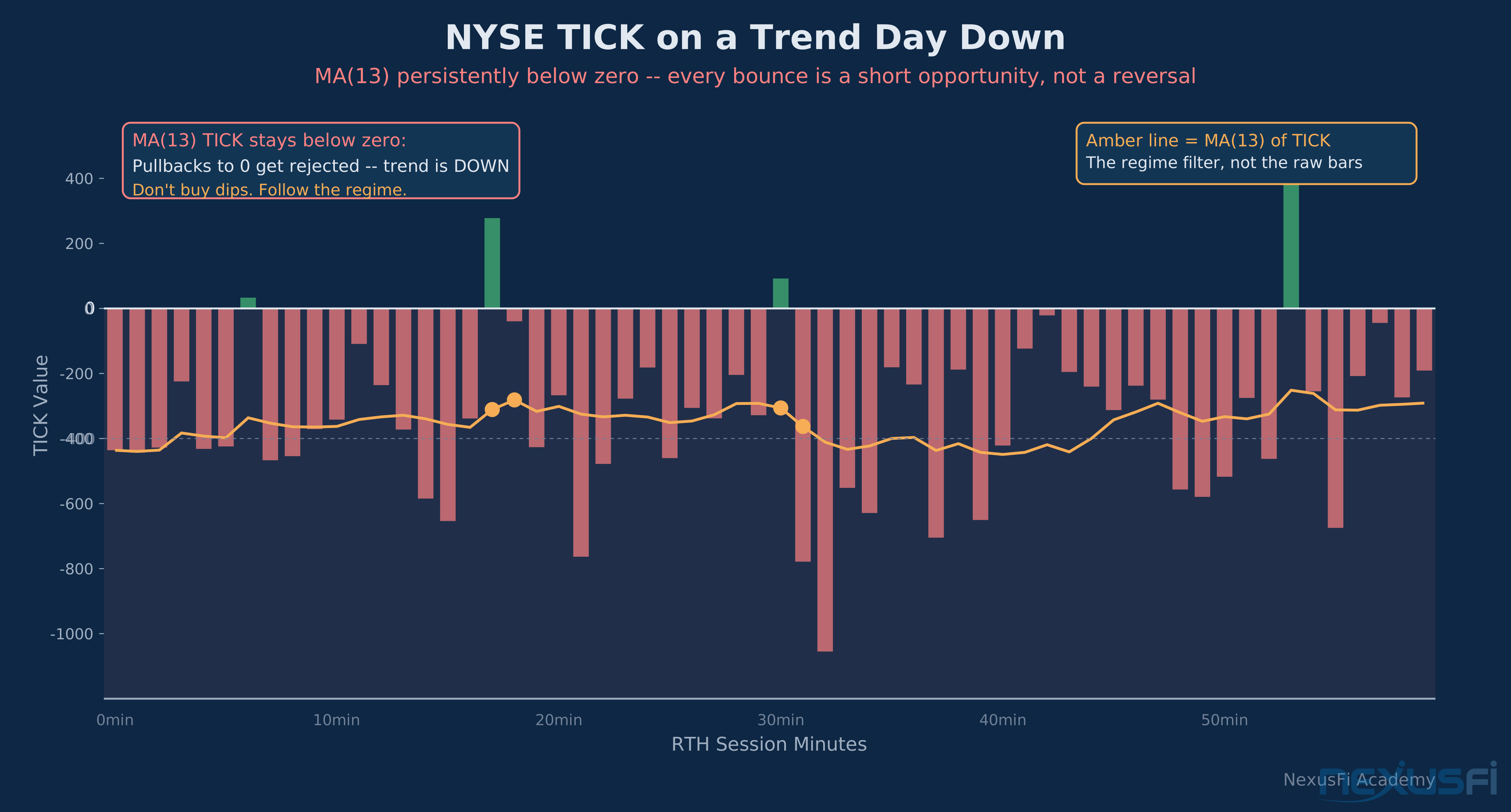
Trend days show up clearly on TICK. The MA of TICK will spend most of its time on one side of zero. Pullbacks in the MA can't even cross zero — they get rejected and the MA resumes its directional path. When you're seeing the TICK MA consistently rejected at the zero line on a down day, that means every bounce in ES is getting sold into by the broad market. Don't be a hero buying the dip.
That's a hallmark of a trend day — and on trend days, fading with TICK divergence is a losing game.
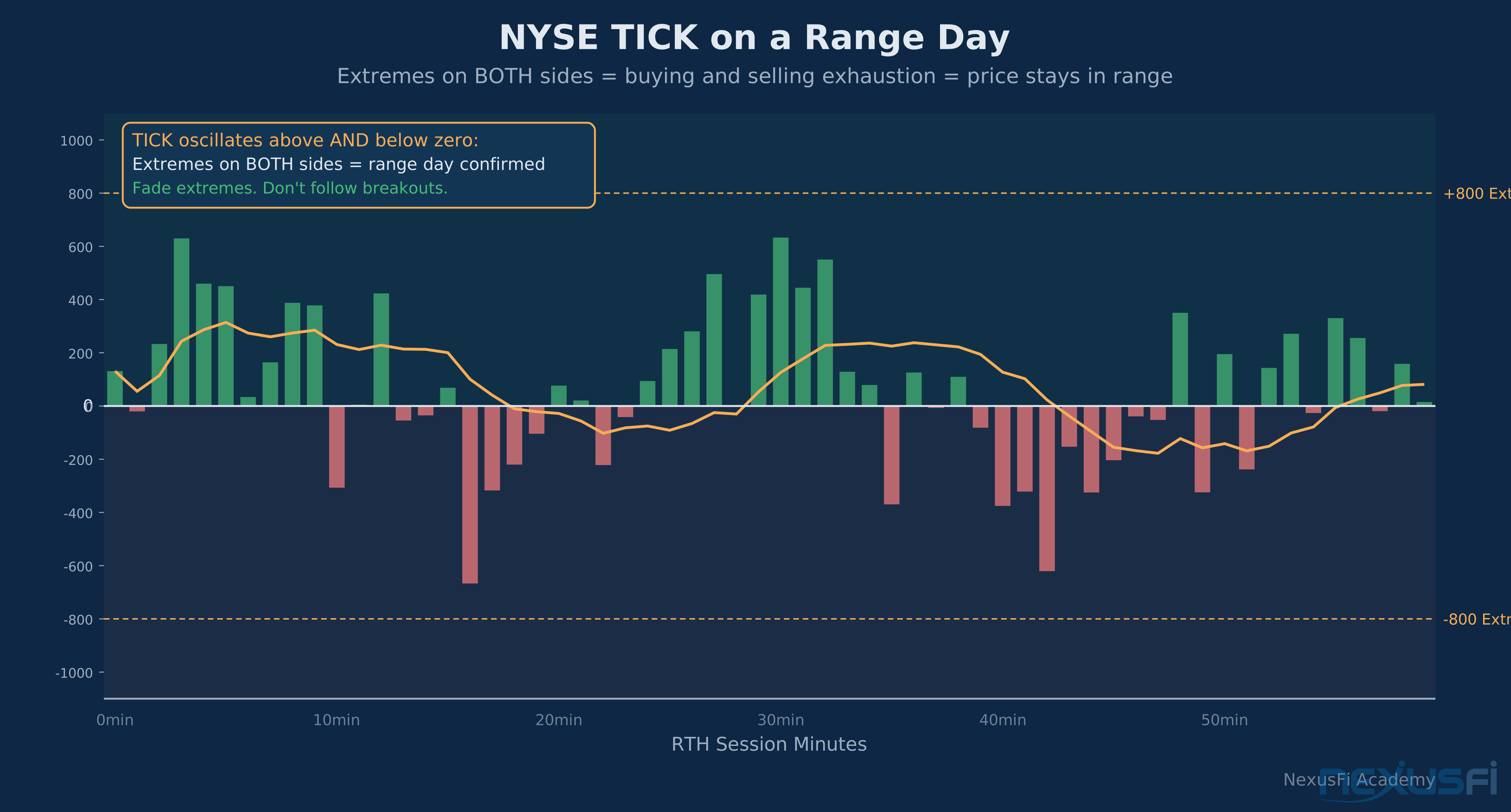
Range days have a different TICK signature. @rahulgopi laid this out cleanly in the Spoo-nalysis thread: "Range days usually will have extreme TICKs on both side of the chart, indicating buying and selling exhaustion. Once we see a buy and sell exhaustion on both sides, there is a good probability for the day to stay in that range." Source — NexusFi Post #487262
Translation: if TICK prints +900 in the first hour, then -850 an hour later, you're probably looking at a rotation day. Both sides are getting absorbed at the extremes. Price is stuck in a range. That's the environment where TICK reversal trades at extremes work best.
The diagnostic use of TICK adds something critical to your pre-trade bias:
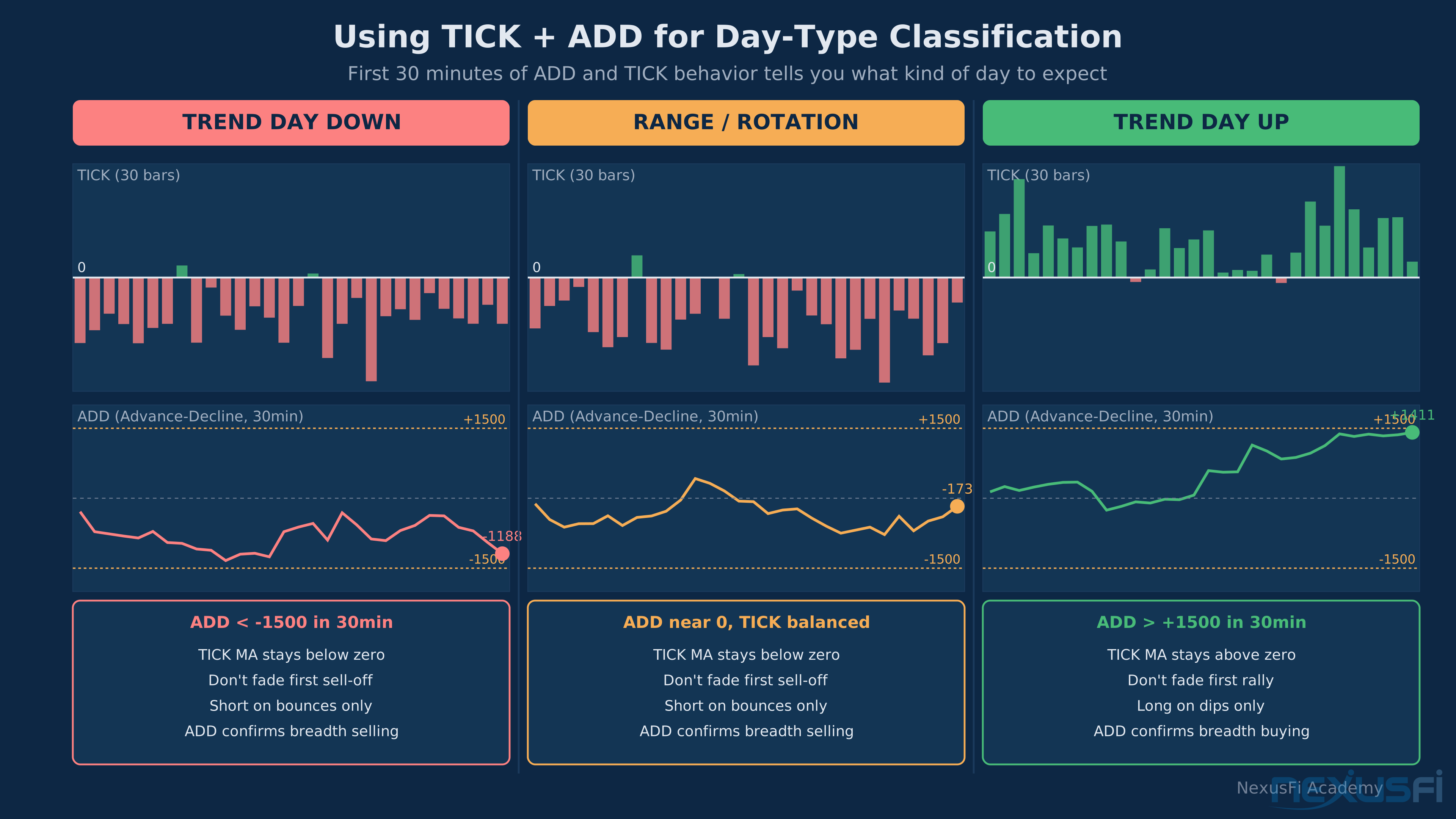
- ADD (Advance-Decline Line, $ADD or ^ADD on most platforms) reinforces TICK for day-type classification. If ADD opens flat and drops to -1500 within 30 minutes, the probability of a trend day down climbs much. tigertrader's data: median ADD at first 30 minutes is -346, with a standard deviation of 1378. When ADD is at -1500 or -2000 in the first half hour, you're statistically outside one standard deviation. Trend day. Trade so.
Four Core TICK Strategies #
There are dozens of ways traders use TICK, but they fall into four families. Master these and you can adapt any variation.
1. Exhaustion Fade at Extremes #
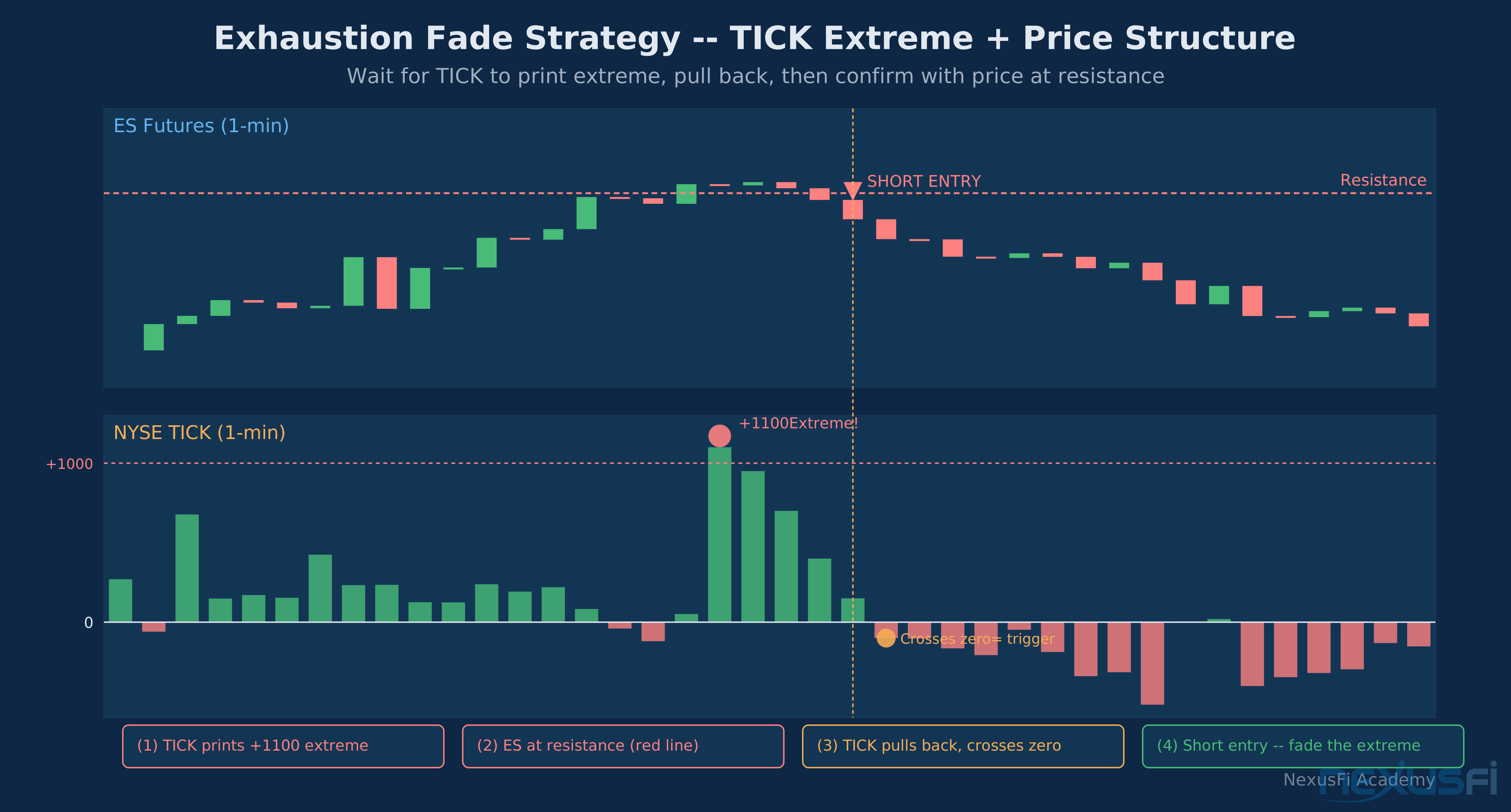
This is the most commonly discussed TICK trade. When TICK prints an extreme reading — say +1200 or -1100 — and price is simultaneously at a short-term resistance or support level, that's a potential reversal setup.
The logic: at +1200 TICK, virtually every NYSE stock is being hit on upticks. That's a near-maximum bullish participation reading. Extremes this far from the mean tend to mean-revert — the question is when.
The entry isn't the moment TICK prints the extreme. Wait for TICK to pull back from the extreme — when it crosses back below +800 or +600 heading toward zero, then look for the price structure confirmation. If ES has formed a lower high in that period, that's your entry short.
Critical caveat from @sstheo: The NYSE $Tick works best on days that are mostly range-bound. In strong trends, it is much less effective! Be very careful.
That warning needs to be tattooed on your trading chair. In a momentum day up, TICK can print +1200 four times in a row. Fading each one gets you slaughtered. The exhaustion fade only works when the day-type classification (above) isn't showing a trend.
Trade structure:
- Entry: after TICK pulls back 300-400 points from extreme, AND price is at structure
- Stop: beyond the extreme or 1.5x ATR from entry
- Target: VWAP or prior consolidation level (not the other side of the range — take what the market gives)
2. Regime-Continuation — Staying with the Trend #
On trend days, the fade strategy loses. The right tool is TICK as a filter for with-trend entries.
When the SMA(30) of TICK is running at +300 and stays consistently above zero, you're in a bullish participation regime. That means pullbacks in ES to VWAP or a prior support level are buyable — the broad market is still bidding. Fat Tails adjusts this further: in that bullish regime with the MA around +300, he'll use a TICK reading of -600 to -700 as a with-trend entry signal. The dip in TICK to -600 marks a local seller's exhaust — not a trend reversal — and price is likely to bounce.
This inverts the normal framing. On trend days, extreme negative TICK readings are entry points long, not panic exits.
The MA persistence rule matters: if TICK has been above zero for 20+ consecutive minutes on a 1-minute chart, you're in a confirmed bullish regime. Only take long setups. Exit when the MA crosses and holds below zero for 5+ minutes.
3. Breadth Divergence #
Divergence between TICK and price is one of the most reliable early warnings in day trading.
The setup: ES makes a new high for the session, but TICK on that push is notably weaker than it was on prior highs. Say the first push up had TICK running +700 to +900. The second push, ES goes higher but TICK peaks at +400. That's weakening participation behind a price advance.
By itself, that's a warning, not a trade. @veggen, who's been using TICK as his primary scalping tool, explains how to use divergence in context: "Does price move up or down, but TICK not really showing strength or weakness confirming the price? Are there levels which TICK reaches that are constantly being met with buyers/sellers?" Source — NexusFi Post #433016
The trade triggers when two things align: (1) divergence in TICK vs price, and (2) price stalls at structure (prior high, VWAP resistance, session high). At that point, the divergence gives you confirmation for a short — tight stop above the high, target back to VWAP or the prior consolidation.
Divergence trades demand tight stops. If you're wrong and price pushes through with strong TICK resumption, the divergence thesis is busted — get out.
4. Zero-Line Regime Filter #
This is the simplest TICK application and the best one for traders new to the indicator.
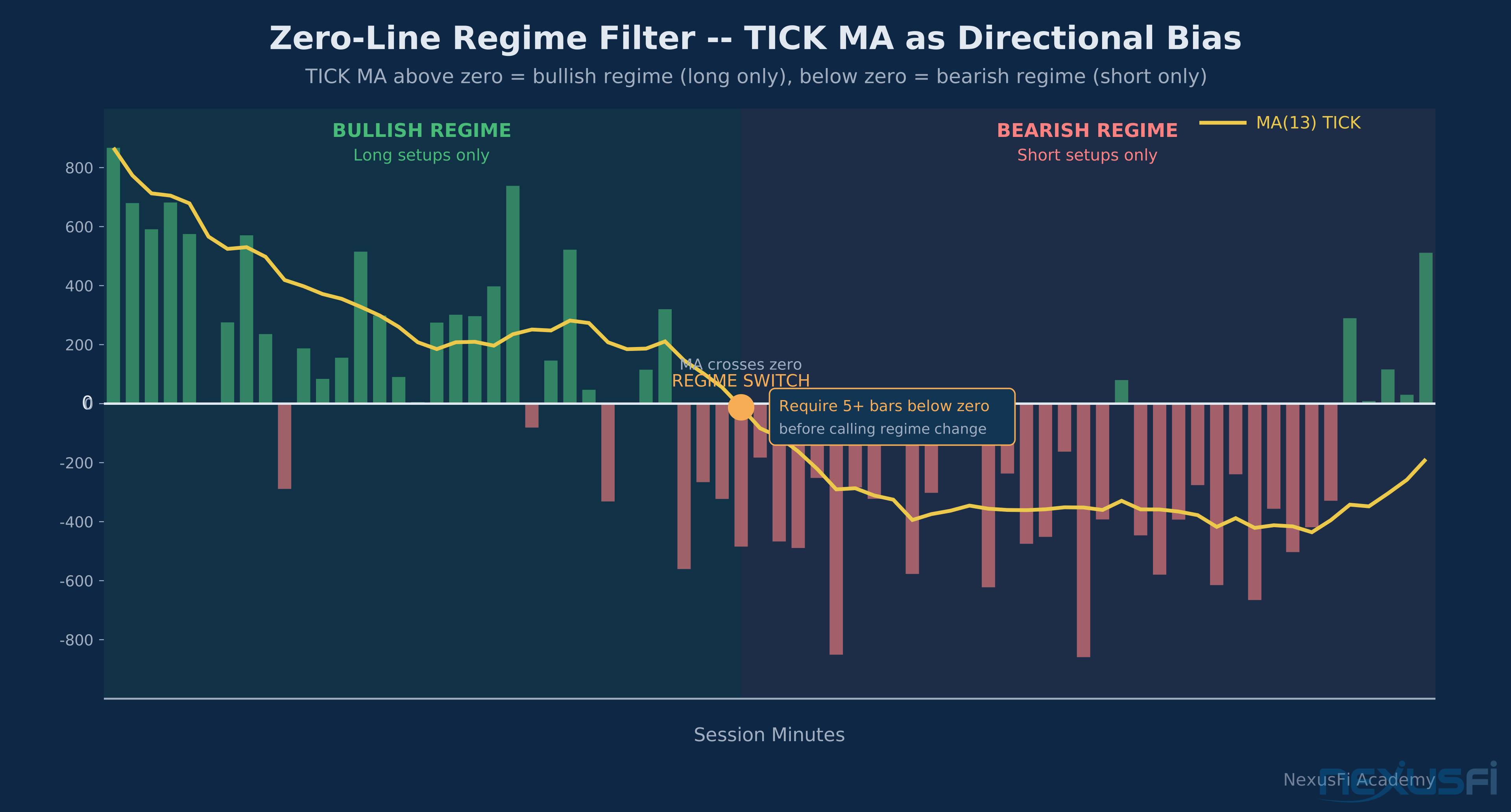
Treat the zero line as the dividing line between bullish and bearish participation regimes. When the 13-period TICK MA is above zero for 5+ consecutive bars on a 1-minute chart, you're in a bullish regime — favor long setups. Below zero for 5+ bars, favor shorts.
The persistence filter is non-negotiable. A single bar crossing zero means nothing. Even two bars. You need sustained hold to call it a regime — otherwise you're chasing every TICK noise spike.
Practical application: When TICK crosses above zero and holds, wait for ES to pull back to VWAP or a recent support. That's your long entry. Stop below the support. When TICK crosses below zero and holds, shorts on bounces toward VWAP become the trade.
On chop days, the zero line flips every few minutes and nothing holds. That's your signal to go flat or dramatically reduce size — not to trade every flip.
Cumulative TICK and the ADD Companion #
Cumulative TICK #
The cumulative TICK is the running sum of all TICK readings throughout the session. It's what tigertrader means when he says "the Cumulative TICK is running negative." When you add up all the 5-second TICK readings since the open and the sum is deeply negative, you have broad selling throughout the day — even if individual bars showed bullish bounces.
Cumulative TICK tells a different story than instantaneous TICK. You can have a day where raw TICK bounces between +600 and -600 all session, but the cumulative sum drifts steadily negative. That means the selling pressure is quietly winning. Every bounce is getting absorbed.
Most charting platforms let you plot a cumulative sum of TICK. Run it as a separate panel below TICK. When cumulative TICK makes lower lows even as price makes higher highs, you have a divergence that often resolves in price's favor — downward.
The ADD (Advance-Decline Line) #
$ADD or ^ADD tracks the number of advancing minus declining issues on the NYSE — updated throughout the day. Where TICK is a 5-second snapshot of last-trade direction, ADD is a running count that compounds over the session.
The first 30 minutes of ADD behavior is the most important. tigertrader's numbers: "when we see $ADD open at +150 or greater or at -150 or less, it is an indication that we might be in a trend day. By the end of the first half hour of trade, the median value for $ADD has been -346, with a standard deviation of 1378. If we're seeing $ADD with readings of +1500 or more or -1500 or more, then there is a high probability of a trend day." Source — NexusFi Post #93347
Use ADD alongside TICK for day classification. If TICK is persistently negative AND ADD is running -1500 by 10 AM, you have two separate breadth measures both screaming trend day down. Don't fight it.
Setting Up TICK on Your Platform #
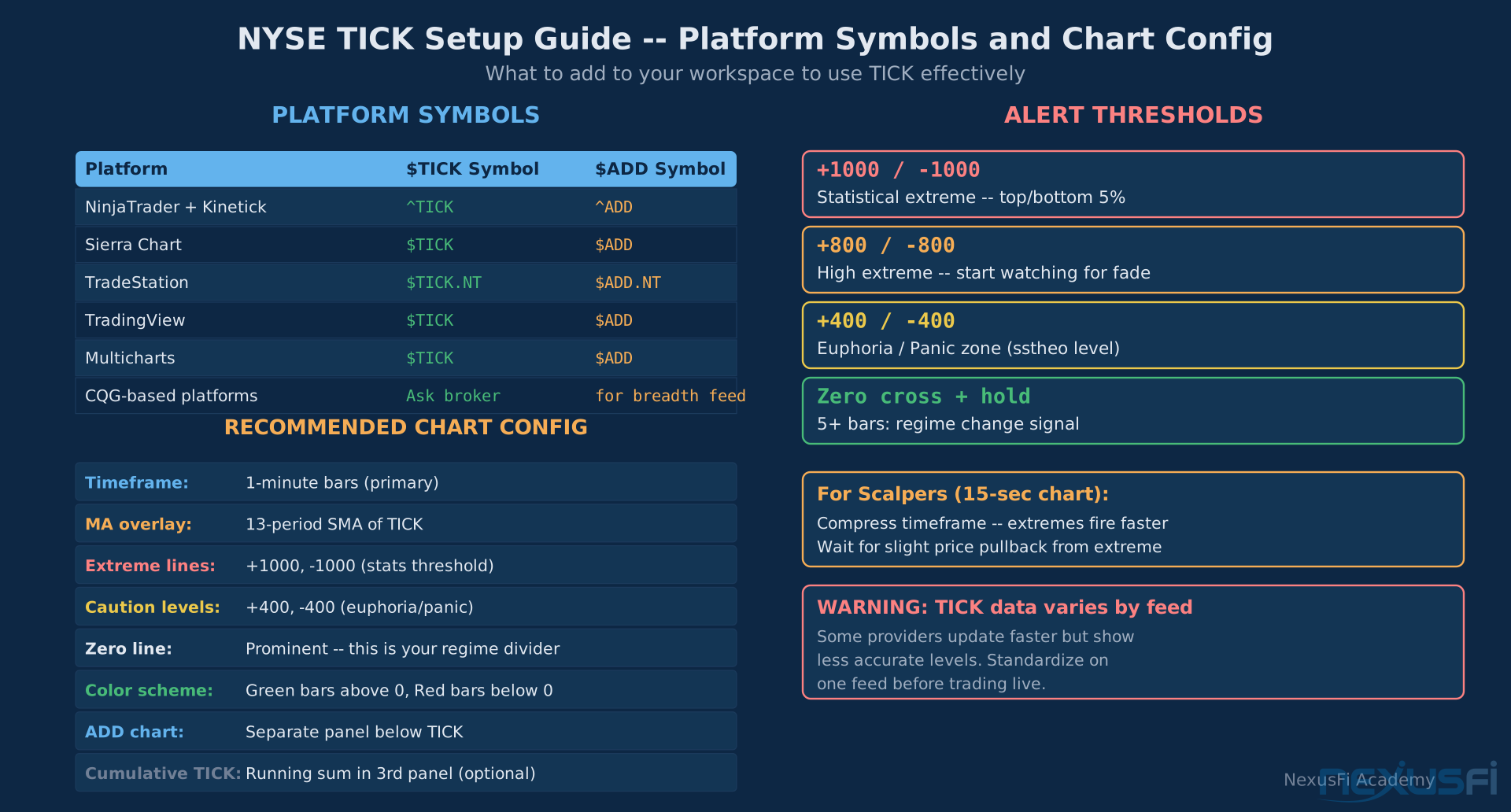
Platform symbols vary by data provider:
- NinjaTrader with Kinetick: ^TICK and ^ADD
- Sierra Chart: $TICK and $ADD
- TradeStation: $TICK.NT and $ADD.NT
- TradingView: $TICK (already in their database)
- CQG-based platforms: ask your broker for the breadth feed — most carry it as a custom symbol
Chart setup: TICK on a 1-minute chart with a 13-period simple moving average overlaid. The MA is what you're watching, not the raw spikes. Add horizontal reference lines at +1000 and -1000 for the statistical extreme zone, and at +400/-400 for the sstheo "euphoria/panic" threshold.
Fat Tails goes further and replaces the fixed extreme lines with a "fixed channel around the moving average" — so if the MA is running at +300, his overbought trigger is +1300 and his oversold trigger is -600 to -700 depending on the day. That adapts the extremes to the day's regime rather than using static levels regardless of market conditions. Sound alerts at your extreme threshold are worth setting up — they let you watch price without staring at the TICK panel constantly.
Secondary setup: a separate panel for ADD on the same 1-minute chart. For the cumulative TICK, add a third panel showing the running sum.
Where TICK Fails #
No discussion of TICK is complete without an honest breakdown of where it doesn't work.
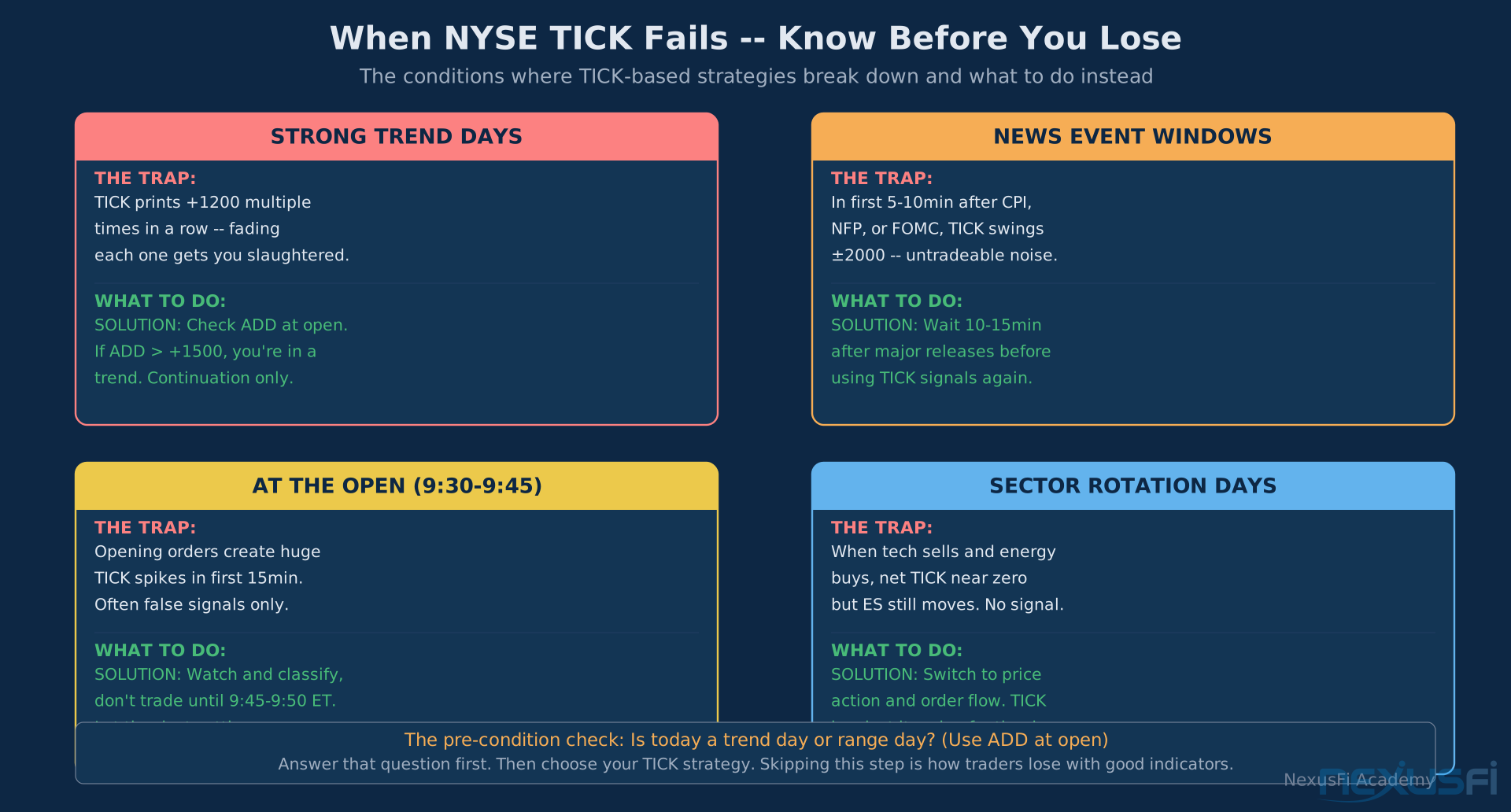
On strong trend days. This is the biggest trap. A trader learns TICK extremes = fade. Then they have a day where ES goes up 60 points and TICK stays above +600 all morning with spikes to +1400. They fade it. They get destroyed. The exhaustion fade strategy has a specific pre-condition: the day-type needs to be range or chop. Trend days break TICK strategies that depend on mean reversion.
During news events. In the first 5-10 minutes after a major data release (CPI, NFP, FOMC), TICK can swing from -2000 to +1500 within minutes. These are not tradeable extremes — they're market-wide technical reactions to algo order flow that normalize quickly. Wait for the dust to settle before using TICK.
At the open. The first 15 minutes of RTH session are notoriously noisy for TICK. Huge TICK extremes often occur in the first few minutes as opening orders hit. These are often followed immediately by a reversal. Experienced TICK traders wait until at least 9:45-9:50 AM ET before acting on TICK signals.
When TICK and price disconnect structurally. This happens during sector rotation — when tech is selling and energy is buying, for example. The net TICK might be near zero even though ES is moving. In those environments, TICK loses its predictive value for ES specifically, because the sector dynamics are moving TICK in ways that don't map to the index contract.
On holiday/reduced-volume days. Liquidity is thin, fewer stocks are actively trading, and TICK readings are less representative. The thresholds that work on a high-volume Tuesday don't work the same on the Friday before a holiday.
TICK for Scalpers #
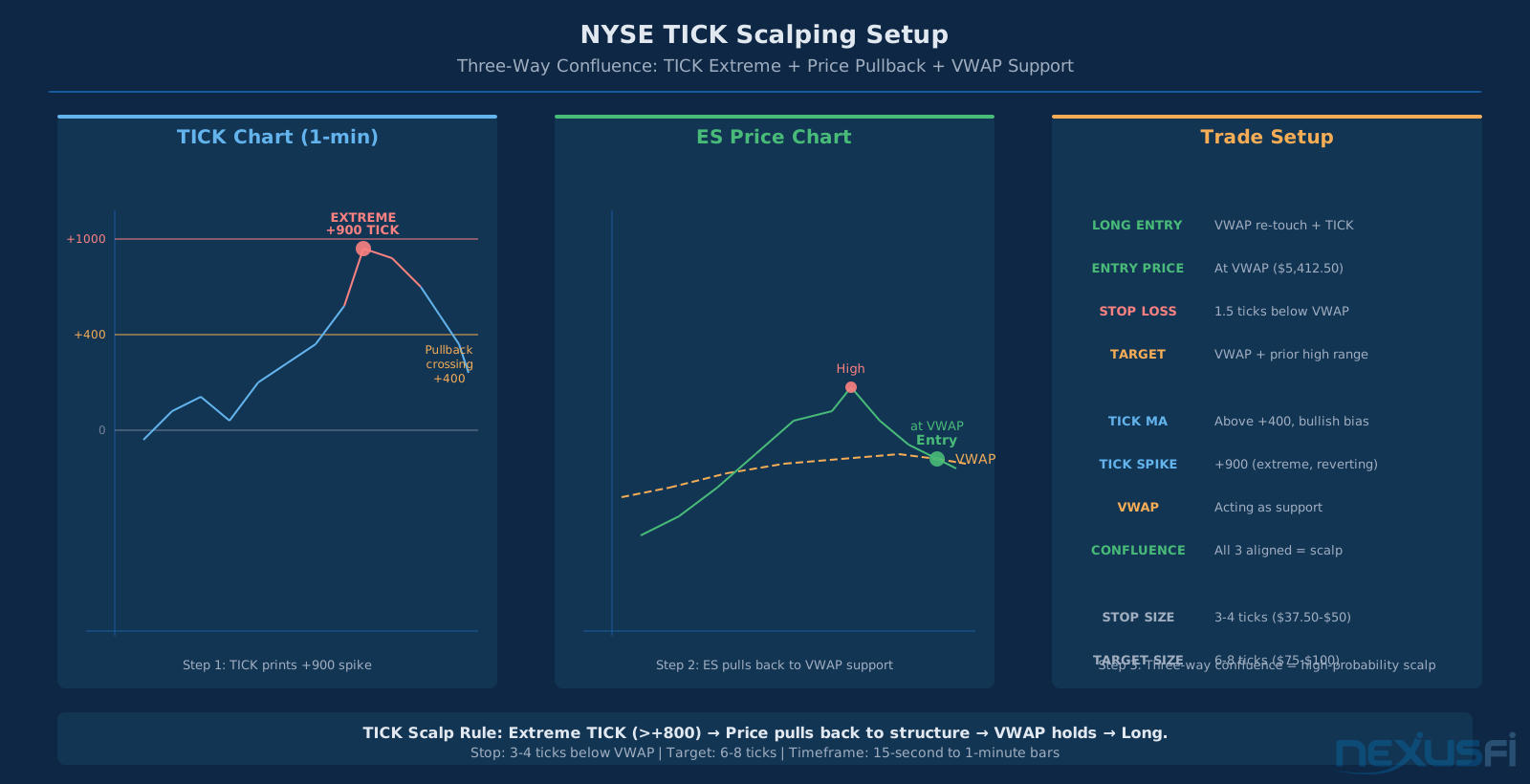
For scalping, the timeframe compresses. sstheo runs TICK on a 15-second chart alongside his price chart when scalping. The setup: when TICK prints an extreme in one direction, he waits for a "slight pullback in price from the extreme up or down before jumping in." Tight stop. Source — NexusFi Post #839886
The math works: if TICK prints +900, and price pulls back slightly, and VWAP is below acting as support, you have three things aligned — breadth extreme (meaning it's about to revert), price pullback from the high (entry point), and VWAP support (stops it from tanking). That's a scalp entry with a 3-4 tick stop targeting 6-8 ticks.
One thing to watch: TICK readings vary between data feeds. veggen noted this explicitly — some feeds update faster but show less accurate levels. If you're trading with three friends using the same TICK strategy but different data providers, you might see different readings at the same moment. Standardize on one feed and study its behavior before you trade it live.
Building Your TICK Framework #
Don't try to implement all four strategies at once. Pick the one that fits how you already trade.
If you're a directional day trader: Start with the zero-line regime filter. Run TICK MA above zero = only long setups. Below zero = only short setups. Apply this for 2 weeks and track whether your directional setups improve. The filter alone will cut a meaningful number of counter-trend losses.
If you're a range/mean-reversion trader: The exhaustion fade at extremes is your strategy. But you need the day-type filter first — before any fade, confirm with ADD that you're NOT in a trend day. Only after that check passes do you start looking for TICK extreme + price structure confluence for a fade.
If you're a scalper: Start with the MA, set alerts at +/-400 and +/-800, and develop a feel for how the TICK behaves at those levels before you trade it. Veggen's advice about screen time is real: "TICK readings take screen time to learn... watch it for weeks, months, just like you would when learning to read the DOM."
One framework that works for all three styles: use ADD at the open to classify the day (range vs trend), then apply the appropriate TICK strategy for that day type. On trend days, TICK MA is a regime filter and your only TICK trade is the with-trend entry on dips. On range days, TICK extremes are fades and TICK divergence warnings get your attention.
The traders who get most from TICK aren't using it mechanically. They're using it to answer one question constantly: Is the market participating in this move? When price moves and TICK confirms, you stay in. When price moves and TICK doesn't confirm, you tighten stops and start thinking about exit.
That's the game TICK helps you play better.
Knowledge Map
Go Deeper
Build on this knowledgeReferences This Article
Articles that build on this topicCitations
- — NYSE $TICK AND $ADD (2011) 👍 47“TICK - First Panel The NYSE TICK tells us how many stocks are trading at their offer price minus those trading at their bid. It is now available on NT with a live Kinetick feed, and goes under the symbol ^TICK.”
- — Day Trading with TICK (2021) 👍 12“The NYSE $Tick works best on days that are mostly range-bound. In strong trends, it is much less effective! Be very careful.”
- — Spoo-nalysis ES e-mini futures S&P 500 (2015) 👍 8“Range days usually will have extreme TICKs on both side of the chart, indicating buying and selling exhaustion. Once we see a buy and sell exhaustion on both sides, there is a good probability for the day to stay in that range.”
- — Market Internals (2010) 👍 8“SMA(30) as a trendfilter on a 1 min chart. This is the most important application of $Tick. It is a second judgement of trend based on market depth.”
- — Spoo-nalysis ES e-mini futures S&P 500 (2014) 👍 15“the TICK is my most important tool when scalping the ES. It can give me a bias, as well as giving a clear picture of how strong each push up or down is.”
- — NYSE $TICK AND $ADD (2011) 👍 21“Thank you for this post. I think that watching market breadth indicators in parallel with index futures produces a real edge.”
- StockCharts ChartSchool — NYSE TICK Indicator (2024)