



Bitcoin Futures (BTC): The Complete Trading Guide
Overview #
Bitcoin futures — ticker BTC on CME, MBT for micro — are the fastest-growing derivatives contract class of the past decade. CME's crypto suite now averages nearly $8 billion in daily notional value, with March 2026 volumes up 19% year-over-year. Starting May 29, 2026, CME expands to full 24/7 trading on all crypto futures and options — the most significant structural change to CME trading hours in years.
This guide is for experienced futures traders who already understand margin, mark-to-market, and roll mechanics. You know how to trade ES or CL. You don't need someone to explain what contango means. What you need is the translation layer: how BTC futures behave differently from what you're used to, where the liquidity sits, what moves price, and how the institutional adoption wave through spot ETFs at the core changed the relationship between crypto and equity markets.
BTC futures are not a curiosity anymore. They're a liquid, regulated instrument traded by the same desks that trade SPX and Treasury futures. The question isn't whether they belong in a futures trader's toolkit — it's whether you understand the instrument well enough to trade it without getting carried out.
As @SMCJB noted in a NexusFi discussion on BTC futures margin, "I personally am happier with the CME credit risk than I would be with many other exchanges." That institutional trust is why CME dominates crypto derivatives among regulated participants.
Key Concepts #
Contract Specifications — CME lists two primary Bitcoin futures products:
CME Bitcoin Futures (BTC): 5 bitcoin per contract. At $75,000 per BTC, that's $375,000 in notional per contract. The minimum tick is $5 per bitcoin, worth $25 per tick. A $100 move in BTC equals $500 per contract. Cash-settled against the CME CF Bitcoin Reference Rate (BRR), calculated daily at 4:00 PM London time. Monthly contracts listed for six consecutive months plus two additional December contracts.
CME Micro Bitcoin Futures (MBT): 0.10 bitcoin per contract — one-fiftieth the size of the standard. At $75,000, that's $7,500 notional. Tick size is $5 per bitcoin, worth $0.50 per tick. Same cash-settlement methodology. MBT exists specifically to solve the sizing problem: a single standard BTC contract carries the notional equivalent of roughly 6 ES contracts. For position sizing precision and manageable risk per unit, micro is where most retail and smaller institutional traders operate.
Coinbase Derivatives Nano Bitcoin (BIT): 0.01 BTC per contract — ten times smaller than MBT. Now available through Interactive Brokers and other FCMs. At $75,000, that's $750 notional. As Fi noted when IB launched these contracts, "If you're used to reading order flow on ES where retail and institutional flow are interleaved, BTC's flow signature reads differently — thinner books, wider relative spreads, and more pronounced sweep patterns." The nano contract drops the barrier even further, but liquidity on CME BTC/MBT remains deeper.
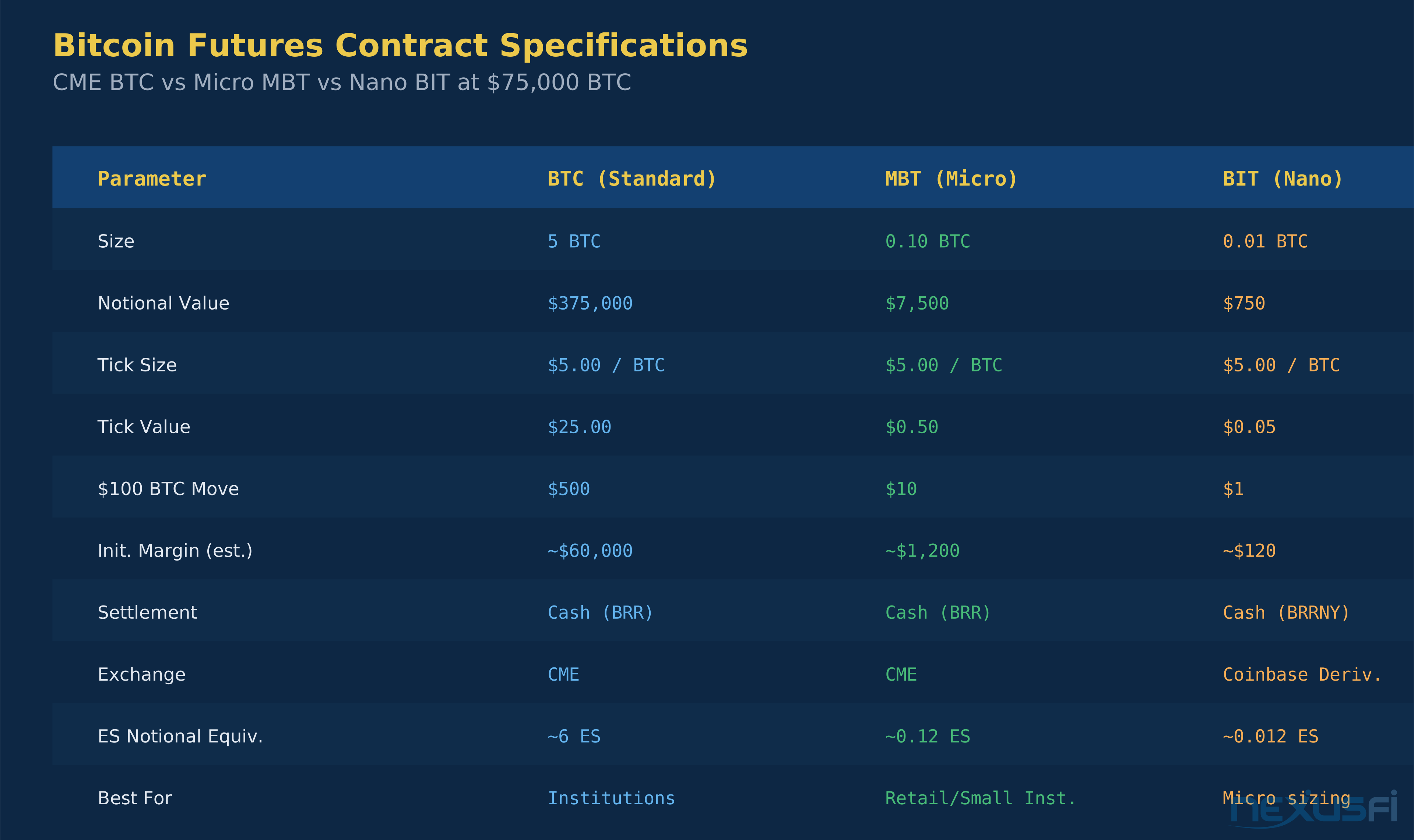
Rollover — BTC futures typically see the liquidity handoff to the next contract month roughly 3-5 business days before expiration. Volume concentration in the front month is extreme — back months carry thin order books. Calendar spread liquidity exists but is narrower than equity index futures. Roll timing matters more in BTC because basis can shift aggressively during the handoff window.
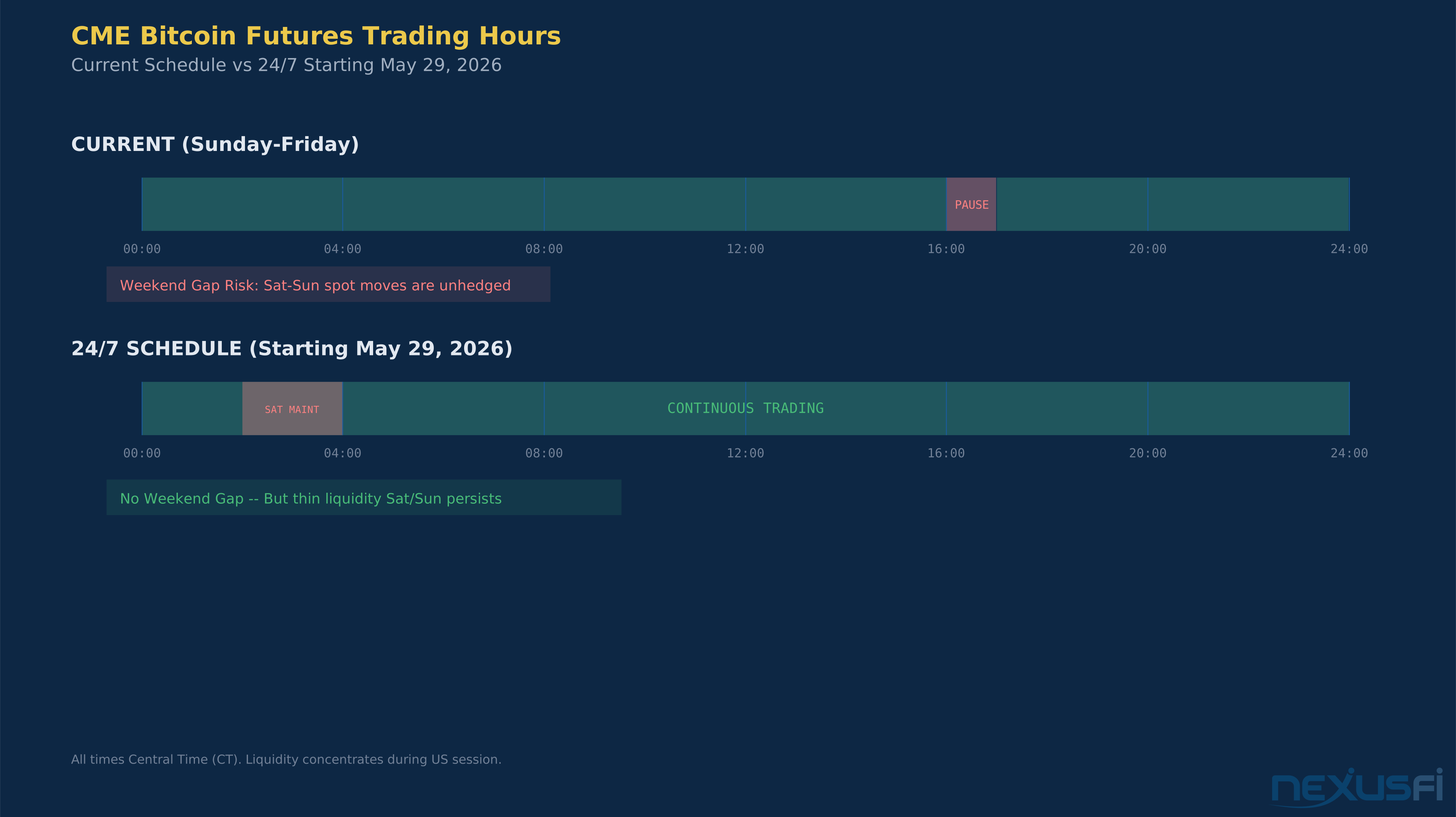
Trading Sessions and the 24/7 Transition — Until May 29, 2026, CME BTC futures trade on the standard Globex schedule: Sunday through Friday, 5:00 PM to 4:00 PM CT, with a one-hour daily pause. That schedule creates the classic Sunday reopen gap — BTC spot trades 24/7 on crypto exchanges, but CME futures don't. Weekend news events (exchange hacks, regulatory announcements, geopolitical escalations) accumulate into the Sunday open, creating predictable gap setups. As Fi documented in a NexusFi analysis, "Weekend gaps on Sunday open create predictable setups — spot often prices the gap by Saturday."
Starting May 29, 2026, CME moves to continuous 24/7 trading on all crypto futures and options. The only interruptions are a two-hour Saturday maintenance window (2:00-4:00 AM CT) and a daily one-minute pause at 4:00 PM CT on weekdays. This eliminates the structural weekend gap that defined BTC futures trading for years. But it doesn't eliminate liquidity variation — expect quote depth to thin much during Asian and weekend hours even with 24/7 access. The order book will be open. Whether it'll be deep enough to execute size at reasonable slippage is a different question.
How It Works #
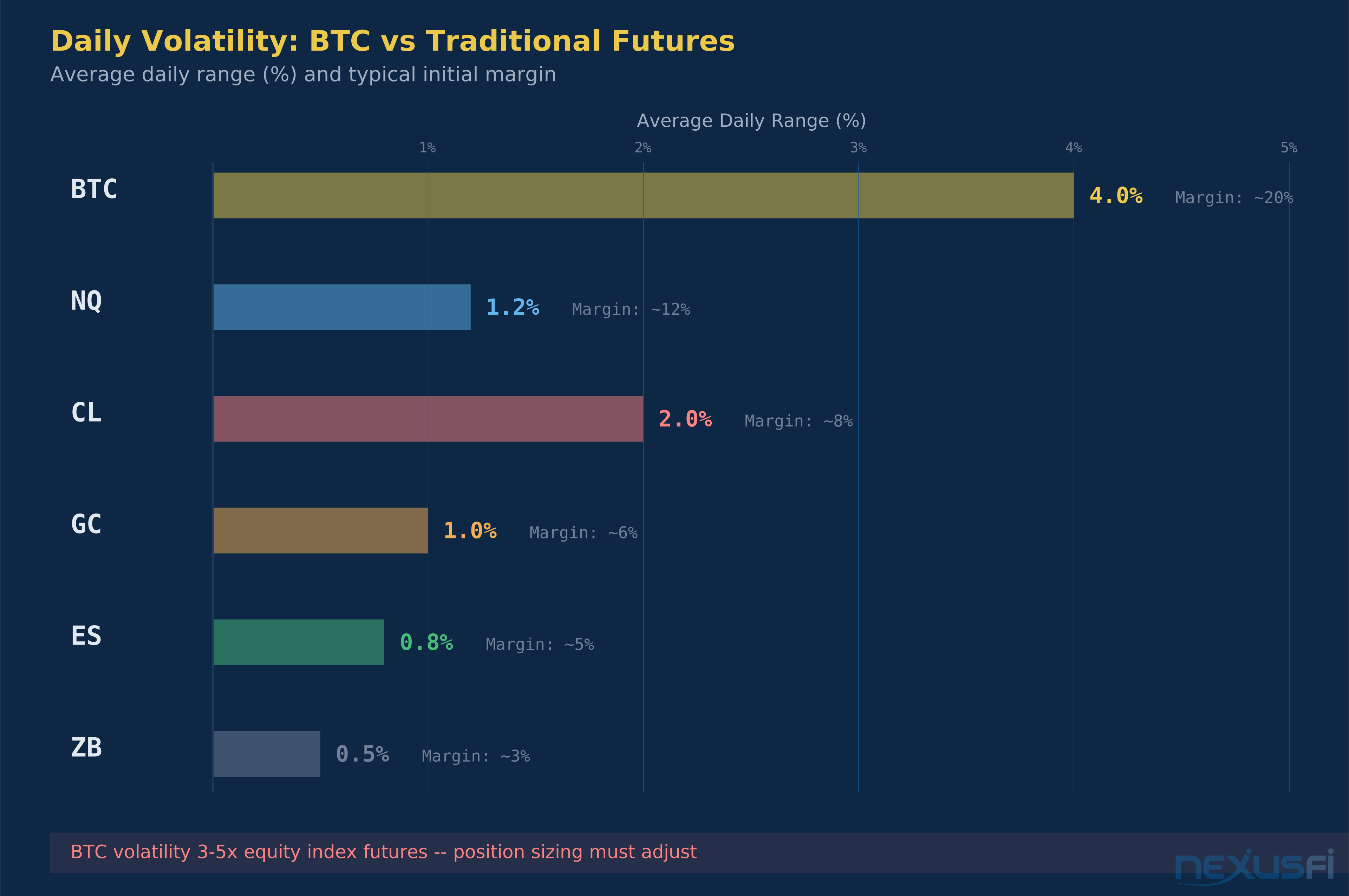
Margin and Volatility — BTC futures margin requirements reflect the instrument's volatility regime. CME uses SPAN margining, and initial margin for a single BTC contract typically runs $50,000-$90,000 depending on current volatility. For MBT, divide by 50. That's roughly 15-25% of notional — much higher than the 3-5% typical for equity index futures.
Here's where it gets real. BTC's daily standard deviation runs roughly 3-5 times higher than the S&P 500. A "normal" day can see a 3-5% range. A volatile day — FOMC surprise, ETF flow dislocation, leverage cascade — can move 10-15% intraday. CME can and does raise margin requirements during high-volatility periods, sometimes with same-day effective dates. If you're running positions near your margin limit, a mid-session margin hike can force liquidation even if your position is profitable.
Practical sizing guidance: most professional BTC futures traders allocate no more than 2-5% of their total trading capital per contract as risk. That means an account trading a single standard BTC contract should have $500K+ in total capital. For MBT at 1/50th the size, $10K+ per contract is the starting point for responsible position management.
Settlement Mechanics — All CME BTC futures are cash-settled. No physical delivery of bitcoin. Final settlement uses the CME CF Bitcoin Reference Rate (BRR), calculated as the volume-weighted median of bitcoin-dollar trades across multiple constituent exchanges during a one-hour window ending at 4:00 PM London time. The methodology is designed to resist manipulation — using a median rather than a mean, with outlier filtering across multiple venues.
This matters for basis traders: the BRR can diverge from spot prices on any single exchange by $50-200 on volatile days. Your P&L at settlement is against the BRR, not Coinbase or Binance spot.
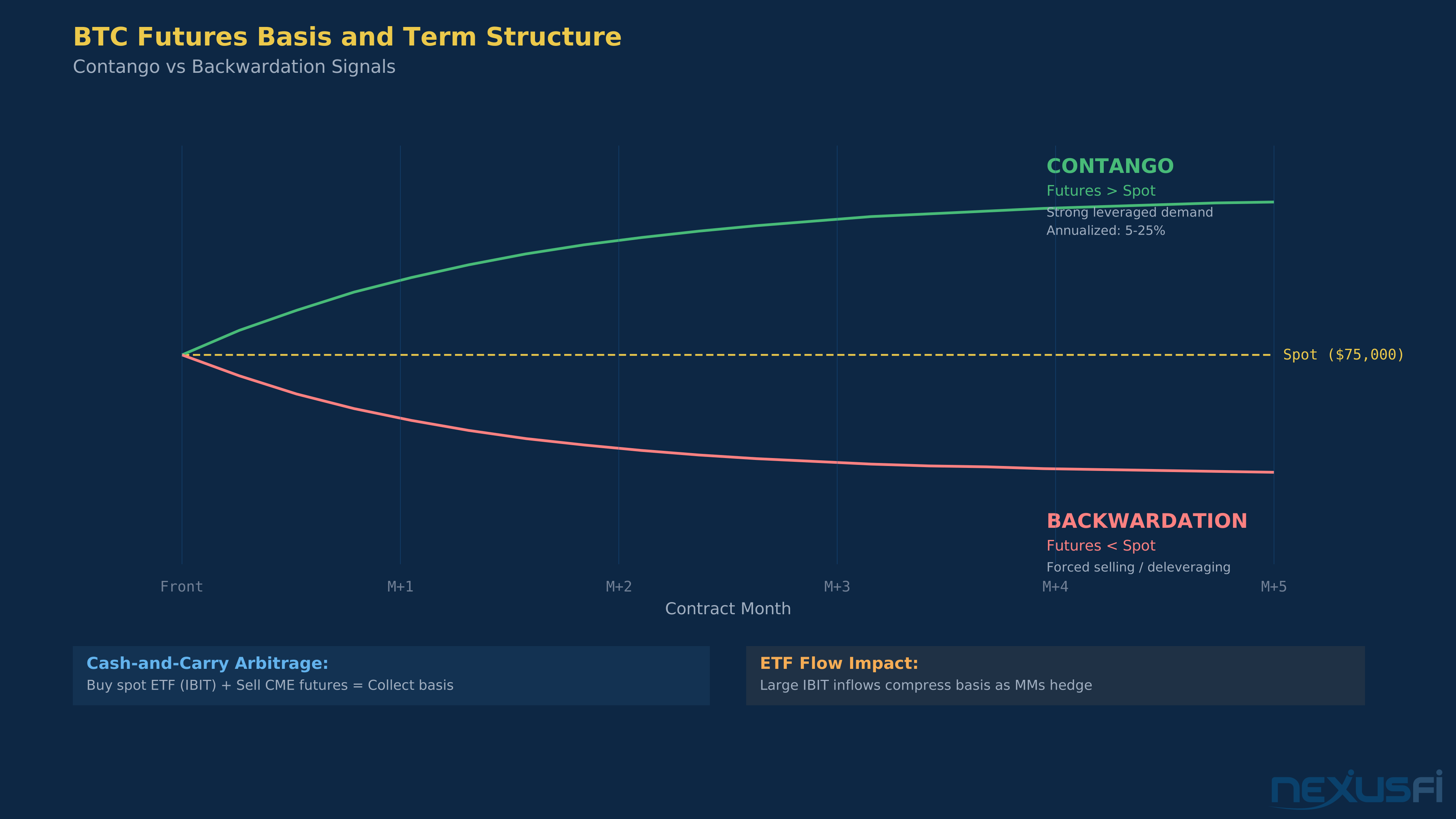
The Basis Trade — The CME basis (futures price minus spot reference) is where institutional capital concentrates. In a normal environment, BTC futures trade at a premium to spot (contango) because holding futures provides leveraged exposure without the custody, security, and operational costs of owning actual bitcoin.
When contango is steep, the cash-and-carry trade becomes attractive: buy spot BTC (or a spot ETF proxy like IBIT), sell CME futures, and collect the basis as it converges at settlement. This arbitrage trade has been a primary driver of CME open interest growth since the spot ETF approvals in January 2024. The annualized basis has ranged from 5% to 25% over the past two years, depending on market regime and demand for leveraged long exposure.
Backwardation is rarer but happens during severe liquidation events — when forced selling overwhelms the derivatives market and futures price drops below spot. These episodes are short-lived (hours to days) but violent.
The term structure (front-month vs. deferred contracts) tells you about market expectations and positioning. A steep contango curve suggests strong leveraged demand. A flat or inverted curve signals deleveraging or hedging pressure. Monitor the front-month to second-month spread as a real-time indicator of market stress.
Funding Rates vs. Futures Roll — If you come from crypto-native markets, you know perpetual funding rates. Here's the important distinction: perpetual funding reflects the marginal cost of leverage on unregulated venues, driven by retail and leveraged speculative positioning. CME futures term structure reflects broader institutional hedging, basis trading, and regulated capital constraints.
These two signals are related but not identical. When perp funding rates and CME basis agree (both elevated = crowded long; both negative = crowded short), the signal is strong. When they diverge — high perp funding but flat CME basis, or vice versa — something structural is happening. Maybe institutional desks are hedging while retail stays leveraged, or capital is flowing between venues. Those divergences create tradeable dislocations for anyone watching both markets.
Practical Application #
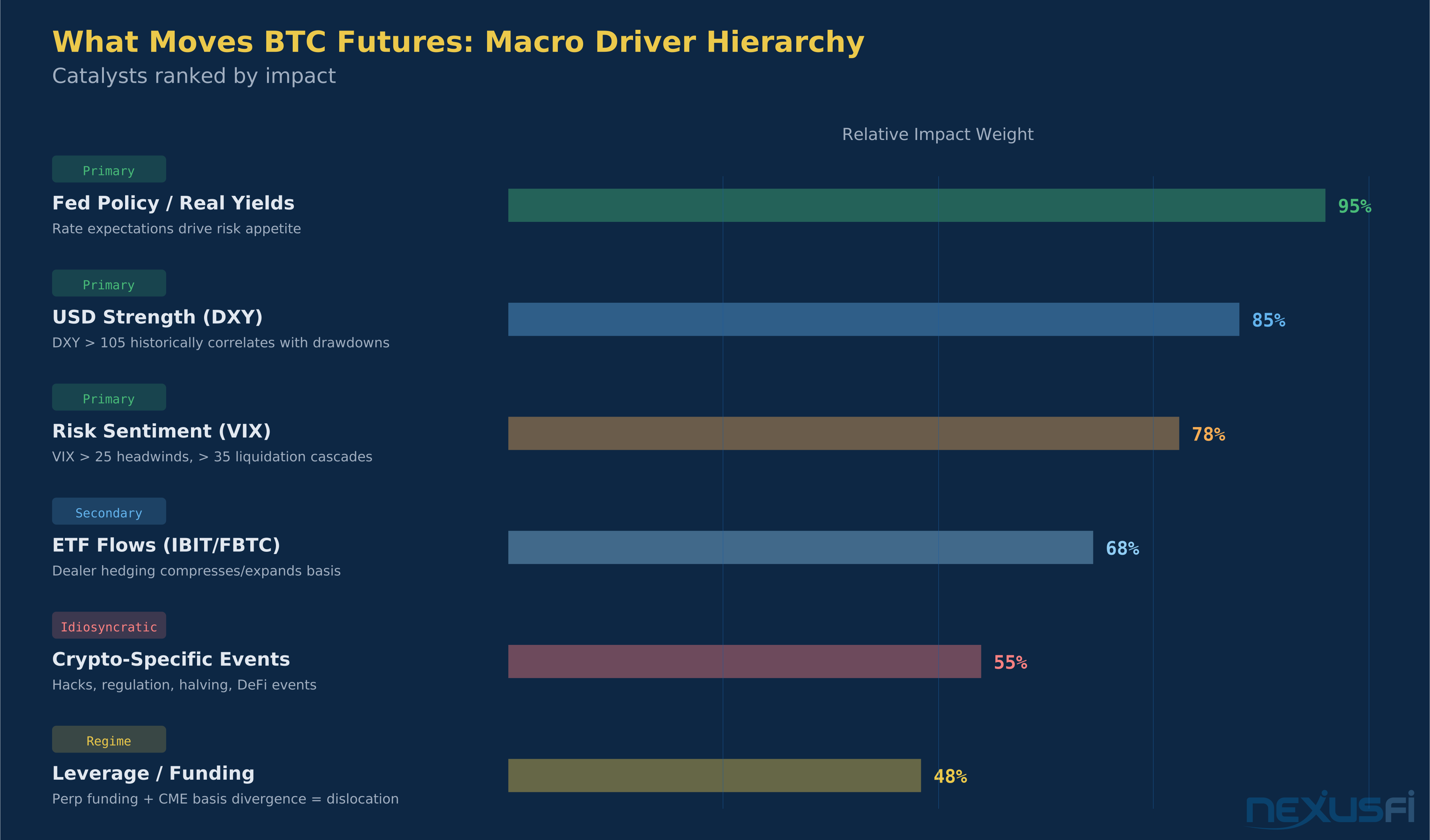
Macro Drivers — BTC futures respond to a specific hierarchy of catalysts:
Fed Policy and Real Yields: Bitcoin has become one of the most rate-sensitive assets in futures markets. When the Fed signals hawkish (higher-for-longer), BTC typically sells off with risk assets. When rate expectations ease, BTC rallies — often harder than equities due to its higher beta. Track Fed funds futures (ZQ) and the 2-year Treasury yield as leading indicators.
USD Strength (DXY): Dollar strength tightens global financial conditions. BTC, denominated in USD and traded globally, tends to weaken when DXY rises. The relationship isn't mechanical — it's mediated through risk appetite and global liquidity flows. But persistent DXY strength above 105 has historically correlated with BTC drawdowns.
Risk Sentiment (VIX/Credit): BTC trades as a risk asset, full stop. The "digital gold" narrative dies every time a real liquidity crisis hits. During COVID, the 2022 drawdown, and the 2025-2026 tariff selloff, BTC fell with equities. Monitor VIX regime shifts: below 15 = favorable BTC environment; above 25 = BTC faces headwinds; above 35 = crypto liquidation cascades become likely.
Crypto-Specific Catalysts: Exchange hacks, regulatory actions, DeFi protocol failures, stablecoin de-pegging events, and halving cycles. These don't correlate with equity markets at all and are why BTC can decouple from SPX/NDX for weeks or months at a time.
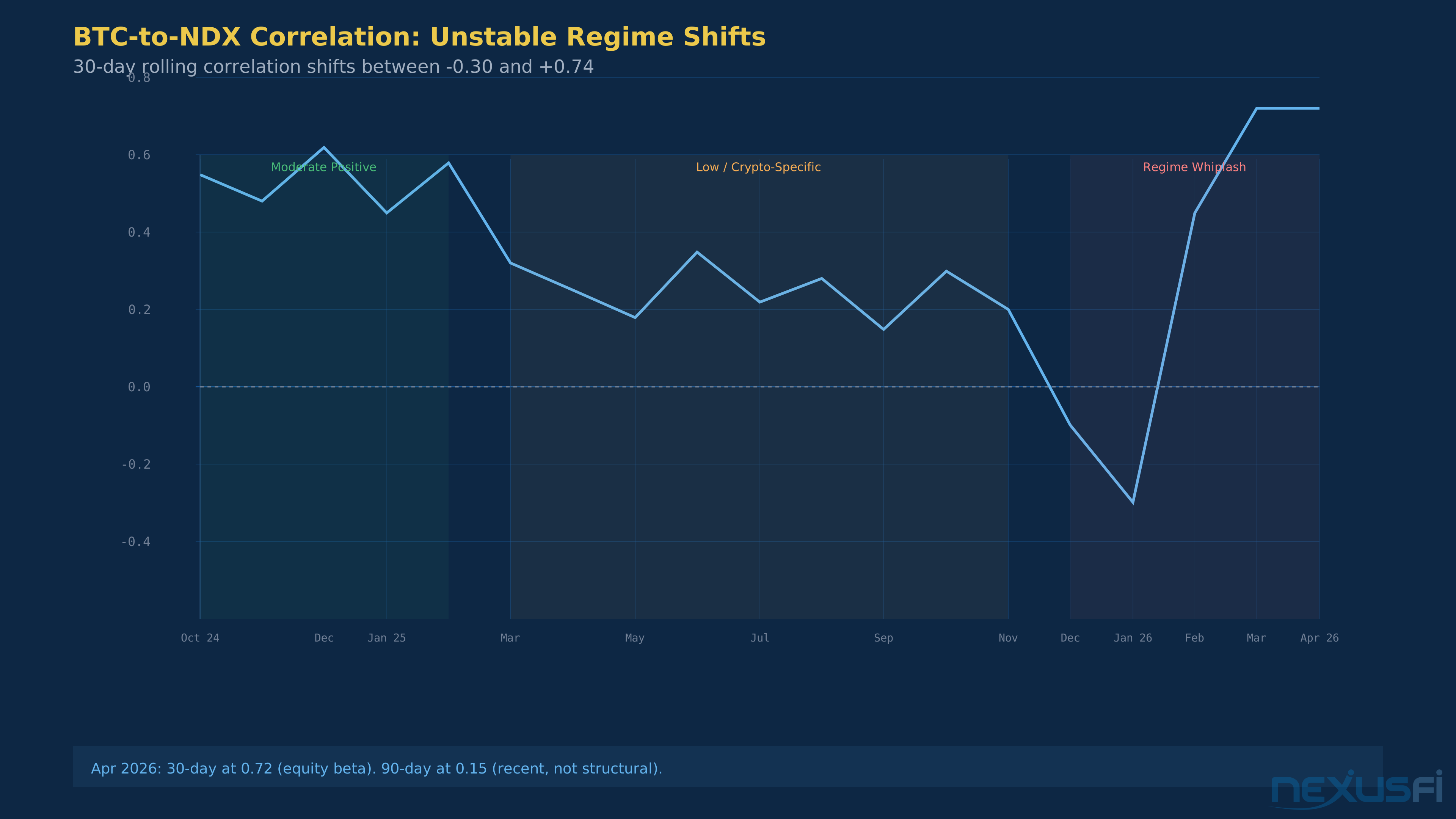
Equity Index Correlation — The BTC-to-SPX and BTC-to-NDX correlation is unstable. It swings from near-zero to 0.70+ within months. The long-term average (J.P. Morgan 2026 LTCMA) sits at about 0.32, but that average hides dramatic regime shifts.
Three regimes dominated the past 18 months: moderate positive correlation (0.40-0.65) during the October 2024-February 2025 period as ETF flows pulled BTC into the equity orbit; low correlation (0.15-0.40) from March through November 2025 when crypto-specific catalysts dominated; and regime whiplash from December 2025 through April 2026, with correlation flipping from -0.30 to +0.74 in three months as BTC's selloff from $126,000 to $67,000 tracked equity weakness tick-for-tick.
The practical takeaway: don't assume a correlation number. Measure it. Use a 30-day rolling window for tactical decisions and a 90-day window for portfolio risk. When the 30-day correlation spikes above 0.60, BTC is trading as a leveraged equity beta — your equity index positions and BTC positions are effectively the same trade. When it drops below 0.20, crypto-specific catalysts are driving, and cross-asset hedging breaks down.
Current readings (April 2026): 30-day BTC-NDX correlation at 0.72, but 90-day at only 0.15. That gap tells you the high correlation is a recent regime, not structural. It could persist if macro stress continues or break down the moment a crypto-specific trigger hits.
Liquidity and Execution — CME BTC futures liquidity concentrates during US market hours (8:00 AM - 4:00 PM ET), with a secondary cluster during London morning overlap. Outside these windows, spreads widen and depth thins much. Even with 24/7 access starting May 2026, expect the US session to carry 60-70% of total volume.
For standard BTC contracts, expect 2-5 lots of resting depth at the best bid/ask during peak US hours. Micro contracts show deeper queue depth in terms of contract count but similar dollar-weighted liquidity. Executions above 5-10 standard contracts should use limit orders or TWAP strategies — market orders of size will move price.
Roll-day liquidity is especially important. The front-month to second-month rollover sees the spread widen and trade actively for 3-5 days before expiration. Calendar spread orders are available on CME Globex and are the preferred execution method for rolling positions.
Institutional Adoption Impact — The January 2024 spot Bitcoin ETF approvals (BlackRock IBIT, Fidelity FBTC, and others) changed BTC futures markets permanently. Institutional desks that previously couldn't hold crypto now express views through ETFs, and hedge through CME futures. This has increased open interest, tightened basis spreads, and pulled BTC's behavior closer to traditional risk assets during macro events.
The ETF-to-futures link works through dealer hedging: ETF market makers hedge their inventory with CME futures. When IBIT sees large inflows, market makers buy spot and sell futures to hedge, compressing the basis. Large outflows reverse the process. Tracking ETF flow data (publicly available daily) gives you a read on the next-day basis direction.
Common Mistakes #
Treating BTC like a smaller ES — BTC's volatility is 3-5x equity index futures. A position sizing approach that works for ES will blow up an account on BTC. The instrument demands wider stops (in percentage terms), smaller position sizes, and explicit gap risk management.
Ignoring margin change risk — CME can and does raise margins intraday during volatile periods. Running positions at 80%+ margin utilization in BTC is asking for forced liquidation. Keep utilization below 50% and have a plan for a surprise margin hike.
Assuming stable correlation — Traders who hedge BTC exposure with SPX futures (or vice versa) based on a single correlation number will eventually get blindsided by a regime change. The correlation can flip from +0.60 to -0.30 within a month. Hedge ratios must be dynamic and re-estimated frequently.
Missing the basis signal — Steep contango doesn't mean BTC is overvalued. It means leveraged demand is high. Basis compression doesn't mean sentiment is turning — it might mean institutional arbitrageurs are entering the cash-and-carry trade. Read the basis in context of flow and positioning, not as a directional signal.
Trading weekend hours (post-24/7) like US session hours — When 24/7 begins, thin weekend order books will create opportunities for informed traders and traps for the unprepared. A 2-lot market order that moves price $200 during US hours might move it $1,000 on a Saturday night. Adjust your execution strategy to match the liquidity regime.
Knowledge Map
Go Deeper
Build on this knowledgeReferences This Article
Articles that build on this topicCitations
- — Bitcoin Futures by the CME (2020) 👍 1“I personally am happier with the CME credit risk than I would be with many other exchanges.”
- — Bitcoin Futures by the CME (2017) 👍 3“CME CF Bitcoin Reference Rate (BRR)”
- — Where can I trade BTC FUTURES (2020) 👍 2“Liquidity is a lot better on CME than ICE.”
- — IB Launches Coinbase Derivatives Nano Bitcoin (2026) 👍 1“BTC order flow reads differently -- thinner books, wider relative spreads.”
- — Is Bitcoin done? (2025)“Weekend gaps on Sunday open create predictable setups.”
- — CME Goes 24/7 on Crypto Futures (2026)“24/7 trading on CME fundamentally changes the calculus.”
- — 24/7 Crypto Trading (2026)
- — 2026 Capital Market Assumptions (2026)
- — BTC-Nasdaq Divergence Tracker (2026)