



Crypto Taxation for Active Traders: Capital Gains, Cost Basis, and IRS Compliance
Overview #
Active crypto traders face a tax compliance challenge that's at the core different from equities or even traditional futures. Bitcoin, Ethereum, and every other token you trade are classified as property by the IRS — not currency, not securities. Every disposal is a taxable event. Every crypto-to-crypto swap is two events. Every DeFi reward you receive generates ordinary income the moment it hits your wallet.
For traders coming from futures, the contrast is sharp. ES and NQ positions settle cleanly through your broker, your 1099-B captures everything, and Section 1256's 60/40 treatment gives you a structural tax advantage. Spot crypto doesn't work that way. You're building the compliance system yourself — tracking basis across multiple exchanges and wallets, classifying thousands of DeFi interactions, reconciling before year-end.
The good news: regulated crypto futures on CME — Bitcoin (/BTC), Micro Bitcoin (/MBT), and Ether (/ETH) — are Section 1256 contracts. Same 60/40 treatment, same mark-to-market accounting, same clear reporting path. For futures traders adding crypto exposure, CME contracts are the cleanest path from a tax standpoint.
This article covers the US federal tax framework across all three crypto domains — spot, DeFi, and regulated futures. The focus is operational: understanding what triggers a tax event, tracking cost basis at scale, navigating DeFi complexity, and building a compliance workflow that holds up under audit.
What you'll learn:
- How the IRS treats crypto as property and what that means for every transaction type
- Which DeFi activities generate ordinary income vs. capital gains
- The full Section 1256 advantage for CME crypto futures and how it compares to spot
- Cost basis methods (Specific ID, FIFO, HIFO) and why the choice matters
- The wash sale opportunity in spot crypto that futures traders can't access
- A six-step compliance workflow from raw data to completed return
Crypto Taxation for Active Traders: Capital Gains, Cost Basis, and IRS Compliance
The first thing most futures traders get wrong about crypto taxes: they assume it works like forex. It doesn't. Crypto is property — that's the IRS ruling from 2014, and it changes everything. Spot trading BTC for ETH isn't a currency swap. It's a taxable disposal of Bitcoin followed by an acquisition of Ethereum. Every transaction triggers a calculation. Every swap generates a gain or loss. Active traders can generate hundreds of taxable events per year before they've touched a single DeFi protocol.
Here's the good news for those coming from futures: CME Bitcoin and Ether futures are Section 1256 contracts. That's the same favorable 60/40 tax treatment you get on ES and NQ — 60% long-term rate, 40% short-term rate, regardless of holding period, with mark-to-market accounting at year-end. For active futures traders, this is a significant edge over spot crypto, where every trade held under 12 months generates short-term gains. Understanding where your activity falls — spot, regulated futures, or DeFi — is the first step toward building a tax-efficient crypto operation.
This article covers US federal tax treatment for active traders across all three domains: spot crypto, regulated crypto futures, and DeFi. The focus is practical: identifying taxable events, tracking cost basis, handling DeFi complexity, and building a compliance workflow that survives an audit. It does not cover state taxes (too jurisdiction-specific), business entity structuring (a separate planning topic), or regulatory classification — that's an SEC/CFTC question, not an IRS one.
Key Concepts #
Crypto as Property #
IRS Notice 2014-21 is the foundation. The IRS treats "convertible virtual currency" as property for US federal tax purposes — the same classification as real estate or commodities. Not currency. Not a security. Property.
For active traders, the implications are direct. Buying crypto with USD is an acquisition — no tax event. Selling crypto for USD is a disposal — taxable gain or loss. Swapping one crypto for another is two events: a taxable sale of the first asset followed by an acquisition of the second. Using crypto to pay for services is a taxable disposal at current fair market value.
This is at the core different from how futures traders think about mark-to-market settlement. When you exit an ES position, you collect or pay variation margin — clean, tracked, reported on your 1099-B by your clearing firm. Crypto exchanges often don't track basis across wallets, don't handle cross-exchange transfers, and can't see your DeFi activity. The compliance burden falls on you.
Realization Events #
Gains and losses are taxable when realized — when you dispose of an asset, not when its value changes. Holding $200,000 of Bitcoin that's up 4x is unrealized. Selling it is realized. This matters because crypto's volatility creates massive unrealized gains, but the tax bill only arrives when you transact.
The corollary: if you're sitting on large unrealized gains in spot crypto, the timing of your disposals determines when you pay. This creates real planning opportunities around short-term vs. long-term holding periods and tax-year management.
Cost Basis #
Your cost basis is what you paid for an asset, including acquisition fees. When you sell, your gain or loss is the difference between proceeds and cost basis. Tracking basis across hundreds of transactions, across multiple exchanges and wallets, in multiple assets — that's the central operational challenge of crypto taxation.
Unlike equities, where your broker tracks basis and reports it on Form 1099-B, crypto requires you to maintain your own records. Your exchange might report some of it. Your DeFi wallet reports none of it. The reconciliation is yours to own.
Capital vs. Ordinary Income #
Most crypto trading generates capital gains and losses. DeFi rewards, staking income, and airdrops generate ordinary income at receipt — taxed at your marginal rate, not the preferential capital gains rate. The distinction is real: at higher income levels, long-term capital gains are taxed at 15-20%, while ordinary income hits 37%.
Section 1256 Contracts #
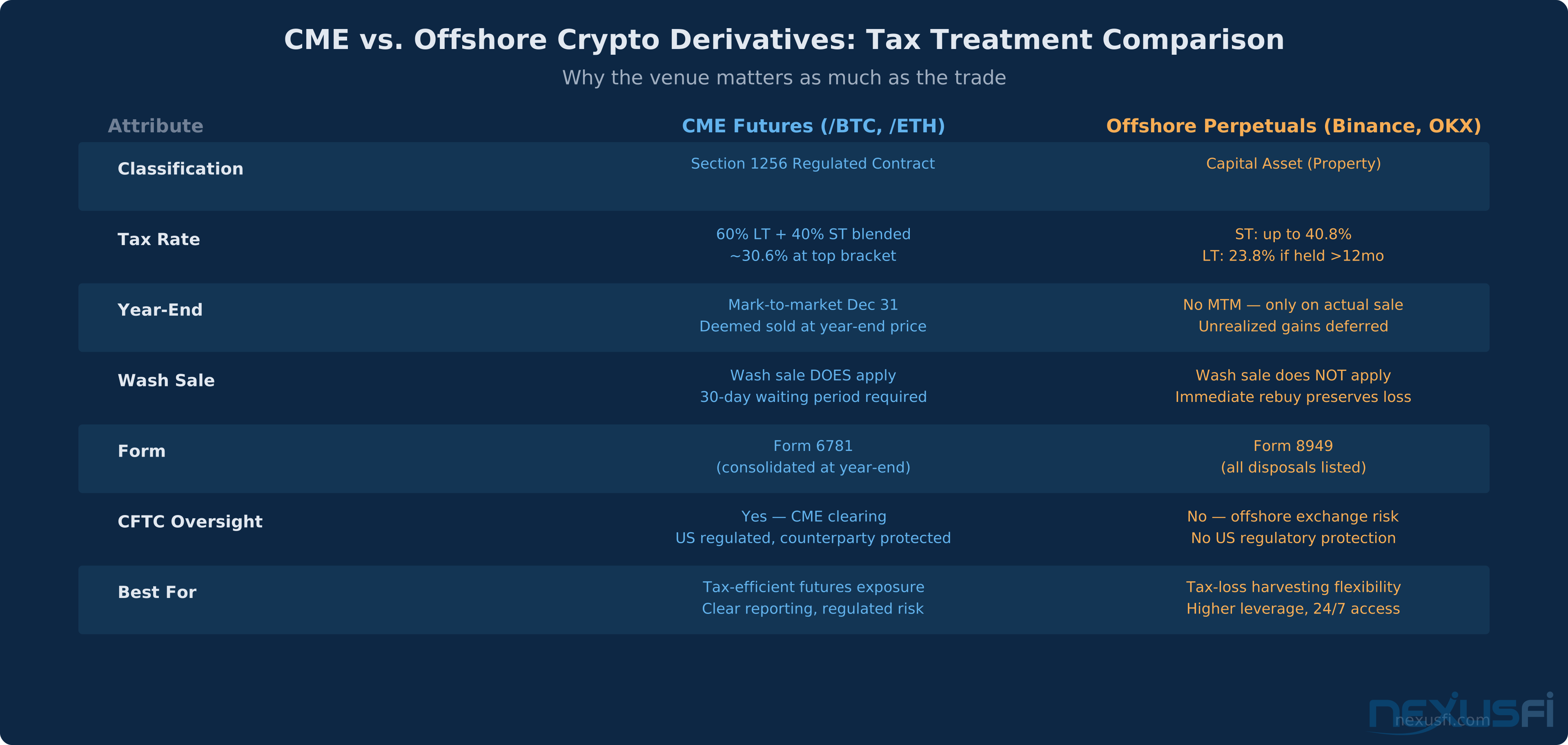
Regulated futures contracts on US exchanges qualify as Section 1256 contracts. This includes CME Bitcoin (/BTC), CME Micro Bitcoin (/MBT), and CME Ether (/ETH) futures. Section 1256 treatment means 60% long-term/40% short-term rate regardless of actual holding period, plus mark-to-market at year-end. Perpetual swaps on Binance, Bybit, OKX, and similar platforms do NOT qualify — treated as property disposals.
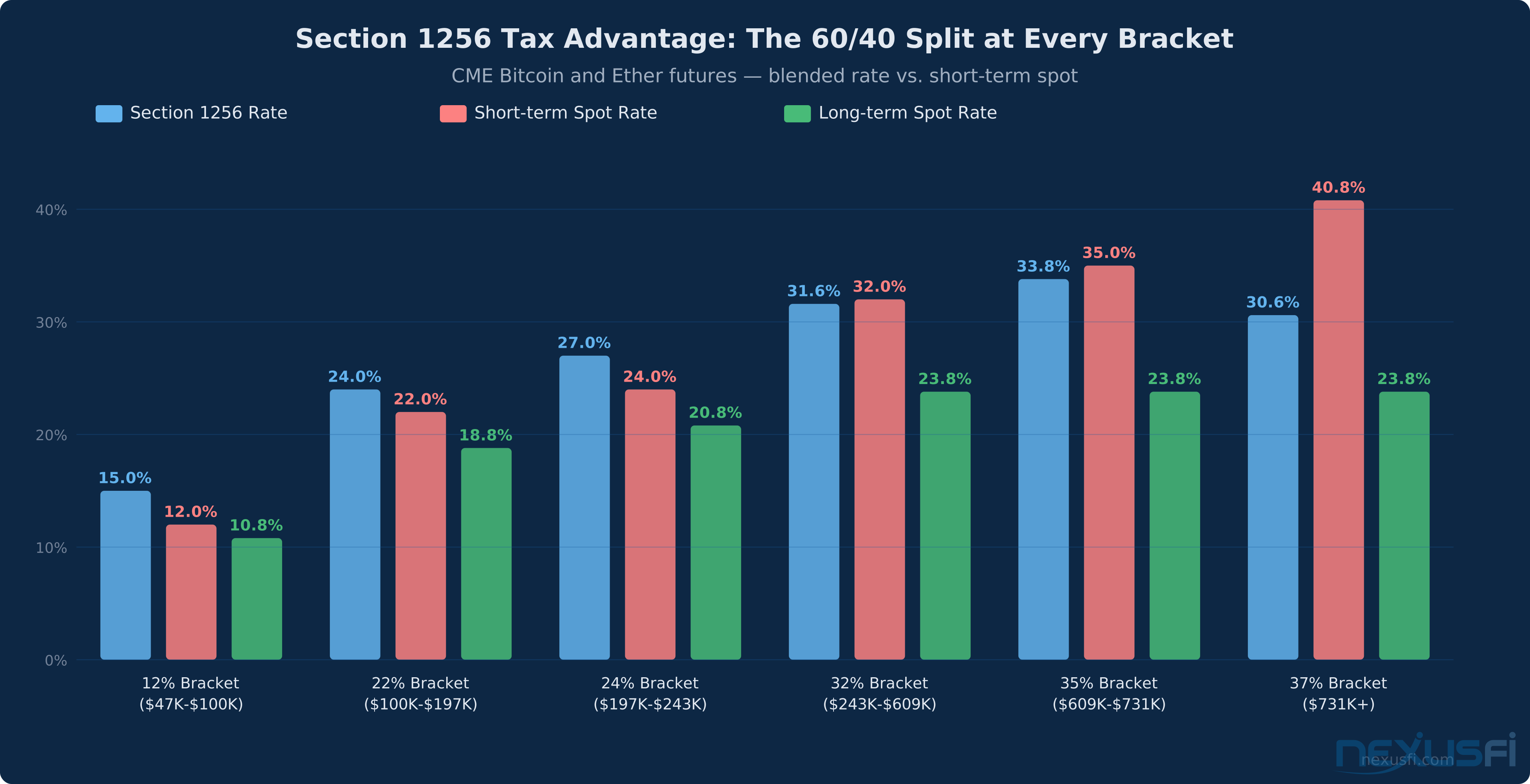
The Section 1256 advantage for CME crypto futures is the same structure that makes ES and NQ attractive for active day traders. A trader in the 37% bracket pays roughly 27% on Section 1256 gains vs. 37% on short-term spot crypto gains. Over a year of active trading, that difference compounds into real money.
The Tax Event Map #
This is the taxonomy you need before touching any calculator.
Spot Trading #
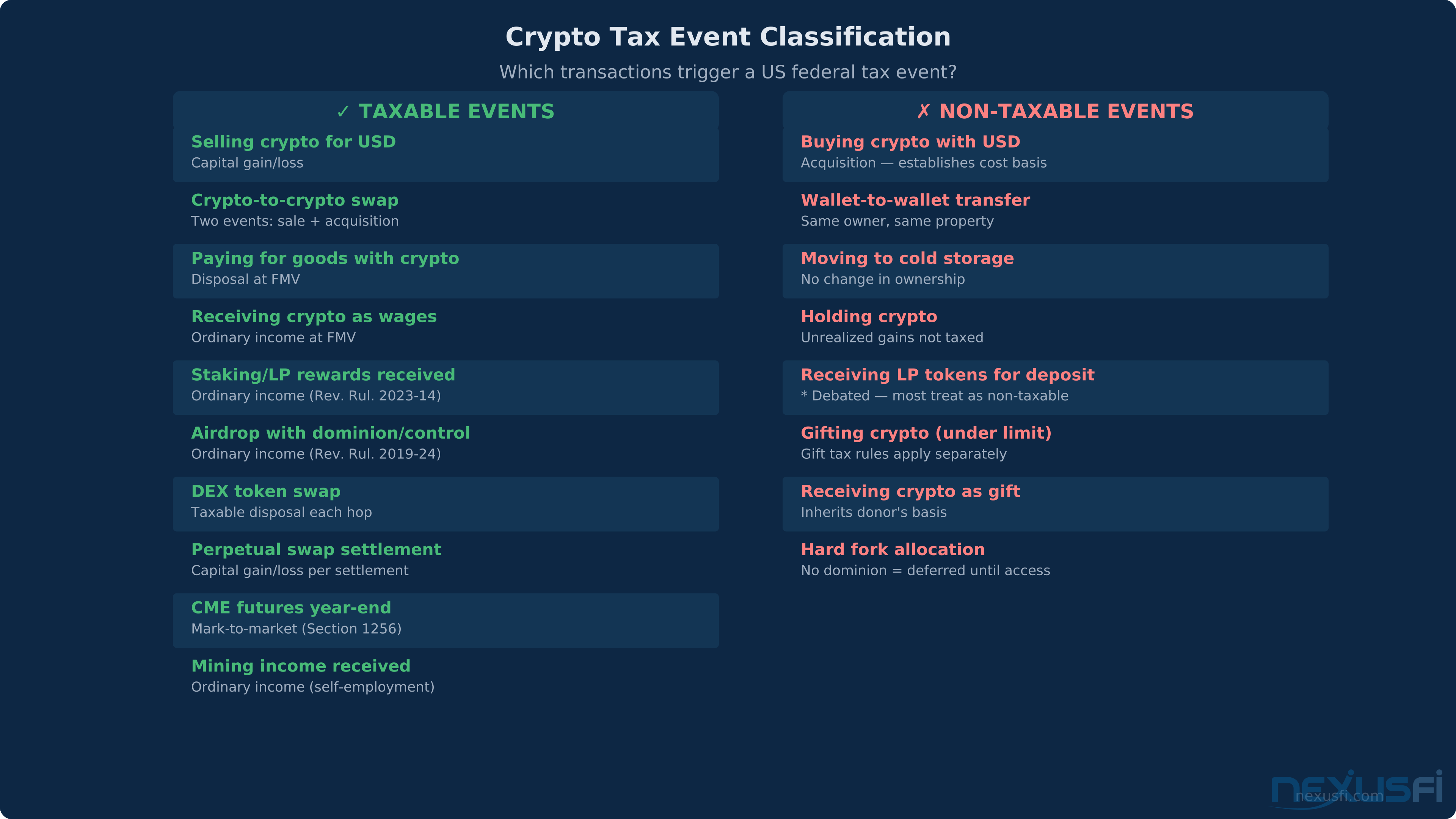
Taxable events:
- Selling crypto for USD — gain/loss on disposal at FMV
- Swapping crypto A for crypto B — taxable sale of A at current FMV, acquisition of B at same FMV
- Using crypto to pay for goods or services — disposal at FMV
- Receiving crypto as payment for work — ordinary income at FMV at receipt, that FMV becomes your cost basis
Non-taxable events:
- Buying crypto with USD (acquisition, no gain/loss)
- Transferring crypto between your own wallets (same owner, same property)
- Moving crypto from exchange to cold storage
The crypto-to-crypto swap trap catches more traders than anything else. You swap ETH for SOL during a bull run without touching USD. You assume no taxes. Wrong — you just recognized a gain on every ETH you sold, at the FMV the moment of the swap.
Token swaps on DEXs (Uniswap, Curve, Jupiter) are taxable events even when they appear clean. Swapping USDC for ETH, then ETH for wBTC, then wBTC back to USDC generates three separate disposal events. Each needs a cost basis, FMV at time of swap, and a gain/loss calculation. Active DeFi traders can generate thousands of taxable events in a single year just from normal protocol use.
DeFi Activity #
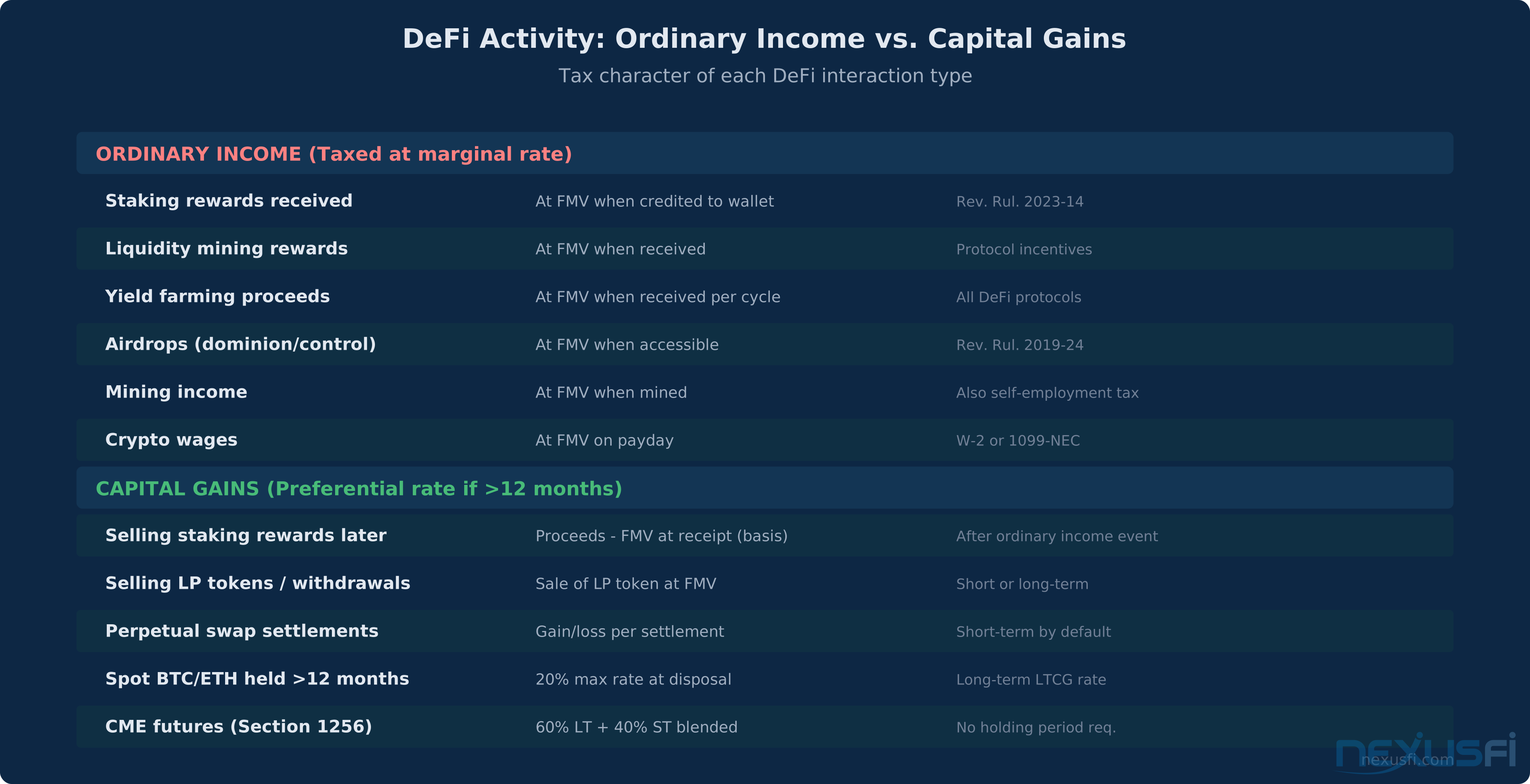
DeFi introduces a layer that spot traders don't have to deal with: income events mixed with trading events. When you receive tokens from DeFi protocols, those tokens are typically ordinary income — taxed at your marginal rate when received. Then when you later sell those tokens, you have a capital gain or loss on top of the income event.
Staking rewards: When you receive staking rewards (ETH staking, SOL staking, Liquid Staking Token yields), those rewards are ordinary income at the fair market value when received. Revenue Ruling 2023-14 confirmed this — staking rewards are includable in gross income when you receive them and have dominion and control.
Liquidity provision: Depositing tokens into an AMM (Uniswap, Curve, Balancer) and receiving LP tokens is treated as a taxable disposal — you're exchanging your assets for LP tokens, a different property. When you withdraw, you receive back your original assets plus fees earned, triggering another disposal of the LP tokens. Any trading fees accumulated represent income.
Airdrops: Revenue Ruling 2019-24 settled this — if you have dominion and control over airdropped tokens, they're ordinary income at FMV when received. This applies to token distributions from protocol launches, governance token grants, and similar events. If you can't access or sell the tokens, the income event is deferred until you can.
Yield farming and lending: Interest earned on Aave, Compound, or similar protocols is ordinary income when received. Yield farming rewards from liquidity incentives follow the same rule.
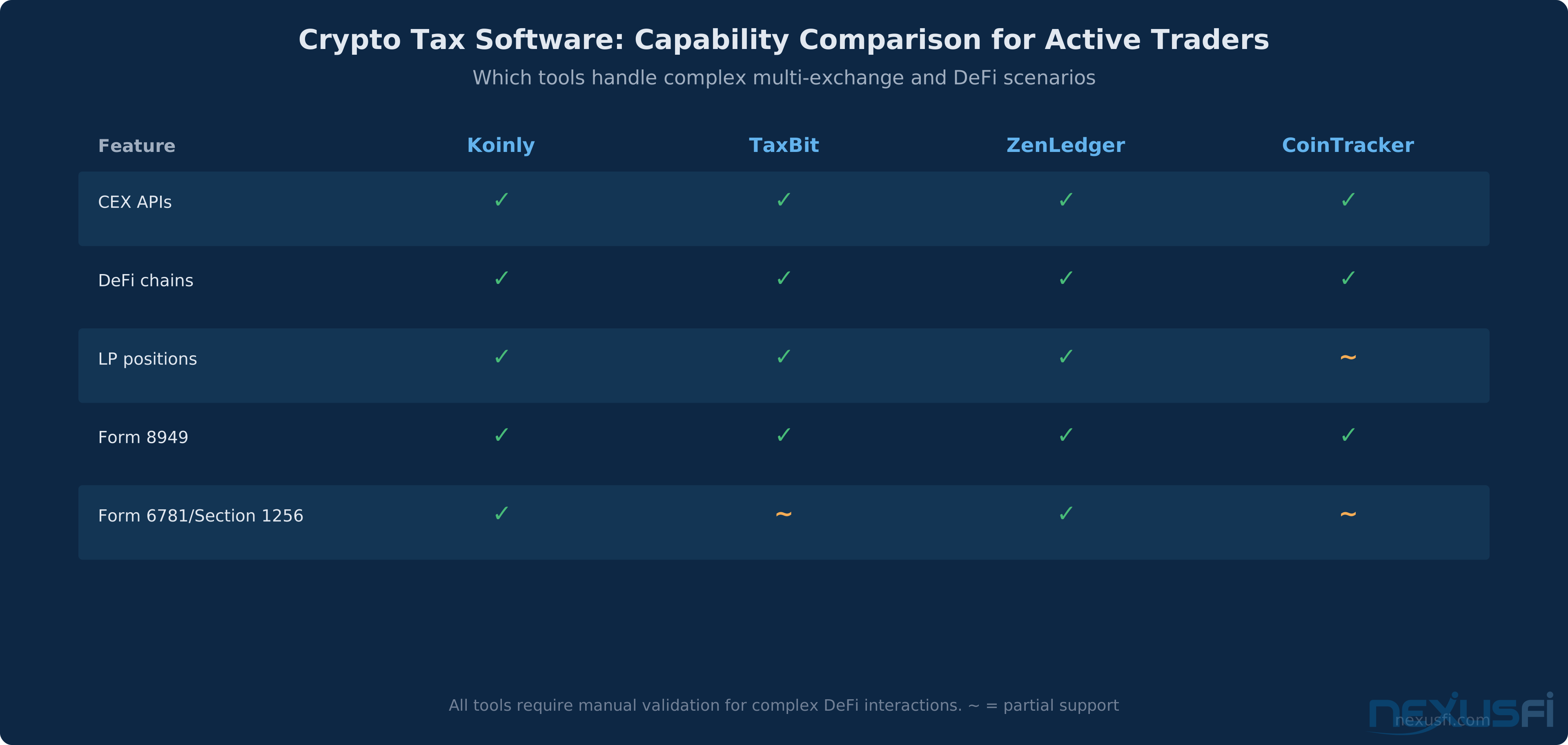
The DeFi compliance burden is operationally intensive. Protocols don't send 1099s. Transaction history lives on-chain across multiple wallets and chains. Gas fees paid in ETH form part of your cost basis for those transactions. Dedicated tax software (Koinly, TaxBit, ZenLedger, CoinTracker) can ingest on-chain data, but manual validation is required — these tools make mistakes on complex DeFi interactions, especially multi-step transactions and LP positions.
The DeFi income calculation isn't optional because it's annoying. Every staking reward, every LP fee, every airdrop is a taxable income event. Missing these events understates your ordinary income — and the IRS can cross-reference blockchain data. If your exchange provides transaction data, assume the IRS has access to the same data.
Crypto Futures — The Section 1256 Advantage #
CME Bitcoin and Ether Futures (Section 1256)
These are the cleanest crypto instruments from a tax perspective. CME Bitcoin (/BTC) and Micro Bitcoin (/MBT) futures, plus CME Ether (/ETH) futures, are CFTC-regulated contracts qualifying under Section 1256. As @SMCJB explains, "Futures & Futures Option contracts are taxed as Section 1256 Contracts which means that they are taxed 60% at your long-term capital gains rates and 40% at your short-term capital gains rate no matter what the holding period."
For an active futures trader in the 37% ordinary income bracket with a 20% long-term capital gains rate, the blended Section 1256 rate: 60% × 20% + 40% × 37% = 12% + 14.8% = 26.8% — vs. 40.8% (including 3.8% NIIT) on short-term spot crypto gains. That's a 14-point difference on the same market exposure.
The mark-to-market year-end rule means: open CME crypto futures positions on December 31st are "deemed sold" at their year-end value. You pay taxes on those paper gains as of that date, then start January 1st with a new basis equal to the deemed sale price.
Perpetual Swaps (Non-Section 1256)
Perpetual swaps on Binance Futures, Bybit, OKX, Deribit, and similar offshore platforms are NOT regulated US futures contracts. Each settlement generates a capital gain or loss — short-term if held under 12 months, long-term if held over. Funding rate payments create additional taxable events: positive funding received is income, negative funding paid is a deductible trading expense.
The practical implication: if you're actively trading crypto derivatives, structuring through CME rather than offshore perpetuals meaningfully changes your tax outcome on the same notional exposure.
Cost Basis Methods #
Cost basis is where active crypto trading gets complicated. You're tracking dozens of positions in dozens of coins, entered and exited across multiple exchanges and wallets, over multiple years. Each unit you buy has its own basis. When you sell, you need to know which units you're selling.
Specific Identification #
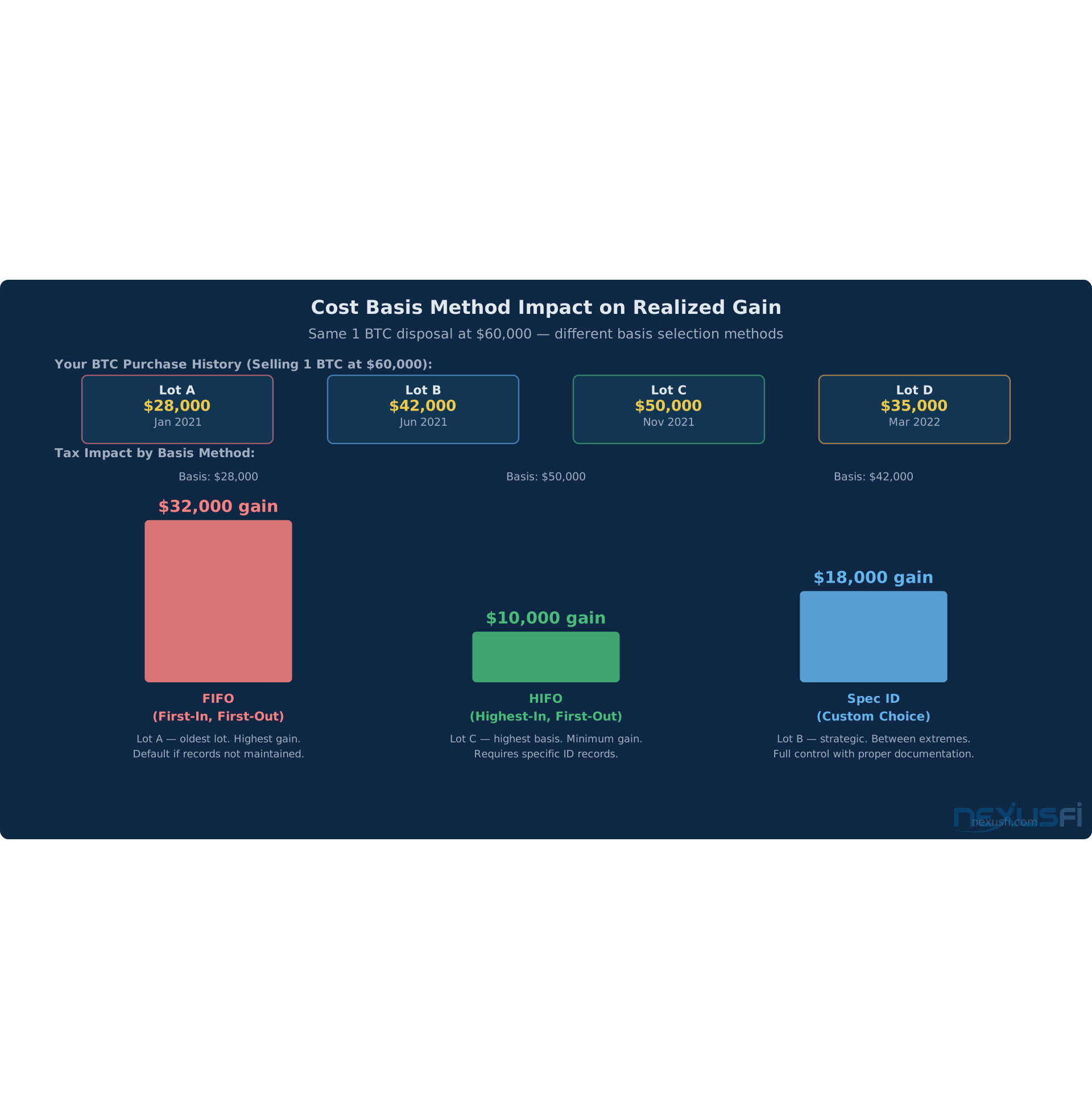
Specific identification (SpecID) is the gold standard for active traders. You identify exactly which lot you're selling at the time of each disposal. If you bought 1 BTC at $30,000 and later 1 BTC at $50,000, and BTC is now at $60,000, you can specifically identify the $50,000 lot to minimize your gain to $10,000 — vs. $30,000 if you used the $30,000 lot.
The IRS allows specific identification for crypto, but you must identify the lot at or before the time of sale — not retroactively at year-end. The documentation requirement is real: records showing the specific lot (acquisition date, quantity, price, transaction ID) tied to each disposal. This is typically done through tax software's lot selection feature or your own trade ledger.
Specific ID gives you full control over realized gains and losses. Match highest-basis lots to disposals in high-gain years to minimize taxable income. In loss years, match lowest-basis lots to maximize deductible losses. This is legal tax planning — the same approach active stock traders use, and much more powerful in crypto due to price volatility.
FIFO (First-In, First-Out) #
FIFO is the default method when you don't maintain adequate records for specific identification. Under FIFO, when you sell, you're assumed to be selling the oldest units. In a rising market, FIFO typically maximizes gains (selling lowest-basis, oldest units). In a declining market, it maximizes losses.
The IRS hasn't explicitly mandated FIFO for crypto, but it's the default assumption most practitioners apply when specific ID isn't supported. If you want to use a different method, document it and apply it consistently.
HIFO (Highest-In, First-Out) #
HIFO is a specific ID strategy where you always sell the highest-basis lot first, minimizing taxable gains in rising markets. Legal if you can support specific ID, but requires careful lot tracking. Most tax software supports this as a selection option.
What's NOT Permitted #
Average cost basis — common for mutual funds — is generally not permitted for crypto under IRS guidance. The IRS has not authorized the average cost method for cryptocurrency. Don't average your crypto basis. It's difficult to defend under audit, and the downside is an incorrectly reported return.
Building Your Basis Ledger #
Every transaction needs to capture:
- Date and time (UTC for consistency)
- Asset acquired and quantity
- USD fair market value at time of transaction
- Method of acquisition (purchase, reward, airdrop, etc.)
- Asset disposed and quantity
- Proceeds in USD
- Cost basis for the specific lot disposed
- Gain or loss computed
- Short-term or long-term (based on holding period)
Exchange APIs export raw data but often can't handle: transfers between wallets and exchanges (breaks the basis chain), gas fees paid in ETH (part of cost basis), staking rewards at multiple price points, and LP token mechanics. Tax software addresses most of this but requires validation.
Exchange-provided 1099 forms are unreliable for active traders. They reflect only activity on that platform, don't track cross-exchange transfers, and don't capture DeFi interactions. Your legal obligation is to report accurately — not to copy your 1099. Use exchange data as a starting point, not the final answer. Much overstated or understated basis on an exchange 1099 still creates YOUR liability.
Capital vs. Ordinary Income #
The capital/ordinary distinction drives your effective tax rate on crypto. Getting this wrong means overpaying or underpaying — and the IRS has visibility into both.
What Generates Capital Gains #
- Gains from selling spot crypto (short-term under 12 months, long-term over 12 months)
- Settlement gains on perpetual swaps
- Section 1256 gains on CME crypto futures (60/40 blended rate)
What Generates Ordinary Income #
- Staking rewards at receipt (ordinary income per Rev. Rul. 2023-14)
- Liquidity pool rewards and yield farming proceeds at receipt
- Airdrops when you have dominion and control (Rev. Rul. 2019-24)
- Mining income at fair market value when mined (self-employment income if you're in the mining business)
- Crypto received as payment for services
The practical tax impact: if you earned $50,000 in staking rewards and $50,000 in capital gains from spot trading, the staking income hits your marginal bracket while the capital gains get preferential treatment. At 37% marginal rate and 20% long-term cap gains rate, the difference is $17,000 in taxes on the same dollar amount. This matters when evaluating yield strategies in yield-intensive DeFi protocols.
Wash Sale Rules — The Spot Advantage #
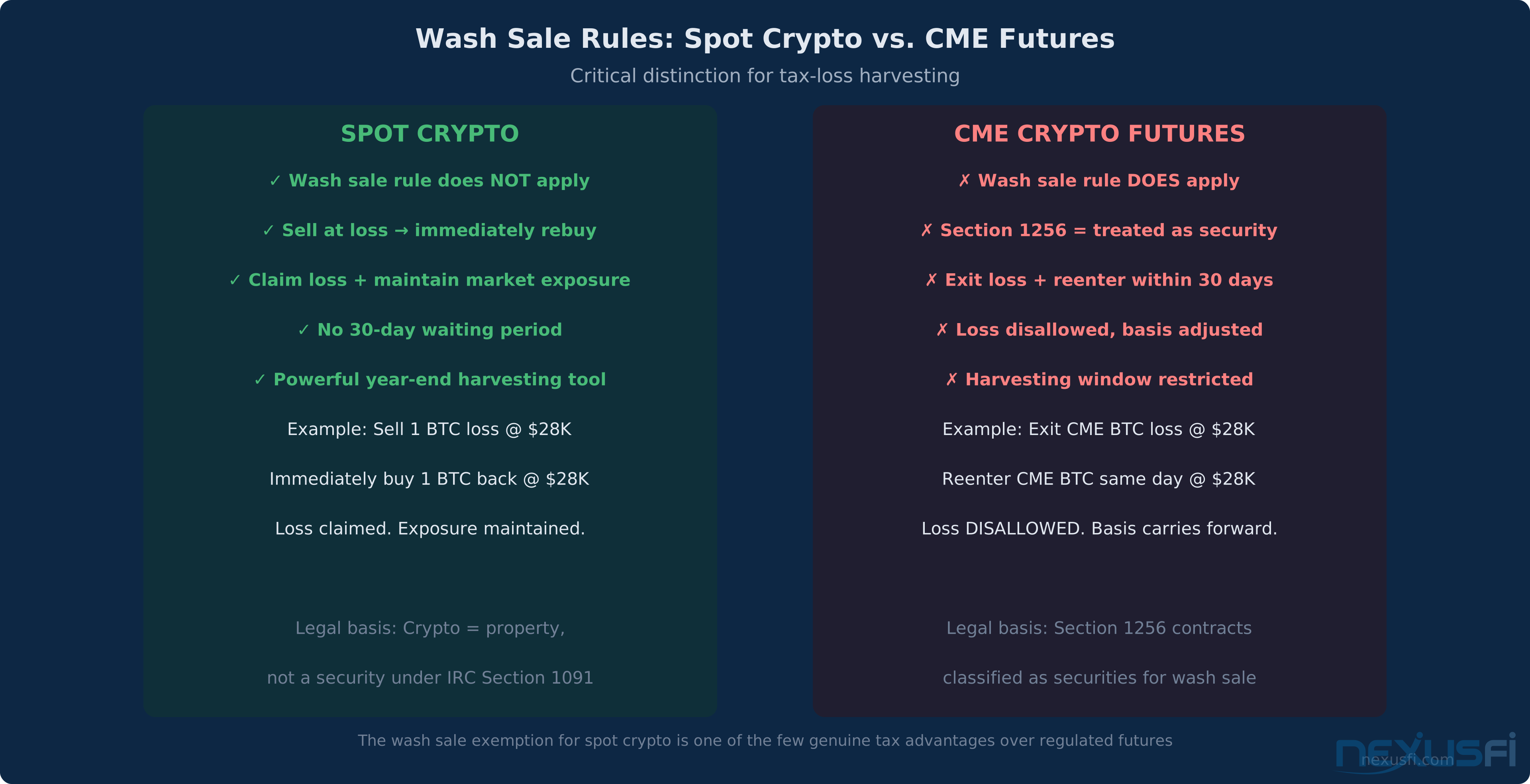
Active spot crypto traders have an edge equity traders don't: wash sale rules do not currently apply to spot crypto.
The wash sale rule (IRC Section 1091) prevents investors from claiming a tax loss on a security if they buy a substantially identical security within 30 days before or after the sale. Crypto is property, not a security — you can sell BTC at a loss, immediately buy BTC back, and still claim the loss. This is legal and commonly used for crypto tax-loss harvesting.
Critical caveat: wash sale rules DO apply to regulated crypto futures (Section 1256 contracts). Losses on CME Bitcoin futures are subject to wash sale rules because Section 1256 contracts are securities under the tax code. You can't harvest losses on your CME crypto futures position by immediately re-entering.
This creates a practical distinction: for tax-loss harvesting in crypto, spot positions are more flexible than CME futures positions. In a declining market, spot BTC can be sold and immediately repurchased without a 30-day waiting period, locking in the loss while maintaining market exposure.
Tax Rate Comparison #
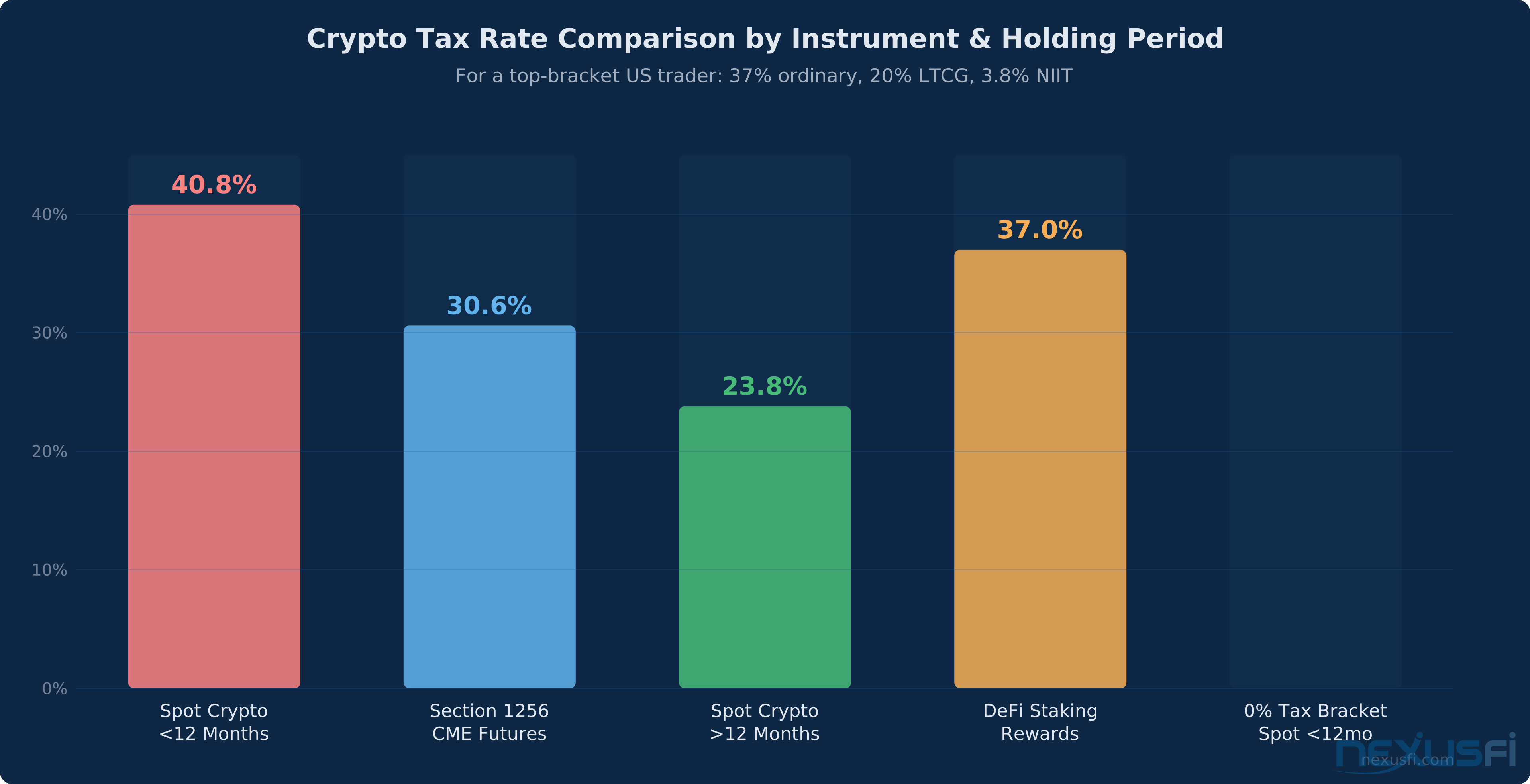
For a top-bracket trader (37% ordinary, 20% long-term, 3.8% NIIT on net investment income):
- Spot crypto held under 12 months: 37% + 3.8% = 40.8%
- Spot crypto held over 12 months: 20% + 3.8% = 23.8%
- CME crypto futures (Section 1256): 0.60 × 23.8% + 0.40 × 40.8% = 30.6%
- DeFi staking income: 37% (ordinary income, no preferential rate)
The takeaway: actively trading spot crypto short-term is the most expensive from a tax standpoint. Holding spot positions over 12 months is the cheapest. CME futures sit in between — better than short-term spot, worse than long-term spot.
Section 1256 Blended Rate = (0.60 × Long-Term Capital Gains Rate) + (0.40 × Short-Term Rate)
At top brackets (20% LT + 37% ST): (0.60 × 20%) + (0.40 × 37%) = 12% + 14.8% = 26.8%
Add 3.8% NIIT on both components: (0.60 × 23.8%) + (0.40 × 40.8%) = 14.28% + 16.32% = 30.6%
Reporting & Compliance Workflow #
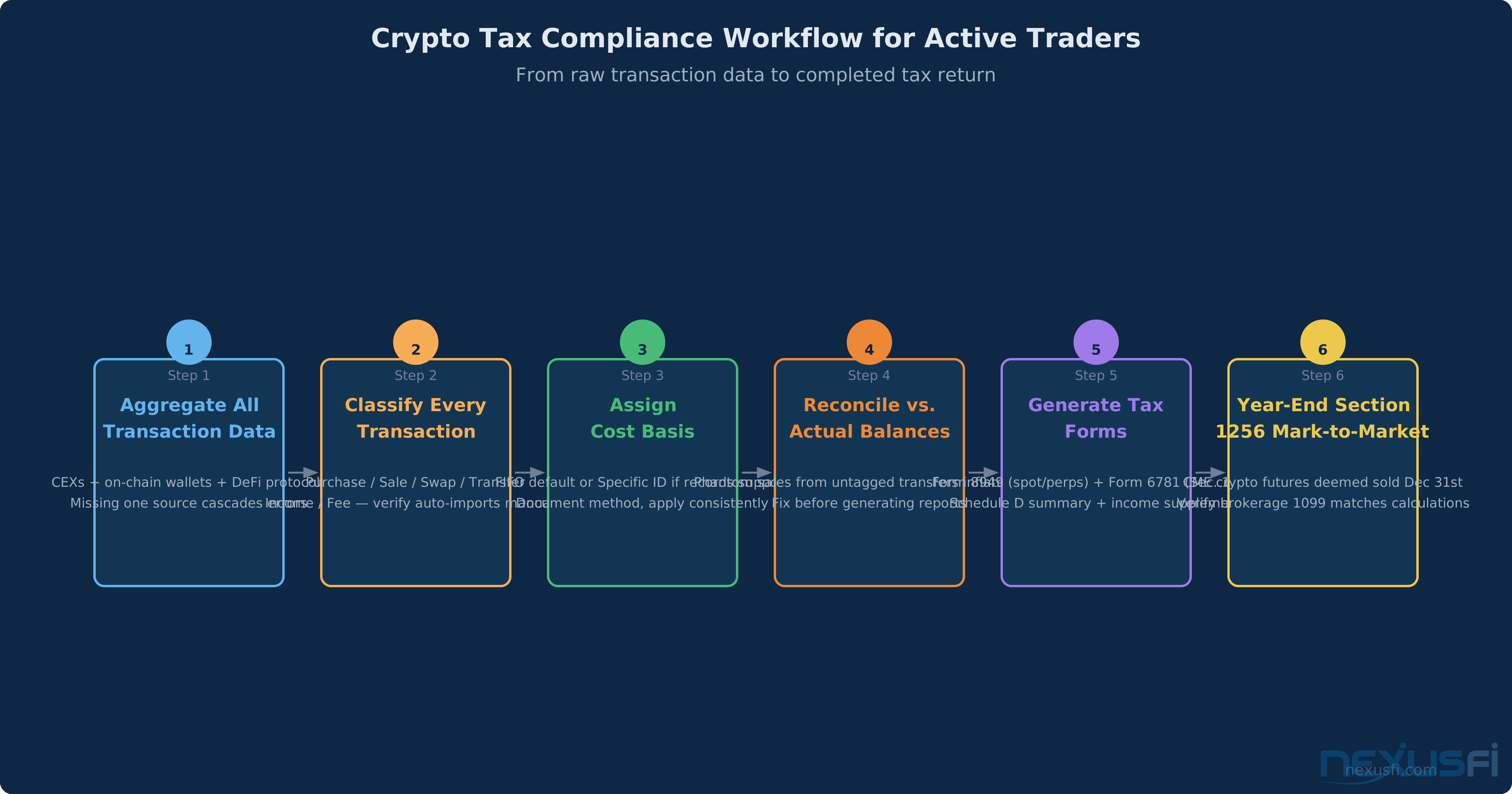
The compliance workflow is where traders either get this right or end up with problems. Here's the process from raw data to completed return.
Step 1: Aggregate All Transaction Data #
Collect transaction histories from every source:
- Centralized exchanges (Coinbase, Kraken, Binance US) — CSV export or API
- On-chain wallets — Etherscan, Solscan, and block explorers export transaction history
- DeFi protocols — use portfolio trackers (Zerion, DeBank) or protocol-specific dashboards
- Tax software auto-import — Koinly, TaxBit, ZenLedger, CoinTracker can pull from major exchanges and chains
Don't skip any source. Missing one wallet creates unreconciled transactions that cascade into basis errors throughout the rest of your records.
Step 2: Classify Every Transaction #
For each transaction, determine its type:
- Purchase (non-taxable acquisition)
- Sale (taxable disposal — capital gain/loss)
- Swap (taxable disposal + new acquisition)
- Transfer (non-taxable between own wallets — must be properly tagged)
- Income received (ordinary income — staking, yield, airdrop, mining)
- Fees paid (part of cost basis or deductible trading expense)
This is where manual review of your tax software output is critical. Auto-import tools frequently misclassify transfers as sales, or fail to recognize complex DeFi interactions involving multiple contract calls.
Step 3: Assign Cost Basis #
Apply your chosen method (Specific ID or FIFO) consistently. Document your method selection. For DeFi income events, the FMV at receipt is both the income amount and the cost basis for the newly received tokens.
Step 4: Reconcile #
Before finalizing, reconcile against actual exchange account balances. A single missing transfer creates a phantom sale — the software sees an outflow from one wallet and an inflow to another and generates a fake capital gain event. Reconciliation errors that persist into your return create audit flags.
Step 5: Generate Reports #
Tax software produces:
- Form 8949 — capital gains/losses from spot and perpetual swap disposals
- Schedule D — summary of all capital gains/losses
- Form 6781 — Section 1256 gains/losses for CME crypto futures
- Ordinary income summary — staking, rewards, airdrops (flows to Form 1040 Schedule 1)
Step 6: Year-End Tasks for Section 1256 Traders #
For CME crypto futures positions open on December 31st:
- Record the mark-to-market value of every open position
- Report as deemed sold/repurchased at year-end
- Start January 1st with a fresh basis at the year-end mark-to-market price
- This is automatic in your brokerage's 1099, but verify it's correct
Tax-Loss Harvesting in Practice #
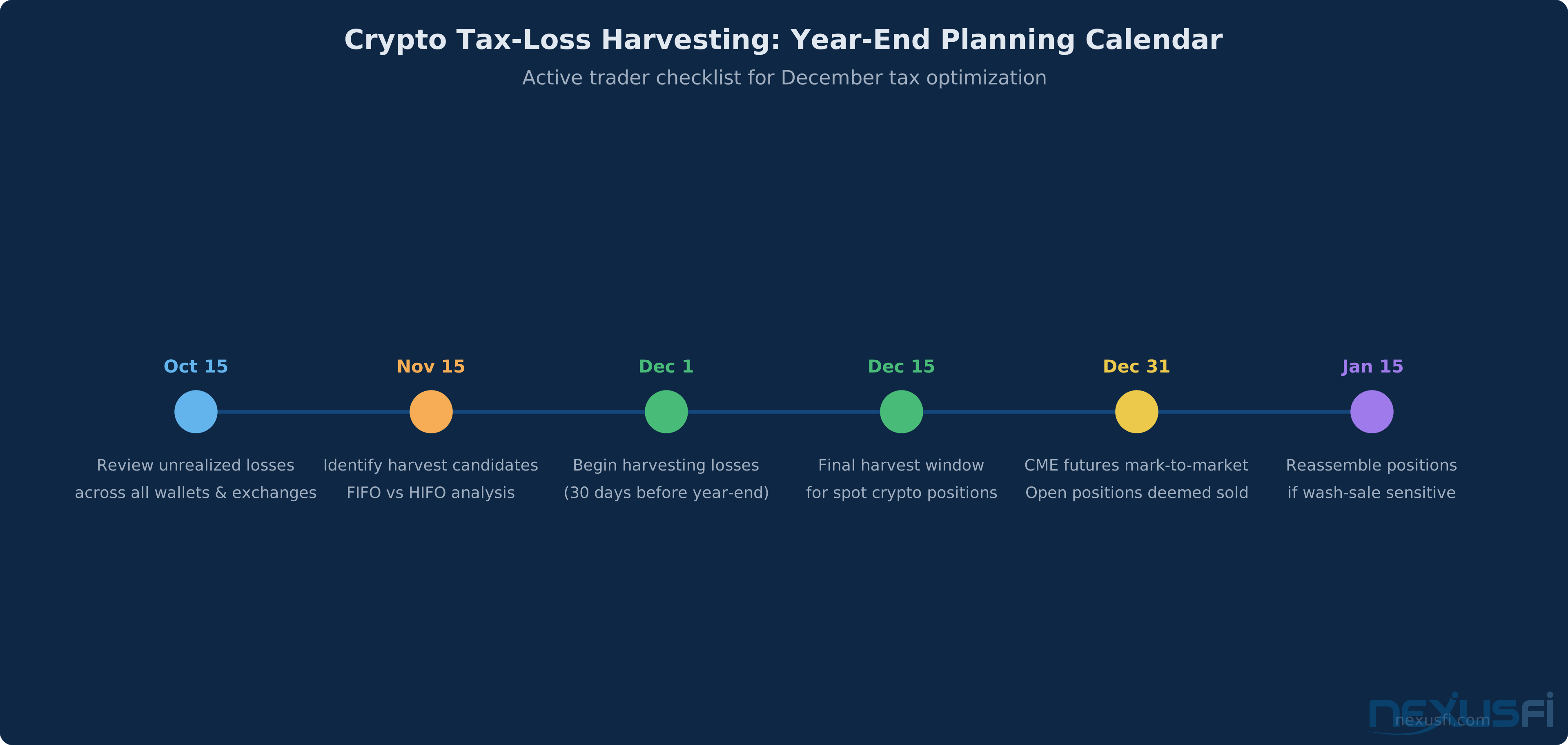
Spot crypto's wash sale exemption creates a year-end opportunity. If you're sitting on unrealized losses in spot crypto positions:
- Sell the position to realize the loss
- Immediately repurchase — no waiting period required
- Claim the loss for that tax year
- Maintain your market exposure unchanged
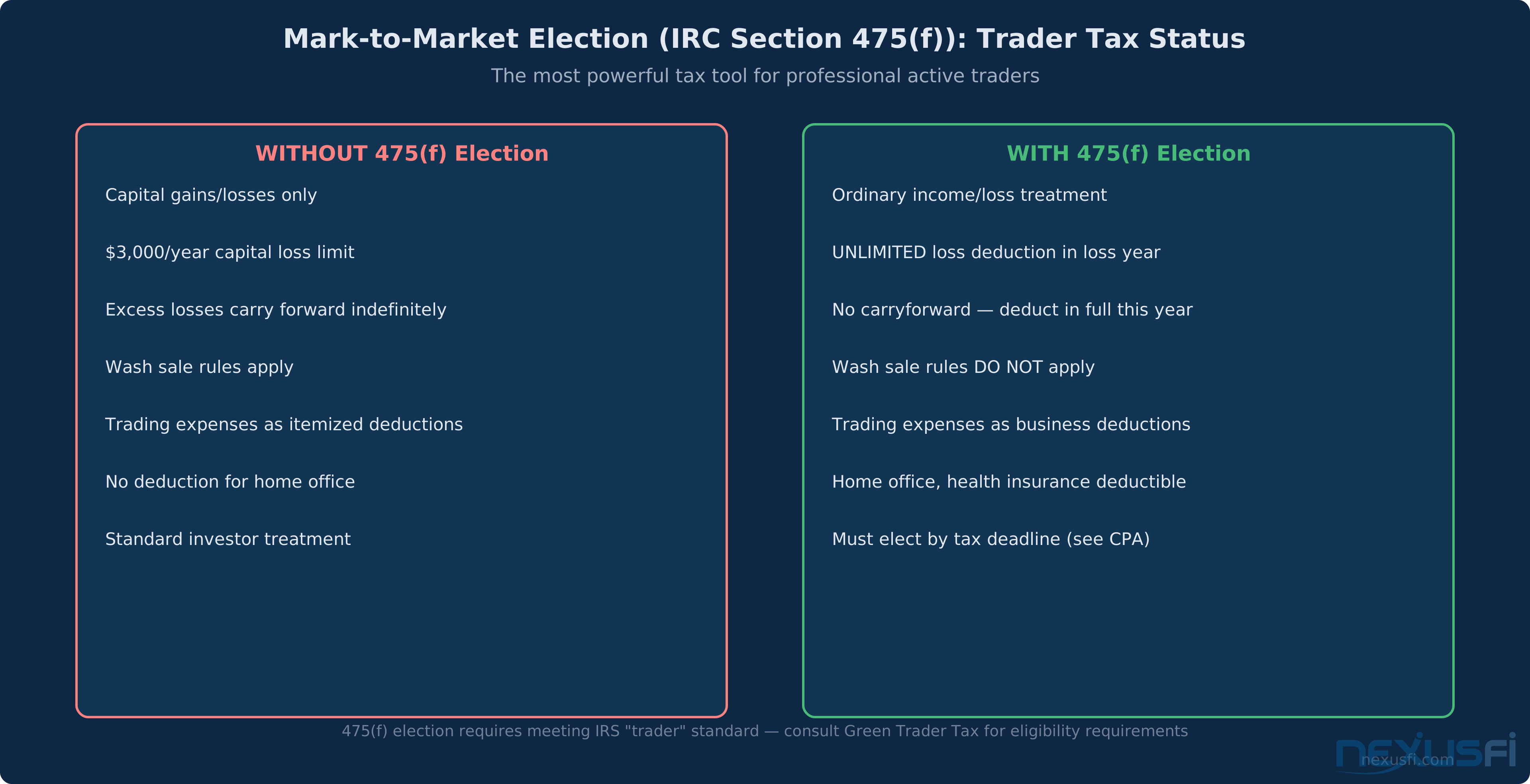
Capital losses offset capital gains dollar-for-dollar. If you have more losses than gains, up to $3,000 per year can offset ordinary income. Excess losses carry forward indefinitely to future years. In a significant bear market, systematic harvesting can accumulate a multi-year tax shield — losses from one year's harvesting offset future gains when the market recovers.

Common Pitfalls #
Missing crypto-to-crypto swaps. Every token swap on a DEX is a taxable event. Multi-hop swaps through a DEX aggregator can be multiple separate disposal events. If you're not tracking these, you're missing taxable gains.
Treating DeFi rewards as capital gains. Staking rewards, LP fees, and yield farming proceeds are ordinary income when received. Misclassifying as capital gains understates income at your marginal rate.
Relying exclusively on exchange 1099s. Exchange forms reflect only activity on that platform. They don't know about cross-exchange transfers, prior-year basis, or DeFi activity. They're a starting point, not a final answer.
Forgetting gas fees. ETH gas fees paid on transactions are part of your cost basis for what you acquired, or a deductible cost on disposals. Missing gas fees overstates gains.
Ignoring small transactions. The Form 1040 virtual currency question has no minimum threshold. Every transaction counts. The IRS has made clear it expects complete reporting, and blockchain data is traceable.
Not tagging transfers. Moving crypto between your own wallets is not a taxable event, but tax software sees an outflow from one wallet and an inflow to another and generates a fake sale unless you tag it as a transfer. These phantom sales cascade into incorrect basis and artificial gains.
Missing DeFi income events. Every staking reward, every LP fee accrual, every airdrop is a taxable income event when received. The FMV at receipt is ordinary income. If you skip these, you're underreporting ordinary income — which creates more audit risk than underreported capital gains.
Working With Tax Professionals #
For traders with active spot, DeFi, and CME crypto futures activity, working with a CPA who specializes in crypto-specific taxation is worth the cost. General CPAs often don't understand Section 1256 treatment for CME contracts, DeFi income classification, wash sale rules for crypto vs. futures, or mark-to-market election nuances.
Robert Green's firm Green Trader Tax (greentradertax.com) is the go-to resource for active traders — they've been publishing on trader-specific tax issues for decades and have dedicated crypto expertise. As @SMCJB, a long-time client, notes: "They are excellent, and really really know their stuff when it comes to trading related issues. Robert Green is THE go-to guy on trading accounting and writes regularly for most of the trading publications." Their online client portal and documented responsiveness make the relationship workable even at distance.
When interviewing CPAs, test their knowledge: ask specifically about Section 1256 treatment for CME crypto futures, the wash sale rule distinction between spot and regulated futures, and their experience with DeFi income classification. A CPA who can answer those questions without hesitation is worth the premium.
Knowledge Map
Go Deeper
Build on this knowledgeReferences This Article
Articles that build on this topicCitations
- — The Tax Thread (2015) 👍 1“Most Futures & Futures Option contracts are taxed as Section 1256 Contracts which means that they are taxed 60% at your long-term capital gains rates and 40% at your short-term capital gains rate no matter what the holding period”
- — Day Trading: Mark-to-Market 475(f) Election? (2018) 👍 2“Trader status by itself gives many advantages including deduction of trading expenses, home office expense, pension plans. The big thing Mark-to-Market gives you is the ability to take losses as ordinary losses, which are not subject to the capital loss limitation.”
- — Selling Options on Futures? (2021) 👍 6“All futures are taxed as section 1256 contracts and hence are treated as 60% long term capital gains and 40% short term capital gains which for me is much more favorable”
- — The Tax Thread (2012) 👍 2“For Section 1256 (Futures Contracts and Straddles) contracts, you enter the Gains/Loss on Form 6781. It is one line item, not itemized”
- — Cryptocurrencies 101 -- what I've learned so far (2021) 👍 3“If you trade a Bitcoin Future, it is taxed as a futures contract. If you trade Bitcoin itself though it is taxed as a cryptocurrency. I have no idea how a perpetual swap would be taxed though.”
- — The Tax Thread (2018)“The IRS considers cryptocurrencies, including Bitcoin, to be 'intangible property.' Investors and traders holding cryptocurrency as a capital asset should use capital gain or loss tax treatment on sales and exchanges”
- — Senate Bill to revoke Futures 60/40 tax treatment (2021) 👍 1“Maybe you did... but it was marked to market on 12/31/2020 as far as the tax man is concerned, and repurchased on 01/01/2021.”
- — New CME fees on multiple platforms? (2014) 👍 1“Even for an individual Futures trading profits are taxed as hybrid rate of capital gains / income. It is a 60/40 split that creates a 28% blended tax rate.”
- — If you own bitcoin, heres how much you owe in taxes (2018) 👍 1“If you've held those bitcoins for less than a year and sell them, that cash will be taxed as income. If you've held for more than a year, it's taxed as capital gains.”
- IRS Notice 2014-21 — IRS Guidance on Virtual Currency Taxation (2014)
- Green Trader Tax — Trader Tax Status and Mark-to-Market (2024)