



Chainlink (LINK): The Oracle Network Powering DeFi Infrastructure
Overview #
Chainlink isn't a cryptocurrency you trade purely on chart patterns. It's market infrastructure — the plumbing that keeps DeFi from collapsing. Every time a lending protocol liquidates a loan, every time a perpetual DEX marks your position to market, every time a synthetic asset tracks a real-world price — there's a good chance a Chainlink oracle is behind it. That's the edge in understanding LINK: you're not betting on a narrative, you're betting on the continued digitization of financial infrastructure.
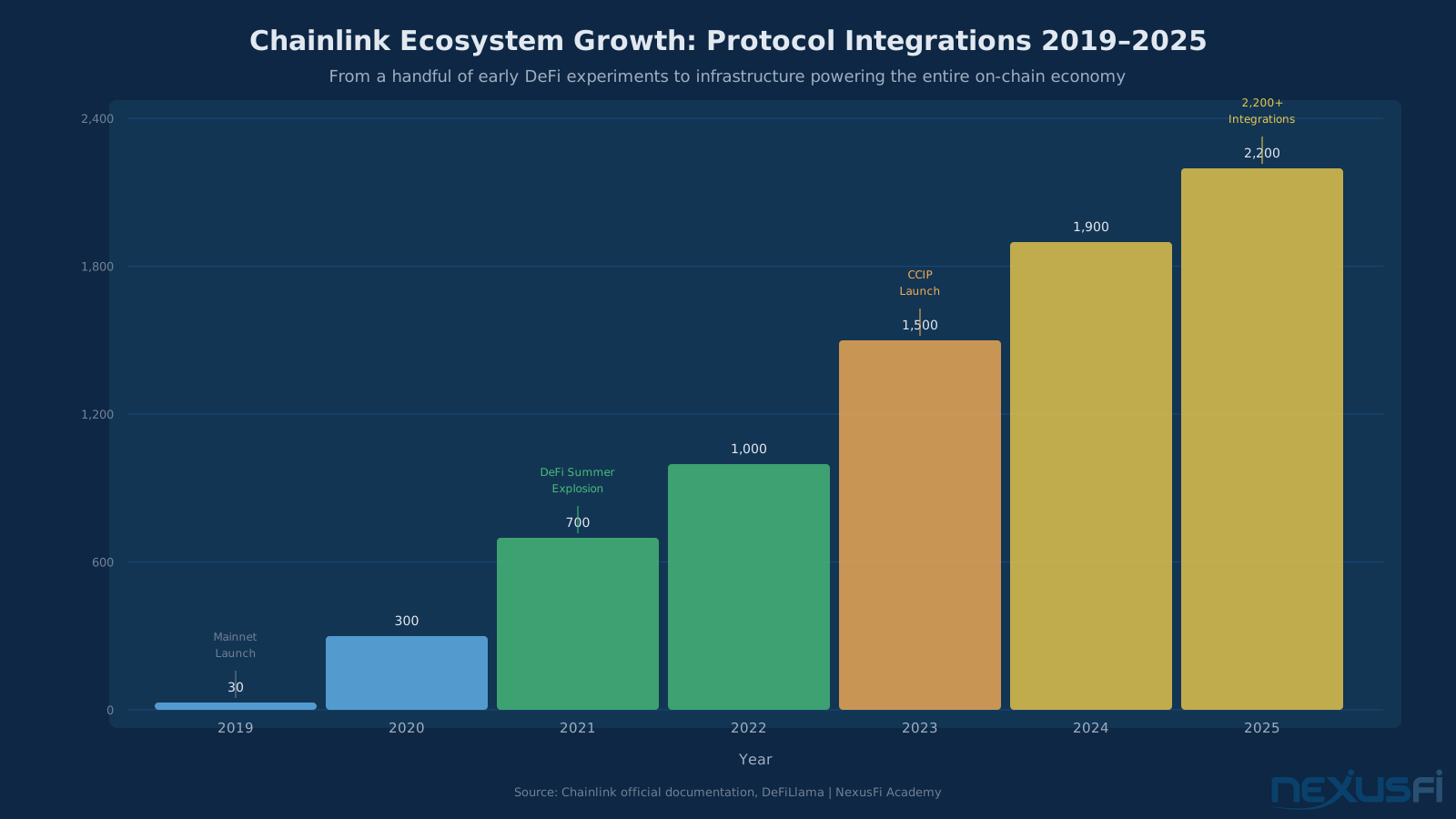
By 2025, Chainlink powers over 2,200 protocol integrations across 100+ blockchains. The switching costs to migrate an entire DeFi protocol off Chainlink oracles are enormous: contract rewrites, new security audits, governance votes, user confidence risk during the transition. Every protocol that goes live on Chainlink makes LINK more critical.
What Chainlink Is: The Oracle Problem Solved #
Smart contracts are deterministic machines. They execute exactly as coded, given inputs. But they have no way to fetch data from the outside world — a price, a weather reading, a stock quote — without trusting some external source. If that source lies, the whole system breaks.
This is the oracle problem, and it existed before Ethereum launched. Chainlink's answer: a decentralized network of independent node operators who fetch external data, stake LINK as collateral to signal honest behavior, and report to on-chain aggregator contracts that median out their answers. No single node can corrupt the feed. If a node consistently reports bad data, it gets slashed.
The practical result is that Chainlink became the default data layer for DeFi by 2021. When Aave needs to know whether a borrower's collateral ratio has fallen below liquidation threshold, it asks Chainlink. When dYdX needs to mark positions to market, it asks Chainlink. When Synthetix needs the price of gold for a synthetic token, it asks Chainlink.
Chainlink is not just another crypto token — it's the data layer that the entire DeFi ecosystem depends on. When you buy LINK, you're making a bet on the continued growth of on-chain finance, not just on Chainlink as a company.
How Chainlink Oracles Actually Work #
The mechanism matters for traders because it explains why LINK has real utility demand, not just speculative demand.
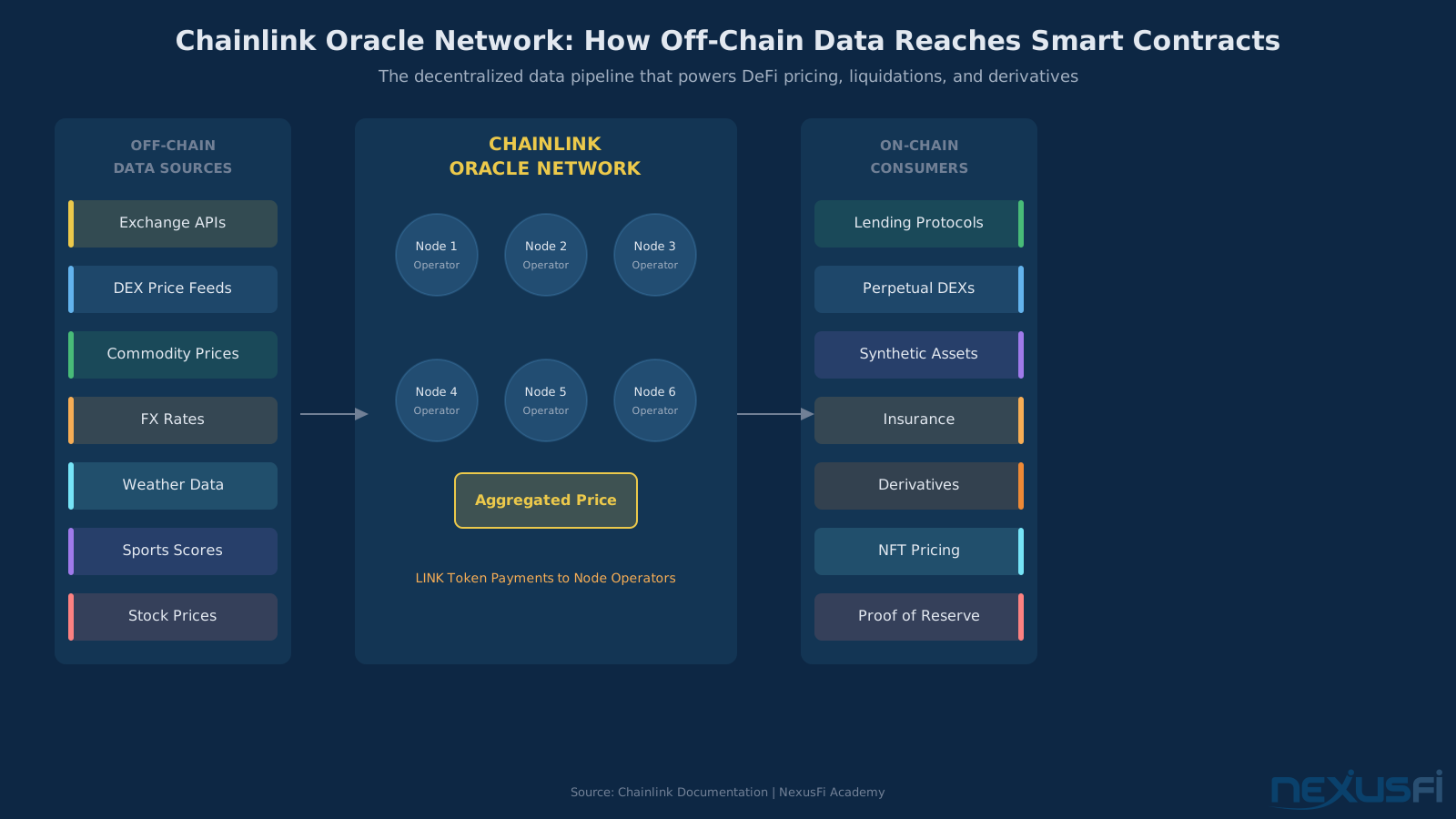
Step 1: Data request. A smart contract needs a price. It sends a request to an on-chain Chainlink aggregator contract, which holds a list of approved node operators for that feed.
Step 2: Off-chain fetch. Each approved node independently queries multiple external APIs (exchange data, DEX prices, price aggregators) for the requested data point. Nodes do this on their own servers, off-chain.
Step 3: On-chain reporting. Each node submits their answer to the aggregator contract, along with a cryptographic signature proving it came from that specific node operator.
Step 4: Aggregation. The aggregator takes a median of all submitted values, discarding outliers. This median becomes the official "price" the contract uses. A single compromised node can't move the result much; you'd need to compromise the majority simultaneously.
Step 5: LINK payment. Node operators earn LINK for answering requests. Protocols pay in LINK for accessing feeds. This creates actual payment flows — real LINK demand tied to real usage, not just speculation.
The key products in the Chainlink ecosystem beyond basic price feeds:
Verifiable Random Function (VRF): Provably fair randomness for gaming, NFT minting, and lottery protocols. Every randomized outcome is cryptographically verifiable by anyone.
Automation (formerly Keepers): Smart contract automation. Chainlink nodes can trigger contract functions when specified conditions are met — liquidations, yield harvesting, rebalancing events.
Proof of Reserve (PoR): Automated verification that collateral backing a token actually exists. Used by wrapped Bitcoin bridges and post-FTX, increasingly demanded by institutional counterparties.
CCIP (Cross-Chain Interoperability Protocol): Chainlink's bridge protocol for transferring tokens and data between blockchains. The most significant growth vector for 2025 and beyond.
Why Chainlink Matters: The DeFi Dependency Map #
The clearest way to see Chainlink's importance: find a major DeFi protocol and trace what breaks if Chainlink oracles go down.
Aave (lending): Without accurate price feeds, collateral ratios become meaningless. Liquidations can't trigger correctly. Users can borrow against inflated valuations, draining protocol solvency. Aave uses Chainlink for collateral pricing across dozens of assets.
Synthetix (synthetic assets): Every synthetic token tracks a real-world asset via an oracle feed. Without oracle prices, all synths are unanchored. The protocol halts. Synthetix was one of Chainlink's earliest major integrations.
Compound, MakerDAO, Curve, GMX, dYdX, Uniswap V3 — the list continues through virtually every significant DeFi protocol. Chainlink estimates their oracles have secured over $9 trillion in transaction value.
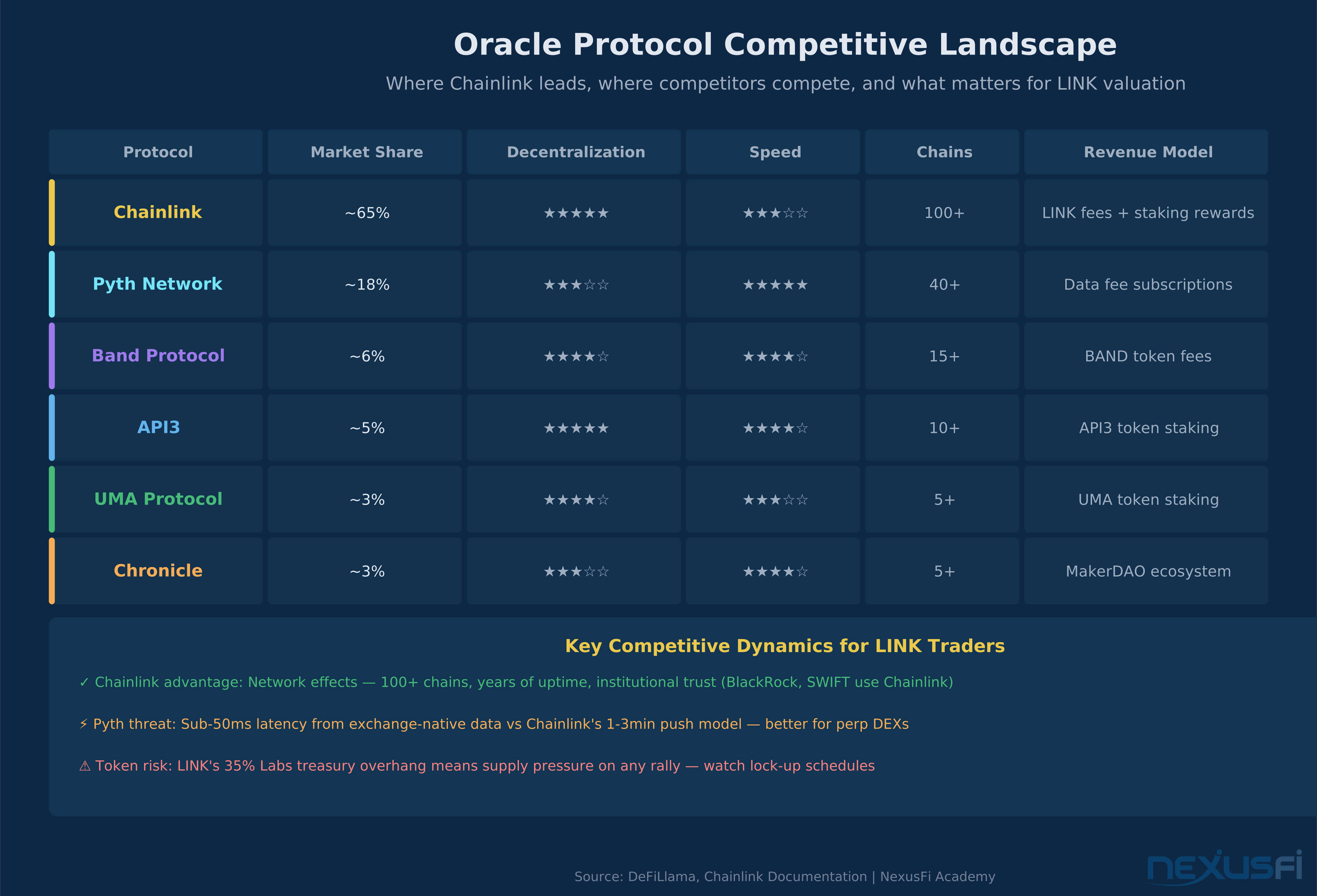
The competitive moat is real, but it's not unassailable. Pyth Network has carved out significant share in latency-sensitive applications like perp DEXs, offering sub-50ms price updates from exchange-native data. Band Protocol, API3, and Chronicle compete in specific niches. But for institutional trust, audit depth, and breadth of coverage, Chainlink retains the dominant position.
As @AlexMD1 analyzed in a NexusFi Cryptocurrency forum post on systematic altcoin strategies, volume-based trading strategies can be highly profitable in crypto markets, and oracle infrastructure plays like LINK sit at an interesting intersection of fundamental and technical trading because oracle usage correlates directly with on-chain volume.
What Drives LINK Price #
LINK price is driven by four interlocking forces, not all of them equally predictable.
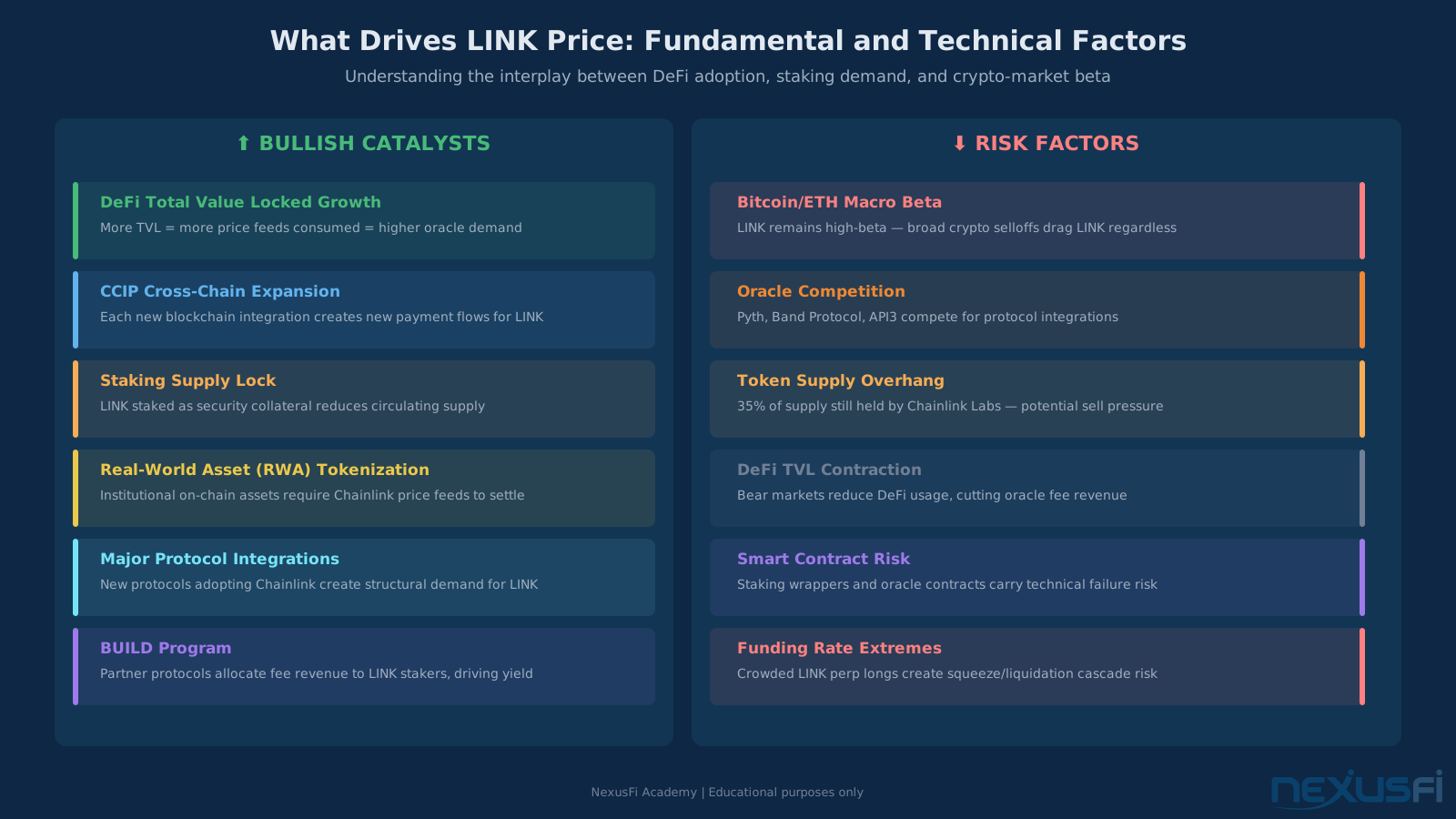
DeFi TVL growth is the fundamental driver. More total value locked means more price feeds consumed, more liquidations processed, more oracle requests per block. When DeFi TVL expands, Chainlink's utility demand expands with it. The correlation isn't perfect — LINK can decouple from TVL trends for weeks at a time — but over multi-month windows, TVL direction tends to matter.
CCIP adoption is the 2025 trigger to watch. As more institutional projects launch cross-chain products — tokenized treasuries, RWA platforms, DeFi protocols bridging liquidity between chains — CCIP becomes the standard bridge because it's built by the same entity providing oracle security. BlackRock's tokenized fund (BUIDL), SWIFT's CCIP experiments, and traditional finance institutions building on blockchain all create structural demand for CCIP, and so LINK.
Staking supply dynamics matter at the margin. When large LINK holders stake, they remove tokens from circulating supply. The unbonding period (7-28 days depending on pool capacity) means staked LINK can't immediately hit the market. Monitoring staking participation rates gives a rough read on supply compression.
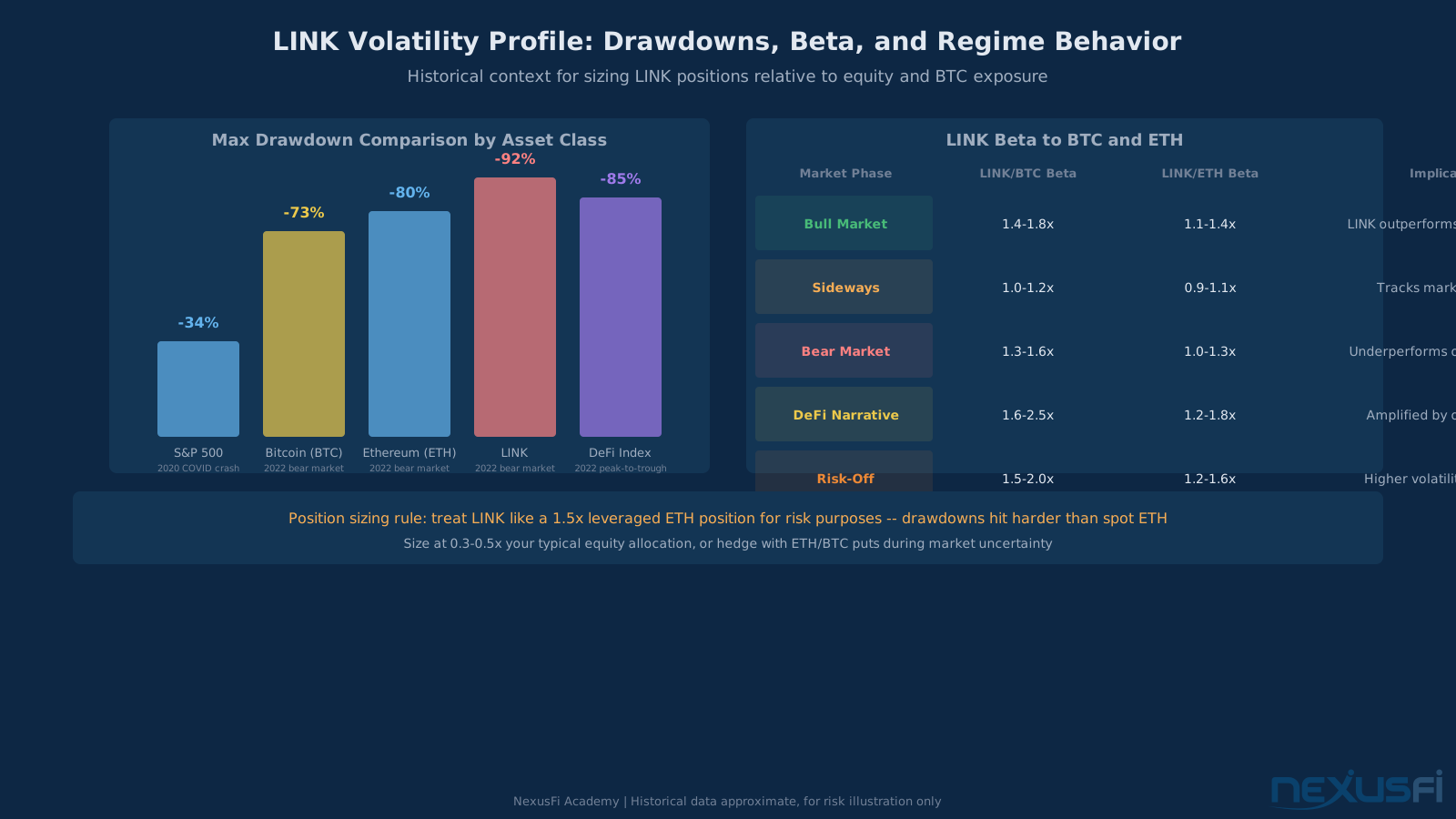
Crypto-market beta dominates in the short term. Over days and weeks, LINK moves with BTC and ETH. LINK's beta to Bitcoin typically runs 1.3-1.6x. A 10% BTC selloff translates to a 13-16% LINK drawdown in normal conditions. This beta means that fundamental oracle thesis doesn't protect you from macro crypto drawdowns.
Chainlink's use case is as specific and essential as it gets — oracle infrastructure for the entire DeFi stack.
LINK Staking: Security Mechanism, Not Passive Yield #
Chainlink Staking v0.2 (launched late 2023) represents a meaningful evolution in how LINK creates economic security, but it's often misunderstood as "yield farming for LINK holders." It isn't.
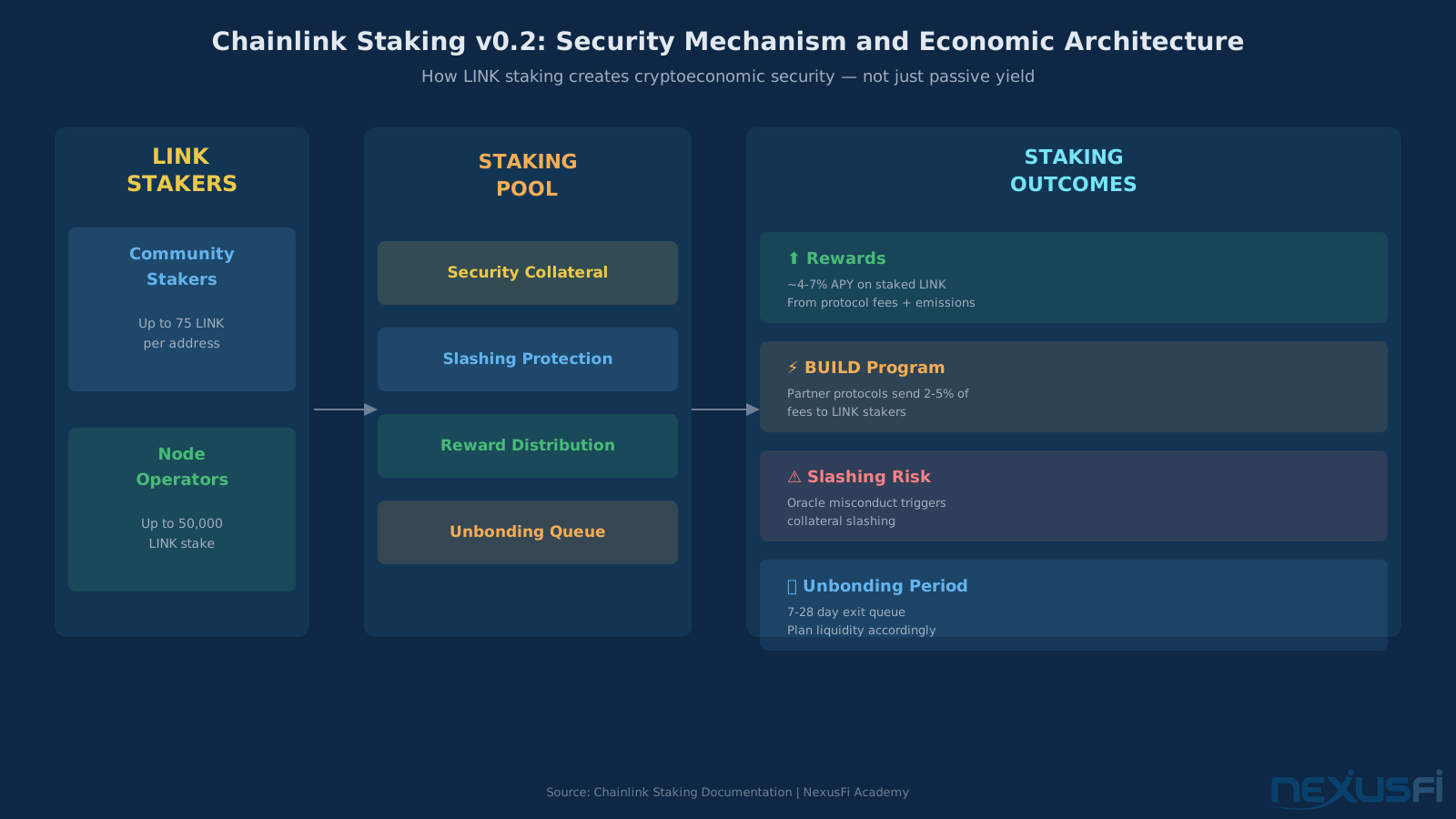
What staking actually does: LINK staked in the protocol serves as collateral for oracle operator behavior. If a node operator consistently misreports data, their staked LINK can be slashed. Community stakers share risk alongside operators. The staking deposit is a credible commitment to honest behavior, not just a yield mechanism.
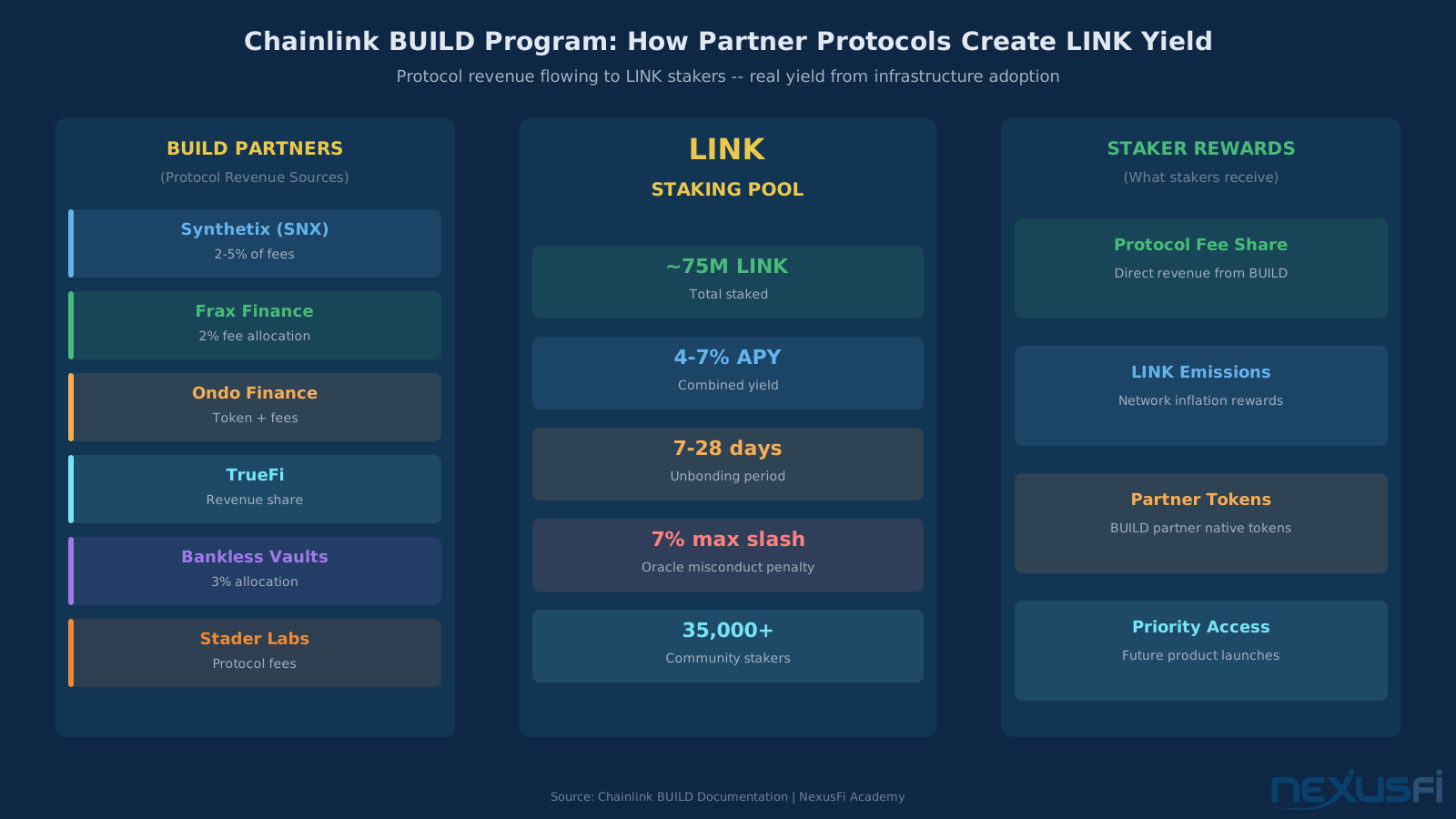
The BUILD program is the real revenue lever. Partner protocols (DeFi protocols that use Chainlink services) commit to directing a percentage of their protocol revenue or token supply to LINK stakers. As Chainlink's integration count grows, BUILD partnerships accumulate — creating real yield from real protocol fees rather than pure LINK inflation.
Practical mechanics for traders:
Community stakers can stake up to 75 LINK per address. Node operators stake up to 50,000 LINK. The reward rate runs approximately 4-7% APY, combining Chainlink emissions with BUILD program contributions.
The unbonding period is the critical risk management detail: when you unstake, LINK enters a withdrawal queue with a 7-28 day delay depending on pool capacity. During that window, your LINK is still technically staked (subject to slashing) but you're waiting to retrieve it. This matters enormously if you want to react quickly to market moves — a staked LINK position is a long-term conviction hold, not a position you can exit overnight.
Slashing risk in Chainlink staking is real: the current design slashes 7% of staked LINK for documented oracle misconduct. The unbonding period (7-28 days) means you cannot exit a staking position quickly in response to market events. Never stake LINK you may need to liquidate within 30 days.
For traders considering staking: Treat staked LINK as your long-term conviction position and keep separate trading LINK for active positioning. Don't stake LINK you'll need to sell within the next 30 days.
How to Trade LINK #
LINK is available on every major exchange: Coinbase, Binance, Kraken, OKX, Bybit. Perpetual contracts (perps) exist with deep liquidity on Binance, Bybit, and OKX, with LINK-USDT perps being the most liquid. CME Group does not yet offer LINK futures, so institutional size is primarily executed OTC or on offshore perp venues.
Spot trading is appropriate for: Long-term thesis plays on DeFi adoption and oracle infrastructure. Accumulation during bear market periods. Positions where you're willing to hold through 60-70% drawdowns.
Perpetual contracts are appropriate for: Short-term technical setups. Hedging a spot position during risk-off periods. Capturing funding rate income when funding is negative (short bias).
The three signals that matter most for LINK trading:
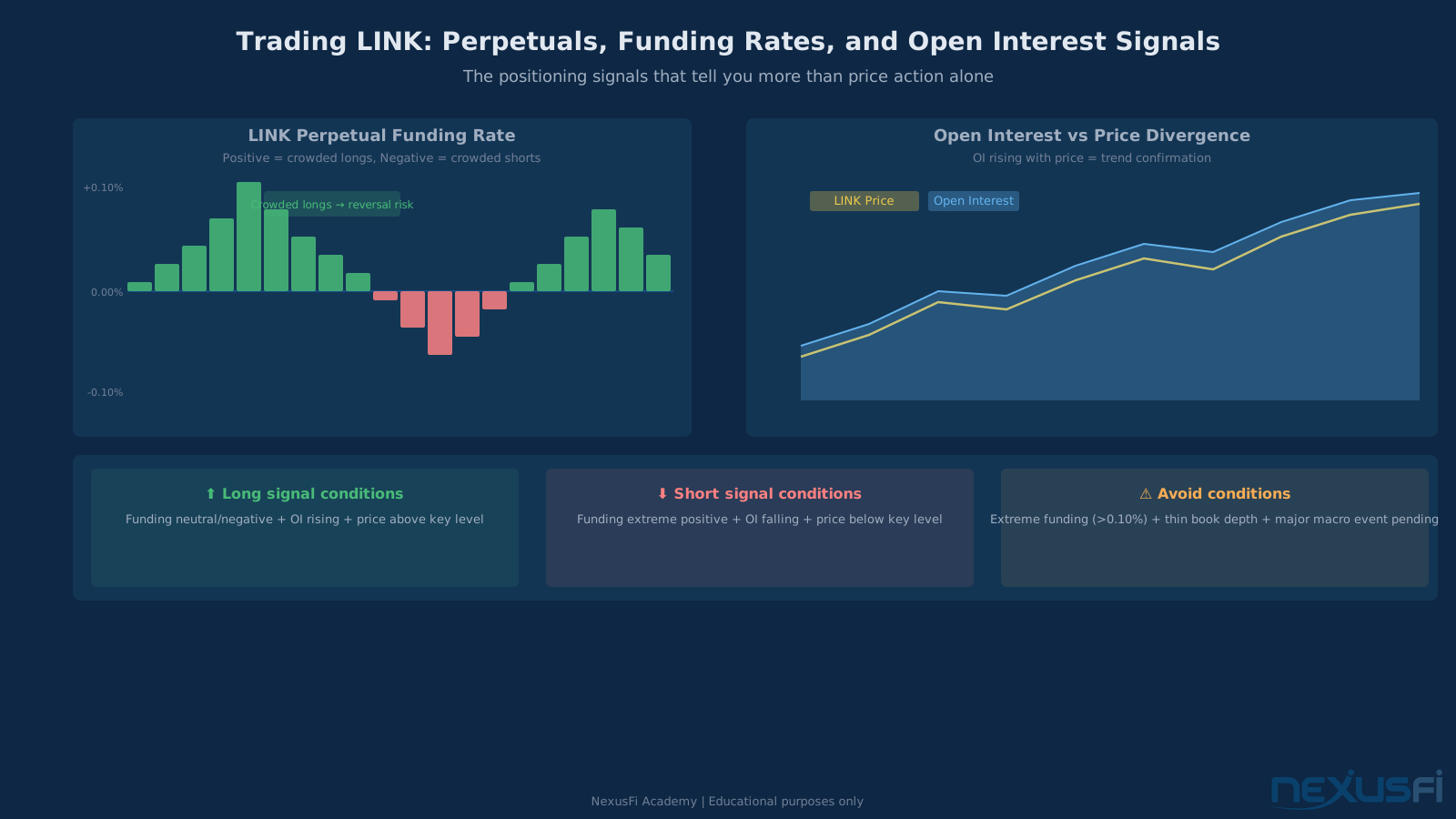
Funding rates: Persistent positive funding (above +0.05% per 8 hours) signals crowded long positioning. Counter-intuitively, high positive funding is often a signal to reduce longs or initiate shorts, not a bullish confirmation. The best long entries occur when funding is flat to slightly negative — nobody is positioned, so upside has room.
That same arbitrage framing applies to reading LINK vs. broader crypto market positioning discrepancies.
Open interest: OI rising with rising price confirms trend continuation — new buyers are entering. OI rising with falling price signals new shorts — watch for potential squeeze if the decline stalls. OI falling with price suggests profit-taking, not conviction moves.
Order book depth: LINK has good liquidity on major venues but it thins much in turbulent markets. Entering large LINK positions in thin books means your own order moves the price against you. Check depth before size.
Key setups and structures:
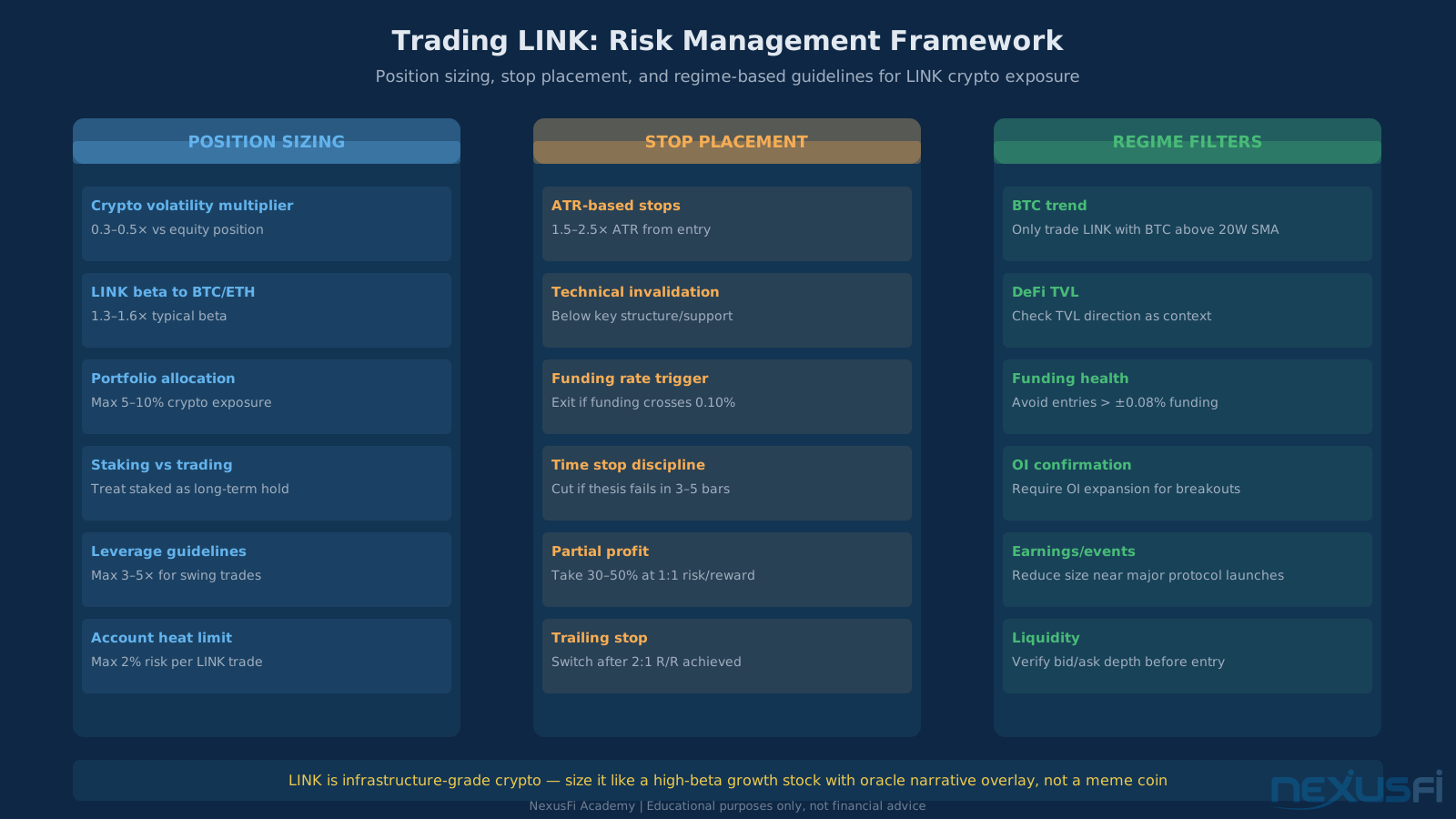
Trend continuation: When BTC establishes a trend above its 20-week SMA and DeFi TVL is expanding, LINK tends to outperform. Enter retracements to support with funding neutral-to-negative. Size appropriately — 0.3-0.5x your typical equity position size given crypto's higher volatility.
Mean reversion: During high-volatility periods, LINK often snaps back to VWAP after exaggerated moves. The setup: extreme funding + price deviation from VWAP + declining OI. Requirements for this setup are strict because news events can break mean reversion patterns completely.
Event-driven: Major Chainlink announcements (new CCIP integrations, institutional partnerships, staking upgrades) can create short-term momentum. Size conservatively and predefine your max loss — trigger trades in crypto are prone to "buy the rumor, sell the news."
Risk management non-negotiables:
Stop placement at 1.5-2.5x ATR from entry is baseline. Reduce size to zero when funding exceeds +-0.10% per 8 hours. Use time stops — if your thesis doesn't play within 5 candles on your working timeframe, cut and reassess. LINK's crypto volatility means the opportunity cost of being wrong is significant; don't overstay losing positions.
Chainlink CCIP: The Long-Term Growth Thesis #
Cross-Chain Interoperability Protocol deserves dedicated attention because it represents a at the core different revenue model for Chainlink. Price feeds are consumed by protocols — CCIP is consumed by every participant in a cross-chain transfer.
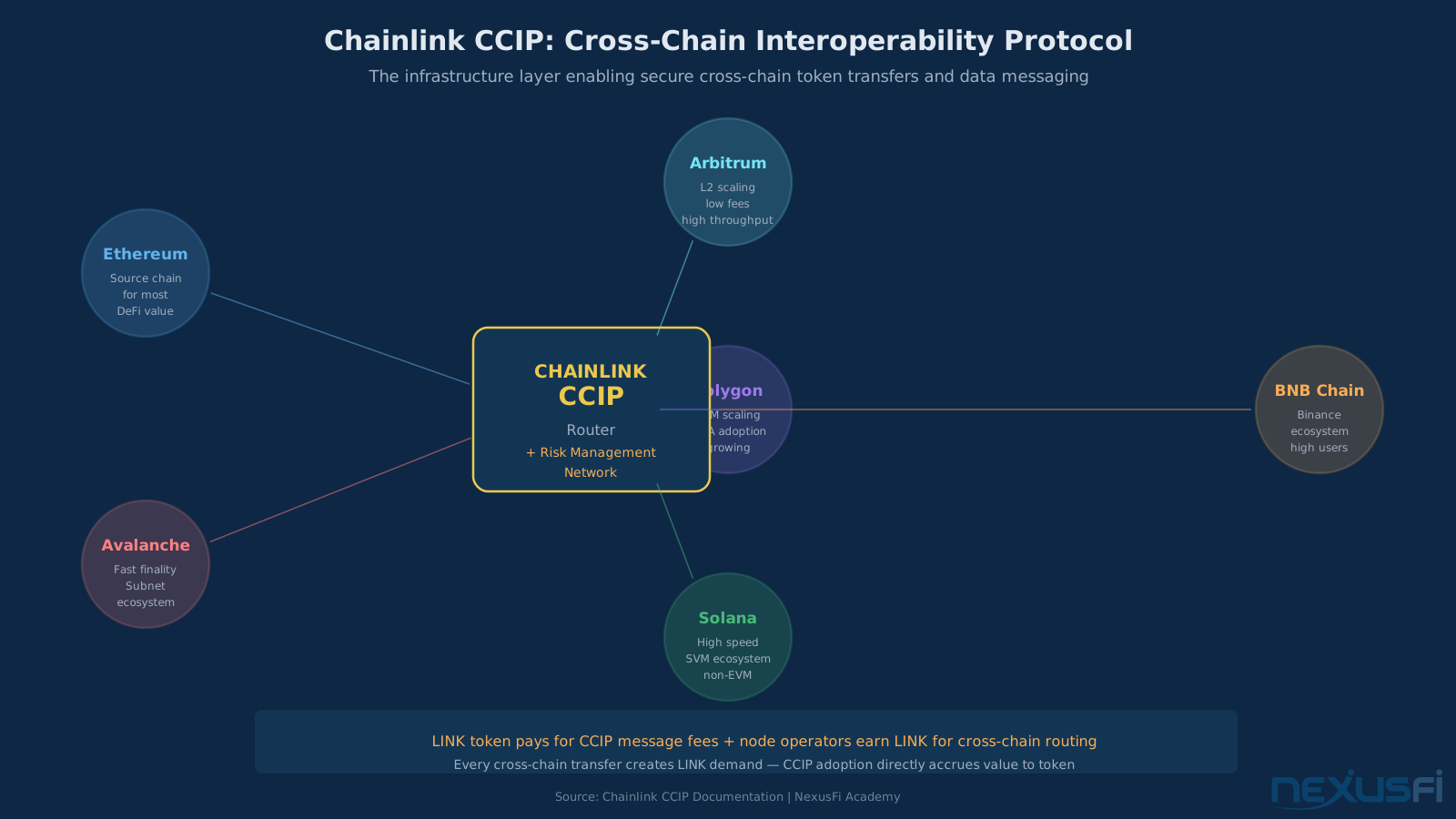
The market CCIP addresses: As DeFi expands across dozens of blockchains, liquidity is fragmented. Moving assets between Ethereum and Solana, or between Layer 2s like Arbitrum and Optimism, currently requires trusting bridge contracts — which have a poor security track record (over $2 billion stolen from bridge hacks). CCIP aims to be the enterprise-grade standard: audited by the same organization providing oracle security, backed by a Risk Management Network that monitors transactions for anomalies in real-time.
Institutional adoption signals: SWIFT (the interbank messaging network) ran CCIP pilot programs. ANZ Bank, Fidelity International, and multiple TradFi institutions have explored CCIP for tokenized asset settlement. These aren't commitments, but they signal that traditional finance is taking CCIP seriously as a standard, not just another bridge.
Why this matters for LINK price: Every CCIP message requires LINK payment. As institutional on-chain activity scales — tokenized treasuries, tokenized equities, cross-chain collateral management — CCIP transaction volume grows directly. At institutional volumes, this creates significant structural LINK demand.
CCIP's architecture is at the core different from traditional bridges — it uses the same oracle security infrastructure as Chainlink's price feeds, meaning an attacker would need to compromise Chainlink's entire decentralized network to corrupt a cross-chain transfer, not just a single bridge contract.
The timeline is uncertain — institutional tokenization is a 3-7 year story, not a quarterly trigger. But for patient LINK longs, CCIP's potential is arguably the most significant fundamental development in Chainlink's history.
Risk Factors and What Can Go Wrong #
No infrastructure play is risk-free.
Competition from Pyth Network is the most immediate threat. Pyth aggregates prices directly from trading venues (exchanges, market makers) and publishes on-chain with sub-50ms latency. For perpetual DEXs that need real-time mark prices to prevent toxic flow, Pyth's architecture is genuinely superior to Chainlink's 1-3 minute push model. dYdX v4, Drift Protocol, and other perp-native DEXs use Pyth, not Chainlink, for core price feeds.
Token supply overhang is a persistent structural risk. Approximately 35% of total LINK supply (350 million tokens) is held by Chainlink Labs for development, ecosystem grants, and team compensation. These tokens can be sold. The pace and schedule of Labs sales is not fully transparent, which creates headline risk on any sustained LINK rally.
Oracle manipulation remains theoretically possible, though Chainlink's design makes it extremely expensive. Flash loan attacks have targeted oracle-dependent protocols before. A sophisticated attacker targeting Chainlink itself would need to corrupt enough independent nodes simultaneously to move the median — the cost would exceed most attack vectors' profit potential.
Smart contract risk in staking wrappers. If you're accessing LINK staking through a DeFi wrapper (rather than directly through the official Chainlink staking interface), you're adding another layer of smart contract risk. Use official staking interfaces where possible.
Macro crypto correlation. In crypto bear markets, oracle infrastructure doesn't protect you. LINK fell 90%+ in the 2022 bear market despite Chainlink's network growing the entire time. Fundamental value and market price decouple violently in risk-off crypto environments.
For LINK specifically, the BTC trend and DXY are the macro filters that determine whether to hold or hedge.
Where to Access LINK #
Centralized exchanges: Coinbase (LINK/USD), Binance (LINK/USDT), Kraken (LINK/USD), OKX, Bybit, Gemini. Deep liquidity, easy fiat on-ramp, regulated in most jurisdictions.
Perpetual contracts: Binance LINK-USDT-PERP, Bybit LINK-USDT, OKX LINK-USDT-SWAP. Funding rates, mark price mechanisms, and liquidation protocols vary by venue — understand your venue's mechanics before trading with leverage.
DeFi lending/staking: Aave, Compound, and other lending protocols accept LINK as collateral. The official Chainlink staking interface is at staking.chain.link. Uniswap and Curve offer LINK liquidity pools for those wanting to earn trading fees on LINK exposure.
Self-custody: LINK is an ERC-20 token — any Ethereum-compatible wallet (Metamask, Ledger, Trezor) holds it natively. For significant LINK holdings, hardware wallet custody is standard practice.
Chainlink vs. Crypto-Native Trading Alternatives #
For traders comparing LINK to other crypto positions, the key differentiator is the infrastructure thesis versus pure speculative beta.
LINK vs. ETH: ETH is the base layer; LINK depends on smart contract activity. In DeFi bull markets, LINK often outperforms ETH (higher beta to DeFi TVL growth). In bear markets, LINK tends to underperform (DeFi TVL contracts faster than ETH market cap).
LINK vs. meme coins: LINK has fundamental utility demand, multi-year development roadmap, and institutional adoption trajectory. Meme coins have pure speculative narrative. The tradeoff: meme coins can 10x in days on social momentum; LINK moves more gradually on infrastructure adoption.
LINK vs. Layer-1 tokens (SOL, AVAX, DOT): L1 tokens compete for block space and developer attention. LINK is network-agnostic infrastructure — it runs on Ethereum, Solana, Avalanche, and 100+ others simultaneously. That cross-chain position reduces single-chain risk.
For traders already using platforms built on Chainlink oracles, understanding LINK mechanics provides an edge in reading DeFi-wide risk. When LINK funding goes to extremes, DeFi protocols are often at inflection points too. The oracle layer is a leading indicator for broader on-chain activity.
Summary: What Chainlink Means for Traders #
Chainlink occupies a unique position in the crypto market: infrastructure that the industry can't run without, packaged as a tradeable token with speculative overlay. The oracle thesis is real — LINK demand is tied to DeFi growth, CCIP adoption, and RWA tokenization in ways that other crypto assets aren't. But LINK still trades like a high-beta crypto asset in the short term.
The traders who do best with LINK are those who separate the time horizons: use fundamental oracle thesis for sizing and holding period decisions, use technical signals (funding rates, OI, liquidity) for entry and exit timing, and use crypto-macro context (BTC trend, DeFi TVL direction) as the regime filter that determines whether to be long at all.
Staking creates an interesting decision tree. Long-term LINK holders who stake earn real yield from protocol infrastructure, but they lock in 7-28 day exit delays. Traders who need liquidity optionality should keep their LINK unstaked. Both approaches are valid — they serve different objectives.
The long-term fundamental case for LINK rests on this: as more economic activity moves on-chain — whether DeFi, RWA, gaming, insurance, or institutional finance — the demand for trustworthy oracle infrastructure grows with it. Chainlink's 65% market share in that infrastructure gives LINK structural demand that pure narrative tokens don't have.
That infrastructure position doesn't prevent 70% drawdowns in bear markets. But it does mean that every crypto cycle's expansion phase creates real, verifiable demand for LINK beyond pure speculation. In a market full of coins whose value depends entirely on who buys next, that's a meaningful distinction.
See Also #
- Ethereum (ETH): The Smart Contract Platform Every Crypto Trader Needs to Understand — The base layer Chainlink oracles run on
- DeFi (Decentralized Finance) — The ecosystem that depends on Chainlink oracle infrastructure
- Crypto Funding Rates and Perpetual Swaps — Critical for timing LINK perp entries and exits
- Open Interest Analysis for Futures Trading — The positioning signal that matters most for LINK trading
- Drawdown Management — Essential reading for surviving LINK's 70-90% crypto bear drawdowns
- Meme Coins: DOGE, SHIB, PEPE — The speculative alternative to infrastructure plays like LINK
- Position Sizing Methods — How to size LINK positions given crypto's elevated volatility
- Stop Loss Strategies — ATR-based stop frameworks applied to crypto trading
- Bitcoin Futures (BTC) — The macro driver that determines LINK's short-term direction
Knowledge Map
Prerequisites
Understand these firstGo Deeper
Build on this knowledgeReferences This Article
Articles that build on this topicCitations
- — Systematic Altcoin Trading Strategy using Trading Volumes (2018) 👍 2“Findings suggest highly profitable trading strategies can be developed which use volume shocks and past returns to form portfolios which are re-balanced daily.”
- — Becoming A Better Trader (2021) 👍 5“I invested in a cryptocurrency that is relatively unknown, has a low supply, and currently has a low price. They also need to have a unique use-case -- something that makes them particularly special.”
- — Becoming A Better Trader (2021) 👍 5“Think about what you are doing with the lesser known coins... it is really a form of arbitrage, especially if you are trading the cryptos against themselves.”
- — Becoming A Better Trader (2021) 👍 3“I invest in cryptos more than I trade them, so I factor in use-case (real world utility), potential return on investment, circulating supply relative to the current price and performance of the asset.”
- Chainlink Labs — What Is a Blockchain Oracle? (2024)
- DeFiLlama — Chainlink TVL and Protocol Statistics (2025)
- Chainlink Labs — Chainlink Staking v0.2: An Overview (2023)
- Chainlink Labs — Chainlink Cross-Chain Interoperability Protocol (CCIP) (2024)