



CME Micro Commodity Futures: The Complete Guide to MGC, SIL, MHG, MCL, MBT, and MET
Overview #
The CME Micro suite gives retail futures traders something that didn't exist a decade ago: regulated, exchange-traded access to gold, silver, copper, crude oil, bitcoin, and ether at a fraction of the notional value of standard contracts. A single Micro futures contract represents real market exposure — not simulation, not CFDs — with the same price discovery infrastructure as the full-size contract. Micro Gold (MGC) controls 10 troy ounces. Micro WTI Crude (MCL) controls 100 barrels. Micro Bitcoin (MBT) controls 0.1 BTC.
This isn't a beginner's practice account situation. These are real CME-listed products with central clearing, exchange-backed price discovery, and the same tick data flowing into your charts. The difference is leverage management: micros let you calibrate risk with a precision that standard contracts simply don't offer when you're starting with $5,000 to $25,000 in trading capital.
This guide covers every CME Micro commodity product — precious metals (MGC, SIL, PAM), base metals (MHG), energy (MCL), and crypto (MBT, MET) — with complete contract specifications, verified tick economics, trading hours, strategy frameworks, and the risk math that actually determines position size.
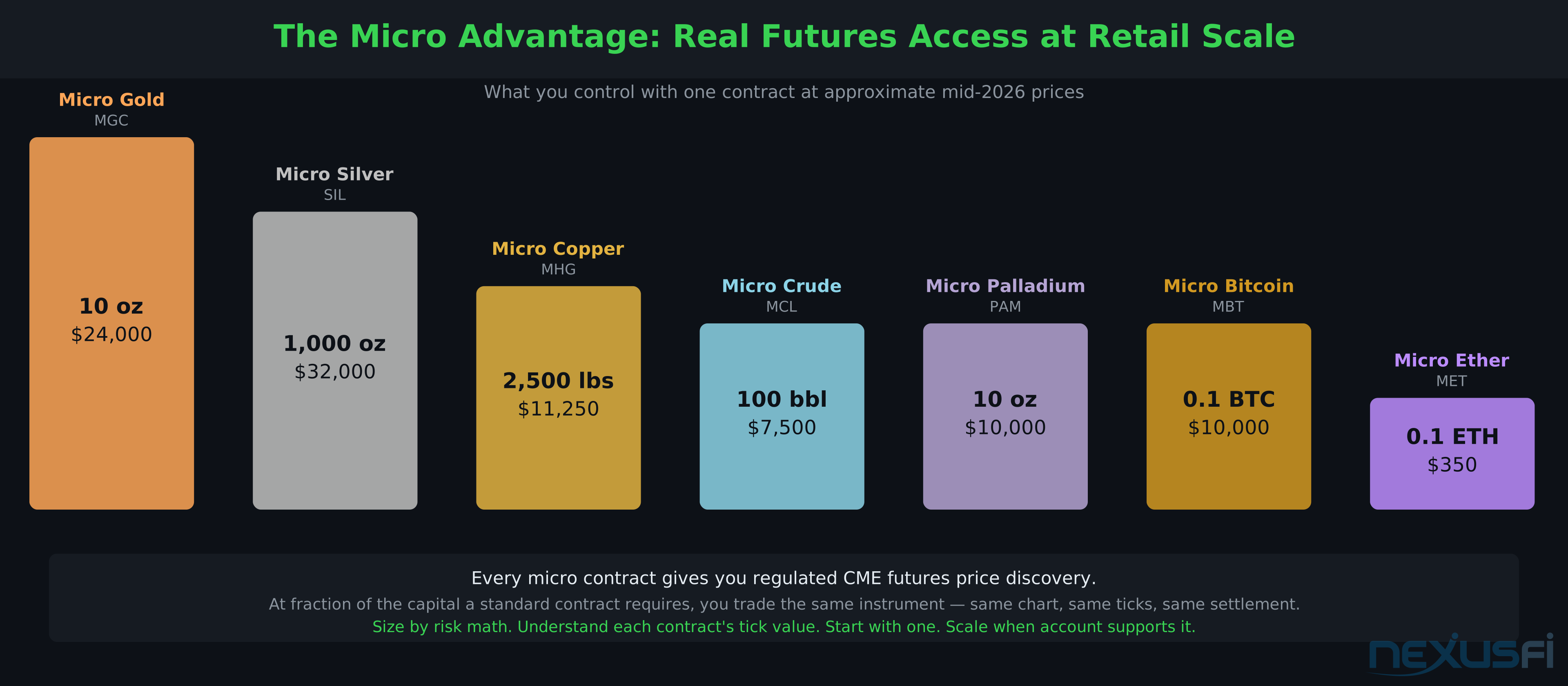
What you control with one micro contract: from $350 (MET) to $32,000 (SIL). Each gives regulated CME futures access at retail-friendly scale, backed by the same CME exchange infrastructure as the full-size contracts.
Specs Change. Verify Before Trading. CME updates margin requirements regularly. The specifications in this article reflect mid-2026 values. Always confirm current tick sizes, tick values, and margin requirements on cmegroup.com and at your specific broker before placing your first trade.
What Makes a Micro Contract #
CME micro contracts are scaled-down versions of the standard futures contracts. Not simulated, not paper-traded — actual exchange-listed instruments with their own ticker symbols, their own margin requirements, and their own order book liquidity. CME launched the first micro equity index futures (MES, MNQ, MYM, M2K) in May 2019 and the suite expanded into metals, energy, and crypto over the following three years.
The ratio to the standard contract matters for understanding what you're trading:
- Micro Gold (MGC) is 1/10 of standard GC (100 oz -- 10 oz)
- Micro Silver (SIL) is 1/5 of standard SI (5,000 oz -- 1,000 oz)
- Micro Copper (MHG) is 1/10 of standard HG (25,000 lbs -- 2,500 lbs)
- Micro WTI Crude (MCL) is 1/10 of standard CL (1,000 bbl -- 100 bbl)
- Micro Bitcoin (MBT) is 1/50 of standard BTC (5 BTC -- 0.1 BTC)
- Micro Ether (MET) is 1/500 of standard ETH (50 ETH -- 0.1 ETH)
- Micro Palladium (PAM) is 1/10 of standard PA (100 oz -- 10 oz)
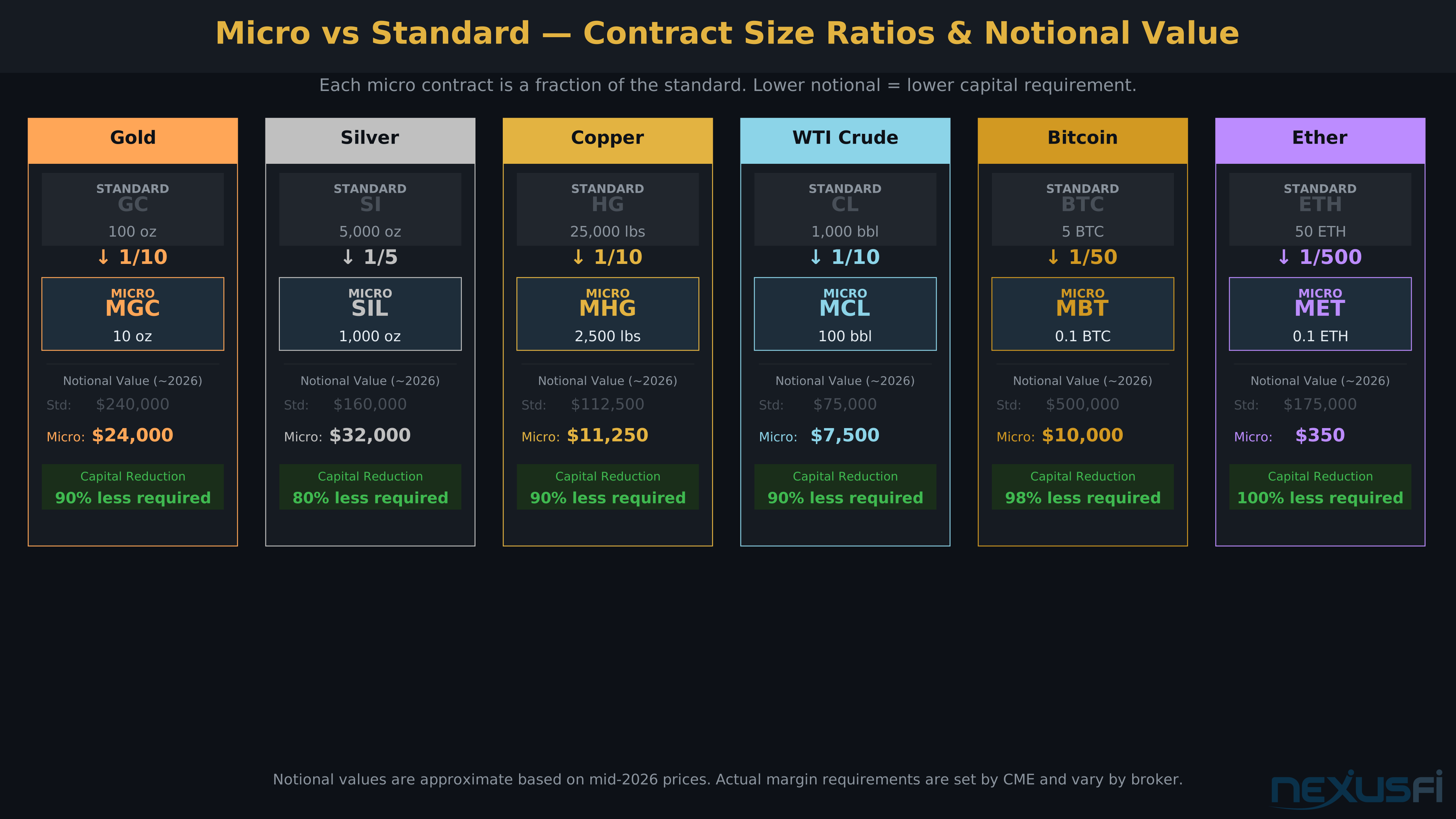
Each micro contract compared to its standard equivalent: size ratio, notional value, and capital reduction. At mid-2026 prices, one MGC contract controls $24,000 in gold vs $240,000 for standard GC -- a 90% capital reduction for the same instrument.
The micro crypto contracts deserve special attention. The Micro Ether (MET) at 0.1 ETH is tiny — at $3,500 per ETH, one MET contract has notional value around $350. As NexusFi member @SMCJB noted when Micro Ether launched in December 2021:
"I think they should call this the Nano contract not the Micro! [...] 0.1 Ether? This contract is tiny with a Notional of about $450."
That tiny notional is the point for retail traders. You're not making or losing thousands per tick — you're learning the instrument's behavior and building position discipline with real money at a scale that won't blow up your account if you're wrong about direction.
Complete Contract Specifications #
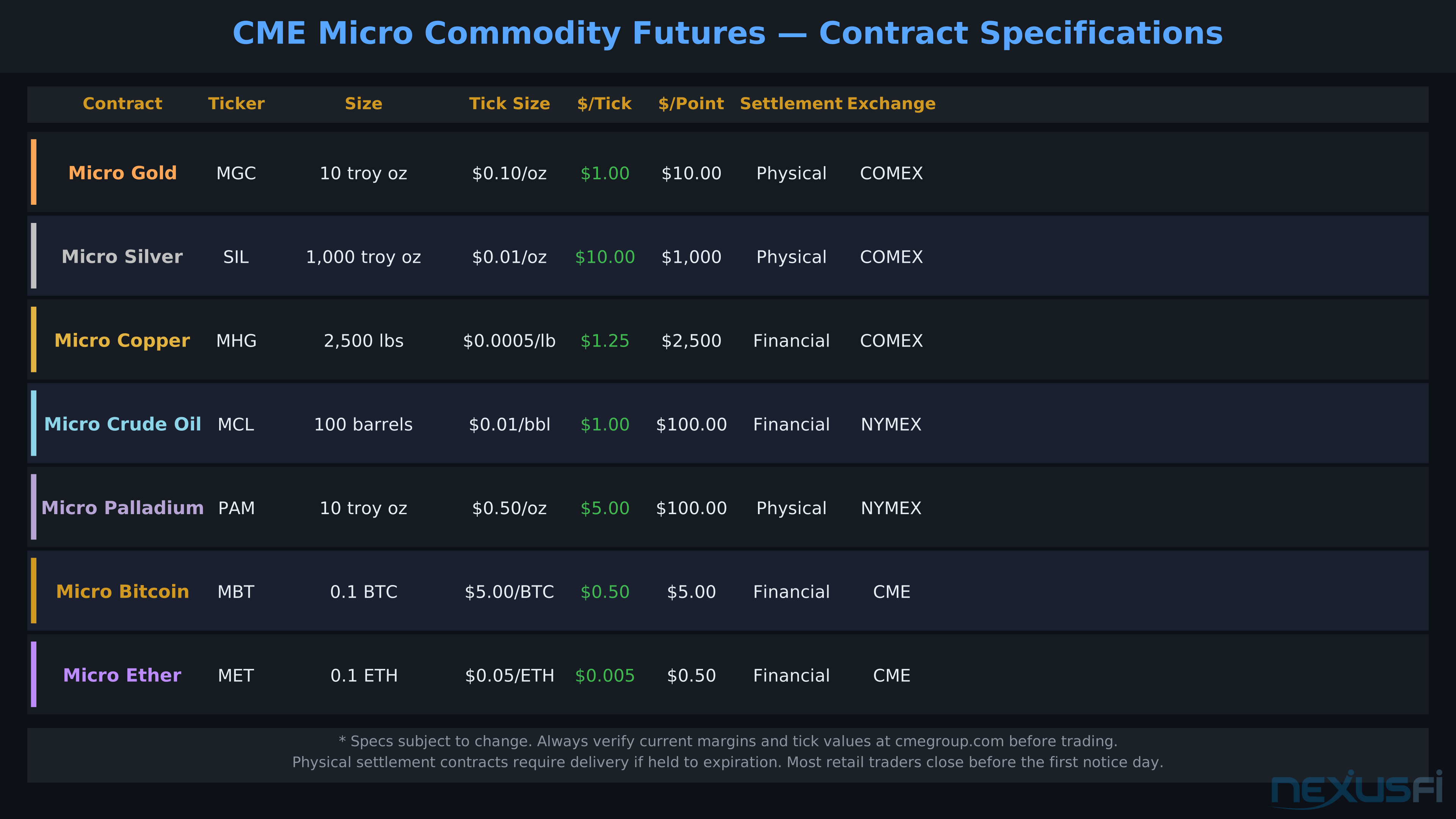
Complete specifications for all CME Micro commodity futures: MGC, SIL, MHG, MCL, PAM, MBT, and MET. Note the tick value column -- this is the number that drives all risk calculations.
Micro Gold (MGC)
The most actively traded micro commodity product. MGC is the gold market's entry point for accounts under $10,000 and a precision tool for larger accounts that want finer-grained position management. See the full Gold Futures (GC) guide for the underlying market context.
- Ticker: MGC
- Exchange: COMEX (CME Group)
- Contract size: 10 troy ounces (1/10 of GC)
- Tick size: $0.10 per troy ounce
- Tick value: $1.00 per contract ($0.10 x 10 oz)
- Point value: $10.00 per contract
- Settlement: Physical delivery (close before First Notice Day)
- Trading hours: Sunday-Friday, 5:00 PM to 4:00 PM CT (23 hours daily)
At gold near $2,400/oz, one MGC contract represents $24,000 in notional exposure. A 20-tick stop costs you $20 if wrong. The full GC contract at the same 20-tick stop costs $200. That 10:1 difference is the entire value proposition of the micro suite.
NexusFi member @SMCJB demonstrated this risk math clearly:
"$10 on MGC (the Micro contract) is 10oz x $10 = $100. Now imagine that you have a $20,000 account, and you're following the common rule of never risking more than 2% of your account on any one trade. 2% of $20,000 is $400. So the biggest position you would want in this trade would be 4 MGC / Micro Gold contracts."
Micro Silver (SIL)
The most volatile of the micro metals, SIL at 1,000 troy ounces offers much higher dollar risk per move than MGC despite sounding "smaller." See the Silver Futures (SI) guide for market dynamics.
- Ticker: SIL
- Exchange: COMEX
- Contract size: 1,000 troy ounces (1/5 of SI)
- Tick size: $0.01 per troy ounce
- Tick value: $10.00 per contract ($0.01 x 1,000 oz)
- Point value: $1,000 per contract
- Settlement: Physical delivery
That $10 tick value surprises traders expecting a lighter contract. A 30-tick stop costs $300. Silver's notoriously wider intraday swings mean this is a real number. Silver tends to be a beta version of gold — it typically moves in the same direction but with larger percentage swings. When gold moves 1%, silver often moves 1.5-2%.
Micro Copper (MHG)
The only base metal in the CME micro suite, MHG tracks copper's role as the economic bellwether — a commodity whose price reflects global industrial activity, Chinese demand, and construction cycles with precision other commodities can't match.
- Ticker: MHG
- Exchange: COMEX
- Contract size: 2,500 pounds (1/10 of HG)
- Tick size: $0.0005 per pound
- Tick value: $1.25 per contract ($0.0005 x 2,500 lbs)
- Point value: $2,500 per contract
- Settlement: Financial (cash-settled, no physical delivery risk)
At copper near $4.50/lb, track moves in cents per pound: a $0.01/lb move = 20 ticks = $25.00 on one MHG contract. MHG's financial settlement removes the delivery complexity that makes metals traders nervous about forgetting to close positions.
Micro WTI Crude Oil (MCL)
The micro version of the world's most actively traded commodity futures contract. MCL at 100 barrels brings oil trading within reach of retail accounts. See the full Crude Oil (CL) Futures guide for market context.
- Ticker: MCL
- Exchange: NYMEX
- Contract size: 100 barrels (1/10 of CL)
- Tick size: $0.01 per barrel
- Tick value: $1.00 per contract ($0.01 x 100 bbl)
- Point value: $100.00 per contract
- Settlement: Financial (cash-settled)
At WTI crude near $75/barrel, a $1.00/barrel move produces $100 profit or loss per MCL contract. The standard CL contract produces $1,000 for the same move. When @SMCJB analyzed the CME micro crude launch and fee structure, he noted the newer micros including MCL carried higher exchange fees than the original index micros — a factor to account for in frequent trading.
Micro Palladium (PAM)
The most supply-concentrated precious metal in the futures world. Over 80% of global palladium supply comes from Russia and South Africa, making it uniquely sensitive to geopolitical events and mining disruptions. See Palladium Futures (PA) for the full market analysis.
- Ticker: PAM
- Exchange: NYMEX
- Contract size: 10 troy ounces (1/10 of PA)
- Tick size: $0.50 per troy ounce
- Tick value: $5.00 per contract ($0.50 x 10 oz)
- Settlement: Physical delivery
PAM has lower overall trading volume than the gold and silver micros. Liquidity is acceptable during NY session hours but thinner than MGC. For swing traders seeking exposure to the palladium price cycle, PAM offers a manageable entry point. Day traders should confirm bid-ask spread quality before committing to active strategies.
Micro Bitcoin (MBT)
The first CME micro crypto product, launched May 2021. MBT at 0.1 BTC opened regulated crypto futures to a dramatically wider audience. See the full Bitcoin Futures (BTC) guide for the underlying market.
- Ticker: MBT
- Exchange: CME
- Contract size: 0.1 Bitcoin (1/50 of standard BTC futures)
- Tick size: $5.00 per Bitcoin
- Tick value: $0.50 per contract ($5.00 x 0.1 BTC)
- Settlement: Financial (cash-settled to CME CF Bitcoin Reference Rate)
At Bitcoin near $100,000, one MBT contract has notional value around $10,000.
Volume has continued to dominate retail participation in CME crypto products.
Micro Ether (MET)
Launched December 2021, MET is the smallest notional futures contract CME offers. See the Ethereum Futures (ETH) guide for macro context.
- Ticker: MET
- Exchange: CME
- Contract size: 0.1 Ether (1/500 of standard ETH futures)
- Tick size: $0.05 per Ether
- Tick value: $0.005 per contract
- Settlement: Financial (cash-settled)
At $3,500 per ETH, one MET contract has about $350 notional value. MET is primarily useful for hedging ETH spot holdings at scale or educational trading rather than meaningful speculation. Traders wanting real Ether futures exposure generally trade multiple MET contracts or move to standard ETH futures.
MBT and MET are highly correlated — long MBT + long MET is effectively doubled crypto directional exposure, not diversification.
The Position Sizing Discipline Every Micro Trader Needs #
The most common mistake with micro commodity futures: treating the low margin requirement as permission to trade large. A $500 day-trading margin for MCL doesn't mean you should run 10 contracts on a $5,000 account. The margin requirement says the exchange trusts you to close before end of day — it says nothing about what you can afford to lose.
The correct position sizing formula has two inputs: your planned stop-loss in ticks and the tick value of the contract you're trading.
Position Size = Account Risk Per Trade / (Stop Ticks x Tick Value)
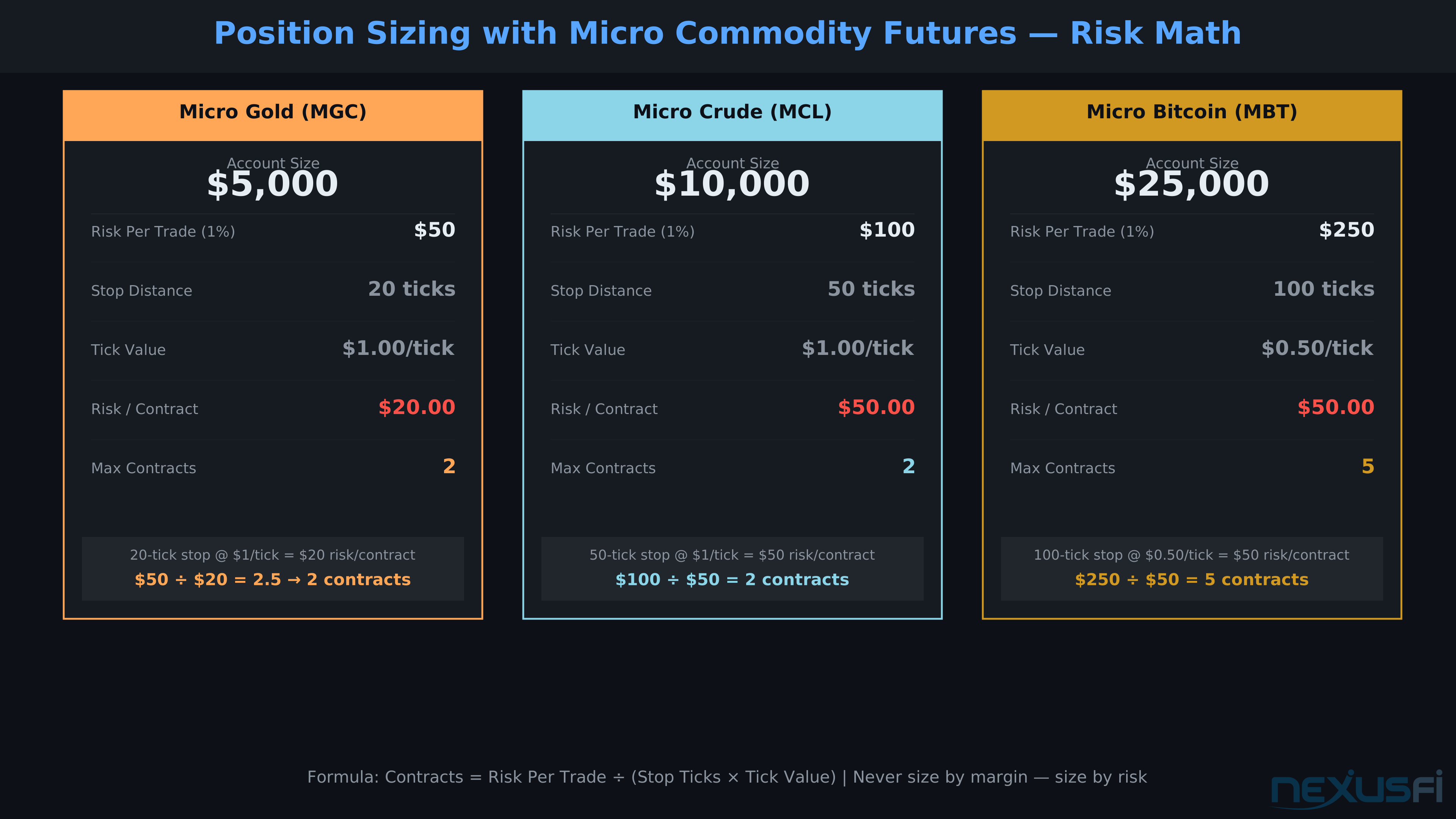
Position sizing examples across three account sizes. The formula is always the same: risk dollars divided by (stop ticks x tick value). Never size by margin -- size by risk.
Three examples:
$10,000 account, 1% risk ($100), Micro Gold (MGC), 20-tick stop:
$100 / (20 x $1.00) = 5 contracts maximum. A 20-tick adverse move costs $100 on 5 MGC contracts.
$10,000 account, 1% risk ($100), Micro Crude (MCL), 50-tick stop:
$100 / (50 x $1.00) = 2 contracts. A $0.50/barrel adverse move costs $100 on 2 MCL contracts.
$25,000 account, 1% risk ($250), Micro Bitcoin (MBT), 100-tick stop:
$250 / (100 x $0.50) = 5 contracts. A $500 adverse Bitcoin move costs $250 on 5 MBT contracts.
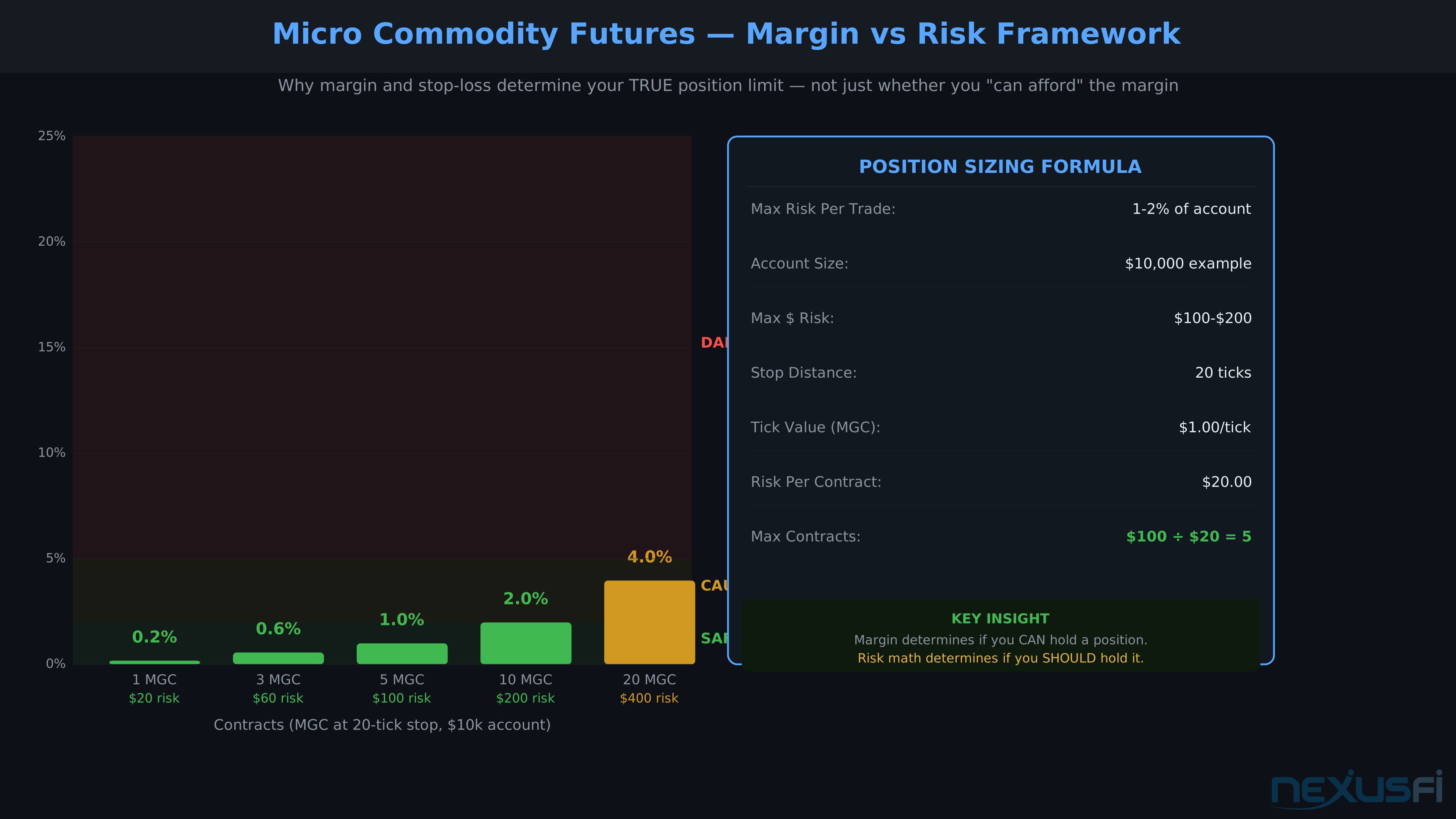
Safe zone (risk less than 2%), caution zone (2-5%), danger zone (greater than 5%). On a $10,000 account trading MGC with a 20-tick stop, 5 contracts is safe -- 20 contracts is the danger zone regardless of what your margin allows.
That discipline — scaling up only when the account supports it — is how micro contracts are designed to be used. Compounded correctly, that approach produces real account growth over time.
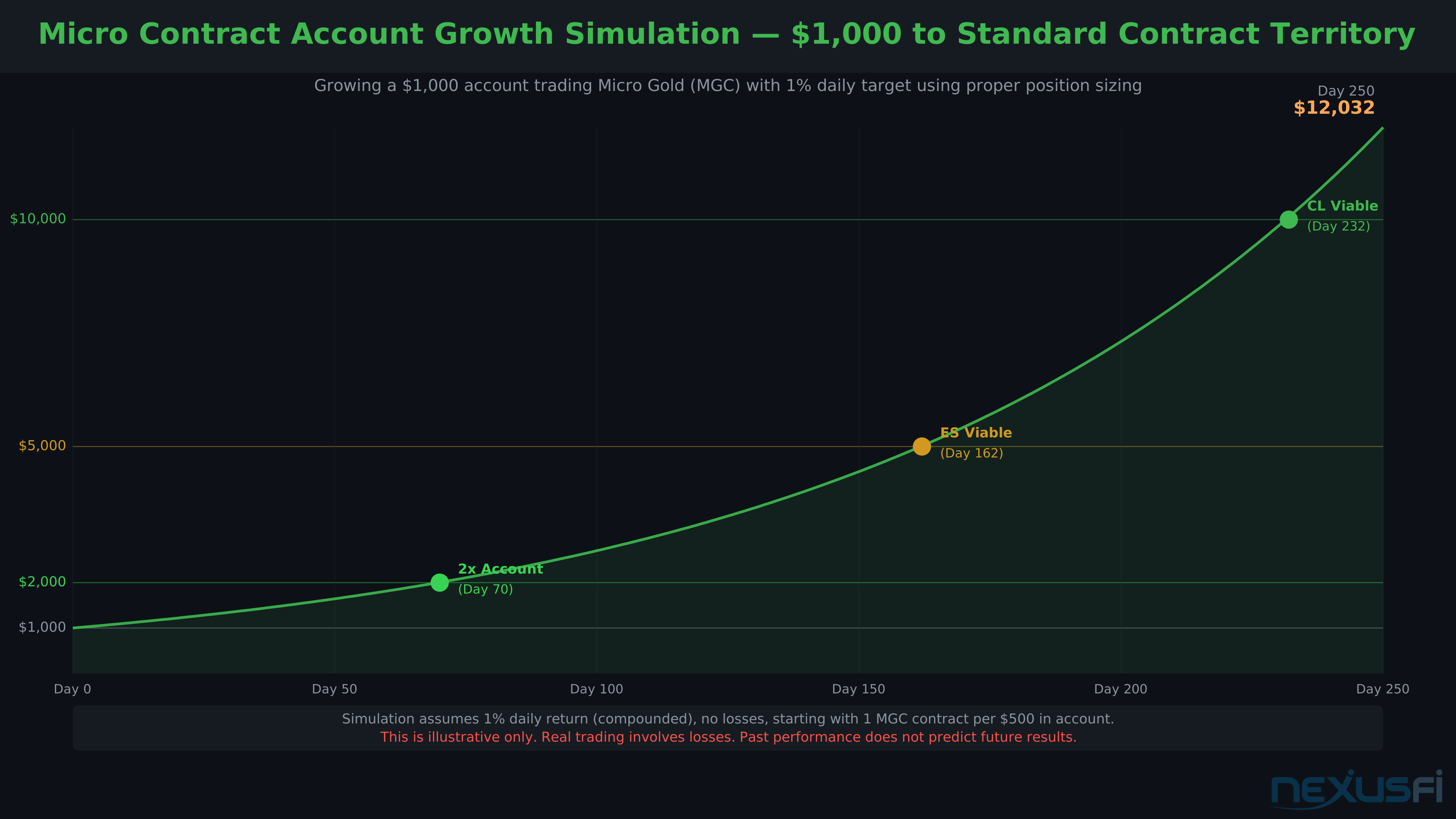
Simulated 1% daily compound growth from a $1,000 account trading MGC. Illustrative only -- real trading involves losses. The point: micro contracts provide the path from small accounts to standard contracts when used with proper risk discipline.
Trading Hours and Liquidity Windows #
All CME Micro commodity futures trade nearly 23 hours per day via CME Globex, with a 60-minute maintenance break each day starting at 4:00 PM CT. The contracts run continuously from Sunday 5:00 PM CT through Friday 4:00 PM CT.
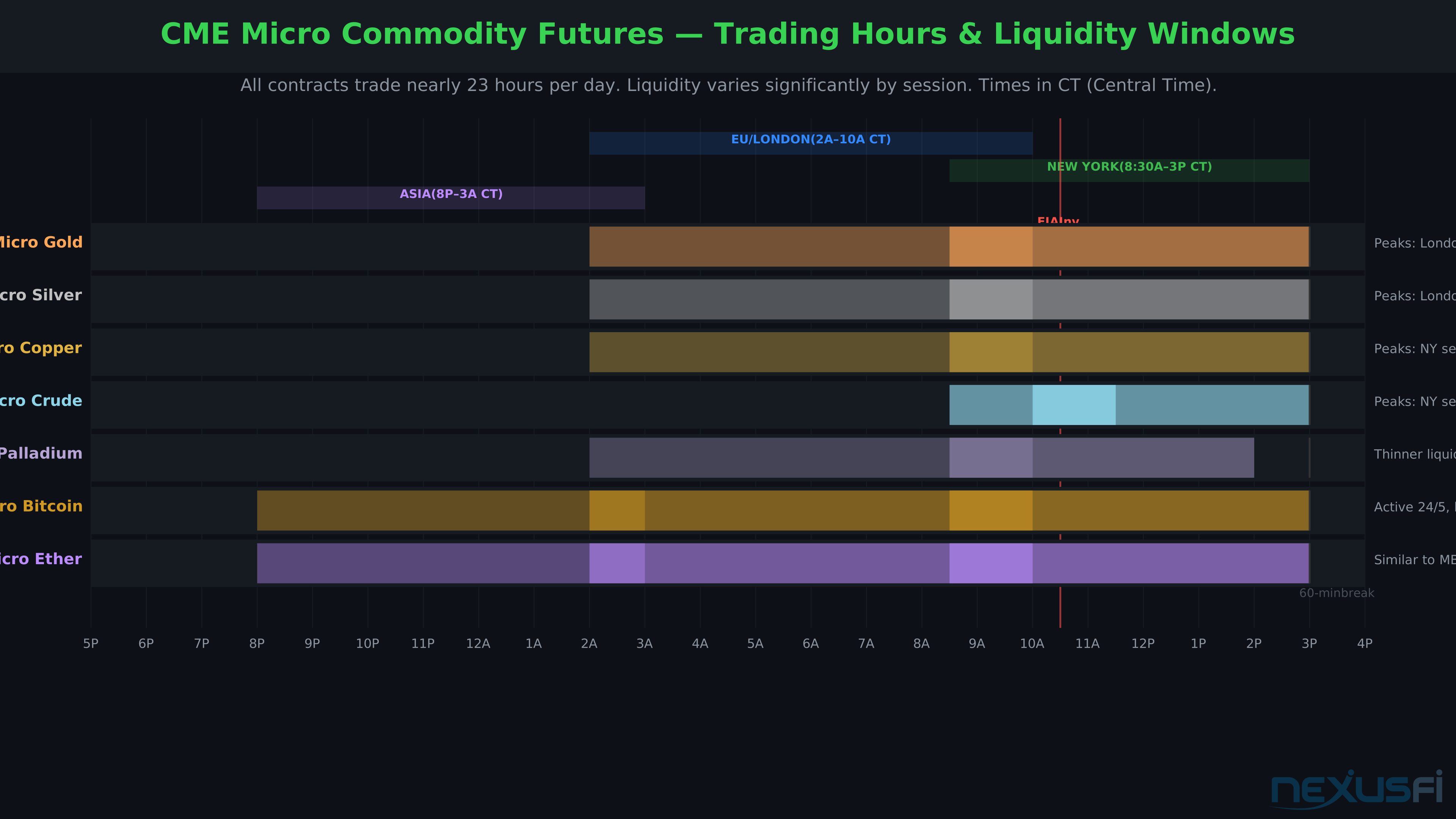
23-hour trading schedule with annotated liquidity windows. London-NY overlap (8-11 AM CT) is peak for metals. New York session (9 AM-2 PM CT) is peak for crude. Crypto micros are active throughout but peak during NY hours.
Key liquidity windows by contract:
Micro Metals (MGC, SIL, MHG): Best liquidity during London session open (2:00 AM CT) through end of New York session (2:00 PM CT). Peak depth during London-NY overlap (8:00 AM-11:00 AM CT). Major moves around CPI releases (8:30 AM ET), FOMC decisions (2:00 PM ET), and London AM fix (5:30 AM ET).
Micro WTI Crude (MCL): Best liquidity during New York session (8:00 AM-2:30 PM CT), with major volatility around weekly EIA Crude Inventory reports (Wednesdays, 9:30 AM CT). MCL is thin in Asian hours. Size down before EIA or close entirely and re-enter post-report.
Micro Crypto (MBT, MET): CME crypto futures operate on Globex hours, not 24/7 crypto exchange hours. This creates weekend gaps. Crypto micro traders face a specific risk that commodity micro traders don't — the market closes while Bitcoin keeps moving.
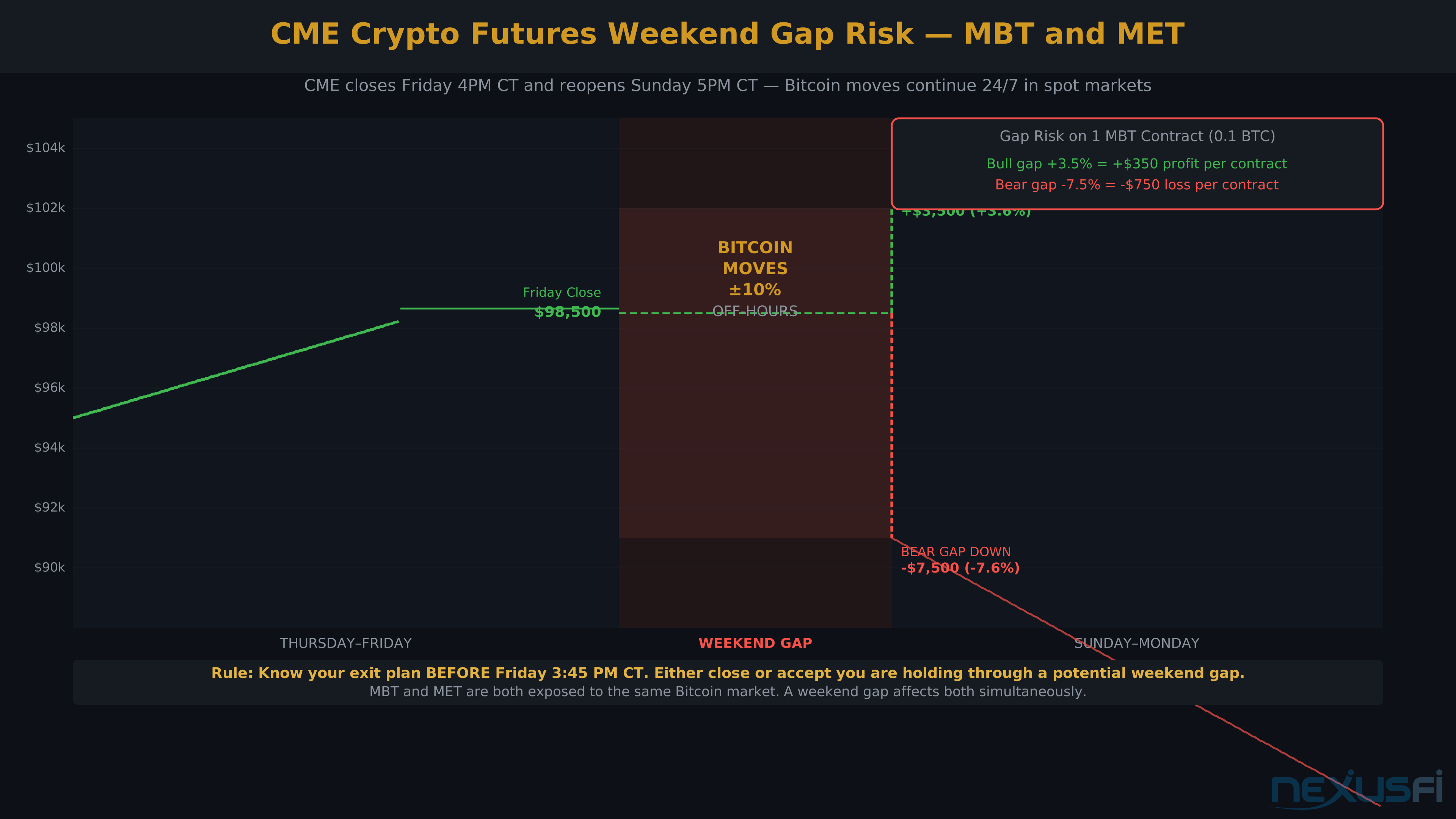
CME closes Friday 4PM CT, reopens Sunday 5PM CT. Bitcoin moves 24/7. A weekend gap hits your MBT position at Sunday's opening price. Know your exit plan before Friday 3:45 PM CT.
Strategy Frameworks by Contract #
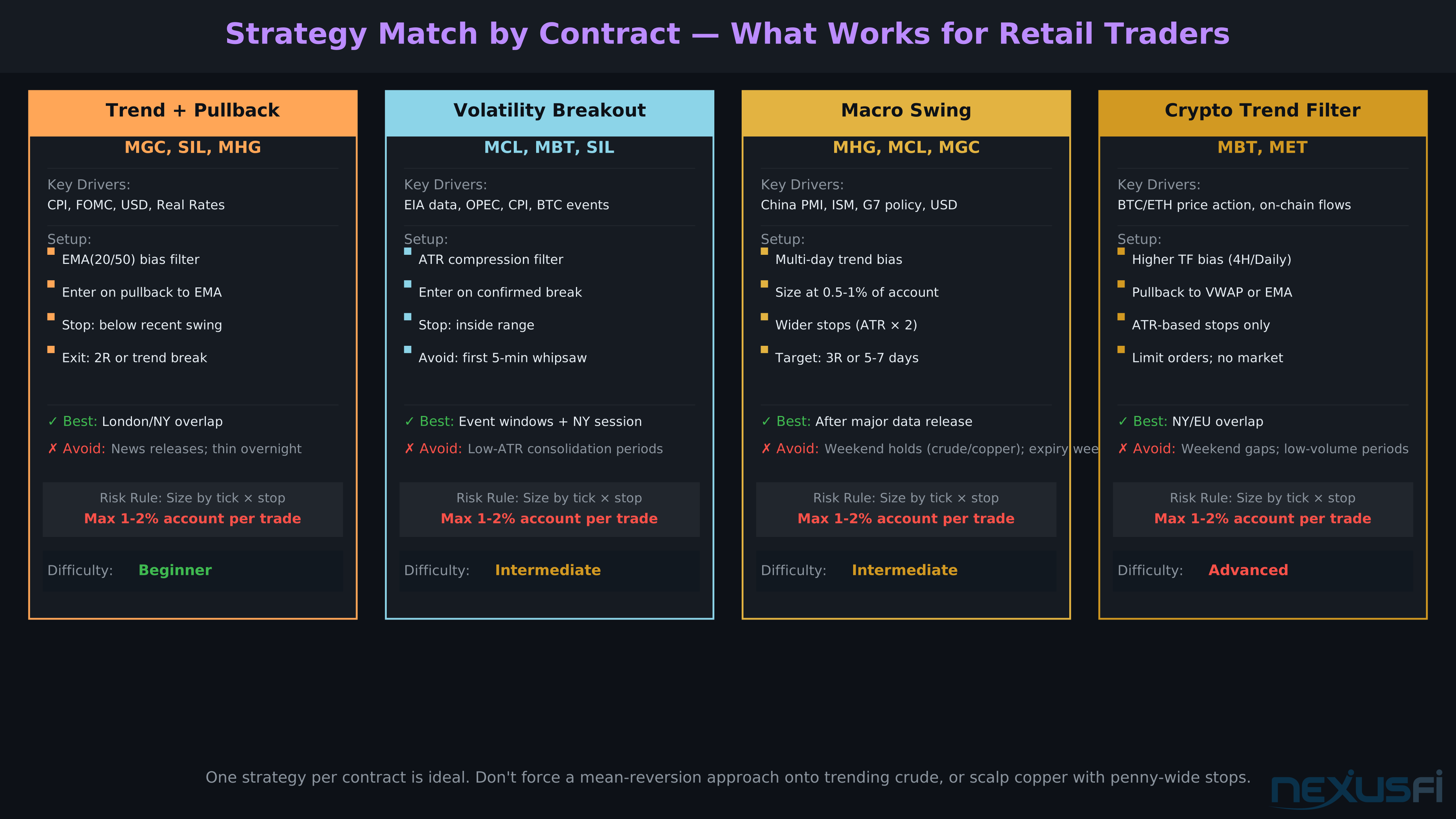
Strategy frameworks by contract class. Don't force a scalping approach onto copper or a mean-reversion strategy onto trending crypto. Match the strategy to the instrument's actual behavior.
Different micro commodity contracts suit different trading approaches:
Micro Metals (MGC, SIL): Trend + Pullback with Macro Overlay. When the macro backdrop is clear — inflation rising, dollar weakening, geopolitical risk elevated — MGC and SIL trend for days to weeks. The retail edge isn't predicting the macro; it's waiting for the trend to establish and entering on pullbacks to structure. Basic framework: EMA(20/50) bias filter, enter on pullback to 20-period EMA (15-min chart), stop below recent swing, scale out at 1R and trail remainder. Avoid trading metals through CPI prints and FOMC announcements unless you have a specific event-driven setup — initial reactions are frequently reversed.
Micro Crude (MCL): Volatility Breakout with Event Awareness. WTI crude has a split personality. Outside scheduled events, MCL trends in short bursts and consolidates. Around EIA inventory reports, it can explode in either direction. Most retail MCL traders get hurt not because their direction was wrong, but because they were sized too large during news. Use ATR filter (only enter when 14-period ATR is above 20-day average), mark EIA inventory days on your calendar, and cut positions by 50-75% before scheduled high-impact events or close entirely and re-enter afterward.
Micro Copper (MHG): Macro Swing with Patience. Copper responds to China PMI data, US ISM manufacturing, USD strength, and mining supply news over days to weeks. Trying to scalp copper intraday without an economic backdrop thesis is noise trading. Start with the monthly chart to identify the macro trend. Trade the daily chart for entries. Use wider stops than for gold (ATR x 2 instead of ATR x 1) because copper's intraday noise is higher relative to its tick size.
Micro Crypto (MBT, MET): Trend-First with Strict Risk Controls. Bitcoin and Ether via MBT and MET are the highest-volatility micro contracts. Mean reversion strategies that work on gold frequently get destroyed on crypto. Trend filter is non-negotiable: check the weekly chart before any MBT entry. ATR-based stops only. Limit orders — market orders in MBT can fill 2-5 ticks away from quote during fast markets. And have an explicit weekend exposure plan before Friday 3:45 PM CT.
Fee Economics #
CME micro contracts charge higher fees per notional dollar than standard contracts. @SMCJB tracked this carefully and noted that many micro products are dramatically more expensive to trade on a per-unit basis. When analyzing the 2022 fee increases:
"The most recent Micro futures (Bitcoin, Crude, Ether) seemed to be a lot more expensive (to the point that spread trading is unviable) to trade compared to the existing Micro's. This brings most (all?) of the cheaper Micro's more in line with the newer more expensive Micro's."
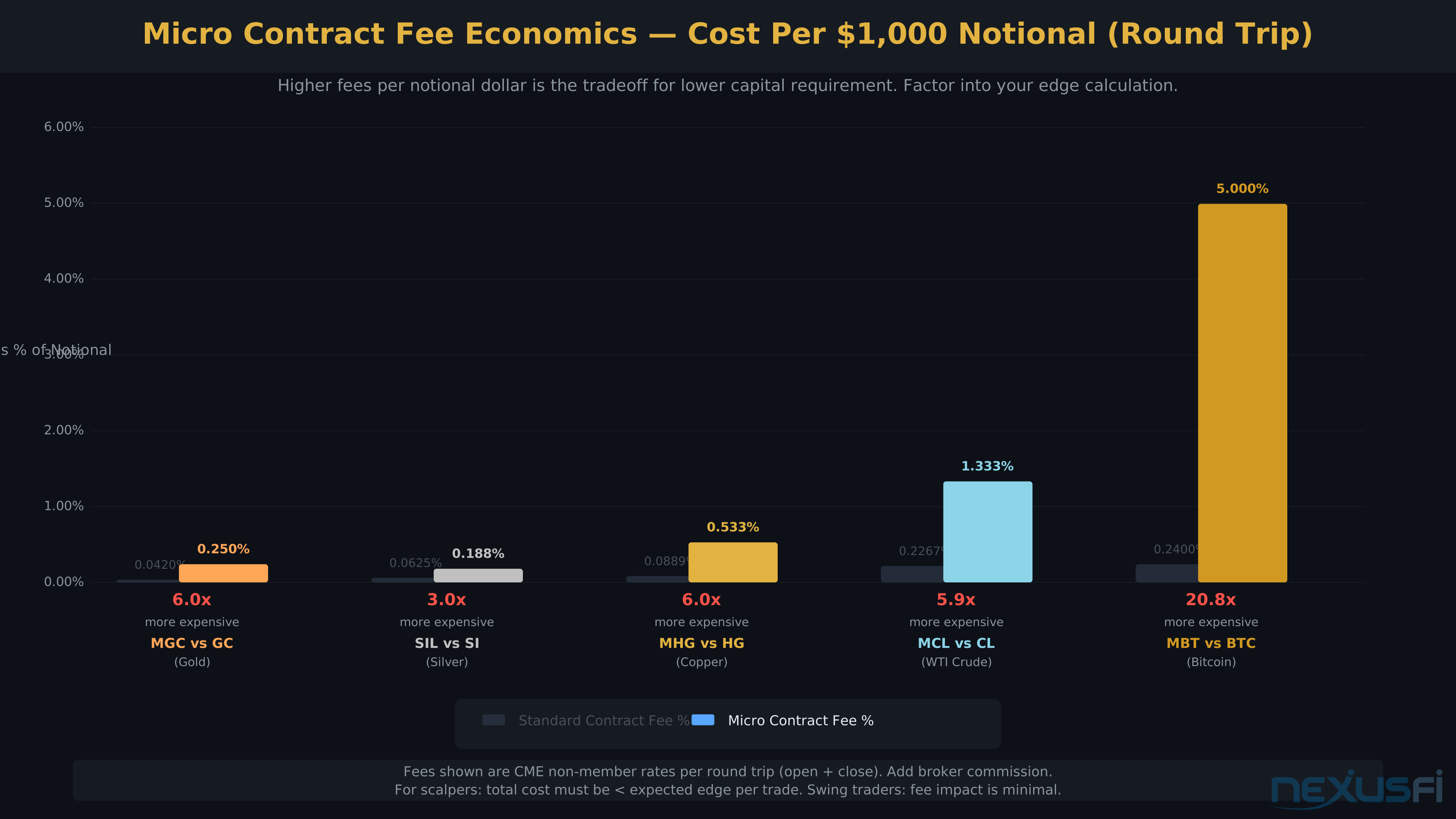
Fee cost per $1,000 notional. MBT is 20x more expensive per notional dollar than full BTC. For scalpers executing 15+ round-trips per day, fees can exceed edge. Swing traders are largely unaffected.
The practical rule: if your strategy captures small moves (less than 5-10 ticks), calculate total cost per round-trip (exchange fee + broker commission + NFA fee) against your expected edge per trade. If cost exceeds edge, the strategy is not viable at that contract's fee level, regardless of how it would perform on standard contracts. The full breakdown of futures trading costs explains this analysis in detail.
Physical vs Financial Settlement #
Three of the seven micro commodity contracts settle physically: MGC (gold), SIL (silver), and PAM (palladium). If you hold these contracts into expiration, you receive physical delivery of the underlying metal — which requires a registered vault, storage fees, and delivery logistics that retail traders are not set up for.
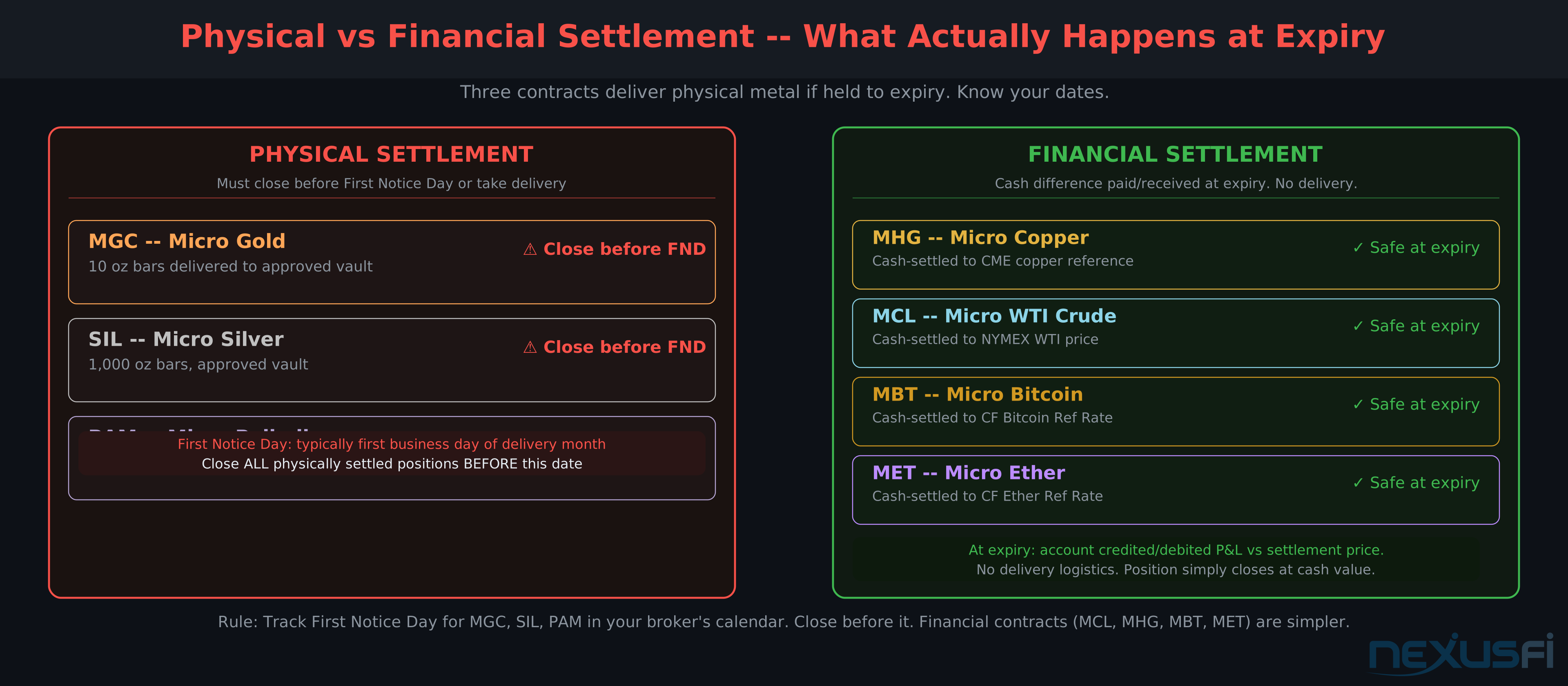
Physical settlement contracts (MGC, SIL, PAM) require delivery if held to expiry. Financial settlement contracts (MCL, MHG, MBT, MET) simply pay/receive the cash P&L. Know which type you're trading.
The fix is simple: know your contract's First Notice Day and Last Trading Day, and close all positions before First Notice Day. MCL, MHG, MBT, and MET are all financially settled. At expiration, your account receives the cash difference between your entry price and the final settlement price. For most retail traders, these financially settled contracts are simpler to manage.
The Micro Commodity Bridge Strategy Most successful futures traders don't stay in micro contracts forever — they use them to build skills and capital. Start with 1-2 micro contracts per $5,000 of risk capital, master the instrument's behavior, then graduate to standard contracts when your account and experience support it. The micro contract you learn on becomes the standard contract you profit from.
Which Micro Contract Should You Start With #
The answer depends on what market you understand best and what your account can genuinely support after position sizing:
- Start with MGC if: You follow macro events (inflation, Fed policy, USD), want exposure to the precious metals complex, and have $3,000-$10,000. The $1.00 tick value and reliable liquidity make it the most forgiving micro commodity for beginners.
- Trade MCL if: You follow energy markets, track EIA inventory data weekly, and want oil exposure without the capital requirement of standard CL. MCL's $1.00 tick value is clean math.
- Use MHG if: You have a thesis about global industrial demand, Chinese economic health, or commodity supercycles. MHG rewards macro traders who can hold positions for multiple days.
- Trade MBT if: You have a Bitcoin position thesis and want regulated futures exposure with position size that won't ruin you on a 10% adverse Bitcoin move overnight. Understand the weekend gap risk before your first trade.
- Avoid SIL and MET until you're comfortable: SIL's $10 tick value and silver's higher volatility create P&L swings that overwhelm most beginners. MET's tiny notional makes it impractical for meaningful directional speculation without trading hundreds of contracts.
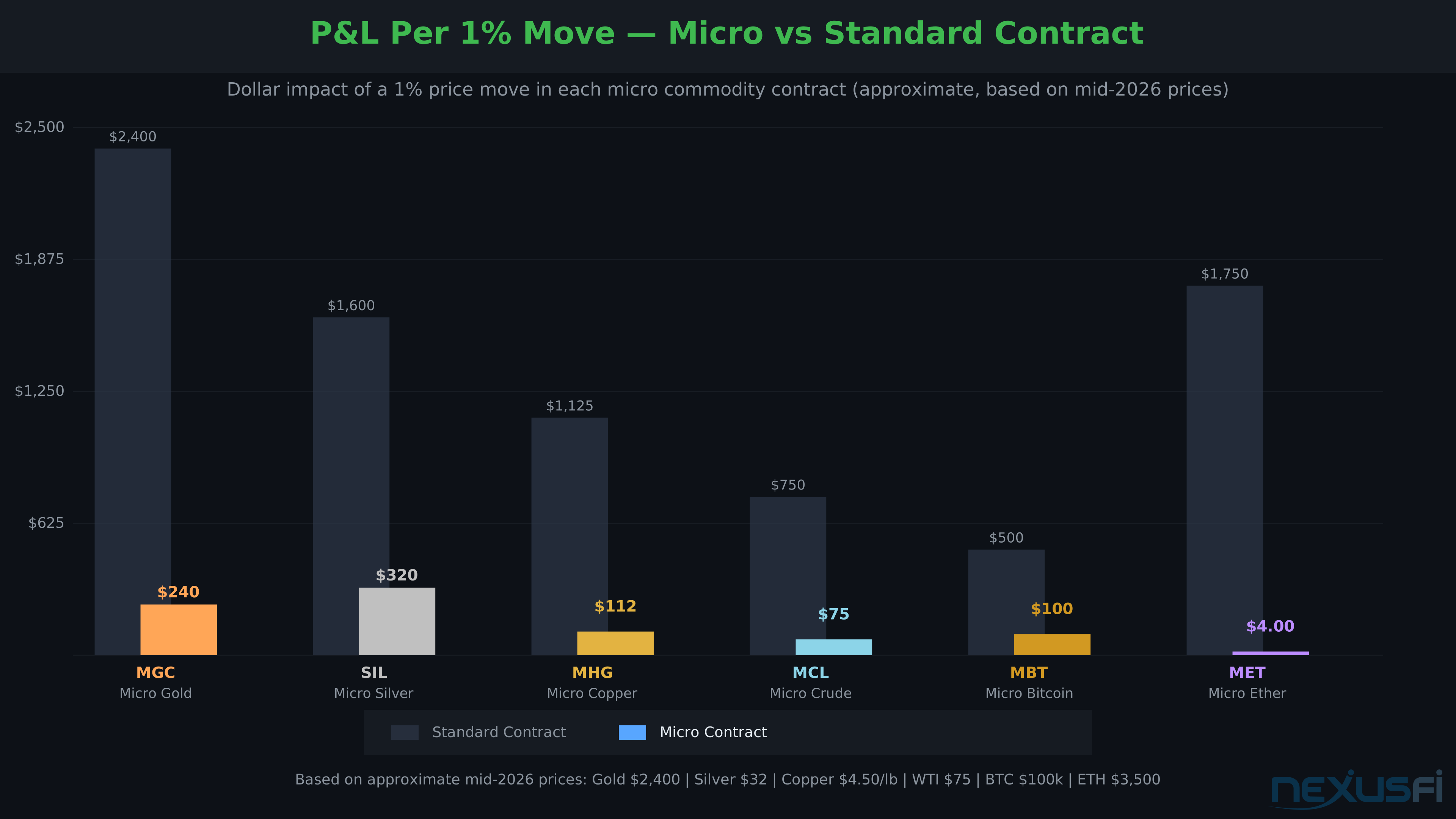
Dollar impact of a 1% price move: micro silver (SIL) actually generates more P&L than micro gold (MGC) due to higher contract size relative to price. Higher P&L potential = higher risk per position.
Building Toward Standard Contracts #
The micro suite was designed as a bridge, not a permanent destination. As @sstheo documented building from $1,000 through micro contracts:
"I will use a maximum of 1 contract per $500 in my account. Starting out, I will try to get 1% or 'just' $10 per day and grow that. My total daily profit at 8 months should be $50 per day."
The same growth logic applies to commodity micros. When 5 MGC contracts feel underpowered and your account has grown to $30,000+, one standard GC contract becomes viable. When 10 MCL contracts feel cramped, the transition to 1 standard CL contract is natural.
The micro suite lets you learn an instrument's behavior — its liquidity patterns, its response to economic events, its volatility regime — with real money at a scale that doesn't force catastrophic errors. That education has value that paper trading can't replicate and that standard contracts can destroy before you acquire it.
Common Mistakes With Micro Commodity Futures #
1. Sizing by margin instead of risk. If your broker offers $200 day-trading margin for MCL, that is not permission to hold 10 contracts on a $5,000 account. That's a recipe for 40% account drawdowns from normal daily moves.
2. Treating SIL as a smaller version of MGC. Silver's higher tick value ($10 vs gold's $1) and wider percentage swings make it a categorically different trading experience. Your stop in SIL needs to be calibrated to silver's actual volatility, not gold's.
3. Holding MGC, SIL, or PAM into expiration without a plan. Physical settlement means you need a closing plan. Mark the First Notice Day in your calendar before you enter any physically settled contract.
4. Doubling up on correlated positions. Long MGC + Long SIL is nearly the same as 2x gold exposure. Long MBT + Long MET is nearly the same as 2x crypto exposure. Count them as one position for risk management.
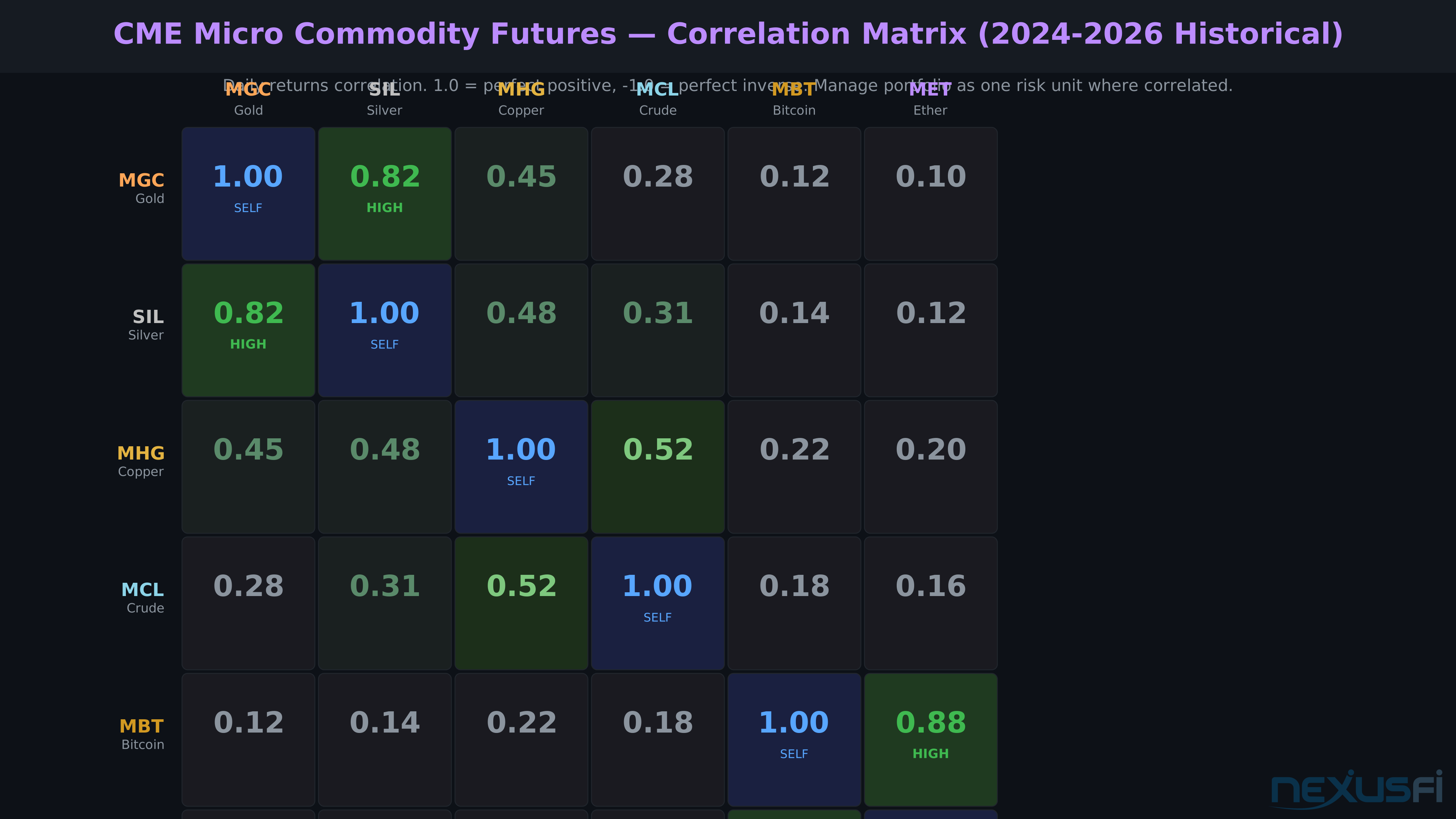
Correlation matrix: Gold-Silver 0.82, Bitcoin-Ether 0.88. These pairs are nearly one position. Metals and crypto show low correlation (0.10-0.14), making genuine diversification possible across those classes.
5. Trading MCL or MHG through scheduled events at full size. EIA inventory reports for crude and China PMI for copper create gap risk that hits position-sized trades disproportionately. Reduce size or close before known high-impact events and re-enter afterward.
6. Ignoring the fee structure. Micro contract fees per notional dollar are higher than standard contracts. If you're executing 15+ round-turns per day, calculate your actual fee burden before assuming micro contract costs are negligible.
Cross-Margining Benefits #
One underappreciated advantage of trading micro commodity futures is cross-margining within the CME portfolio. If you hold positions in offsetting contracts — for example, long MHG and short MCL, or long MGC during a risk-off gold-up/crypto-down environment — CME's SPAN margining system may reduce your overall margin requirement. Discuss this with your broker's margin desk if you're trading multiple micro commodity products simultaneously.
Tracking Rollover Dates #
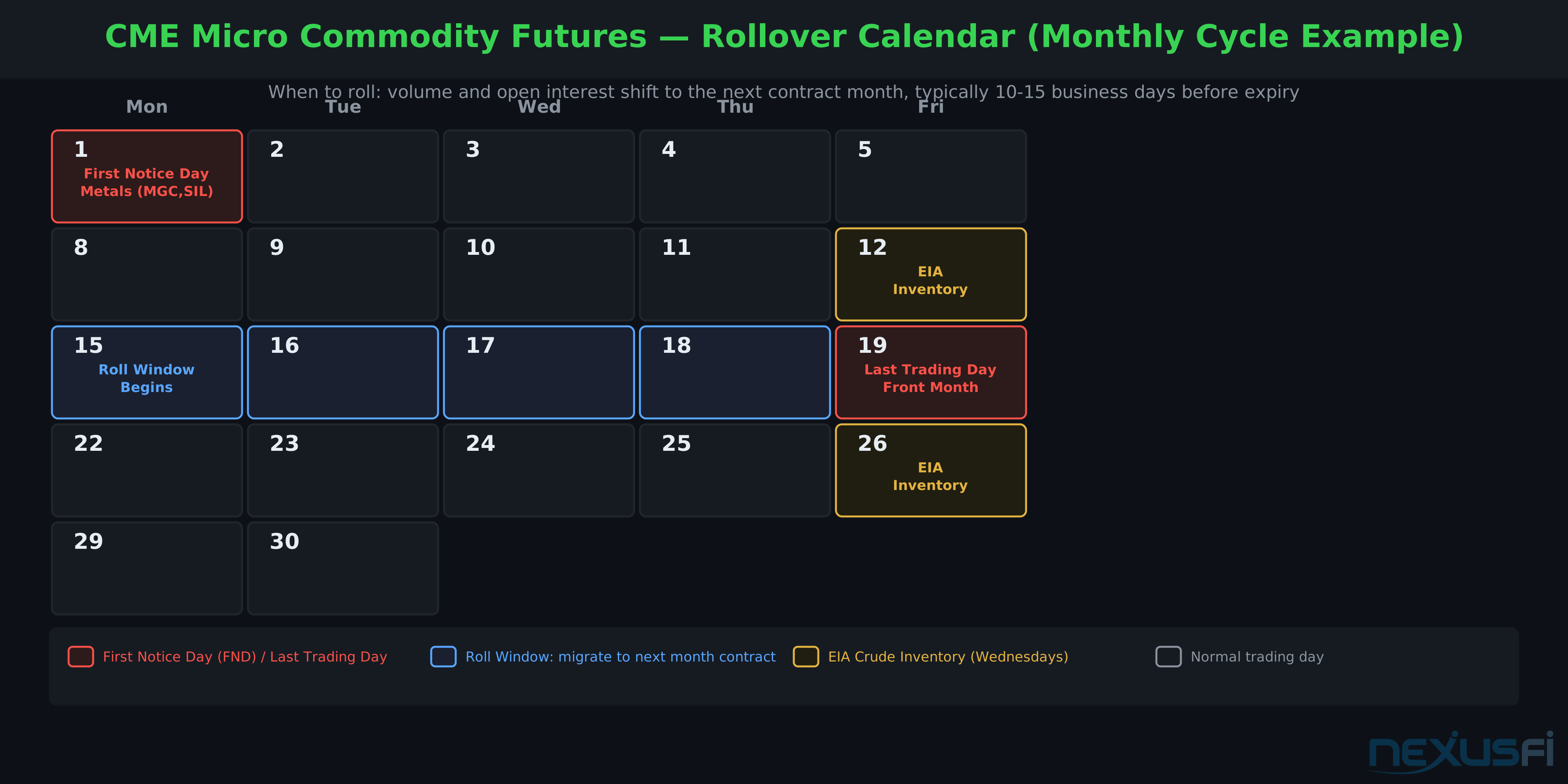
Like all futures contracts, CME micro commodities expire monthly. Front-month contracts have the highest liquidity; volume migrates to the next month approximately 10 business days before expiration.
Rollover calendar example for monthly contracts: First Notice Day for physical metals (Day 1), roll window opens (Day 15), Last Trading Day (Day 19). EIA inventory data falls on Wednesdays throughout the month. Crypto futures roll quarterly, not monthly.
- Metals (MGC, SIL, MHG, PAM): Volume rolls approximately 10 business days before the delivery period begins. Watch CME's open interest data to confirm the roll.
- MCL: Rolls similar to CL, roughly 10-15 business days before the front month's last trading day.
- MBT, MET: Quarterly contracts (March, June, September, December). Liquidity concentrates in the front quarter.
Most retail platforms will automatically roll your data feed to the next contract when the transition happens, but your actual positions will not roll automatically — you must close the expiring contract and re-enter in the next month.
Always Verify Current Specifications
Contract specifications and margin requirements for all CME products are subject to change. Before trading any micro commodity future, verify current specs at CME Group's Micro Suite page and confirm margin requirements with your specific broker.
Knowledge Map
Go Deeper
Build on this knowledgeReferences This Article
Articles that build on this topicCitations
- — Physical or Cash Settlement for day trades (2023) 👍 3“$10 on MGC (the Micro contract) is 10oz * $10 = $100. 2% of $20,000 is $400. The biggest position you would want in this trade would be 4 MGC / Micro Gold contracts.”
- — New Micro Contract -- Micro Ether coming 5-Dec-21 (2021) 👍 10“0.1 Ether? This contract is tiny with a Notional of about $450. CME Micro Bitcoin | 0.1 coins, Notional ~ $6.4k. CME Micro Ether | 0.1 Ether, Notional ~ $0.45k”
- — CME/CBOT/NYMEX 2022 Fee Increases (think ES & MES!) (2021) 👍 17“The most recent Micro futures (Bitcoin, Crude, Ether) seemed to be a lot more expensive (to the point that spread trading is unviable) to trade compared to the existing Micro's.”
- — The New Micro Contract -- MICRO BITCOIN coming May 2021 (2021) 👍 3“MBT has traded around 20500 lots today while BTC has only trade about 8000. So even though on a relative value basis BTC is almost 20x BTM notional, from a fee perspective MBT is higher than BTC.”
- — Micro E-mini Madness (1% per day) (2019) 👍 40“I will allow an additional contract only after adding $500 in profits. (i.e. at $1500 I can trade with 3 micros). I will attempt to earn at least 1% per day.”
- — Trading the new CME E-Micro's (E micro) MES, MNQ, MYM, M2K and other micros (2019) 👍 8“I will use a maximum of 1 contract per $500 in my account. Starting out, I will try to get 1% or just $10 per day and grow that. My total daily profit at 8 months should be $50 per day.”
- — ( Micro ) contract for Crude Oil ?? (2020) 👍 8“Gold has three contracts (GC ~100oz, QO ~50oz, and MGC ~10oz) although Gold eMini (QO) volumes have dropped to virtually nothing. The real micro contracts are the CME standard.”
- — CME Micro Metals Futures -- Contract Specifications
- — Micro Crude Oil Futures (MCL) Contract Specifications
- — CME Micro Products Suite Overview
- — Futures Contract Specifications -- 47 CME Contracts