



Feeder Cattle (GF) Futures: The Complete Trading Guide
\
Overview #
The livestock futures complex runs on two tracks. Most traders know Live Cattle (LE) futures — the finished product, the contract that settles when a steer goes to slaughter. But the more interesting market is upstream, where the margin math actually happens: Feeder Cattle futures, ticker GF, traded at the CME in cents per pound.
GF futures represent weaned calves that have grown to placement weight — typically 700 to 900 pounds — and are ready for the feedlot. What feedlots will bid for these animals depends on exactly three things: what they expect to sell finished cattle for 150-170 days later (Live Cattle futures), what it will cost to feed them (primarily corn), and how many other feedlots are competing for that animal.
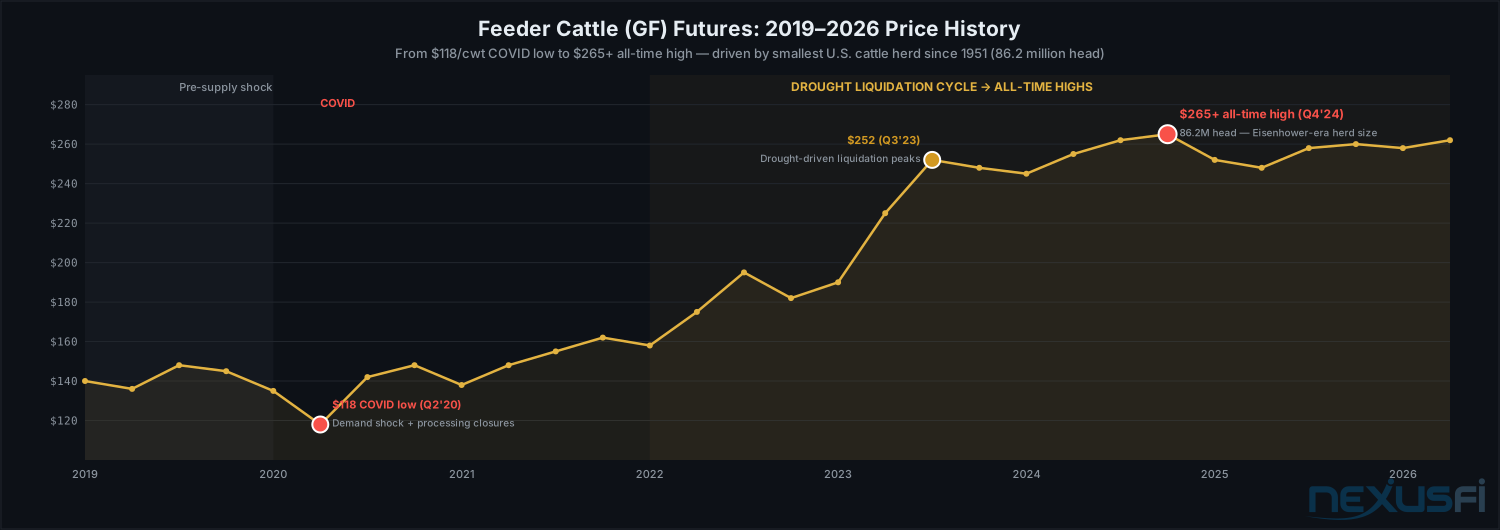
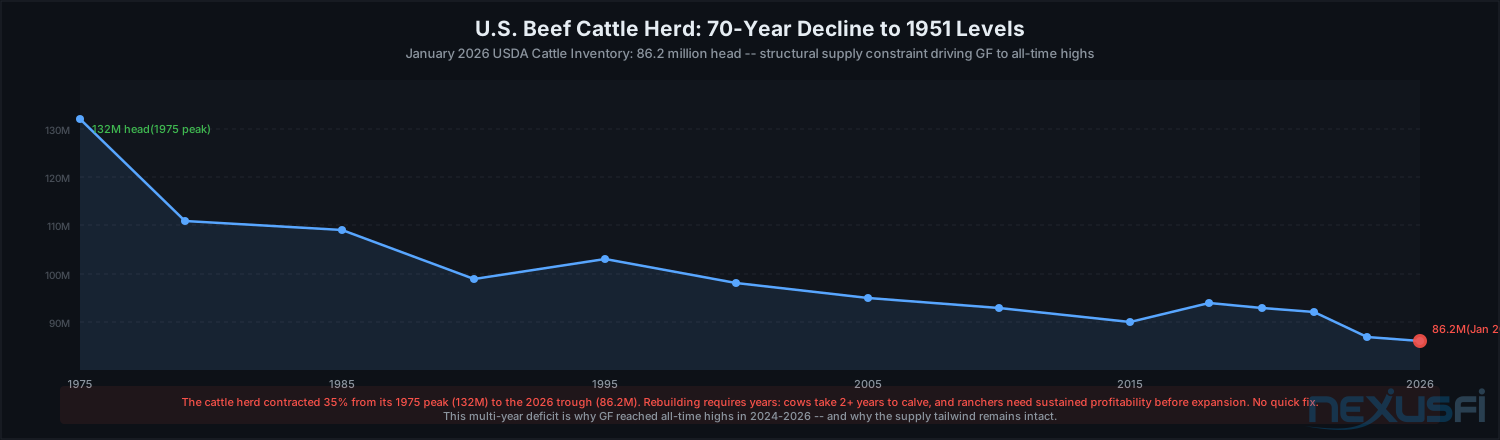
As of 2025-2026, GF has climbed to all-time highs above $265/cwt, driven by the tightest U.S. cattle supply situation in over 70 years. The USDA's January 2026 Cattle Inventory Report showed the American beef cattle herd at 86.2 million head — the smallest since 1951.
That structural context defines the backdrop for every GF trade in the coming years. This guide covers contract specifications, the key drivers (corn relationship, LE linkage, USDA reports), the seasonal calendar, the primary spread trade (GF-LE board margin), and what distinguishes profitable livestock traders from everyone who gets caught flat-footed on quarterly report days.
The Cattle Production Cycle: Understanding Where GF Fits #
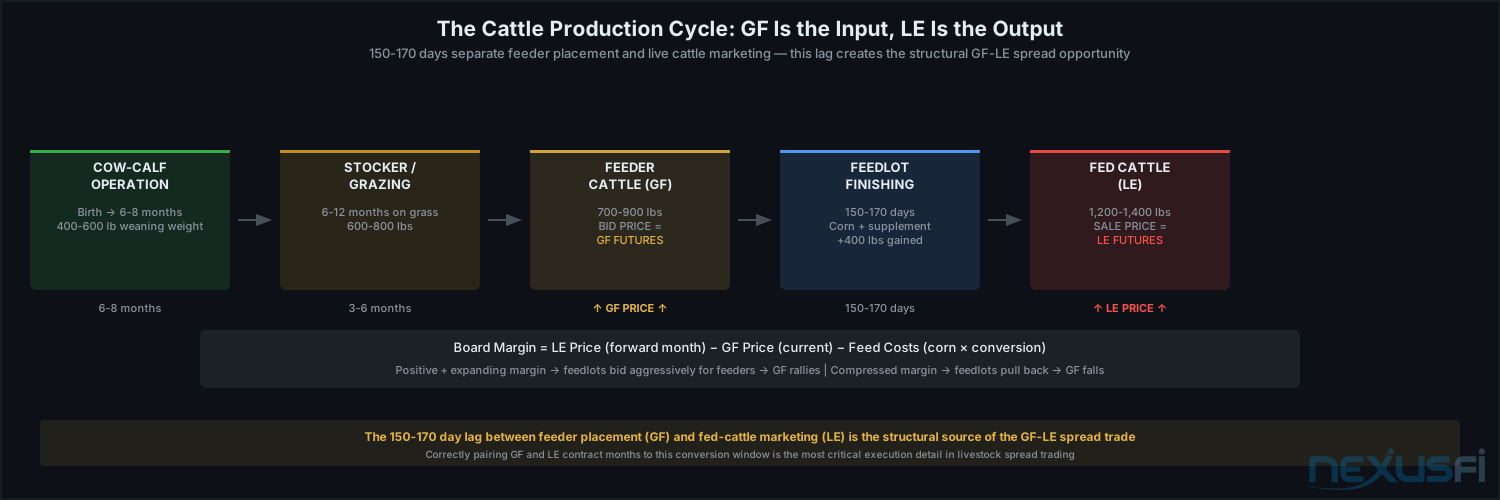
To trade GF intelligently, you need the full picture. The cattle cycle is long — 18 to 24 months from conception to slaughter — and that length creates structural timing mismatches that experienced traders exploit.
It starts on cow-calf operations, where cows give birth in spring and wean calves at 6-8 months at 400-600 pounds. Some calves go directly to feedlots; others spend additional months on grass as stockers, adding weight cheaply before reaching placement weight. When a steer hits 700-900 pounds, it becomes a feeder — GF's domain.
The feedlot operator buys that feeder and puts it on a high-energy diet (primarily corn) for 150-170 days, gaining roughly 3-4 pounds per day. The steer enters at 750 pounds and exits at 1,200-1,400 pounds, ready for slaughter. That finished animal is Live Cattle — LE territory.
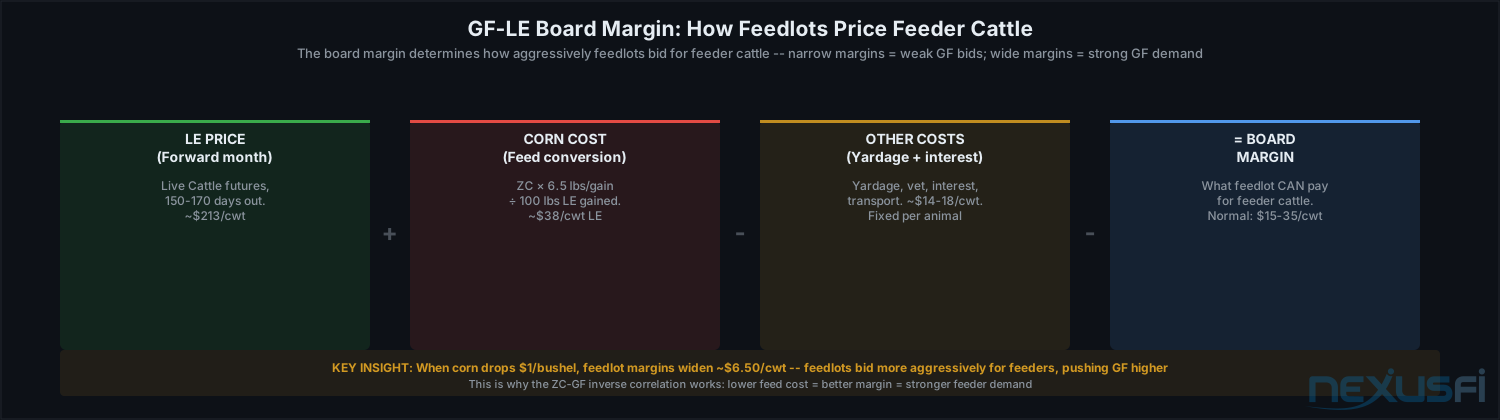
The board margin formula ties these together: Board Margin = LE Price (forward month) − GF Price (current) − Feed Costs (corn × conversion factor). When board margins are positive and expanding, feedlots bid aggressively for feeders — GF rallies. When margins compress, feedlots pull back — GF falls. This relationship is the engine behind the GF-LE spread trade.
Contract Specifications #
The CME Feeder Cattle contract is straightforward but has details that matter for execution:
| Specification | Detail |
|---|---|
| Ticker | GF (CME Globex) |
| Contract Size | 50,000 lbs of feeder cattle (700-900 lb steers) |
| Price Quote | Cents per pound ($/cwt convention also widely used) |
| Tick Size | $0.00025/lb = $12.50 per tick |
| Point Value | $0.01/lb move = $500 per contract |
| Contract Months | Jan (F), Mar (H), Apr (J), May (K), Aug (Q), Sep (U), Oct (V), Nov (X) |
| Trading Hours | CME Globex: primary session 8:30 AM -- 1:05 PM CT; extended electronic hours |
| Settlement | Cash-settled to CME Feeder Cattle Index |
| Last Trading Day | Last Thursday of contract month |
GF trades eight months per year, not all twelve. This matters for spread trading because the available contract months don't always align neatly with the feedlot conversion timeline. A GF September contract should pair with an LE February or March for a proper board margin expression — not September LE. Misaligning months is the most common execution error in livestock spread trading.
The contract is cash-settled against the CME Feeder Cattle Index, which reflects actual transaction prices from regional livestock auction markets weighted by volume. This makes GF a clean hedging vehicle for physical feeder operations and means basis risk between GF futures and physical markets is limited primarily to regional weight-class and timing differences.
The CME Feeder Cattle Index #
The CME Feeder Cattle Index is calculated from actual sale prices of 700-899 pound steers at major auction markets across the country, published daily. GF futures converge to this index at expiration, and convergence has historically been clean because the underlying index is geographically diversified and volume-weighted.
For hedgers (ranchers, feedlot operators), this means GF futures are a reliable tool for locking in feeder cattle transaction prices 1-6 months forward. For speculators, it means you're trading expectations about that national index — driven by placement economics, corn costs, and herd availability — rather than any single regional cash market.
The practical implication for basis traders: GF futures prices do diverge from specific regional auction prices (Oklahoma City, Amarillo, Kansas City) by $3-8/cwt depending on local supply/demand conditions and weight-class premiums. If you're trading the cash-futures basis in a specific region, track the historical local basis at that specific auction rather than assuming GF futures are a perfect proxy.
Key Price Drivers #
Corn: The Primary Cost Variable
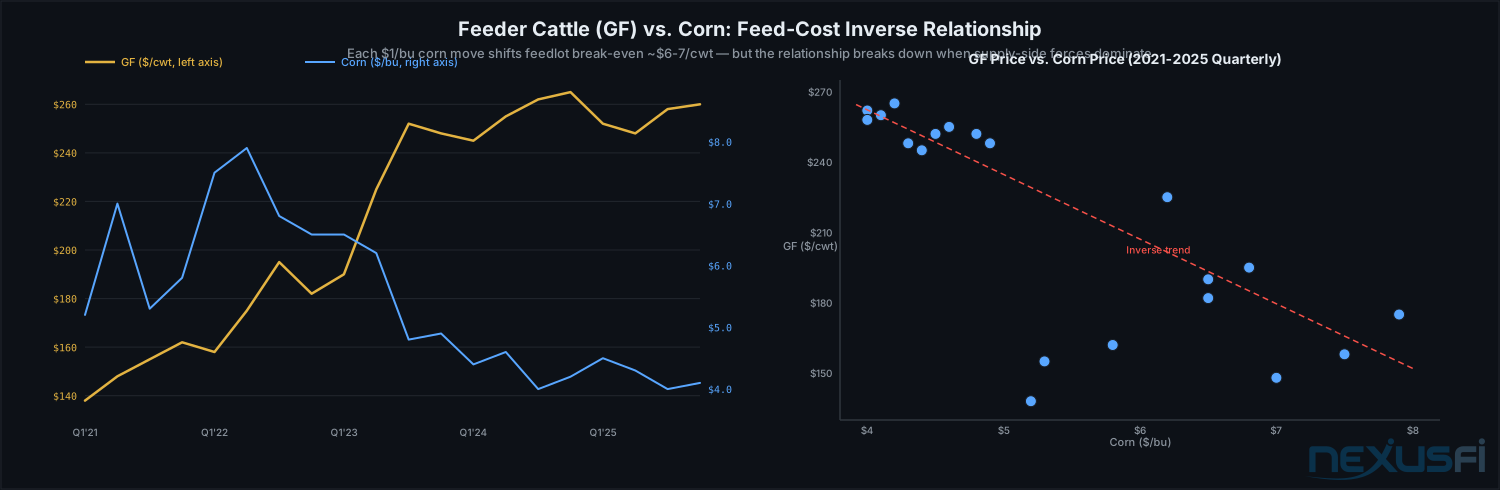
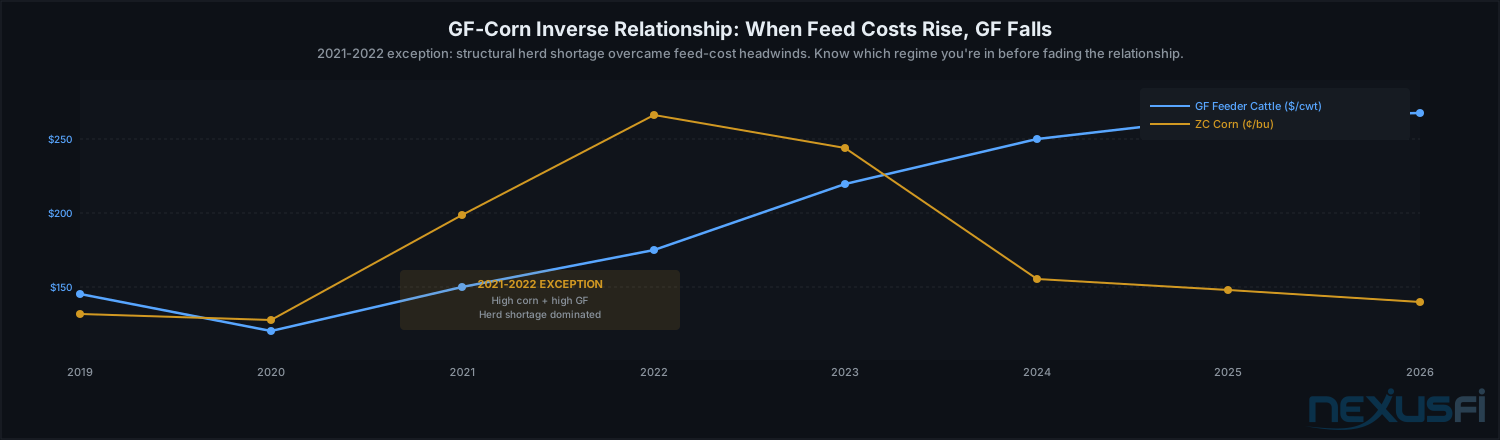
Corn accounts for roughly 50% of the cost of finishing a feeder steer. When corn prices spike, feedlot economics deteriorate, and operators reduce placements — they'll pay less for feeders or simply stop buying. This inverse relationship between corn and GF is one of the most consistent economic relationships in commodity markets.
The rough rule of thumb: each $1/bushel move in corn shifts feedlot break-even costs by approximately $6-7/cwt. At a 50,000-pound GF contract (roughly 55-70 head), that's meaningful economic pressure per placement decision. Feedlots don't absorb cost increases passively — they adjust what they'll bid for feeders within days.
Monitor the December Corn (ZC) futures contract for longer-term feed cost expectations. The corn-to-feeder-cattle price ratio (GF price divided by corn price) is widely tracked by cattle industry participants as a proxy for feedlot economics. When the ratio diverges much from historical norms, it suggests either GF is overpriced relative to feed costs (potential bearish setup) or underpriced (potential bullish setup).
Critically, the corn-GF relationship can and does break down when supply-side forces dominate. From 2023-2026, corn fell from over $7 to under $4.50/bushel — yet GF reached all-time highs because structural herd shortage overwhelmed the feed-cost relief. Corn tells you about the cost structure; herd size tells you about the supply structure. When they diverge, supply dynamics usually win over the medium term.
Live Cattle (LE): The Forward Revenue Signal
If corn is the cost side of the feedlot equation, Live Cattle futures are the revenue side. Feedlots set feeder bids based on what they expect to receive for finished cattle 150-170 days out. If LE is pricing well, feedlots bid aggressively for GF. If LE is under pressure, feeder bids collapse.
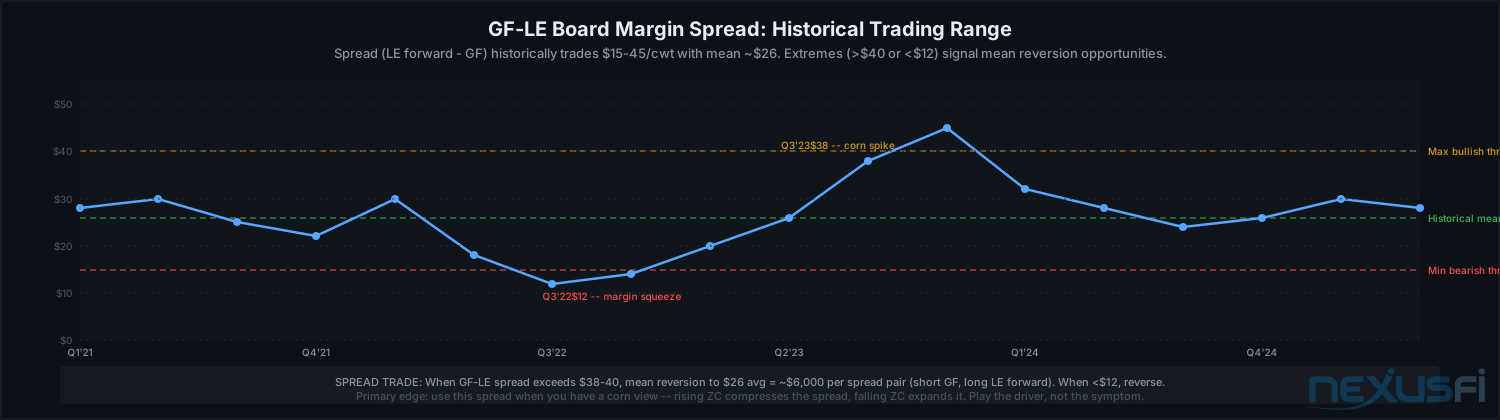
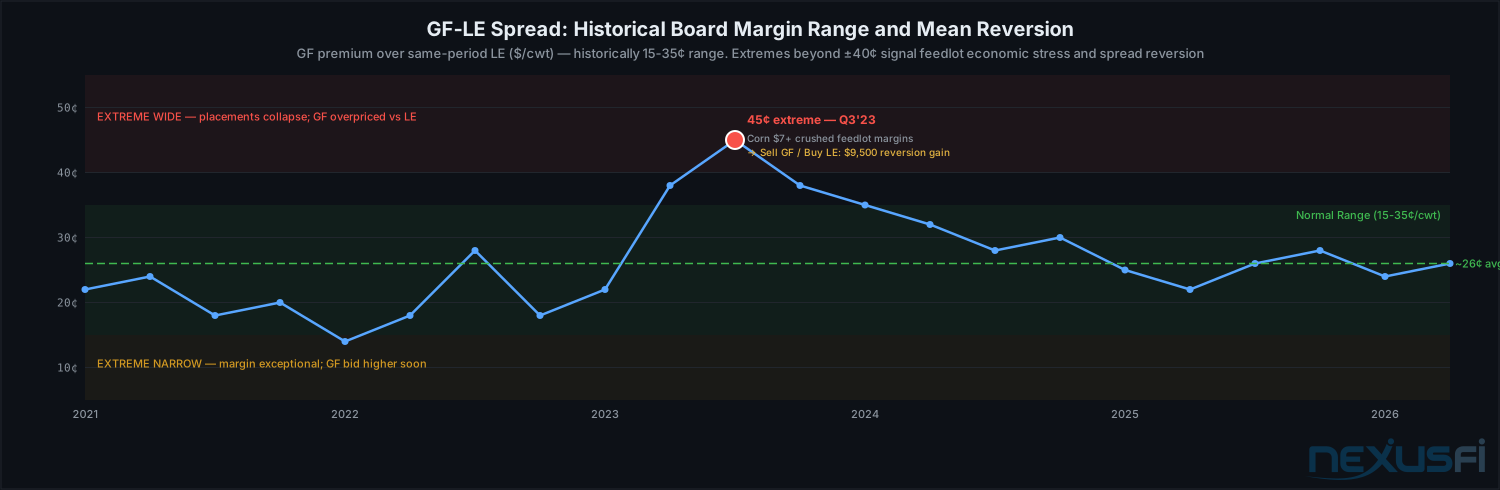
The GF-LE spread — feeder cattle price minus live cattle price (both in $/cwt) — is the most direct expression of feedlot margin economics. Historically this spread trades in a range of 15-35 cents per hundredweight, with a long-run average around 25-26 cents. When the spread widens beyond 40 cents (corn has spiked, crushing margins), it historically reverts. When it compresses below 10 cents (feedlots making extraordinary margins), it also reverts as more feeders get placed, eventually increasing fed cattle supply and pressuring LE.
The GF-LE spread exemplifies this — more analytically tractable than outright positions because you're trading a relationship, not a directional bet on the entire complex.
USDA Cattle on Feed Report: The Primary Trigger
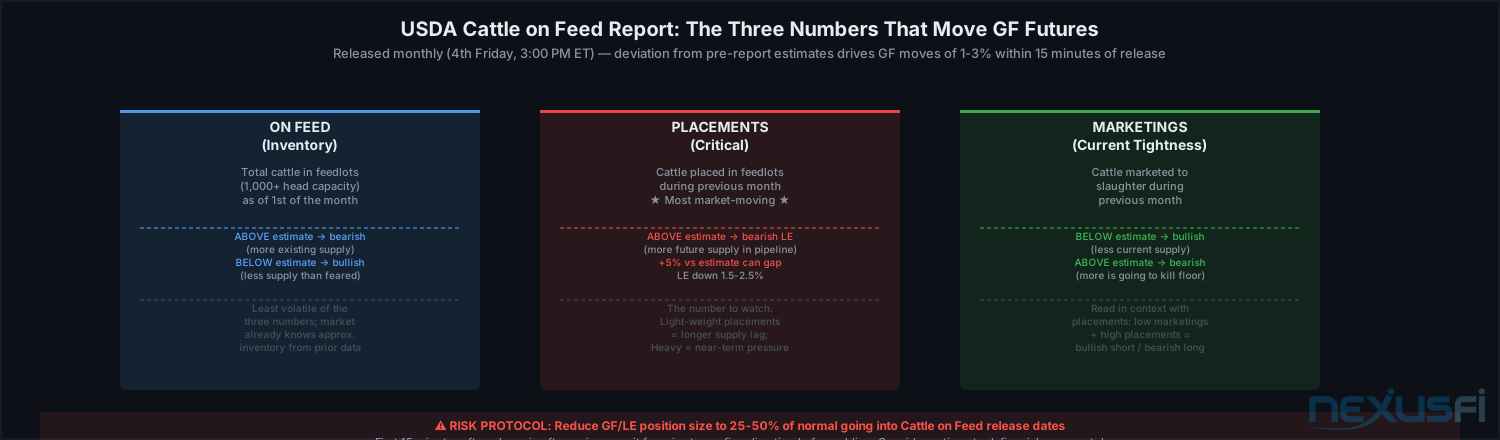
The most significant scheduled event in GF trading is the monthly USDA Cattle on Feed report, released at 3:00 PM ET on the fourth Friday of each month. This report contains three critical data points: On Feed (total cattle in feedlots with 1,000+ head capacity as of the first of the month), Placements (cattle placed in feedlots during the previous month), and Marketings (cattle marketed to slaughter).
Placements is the most market-moving number. It tells you the future supply pipeline — cattle placed today appear on the kill floor in 150-170 days. A placements surprise of 5%+ versus pre-report estimates can move GF or LE by 1.5-3% within minutes of release.
The pre-report consensus from analysts at brokerage firms and USDA sets the expectation. What moves markets is the deviation from that expectation, not the absolute level. A placements number 8% above estimates is bearish for LE (more future supply) even if the absolute number is below year-ago levels. Always compare to estimates, not just year-over-year.
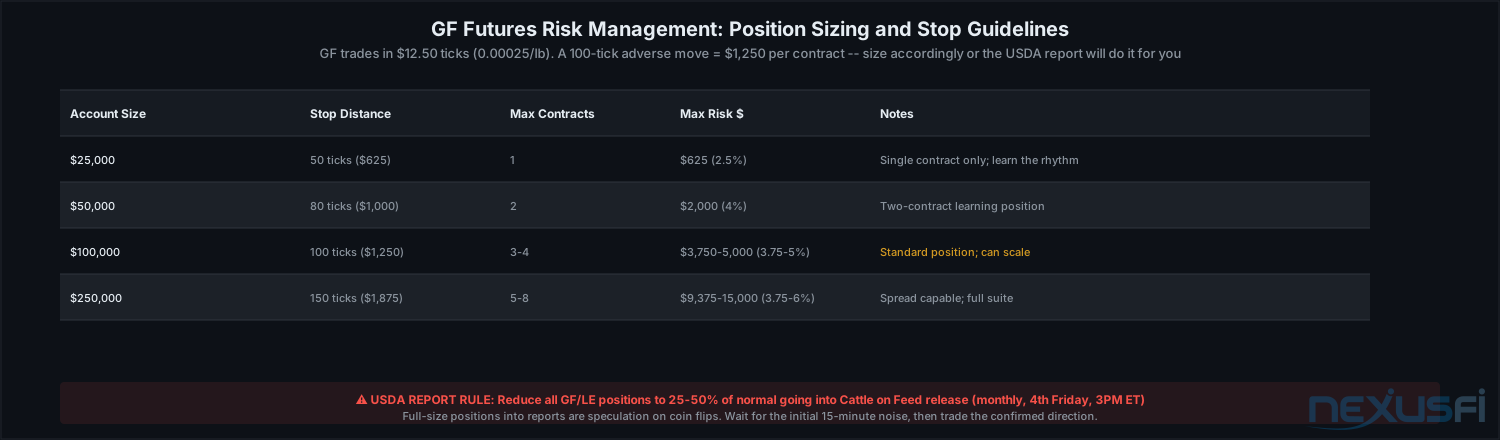
Reduce position size before every Cattle on Feed release. Experienced livestock traders either flatten positions heading into the number or use options to define maximum loss. The first 15 minutes after release is typically noise — wait for price to confirm direction before positioning in size.
Herd Size and the Multi-Year Cattle Cycle
The cattle cycle is 8-12 years long, driven by biological limitations: a cow takes 9 months to calve, and calves take 18-24 months to reach slaughter weight. Supply shocks take years to resolve — there's no way to rapidly increase beef production.
The current cycle is historically significant. Drought conditions from 2020-2023 forced ranchers to liquidate breeding stock they couldn't afford to feed. When ranchers sell breeding cows rather than just surplus feeders, they remove future production capacity. The herd rebuild takes years: ranchers must keep replacement heifers rather than sell them, wait for those heifers to mature and calve (typically 2 years), and maintain that patience through feed cost cycles and weather events. Most livestock analysts project tight cattle supply through at least 2027.
This structural backdrop gives a persistent bullish bias to both GF and LE that isn't going to reverse on one good corn crop or one bearish USDA report. Short-term bearish setups exist and can be profitable, but they require much stronger confirmation when you're trading against a multi-year structural tailwind.
Weather and Drought
Weather affects GF through two simultaneous channels: feed costs (drought reduces corn yields, raising prices) and herd availability (drought reduces pasture, forcing early sales). A severe drought creates a short-term bearish wave — forced liquidation adds near-term supply — followed by a multi-year bullish wave as the depleted herd constrains future availability.
The USDA's weekly Drought Monitor is a free, essential resource. Watch for persistent drought in major cattle states: Texas, Kansas, Nebraska, Oklahoma, and the Dakotas. When D4 (Solid Drought) covers more than 10-15% of the cattle-producing region for consecutive weeks, it's a meaningful signal for both near-term supply (forced liquidation) and long-term supply (herd reduction). These effects have opposite signs and play out over different time horizons.
Winter weather also matters for feed efficiency. Extreme cold increases cattle energy requirements — more feed needed to maintain body temperature — compressing feedlot margins and potentially pushing feeder bids lower as operators adjust break-even calculations.
Beef Demand and Export Markets
On the demand side, U.S. beef exports to Japan, South Korea, Mexico, and China are increasingly significant. China's purchasing patterns in particular have become more important since import restrictions were lifted in 2020. Active Chinese buying tightens domestic availability and supports both LE and, indirectly, GF through the board margin relationship.
Demand destruction is a real risk at historically elevated price levels. When Choice beef reaches $7-8/lb at retail, consumers shift toward chicken, pork, and plant-based proteins. Watch USDA weekly slaughter data for packer reluctance — when packers scale back kills despite adequate cattle availability, it signals demand-side pushback that will eventually flow back through the price chain to GF. @myrrdin, a long-time NexusFi Commodities trader, highlighted in the Meats thread (thread 42532) the export dimension: "rising exports to China" as a core thesis for livestock positioning — an insight that remains relevant in 2025-2026.
Seasonal Patterns in GF Futures #
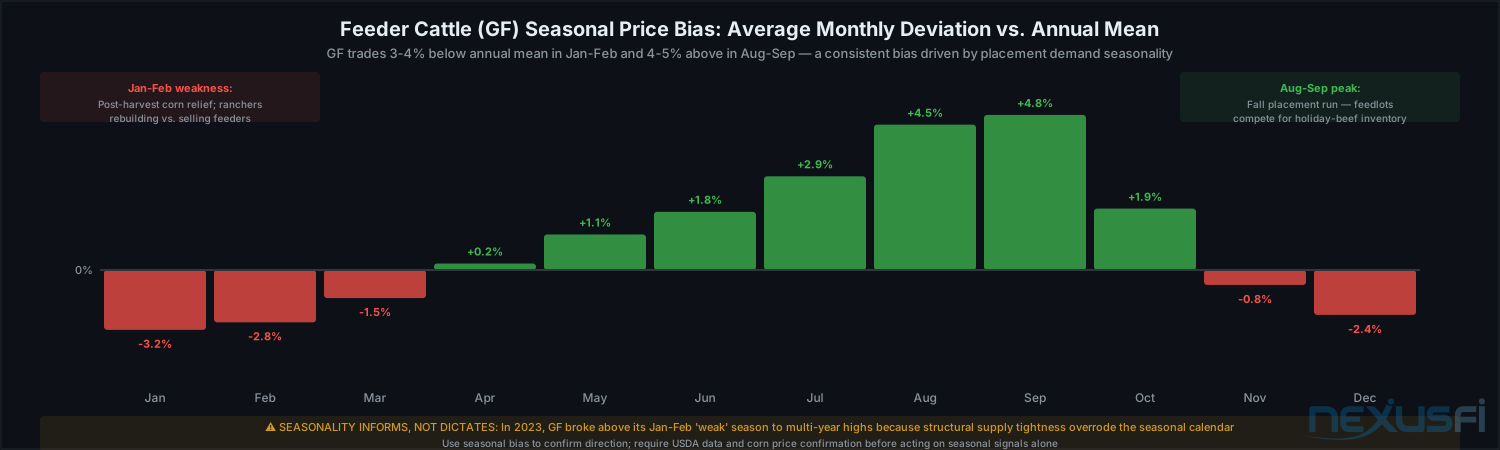
GF has well-documented seasonal tendencies driven by the cattle production calendar. The placement demand cycle is the primary driver of seasonal price patterns:
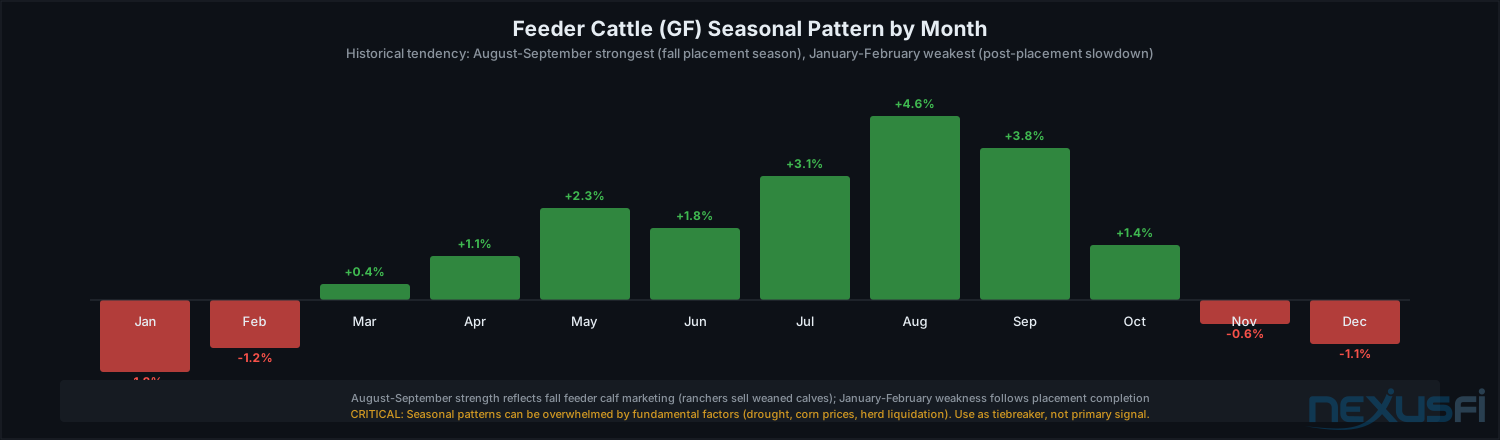
January-February (typically weakest, -3 to -4% vs. annual mean): Post-harvest corn supply is abundant and feed costs are manageable. Ranchers are in the winter calving season and not actively selling many feeders. Feedlot placement demand is seasonally low. This is typically GF's weakest seasonal window.
March-May (transitional): Spring calving wraps up. Corn begins pricing the growing season premium as planting risk comes into focus. Mixed signals as the market starts looking toward summer placement season. GF trades near the annual mean.
June-September (typically strongest, +2 to +5% vs. annual mean): The "fall run" placement season is the most active buying period for feedlots. Operators need inventory to fill lots for the holiday beef demand period — Thanksgiving and Christmas fall 150-170 days after August-September placements. Competition for feeder cattle is highest in this window, pushing GF to seasonal peaks.
October-December (declining, -1 to -2% vs. annual mean): Fall placement season winds down. Feedlots with full inventories are less aggressive buyers. Prices typically track back toward or below the annual mean.
Critical caveat: as @kkfx observed at NexusFi (thread 28755), seasonal patterns work best as a directional filter, not a trading system — "correlations can be studied at extremes of the ranges and target the mean." In 2023, GF broke through the January-February "weak" season at multi-year highs because structural supply tightness overwhelmed seasonal calendar influence. Use seasonality to confirm direction; require USDA data and corn price confirmation before acting on seasonal signals alone.
Additionally,
This applies directly to GF-LE spread analysis — always verify that seasonal-looking signals aren't artifacts of contract month conventions.
How to Trade GF Futures #
Strategy 1: The GF-LE Spread (Board Margin Trade)
This is the primary professional approach — trading the feedlot margin rather than taking outright directional bets on the cattle complex. You're expressing a view on feedlot economics, not on whether beef prices go up or down overall.
Long the spread (buy GF, sell LE): When the GF-LE spread is below 10 cents/cwt, feedlot margins are strong. At these levels, feedlots place aggressively, building future LE supply that will eventually pressure LE prices. GF holds or rises as demand is strong. The spread widens back toward 20-25 cents. Profit comes from GF outperforming LE.
Short the spread (sell GF, buy LE): When the spread is above 40 cents/cwt, feedlot economics are impaired — typically because corn has spiked. Feedlots reduce placements, eventually tightening future LE supply. LE rises; GF falls as placement demand collapses. The spread narrows back toward 20-25 cents. Profit comes from LE outperforming GF. The Q3 2023 extreme of 45 cents/cwt offered this setup — the subsequent compression to ~25 cents represented approximately $9,500 per contract pair.
Month pairing — the most critical execution detail: You cannot pair front-month GF against front-month LE. A 150-170 day feedlot cycle means a steer placed in September finishes in February-March. Your September GF should pair with February or March LE to correctly express feedlot conversion economics. Front-month against front-month expresses something entirely different — a technical relationship between current-period prices, not the actual feeding margin. Get this wrong and you're not trading the board margin at all.
Risk sizing: The GF-LE spread has roughly 40-60% less volatility than outright positions. Size based on spread volatility, not outright single-contract volatility. CME typically offers margin credits for recognized GF-LE spread positions — verify current SPAN rates before assuming margin requirements.
Strategy 2: The GF-Corn Relationship Trade
A more direct expression of feedlot economics: monitor the corn-to-feeder ratio and trade extremes. The basic math: a steer consumes roughly 50-55 bushels of corn during a 150-day feedlot period. At $5/bushel corn, that's $250-275 in corn costs per head. When corn spikes to $8 and GF hasn't yet corrected, feedlot break-even has shifted dramatically — GF will eventually follow.
Practical setup: watch the December corn contract (ZC) for crop-year feed cost expectations. When corn is at multi-year highs relative to GF (high corn-to-feeder ratio), the feedlot economics are unfavorable — a potential bearish GF setup. When corn has corrected sharply and GF hasn't yet responded, the economics favor feedlot placement — a potential bullish GF setup.
The limitation: this trade requires you to be right on both legs independently. Corn can stay high due to weather or export demand even as cattle supply dynamics argue for GF strength. Use this relationship as supporting analysis rather than a standalone trade signal.
Strategy 3: Directional Trading
Outright GF positions make sense when you have strong conviction on: USDA placement numbers diverging much from estimates (positioning ahead of the report or fading the initial reaction), corn price shocks from USDA crop reports or weather events, structural herd cycle inflection points (early signs of herd rebuild or sustained liquidation), or seasonal setups aligned with fundamental confirmation.
Use the liquid nearby months. GF liquidity concentrates in the front two or three contracts. Beyond 6-8 months, bid-ask spreads widen and volume thins. Check open interest and bid-ask before entering — GF in illiquid months can spread 3-5 ticks, which is a permanent tax on performance.
Entry timing for fundamental trades: after USDA report releases, wait at least 15-30 minutes before entering. The initial move is often noise as market participants process the numbers. The second-move direction — after the report noise settles — has better statistical properties than trading the immediate reaction. Patience here is a real edge.
Risk Management #
USDA Report Risk
The single largest scheduled risk in GF trading is the monthly Cattle on Feed report. A major placements surprise — 8% above or below estimates — can move GF 2-4% in the first 15 minutes post-release. At 10 contracts, that's $5,000-10,000 of P&L in minutes. Two approaches:
- Reduce size: Drop to 25-50% of normal position going into report days. Take profits or losses based on fundamental confirmation after the number lands.
- Use options: GF options are available on CME. A defined-risk strangle or straddle around report dates caps maximum loss while preserving upside if the report confirms your thesis. The implied volatility expansion heading into reports makes options relatively expensive -- but for large positions, the cost is worth the protection.
Liquidity Concentration
GF liquidity is highest in the nearest two or three contract months. Far-dated contracts — more than 6 months out — can have wide bid-ask spreads and thin book depth. For institutional-sized trades, check open interest and market depth before entering. Contracts with less than 1,000 OI in the back months should be avoided unless you're trading small size or using market-on-close orders that benefit from the daily settlement fix.
Duration Mismatch in Spreads
When trading GF-LE spreads, choose contract months aligned to the actual feedlot conversion timeline (150-170 days). A September GF paired with a same-month September LE isn't expressing board margin economics — the LE September contract reflects cattle finished from April-May placements, not September placements. Mismatch the months and you've built a trade structure that doesn't match your analytical thesis. This is a subtle but important error that experienced livestock traders see beginners make regularly.
Cash Basis Risk for Hedgers
If you're using GF futures to hedge physical feeder cattle operations, basis risk is the primary residual exposure. The CME Feeder Cattle Index tracks national averages, but your specific regional auction market may diverge by $3-8/cwt from the index. The regional cash-to-futures basis tends to be more stable than absolute price levels — track historical basis at your specific marketing location to size hedges appropriately and avoid over- or under-hedging.
Roll Costs in Trend Trades
GF's 8-month calendar (skipping several months) creates roll dynamics that differ from continuously-listed contracts. When GF is in backwardation (near months priced above deferred months), rolling a long position costs money — the nearby you sell is above the deferred you buy, creating a negative roll yield. In a structurally tight supply environment like 2023-2026, backwardation can persist for extended periods. Price the roll cost into your expected return before committing to a multi-month trend trade.
How to Read the USDA Cattle on Feed Report #
The report covers feedlots with 1,000+ head capacity, representing approximately 85% of fed beef production. Here's a systematic reading approach:
Step 1: Compare all three numbers to pre-report estimates. Reuters, Bloomberg, and commodity research firms publish consensus estimates the day before the release. The market moves on deviations from these estimates, not on the absolute numbers.
Step 2: Assess placements quality. Not all placement increases carry the same market impact. Heavy placements of light-weight calves (under 700 lbs) signal a longer-horizon supply increase — they need more time in the feedlot. Heavy placements of heavyweight feeders (900+ lbs) signal near-term supply pressure on LE, typically within 3-4 months. Light placements from a bearish-expectations report can actually be bullish if feedlots are avoiding placing because they expect a worse setup ahead.
Step 3: Note the year-over-year comparison in context. The market prices expectations. Placements up 8% year-over-year but below the +10% estimate may trade bullishly (less supply addition than feared) even though the absolute number is higher than last year. Always think in relative-to-expectation terms.
Step 4: Read marketings for current tightness signals. Marketings well below year-ago levels signal current fed cattle supply is tight — supportive for LE and feedlot margins. Marketings above expectations combined with placements above expectations is a double bearish signal for LE: more supply now and more supply coming.
Step 5: Look at the on-feed inventory breakdown by days-on-feed category. Cattle on feed for 120+ days are "near-market-ready" — this is the near-term supply pressure on packer demand and LE. A large 120+ day category signals heavy packer kills coming, which is bearish for LE (and indirectly bearish for GF via the margin relationship).
Common Mistakes GF Traders Make #
Mismatching contract months in GF-LE spreads. Pairing front-month GF against front-month LE doesn't express the feedlot conversion margin. Match months to the actual 150-170 day conversion cycle. This is the single most common structural error in livestock spread trading.
Treating seasonal patterns as standalone signals. The seasonal calendar is a starting point. In 2023, GF broke through its seasonal weakness period because structural supply tightness dominated. Fundamental confirmation — USDA data, corn prices, herd inventory context — is required before acting on seasonal bias.
Holding full size through USDA report dates. Every monthly Cattle on Feed release is a potential gap-risk event. Reduce to 25-50% of normal size or use options around every fourth-Friday release, without exception.
Ignoring the multi-year cattle cycle. Traders who focus only on the technical chart miss the cycle context. The current multi-decade herd shortage is the dominant backdrop — short-term bearish setups require much stronger confirmation when you're trading against a structural tailwind.
Using $/cwt and cents/lb interchangeably without verification. GF is quoted in cents per pound on CME but often described in $/cwt in industry publications (which are the same thing). However, different trading platforms and data feeds can present prices differently. A $2.62/lb price = $262/cwt. Verify your platform's convention before calculating P&L or setting stop levels.
Underestimating corn's role but also over-weighting it. Corn is the primary cost variable in feedlot economics, but supply dynamics can override feed-cost signals entirely. From 2023-2026, corn fell much while GF hit all-time highs — traders who positioned purely on the corn-GF inverse relationship missed the bigger supply story. Use corn as a supporting factor, not the only factor.
GF vs. Live Cattle: When to Trade Each #
Both contracts are in the livestock complex but express different risks and reward profiles:
Trade GF (outright long) when: feeder cattle supply is structurally tight, feedlot demand is strong, corn is range-bound or falling, and seasonal timing supports. GF is more directly driven by physical feeder cattle availability and feedlot economics.
Trade LE (outright long) when: current feedlot inventories are lean, packer demand is strong, and beef export markets are active. LE is more sensitive to current-period supply and near-term demand signals.
Trade the GF-LE spread when: you have a specific view on feedlot margin economics (corn-LE relationship at an extreme) and want to express that view with less directional risk than either outright contract provides.
Trade Corn (ZC) as a cattle proxy when: your primary thesis is about feed costs specifically, and you want input-side exposure without direct exposure to herd dynamics and placement demand.
For traders transitioning from equity or financial futures, the livestock complex rewards fundamental analysis more than most markets. The biggest moves in GF are driven by USDA reports, crop surprises, and multi-year herd cycle shifts — catalysts that charts alone can't predict. Build the fundamental framework first; use technical analysis for entry and exit timing within that fundamental context.
Practical Resources #
- USDA Cattle on Feed Report -- Monthly, 4th Friday, 3:00 PM ET; most market-moving cattle data release
- CME Feeder Cattle Product Page -- Current specs, margin requirements, contract calendar
- USDA Drought Monitor -- Weekly drought conditions in cattle-producing states; essential for supply-side monitoring
- USDA Weekly Slaughter Data -- Near-term fed cattle supply; read weekly for current-period tightness signals
Knowledge Map
Go Deeper
Build on this knowledgeReferences This Article
Articles that build on this topicCitations
- — Livestock Futures Hit Record Levels -- U.S. Cattle Herd Smallest Since 1951 (2026)“If you're not watching the livestock complex right now, you're missing one of the most significant supply-driven moves in commodity futures this decade. The last time we had a herd this small, futures markets as we know them barely existed.”
- — Meats (2019) 👍 3“One argument for being long Live Cattle is the expectation of rising cash price in the near future. Another argument is the expectation that supply of Live Cattle will get very tight. Rising exports to China add further support.”
- — Backadjust futures contracts for spread trading backtesting (2023) 👍 4“Spreads behave very differently than outright contracts and can actually be easier to trade as they have less noise, they are also a lot cheaper from a margin perspective. So why doesn't everybody trade them? Because it's not easy to do or to test in most retail algo software.”
- — Trading ratios long term (2020) 👍 4“Spreads behave very differently than outright contracts and can actually be easier to trade as they have less noise, they are also a lot cheaper from a margin perspective.”
- — Spread / Pairs Trading - the allure and the reality (2013) 👍 7“High correlation, high co-integration: trade for mean reversion. High correlation, low co-integration: trade for diversion/widening of the spread pair. The opportunity for a spread trade arises when the correlation is out of place temporarily.”
- — Cattle Futures Down Big Time (2015) 👍 1“Great FREE report on Ags & Livestock: dailylivestockreport.com. Spring and summer fed cattle futures declined the daily permissible limit on Friday -- extreme moves happen fast in thin livestock markets.”
- USDA Agricultural Marketing Service — Cattle on Feed Report -- Monthly Release
- CME Group — Feeder Cattle Futures Contract Specifications
- USDA National Agricultural Statistics Service — Cattle Inventory Report -- January 2026
- CME Group — CME Feeder Cattle Index -- Calculation Methodology
- CFTC — Commitments of Traders -- Weekly Report (Livestock)