



Lean Hogs (HE) Futures: The Complete Trading Guide
Overview #
Lean Hogs futures (HE) on CME Group is the primary risk management and speculative vehicle for U.S. pork markets. Every major pork processor — Smithfield, Tyson, JBS — uses HE to hedge their input costs. Every large CTA that trades agricultural markets has a view on this contract. And a growing number of retail traders are discovering that HE's at the core-driven character makes it tradeable in ways that pure momentum markets like equity indices are not.
But here's the thing most traders learn the hard way: HE is not just another liquid futures contract where you buy support and sell resistance. It is a biologically-constrained market. A sow bred today creates slaughter supply approximately 9 months from now. You cannot speed up a pig. That single biological fact shapes the forward curve, drives the seasonal patterns, and explains why a quarterly USDA report can reprice the entire forward curve in one trading session.
If you trade HE with pure chart technicals and no understanding of pork cutout value, cash-futures basis, or USDA supply data, you are bringing a deck of cards to a poker game played with real money by people who've tracked this market for decades. The professionals are hedgers and systematic funds who integrate four distinct data streams simultaneously. This guide shows you what those four streams are and how to use them.
Key Specifications #
Understanding the contract mechanics is non-negotiable before placing a single trade. HE has some quirks that catch traders off-guard when they come from equity index or energy futures backgrounds.
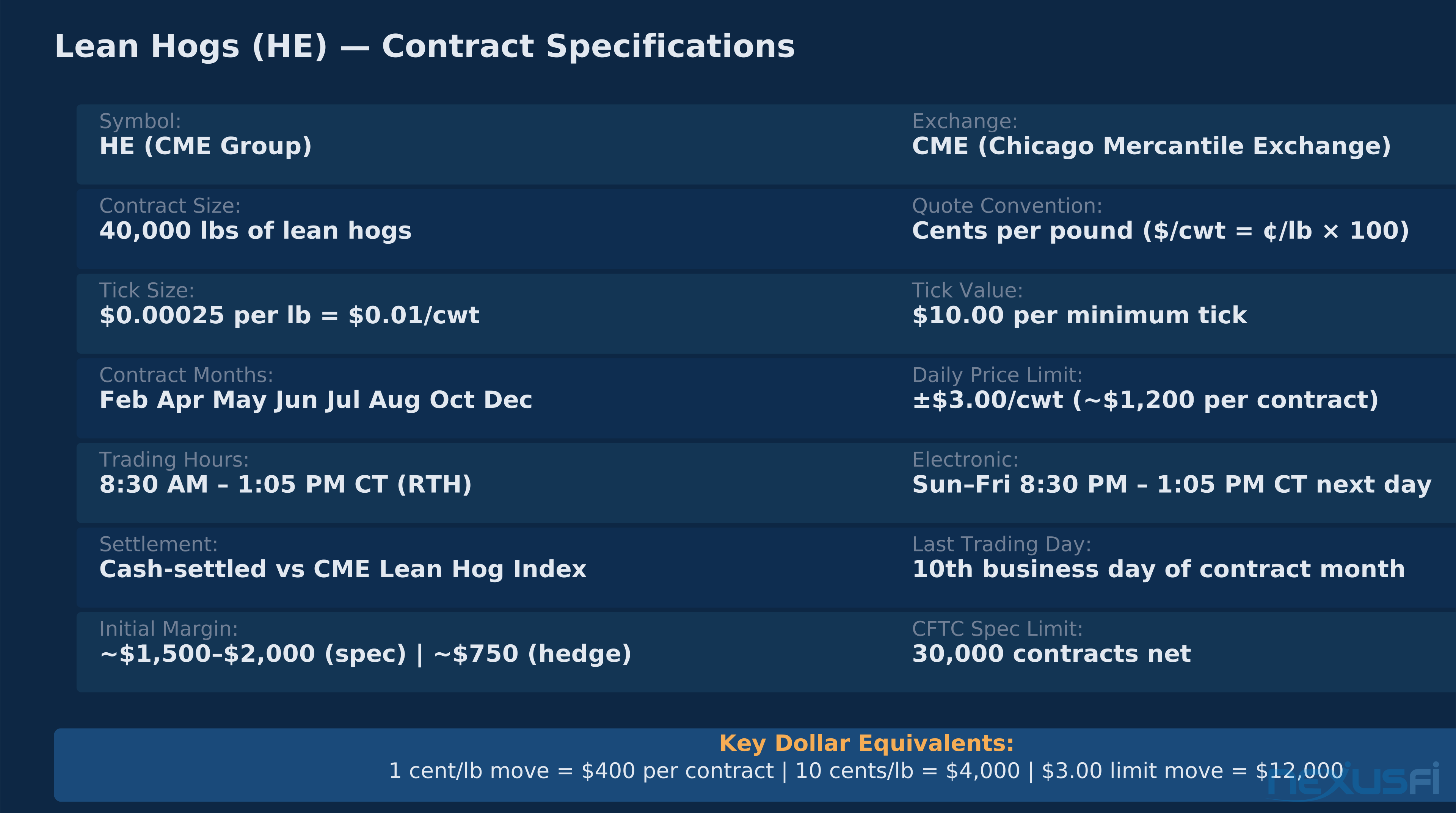
The contract represents 40,000 pounds of lean hogs, quoted in cents per pound (or equivalently, dollars per hundredweight). The minimum tick is $0.00025 per pound, which equals $10 per tick — identical to ES or NQ in dollar terms, but the volatility profile is completely different. A calm HE session might move 50--100 ticks ($500--$1,000 per contract). A USDA report day can move 200--400 ticks ($2,000--$4,000) in a single session.
The daily price limit of ±$3.00/cwt equals $1,200 per contract per side. This is a hard cap — the exchange will suspend trading if prices reach this limit. Unlike equity circuits that reset after a pause, a limit-locked HE market can stay locked for an entire session. On days following a limit move, expanded limits apply. Size so.
The contract months are Feb, Apr, May, Jun, Jul, Aug, Oct, Dec — a non-standard calendar that reflects the hog production and demand cycle. The settlement is cash-settled against the CME Lean Hog Index (a weighted average of cash hog prices). This means you will never take delivery of actual hogs — the contract converges to cash prices at expiration rather than through physical delivery. Initial margin runs approximately $1,500--$2,000 for speculators; hedge accounts pay roughly half that.
Trading hours feature both regular trading hours (RTH) from 8:30 AM to 1:05 PM CT and an extended electronic session. Volume concentrates in RTH; avoid executing large orders in the thin pre-market session. Best execution typically occurs between 9:00 AM and 12:00 PM CT when both hedgers and speculators are most active.
How It Works: The Biological and Market Mechanics #
The 180-Day Farrow-to-Finish Cycle
Unlike crude oil, which you can theoretically pump more of if prices rise enough, you cannot accelerate pig biology. The production timeline is fixed:
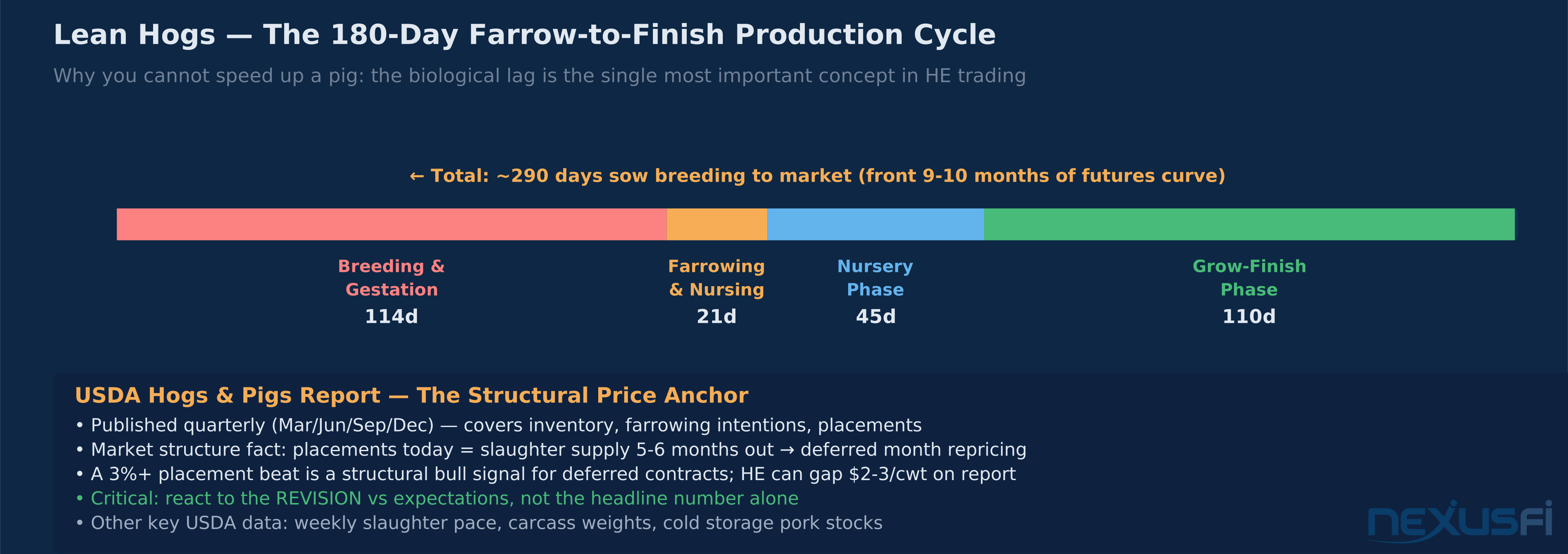
- Gestation: 114 days (sow bred to farrowing)
- Nursing: approximately 21 days after farrowing
- Nursery phase: 45 days (weaned pig to grower)
- Grow-finish phase: approximately 110 days (grower to market weight)
Total time from breeding decision to market hog: roughly 290 days. This is why deferred HE contracts are not just "a month away" — they represent actual decisions made by actual producers 9 months ago. When placements were heavy 6 months ago, today's slaughter supply is heavy. There is no adjustment knob.
This lag creates the forward curve structure. When near-term supply is tight (current herd numbers down, slaughter pace below seasonal norms), the front months trade at a premium to deferred months — the market is in backwardation. When near-term supply is heavy but future expectations are for tightening, the curve can show a complex contango-to-backwardation transition that reflects supply timing. Reading the curve structure tells you what the market collectively believes about supply timing.
Cash Settlement and the CME Lean Hog Index
HE settles against the CME Lean Hog Index, a 2-day weighted average of cash hog prices from USDA-reported transactions at major pork packing plants. This index is published daily (one business day lag) and is the most important reference price for near-term HE trading. When futures trade at a premium or discount to the current index, you are seeing what the market expects to happen between now and expiration.
The practical implication: HE front-month futures must converge to the index at expiration. Basis traders — those who watch the spread between cash and futures — see this convergence as a trading opportunity. If futures are trading at a significant discount to current cash (implying the market expects cash to fall), and you disagree, you can buy the futures and wait for convergence. This is called a basis trade and it is one of the most reliable strategies in HE when the fundamentals support it.
Market Participants
Understanding who else is trading this contract is essential for reading order flow. The major participants:
Commercial hedgers (Smithfield, Tyson, JBS, and major pork processors) represent the anchor of this market. They use HE to lock in input costs or sale prices. When processors are buying aggressively — because pork cutout values are rising faster than their cash hog purchases — they create sustained buying pressure in the front months. When producers want to lock in sale prices because margins look attractive, they add sustained selling pressure in deferred months.
Managed money and CTAs provide much of the speculative liquidity. Systematic trend-following funds amplify directional moves when technical signals align across multiple time horizons. The key observation: CTAs often enter after a fundamental repricing has already occurred. Their momentum tends to extend moves rather than initiate them.
Cross-commodity arbitrageurs trade the relationship between HE, corn futures, and pork cutout values. These participants keep the corn-hogs spread relationship from getting too far out of line with feed cost economics.
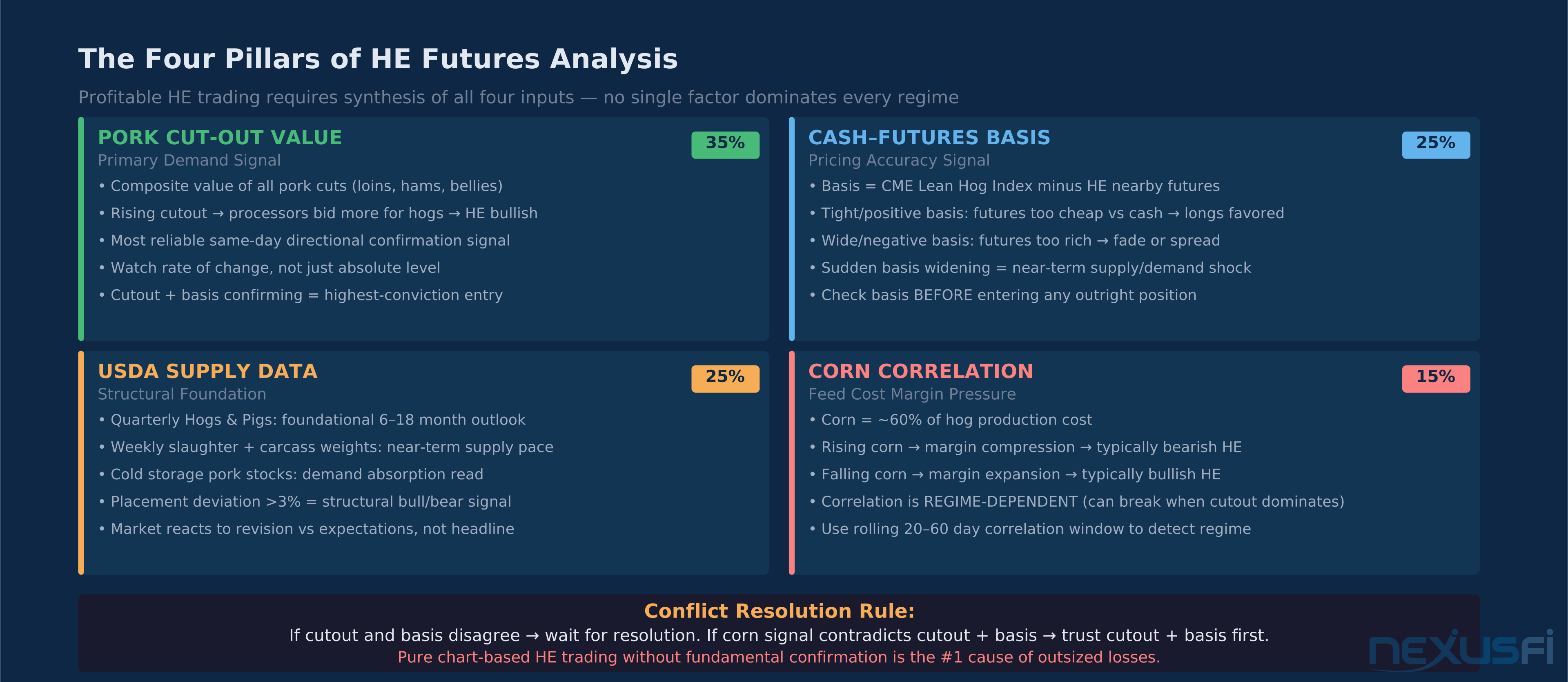
The Four Pillars of HE Analysis #
Every profitable professional trader in lean hogs integrates these four inputs simultaneously. If you are trading HE without all four, you are operating with incomplete information.
Pillar 1: Pork Cut-Out Value
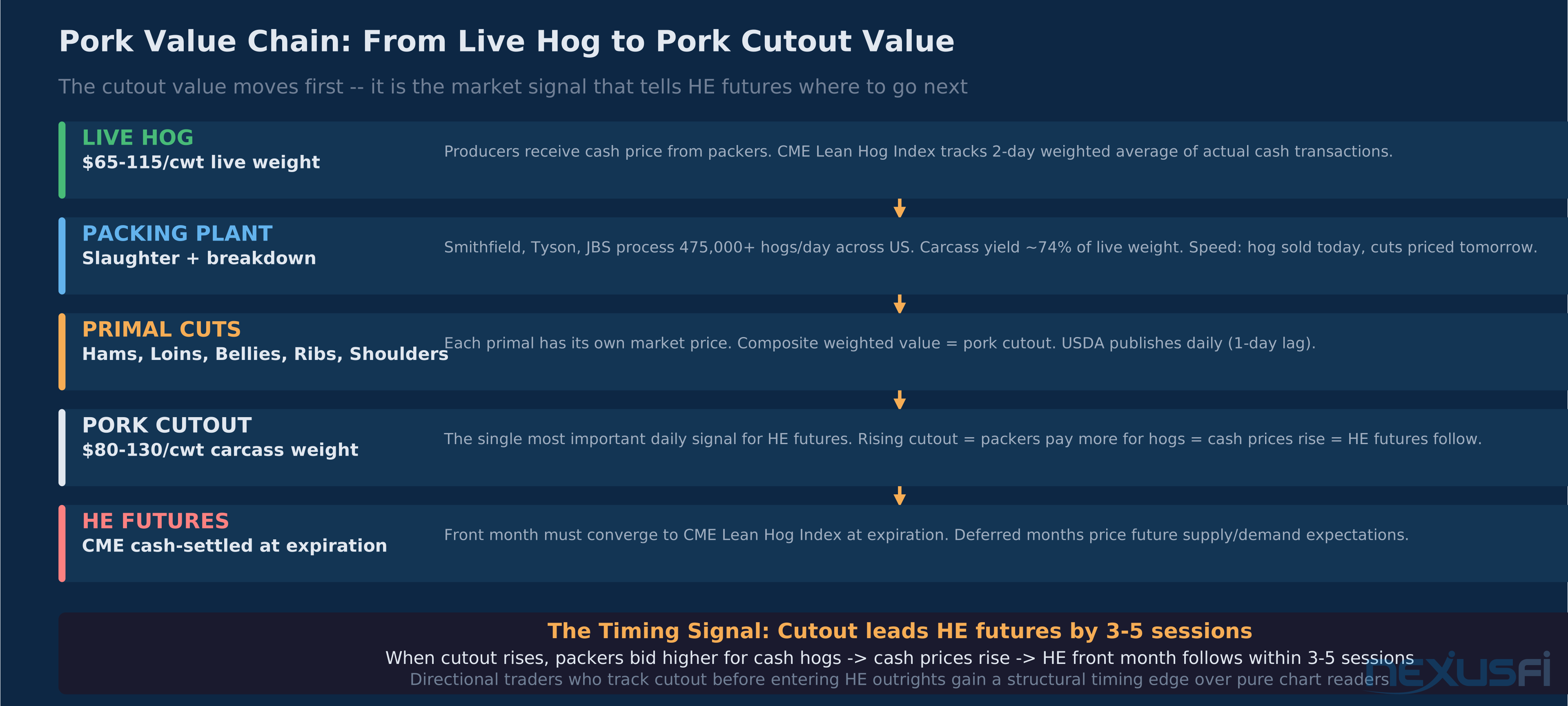
The pork cutout is the composite market value of all cuts derived from a single pork carcass — loins, hams, bellies, shoulders, ribs. It is calculated by weighting each primal cut by its share of the carcass and multiplying by the market price for that cut. The USDA publishes cutout data daily. It is the single most important same-day directional signal for lean hog futures.
The mechanism is direct: pork processors pay for live hogs based on what they can sell the finished product for. If cutout values rise, processors can afford to pay more for hogs. If cutout values fall, processors cut hog bids. Rising cutout so directly supports cash hog prices, which then pulls HE futures higher as the basis (cash vs futures relationship) adjusts.
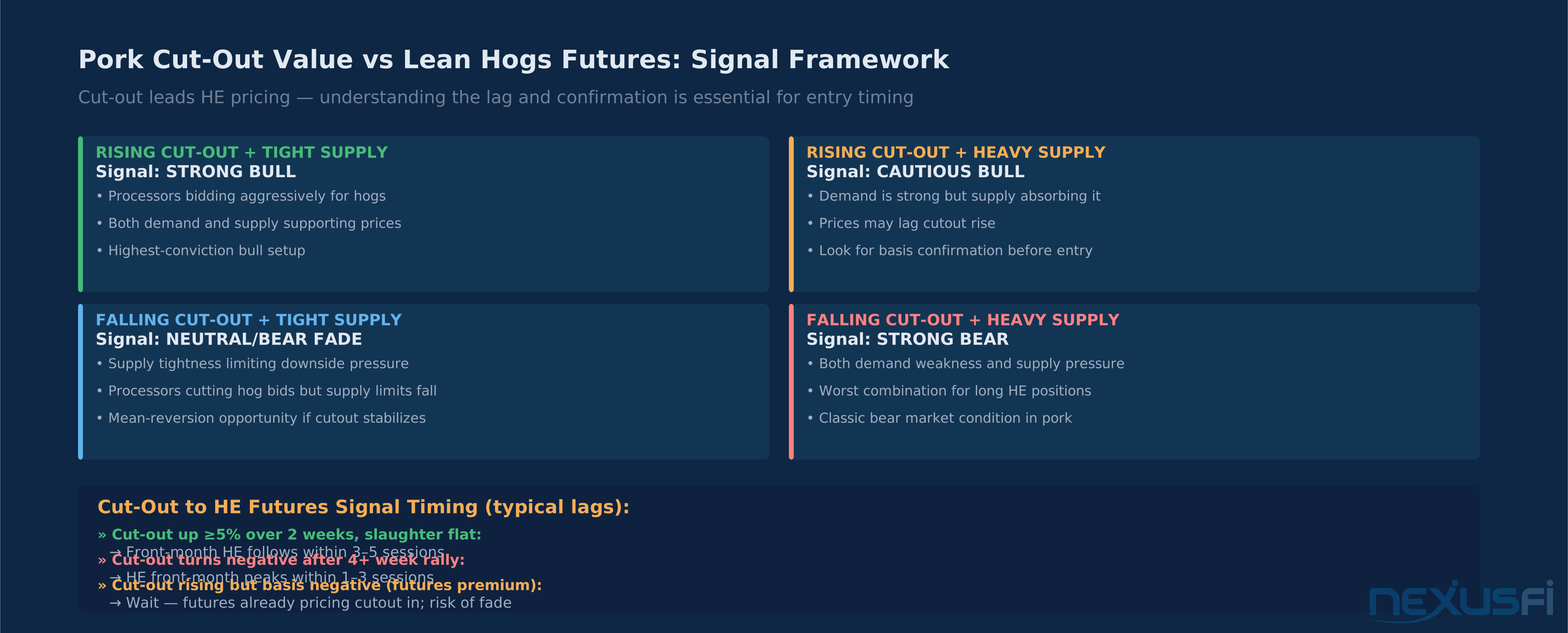
When reading cutout signals, direction and rate of change matter more than absolute levels. A cutout at $95/cwt that has risen 8% over two weeks is more bullish than a cutout at $110/cwt that has fallen 5% over two weeks. Momentum in the cutout precedes momentum in HE futures by roughly 3--5 trading sessions. This dynamic is well-established among NexusFi commodity traders: February Hogs typically strengthen in November because processors are supplying holiday hams — an observation rooted entirely in cutout demand fundamentals.
Pillar 2: Cash-Futures Basis
Basis in lean hogs is defined as: Cash (CME Lean Hog Index) minus Nearby HE Futures. A positive basis means cash is trading above futures — the market expects prices to fall. A negative basis means futures are trading above cash — the market expects prices to rise.
Reading basis tells you whether futures are fairly priced, too rich, or too cheap relative to the actual physical market. When basis is tight or positive, futures look cheap versus cash — a setup that favors longs as convergence approaches expiration. When basis is wide and negative, futures are pricing in a cash rally that hasn't happened yet — a warning sign that the long is anticipating something the physical market hasn't confirmed.
Sudden basis changes signal near-term supply or demand shocks before they fully register in outright futures prices. Experienced calendar spread traders on NexusFi noted that agricultural markets have "extreme seasonality in spreads" that reflects exactly these basis dynamics — basis behavior around key USDA windows and settlement periods creates exploitable opportunities for traders who track it systematically.
Pillar 3: USDA Supply Data
The USDA Hogs and Pigs Report, published quarterly in March, June, September, and December, is the single most important scheduled event in this market. It covers total hog inventory, breeding herd size, farrowing intentions, and market placements. These numbers directly imply future slaughter supply 5--6 months out.
The USDA agricultural reports calendar also includes weekly and monthly releases that affect HE: the Weekly Hogs and Pigs Report, cold storage data, and USDA Agricultural Marketing Service (AMS) daily cash prices. All of these feed into the CME Lean Hog Index calculation and should be on every HE trader's data calendar.
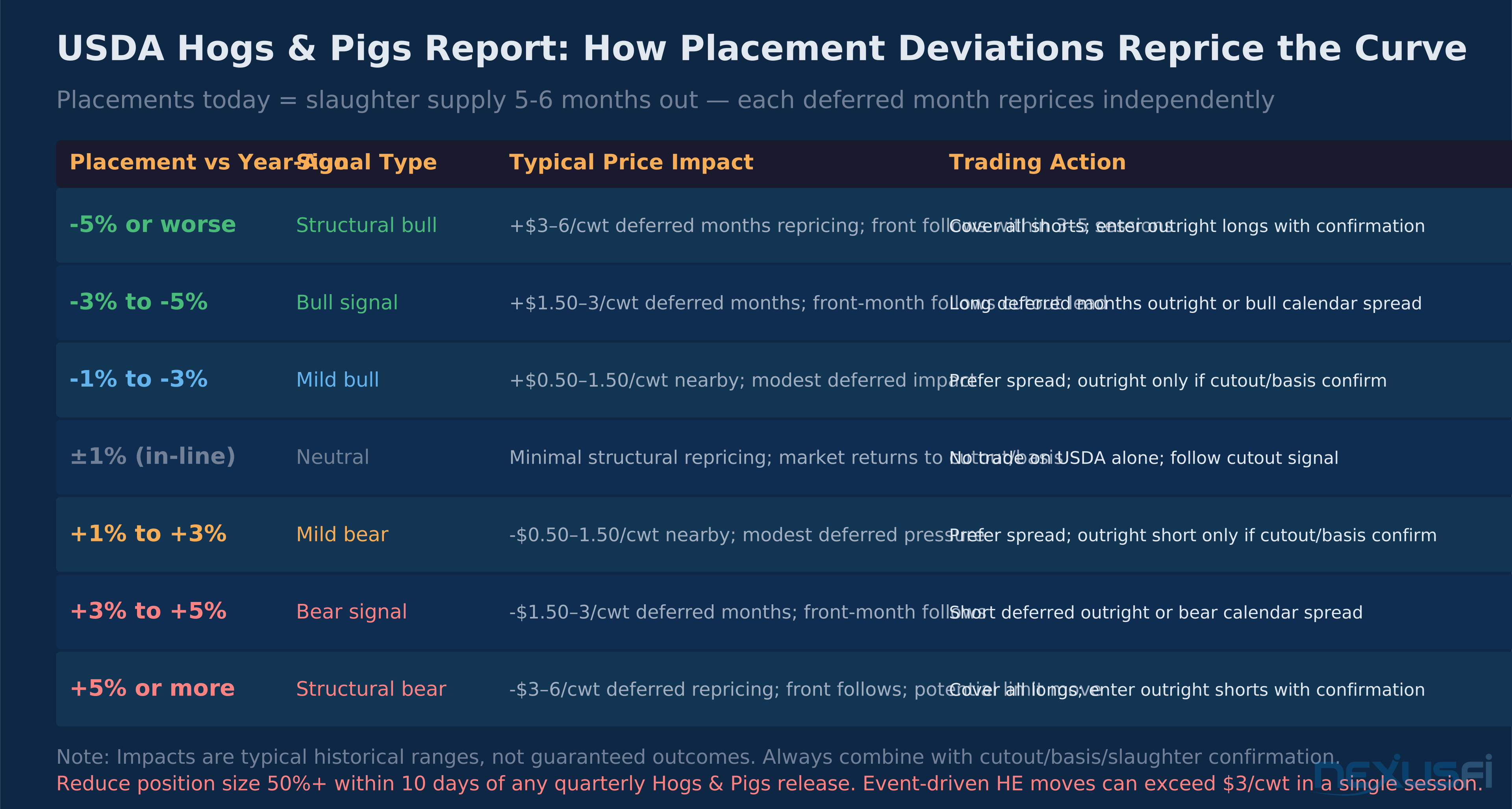
A critical nuance: HE reacts less to the absolute placement number and more to the revision versus expectations. If the market expected placements to be down 2% versus year-ago and the report shows down 5%, that 3-percentage-point beat is a structural bull signal for deferred contracts. The market re-prices based on what the new information changes about its prior beliefs.
Beyond the quarterly report, these USDA data releases matter on a weekly or monthly cadence:
- Weekly slaughter and carcass weights: Near-term supply indicator. If weekly slaughter is running 3%+ above year-ago for more than 3 consecutive weeks, that is bearish for front-month HE. Rising carcass weights compound the supply pressure (same number of hogs, but heavier = more pounds to absorb).
- Cold storage -- pork stocks: Reflects demand absorption. Rising pork stocks indicate supply is accumulating; falling stocks indicate the market is clearing.
- USDA Agricultural Marketing Service (AMS) daily prices: The raw price data that feeds the CME Lean Hog Index. Available online before the formal index is published.
Pillar 4: Corn Correlation and Feed Cost Margins
Corn represents approximately 60% of total hog production costs. The relationship between corn futures (ZC) and lean hog prices — which you can track in depth using our Corn Futures (ZC) guide — is real but regime-dependent — it is not always active, and trading it mechanically without checking the regime is a common mistake.
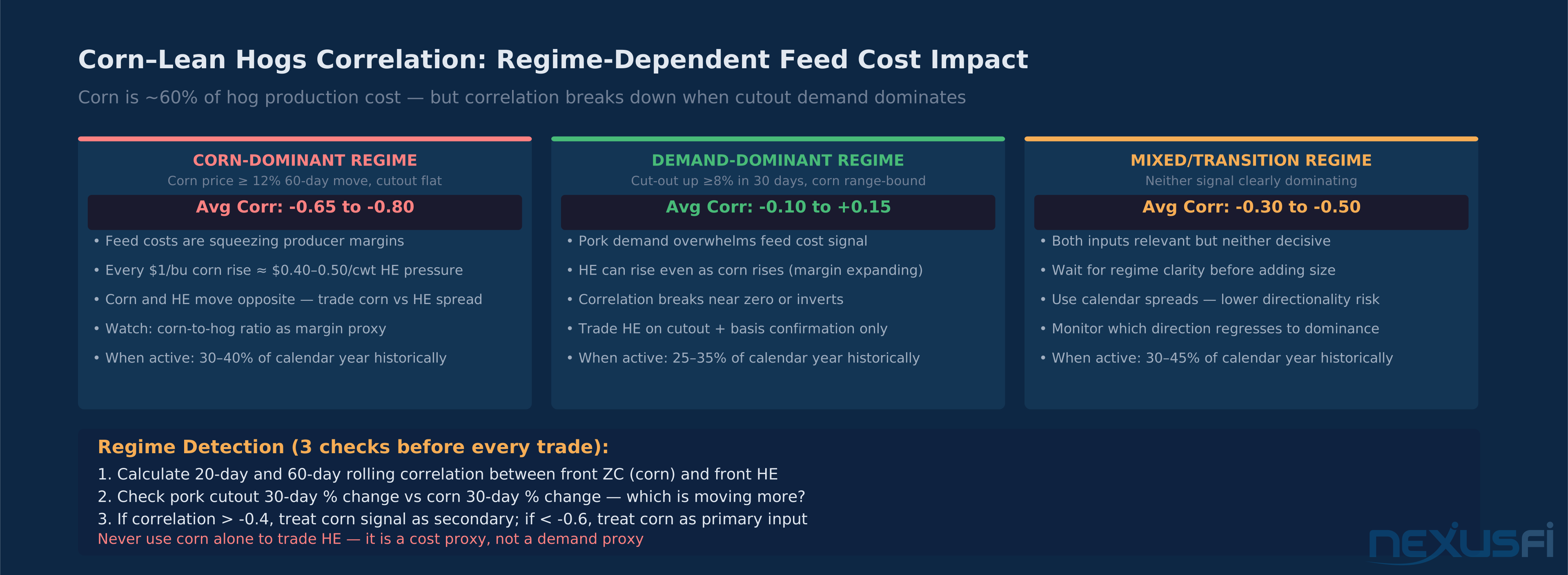
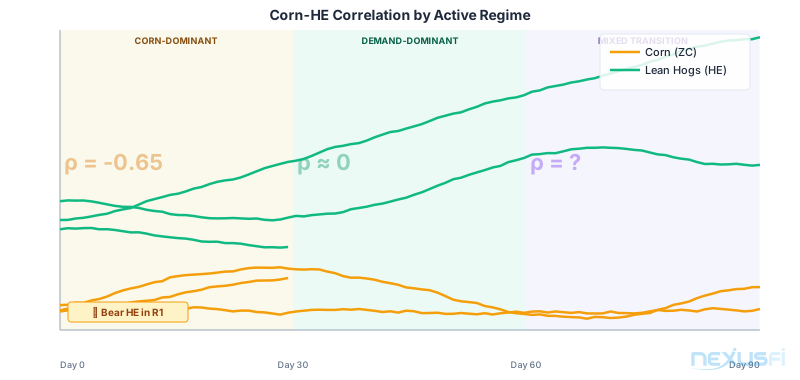
In a corn-dominant regime (corn futures moving ≥12% in 60 days, cutout flat), higher corn compresses producer margins and is typically bearish for HE. Our Live Cattle (LE) futures guide covers the other major U.S. livestock futures contract HE traders track as part of a broader agricultural market view. The mechanism: as feed costs rise, marginal producers accelerate slaughter to reduce feed bills, which temporarily increases supply and depresses prices. The correlation runs -0.65 to -0.80 in these regimes.
In a demand-dominant regime (cutout rising ≥8% in 30 days, corn range-bound), pork demand overwhelms the feed cost signal. HE can rise even as corn rises because processors' margins are expanding so rapidly that they absorb higher feed costs. The correlation breaks to near zero or even inverts during these periods.
The practical check: run a 20-day and 60-day rolling correlation between front ZC (corn continuous) and front HE before every trade. If correlation is weaker than -0.40, treat corn as a secondary signal. If stronger than -0.60, treat it as co-primary. Experienced commodity traders consistently note that ags and softs have exactly these kinds of cross-commodity dependencies that require regime awareness.
Seasonality: Quarter by Quarter #
Lean hogs exhibit some of the most consistent seasonality in the entire futures complex — but "consistent" in this context means "more likely than not, subject to reversal by fundamentals." Seasonality is a prior that gets updated, not a guarantee that gets traded blindly.
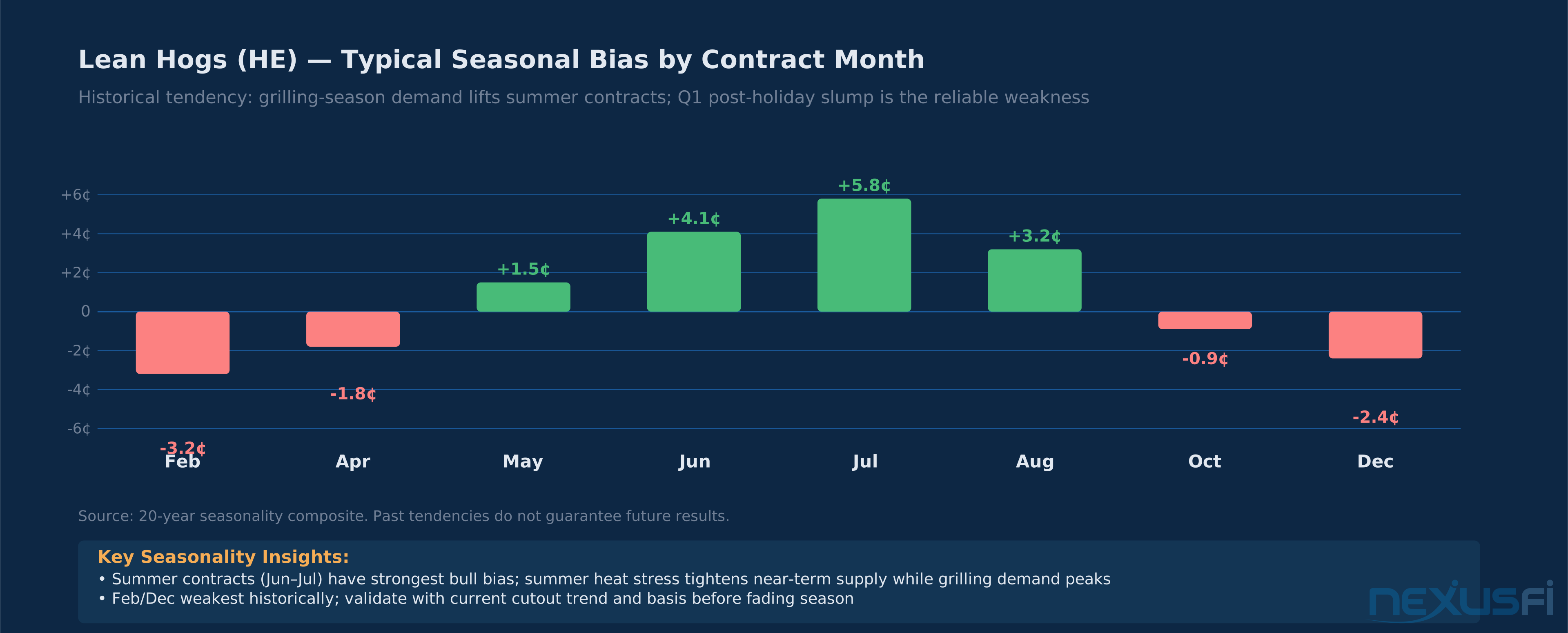
Q1 (February--April contracts): Historically the weakest seasonal period. Post-holiday demand slump, processors reducing production runs, and typically heavier supply from fall placements coming to market. The February contract in particular tends to reflect the weakest demand environment of the year. This is when short calendar spreads (short nearby, long deferred) have historically had the best risk-adjusted performance.
Q2 (May--June contracts): The seasonal transition period. Spring demand gradually improves, exports begin picking up for summer delivery, and processors start building inventory for the summer grilling season. May is the key inflection point — if cutout values are rising in March--April, May is typically where directional bulls get confirmed entries. @ron99 in the Selling Options on Futures thread observed that seasonal patterns in hog contracts are "already priced into futures" — the key is identifying when they're mis-priced relative to actual supply/demand conditions.
Q3 (July--August contracts): The strongest seasonal period. Summer grilling demand peaks in June--July, and heat stress in Iowa, Illinois, and Minnesota can temporarily reduce carcass weights, tightening near-term supply even when placement numbers suggest ample supply. This demand-supply combination has historically made Jun--Jul contracts the most reliably bullish seasonal window.
Q4 (October--December contracts): The seasonal transition back to weakness, with nuance. Holiday ham demand genuinely lifts cutout in October, but fall placements from spring farrowings create elevated slaughter supply in November--December that frequently overwhelms the demand support. When holiday demand disappoints, Q4 contracts sell off sharply. The Oct--Dec period regularly sees contango steepen as supply reality defeats demand optimism.
Trading Approaches: Outrights, Spreads, and Options #
Directional Outright Trading
Trading the front-month or second-month HE contract outright is appropriate when all four pillars align in the same direction. This means:
- Pork cutout is trending directionally (not just flat)
- Cash-futures basis confirms the direction (positive basis for longs, negative for shorts)
- USDA supply data supports the thesis (placements light for bulls, heavy for bears)
- Corn signal is either confirming or neutral (not contradicting)
When fewer than three of four pillars align, directional outrights carry excessive event risk. HE can reprice $1.50--$2.00/cwt within a session on routine USDA weekly data — not just quarterly reports. Traders who enter on 1-pillar conviction routinely get stopped out by normal fundamental volatility.
Execution considerations: use limit orders during regular trading hours. HE liquidity is concentrated in the front month with typical daily volume of 20,000--40,000 contracts. Avoid market orders of more than 5--10 contracts; use iceberg orders or work limits in the order book for larger positions. Best execution windows are 9:00--11:00 AM CT and 11:30 AM--1:00 PM CT.
Calendar Spread Trading
Calendar spreads are the professional's preferred vehicle in HE for good reason — learn the complete framework in our Spread Trading in Futures Markets guide, which covers the mechanics, risk profiles, and harvest spread structures applicable across the entire futures complex. they express supply timing views while dramatically reducing the exposure to event-driven gap risk. A calendar spread cuts your USDA report gap risk by 60--70% compared to an equivalent outright position.
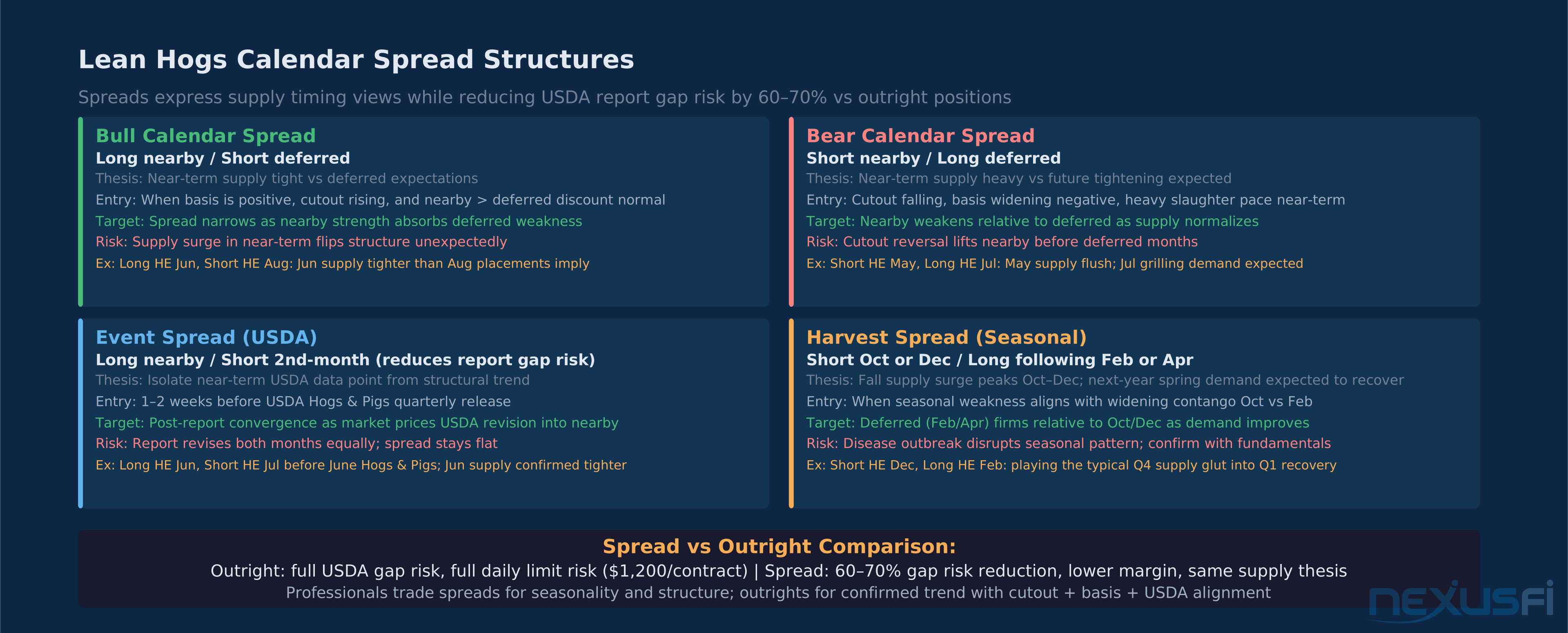
The four main spread structures:
Bull calendar spread (Long nearby / Short deferred): Use when near-term supply is tighter than the market is pricing into deferred contracts. The classic setup: positive basis, cutout rising, weekly slaughter running below year-ago pace, but the deferred month (Aug, Oct) is not yet reflecting the near-term tightness. You are long the contract that will reprice first and short the one that should follow later. As the @tigertrader described the principle directly — when near-term supply is tight and the curve hasn't fully priced in the backwardation, the bull spread captures the repricing with reduced event risk. NexusFi members who actively trade HE inter-contract spreads have noted this dynamic firsthand:
Bear calendar spread (Short nearby / Long deferred): Mirror structure. Near-term supply is heavy (high slaughter pace, rising carcass weights), cutout falling, basis weakening. Short the front month bearing the brunt of supply pressure, long the deferred month that should recover after the supply flush clears.
USDA event spread: In the 1--2 weeks before a quarterly Hogs and Pigs report, a specific spread strategy involves positioning the nearby month against the second month to capture the report-driven repricing while limiting full event exposure. If you expect the report to be bullish (placements light), you long the front/second month and short the third month — the front will move most on a bullish report, but your short in the third month provides offset if the move is larger than expected.
Harvest spread (Seasonal): The classic HE seasonal spread involves shorting Oct/Dec versus Feb/Apr of the following year — expressing the view that Q4 supply pressure weighs on nearby months while next year's contracts eventually recover. The structural seasonal trade in HE is the Oct/Feb or Dec/Apr spread, expressing the well-documented Q4 supply glut into Q1 tightening. Experienced HE spread traders emphasize validating the seasonal setup against current fundamentals before entering:
Options Overlay for Event Risk
HE options (CME Group) provide defined-risk positioning around USDA reports — our Futures Options Trading guide covers the complete strategy framework, and Straddles and Strangles specifically addresses the long-volatility report-day setups., with implied volatility ranging 18--30% annually. The most practical structures: a bull call spread or bear put spread for directional USDA bets with capped risk, and a straddle or strangle when you expect a large report-driven move but can't call direction. On straddles, watch for volatility crush after the report — even a large move can produce a loss if IV collapses fast enough.
Risk Management for Lean Hogs Traders #
Risk management in HE is more demanding than most liquid futures markets because of three compounding risks: biological event risk (disease outbreaks), scheduled fundamental event risk (USDA reports), and geopolitical risk (export demand changes). Any of these can produce limit-locked sessions.
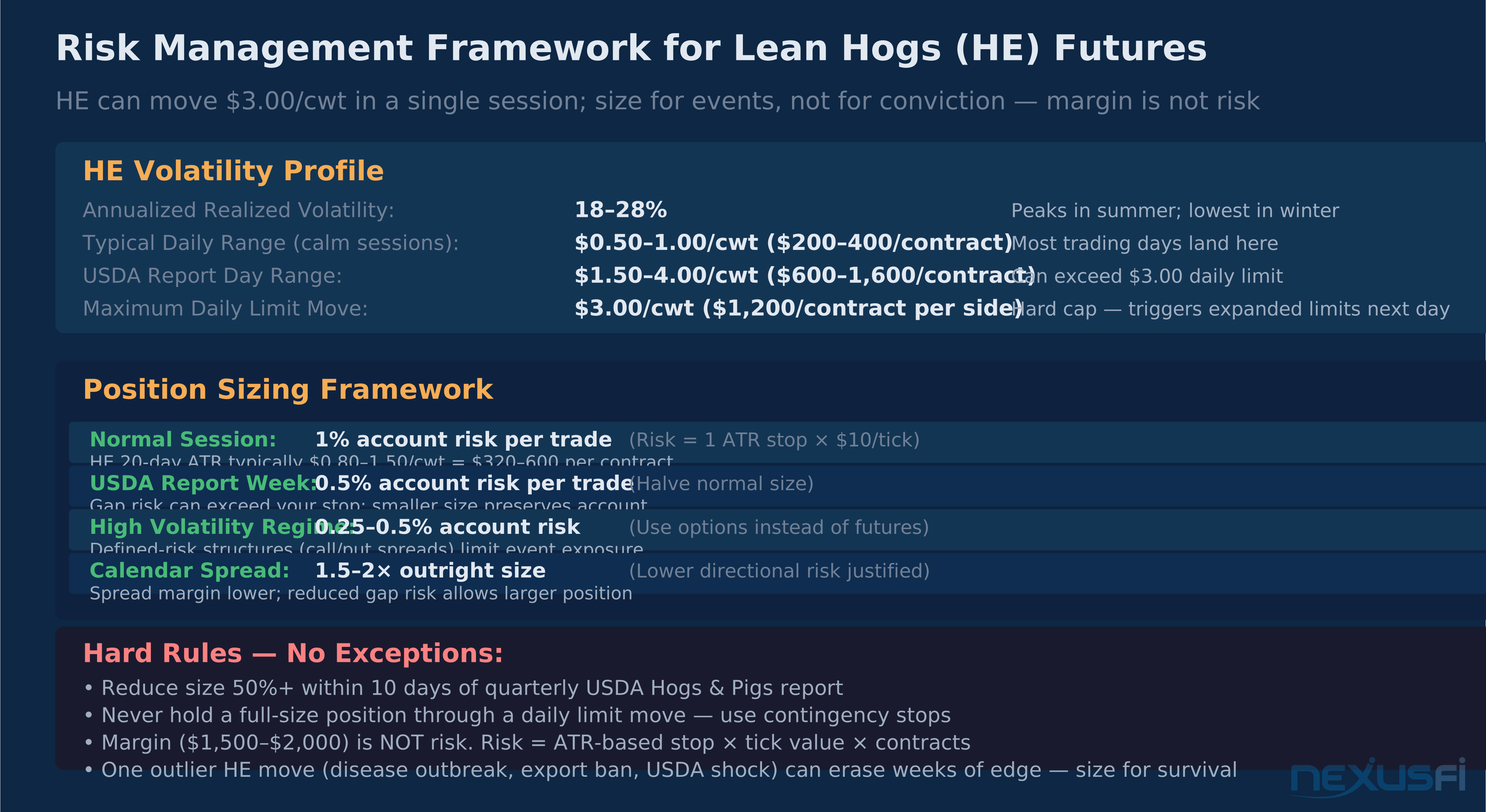
Position sizing: The fundamental error most retail traders make in HE is treating the low margin requirement ($1,500--$2,000) as an indicator of how much risk they're taking. Our Position Sizing for Futures Trading guide covers the complete formula for sizing positions correctly using ATR-based methods rather than margin. Margin is not risk. For normal sessions, risk should be sized to 1% of account equity per trade, using ATR-based stops. The HE 20-day ATR typically runs $0.80--1.50/cwt ($320--$600 per contract) in calm markets. This means a 1% risk budget on a $100,000 account supports approximately 2--3 contracts.
USDA report protocol: Within 10 calendar days of any quarterly Hogs and Pigs report, reduce position size by 50% minimum. Pairing this with Daily Loss Limits and Account Preservation ensures you never exceed your session risk budget even if a report-driven move hits before you can exit. This is not optional. The report can reprice the entire HE curve in a single session, with moves routinely exceeding the daily limit in the minutes after release. Consider using options with defined risk during these windows instead of outright futures.
Disease outbreak risk: Porcine Epidemic Diarrhea virus (PEDv), Porcine Reproductive and Respiratory Syndrome (PRRS), and African Swine Fever are the major biological risks that can suddenly tighten supply and produce gap-up moves of $3--5/cwt within days. There is no way to predict these events; sizing conservatively at all times is the only defense. Keep overall HE portfolio exposure below 5% of total trading capital.
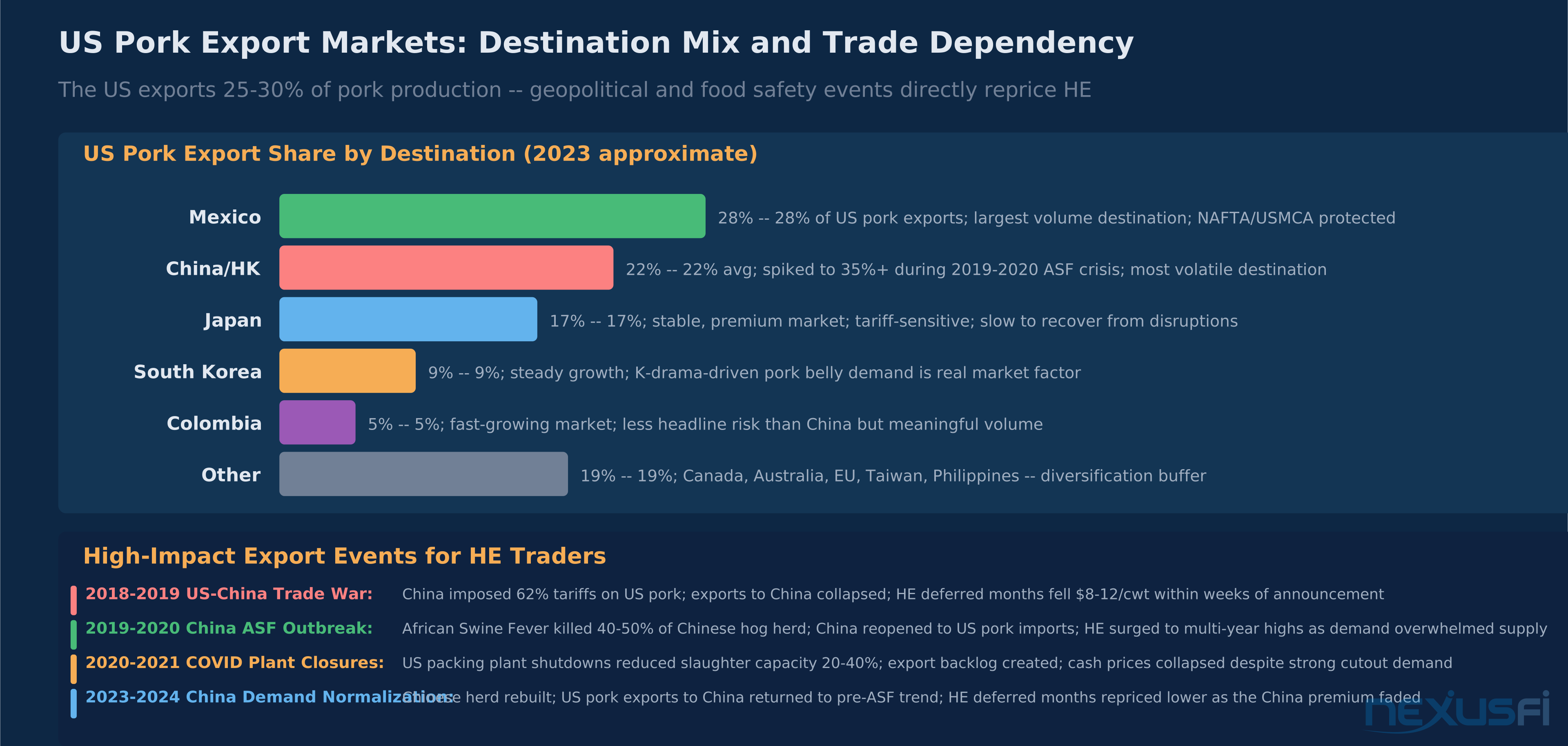
Export demand risk: The U.S. exports 25--30% of pork production annually to China, Mexico, Japan, and South Korea. Tariff announcements or food safety scares can abruptly redirect this demand. The 2018--2020 African Swine Fever outbreak (which killed 40--50% of China's hog herd) created one of the most sustained HE bull moves in history; conversely, trade war tariff announcements have triggered sharp selloffs in deferred months within hours of announcement.
The Pre-Trade Framework #
Running a structured checklist before every HE trade filters out the majority of losing setups before entry. Professional traders who have traded HE for years consistently say that their edge comes not from superior analysis in the moment, but from having a structured process that prevents them from trading when conditions are unfavorable.
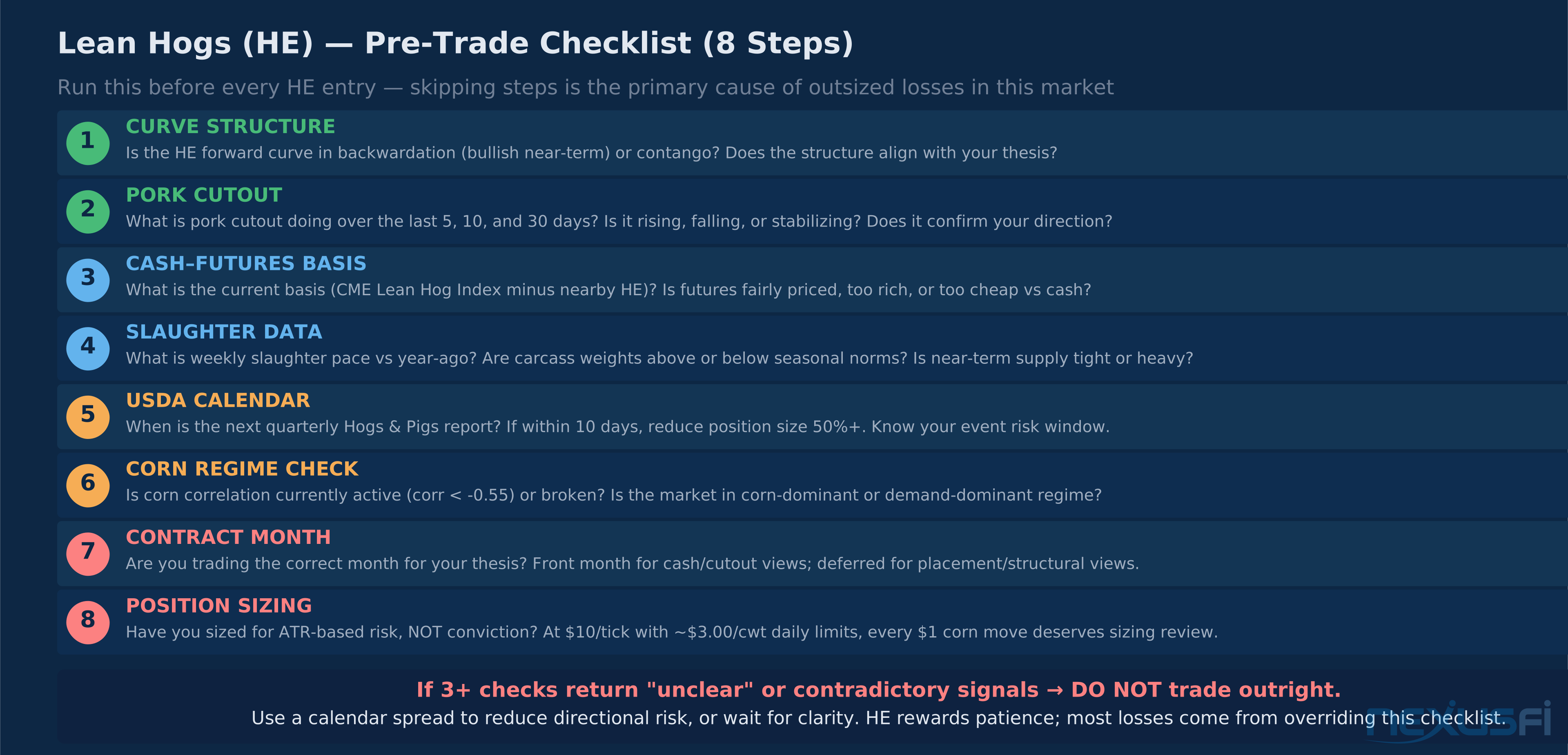
The eight steps:
- Curve structure: Is the forward curve in backwardation (nearby premium -- bullish near-term) or contango (nearby discount -- bearish near-term)? The curve shape should align with your directional thesis.
- Pork cutout check: What has cutout done over the last 5, 10, and 30 days? Is momentum accelerating, decelerating, or neutral?
- Cash-futures basis: Where is the CME Lean Hog Index versus nearby futures? Is the basis confirming or contradicting your direction?
- Slaughter data: What was the most recent weekly slaughter figure versus year-ago? What direction are carcass weights trending?
- USDA calendar: When is the next quarterly Hogs and Pigs report? If within 10 days, reduce size 50%+. Know your event risk window for any current positions.
- Corn regime check: What is the 20-day rolling correlation between ZC and HE right now? Is the market in a corn-dominant or demand-dominant regime?
- Contract month: Are you trading the right month for your thesis? Cash/cutout views belong in the front month. Placement/structural views belong in the deferred months that will physically reflect those placements.
- Position sizing: Have you sized using ATR-based risk, not margin? Is your total HE exposure within your portfolio risk limits?
If 3 or more of these 8 checks return unclear or contradictory signals, the right trade is either a calendar spread (lower directional risk) or no trade at all. The market will give you clearer opportunities after the next fundamental update.
Knowledge Map
Prerequisites
Understand these firstGo Deeper
Build on this knowledgeReferences This Article
Articles that build on this topicCitations
- — Diversified Option Selling Portfolio (2017) 👍 5“In the meat markets, the individual futures for different months trade more or less independently from each other. In comparison, futures for different months in the metal markets trade more or less synchronized. The reason is that it is more difficult to store meat than to store metals.”
- — Seasonal Trades (2021) 👍 2“I generally like bear spreading the hogs in summer and fall. This trade is a classical seasonal trade. The reason is that it fails in some years -- in years dominated by special effects, e.g. illnesses of hogs or COVID 19. But these years are easy to identify.”
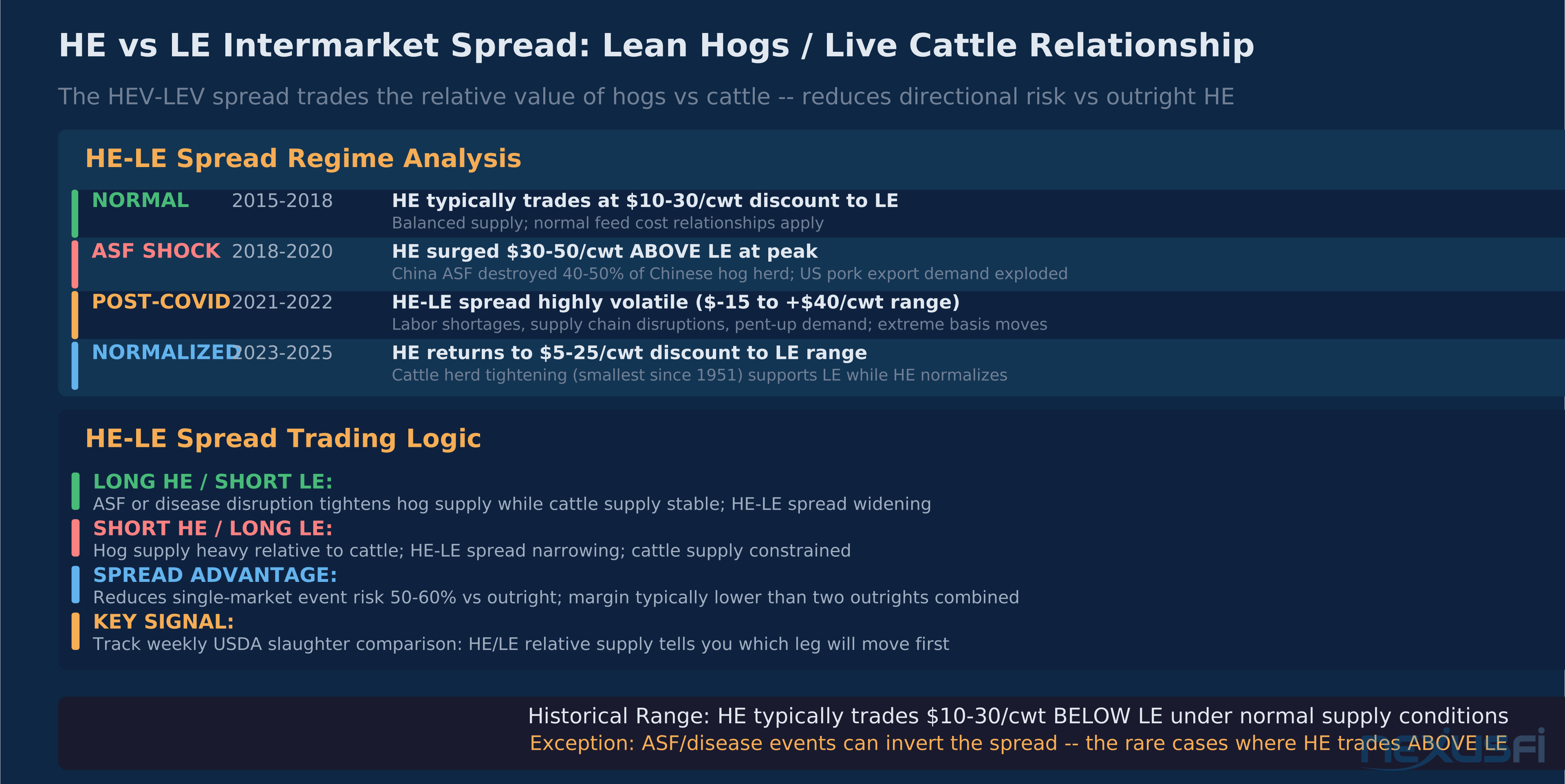
- — Meats (2019) 👍 2“I am long hogs via the HEV-LEV spread. In my opinion, live cattle are overpriced, and the effect of a deal will be much larger for HE than for LE. Thus, the risk of the spread to me seems to be smaller than for outrights.”
- — Meats (2021) 👍 1“Inventories of lean hog are low at the moment but I do feel like we are seeing the top. The spread between live cattle and lean hogs is getting a bit too wide. Grains also seem to be coming down, which should point towards hogs prices coming down too since they are correlated.”
- — Lean Hog Futures Contract Specifications (2024)
- — National Daily Direct Hog Prior Day Report (2024)
- — Hogs and Pigs Report (2024)
- — National Weekly Pork Summary (2024)
- — Understanding Lean Hog Futures Settlement and the CME Lean Hog Index (2023)
- — Livestock, Dairy, and Poultry Outlook (2024)
- — US Pork Exports by Destination (2024)