



Wheat Futures (ZW): The Complete Trading Guide
Subtitle: How to trade CBOT wheat futures — contract specs, seasonal patterns, USDA reports, spread strategies, and the critical ZW vs KC HRW distinction
Overview #
In February 2022, wheat traders who were short ZW watched their accounts evaporate as the contract ripped from $7.50 to over $12 in three weeks — a 60% move triggered by Russia's invasion of Ukraine. That single event reminded the market what wheat has always been: a geopolitically exposed, weather-sensitive contract capable of limit moves on a single headline. The CBOT Wheat contract (ZW) prices physical delivery of 5,000 bushels of U.S. No. 2 Soft Red Winter wheat — the benchmark global wheat traders watch more than any other.
What makes wheat different from other grains is its global complexity. While corn and soybeans are heavily U.S.-centric, wheat production and trade spans six continents. Russia, Ukraine, the EU, Australia, Canada, and Argentina all compete with U.S. exports, which means a drought in Kansas or a missile strike near Odessa can both move ZW in the same session. As @mattz explains about grain trading fundamentals: "When it comes to grains you have to follow the USDA reports as for the supply and demand, learn how weather affects the prices and follow the COT reports. Seasonality in physical commodities is a big factor" ([source] [1]).
There's another layer of complexity most traders miss: wheat isn't one market. CBOT Wheat (ZW) trades Soft Red Winter. KC HRW (KE) trades Hard Red Winter. Minneapolis (MWE) trades Hard Red Spring. Each class has different growing regions, different end uses, and different price drivers. The spread between these classes is itself a major trading vehicle.
This guide covers what you need to trade wheat futures: contract specifications, fundamental drivers, USDA report mechanics, seasonal windows, spread strategies, and the risk management discipline required for a market that can hit limit moves on a single weather headline.
Key Specifications #
Contract Family #
| Contract | Symbol | Size | Tick Size | Tick Value | Exchange |
|---|---|---|---|---|---|
| Wheat Futures | ZW | 5,000 bushels | $0.0025/bu (1/4 cent) | $12.50 | CBOT/CME |
| Mini Wheat | XW | 1,000 bushels | $0.00125/bu (1/8 cent) | $1.25 | CBOT/CME |
At $5.50/bushel, one ZW contract has a notional value of $27,500 — full contract specifications including tick increments and delivery terms are published by CME Group ([source] [8]). Initial margin runs approximately $1,800-$3,000 depending on the volatility regime — that's roughly 9-15:1 leverage. A 20-cent adverse move costs $1,000 per contract. A limit move can wipe out half your margin in a single session.
One cent per bushel equals $50 per contract. The minimum tick of 1/4 cent equals $12.50. These are the same specifications as corn (ZC) and soybeans (ZS), which makes cross-commodity spread calculations straightforward. For the complete corn contract walkthrough, see the Corn Futures (ZC) trading guide.
Trading Hours #
ZW futures trade on CME Globex nearly 22 hours per day, Sunday through Friday:
- Globex: 7:00 PM - 7:45 AM CT and 8:30 AM - 1:20 PM CT
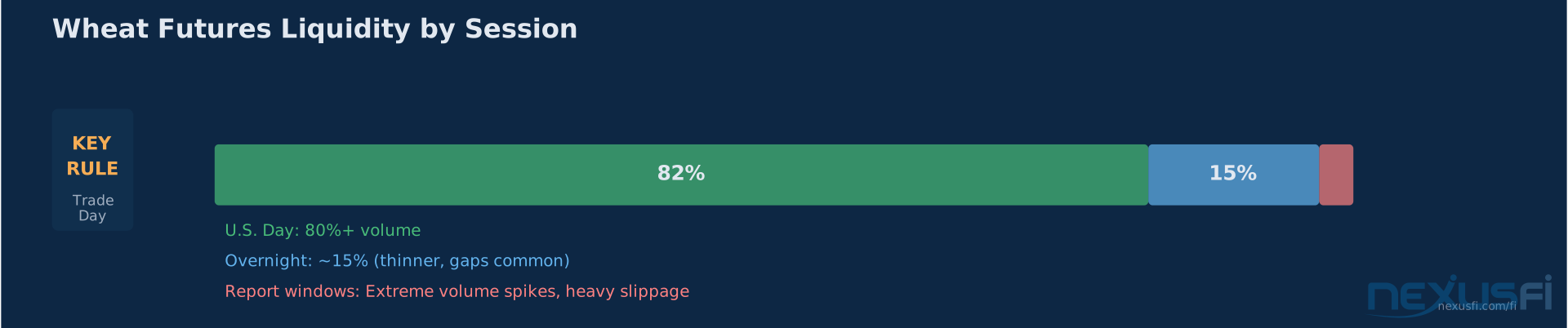
- Peak liquidity: 8:30 AM - 1:20 PM CT (U.S. cash market session handles 80%+ of daily volume)
- USDA report releases: Typically 12:00 PM ET (noon) for WASDE and Crop Production reports
Overnight sessions are materially thinner. Gaps of 10-20 cents between the afternoon close and overnight trade are common during weather events or Black Sea geopolitical headlines. Position overnight only if you've sized for gap risk.
Contract Months and Delivery #
Wheat lists contracts for March (H), May (K), July (N), September (U), and December (Z) — five delivery months aligned with the agricultural cycle.
Each month carries distinct risk characteristics:
- March: Winter wheat exits dormancy. Freeze damage and soil moisture concerns dominate. Position adjustment from year-end flows.
- May: Pre-harvest risk. Crop condition reports start mattering. Spring wheat planting adds volatility.
- July: Peak weather sensitivity. The most volatile month. U.S. harvest begins in the Southern Plains.
- September: Post-harvest supply confirmation. Quality data arrives. Export demand picks up.
- December: Winter wheat establishment. Global trade flows dominate. Carry structure pricing for the year ahead.
July and December are the most liquid months. July carries the weather premium — it's where short-term traders concentrate. December is the year-end benchmark that long-term hedgers and fund managers anchor to.

What Moves Wheat Prices #
The Fundamental Hierarchy #
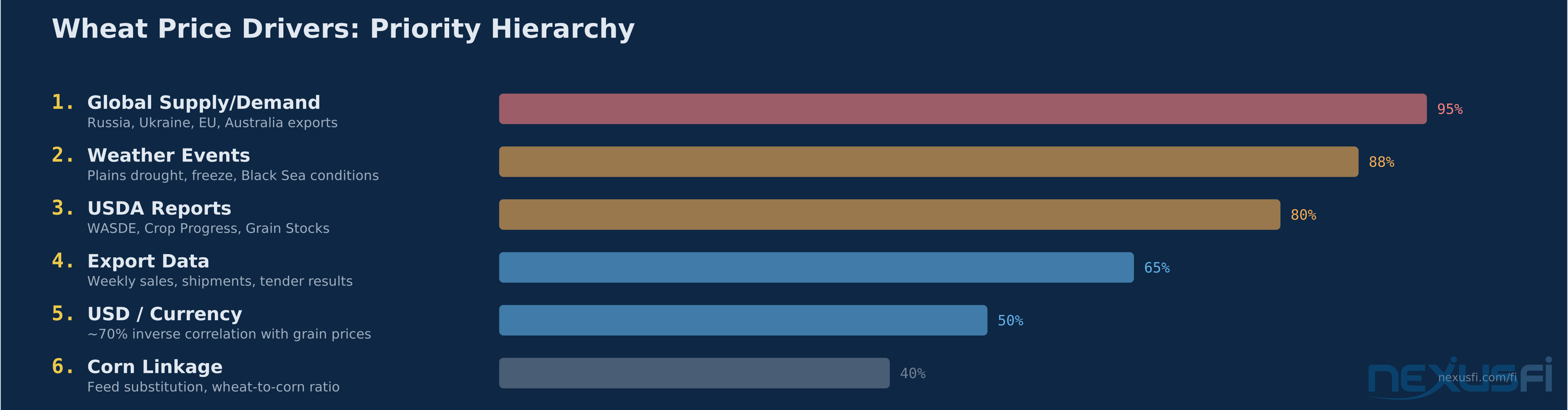
Not all drivers are created equal. Most retail traders fixate on items 3-6 below while professionals build their entire thesis around items 1-2. Here's the priority ranking based on actual price impact:
1. Global Supply and Demand Balance
Wheat is the most globally traded grain. U.S. prices don't exist in isolation — they compete with production from every major wheat-exporting region.
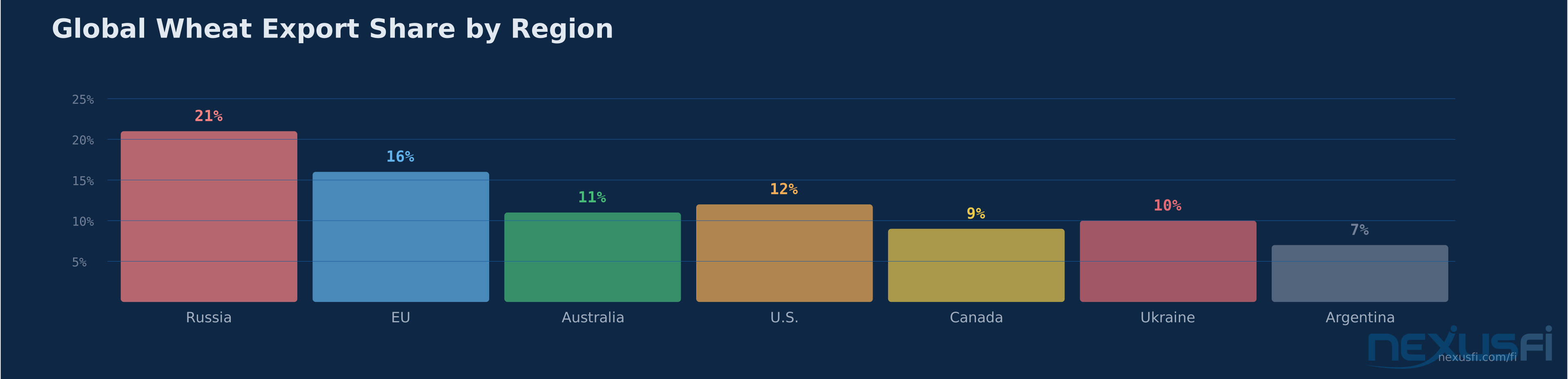
The key exporting regions and their market significance:
| Region | Share of Global Exports | What to Watch |
|---|---|---|
| Russia | ~20-22% | Export taxes, shipping logistics, weather in Krasnodar/Stavropol |
| EU | ~15-18% | French soft wheat yields, German feed wheat, rainfall timing |
| Ukraine | ~8-12% | Geopolitical disruption, Black Sea shipping, planting conditions |
| Australia | ~10-12% | El Nino/La Nina cycle, harvest quality, Asian demand |
| Canada | ~8-10% | Spring wheat conditions, rail logistics, protein premiums |
| U.S. | ~10-14% | Competitive pricing, dollar strength, Plains crop conditions |
| Argentina | ~6-8% | Austral season timing, peso dynamics, export restrictions |
When Russia restricts exports or a Black Sea conflict disrupts shipping lanes, wheat rallies fast and hard. The 2022 Russia-Ukraine war proved this definitively — ZW spiked from the $7 range to over $12 in weeks.
2. Weather
Weather is the primary short-term volatility trigger for wheat. The market's sensitivity to weather varies by season:
- Plains drought (Texas, Oklahoma, Kansas, Nebraska): Hits Hard Red Winter wheat hardest but drags ZW along
- Freeze damage: Late spring freezes during heading can permanently reduce yields
- Heat stress during grain fill: The 10-14 day window when kernels form is the single most yield-sensitive period
- Excessive rain at harvest: Reduces test weight and quality, can cause sprouting
- Black Sea weather: Russian and Ukrainian crop conditions directly affect U.S. export competitiveness
Weather drives the most explosive moves and the most limit days. The problem: weather forecasts change constantly, and the market prices the forecast, not the current conditions.
3. USDA Reports
USDA reports are scheduled binary events that dominate the trading calendar. They create the widest ranges and the most slippage of any regular market event.
4. Export Data
Wheat is heavily export-dependent. Weekly export sales and shipments provide the demand pulse check that confirms or contradicts the USDA's balance sheet assumptions.
Strong weekly sales are supportive. Cancellations are bearish. Major tender results from importers like Egypt (the world's largest wheat buyer), the Philippines, and Indonesia can move the market intraday.
5. Currency (USD)
The U.S. dollar has an approximate 70% inverse correlation with grain prices. A strong dollar makes U.S. wheat more expensive for foreign buyers, hurting export competitiveness. A weak dollar does the opposite. Watch the DXY — when it's above 105, U.S. wheat exports face headwinds.
6. Corn Linkage
Wheat competes with corn in feed rations. When wheat prices fall low enough relative to corn, livestock feeders substitute wheat for corn, creating a price floor. The wheat-to-corn ratio is one of the most important cross-commodity relationships in grains — more on this in the spread trading section.
The Balance Sheet: Stocks-to-Use #
The single most important number for directional wheat traders is ending stocks as a percentage of total use (stocks-to-use ratio). For deeper context on how supply data drives commodity pricing, see the Fundamental Data for Commodity Futures guide.
- Below 25%: Tight. Prices tend to be elevated and volatile. Weather scares get amplified.
- 25-35%: Balanced. Normal price behavior. Fundamentals and technicals share influence.
- Above 35%: Comfortable. Prices tend to be suppressed. Rallies get sold.
Every USDA revision to ending stocks shifts this ratio and reprices the curve. The WASDE report's ending stocks estimate is what professional grain traders watch most closely.
USDA Reports: The Calendar That Runs This Market #
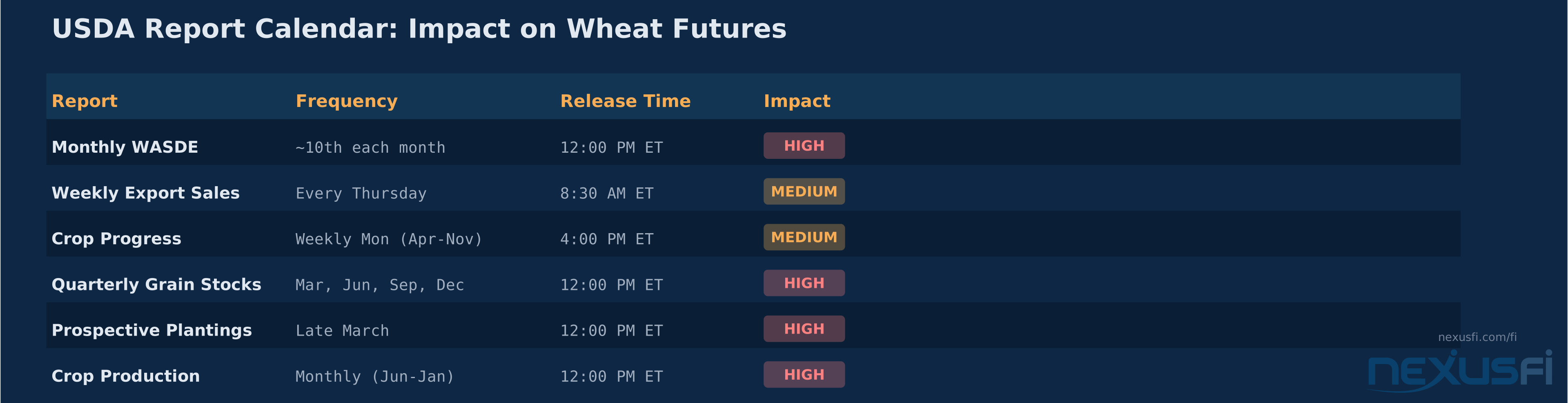
Wheat traders live and die by the USDA report calendar. Here are the reports that matter most:
Monthly WASDE (World Agricultural Supply and Demand Estimates) #
Released around the 10th-12th of each month at 12:00 PM ET — the full report and historical archive are published by USDA's Office of the Chief Economist ([source] [9]). This is the biggest scheduled mover. Focus on:
- U.S. ending stocks (the number that reprices the curve)
- Global production revisions (especially Russia, EU, Australia)
- Export estimate changes
- Feed use adjustments
Expect 15-40 cent ranges on WASDE day when numbers surprise. Position sizing on report days should be half your normal size or less.
Weekly Export Sales (Thursday, 8:30 AM ET) #
Tracks U.S. wheat export commitments and shipments. The market watches whether the pace is running ahead of or behind the USDA's annual projection. Three consecutive weeks of strong sales above the weekly pace creates bullish momentum. Cancellations create immediate downside pressure.
Crop Progress and Conditions (Monday, 4:00 PM ET, April through November) #
The weekly condition ratings for winter wheat are expressed as percentage in each condition category (Very Poor, Poor, Fair, Good, Excellent). Traders collapse this into a single Good/Excellent percentage and compare it to the 5-year average and the prior week. A 3+ percentage point decline in a single week creates buying interest. Sustained deterioration through April-May builds significant weather premium into the July contract.
Quarterly Grain Stocks (March, June, September, December) #
Can surprise the market by revealing whether old-crop disappearance is running faster or slower than the balance sheet implied. The June stocks report is historically the most volatile of the four.
Prospective Plantings (Late March) #
Sets the market's expectation for how many acres farmers will plant. Wheat competes with corn and soybeans for acreage — a shift of 2-3 million acres in any direction meaningfully changes the supply outlook for the entire crop year.
([source] [2]). Crop insurance levels provide a fundamental floor reference that few retail traders consider.
Seasonal Trading Patterns #
Wheat follows the biological clock of the winter wheat crop. These seasonal patterns provide a framework — not signals — for timing entries and managing risk.
The Seasonal Cycle #
| Period | Theme | Volatility | Bias |
|---|---|---|---|
| Jan-Feb | Dormancy exit, stocks data | Moderate | Neutral to bullish on tight stocks |
| Mar-Apr | Spring growth, freeze risk, acreage report | Rising | Bullish on crop stress |
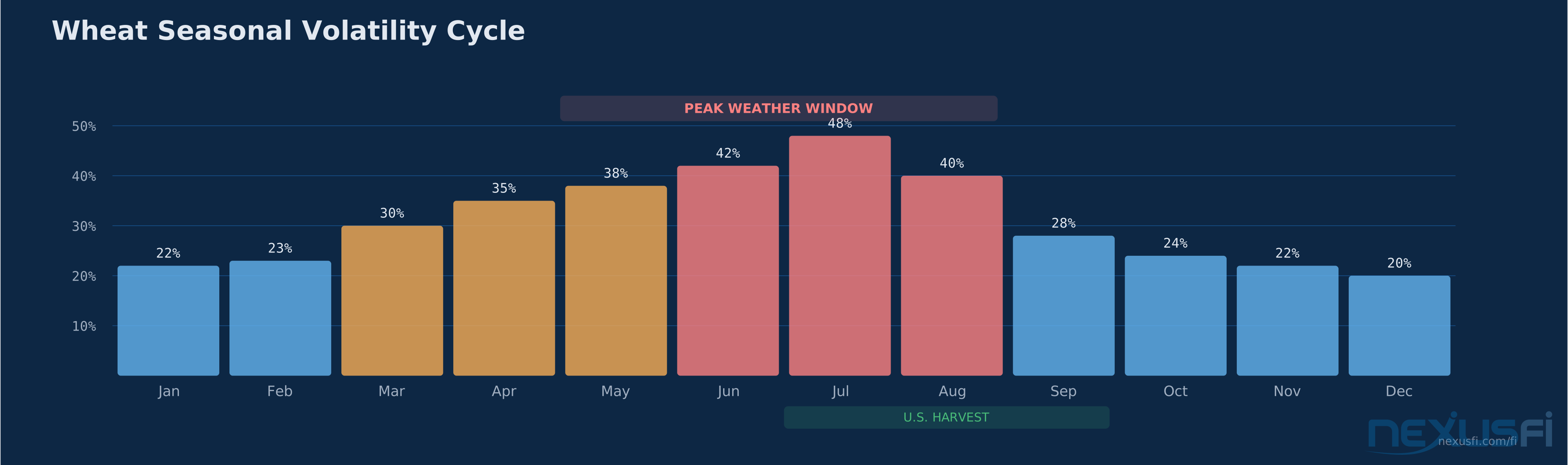
| May-Jun | Big move window: heat, drought, crop conditions | Highest | Weather-driven |
| Jul-Aug | U.S. harvest begins, yield confirmed | High then declining | Bearish pressure, but quality issues rally |
| Sep-Oct | Export season opens, Southern Hemisphere planting | Moderate | Export-dependent |
| Nov-Dec | Winter wheat establishment, global trade flows | Low to moderate | Range-bound absent shocks |
Key Seasonal Rules #
Spring into early summer is the money window. The March-June period produces the year's largest directional moves. Weather uncertainty, crop condition deterioration, and USDA report surprises all cluster here. This is when swing traders and position traders make their year in wheat.
Harvest pressure is real but not guaranteed. July and August typically see downward pressure as supply increases. But quality problems (low test weight, high vomitoxin, sprouting from rain) can reverse the seasonal tendency and produce rallies into September.
The autumn export window matters more than most traders realize. Once U.S. harvest quality is known, the market shifts to export competitiveness. U.S. wheat competes directly with Russian and EU wheat on price. If the dollar weakens and Russian export taxes tighten, U.S. wheat gets a bid that technicians won't see coming.
Seasonality combined with fundamentals beats seasonality alone. As @myrrdin demonstrated repeatedly in the NexusFi Grains and Beans thread, the best seasonal trades layer USDA balance sheet data, crop condition trends, and MRCI seasonal patterns on top of each other. A seasonal tendency that aligns with deteriorating crop conditions and tightening stocks has materially higher win rates than seasonal patterns traded in isolation.
CBOT Wheat (ZW) vs KC HRW Wheat (KE): The Critical Distinction #
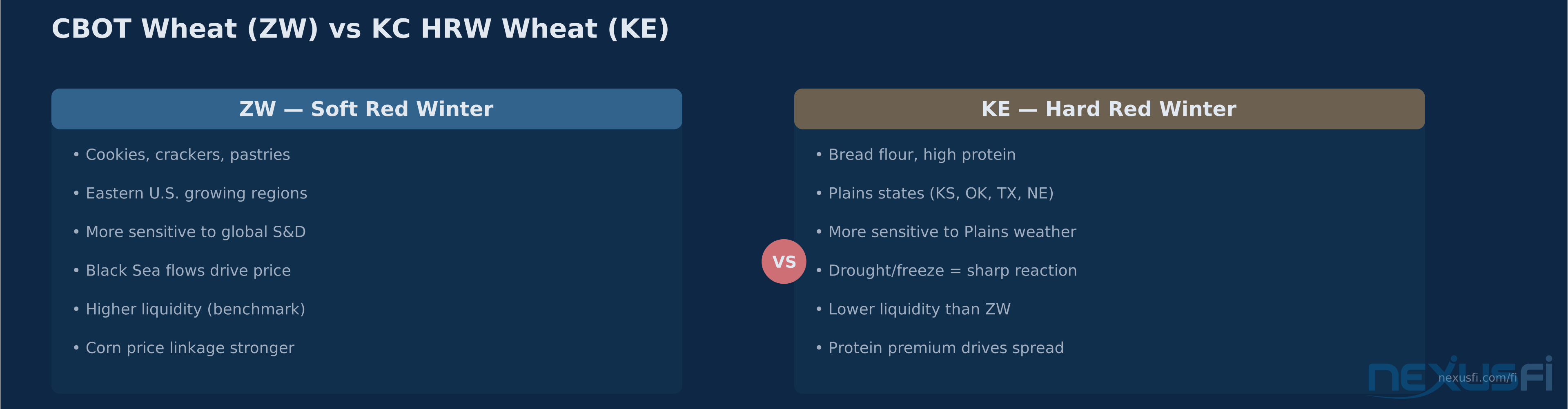
This is the concept most retail wheat traders miss entirely. ZW and KE are not interchangeable.
What's Different #
| Characteristic | ZW (CBOT Wheat) | KE (KC HRW Wheat) |
|---|---|---|
| Class | Soft Red Winter (SRW) | Hard Red Winter (HRW) |
| End use | Cookies, crackers, pastries, flat breads | Bread flour, high-protein applications |
| Growing region | Eastern U.S. (Illinois, Indiana, Ohio, Missouri) | Plains states (Kansas, Oklahoma, Texas, Nebraska) |
| Price sensitivity | Global S&D, Black Sea flows, corn linkage | Plains weather, protein premiums, drought |
| Typical premium | Usually trades at a discount to KE | Usually trades at a premium to ZW |
| Liquidity | Higher (benchmark contract) | Lower but adequate for institutional size |
Why This Matters for Trading #
When drought hits the Plains, KC HRW reacts more aggressively than CBOT wheat. The protein premium for hard wheat expands, and KE pulls away from ZW. Conversely, when global supply is the issue (Black Sea disruption, Australian drought), ZW often reacts faster because it's the more liquid benchmark.
The ZW-KE Spread #
The spread between CBOT wheat and KC HRW wheat is a core tool for grain spread traders:
- KC premium expanding: Plains crop deterioration, protein scarcity, HRW-specific demand
- KC premium contracting: Ample HRW supply, quality issues in SRW, global supply tightness favoring ZW
— illustrating how the KC-Chicago spread creates directional opportunities tied to class-specific fundamentals ([source] [3]).
Spread Trading Strategies #
Wheat is one of the best markets for spread trading. The cross-commodity relationships, calendar structures, and inter-class dynamics create opportunities that outright traders miss entirely.
Wheat-Corn Spread (ZW vs ZC) #
This is the most important cross-commodity spread in the grain complex.
The economics: Wheat and corn both serve as animal feed. When wheat becomes cheap enough relative to corn, livestock feeders substitute wheat into rations, creating a price floor for wheat.
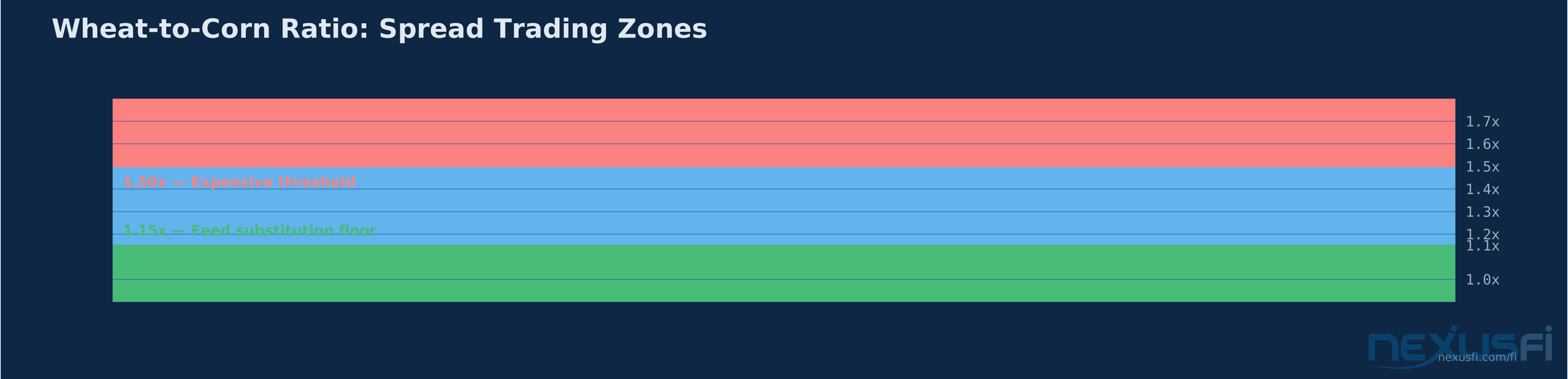
The ratio: The wheat-to-corn ratio typically ranges between 1.2:1 and 1.5:1 (wheat premium). When the ratio compresses below 1.15, wheat is historically cheap relative to corn — a buying opportunity for spread traders. When it expands above 1.6, wheat is expensive and vulnerable to reversion.
What drives the spread:
- Feed demand substitution
- Relative crop conditions (wheat stress vs corn stress)
- Export pace divergence
- USDA balance sheet revisions for each crop
- Ethanol policy changes (affects corn demand)
([source] [4]). The wheat-corn spread exemplifies this — its seasonal patterns are more reliable than either outright market.
Calendar Spreads #
The July/December spread (old crop vs new crop) is the primary calendar structure:
- July premium over December: Supply tightness. The market is paying to access wheat now rather than waiting for the new crop.
- July discount to December (normal carry): Adequate supply. Storage costs and interest rates define the spread — the classic contango structure. Carry of $0.15-$0.30/month is typical.
- Inverted market (nearby premium): Supply alarm. Tightening stocks force the nearby contract higher.
Calendar spreads isolate the carry/tightness dynamic from outright price moves. A trader can be bullish on the wheat balance sheet (tightening stocks) without taking a directional bet on the outright price level.
Wheat-Soybeans Spread (ZW vs ZS) #
Less direct than wheat-corn but useful for expressing broader grain complex views:
- Acreage competition in spring (farmers choose between wheat, corn, and soybeans based on relative profitability)
- Fund rotation between grain sub-sectors
- Protein vs carbohydrate demand dynamics
and recommended tools like SpreadCharts and MRCI for evaluating seasonal spread patterns ([source] [5]). @SMCJB expanded on spread execution in the same thread, highlighting the platform-specific pitfalls and liquidity differences that catch traders moving from outright to spread positions ([source] [7]).
Technical Analysis: What Works in Wheat #
Wheat is technically tradable, but the best wheat traders combine technicals with fundamentals. A clean breakout setup means nothing if the next USDA report is 48 hours away.
Regime First, Then Tools #
Step 1: Determine the current regime.
- Trending: Use moving averages and breakout confirmation. Wheat trends can be sharp during weather scares or geopolitical events.
- Ranging: Fade extremes near support and resistance with tight stops. Wheat often rotates around value areas between USDA reports.
Most Effective Technical Tools #
Moving Averages: The 20-day captures short-term momentum. The 50-day defines the intermediate trend. The 200-day provides the structural bias. When all three align, trend continuation trades have the highest win rate.
Volume Profile: Especially effective in wheat because the market spends long periods rotating around value areas, then reprices quickly after reports. Prior value area highs and lows act as magnets or barriers. Acceptance above a prior value area high is bullish confirmation; rejection is a short signal.
Prior Swing Highs and Lows on Weekly Charts: Wheat respects major structural levels. USDA report gaps create new reference points that persist for weeks or months.
ATR-Based Stops: Fixed tick stops don't work in wheat because volatility varies dramatically by season and regime. Use 1.5-2x ATR for swing trades. Current ATR tells you what the market considers "normal" movement — stops inside that range will get chopped.
Commitment of Traders (COT): Released Fridays at 3:30 PM ET with Tuesday data. Managed money net positioning at historical extremes is a reliable contrarian signal. When specs are massively net short and the balance sheet is tightening, the setup for a short-covering rally is compelling.
The Cardinal Rule #
Never trade a technical breakout in wheat without checking the USDA report calendar first. A breakout setup three days before WASDE is not a breakout setup — it's a coin flip. Either wait for the report to confirm the direction, or reduce position size to account for event risk.
Volume and Liquidity #
Liquidity Profile #
ZW is liquid, but liquidity is not uniform across the 22-hour trading day.
| Session | Typical Volume Share | Liquidity Quality |
|---|---|---|
| U.S. Day (8:30 AM - 1:20 PM CT) | ~80%+ | Tight spreads, deep book |
| Overnight (7:00 PM - 7:45 AM CT) | ~15-20% | Wider spreads, gaps common |
| USDA Report Windows | Spike | Extremely wide spreads, heavy slippage |
Front Month Dynamics #
Front month open interest in wheat typically runs 150,000-300,000 contracts. July and December carry the deepest liquidity. As contracts approach first notice day, open interest declines sharply and liquidity thins — roll your positions 2-3 weeks before first notice to avoid delivery-related complications.
Execution Discipline #
- Enter and exit during the U.S. day session whenever possible
- Avoid market orders on USDA report days — use limit orders and accept the possibility of missing fills
- When overnight news creates a gap, don't chase the open. Wait 15-30 minutes for the market to establish a value area
- In deferred months (September is the thinnest of the five), expect wider bid-ask spreads and adjust order placement so
Limit Up and Limit Down Rules #
Wheat futures are subject to CME daily price limits that restrict how far the market can move in a single session. These limits are variable and can change based on exchange policy and market conditions.
How Limits Work #
- Initial daily limits are typically $0.50-$0.70 per bushel from the previous settlement
- If the market hits limit, it can trade at the limit price but not beyond it
- After a limit day, expanded limits take effect (typically $1.05-$1.50)
- Multiple consecutive limit days are possible during extreme events
Why Traders Must Plan for Limits #
Limit days create specific risks:
- Trapped positions: You cannot exit at the limit price if there are no counterparties
- Overnight gap risk: After a limit-up day, the next session can gap higher still
- Stop-loss failure: Stops cannot execute beyond the limit, resulting in larger-than-planned losses
([source] [1]).
Expect 2-4 limit days per year in wheat, concentrated around major weather shocks and geopolitical events. The practical response: size positions so that a full limit move is survivable, and use options for event risk protection when carrying positions through binary events.
Historical Volatility Characteristics #
Wheat is one of the more volatile major agricultural contracts, with characteristics that differ meaningfully from equity index futures.
Volatility Profile #
- Annual average realized volatility: 25-35%
- Weather scare spikes: 50-70% during active crop stress
- Calm periods: 15-20% post-harvest with stable global supply
- Fat tails: Limit moves and report gaps create non-normal return distributions
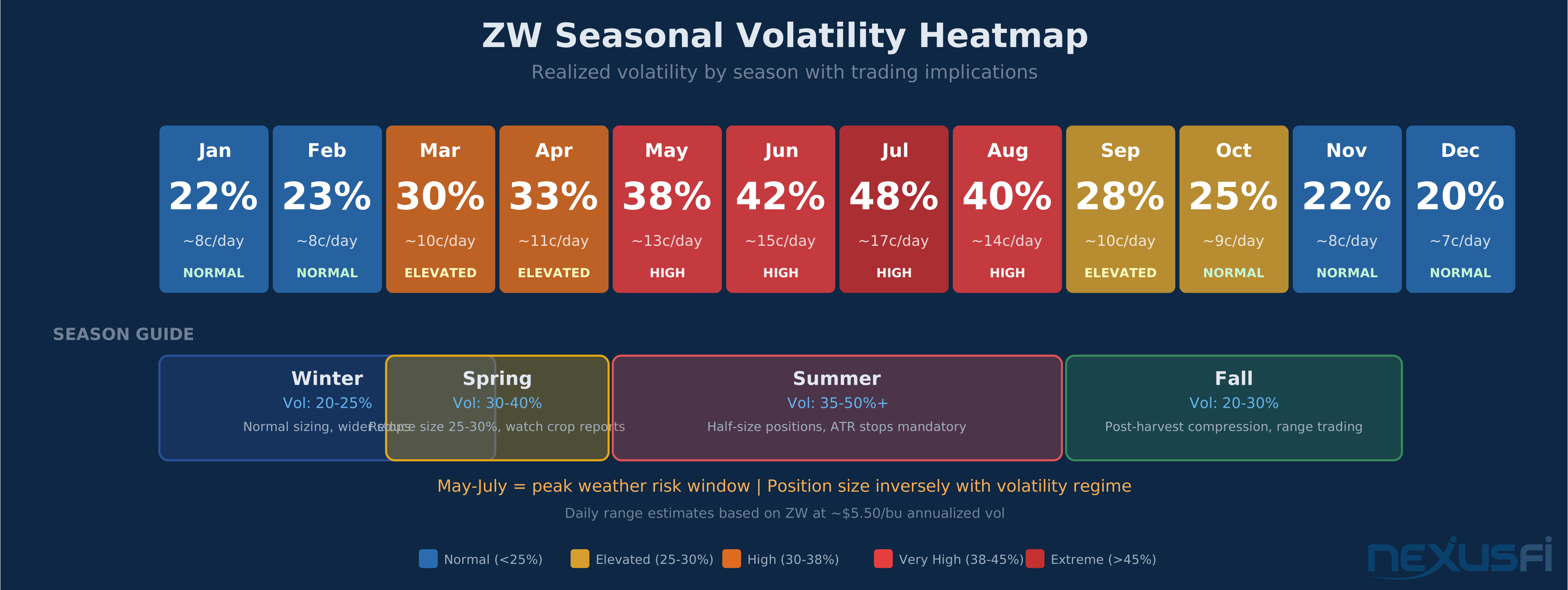
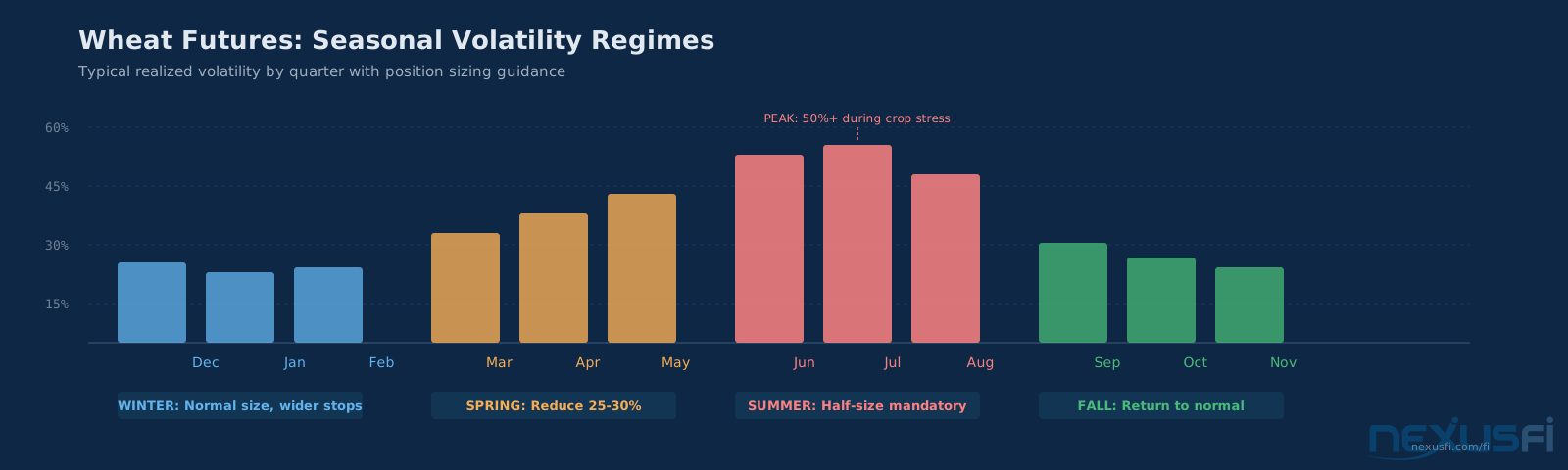
Volatility Regime by Season #
| Season | Typical Realized Vol | Driver |
|---|---|---|
| Winter (Dec-Feb) | 20-25% | Quiet unless geopolitical |
| Spring (Mar-May) | 30-40% | Weather premium building |
| Summer (Jun-Aug) | 35-50%+ | Peak crop stress, USDA data |
| Fall (Sep-Nov) | 20-30% | Post-harvest compression |
Position Sizing Implications #
The volatility regime should directly drive position size:
- Low vol (post-harvest): Normal position sizes, wider stops
- Rising vol (spring): Reduce size by 25-30%, maintain wider stops
- High vol (summer weather): Half-size positions, ATR-based stops mandatory
- Event days (USDA): Quarter-size or flat. The edge from report trading is thin and the variance is enormous.
Risk Management for Wheat Traders #
Position Sizing #
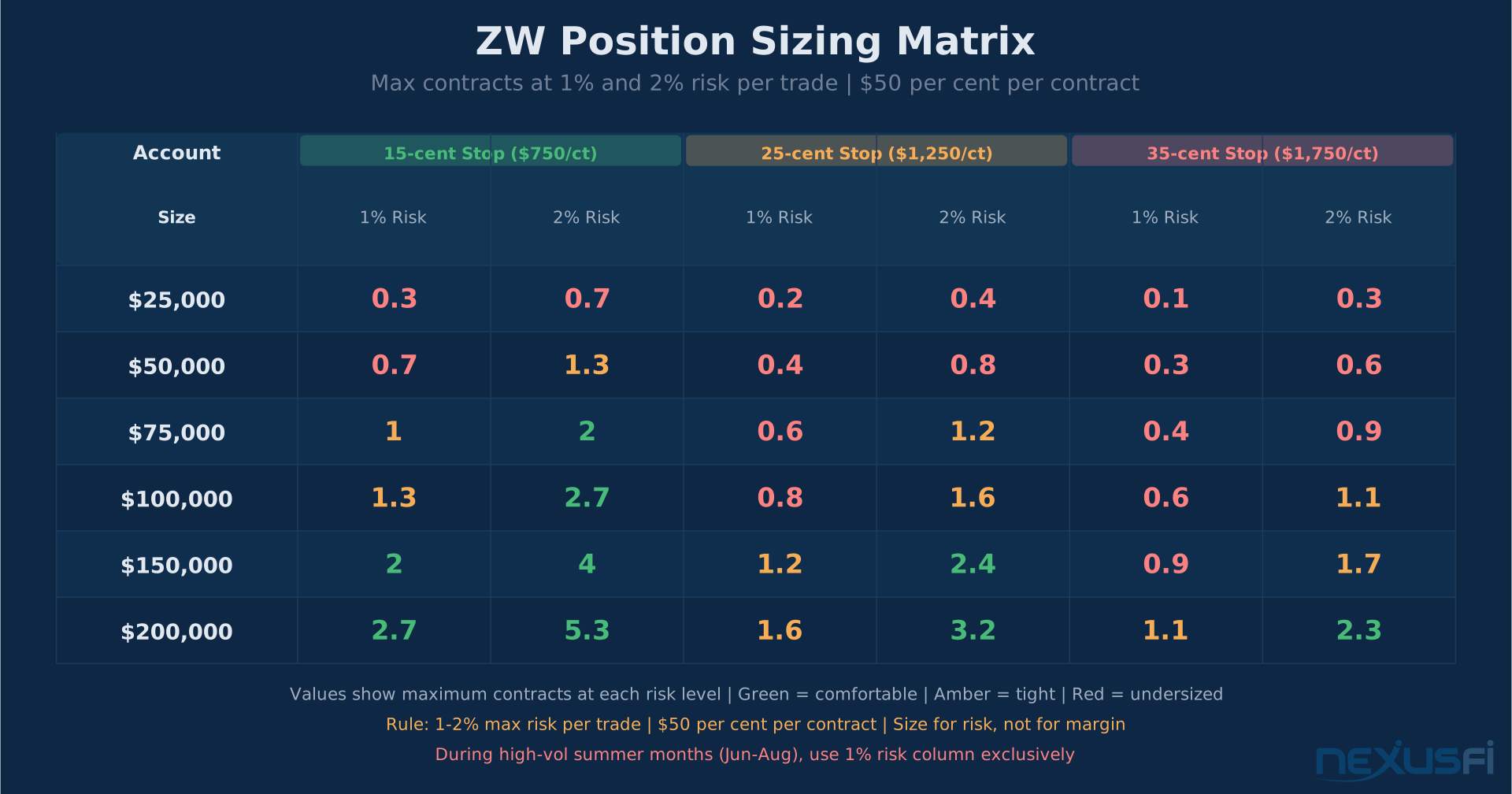
Risk 1-2% of account equity per trade maximum. At $50 per cent, a 15-cent stop costs $750 per contract. If your account is $50,000, that's 1.5% per contract — you can carry one ZW position with a 15-cent stop. Sizing up requires widening your stop threshold or accepting disproportionate risk.
Stop Placement #
- Swing trades: 15-25 cents beyond the entry, based on ATR and structural levels
- Day trades: 5-10 cents, aligned with session value area extremes
- Never place stops at obvious round numbers ($5.00, $5.50, etc.) — the market will hunt them
Options as Event Risk Insurance #
When carrying wheat positions through USDA reports or weather events, protective puts or calls cost far less than the potential adverse move. A 20-cent out-of-the-money put might cost 5-8 cents ($250-$400 per contract) and cap your downside through a report that could produce a 40-cent adverse move.
The Leverage Trap #
Margin is what the exchange requires — risk is what the market can do to you. Wheat margin requirements relative to notional value create 9-15:1 leverage. Most account blowups in grain futures come from traders sizing as if margin equals risk. Size for risk, not for margin.
Common Mistakes #
1. Treating wheat as a pure technical market. Wheat is at the core driven. Technicals provide entry timing, but ignoring the balance sheet, weather, and USDA calendar is how traders get run over.
2. Confusing ZW with KC HRW. They're different wheat classes with different drivers. A Plains drought is a KE story first, ZW second. Global supply disruption is a ZW story first, KE second.
3. Overleveraging into USDA reports. Report day is not the time to be max position. Reduce size, define risk, or sit out. The next trade will come.
4. Ignoring the wheat-corn spread. Wheat doesn't move in isolation. The relative value against corn provides context that pure wheat analysis misses.
5. Using tight stops in a spike-prone market. Wheat's intraday range can exceed 20 cents on active days. A 5-cent stop in a 20-cent range will get stopped out on noise.
6. Underestimating overnight geopolitical risk. Black Sea headlines hit during European hours. If you're carrying positions, you're exposed to gaps. Size so.
7. Not monitoring crop insurance levels. The USDA crop insurance price provides a fundamental floor reference that institutional traders use and retail traders ignore. @Aufidius nailed this: understanding where insurance kicks in helps identify value zones that the market respects ([source] [2]).
Putting It Together: The Wheat Trading Workflow #
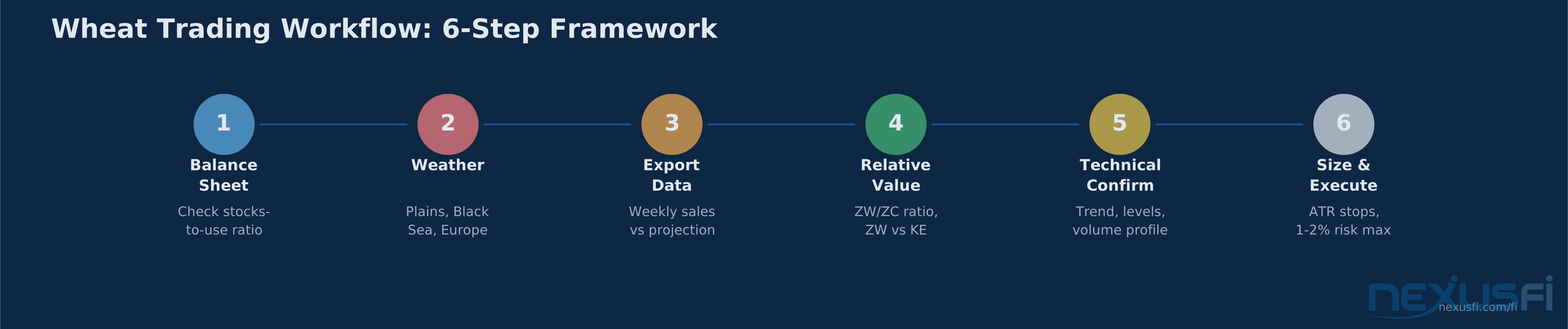
Step 1 — Read the balance sheet. Check U.S. and global ending stocks, the stocks-to-use ratio, and the direction of recent USDA revisions. Bullish or bearish?
Step 2 — Check weather. U.S. Plains, Black Sea, Europe, Australia. Is weather adding or removing risk premium?
Step 3 — Review export data. Weekly sales pace vs USDA projection. Strong, weak, or neutral?
Step 4 — Evaluate relative value. Wheat-to-corn ratio. ZW vs KE spread. U.S. competitiveness vs global FOB prices.
Step 5 — Apply technical confirmation. Trend structure, key support/resistance, volume profile acceptance or rejection. Does the technical setup align with the fundamental thesis?
Step 6 — Size and execute. ATR-based stops. 1-2% risk maximum. Execute during peak liquidity hours. Account for the next USDA event on the calendar.
Wheat rewards the prepared trader and punishes the lazy one. The markets that move most on fundamentals are the markets where homework pays off most directly. Do the work.
Knowledge Map
Prerequisites
Understand these firstGo Deeper
Build on this knowledgeReferences This Article
Articles that build on this topicCitations
- — Grains Trading (2010) 👍 9“USDA reports, weather, COT, and seasonality fundamentals for grains”
- — Elite Commodities Analysis (2016) 👍 12“Wheat value analysis using crop insurance as fundamental floor”
- — Grains & Beans (2019) 👍 2“KWZ-WZ spread analysis and class-based wheat trading”
- — Spread / Pairs Trading - the allure and the reality (2013) 👍 13“Agricultural spreads trend more smoothly than outrights”
- — Futures spread trading grains education sources? (2024) 👍 2“Spread trading education resources and WASDE monitoring”
- — Grains & Beans (2021) 👍 2“Grains seasonal spread patterns and MRCI analysis”
- — Futures spread trading grains education sources? (2024) 👍 4“Commodity futures spread trading pitfalls and platforms”