



Live Cattle (LE) Futures
Subtitle: Contract mechanics, seasonal dynamics, USDA report playbook, and risk management for the cattle complex
Overview #
Live Cattle futures (LE) aren't crude oil with hooves. That's the first thing to get straight. This is a thin, at the core-driven market where four or five major packers control 80%+ of fed cattle purchases, where individual contract months trade as independent markets rather than a linked curve, and where a single USDA report can gap the price through your stop before you can react. If you trade LE like you trade ES or CL, you will lose money.
That said — if you understand how this market works, it offers something most liquid markets can't: genuine fundamental edges that persist because most participants are hedgers, not speculators. The basis relationships, the cattle cycle signals, the seasonal patterns in deferred months — these create information asymmetries that technical traders in equities never see. The beef industry runs on predictable biology and well-reported government data. For a trader who reads the fundamentals correctly, LE is one of the most consistently tradeable commodity futures on the board.
[1]
Key Specifications #
Contract mechanics — what you're trading:
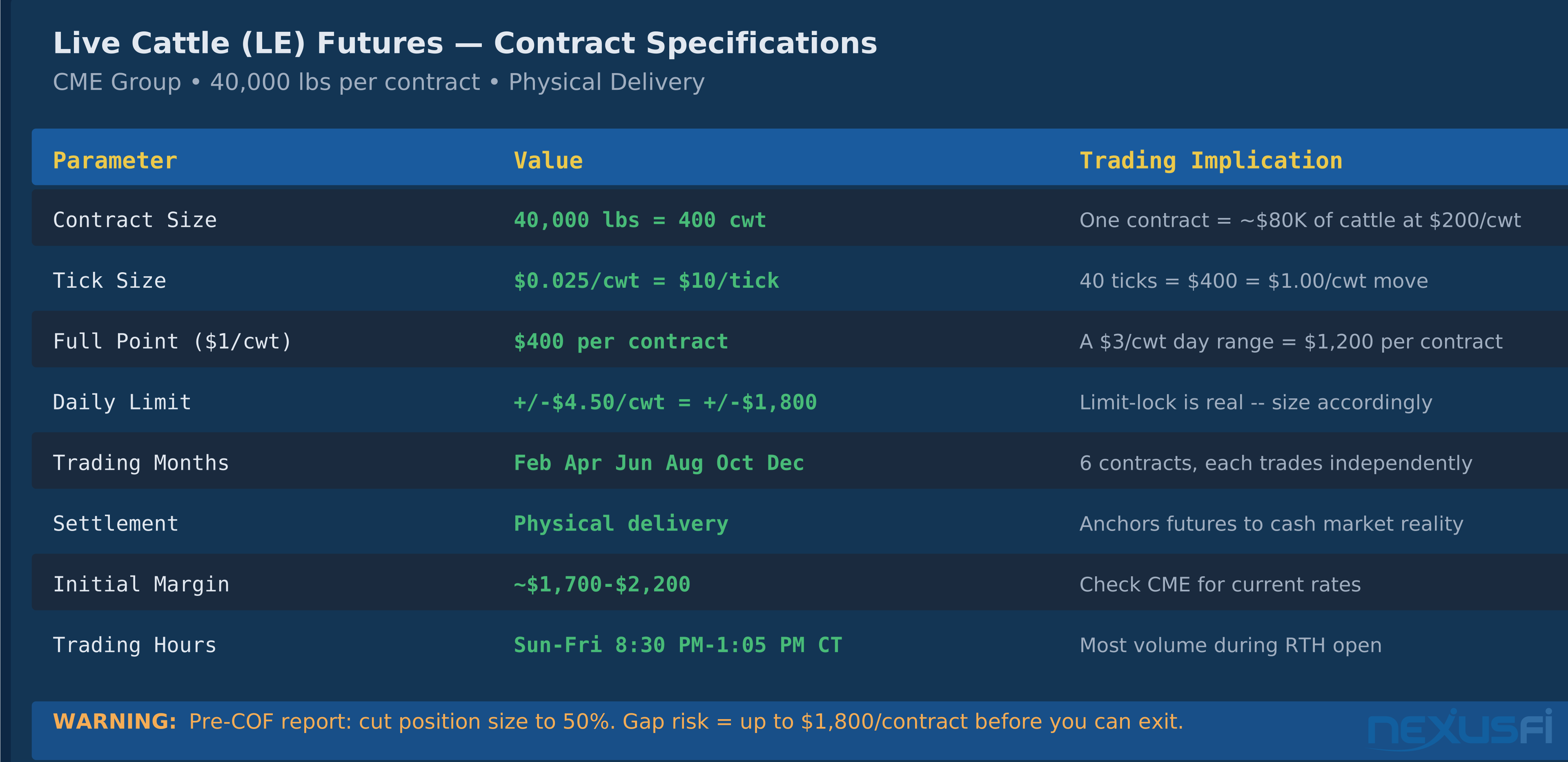
| Parameter | Value |
|---|---|
| Contract Size | 40,000 lbs = 400 cwt (hundredweight) |
| Quotation | Cents per pound (USD/cwt) |
| Tick Size | $0.025/cwt = $10 per tick |
| Full Point ($1.00/cwt) | $400 per contract |
| Daily Limit Move | ±$4.50/cwt = ±$1,800 per contract |
| Trading Months | Feb, Apr, Jun, Aug, Oct, Dec |
| Settlement | Physical delivery |
| Delivery Grade | USDA Choice/Select, Yield Grade 3 steers |
| Par Delivery Points | Omaha NE, Dodge City KS (plus other CME-approved locations) |
| Trading Hours | CME Globex: Sunday-Friday 8:30 PM - 1:05 PM CT |
| Initial Margin | ~$1,700-2,200/contract (check CME for current rates) |
At $200/cwt, one contract represents $80,000 of cattle value. A $1.00/cwt move is $400/contract. A typical intraday range of $2-3/cwt means $800-1,200 per contract. The $4.50/cwt daily limit represents $1,800 per contract — and unlike index futures where hitting a limit is extraordinary, LE hits limit moves regularly around USDA reports.
Physical delivery reality: Most LE traders close before delivery, but the physical mechanism anchors the entire market. Futures prices converge to cash because delivery is always available. This creates real relationships between futures prices, feedlot cash bids, and basis that don't exist in cash-settled financial contracts.
At $200/cwt, every 40 ticks = $1,000 per contract. Get comfortable with this math before your first trade. A $4.50 limit-day gap = $1,800 per contract, all before you can exit. Size so.
How It Works: The Biological and Market Mechanics #
Each Month Is Its Own Market #
This is the central organizing principle of LE trading, and it separates livestock futures from every other commodity complex.
[2]
In gold futures, the Dec contract and the Feb contract move in near-lockstep — same metal, different storage costs. In LE, the Oct contract and Dec contract can diverge by dollars because they represent different cohorts of cattle reaching market weight at different times, with different supply/demand conditions in each window.
The placement-to-contract lag is the core mechanic:
| Placement Month | Market-Ready Month (5-6 months later) | Primary Futures Affected |
|---|---|---|
| January | June-August | Jun/Aug LE |
| March | August-October | Aug/Oct LE |
| May | October-December | Oct/Dec LE |
| July | December-February | Dec/Feb LE |
When USDA placements come in above expectations, the specific future months where those cattle will hit — not the whole curve — get repriced. This is the most operationally important concept in all of LE trading.
The Cattle Cycle: Structural Bull and Bear Markets #
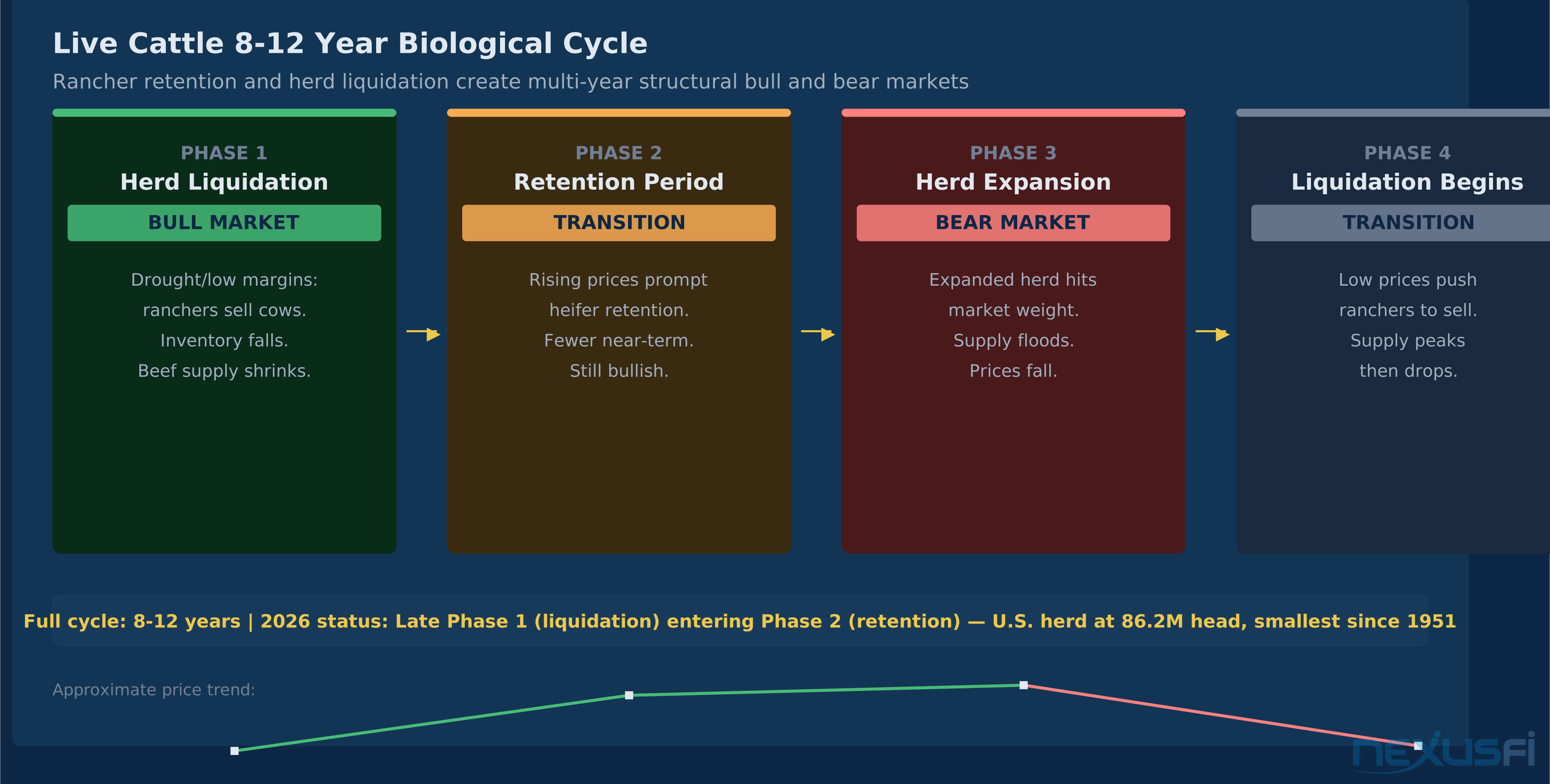
Live Cattle runs on an 8-12 year biological cycle. When prices are high and margins are good, ranchers retain heifers for breeding. Retained heifers mean fewer cattle near-term (bullish) but build the future herd. Two to three years later, the expanded herd floods the market (bearish).
The current cycle (2020s context): Years of drought, high feed costs, and herd liquidation pushed the U.S. beef cattle herd to 86.2 million head in January 2026 — the smallest since 1951. [1] Rebuilding the cow herd takes 2-3 years minimum, which is why analysts have projected tight supplies through at least 2027.
How to position with the cycle:
- Liquidation phase (declining inventory): Structural bull bias. Long deferred futures capture supply scarcity priced months ahead.
- Expansion phase (growing inventory): Structural bear bias. Short deferred months once COF placements data confirms the build.
- The forward curve prices cycle turns before cash confirms them. That's the edge.
Seasonality: The Intra-Year Pattern #
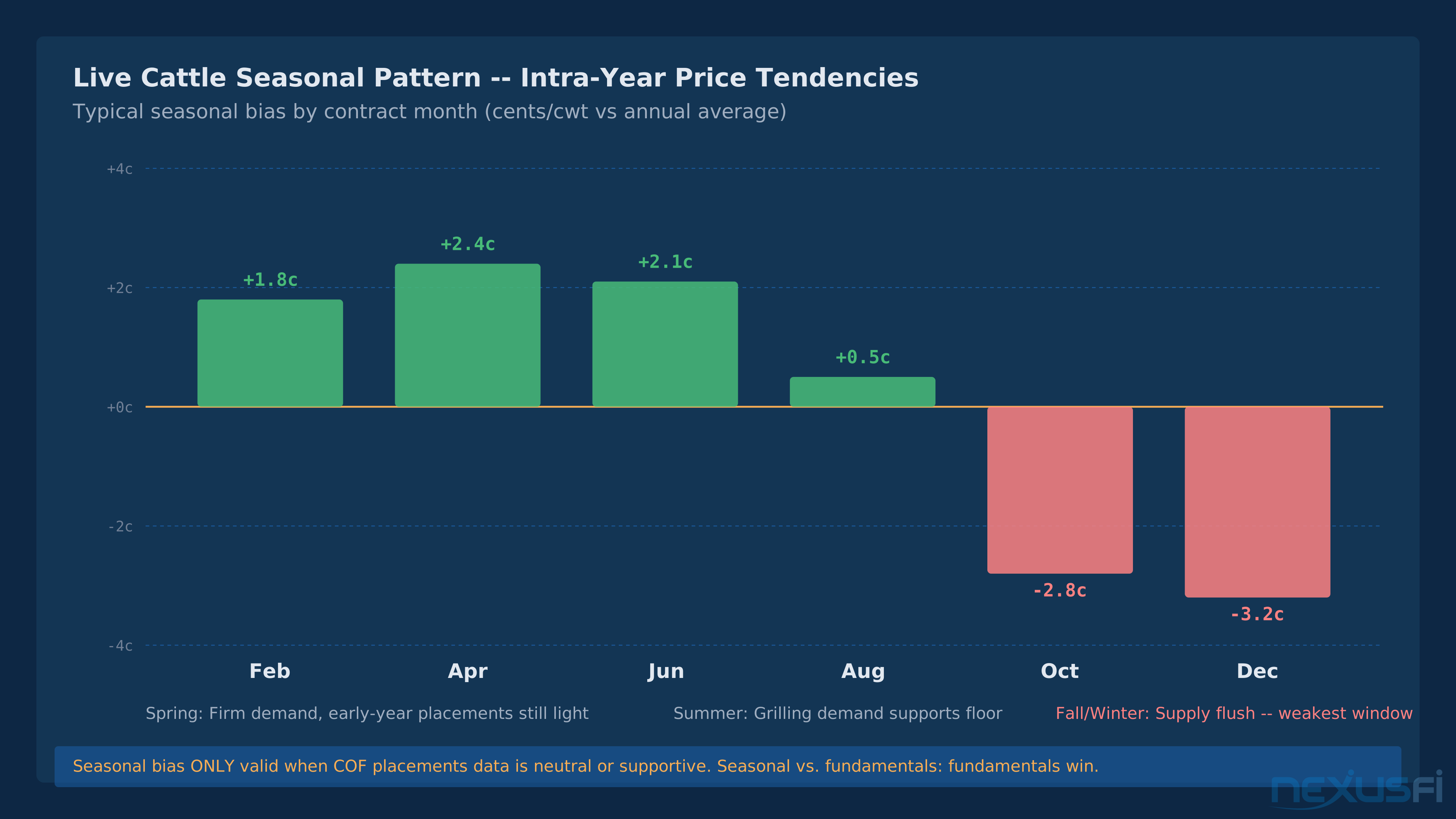
Spring (Feb-Apr contracts): Driven by early-year placement activity and fresh feedlot turns. Cash prices often firm but spring also brings new placements, setting up future supply.
Summer (Jun-Aug contracts): Demand support from grilling season typically provides floors. Watch whether the seasonal rally is already priced by March — if so, fading it is the trade.
Fall (Oct-Dec contracts): Classic supply flush. Spring placements reach market weight. This is often the weakest seasonal window.
Critical caution: Seasonality explains relative moves more reliably than absolute direction. @myrrdin captured this precisely: seasonality that has already been front-run — June LE rallying into May on grilling demand while USDA reports heavy placements — should be faded, not chased. [3]
The cattle cycle (8-12 years) sets structural bias. Seasonality (12 months) calibrates entry timing. Basis (days to weeks) signals execution. Stack all three. Never use any single factor in isolation.
What Moves It: The Fundamental Drivers #
The Signal Priority Framework #
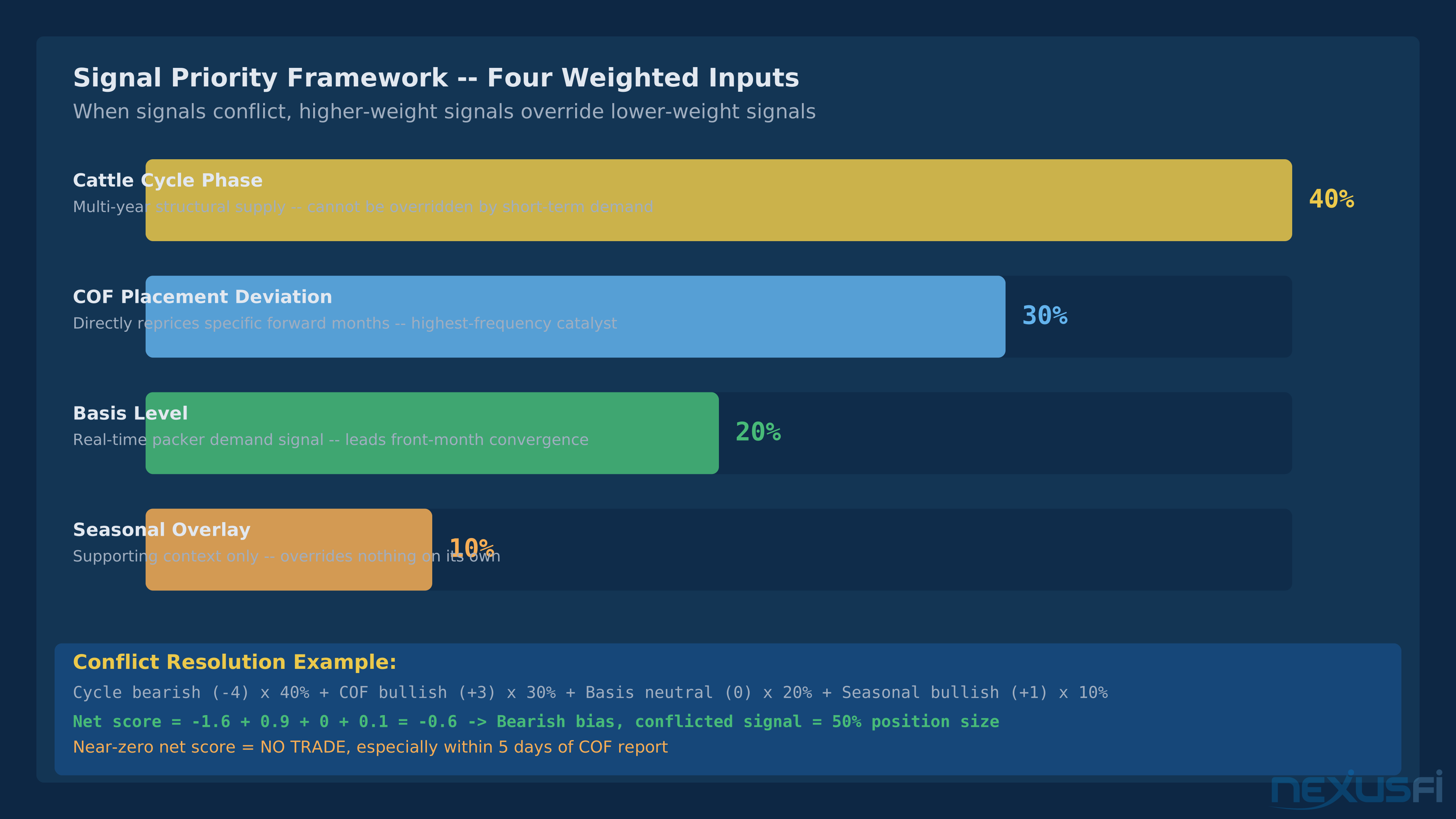
When factors conflict — and they will — here is the weighting hierarchy:
| Signal | Weight | Why |
|---|---|---|
| Cattle Cycle Phase | 40% | Multi-year structural supply; can't be overridden by short-term demand |
| COF Placement Deviation | 30% | Directly reprices specific forward months; highest-frequency trigger |
| Basis Level | 20% | Real-time packer demand signal; leads front-month convergence |
| Seasonal Overlay | 10% | Supporting context only; overrides nothing on its own |
Conflict resolution example: Cycle says bearish (-4 score), COF prints bullish (+3), basis is neutral (0), seasonal bullish (+1). Net: -4×0.4 + 3×0.3 + 0×0.2 + 1×0.1 = -0.6. Bearish bias, but the conflict means reduce position to 50% of normal size. When net score is near zero, the correct answer is often NO TRADE — especially with a COF report within 5 days.
When the cattle cycle and a fresh COF report point in opposite directions, the cycle wins — eventually. But "eventually" can be several months, and you can lose more money on timing than you'd gain on direction. Reduce size dramatically when these two signals conflict.
USDA Cattle on Feed Report — The Monthly Trigger #
Released monthly (~3rd Friday), the COF report reprices LE more than any other event. It contains three key numbers:
- On Feed: Total cattle in feedlots (percentage of prior year)
- Placed: New cattle entering feedlots ← the critical number
- Marketed: Cattle shipped to slaughter
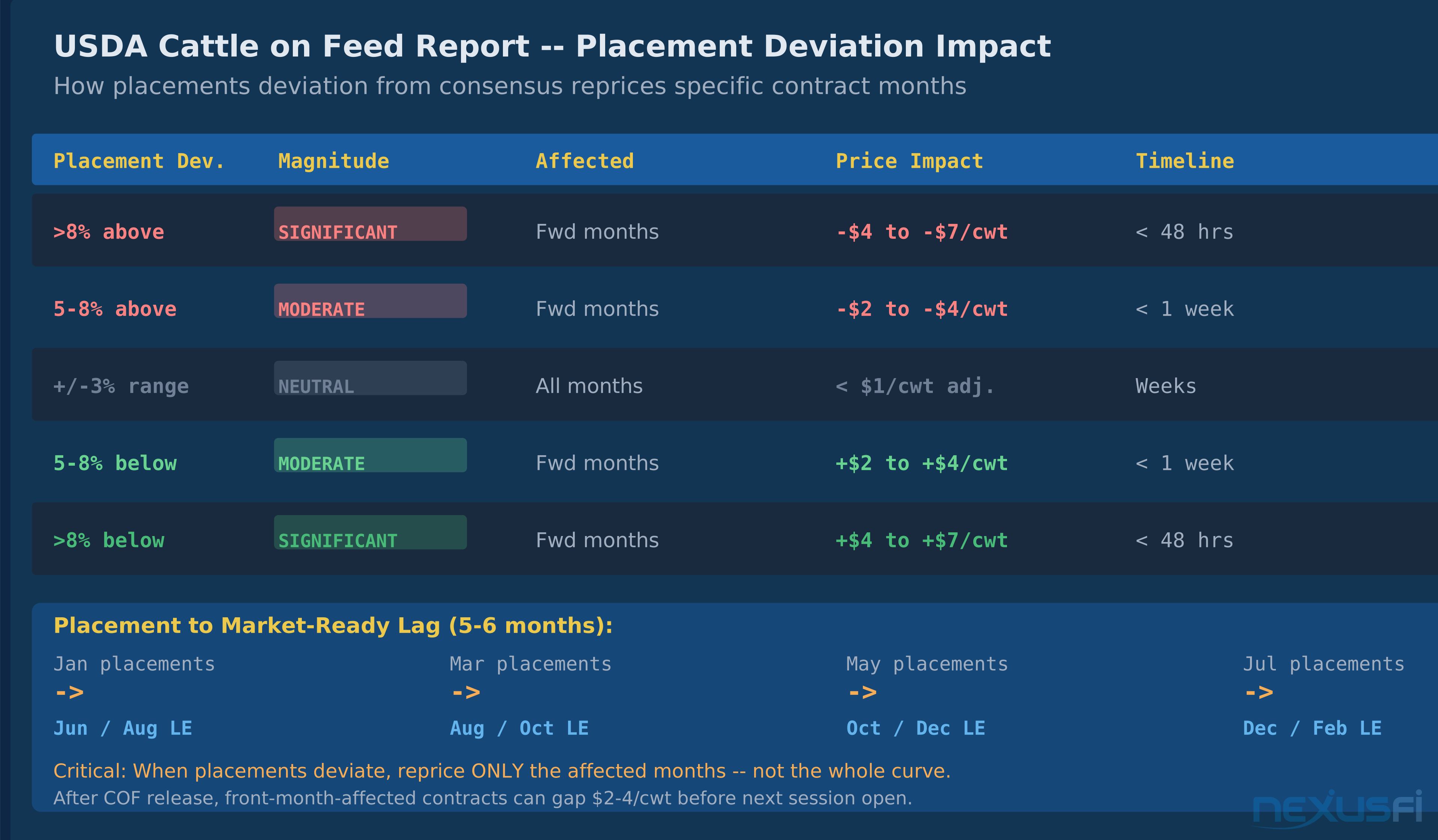
Translating placements into contract-specific signals:
When placements come in at X% vs. consensus:
- >8% above consensus: Bearish for affected forward months; historical impact = -$4 to -$7/cwt repricing within 48 hours in specific contract months
- 5-8% above consensus: Moderate bearish; -$2 to -$4/cwt in affected months, often within 1 week
- Within ±3% of consensus: Price-neutral; spread adjustment possible but limited outright impact
- 5-8% below consensus: Moderate bullish; +$2 to +$4/cwt in affected forward months
- >8% below consensus: Significant bullish; +$4 to +$7/cwt in affected months, often with gap opening
Marketings affect near term directly: light marketings mean cattle are still gaining weight, adding to forward supply. Heavy marketings drain the pipeline faster, supportive for front-month prices.
Never hold full-size through a COF report. It releases after the close. The next morning can gap $2-4/cwt before you can exit. If you're wrong directionally and the market hits limit, you may not exit for a full session. Cut to 50% or less before the monthly COF. The expected-value math supports this: holding full size earns you a small edge when you're right and catastrophic loss when wrong and locked. Half-size keeps you alive.
Weekly Slaughter and Weights #
The USDA publishes weekly slaughter and average carcass weights every Friday (for the prior week). These matter for near-term calibration.
Weight data: Average carcass weights tell you yield efficiency. Weights running 10 lbs above normal for 4+ consecutive weeks effectively adds supply without adding cattle. This reliably softens front-month cash. The actionable threshold: weights running >3% above year-ago for 3+ consecutive weeks = bearish signal for near-term futures.
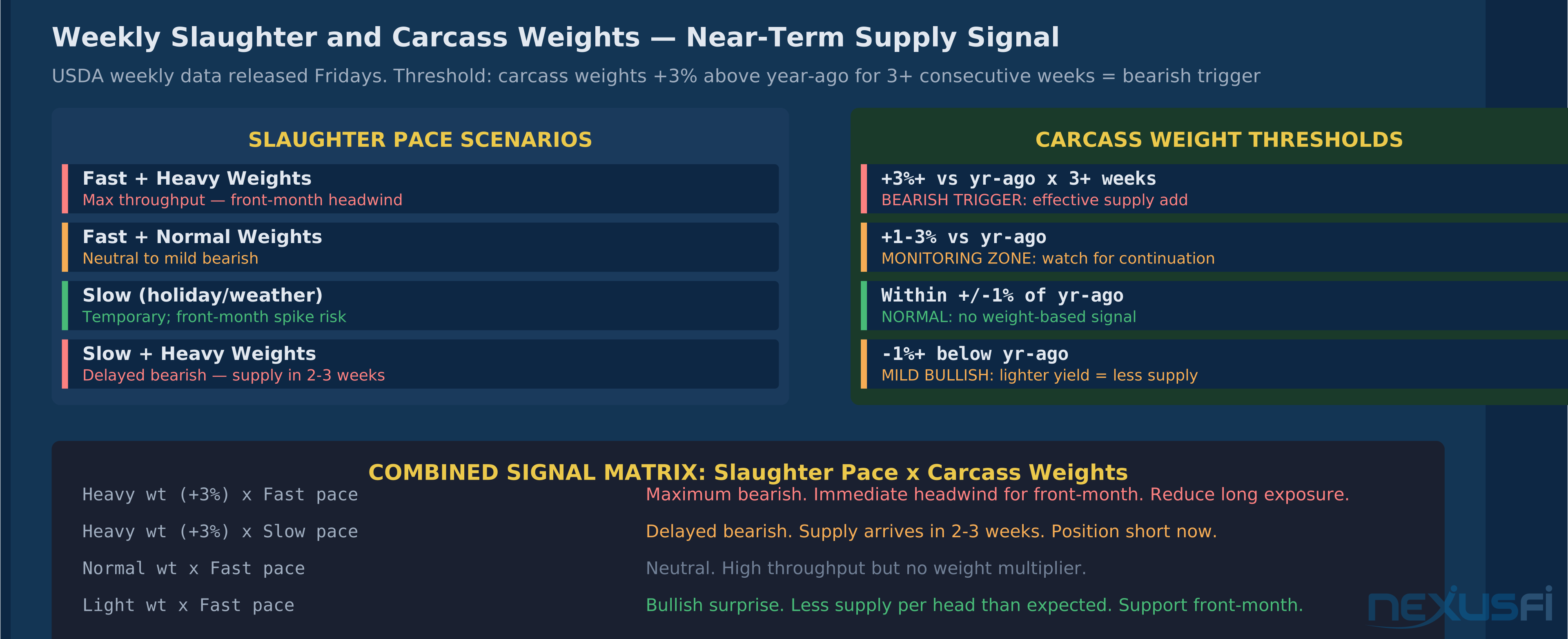
Slaughter pace: When slaughter runs fast and weights are heavy simultaneously, near-term supply is at maximum throughput — front-month prices face headwinds. When slaughter is light (holidays, weather, maintenance), front-month can spike.
Feed Cost Channel: Corn and the Feeding Margin #
Corn is the primary feed grain. When corn spikes:
- Feeding costs rise, squeezing feedlot margins
- At extreme corn prices, feedlots market cattle earlier (more near-term supply, less forward supply)
- The deferred months price this in: corn +20% typically compresses December-February LE by $2-5/cwt relative to spring months
The LE/GF spread as a corn proxy: When corn drops, Feeder Cattle (GF) rallies (cheaper to feed = more demand for feeders). Live Cattle may lag. Long GF/Short LE profits from this feeding-margin expansion. When corn spikes, the reverse. This is the cattle crush — the most reliable cross-commodity spread in the livestock complex. [7]
Packer Oligopsony: The Structural Wildcard #
Four to five major packers (JBS, Tyson, Cargill, National Beef, Marfrig) collectively purchase 80%+ of fed cattle. This oligopsony means these buyers can set cash bids within constraints of supply availability. [6]
How it affects futures:
- When packers "back off" bids: cash weakens and basis deteriorates regardless of futures
- When packers bid aggressively: cash firms, basis tightens, front-month futures follow
- A cash-futures basis spike of >$5/cwt with no supply change typically signals coordinated packer bidding withdrawal — not fundamental weakness. Historical recovery: 3-6 weeks.
[4]
Exports and the Dollar #
U.S. beef exports (Japan, South Korea, Mexico, China) account for ~12-15% of production. [8] When trade policy disrupts exports, the effect is immediate: cash weakens, basis blows out, futures follow. Day-to-day this is background noise — during trade disputes, it's the primary driver.
Practical Considerations: Trading LE for Real #
Basis: The Real-Time Packer Signal #
Basis = Local Cash Price − Nearest Futures Price
Actionable basis levels:
| Basis Level | Signal | Action |
|---|---|---|
| Cash premium > $2.00/cwt | Strong (top 15% historically) | Bullish front-month; convergence expected within 12 days |
| Cash premium $0-$2.00 | Neutral | No edge from basis alone |
| Cash discount $0-$1.50 | Mild weakness | Feedlot hedging pressure; wait for clarity |
| Cash discount > $1.50/cwt | Weak (bottom 15%) | Bearish front-month; deferred may be unaffected |
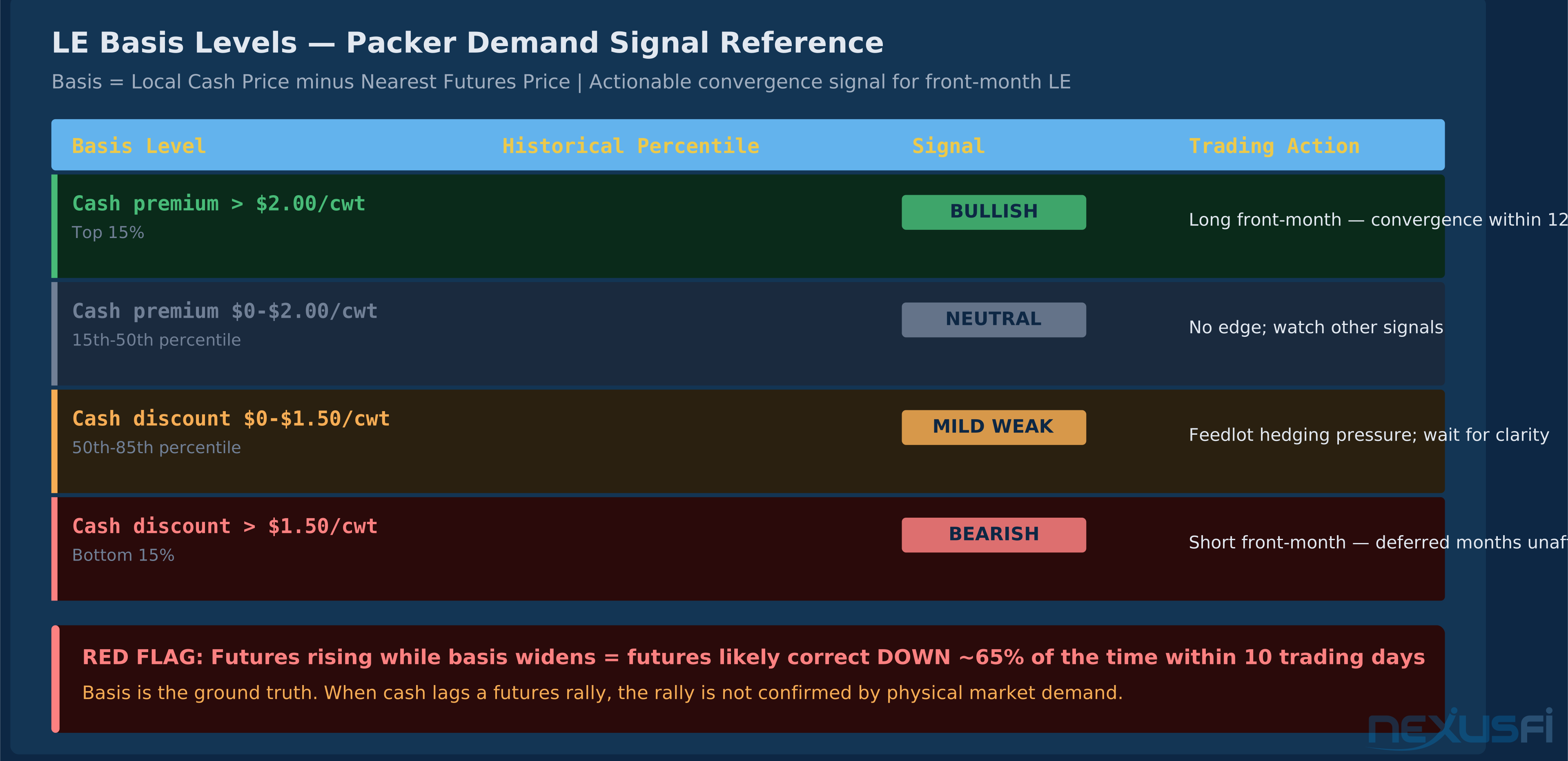
Widening basis with rising futures is a red flag. Futures rallying while cash lags means one of two things: futures correct down to cash (usually), or cash catches up (occasionally). Probability favors the former — this setup fails the long-futures holder roughly 65% of the time within 10 trading days.
For cash market data: the Daily Livestock Report (dailylivestockreport.com) is the go-to free resource. The report is free — sign up at dailylivestockreport.com and it arrives in your mailbox every day. [10]
Reading and Trading the Forward Curve #
The LE curve is an information map, not a storage-cost curve.
Rising curve (Feb at $188, Jun at $196, Oct at $200): Market expects future supply tighter than current. Common in bull cycle phases with light placements. Trade: long deferred against short nearby when COF confirms light placements.
Declining curve / backwardation (Feb at $202, Jun at $196, Oct at $192): Immediate cash tightness with expected future supply improvement. Trade: long nearby against short deferred when cash is firm and placements suggest future supply.
Kinked curve: When a specific month trades at premium or discount to surrounding months, that's a concentrated supply signal. Jun premium vs. Apr and Aug: targeted June supply tightness. Trade: buy June, sell Apr or Aug as a spread.
Reading the curve with placements data: A rising curve that contradicts heavy recent placements is setting up for a correction when the supply math arrives. This is a spread fade setup — not an outright, but short the deferred premium against the nearby. 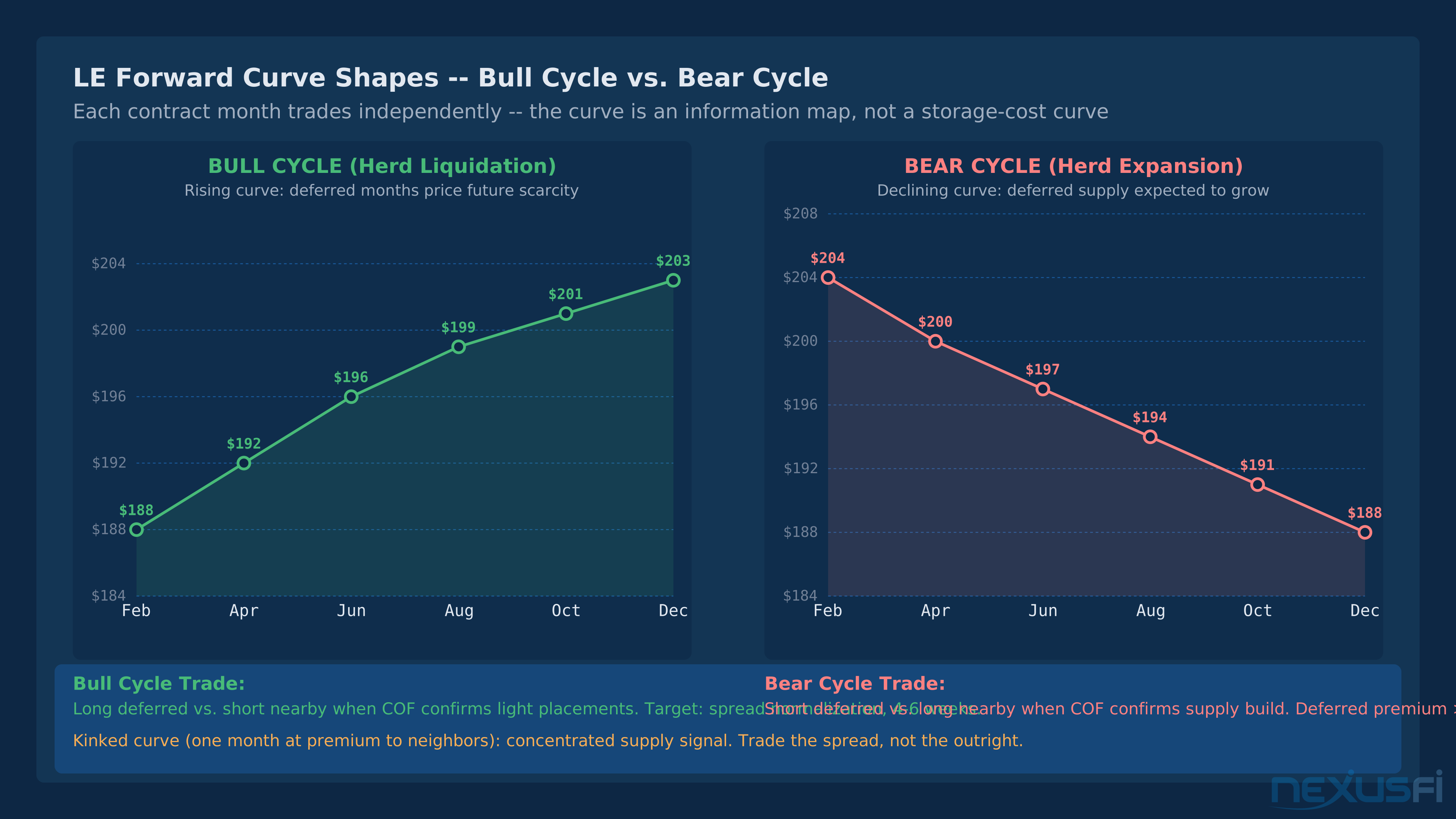
Calendar Spread Setups #
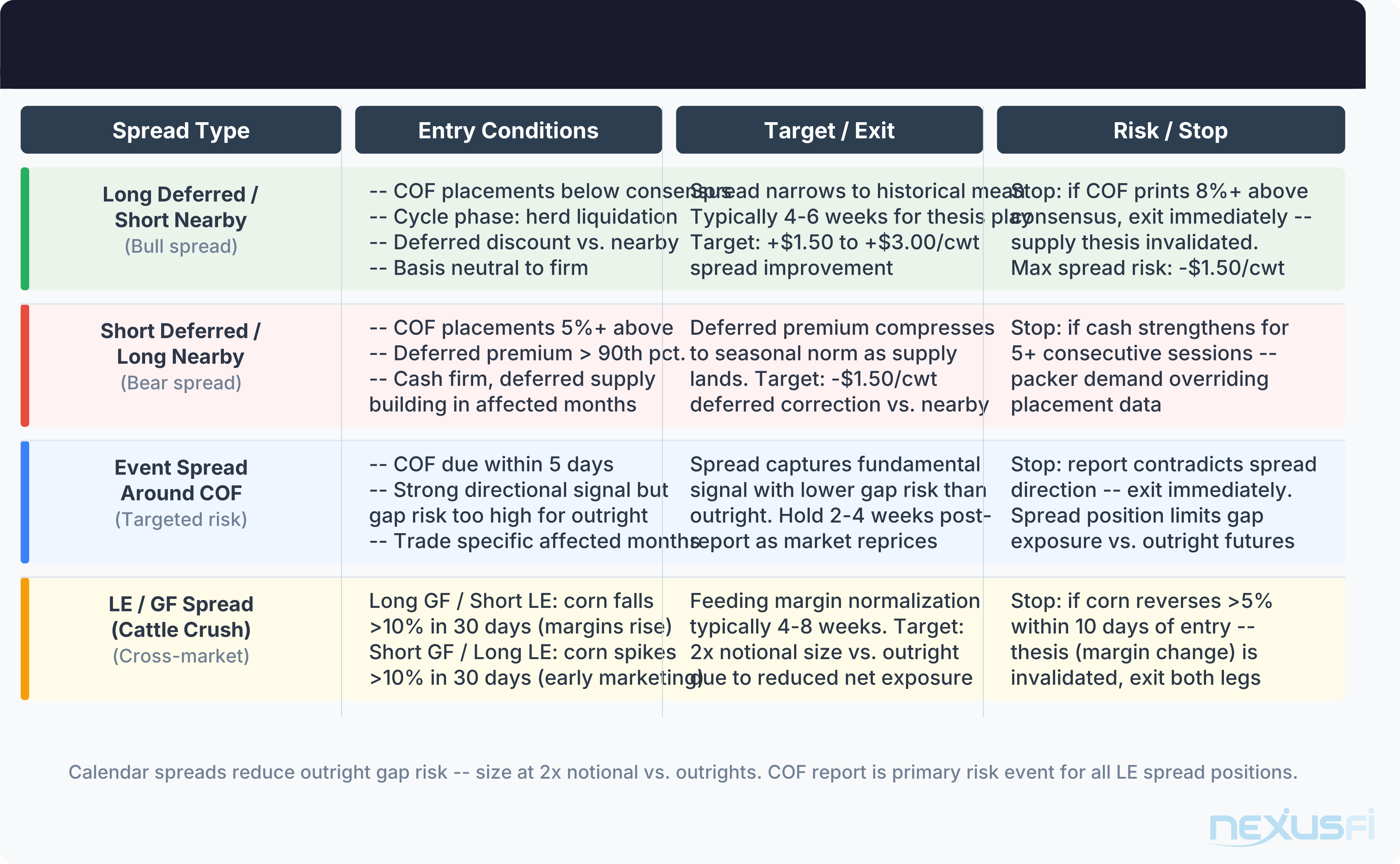
Long deferred / short nearby: When forward supply is tighter than current throughput implies. Entry: when the spread is below its historical seasonal range AND COF confirms light placements. Target: spread normalization to historical mean, typically within 4-6 weeks.
Short deferred / long nearby: When immediate cash tightness is temporary and forward placements suggest supply rebuilds. Entry: when deferred premium exceeds 90th percentile of historical range for that month pair. Stop: if cash continues stronger for 5+ sessions, thesis is wrong.
Event spread around COF: Instead of an outright position into a COF report, trade the specific months the report affects. Placement data points to a specific window — trade Aug/Oct calendar spread rather than outright Aug. You're exposed to the fundamental signal with less raw gap risk.
LE/GF spread (cattle crush):
- Long GF / Short LE when: corn drops >10% in 30 days, feeding margins should improve, GF demand should rise
- Short GF / Long LE when: corn spikes >10% in 30 days, feeding margins compress, early marketing increases near-term supply
- Stop logic: if corn reverses direction by >5% within 10 days of trade initiation, exit
Position Sizing in a Thin Market #
Standard 1% risk rules designed for liquid financial futures will mislead you in LE. Here's the correct framework (see also: Risk-Reward Ratio):
Step 1: Determine max loss tolerance for this trade (e.g., $1,500).
Step 2: Calculate tick risk from entry to stop. If your stop is $1.50/cwt away, that's 60 ticks × $10 = $600 per contract.
Step 3: Contracts = Max loss / Risk per contract = $1,500 / $600 = 2.5 → round down to 2 contracts.
Step 4: Apply the gap risk override. If your stop is $1.50/cwt but this trade involves any COF risk, the realistic adverse gap is $3-4/cwt, not $1.50. Recalculate using the realistic adverse scenario: 2 contracts × $4.00/cwt × $400 = $3,200 potential loss. Can you absorb that? If not, reduce to 1 contract.
Sizing constants: [9]
- Pre-COF: cut normal position to 50%
- First trade in LE: cut to 25% of calculated size until you have 10+ trades of experience with gap behavior
- Calendar spreads: can carry 2x the notional size of outrights because net exposure is reduced
[4]
When LE Fails: Failure-Mode Playbooks #
Failure Mode 1: Limit-Lock
The market opens limit-down or limit-up and you can't exit. Protocol:
- Immediately check whether options markets are still trading (they often continue when futures halt)
- Buy near-term calls if locked short, puts if locked long — synthetically creates an exit mechanism
- Do NOT add to a losing locked position hoping for reversal — statistical outcome is further adverse movement 70% of the time on Day 2
- If locked for full session and market re-opens: exit at open regardless of price. The damage is done; refusing to exit turns a bad trade into a catastrophic one.
Failure Mode 2: COF Thesis Reversal
Your basis-and-cycle analysis pointed to tighter supply, but COF shows placements 8%+ above consensus.
Protocol:
- First 30 minutes of next session: exit completely, regardless of P&L. The report has invalidated your supply thesis.
- Do NOT wait for a "retracement to re-enter." Placements data is structural — the supply is coming.
- After exit: mark the entry price, stop level, and COF deviation in your trading journal. This is your empirical database for calibrating future COF sensitivity.
Failure Mode 3: Demand Destruction Event
BSE, HPAI outbreaks, or sudden consumer protein substitution (at elevated prices, ~$200+/cwt, consumer switching to chicken/pork is a real demand destruction risk).
These events are rare (roughly 1-2 per decade in modern LE history) but catastrophic for long positions. When they occur:
- Cash prices fall immediately and ferociously
- Basis collapses (basis widens negative by $5-10/cwt in days)
- No fundamental analysis is useful until the scope of demand destruction is quantified
Signal: if cash falls >$3.00/cwt in a single week with no corresponding supply explanation, treat as potential demand shock. Exit first; research second.
Failure Mode 4: Seasonal Trade Beaten by Fundamentals
You bought June LE on the grilling demand seasonal in April, but USDA shows placements were 12% above year-ago in February.
This is not a failure of execution — it's a setup error. The seasonal trade should not have been entered when placements contradicted it. The lesson: seasonal trades in LE are only valid when the COF data is neutral or supportive. Seasonal against fundamentals is a coin flip dressed as an edge.
Options selling in LE is practiced by sophisticated traders — but only when you've independently valued each contract month, cleared the USDA event calendar, and verified implied vol compensates for realistic gap risk. Selling naked options into a COF report without this framework is not income generation. @myrrdin explicitly ties his approach to fundamental valuation of each month separately and avoids positions within the pre-report window. [3]
Complete Trade Case Studies #
Case Study 1: Winning Calendar Spread (October-December 2024 context)
Setup: U.S. herd in liquidation phase (cycle score: -3). August COF showed October placements 9% below year-ago — specific bullish signal for February-April window (affected contract: Feb LE). December LE showed deferred discount (backwardation) inconsistent with light future supply.
Trade: Long Feb LE / Short Dec LE (calendar spread). Entry at -$2.00 spread (Feb discount to Dec). Signal: COF points to tighter Feb supply while Dec near-term throughput remains ample.
Sizing: 2 contracts each leg. Spread risk = $1.50/cwt max ($600 per pair). Below limit-move threshold for spreads.
Management: Held through one weekly slaughter report (neutral — no impact on Feb window). COF confirmed 60 days later with another light placements print.
Exit: Closed at -$0.50 spread (Feb premium over Dec improved by $1.50/cwt). Realized: 60 ticks × $10 × 2 contracts = $1,200 per pair.
Post-trade: Both legs worked because the fundamental thesis (tight Feb supply, ample Dec throughput) played out as COF data showed. The calendar structure reduced gap risk from the monthly COF that occurred during the hold period.
Case Study 2: Losing Outright (Seasonal Trade vs. Fundamentals)
Setup: June LE in late April. Seasonal pattern historically supports June on grilling demand. Cycle phase: neutral (expansion beginning). But March COF showed February placements 7% above year-ago — that supply lands June.
Trade error: Bought June LE at $197.50/cwt on seasonal bias. Ignored COF data that contradicted the setup. Position size: 3 contracts (too large for the conflicting signal environment).
What happened: June LE declined to $192.00/cwt over 3 weeks as the market priced in the supply data. No limit moves, but the fundamental headwind was consistent. Stop at $195.00 got taken out for -$2.50/cwt.
Realized loss: $2.50/cwt × 400 × 3 contracts = -$3,000.
Post-trade diagnosis: Signal priority error. Seasonal bias (10% weight) was used as a primary driver while COF placement data (30% weight) directly contradicted. The 3-contract size amplified a setup error that should have been recognized before entry. If the trade was taken at all (it shouldn't have been), 1 contract maximum given the conflict.
The lesson: Seasonal trades are only valid when fundamentals are neutral or supportive. Seasonal vs. fundamentals = usually fundamentals wins.
The Pre-Trade Checklist for LE #
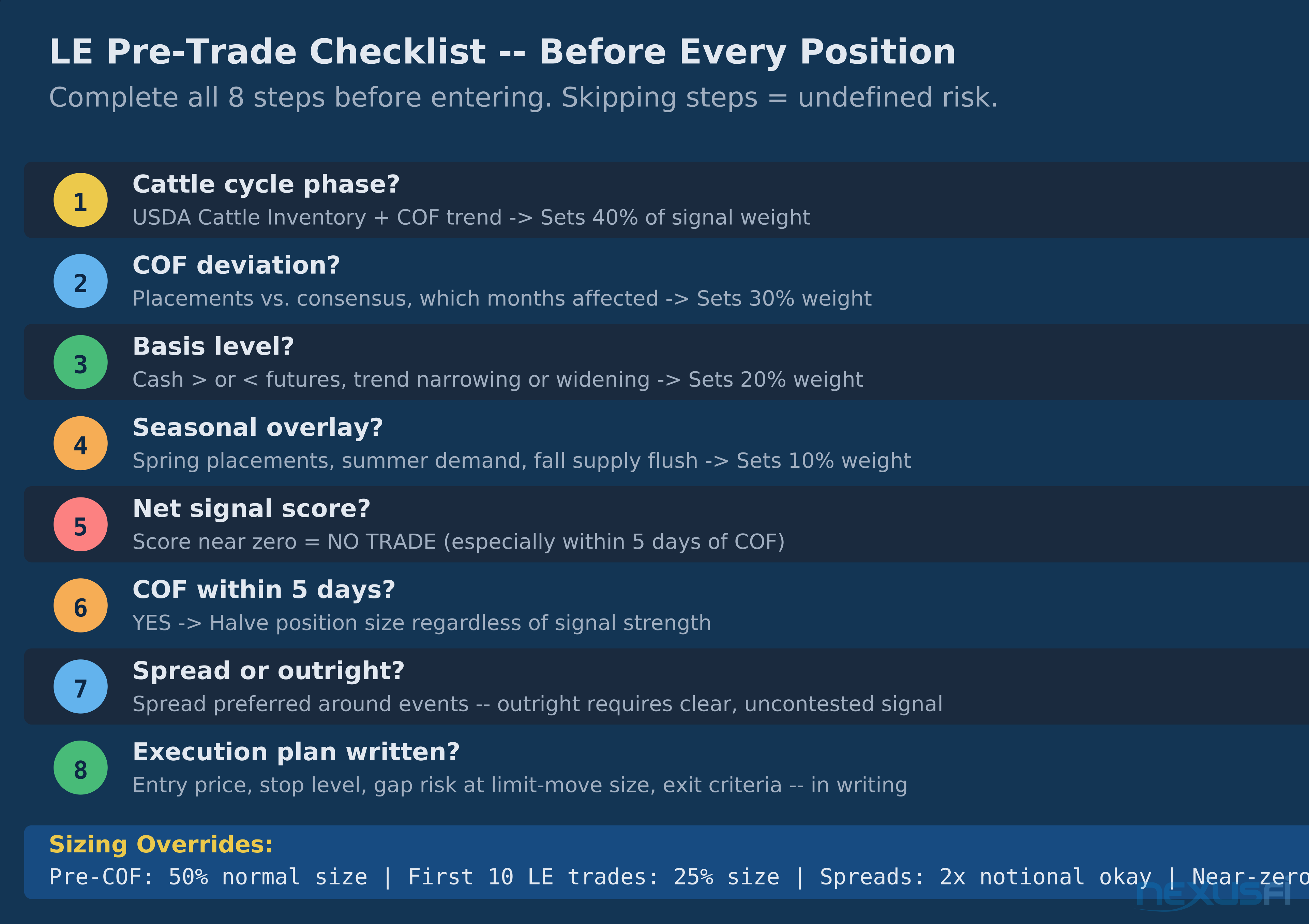
Before entering any position:
- Cattle cycle phase? (USDA annual Cattle Inventory, monthly COF trend) → Sets 40% of the weight
- COF deviation? (placements vs. consensus, which months affected) → Sets 30% weight
- Basis level? (cash > or < futures, trend narrowing or widening) → Sets 20% weight
- Seasonal overlay? (spring placements, summer demand, fall flush) → Sets 10% weight
- Compute net signal score (see framework above) → If near zero, skip the trade
- Next COF report within 5 days? → If yes, halve position size regardless of signal strength
- Is this spread or outright? → Spread preferred around events; outright requires clear, uncontested signal
- Execution plan written? → Entry price, stop level, realistic gap risk at limit-move size, exit criteria
LE rewards traders who approach it as a fundamental market with technical execution. The USDA data, the placements math, the basis regimes: these are the signal. When the weighted score is clear and uncontested, trade it. When it's muddied, wait. The market will set up again.
Further Resources #
For ongoing fundamental LE intelligence:
- CME Livestock Complex Daily Report — Daily summary of prices, fundamental indicators, and trading activity
- Daily Livestock Report (dailylivestockreport.com) — Free daily PDF covering the entire livestock complex
- USDA Cattle on Feed — Monthly at nass.usda.gov, ~3rd Friday; the primary trigger
- USDA Weekly Slaughter and Weights — Released Fridays; near-term throughput signal
- USDA Cattle Inventory — Annual, January; the definitive herd-size data for cycle assessment
Knowledge Map
Go Deeper
Build on this knowledgeReferences This Article
Articles that build on this topicCitations
- — Livestock Futures Hit Record Levels -- U.S. Cattle Herd Smallest Since 1951 (2026)“Whether you trade livestock directly or just want to understand the macro picture, these are historic levels. The last time we had a herd this small, futures markets as we know them barely existed.”
- — Diversified Option Selling Portfolio (2016) 👍 6“the individual contracts for different months trade more or less independently from each other. This is different to other commodities futures.”
- — Meats (2019) 👍 3“I am trading based on fundamental information. One argument for being long Live Cattle is the expectation of rising cash price in the near future.”
- — Diversified Option Selling Portfolio (2017) 👍 8“Volume is significantly lower in the ags. Hogs and Cattle have a daily volume of 30,000 or 50,000 contracts, respectively, whereas CL has a daily volume of 1,000,000 contracts.”
- — Diversified Option Selling Portfolio (2017) 👍 5“In the meat markets, the individual futures for different months trade more or less independently from each other. In comparison, futures for different months in the metal markets trade more or less synchronized. The reason is that it is more difficult to store meat than to store metals.”
- — Meats (2019) 👍 2“I am long hogs via the HEV-LEV spread. In my opinion, live cattle are overpriced, and the effect of a deal will be much larger for HE than for LE.”
- — Diversified Option Selling Portfolio (2018) 👍 4“My large positions are in corn, hogs, and live cattle.”
- CME Group — Live Cattle Futures -- Contract Specifications (2025)
- USDA NASS — Cattle Inventory January 2026 -- U.S. Beef Cow Herd 86.2 Million Head (2026)
- Daily Livestock Report — Daily Livestock Report -- Free Daily Summary of Cattle and Hog Markets (2024)
- USDA Agricultural Marketing Service — USDA Cattle on Feed -- Monthly Report (2025)
- — The CL Crude-analysis Thread (2015) 👍 21“I'd recommend Rajen Kapadia's Guide to Spread Trading Futures -- the concept of trading spreads to reduce outright gap risk applies directly to livestock calendar spreads.”