



Soybean Futures (ZS): The Complete Trading Guide
Overview #
Overview #
Soybeans are one of the most actively traded agricultural futures contracts in the world
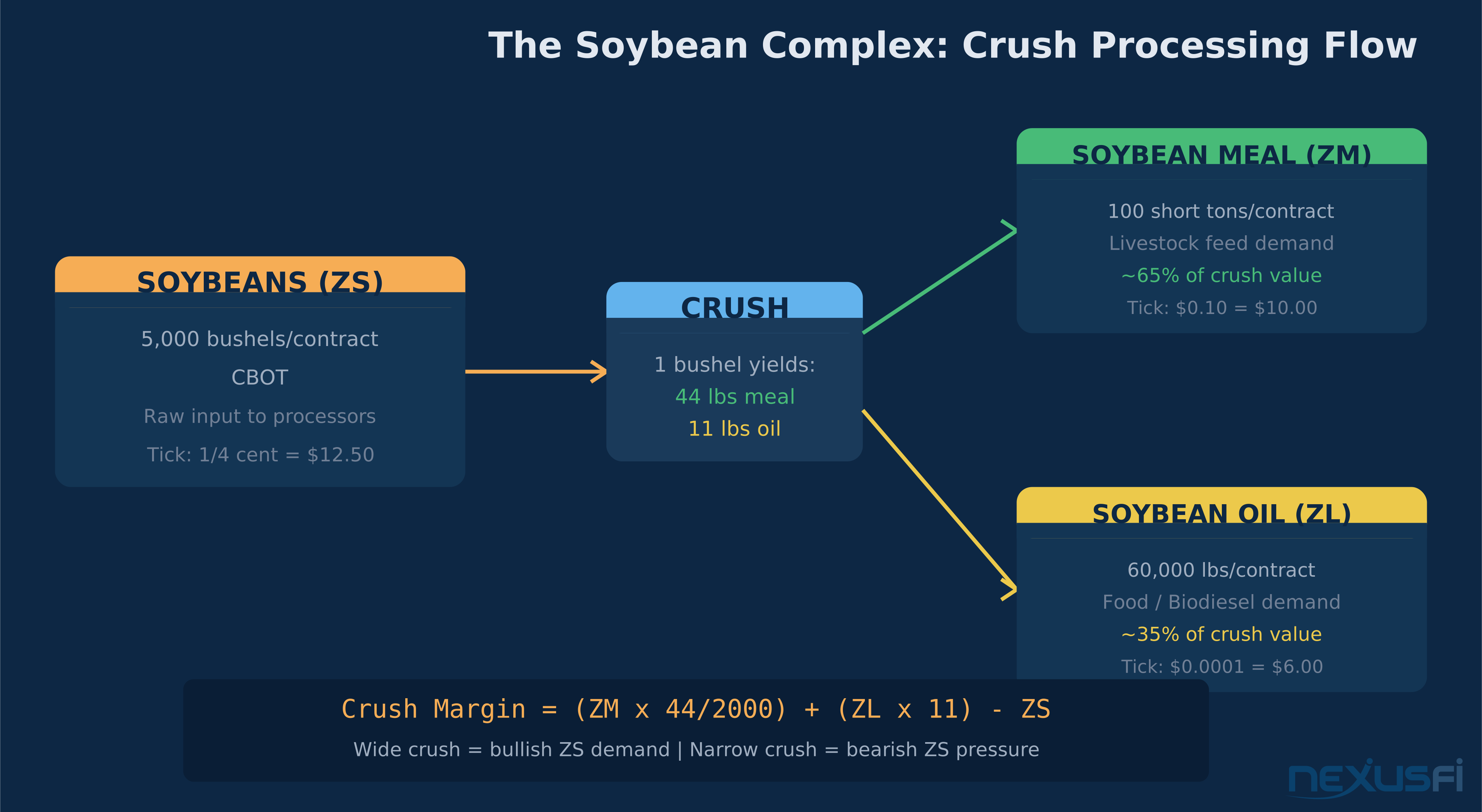
What makes soybeans different from corn or wheat is the crush. Every bushel of soybeans gets processed into two products
ZS is also where geopolitics meets agriculture. The U.S., Brazil, and Argentina dominate global production, while China dominates demand. Trade policy, weather patterns across two hemispheres, and USDA report surprises can all move this market violently. Understanding the structure
November is the benchmark new-crop contract Who Trades Soybeans and Why The soybean market is a collision point between four distinct groups, each with different time horizons, risk tolerances, and information edges: Farmers and producers are naturally long physical soybeans.
Key Specifications #
Here's what you're actually trading when you pull up ZS on your screen:
| Parameter | Value |
|---|---|
| Exchange | CME Group (CBOT) |
| Ticker | ZS |
| Contract Size | 5,000 bushels |
| Price Quotation | Cents per bushel (e.g., 1235.00 = $12.35/bu) |
| Tick Size | $0.0025 per bushel (1/4 cent) |
| Tick Value | $12.50 per contract |
| Trading Months | Jan (F), Mar (H), May (K), Jul (N), Aug (Q), Sep (U), Nov (X) |
| Trading Hours | CME Globex: Sunday-Friday, 7:00 PM - 7:45 AM CT and 8:30 AM - 1:20 PM CT |
| Settlement | Physical delivery (No. 2 yellow soybeans) |
| Daily Price Limits | Dynamic |
| Margin | SPAN-based, varies by volatility and account type |
The math that matters: a $0.10/bushel move equals 40 ticks, which equals $500 per contract. If you're running a 20-tick stop, that's $250 of risk per contract. If you're running a 40-tick stop, $500. Position sizing in soybeans comes down to how many ticks of adverse excursion your strategy expects and how much capital you're willing to lose on the trade.
November is the benchmark new-crop contract
Who Trades Soybeans and Why #
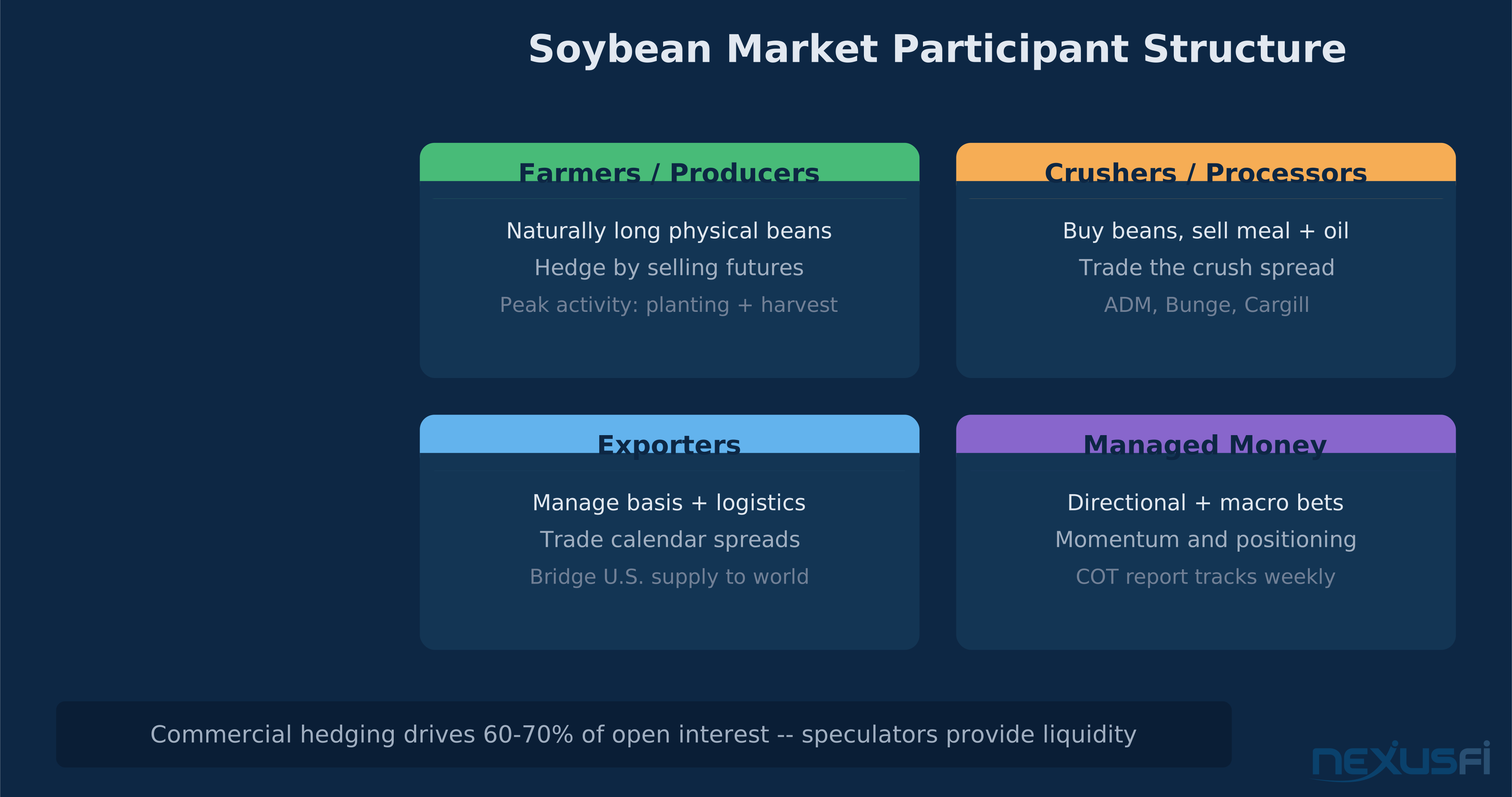
The soybean market is a collision point between four distinct groups, each with different time horizons, risk tolerances, and information edges:
Farmers and producers are naturally long physical soybeans. They hedge by selling futures pre-harvest to lock in prices. A farm expecting to harvest 100,000 bushels might sell 20 ZS contracts (100,000 / 5,000 = 20) to protect against a price decline between planting and harvest. Their hedging intensity peaks during planting season and again as harvest approaches.
Crushers and processors are the unique participant in this market. Companies like ADM and Bunge buy soybeans as raw input, crush them into meal and oil, and sell the products. They hedge the input cost with ZS and the output risk with ZM and ZL. The crush spread is their profit margin, and they actively trade it. When crush margins are strong, crushers bid aggressively for beans
Exporters and merchandisers manage basis risk
Managed money and speculators
The composition of ownership matters for your trading. A rally driven by commercials covering shorts behaves differently from one driven by funds adding longs. When managed money is heavily long and fundamentals soften, long liquidation can be brutal. When commercials are aggressively hedging into rallies, that selling pressure caps upside.
The Soybean Complex and the Crush Spread #
This is what makes soybeans unique among agricultural futures. Every other grain is basically a single-product market. Soybeans are a three-product market:
- ZS
- ZM
- ZL
The processing math: one bushel of soybeans yields roughly 44 pounds of meal and 11 pounds of oil. The crush spread measures the gross margin of that conversion:
Crush Margin (per bushel) = (Meal value per bushel) + (Oil value per bushel) - Soybean cost per bushel
Because ZM and ZL are quoted in different units than ZS, the per-bushel conversion is:
Crush = (ZM price x 44/2000) + (ZL price x 11) - ZS price
Where ZM is in $/short ton (divided by 2000 to get $/lb, then multiplied by 44 lbs yield) and ZL is in $/lb (multiplied by 11 lbs yield). At the contract level, traders often approximate the ratio as 1 ZS against roughly 1.5 ZM and 0.12 ZL in value terms
As Fi noted in a discussion of micro agricultural futures, "the crush spread using micros (long MZS, short MZL and MZM) offers cleaner ratios
What the crush spread tells you:
- Wide crush = strong processor margins = crushers bidding aggressively for beans = bullish for ZS demand
- Narrow or negative crush = weak processing economics = crushers reducing bean purchases = bearish pressure on ZS
The crush spread also reacts to downstream demand shifts. If livestock feed demand strengthens, ZM rises and pulls the crush wider. If biodiesel mandates increase, ZL rises and does the same. A trader who only watches ZS without monitoring ZM and ZL is missing half the story.
What Moves Soybean Prices #
Supply and Demand Fundamentals
Soybean prices are driven by the global balance sheet
U.S. Production = Acres Planted x Yield per Acre. The U.S. is the world's largest or second-largest soybean producer depending on the year. Yield in the Midwest depends on summer weather
Brazil and Argentina. These two countries now produce more soybeans combined than the United States. Their harvest runs from February through May
China demand. China imports roughly 60% of globally traded soybeans. Their crush industry
The central tightness indicator is the stocks-to-use ratio: ending stocks divided by total annual use. When stocks-to-use drops below roughly 8%, the market considers supplies tight. That's when you see front-end premiums emerge
USDA Reports
USDA releases are the fundamental pulse of this market. The reports that move soybeans:
| Report | Frequency | What It Updates | Why It Matters |
|---|---|---|---|
| WASDE | Monthly | Production, yield, exports, crush, ending stocks | The complete balance sheet |
| Grain Stocks | Quarterly | Actual on-hand inventory | Validates or challenges carry assumptions |
| Prospective Plantings | March | Acreage intentions | Sets the baseline for new-crop supply |
| Acreage | June | Updated planted acres | Confirms or revises the March intentions |
| Export Sales | Weekly | New export bookings | Demand signal |
| Crop Progress | Weekly (Apr-Nov) | Planting pace, crop condition | Drives the weather risk premium |
The market's reaction framework is simple: surprise vs. consensus. Traders compare the actual USDA number against pre-report estimates. A lower-than-expected ending stocks number triggers a nearby rally. A higher-than-expected yield estimate pressures prices. The first 10 minutes after release show the dominant move. Volatility spikes, bid-ask spreads widen, and slippage increases
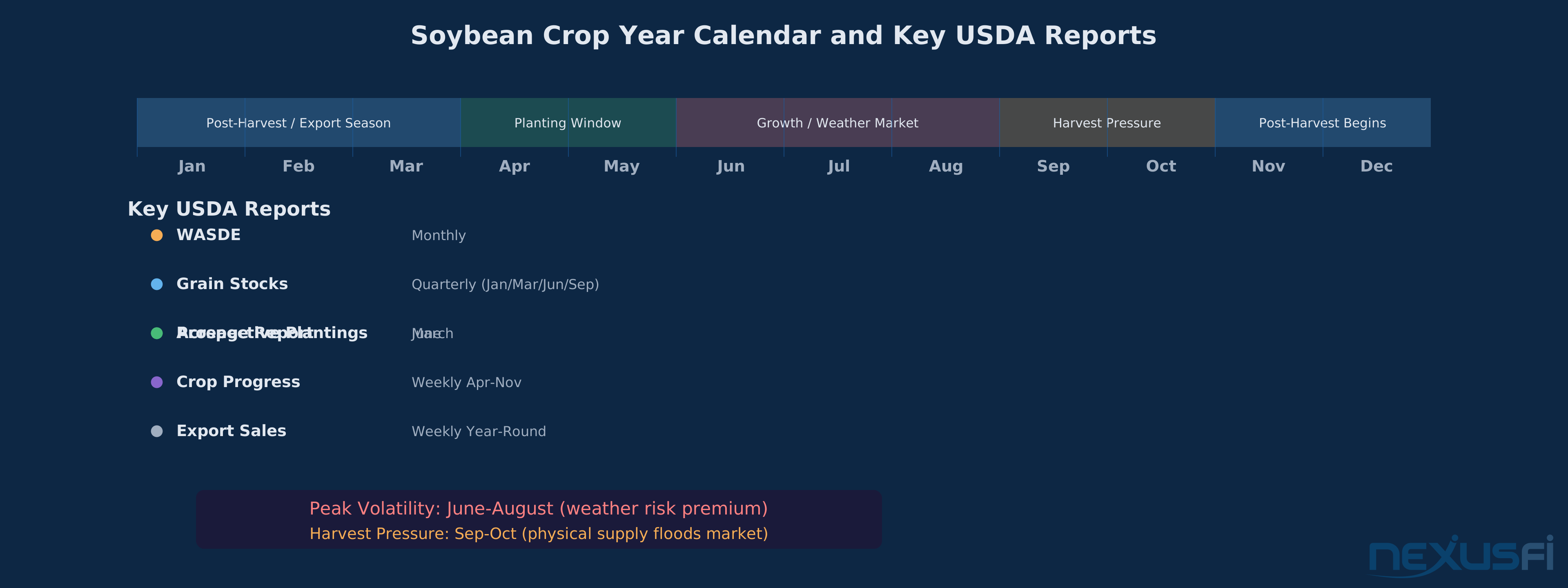
Report sequencing through the crop year creates distinct trading regimes: March Prospective Plantings reprices acreage competition. Summer Crop Progress reports drive weather-risk premium. Fall yield confirmation and Grain Stocks reports validate supply estimates.
Seasonality
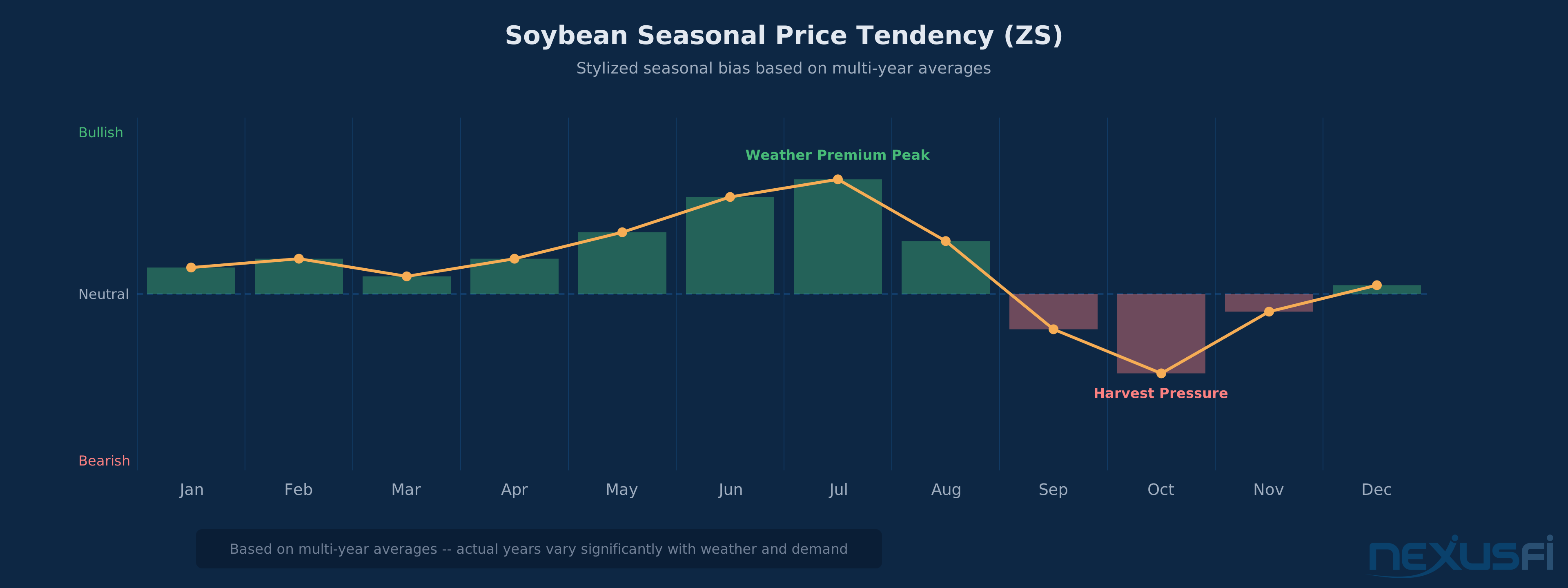
The soybean crop cycle creates a predictable rhythm that experienced traders use to frame
April-May (Planting): Acreage uncertainty dominates. If planting is delayed by wet weather, new-crop futures (November) gain a risk premium. The corn-soybean acreage competition plays out here as farmers make final planting decisions based on relative profitability.
June-August (Growth and Weather Market): This is peak volatility. July and August are critical
September-October (Harvest): Physical supply floods the market. Harvest pressure typically weighs on nearby contracts as elevator basis weakens and futures absorb selling from producers hedging or delivering. This is the most reliably bearish seasonal window.
November-March (Post-Harvest): The balance sheet takes over. Export pace, Chinese bookings, crush demand, and South American weather become the dominant drivers. Carry structure stabilizes.
The old-crop to new-crop transition is where the real money moves. As @tigertrader observed, "there is often a great deal of equanimity in participation between the front month and new crop, the later one gets in the season
Trading Sessions and Liquidity #
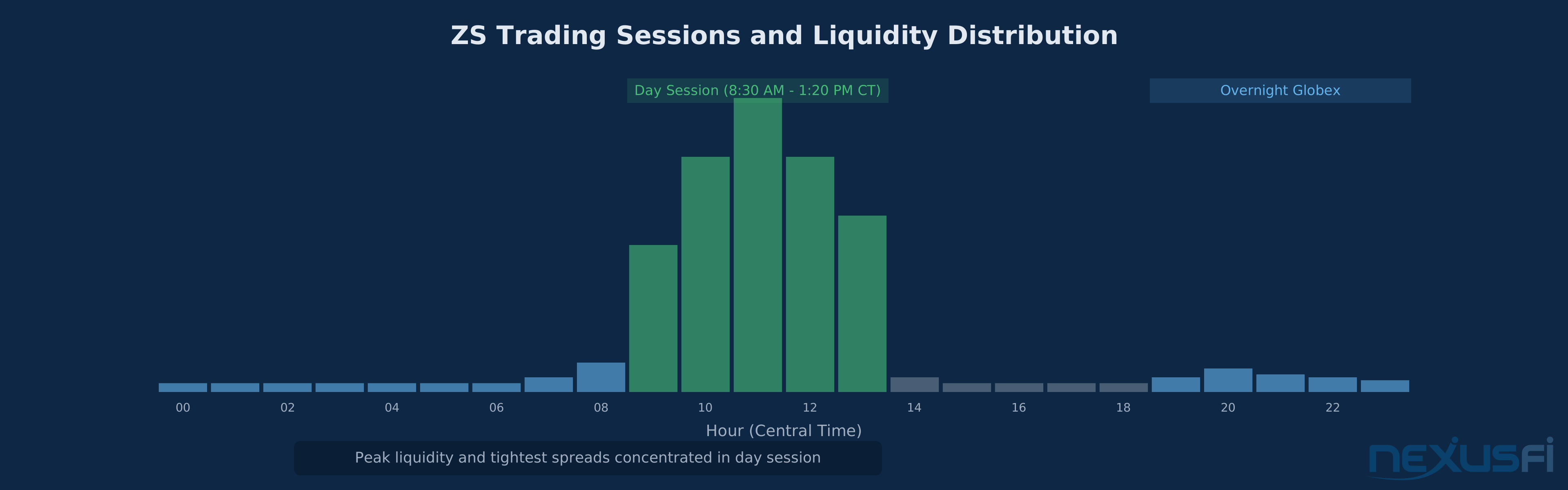
Soybean futures trade on CME Globex with near-continuous electronic access during the trading week. But liquidity is not evenly distributed:
Peak liquidity: The U.S. day session (8:30 AM - 1:20 PM CT) concentrates the highest volume, tightest bid-ask spreads, and deepest order books. This is when commercial hedging, fund rebalancing, and the bulk of price discovery happen. Large orders should be worked during this window.
Overnight/Asian session: Lower depth and wider spreads, but still relevant. South American weather developments, Chinese import news, and macro shocks can move prices during off-hours. Don't ignore it, but don't expect the same execution quality.
USDA report windows: Major releases (typically at 11:00 AM CT for WASDE, noon for weekly reports) create volume spikes 2-3x normal in the first 15 minutes. Bid-ask spreads widen by roughly 50%. Avoid passive orders near these windows unless you're specifically positioning for the report.
Roll Timing
Most institutional traders roll positions 7-10 days before First Notice Day, when the nearby contract still has decent depth but the next month's open interest has already picked up. As @tigertrader advised, "follow the volume" when deciding which month to trade. [6] Liquidity in the nearby contract typically drops 40-60% as First Notice Day approaches. Calendar spreads generally maintain more stable liquidity than outrights during the roll window.
The roll also isn't just calendar math
Delivery Mechanics and Convergence #
ZS is physically deliverable, which means futures prices must converge toward cash market values as expiration approaches. Even if you never take delivery (and most speculative traders don't), understanding delivery mechanics matters because they anchor pricing.
What's deliverable: No. 2 yellow soybeans meeting CME specifications
Where: CME-approved delivery points, primarily along the Illinois River system and Chicago area terminals. The geographic concentration of delivery points creates basis relationships that affect pricing.
How convergence works: As the contract approaches delivery, arbitrage between cash soybeans and futures forces prices toward each other, adjusted for basis, freight, storage, and financing costs. If nearby futures trade too far above the deliverable cash value, shorts are incentivized to deliver
What this means for your trading: Delivery constraints can create short-term dislocations near expiry. The nearby contract becomes "sticky" relative to cash changes as delivery bids and offers dominate price action. Calendar spreads in the final weeks before delivery reflect this dynamic, not pure supply/demand. Many systematic trend models exclude the delivery period or normalize by roll-adjusted prices to avoid convergence-driven noise.
Cross-Commodity Relationships #
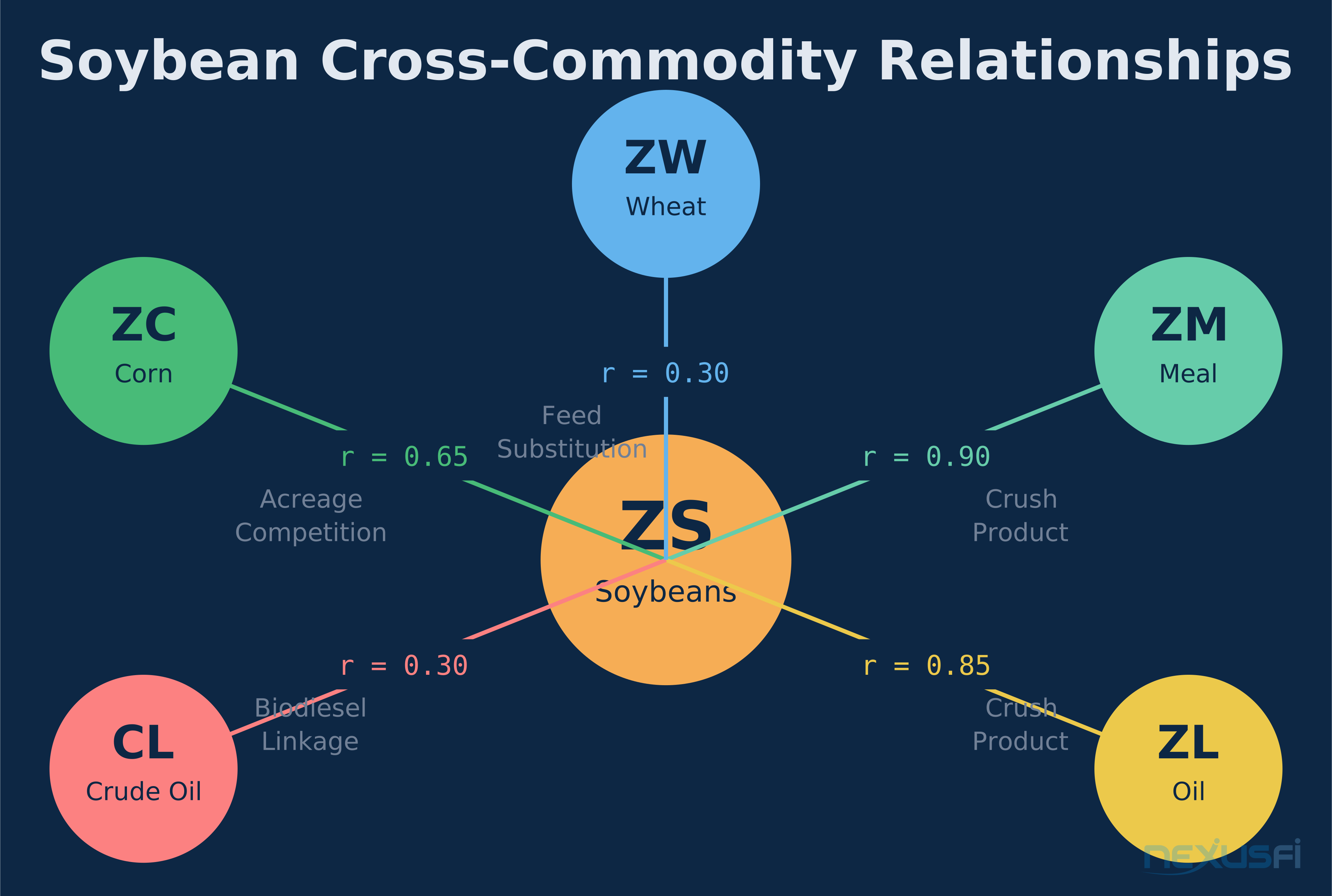
Soybeans don't trade in isolation. Three cross-commodity dynamics matter:
The Corn-Soybean Spread (ZS vs ZC): This is the acreage competition trade. U.S. farmers allocate roughly 180 million acres between corn and soybeans each spring. Their planting decisions depend on relative expected profitability
Historical correlation between ZS and ZC runs approximately 0.65 on a one-year basis. During extreme weather events or macro shocks, it can spike above 0.80. Spread traders use the corn-soy ratio to isolate soy-specific fundamentals from broad grain sentiment.
Wheat Interaction: Wheat affects soybeans primarily through feed substitution. When wheat is cheap, it can displace some soybean meal in livestock feed rations, softening meal demand. When wheat is expensive, protein meal demand shifts back toward soybeans. The correlation is lower (ZS↔ZW ≈ 0.30) but it matters during macro commodity moves.
Energy Linkage: Biodiesel mandates tie soybean oil to energy markets. Higher crude oil prices make biodiesel more economically viable, increasing ZL demand and widening the crush spread. This is an indirect but meaningful channel
Practical Considerations #
Position sizing in a volatile market. Soybeans are among the more volatile agricultural contracts. Daily ranges of 20-40 ticks ($250-$500 per contract) are normal during the summer weather market, and moves can exceed 80 ticks ($1,000 per contract) on USDA report days. Size so. A common institutional approach is to use volatility-adjusted sizing
The spread advantage. Professional soybean traders frequently trade calendar spreads and crush spreads rather than outright futures. Spreads reduce margin requirements, dampen mark-to-market volatility, and often have a stronger fundamental thesis than directional bets. If you're new to soybeans, starting with spreads rather than outright futures is the more professional approach.
Report discipline. USDA reports can gap the market 30-60 ticks in seconds. If you're not specifically positioning for the report, reduce or hedge your exposure beforehand. Options strategies
South American weather is your second crop cycle. Unlike corn or wheat, which are primarily Northern Hemisphere markets, soybeans have a genuine two-hemisphere production cycle. Brazil and Argentina plant from October through December and harvest from February through May. Their weather matters to your ZS position from November through April
Mind the basis. A ZS futures position hedges price risk, not basis risk. The local cash price at any given elevator or delivery point can diverge from futures by meaningful amounts depending on freight, storage capacity, local supply/demand, and the time of year. For traders who interact with the physical market, basis management is as important as price direction.
Citations #
Knowledge Map
Prerequisites
Understand these firstGo Deeper
Build on this knowledgeReferences This Article
Articles that build on this topicCitations
- — Robs Journal of trading shenanigans (2023) 👍 4“Crafting a Soybeans Trade I am putting beans under the anvil to assemble my opinion on data for a possible trade idea. https://nexusfi.com/attachment.php?attachmentid=336873 Beans are net short at an extreme level, per the COT data.”
- — Feb & Mar 24 New Ag Micros (2025) 👍 1“SMCJB, fascinating timing on these micro ag launches. The sizing is perfect for sophisticated spread strategies without the capital intensity of full contracts.”
- — Selling Options on Futures? (2017) 👍 4“SeasonalAlgo has that but it isn't free. I have 10 years of charts online for free here. https://public.tableau.com/profile/ron.h8870#!/ Look for Seasonal XX with XX being the symbol of the future. Be careful looking back 20 years.”
- — Selling Options on Futures? (2013) 👍 3“This shows why I rarely trade grains during the growing season. Way too volatile and unpredictable. CTZ3 this month. Up 8 down 9 in 3 weeks. SX3 up $2 in 3 weeks. Now about that drop in Sep for S. Down 4 of last 6 years but up a $1 in 2007 & 2010.”
- — Reminiscences of a Bean Trader (2014) 👍 5“follow the volume... 148722 however, there is often a great deal of equanimity in participation between the front month and new crop, the later one gets in the season i.e.”
- — Reminiscences of a Bean Trader or Why These Ain't Yo Daddy's Beans No-Mo (2014) 👍 5“follow the volume... 148722 however, there is often a great deal of equanimity in participation between the front month and new crop, the later one gets in the season i.e.”
- — Reminiscences of a Bean Trader (2014) 👍 4“147708 147707 if one wanted to get long beans, buy the contract with the steepest slope thereby maximizing roll returns to further optimize contract selection, include highest momentum and lowest volatility if one wanted to get short beans, sell the...”