



Soybean Meal (ZM) Futures: The Complete Trading Guide to the Protein Engine of the Soybean Complex
Overview #
Soybean meal is the world's dominant high-protein animal feed ingredient. ZM futures on the CBOT give traders direct exposure to a market that sits at the intersection of livestock economics, crush processing margins, and global export competition — a combination that creates consistent trends, defined seasonal patterns, and explosive report-day volatility.
What makes ZM different from just trading ZS soybeans? Meal has its own supply and demand mechanics. When crush margins compress, processors cut runs — meal supply tightens regardless of how many soybeans sit in warehouses. When livestock disease hits a major producer, ZM export demand surges even while ZS sits flat. The meal/bean relationship is tight but it breaks, and when it breaks, that's where ZM traders make their money.
ZM is also the primary product of the crush — approximately 79% of the combined ZM+ZL revenue goes to the meal side. This is counterintuitive to traders who assume oil dominates (it doesn't). One bushel of soybeans yields 47.9 lbs of meal but only 11 lbs of oil. The math is simple: meal is the crush's economic anchor.
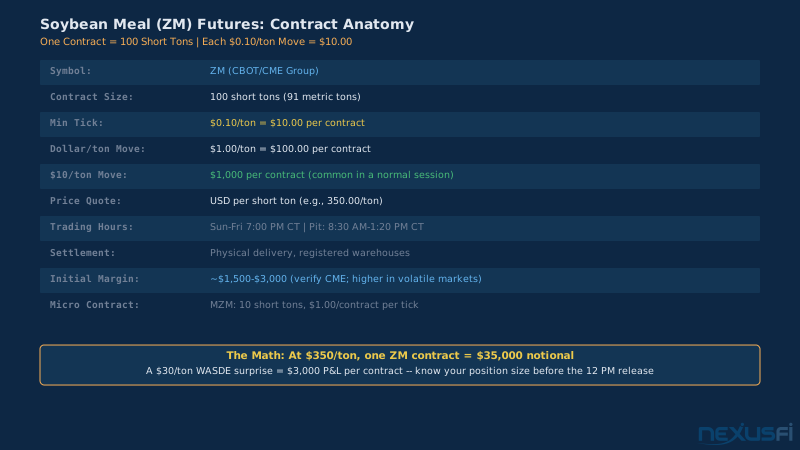
ZM trades at 100 short tons per contract. Each $0.10/ton tick is worth $10.00. At $350/ton, that's $35,000 notional per contract. A $30/ton WASDE surprise — completely normal — is $3,000 P&L per contract. Size so. The ZL soybean oil article covers the co-product side of the crush in depth.
Key Specifications #
- Symbol: ZM (CBOT/CME Group)
- Underlying: Soybean meal, 47.5% protein minimum, bulk
- Contract size: 100 short tons
- Minimum tick: $0.10/ton = $10.00 per contract
- Dollar value per $1/ton move: $100.00 per contract
- Price quote: USD per short ton (e.g., 350.00/ton)
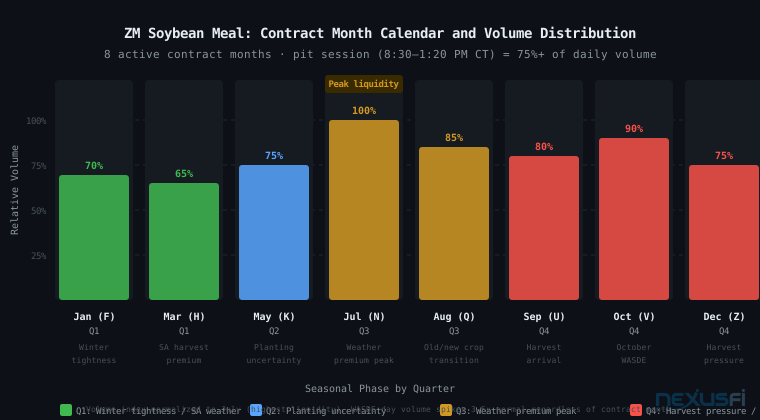
- Trading months: January (F), March (H), May (K), July (N), August (Q), September (U), October (V), December (Z)
- Exchange hours (Globex): Sunday 7:00 PM CT through Friday 7:45 PM CT (daily maintenance break 7:45-8:00 PM CT)
- Pit session: Monday-Friday 8:30 AM-1:20 PM CT (peak liquidity window)
- Settlement: Physical delivery at registered warehouses in Illinois, Indiana, and Missouri
- Initial margin: Approximately $1,500-$3,000 (varies with volatility, verify CME before trading)
Micro contract: MZM (Micro Soybean Meal) trades at 10 short tons — one-tenth the size of ZM. The micro tick is $1.00 per contract.
[1] The MZM exists specifically because crush spread trading requires precise ratio management.
Open interest and liquidity: ZM carries 300,000+ open interest contracts and 100,000-200,000 daily volume. The inside bid-ask is 1 tick ($10) during pit hours. Overnight Globex thins meaningfully but stays active due to South American price discovery and Asian livestock feed news flows.
Crush Economics: ZM's True Driver #
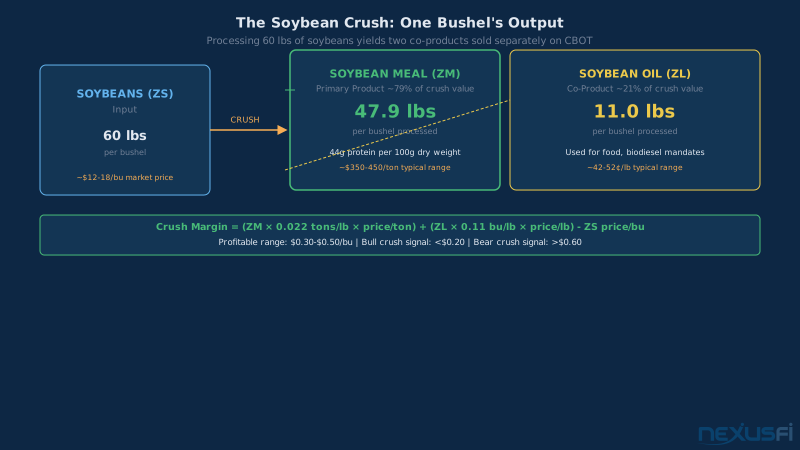
Understanding ZM without understanding the crush is like trading crude oil futures without knowing what refinery margins do. Soybean processors buy ZS, run their plants, and sell ZM + ZL. Their profit is the crush margin: the revenue from selling products minus the cost of buying beans. When margins are fat, they run at full capacity. When margins compress below operating costs, they cut runs.
Here's the chain: high ZL oil demand (from biodiesel mandates or palm oil disruption) expands crush margins → processors maximize throughput → more ZM supply hits the market → ZM price faces pressure even if livestock feed demand is strong. This is why ZM can drop during a strong protein demand period — oil economics are flooding the market with product.
@MrMojoRisin studied the fundamentals directly: "Actually from the two products coming from the soybean, you could say that the meal is the main product and the oil the byproduct... hedgers in this market actually like to lock in the 'crush spread'. They buy the bean and sell the meal and oil. In this way they protect themselves in the scenario of rising bean prices and dropping meal and oil prices." [2]
The standard crush formula: Crush Margin = (ZM price × 0.022 tons/lb × price/ton) + (ZL price × 0.11 bu/lb × price/lb) - ZS price/bu. Profitable range is roughly $0.30-$0.50/bu. Below $0.20/bu, processors start cutting runs — meal supply tightens. Above $0.60/bu, they're maximizing throughput — meal supply swells. These aren't trading signals by themselves, but they're the fundamentals that should anchor every ZM position.
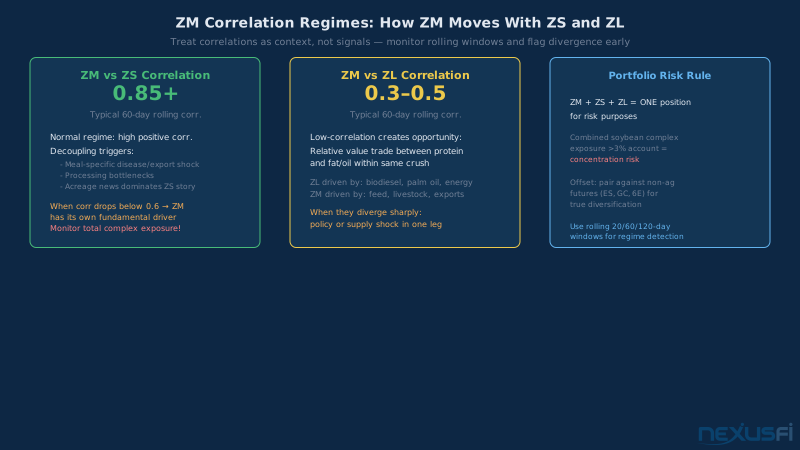
ZM's correlation with ZS runs at 0.85+ in normal market conditions. They trade together. But the ZM/ZL correlation runs at just 0.3-0.5 — meaning oil and meal frequently diverge. That low oil correlation is where the within-complex relative value opportunity lives. When meal and oil diverge sharply, something specific is happening in one of those sub-markets: a biodiesel policy change, an Argentine crush disruption, or a livestock disease outbreak. Find the reason, and you've found the trade.
What Moves ZM: The Driver Stack #
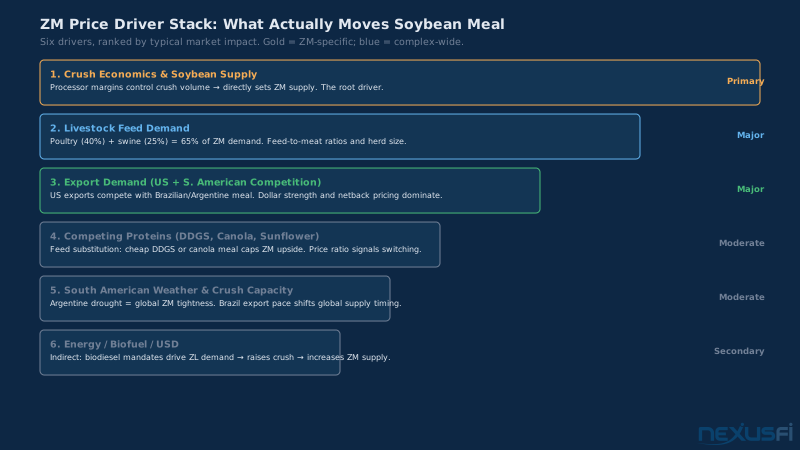
ZM's price is set by a six-layer driver stack. They don't operate independently — they interact, amplify, and sometimes cancel each other. Here's how they rank:
1. Crush economics and soybean supply (primary): Everything starts here. Processor profitability controls crush volume, which controls ZM supply. A WASDE report that cuts soybean ending stocks by 50 million bushels can immediately tighten the supply outlook for both ZS and the meal that would have been produced from those beans. Watch crush margins in real time.
2. Livestock feed demand (major): Poultry and swine account for roughly 65% of ZM consumption. Feed-to-meat ratios, herd sizes, and livestock profitability all feed back into meal demand. When hog prices are strong and feed is cheap, pork producers expand — more meal demand downstream. Disease outbreaks (African Swine Fever in Asia, avian flu in the US) can swing ZM export markets by tens of millions of tons.
3. Export demand (major): US meal competes directly with South American meal in global markets. Dollar strength, Brazilian export volumes, and Argentine export taxes all determine the competitive position of US ZM exports. When Brazilian supply tightens or the real weakens, US exports accelerate — WASDE revisions to export projections carry the largest surprise potential of any balance sheet line item.
@tigertrader, trading soybeans during a tight old-crop situation, described the dynamic precisely: "july soybeans and meal have been the leaders to the upside however, the market faces both a wall of supply for the new crop season and a favorable start to the growing season. traders continue to wait to see just 'how high' of a price for nearby soybeans will be necessary to assure that the market is fully covered for the tight situation for crushers during the June-August time-frame." [3]
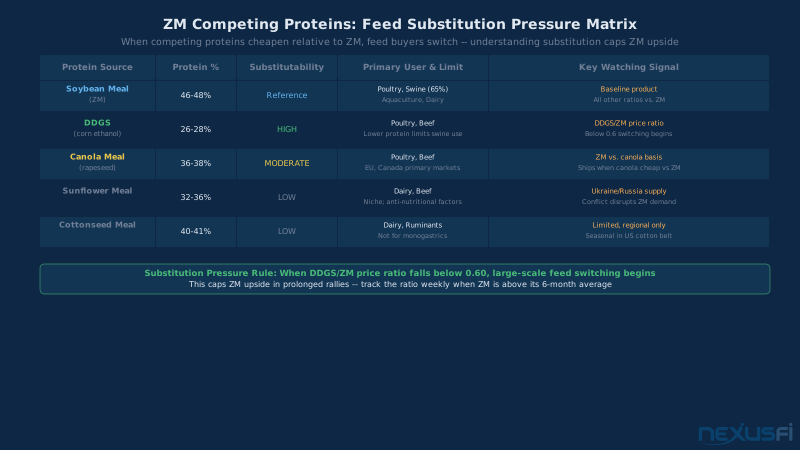
4. Competing proteins (moderate): DDGS (distillers dried grains), canola meal, sunflower meal, and cottonseed meal all compete with ZM in feed rations. When DDGS prices fall relative to ZM (common when ethanol margins are strong), feed buyers substitute — capping ZM upside. The ZM/DDGS price ratio is worth tracking as a demand-limiting signal.
5. South American weather and crush capacity (moderate): Brazil and Argentina together represent over 50% of global soybean exports. An Argentine drought or export tax hike creates immediate ripples in ZM pricing worldwide. The South American growing season (November-March) adds a counter-seasonal weather premium to the global supply narrative.
6. Energy, biofuel policy, and USD (secondary): These are indirect. EPA Renewable Fuel Standard decisions affect ZL demand → crush margins → ZM supply. A stronger dollar makes US exports less competitive, weighing on prices. FOMC decisions and inflation data move USD, which moves agricultural commodity prices across the board.
Meal vs. Oil: The Within-Complex Relative Value Trade #
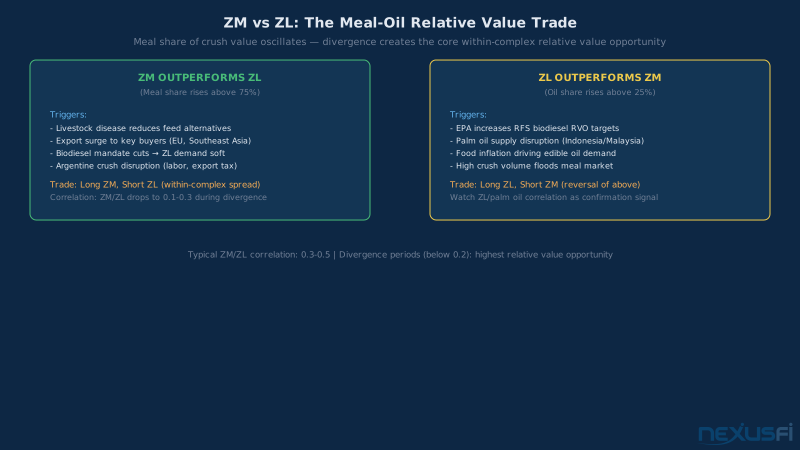
Soybean meal and oil come out of the same crush process, but they have separate demand stories. The meal-oil ratio — the share of crush revenue going to each product — oscillates based on what's driving demand in each sub-market. When meal share rises toward 80%+, ZM is outperforming ZL. When oil share pushes toward 25%+, ZL is outperforming ZM.
This spread creates one of the cleanest relative value trades in commodity markets: Long ZM, Short ZL (or the reverse) when the ratio diverges from historical norms. The position is at the core anchored — you're not guessing market direction, you're trading the economics of the crush processing chain.
ZM outperforms when: livestock disease drives protein feed shortages; US meal export programs accelerate; biodiesel mandates are cut (weakening ZL demand while ZM demand holds); Argentine crushing is disrupted by labor strikes or export taxes. ZL outperforms when: EPA increases biodiesel RVO targets; Indonesian or Malaysian palm oil supply drops sharply; high crush margins flood the meal market with product.
ZM/ZL correlation typically runs at 0.3-0.5 — low enough that this trade carries meaningful diversification from outright soybean direction. When that correlation drops below 0.2, it signals a significant fundamental divergence with a specific driver. Find that driver and the trade has a clear thesis.
The crush spread SOM exchange product (11 ZM : 9 ZL : 10 ZS) captures the full economics in one order. The ZM-only vs. ZL-only relative value trade is a more targeted expression — use it when you have a clear thesis about meal vs. oil demand and don't want outright bean direction.
Seasonal Patterns #
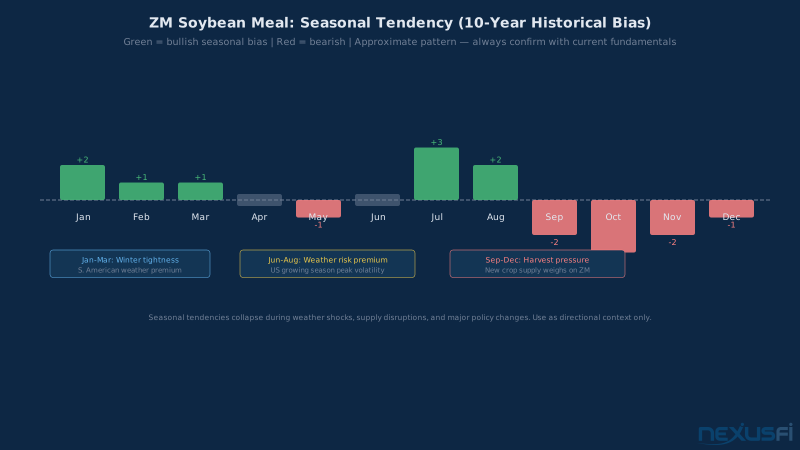
ZM follows seasonal patterns driven by the US crop calendar, South American growing seasons, and livestock demand cycles. These tendencies are real but they break — and when they break, the break itself is usually the bigger trade.
Q1 (January-March): Bullish bias. Winter tightness combines with South American weather premium. US processors draw down old-crop stocks to meet domestic feed commitments. Brazilian export logistics often run behind early in the season. Chinese buying before their New Year can create demand spikes. The ZM/ZS spread typically strengthens as meal tightness leads the complex higher.
Q2 (April-June): Transitional. Planting uncertainty builds into US acreage reports. South American harvest arrivals begin shifting global supply flows. USDA Prospective Plantings (March 31) and Planted Acreage (June 30) set the supply narrative for the crop year — these are two of the three most volatile days in the ZM calendar.
Q3 (June-August): Weather premium peak. US growing season risk commands a premium that can move ZM dramatically. Tight old-crop stocks ahead of harvest amplify the move. This is the highest-volatility period of the year in the soybean complex — normal-day ATR can run 150-250 ticks during active weather markets.
Q4 (September-December): Harvest pressure. New crop supply hits the market. Crush margins often widen as processors run at full capacity into harvest. ZM price faces its maximum seasonal supply headwind. The October WASDE (which sets the initial new-crop balance sheet) is the single most market-moving report of the year.
The old-crop/new-crop transition in July-August creates calendar spread opportunities that
[3] The meal spread structure mirrors this — nearby contracts can trade at significant premiums to deferred when old-crop stocks are tight.
Key Reports and Events #
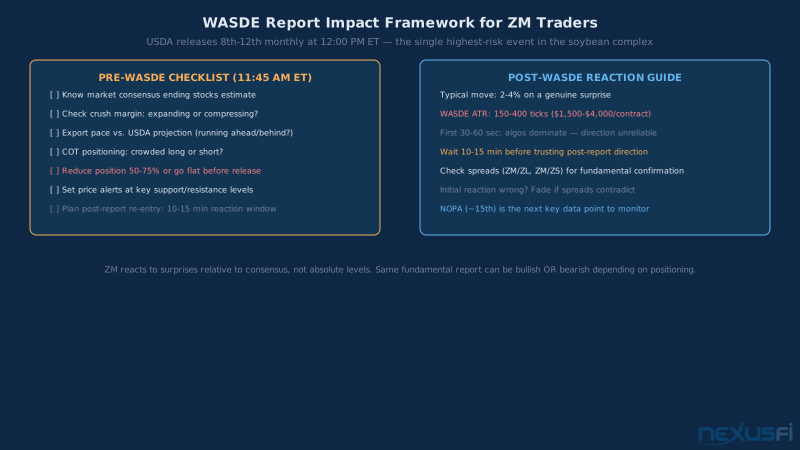
ZM traders live on a report calendar. Know these dates by heart:
USDA WASDE Report (monthly, 8th-12th, 12:00 PM ET sharp): The single most important ag report. Supply/demand balance sheets for ZS and ZM. Five balance sheet line items matter most for ZM: ending stocks (most important), crush/production, export projections, domestic feed usage, and imports.
NOPA Crush Report (monthly, ~15th): The National Oilseed Processors Association reports actual crushing volumes for the prior month. This is how you read domestic meal supply pressure — actual throughput versus what the market expected. Strong crush = more meal supply. Weak crush = tighter meal. NOPA often moves ZM 50-100 ticks on a genuine surprise. @Fi specifically called it out: "NOPA Crush Report (~15th of month) — ZM-specific. Total soybeans crushed and meal production. This is how you read domestic meal supply pressure." [4]
USDA Export Sales Report (weekly, Thursday 8:30 AM ET): Net new export sales and shipments for ZM. During September-February when Brazilian supply isn't competing, this is a high-impact weekly event. Consistent above-pace exports force WASDE upward export revisions — a bullish trigger that compounds over months.
USDA Export Inspections (weekly, Monday 11:00 AM ET): Physical grain inspected for export. Confirms or contradicts the Thursday sales data. Use both together to assess whether the export pace is sustainable versus running hot/cold.
USDA Prospective Plantings (March 31) and Planted Acreage (June 30): Annual planting intentions and actual acres. These set the supply narrative for the entire crop year. Surprises of 1-2 million acres can move the complex 3-5% in minutes. March 31 frequently drops alongside Grain Stocks — a double event that creates maximum volatility.
USDA Grain Stocks (quarterly): Physical inventory counts at the end of each quarter. The March report combined with Prospective Plantings creates the highest-volatility day in the ag calendar most years.
WASDE day (8th-12th, 12:00 PM ET) is ZM's highest-risk event. Be in your final position before 11:55 AM ET. The first 30 seconds after release are algorithm-dominated — direction is unreliable until price discovers the new equilibrium 10-15 minutes later. Stops 200-400 ticks ($2,000-$4,000) are normal on a genuine surprise.
Spread Trading with ZM #
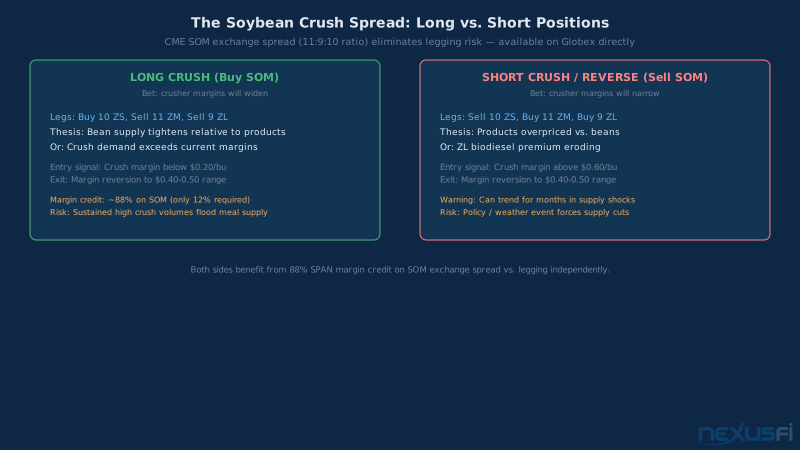
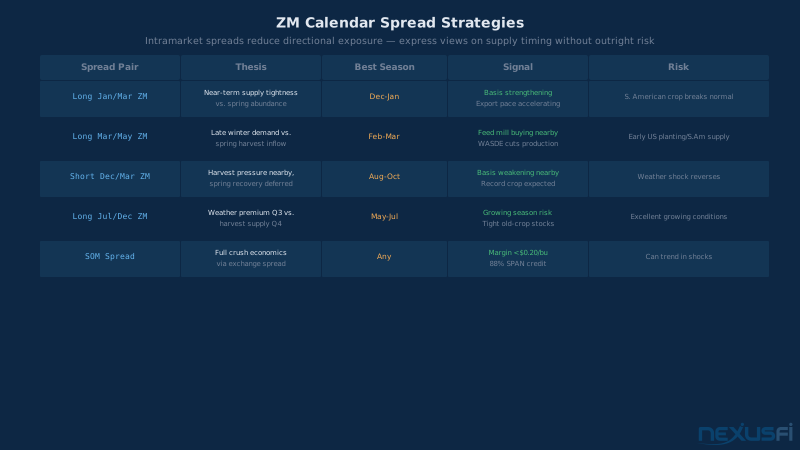
ZM is one of the most spread-traded instruments in agricultural markets. Processors, feed mills, and grain merchants use it for hedging. Traders use it for relative value. Here are the primary spread strategies:
Crush Spread (SOM exchange spread): The fundamental trade in the soybean complex. @SMCJB, in a detailed post on hedge ratios, laid out the mechanics precisely: "11:9:10 spread is more accurate than 1:1:1 when it comes to tracking the actual profitability of the crush process, but 1:1:1 is a much simpler approximation. Globex actually has exchange spreads where you can trade things like this spread avoiding all the legging risk. For the crush spread the symbol is SOM. So buying 1 SOM will mean you are actually buying 11 Soybean Meal, buying 9 Soybean Oil and selling 10 Soybean all in one trade." [5] The SPAN margin credit on SOM is approximately 88% — meaning you only need to post 12% of the combined leg margin. This makes the crush spread capital-efficient versus legging independently.
Long crush (buy SOM): Bet that processor margins will widen. Entry signal: crush margin below $0.20/bu. Thesis: bean supply tightening relative to product demand. Exit: margin reversion toward $0.40-$0.50/bu range. Risk: sustained high crush volumes from strong ZL demand flooding meal supply despite strong feed fundamentals.
Short crush / reverse (sell SOM): Bet that processor margins will narrow. Entry signal: crush margin above $0.60/bu. Thesis: products overpriced versus beans, or ZL biodiesel premium eroding. Warning: crush margins can trend for months during supply shocks or policy-driven moves — add stop logic tied to margin expansion beyond historical percentiles.
Calendar spreads (intramarket): Express views on supply timing without directional exposure. The Jan/Mar spread isolates winter tightness versus spring supply expectations. The Dec/Mar spread captures harvest pressure in nearby versus spring recovery in deferred. The most common entry: buy the nearby when you expect near-term tightness (backwardation), or sell the nearby when expecting carry (supply abundance). @myrrdin's approach to seasonal calendar spreads in grains: "According to MRCI this spread should move upwards from end of November until early March. In my opinion this spread should have special merits, as current price levels seem to suggest a move of acreage from corn to beans." [6] The same seasonal logic applies to ZM calendar structures.
ZM vs. ZL (within-complex relative value): When meal share of crush value diverges from historical norms, this creates a long/short opportunity. Long ZM + Short ZL when meal demand is outrunning oil demand. Reverse when biodiesel or palm oil dynamics are driving ZL higher. The low ZM/ZL correlation (0.3-0.5) makes this a genuine diversifying spread, not just reduced direction.
ZM vs. corn (feed substitution): When ZM prices expensive relative to corn energy value, feed mills adjust rations toward more corn and less protein. Watch the ZM/corn price ratio — historical extremes signal when substitution pressure will cap ZM upside or floor ZM downside.
Practical Trading Considerations #
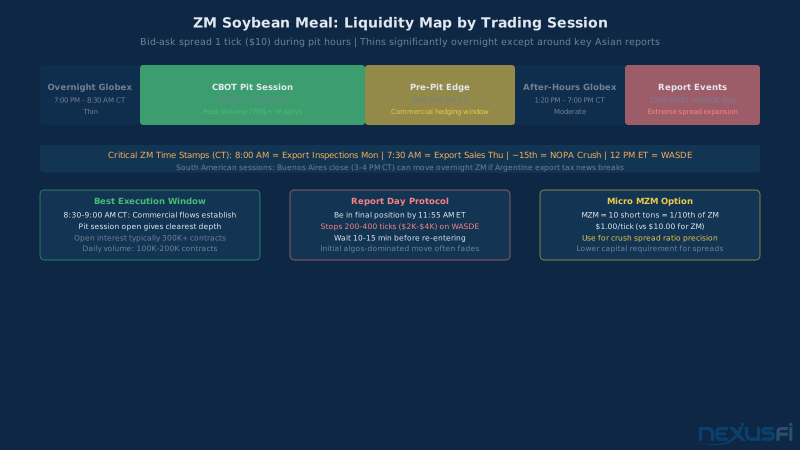
ZM is highly liquid during CBOT pit session hours (8:30 AM-1:20 PM CT). Market depth at the inside quote is typically 300-600 contracts. Globex overnight session has meaningful activity — especially near USDA announcements or South American crop news — but thins between midnight and 7 AM CT unless a significant weather or policy event is breaking.
Position sizing by regime: Normal session daily ATR runs 80-150 ticks ($800-$1,500). WASDE days run 200-400 ticks ($2,000-$4,000). Size your position so that a full-day move against you doesn't exceed 1-2% of account equity. At $350/ton ZM, one contract is $35,000 notional — that notional size matters when calculating leverage.
The WASDE protocol: Be in your final position before 11:55 AM ET on WASDE day. If you're not comfortable with potential $3,000-$4,000 adverse moves, reduce to MZM micro contracts ($300-$400 equivalent) or be flat. The post-report first-mover advantage belongs entirely to algorithm systems with direct market access — the initial direction in the first 30 seconds is unreliable. Wait 10-15 minutes before trusting the reaction, then trade the sustained move.
ZM correlation risk in portfolio context: If you're running ZM + ZS + ZL simultaneously, recognize that you are exposed to a single fundamental driver — the soybean complex. All three correlate during WASDE surprises and crop shocks. For true diversification, offset soybean complex positions with non-agricultural instruments. Monitor total complex exposure against your portfolio heat limit.
Commercial hedging flows: The pit session open (8:30-9:00 AM CT) often shows the clearest depth as commercial processors and feed mills establish or lift hedges. These participants have natural positions in the physical market and are selling meal and buying beans continuously. Their flow creates the most meaningful price discovery of the day.
Export season dynamics (September-February): During US export season, Thursday Export Sales reports carry more market impact. Above-pace sales force bullish WASDE revisions over time. Watch the cumulative pace against the USDA marketing year export forecast — when pace crosses 80% of the annual target before mid-season, upward revisions become the base case.
At $350/ton, ZM has $35,000 notional per contract. Normal ATR 80-150 ticks ($800-$1,500). WASDE events 200-400 ticks ($2,000-$4,000). Use the MZM micro at 1/10th size for crush spread ratio precision or for events when full-contract risk is too large for your account.
Old crop vs. new crop transitions: The July-August window is where old-crop scarcity collides with new-crop expectations. Nearby ZM can trade at extreme premiums to December contracts when stocks are tight. These inversion structures eventually collapse as harvest supply hits the market — but the timing is uncertain. Size spreads at this junction to survive the transition without a directional guess on timing.
Knowledge Map
Prerequisites
Understand these firstGo Deeper
Build on this knowledgeReferences This Article
Articles that build on this topicCitations
- — Micro futures: MZM, MZS, MZL -- what changed and why (2025) 👍 1“For soybeans, the crush spread using micros (long MZS, short MZL and MZM) offers cleaner ratios -- the traditional 10:11:9 becomes manageable at 5:6:4.5 with these contract sizes.”
- — MrMojoRisin's Journal (2022)“Actually from the two products coming from the soybean, you could say that the meal is the main product and the oil the byproduct. Soybean Meal is mainly used for animal feed. Hedgers in this market actually like to lock in the 'crush spread'. They buy the bean and sell the meal and oil.”
- — Reminiscences of a Bean Trader or Why These Ain't Yo Daddy's Beans No-Mo (2014) 👍 7“july soybeans and meal have been the leaders to the upside however, the market faces both a wall of supply for the new crop season and a favorable start to the growing season. traders continue to wait to see just 'how high' of a price for nearby soybeans will be necessary to assure that the market is fully covered for the tight situation for crushers during the June-August time-frame.”
- — Reminiscences of a Bean Trader or Why These Ain't Yo Daddy's Beans No-Mo (2014) 👍 15“as you can see from the chart, old crop beans are in steep backwardation while new crop beans are flat to humped. the old school thought was coined by keynes who referred to this as normal backwardation. in the case of old crop beans it seems much of the strength has come from the assumption that china will continue to be a huge buyer of us beans as their crush margins are currently looking favorable.”
- — Two hedge ratios for crush spread (2022) 👍 2“11:9:10 spread is more accurate than 1:1:1 when it comes to tracking the actual profitability of the crush process. For the crush spread the symbol is SOM. Buying 1 SOM will mean you are actually buying 11 Soybean Meal, buying 9 Soybean Oil and selling 10 Soybean all in one trade. The margin credit for the 11:9:10 is 88% meaning that the margin required for the spread is only 12% of what the margin would be for all the legs.”
- — Grains & Beans (2016) 👍 1“According to MRCI this spread should move upwards from end of November until early March. In my opinion this spread should have special merits, as current price levels seem to suggest a move of acreage from corn to beans. Furthermore, there is not much weather premium priced in for South America.”
- — commodity spreads (2014) 👍 3“The seasonality of the bean spreads is changing as a result of the large increase in SA production. US calendar spreads no longer have to reflect a rationing of product throughout the entire year, only until SA becomes available to market, about late January/February.”
- CME Group — Soybean Crush Reference Guide (2023)
- USDA WAOB — USDA World Agricultural Supply and Demand Estimates (WASDE) (2024)