



Soybean Oil (ZL) Futures: The Complete Trading Guide to the Soybean Complex's Most Volatile Contract
Overview #
Soybean oil is the most widely consumed vegetable oil in the United States and one of the most actively traded agricultural commodities in the world. ZL futures on the CBOT give traders direct exposure to a market that sits at the intersection of food, feed, fuel, and global weather — a combination that creates consistent volatility and well-defined seasonal patterns.
What makes ZL different from just trading ZS (soybeans)? A lot. Soybean oil has its own supply and demand drivers — palm oil competition, biodiesel mandates, crush margin economics — that can push ZL dramatically higher or lower even when beans are going nowhere. The 2021-2022 rally that took ZL from 33 cents to over 80 cents was driven as much by biodiesel mandates and palm oil supply disruptions as by the underlying soybean crop. A straight ZS trader missed that story.
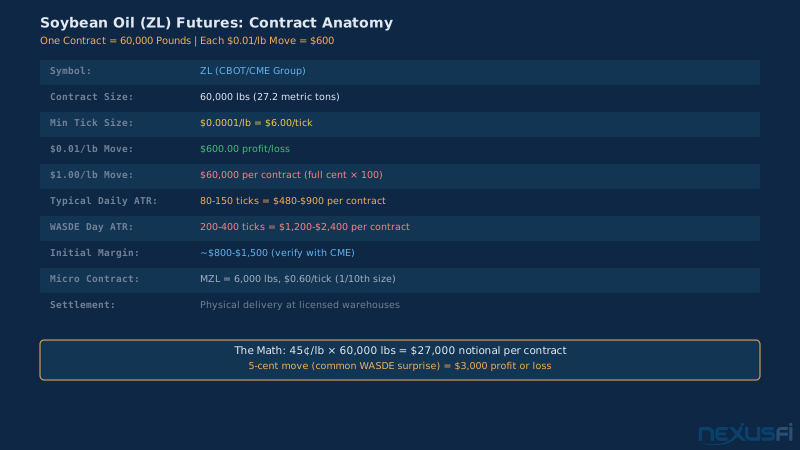
ZL trades at 60,000 pounds per contract. Each $0.0001/lb tick is worth $6.00. The contract's liquid trading hours overlap with the CBOT pit session (9:30 AM-1:20 PM CT), though CME Globex keeps it active around the clock. If you're trading the soybean complex or looking for a commodity with genuine fundamental drivers and predictable seasonal tendencies, ZL deserves a spot on your screen.
Key Specifications #
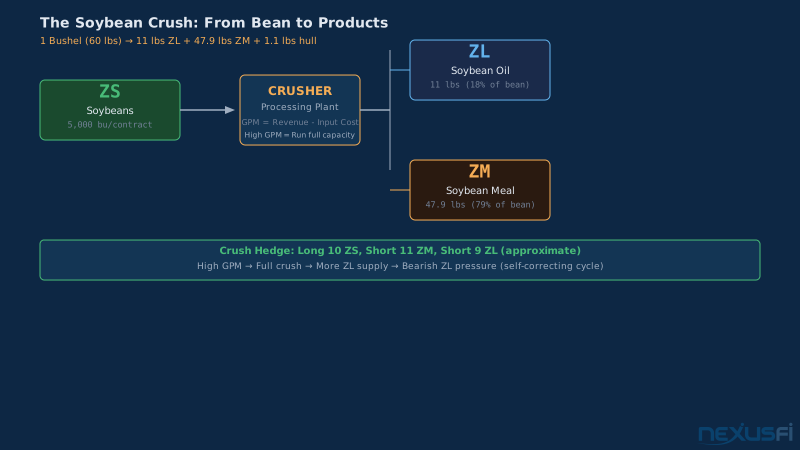
- Symbol: ZL (CBOT/CME Group)
- Underlying: Crude soybean oil, edible grade
- Contract size: 60,000 pounds
- Minimum tick: $0.0001 per pound = $6.00 per contract
- Dollar value per full cent: $600.00 per contract
- Price quote: Cents per pound (e.g., 45.00¢/lb)
- Trading months: January (F), March (H), May (K), July (N), August (Q), September (U), October (V), December (Z) -- all 12 months active
- Exchange hours (Globex): Sunday 7:00 PM CT through Friday 7:45 PM CT (daily maintenance break 7:45-8:00 PM CT)
- Pit session: Monday-Friday 9:30 AM-1:20 PM CT (most liquid period)
- Settlement: Physical delivery, licensed warehouses in Illinois, Iowa, Indiana, Ohio, and Louisiana
- Exchange: CBOT (CME Group)
- Initial margin: Approximately $800-$1,500 (varies with volatility, check CME for current)
Micro contract: MZL (Micro Soybean Oil) launched in February 2024. Size: 6,000 pounds (1/10 of ZL). Tick: $0.0001/lb = $0.60/tick. The micro contract makes spread trading accessible to retail traders — critical for implementing crush spread strategies without full-contract capital requirements.
Liquidity note: ZL is one of the most liquid agricultural futures. Open interest typically exceeds 400,000 contracts, daily volume 80,000-150,000. Bid-ask spread is 1 tick ($6) during pit hours. Overnight Globex thins much but stays active due to palm oil correlation.
The Soybean Crush: How ZL Fits the Complex #
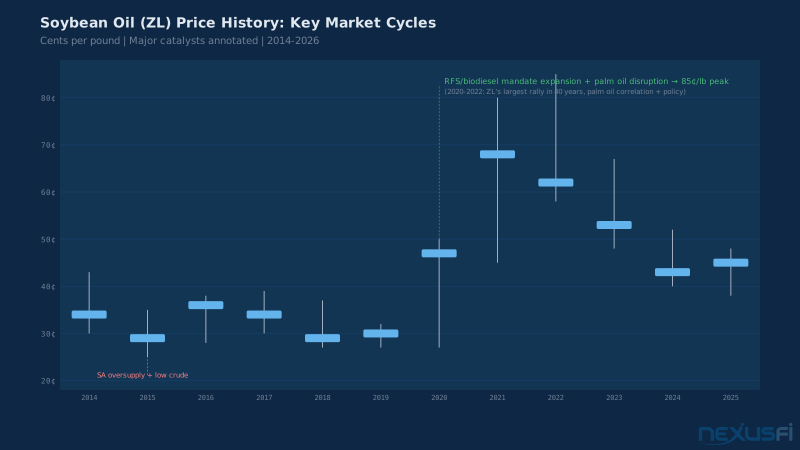
To understand ZL, you have to understand the crush. Soybeans are processed (crushed) into two primary products: soybean meal (ZM) and soybean oil (ZL). The economics of that transformation drive a huge portion of ZL's price.
The conversion math: One 60-pound bushel of soybeans yields approximately:
- 11 pounds of soybean oil (ZL)
- 47.9 pounds of soybean meal (ZM)
- 1.1 pounds of hull/other byproducts
That's roughly 18% oil by weight and 79% meal. The oil is the minor output by weight but not by value — ZL's price per pound is roughly 3-5x higher than ZM per pound on an equivalent basis, making the oil a significant portion of the crush revenue.
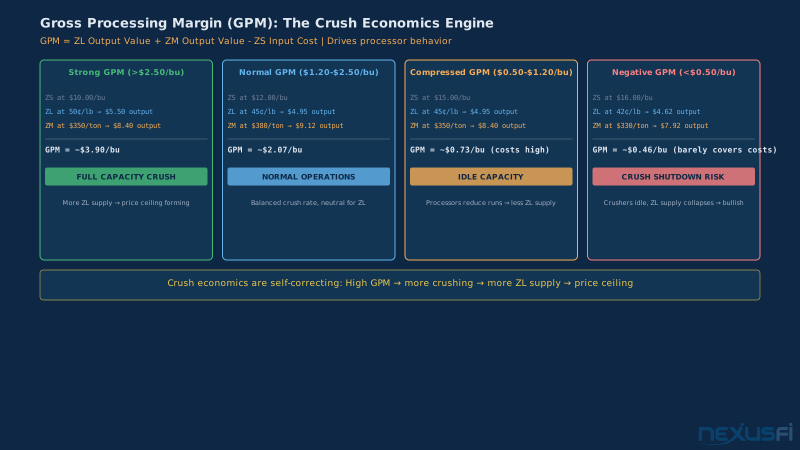
Gross Processing Margin (GPM): The profitability of crushing soybeans is measured by the GPM, also called the crush margin:
GPM = (ZL output value + ZM output value) - (ZS input cost)
When GPM is high, processors run plants at full capacity to capture the margin. When GPM compresses, they idle capacity. This creates a direct feedback mechanism: strong GPM → more crushing → more ZL supply → downward pressure on ZL. The crush is self-correcting, but it operates with a lag of days to weeks.
The hedge ratio: Professional crushers and grain traders hedge the crush using a standardized ratio. The common benchmark: long 10 ZS, short 11 ZM, short 9 ZL (approximate). This reflects the physical output ratios of a full processing run. The "reverse crush" — short ZS, long ZM, long ZL — bets that output product prices are undervalued relative to input beans.
Why this matters for ZL traders: When beans are rallying because of a supply scare but meal demand is soft, ZL often gets squeezed harder than ZS — the oil has to absorb the input cost increase without proportional demand support. Conversely, when biodiesel mandates tighten and oil demand surges, ZL can rally away from beans entirely. These divergences are where the real ZL-specific trading opportunities live.
What Moves ZL: The Driver Stack #
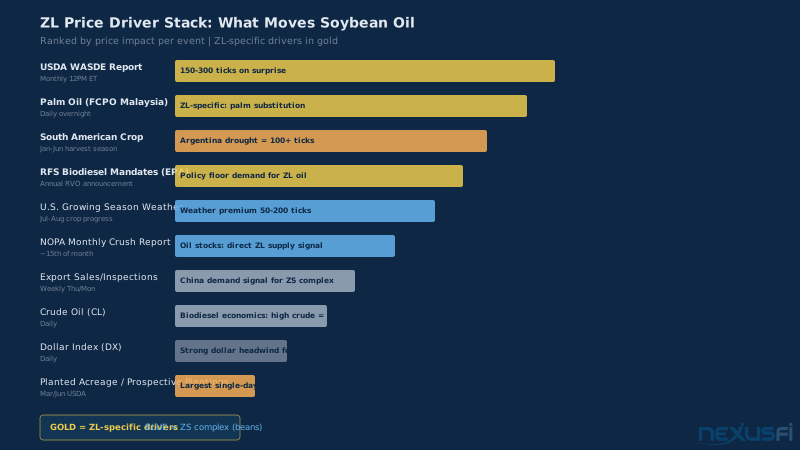
ZL has more distinct price drivers than most ag commodities. Traders who only track USDA reports miss half the story.
Driver 1: USDA WASDE Reports
The Monthly World Agricultural Supply and Demand Estimates (WASDE) is the dominant event risk for the entire soybean complex. Released around the 8th-12th of each month at 12:00 PM ET, it updates the U.S. and global supply/demand balance sheets for soybeans, meal, and oil. The soybean ending stocks number is the key figure.
A bullish WASDE — lower-than-expected ending stocks or reduced production estimates — can move ZL 150-300 ticks in the first 5 minutes. A bearish surprise goes the other way just as fast. WASDE day is not a day to hold overnight positions into the release unless you've deliberately sized down to survive a 200-tick adverse move.
The oil-specific WASDE data: Beyond the headline soybean number, the WASDE includes separate global vegetable oil supply/demand tables covering soybean oil, palm oil, rapeseed oil, and sunflower oil. When global vegetable oil stocks tighten, ZL gets a separate bid that ZS and ZM don't share.
Driver 2: South American Crop
Brazil and Argentina together account for roughly 55-60% of global soybean exports. Their crop calendars create predictable volatility windows:
- Brazil planting: October-December
- Brazil harvest: January-April
- Argentina planting: November-January
- Argentine harvest: April-June
During Brazilian harvest (Jan-Apr), South American beans compete directly with U.S. supplies, pushing U.S. export pace lower and often weighing on ZS and ZL alike. As @tigertrader analyzed: "Argentine soybean harvest is being hampered by rains with progress at 70% now, 23% behind last year. There is some concern about quality and yield loss on the 30% that is in the field yet." [5] Any Argentine harvest disruption — drought (La Nina is the key risk), excessive rain, or logistical delays — is directly bullish ZL because Argentina runs major crush facilities that supply global oil markets.
Argentina is especially critical for ZL because it's the world's largest exporter of soybean oil, not just soybeans. A bad Argentine crop hits ZL harder than ZS in relative terms. The 2022 Argentine drought removed a significant chunk of global oil supply and was a primary driver of the ZL rally to multi-decade highs.
Driver 3: Palm Oil Correlation
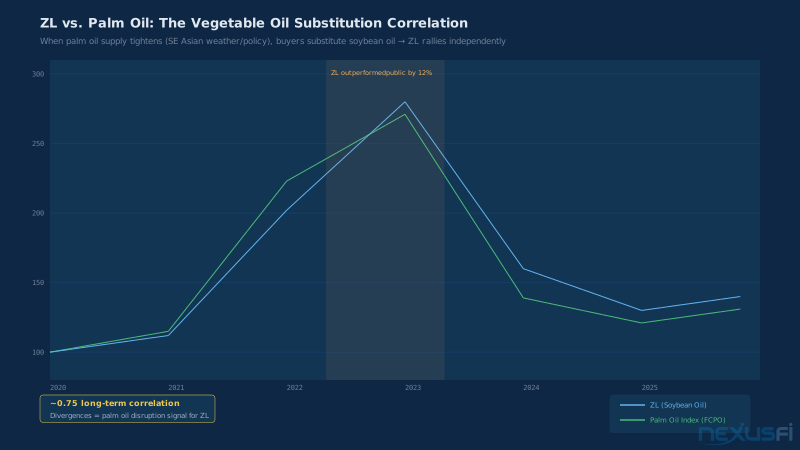
Soybean oil and palm oil (traded on Bursa Malaysia as BMD Crude Palm Oil futures, symbol FCPO) are substitutes in food and industrial applications. When Malaysian palm oil production is disrupted — flooding, drought, labor shortages, disease — buyers substitute soybean oil, lifting ZL prices. The correlation between ZL and palm oil is one of the strongest in the agricultural commodity world.
Tracking FCPO overnight provides early signal for ZL direction during the CME Globex session. Malaysian palm oil trades during Asian hours, so the overnight ZL session often gaps at the open based on FCPO movement. Palm oil's January export data (released first week of each month), the MPOB (Malaysian Palm Oil Board) monthly supply/demand report, and Indonesian export tax/levy policy are all data points that move ZL directly.
The palm oil correlation also means ZL has a weather event exposure set completely separate from U.S. growing conditions. El Nino — which causes drought in Southeast Asia — is structurally bullish ZL even in years with abundant U.S. soybean crops. This creates situations where ZL rallies while ZS goes sideways or declines, a divergence that trips up traders who treat ZL as just "beans, but the oil part."
Driver 4: Renewable Fuel Standard and Biodiesel Mandates
The U.S. Renewable Fuel Standard (RFS), established under the Energy Policy Act of 2005 and expanded in 2007, mandates blending of renewable fuels into transportation fuel. The biomass-based diesel component (BBD) is satisfied primarily by biodiesel made from soybean oil. The EPA sets annual RVO (Renewable Volume Obligations) that determine how much biodiesel must be blended, creating a price floor for soybean oil demand regardless of food sector conditions.
When the EPA raises BBD RVOs — as it did aggressively in 2022-2024 — the mandatory demand for ZL increases. Refiners, blenders, and feedstock traders bid up soybean oil to secure compliance supply. This regulatory demand is stickier than food demand because refiners can't substitute away from it without paying RIN (Renewable Identification Number) penalties. The RFS mechanism means ZL prices can sometimes decouple from food/feed supply-demand fundamentals and trade on energy policy instead.
The energy price connection: When crude oil prices rise, biodiesel becomes more economically competitive as a blend component. This adds an energy-driven bid to ZL that ZS doesn't receive. In high crude oil environments, ZL commands a biodiesel premium above its food-use value. In low crude oil environments (or when the EPA cuts RVOs), that premium evaporates quickly. This is why ZL showed more correlation to crude oil during the 2020-2022 energy cycle than at any previous point in its history.
Driver 5: U.S. Growing Season Weather
The U.S. soybean growing season runs from planting (May-June) through pod-fill (August) and harvest (September-November). The critical weather window is July-August, when soil moisture levels determine yield. The USDA's weekly Crop Progress and Condition reports (released Mondays at 4:00 PM ET) track crop conditions using the "Good/Excellent" percentage — the most-watched single metric during the growing season.
A crop condition drop below 60% Good/Excellent during August typically triggers a weather premium rally in ZS that carries ZL along. But ZL's response to U.S. weather is muted relative to ZS because ZL's global supply includes palm oil and other vegetable oils that don't depend on Iowa rainfall. A pure weather scare in beans often produces a smaller percentage move in ZL than ZS.
Driver 6: NOPA Monthly Crush Report
The National Oilseed Processors Association (NOPA) releases monthly crush data around the 15th of each month. This tells traders exactly how many soybeans were processed by NOPA member companies (who represent roughly 95% of U.S. crush capacity). The crush number directly impacts ZL supply — higher crush equals more oil production.
The NOPA report also includes soybean oil stocks. When oil stocks are high, ZL faces selling pressure regardless of bean price direction. A month with unexpectedly heavy crush but stagnant oil demand can push ZL lower while ZS trades flat or higher.
[6] The same report contains the ZL oil stocks figure that's equally critical for oil price direction.
Old Crop vs. New Crop: The Calendar Structure #
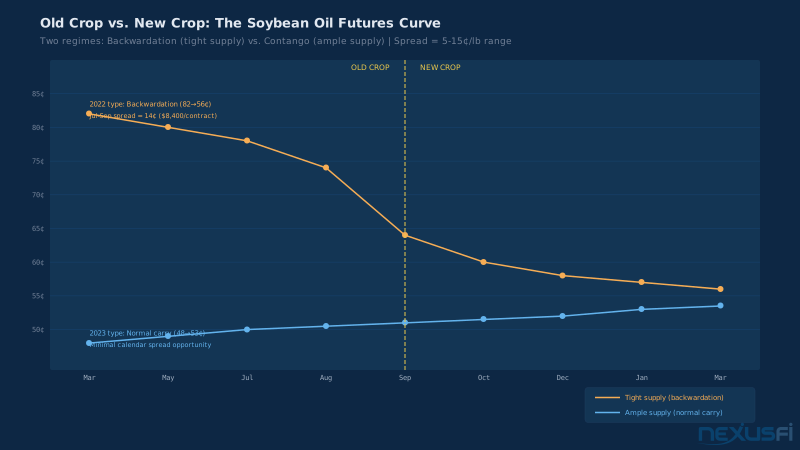
The soybean marketing year runs from September to August. Futures contracts before the new harvest (July and prior for ZS, but ZL tracks closely) are "old crop" — supply from last year's harvest. Contracts after the harvest begins (September and December for the new crop year) are "new crop" — supply from the current year's planting.
This distinction creates a structural reality in ZL's forward curve that experienced traders exploit.
Backwardation in old crop: When carryover supplies are tight (low stocks-to-use ratio), old crop months trade at a premium to new crop. The market is paying up to have oil NOW because there isn't enough to go around.
Contango in new crop: When supplies are ample (high stocks-to-use), new crop trades near fair value (cost-of-carry). The market has no urgency to price in scarcity because the forward crop will relieve tightness.
Why the South American calendar changed the game: The old seasonal patterns in ZS and ZL assumed U.S. supply had to last all year. Now, Brazilian beans arrive in March-April and Argentine beans in April-June, breaking the U.S. supply monopoly mid-crop-year.
The September/October ZL contract — a specific quirk: For soybeans, the September contract is the "bastard month" — sometimes treated as old crop, sometimes new crop, depending on harvest progress. ZL tracks this ambiguity closely. The ZL October contract is typically the first genuine new crop month. Spreads between July-August ZL (old crop) and October-December ZL (new crop) widen much when the old crop is tight, creating calendar spread opportunities with well-defined risk.
Seasonal Patterns: The ZL Trading Calendar #
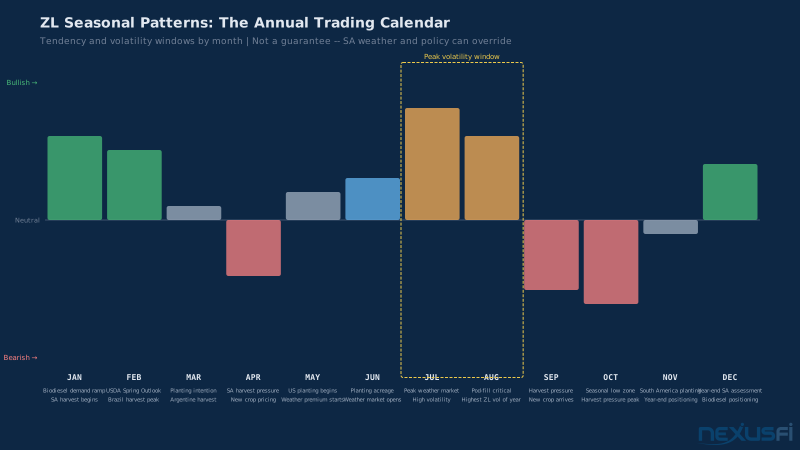
ZL has more consistent seasonal tendencies than almost any other commodity. The convergence of U.S. growing season, South American harvest, biodiesel blending cycles, and food industry procurement creates repeating patterns that traders have documented for decades.
January-March: South American Harvest Premium and Biodiesel Ramp
Brazilian soybean harvest begins in January and accelerates through March. Brazilian selling pressure should be bearish for ZS and, through lower crush margins, bearish for ZL. But this period also coincides with the beginning of the U.S. biodiesel blending season, when refiners start building inventory for spring and summer compliance. The competing forces often produce sideways-to-volatile price action in ZL during this window — the fundamental story is being written in real time based on whether Brazilian production meets early estimates.
April-June: Argentine Harvest and Transition
Argentine harvest peaks in April-May. Argentina's combination of the world's largest soybean crushing infrastructure and highest palm oil substitute exposure means Argentine crop problems directly spike ZL. In normal years, April-June sees seasonal ZL weakness as new Southern Hemisphere supply hits global markets. In La Nina years (dry Argentine conditions), this period can see violent ZL rallies that defy the seasonal calendar.
July-August: The U.S. Weather Market
The most volatile two-month window for the entire soybean complex. Crop development in the U.S. Corn Belt is at its most critical stage — pollination for corn, pod-filling for beans. Weekly Crop Progress reports drive day-to-day volatility. The highest probability weather premium years follow La Nina patterns — forecasters watch ENSO conditions heading into July to calibrate weather risk. ZL during this window often moves 200-500 ticks ($1,200-$3,000/contract) on single-week weather scares.
September-November: Harvest Pressure
U.S. harvest creates a classic seasonal weight on prices as new supply enters the pipeline. ZL typically sees its seasonal low in the October-November window as harvest runs at full pace. But this seasonal pressure can be completely overwhelmed by carryover tightness from the prior year, South American weather previews, or continued biodiesel mandate strength. The "harvest low" is a tendency, not a guarantee — when global oil supplies are tight, harvest pressure barely registers.
Key Reports and Events: The ZL Trading Calendar #
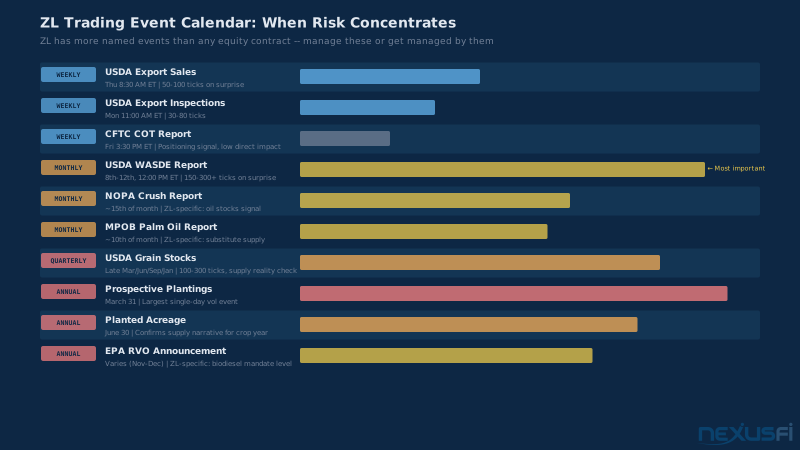
ZL traders maintain a strictly organized event calendar. Missing a report is amateur. Here's what matters:
Weekly
- USDA Export Sales (Thursday, 8:30 AM ET): Net soybean sales and shipments. Bullish surprises rally the entire complex.
- USDA Export Inspections (Monday, 11:00 AM ET): Physical beans inspected for export. Cross-checks Thursday's sales data.
- USDA Crop Progress (Monday, 4:00 PM ET, growing season only): Good/Excellent condition ratings during July-September.
- CFTC Commitments of Traders (Friday, 3:30 PM ET): Commercial vs. speculative positioning. Commercial short-covering or speculative position changes signal turning points. When producer net-short positions hit multi-year extremes, it's a high-probability setup indicator -- as @Aufidius notes: "The producers are heavily net short. In fact last time they were this low was 6/15. So what happened on that date? SoyOil went from 33 to 29 in a few weeks." [12]
Monthly
- USDA WASDE (8th-12th, 12:00 PM ET): The dominant event. Global soybean, meal, and oil supply/demand balance sheets updated. As @Schnook notes about WASDE positioning: "the broader trend and supply/demand fundamentals lean bullish, while speculator positioning looks excessively long" -- the WASDE is the moment where those stretched positions get tested. [9]
- NOPA Crush Report (~15th): Monthly soybean crush volumes and soybean oil stocks held by member companies. Directly tells you how fast new ZL supply is being created.
- MPOB (Malaysian Palm Oil Board) (~10th): Palm oil production, stocks, and export data. Key correlation driver for ZL.
Quarterly/Annual
- USDA Grain Stocks (quarterly): Physical inventory counts. March report (with Prospective Plantings) creates the highest single-day volatility of the year.
- Prospective Plantings (March 31): Sets the narrative for U.S. planted acreage. A 500,000-acre shift in soybean planting intentions can move ZL 100+ ticks.
- Planted Acreage (June 30): Confirms actual planted acres. Last major supply-side calibration before weather becomes the dominant variable.
- EPA RVO Proposal/Final Rule (annually): The Renewable Fuel Standard biodiesel volume obligation determines regulatory biodiesel demand for ZL. When the EPA proposes higher BBD volumes, ZL rallies on the announcement.
Spread Trading with ZL #
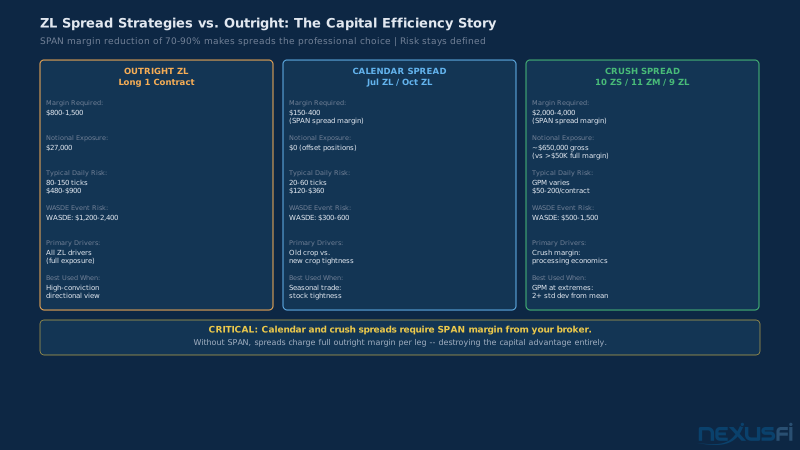
ZL's best trades aren't necessarily outright directional bets. The spread relationships offer risk-adjusted returns that outright futures often can't match.
The Crush Spread: Long ZS, Short ZL and ZM
The long crush (long beans, short products) profits when the crush margin compresses — beans are expensive relative to oil and meal. This is the typical trade when processors are running full capacity and output products can't keep pace with rising input costs. The reverse crush (short ZS, long ZL and ZM) profits when the crush margin expands — products rally relative to beans, incentivizing increased crush.
The standard ratio for a full crush: 10 ZS, 11 ZM, 9 ZL (long ZS, short ZM and ZL for the long crush). Using micro contracts reduces this to approximately 5 MZS, 6 MZM, 4.5 MZL. The SPAN margin on the spread is dramatically lower than the sum of individual outright margins — a critical advantage for retail traders. But running the crush requires SPAN margining, which not all retail brokers offer.
[11] Comparable leverage reduction applies to ZL crush spreads vs. outright ZL positions.
Calendar Spreads: Old Crop vs. New Crop
When old crop stocks are tight and new crop expectations are ample, the July-September ZL spread (long July, short September) can move 300-500 ticks in a single week. The trade is betting that tightness in the current supply year won't be resolved until new crop arrives. It has defined risk — the spread can't invert beyond what the market is willing to pay for convenience yield — and often shows clear mean-reversion patterns once harvest begins.
Practical Trading Considerations #
Liquidity and Execution
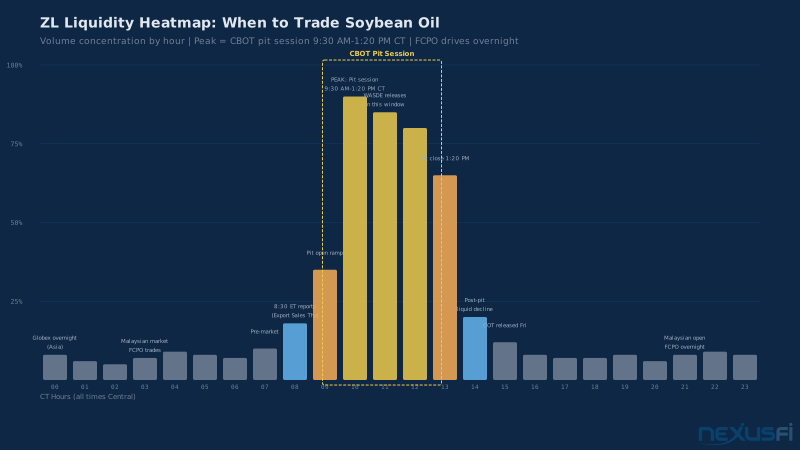
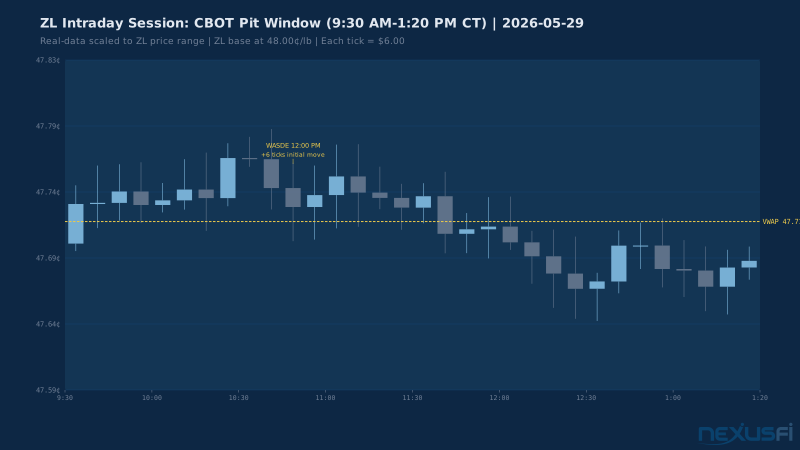
ZL is highly liquid during CBOT pit session hours (9:30 AM-1:20 PM CT). Market depth at the inside is typically 200-500 contracts. Globex overnight session has meaningful liquidity but thins dramatically between midnight and 7 AM CT unless a major crop report drops overnight in a South American country or palm oil is making a large move in Asian trading.
The first 30 minutes after the pit session opens (9:30-10:00 AM CT) often show the highest daily volume as overnight positions are adjusted, USDA export data from Thursday or Monday is digested, and commercial hedgers establish or lift positions. The settlement period (12:00-1:20 PM CT) is the second liquid peak.
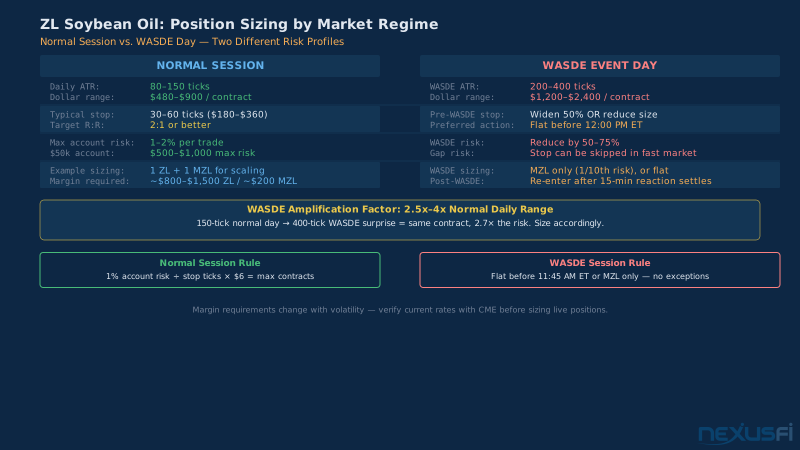
WASDE day (8th-12th, 12:00 PM ET) is ZL's highest-risk event. Be in your final position before 11:55 AM ET — stops beyond 150-300 ticks for a normal report, 400+ ticks for a genuine surprise. The algorithm-dominated first 30 seconds after a big number spikes in both directions. Give any WASDE release 10-15 minutes before trusting direction. The initial reaction is often wrong.
At 45¢/lb, ZL has a notional value of $27,000/contract. Each $0.01/lb = $600. Normal daily ATR: 80-150 ticks ($480-$900). WASDE events and weather markets spike to 300-600 ticks ($1,800-$3,600) — factor that into stops on report days.
When ZL Fails to Follow ZS
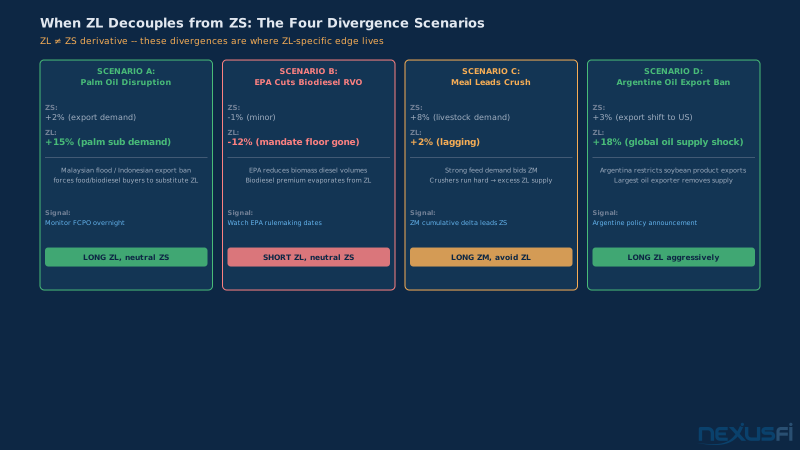
The most dangerous trade in ZL is assuming it will always correlate with ZS. It doesn't. When ZL diverges from ZS, there's a reason — and that reason usually becomes the dominant story. Key divergence scenarios:
- Palm oil disruption (ZL outperforms ZS): Malaysian flood or Indonesian export ban drives ZL independently. ZS treads water while ZL rallies 10-15%.
- RFS/biodiesel demand softens (ZL underperforms ZS): EPA cuts BBD RVOs or crude oil drops sharply. ZL loses its biodiesel premium while ZS stays supported by export demand.
- Argentine oil export restrictions: Argentina periodically restricts or taxes soybean product exports to capture domestic value. Announcements can spike ZL (less Argentine oil on global market) independently of ZS direction.
- Meal drives the crush (ZM leads, ZL lags): Strong livestock demand (hog expansion, poultry cycle) bids ZM hard. Processors increase crush for the ZM margin, generating excess ZL supply. ZS and ZM rally while ZL gets capped by over-supply from the crush economics.
Understanding which driver is active determines whether ZL is the right instrument to express your view or whether ZS or ZM is a better fit.
Knowledge Map
Go Deeper
Build on this knowledgeReferences This Article
Articles that build on this topicCitations
- — commodity spreads (2014) 👍 2“Buying intra commodity spreads (long nearby, short deferred) allows me to quantify my risk, there is no other way of doing this using only futures.”
- — commodity spreads (2014) 👍 3“The seasonality of the bean spreads is changing as a result of the large increase in SA production. US calendar spreads no longer have to reflect a rationing of product throughout the entire year, only until SA becomes available to market, about late January/February.”
- — Grains & Beans (2017) 👍 4“Tomorrow, the USDA Report on grains & beans will be released. This report is well known for causing large moves, especially in the row crops.”
- — Reminiscences of a Bean Trader or Why These Ain't Yo Daddy's Beans No-Mo (2014) 👍 3“Argentine soybean harvest is being hampered by rains with progress at 70% now, 23% behind last year. There is some concern about quality and yield loss on the 30% that is in the field yet.”
- — Reminiscences of a Bean Trader or Why These Ain't Yo Daddy's Beans No-Mo (2014) 👍 15“In the case of old crop beans it seems much of the strength has come from the assumption that China will continue to be a huge buyer of US beans as their crush margins are currently looking favorable, and therefore the existence of a convenience yield.”
- — Grains & Beans (2022) 👍 6“These guys work with many of the large commercial entities in grains markets and their daily reports and commentaries will give you a very good idea of what other market participants are paying attention to -- most importantly, the types of news and events that can move markets.”
- — Trading ratios long term (2020) 👍 4“Spreads behave very differently than outright contracts and can actually be easier to trade as they have less noise, they are also a lot cheaper from a margin perspective.”
- — Futures spread trading grains education sources? (2024) 👍 4“Current SPAN margins for Long 1 CL F5 outright is $6,582 -- Long 1 CL F5/G5 Spread is $736. Very difficult to trade spreads without SPAN margining.”
- — Elite Commodities Analysis (2016) 👍 8“The producers are heavily net short. In fact last time they were this low was 6/15. So what happened on that date? SoyOil went from 33 to 29 in a few weeks.”
- — Muttoez Trading Journal (2016) 👍 5“surging Palm Oil prices are providing strong support to Soybean Oil prices.”
- — Reminiscences of a Bean Trader or Why These Ain't Yo Daddy's Beans No-Mo (2014) 👍 7“crushers do not want to own any more old crop than necessary to meet meal commitments, when expectations are for a bountiful new crop.”