



USDA Agricultural Reports for Futures Traders: WASDE, Acreage, Crop Progress, and the Data Calendar That Moves Grain Markets
The Government Data Layer That Moves Grain Markets #
Grain futures — corn (ZC), soybeans (ZS), wheat (ZW), soy meal (ZM), and soy oil (ZL) — move on scheduled government data releases that everyone can access for free. The USDA publishes the balance sheet for every major crop, updated monthly. Miss this data layer and you're trading blind. Understand it, and you have the same foundational information as the largest commodity hedge funds on earth.
[1] That's the complete grain research framework in two sentences. The USDA reports are the non-negotiable starting point for any grain fundamental analysis.
This article covers every USDA report that matters for futures traders: what each report contains, how to read it, how the market reacts to surprises versus expectations, and where to access all of it free. The USDA's data infrastructure is uniquely public — the same spreadsheets that commercial grain elevators and commodity trading advisors use are available to retail traders at zero cost, usually at 11:00 AM ET or 12:00 PM ET on scheduled release days.
USDA data is the great equalizer in grain markets. The government publishes balance sheets, crop ratings, and export flows that form the fundamental backbone of every major price move. A retail trader with an internet connection has access to the same primary source data as institutional commodity traders.
WASDE: The Balance Sheet Every Grain Trader Must Read #
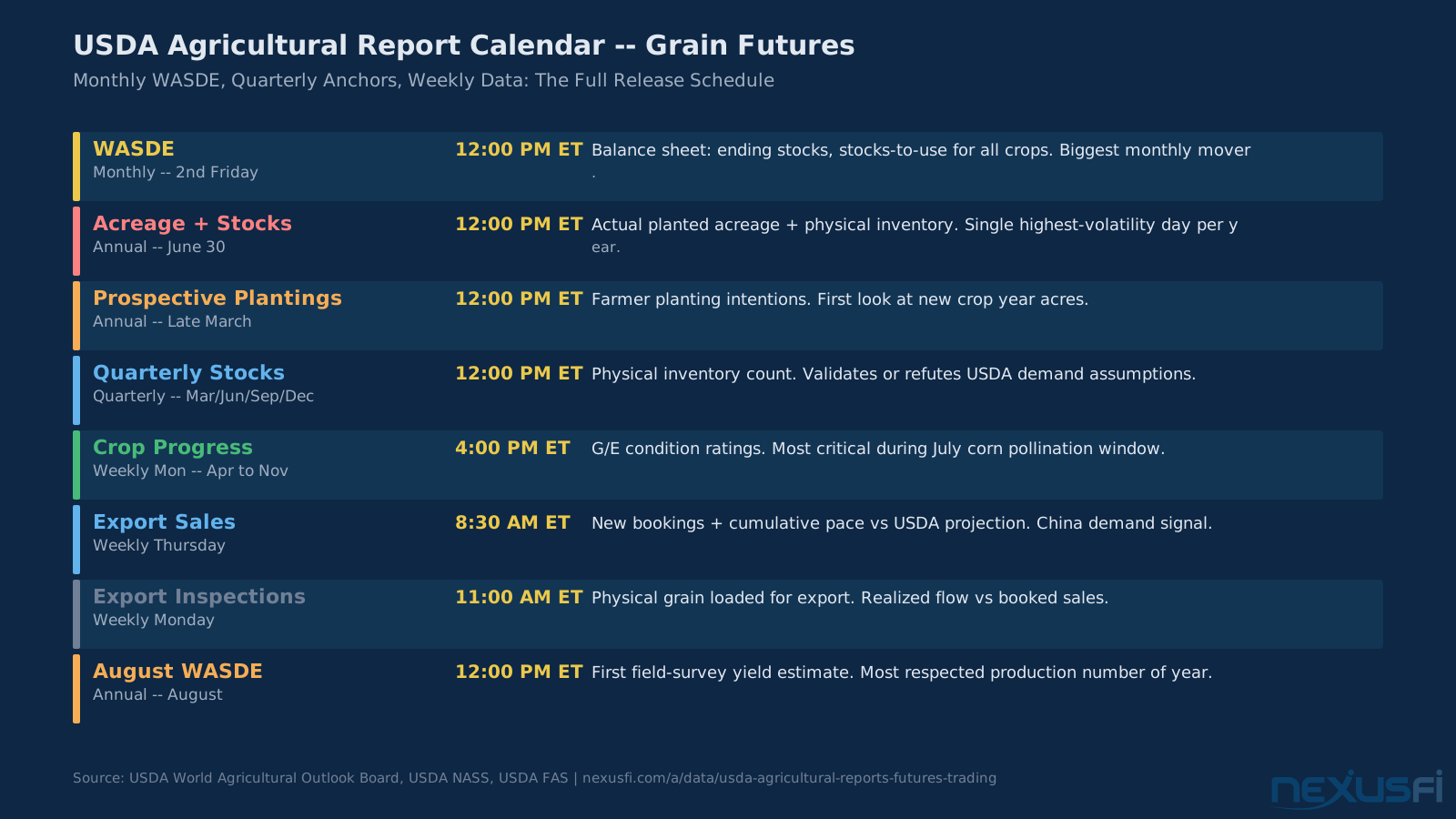
The World Agricultural Supply and Demand Estimates — universally called the WASDE — drops on the second Friday of each month at 12:00 PM ET. It is the single most important scheduled data release for grain futures. When the WASDE publishes a corn ending stocks estimate 150 million bushels above what traders expected, ZC can move 15-20 cents (75-100 ticks, or $750-$1,000 per contract) in the first two minutes of trading.
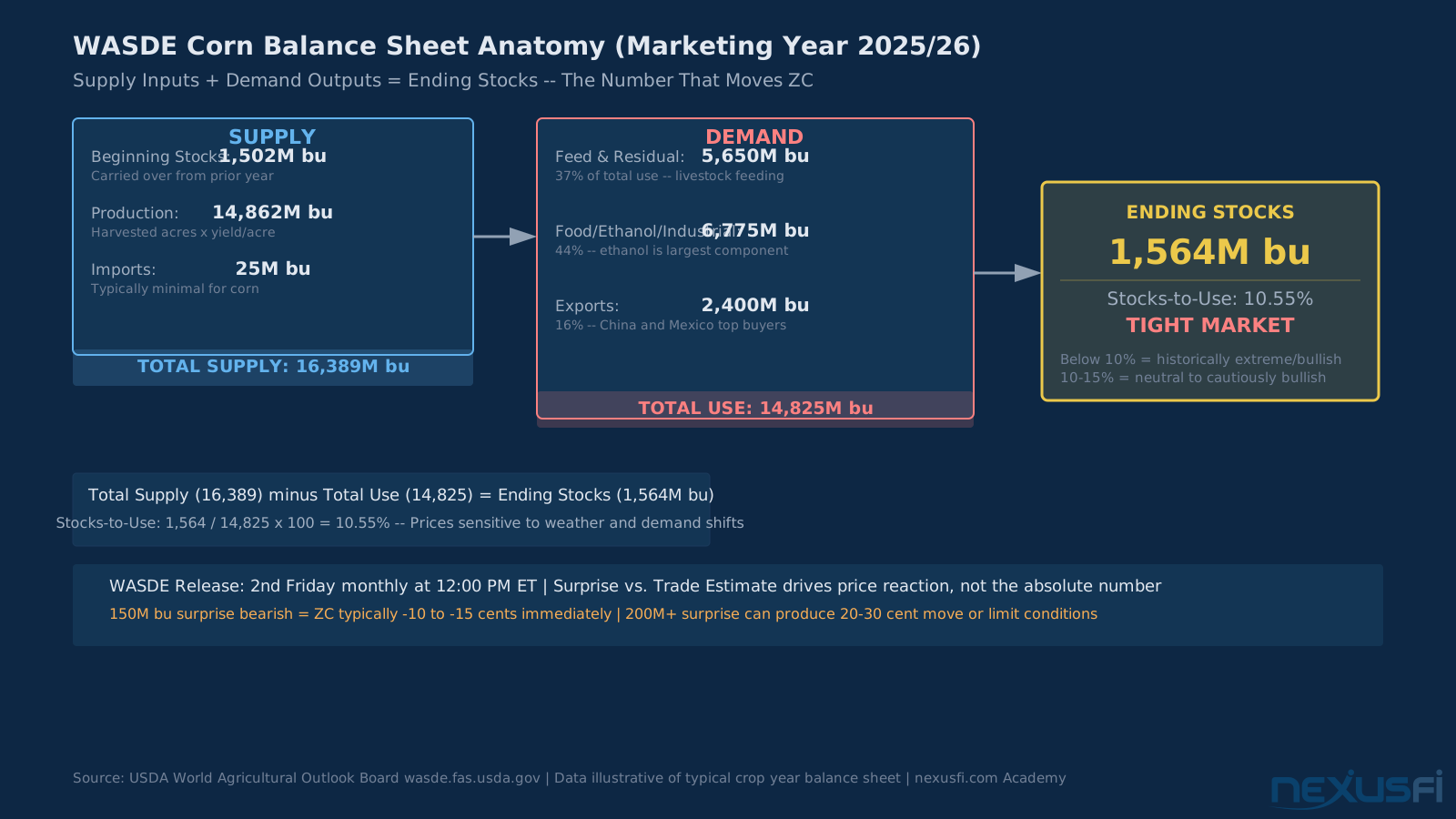
The WASDE is a supply-and-demand balance sheet. For each major crop (corn, soybeans, wheat, rice, cotton, oilseeds, livestock), USDA publishes:
- Supply: Beginning stocks (carried over from prior year), production (harvested acres times yield), imports
- Demand: Feed use, food/industrial use (ethanol for corn, crushing for soybeans), exports
- Ending stocks: What's left at crop year end (supply minus demand)
- Stocks-to-use ratio: Ending stocks divided by total use, expressed as a percentage
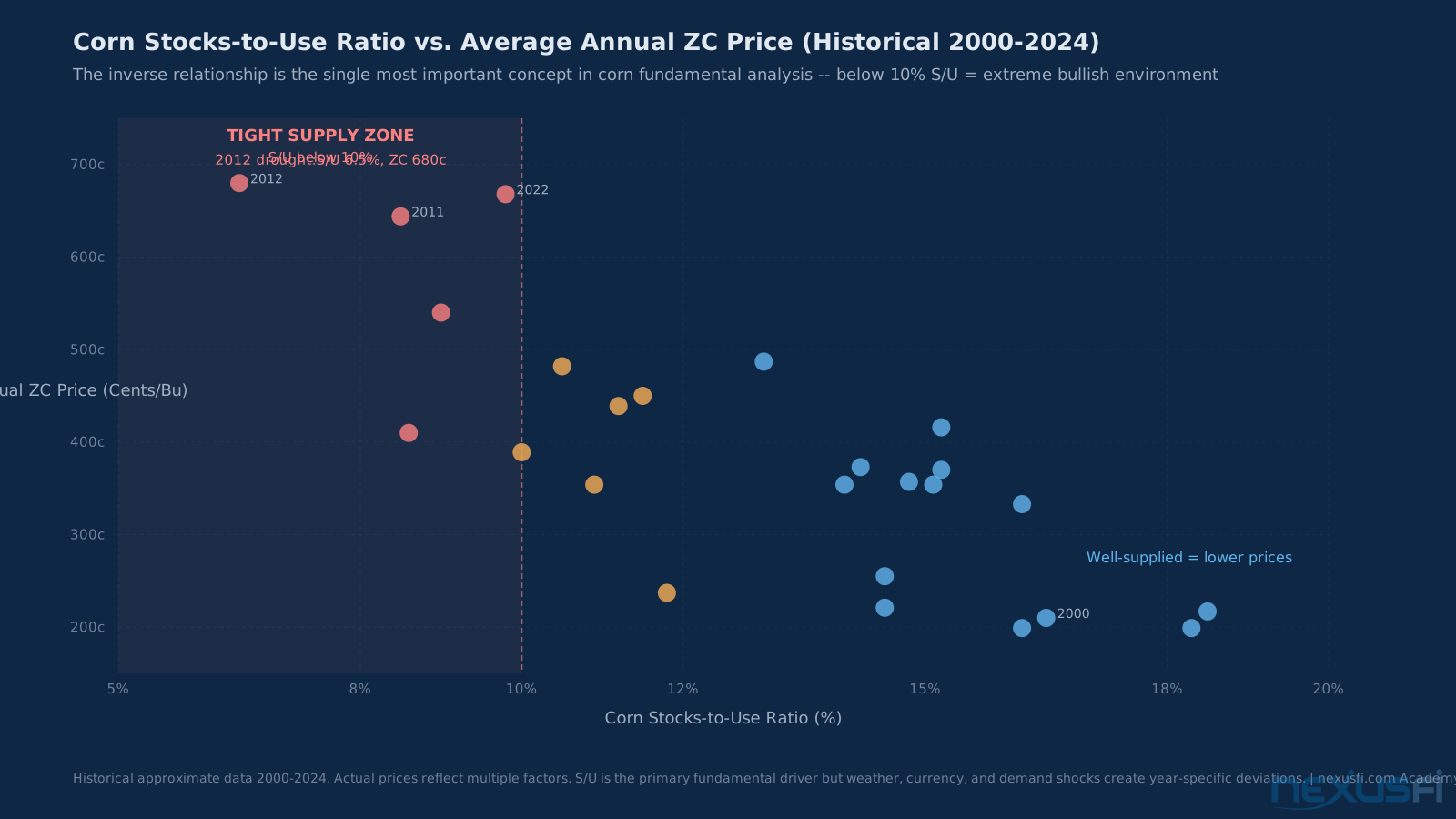
The number traders watch most closely is ending stocks and the stocks-to-use ratio. These figures tell you whether a market is tight or well-supplied. Corn with 8% stocks-to-use is a nervous market where weather problems can spike prices violently. Corn with 18% stocks-to-use is well-supplied and will grind lower unless something breaks. Corn stocks-to-use below 10% has historically corresponded to the most extreme price moves — the 2012 drought year saw S/U fall to 6.5% and ZC average 680 cents per bushel for the year.
The WASDE also covers international supply and demand. Brazil and Argentina produce nearly as much soybean as the U.S. The February and March WASDEs are especially watched for South American production estimates, as harvest is underway then. A 3 million metric ton Argentine soybean cut is roughly 110 million bushels less global supply — big enough to move ZS 30-50 cents in the first trading hour. [11]
Stocks-to-Use Ratio = Ending Stocks / Total Use x 100
Example: Corn ending stocks 1,820M bu / total use 15,200M bu = 11.97%
Below 10% = tight, historically bullish. 10-15% = neutral. 15-20% = comfortable supply. Above 20% = bearish backdrop.
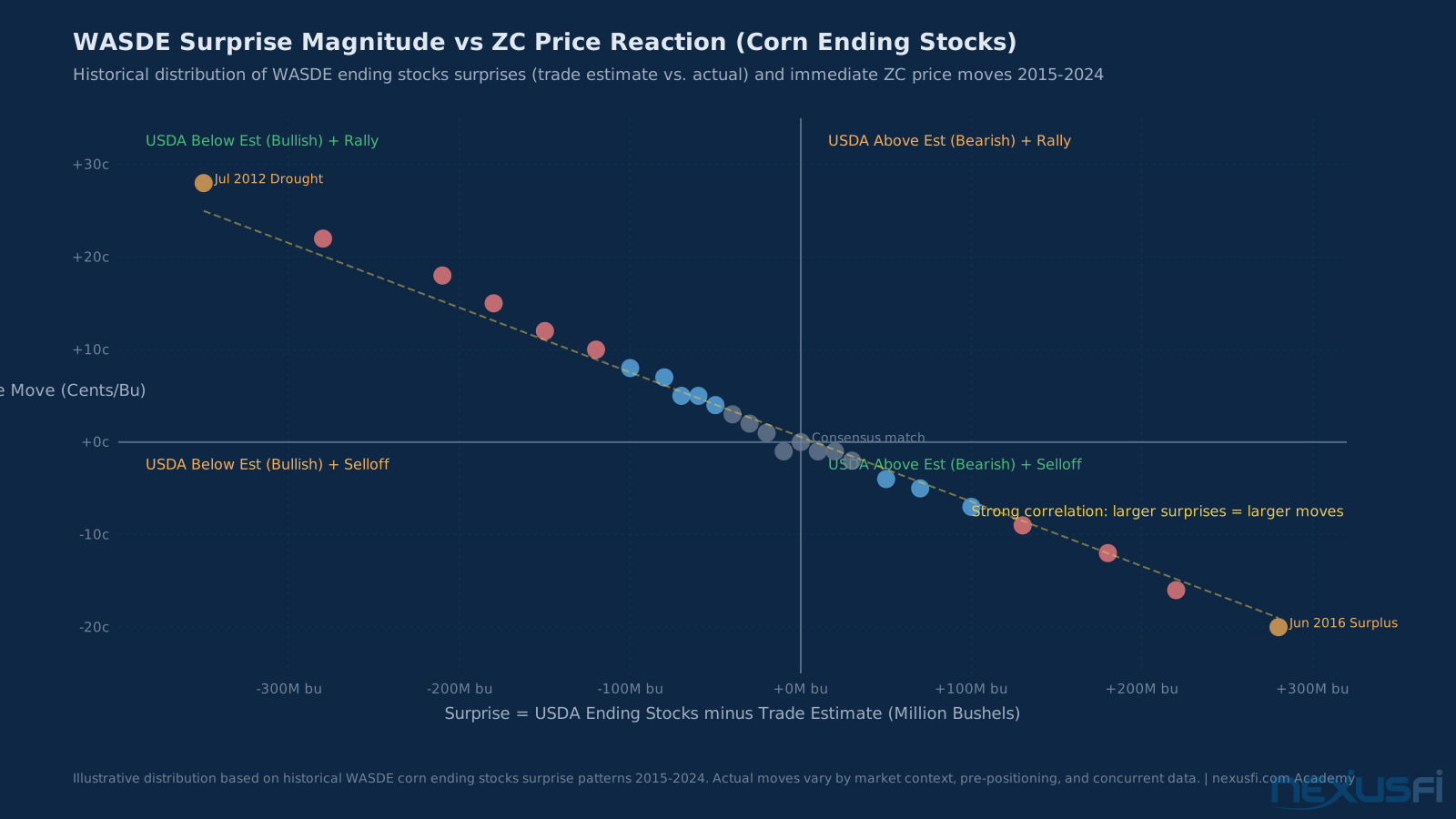
Before each WASDE, private analysts publish pre-report estimates that wire services compile into trade consensus. The price reaction depends on the surprise: the difference between USDA's official number and the trade estimate. USDA matching consensus produces minimal movement. USDA 200 million bushels below consensus on corn ending stocks produces immediate limit-up pressure.
[7] The harvest revision was bullish, but the demand revision partially offset it. Reading WASDE means understanding both sides of the balance sheet, not just production.
The "old crop" versus "new crop" distinction in WASDE is critical. The WASDE reports two balance sheets simultaneously — for the current marketing year ending (old crop) and the one beginning (new crop). Old crop ending stocks reflect actual supply already produced. New crop projections are highly uncertain in the early months. Price reactions often differ between old crop and new crop contracts (ZCN vs. ZCZ).
Acreage and Stocks Reports: The Quarterly Anchors #
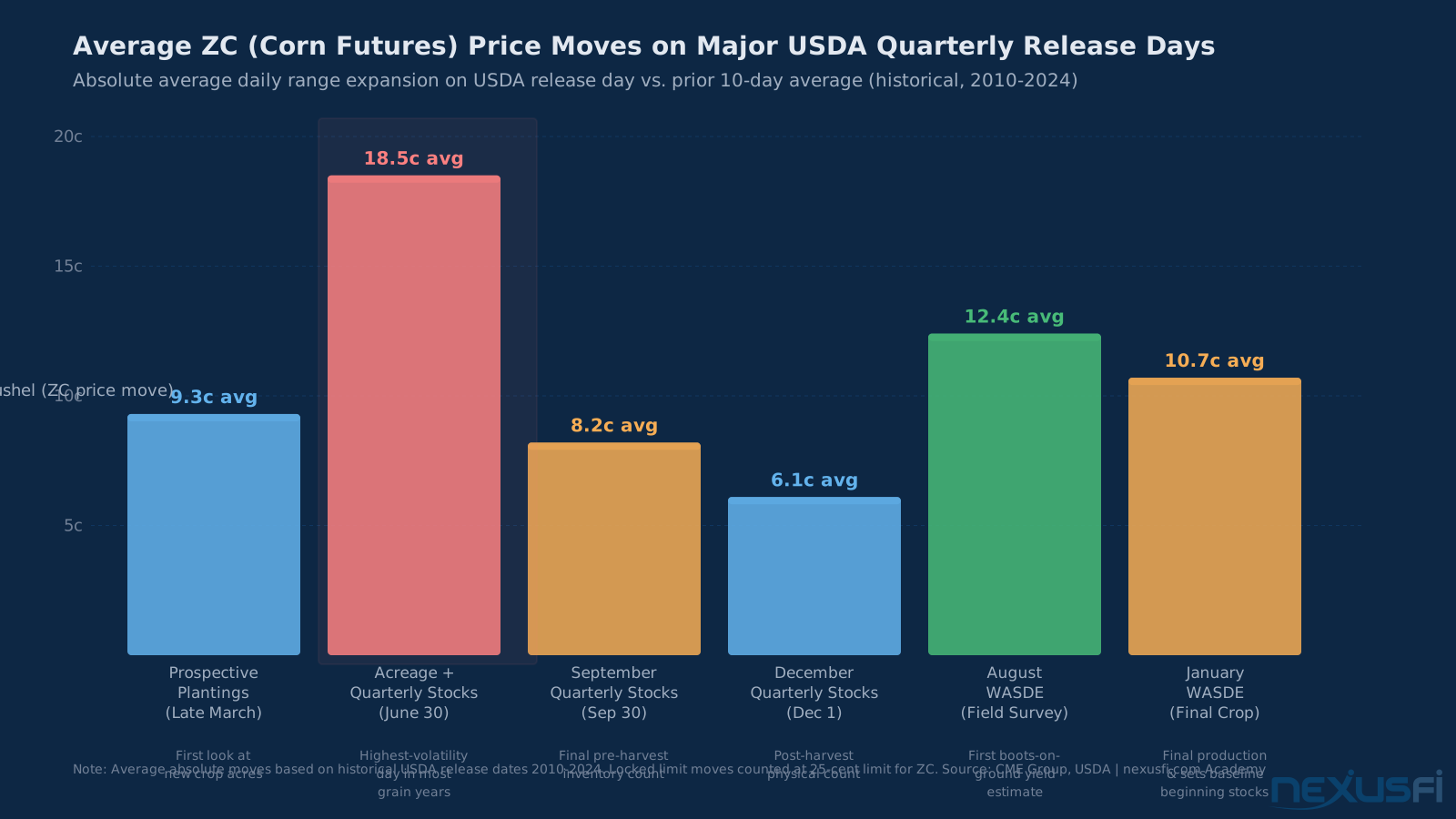
Four times a year, USDA publishes reports that at the core reset the supply picture. These quarterly anchors are typically larger market-moving events than the monthly WASDE, because they introduce entirely new data rather than revising existing estimates.
Prospective Plantings (Late March)
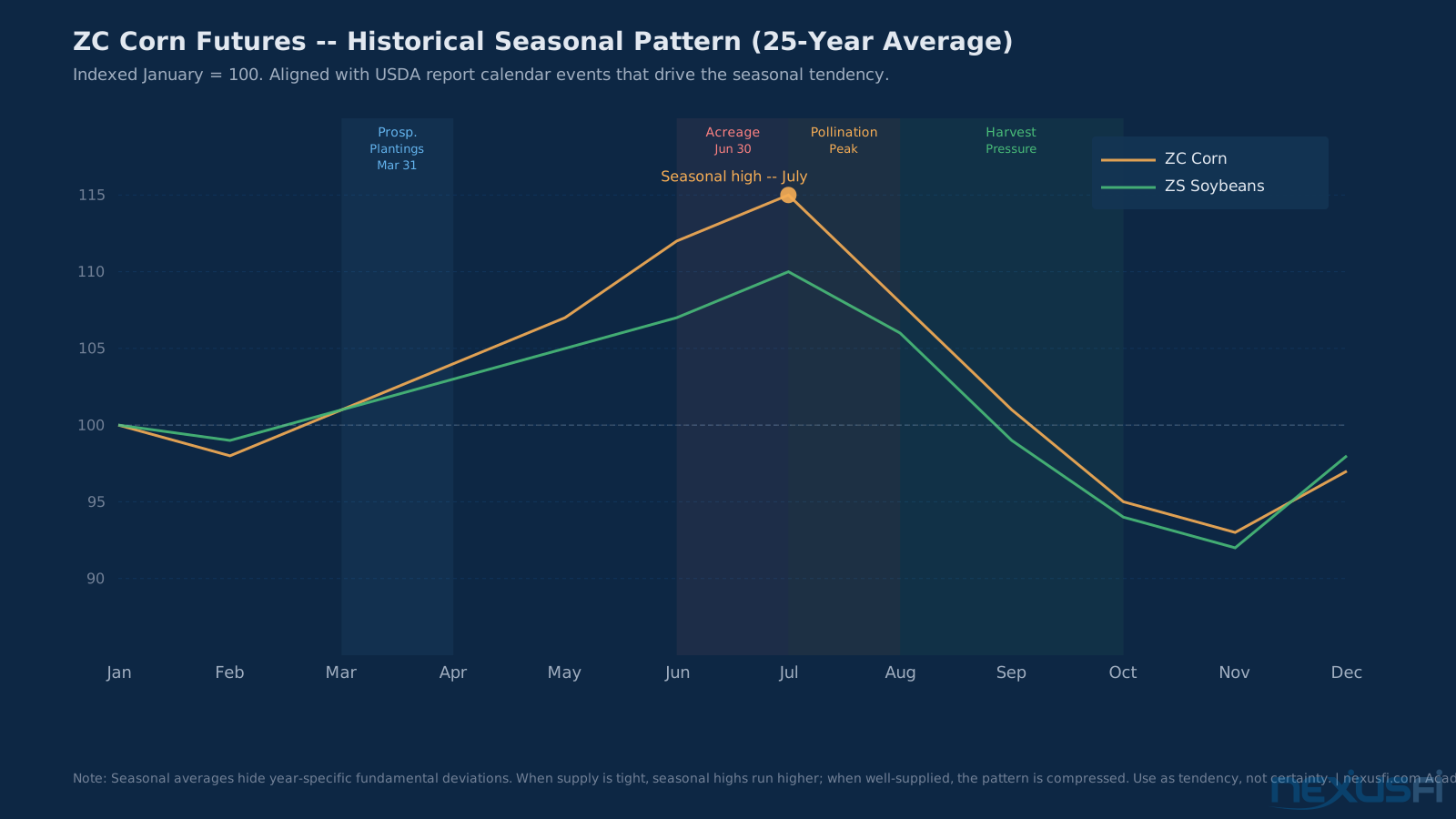
Published the last business day of March at 12:00 PM ET, Prospective Plantings surveys farmer planting intentions for the upcoming crop year. This is the first look at how many acres will be devoted to corn versus soybeans versus wheat. If farmers plan 1.5 million more corn acres than expected, ZC falls immediately. If soybean planted area comes in 2 million acres below expectations, ZS rallies hard. The key dynamic: corn and soybeans compete for the same Corn Belt acres. When the corn:soybean price ratio falls below 2.3:1, acres shift to beans. Prospective Plantings tells you which way that shift actually went.
Acreage Report and June 30
The Acreage report, published at 12:00 PM ET at end of June, measures how many acres were actually planted versus intended. The gap between Prospective Plantings and Acreage can be significant — wet weather prevents fieldwork, cold springs delay planting, and price shifts alter farmer economics. The Acreage report is often the most volatile single data release in grain markets each year because June is mid-growing season and acreage surprises compound with weather uncertainty.
When USDA publishes the Acreage report alongside the June 30 Quarterly Grain Stocks, the combination produces extreme moves. June 30 is the single most likely date for a locked limit move in ZC or ZS in any given year. Traders position before the number, consensus gets priced in, and then USDA resets the entire framework with one release.
Quarterly Grain Stocks
Published approximately March 31, June 30, September 30, and December 1, Quarterly Grain Stocks measures the actual physical inventory of corn, soybeans, and wheat in storage facilities. This is not an estimate — it's a physical inventory count. When stocks exceed trade expectations, demand ran below USDA's model assumptions — forcing a demand cut and bearish ending stocks revision in the next WASDE. When stocks are below expectations, USDA must revise demand higher — bullish.
Crop Progress and Condition Reports: The Weekly Pulse #
From late April through November, every Monday afternoon at 4:00 PM ET, USDA's National Agricultural Statistics Service publishes Crop Progress and Conditions — tracking where the crop stands and how it looks. For grain traders, this is essential weekly reading for roughly 30 reports across the growing season. [10]
The two most-watched numbers:
- Crop Progress: What percentage of intended acres are planted, emerged, silking, mature, or harvested. Falling behind historical averages at critical growth stages is bearish for supply.
- Crop Condition Ratings: The percentage rated Good/Excellent (G/E), Fair, and Poor/Very Poor. The Pro Farmer Index collapses these into a weighted score: (5 x G/E) + (3 x Fair) + (1 x Poor/Very Poor), divided by 9. Above 360 indicates a comfortable crop year, below 330 raises yield concerns.
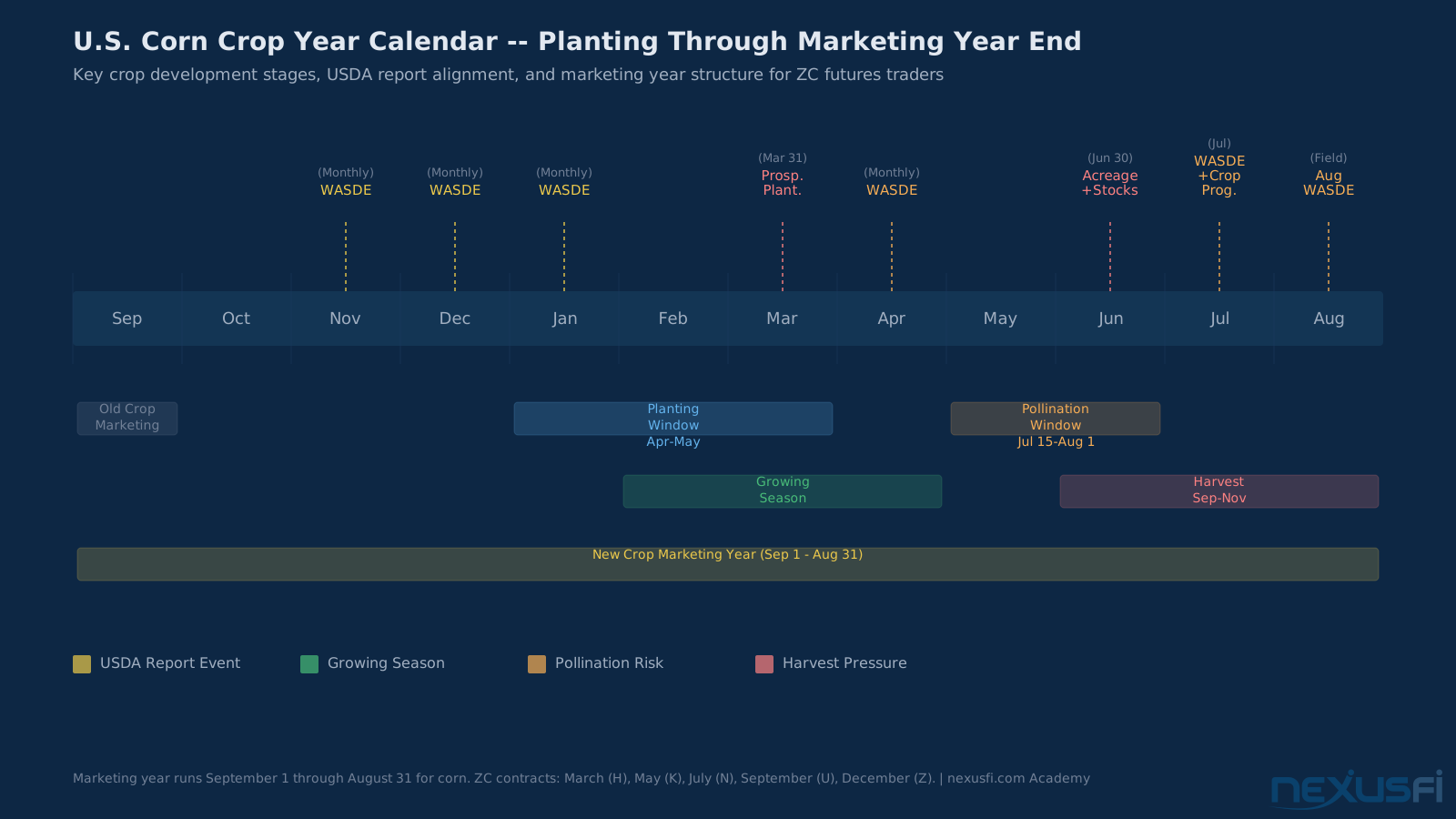
Crop conditions are most market-moving during three critical windows. During Planting (April-May), slow progress shrinks effective planted acres. "Prevent plant" acres — fields never planted due to flooding — reduce total production estimates. During Pollination (July), corn is uniquely vulnerable: heat and drought stress during the 10-14 day pollination window cuts yield potential irreversibly.
[6] During Harvest (September-October), pace versus historical averages gauges whether the crop will be in commercial storage before winter.
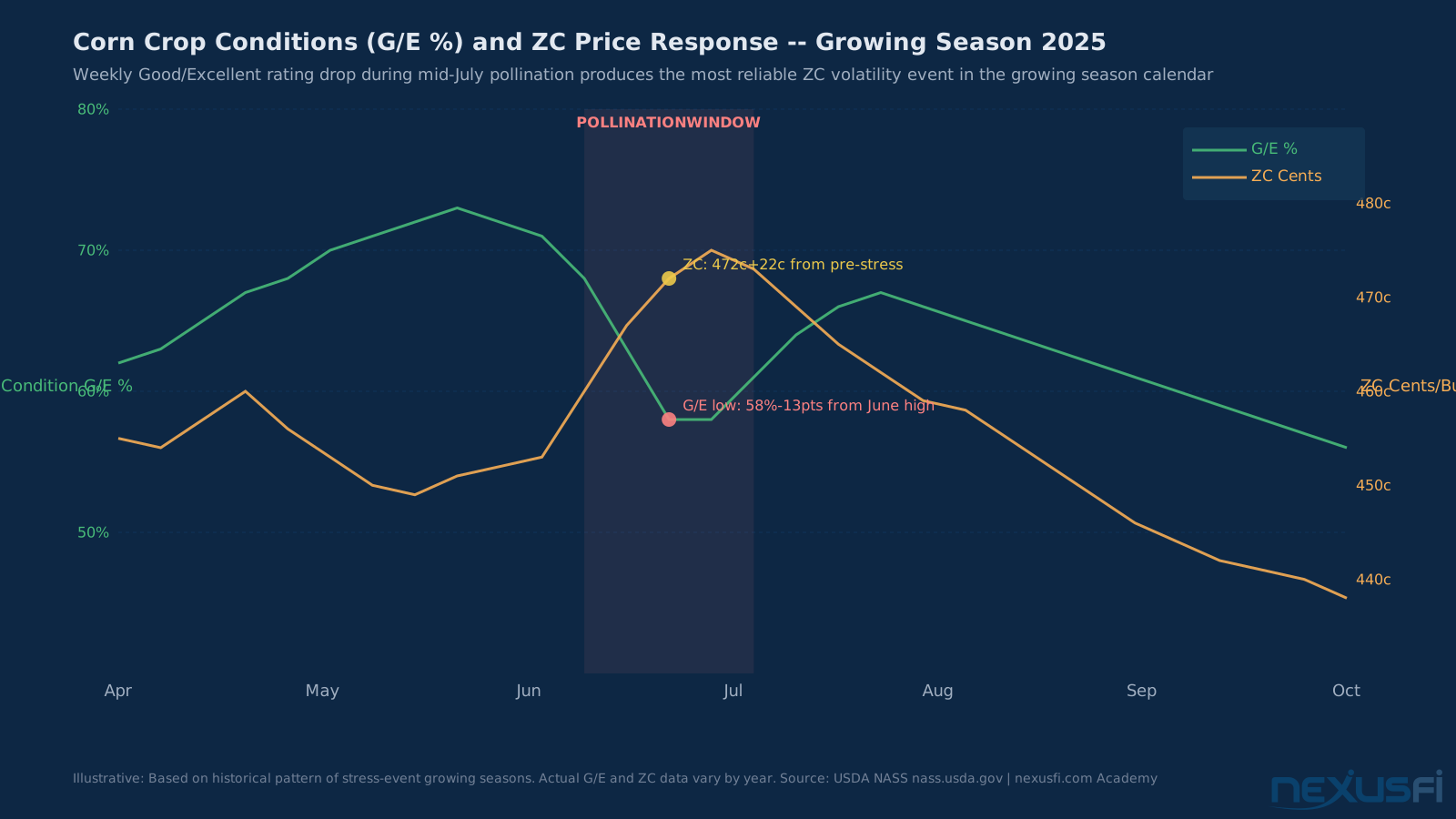
Monday afternoons April through November are when Crop Progress drops at 4:00 PM ET. If G/E ratings drop sharply week-over-week during mid-July corn pollination, expect ZC to gap higher Tuesday morning. During the July pollination window, treat every Crop Progress release as a potential 10-15 cent ZC event.
Export Sales and Export Inspections: The Weekly Flow Data #
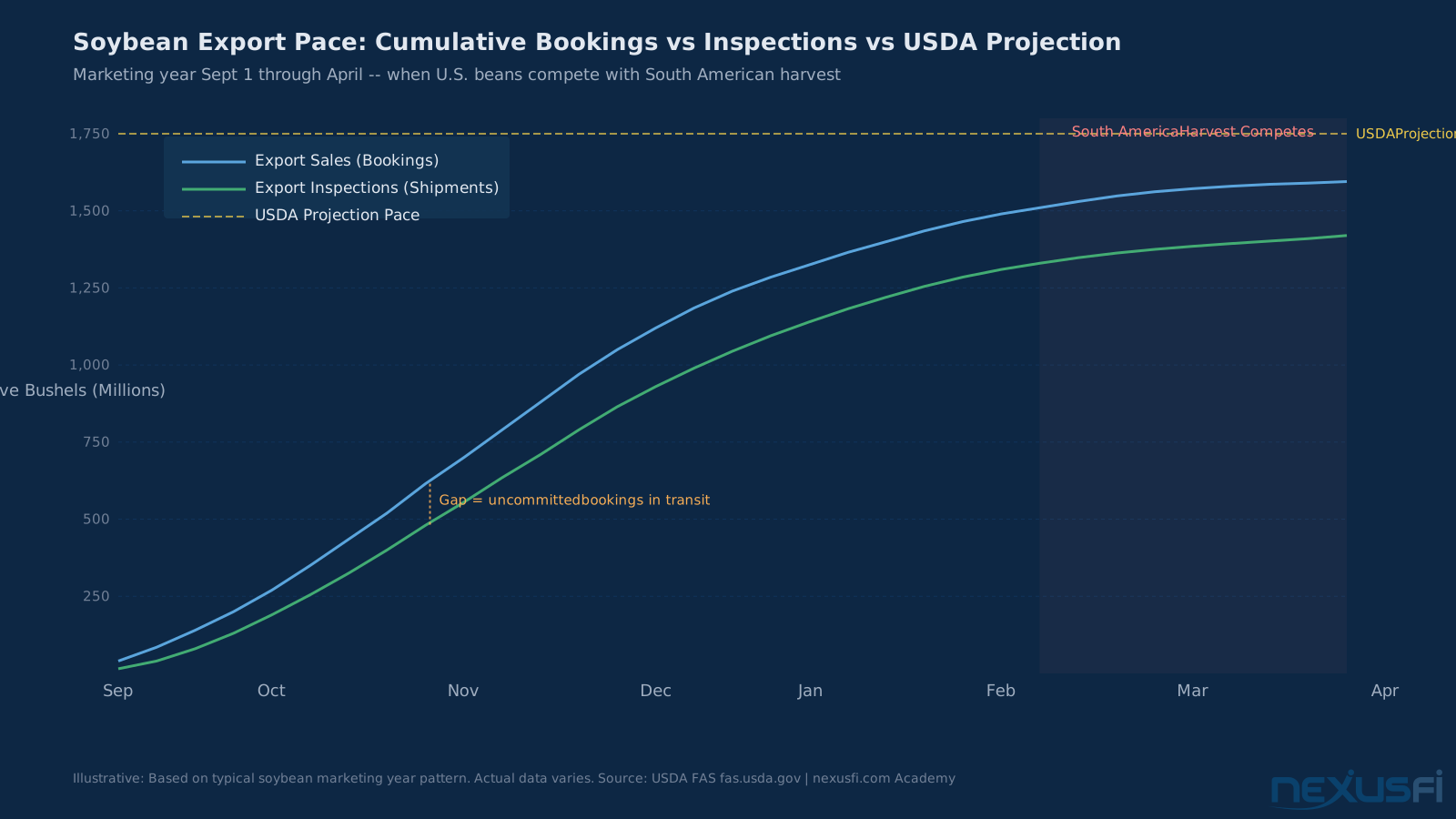
Every Thursday morning at 8:30 AM ET, USDA's Foreign Agricultural Service publishes the Weekly Export Sales report showing new sales booked, running accumulation by destination country, and physical shipments. The critical number: cumulative export sales pace versus USDA's full-year export projection. If USDA projects 1.75 billion bushels of corn exports and cumulative bookings are running 15% below the pace needed, USDA will likely cut exports in a future WASDE — bearish. Running well ahead of pace means USDA will revise exports higher, tightening ending stocks — bullish.
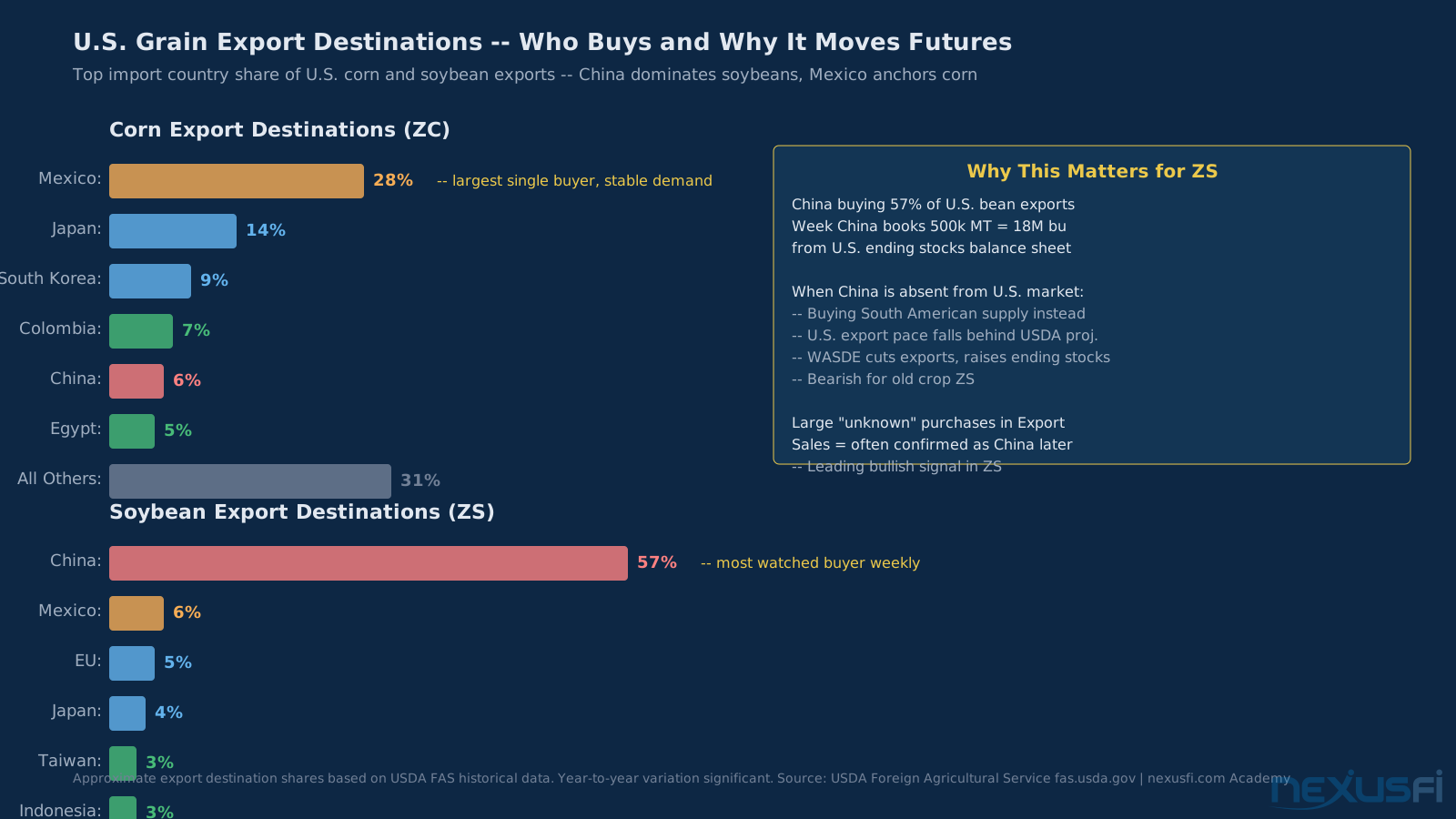
China is the key swing buyer in soybeans, accounting for roughly 57% of U.S. soybean exports. When Chinese crushers book 500,000 metric tons in a single week, that reduces U.S. ending stocks by roughly 18 million bushels. When China is absent for multiple weeks, they're buying South American supply instead — bearish for ZS. Large "unknown destination" purchases that eventually confirm as China have historically been a leading bullish signal in the ZS market.
Export Inspections (Monday, 11:00 AM ET) measures grain that physically moved onto ships versus booked sales. When bookings are strong but inspections lag, destination buyers have deferred shipments — possibly signaling demand concern. When inspections outpace bookings, grain is shipping faster than expected — bullish for pace tracking.
Surprise vs. Expectation: How Reports Actually Move Price #
The most important principle in USDA report trading: the price reacts to the surprise, not the absolute number. A corn ending stocks number of 2.2 billion bushels is only bearish if the trade expected 1.8 billion. If consensus was already 2.1 billion, a 2.2 billion print might produce just a 3-5 cent decline.
[5] A bearish number in a market positioned bullishly can produce a sell-the-news collapse. A neutral number in a market positioned bearishly can produce a sharp short-covering rally.
Price reactions typically follow three phases after major USDA releases: an initial algorithmic impulse in the first 0-5 minutes (fast, violent, poor execution quality for retail traders), a digestion phase in 5-30 minutes as human analysts read the full balance sheet (often reverses or confirms initial direction), and trend development from 30 minutes to close if the surprise is genuine and large.
The most dangerous trade after a USDA report is fading the initial impulse in the first 2-3 minutes. The initial move is driven by pre-positioned traders and algorithms with direct USDA data feeds — you don't have that edge. Wait for the digestion phase. If the initial direction holds through 15-20 minutes post-release, the surprise is being confirmed by human analysis and the move is more likely to continue.
Pre-report positioning creates another layer of complexity. When ZC has rallied 30 cents in the week before a WASDE everyone expects to be bullish, that bullish outcome is already largely priced in. The reward/risk for a long going into that report is poor even if the number is bullish. A neutral or slightly bearish number can produce a "sell the news" wipe that erases the pre-report rally in minutes. @tigertrader, who traded the CBOT soybean pit for decades, saw this dynamic repeatedly — the market's response to information is never as simple as "bullish number equals higher price." [3]
The USDA Report Calendar: Every Release, Every Date #
The USDA publishes its report calendar annually. Every release date is known well in advance, allowing traders to plan positions and risk management around these dates. Key releases:
| Report | Frequency | Time | Key Content |
|---|---|---|---|
| WASDE | Monthly (2nd Friday) | 12:00 PM ET | Full supply/demand balance sheets for all major crops, domestic and world |
| Crop Progress | Weekly Mon (Apr-Nov) | 4:00 PM ET | Planting progress, condition ratings, G/E percentages |
| Export Sales | Weekly Thursday | 8:30 AM ET | New bookings, cumulative sales by destination |
| Export Inspections | Weekly Monday | 11:00 AM ET | Physical grain inspected for export shipment |
| Prospective Plantings | Annual (late March) | 12:00 PM ET | Farmer planting intentions for all major crops |
| Acreage | Annual (late June) | 12:00 PM ET | Actual planted acreage survey |
| Quarterly Grain Stocks | Quarterly (Mar 31, Jun 30, Sep 30, Dec 1) | 12:00 PM ET | Physical inventory count in commercial storage |
| Small Grains Summary | Annual (August) | 12:00 PM ET | Final winter wheat and other small grains production estimates |
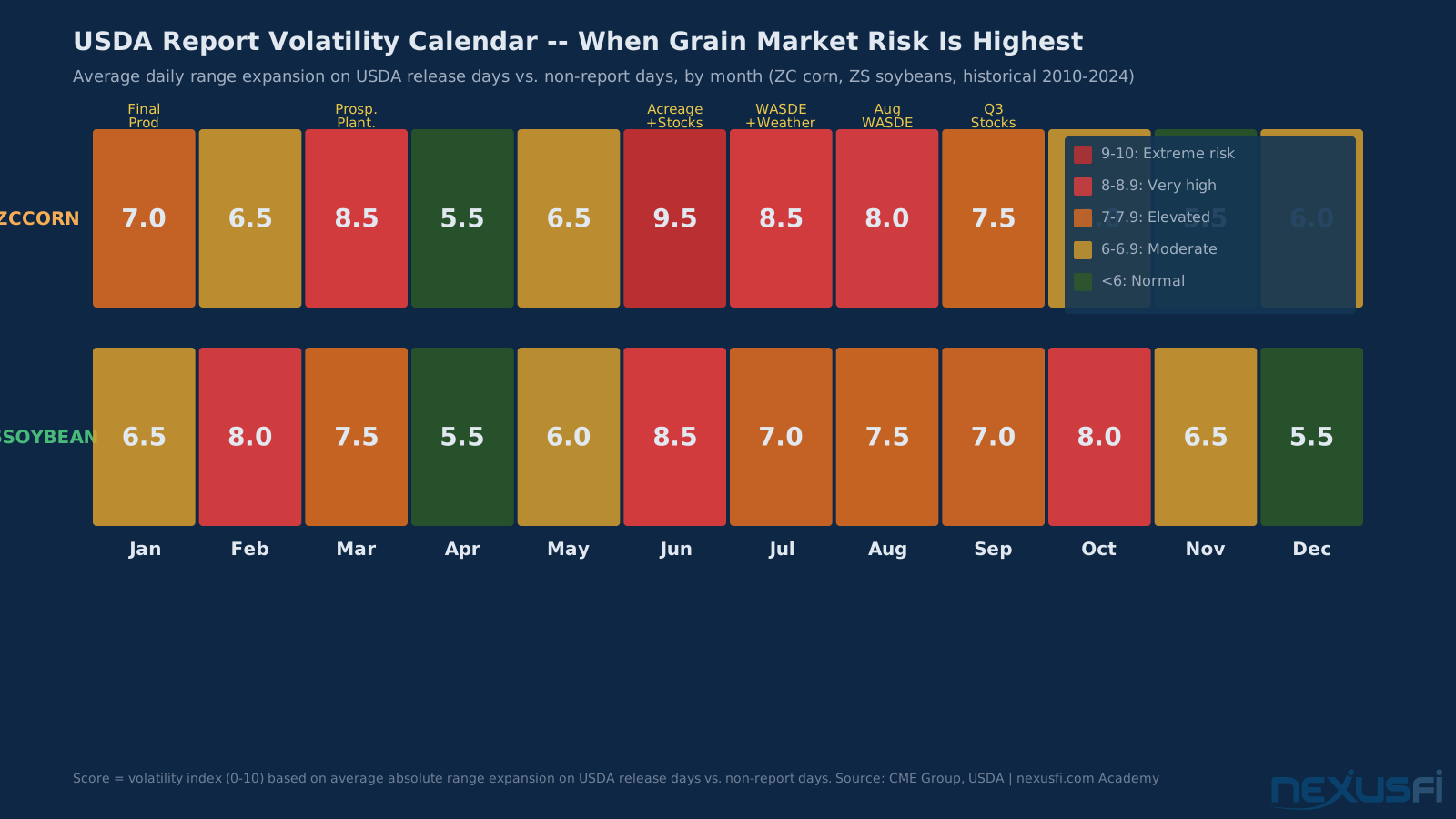
The highest-volatility dates in the grain calendar: January WASDE sets final production estimates and baseline beginning stocks for the new marketing year. March 31 combines Prospective Plantings and Quarterly Grain Stocks — two major reports on one day. June 30 combines Acreage and Quarterly Grain Stocks — the single highest-volatility day in most grain years, with locked limit moves occurring multiple times per decade. August WASDE delivers the first field-survey yield estimate (USDA sends field researchers to physically measure ears and pods per plant), making it the most respected production estimate of the year. September 30 provides the final pre-harvest inventory count before new crop supply floods storage.
Where to Get USDA Data Free #
Every piece of USDA data covered in this article is publicly available at no cost:
- WASDE: wasde.fas.usda.gov -- Published in PDF and Excel. The Excel file is essential for historical series comparison and quick calculation of where current estimates sit versus prior crop years. [11]
- Crop Progress and NASS reports: nass.usda.gov and quickstats.nass.usda.gov -- Historical Crop Progress data back to the 1970s via the quickstats query tool. [10]
- Export Sales: fas.usda.gov/data -- Weekly Export Sales report and historical query by commodity and marketing year.
- Pre-report consensus estimates: DTN/Progressive Farmer publishes free pre-WASDE analyst estimate averages. CME Group publishes a free "Market Commentary" before each WASDE. Bloomberg and Reuters compile full analyst surveys (subscription), but DTN's free service covers the essential consensus numbers.
Download the WASDE Excel file the day it releases. Look immediately at two numbers: corn and soybean ending stocks for the current crop year, compared to last month and trade estimates. Those two numbers determine whether ZC and ZS are going up or down in the first 30 minutes. Everything else in the report is secondary until you've absorbed the headline surprises.
@Aufidius highlighted another free USDA resource in the Elite Commodities Analysis thread: USDA crop insurance prices. "The USDA backs insurance for farmers so that if prices get below X price they get some sort of payment." [9] These insurance price levels — set each February based on average nearby futures prices — act as significant floor support in ZC and ZS. The USDA Risk Management Agency (RMA) publishes these annually at rma.usda.gov.
Risk Management Around Report Releases #
USDA reports create asymmetric risk. Before a major release, implied volatility in grain options spikes to reflect uncertainty. After the number publishes, vol collapses. For futures traders, position sizing and stop placement require adjustment in the 24-48 hours before major releases.
@myrrdin gave direct advice: "I would strongly recommend not to hold short options during monthly and quarterly USDA reports. This is valid for grains, beans and meats." [4] The same applies to outright futures positions with significant capital at risk — if you wouldn't want to hold through a 30-50 cent adverse ZC move, reduce or exit before the report.
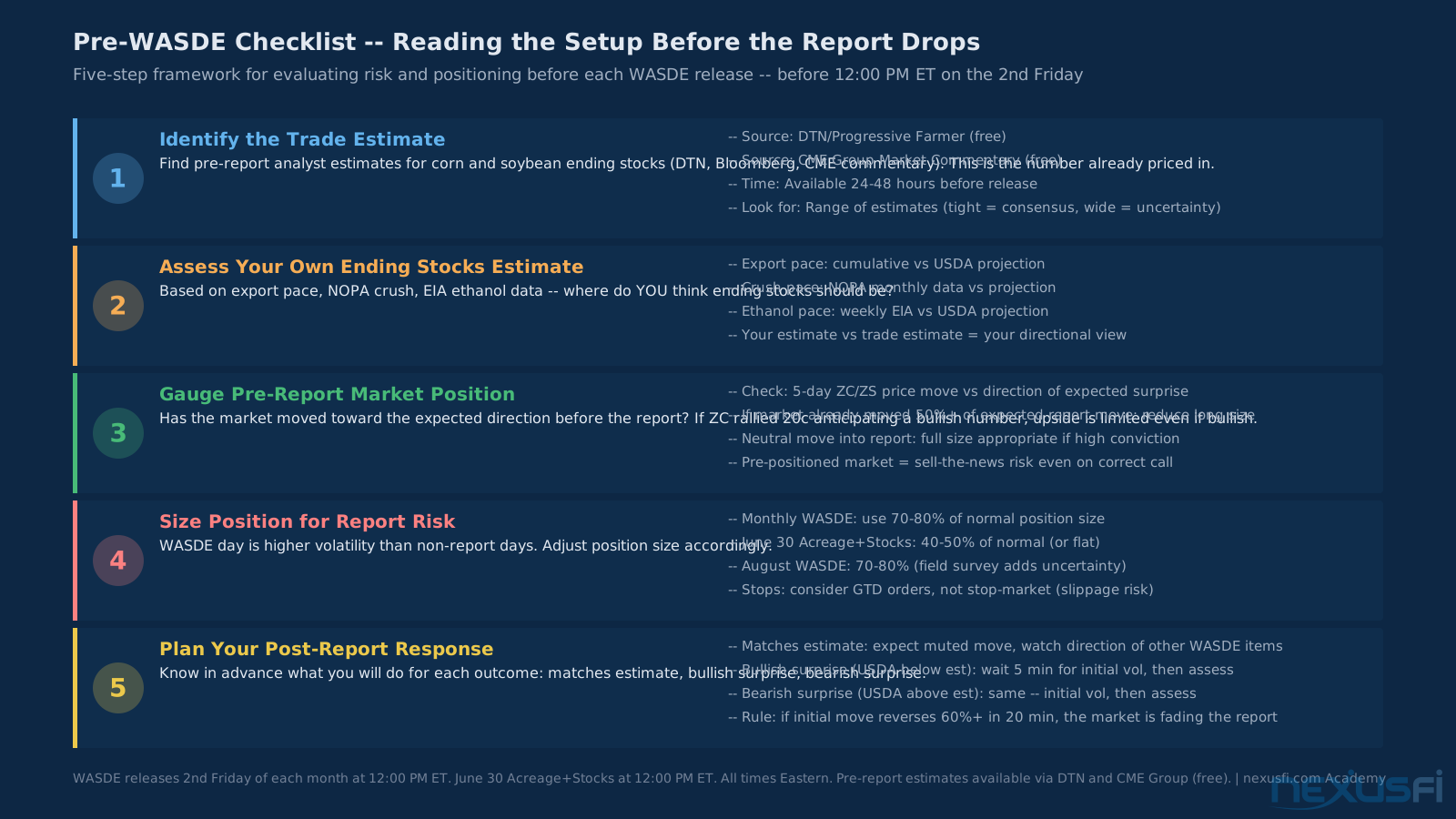
Practical risk management framework for USDA reports:
- Before June 30 (Acreage + Stocks): Reduce position size by 50% or more if holding any significant grain futures position. Locked limit moves prevent exit for an entire session. CBOT's daily price limits -- 25 cents for ZC (expandable to 40), 70 cents for ZS, 45 cents for ZW -- can trap positions against a major surprise.
- Before monthly WASDE: Know your maximum loss threshold before the release, not after. Execution in the first 2 minutes post-release is poor -- wide spreads, limited depth. Set stop orders rather than assuming you can exit manually at specific levels.
- Before Crop Progress: The Monday release is lower volatility than WASDE, but during July pollination, a single week's G/E drop can move ZC 10-15 cents. Adjust sizing during the July pollination window.
- After a surprise: If the initial direction reverses and retraces 60%+ within 20 minutes, the market is fading the report -- positioning was aligned with the surprise direction and the move was "sell the news."
CBOT grain futures can lock limit when a major USDA surprise is large enough. ZC has a 25-cent daily price limit (expandable to 40 cents if limit is hit). ZS has a 70-cent daily limit. ZW has 45 cents. If you're holding a position against a limit move, you cannot exit until limits are expanded or lifted — which can take the entire trading session. This is the primary reason position sizing before major quarterly reports needs to be conservative regardless of your conviction on the direction.
Putting It Together: A Grain Trader's Fundamental Framework #
Understanding each USDA report in isolation is necessary but not sufficient. The data has to be synthesized into a coherent view of market tightness, which informs how you interpret price action, weather news, and demand signals.
Build the Balance Sheet Model
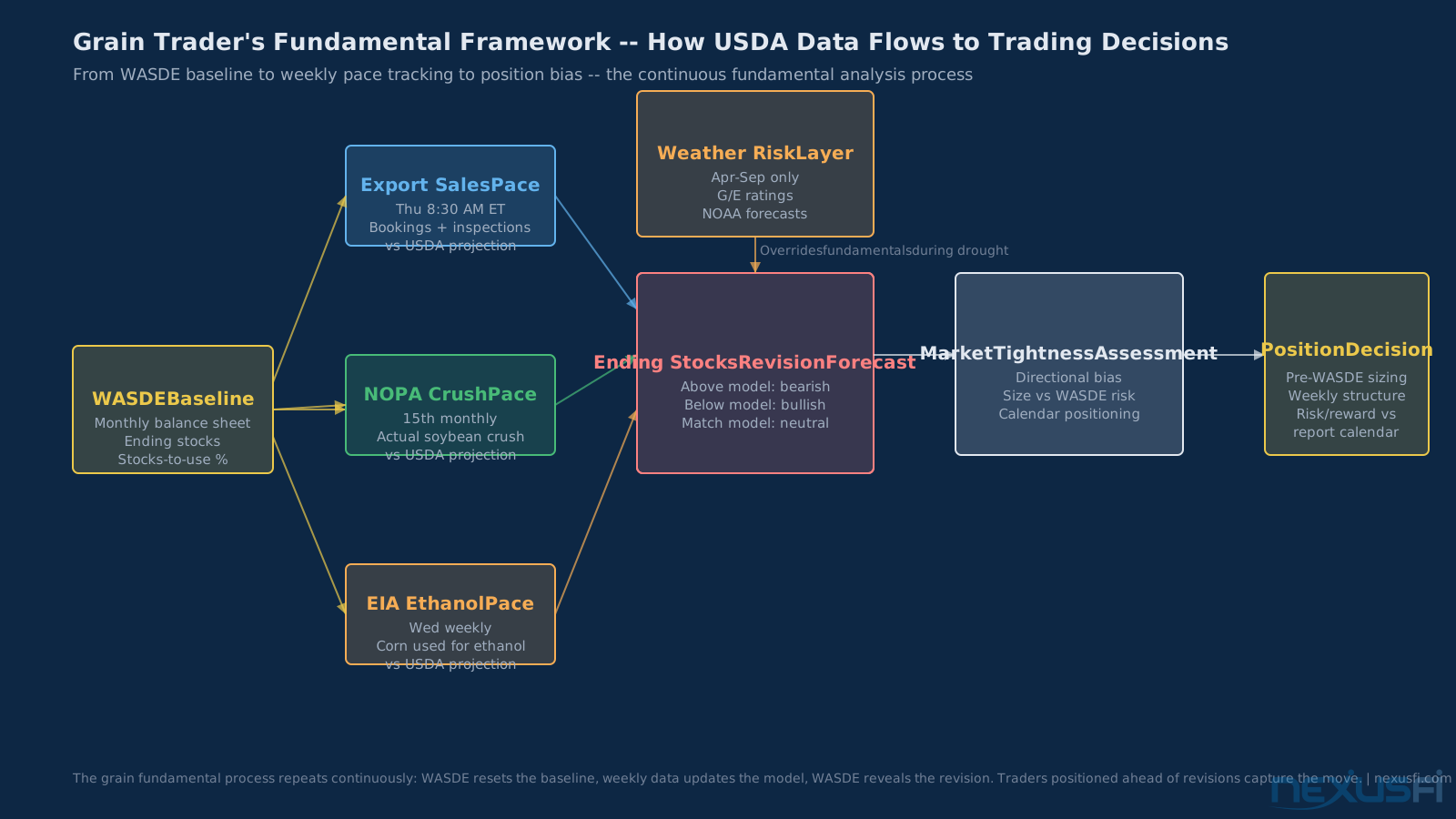
Start with the current WASDE. Extract old crop and new crop balance sheets for corn and soybeans (and wheat if you trade it). These become your baseline. When each new data point arrives — an export sales number, a Crop Progress rating, a NOPA crush estimate — update your model to reflect how ending stocks might change in the next WASDE.
[8] Depth in one market beats surface knowledge across five.
Track the Demand Pace Numbers Weekly
Every week, update three pace calculations versus USDA's model: Export sales pace (cumulative bookings and inspections vs. USDA's full-year export projection), NOPA crush pace (monthly soybean crush data published by National Oilseed Processors Association on the 15th of each month, versus USDA's model), and EIA ethanol pace (weekly Energy Information Administration ethanol production data tracking corn usage for ethanol).
When all three pace numbers run above USDA's model, ending stocks will come in below USDA's projection — bullish. When two of three lag, USDA will revise demand lower — bearish. This pace tracking is basically building your own competing demand model to forecast where USDA will go on their next revision. The institutional grain traders who consistently generate alpha know before the report what the data will likely show, and position so.
Weather as the Overriding Variable
Fundamentals define the market's range. Weather moves price within (and sometimes beyond) that range during the growing season. A corn market with 12% stocks-to-use has room for a weather premium — potential for a 15-20% upside move if July turns hot and dry. A corn market with 18% stocks-to-use has limited weather premium because even a significant yield reduction won't meaningfully tighten supply.
In a tight supply year (low stocks-to-use), every weather forecast update becomes a significant market event. In a comfortable supply year, weather threats need to be unusually severe to move price for more than a few days. @tigertrader's four decades in the CBOT soybean pit captured it well: "untold fortunes have been made and lost during the summer grain markets." [3] The summer grain market is at the core a USDA weather-and-crop-report market. Modern grain markets now have institutional quantitative traders running continuous yield models incorporating NOAA forecasts and satellite soil moisture data, but the fundamental framework remains the same.
Seasonal Patterns Overlay
Grain markets have well-established seasonal tendencies. Classic corn seasonal: makes its high around June-July pollination, then trends lower through harvest as new crop supply comes to market. Soybeans have a "harvest low" in September-October followed by an export-driven rally through January as U.S. beans enter peak export season before South American harvest competes.
These seasonals work best when the fundamental backdrop is consistent with them. Tight supply in a year that would normally see seasonal selling means the seasonal often fails and the fundamental story dominates. Use seasonals as a tendency, not a rule.
USDA data doesn't tell you where to trade — it tells you the fundamental backdrop. A well-supplied market needs major news to rally much. A tight market can rally on minor weather threats. The WASDE gives you context to evaluate whether price reactions are overdone or insufficient, and to position ahead of USDA revisions when your pace tracking diverges from the official model.
Knowledge Map
Prerequisites
Understand these firstGo Deeper
Build on this knowledgeReferences This Article
Articles that build on this topicCitations
- — Grains Trading (2011) 👍 9“When it comes to grains you have to follow the USDA (US Dept of Agriculture) reports as for the supply and demand, learn how weather affects the prices and follow the COT reports. Also, seasonality in physical commodities is a big factor.”
- — Grains Trading (2011) 👍 10“I began trading grains at the Mid-America Commodity Exchange in the 70s and began and finished my career back where I started.”
- — Reminiscences of a Bean Trader (2013) 👍 23“over the years, untold fortunes have been made and lost during the summer grain markets. i have participated and traded in these markets for almost 40 years, starting in the soybean pit at the mid-america commodity exchange.”
- — Diversified Option Selling Portfolio (2017) 👍 5“In case you are a beginner I would strongly recommend not to hold short options during monthly and quarterly USDA reports. This is valid for grains, beans and meats.”
- — Diversified Option Selling Portfolio (2016) 👍 5“Reaction to a report is more important than the report. Thus, Soybean prices should move up further, as long as weather does not have a severe bearish influence.”
- — Diversified Option Selling Portfolio (2016) 👍 7“Corn reaches the critical pollination period in July. If weather cooperates prices will come down. In case it gets hot and dry prices will move up sharply. Volatility is not only high because of WASDE, but also because of the near pollination period.”
- — Diversified Option Selling Portfolio (2017) 👍 5“USDA now expects the 2017 corn harvest at 14.25 billion bushels versus its previous 14.065 billion bushels.”
- — Fundamental (2018) 👍 7“I suggest to start with one commodity. Choose one, that you like. Because you will spend a lot of time with this commodity. And choose one for which fundamental information is easily available for you. As you live in the US, corn could be a good choice.”
- — Elite Commodities Analysis (2017) 👍 12“So here is the deal.. wheat looks cheap but is it? There are quite a few ways to figure out 'value' but one of my favorites is to look at crop insurance. Basically the USDA backs insurance for farmers so that if prices get below X price they get some sort of payment.”
- USDA NASS — National Agricultural Statistics Service -- Crop Progress and Crop Conditions (2026)
- USDA World Agricultural Outlook Board — World Agricultural Supply and Demand Estimates (WASDE) Report (2026)