



API Trading and Platform Integration for Futures: Connecting Your Strategy to the Exchange
Overview #
At some point, every serious futures trader asks the same question: how do I get my strategy logic to actually execute orders without me clicking buttons?
The answer involves APIs — application programming interfaces that let your code talk to brokers, exchanges, and trading platforms. But the gap between "I have a strategy idea" and "it's placing orders reliably in live markets" is wider than most traders expect. The technology choice matters less than you think. The architecture and error handling matter more than you'd believe.
This article covers the complete environment: from webhook-triggered alerts to institutional FIX protocol connections, from NinjaTrader C# development to Sierra Chart's ACSIL engine. The goal isn't to make you a software engineer — it's to give you the framework for understanding what's involved, what breaks, and how to build something that doesn't lose you money through technical failure.
The Five-Layer Architecture #
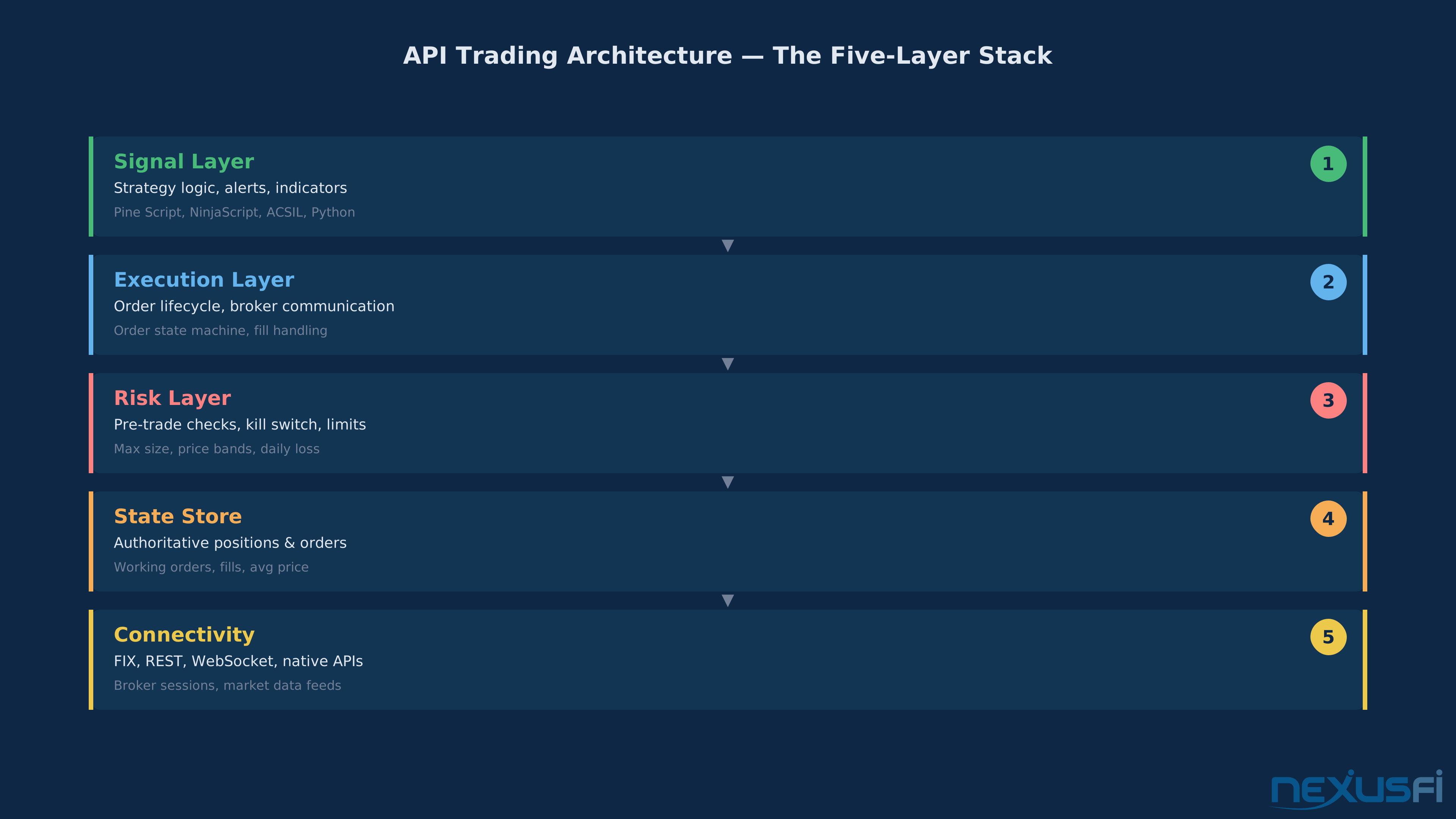
Every reliable API trading system follows the same fundamental architecture, whether it's a retail trader running a NinjaTrader strategy or a prop desk with dedicated FIX connections. The layers are:
1. Signal Layer. This is where your trading logic lives. It could be a Pine Script alert on TradingView, a NinjaScript strategy in NinjaTrader, an ACSIL study in Sierra Chart, or a Python script analyzing market data. The signal layer produces trading intents: buy 2 ES at market, sell 1 NQ at 21450.00 limit, cancel working order #12345.
2. Execution Layer. This translates intents into actual broker/exchange orders and manages the order lifecycle. When you submit an order, it goes through states — submitted, acknowledged, working, partially filled, filled, rejected, canceled. The execution layer tracks each state transition and handles the complexity of partial fills, cancel/replace races, and reconnection logic.
3. Risk Layer. Before any order reaches the broker, it passes through pre-trade risk checks: maximum order size, price band validation (is this price reasonable given recent market data?), daily loss limits, position limits, and session hour verification. This layer also includes the kill switch — a deterministic path to cancel all orders and flatten all positions when something goes wrong. This isn't optional. It's the difference between a bad day and a catastrophic one.
4. State Store. An authoritative record of your working orders, fills, positions, and average prices. This is the source of truth — not the broker's portal, not your platform's display, but your own reconciled state. When your system and the broker disagree about your position (and they will, eventually), the state store is what you use to figure out what actually happened.
5. Connectivity Layer. The protocol-specific implementation that talks to the broker or exchange. FIX protocol for institutional connections, REST APIs for lighter-weight integration, WebSocket streams for real-time data, or platform-native APIs that run your code directly inside the trading application.
Most failures happen in layers 2, 3, and 4 — not in the connectivity layer. Traders obsess over latency (layer 5) when they should obsess over state management and risk controls.
The Order State Machine #
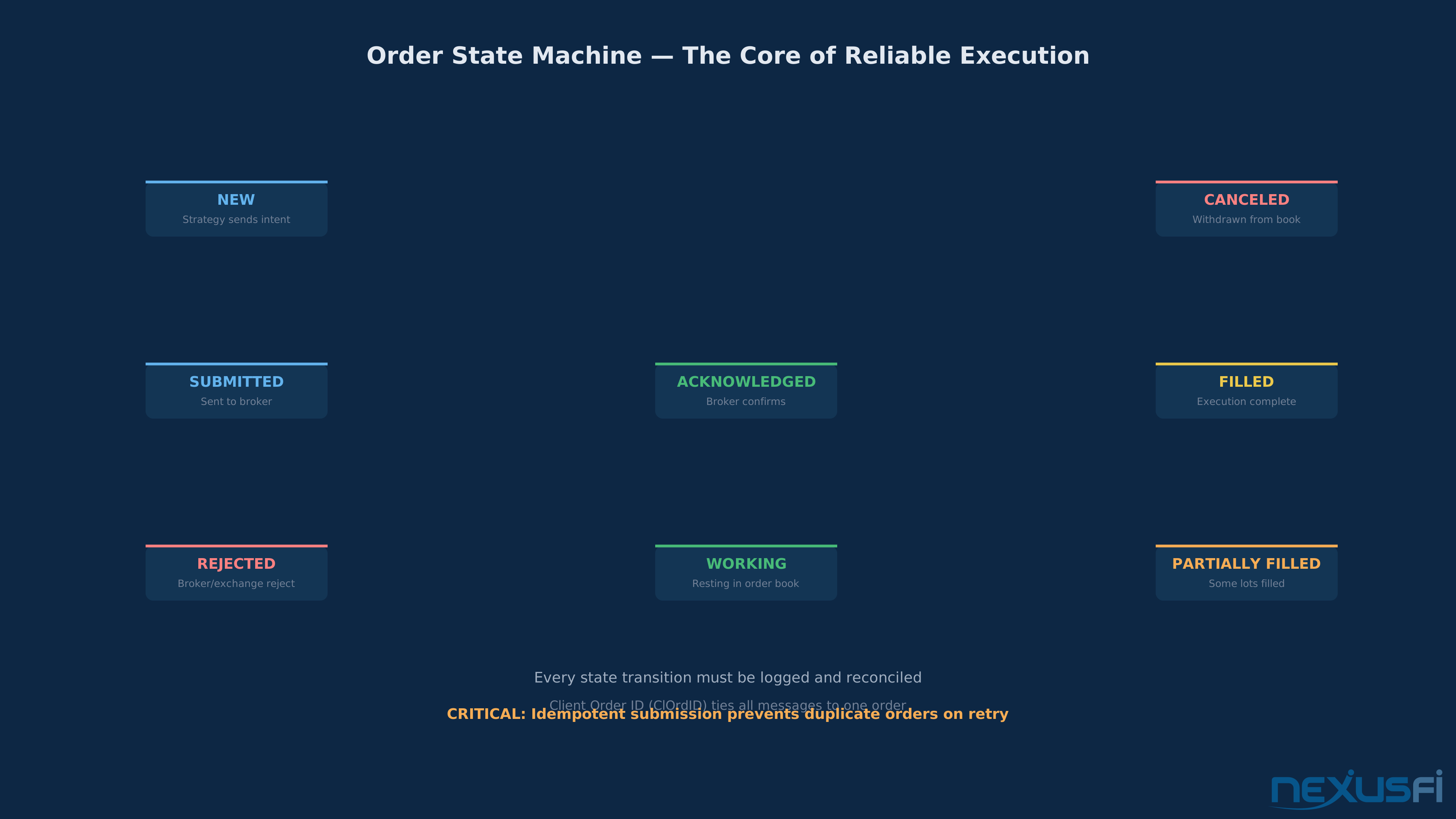
The single most important concept in API trading is the order state machine. Every order follows a lifecycle:
NEW_REQUESTED -> SUBMITTED -> ACKNOWLEDGED -> WORKING -> FILLED
                                             -> PARTIALLY_FILLED -> FILLED
                                             -> CANCELED
                          -> REJECTED
Each transition must be logged, tracked, and reconciled. Here's where systems break:
State drift. You think your order is working, but the broker canceled it due to a risk check you didn't know about. Your local state says "I'm long 5 ES" but the broker says "you have no position." This happens more often than anyone admits, and it's why reconciliation loops — periodic checks between your state and the broker's reported state — are non-negotiable.
Idempotency. If your order submission fails and you retry, will the broker execute it twice? The solution is a client-generated order ID (ClOrdID in FIX terminology) that uniquely identifies each order intent. If the broker sees the same ClOrdID twice, it treats the second submission as a duplicate rather than a new order. Without this, network hiccups turn into double orders.
Partial fills. You submit an order for 10 contracts. 6 fill immediately, 4 remain working. Your system needs to correctly track the remaining quantity, update the average fill price, and handle the subsequent fills (or cancellation of the remainder) as separate events. Getting this wrong means your position tracking diverges from reality.
Cancel/replace races. You send a cancel request for an order that's simultaneously being filled. The cancel arrives too late — the order filled between your cancel request and the broker's processing. Your system needs to handle this gracefully: the cancel is rejected, but the fill should still be processed correctly.
As [GrayCrane described on NexusFi][1], implementing an automated TradingView-to-Interactive Brokers integration requires a cloud-hosted handler that performs various validations before routing to the broker. The validation layer is where most of the engineering effort goes — not the connectivity itself.
FIX vs REST vs Platform Native #
FIX Protocol #
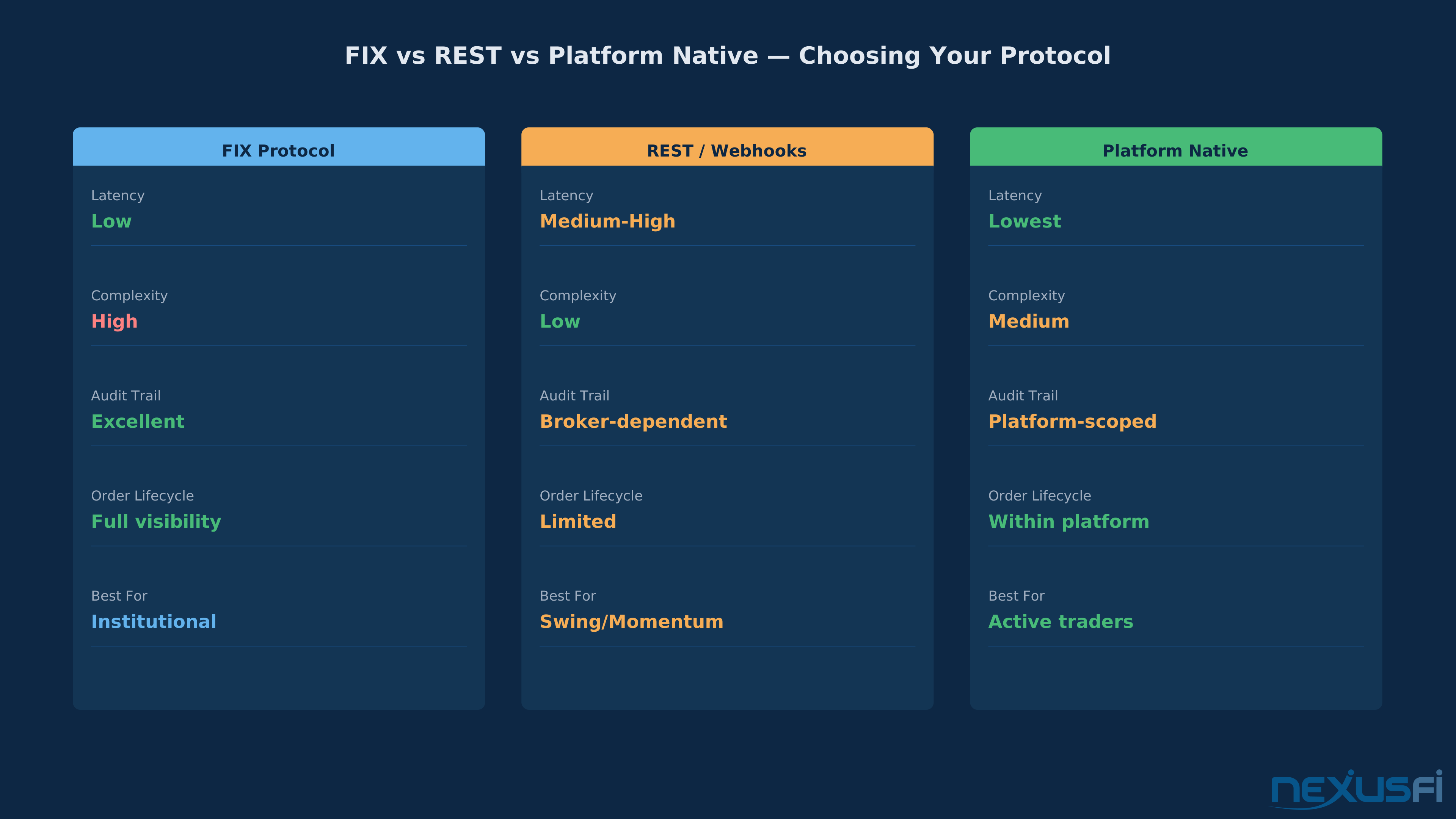
FIX (Financial Information eXchange) is the institutional standard for order routing. It's a TCP/IP-based messaging protocol designed for reliable, session-based trading communication.
When to use FIX: You need detailed execution reports, audit trail completeness, drop-copy capabilities (receiving fill reports even if your primary connection drops), and you're routing through a futures commission merchant (FCM) or directly to an execution management system (EMS). Professional trading firms, hedge funds, and proprietary shops typically use FIX.
The reality: FIX is complex. You're dealing with session management (logon, heartbeat, sequence numbers), message tag parsing, resend logic for sequence number gaps, and broker-specific tag extensions. Firms like Rithmic, CQG, and TT (Trading Technologies) offer FIX-based or proprietary APIs that provide direct market access with exchange-level granularity.
Latency: Low, because it's session-based TCP rather than HTTP request/response. But the latency advantage over well-implemented REST is measured in single-digit milliseconds — relevant for HFT firms, irrelevant for most futures traders.
REST APIs and Webhooks #
When to use REST: Your strategy doesn't require sub-second execution. You're building orchestration logic, connecting multiple systems, or bridging a signal source (like TradingView) to a broker. REST is simpler to implement and easier to debug.
The reality: REST APIs are stateless — each request is independent, which means you need to manage session tokens, handle rate limits, and deal with the inherent latency of HTTP round-trips. Most retail broker APIs (Interactive Brokers, Tradovate, NinjaTrader Brokerage) offer REST endpoints for order placement and account management.
Webhooks are a specific pattern within REST: your signal source (TradingView, a monitoring script, etc.) sends an HTTP POST to your server when an alert triggers. Your server then processes the webhook, performs risk checks, and routes the order to the broker. The webhook itself isn't an execution mechanism — it's a notification trigger. As [HiLatencyTRDR noted on NexusFi][2], asking a broker about order flow and routing specifics requires understanding the entire chain from your platform to the exchange.
Platform-Native APIs #
NinjaTrader (C# / NinjaScript): Your code runs inside NinjaTrader's strategy engine, with direct access to market data events and order submission. The key architectural decision is managed vs. unmanaged order handling. Managed mode abstracts the order lifecycle — simpler but less flexible. Unmanaged mode gives you full control over order objects but requires disciplined state tracking.
NinjaScript is event-driven: your strategy responds to OnBarUpdate(), OnExecutionUpdate(), and OnOrderUpdate() callbacks. The execution is fast because there's no network hop between your logic and the order submission — it's all in-process. But if you need to integrate with external systems (a separate risk engine, a centralized state store), you're adding complexity that NinjaTrader wasn't designed to handle natively.
Sierra Chart (ACSIL / C++): The performance reference point for retail and professional futures trading. ACSIL (Advanced Custom Study Interface and Language) runs your C/C++ code directly in Sierra Chart's memory space. No network latency, direct access to the order book, and the ability to process tick-by-tick data with minimal overhead. As [Tin44 noted on NexusFi][3], it's possible to create custom indicators and strategies from scratch with ACSIL, even without prior coding experience — though the learning curve is real.
The trade-off is platform lock-in. Your ACSIL code runs only in Sierra Chart. If you ever need to move to a different platform, you're rewriting from scratch. And if you need to integrate with external services (webhooks, databases, third-party risk systems), you need to handle threading carefully — blocking Sierra's chart thread while waiting for an HTTP response will freeze your entire workspace.
TradingView (Pine Script + Webhooks): Pine Script is powerful for signal generation and prototyping, but it is not an execution system. You can build complex alert logic, test it against historical data, and use alert() functions to trigger webhooks. But the execution happens on your external server — Pine Script has no ability to place orders directly.
The proper architecture: Pine generates an alert → webhook hits your cloud server → server performs risk checks, contract resolution, and session validation → server submits order via broker API → server tracks the order lifecycle and handles fills/rejects.
This is the most accessible entry point for automated trading, but it introduces multiple failure points: webhook delivery failures, server downtime, broker API rate limits, and the inherent latency of the multi-hop chain. Suitable for swing and momentum strategies. Not suitable for anything requiring sub-second execution.
Platform-Specific Integration Paths #
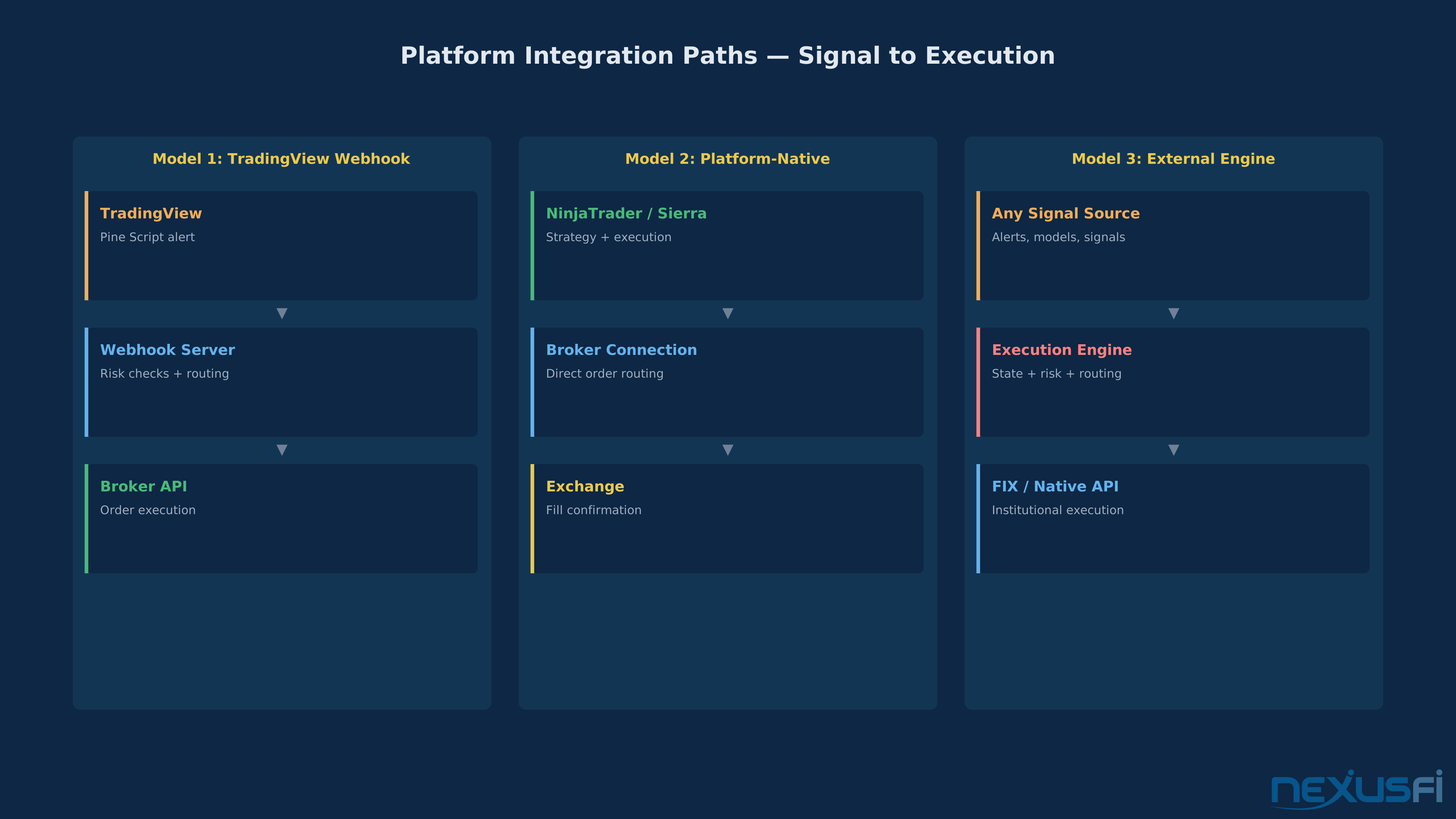
Model 1: Webhook-Driven (TradingView → Server → Broker) #
The lowest barrier to entry. Your TradingView Pine Script generates alerts, which trigger webhooks to your server. The server handles everything else.
Architecture requirements:
- Cloud server with HTTPS endpoint (for webhook reception)
- Authentication (HMAC signatures or shared secrets to verify webhook origin)
- Idempotency (alert ID or nonce to prevent duplicate orders)
- Contract resolver (TradingView symbols don't match broker contract codes)
- Order state tracking and reconciliation
- Error handling for webhook delivery failures, broker rejects, and partial fills
Who this is for: Traders who want automated execution of longer-timeframe strategies without building a full execution engine. Acceptable latency: seconds, not milliseconds.
Model 2: Platform-Native (NinjaTrader or Sierra Chart) #
Your strategy logic and order execution both live inside the trading platform. No external server, no webhook latency, no network hops between signal and order.
NinjaTrader path: Write a NinjaScript strategy that implements your logic in OnBarUpdate(), submits orders via NinjaTrader's order methods, and handles fills in OnExecutionUpdate(). The platform manages the broker connection.
Sierra Chart path: Write an ACSIL study that processes incoming data, calculates signals, and uses Sierra's trading functions to submit and manage orders. As [tulanch explained on NexusFi][4], Sierra Chart studies are written in C++, and the programming guide for ACSIL is available in Sierra's documentation.
Who this is for: Active traders who want low-latency execution within a single platform, are willing to learn C# or C++, and don't need to integrate with external systems.
Model 3: External Execution Engine #
Your strategy can run anywhere — in a platform, in a Python script, in a cloud function. But all orders flow through a dedicated execution engine that handles state management, risk controls, and broker communication.
Architecture: Signal source publishes intents (via message queue, REST API, or shared memory) → execution engine validates, applies risk checks, resolves contracts, and submits orders via FIX or broker API → engine tracks lifecycle, handles fills, maintains authoritative state.
Who this is for: Professional operations running multiple strategies across venues, needing centralized risk management and a single source of truth for position data.
Common Failure Modes #
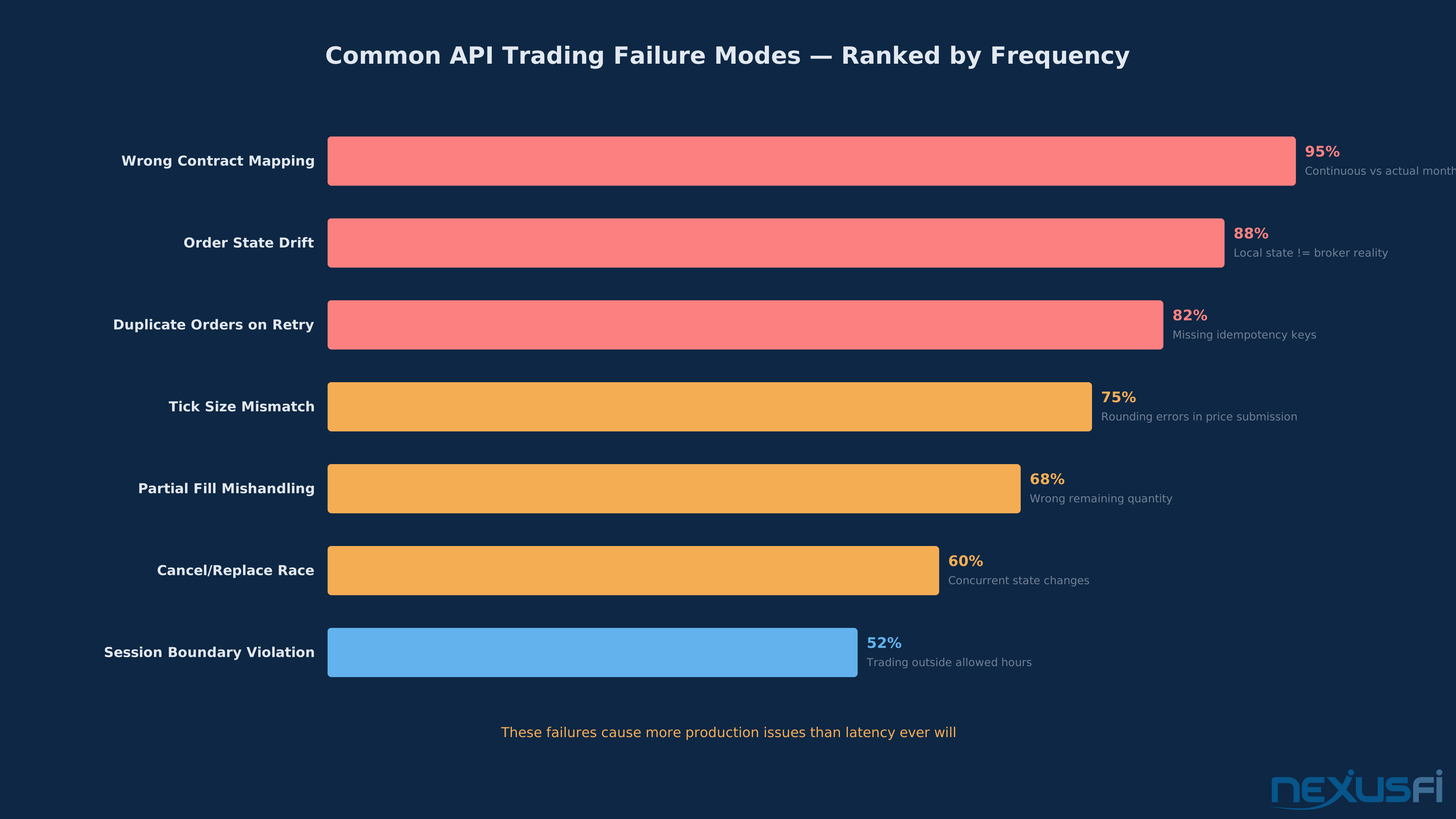
These break more production systems than latency ever will:
Wrong contract mapping. Your strategy generates a signal for "ES" but the broker expects "ESM26" (June 2026 E-mini S&P 500). Or your continuous contract resolution rolls to the wrong month. Or the ticker symbol format doesn't match between your signal source and your execution engine. This is the #1 cause of API trading failures, and it's entirely preventable with proper contract resolution logic.
Order state drift. Your system thinks an order is working. The broker already canceled it. You submit a cancel, get a reject ("order not found"), and now your state is confused. The fix: reconciliation loops that periodically query the broker for actual working orders and positions, comparing against your local state.
Duplicate orders. Network timeout → you retry the submission → broker executes both. Now you're double-sized. The fix: client-generated order IDs with idempotent submission. If the broker sees the same ID twice, it rejects the duplicate.
Tick size mismatches. You calculate a limit price of 5245.30, but ES trades in 0.25 increments. The broker rejects the order for an invalid price. The fix: always round limit prices to the instrument's tick size before submission.
Partial fill mishandling. 6 of 10 contracts fill. Your system doesn't correctly update the remaining quantity. You try to cancel the "full" order (10 lots), but only 4 are still working. The broker rejects the cancel for quantity mismatch. The fix: track remaining quantity as fills arrive and use it for all subsequent operations.
Session boundary violations. Your overnight strategy tries to submit an order during the exchange's daily settlement break (4:00-5:00 PM CT for CME). The order is rejected. The fix: maintain a session calendar and check trading hours before every submission.
Risk Management for API Trading #
Pre-Trade Controls #
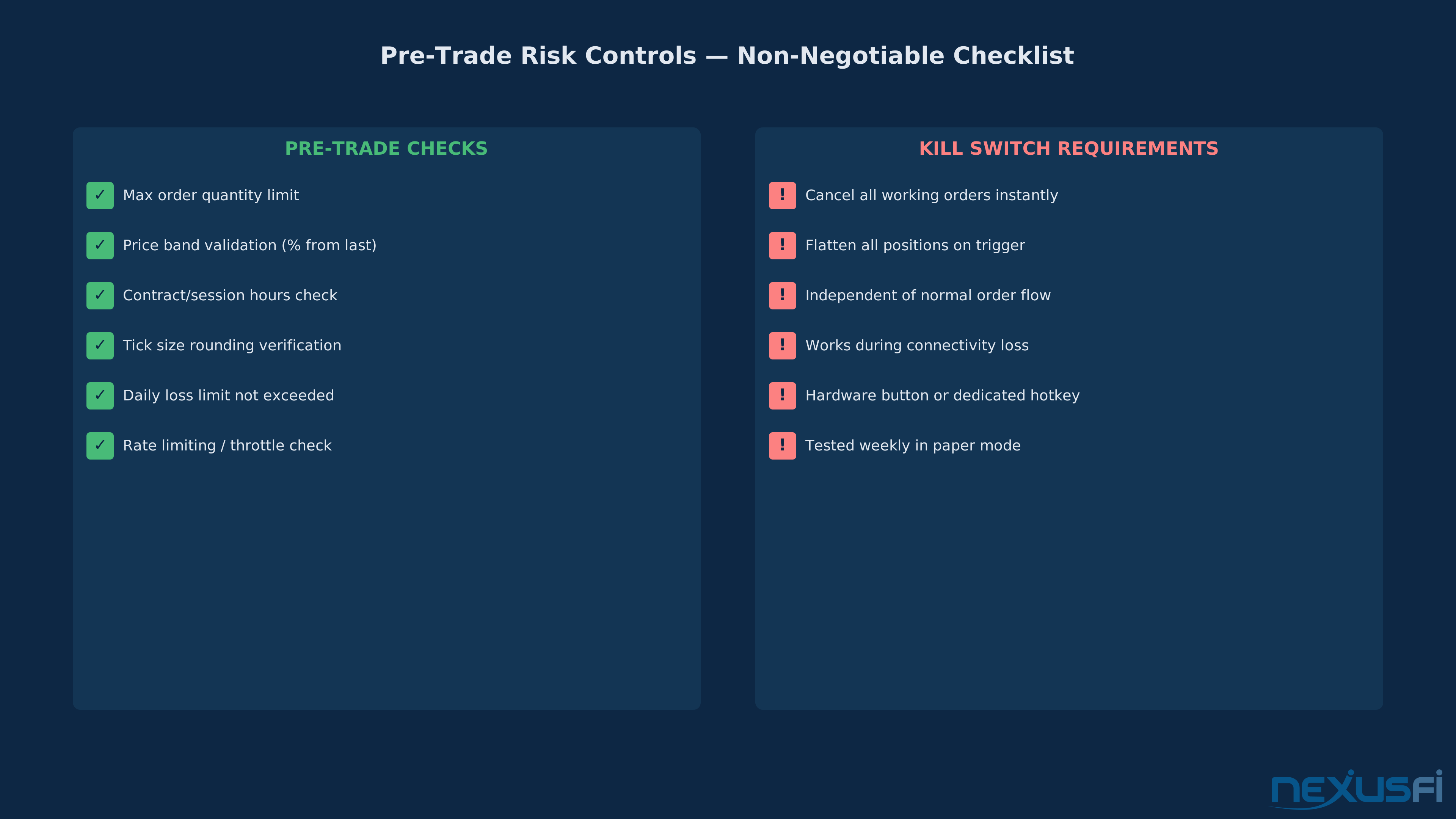
Every order must pass these checks before reaching the broker:
Maximum order size. No single order should exceed a configurable lot limit. Even if your strategy generates a signal for 100 contracts, if your limit is 10, the order is blocked or split.
Price band validation. Is the order price within a reasonable range of the current market? A limit buy at 1000.00 on ES (currently at 5245) is almost certainly a bug. Reject it.
Daily loss limit. If your realized + unrealized PnL for the day exceeds your configured maximum loss, all new orders are blocked and existing positions may be flattened.
Position limits. Maximum total exposure per instrument, per account, or across all accounts. This prevents runaway accumulation from bugs that generate repeated buy signals.
Rate limiting. Maximum orders per second, per minute, per hour. Prevents your system from overwhelming the broker's API during a logic error that generates orders in a tight loop.
The Kill Switch #
Non-negotiable for any automated system. The kill switch must:
- Cancel all working orders across all instruments, instantly
- Optionally flatten all positions to zero
- Work independently of the normal order flow (separate code path, separate connection if possible)
- Be triggerable by a physical button, hotkey, or automated condition (max loss breached, connectivity lost, etc.)
- Be tested regularly — a kill switch you've never tested is a kill switch that might not work
As [traderdavidt discussed on NexusFi][5], automation of trading methods in platforms like NinjaTrader requires careful attention to the execution details — the strategy logic is often the easy part. The reliability infrastructure around it is where the real engineering happens.
The Minimum Viable Integration #
If you're building your first API trading system, here's the absolute minimum before going live:
- Contract resolver: Maps your signal's symbol to the broker's exact contract specification (including expiry, exchange, and multiplier)
- Tick size validation: All prices rounded to the instrument's minimum increment before submission
- Idempotent order placement: Client-generated order IDs prevent duplicate orders on retry
- Order status tracking: Real-time updates via WebSocket, FIX, or polling (at minimum, know when your orders fill, reject, or cancel)
- Reconciliation: Periodic check that your local state matches broker-reported positions
- Paper mode separation: Completely separate credentials and routing for paper vs. live trading. No accidentally trading live while you think you're testing.
- Kill switch: A tested path to cancel everything and flatten, triggerable manually
- Error logging: Every request, every response, every state transition, timestamped and stored
Anything less than this and you're gambling not just on your strategy, but on your technology.
Choosing Your Integration Path #
The right choice depends on three factors:
Latency requirement. Daily/swing strategy? REST API is fine. Tick-level scalping? You need platform-native (ACSIL or NinjaScript). Institutional-grade execution? FIX protocol.
Complexity tolerance. Want the simplest path to automation? TradingView + webhook + broker REST. Want full control? External execution engine with FIX. Want the middle ground? Platform-native strategy development.
Operational capacity. Running a single strategy on one account? Platform-native is sufficient. Multiple strategies across accounts? You need centralized state management and risk controls — that's Model 3 territory.
The mistake most traders make is over-engineering for latency and under-engineering for reliability. A system that's 50ms slower but never misses a fill, never double-orders, and never loses track of its position is infinitely more valuable than one that's fast but brittle.
The Bottom Line #
API trading for futures is an exercise in engineering discipline, not just coding skill. The strategy logic — the part traders spend the most time thinking about — is typically the simplest component. The hard parts are the ones nobody wants to think about: contract mapping, state reconciliation, partial fill handling, and what happens when the network drops at the worst possible moment.
Build the state machine first. Add risk controls before you add features. Test the kill switch before you test the strategy. And when something breaks in production (it will), your audit log should tell you exactly what happened, in what order, with timestamps.
The spread between a good API trading system and a dangerous one isn't latency or protocol choice — it's how well you handle everything that goes wrong.
Knowledge Map
Go Deeper
Build on this knowledgeReferences This Article
Articles that build on this topicCitations
- — Automated trading integration Tradingview to Interactive Brokers (2023) 👍 1
- — payment for order flow??? (2019) 👍 10
- — Sierra Chart ACSIL for Beginners. (2025) 👍 1
- — How to code Sierra Chart Study (2019) 👍 5
- — AUTOMATION OF THE ALPHA TRADING METHOD (2014) 👍 8