



Trading Journal Software and Performance Analytics: The Tools That Turn Raw Trades Into Systematic Edge
Overview #
Trading Journal Software and Performance Analytics: The Tools That Turn Raw Trades Into Systematic Edge
Every trader has a plan. Few have a system that tells them whether the plan actually works. Trading journal software bridges that gap — importing your fills, calculating your metrics, and exposing the behavioral patterns that separate profitable traders from expensive hobbyists.
This isn't about keeping a diary. It's about building a closed-loop feedback system where every trade becomes a data point, every week produces a diagnostic report, and every month reveals whether your edge is growing or decaying. The software you choose determines how much of that process is automated, how deeply you can segment your performance, and whether your journal becomes a genuine improvement engine or just another tab you forget to update.
Why Dedicated Journal Software Exists #
Excel works. Traders have been logging trades in spreadsheets since the 1990s, and some still do. But dedicated journal platforms solve three problems that spreadsheets can't solve efficiently:
Automated fill import. Manually entering every trade is tedious, error-prone, and the first thing traders stop doing when they hit a losing streak — exactly when journaling matters most. Journal software that connects to your broker or platform pulls fills, timestamps, commissions, and P&L automatically. You log in and the data is already there.
Structured behavioral tagging. The insights that actually improve your trading come from correlating your decisions with your outcomes. Did you follow the plan? What setup triggered the entry? Were you revenge trading? These questions require structured fields — dropdowns, checkboxes, rating scales — not free-form text. Dedicated tools enforce that structure.
Segmented analytics. "How am I doing?" is the wrong question. "How am I doing on breakout setups during trending sessions in the first 90 minutes?" — that's the question that identifies your actual edge. Journal software segments performance across dozens of dimensions simultaneously, something that requires advanced pivot tables and custom formulas in Excel.
NexusFi's [Trading Metrics thread] [1] has tracked this evolution for over a decade, with hundreds of traders sharing their journaling approaches and metrics hierarchies. The thread started with basic win rate and profit factor tracking; today's entries discuss R-multiple distributions, behavioral compliance scores, and regime-dependent expectancy calculations.
The Hybrid Journaling Architecture #
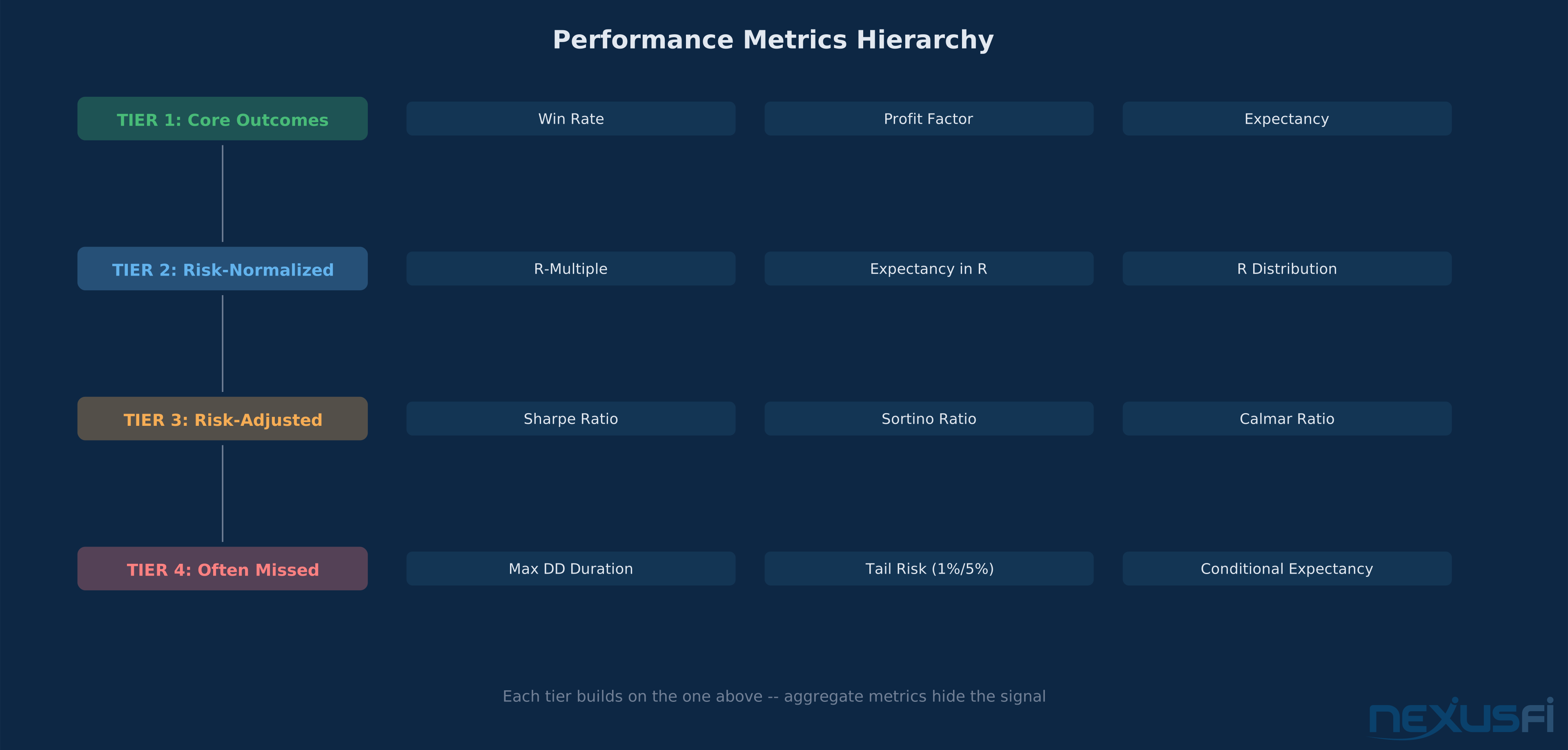
The best trading journal setups combine two data streams that serve different purposes:
Automated Layer: What Happened #
Your journal software should capture execution data without requiring any effort from you:
- Fill prices and timestamps with timezone accuracy
- Position size and direction (long/short)
- Partial fills and scaling events — this breaks most basic tools
- Commissions, exchange fees, and clearing costs per contract
- Realized P&L calculated from actual fills, not theoretical targets
- Trade duration from entry to final exit
- MFE and MAE (Maximum Favorable Excursion / Maximum Adverse Excursion) when the platform supports it
The automated layer eliminates data entry errors and ensures your journal stays current even during drawdown periods when motivation disappears. As [AnvilRob noted] [2] in his 1,695-reply journal, tools like Edgewonk are "used by many professionals" precisely because they handle this grunt work.
Manual Layer: Why It Happened #
Automation captures the what. You still need to record the why:
- Setup type — use a consistent taxonomy (dropdown menu, not free text). Examples: breakout, pullback to value, mean reversion, news fade, range failure
- Market regime — trending, ranging, volatile expansion, compression
- Entry trigger — what specifically caused you to pull the trigger
- Stop placement rationale — structure-based, ATR-based, fixed ticks
- Target and trade management method — fixed R target, trailing stop, time-based exit
- Rule compliance — did you follow the plan? Yes or no, no maybes
- Pre-trade hypothesis — "if price breaks above the developing value area high on increasing delta, I expect continuation toward yesterday's VPOC"
The manual fields should take 2-5 minutes per trade maximum. If it takes longer, your taxonomy is too complex and you'll abandon it within a month.
The Counterfactual Question #
One field that separates serious journaling from casual logging: "Would you take this trade again?" This single question forces you to separate process from outcome. A losing trade with a "yes" answer is a good trade that didn't work. A winning trade with a "no" is a warning sign — you got lucky, and luck doesn't compound.
Key Performance Metrics: What the Software Should Calculate #
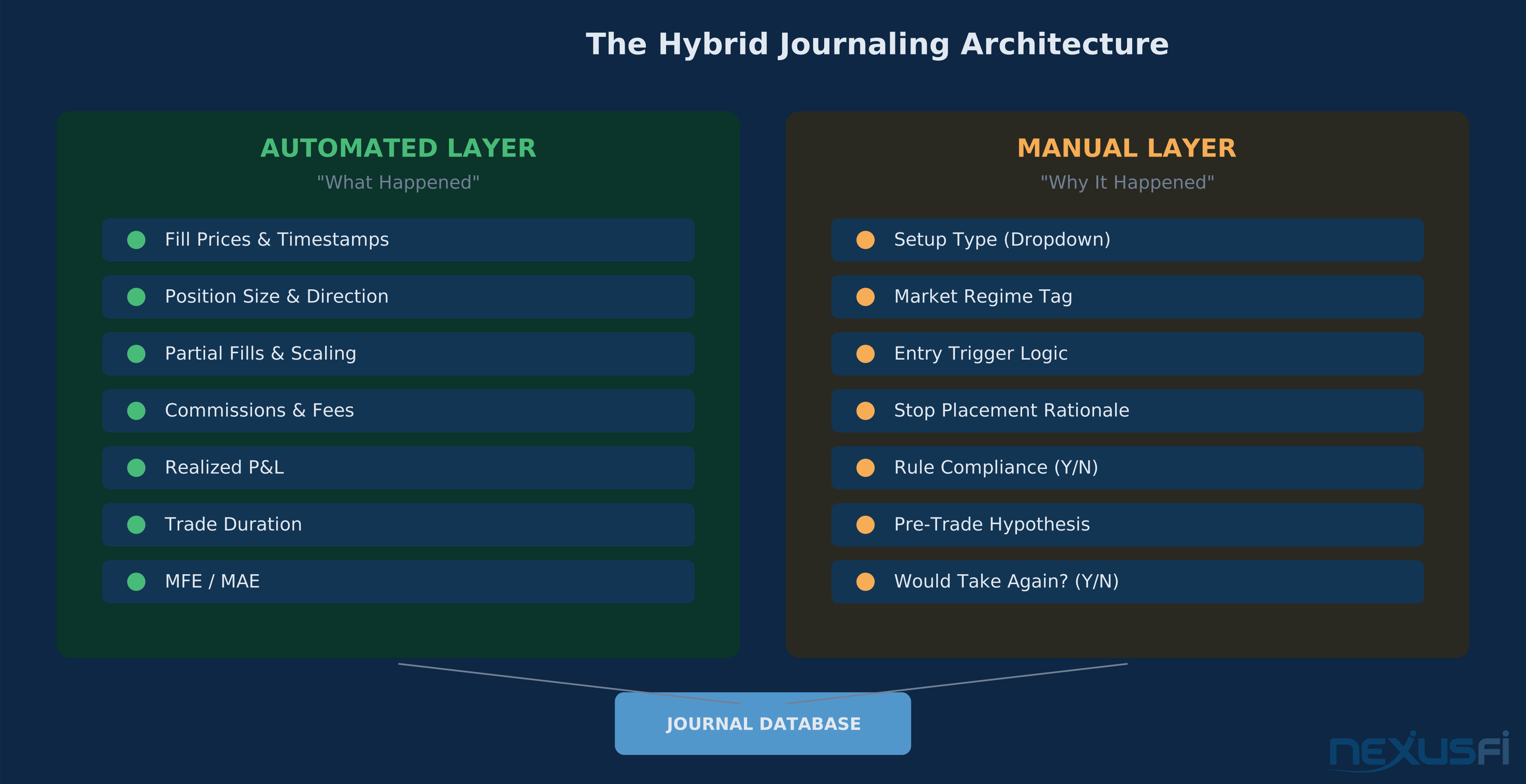
Tier 1: Core Outcomes #
Win Rate tells you the percentage of trades that make money. It's the most intuitive metric and the most dangerous one to improve in isolation. A 90% win rate with occasional catastrophic losses will blow up your account faster than a 40% win rate with controlled risk. Win rate matters only in combination with your reward-to-risk profile.
Profit Factor divides gross profits by gross losses. A profit factor of 2.0 means you make $2 for every $1 you lose. It's the simplest composite metric and works well for strategy-level comparisons. But it's heavily influenced by outlier trades — one massive winner can make a mediocre strategy look excellent.
Expectancy is the metric that actually tells you whether your edge is real:
Expectancy = (Win% x Average Win) - (Loss% x Average Loss)If your expectancy is negative after transaction costs, no position sizing scheme will save you. Your strategy doesn't have an edge. Period. Good journal software calculates this automatically and updates it after every trade.
Tier 2: Risk-Normalized Metrics #
R-Multiple normalizes every trade by its initial risk. If you risked 10 ticks and made 25, that's a 2.5R trade. If you risked 10 ticks and lost 8 (stopped out with slippage), that's a -0.8R trade.
R-multiples are critical because they let you compare trades across different position sizes, instruments, and volatility environments. A $500 win on a $200 risk (2.5R) is objectively better execution than a $2,000 win on a $3,000 risk (0.67R), even though the dollar amount is larger.
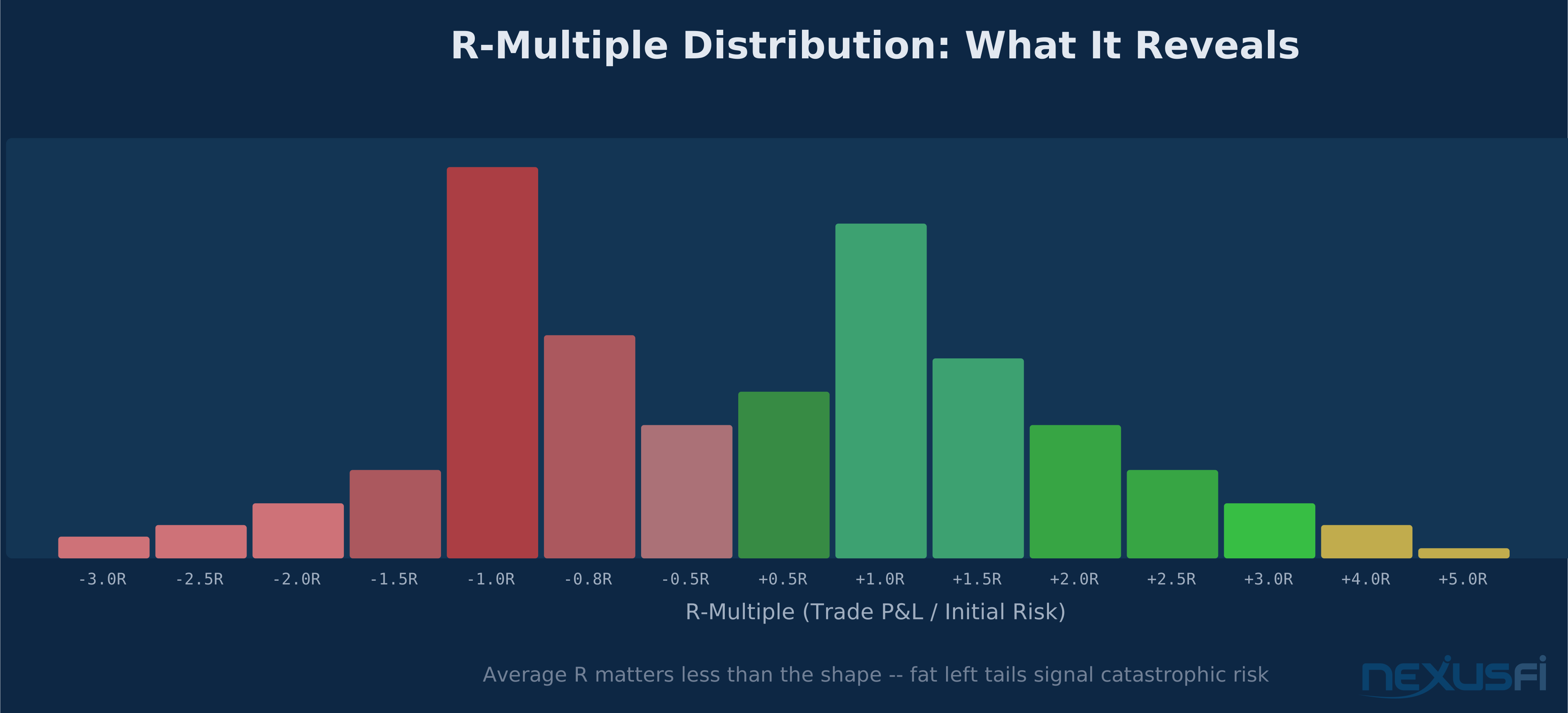
Track the distribution, not just the average. Your average R might be +0.3, but if your R-multiple histogram shows a fat left tail with occasional -3R and -4R outliers, you have a risk management problem that the average obscures.
Expectancy in R converts the standard expectancy formula into risk-normalized units. This is more informative than dollar-based expectancy because it accounts for position sizing changes:
Expectancy(R) = (Win% x Average Win R) - (Loss% x Average Loss R)[Massive l's IchibomB journal] [3] demonstrates this principle in practice — tracking both TraderSync's R/R calculations and profit factor month over month, showing how R-normalized metrics reveal consistency that raw P&L numbers can mask.
Tier 3: Risk-Adjusted Returns #
Sharpe Ratio measures return per unit of total volatility. For intraday futures strategies with irregular trade frequency, Sharpe can be noisy. It's still useful when computed consistently over the same time periods.
Sortino Ratio is Sharpe's smarter cousin — it only penalizes downside volatility. This matters for futures traders because upside volatility (big winning days) is desirable. Sortino doesn't punish you for having good days.
Calmar Ratio divides annualized return by maximum drawdown. This is the metric that tells you whether your returns are worth the emotional and financial pain of your worst period.
[DowDaddy's 1% Risk Journal] [4] tracks all three — Sharpe, Sortino, and Ulcer Index — providing a template for how complete metric tracking looks in practice.
Tier 4: Metrics Most Traders Miss #
Maximum Drawdown Duration isn't just how deep your drawdown goes — it's how long you stay underwater. A 15% drawdown that recovers in two weeks is manageable. A 15% drawdown that takes four months to recover will destroy your confidence and probably your trading.
Tail Risk Analysis examines your worst 5% and 1% of trades in R-multiple terms. If your worst 1% of trades are -4R or worse, you have catastrophic risk that aggregate metrics won't show.
Conditional Expectancy is the metric that separates journal software from spreadsheets. What's your expectancy for breakout trades in trending markets during the first hour? What about mean reversion trades in ranging markets after 11:30 AM? These conditional analyses require tagging discipline and segmentation engines that only dedicated tools provide.
Platform Integration: Getting Your Data In #
NinjaTrader Integration #
NinjaTrader is the most common platform among NexusFi's community, and journal software integration quality varies dramatically. Before selecting a tool, verify it handles:
- Partial fills — not all fills for a position execute at the same price
- Multiple entry and exit orders — scaling in and out creates complex trade records
- Break-even stop moves — when your stop adjusts to entry price, it changes the effective risk
- Contract month rolls — if you trade futures across expiration months, the journal must map symbols correctly
- ATM strategy exits — NinjaTrader's Advanced Trade Management strategies create stop and target orders that may not map cleanly to journal software "trade" records
The standard import method is CSV export from NinjaTrader's performance reports. Some tools offer direct API connections that import in real-time.
Universal Integration Checklist #
For any platform — TradingView, Sierra Chart, MultiCharts, Quantower, Tradovate's web interface — verify:
- Import method: Direct API integration is best. CSV parsing works but requires manual export steps. Manual entry defeats the purpose.
- Timestamp accuracy: Timezone handling is critical. A trade entered at 9:31 AM Eastern logged as 9:31 AM UTC creates reconciliation nightmares.
- Symbol normalization: ES, @ES, ESM26, ES 06-26 should all map to the same instrument. Contract month handling matters.
- Fee accuracy: Per-contract commissions, exchange fees, NFA fees, and clearing costs should all be captured. Missing $0.50 per round turn doesn't seem like much until you realize it's $500 over 1,000 trades.
The Reconciliation Audit #
No matter how good the integration, run a monthly reconciliation: compare total realized P&L in your journal to total realized P&L on your broker statement. They should match within rounding. If they don't, you have a data integrity problem that invalidates every metric downstream.
Popular Trading Journal Platforms #
Edgewonk #
The most frequently discussed journal software on NexusFi. [TIFONTrader's detailed review] [5] describes switching from Excel after realizing the behavioral tracking capabilities — setup tagging, emotional state logging, and the "Tilt Meter" — provided insights spreadsheets couldn't match.
Edgewonk's core strengths:
- Setup-level analytics with custom tags
- Behavioral compliance tracking
- Equity curve decomposition by setup type
- The "Trade Management" metric that measures how efficiently you captured available profit (MFE utilization)
- Available as desktop software (one-time purchase, not subscription)
The main limitation: integration relies on CSV imports rather than real-time API connections.
TraderSync #
Cloud-based with broader broker integrations than Edgewonk. TraderSync supports automated imports from most major brokers and offers AI-powered trade analysis features.
[Community discussions on TraderSync] [6] note it's "great" for recording trades and basic stats, with the ability to "really dive into a problem area" through custom tags and filtered views. The web-based interface makes it accessible from any device, and the built-in charting shows entries and exits overlaid on price data.
Tradervue #
One of the earliest cloud-based journal platforms, Tradervue pioneered automated brokerage import and shared journal functionality. The "shared" feature lets traders publish anonymized performance data for peer review — a concept that aligns naturally with NexusFi's community-driven approach.
Excel and Google Sheets #
Still the right choice for traders who want complete control over their analytics. The advantage is unlimited customization. The disadvantage is that everything — data entry, metric calculation, visualization, behavioral tagging — requires manual setup and maintenance.
[Big Mike's original Trading Metrics thread] [7] started as an Excel optimization discussion, with the community building increasingly sophisticated templates. The thread contains hundreds of formula variations for Sharpe, expectancy, profit factor, and custom metrics.
For traders committed to Excel, the minimum viable journal needs these tabs:
- Trade Log — one row per trade with all execution fields
- Metrics Dashboard — calculated from the log with PF, expectancy, R-multiple distribution
- Behavioral Tags — dropdown fields for setup type, compliance, emotional state
- Equity Curve — chart generated from cumulative P&L
Analytics Workflows: Turning Data Into Improvement #
The Segmentation Imperative #
Never analyze all trades in aggregate. The aggregate hides the signal.
Your journal software should let you filter performance by:
- Setup type — which patterns actually make money?
- Time of day — are you profitable in the open, the lull, the close?
- Market regime — trending days vs. range days vs. expansion days
- Direction — are you better long or short?
- Session — RTH vs. ETH performance
- Compliance — compliant trades vs. rule violations
- Volatility environment — low VIX vs. high VIX periods
The power comes from intersecting these dimensions. "I'm profitable on pullback setups during trending RTH sessions in the first 90 minutes" is a precise, actionable finding. "I'm generally okay" is worthless.
Decision Quality vs. Outcome Quality #
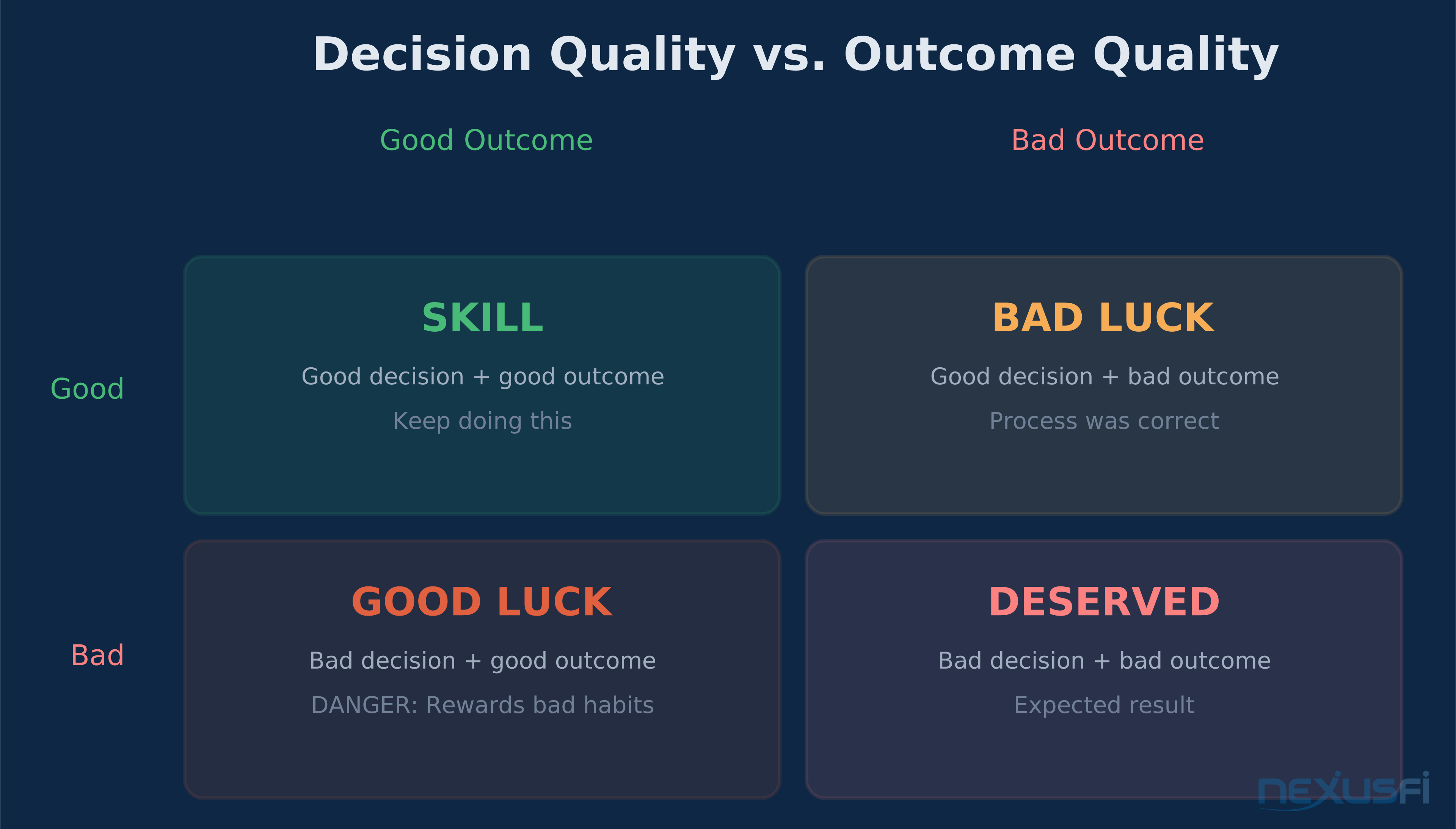
Good journal software helps you separate decision quality from outcome quality through a 2x2 matrix:
| Good Outcome | Bad Outcome | |
|---|---|---|
| Good Decision | Skill | Bad luck |
| Bad Decision | Good luck | Deserved loss |
The dangerous quadrant is "good luck" — trades where you violated your rules but made money anyway. These erode discipline because they reward bad behavior. Your journal should flag these through compliance tagging so you can track how often luck is masking process failures.
Weekly Review Protocol #
The most effective review cadence uses three timeframes:
After every trade (2 minutes): Tag setup, check compliance, rate execution quality. Don't analyze yet.
Weekly (30-60 minutes): Review the week's trades filtered by setup and regime. Calculate expectancy by setup. Identify your biggest leaky bucket — the specific pattern causing the most damage. Define one specific improvement for next week.
Monthly (2-3 hours): Full equity curve review. Check for expectancy drift. Compare compliant vs. non-compliant trade performance. Look at drawdown sources. Update your system rules if evidence supports a change.
The One-Variable Rule #
When your journal reveals a problem and you want to fix it, change only one thing at a time. If you simultaneously tighten your stop, add a filter, and change your position sizing, and performance improves, you have no idea which change worked. Controlled experimentation is the only way to build reliable evidence for system changes.
Behavioral Pattern Analysis: Where the Real Edge Lives #
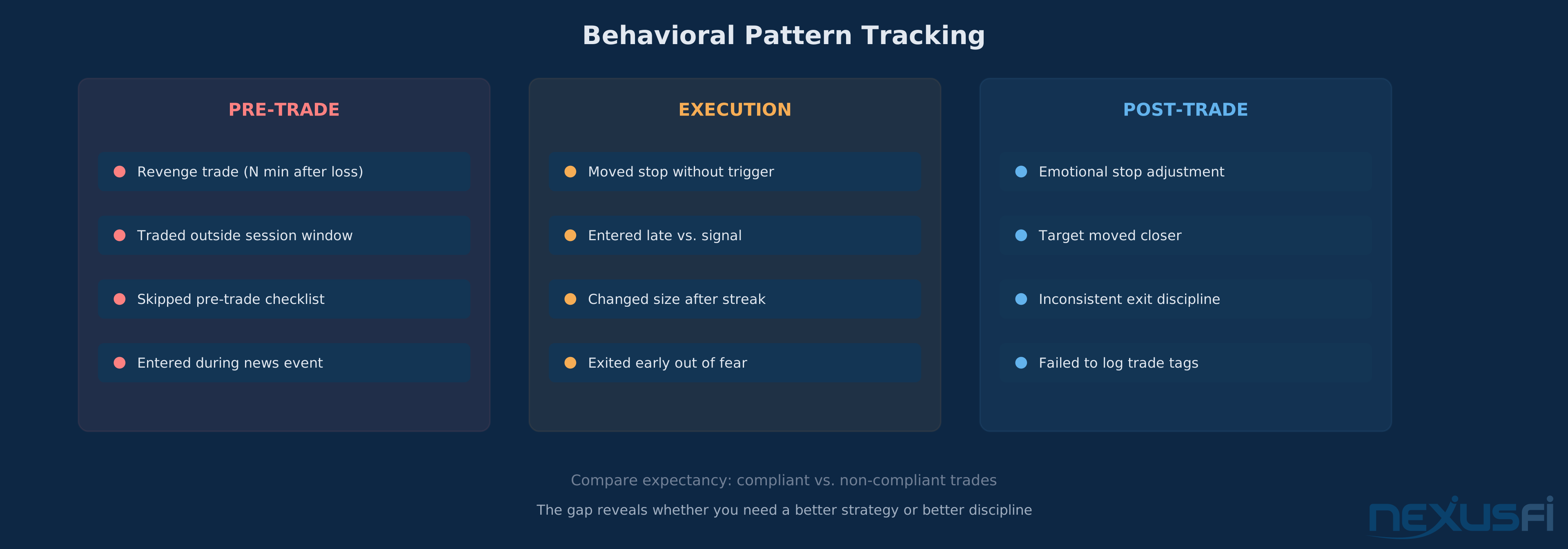
Traditional metrics measure what happened. Behavioral analysis reveals why it happened. This is where journal software earns its cost.
What to Track #
Pre-trade behavior flags:
- Revenge trade (entered within N minutes of a loss)
- Traded outside your defined session window
- Skipped pre-trade checklist items
- Entered during a news event you planned to avoid
Execution discipline flags:
- Moved stop without a predefined trigger
- Entered late relative to the signal
- Changed position size after a winning/losing streak
- Exited early out of fear rather than following the plan
Post-trade behavior:
- Emotional stop adjustments during the trade
- Target moved closer to "lock in" gains prematurely
- Inconsistent exit discipline
Quantifying the Impact #
The key analysis: compare expectancy between compliant trades and non-compliant trades. If your compliant trades have an expectancy of +0.4R and your non-compliant trades have an expectancy of -0.6R, you don't need a better strategy — you need better discipline. The journal proves it with numbers.
[Rrrracer's 1,280-reply journal] [8] demonstrates this evolution in real-time — starting without any trade tracking, then gradually building a system for reviewing performance and behavior, with the community providing feedback at each stage.
The Time-of-Day Discovery #
One of the most common behavioral insights: losses concentrated after a specific time. Multiple NexusFi traders have discovered through journaling that their edge disappears after the morning session — the 11:30 AM EST "lull" is a documented account destroyer for traders who don't recognize it. The systematic improvement is simple: stop trading at your identified cutoff. The journal provides the evidence to justify that constraint.
Equity Curve Analysis: Beyond the P&L Line #
What to Look For #
A rising equity curve feels good. A rising equity curve that drops 30% every six weeks feels terrible. Journal software should decompose your curve to reveal:
Drawdown profile: How deep do drawdowns go? How long do they last? What's the typical recovery time? A flat equity curve following a sharp drop often indicates a tilt cycle — the loss triggers emotional trading, which extends the drawdown.
Concentration risk: What percentage of your total returns came from your best 10 trades? If the answer is 80%, your "edge" might just be a few lucky outliers. Remove those trades and recalculate. Does the strategy still work?
Rolling metrics: Track your profit factor and expectancy on a rolling 50-trade or 100-trade basis. If these metrics are declining over time, your edge may be decaying — either because market conditions changed or because you're drifting from your rules.
Good Drawdown vs. Bad Drawdown #
Not all drawdowns are created equal. Good drawdown happens when your strategy experiences normal variance — you followed the rules, the setups were valid, the market just didn't cooperate. Bad drawdown happens when you stopped following the rules, increased size after losses, or traded setups that weren't in your plan.
Journal software that tracks compliance alongside P&L lets you distinguish between these two types. If your compliance score stays at 95% during a drawdown, the strategy is experiencing normal variance. If compliance drops to 60%, the drawdown is self-inflicted.
The Systematic Improvement Loop #
Trading journal software isn't a passive record — it's an active improvement system. Here's the professional workflow:
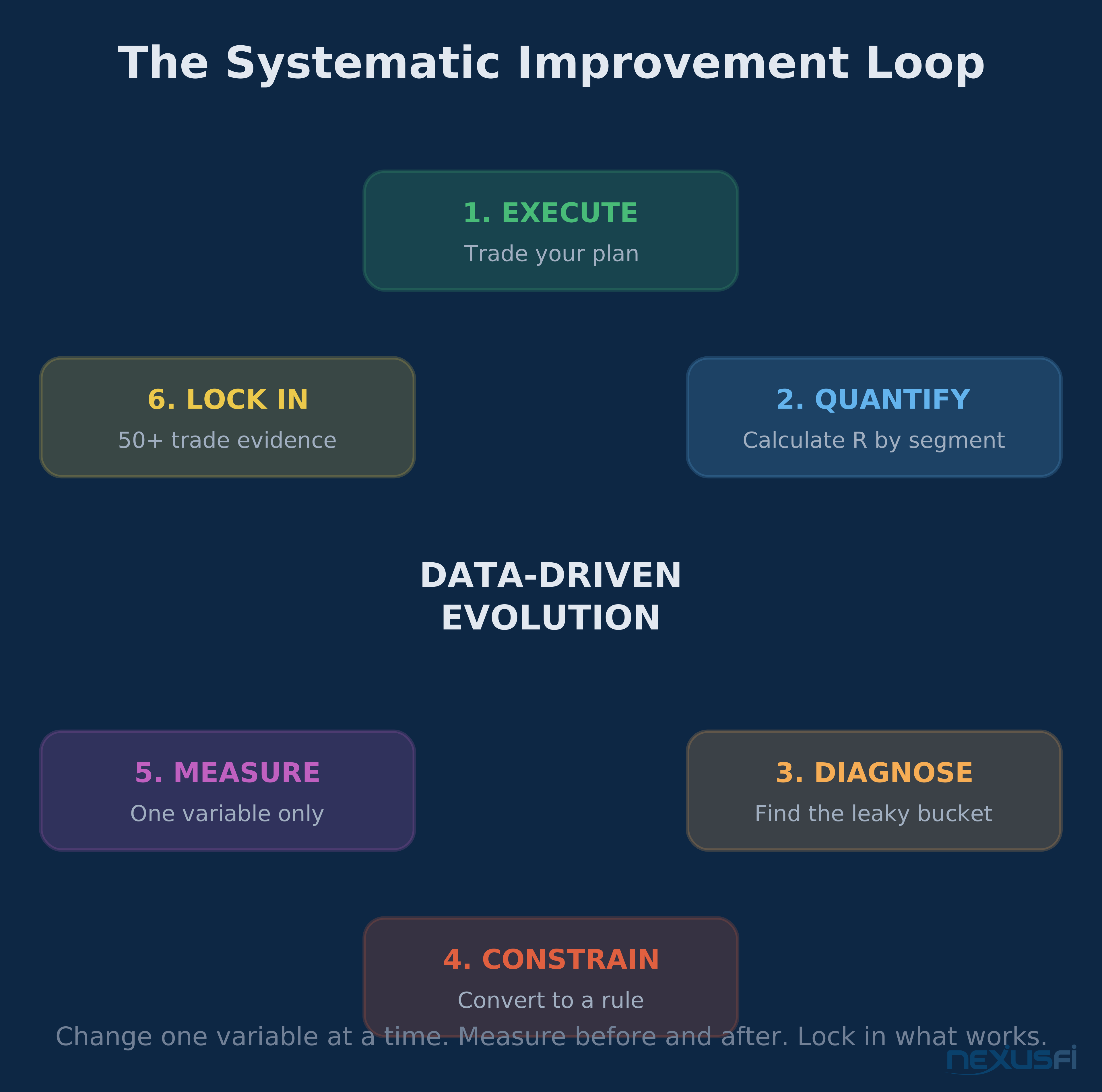
Step 1: Execute and Capture. Trade your plan. Automated fill import captures execution. Manual tags capture intent and compliance.
Step 2: Quantify. Calculate R-multiples, expectancy, and profit factor segmented by every relevant dimension. Let the software do the math.
Step 3: Diagnose. Identify the specific pattern causing the most damage. Not "I need to be more disciplined" — something concrete like "breakout trades during low-volatility sessions have negative expectancy because the moves don't follow through."
Step 4: Constrain. Convert the diagnosis into a rule: "No breakout entries when ATR(14) is below 8 points on ES." Or "If compliance drops below 80% for the week, reduce position size by 50% the following week."
Step 5: Measure. Track the impact of the rule change using the same metrics. Did expectancy improve? Did drawdown decrease? Was trade frequency affected? Change only one variable at a time so you know what caused the improvement.
Step 6: Lock in. Rules that survive 50+ trades of evidence become permanent additions to your trading plan. Rules that don't show improvement get removed. This is data-driven evolution, not guesswork.
[GruttePier's 2,117-reply journal] [9] demonstrates this loop over years of development — evolving from basic trade logging to sophisticated performance segmentation, with the journal serving as both accountability system and diagnostic tool.
Choosing the Right Tool #
The "best" journal software depends on your trading style, technical comfort level, and what you're willing to spend time on:
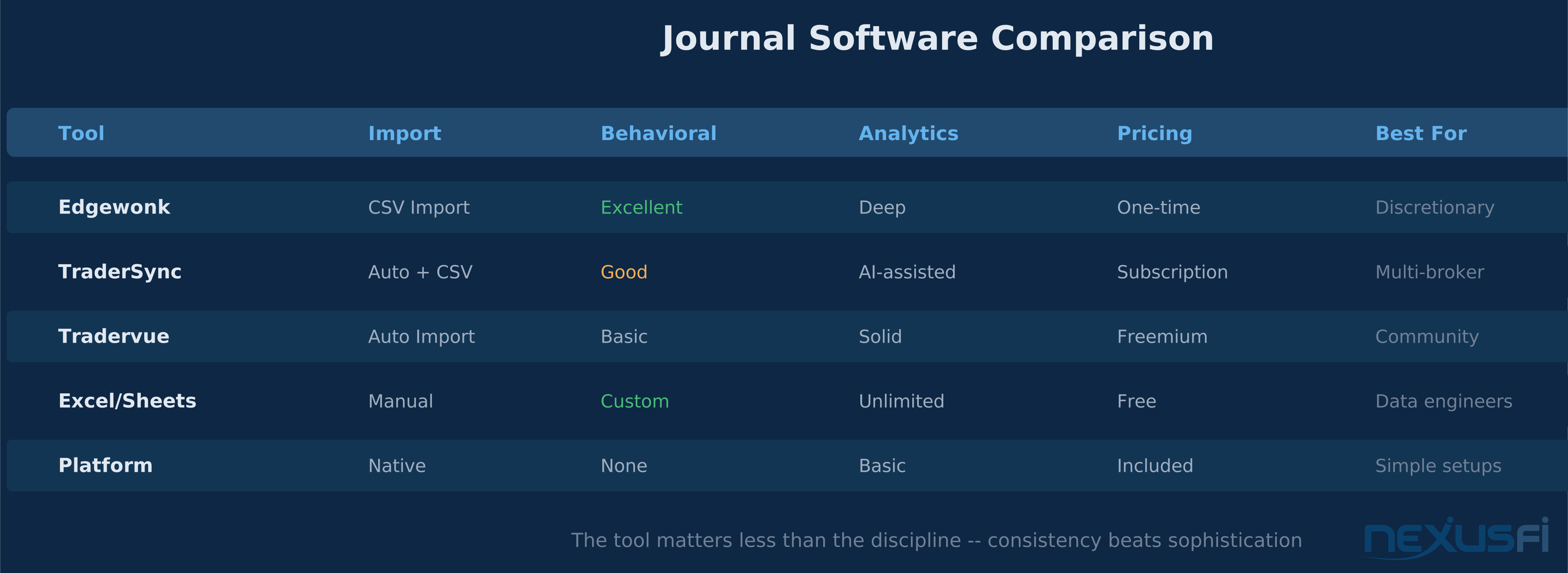
Choose Edgewonk if you want deep behavioral analytics, MFE/MAE analysis, and a one-time purchase. Best for traders who import trades via CSV and want the most sophisticated analysis engine for discretionary trading.
Choose TraderSync if you want cloud-based access, broader broker integrations, and AI-assisted analysis. Best for traders who want automated import and modern web UI.
Choose Tradervue if you want community sharing features and solid automated import. Best for traders in accountability groups who benefit from peer review.
Choose Excel/Sheets if you want complete control and are willing to build and maintain the infrastructure. Best for systematic traders who enjoy data engineering and need custom metrics.
Choose your platform's built-in tools if you trade relatively simple strategies and don't need behavioral tagging. NinjaTrader's Trade Performance reports, for example, calculate most Tier 1 metrics out of the box.
Whatever you choose, the tool matters less than the discipline. A simple journal used consistently beats a sophisticated platform used sporadically. The real question isn't which software to buy — it's whether you'll still be logging trades in six months.
The Bottom Line #
Trading journal software turns the vague feeling of "I need to trade better" into specific, measurable, actionable insights. The technology has matured to the point where automated fill import, structured behavioral tagging, and multi-dimensional analytics are table stakes in any serious journaling platform.
The distance between a hobbyist and a professional isn't talent or screen time. It's the rigor of their feedback loop. Your journal is that loop. Pick a tool, establish your taxonomy, and commit to the process. The data will tell you exactly where to improve — if you're willing to listen.
Further reading: Trading Journal for Self-Awareness explores the psychological foundations of journaling. This article focuses on the software and analytics tools that make systematic improvement possible.
Knowledge Map
Go Deeper
Build on this knowledgeCitations
- Trading Metrics for journals/record keeping
- — Trade Journal (2018) 👍 3“There are some great tools you can use to track performance. There worth looking at. Edgewonk is used by many professionals I communicate with. Works for all assets classes. It does cost. But very powerful. Fundseeder is great platform as well.”
- — IchibomB Futures Trading (2021) 👍 17“If you can trade consistently at 67% with 1R you are essentially profiting 2x the amount of every loser. That is the big goal. For every loser, you have 2 winners.”
- — 1% Risk Journal (2024) 👍 1“Trader Performance 2/29/2024 Total Net Profit:+$9.50 Gross Profit: $16.00 Gross Loss: ($6.50) Profit Factor: 2.46 Max Drawdown: -$5.50 Sharpe Ratio: +9.23 Sortino Ratio: +1.00 Ulcer Index: 0.00 Probability: 20.”
- — Edgewonk (trading journal) (2015) 👍 3“Hi everyone, Long time ago I created my own excel spreadsheet as my trading journal. Recently I have come across Edgewonk. And since I am going to praise it :), please note that I am in no way related or connected to Edgewonk.”
- — TraderSync Experience? (2022)“I use it as my main trade logging tool which it's great at, but not so great as an in depth analysis tool. They've recently added custom tags which has helped, but leaves much to be desired.”
- — Trading Metrics for journals/record keeping (2010) 👍 46“I'm on a mission to improve my Excel trade journal. I'd like to hear input on what metrics you guys measure in your journal.”
- — Rrrracer's complete noob starting from scratch journal (2018) 👍 7“I've always gone back through my charts to review the session's activity and my performance, but to this day I have never tracked my trades or done any type of statistical analysis. Well, all that is gonna change.”
- — GruttePier's trading journal to getting profitable (2019) 👍 6“Thanks! The journal (/journey) has become quite big so, ahum, take your time :becky: There is an index on post #2 with what I feel were important events in my journey.”