



Mental Rehearsal and Visualization for Traders: The Sports Psychology Edge
The mental preparation gap is real. Elite athletes warm up their minds before competition. Most traders check their charts and hit the order button without a second thought.
Overview #
Before every Olympic ski run, the athlete stands at the top of the mountain with eyes closed. To an observer, nothing is happening. Internally, they are executing the entire course — every gate, every transition, every body position — in complete sensory detail. Heart rate elevates. Muscle activation patterns fire at subthreshold levels. The nervous system is running a practice session without the body moving a millimeter.
Trading is a performance activity. The market is the competition environment. Your execution — entries, exits, stop management, sizing adjustments — is the performance. And like every performance activity, the quality of your preparation directly determines the quality of your execution.
Mental rehearsal and visualization are the most extensively validated psychological performance techniques in sports science, military training, and surgical education. They are also among the most underused tools in a trader's preparation toolkit. The reasons are not hard to find: sitting quietly with your eyes closed before markets open doesn't feel productive. It doesn't look like work. And without understanding the neuroscience, it seems more like wishful thinking than performance enhancement.
The neuroscience is unambiguous. The practical application is learnable. And the traders who practice it report a consistent effect: situations that would have rattled them feel familiar. Decisions that would have been emotional become procedural. This article covers what mental rehearsal actually is, why it works at the neural level, and how to build a concrete pre-market protocol that transfers to live trading.
The Neuroscience: Why Your Brain Believes What You Imagine #
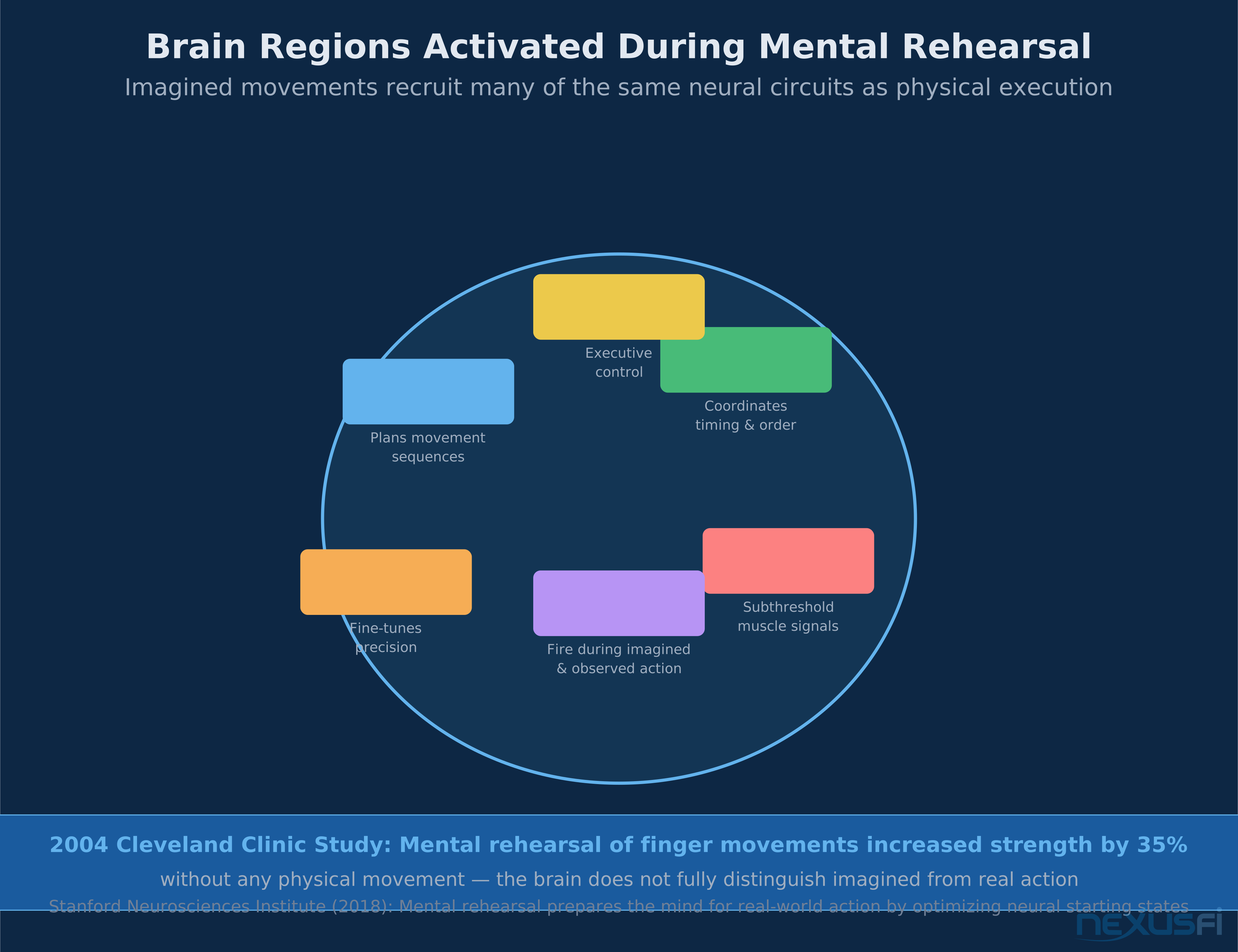
The foundation of mental rehearsal rests on a property of the nervous system called functional equivalence — first formally proposed by Jeannerod in 1994, and repeatedly confirmed with neuroimaging since. The core principle: imagined and executed movements share overlapping neural representations.
When you vividly imagine placing a trade, your premotor cortex activates in patterns similar to an actual order entry. Your supplementary motor area, which plans action sequences, shows increased activity. Your cerebellum, which coordinates timing and precision, engages. Even your primary motor cortex — the final stage before signals reach muscles — shows subthreshold activation.
The evidence extends beyond neuroimaging. A 2004 Cleveland Clinic Foundation study found that mentally rehearsing finger movements for 15 minutes/day (no physical movement) produced a 35% strength increase over 12 weeks. Stanford Neurosciences Institute researchers (2018) found mental rehearsal improves performance by placing neural circuitry into an optimal starting state for execution — the same neural patterns that precede successful physical performance, achieved through imagination alone.
Mirror neurons add a second mechanism — neurons that fire both when you perform an action and when you observe or imagine it. They explain why watching an expert execute and then mentally rehearsing their patterns can accelerate your own skill acquisition.
For traders, the implication is direct: vividly simulating a stop scenario trains the same neural circuits that will fire when it occurs in real time. Each rehearsal session is real practice.
The Vividness Requirement #
Mental rehearsal only delivers these benefits when the imagery is genuinely vivid — not passive thought, but active sensory reconstruction. The goal is to recreate the experience in sensory detail sufficient to evoke the same cognitive and physiological responses as the real event.
For a trader, this means:
- Seeing the specific chart you trade, at the time of day you trade it
- Feeling the physical sensation of cursor on entry trigger
- Noticing the P&L value changing in real time
- Experiencing the emotional state associated with the scenario — not suppressing it
- Hearing any ambient sounds associated with your trading environment
Vague thinking about trading — "I'll manage stops better tomorrow" — produces no neural rehearsal benefit. Vivid, sensory-specific, emotionally engaged imagery does.
Evidence From Sports and Military Performance #
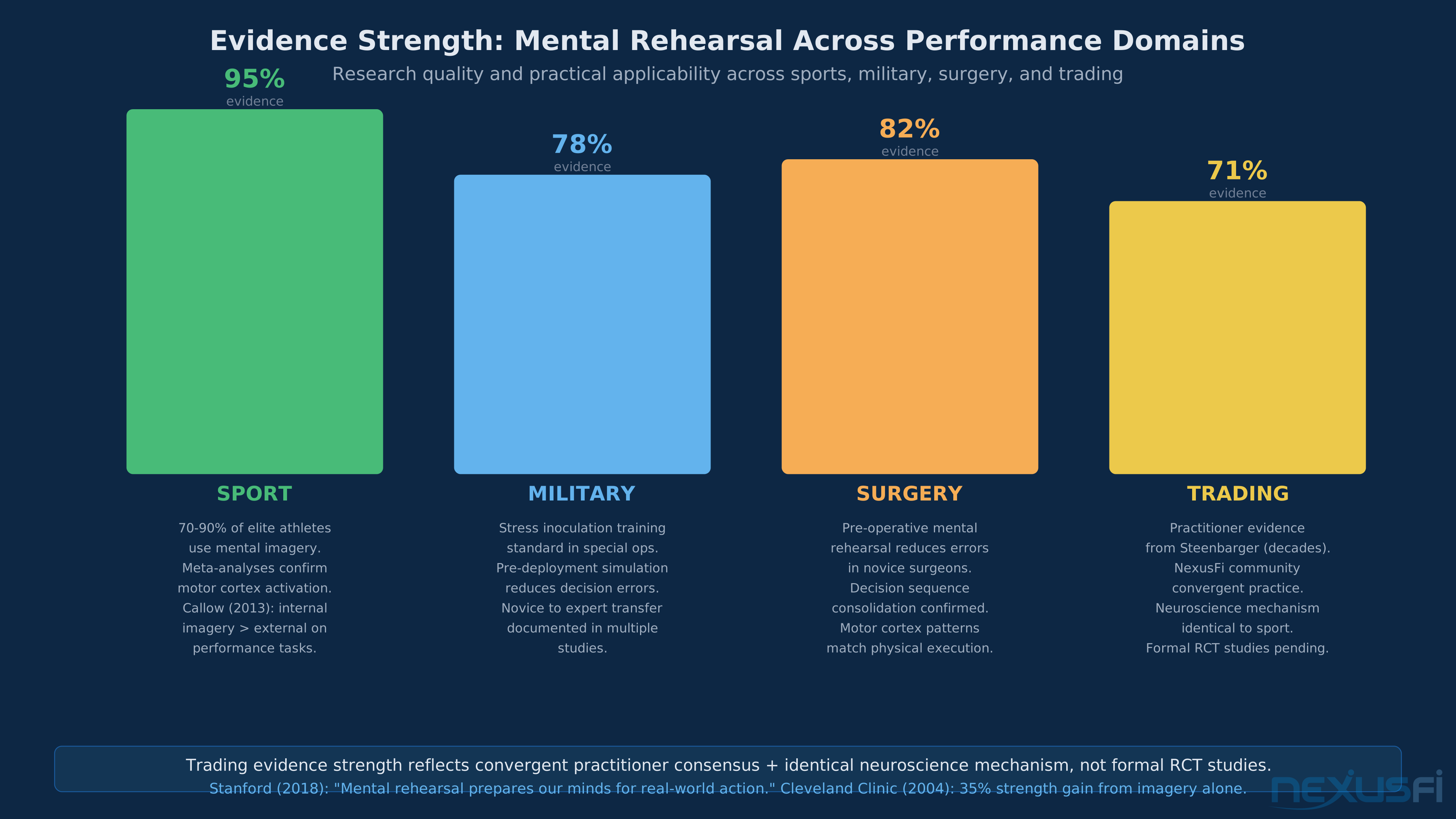
Mental rehearsal is not a trading-specific insight. It has one of the longest and most rigorous evidence bases of any performance psychology technique. Understanding where it comes from gives traders appropriate confidence in its application.
Elite sport: Between 70-90% of elite athletes use mental imagery. A meta-analysis found consistent premotor cortex, supplementary motor area, and cerebellar activation across both kinesthetic and visual imagery tasks — matching physical execution patterns. Callow et al. (2013, Frontiers in Human Neuroscience) demonstrated that internal visual imagery — imagining from inside your own eyes — produced much faster performance times than external imagery across three slalom experiments.
Military and high-stakes operations: The U.S. military uses stress inoculation protocols based on the same principles as sports imagery. Personnel are systematically exposed to simulated versions of high-stakes scenarios before deployment. The purpose is not to predict exactly what will happen but to ensure the nervous system has encountered those stress profiles before — so that when the real event occurs, there is no element of physiological surprise that could compromise decision quality.
Surgical training: Surgeons use mental rehearsal of complex procedures to build procedural fluency before and between cases. Studies have documented that pre-operative mental rehearsal reduces errors and improves operative time in novices. The mechanism is the same: practicing the sequence of decisions and physical actions in imagery consolidates neural representations of the procedure.
What all three domains share: performance under pressure is degraded by novelty and surprise.
What Steenbarger Brings to This: The Trading Application #
Dr. Brett Steenbarger is a clinical psychologist who has spent decades coaching professional traders at hedge funds and proprietary firms and writing about trading psychology on his TraderFeed blog. His contribution to this topic is less the neuroscience — which he knows well — and more the concrete application of imagery techniques specifically calibrated to what destroys traders.
Steenbarger's core insight is that the majority of trading psychology problems are execution problems under conditions of emotional arousal. Traders know their rules. They violate them during specific triggering events: large drawdowns, missed trades, vindication trades, revenge trades. The emotion does not override cognition in the abstract — it overrides cognition in specific, predictable scenarios. And those scenarios can be rehearsed.
His framework, described across multiple TraderFeed posts including a 2024 series on emotional trading, centers on three applications:
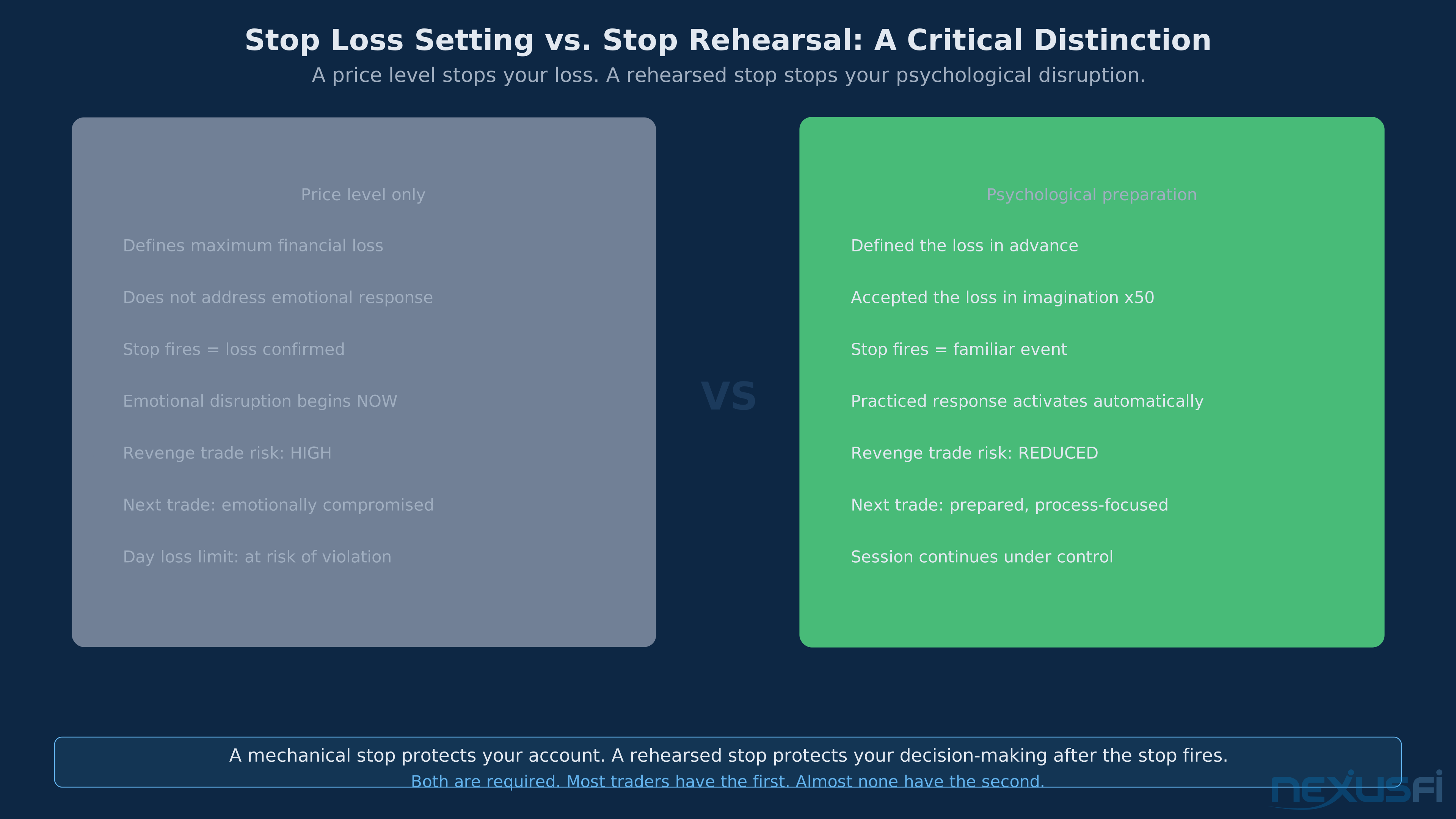
Mental Preparation for Stops: By mentally rehearsing scenarios in which you are stopped out — visualizing the market action that would take you out of a trade and how you want to respond — the setting of the stop becomes an emotional preparation to handle the loss. Repetition takes the emotion out of negative scenarios. The trader who has mentally rehearsed being stopped out 50 times does not experience that 51st real stop as a novel event.
Building on Best Practices: Steenbarger advocates using imagery to amplify and consolidate your best trading practices, not just reduce problems. The idea is to replay sessions where you executed correctly in high-resolution detail, making that neural representation stronger and more accessible. You are rehearsing being your best self.
Stress Inoculation as Pre-Market Ritual: Drawing on clinical stress inoculation techniques, Steenbarger recommends building imagery into daily pre-market routine — not as meditation, but as preparation.
"This technique requires regular practice, but can be a regular part of daily preparation for active traders. We can imagine our position going against us and getting near our stop; we can visualize not getting filled at our desired level; we can imagine negative thoughts that might intrude during the trade... It is difficult for frustrations to get the better of us if they cannot surprise us." — Brett Steenbarger, Ph.D. (TraderFeed, 2024)
Two Modes of Mental Rehearsal #
Before describing the protocol, traders need to understand a distinction that separates effective from ineffective visualization.
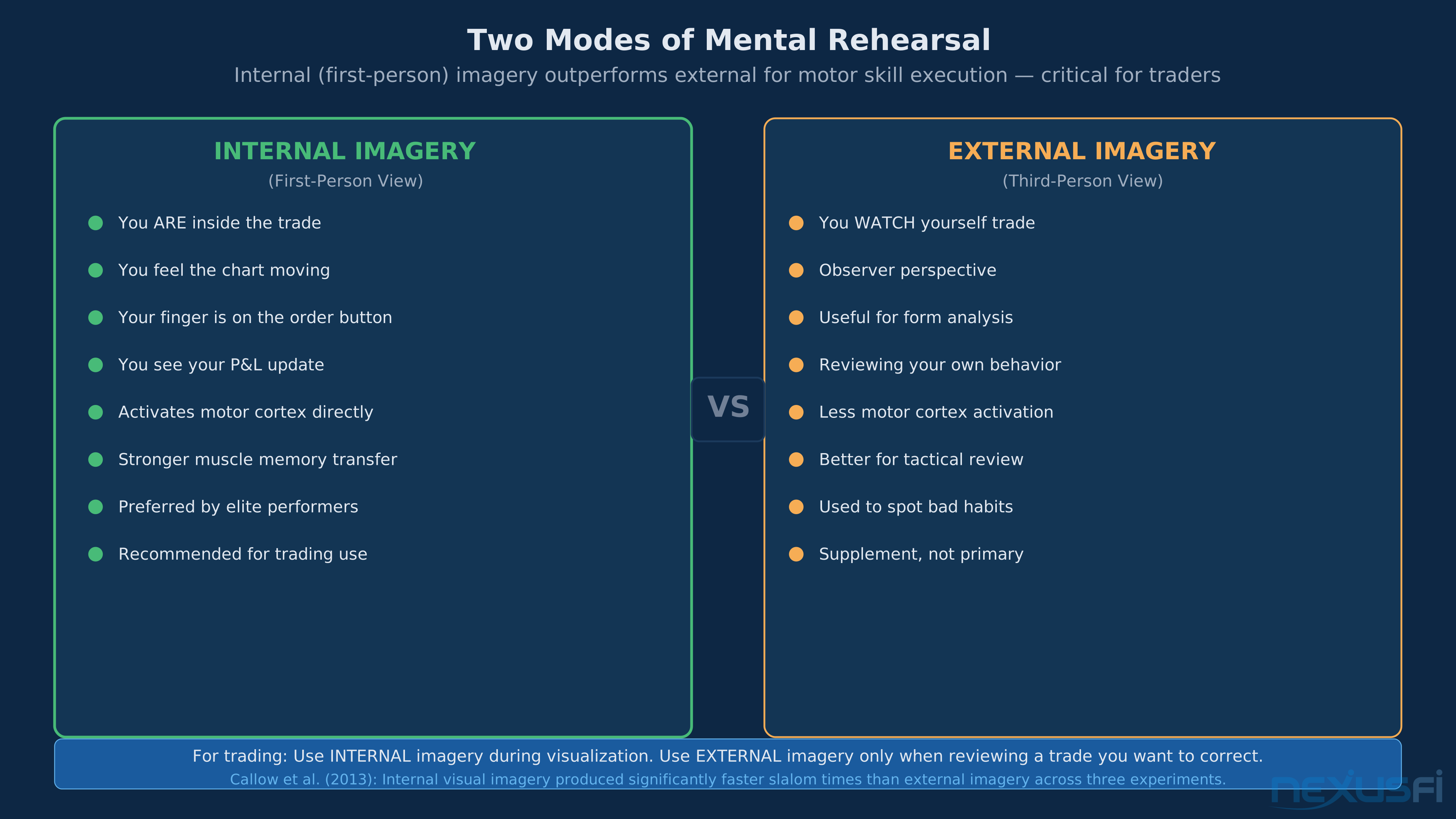
Internal imagery means imagining from inside your own perspective — you are in the trade, you see the chart through your own eyes, you feel your hand on the mouse. This perspective activates the motor cortex directly and produces stronger transfer to actual execution. Research consistently demonstrates that internal imagery outperforms external imagery for motor skill improvement.
External imagery means imagining from outside yourself — you watch yourself trade as if from across the room. This perspective is useful for tactical review: identifying where your decision timing or emotional expressions diverged from your plan. It is less effective as preparation for execution.
The practical rule: use internal imagery during visualization sessions and external imagery during post-trade review. Most traders who say they don't benefit from visualization are doing the external version, which lacks the motor cortex activation that produces skill transfer.
Kinesthetic Imagery: The Often-Missed Dimension #
Visual imagery (what you see) and kinesthetic imagery (what you feel physically) together produce better outcomes than either alone. For traders, kinesthetic details include: shoulder tension when a trade runs against you, the click of the mouse on entry, the sensation of sitting forward as a setup develops. These physical details activate different neural pathways and increase the ecological validity of the rehearsal.
The Pre-Market Protocol: Concrete Implementation #
NexusFi community members have independently converged on similar pre-market visualization practices.
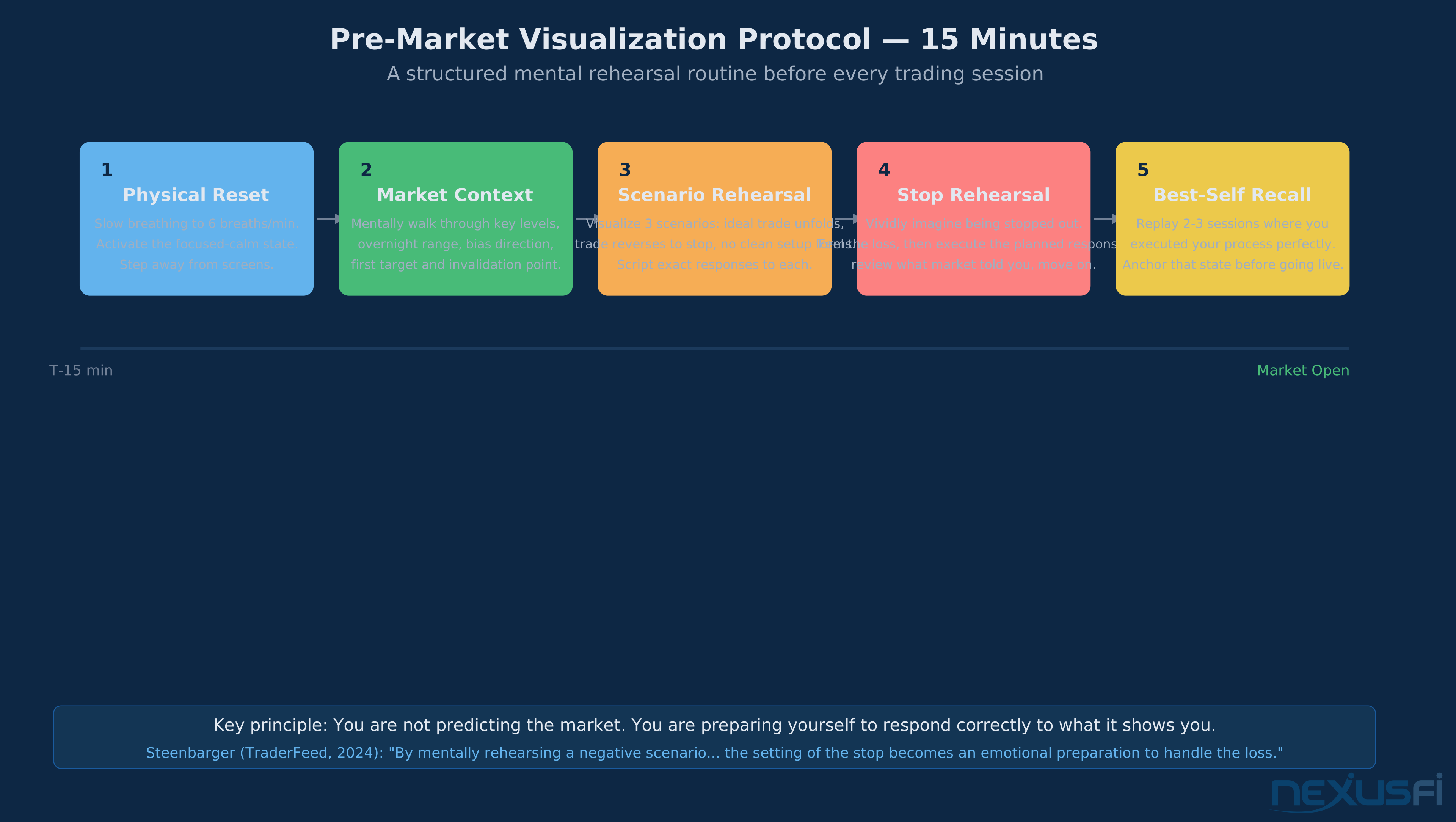
Step 1: Physical Reset (2 Minutes) #
Do this before your charts load. Leave the screen entirely if possible.
Breathe at approximately 6 breaths per minute (5 seconds in, 5 seconds out). This breathing rate activates the parasympathetic nervous system and has been shown to maximize heart rate variability — a reliable marker of the calm-focused state associated with optimal decision-making. Steenbarger describes this physiological baseline as the foundation on which all subsequent imagery should be built.
Do not skip this step. The quality of your imagery depends directly on the physiological state from which it is launched. Imagery initiated while emotionally aroused is less vivid and less effective at producing the focused-calm anchor you want.
Step 2: Market Context Walk-Through (3 Minutes) #
With eyes closed, mentally walk through the market context for the day. This is not analysis — you've done that. This is rehearsal of what you already know.
- Key structural levels for your instrument
- The overnight range and any gaps
- Your bias for the session and the conditions that would invalidate it
- The first 30-minute range expansion direction you're watching for
This step builds anticipatory imagery — you are priming your pattern recognition systems for what matters today, not for the general market. The brain is calibrated to notice the specific signals you've pre-specified as significant.
Big Mike laid out the approach in his trading journal: "Each morning, before I trade, I am going to literally take a moment and picture myself trading the entire day. Picture the before lunch moves, the after lunch moves. Picture myself executing exactly as laid out in my trading rules. And that will be the goal, to follow my rules as best as possible." — @Big Mike, Big Mike's day trading method and advice
Step 3: Scenario Rehearsal (4 Minutes) #
Generate two or three specific scenarios and walk through each in complete sensory detail.
Scenario A: The ideal setup unfolds. You see the structure form, the trigger develops, you enter, manage the trade correctly, exit cleanly. Run through the emotional texture of executing your process well.
Scenario B: The trade reverses to your stop. Vividly imagine the market going against you, reaching your stop level, the fill. Then — critically — rehearse exactly what you do next. Where does your attention go? What do you say to yourself? What is the very next action?
Scenario C: No clean setup develops. You wait. The market moves without offering a clean entry. You sit in patience. You do not force a trade. You end the session flat and satisfied with your process.
This scenario variety is important. Traders typically over-rehearse winning trades and under-rehearse the no-trade day and the clean-loss scenario.
Step 4: Stop Rehearsal (3 Minutes) #
This is Steenbarger's central contribution: dedicated, daily rehearsal of being stopped out. Run five specific stop scenarios with full vividness — different amounts of loss, different session times, different market conditions. In each case, practice the planned response until it begins to feel automatic.
The emotional defusing effect is real and measurable. Traders who rehearse stops regularly report that when actual stops occur, the emotional response is smaller and shorter in duration. The event has lost its novelty. The brain has been there before.
Step 5: Best-Self Recall (3 Minutes) #
End the session by re-experiencing two or three of your best recent trading moments in full detail — from the inside, not watching yourself. The chart looked like that, your decision process felt like this, you executed correctly, you managed the trade according to plan.
This final step is neural consolidation of your best performance pattern. You are ending your preparation in the neurological state most similar to your peak execution.
Rehearsing Loss Scenarios: The Counter-Intuitive Edge #
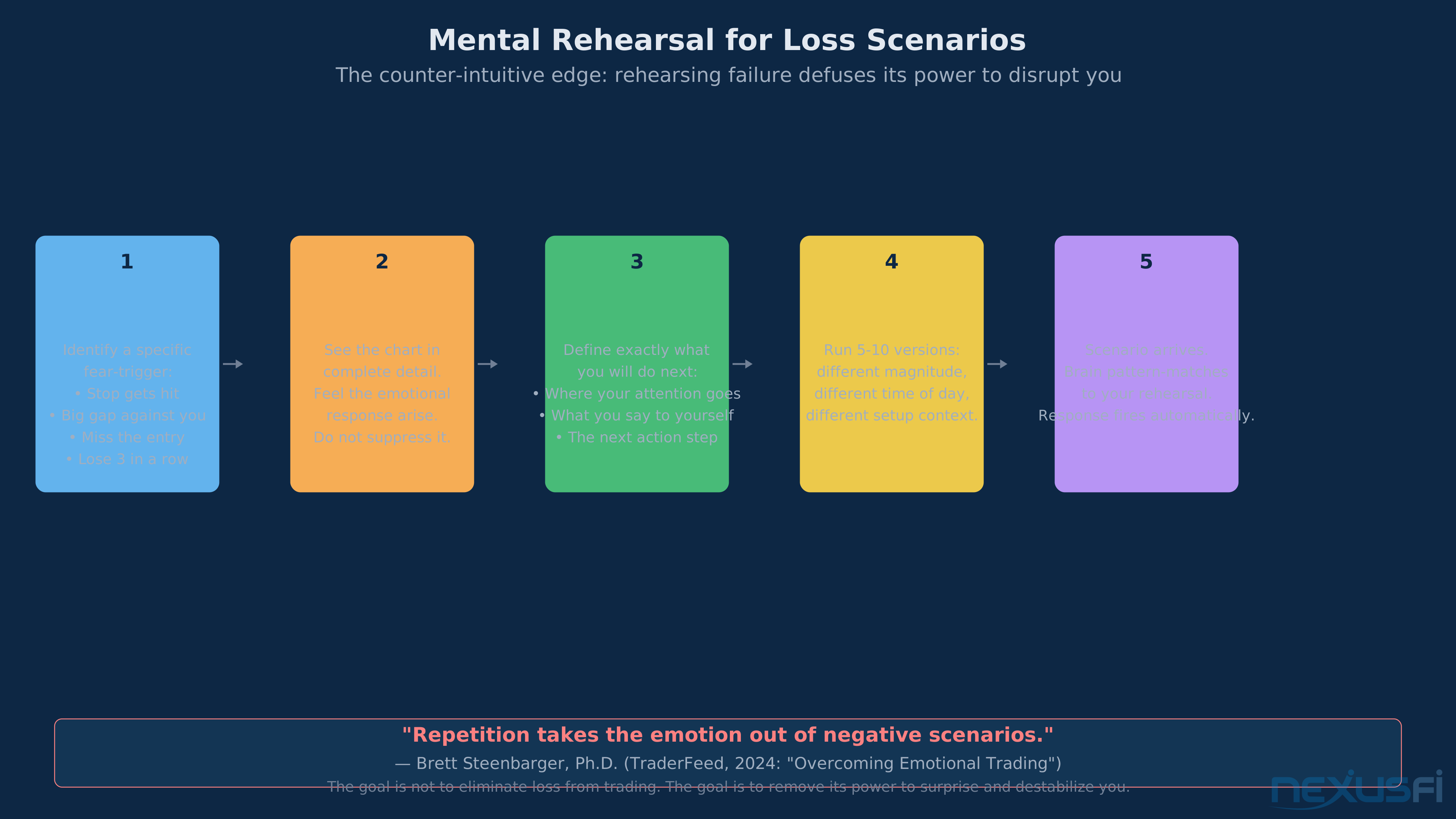
This deserves its own section because it is where most traders resist the practice. Deliberately imagining bad outcomes — stops being hit, trades going against you, large drawdown days — seems counterproductive or dangerous. The psychological mechanism reverses this intuition.
Avoidance of negative imagery does not reduce its power over you — it amplifies it. The stop you have never mentally rehearsed survives as a feared unknown. When it occurs in real trading, the full weight of its novelty arrives simultaneously with the emotional content. The executive function that governs disciplined execution is degraded precisely when it is most needed.
Systematic exposure to the feared scenario, in imagery, with a rehearsed coping response, is the clinical mechanism of all exposure-based therapies. The trading application is structural, not therapeutic: you are using the same mechanism for performance preparation rather than symptom reduction.
The critical addition: the response rehearsal. Imaging the stop alone — without practicing what you do next — is incomplete and potentially counterproductive. The rehearsal needs to include the full behavioral sequence: the stop fires, you feel the response (don't suppress it), and then you execute the planned next action.
The Neutral State: George's Insight #
George, a respected NexusFi member who received 18 thanks on a 2009 post in Big Mike's trading journal thread, added an important nuance to this practice that goes beyond Steenbarger's framework:
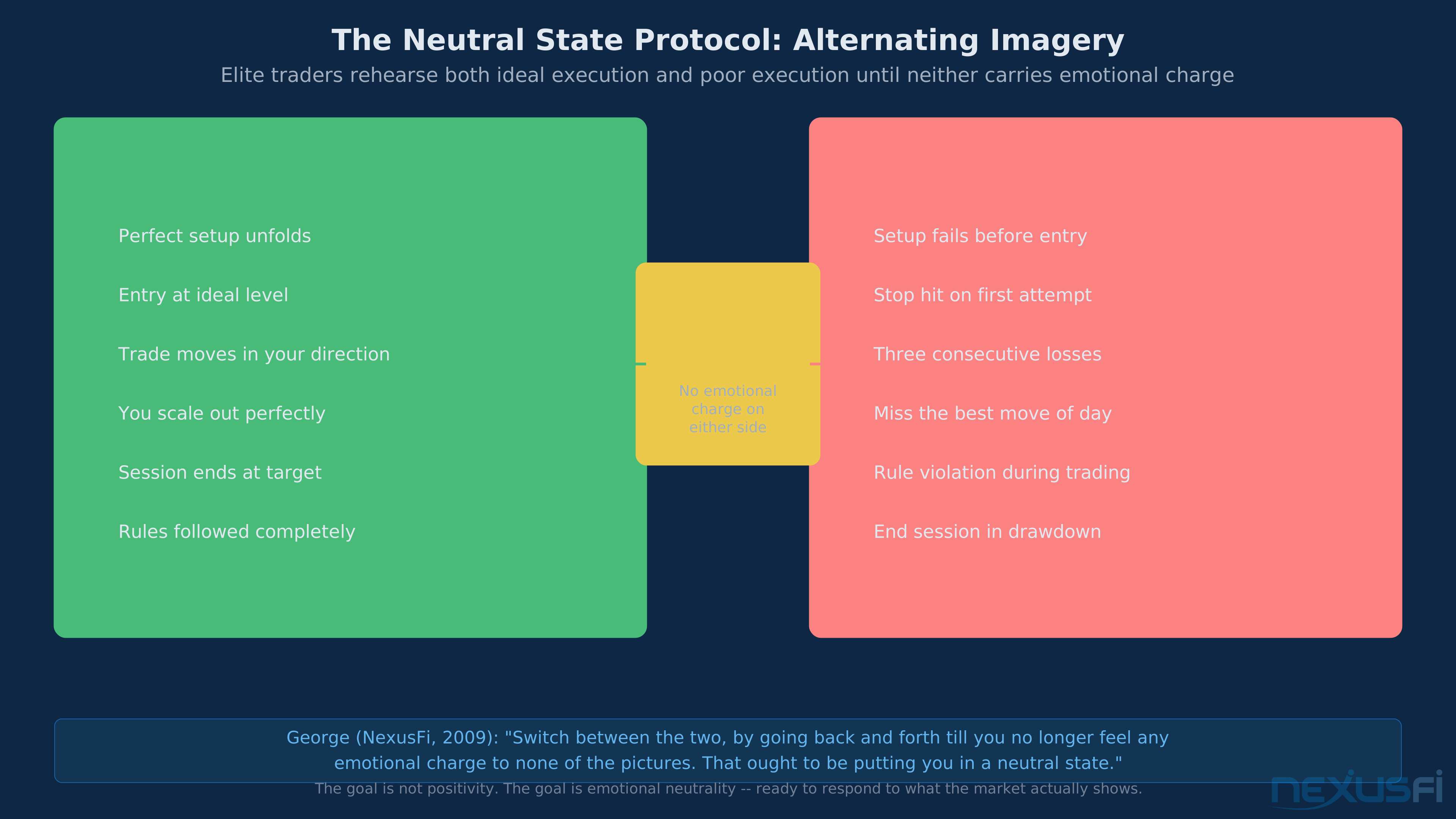
The target is not feeling good about trading. The target is feeling neutral — fully prepared to respond to whatever the market shows, without the emotional charge of either anticipated reward or anticipated loss distorting your perception and execution.
Specific Loss Scenarios to Rehearse #
Each scenario should be run with multiple variations — different sizes, different times, different market conditions:
The clean stop: Market reaches your level, you exit for a normal loss. Response: note what the market revealed, update your read, move on.
The gap stop: Overnight gap filled you worse than designated. Response: assess context, adjust risk if appropriate, do not compound with a revenge trade.
The sequence of losses: Three stops in a row. Response: pause, re-read market structure, reduce size for the next entry, no single-trade recovery attempts.
The big day stop: Daily loss limit hit. Response: close everything, step away. This is not failure — this is risk management executing correctly.
The missed trade: Setup triggered while you were away. Response: let it go entirely. Missing a correctly identified trade has emotional cost but zero financial cost.
Biofeedback Integration #
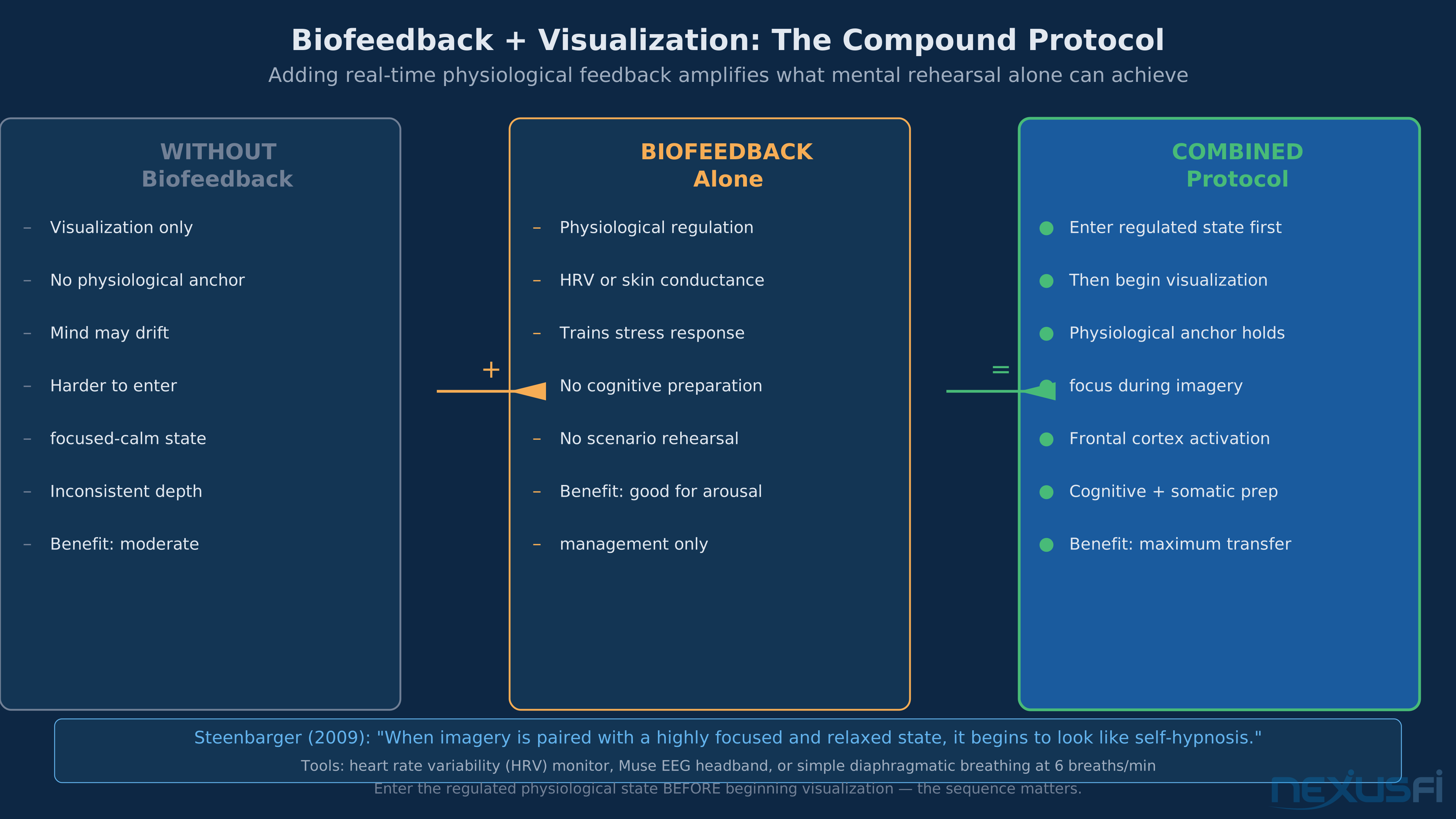
Biofeedback is the technology most directly associated with mental rehearsal in sport and performance contexts. For traders, the most accessible and relevant modality is heart rate variability (HRV). HRV measures the variation in time intervals between heartbeats — a counterintuitive but strong indicator of nervous system regulation. High HRV indicates a regulated, adaptive state. Low HRV indicates either high arousal or fatigue.
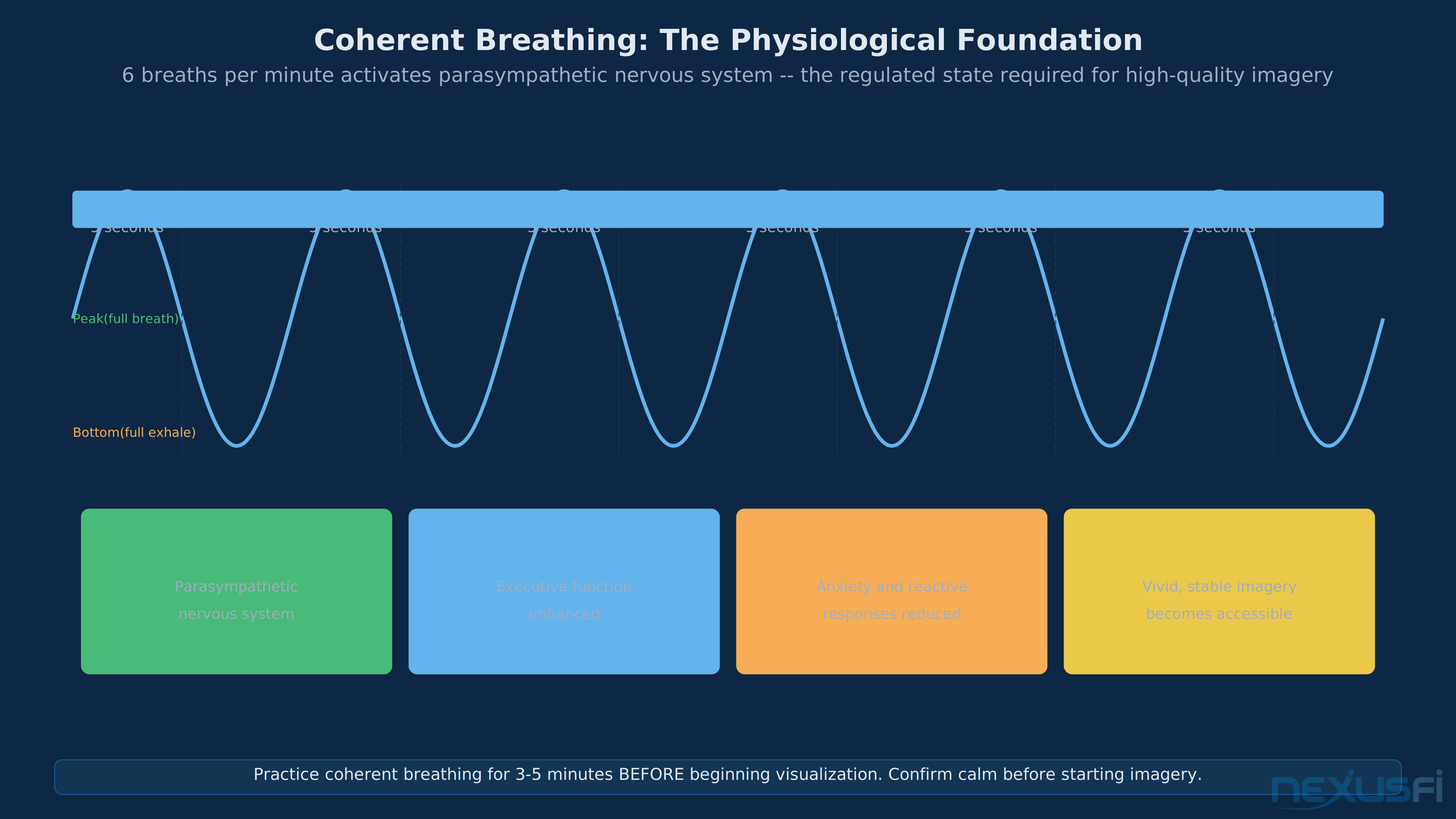
The protocol connection is direct: coherent breathing at 6 breaths per minute reliably increases HRV and produces the physiologically regulated state from which high-quality imagery is accessible. Adding a simple HRV monitor — devices like the Elite HRV smartphone sensor or the Polar H10 chest strap — allows you to confirm you have reached the target state before beginning visualization rather than guessing.
Steenbarger has described the neurological mechanism: when you enter the calm-focused state, you activate the brain's frontal cortex — the executive center that governs rule adherence, risk assessment, and disciplined execution. The biofeedback loop is a technology for deliberately activating the same neural substrate that needs to be dominant during live trading.
NexusFi member aquarian1 described this integration directly in a Psychology forum post:
The Sequence Matters #
The physiological regulation step comes before the imagery, not during or after. The sequence: physical environment prepared → coherent breathing until physiological calm established (3-5 minutes of 6-breath-per-minute breathing, or HRV target confirmed) → visualization protocol begins from within the regulated state.
How Visualization Builds Trading Skill #
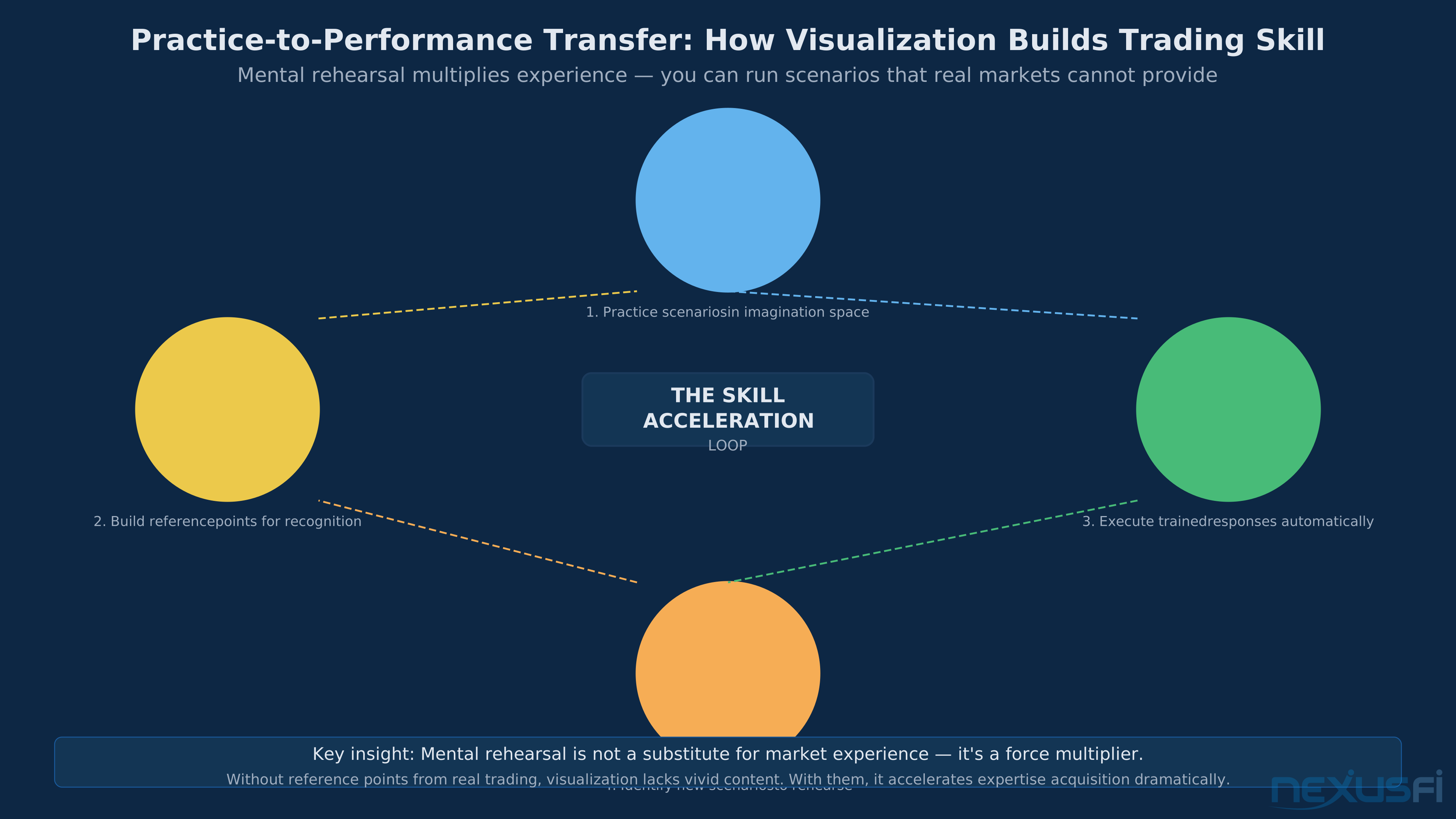
There is an important caveat: mental rehearsal works best when built on a foundation of real market experience. The Stanford research showed that the mechanism involves putting the brain's neural state into an optimal starting configuration — but that configuration is defined by existing representations built through actual physical practice.
For traders, this means:
- New traders with limited market experience will get less benefit from visualization than experienced traders
- The scenario content of your rehearsal must be drawn from actual market situations you have encountered
- As you accumulate real trading experience, your visualization library becomes richer and more effective
This is not a limitation — it is a design feature. Mental rehearsal and live trading form a compound loop: real trading provides the experience base that makes imagery vivid; vivid imagery consolidates and extends those representations more efficiently than additional screen time alone.
For experienced traders, this loop runs in the other direction: visualization can accelerate skill acquisition in areas where live market conditions don't provide sufficient practice volume. A trader who experiences a gap stop every two months can rehearse that scenario in imagery every two days — compressing years of experiential learning into months.
Building a Weekly Practice #
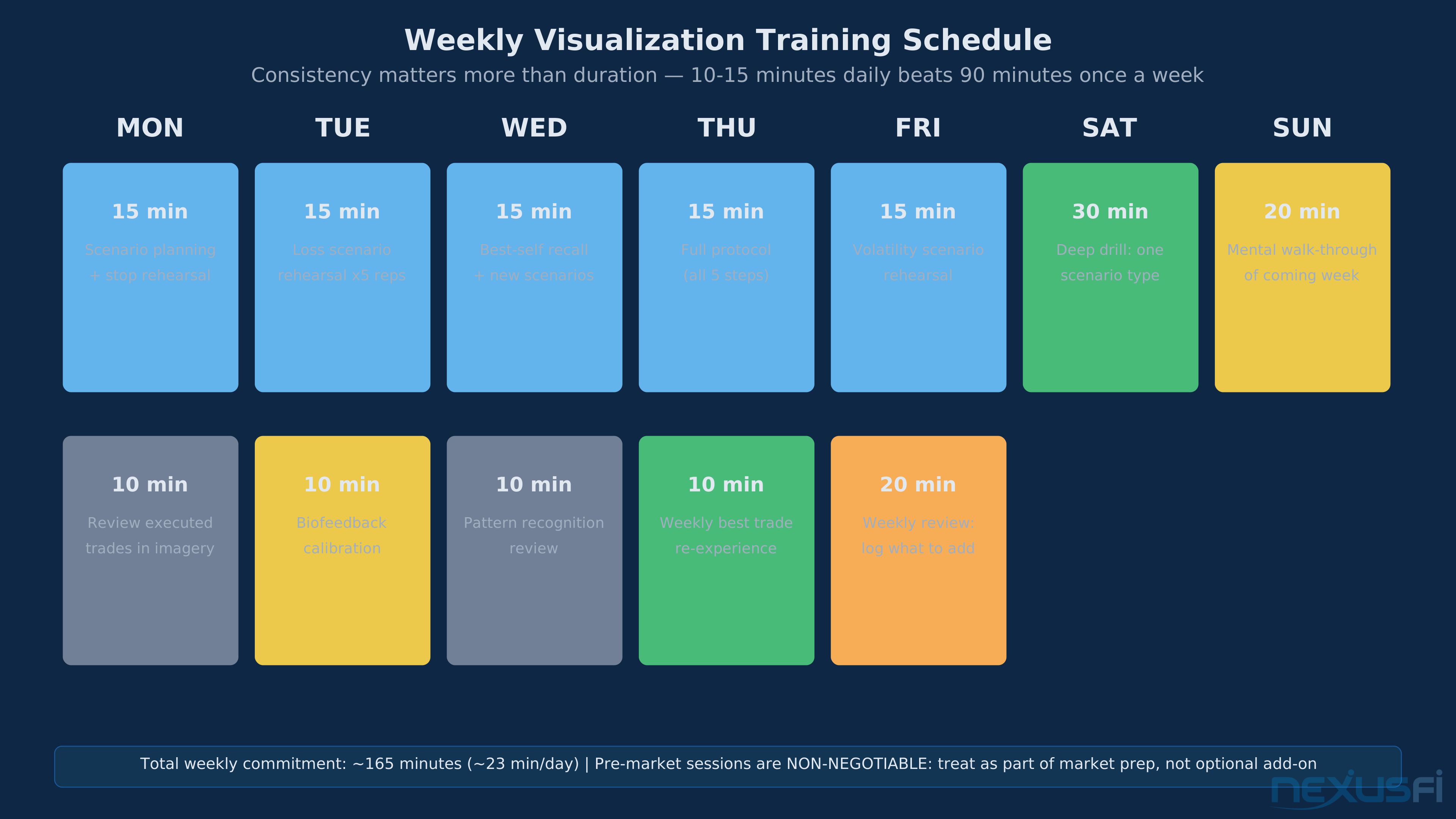
The sports science literature on mental practice is clear: distributed practice outperforms massed practice. Fifteen minutes of imagery every morning produces stronger neural representations and better transfer than 90 minutes once a week. The brain consolidates skill representations during sleep — distributed sessions create multiple consolidation windows.
Daily pre-market (Monday through Friday): The 15-minute protocol described above. Treat it as part of market preparation, not optional enhancement. If you have time to review pre-market futures and check your levels, you have time for the visualization protocol.
Daily post-market: A brief 10-minute review where you re-experience two or three trades in imagery — specifically the decision points. If you executed correctly, re-run it to reinforce. If you violated your plan, re-run it with the correct response to begin re-training that neural pathway.
Weekly deep drill: One 30-minute session focused on a single scenario type. This week, every version of being stopped out. Next week, every version of the no-trade day. Build detailed coverage of the scenarios that challenge your execution.
The journal link: Keep brief visualization notes in your trading journal. Record which scenarios you rehearsed, any imagery that felt especially vivid or emotionally charged, and any observations about which scenarios your mind resists entering into fully. Resistance in imagery is information — it typically identifies scenarios that carry unprocessed emotional content and need more rehearsal, not less.
Common Mistakes #
Skipping the physiological reset: Beginning imagery while aroused reduces vivid quality. The breathing step is not optional.
Only rehearsing wins: Half of your rehearsal time should be loss scenarios. Most traders never rehearse stops, so stops always feel like surprises.
Passive thought instead of vivid imagery: "I'll manage stops better" is a thought, not imagery. "I see the price approach my stop, I watch the fill confirm, I feel the P&L shift, then I do X" is imagery — with meaningful neural activation differences.
External perspective: Watching yourself trade is review, not preparation. Build first-person internal perspective for your pre-market protocol.
Inconsistency: Five minutes every morning is better than 60 minutes twice a month. Distributed practice beats massed practice for neural consolidation.
Practical Takeaways #
Mental rehearsal and visualization are neurological preparation tools with decades of supporting research. The mechanism is simple: vividly imagining a trading action recruits many of the same brain systems that execute it in real time.
The trader application centers on three practices: pre-market scenario rehearsal, daily stop rehearsal, and best-practice consolidation. Each targets the same failure mode: execution breakdowns under emotional arousal. The entry bar is low — fifteen minutes before open, vivid internal imagery.
The elite traders who use this consistently converge on the same observation: being stopped out stopped feeling like a threat when they stopped being surprised by it. They had been there before. Their nervous systems had already practiced the response.
That is the edge mental rehearsal provides. Not prediction. Not positive thinking. Preparation so thorough that even the worst scenarios become familiar.
Knowledge Map
Go Deeper
Build on this knowledgeReferences This Article
Articles that build on this topicCitations
- — Trading Futures with Context (2013) 👍 15“Here is your solution. Mentally rehearse potential buys and sales and shorts and covers with your positions before the open. This will help you in real-time.”
- — Big Mike's day trading method and advice (2010) 👍 12“Each morning, before I trade, I am going to literally take a moment and picture myself trading the entire day. Picture the before lunch moves, the after lunch moves.”
- — ES Trading Journal - conquering my fears (2014) 👍 3“I highly suggest visualization. I use it in trading as I have in racing. A racer will mental run through a race track, you do this with a stop watch.”
- — Experience with hypnotherapy? (2010) 👍 10“reinforced my belief in mental imagery / practicing various situations in your head to help you stay relaxed and calm, which will allow you to make the best decisions without other factors getting in the way.”
- — Big Mike's day trading method and advice (2009) 👍 18“Picture yourself acting totally against your rules also, missing out, and trading badly. Switch between the two, by going back and forth till you no longer feel any emotional charge.”
- — What visualizations do you use when you see yourself being materially abundant? (2016) 👍 2“Do lots of rehearsals of trade situations both positive and negative so you are ready for anything. Use a bio-feedback to help you reduce negative responses.”
- — Neuroscience.stanford.edu (2018)
- — Link.springer.com (2017)
- — Traderfeed.blogspot.com (2007)
- — Traderfeed.blogspot.com (2009)
- — Traderfeed.blogspot.com (2024)